15 Fall Bathroom Plants That Thrive Indoors
Most houseplant advice points everyone toward the same few rooms — a bright living room window, a sunny kitchen sill, a south-facing bedroom corner. The bathroom rarely makes the list, treated as too dim, too damp, or too inconsistent to bother with.
That advice misses what actually makes a bathroom one of the better growing environments in the entire house for the right plants. The same humidity that fogs up a mirror during a hot shower is exactly what many tropical plants spend their whole lives chasing. A bathroom that seems like a plant’s worst environment on paper is often, for the right species, closer to a rainforest understory than any other room in the house.
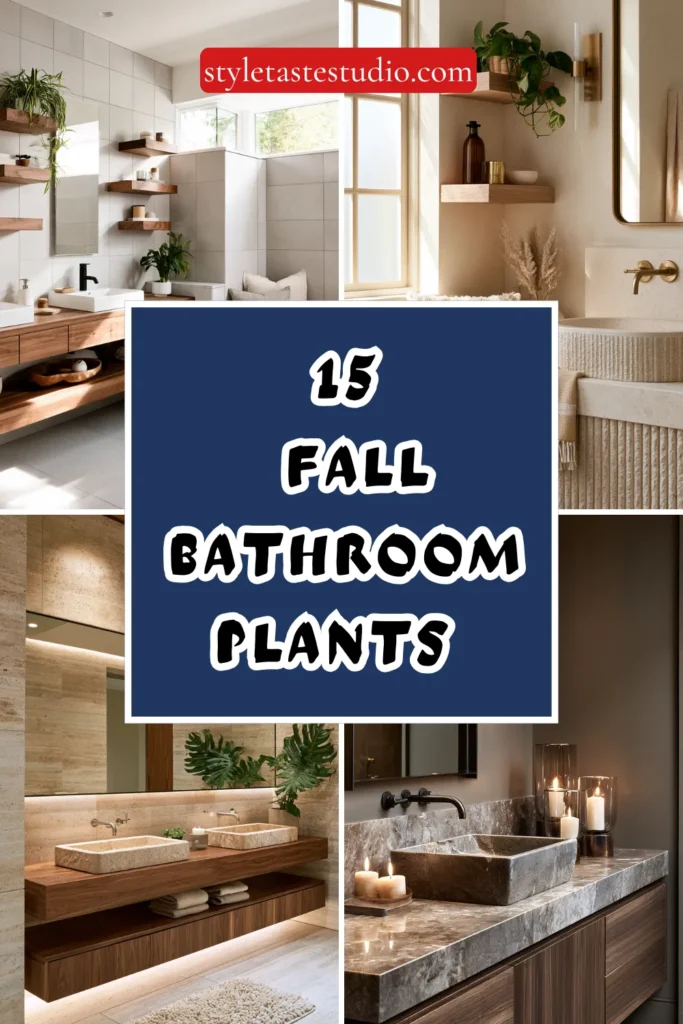
Choosing bathroom plants isn’t about finding something that merely survives the room’s conditions. It’s about matching the right species to what a bathroom specifically offers — high humidity, often lower light, and a microclimate unlike anywhere else in the house — so the plant actually thrives rather than just hangs on. Get the match right, and a bathroom becomes one of the easiest rooms in the house to keep a plant genuinely happy through fall, when most other indoor light is already starting to fade.
Here are 15 plants built to thrive in a bathroom’s specific conditions, right through the darkest months of the year.
Why Bathroom Plants Play by Different Rules Than Plants Elsewhere in the House
The rules are not the same for every room a plant might live in:
Typical Houseplant Placement Advantages:
- Bright, consistent natural light from a dedicated window, suited to a wide range of common houseplants
- Stable humidity levels, neither unusually high nor prone to sudden swings
- Easy daily monitoring, since most living spaces are occupied and checked on constantly
The typical placement comparison: light-first, humidity as an afterthought
Bathroom Plant Placement Advantages and Realities:
- Naturally elevated humidity from regular shower and bath use, ideal for many tropical and fern-family plants
- Often lower or more indirect light than a dedicated houseplant window, which actually suits a specific group of shade-tolerant species
- Less frequent, more irregular monitoring, since a bathroom isn’t occupied or checked on as constantly as a living room
The key insight:
- Typical houseplant placement rewards species that want bright, even light above all else
- Bathroom plant placement rewards species that prioritize humidity and tolerate lower, more irregular light and attention
- These are different growing environments, not the same houseplant rules simply applied to a smaller room
The Light and Humidity Reality
The most important factor in choosing a bathroom plant:
The window-to-no-window divide:
- A bathroom with a window, even a small frosted one, supports meaningfully more plant variety than a fully windowless bathroom relying entirely on artificial light
- Know which category a specific bathroom falls into before choosing among the options on this list, since several plants here genuinely need at least some natural light to thrive long-term
- A windowless bathroom isn’t ruled out entirely, but it does narrow the realistic options considerably compared to one with any natural light source
The “humidity-lovers versus light-lovers” calculation:
- Some plants on this list are chosen specifically because they thrive on humidity and tolerate lower light, making them suited to even a windowless bathroom under a grow light or simply ambient hallway light
- Others need genuine brighter, indirect light to truly thrive, and are better suited to a bathroom with a real window
- Match the plant to the specific bathroom’s actual light level first, then let humidity tolerance be the secondary consideration, since humidity is rarely the limiting factor in a bathroom the way light often is
Most bathroom plant collections build in stages, not all at once:
- The most forgiving, lowest-light, highest-humidity-tolerant species go in first, since they’re the safest bet for any bathroom’s specific conditions
- More particular or higher-light species get added once the bathroom’s actual light and humidity pattern is better understood through a season of observation
- The smallest, most decorative additions — a single air plant, a small succulent — come last, often filling in a spot the larger plants don’t quite reach
1. Pothos (The Most Forgiving Plant for Nearly Any Bathroom)
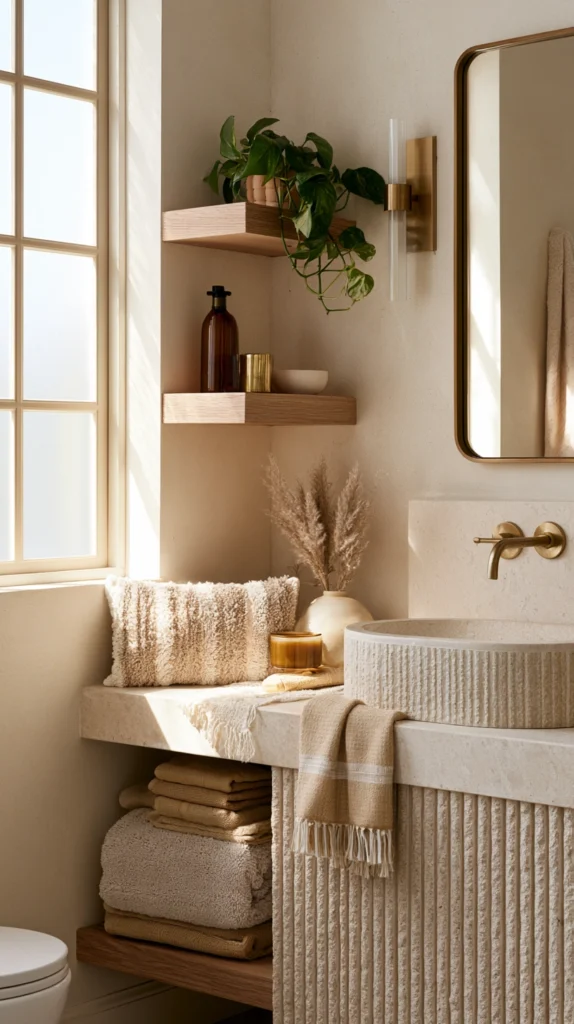
A trailing pothos, in a hanging planter or set on a shelf where its vines can cascade — widely considered one of the most forgiving houseplants available, and a particularly strong fit for a bathroom’s combination of humidity and often inconsistent light.
Why pothos thrives in bathroom conditions specifically
- The low-light tolerance that suits a windowless or dim bathroom: pothos genuinely tolerates low to moderate indirect light better than most trailing plants, making it one of the few options that can succeed even without a true window
- The humidity-loving nature that matches a bathroom’s natural environment: pothos comes from tropical regions and responds well to the elevated humidity a regularly used shower or bath provides
- The drought tolerance that forgives irregular bathroom care: because a bathroom doesn’t get checked on as constantly as a living room, pothos’s ability to handle missed watering without serious decline makes it especially well suited to this room’s realistic care pattern
The options
- Golden pothos, the most common and most adaptable variety
- Marble queen pothos, with more dramatic white variegation, requiring slightly more light to maintain its pattern
- Neon pothos, with bright chartreuse leaves, adding strong color contrast against a typical bathroom’s neutral palette
- Jade pothos, solid deep green, the most shade-tolerant variety of the group**
The practical execution
- Water only when the top inch or two of soil feels dry, since pothos is considerably more tolerant of underwatering than overwatering
- Trim trailing vines periodically to encourage fuller, bushier growth rather than letting them grow long and sparse
- Position on a shelf or hanging planter where the vines can trail freely, taking advantage of vertical space the way a kitchen’s hanging herb display does
Cost breakdown
- Small pothos plant: $8–18
- Hanging planter, if needed: $12–25
- Total: $8–43
The pothos vine trailing from a high shelf, thriving on nothing more than steam and the occasional watering: the most forgiving starting point for almost any bathroom.
2. Snake Plant (Near-Indestructible, Even in the Lowest Light)
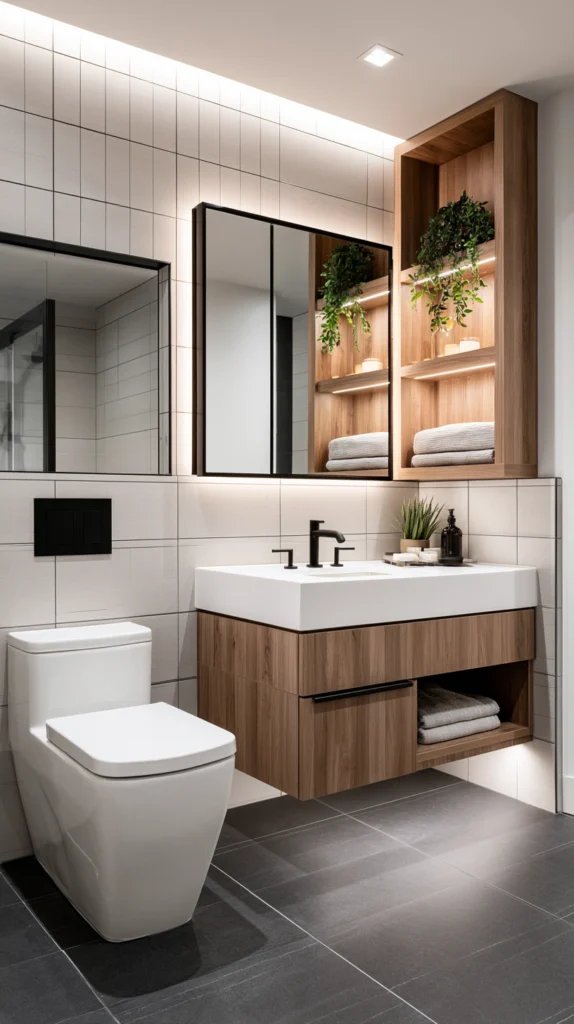
An upright snake plant, placed on the floor or a counter corner — one of the most drought- and low-light-tolerant houseplants commonly available, and a near-foolproof choice for a bathroom with minimal or no natural light at all.
Why a snake plant suits even the most challenging bathroom conditions
- The extreme low-light tolerance it offers beyond what most other plants can handle: snake plants genuinely survive and even grow slowly in very low light conditions, making this one of the only realistic options for a fully windowless bathroom
- The drought resistance that matches infrequent bathroom attention: snake plants store water in their thick leaves and can go considerably longer between waterings than almost any other plant on this list
- The air-purifying reputation it carries: while not a substitute for proper ventilation, snake plants are commonly cited for their air-quality contributions, adding a practical bonus alongside their visual presence
The options
- Sansevieria trifasciata, the classic upright variety with tall, sword-like leaves
- ‘Laurentii’, with yellow-edged variegation along each leaf
- ‘Moonshine’, with pale, silvery-green leaves for a different color note
- A dwarf or ‘Bird’s Nest’ variety, for a smaller, more compact footprint on a vanity counter**
The practical execution
- Water sparingly, allowing the soil to dry out completely between waterings, since overwatering is by far the most common way to harm this otherwise resilient plant
- Choose a pot with proper drainage, since snake plants are particularly susceptible to root rot in consistently damp soil
- Position on the floor or a sturdy counter corner where its upright, architectural shape can be appreciated without crowding
Cost breakdown
- Small to medium snake plant: $12–30
- Total: $12–30
3. ZZ Plant (Glossy, Architectural, and Nearly Impossible to Kill)
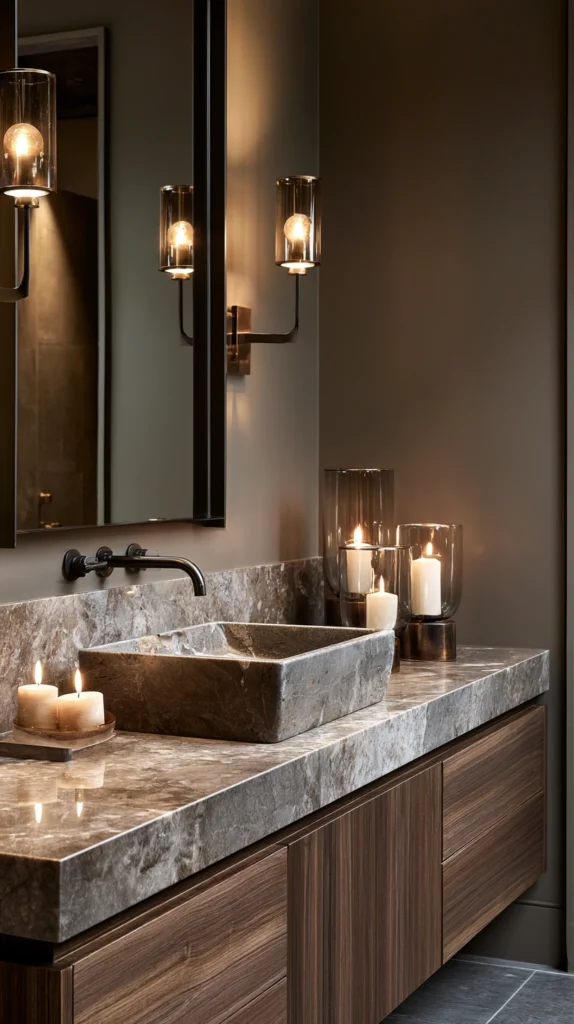
A ZZ plant, with its glossy, dark green leaves and upright growth habit, placed on a counter or floor — another of the most low-maintenance options available, suited to a bathroom that sees infrequent, irregular care.
Why a ZZ plant performs so reliably in bathroom conditions
- The genuine shade tolerance that exceeds most other glossy-leaved plants: ZZ plants are naturally adapted to low-light forest floor conditions, making them one of the better options for a bathroom relying primarily on artificial light
- The water-storing rhizomes beneath the soil: like the snake plant, a ZZ plant stores water reserves that allow it to comfortably handle the irregular watering schedule a bathroom realistically gets
- The polished, glossy appearance it offers without active care: ZZ plant leaves have a naturally glossy sheen that reads as well-maintained and healthy with minimal effort, a useful trait in a room not checked on as constantly as others
The options
- Standard ZZ plant, with bright, glossy green leaves
- ‘Raven’ ZZ plant, with dramatic near-black foliage, for a moodier, more striking color choice
- A dwarf ZZ variety, for a smaller footprint suited to a vanity counter rather than the floor
- A variegated ZZ plant, with lighter patches across the leaves, for more visual variety than the standard solid green**
The practical execution
- Water only when the soil has dried out fully, treating this plant similarly to the snake plant in terms of drought tolerance
- Avoid direct sun exposure, since ZZ plants are adapted to shade and can actually scorch in bright, direct light, making them well suited to a more shaded bathroom corner
- Wipe leaves occasionally to maintain their natural glossy appearance, since dust accumulates visibly on the broad, shiny foliage
Cost breakdown
- Small to medium ZZ plant: $15–35
- ‘Raven’ variety, typically priced higher: $25–55
- Total: $15–55
4. Boston Fern (A Genuine Humidity-Lover for a Well-Lit, Steamy Bathroom)
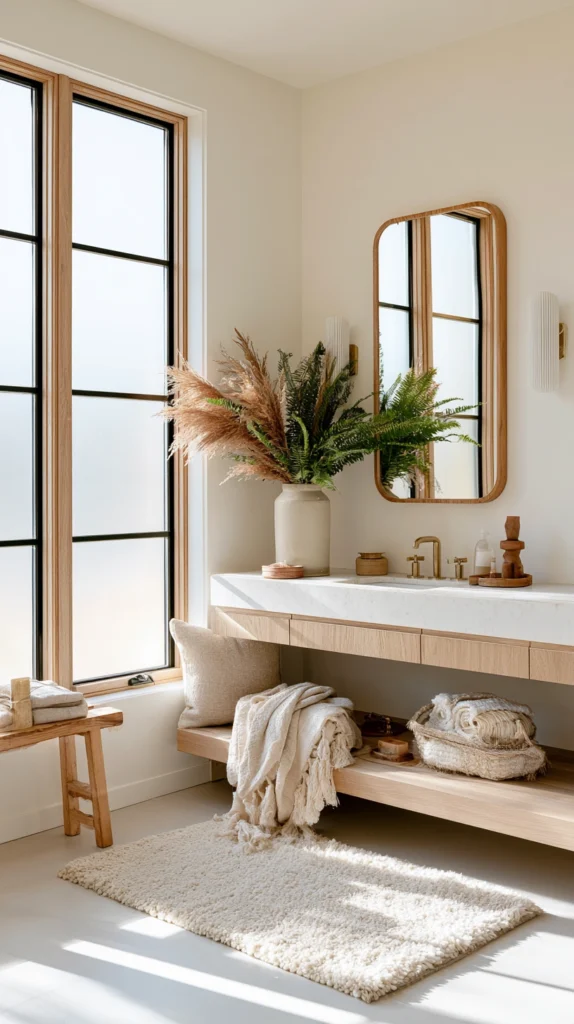
A Boston fern, in a hanging planter or on a stand near a window, with its dense, feathery fronds — one of the most directly humidity-dependent plants on this list, thriving specifically because of, rather than in spite of, a bathroom’s steam.
Why a Boston fern needs exactly what a humid bathroom provides
- The high-humidity requirement most other rooms in the house can’t naturally meet: Boston ferns are notoriously difficult to keep happy in a typical dry indoor room, but a regularly used, steamy bathroom solves this challenge automatically
- The lush, full appearance it rewards a suitable environment with: when genuinely happy, a Boston fern produces dense, cascading fronds that read as a real statement plant, distinct from the more modest growth habit of many lower-maintenance options on this list
- The light requirement that does narrow its bathroom suitability: unlike the snake plant or ZZ plant, a Boston fern genuinely needs bright, indirect light to thrive, making it best suited to a bathroom with an actual window rather than one relying solely on artificial light
The options
- Standard Boston fern, with classic feathery, arching fronds
- A dwarf Boston fern variety, for a smaller footprint on a counter or shelf
- A compact ‘Fluffy Ruffles’ fern, with denser, more tightly curled fronds
- A fern paired with a hanging planter, allowing the fronds to cascade fully rather than being constrained by a shelf edge**
The practical execution
- Position near, but not directly in, a bright window, since direct sun can scorch the delicate fronds despite the plant’s love of humidity
- Mist occasionally between showers if the bathroom doesn’t see daily use, supplementing the ambient humidity the plant depends on
- Keep soil consistently moist but not waterlogged, checking more frequently than the drought-tolerant options elsewhere on this list
Cost breakdown
- Boston fern, medium size: $15–35
- Total: $15–35
5. Peace Lily (Elegant Blooms and a Built-In Watering Signal)
A peace lily, with its broad, glossy leaves and occasional white blooms, placed on a counter or floor in a bathroom with moderate light — a plant that not only tolerates a bathroom’s humidity but visibly communicates when it needs water, useful for a room checked on irregularly.
Why a peace lily suits a bathroom’s specific care rhythm
- The humidity appreciation it shares with the Boston fern: peace lilies, also tropical in origin, respond well to the elevated moisture in the air a regularly used bathroom provides
- The visible wilting signal it gives before serious damage occurs: unlike many plants that decline silently, a peace lily’s leaves droop noticeably when the plant needs water, then recover quickly once watered, making it surprisingly forgiving for a room that isn’t checked daily
- The occasional white bloom it offers as a bonus: under reasonably good conditions, a peace lily produces elegant white flowers, adding a seasonal visual interest beyond foliage alone
The options
- Standard peace lily, with classic dark green leaves and white spathe blooms
- A ‘Domino’ variegated peace lily, with white-speckled foliage for more visual texture
- A dwarf peace lily variety, suited to a smaller counter or shelf footprint
- A ‘Mauna Loa’ peace lily, a larger variety for a bathroom with more floor space to spare**
The practical execution
- Water when the leaves first begin to droop slightly, using that visible signal rather than a fixed schedule
- Position in moderate, indirect light, since peace lilies tolerate lower light but bloom more reliably with at least some bright, indirect exposure
- Keep away from pets, since peace lilies are toxic if ingested, an important consideration for any household with curious cats or dogs that have access to the bathroom
Cost breakdown
- Peace lily, small to medium: $12–30
- Total: $12–30
6. Spider Plant (Fast-Growing and Easy to Propagate for Multiple Bathroom Spots)
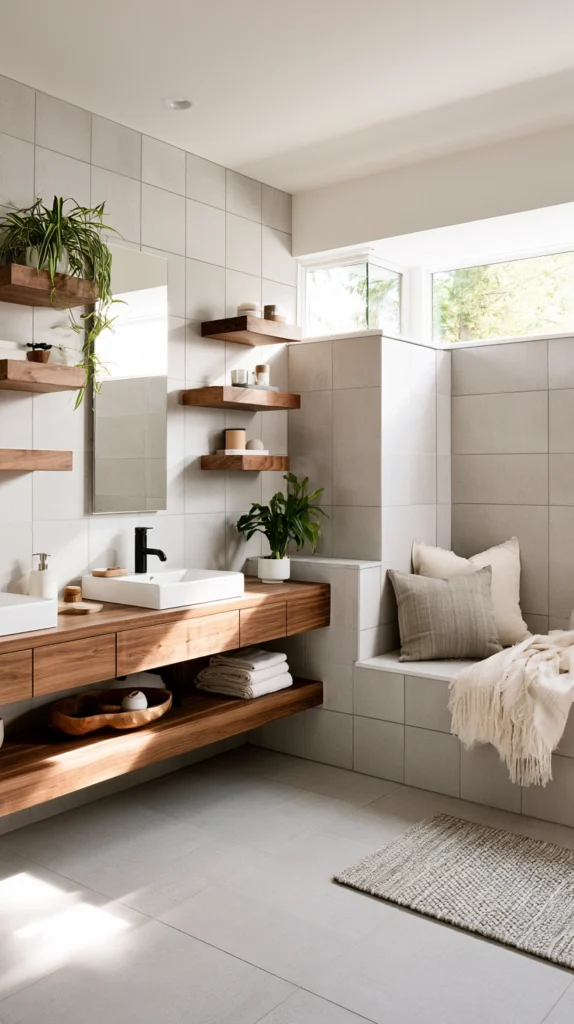
A spider plant, in a hanging basket or on a high shelf, with its arching, striped leaves and small plantlets dangling from long stems — a fast, easy-growing option well suited to a bathroom’s humidity and forgiving of inconsistent light.
Why a spider plant adapts well to bathroom conditions
- The genuine adaptability it offers across a range of light levels: spider plants tolerate everything from moderate indirect light to lower bathroom conditions reasonably well, though they grow most vigorously with at least some brightness
- The humidity benefit that supports lush, full growth: like several other plants on this list, spider plants respond positively to a bathroom’s elevated moisture, often producing fuller foliage than the same plant would in a drier room
- The easy propagation it offers for filling multiple spots: spider plants readily produce small plantlets that can be rooted into new pots, making it simple and inexpensive to fill several spots throughout the bathroom from a single original plant
The options
- Standard spider plant, with green and white striped leaves
- ‘Bonnie’ spider plant, with curlier, more compact foliage
- A solid green variety, without the typical white striping, for a different visual texture
- A reverse variegated variety, with the white stripe running along the leaf’s center rather than its edges**
The practical execution
- Water regularly but allow the soil to dry slightly between waterings, avoiding the consistently soggy conditions that can cause root issues
- Position where the trailing plantlets can hang freely, on a high shelf or in a hanging planter, taking advantage of vertical bathroom space
- Propagate plantlets into water or soil once they develop small root nubs, creating new plants for other spots in the bathroom or elsewhere in the house
Cost breakdown
- Spider plant, small to medium: $8–20
- Total: $8–20
7. Air Plants (No Soil, No Pot, Maximum Flexibility)
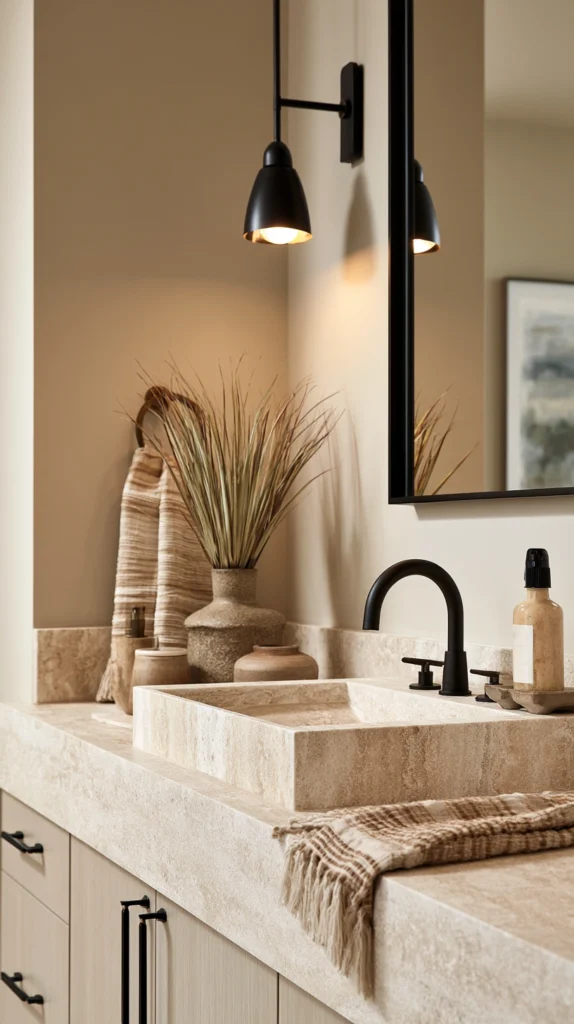
Tillandsia, commonly known as air plants, displayed in small groupings on a shelf, in a glass vessel, or mounted directly to a piece of driftwood — a soil-free option that draws moisture and nutrients directly from the air, making it uniquely suited to a humid bathroom environment.
Why air plants are particularly well matched to bathroom humidity
- The direct humidity absorption that defines how this plant feeds itself: unlike every other plant on this list, air plants absorb moisture through specialized leaf structures rather than roots in soil, meaning a consistently humid bathroom directly nourishes the plant in a way few other rooms in the house can match
- The complete design flexibility soil-free growing allows: because air plants don’t require a pot or soil, they can be displayed in nearly any container, on any surface, or even mounted directly to decorative objects, offering more creative display freedom than any other plant on this list
- The compact, low-commitment scale most varieties offer: air plants are typically small, making them easy to tuck into otherwise unused corners of a bathroom counter or shelf without competing for significant space
The options
- Tillandsia ionantha, a popular, compact variety with a colorful bloom when mature
- Tillandsia xerographica, a larger, more dramatic variety with broad, curling leaves
- A small grouping of mixed varieties, displayed together in a shallow dish or glass bowl
- Air plants mounted on driftwood or a small piece of cork bark, for a more naturalistic, sculptural display**
The practical execution
- Mist or soak periodically even with a bathroom’s elevated ambient humidity, since air plants still benefit from direct, regular watering beyond what humidity alone provides
- Allow plants to dry fully after watering, since prolonged dampness at the base of the leaves can cause rot despite their overall moisture-loving nature
- Provide bright, indirect light where possible, since air plants generally prefer more light than the lowest-light options elsewhere on this list
Cost breakdown
- Small air plant, each: $4–10
- A grouping of 4–5 varieties: $20–45
- Total: $20–45
8. Orchids (Elegant Blooms That Genuinely Prefer Bathroom Humidity)
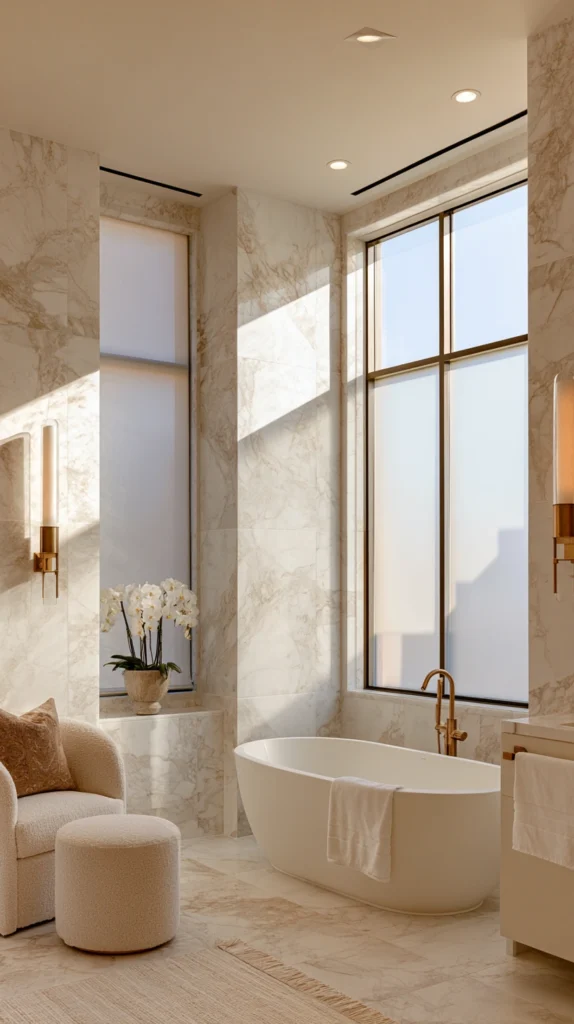
An orchid, particularly a Phalaenopsis variety, displayed on a vanity counter or windowsill — a plant frequently recommended specifically for bathroom placement, given how closely a bathroom’s humidity mirrors the orchid’s native tropical growing conditions.
Why orchids are a more natural bathroom fit than many people expect
- The native humid environment orchids evolved in: many common orchid varieties originate in tropical rainforest conditions with consistently high humidity, conditions a regularly used bathroom replicates more closely than a typical dry living room
- The extended bloom period that rewards good bathroom placement: a well-matched orchid can hold its blooms for weeks or even months, offering one of the longest-lasting flowering displays of any plant on this list
- The specific care knowledge it requires beyond just placement: orchids have a particular watering and light pattern distinct from typical houseplants, making this an option best suited to someone willing to learn their specific needs rather than treating them identically to the rest of this list
The options
- Phalaenopsis orchid, the most common and most forgiving variety for a home environment
- Dendrobium orchid, for a slightly different bloom shape and growth habit
- A miniature orchid variety, for a smaller counter footprint
- An orchid in a clear pot, allowing visibility of the root system, which is itself part of proper orchid care monitoring**
The practical execution
- Water by the ice cube method or a thorough soak roughly once a week, rather than frequent light watering, which is one of the most common ways orchids are overwatered
- Position near, but not directly in, bright indirect light, since orchids generally need more light than the lowest-light options on this list to bloom reliably
- Use a specific orchid potting mix rather than standard soil, since orchid roots need significantly more airflow than most other houseplants
Cost breakdown
- Phalaenopsis orchid, in bloom: $15–35
- Total: $15–35
9. Philodendron (A Resilient, Varied Genus for Nearly Any Bathroom Style)
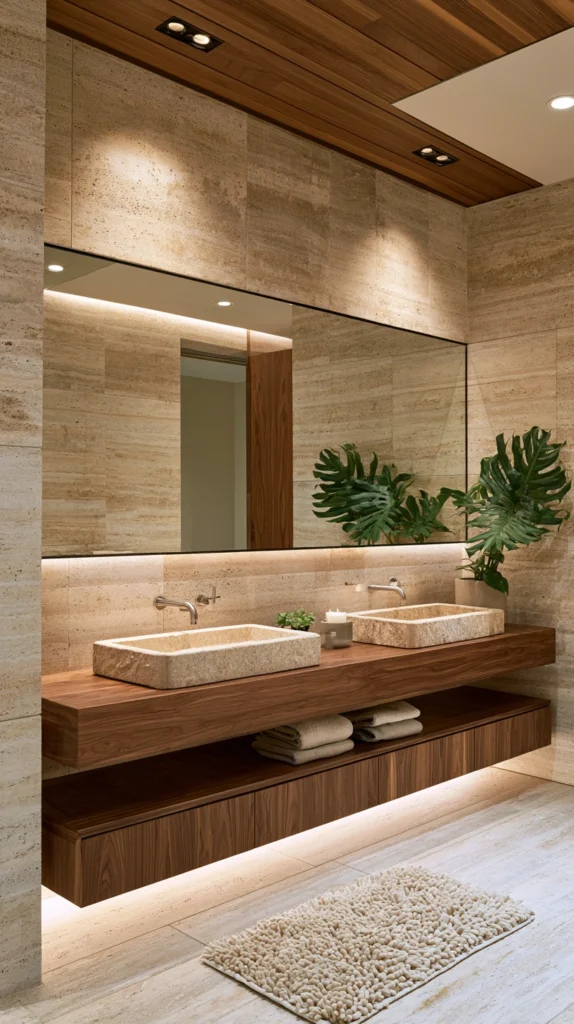
A philodendron, whether a trailing heartleaf variety or a more upright, larger-leaved type, placed on a shelf or counter — a genus offering considerable variety in form while sharing a strong general tolerance for a bathroom’s humidity and often lower light.
Why philodendrons adapt so readily across different bathroom conditions
- The broad tolerance for indirect and lower light that suits most realistic bathroom situations: like pothos, most philodendron varieties handle moderate to low indirect light reasonably well, without requiring the brighter conditions some other plants on this list need
- The humidity-loving tropical origin shared across the genus: philodendrons generally respond positively to elevated humidity, making them a reliable choice for the steam a regularly used bathroom provides
- The wide variety of available forms within a single forgiving genus: from trailing heartleaf varieties to larger, more architectural types, philodendrons offer enough range to suit very different bathroom styles and available space without sacrificing the genus’s overall ease of care
The options
- Heartleaf philodendron, a classic trailing variety with small, glossy heart-shaped leaves
- Philodendron ‘Brasil’, with yellow-green variegated trailing foliage
- Philodendron ‘Birkin’, with striking white-pinstriped leaves on a more upright growth habit
- Philodendron ‘Selloum’, a larger, more dramatic variety for a bathroom with floor space to spare**
The practical execution
- Water when the top inch of soil feels dry, similar to pothos, avoiding consistently soggy conditions
- Provide a support or trellis for upright varieties as they mature, while trailing types can simply be allowed to cascade from a shelf or hanging planter
- Wipe larger leaves periodically to remove dust, both for the plant’s health and to maintain the glossy appearance many varieties are known for
Cost breakdown
- Heartleaf philodendron, small: $8–20
- A more specialty variety like ‘Birkin’: $20–45
- Total: $8–45
10. Calathea (Striking Patterned Foliage for a Genuinely Humid Bathroom)
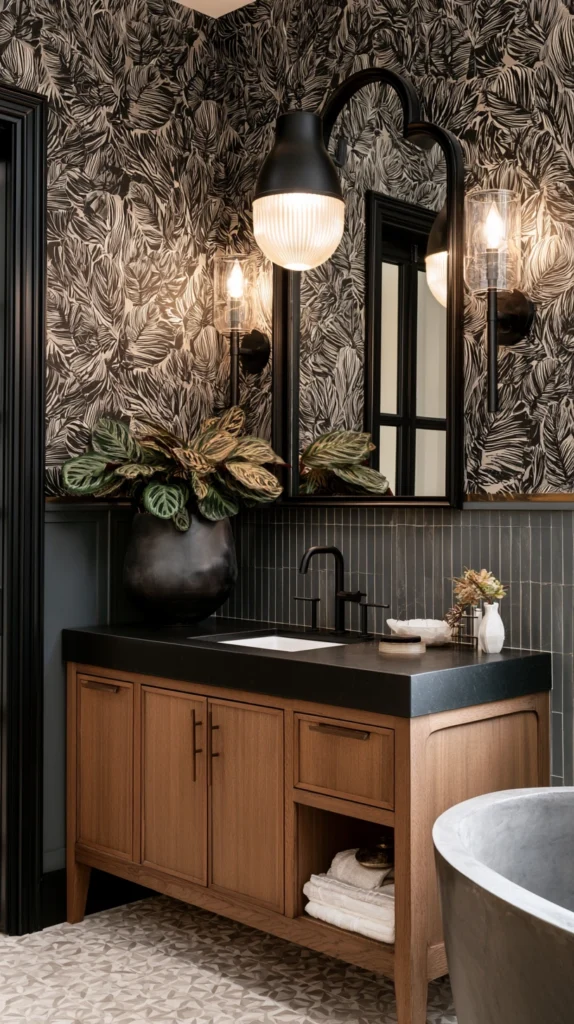
A calathea, with its dramatically patterned leaves that fold up slightly at night, placed in a bright, indirect spot — a plant that demands more consistent humidity than many other options on this list, making a well-used bathroom one of its better realistic homes in an average house.
Why calathea specifically depends on what a bathroom provides
- The high humidity requirement that’s genuinely difficult to meet elsewhere in most homes: calatheas are notoriously prone to crispy, browning leaf edges in typical dry household air, a problem a bathroom’s natural humidity helps prevent more reliably than almost any other room
- The striking, highly patterned foliage that rewards a well-suited environment: when genuinely happy, calathea leaves display dramatic stripes, spots, or color variations that make this one of the more visually distinctive plants on the entire list
- The more demanding overall care it requires compared to several other entries: calathea is less forgiving of inconsistency than pothos or a snake plant, making it a better fit for a bathroom where someone is willing to monitor conditions a bit more closely
The options
- Calathea orbifolia, with large, round, silver-striped leaves
- Calathea medallion, with a distinctive feather-like pattern in deep green and purple
- Calathea rattlesnake, with long, wavy-edged leaves and bold striping
- Calathea zebrina, with vivid zebra-like stripes across each leaf**
The practical execution
- Use filtered or distilled water where possible, since calatheas are notably sensitive to the chemicals and minerals present in standard tap water
- Keep soil consistently and evenly moist, avoiding both complete dryness and waterlogged conditions
- Provide bright, indirect light rather than direct sun, which can fade or scorch the dramatic leaf patterning this plant is chosen for
Cost breakdown
- Calathea, small to medium: $18–40
- Total: $18–40
11. English Ivy (A Classic Trailing Plant With Genuine Air-Quality Benefits)
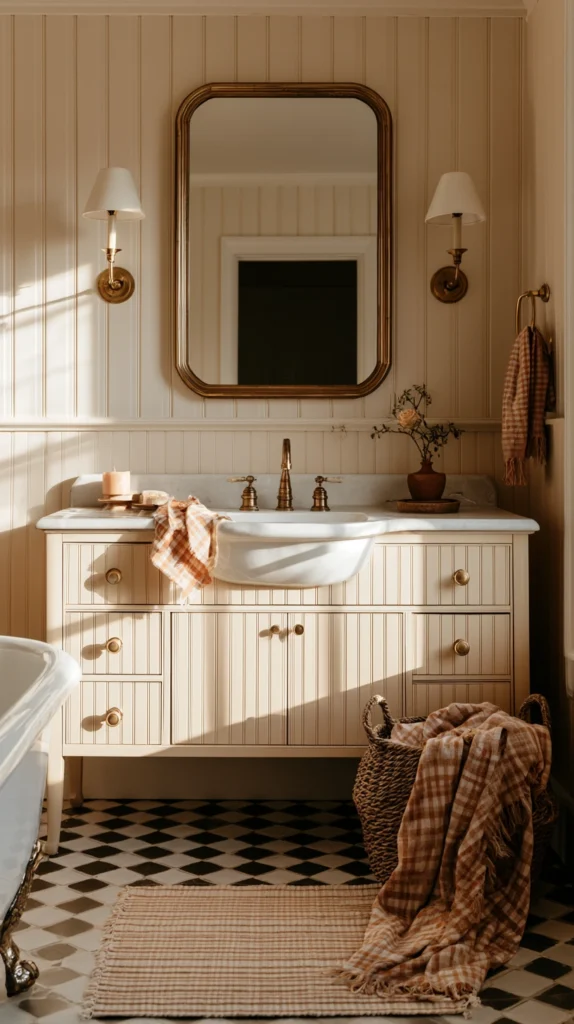
English ivy, trained along a shelf edge or allowed to cascade from a hanging planter — a classic trailing plant that tolerates a bathroom’s humidity well and offers a more traditional, cottage-style look than some of the more tropical options elsewhere on this list.
Why English ivy suits a more classic or farmhouse-style bathroom specifically
- The cooler-climate origin that distinguishes it from the tropical plants dominating this list: unlike most other entries here, English ivy comes from a more temperate climate, giving it a slightly different growth habit and aesthetic that pairs particularly well with farmhouse or cottage-style bathroom decor
- The genuine humidity tolerance it still offers despite its different origin: while not as dependent on humidity as a fern or calathea, English ivy handles a bathroom’s elevated moisture comfortably without issue
- The air-quality reputation it carries similarly to the snake plant: English ivy is commonly cited among plants studied for indoor air quality contributions, adding a practical dimension alongside its classic trailing appearance
The options
- Standard English ivy, with classic lobed green leaves
- A variegated English ivy variety, with white or cream edging for more visual contrast
- A smaller-leaved miniature variety, suited to a more compact shelf or counter display
- English ivy trained onto a small topiary frame, for a more sculptural presentation than simple trailing**
The practical execution
- Keep soil evenly moist but not waterlogged, checking more frequently than some of the more drought-tolerant options on this list
- Provide moderate indirect light, since English ivy tolerates lower light but maintains denser, fuller growth with at least some brightness
- Trim regularly to maintain a tidy shape and encourage fuller growth, since untrimmed ivy can become leggy and sparse over time
Cost breakdown
- English ivy, small to medium: $8–20
- Total: $8–20
12. Bird’s Nest Fern (A Fern With a Different Shape and More Tolerance Than Most)
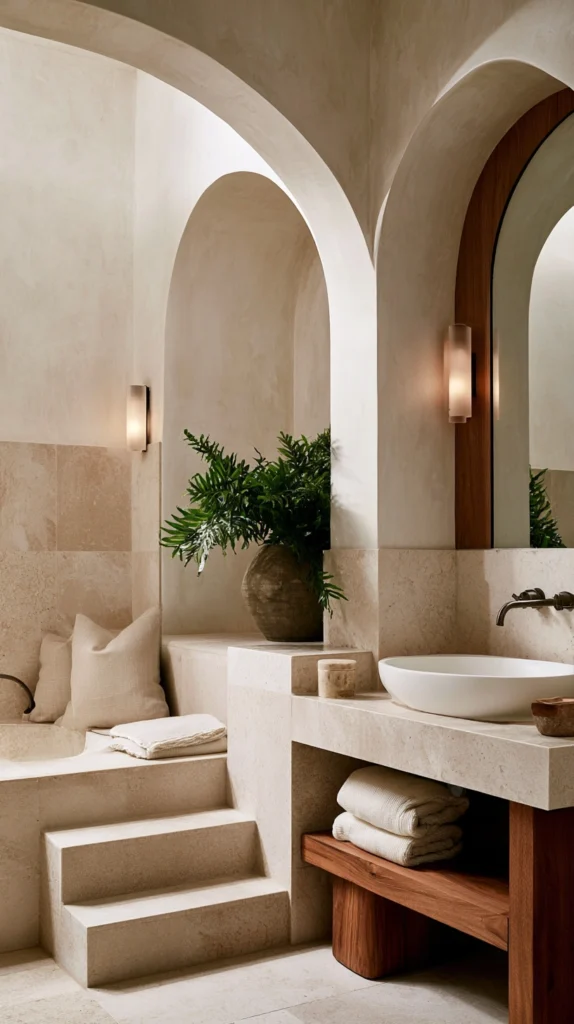
A bird’s nest fern, with its distinctive rosette of broad, wavy-edged fronds, placed on a shelf or counter — a fern that, unlike the more delicate Boston fern, tolerates somewhat lower light and slightly more irregular care while still benefiting significantly from a bathroom’s humidity.
Why a bird’s nest fern offers an easier alternative within the fern family
- The more forgiving light tolerance compared to a Boston fern: while still appreciating bright indirect light, bird’s nest ferns handle somewhat lower light conditions better than many other fern varieties, broadening which bathrooms can realistically support one
- The distinctive growth form that adds visual variety to a plant collection: rather than the cascading, feathery look of a Boston fern, a bird’s nest fern grows in an upright rosette, offering a structurally different silhouette among the rest of this list’s options
- The humidity benefit it shares with its fern relatives: like other ferns, this variety thrives on the elevated moisture a regularly used bathroom naturally provides, supporting fuller, healthier frond growth than it would achieve in a typical dry room
The options
- Standard bird’s nest fern, with broad, glossy, wavy-edged fronds
- ‘Crissie’ bird’s nest fern, with more dramatically ruffled, crinkled fronds
- A miniature bird’s nest fern variety, for a smaller counter or shelf footprint
- A bird’s nest fern mounted on bark, for a more naturalistic, epiphytic-style display**
The practical execution
- Water by pouring directly into the central rosette as well as the surrounding soil, mimicking how this plant naturally collects moisture in its native environment
- Avoid touching or unfurling new, tightly curled fronds, since they’re delicate and easily damaged before fully opening
- Position in bright, indirect light for the fullest growth, though this variety tolerates somewhat dimmer conditions better than many other ferns
Cost breakdown
- Bird’s nest fern, small to medium: $15–35
- Total: $15–35
13. Aloe Vera (A Practical, Sun-Loving Option for a Bright Bathroom Window)
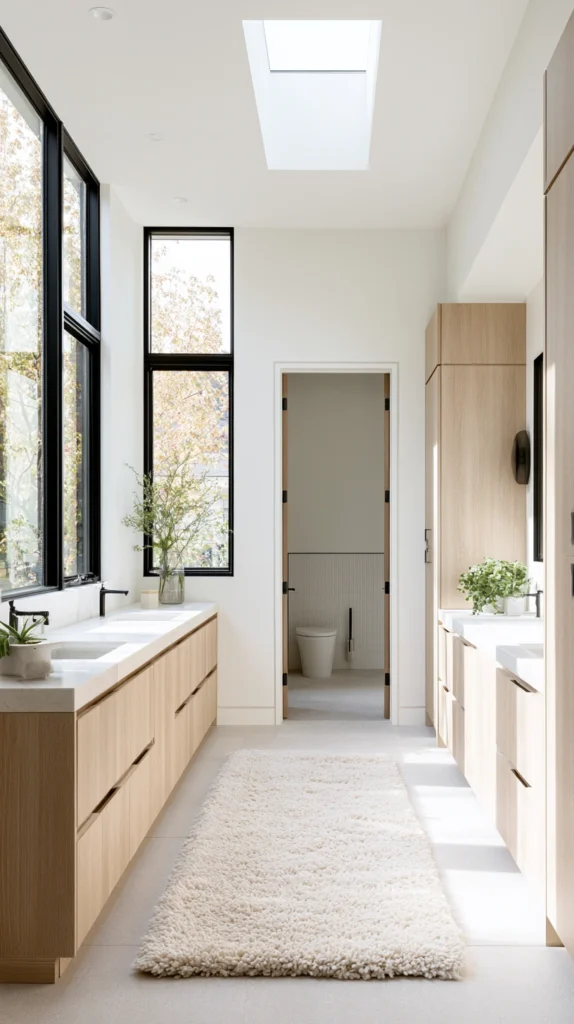
An aloe vera plant, positioned directly on a sunny windowsill — a succulent that stands apart from most of this list by genuinely preferring bright, direct light, making it the right choice specifically for a bathroom with strong natural sun exposure rather than a dim or windowless one.
Why aloe vera is the exception to this list’s general humidity-first logic
- The genuine need for bright light that distinguishes it from nearly every other entry here: unlike the shade-tolerant or humidity-loving plants dominating this list, aloe vera specifically needs strong, direct or near-direct light to thrive, making it suited only to a bathroom with a genuinely sunny window
- The practical, dual-purpose value it offers beyond decoration: aloe’s gel is commonly used for minor burns and skin irritation, giving this plant a genuinely useful function specific to a bathroom in a way none of the other entries on this list offer
- The lower humidity tolerance that actually works in its favor near a window: aloe is a succulent adapted to drier conditions, meaning it doesn’t depend on a bathroom’s humidity the way most other plants on this list do, and can handle a sunnier, drier spot near a window without issue
The options
- Standard aloe vera, the most common and most practically useful variety
- A variegated aloe variety, with lighter striping for more visual interest
- A smaller aloe vera ‘pup’, propagated from an existing plant, for a more compact starting size
- Aloe paired with other succulents, in a shared sunny windowsill grouping**
The practical execution
- Position directly in or very near the brightest, sunniest window the bathroom has, since this plant specifically needs more direct light than most others on this list
- Water sparingly, allowing soil to dry completely between waterings, treating this plant similarly to other succulents rather than the more moisture-dependent options elsewhere on this list
- Use a well-draining succulent-specific soil mix, since aloe is particularly susceptible to root rot in standard potting soil that retains too much moisture
Cost breakdown
- Aloe vera, small to medium: $8–20
- Total: $8–20
14. Chinese Evergreen (Aglaonema) (Colorful Foliage That Tolerates Real Neglect)
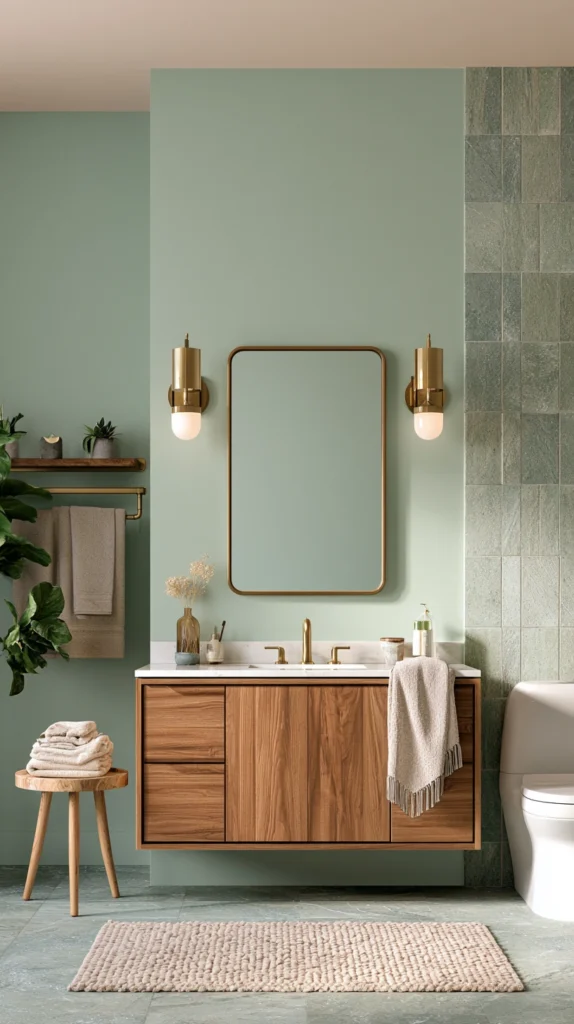
A Chinese evergreen, with its broad, often boldly patterned leaves in shades of green, silver, or pink, placed on a counter or low shelf — a plant known for tolerating both low light and a degree of neglect, while still offering more dramatic foliage color than many other low-maintenance options.
Why Chinese evergreen balances low-maintenance care with real visual impact
- The low-light tolerance that suits a dimmer bathroom corner: Aglaonema handles low to moderate indirect light reasonably well, broadening the range of bathroom conditions it can realistically succeed in
- The colorful foliage variety that distinguishes it from the more uniformly green low-light options elsewhere on this list: certain Chinese evergreen varieties offer striking pink, silver, or red patterning, giving this plant a level of visual interest uncommon among other shade-tolerant species
- The genuine humidity appreciation it shares with several other tropical entries: while tolerant of average household conditions, Chinese evergreen still responds positively to a bathroom’s elevated moisture, supporting fuller, more vibrant growth
The options
- Aglaonema ‘Silver Bay’, with silvery-green variegated leaves
- Aglaonema ‘Red Siam’, with dramatic pink and red coloring through the foliage
- Aglaonema ‘Maria’, a solid deep green variety, among the most shade-tolerant in the genus
- A smaller, compact Chinese evergreen variety, suited to a vanity counter rather than the floor**
The practical execution
- Water when the top inch or two of soil feels dry, allowing some drying between waterings rather than keeping the soil constantly damp
- Position in indirect light, avoiding direct sun, which can scorch the more colorful, variegated varieties in particular
- Rotate the pot occasionally for even growth, since this plant can lean toward whatever light source it does receive
Cost breakdown
- Chinese evergreen, small to medium: $15–35
- A more colorful variety like ‘Red Siam’: $20–45
- Total: $15–45
15. Asparagus Fern (Delicate, Feathery Texture That Still Tolerates Real Bathroom Conditions)
An asparagus fern, with its soft, feathery, needle-like foliage despite not actually being a true fern, placed in a hanging planter or on a shelf where its delicate fronds can spread or trail — a final textural option offering something visually distinct from the broader, glossier leaves found throughout most of this list.
Why asparagus fern adds a textural option this list otherwise lacks
- The fine, feathery texture that contrasts with nearly every other entry here: where most of this list features broad or glossy foliage, asparagus fern’s delicate, needle-like fronds introduce a softer, more textural visual note
- The reasonable humidity and light tolerance it offers despite its delicate appearance: this plant handles a bathroom’s humidity well and tolerates moderate indirect light, making it more forgiving than its fine-textured foliage might suggest
- The flexible growth habit it offers for different display styles: depending on the variety, asparagus fern can be grown as a more upright, bushy plant or allowed to trail from a hanging planter, offering some of the same display flexibility covered in the pothos and spider plant entries
The options
- Asparagus densiflorus ‘Sprengeri’, the most common trailing variety
- Asparagus setaceus, with even finer, more delicate, almost lace-like foliage
- A more compact, bushy variety, for a counter or shelf display rather than a hanging one
- An asparagus fern paired with the actual Boston fern from Idea #4, for two different fern-adjacent textures displayed together**
The practical execution
- Keep soil consistently moist, similar to the actual fern entries on this list, since this plant’s fine foliage dries out and browns relatively quickly if neglected
- Position in moderate to bright indirect light, avoiding direct sun, which can scorch the delicate, fine fronds
- Mist occasionally if the bathroom doesn’t see frequent shower or bath use, supplementing whatever ambient humidity the room provides on its own
Cost breakdown
- Asparagus fern, small to medium: $10–25
- Total: $10–25
The asparagus fern’s soft, feathery fronds catching the light from a small bathroom window: the final texture this list needed, thriving on the same steam and indirect light as everything that came before it.
The Bathroom Plant Selection Roadmap
The work, sequenced:
Phase One (the safest starting choices, for any bathroom):
- Pothos (#1)
- Snake plant (#2)
- ZZ plant (#3)
Phase Two (for a bathroom with at least some natural light):
- Boston fern (#4)
- Peace lily (#5)
- Spider plant (#6)
- Philodendron (#9)
Phase Three (for a bathroom with genuinely bright, indirect light):
- Calathea (#10)
- Orchids (#8)
- Chinese evergreen (#14)
- Asparagus fern (#15)
Phase Four (for the bathroom’s brightest, sunniest spot specifically):
- Aloe vera (#13), reserved for direct or near-direct sun
- Air plants (#7), supplemented with occasional direct light exposure
Getting Started This Weekend
The immediate-impact plant addition:
For any bathroom, regardless of its light level:
- Add a pothos to a high shelf or hanging planter (Idea #1)
- Add a snake plant to a floor or counter corner (Idea #2)
- Add a small grouping of air plants to a shallow dish on the vanity (Idea #7)
Total cost: $35–95. Time: about twenty minutes. The bathroom will already have living, low-maintenance greenery that suits its specific humidity and light conditions, regardless of how bright or dim the room actually is.
The next addition, once the bathroom’s actual conditions are better understood:
After a season of observing how the bathroom’s light and humidity actually behave, particularly through fall as daylight shortens, choose one plant from Phase Two or Three based on what the room has demonstrated it can support. A bathroom that’s kept its first round of low-light plants thriving is a strong candidate for the more demanding options; one where even the forgiving choices have struggled may need a grow light before expanding further.
What the right bathroom plants provide that a typical houseplant placement can’t:
The conditions a bathroom uniquely offers, used to genuine advantage:
- Humidity that several tropical and fern-family plants depend on more than any other room in the house can provide
- Low light tolerance matched specifically to the plants built to handle it
- A microclimate distinct enough that the right species often outperform the same plant placed elsewhere in the home
The low-maintenance reliability suited to a room that isn’t checked on constantly:
- Drought-tolerant options like snake plant and ZZ plant forgiving the bathroom’s realistic, irregular attention
- Visible care signals, like a peace lily’s drooping leaves, communicating need before serious decline sets in
- A range of options scaled to exactly how much natural light a specific bathroom actually offers
The variety that means there’s a plant for nearly any bathroom’s conditions:
- The lowest-light, most forgiving options for a windowless or dim bathroom
- Genuinely humidity-dependent species for a bathroom with bright, indirect light and regular use
- A true sun-lover for the rare bathroom with strong, direct window exposure
A bathroom was never actually the difficult growing environment most houseplant advice assumes it to be. For the right species, it’s closer to an advantage than a limitation, offering exactly the humidity many plants spend their whole lives chasing in a typical dry living room. The pothos thriving on nothing but steam and indirect light is doing better in that bathroom corner than it likely would on a sunny but dry windowsill elsewhere in the house. The fern unfurling a new frond by the window is responding to conditions the rest of the home simply can’t replicate.