
14 Garage Makeover Ideas That Turn Wasted Space Into the Room You Actually Want
Most garages are where organisation goes to die.
The boxes from the last move that were never unpacked. The exercise bike that became an expensive coat rack. The camping gear used once in 2019. The tools scattered across a workbench that has not been clear since the house was purchased. All of it accumulating in a space that costs as much per square foot as the rest of the house and contributes almost nothing to daily life.
The garage is typically the largest unfinished room in any home. It has height, width, and floor area that most rooms inside the house cannot match. And in most households it is used as a dumping ground rather than a designed space.
The opportunity that represents is significant.
A garage makeover does not require a contractor or a large budget or months of work. It requires decisions. What is this space actually for? What does it need to contain? What does it need to look and feel like to serve the people who use it?
Answer those questions and the garage transforms from the room everyone apologises for into the room everyone uses.
Here are 14 ideas that make that transformation happen.
Why Garage Makeovers Deliver Such High Return on Investment
The garage is the room with the lowest starting point and the highest potential upside.
A bedroom renovation improves a room that is already functional. A kitchen renovation improves a room that already works. A garage makeover takes a space that is genuinely failing at every level and gives it a purpose and a design that it has never had.
The before-and-after contrast is dramatic because the before is so poor. A clean floor, organised walls, and a clear purpose transform a garage more visibly than a similar investment in any finished room in the house.
From a real estate perspective, a finished, organised garage adds meaningful value to a property. Buyers notice garages. A garage that is visibly organised, finished, and functional reads as evidence of a well-maintained home. A garage packed with unorganised storage reads as a problem to be solved after purchase.
The investment-to-impact ratio of a garage makeover is one of the best available in any home improvement category.
1. Epoxy or Polyurea Floor Coating
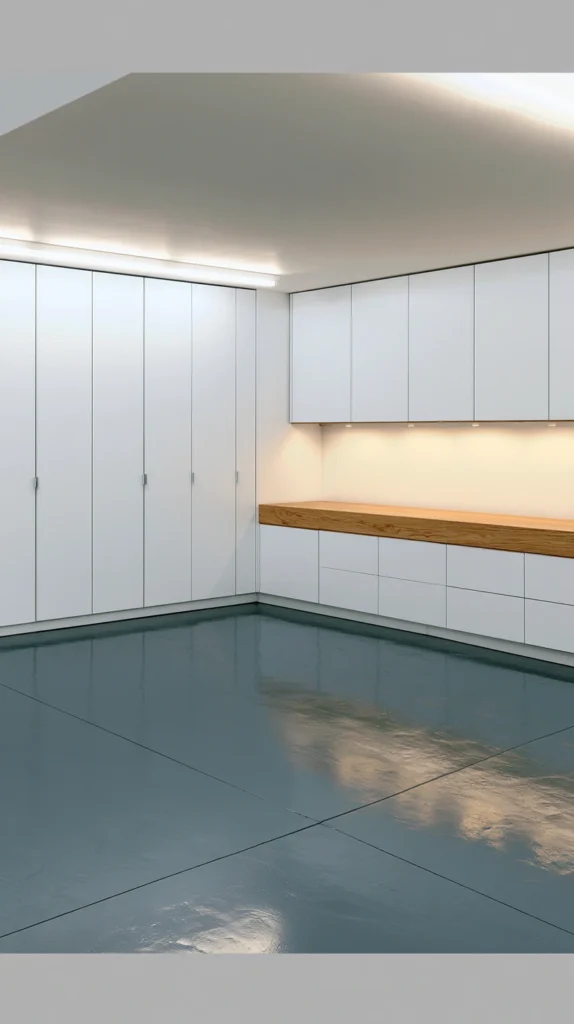
The floor is the first and most transformative upgrade in any garage makeover.
A bare concrete garage floor is porous, dusty, and difficult to clean. Oil stains spread through it. Water leaves marks. Dirt grinds into the surface and cannot be swept out. The floor communicates neglect regardless of what else is in the room.
An epoxy or polyurea floor coating transforms the floor in a single weekend and changes the entire character of the space.
The coating seals the concrete completely. Oil drips wipe up rather than absorbing permanently. Dust stops rising from the surface. The floor becomes genuinely cleanable with a mop rather than just sweepable. And visually, a coated floor in a solid colour or with decorative fleck makes the garage look like a finished room rather than a construction site.
Polyurea coatings are significantly more durable than standard epoxy. They cure faster, handle temperature fluctuation better, resist UV yellowing, and withstand the impact of dropped tools and driven-over equipment without chipping. The additional cost over DIY epoxy is justified for any garage that receives regular vehicle or heavy equipment use.
Choose a medium grey or charcoal floor coating with a broadcast fleck for the most forgiving and most professional-looking result. The fleck disguises dirt between cleanings and the medium tone conceals both light dust and dark marks equally. Very dark floors show dust. Very light floors show everything else.
What a quality floor coating delivers:
- Seals concrete completely so oil, water, and chemicals wipe clean rather than absorbing
- Eliminates concrete dust that coats everything in an uncoated garage
- Provides a surface that can genuinely be mopped clean rather than just swept
- Makes the garage visually read as a finished room rather than raw construction
- Adds significant durability and chemical resistance compared to bare concrete
- Lasts fifteen to twenty years with minimal maintenance when properly installed
2. A Full Wall of Built-In Storage Cabinetry
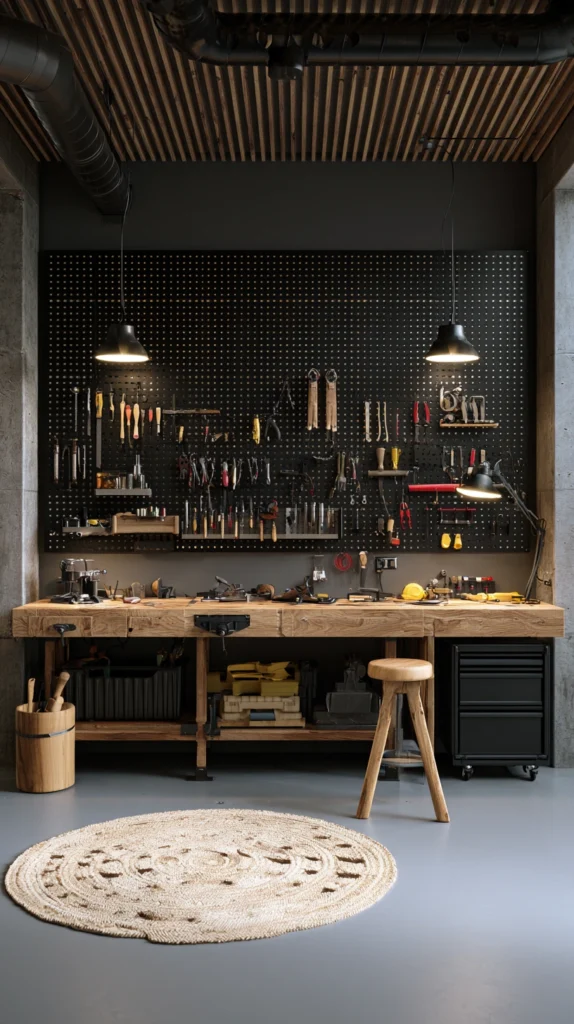
The wall of built-in garage cabinets is the upgrade that eliminates the storage problem permanently.
Not shelves with things piled on them. Not freestanding units that tip or shift. Floor-to-ceiling cabinets with closed doors that conceal everything behind them and make a garage look like a room rather than a storage facility.
Closed door cabinets do for a garage what they do for any other room in the house. Everything hidden behind them becomes invisible. The garage reads as organised and considered even when the actual contents of the cabinets are chaos. The important thing is that the chaos is contained and the surfaces are clear.
Garage-specific cabinet systems from manufacturers like Gladiator, NewAge Products, and Proslat are designed to handle the conditions of a working garage. Moisture-resistant materials. Heavy-duty hinges. Locking doors. Interchangeable configurations that can be adjusted as storage needs change.
The colour of the cabinets matters more than most people expect. White cabinets make a dark garage dramatically brighter and make the space feel cleaner and more finished. Black cabinets give the garage a dramatic, workshop-like character that suits a serious working space. Grey cabinets split the difference and suit almost any garage aesthetic.
Pair the full cabinet wall with a countertop along the base cabinets at workbench height. The combination of upper storage, lower storage, and a continuous work surface transforms the garage wall from a flat surface covered in random items into the most functional wall in the house.
3. A Dedicated Workshop Zone
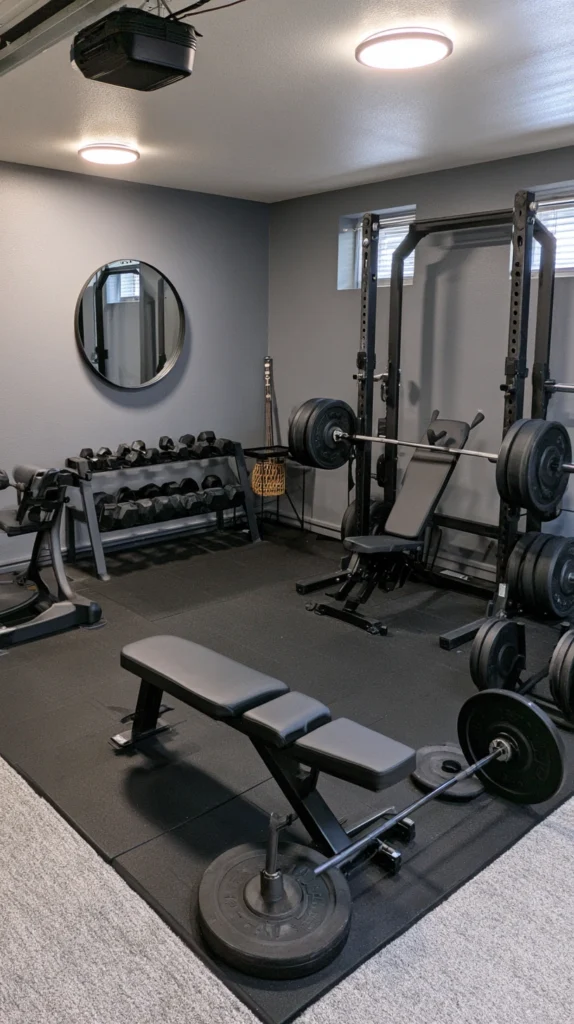
The workshop zone is the garage makeover for the household where tools and making are genuinely part of daily life.
Not a corner with a workbench and a pegboard as an afterthought. A properly designed workshop zone with everything a working craftsperson needs arranged for actual use.
A solid workbench at the correct ergonomic height. The standard height of ninety centimetres suits most people for standing work but building the bench to your actual comfortable working height, measured from the floor to where your hands hang naturally, makes a significant practical difference.
Tool storage above the bench that puts every tool in a visible and immediately accessible position. Pegboard is the traditional solution and remains excellent because it is endlessly reconfigurable. Shadow boards, where the outline of each tool is painted onto the board so the correct position is immediately obvious, add organisation that pegboard alone does not provide.
Adequate task lighting over the bench is non-negotiable. A workshop bench in shadow is a workshop bench where mistakes happen. LED work lights mounted directly above the bench surface provide shadow-free illumination that reveals detail in any material being worked on.
A dedicated electrical circuit for the workshop zone with multiple outlets and a suitable capacity for power tools eliminates the extension cord situation that characterises most improvised garage workshops.
4. Slatwall or Pegboard Wall Organisation System
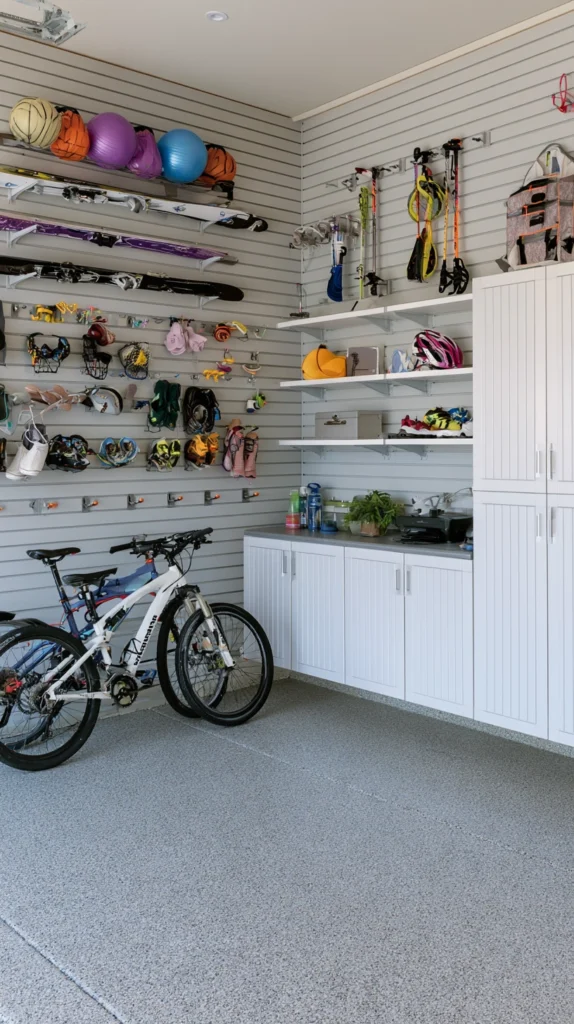
The slatwall system is the garage wall solution that handles the most varied storage requirements with the most flexibility.
Horizontal channels routed into panels that are fixed to the wall accept hooks, shelves, baskets, tool holders, bike hangers, and dozens of other accessories that simply push into the channels and lock in place. No drilling. No fixings through the wall. Move or reconfigure any element in seconds.
A full wall of slatwall in a garage provides effectively unlimited configurable storage for tools, sports equipment, garden gear, and seasonal items. The system adapts as storage needs change without any modification to the wall itself.
The visual effect of a slatwall system fully loaded with organised equipment is one of the most satisfying in any garage makeover. Every item has a specific place at a specific height. The floor in front of the wall is clear. The wall is completely utilised. The garage reads as a space that has been thought about rather than one that has been filled randomly.
Choose a colour for the slatwall panels that complements the floor coating and cabinetry. White slatwall on white cabinet walls creates a seamless, cohesive look. Charcoal slatwall on a grey floor with white cabinets creates a more graphic, contemporary aesthetic.
5. A Garage Gym That Actually Gets Used
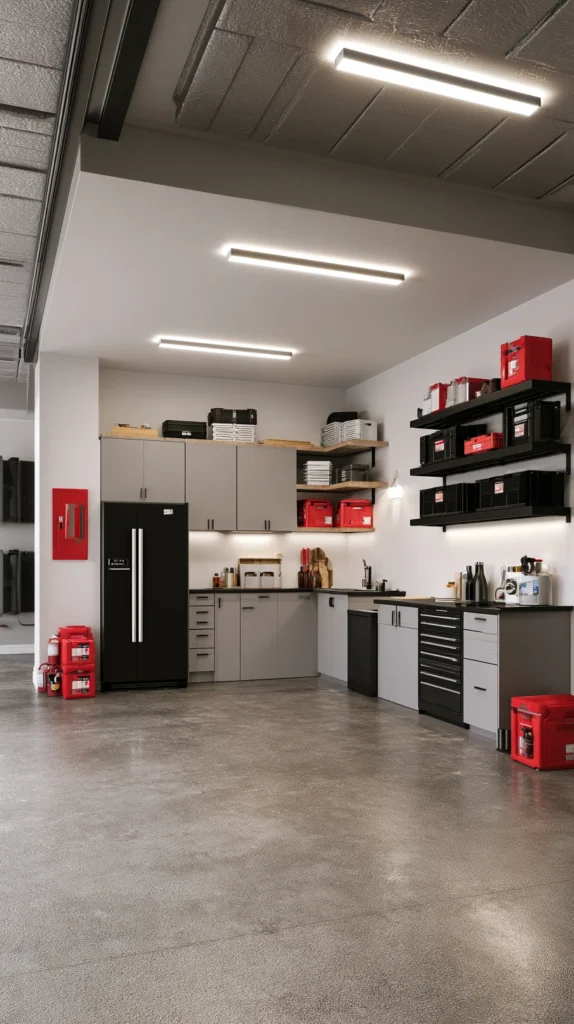
The garage gym is the makeover that produces the highest daily quality of life improvement for the households where it works.
And it works in most households with a garage, a fitness interest, and a membership to a gym they visit with increasingly low frequency.
The economics are straightforward. A garage gym equipped to a reasonable standard costs approximately what eighteen to twenty-four months of gym membership costs. After that point every workout is free. The gym is available at any hour without travel time. There is no waiting for equipment. No locker rooms. No requirement to leave the house.
The design of the garage gym determines whether it gets used consistently or becomes another expensive addition to the garage’s collection of unused equipment.
Rubber flooring over the coated concrete floor provides impact protection, noise reduction, and a surface that handles dropped weights and heavy equipment without damage. Interlocking rubber tiles in standard dimensions are affordable, DIY-installable in a morning, and significantly more durable than foam alternatives.
Mirror on one wall doubles the visual space of the gym, provides form-checking during exercise, and makes the room feel more like a professional gym than a domestic one. A floor-to-ceiling mirror on one full wall of a garage gym is one of the most impactful and most affordable additions available.
Good ventilation and temperature control are as important as the equipment. A garage gym that is unbearably hot in summer and freezing in winter will not be used year-round regardless of how well equipped it is.
6. An Insulated and Climate-Controlled Space
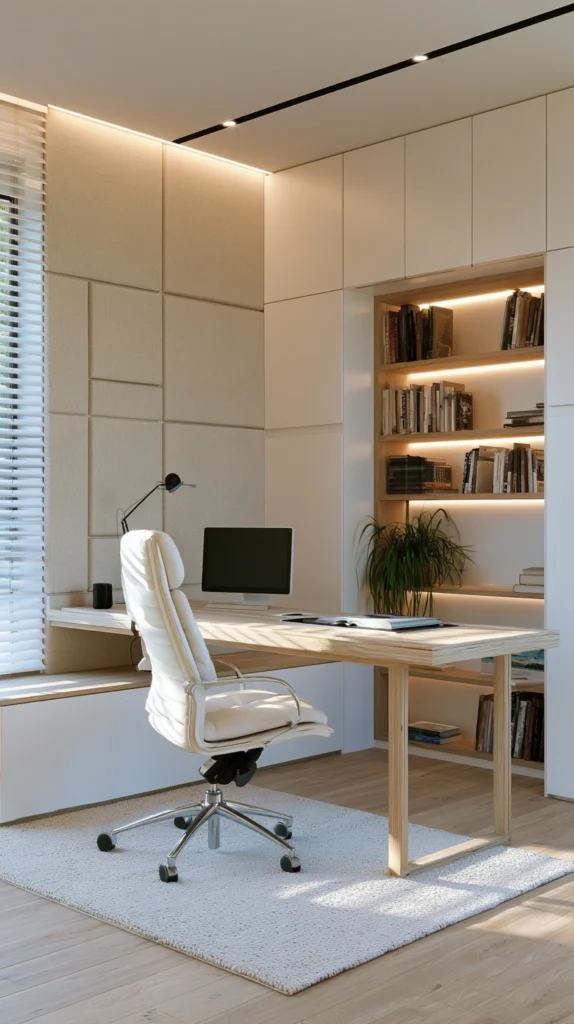
The uninsulated garage is comfortable for approximately four weeks of the year in most climates.
The rest of the time it is either too cold to work in, too hot to use comfortably, or both within the same day as exterior temperatures fluctuate. This temperature problem is the single biggest barrier to using a garage as anything more than storage.
Insulating the garage walls, ceiling, and door transforms it from a seasonal space to a year-round one.
Rigid foam insulation boards between the wall studs, covered with drywall or OSB, create a thermal envelope that retains heat in winter and reflects heat in summer. The garage becomes a genuinely conditioned space that holds temperature rather than oscillating with the exterior.
The garage door is typically the largest thermal gap in the entire structure. An insulated garage door, or insulation panels added to an existing non-insulated door, makes a significant difference to the thermal performance of the whole space.
A mini-split HVAC system, the ductless wall-mounted heating and cooling units increasingly common in residential construction, is the most efficient solution for conditioning a garage that is to be used as a working or living space. It provides both heating and cooling from a single unit, requires no ductwork, and can be installed in a day by a qualified HVAC technician.
7. Converting Part of the Garage Into a Home Office
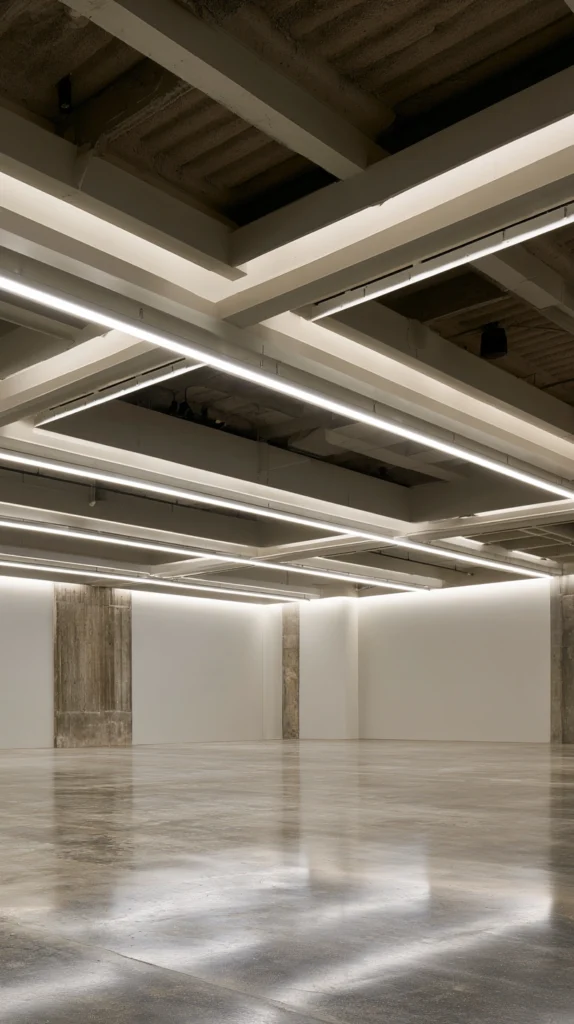
The dedicated home office in a converted garage is the makeover that adds the most functional value to a household where working from home is a regular reality.
A garage office separates the work day from the home in a way that a bedroom office or a dining room desk cannot. The physical distance, even if measured in metres rather than kilometres, creates a psychological boundary between work and home that most remote workers find genuinely beneficial.
The conversion does not require taking the entire garage. A partition wall across one third of the space creates an office of approximately fifteen to twenty square metres in a standard two-car garage while leaving the remainder for its other functions. A proper insulated partition with a door, soundproofing if the remaining garage is used for noisy activities, and climate control creates an office that is genuinely functional rather than provisional.
The office side needs all the infrastructure of a permanent workspace. Hardwired internet rather than relying on WiFi through a garage wall. Dedicated electrical circuits for computer equipment. Proper task lighting. A comfortable desk at the right ergonomic height with a quality chair.
The garage side can continue to function as a workshop, gym, or storage space while the office operates in the converted section.
8. A Finished Ceiling That Changes the Whole Room
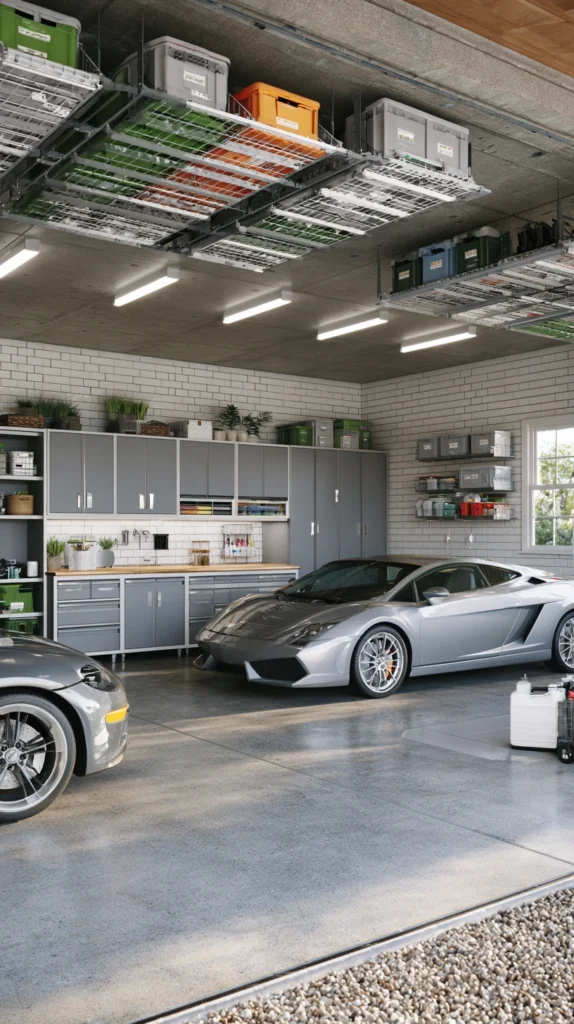
Most garages have unfinished ceilings.
Exposed joists or trusses, insulation batts sitting in the rafter bays, electrical conduit and junction boxes in plain view, bare wood and dust. The unfinished ceiling communicates more than anything else in the garage that this space has not been taken seriously.
A finished ceiling changes the fundamental character of the room.
Drywall installed between and below the rafters, taped, mudded, and painted, creates a clean ceiling that makes the garage read as a finished room. This is the most impactful single cosmetic change in a garage and it is often overlooked in favour of floor and wall improvements.
Exposed wood ceiling with stained or painted joists takes the raw structure and makes it a deliberate design feature rather than evidence of incompletion. The exposed joist ceiling in a dark stained or painted tone has a workshop character that suits a serious working garage beautifully.
Tongue-and-groove wood panelling on the ceiling creates the most beautiful finish but also the most time-intensive installation. In a garage gym or a garage office where the ceiling is a significant part of the visual experience of the room, the investment is worthwhile.
9. Overhead Storage for Seasonal Items
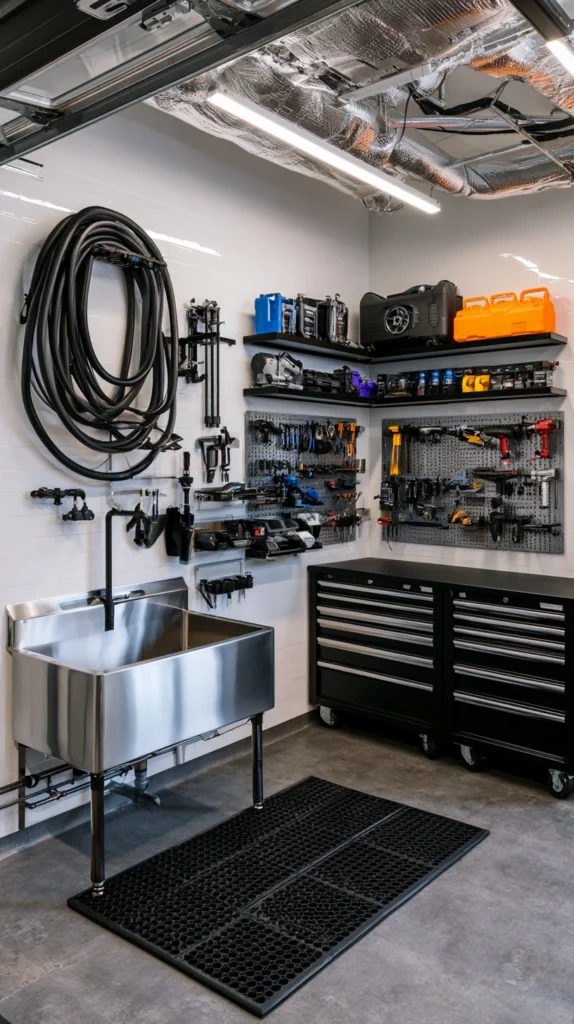
Overhead space in a garage is almost universally wasted.
The area above the car park is typically empty or filled with a few cardboard boxes balanced precariously on top of each other. This is the worst use of what is often the highest-volume storage zone in the entire garage.
Ceiling-mounted overhead storage platforms, heavy-duty grid systems fixed to the ceiling joists above the car park area, create storage of one hundred to two hundred square feet in a space that was previously unused.
This overhead zone is ideal for seasonal items. Holiday decorations. Camping gear. The ski equipment that comes down in December and goes back up in March. Luggage that is only needed for holidays. The things that are used once or twice per year and currently occupy prime floor-level storage space in the garage or in the house.
Moving seasonal items to overhead storage frees the wall and floor storage for the items that are accessed regularly. The daily-use tools and equipment occupy the accessible wall storage. The seasonal items are overhead and out of the way.
A motorised lift system for the overhead storage platform makes access genuinely easy rather than requiring a ladder every time a seasonal bin is needed. These systems lower the platform to car height, items are loaded or retrieved, and the platform rises back to the ceiling. The convenience makes the overhead storage actually used rather than forgotten.
10. A Car Care Station
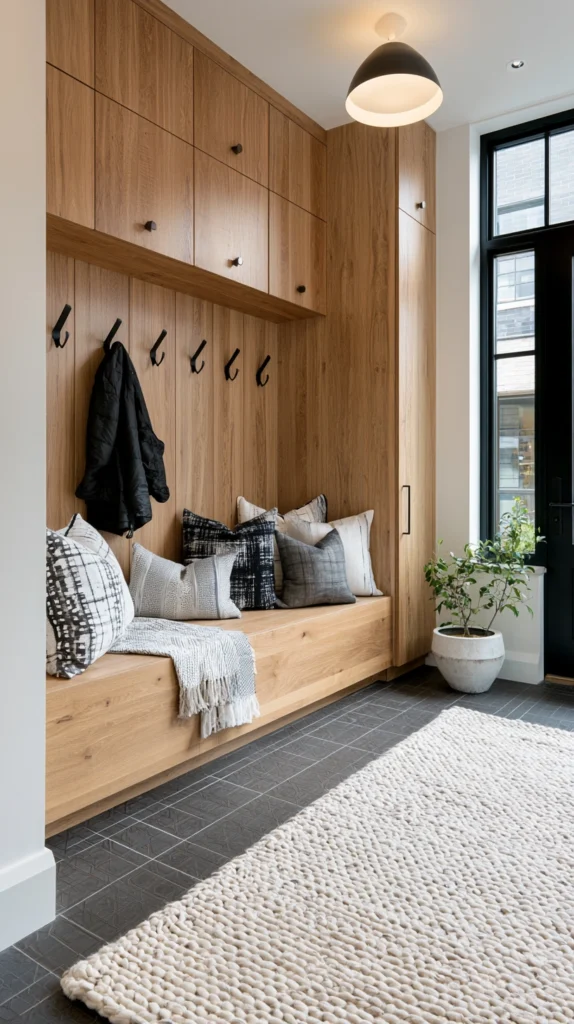
The car care station is the garage makeover for the household that actually uses the garage for its stated purpose.
A dedicated zone for washing, detailing, and maintaining vehicles transforms routine car care from a disorganised, equipment-hunting exercise into a smooth, enjoyable process.
A deep stainless steel utility sink mounted at the correct height for washing buckets. A wall-mounted hose reel beside the sink with enough hose length to reach every side of the vehicle. Slatwall or pegboard above the sink holding the wash mitts, microfibre cloths, brushes, and detailing tools in a consistent, visible arrangement.
A dedicated shelf or cabinet for car care products. Shampoos, waxes, polish, tyre dressings, glass cleaner. All labelled, all visible, all in the specific place they return to after each use.
An air compressor wall-mounted or on a rolling cart. A small rolling tool chest for the car-specific tools that are used for maintenance. A creeper board stored flat against the wall for undercarriage work.
The car care station makes routine maintenance easy rather than effortful and signals to anyone who enters the garage that this space is genuinely used and genuinely valued.
11. A Mudroom Entry Transition Zone
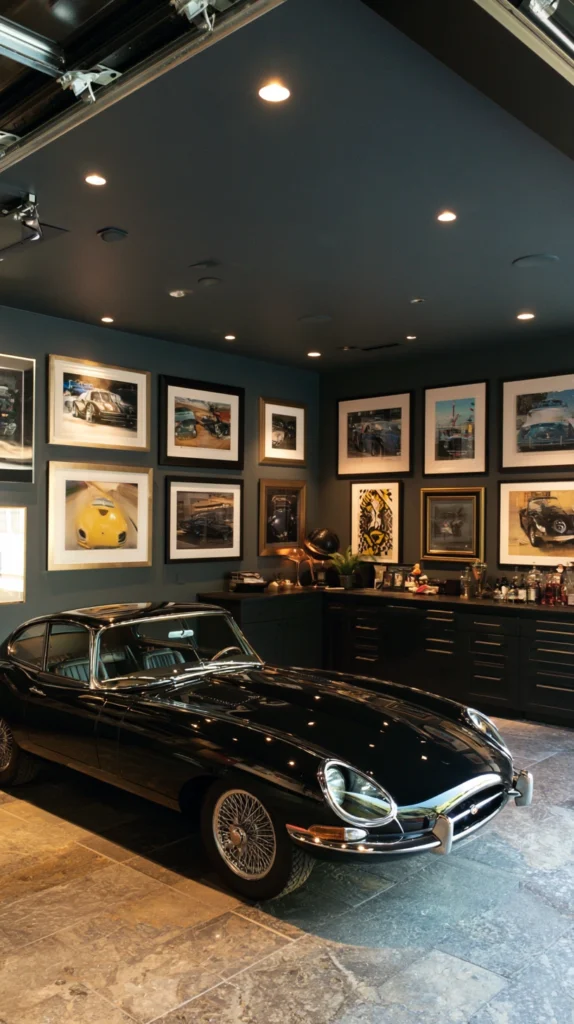
The garage is typically the primary entry point for most households.
Not the front door with its decorative entrance and its organised coat hooks. The garage door. The one everyone uses every day. And in most garages this primary entry point is one of the least designed spots in the entire home.
A mudroom transition zone at the garage-to-house entry changes the entire experience of arriving and departing.
Built-in bench seating at the correct height for sitting to remove shoes and boots. Storage cubbies or lockers beneath and beside the bench for footwear, bags, and outdoor equipment. A hook rail at the right height for coats and jackets above the bench. A shelf above the hooks for helmets, hats, and the items that need to be findable on the way out.
The mudroom zone contains the chaos of daily arrivals and departures in the garage rather than distributing it through the house. Wet boots stay in the boot zone. Bags go in the cubby. Coats go on the hook. The house beyond the garage entry stays genuinely tidy rather than perpetually gathering the accumulation of each day’s arrivals.
For households with children this is the highest-impact functional addition in any garage makeover. The morning departure ritual and the afternoon arrival are both transformed when there is a specific place for every item and every family member has their own column of space.
12. Gallery Walls and Finishing Touches That Make the Garage Feel Intentional
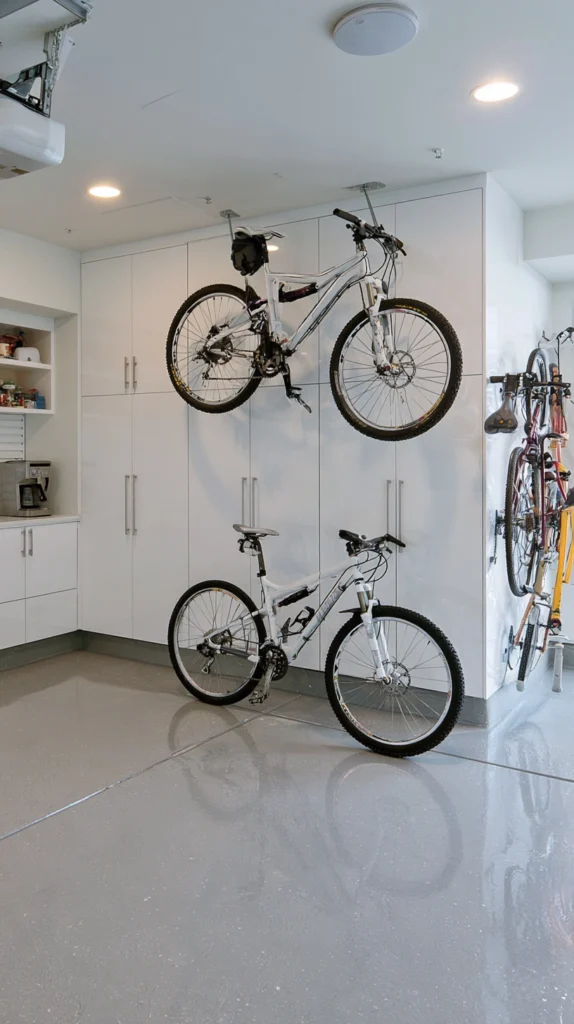
A garage that is functionally excellent but visually raw still communicates that the space is not quite finished.
Finishing touches that make a garage feel designed rather than merely organised are worth the relatively modest additional investment they require.
Paint on the walls is the most fundamental finishing touch. A garage with painted drywall walls in a consistent colour reads as a room. A garage with bare concrete block or raw OSB walls reads as a construction site regardless of how well organised it is.
Choose a wall colour that complements the floor coating and the cabinet colour. A warm grey or off-white makes the garage bright and clean. A darker tone gives the garage a more dramatic, workshop-like character. The same principles that apply to wall colour in any room apply here.
Art and signage on the walls adds personality that transforms a garage from a functional space to a personal one. Vintage automotive prints for the car enthusiast. Sports photography for the garage gym. A custom workshop sign for the craftsperson’s space. The objects on the walls communicate who this garage belongs to and what it is for.
Good lighting across the whole space, not just task lighting at the workbench, makes the garage feel like a room rather than a dark work cave. LED shop lights across the ceiling provide bright, even illumination that makes the whole space feel larger and cleaner.
13. A Bike Storage Solution That Clears the Floor

Bicycles on the garage floor are one of the most common causes of garage chaos.
They take up disproportionate floor space relative to their dimensions. They tip over onto each other and onto everything else. They block access to the areas behind them. And they make a garage feel cluttered and full even when there are relatively few of them.
Wall-mounted bike storage, hooks or cradles that lift bikes completely clear of the floor and hang them vertically or horizontally against the wall, reclaims the floor area that standing bikes occupy and makes the bikes easier to access than when they are tangled together on the ground.
A single wall-mounted horizontal bike hook, the simplest and most affordable solution, holds one bike with its wheels against the wall. A family of four with four bikes needs four hooks at staggered heights to nest the bikes without interference.
A ceiling-mounted pulley system lifts bikes fully to the ceiling and stores them directly above the car park area. This approach requires overhead clearance but takes bikes completely out of the usable zone of the garage and frees the full wall and floor area.
Vertical wall bike storage systems that hold bikes by their front wheel, the front wheel drops into a channel on the lower rail and the bike leans against the upper rail, store multiple bikes in the minimum possible floor footprint. Four bikes can be stored vertically in less than two metres of wall width.
14. A Weekend Entertainment and Recreation Space
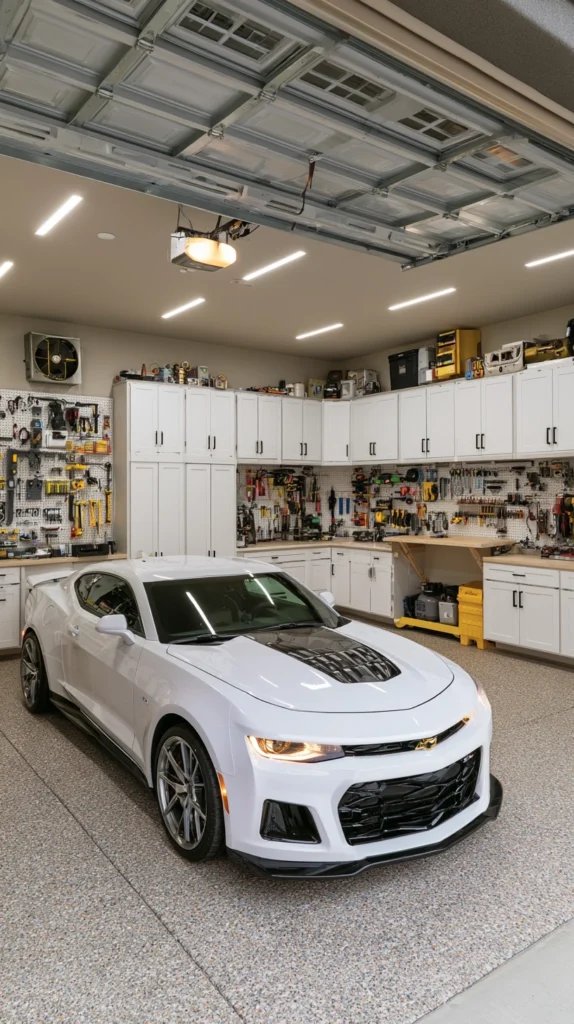
The garage entertainment or recreation space is the makeover that most transforms how the household uses the room and how guests experience it.
A space designed for gathering. For watching the game. For playing pool or ping pong. For the kind of casual, relaxed entertaining that a formal living room does not easily accommodate.
The practical requirements are straightforward. A mounted television at the right viewing height for standing or seated viewers. Comfortable seating that handles the relaxed, informal quality of garage entertaining. A bar area or refrigerator for drinks. Good audio that fills the space without requiring everyone to stand close to a speaker.
A pool table or ping pong table as the centrepiece demands significant floor space and the high ceiling that garages typically provide. The ceiling height that is a disadvantage in a home office becomes an asset in a recreation space where the ability to shoot without the table lamp interfering matters.
The aesthetic of the garage entertainment space should be deliberate rather than provisional. Not leftover furniture from the living room that was replaced. Not mismatched pieces from different rooms that no longer fit elsewhere. A cohesive scheme that communicates that this space was designed for this purpose.
Industrial pendant lights above the pool table. A mounted TV in a media wall of floating shelves. A built-in bar with a mini fridge and a countertop at bar height. Comfortable stools around a high table. The garage as the best room in the house for a specific kind of enjoyment is a genuinely achievable outcome.
How to Plan a Garage Makeover From Start to Finish
The garage makeover that succeeds begins with a single question.
What is this space actually for?
Not what it currently is. Not what it stores. What it is going to be used for intentionally, every week, by the people who live in the house.
A garage that is primarily for car storage needs different solutions than a garage that is primarily a workshop. A garage gym needs different infrastructure than a garage office. Identify the primary purpose and design around that purpose first. Secondary uses fit in around the primary one.
Clear everything out before you design anything. Everything. Take it out of the garage and into the driveway or garden. Look at what you have. Be honest about what you actually use and what you have been storing because it was easier than deciding to dispose of it.
The sorting process typically reveals that twenty to forty percent of what is in a garage has not been touched in over two years and has no specific planned future use. These items go to donation, recycling, or disposal rather than back into the newly designed garage.
What remains after the clear-out is the actual storage requirement. Design the storage around that genuine requirement rather than the theoretical maximum of everything that might conceivably need to be stored.
Common Mistakes in Garage Makeovers
Starting without clearing out. Designing storage around the existing contents of the garage often means designing storage for things that should be disposed of. Clear everything out and sort before any storage decisions are made.
Under-investing in the floor. The floor is the surface that defines the entire visual character of a garage and the one that takes the most punishment. A poor quality floor coating applied over inadequately prepared concrete peels and fails rapidly. Do it once properly.
Building storage without a system. Random hooks and shelves accumulate into a wall of organised chaos. Every storage zone needs a system. Tools here. Sports equipment there. Garden gear in this section. Seasonal items overhead. The system makes the storage maintainable rather than just initially organised.
Ignoring the ceiling height. Garages typically have the highest ceilings of any space in the home. Overhead storage, tall cabinet systems, and ceiling-mounted bike or equipment storage all capitalise on this height advantage. Designs that stop at six feet ignore the most abundant storage resource in the room.
Choosing open shelving for everything. Open shelves look good when empty and photogenic when initially organised. They look cluttered within weeks because dust, random additions, and visual complexity accumulate on them. Closed cabinets maintain their appearance with no effort.
Not planning the electrical. A garage makeover that adds a gym, workshop, office, or entertainment space needs more electrical capacity than the original garage circuit was designed to provide. Plan the electrical requirements before construction begins and run the circuits at the beginning of the project rather than retrofitting them later.
Making it purely functional. A garage that is organised but visually raw does not feel like a space worth being in. The finishing touches of paint, lighting, art, and visual coherence transform an organised garage into a designed one.
Quick Summary
- An epoxy or polyurea floor coating is the single most transformative upgrade in any garage makeover
- Floor-to-ceiling built-in cabinetry with closed doors eliminates visible clutter permanently
- A properly designed workshop zone with a solid bench, shadow board tool storage, and dedicated lighting serves serious craftspeople properly
- Slatwall or pegboard systems provide infinitely configurable wall storage that adapts as needs change
- A garage gym with rubber flooring, mirrors, and climate control is more economical than gym membership within two years
- Insulation and a mini-split HVAC system makes the garage usable year-round rather than just in mild weather
- A converted garage home office creates the physical separation from home life that remote workers need most
- A finished ceiling with drywall, painted joists, or tongue-and-groove panelling transforms the visual character of the space
- Ceiling-mounted overhead storage platforms use the most wasted zone in most garages for seasonal items
- A car care station with a sink, hose reel, and organised products makes vehicle maintenance genuinely enjoyable
- A mudroom entry transition zone at the garage-to-house door contains arrival chaos before it enters the home
- Paint, art, signage, and good overall lighting make the garage feel designed rather than merely organised
- Wall-mounted or ceiling pulley bike storage reclaims the floor space that bikes on the ground consume
- A garage entertainment space designed for purpose is the room that guests always want to spend more time in
- Clear everything out before designing and sort honestly before deciding what goes back in
- Identify the primary purpose of the space and design around that purpose first
The garage is the room that every home has and almost no home uses well.
It is the room that could be the workshop, the gym, the office, the entertainment space, or the most organised storage in the house.
It is the room that has been waiting for a decision about what it should actually be.
Make that decision this weekend.
The rest is just execution.