
15 Doily Decor Ideas for a Vintage-Modern Home That Feel Fresh Rather Than Fussy
The doily has spent several decades in design purgatory.
It arrived from the Victorian and Edwardian eras as a functional and decorative textile, protecting polished surfaces from vases and figurines, serving as a delicate surface treatment that was also a demonstration of domestic skill. It was everywhere. Then it became associated with a specific kind of home, the home of an older generation’s grandmother, the antimacassar-on-the-armchair school of décor that the twentieth century’s design movements were determined to leave behind.
The doily was thrown out with the antimacassar and the aspidistra.
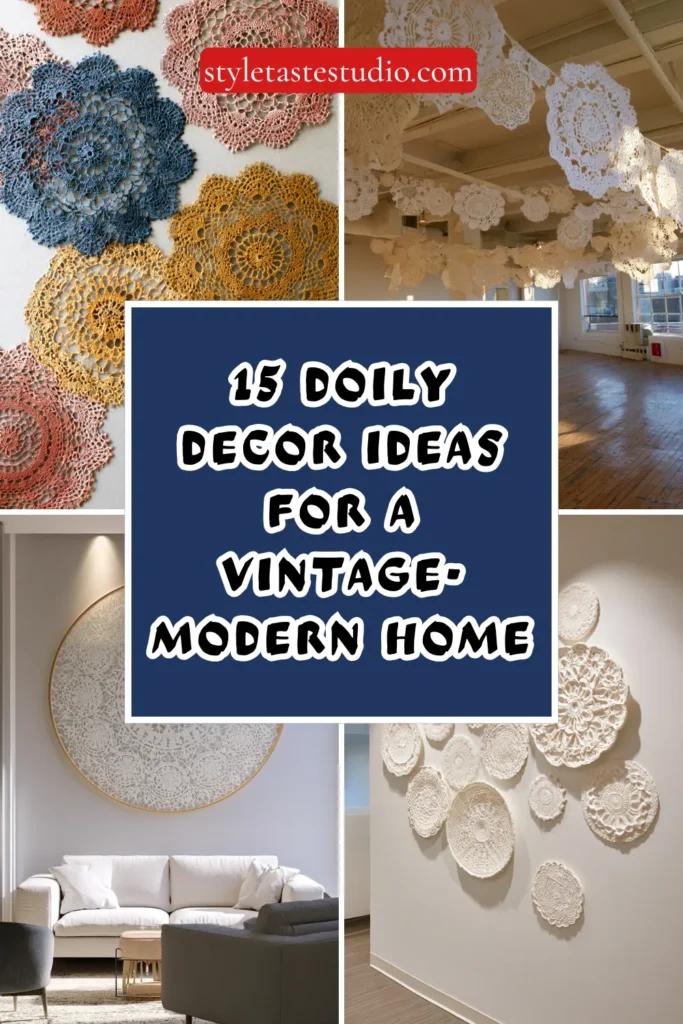
And now it is back. Not in the same form and not in the same context. But the specific quality of the doily, the intricate lace pattern, the delicate openwork of the crocheted or bobbin-laced surface, the specific beauty of something made with extraordinary patience and skill, has found its way back into contemporary homes through a series of recontextualisations that have stripped away the fussiness and kept the beauty.
The vintage-modern home is the context that suits the doily best. Not as a protective surface layer but as a design element in its own right. Not as a symbol of domestic correctness but as a textile object of genuine craft value positioned with intention.
Here are 15 ideas that make the doily work in a genuinely contemporary home.
Why the Doily Is Having a Well-Deserved Design Rehabilitation
The doily’s return is not nostalgia for its own sake.
It is part of a broader rehabilitation of handmade textiles in interior design that has brought macramé back to walls, crochet back to cushion covers, and hand-blocked print back to kitchen textiles. The common thread is craft. The visible evidence of a human hand producing something that a machine either cannot produce at all or cannot produce with the same quality of specific, imperfect beauty.
The doily is among the most technically demanding textile crafts. The bobbin lace doily, made with dozens of bobbins simultaneously carrying thread in complex crossing patterns, requires years of skill to produce at any level of sophistication. The needle lace doily requires the specific counted-stitch patience of an extraordinarily skilled needleworker. Even the crocheted doily, the most accessible of the doily forms, requires a level of consistent precision across hundreds of stitches that most people find challenging.
This technical difficulty is part of what makes the contemporary rehabilitation of the doily satisfying. In a world of mass production the object that took weeks to make carries a value that the price tag does not begin to capture. The doily is the antidote to the throwaway. Its quality is specific, irreplaceable, and immediately apparent to anyone who looks closely at it.
1. A Large Doily as a Wall Hanging
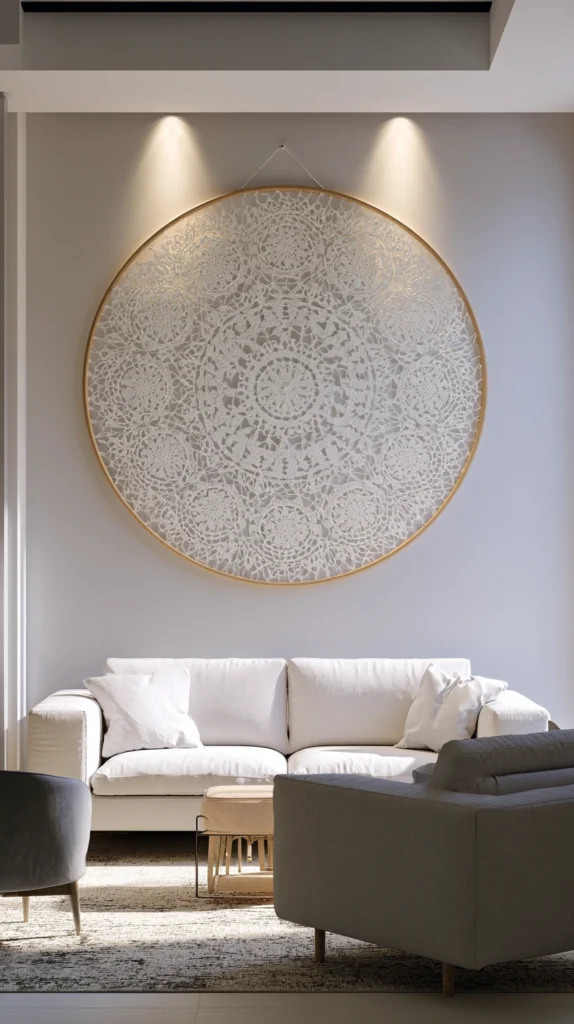
The most direct route to the doily’s contemporary rehabilitation is the simplest.
Take it off the table and put it on the wall.
A large doily, twenty-five to forty centimetres in diameter, mounted in a wooden or metal embroidery hoop and hung on the wall as a textile artwork, becomes an entirely different object from the same doily lying under a vase on a side table. The wall position allows the lace pattern to be read clearly. The hoop provides a contemporary framing device that strips away the Victorian association and positions the doily as a textile art object rather than a surface protector.
A collection of five to seven doilies in different sizes and patterns, all mounted in hoops of coordinating materials and hung as a gallery, creates a wall installation of genuine visual interest. The repetition of the circular form with variations in the lace patterns creates the visual rhythm of a considered gallery rather than the accumulation of collected objects.
The doily gallery wall is the most directly contemporary application of the doily in interior design and the one that most completely strips away the previous associations. On the wall in a hoop, the doily is a textile art object. It is judged on the quality of its pattern and the fineness of its work rather than on its cultural associations.
Why mounting doilies in hoops and hanging them on the wall is the highest-impact contemporary doily application:
- The wall position removes the functional surface-protection context that generates the fussy associations
- The embroidery hoop provides a contemporary framing device that the doily alone cannot provide for itself
- The lace pattern reads clearly on the wall in a way it cannot when lying flat on a table beneath an object
- A gallery of different patterns creates visual variety within the consistency of the circular form
- The installation reads as textile art rather than as vintage décor
- The technique requires no modification to the doily and can be reversed if the aesthetic direction changes
2. Framed Doilies as Textile Art
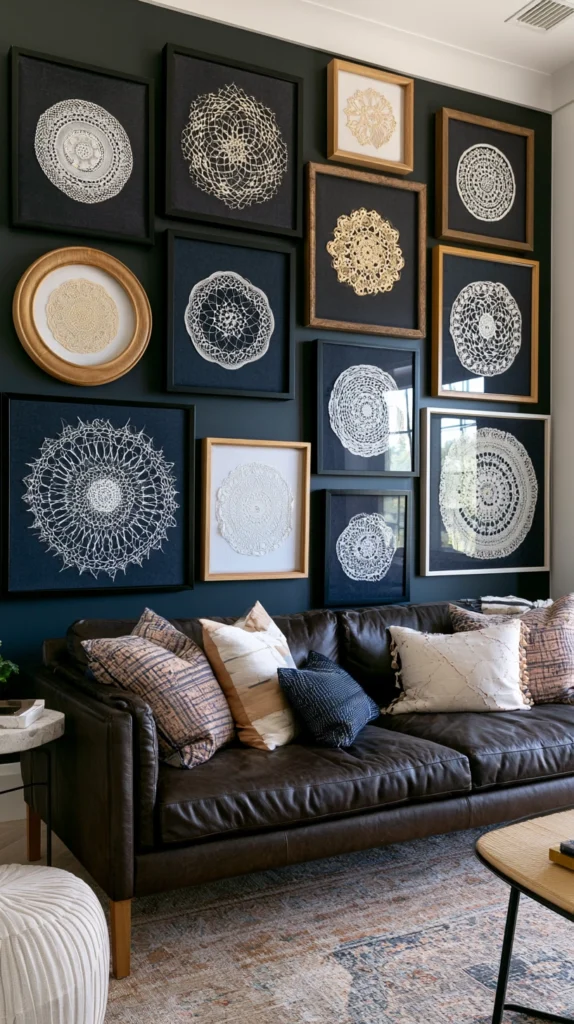
The doily mounted on a backing and placed in a frame is the gallery art version of the hoop installation.
Choose a backing material that contrasts with the white or cream of the doily to make the pattern clearly readable. Deep navy. Charcoal. Forest green. Black. These dark backings behind a white doily create the maximum tonal contrast and allow every element of the lace pattern to be seen clearly.
Stretch the doily over the backing before mounting it in the frame. Pin it at the edge points to hold the circular form rather than allowing it to crinkle or bunch. Iron lightly through a damp cloth if necessary to flatten the texture for mounting.
A simple, clean-lined frame in natural timber or black metal is the right choice. An ornate period frame would return the framed doily to the Victorian associations it is trying to escape. The contemporary frame strips those associations away and positions the doily as an object of contemporary appreciation.
Hang as you would any framed artwork. At eye level. With appropriate wall space around it to allow the framed piece to be seen without competition from adjacent objects.
3. Doily Runner on a Dining Table or Console
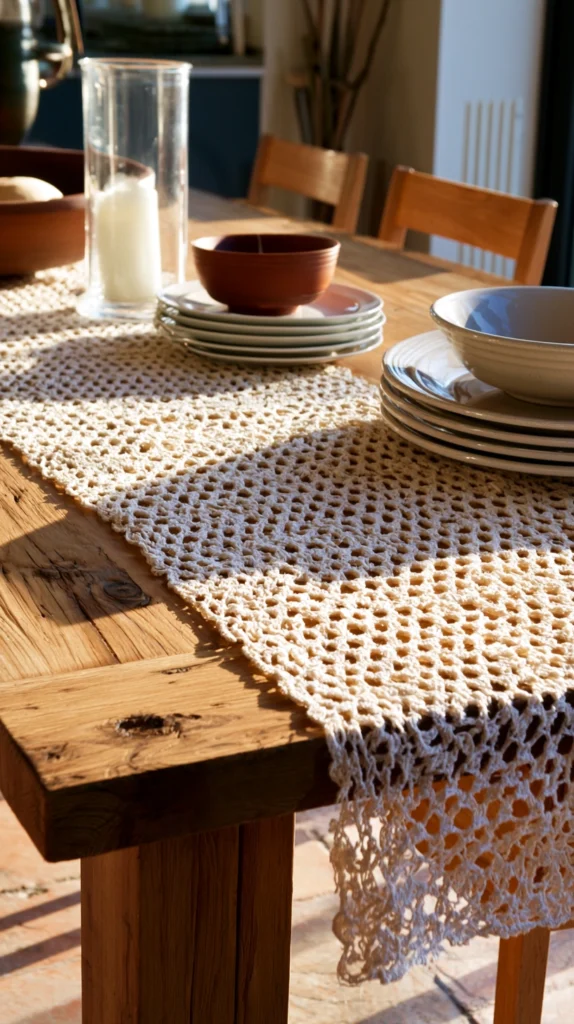
The table runner is the contemporary doily application that respects the textile’s original functional purpose while updating its presentation.
A single long doily, or a series of doilies connected end to end, running the length of a dining table or console, creates a runner effect that is lighter and more delicate than any conventional table runner. The openwork of the lace pattern allows the table surface below to show through, creating a layered effect that is specific to the lace textile and unavailable in any opaque fabric runner.
On a dark table, the white or cream doily runner creates a dramatic contrast. The lace pattern against the dark table reads as fine white drawing on a dark ground. On a pale table, the runner is subtle, a surface texture rather than a colour contrast.
This use respects the doily’s original surface-protection function while positioning it as an aesthetic choice rather than a practical necessity. The runner is chosen for its beauty. It happens to also protect the table.
4. Doily-Inspired Ceramic or Plaster Wall Plates
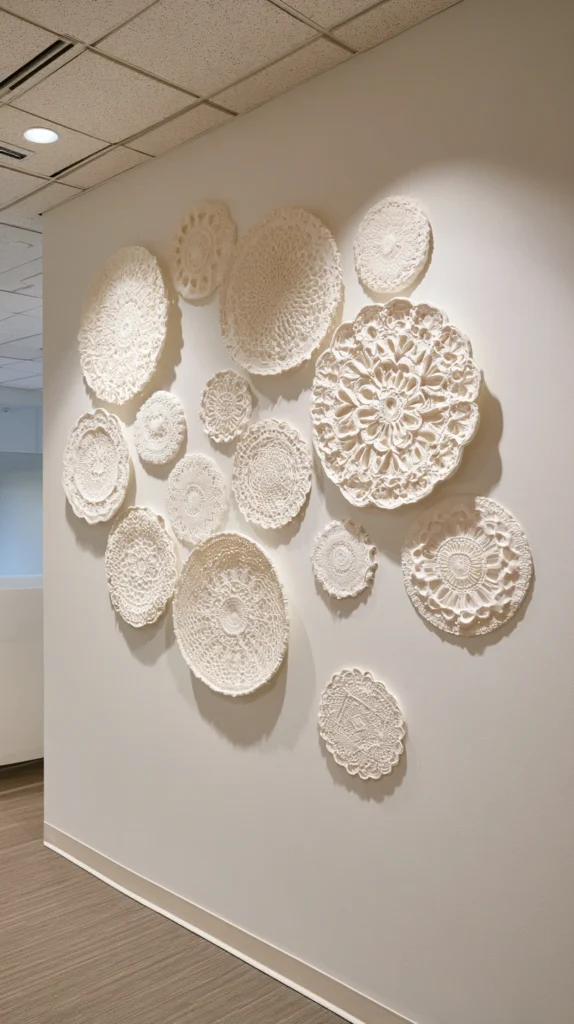
The doily pattern translated into a different medium, cast into ceramic or pressed into plaster, becomes a dimensional object rather than a flat textile.
Decorative wall plates and plaster cast panels that replicate doily lace patterns in their surface relief are available from ceramicists and specialist home décor producers. These objects take the doily’s visual language, the radial geometric pattern of the lace, and produce it in a material that is unambiguously contemporary in its application.
A set of three or five ceramic wall plates in different sizes, all using the same doily-inspired radiating pattern, creates a wall installation that references the textile tradition while existing entirely within the contemporary ceramic art tradition.
These ceramic translations are the doily decor idea for the person who loves the pattern but does not want to use actual textile in the room’s design. The visual reference is there. The specific material of the original is not.
5. Layered Doilies Under Vases and Decorative Objects
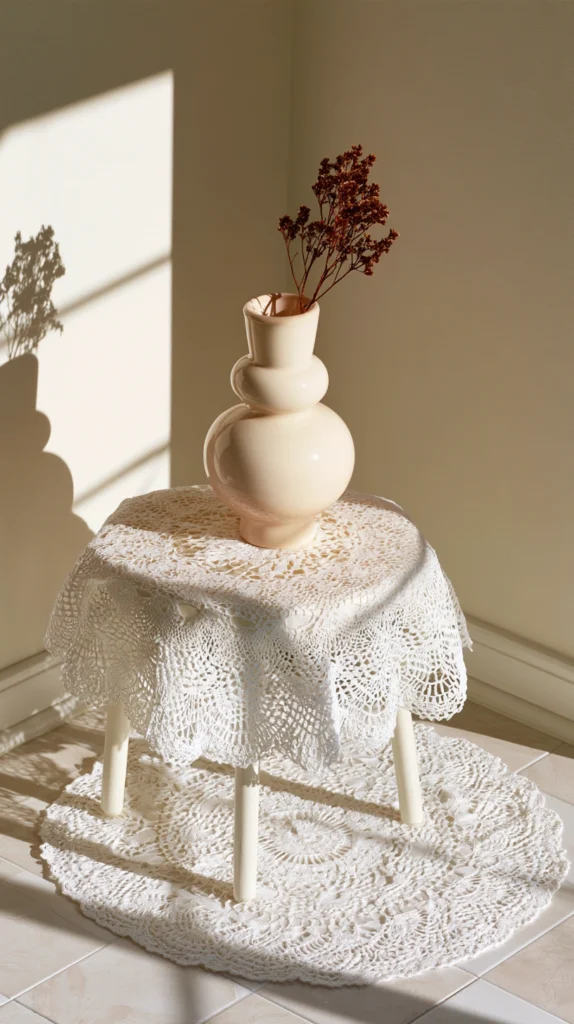
The doily’s original purpose, as a protective and decorative surface layer under displayed objects, is entirely valid when it is done with intention rather than convention.
The distinction between the dated application and the contemporary one is selection and placement.
The dated application puts a doily under every object on every surface because that is what is done. The contemporary application chooses one carefully selected doily, positions it specifically under one carefully selected object, and treats the combination as a considered still life rather than a decorative habit.
A large doily under a ceramic vase of specific beauty on a dark wooden side table. The doily is visible beyond the vase’s base and provides a circular frame of lace pattern around the vase’s bottom. The combination of the vase’s form, the table’s material, and the doily’s pattern creates a still life of three distinct elements in productive relationship.
Choosing the right doily for the right object, and the right surface for both, is the work of this application. Done well it is genuinely beautiful. Done as a reflex it is exactly what it was before.
6. Doily-Printed Fabric Cushion Covers
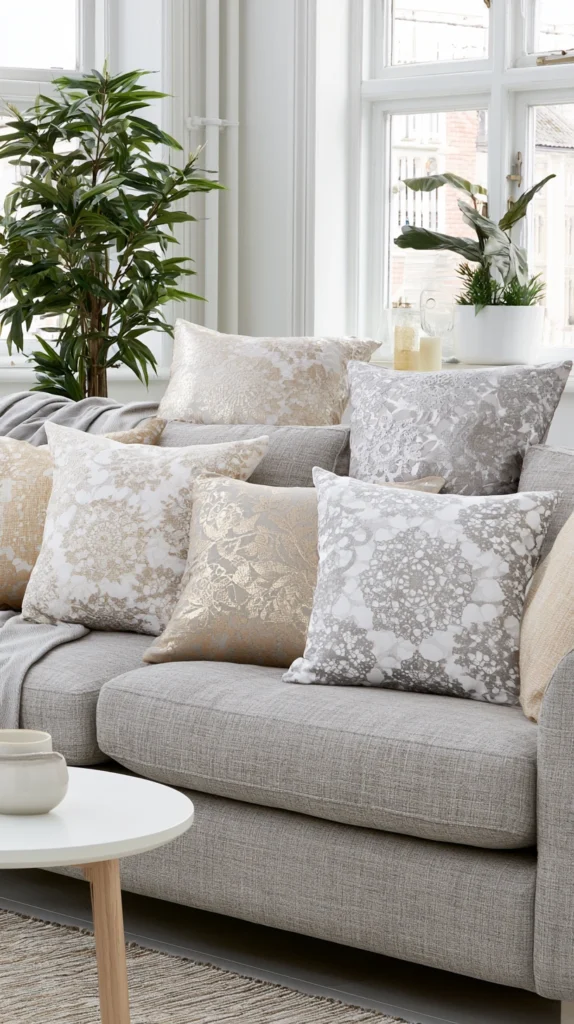
The doily pattern translated into a fabric print for cushion covers is the most accessible contemporary doily reference.
Fabric with a repeating doily lace pattern, printed in a single colour on a contrasting ground, or in a metallic ink on a dark fabric, creates a cushion cover that references the doily tradition without using actual lace. The print can be scaled up or down from the original pattern. It can be printed in colours that the original white lace could never be.
A deep navy cushion with a white doily pattern printed across its surface. A blush pink cushion with a gold doily pattern. A black cushion with a metallic silver doily repeat. These printed cushions place the doily pattern in a specifically contemporary context.
The cushion format is also the lowest-commitment entry point to the doily design reference. Cushion covers are changed seasonally. The doily print cushion can be incorporated for a season and retired without any permanent commitment.
7. A Doily Lampshade
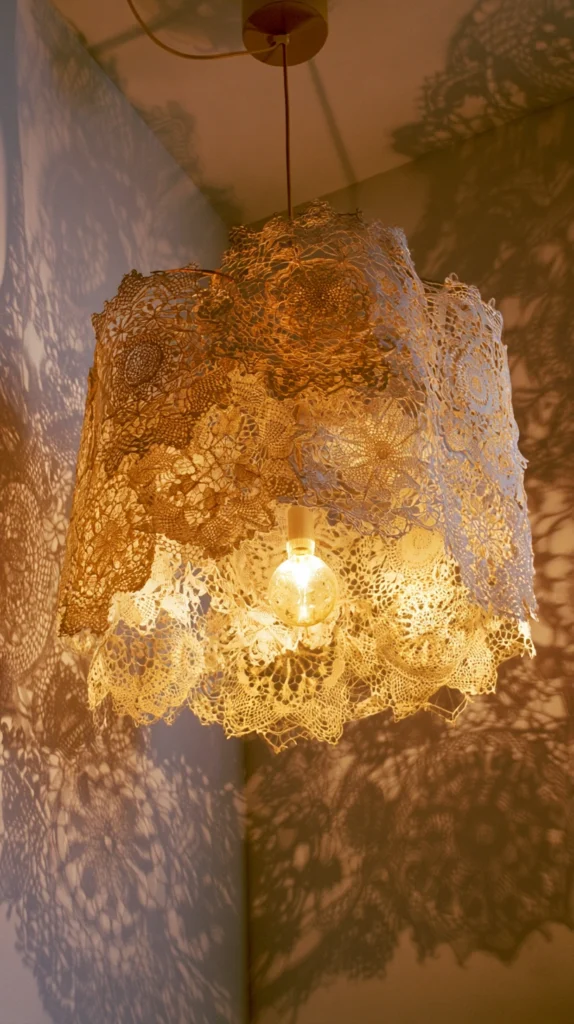
The doily lampshade is the application that uses the openwork of the lace to its most specific and most beautiful advantage.
A lampshade made from a single large doily, or from multiple doilies stiffened with fabric starch and formed around a shade frame, creates a lampshade that projects light through its lace pattern onto the surrounding surfaces.
The light through the openwork of the lace creates a shadow pattern on the ceiling and the adjacent wall that is as beautiful as the shade itself. The shadow pattern moves when any air movement affects the shade. The pattern on the wall is a second expression of the doily’s design in shadow rather than in thread.
Stiffening doilies for lampshade construction requires soaking in liquid fabric starch, forming over a mould or frame, and allowing to dry in the correct position. The result is a rigid, structural textile form that retains the pattern and the openwork of the original doily.
8. Doilies as Wrapping and Gift Decoration
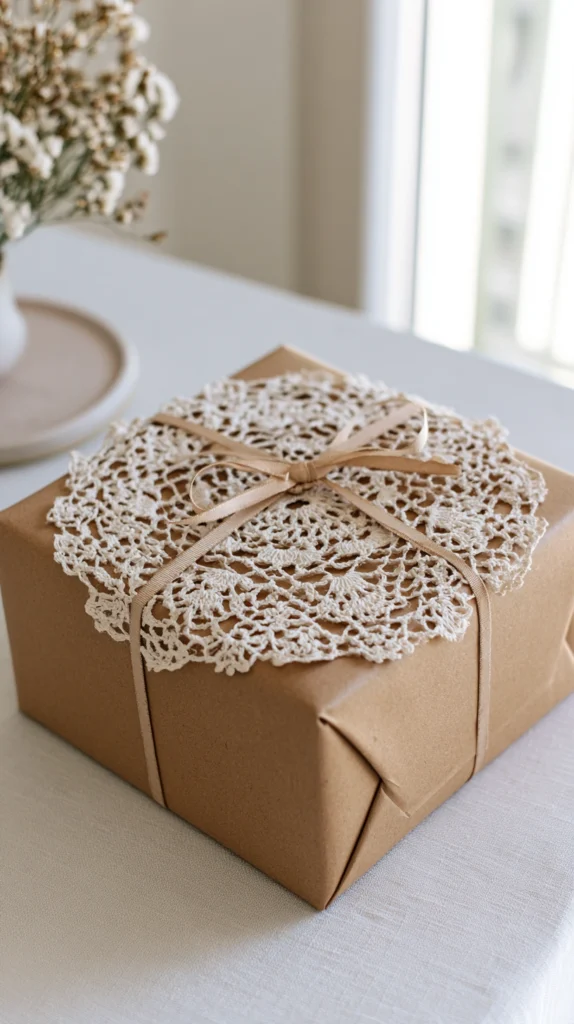
The doily as gift wrapping is the application that introduces it into the home through the front door rather than through a design decision.
Gifts wrapped in plain brown paper or solid-colour tissue, with a doily positioned as a decorative layer between the outer wrapping and the ribbon, arrive as objects of specific charm. The recipient has a doily as part of the gift rather than a piece of plastic ribbon. The doily stays. It is placed somewhere. It becomes part of the home through giving.
This application does not produce a designed décor element but it does introduce beautiful textiles into a home through a route that feels natural rather than deliberate. The doily that arrived with a gift and has stayed on the kitchen windowsill for six months because it is genuinely pretty there is the doily that belongs in the home more than any deliberately placed one.
9. Doilies Under Plants in Terracotta Pots
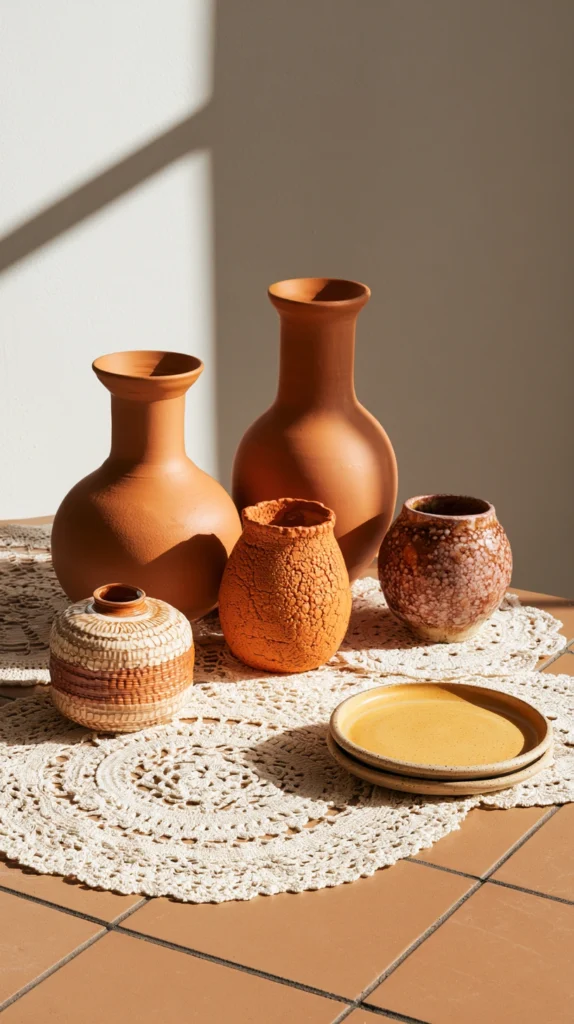
The doily under a terracotta plant pot on a windowsill is one of the simplest and most quietly beautiful applications of the textile in a contemporary home.
The combination of the terracotta’s warm orange-red and the white or cream of the lace creates a colour relationship of simple, natural warmth. The doily extends beyond the pot’s base, creating a circular lace frame around the pot that connects the pot to the surface it sits on. Water that drips through the drainage hole onto the doily is absorbed by the cotton rather than spreading directly onto the wooden surface.
A collection of terracotta pots of different sizes on a windowsill, each on its own doily, creates a small, quietly charming still life. The lace patterns vary from pot to pot. The terracotta colours are consistent. The combination is warm and unaffected.
This is the doily application that requires no design conviction and no specific design skill. It is simply a nice thing to do with an object that is otherwise unused.
10. A Doily Garland for Festive or Seasonal Decoration
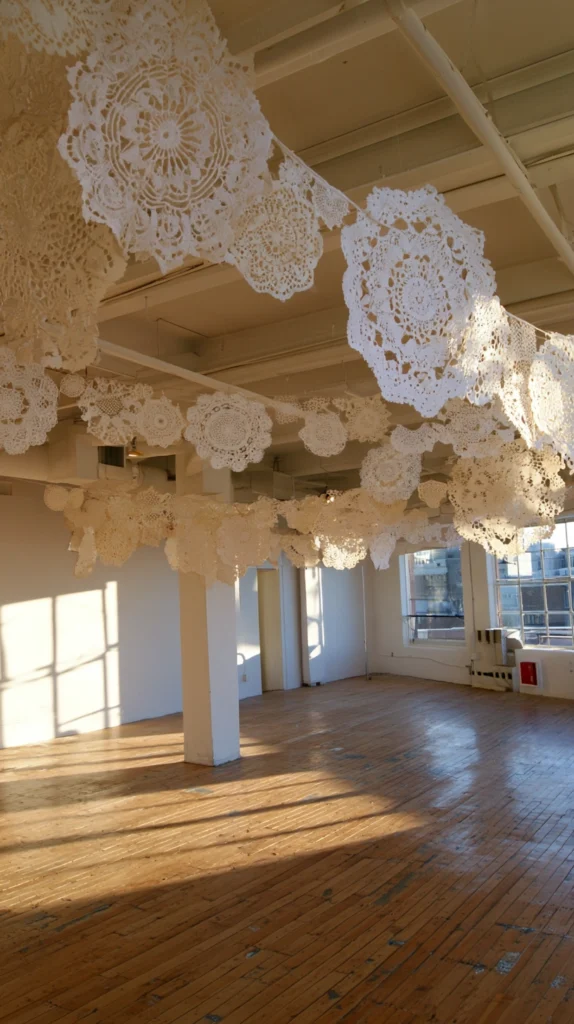
The doily garland is the temporary, seasonal application that introduces the textile into the home for specific occasions without requiring any permanent design commitment.
Individual doilies, folded or cut into half-circles, strung on a cord and hung between two points, create a garland of lace that is festive and delicate in equal measure. For Christmas, a doily garland in white with silver thread woven through the lace. For a table setting, doilies strung across the room above the table. For a garden party, a doily garland between trees.
The garland format respects the temporary nature of the decoration and releases the doily from any requirement to be a permanent design feature. It is beautiful for the occasion. It is stored afterwards. It appears again next year.
11. Doily-Pattern Embossed Stationery and Paper
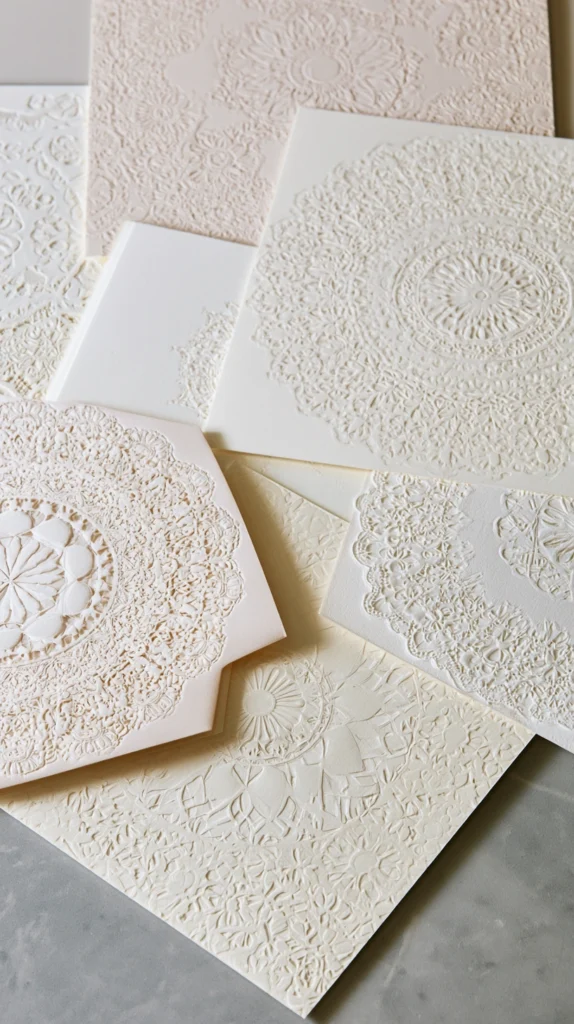
The doily pattern transferred to embossed paper creates stationery, wrapping sheets, and decorative paper of specific delicacy that places the lace pattern in a medium suitable for contemporary use.
Embossed paper using a doily as the pressing surface, pressed onto a sheet of heavy cartridge paper, transfers the lace pattern as a three-dimensional surface texture. The paper is not printed. It is physically shaped by the doily to bear the impression of the textile in the paper’s surface.
This paper can be used as gift wrapping, as a decorative liner for drawers and shelves, as stationery, or simply as a decorative element placed in a frame. The paper version of the doily pattern is entirely contemporary in its application while being a direct impression of the original textile.
12. A Doily Canopy or Ceiling Decoration
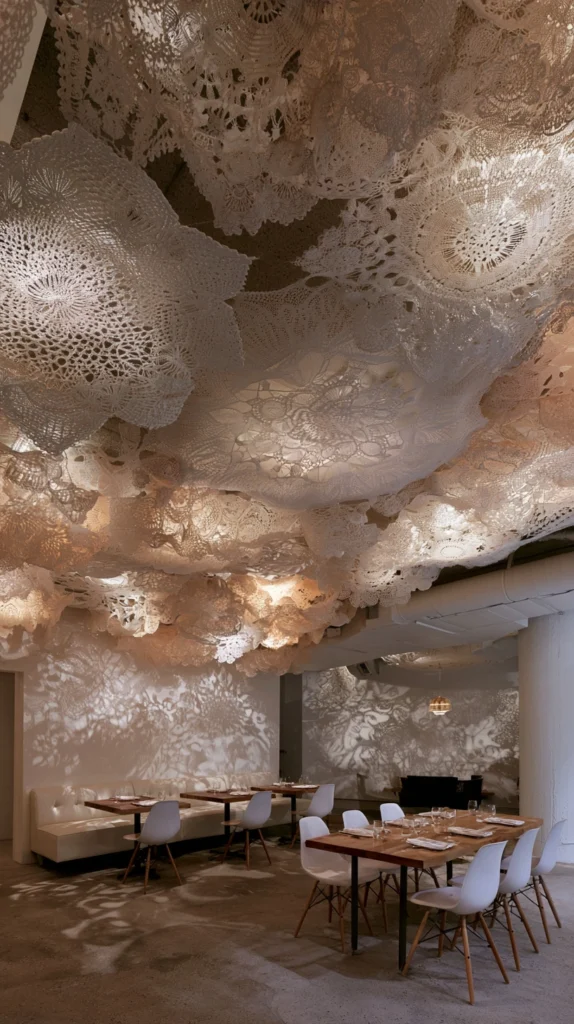
The doily ceiling installation takes the textile’s use in the most unexpected direction.
Multiple large doilies, connected at their edges and hung from the ceiling in a loose canopy over a dining table, above a bed, or in a corner reading area, create an overhead textile installation of extraordinary delicacy. The natural light that falls through the lace of the ceiling installation creates moving shadow patterns on the surfaces and people below.
At night with warm uplighting beneath the canopy, the doily lace is illuminated from below and becomes a ceiling of warm patterned light rather than an opaque overhead surface.
This installation is temporary and requires nothing more than thread and hooks. The doilies are not cut or permanently modified. The installation can be removed and the doilies returned to storage or other uses.
13. Doilies Dip-Dyed in Natural Colours
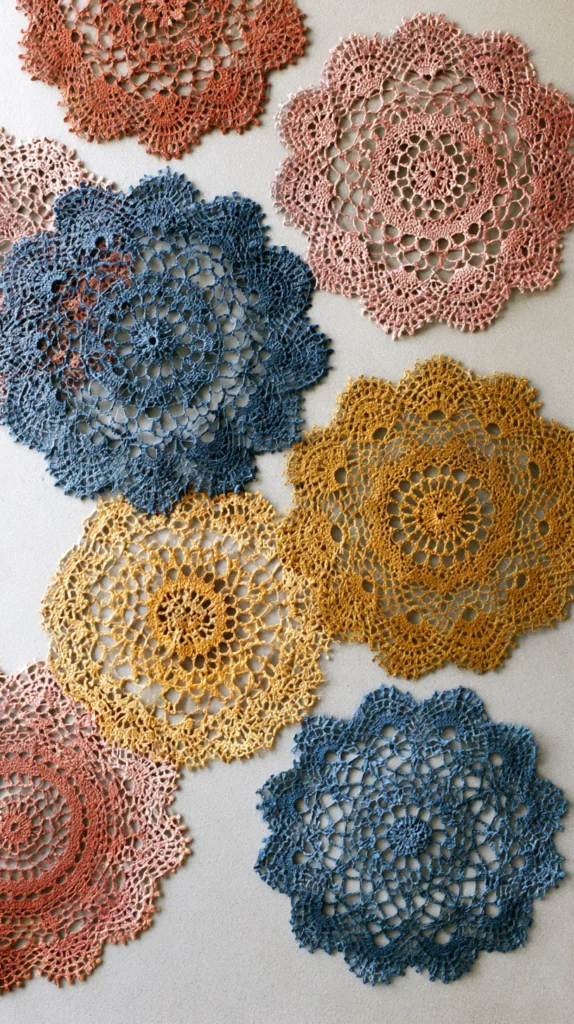
The white or cream doily dip-dyed in a single natural colour becomes an entirely different textile object.
Not a more valuable one in the craft tradition’s terms. But a more versatile one in the contemporary home’s terms.
A doily dip-dyed in an ombre pattern, from full colour at the edge to white at the centre, creates a version of the traditional pattern in a contemporary colour treatment. A doily dip-dyed in terracotta or ochre or sage becomes a version of itself in the contemporary home’s palette that the undyed original cannot be.
Use natural fabric dyes for the most beautiful and most lasting results. Turmeric produces a warm yellow-gold. Madder root produces terracotta. Indigo produces blue. The natural dye tradition suits the handmade textile tradition of the doily precisely.
14. Vintage Doilies Pressed and Framed as Heirlooms
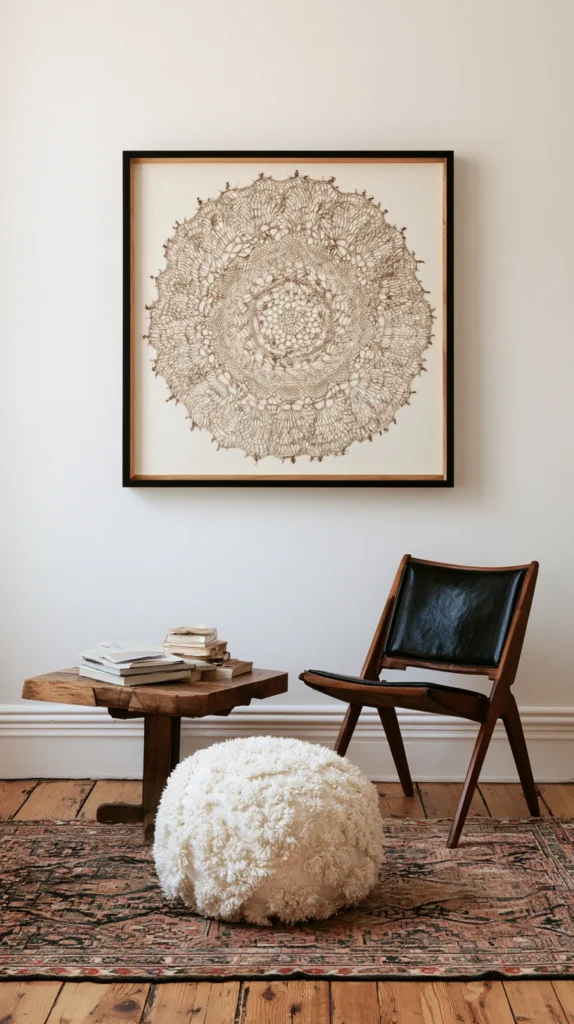
The inherited doily, the one made by a grandmother or a great-aunt and kept for years in a drawer, is the doily that deserves the most serious design attention.
Not as a surface protection. As an heirloom object with a specific human story.
Pressing and framing an inherited doily, mounted on a backing that shows it clearly and framed with the same care given to a family photograph, creates an object of dual value. It is genuinely beautiful. It is specifically meaningful. It connects the room to the people who made the object and to the tradition they participated in.
The frame for an heirloom doily should be of excellent quality. A deep box frame that allows the doily to sit away from the glass surface, preserving its three-dimensional texture. An archival backing that will not cause discolouration over time. UV-protective glass that prevents the thread from yellowing in sunlight.
This is the doily at its most significant. Not as a decor trend. As a preserved, displayed, honoured piece of human making that connects the present home to the specific human past.
15. The Doily as a Point of Connection Between Old and New
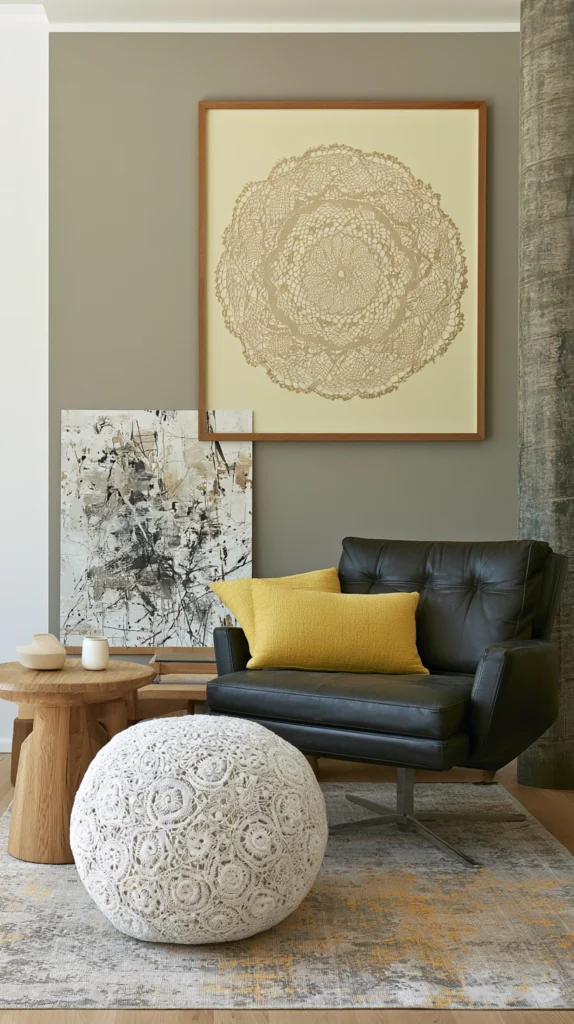
The final idea is not a specific application. It is a framing for all of them.
The doily in a contemporary home is most interesting and most beautiful when it is acknowledged for what it is. Not disguised as something else. Not forced into an application that denies its specific character.
It is an extraordinarily labour-intensive textile made by hand in a tradition that is centuries old. It is the specific product of a skill that is increasingly rare. It is beautiful in a way that requires patience to appreciate, the way all complex and delicate things require patience to appreciate.
In a home that values the handmade, the considered, and the connection between the present and the past, the doily belongs. Not as nostalgia. As a genuinely beautiful made object that earns its place in a designed room through the quality of its making and the specific delicacy of its pattern.
The vintage-modern home is the home that has room for this. That can place a framed heirloom doily beside a contemporary photograph. That can hang a hoop of lace beside a modern art print. That can put a dip-dyed doily under a terrarium and find the combination genuinely lovely.
This home is not confused about its aesthetic. It knows exactly what it values. It values beauty and craft and the evidence of human attention. The doily, understood properly, provides all three.
How to Source Beautiful Doilies for Contemporary Use
The best doilies for contemporary use come from three sources.
Family. The inherited pieces that are already in the home or in relatives’ possession, waiting for a context that values them rather than stores them in a drawer.
Antique markets and charity shops. Vintage doilies in good condition, sold at prices reflecting their age and previous use rather than their craft value, are among the best value textile acquisitions available. A collection of twelve vintage doilies in varying sizes and patterns, assembled over time from different sources, provides more variety and more character than any matching set from a contemporary retailer.
Contemporary lace makers and craft producers. The tradition of bobbin lace and needle lace making continues in specific regional traditions around the world. Portuguese, Belgian, and Honiton lace makers continue to produce work of extraordinary quality. Purchasing from these traditions is both an aesthetic choice and a cultural support.
Common Mistakes With Doily Decor
Using them everywhere reflexively. The dated association of the doily comes from its use as a default surface covering. Used selectively and with intention, it is contemporary. Used on every available surface, it returns to the Victorian parlour.
Neglecting condition. A doily with yellow staining, torn pattern sections, or permanent creasing is not a decorative asset. Clean and press before any display application. White vinegar in the final rinse water restores whiteness to yellowed cotton lace without bleach damage.
Choosing frames and hoops that conflict with the room. The frame or hoop is as important to the display as the doily itself. A contemporary room needs a contemporary framing device. A hoop in polished copper or natural wood. A frame in black metal or simple natural timber.
Ignoring scale. A small doily on a large wall is invisible. A large doily in a small frame is cramped. Match the scale of the doily to the scale of the display format and the wall space.
Keeping all the ones you have regardless of quality. The doily collection for display use should contain only the pieces that are genuinely beautiful. Edit ruthlessly. The pieces that are not beautiful enough for display are either used privately or released to the charity shop for someone who needs them.
Quick Summary
- Mounting doilies in embroidery hoops and hanging them as a gallery wall strips the Victorian associations and creates contemporary textile art
- Framing doilies on dark backing paper in simple contemporary frames treats them as significant artworks worthy of gallery presentation
- A doily runner on a dining or console table respects the original purpose while updating the presentation to a deliberate aesthetic choice
- Doily-inspired ceramic or plaster wall plates translate the pattern vocabulary into a material unambiguously suited to contemporary display
- Layered doilies under a single considered object create a still life when chosen with intention rather than applied by convention
- Fabric with printed doily patterns for cushion covers places the pattern reference in a format comfortable for contemporary interiors
- A lampshade constructed from stiffened doilies projects the lace pattern as shadow onto surrounding surfaces creating a second expression of the design
- Doilies as gift wrapping introduce the textile into the home through giving rather than through deliberate décor decisions
- A doily under each terracotta plant pot creates a simple, warm still life of natural materials in quiet harmony
- A garland of folded or half-circle doilies strung across a room is the festive and seasonal application requiring no permanent commitment
- Doily-pattern embossed paper creates a printless, textured version of the lace pattern for stationery and decorative paper use
- A doily canopy hung over a table or bed creates overhead lace patterning that light passes through to cast moving shadows below
- Natural dye ombre treatment transforms the white doily into a contemporary palette version of the traditional textile
- Pressing and framing inherited doilies in archival-quality box frames treats them as the significant human heritage objects they are
- The doily in a contemporary home earns its place through genuine craft quality and the specific evidence of human attention it carries
The doily does not need defending.
It needs context.
In the right context it is exactly what it always was. A beautiful object made with extraordinary skill and patience by human hands for the pleasure of people who appreciate what goes into making it.
That context exists in the vintage-modern home.
Welcome the doily back.
It was gone too long.