15 Luxury Bathroom Ideas Without Remodeling
A bathroom that feels genuinely luxurious does not require a new floor, new tiles, or a new suite. It requires the right towels, the right light, the right fragrance, and enough editing of what is already there to let the room breathe.
Most bathrooms are not held back by their fixtures and fittings — they are held back by clutter, by lighting that flatters nothing, and by the absence of the small, considered details that signal that the room has been thought about rather than simply used.
The fifteen ideas below transform a bathroom through objects, textiles, lighting, and organisation rather than through demolition or construction. Every one of them is reversible, achievable in a weekend, and designed to deliver a hotel-quality result at a fraction of the cost of a full renovation. Costs and a practical tip are included throughout.
1. Replace Every Towel With Heavyweight Turkish Cotton
Budget: $60 – $200
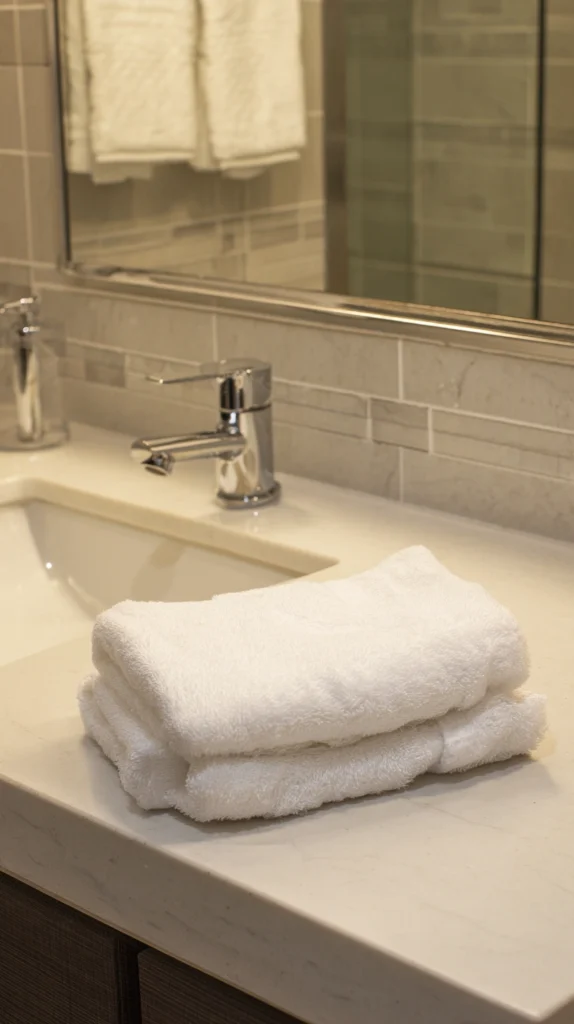
Nothing in a bathroom communicates luxury more immediately or more physically than a heavy, well-made towel. The difference between a 400gsm supermarket towel and a 700gsm Turkish cotton bath sheet is felt the moment you step out of the shower and it cannot be replicated by any other bathroom upgrade at the same cost.
A quality 700gsm Turkish cotton bath towel costs $25–$60 each. Buy four — two in use and two in the cupboard — in white or warm stone. White towels launder to a higher standard than coloured ones, stay looking hotel-quality for longer, and suit every bathroom colour scheme simultaneously.
Style tip: Wash new towels twice before first use without fabric softener. Fabric softener coats the cotton fibres and reduces absorbency — the opposite of the quality that makes a luxury towel worth the investment. A towel washed twice without softener is softer, more absorbent, and loftier than the same towel treated with softener from the first wash.
2. Upgrade the Shower Head to a Rainfall Model
Budget: $30 – $200
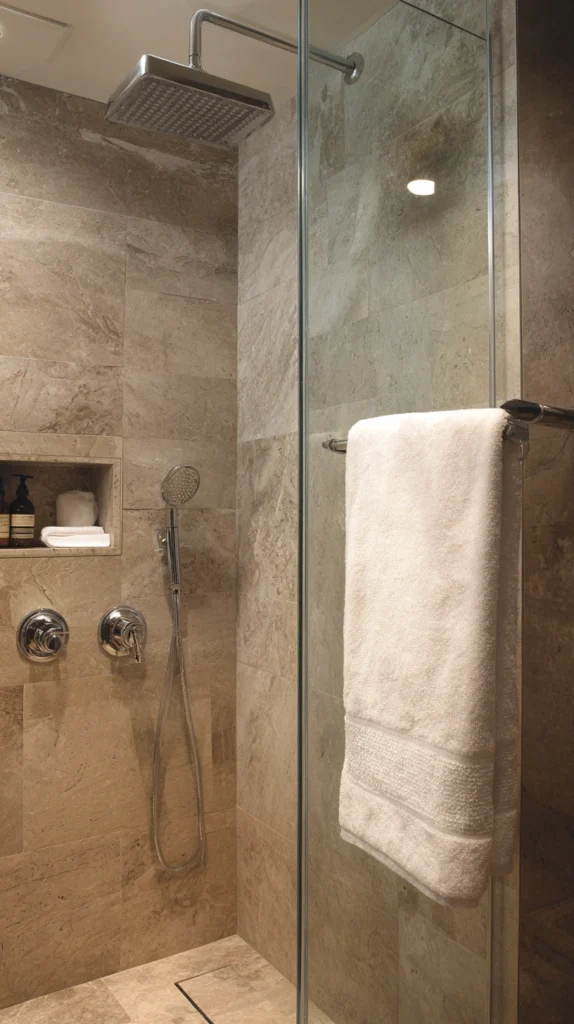
A large-diameter rainfall shower head is the single most impactful functional upgrade available for a bathroom without any structural work — it transforms the daily shower experience completely and requires only the removal of the existing shower head and the fitting of the new one, which takes fifteen minutes with a wrench and plumber’s tape.
A quality rainfall shower head in chrome or brushed nickel costs $30–$120. Oversized versions in 20–30 cm diameter run $80–$200. Check thread compatibility with the existing shower arm before ordering — most UK and US shower arms use a standard G1/2 male thread, which is compatible with the vast majority of available shower heads without any additional fitting.
Style tip: Choose a shower head finish that matches the existing tap hardware in the bathroom — chrome with chrome, brushed nickel with brushed nickel, matte black with matte black. A mismatched shower head finish in an otherwise consistent bathroom immediately reads as an afterthought rather than an upgrade, regardless of the quality of the shower head itself.
3. Install a Dimmer Switch on the Bathroom Light
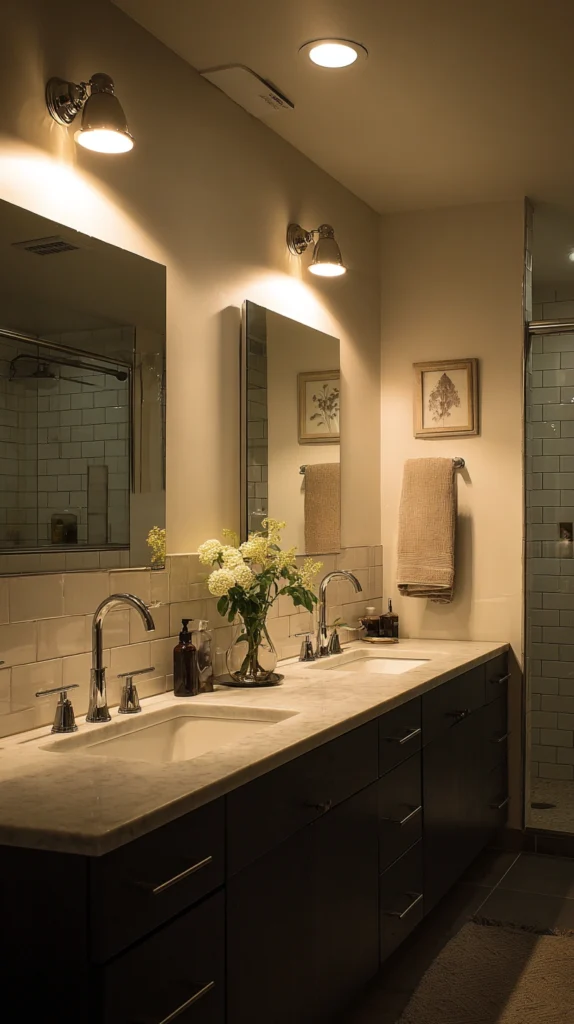
Budget: $15 – $60
A dimmer switch on the main bathroom light is the upgrade that changes the room most completely at the lowest cost of anything on this list. A bathroom that can be dimmed for an evening bath is an entirely different experience from one at full overhead brightness — the dimmed light is flattering, calming, and immediately communicates that the room is designed for genuine relaxation rather than simply utility.
A standard dimmer switch costs $15–$30 from any hardware retailer and takes thirty minutes to fit if replacing an existing single switch. Ensure the bulbs currently in the bathroom fitting are dimmable — LED dimmable bulbs cost $5–$15 each if replacements are needed. A bathroom with a dimmer and one or two candles needs very little else to feel genuinely luxurious.
Style tip: Set the dimmer at 30–40 percent of full brightness for a bath and 60–70 percent for a shower. The specific levels that feel right vary by bathroom and bulb temperature — spend five minutes finding the settings that make the room look and feel best at each use before calling the installation complete. The right light level is always lower than instinct suggests.
4. Add a Freestanding Bamboo or Teak Bath Caddy
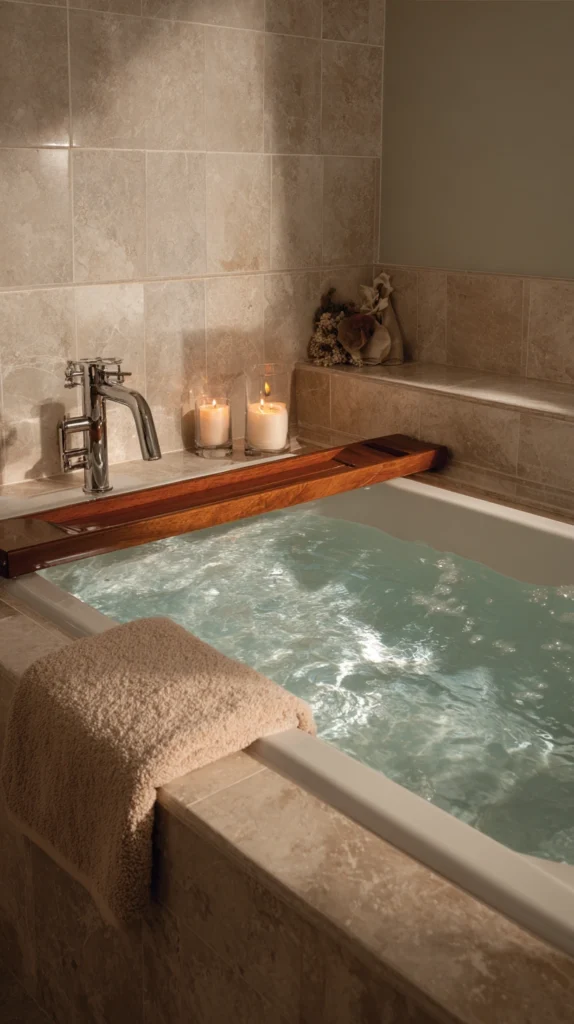
Budget: $25 – $100
A bath caddy — the wooden tray that stretches across the bath to hold a book, a candle, a glass, and a bar of soap — is the most immediately hotel-like addition available for a bathroom with a bath. It makes the bath feel like a destination rather than a fixture and requires nothing else around it to communicate that the bathroom is a room designed for pleasure as well as hygiene.
A bamboo or teak bath caddy with adjustable width costs $25–$60. Versions with a wine glass holder, book rest, and tablet stand run $50–$100. Choose solid bamboo or teak rather than MDF with a bamboo veneer — the material quality is immediately visible and the genuine wood versions are the ones that actually improve rather than deteriorate with regular water exposure.
Style tip: Style the caddy with three objects maximum — a small candle, a bar of quality soap in its wrapper, and one other object. More than three creates the cluttered quality that the caddy is meant to prevent. The restraint in the styling is what makes the bath caddy look like a hotel feature rather than a shelf extended across the bath.
5. Decant Toiletries Into Matching Glass or Ceramic Dispensers
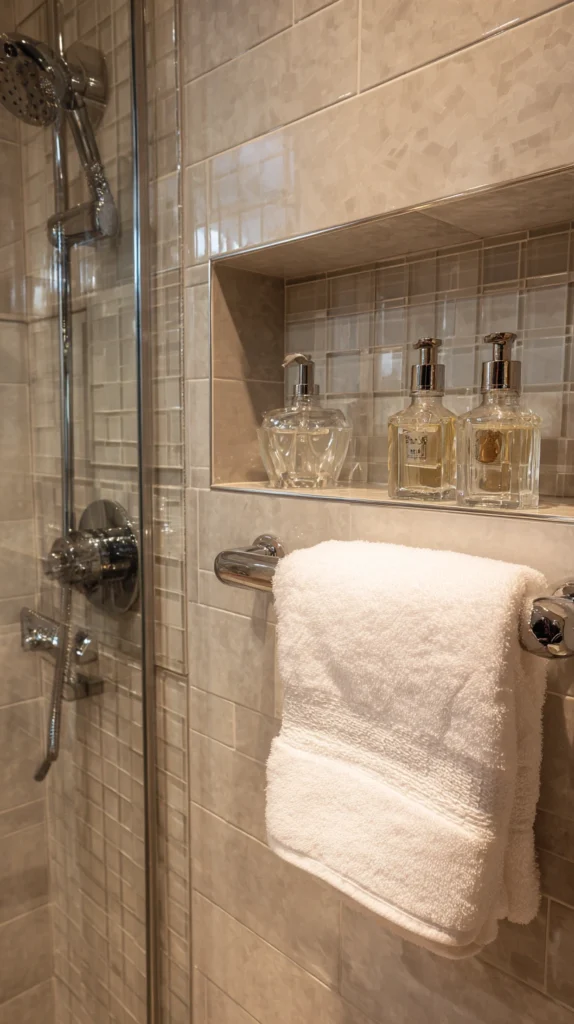
Budget: $20 – $80
Replacing plastic shampoo, conditioner, and body wash bottles with a set of matching glass or ceramic pump dispensers is one of the most transformative visual upgrades available for a shower or bath surround. The visual noise of ten different branded plastic bottles disappears and is replaced by three matching vessels that make the bathroom look like a luxury hotel suite.
A set of three matching glass dispensers with pump tops costs $20–$50. Ceramic dispensers with a matte finish run $30–$80 per set. Label each dispenser with a simple etched or printed label ($5–$10 for a set of ten waterproof labels). Refill from bulk purchase containers of your existing products — the dispensers are a permanent investment, the products inside them are a weekly consumable.
Style tip: Position the dispensers in a row rather than clustered randomly on the shower shelf. A straight, evenly spaced row of three identical dispensers reads as hotel boutique. The same three dispensers placed at different angles and distances from each other reads as a collection of objects that have accumulated without arrangement. The row takes five seconds to establish and changes the entire quality of the display.
6. Hang Artwork or a Mirror With a Considered Frame
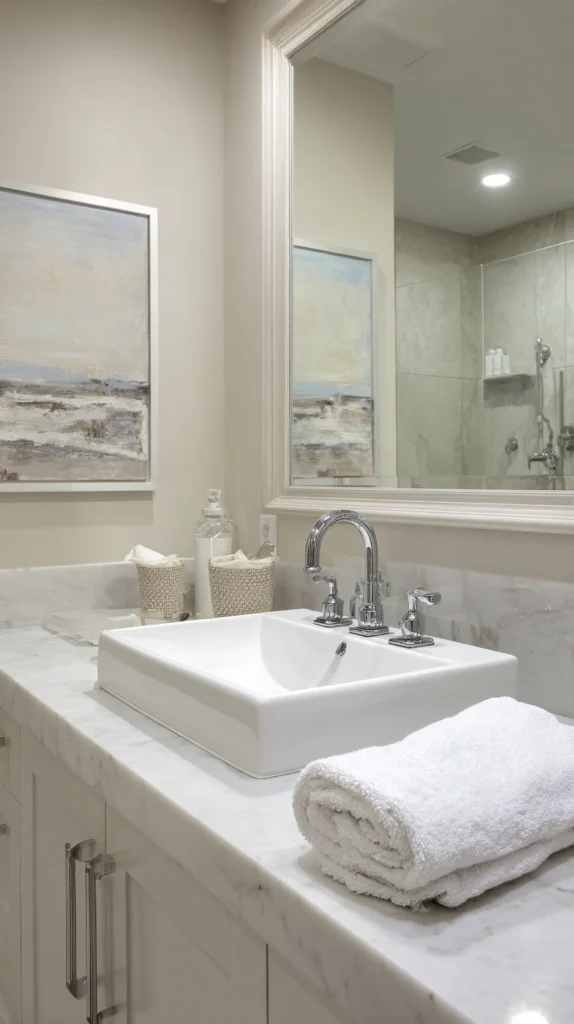
Budget: $30 – $200
A bathroom without art on the walls — or with a mirror that was installed purely for function — is a bathroom that has not been finished. A single framed print on the wall opposite the bath or beside the vanity, or a mirror with a frame that has genuine visual character, signals that the room has been designed rather than simply equipped.
A waterproof-backed bathroom print in a simple white or black frame costs $20–$60. A rattan or timber-framed mirror costs $40–$150. A large decorative mirror with an aged gold or brushed brass frame runs $80–$250. Choose art that can tolerate humidity — a fine art print behind glass is suitable; a canvas or unframed print is not unless the bathroom has very good ventilation.
Style tip: Hang the mirror or artwork at the eye level of someone standing at the vanity rather than centred on the wall in the abstract. Bathroom art seen primarily from a standing position should be mounted for that perspective — slightly lower than standard gallery height — which keeps it in the natural field of vision without requiring any deliberate effort to look at it.
7. Replace Plastic Accessories With Ceramic, Stone, or Brass
Budget: $30 – $150
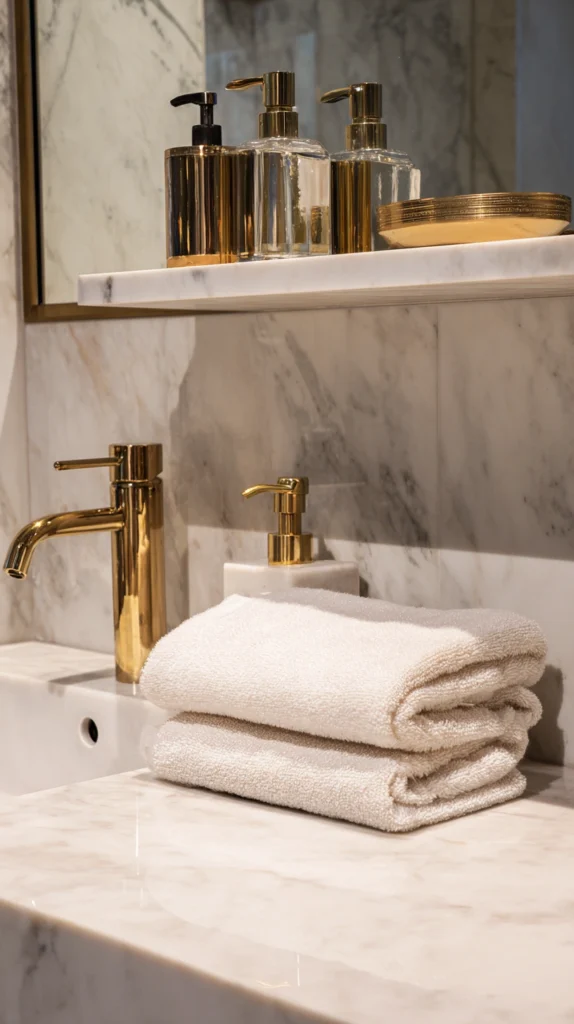
The soap dish, toothbrush holder, cotton wool jar, and toilet roll holder are all visible every day and all contribute to the overall quality of the bathroom’s appearance. Replacing plastic versions with ceramic, alabaster, marble, or brass equivalents is the smallest and most specific luxury upgrade available and one with an immediate visible result.
A marble soap dish costs $10–$25. A ceramic toothbrush holder runs $8–$20. A brass toilet roll holder costs $20–$60. A set of matching accessories in one consistent material costs $40–$120 in total and transforms the character of the bathroom surfaces from utilitarian to considered. Replace all visible plastic accessories in the same session rather than one at a time — the consistent material is what creates the luxury quality, not any individual piece.
Style tip: Choose one material for all bathroom accessories and use it consistently — all marble, all brass, all matte black — rather than mixing materials across the set. Mixed accessory materials look assembled from whatever was available. A consistent material across every small bathroom object looks curated and intentional, which is the quality that distinguishes a luxury bathroom from a merely adequate one.
8. Add a Heated Towel Rail
Budget: $40 – $250
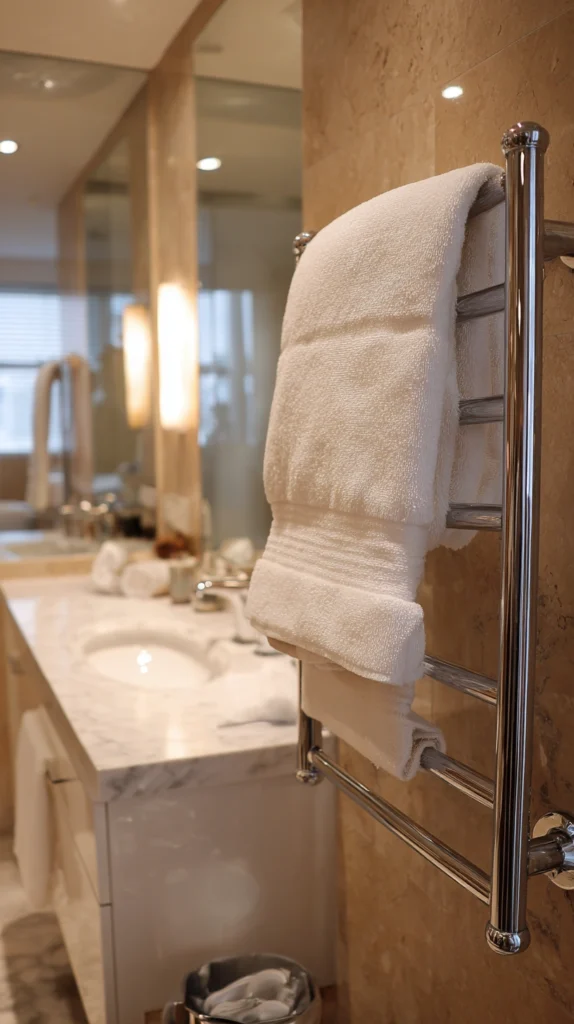
A towel that has been hanging on a heated rail is a different object from one that has been folded on a shelf. The warmth, the slight crispness from the drying heat, and the comfort of wrapping in something warm directly from a heated surface is genuinely luxurious in a way that is physically felt rather than visually appreciated — which makes it one of the most experientially valuable upgrades on this list.
A plug-in electric towel rail costs $40–$100 and requires no plumbing — just a nearby socket. A hardwired wall-mounted version requires an electrician and costs $80–$250 installed. Position the rail where the towels are most visible from the bath or shower — the visual quality of neatly folded towels on a warm rail contributes as much to the luxury feeling as the warmth itself.
Style tip: Fold towels on the heated rail in thirds lengthwise before draping — the same fold used in hotel bathrooms. This fold displays the full width and depth of the towel, hangs evenly from the rail, and dries more efficiently than a towel draped in a single loop. A well-folded towel on a rail looks deliberately presented. A loosely draped one looks abandoned.
9. Introduce a Single Large Indoor Plant
Budget: $15 – $60
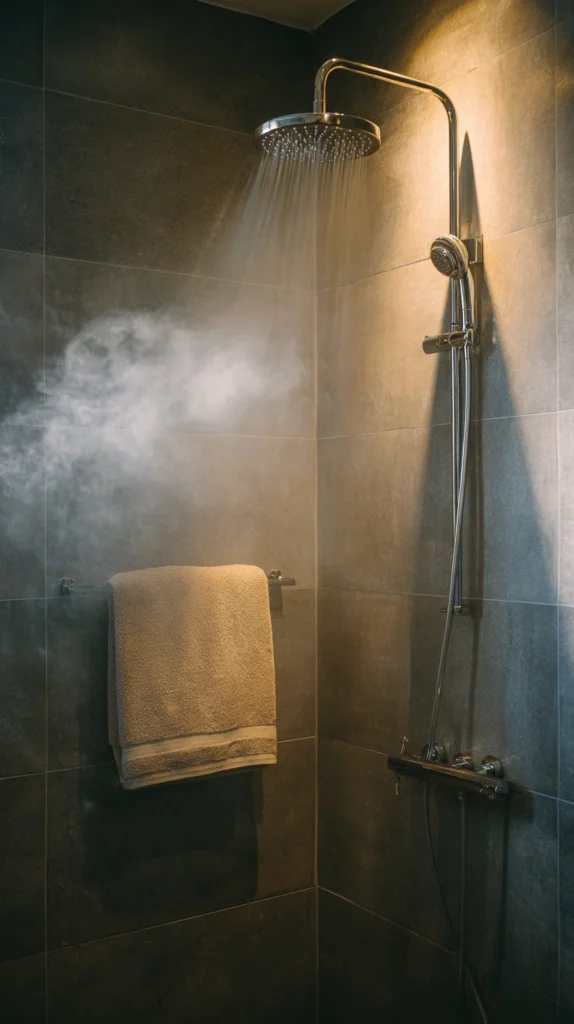
A large, well-chosen plant in a bathroom — a eucalyptus bundle hung from the shower head, a pothos trailing from a high shelf, or a snake plant in a dark corner — introduces the organic, spa-like quality that makes hotel bathrooms feel genuinely restorative rather than purely functional. Plants belong in bathrooms and a bathroom with one always feels more considered than one without.
A snake plant (Sansevieria) in a 17 cm pot costs $12–$25 and tolerates the low light and humidity of most bathrooms better than almost any other species. A pothos in a hanging pot runs $8–$20. A fresh eucalyptus bundle hung from the shower head costs $5–$15 from a florist, releases eucalyptus fragrance when the hot shower steams it, and lasts two to three weeks before needing replacement.
Style tip: Position a hanging plant at the corner of the shower or above the bath where the humidity from the water benefits the plant rather than being detrimental to it. Most houseplants that struggle in other rooms genuinely thrive in a bathroom with regular steam exposure — matching the plant to the highest-humidity position in the bathroom produces the healthiest plant and the most visually effective result.
10. Use a Tray to Organise the Vanity Surface
Budget: $15 – $60
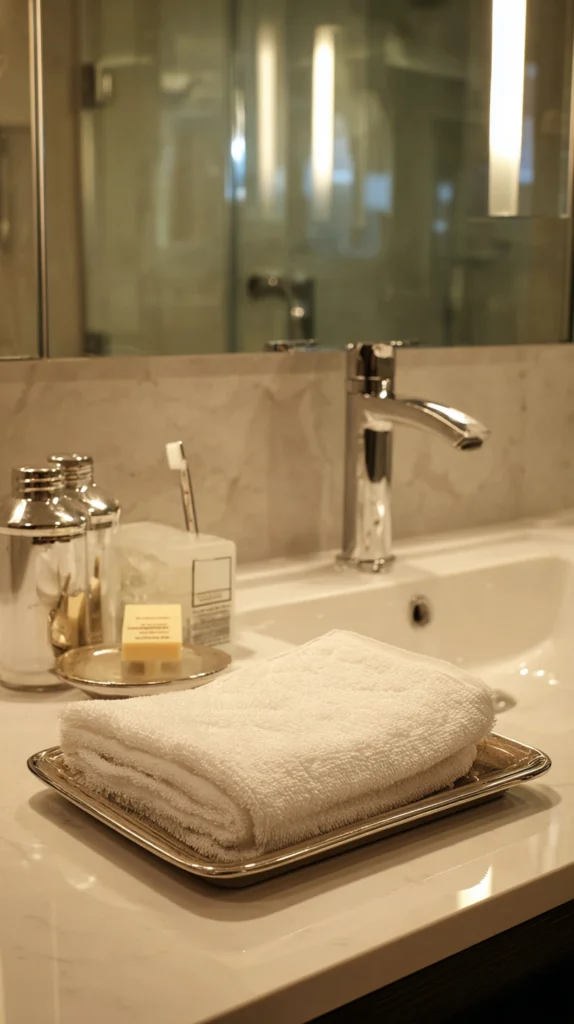
A marble, ceramic, or mirrored tray on the vanity surface — holding the daily toiletries in a defined arrangement — turns a cluttered surface into a styled one without removing a single item. The tray creates a boundary within which everything is contained and organised, and the surface outside the tray remains completely clear.
A marble vanity tray costs $20–$50. A mirrored tray runs $15–$40. A simple white ceramic tray costs $10–$25. Place only the objects used every day within the tray — perfume, moisturiser, and one or two other items. Everything else goes into a drawer or cabinet. The tray with five objects on a clear surface looks luxurious. The same five objects on a surface covered in fifteen other items looks like a bathroom in need of organisation.
Style tip: Arrange the objects within the tray by height — tallest at the back, shortest at the front — so every item is visible from the front edge. A height-graduated arrangement in a tray reads as deliberately curated. Objects placed at random heights within the same tray read as collected rather than arranged, and the distinction is immediately visible to anyone who looks at the vanity from the doorway.
11. Switch to a Luxury Bar Soap and Display It Well
Budget: $8 – $30
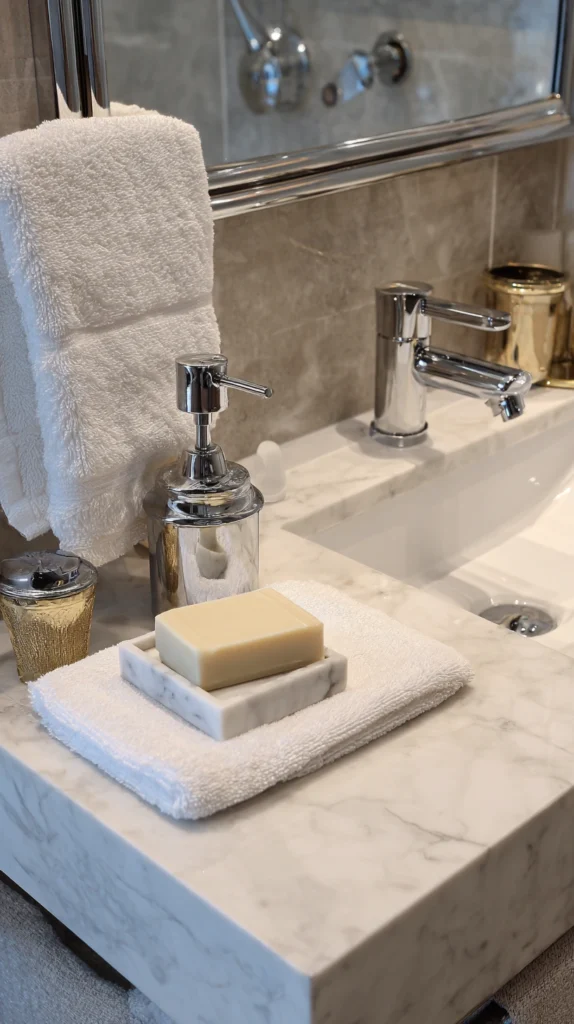
A quality bar soap — from a small soap maker, a spa brand, or a artisan producer — displayed on a marble or ceramic soap dish rather than a plastic supermarket bottle is one of the smallest and most specific luxury bathroom signals available. The bar soap communicates that the bathroom is a place of deliberate quality rather than convenient function.
A luxury bar soap from an artisan maker costs $5–$15 each. A marble or alabaster soap dish costs $10–$25. Keep one soap on the dish and one wrapped in reserve — a depleted soap sitting in a puddle of water on a plain plastic dish communicates the exact opposite of the luxury quality the bar soap format is meant to convey. The presentation is as important as the product.
Style tip: Keep the soap’s original wrapper on display beside the dish rather than discarding it immediately. An unwrapped bar beside its wrapper communicates quality, craft, and the intentionality of the purchase in a way that an anonymous unwrapped bar alone does not. The wrapper is part of the luxury signal and removing it immediately discards half the information it conveys.
12. Add Layers of Warm Lighting Sources
Budget: $40 – $200
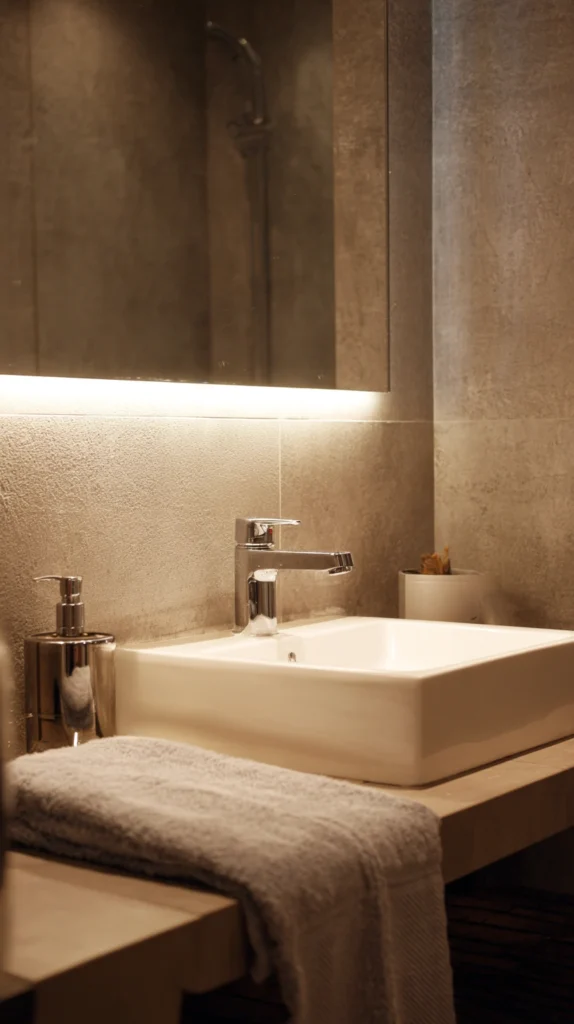
A bathroom lit by a single overhead fixture is a bathroom lit for function. A bathroom with an overhead light supplemented by candles, a small table lamp on the vanity surface, or a wall-mounted LED strip behind a mirror has layers of warm light at different heights that create an atmosphere no single source can achieve regardless of its quality or wattage.
Battery-operated LED candles with a realistic flicker cost $5–$15 for a set of six. A small ceramic table lamp suitable for a vanity surface costs $30–$80. A warm-white LED strip behind a frameless mirror costs $15–$40. Use all three at their lowest setting simultaneously for the most genuinely spa-like evening lighting in any bathroom without touching a single electrical installation.
Style tip: Use only warm white light sources in a luxury bathroom — 2700K or below for all bulbs and LED strips. Cool white light in a bathroom is the fastest route to a clinical, unflattering atmosphere that no amount of quality towels or accessories can recover. Warm light flatters both the room and the person in it, which is the only lighting criterion that matters in a bathroom designed for pleasure.
13. Install Peel-and-Stick Marble-Effect Contact Paper
Budget: $20 – $80
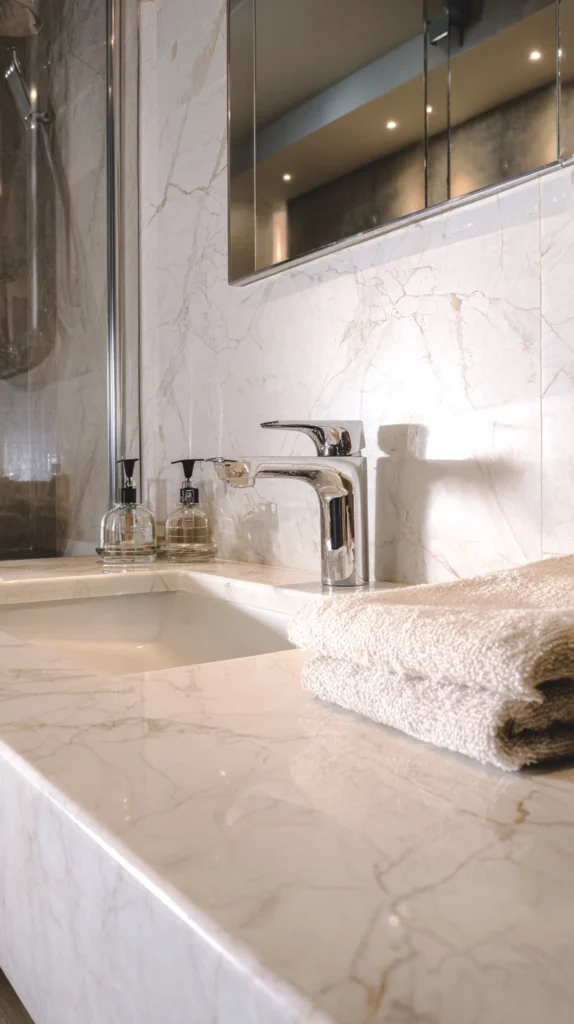
Peel-and-stick marble-effect contact paper applied to a bathroom vanity top, the side of a bath, or a feature wall creates the visual quality of real marble at a fraction of the cost and without any permanent alteration to the surface beneath it — making it one of the most accessible luxury upgrades available for renters or anyone working to a tight budget.
Marble-effect self-adhesive vinyl contact paper costs $15–$30 per roll, with most standard vanity tops requiring one to two rolls. Apply with a squeegee to remove air bubbles and trim cleanly with a sharp craft knife along edges and fixtures. The best quality versions from specialist suppliers are indistinguishable from real marble-effect laminate at normal bathroom viewing distances.
Style tip: Apply contact paper to one surface only — the vanity top or the bath panel — rather than to multiple surfaces simultaneously. Contact paper on every available horizontal surface looks like a decorating project rather than a considered upgrade. One marble-effect surface in an otherwise plain bathroom reads as an intentional material choice. Multiple surfaces covered simultaneously reads as an attempt to conceal rather than enhance.
14. Fold and Stack Towels Hotel-Style
Budget: $0
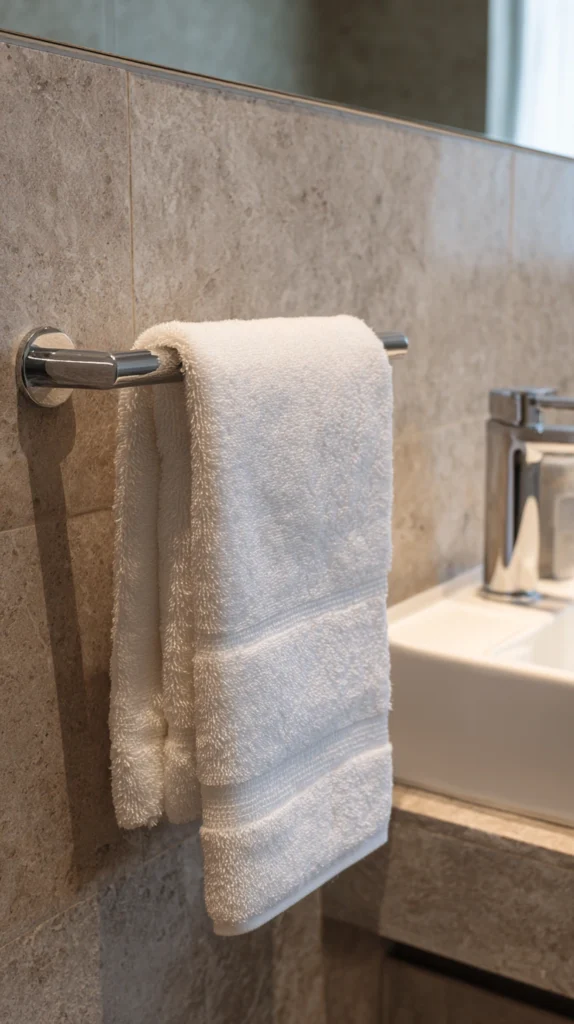
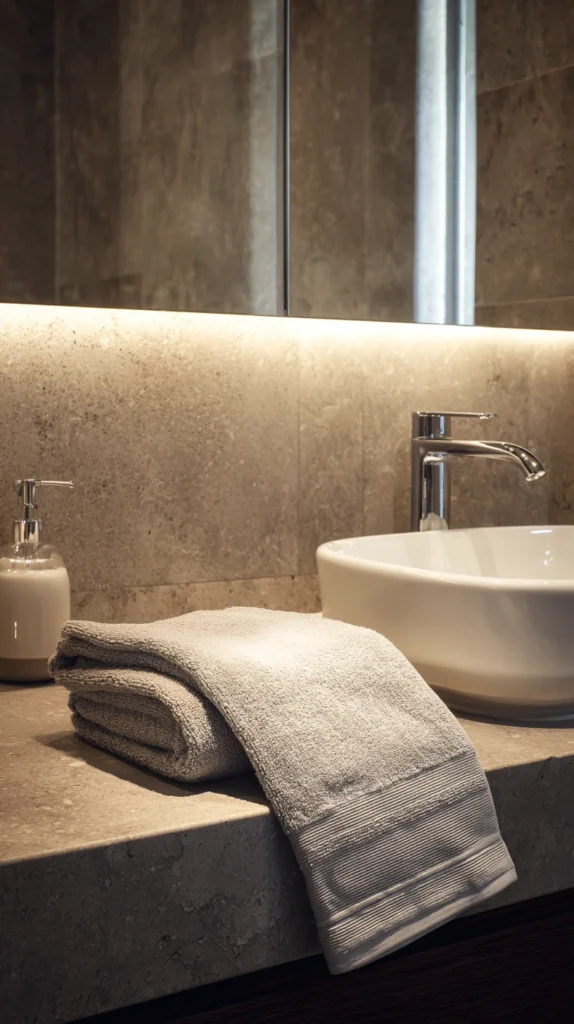
The most cost-free luxury bathroom upgrade on this list is learning and consistently applying the hotel towel fold. A neatly folded stack of matching towels on a rail, shelf, or towel ladder communicates the same quality signal as the towels themselves — and the signal is reversed immediately by the same towels balled up or draped carelessly over the same surface.
The standard hotel fold: fold the bath towel in thirds lengthwise, then fold in thirds across the width to create a neat rectangular block that stands on a shelf or hangs evenly from a rail. For the hand towel, fold in thirds lengthwise and fold the top third back to create a visible folded edge at the front. The complete fold takes twenty seconds per towel and transforms the appearance of every surface it occupies.
Style tip: Stack towels in the same consistent order every time — bath towels below, hand towels above, face cloths on top — rather than replacing them in whatever order they are laundered. A consistent stacking sequence creates a display that reads as deliberately maintained rather than casually replaced. The order takes no additional time to maintain and makes the difference between a towel stack that looks like a hotel and one that looks like a linen cupboard shelf.
15. Create a Spa-Style Scent With a Reed Diffuser and Candles
Budget: $20 – $80
The scent of a bathroom is the first thing experienced on entering it and the last quality remembered after leaving. A consistently pleasant, subtle fragrance — from a reed diffuser, a scented candle, or a combination of both — transforms the bathroom’s atmosphere at the sensory level that visual upgrades cannot reach, and it costs considerably less than any structural change of equivalent atmospheric impact.
A quality reed diffuser in a spa-appropriate fragrance — eucalyptus, cedar, white tea, or bergamot — costs $12–$30 and lasts six to eight weeks. A soy wax candle in the same scent family runs $10–$25. Position the diffuser at the point farthest from the bathroom door so the fragrance is encountered gradually on entering rather than hitting immediately — the gradual reveal is more pleasant and more hotel-like than a strong scent at the threshold.
Style tip: Use the same fragrance consistently rather than rotating through different scents seasonally. A bathroom that always smells the same creates a specific sensory association with comfort and luxury that builds over time — the scent becomes part of what makes the bathroom feel like yours rather than a generic clean space. Consistency in fragrance is the most underrated quality in a luxury bathroom that is used and enjoyed daily.
A bathroom that feels genuinely luxurious is always the result of the same underlying decisions — quality materials where they are touched, warm light at multiple levels, a consistent and edited palette of objects, and fragrance that is pleasant without being overwhelming. None of these require demolition, professional tradespeople, or a renovation budget. They require attention, editing, and the willingness to invest thoughtfully in a small number of genuinely good things rather than casually in a large number of average ones.
Start with the towels and the lighting — those two changes together cost under $150 and deliver more immediate transformation than any other combination on this list. Let the remaining ideas follow in whatever order the bathroom suggests they should. The best luxury bathrooms are built gradually and deliberately, one right decision at a time.