
How to Get Rid of Algae in a Pond
Algae is one of the most common problems pond owners face, and while a small amount is a normal part of a healthy pond ecosystem, excessive growth signals an imbalance that’s worth addressing before it takes over the water. The right approach depends on which type of algae you’re dealing with and what’s causing it to thrive in the first place.
Below is a complete guide to identifying, treating, and preventing algae in a pond, covering the different algae types, treatment methods, and long-term prevention, with real specifics so the problem gets solved without harming fish or plants.
Identifying Your Algae Type
Different algae types require different treatment approaches, so correctly identifying what’s growing in your pond is the first and most important step before choosing a solution.
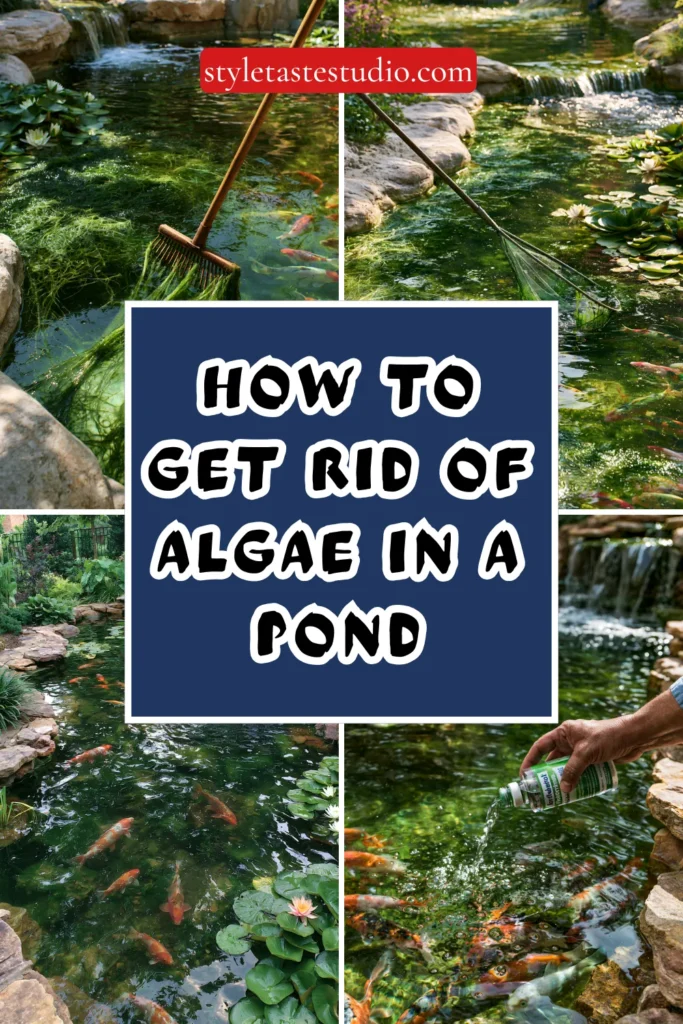
String algae (filamentous algae) grows in long, stringy strands that often attach to rocks, pond edges, or waterfall features, and it’s usually the type people notice clinging visibly to surfaces around the pond.
Green water algae (planktonic algae) is microscopic and turns the entire pond a cloudy green color rather than growing in visible clumps or strands, making the water itself look murky rather than clear.
Blue-green algae (cyanobacteria) appears as a blue-green, sometimes foul-smelling scum on the water’s surface, and this type can be toxic to pets, wildlife, and people, making it the most important type to identify and address quickly.
Taking a water sample and holding it up to the light, or comparing it to reference photos online from a pond supply company, is usually enough to distinguish between these three main types without needing professional testing in most cases.
Why Algae Grows in the First Place
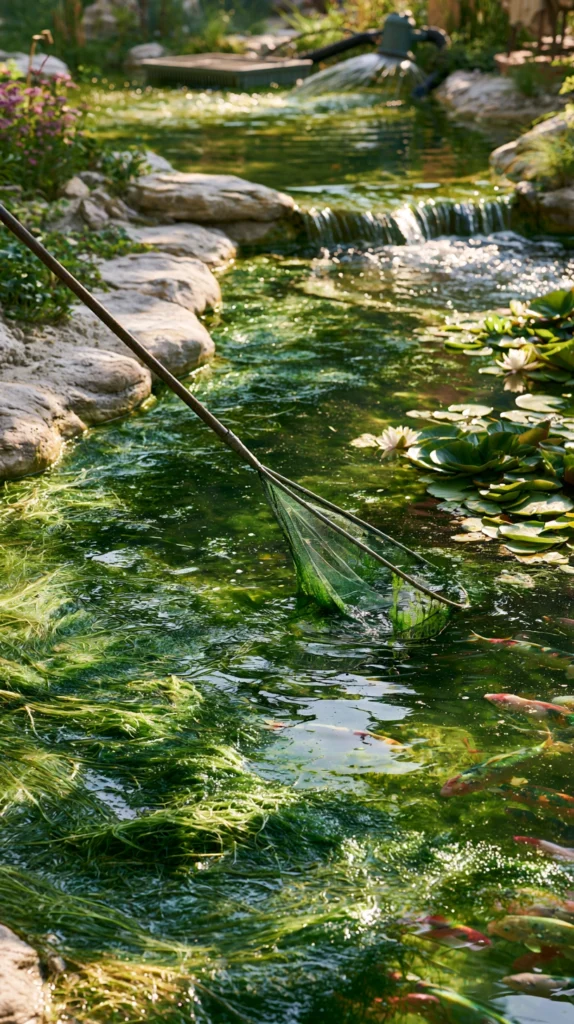
Algae thrives when a pond has an imbalance of nutrients, sunlight, and biological filtration, so understanding the underlying cause is just as important as treating the visible growth itself.
Excess nutrients from fish waste, uneaten fish food, and decaying plant matter feed algae growth the same way fertilizer feeds a lawn, making overfeeding fish or allowing debris to accumulate two of the most common root causes.
Too much direct sunlight, particularly in ponds without adequate surface coverage from floating or marginal plants, accelerates both string algae and green water algae growth significantly compared to a more shaded pond.
Insufficient biological filtration means the pond lacks enough beneficial bacteria to break down waste and excess nutrients before algae has a chance to consume them, which is especially common in newer ponds where the bacterial colony hasn’t fully established yet.
Addressing these underlying causes alongside any direct algae treatment is what prevents the problem from simply returning a few weeks later.
Manual Removal Methods
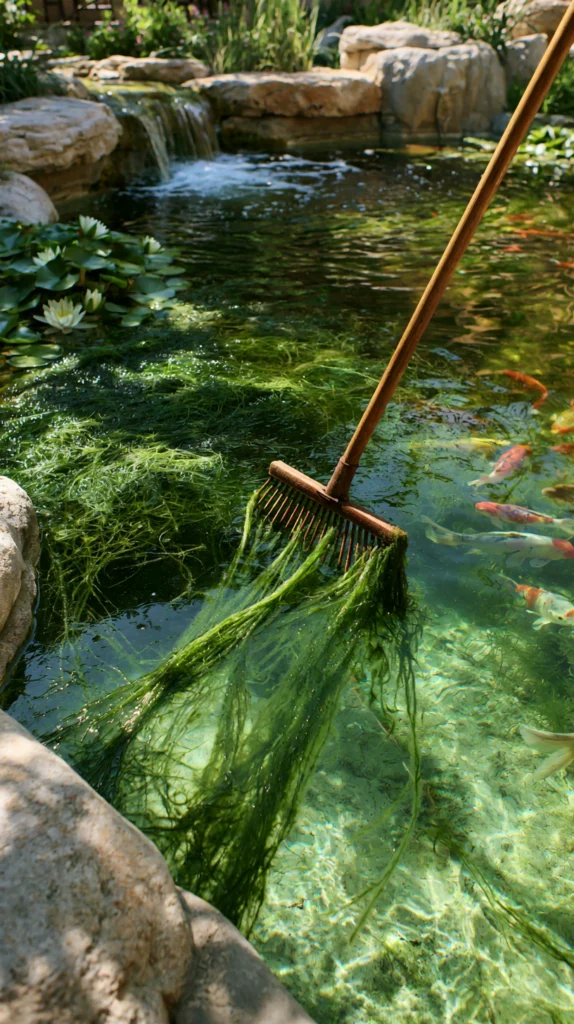
For string algae specifically, physically removing the visible growth is often the fastest first step, especially before adding any chemical or biological treatment.
Use a pond rake, brush, or even your hands (with gloves) to pull out visible string algae, twisting it around the tool like spaghetti on a fork to remove as much as possible in one motion. This is most effective when done regularly, since removing algae before it becomes deeply established makes each subsequent cleaning easier.
A pond skimmer net is useful for removing floating algae mats and debris from the water’s surface, and running it across the pond every few days during peak growing season helps keep visible buildup under control.
Composting removed algae, rather than leaving it piled near the pond edge, prevents nutrients from washing back into the water during the next rain.
Barley Straw and Barley Extract
Barley straw is one of the most popular natural, chemical-free algae treatments, working through a slow decomposition process that releases compounds inhibiting new algae growth over time.
Add barley straw at a rate of about 1-2 ounces per 100 square feet of pond surface, placing it in a mesh bag anchored near the water’s surface where it gets good water circulation. This method works preventatively rather than treating existing algae quickly, so it’s best used alongside manual removal for current growth.
Barley straw extract, a liquid concentrated version of the same active compounds, works faster than raw straw and is a good option for ponds needing quicker results or those too small to accommodate a full bale of straw.
Results from barley straw typically take 4-6 weeks to become noticeable, since the treatment relies on gradual decomposition rather than an immediate chemical reaction, so patience is necessary with this method.
Adding Beneficial Bacteria
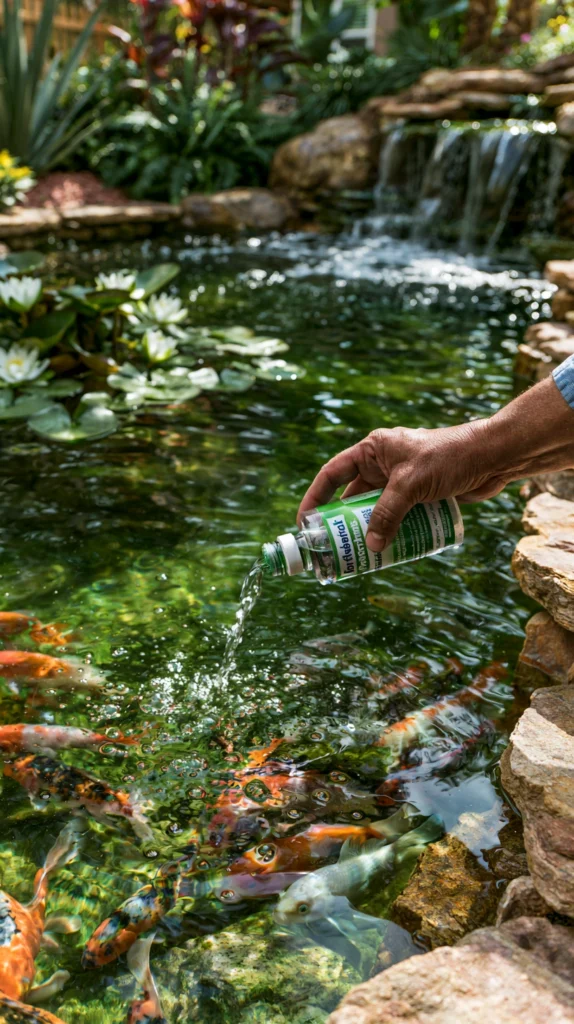
Beneficial bacteria products, sold specifically for pond use, help establish or boost the biological filtration that breaks down excess nutrients before algae can use them. This addresses one of the root causes of algae growth rather than just treating symptoms.
Add a liquid or powdered beneficial bacteria product according to the manufacturer’s dosing instructions, typically applied weekly during the growing season and less frequently during cooler months when biological activity slows down.
These products work best in ponds with adequate water temperature (bacteria are most active above 50°F) and won’t show dramatic results in very cold water, so timing applications for spring through fall generally produces the best outcomes.
Combining beneficial bacteria with a mechanical or biological filter system creates a more effective, longer-lasting solution than using bacteria products alone in a pond without adequate filtration.
Using an Algaecide
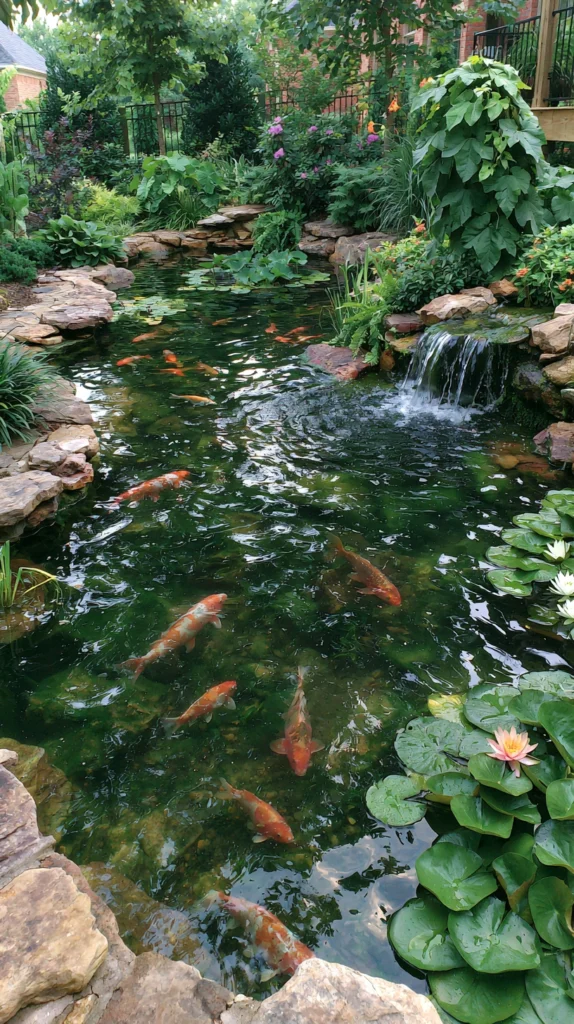
Chemical algaecides offer the fastest visible results for a serious algae bloom, though they require careful application to avoid harming fish, plants, or the pond’s overall biological balance.
Choose an algaecide labeled safe for fish ponds specifically, rather than a general pool or lake product, and always follow the exact dosing instructions for your pond’s specific volume in gallons.
Apply algaecide treatments on a cloudy day or in the early morning, since sudden algae die-off releases oxygen-depleting decomposition byproducts, and treating during cooler, lower-light conditions reduces additional stress on fish during this process.
Treating only a portion of a heavily algae-covered pond at a time, rather than the entire surface at once, helps prevent a sudden drop in oxygen levels as large amounts of algae die and decompose simultaneously.
Never use an algaecide in a pond with koi or goldfish without confirming the specific product is fish-safe, since some algaecide formulations are toxic to pond fish even at labeled dosing rates.
Installing a UV Clarifier
A UV clarifier is one of the most effective long-term solutions specifically for green water algae, using ultraviolet light to destroy algae cells as pond water passes through the unit. This won’t address string algae, which grows in different conditions than the free-floating algae UV light targets.
Size the UV clarifier to your pond’s total gallon capacity, since an undersized unit won’t process enough water flow to meaningfully reduce algae levels. Most manufacturers provide sizing charts based on pond volume and existing pump flow rate.
Budget: $80-300 for a residential pond UV clarifier, depending on pond size and unit wattage, plus the cost of replacement bulbs roughly once a year, since UV output diminishes over time even if the bulb still lights up.
This is one of the more reliable hands-off solutions on this list once installed, since it continuously treats water without requiring regular manual dosing or reapplication like barley straw or algaecide treatments.
Adding Floating and Submerged Plants
Live plants compete directly with algae for the same nutrients and sunlight, making a well-planted pond naturally more resistant to algae blooms than a bare one. This is one of the most sustainable long-term algae control strategies available.
Floating plants like water lettuce and water hyacinth provide fast, effective shade coverage and nutrient competition, ideally covering 40-60% of the pond’s surface for meaningful algae suppression without completely blocking light needed by fish and other plants.
Submerged oxygenating plants, such as hornwort or anacharis, compete directly with algae for nutrients within the water column itself, addressing green water algae from below rather than just shading the surface.
Marginal plants planted around the pond’s edge also help filter runoff before it enters the water, reducing the nutrient load that would otherwise feed algae growth over time.
Planting a mix of floating, submerged, and marginal plants creates the most balanced, resilient pond ecosystem, addressing algae prevention from multiple angles simultaneously rather than relying on a single plant type.
Improving Pond Filtration and Circulation
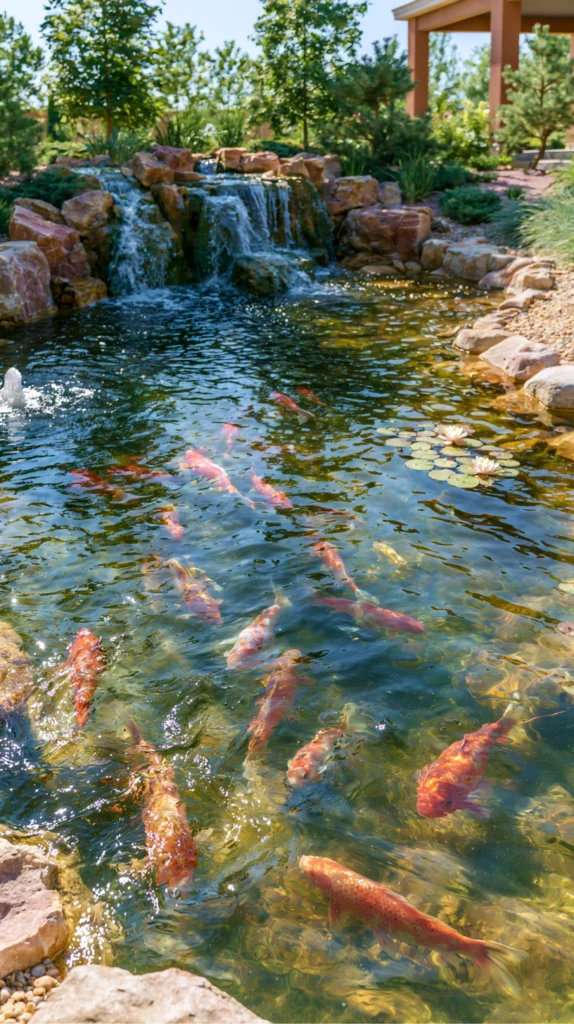
Stagnant water and inadequate filtration are two of the most common underlying causes of persistent algae problems, making a filtration upgrade one of the most impactful long-term investments for pond health.
A biological filter paired with adequate water circulation (moving the entire pond volume through the filter every 1-2 hours) provides the mechanical and biological processing needed to keep nutrient levels low enough to discourage algae growth.
Adding a fountain, waterfall, or additional aeration increases oxygen levels and keeps water moving, both of which make the pond environment less favorable for algae, particularly blue-green algae, which tends to prefer still, stagnant water.
Upgrading undersized or aging filtration equipment is often the single most effective long-term fix for a pond with chronic algae problems, even though it requires more upfront investment than a quick chemical treatment.
Preventing Algae From Returning
Avoid overfeeding fish, since uneaten food breaks down and directly feeds algae growth; only feeding what fish can consume within a few minutes helps prevent this excess nutrient load.
Remove fallen leaves and organic debris regularly, particularly in autumn, since decomposing plant matter is a major nutrient source that fuels algae blooms if left to accumulate at the bottom of the pond.
Test water parameters periodically, watching for elevated phosphate or nitrate levels, both of which are reliable early indicators of a nutrient imbalance that will likely lead to algae growth if left unaddressed.
Maintain consistent partial water changes, typically 10-20% every few weeks, to dilute accumulated nutrients before they reach levels that support significant algae growth.
Seasonal Algae Considerations
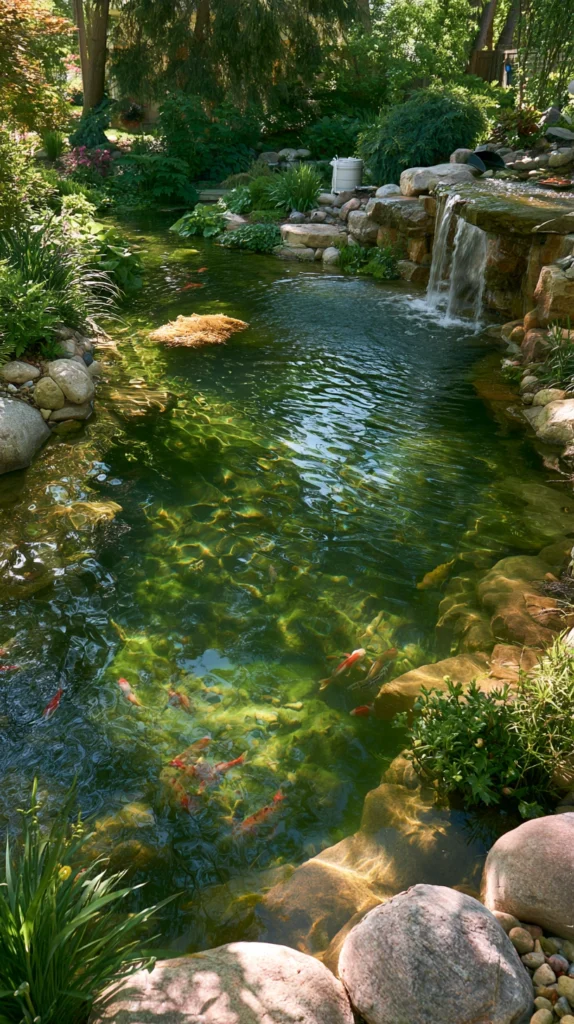
Algae growth isn’t consistent throughout the year, and adjusting your approach based on the season often produces better results than applying the same treatment routine year-round.
Spring is typically the most active period for algae blooms, since rising water temperatures kick-start algae growth before beneficial bacteria colonies and pond plants have fully reestablished themselves after winter dormancy. This is often the best time to begin barley straw treatments and bacteria additions, getting ahead of the growth curve before it becomes a visible problem.
Summer heat and long daylight hours accelerate algae growth further, making this the season when manual removal and more active treatments like algaecide are most often needed, particularly in ponds without adequate shade coverage from floating plants.
Fall cleanup, particularly removing fallen leaves before they decompose in the water, prevents a significant nutrient load from building up over winter, which would otherwise fuel an aggressive algae bloom the following spring.
Winter algae growth slows significantly in cooler climates, though it doesn’t necessarily stop altogether, especially in milder regions, so periodic checks even during colder months help catch any lingering growth before it gets a head start once temperatures rise again.
Quick Reference Cheat Sheet
Fast, visible results:
- Manual removal with a rake or skimmer
- Fish-safe algaecide treatment
- UV clarifier for green water specifically
Slower, longer-lasting results:
- Barley straw or barley extract
- Beneficial bacteria additions
- Floating and submerged plants
Ongoing prevention:
- Avoid overfeeding fish
- Regular debris removal
- Adequate filtration and circulation
- Partial water changes every few weeks
Remember
Correctly identify the algae type before choosing a treatment, since string algae, green water, and blue-green algae all respond to different methods, address the underlying nutrient and sunlight imbalance rather than only treating visible algae growth, always confirm any chemical treatment is labeled safe for fish before applying it to a stocked pond, combine multiple approaches (plants, filtration, and occasional direct treatment) for the most reliable long-term results, and expect natural methods like barley straw and added plants to take several weeks to show their full effect rather than working as quickly as a chemical algaecide.