
15 Cozy Fall Home Office Decor Ideas to Boost Focus
Something shifts in a home office when fall arrives. The light gets lower and warmer, outdoor distractions quiet down, and the space suddenly feels like it should match the season — not fight it.
The problem is that most home offices are set up for neutral productivity, not seasonal comfort. Beige walls, cool-white bulbs, and a desk that looks the same in August as it does in November.

These fifteen ideas change that. Each one is specific — with product details, placement logic, and the practical reasoning behind why it actually helps with focus rather than just looking nice in a photo.
If you’re working on other rooms at the same time, the home design section on StyleTasteStudio has seasonal ideas for the living room, bedroom, and kitchen that pair well with what you’ll find here.
1. Switch to Warm Bulbs in the 2700K Range
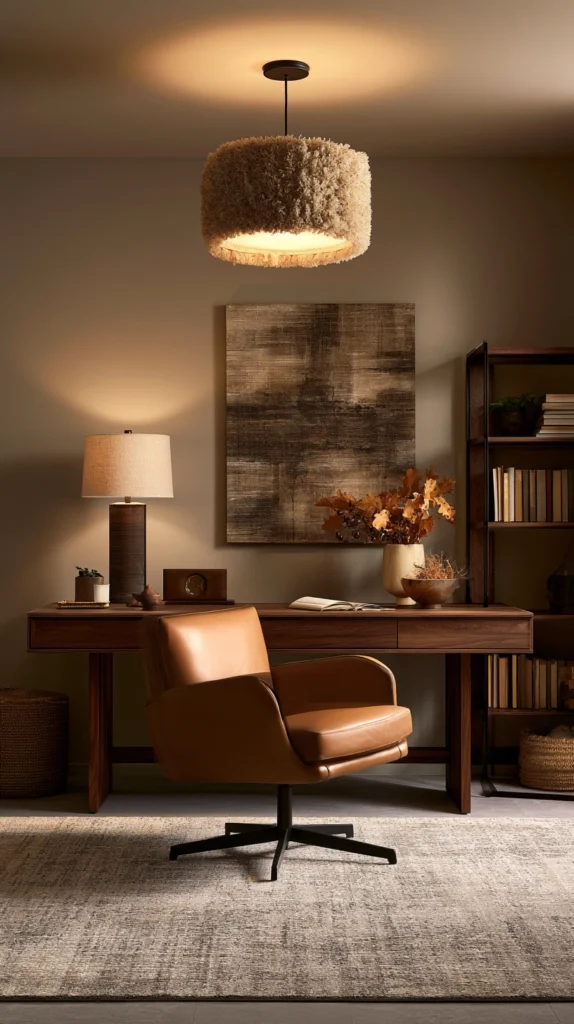
Most home offices run on cool-white or daylight bulbs — 4000K to 6500K — because they’re associated with alertness. In fall and winter, though, that cool light starts to feel harsh when natural light outside is already low and golden.
Switching to 2700K–3000K warm white LEDs doesn’t make the space dim. It makes it feel intentional.
Use warm bulbs in your overhead or desk lamp and keep a daylight bulb only in a task lamp positioned directly over your work surface if you need high-contrast light for detail work. This layered approach gives you warmth without sacrificing visibility.
Philips Warm Glow and GE Reveal both make 2700K LEDs in standard A19 and BR30 sizes. Budget around $8–$15 for a two-pack.
Tip: Avoid going below 2700K. Bulbs marketed as “candlelight” (2200K range) produce amber light that strains the eyes during screen work and makes reading physically harder after an hour.
Budget: $8–$20
2. Add a Small Woven Throw to Your Chair
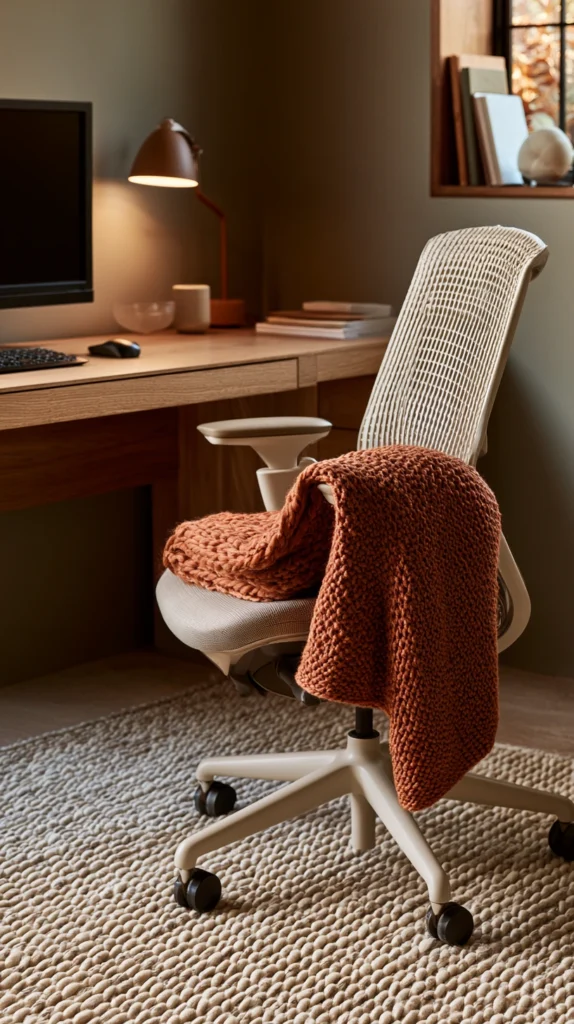
This is the cheapest change on the list and the one people notice most immediately in terms of how the space feels.
A chunky knit or waffle-weave throw draped over the back of an office chair introduces texture, warmth, and color simultaneously — three things that shift a space from functional to comfortable.
For fall specifically, tones in terracotta, rust, camel, or deep olive work better than generic cream. They read as seasonal without screaming “pumpkin decor.”
Washable cotton-acrylic blends from H&M Home or Target’s threshold line run $20–$35 and hold up to regular use and machine washing.
Tip: Fold the throw into thirds lengthwise and drape it over one arm of the chair rather than spreading it over the back. This keeps it accessible without looking like an afterthought.
Budget: $20–$40
3. Use a Wooden Desk Tray to Organize and Add Warmth
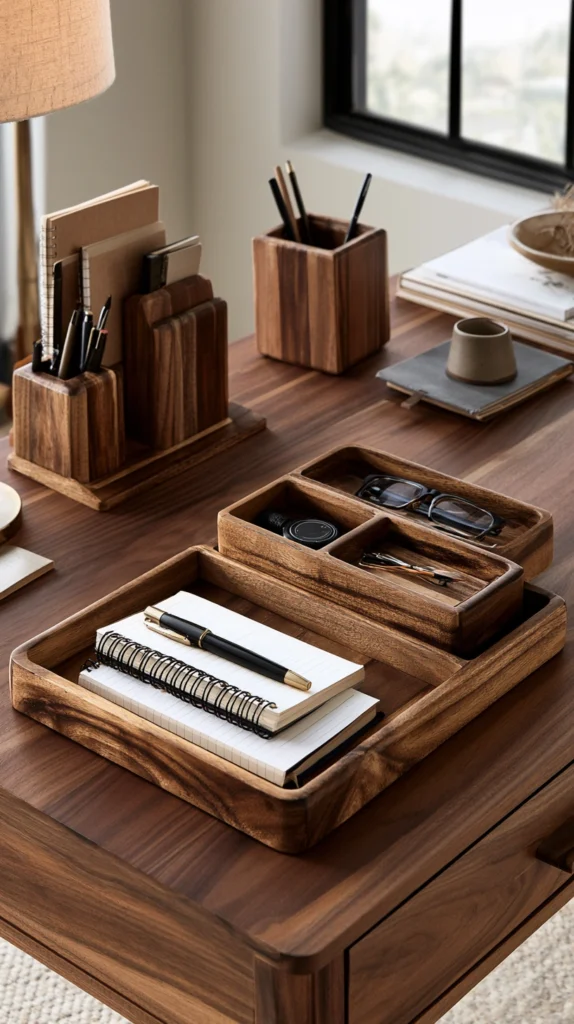
Wire and acrylic desk organizers are fine for summer. In fall, they look cold.
A wooden desk tray — acacia, bamboo, or walnut veneer — instantly warms the surface without adding any physical bulk. Use it to corral a pen holder, a small notepad, and your most-used items into one contained zone.
This also has a functional benefit: a visually defined “active zone” on your desk reduces the mental cost of starting work because your eye goes straight to what needs attention rather than scanning a scattered surface.
Acacia wood trays from Amazon Basics or IKEA’s RÅGRUND accessories range run $12–$25.
Tip: Line the tray with a strip of cork sheet ($4–$6 at craft stores) to prevent items from sliding and to add another layer of natural texture.
Budget: $12–$30
4. Bring in One Potted Plant with Fall Foliage Color
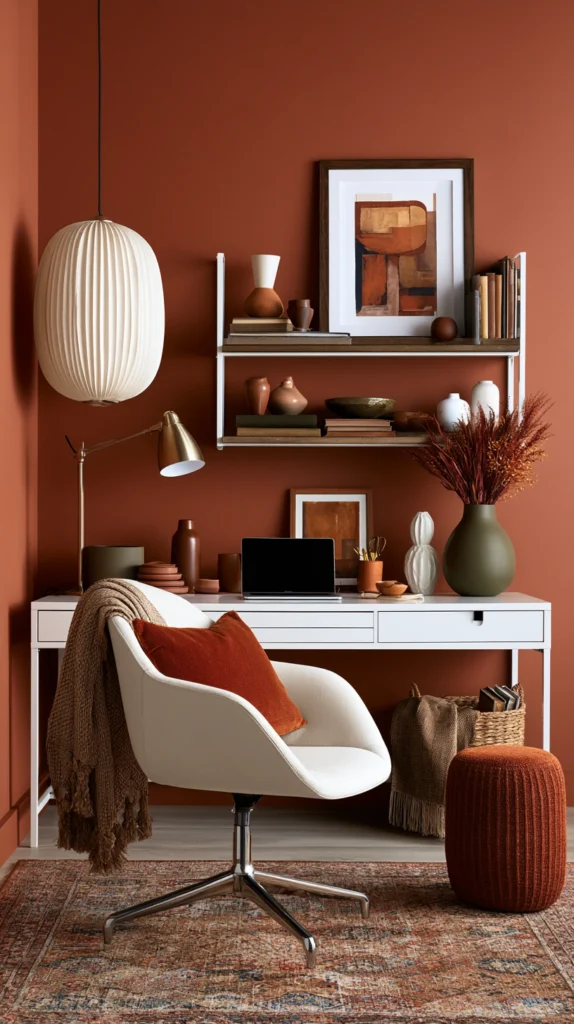
A plant on or near a desk doesn’t just look good — it gives the eye somewhere to rest during screen breaks, which reduces visual fatigue over a long work session.
For fall specifically, choose plants that either match the season’s palette or thrive in the lower-light conditions that come with shorter days. Burgundy rubber trees (Ficus elastica ‘Burgundy’), ZZ plants, and pothos in golden or neon varieties all work well.
If natural light in your office drops significantly in fall, pothos and ZZ plants tolerate low light better than most. Rubber trees need a few hours of indirect light and will drop leaves if moved somewhere too dark too quickly.
A 6-inch potted plant from a local nursery or Home Depot runs $8–$18.
Tip: Place the plant at eye level to your monitor screen rather than on the floor. A plant you can see without looking away from your workspace integrates into the visual environment rather than being something you only notice when you get up.
Budget: $8–$25 including a simple pot
5. Layer a Desk Pad in a Fall-Appropriate Color
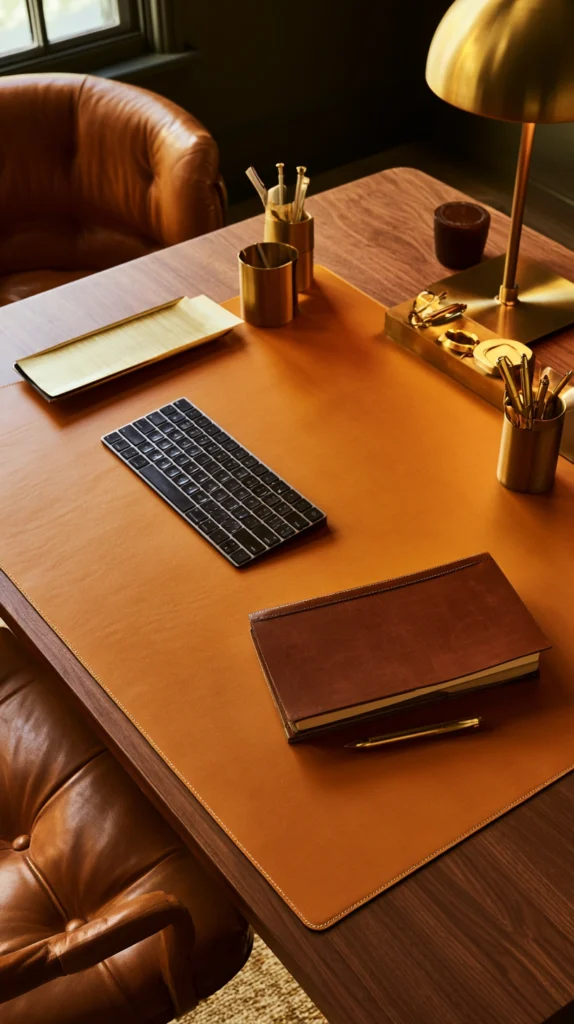
A desk pad — sometimes called a desk mat — is a large piece of leather, felt, or cork that covers most of the work surface.
Beyond protecting the desk, it defines the workspace visually and creates a consistent background color for video calls. In fall, swapping a standard black or grey pad for one in caramel, olive, or terracotta changes the entire tone of the desk without moving a single other item.
Felt desk pads from brands like Navaris or Grovemade run $20–$60 depending on size and material. A 35×17-inch pad covers most standard desks with room for a monitor riser and keyboard side by side.
Tip: Cork pads double as a pinboard for notes and reference cards. If you prefer working with physical reminders in front of you, cork is more useful than felt for the same price range.
Budget: $20–$60
6. Set Up a Dedicated Warm Drink Station Near Your Desk
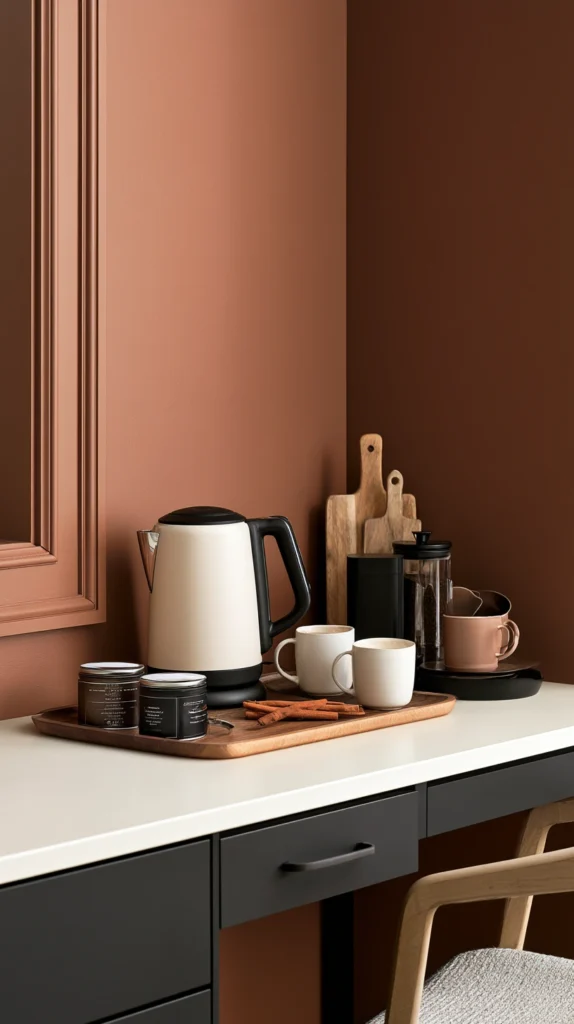
Productivity researchers have noted that ritual behaviors — a specific sequence of small actions before starting work — are among the most reliable ways to signal the brain to shift into focus mode.
A warm drink station makes that ritual physical and seasonal at the same time.
Keep a small tray near your desk with a compact electric kettle, your preferred tea or coffee, an insulated mug, and whatever autumn flavors you actually enjoy — cinnamon sticks, cardamom pods, dried orange peel. The ritual of preparing the drink becomes the transition between “at home” and “at work.”
A 0.5-liter travel kettle runs $15–$25 and heats water in under 2 minutes, which keeps the ritual quick enough to be practical.
Tip: Use a ceramic or stoneware mug rather than a travel tumbler at your desk. Ceramic holds heat reasonably well, looks better on camera, and doesn’t create the association with rushing that a travel cup does.
Budget: $20–$45 for the full setup
7. Replace One Overhead Light with a Table Lamp
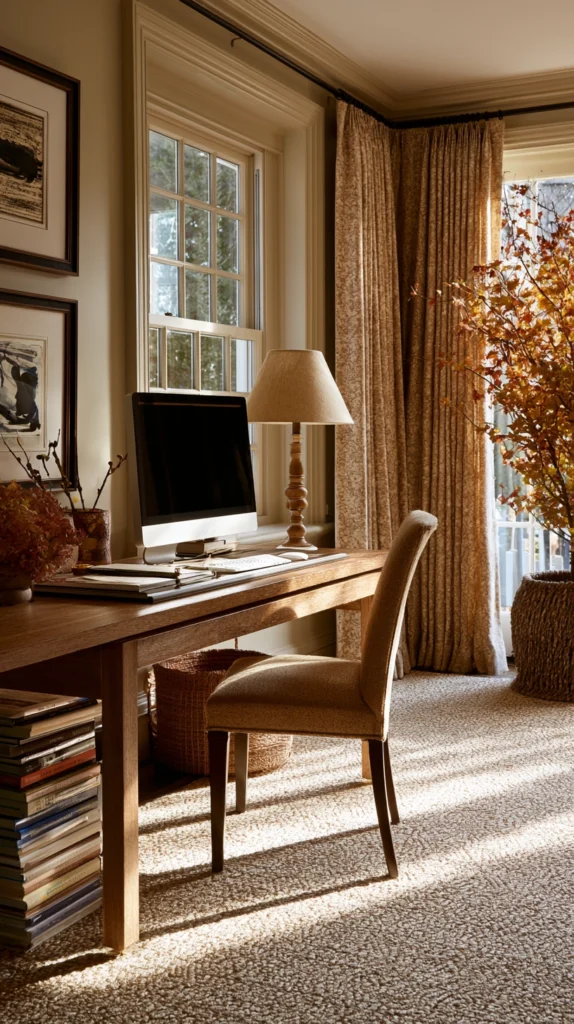
Most home offices are lit entirely from above, which creates flat, shadowless light that feels institutional rather than inviting.
Adding a table lamp — positioned to one side of the monitor rather than directly behind it — introduces a secondary light source at a lower height. This creates depth in the room and reduces the flat appearance that makes office spaces feel exhausting over a full workday.
For fall, choose a lamp with a linen or fabric shade in a warm tone rather than a white plastic shade. The fabric diffuses light and adds amber warmth that white shades don’t. Amber and caramel shades add more warmth; cream and ivory shades are more neutral.
Lamps with warm-toned shades in the $30–$80 range are widely available at Target, TJ Maxx, and Amazon.
Tip: Position the lamp on the opposite side of your dominant hand from your monitor. If you’re right-handed and your monitor is center, put the lamp to the left. This prevents the lamp from casting a shadow across your work area during handwriting or note-taking.
Budget: $30–$80
8. Use Autumn-Scented Wax Melts Instead of Candles
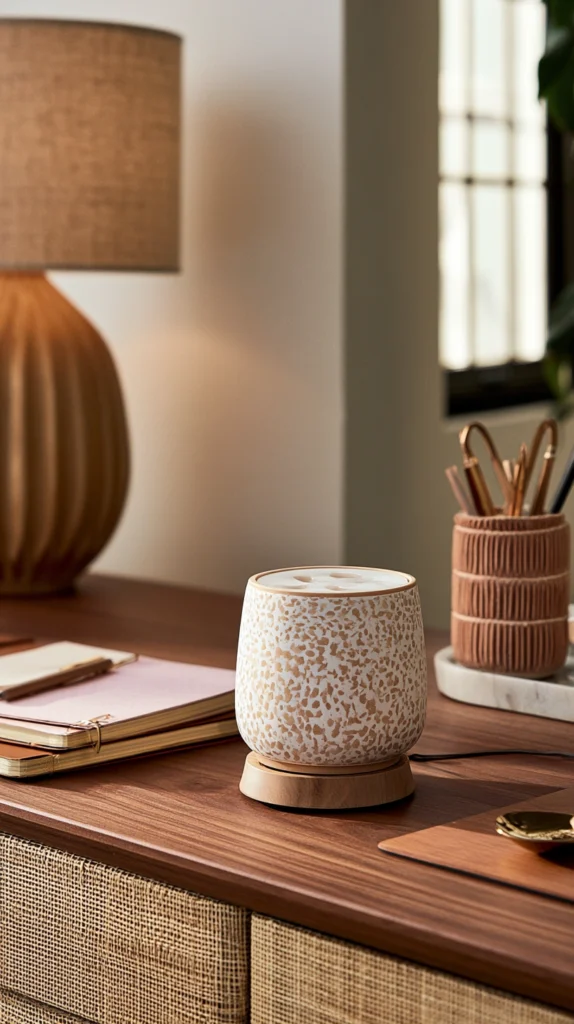
Open-flame candles at a work desk are a fire risk — particularly near paper, notebooks, or when you get absorbed in work and forget they’re lit.
Wax melts in an electric warmer give the same ambient scent with zero flame and zero supervision required.
For fall focus specifically, cinnamon and sandalwood are worth trying before the more obvious pumpkin spice options. They’re warmer and less sweet, which reads as cozy rather than dessert-like. Cedarwood and black tea combinations also work well — they smell grounded rather than festive.
Scentsy and Better Homes & Gardens (Walmart) both make reliable electric warmers in the $15–$30 range. Wax melt packs run $4–$8.
Tip: Run the warmer for 30–45 minutes at the start of a work session, then turn it off. Scent adapts quickly — keeping it on all day means you stop noticing it after an hour, which wastes the wax and provides no ongoing benefit.
Budget: $20–$40 for warmer plus first wax pack
9. Add a Cork or Linen Pinboard Behind Your Desk
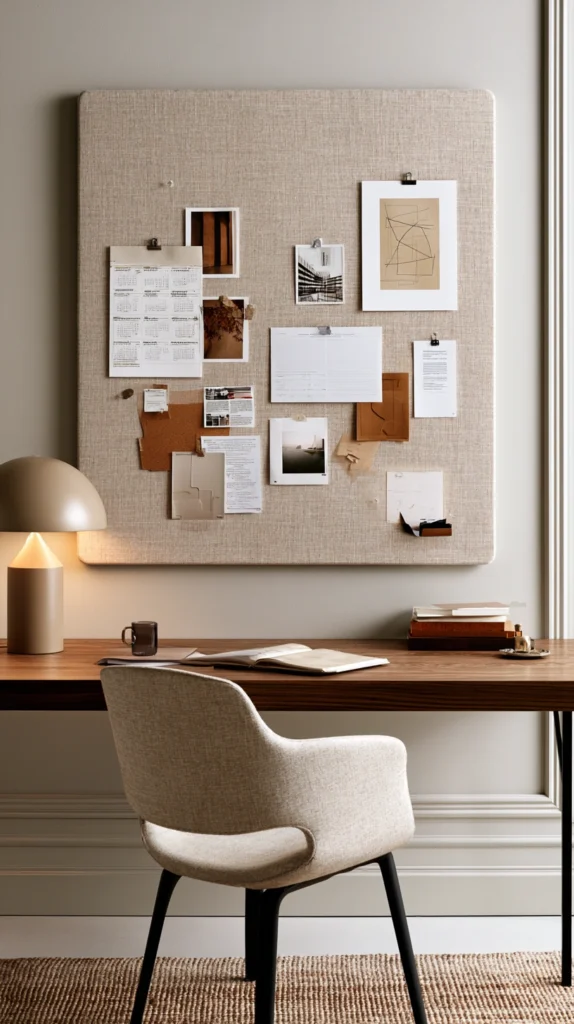
A pinboard does two things in a fall home office: it keeps visual reference material off the desk surface, and it gives you a place to incorporate seasonal color through pinned items rather than buying new decor.
Pin the things you’re actually using — project notes, a printed calendar, a couple of reference images, a postcard or photo that motivates you. A pinboard that holds real working material looks purposeful. One covered in aesthetic items alone starts to feel like a mood board rather than a workspace.
For a warmer look than standard grey corkboard, look for corkboards with linen or burlap fabric borders, or cover the cork surface with a piece of linen fabric using staples or fabric glue. This takes 10 minutes and changes the entire aesthetic of the board.
Standard 23×17-inch corkboards run $10–$20 at office supply stores or Target.
Tip: Keep the top quarter of the board clear. A board that’s filled to every corner creates visual noise rather than organization. The empty space at the top gives the board breathing room and makes the pinned items easier to read at a glance.
Budget: $10–$25
10. Introduce a Chunky Knit or Wool Rug Under Your Desk Chair
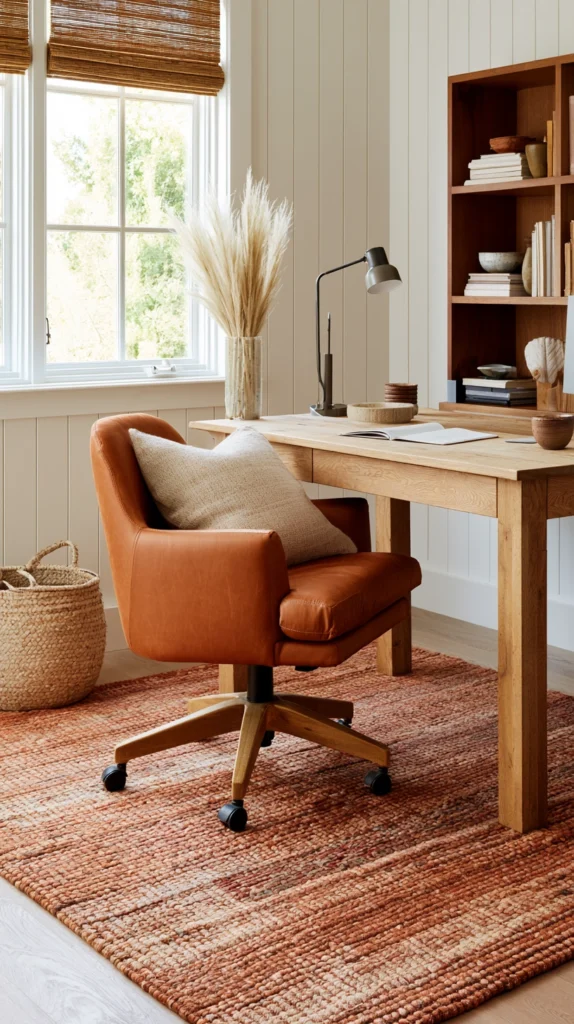
Hard floors under a desk chair feel cold in fall, both literally and visually.
A small rug — 3×4 or 4×5 feet — placed under the desk area adds physical warmth underfoot during long sitting sessions and introduces texture and color at floor level where it anchors the whole desk zone.
For chair compatibility, use a low-pile or flat-weave rug rather than a chunky loop or high-pile design. Chair wheels catch and damage looped fibers, and high-pile rugs make rolling the chair physically harder. Dhurrie-style flat-weave rugs in rust, terracotta, or dark olive suit fall palettes and work with office chairs.
If you need chair wheels to roll freely, place a clear office chair mat over the rug. This protects the rug and maintains easy movement.
Target, Ruggable, and Amazon all offer flat-weave options in the $35–$80 range for a 4×5.
Tip: Choose a rug with a pattern — even a simple geometric or stripe — rather than a solid. Solid rugs show every piece of dust and debris that falls from the desk, while patterns absorb visual noise.
Budget: $35–$90
11. Style Your Bookshelf with Fall Tones and Active Items
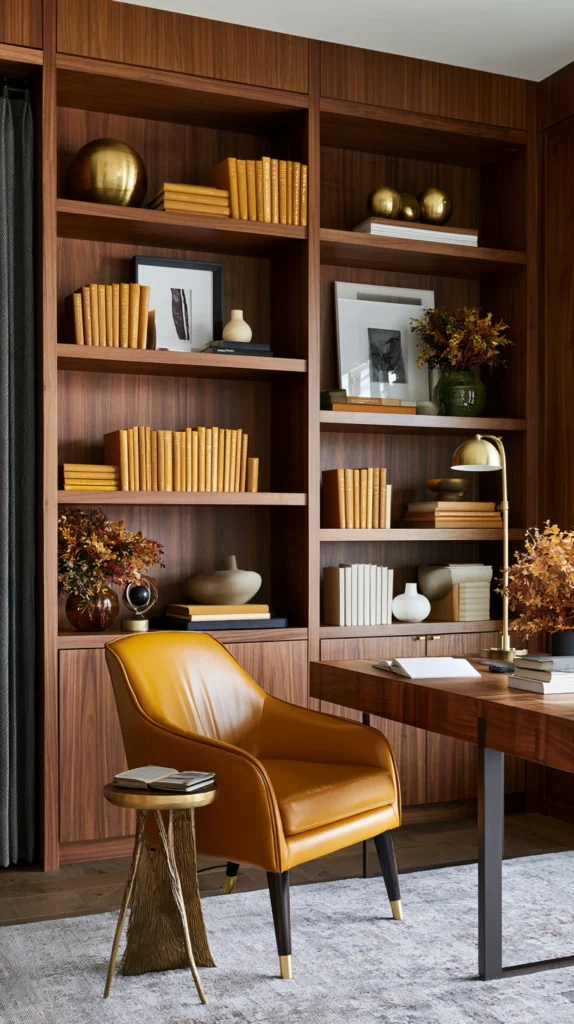
A bookshelf in a home office works hardest when it holds things you actually use, styled in a way that looks intentional rather than random.
For fall, pull books with warm-toned spines to the front of each shelf and push cooler-toned ones toward the back. It sounds almost too simple, but the eye reads warm colors as closer and cool colors as receding — so the shelf gains depth with no physical rearrangement.
Add one or two seasonal objects: a small brass candle holder, a wood-carved object, a dried stem arrangement in a short vase. These don’t need to be overtly autumnal — just warm-toned and natural in material.
Leave at least one third of each shelf empty or with a simple stack of books laid horizontally. A shelf with breathing room looks curated. A completely packed shelf looks like storage.
For ideas on open shelving that looks organized rather than cluttered, the open kitchen shelving guide on StyleTasteStudio covers the same visual principles that apply directly to office bookshelf styling.
Tip: Group items in odd numbers — threes and fives read as more dynamic than pairs. Two objects side by side look symmetrical and static. Three objects at different heights create movement.
Budget: $0–$30 depending on what you already own
12. Hang One Piece of Fall-Toned Art or a Framed Print
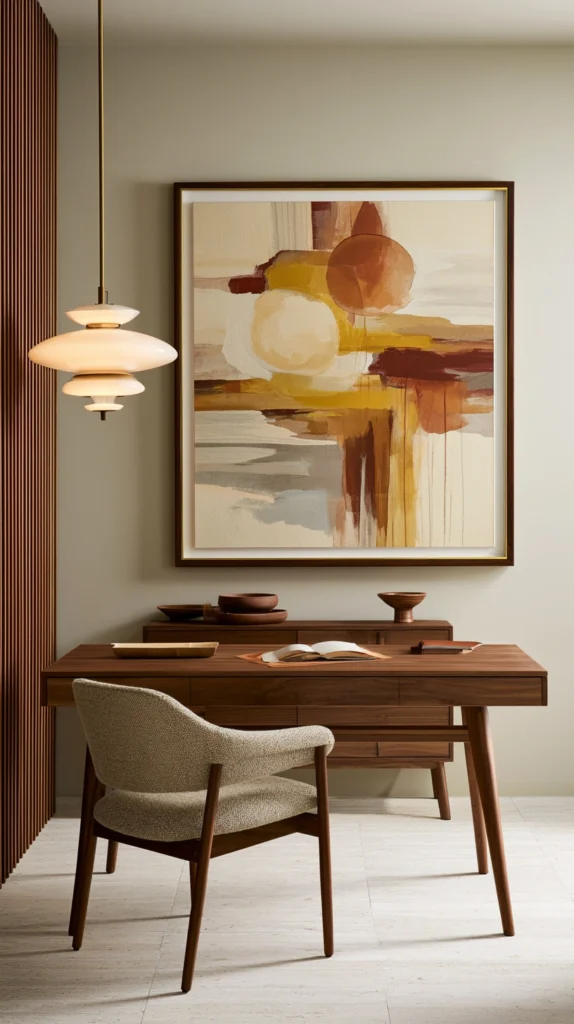
Blank walls in a home office contribute to the feeling that the space is temporary or unfinished — which subtly undermines the ability to settle into focused work.
One framed print is enough. It doesn’t need to be fall-specific subject matter, but the palette should include at least one warm tone that bridges the wall and the desk area below it.
Botanical prints in muted gold and brown, abstract prints with rust and cream, landscape photography in golden-hour light — all of these work without being seasonally themed in an obvious way. Sites like Society6, Minted, and Etsy sell printable files for $5–$15 that you can print at a local print shop in whatever size fits your wall.
A simple black frame from IKEA’s RIBBA line runs $5–$15 and works with almost any print style.
Tip: Hang the print at eye level when seated, not standing. Most wall art in offices gets hung at standing eye level, which means it’s above the line of vision during the actual work session. Seated eye level is approximately 10–12 inches lower than standing.
Budget: $15–$40 for print plus frame
13. Use a Linen Curtain to Soften Harsh Window Light
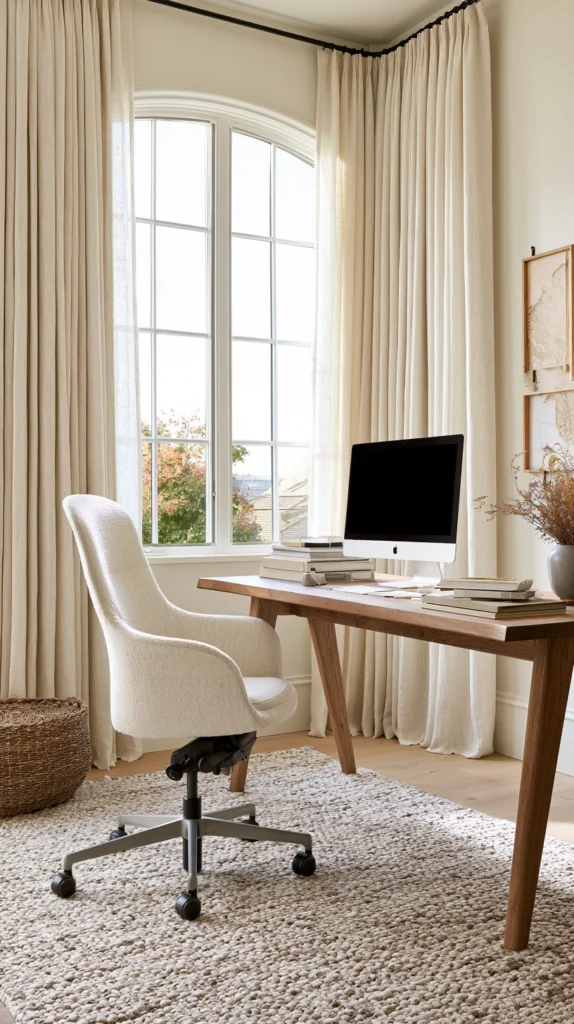
Fall sun sits lower in the sky than summer sun. It comes in at a more direct angle, which means it hits the monitor and desk surface at a sharper angle and creates glare that summer never produced from the same window.
A sheer or semi-sheer linen curtain solves this without blocking light entirely. Linen diffuses direct sunlight into an even, warm glow that reduces glare at the desk level without making the room darker.
For a fall palette, choose natural undyed linen, soft ivory, or a warm stone tone rather than bright white — white sheers can look stark in low fall light while warmer tones absorb the golden quality of autumn sun and scatter it gently.
IKEA’s HANNALILL and Amazon’s basic linen curtain panels run $15–$30 per panel. Use a tension rod inside the window frame for a clean look without drilling.
Tip: Hang the curtain rod 4–6 inches above the window frame rather than flush against it. This small adjustment makes the window appear taller and the light entry point feel more generous, even when the curtain is partially closed.
Budget: $20–$50
14. Add a Small Ceramic or Stoneware Dish for Desk Items
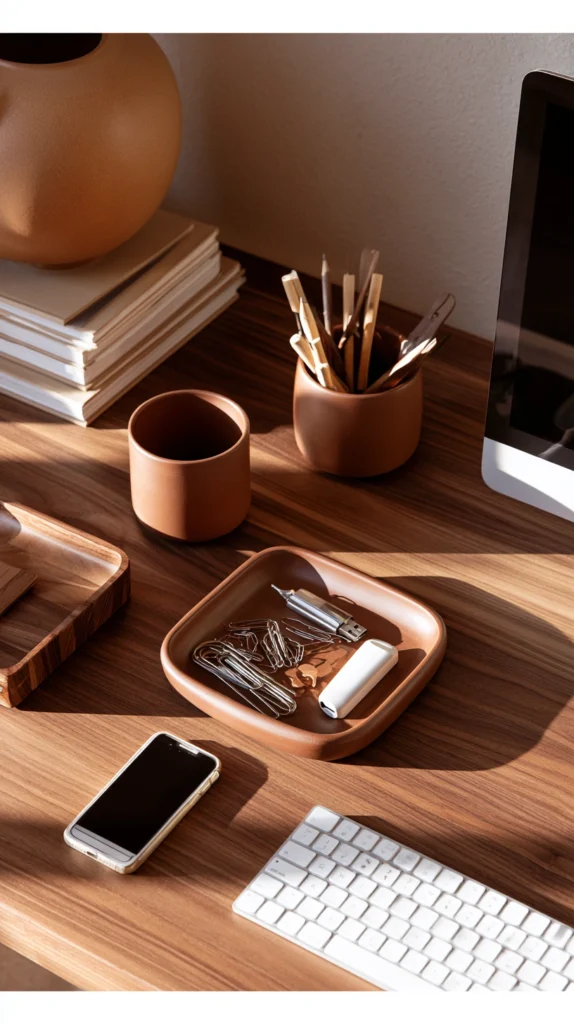
A ceramic catch-all dish — the kind used as a ring dish or small decorative bowl — is one of the most underrated desk accessories for both function and aesthetics.
It gives small items (paper clips, USB drives, lip balm, coins) a designated landing spot that keeps the desk surface clear without requiring a formal organizer. And a ceramic or stoneware piece in a fall glaze — matte terracotta, dark rust, forest green, or warm cream — adds organic texture that plastic organizers never provide.
Handmade ceramic dishes from Etsy run $12–$30 and are often more distinctive than anything available at a big-box store. Thrift stores also regularly stock small ceramic bowls and dishes at $1–$4.
Tip: Keep only three to five items in the dish. The moment it starts collecting everything, it loses its visual appeal and becomes a clutter zone. A weekly clear-out — putting back only what actually belongs — keeps it purposeful.
Budget: $4–$30
15. Set Up a Reading Nook Corner for Thinking Work
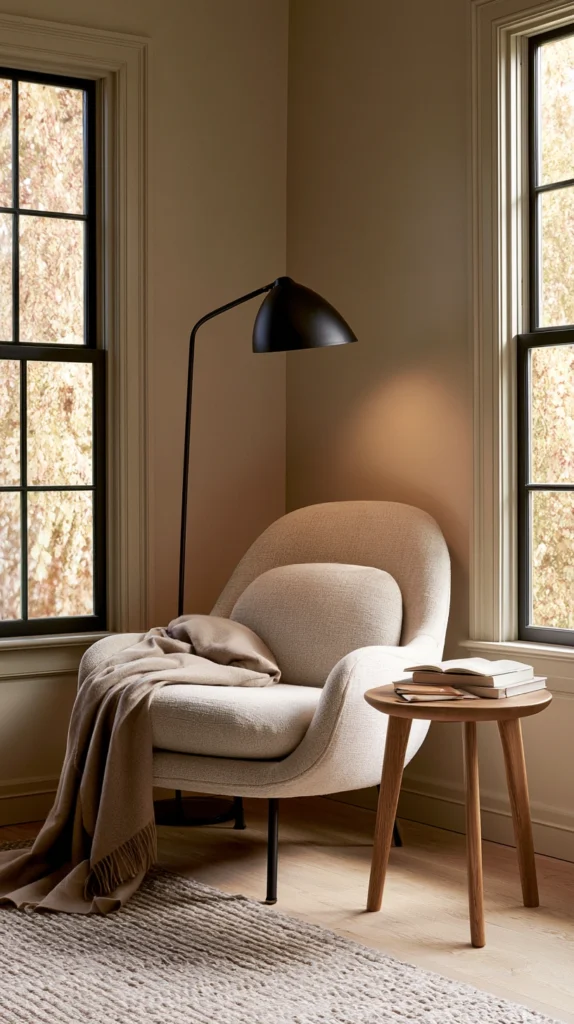
Not all work happens at a desk. Brainstorming, reading, reviewing notes, and thinking through problems often happen better in a slightly different physical position — and a small reading corner in the same room as your desk gives you a second mode without leaving the space.
A floor lamp, a comfortable chair, and a small side table is the minimum setup. Add a throw blanket for fall warmth and a small tray or basket for whatever you’re currently reading or working through.
The key design detail is that the reading corner should face away from the desk — or at least away from the monitor. Visual separation between the desk zone and the thinking zone makes it easier to mentally shift between the two modes.
For more ideas on creating defined zones within a single room, the living room ideas section on StyleTasteStudio covers zone-based furniture arrangements that translate directly to home office layouts.
A used armchair from a thrift store or Facebook Marketplace runs $20–$60. A simple arc floor lamp runs $30–$60 new.
Tip: Keep a notebook and pen in the reading corner rather than a device. The physical separation from screens is part of what makes the corner useful for thinking work — introducing a tablet or laptop eliminates the distinction between the two zones.
Budget: $50–$120 for a complete corner setup
Final Thoughts
A cozy fall home office isn’t about buying seasonal decorations. It’s about adjusting the sensory environment — light temperature, texture, scent, color — to match the season you’re actually working in.
The ideas here that cost nothing or almost nothing — changing a bulb, rearranging bookshelf colors, adjusting curtain placement — often produce as much change as the purchases.
Start with lighting and one warm textile. Those two adjustments shift how the space feels faster than anything else, and everything else builds from there.
Browse more seasonal home design ideas across every room in the home design section on StyleTasteStudio.