
10 Fall Tablecloth and Runner Ideas for Every Dining Style
My dining table sat completely bare for years. Wood surface visible at every meal, no layering, no texture, the same look in October as in April.
Tried draping a Halloween-themed plastic tablecloth from the grocery store once. Looked like a party-supply purchase, not a styled table, and it crinkled loudly every time someone reached for the salt.
Then I learned that the right tablecloth or runner depends entirely on the table’s existing style, not just the season. A farmhouse table wants something different from a modern table, which wants something different again from a formal dining room. Matching the textile to the dining style first, then layering in fall color and texture, made every single table look intentional.
Now my dining table is the first thing guests comment on walking in, and the choice was never really about fall at all. It was about choosing the right textile for the table underneath it.
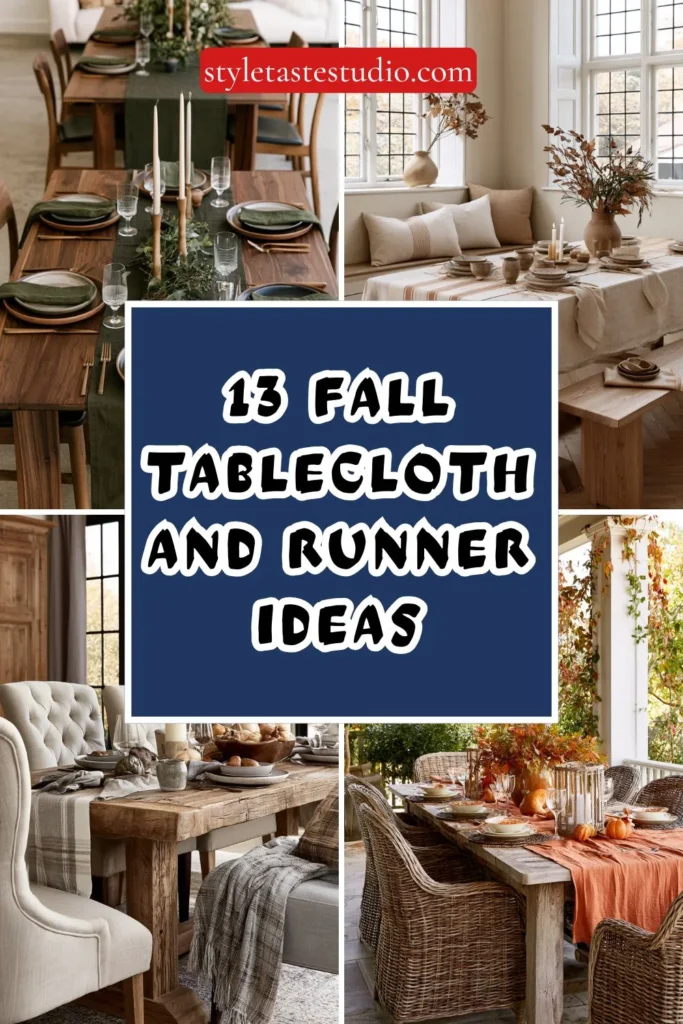
Let me show you 10 tablecloth and runner ideas, organized by dining style, that bring genuine fall warmth to any table without fighting the furniture it sits on.
Why Most Fall Table Linens Look Wrong on the Table They’re Used On
The seasonal-graphic mistake:
What goes wrong most often:
- A printed pumpkin, leaf, or plaid tablecloth purchased purely because it says “fall” on the package
- No consideration of whether the print, weight, or formality actually matches the table and dining room it will sit on
- A delicate, formal table dressed in a casual printed cloth, or a rustic farmhouse table dressed in something too polished and stiff
The style-mismatch problem:
Why this happens:
- Most seasonal linens are marketed by season alone, not by dining style
- A genuinely beautiful runner can still look wrong if its weight, color saturation, or formality fights the table beneath it
- This mismatch is often what makes a seasonal table setting feel like a costume rather than a considered styling choice
What actually needs to happen first:
The sequencing principle:
- Identify the table’s existing style and formality level first
- Then choose fall color and texture within that style category
- This order, style first, season second, is what separates a tablecloth that looks intentional from one that looks like it was grabbed off a seasonal display rack
My revelation: The dining style determines the textile’s weight, formality, and pattern scale; fall only determines the color and a few material choices within that already-established framework. Reverse this order and almost any choice looks slightly wrong.
1. The Farmhouse Table: Buffalo Check Runner Over a Linen Base Cloth (Layered Rustic Warmth)
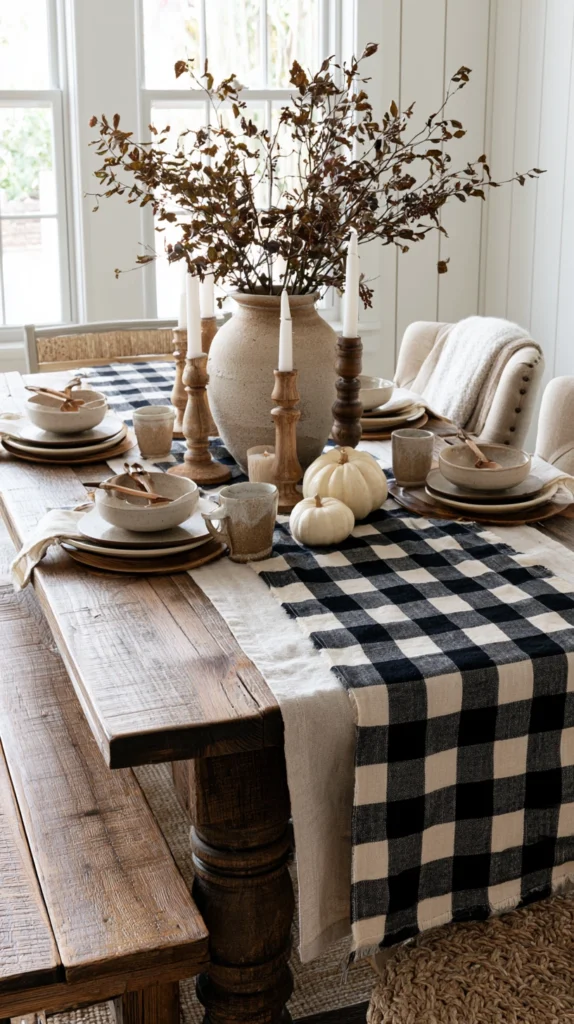
A neutral linen tablecloth as the base, topped with a runner in classic buffalo check — the most recognizable rustic fall combination, built correctly in layers.
My single-layer farmhouse mistake:
What I had tried first:
- A buffalo check tablecloth alone, covering the entire table
- The pattern, while appropriately rustic, felt slightly overwhelming across the full table surface
- Layering a runner over a plainer base solved this exact problem
Why farmhouse tables specifically want layering:
The aesthetic logic:
- Farmhouse style is built on visible layers: worn wood, stacked textiles, collected objects
- A single flat tablecloth, however appropriate the pattern, misses this layered quality that defines the style
- Building the table in two textile layers (base cloth, then runner) immediately reads as more authentically farmhouse than one piece alone
The base cloth:
What to choose:
- A natural linen or linen-blend tablecloth in warm cream, oat, or natural undyed tone
- Slightly wrinkled texture is correct and expected for this style; an overly crisp, ironed linen looks too formal for the farmhouse aesthetic
- Sized to drape generously over the table edges, typically 6-12 inches of overhang on each side
The buffalo check runner:
Pattern and color specifics:
- Black and cream buffalo check (the most classic, highest-contrast option)
- Red and black, if a more traditional or slightly more saturated look is preferred
- Rust and cream, for a softer, more clearly autumnal alternative to the classic black and white
Runner width and placement:
Getting the proportion right:
- A runner roughly 14-16 inches wide for a standard dining table
- Centered down the table’s length, with even overhang at each end (typically 6-12 inches, matching the tablecloth’s overhang style)
Sourcing affordably:
Budget options:
- Target and HomeGoods for both the linen cloth and the buffalo check runner ($15-30 each)
- IKEA for an affordable linen-blend base cloth specifically ($12-25)
What goes on top:
Completing the farmhouse table:
- Wooden charger plates or a simple stack of warm-toned ceramic dishes
- A low, wide centerpiece (referenced in broader fall mantel and centerpiece guidance) rather than anything tall and formal
- Mismatched, collected-looking napkins, secured with simple twine rather than formal napkin rings
Cost:
- Linen base cloth: $20-50
- Buffalo check runner: $15-30
- Total: $35-80
My farmhouse table result: Layering a natural linen cloth beneath a black and cream buffalo check runner transformed my dining table into something that finally matched the rest of my farmhouse-leaning home, the two-layer approach specifically is what made it look assembled over time rather than purchased as a single seasonal set.
Farmhouse Table Tips
Embracing wrinkles in the linen base:
Avoiding an over-pressed look:
- A perfectly crisp, ironed linen cloth undercuts the relaxed, lived-in quality central to farmhouse style
- Letting the linen retain some natural wrinkle and softness after washing is correct, not a styling failure
Choosing a runner narrower than the table:
Proportional accuracy:
- A runner that nearly matches the table’s full width loses its layered, distinct quality against the base cloth
- Keeping the runner notably narrower than the table itself maintains the visual layering effect this combination depends on
2. The Modern Table: A Solid Charcoal or Deep Olive Linen Runner With No Tablecloth (Minimal Color Statement)
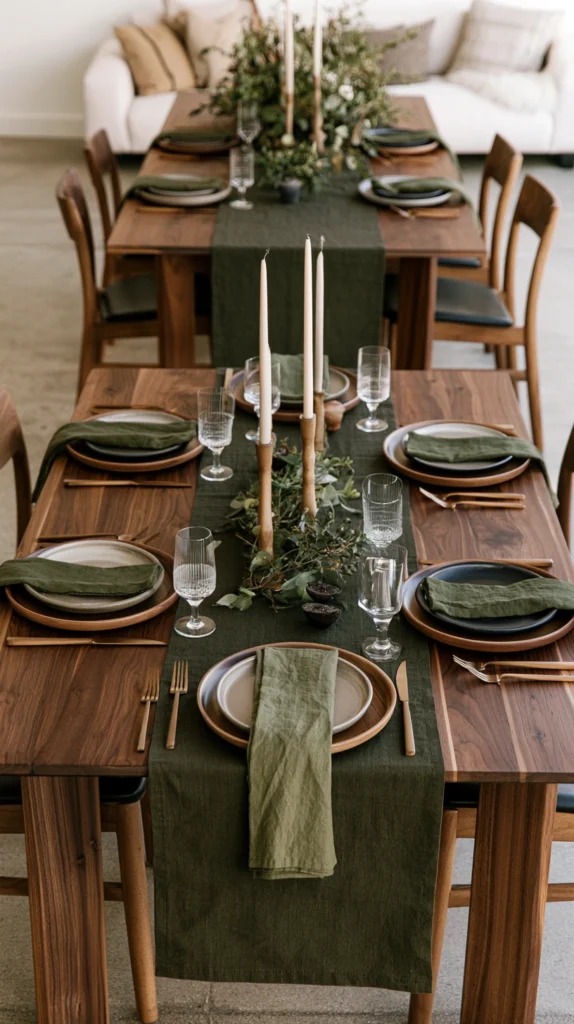
A single runner in a deep, saturated solid color, used alone without any full tablecloth beneath it — the cleanest, most contemporary fall table treatment.
My over-styled modern table attempt:
What I had initially tried:
- A patterned tablecloth on a sleek, minimal modern table
- The pattern fought visually against the table’s clean lines and simple material palette
- Removing the tablecloth entirely and using only a solid runner finally matched the table’s actual aesthetic
Why modern tables specifically want restraint:
The aesthetic logic:
- Modern dining spaces are typically built on clean lines, minimal pattern, and a focus on material quality (wood grain, stone, metal) rather than decorative pattern
- A bold printed seasonal tablecloth disrupts this minimal quality significantly
- A single solid-color runner, by contrast, adds warmth and seasonal color without introducing pattern or visual clutter
Why no tablecloth beneath the runner:
The exposed table principle:
- Modern dining tables are often chosen specifically for an attractive wood grain, stone surface, or other material quality
- Covering this with a full tablecloth hides the very feature the table was likely chosen for
- A runner alone, leaving the table surface visible on either side, lets both the runner’s color and the table’s material be appreciated simultaneously
Color choices for this minimal approach:
Best options:
- Deep charcoal (a sophisticated, neutral-adjacent fall choice)
- Deep olive green (adds genuine color without excessive boldness)
- Rust or terracotta, for a slightly warmer, more overtly seasonal statement within the same minimal format
Material for a modern aesthetic:
What fits:
- A smooth linen or linen-cotton blend, pressed cleanly rather than left deliberately wrinkled (the opposite styling choice from the farmhouse approach in idea 1)
- A matte, non-shiny finish; anything with visible sheen can look slightly cheap or costume-like against an otherwise sophisticated modern table
Runner width and placement:
Proportional considerations:
- A slightly wider runner (16-20 inches) than the farmhouse example, since this runner is the table’s primary visual statement rather than one layer among several
- Precisely centered, with clean, even overhang at each end
Sourcing affordably:
Budget options:
- CB2 and West Elm for higher-design, still accessible solid linen runners ($25-45)
- IKEA for the most budget-friendly solid linen option ($10-20)
- Etsy independent linen makers for a slightly more elevated, still reasonably priced option ($30-60)
What goes on top:
Completing the modern table:
- Simple, unadorned dishware, ideally in matte finishes rather than glossy
- A single, sculptural centerpiece object rather than an abundant arrangement
- Cloth napkins in a complementary solid tone, folded simply without elaborate styling
Cost:
- Single solid runner: $15-45
- Total: $15-45
My modern table result: A single deep olive linen runner, used alone with no tablecloth beneath it, finally let my dining table’s actual walnut grain remain visible while still introducing genuine fall color and warmth, this remains the simplest and least expensive idea on this entire list while also being among the most successful for this particular table style.
Modern Table Tips
Checking the table surface condition before going bare:
A practical consideration:
- A runner-only approach exposes more of the table surface than a full tablecloth would
- Confirming the table surface itself is in good enough condition to be visible (no significant scratches, water rings, or other damage) matters more for this style than for fully covered approaches
Choosing one statement color rather than multiple runners:
Maintaining the minimal aesthetic:
- Adding a second contrasting runner crosswise, or layering multiple colors, begins to work against the restrained quality this specific approach depends on
- One single, well-chosen color is generally more successful here than attempting additional layering
3. The Formal Dining Room: A Damask or Jacquard Tablecloth in Deep Burgundy (Traditional Elegance)
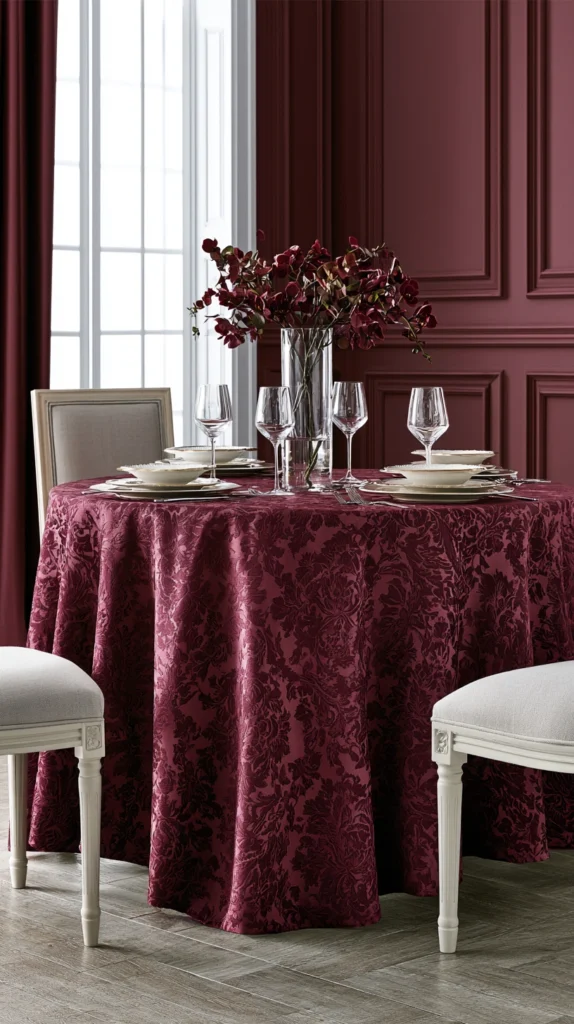
A woven-pattern tablecloth in a rich, dark fall color, sized for full table coverage — the traditional, formal approach to a fall dining table.
My too-casual formal dining room mistake:
What I had tried first:
- A simple cotton solid-color cloth on a formal mahogany dining table with upholstered chairs
- The casual cotton felt slightly out of place against the room’s existing formality
- A proper damask or jacquard weave, even in a similar color, immediately read as more appropriately matched to the room
Why formal dining rooms specifically want woven pattern, not printed pattern:
The material hierarchy in formal settings:
- A woven-in pattern (damask, jacquard) carries more inherent formality than a printed-on pattern, even in an identical visual design
- This distinction matters significantly in a genuinely formal dining room, where the existing furniture, lighting, and overall room treatment already establish a higher level of polish
Damask versus jacquard:
Understanding the difference:
- Damask traditionally features a self-pattern (the pattern and background in the same color, visible through the weave’s sheen differences) for the most subtle, traditional effect
- Jacquard can incorporate more visible color contrast within the weave, offering a slightly bolder but still woven-pattern option
Color choices for fall formality:
Best options:
- Deep burgundy or wine (the most traditionally formal fall color choice)
- Deep forest green (sophisticated, slightly less expected than burgundy)
- Rich gold or amber, for a more dramatic, jewel-toned formal statement
Sizing for full coverage:
Getting formal table dimensions right:
- A formal tablecloth typically drops further than the casual farmhouse overhang, often 8-15 inches on all sides, nearly reaching chair seat height
- This longer drop is part of what distinguishes formal table dressing from more casual approaches
Sourcing this specific style:
Where to find quality formal tablecloths:
- Crate and Barrel and Williams Sonoma for accessible quality at the higher end of mid-range pricing ($60-150)
- Pottery Barn for a wide selection specifically in jacquard and damask weaves ($70-180)
- Estate sales and antique shops for genuine vintage damask, often surprisingly affordable and carrying more character than new options ($20-80)
What goes on top:
Completing the formal table:
- Fine china or formal dishware, with gold or silver-rimmed pieces depending on the room’s existing metal tone
- Polished silver or brass candlesticks, with taller tapers than the more casual styles used elsewhere
- Cloth napkins in a coordinating or contrasting formal fold, secured with a napkin ring rather than simple twine
Cost:
- New damask or jacquard tablecloth: $60-180
- Vintage option: $20-80
- Total: $20-180
My formal table result: Replacing a simple cotton cloth with a deep burgundy jacquard tablecloth, sourced from an estate sale for thirty-five dollars, immediately elevated my dining room’s seasonal presentation to match the actual formality of the room’s existing furniture and lighting, the woven pattern specifically made the difference that a printed alternative would not have achieved.
Formal Dining Tips
Checking care instructions before committing to a fabric:
A practical consideration for formal entertaining:
- Some damask and jacquard blends require dry cleaning rather than home washing
- Confirming care requirements before purchase, particularly if the tablecloth will be used for occasions involving food and wine, helps set realistic maintenance expectations
Pressing thoroughly before formal use:
Maintaining the appropriate polish:
- Unlike the farmhouse approach’s intentional wrinkle, a formal table setting benefits from a properly pressed cloth
- This is one of the few linens on this entire list where ironing is specifically recommended rather than optional or counterproductive to the intended aesthetic
4. The Bohemian or Eclectic Table: A Vintage or Patterned Cloth Layered With a Mismatched Runner (Collected, Not Coordinated)
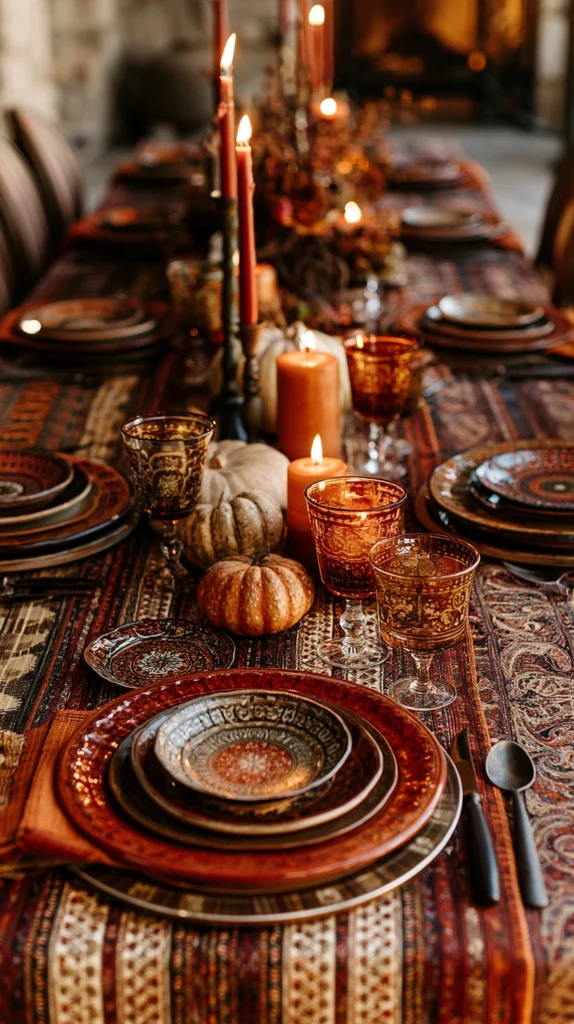
A patterned vintage-style tablecloth as the base, topped with a second, intentionally different pattern as a runner — building visual richness through deliberate, curated mismatch.
My too-matched bohemian attempt:
What I had tried first:
- A single cohesive pattern across the entire table setup
- This read as more coordinated and less genuinely collected than the bohemian style typically calls for
- Introducing a deliberately different second pattern as a layered runner finally captured the eclectic, gathered-over-time quality this style depends on
Why bohemian tables specifically reward intentional mismatch:
The aesthetic logic:
- Bohemian and eclectic dining styles celebrate visible variety: different patterns, textures, and sources combined with confidence
- A single matched pattern, however beautiful, can read as more restrained and coordinated than this particular style calls for
- Layering two genuinely different patterns, chosen with care but not matched, achieves the collected, well-traveled quality bohemian dining rooms typically aim for
Choosing the base cloth pattern:
What works well:
- A vintage-style floral or paisley print in warm fall tones (rust, mustard, deep red)
- A global-inspired textile, such as an ikat or block-print pattern, particularly if it reflects genuine personal travel or interest
Choosing the contrasting runner:
Selecting the second pattern:
- A different pattern family entirely (geometric against the base cloth’s floral, for example), but sharing at least one color with the base cloth to maintain some connection
- This shared-color rule, also referenced in broader pattern-mixing guidance throughout fall decor articles, is what prevents two different patterns from clashing outright
Color coordination across the mismatch:
The unifying principle:
- Both the base cloth and the runner should draw from the same general fall palette (rust, mustard, olive, deep red) even while differing in specific pattern
- This shared color family is what allows visually different patterns to coexist successfully on the same table
Sourcing affordably:
Budget options:
- Estate sales and vintage shops for genuinely characterful, affordable patterned cloths ($10-40)
- Etsy independent textile sellers and importers for global-inspired patterns ($25-60)
- World Market for accessible global-pattern textiles at mid-range pricing ($20-45)
What goes on top:
Completing the bohemian table:
- Mismatched ceramic dishware, ideally with some handmade or vintage pieces mixed in
- Brass or copper candlesticks of varying heights, rather than a matched pair
- An abundance of small objects (per broader bohemian and maximalist styling guidance) rather than minimal, restrained styling
Cost:
- Base cloth: $15-50
- Contrasting runner: $15-45
- Total: $30-95
My bohemian table result: Layering a vintage rust and cream paisley tablecloth beneath a mustard and cream geometric-patterned runner, both sourced secondhand for a combined total of about thirty dollars, created exactly the eclectic, gathered-over-years quality that a single coordinated pattern alone had never quite achieved on this particular table.
Bohemian Table Tips
Testing the pattern pairing before finalizing:
A practical verification step:
- Laying both textiles together on the actual table before committing to the combination confirms the shared color connection genuinely works in person, not just in concept
- Patterns that seem related when imagined can occasionally clash more than expected once physically combined
Resisting the urge toward perfect coordination:
Trusting the intentional mismatch:
- The instinct to make everything match more closely can undermine the specific collected, eclectic quality this approach is built around
- Some visible tension between the two patterns is correct for this style, not a flaw to be corrected
5. The Scandinavian or Minimalist Table: A Pale Oat Linen Cloth With a Single Thin Stripe Runner (Quiet Warmth)
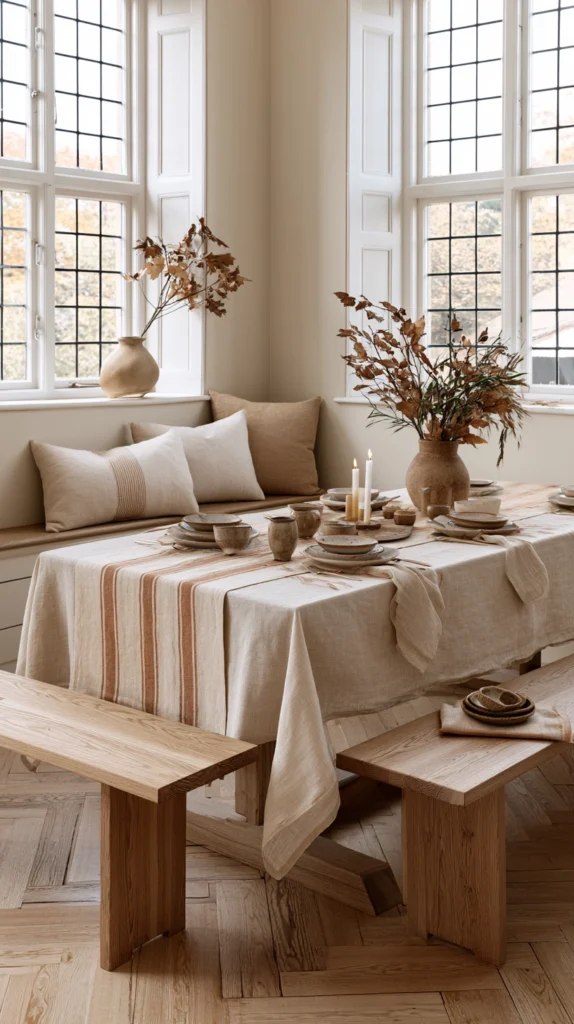
A very simple, pale natural linen tablecloth, with only a single thin-striped runner as the seasonal accent — bringing fall warmth into a style built on restraint and quiet neutrals.
My too-bold Scandinavian table mistake:
What I had tried first:
- A deeply saturated rust tablecloth on an otherwise pale, minimal Scandinavian-style dining setup
- The boldness of the color felt disconnected from the room’s established quiet, neutral palette
- A much paler base cloth, with only a thin accent stripe for seasonal color, finally matched the room’s actual restraint
Why Scandinavian style specifically wants quiet rather than bold:
The aesthetic logic:
- Scandinavian and broader minimalist design typically favors pale woods, soft neutrals, and very controlled use of color and pattern
- A boldly colored or patterned fall tablecloth, however appropriate for other styles, can feel like an unwelcome disruption in this specific aesthetic context
- A pale base with only a thin, controlled accent achieves seasonal warmth without abandoning the style’s defining restraint
The base cloth:
What to choose:
- A pale oat or natural undyed linen, kept very simple and unadorned
- No pattern on the base cloth itself; the simplicity here is intentional and central to the look
The thin stripe runner:
Choosing the accent:
- A narrow runner, often just 8-10 inches wide, considerably narrower than the runners discussed in other dining styles on this list
- A simple, thin stripe pattern in a muted fall tone (dusty terracotta, soft olive) rather than a bold or wide-stripe design
Why narrower and more muted works here specifically:
Maintaining the style’s restraint:
- A wide or boldly colored runner would dominate visually against the pale base cloth in a way that contradicts the entire point of this minimal approach
- Keeping the accent narrow and the color muted ensures the seasonal touch remains genuinely subtle, consistent with the room’s broader design philosophy
Sourcing affordably:
Budget options:
- IKEA for both the simple linen base and a thin striped runner (often the most reliably matched source for this specific minimal aesthetic, $10-25 each)
- H&M Home for accessible, similarly restrained Scandinavian-style textiles ($12-30)
What goes on top:
Completing the minimal table:
- Simple white or pale stoneware dishware, unadorned
- A single small candle in a plain holder, rather than a grouped cluster
- Minimal additional centerpiece, if any; the restraint extends to the entire table styling, not just the linens
Cost:
- Pale linen base cloth: $15-35
- Thin stripe runner: $10-20
- Total: $25-55
My Scandinavian table result: Switching from a bold rust tablecloth to a pale oat linen base with only a narrow, muted terracotta-striped runner finally brought fall warmth into my dining space without disrupting the quiet, restrained quality the rest of the room had been built around, the much smaller, quieter color statement turned out to be exactly right for this particular aesthetic.
Scandinavian Table Tips
Resisting the instinct to add more seasonal color:
Trusting the restraint:
- The temptation to add a second accent or a bolder runner color can undermine this style’s specific success
- A single thin stripe, kept genuinely subtle, is the entire point; resisting the urge to add more is part of executing this look correctly
Choosing natural, slightly textured linen over perfectly smooth fabric:
A small but meaningful material detail:
- Scandinavian style values natural material texture, even within an otherwise minimal palette
- A linen with slight visible texture, rather than a perfectly smooth synthetic blend, supports this material authenticity even in the simplest possible table treatment
6. The Industrial or Loft Table: A Waxed Canvas Runner With Exposed Metal or Wood Hardware Accents (Utilitarian Texture)
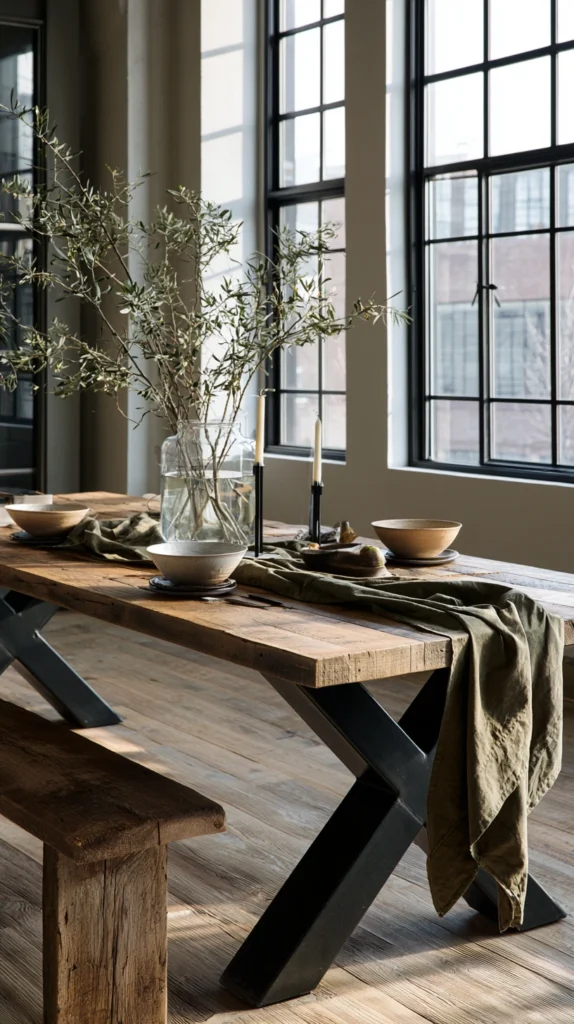
A heavy waxed canvas runner, paired with metal or raw wood accent pieces rather than traditional centerpiece objects — bringing fall warmth to a table style built on raw, utilitarian materials.
My too-delicate industrial table attempt:
What I had tried first:
- A delicate linen runner on a raw steel and reclaimed wood industrial dining table
- The lightweight, soft fabric felt visually disconnected from the table’s heavier, more rugged material palette
- A heavier waxed canvas runner immediately matched the table’s existing material weight and character
Why industrial and loft tables specifically want heavier, more utilitarian textiles:
The aesthetic logic:
- Industrial design draws on raw, functional materials: exposed metal, reclaimed wood, heavy canvas, and leather
- A delicate, soft, or overly decorative textile contradicts this established material language
- Waxed canvas specifically, originally a utilitarian outdoor and work material, fits this aesthetic’s functional, unpretentious character
Choosing waxed canvas:
What to look for:
- A genuine waxed canvas runner or fabric, providing both visual texture and a slightly stiff, structured drape distinct from soft linen or cotton
- Deep, muted fall colors: olive, rust, deep brown, or charcoal, in keeping with the material’s inherently utilitarian color range
Why a runner rather than a full cloth:
Matching the style’s exposed-material preference:
- Industrial tables, much like the modern table in idea 2, are often built from materials (raw wood, metal, concrete) meant to be seen and appreciated
- A runner alone, rather than full coverage, keeps this material visible while still adding the textural and color benefit of the canvas
Metal and wood accent pieces:
Completing the material story:
- Raw or blackened metal candle holders, rather than polished brass or silver
- A reclaimed wood box or tray as a centerpiece base, rather than a more delicate ceramic vessel
- Exposed-filament bulb string lights, if the broader room supports this lighting style, echoing the same utilitarian, exposed-element aesthetic
Sourcing waxed canvas specifically:
Where to find this less common material:
- Specialty outdoor and workwear-adjacent retailers occasionally carry waxed canvas fabric by the yard, allowing a custom-cut runner ($15-30 per yard)
- Etsy makers specifically producing waxed canvas table runners and accessories ($25-55)
- A DIY approach, applying wax treatment to a sturdy canvas fabric purchased separately, for those willing to do the small additional project
Cost:
- Waxed canvas runner: $25-55
- Metal or wood accent pieces: $20-60
- Total: $45-115
My industrial table result: A deep olive waxed canvas runner down the center of my reclaimed wood and steel dining table, paired with blackened metal candle holders rather than my previous polished brass pair, finally matched the table’s existing raw, utilitarian material language in a way that softer textiles and more polished metals had never quite achieved.
Industrial Table Tips
Testing the waxed canvas drape before final placement:
A practical material consideration:
- Waxed canvas has a stiffer, more structured drape than typical table linens
- Allowing it to settle into its natural fold pattern, rather than forcing a softer drape it is not designed to hold, produces a more authentic result for this specific material
Choosing blackened or raw metal over polished finishes:
Maintaining material consistency:
- Polished brass or chrome, while beautiful in other contexts, can look slightly out of place against this style’s otherwise raw, unpolished material palette
- Blackened steel, raw iron, or unfinished wood accents maintain the consistent utilitarian character this aesthetic depends on
7. The Coastal or Relaxed Casual Table: A Striped Cotton Runner in Warm Rust and Cream (Transitional Beach-to-Fall)
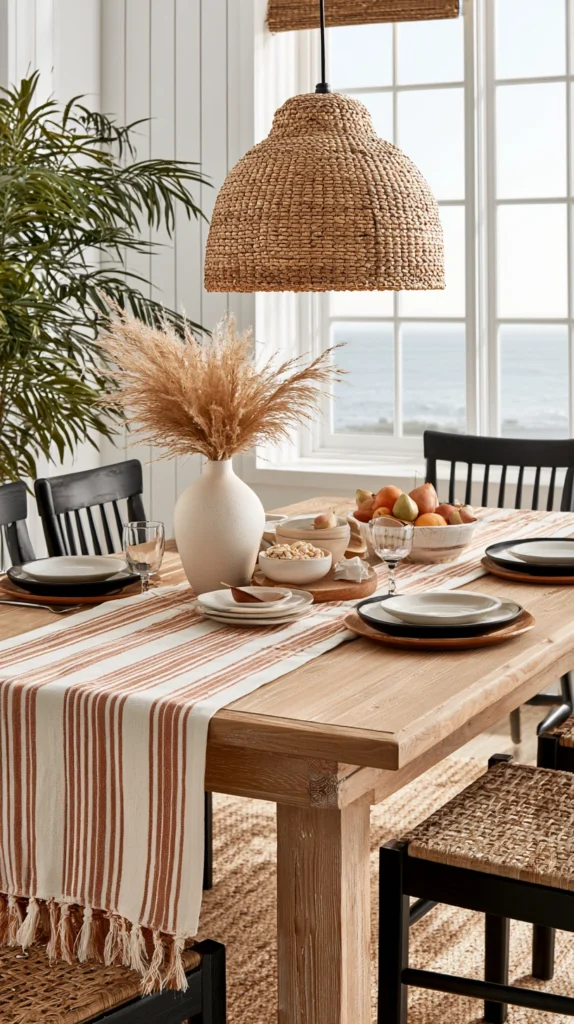
A simple cotton stripe runner in warm fall tones, replacing a typical summer coastal blue and white palette — bringing a coastal-style dining table gracefully into the fall season.
My stuck-in-summer coastal table problem:
What was happening:
- A blue and white striped runner, appropriate for summer, left in place well into October
- The room’s coastal character remained, but the color palette no longer matched the actual season
Why coastal tables specifically need a careful, not drastic, seasonal transition:
The aesthetic logic:
- Coastal style is built on a particular relaxed, breezy quality, typically expressed through stripe patterns, natural fiber textures, and a light, airy color palette
- A drastic shift to deep, heavy fall colors can lose this essential relaxed coastal character entirely
- Keeping the same stripe pattern format, simply shifting the specific colors from blue and white to rust and cream, maintains the style’s identity while still genuinely reflecting the season
The color shift specifically:
What to change:
- Replace blue with rust, terracotta, or warm camel
- Keep cream or warm white as the second stripe color, maintaining continuity with the room’s typical lighter palette
- This single color swap, while keeping the stripe format and weight identical, achieves the seasonal transition without abandoning the coastal aesthetic’s core visual language
Material continuity:
Keeping the same fabric weight and type:
- A lightweight cotton, similar in weight to what coastal style typically uses in warmer months, rather than switching to a heavier fall-typical material like wool or velvet
- This continuity in material weight, alongside the color shift, keeps the transition feeling natural rather than like an entirely different style has been imposed
Sourcing affordably:
Budget options:
- Target and Pottery Barn both regularly carry stripe runners in seasonal color rotations, including warm fall stripe options specifically ($15-35)
- Serena and Lily for a slightly more elevated coastal-specific source, if budget allows ($30-60)
What goes on top:
Completing the transitional coastal table:
- Natural rope or jute-accented dishware chargers, maintaining the natural fiber texture coastal style favors
- A simple centerpiece using dried beach grasses or driftwood, rather than switching entirely to a heavier fall botanical arrangement
- Warm-toned glassware, if a slight seasonal shift in drinkware is also desired
Cost:
- Rust and cream stripe runner: $15-60
- Total: $15-60
My coastal table transition result: Replacing my summer blue and white stripe runner with an identical weight and pattern format but in rust and cream for under twenty-five dollars maintained my dining room’s established coastal character while still genuinely acknowledging the change in season, this proved to be a far more successful transition than attempting a complete style shift toward heavier, more traditional fall materials would have been.
Coastal Table Tips
Avoiding a complete material weight change:
Maintaining stylistic continuity:
- Switching from lightweight cotton stripes directly to heavy velvet or wool can feel like an abrupt departure from the room’s established character
- Keeping the same general fabric weight, while changing only the color, produces a more successful and cohesive seasonal transition for this specific style
Pairing with natural fiber accessories rather than heavy metal:
Staying within the coastal material language:
- Brass and dark bronze accents, while appropriate for several other styles on this list, can feel slightly heavy and formal against coastal style’s typically lighter, more natural fiber-focused accessory choices
- Rope, jute, and driftwood accents maintain better stylistic consistency with this particular dining aesthetic
8. The Traditional or Classic Table: A Quilted Cotton Runner With a Coordinating Solid Tablecloth (Timeless Layering)
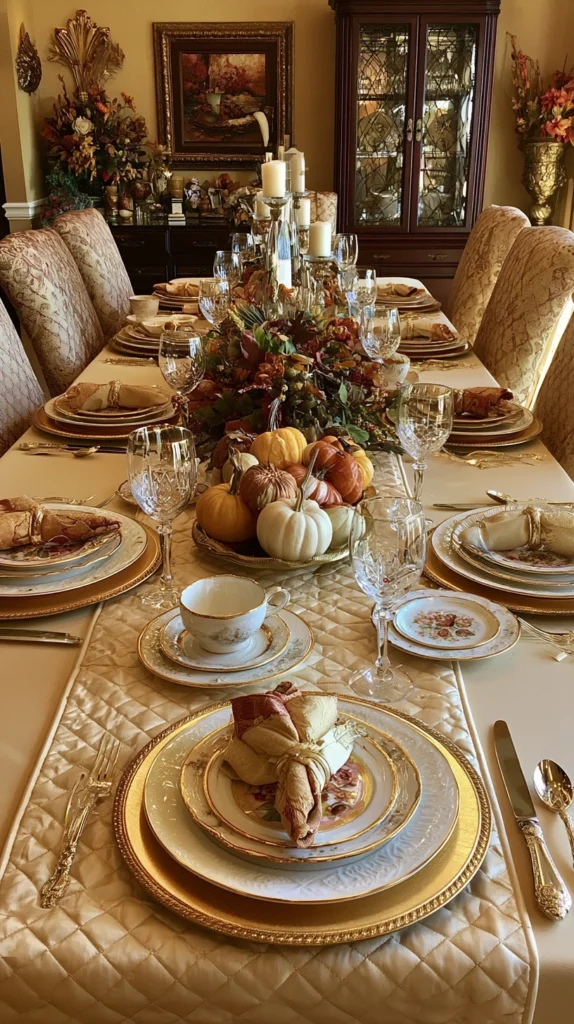
A solid-color tablecloth as the base, topped with a quilted cotton runner in a complementary fall print — the most enduringly classic approach to seasonal table dressing.
My uncertain traditional table starting point:
What I had been doing:
- A single tablecloth, changed seasonally, but without the additional textural layer that a true traditional table setting typically includes
- The table looked appropriately dressed but slightly less rich than the room’s other traditional design elements suggested it could be
Why traditional dining rooms specifically benefit from this particular layering approach:
The aesthetic logic:
- Traditional and classic dining style draws on long-established conventions: tablecloths, runners, and often a placemat layer beneath individual settings
- A quilted runner specifically adds a textural and slightly more casual seasonal layer over an otherwise more formal solid base cloth, striking the right balance for everyday traditional dining (as distinct from the most formal occasions covered in idea 3)
The solid base cloth:
Choosing the foundation:
- A solid cream, warm white, or pale gold tablecloth, providing a classic, versatile foundation
- A cotton or cotton-blend fabric, slightly more substantial than the most casual linen options but less elaborate than a full damask or jacquard weave
The quilted runner:
What makes this specifically traditional:
- A quilted cotton runner, often featuring a simple diamond or channel quilting pattern, in a fall print or solid color
- This quilted texture adds dimension and warmth without requiring the full formality of the damask approach from idea 3, making it well suited to everyday traditional dining rather than only the most special occasions
Color and pattern choices:
Fall-appropriate options:
- A quilted runner in a small-scale fall print: tiny leaves, a subtle plaid, or a simple botanical pattern
- A solid quilted runner in deep gold, rust, or burgundy, if a pattern-free option is preferred
Sourcing affordably:
Budget options:
- Pottery Barn and Williams Sonoma for classic quilted runner options specifically designed for seasonal rotation ($30-60)
- Target for a more budget-accessible quilted runner alternative ($15-30)
What goes on top:
Completing the traditional table:
- Classic white or cream dishware, potentially with a simple gold or platinum rim
- Brass or silver candlesticks, polished rather than left with visible patina
- Cloth napkins folded in a simple, classic style, secured with a coordinating napkin ring
Cost:
- Solid base tablecloth: $25-60
- Quilted runner: $15-60
- Total: $40-120
My traditional table result: Layering a warm cream solid cotton tablecloth beneath a deep gold quilted runner brought genuine seasonal warmth and welcome textural variety to my traditional dining room’s everyday table setting, without requiring the more elaborate formality of switching to a full damask cloth for regular use.
Traditional Table Tips
Reserving the most formal option for special occasions only:
Distinguishing everyday from special-occasion traditional dining:
- This quilted runner approach works well for regular use, while the more formal damask approach from idea 3 can be reserved specifically for holidays or special gatherings
- Having both options available, used at different times, provides appropriate flexibility within a traditional dining room’s seasonal rotation
Choosing quilting patterns that read well from a distance:
A practical visual consideration:
- An overly intricate or fine quilting pattern can lose its visual definition when viewed from across the room
- A simpler, clearer quilting pattern (basic diamonds or channels) maintains its textural visual interest at typical dining room viewing distances
9. The Small Apartment or Studio Table: A Reversible Placemat Set Instead of a Full Runner (Maximum Flexibility, Minimum Storage)
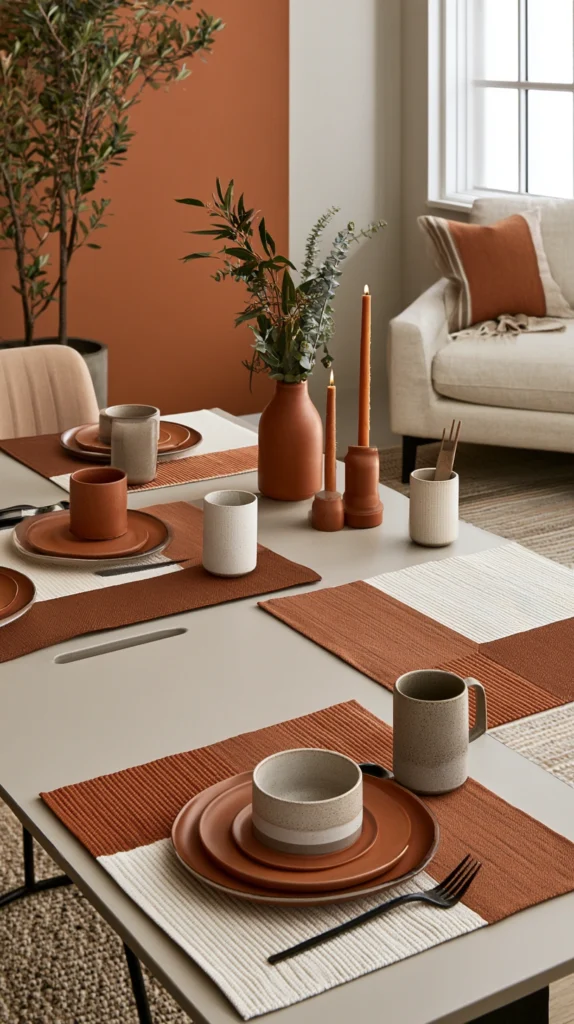
Individual placemats, reversible between two seasonal patterns, used instead of any full tablecloth or runner — addressing the specific storage and flexibility constraints of a small living space.
My storage-constrained small table problem:
What was happening:
- A small apartment dining table, doubling as a workspace, with very limited storage for seasonal linens
- A full tablecloth and separate runner, appropriate for larger homes, represented more storage commitment than the available space could reasonably accommodate
Why small or multi-use tables specifically benefit from this different approach:
The space-efficiency principle:
- A small apartment table often needs to transition quickly between different uses (dining, working, other activities)
- A full tablecloth, requiring removal and careful storage for non-dining uses, adds friction to this transition
- Individual placemats, particularly reversible ones, store in a much smaller space and allow quicker, simpler transitions
The reversible placemat concept:
Maximizing value from one purchase:
- A placemat set reversible between two different patterns or colors (one fall-appropriate side, one more neutral or different-season side) provides year-round versatility from a single purchase
- This single-purchase efficiency particularly suits a smaller budget and smaller storage capacity simultaneously
Material and color choices:
What works for this specific format:
- A cotton or vinyl-coated cotton placemat, easy to wipe clean given the table’s likely multi-use function
- One side in a fall color (rust, olive, mustard), the reverse in a neutral or different seasonal tone
Sourcing affordably:
Budget options:
- IKEA for simple, affordable reversible or single-pattern placemats ($2-8 each)
- Target for a wider color and pattern selection at accessible pricing ($3-10 each)
- Crate and Barrel for a more elevated reversible option, if budget allows ($8-18 each)
Storage advantage specifically:
Why this matters for small spaces:
- A stack of four to six placemats occupies a fraction of the drawer or shelf space that a full tablecloth and separate runner would require
- This storage efficiency is often the deciding practical factor for very small living spaces, regardless of overall style preference
What goes on top:
Completing the small table setting:
- Simple, stackable dishware, ideally chosen for both aesthetic appeal and storage efficiency given the same space constraints affecting the linens
- A small, low centerpiece that does not interfere with the table’s other uses when not actively set for a meal
Cost:
- Reversible placemat set (4-6 pieces): $15-50
- Total: $15-50
My small table placemat result: Switching from attempting to use a full tablecloth on my small, multi-use apartment dining table to a set of reversible rust-and-cream placemats solved both my storage limitation and my need to quickly clear and reset the table for other uses throughout the day, this remains the most practically suited solution for genuinely small living spaces among everything on this list.
Small Table Tips
Choosing wipeable material if the table serves multiple functions:
A practical durability consideration:
- If the table regularly serves as a workspace or for other non-dining activities, a more durable, easily wiped material (vinyl-coated cotton, for example) withstands this multi-use pattern better than delicate linen
Coordinating placemat color with whatever runner or accent might occasionally be added:
Planning for occasional elevated occasions:
- Even in a small space, keeping one small seasonal runner or table accent on hand for special occasions, chosen to coordinate with the everyday reversible placemats, allows for slightly more elevated styling when the occasion calls for it without requiring full-time storage commitment
10. The Outdoor or Three-Season Porch Table: A Weather-Resistant Acrylic-Coated Runner (Durable Fall Styling for Exposed Spaces)
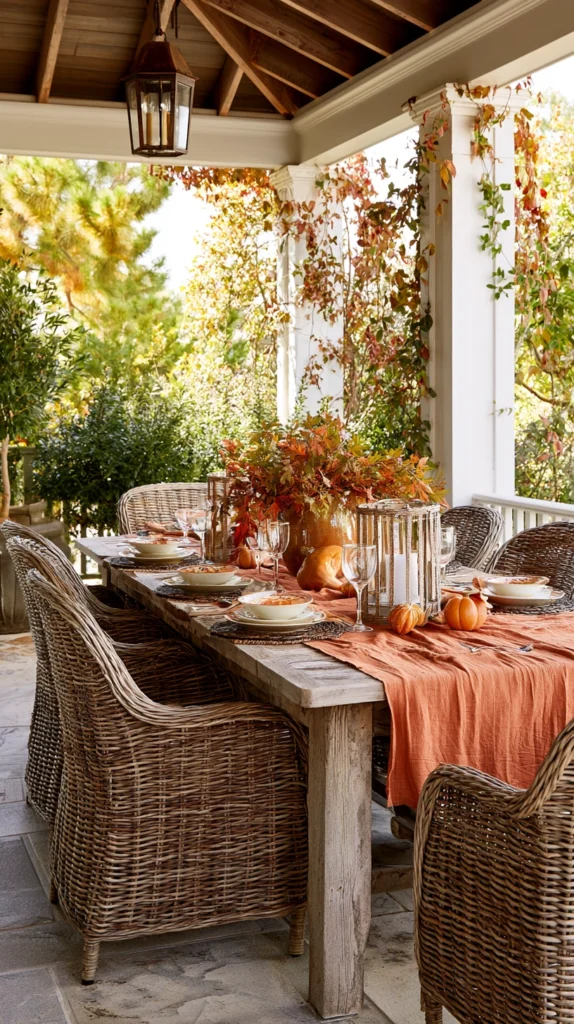
A specifically weather-resistant runner material, used on a table exposed to outdoor or semi-outdoor conditions — bringing fall styling to a dining space that ordinary linens cannot reliably serve.
My ruined linen runner lesson:
What happened:
- A standard cotton runner, used on a three-season porch table, ruined within weeks by humidity, dew, and occasional rain exposure
- This taught the necessity of choosing genuinely weather-appropriate material for any table not fully protected from outdoor conditions
Why outdoor and semi-outdoor tables need an entirely different material category:
The durability requirement:
- Standard cotton, linen, or quilted materials, appropriate for every other table style on this list, are simply not built to withstand regular outdoor moisture and temperature exposure
- A genuinely weather-resistant material is not optional for this specific context; it is the primary functional requirement before any aesthetic consideration
Acrylic-coated fabric specifically:
Why this material works:
- Acrylic-coated cotton (often used in outdoor cushion and awning fabric) resists water, mildew, and fading from sun exposure significantly better than uncoated natural fiber textiles
- This material maintains a fabric-like appearance and drape, distinguishing it from a purely plastic tablecloth alternative, while still providing genuine weather resistance
Color and pattern choices:
Fall-appropriate options within weather-resistant fabric lines:
- Sunbrella and similar outdoor fabric brands offer rust, olive, and warm gold options specifically within their weather-resistant product lines
- A solid color or simple stripe pattern tends to be more readily available in weather-resistant fabric than more intricate patterns
Sourcing this specific material:
Where to find weather-resistant runners:
- Outdoor furniture and patio specialty retailers, which often carry Sunbrella or similar fabric runners specifically designed for this use ($30-70)
- Custom-cut from fabric purchased by the yard at a fabric store carrying outdoor or marine-grade textile lines, for those wanting a specific size or color not available pre-made ($15-25 per yard)
Why not simply use a vinyl tablecloth instead:
The aesthetic distinction:
- A purely vinyl tablecloth, while fully weather-resistant, often looks visually cheap and overly plastic compared to acrylic-coated fabric
- Acrylic-coated cotton maintains enough fabric-like texture and drape to look genuinely styled rather than purely utilitarian, while still providing comparable weather protection
What goes on top:
Completing the outdoor fall table:
- Melamine or other break-resistant dishware, appropriate for outdoor use
- LED candles exclusively, never real flame, given the increased fire risk and wind exposure typical of outdoor and semi-outdoor settings
- A centerpiece secured against wind, such as a heavier ceramic or stone-based arrangement rather than anything easily blown over
Cost:
- Weather-resistant runner: $30-70
- Or custom-cut fabric by the yard: $15-25 per yard needed
- Total: $15-70
My outdoor table result: Replacing my ruined cotton runner with a rust-colored Sunbrella fabric runner, purchased from a patio furniture retailer for forty-five dollars, finally gave my three-season porch table fall styling that actually survived the season’s humidity and occasional rain exposure, a lesson learned only after the first attempt with standard fabric failed within weeks.
Outdoor Table Tips
Checking the specific fabric’s UV and mildew resistance ratings:
A practical verification step:
- Not all “outdoor fabric” carries identical resistance properties
- Checking the specific product’s stated UV resistance and mildew resistance ratings, rather than assuming all outdoor-marketed fabric performs identically, ensures the chosen runner will genuinely hold up to the specific exposure conditions present
Bringing the runner inside during the most severe weather if possible:
Extending the material’s lifespan:
- Even weather-resistant fabric benefits from reduced exposure during the most extreme conditions (heavy storms, prolonged direct sun)
- Bringing the runner inside during these periods, when practical, extends how many seasons the same piece will continue to perform well
Choosing Your Tablecloth and Runner Approach
By dining style, summarized:
Layered and textural:
- Farmhouse (idea 1): buffalo check runner over linen base
- Bohemian (idea 4): mismatched patterned layers
- Traditional (idea 8): quilted runner over solid cloth
Minimal and restrained:
- Modern (idea 2): single solid runner, no tablecloth
- Scandinavian (idea 5): pale base with thin stripe accent
Formal and elevated:
- Formal dining room (idea 3): woven damask or jacquard
Material-specific styles:
- Industrial (idea 6): waxed canvas and raw metal
- Coastal (idea 7): stripe pattern with seasonal color shift
Practical constraint-driven choices:
- Small apartment (idea 9): reversible placemats
- Outdoor or porch (idea 10): weather-resistant acrylic-coated fabric
By budget level:
Under $50:
- Modern single runner (idea 2)
- Scandinavian pale base and thin stripe (idea 5)
- Small apartment placemats (idea 9)
$50-100:
- Farmhouse layered approach (idea 1)
- Bohemian mismatched layers (idea 4)
- Coastal seasonal stripe swap (idea 7)
- Outdoor weather-resistant runner (idea 10)
$100+:
- Formal damask or jacquard (idea 3)
- Industrial waxed canvas with metal accents (idea 6)
- Traditional layered quilted approach (idea 8)
By how the table is actually used:
Daily, casual use:
- Modern runner-only (idea 2)
- Small apartment placemats (idea 9)
- Scandinavian minimal approach (idea 5)
Special occasion or formal entertaining:
- Formal damask (idea 3)
- Traditional layered quilted setting (idea 8)
Style-specific existing rooms:
- Match directly to whichever single style category (farmhouse, industrial, coastal, bohemian) already describes the existing dining room
Maintenance Through the Season
Weekly:
- Smooth and reposition runners or cloths after each meal if shifted
- Spot clean any spills promptly, particularly on lighter colored linens
Monthly:
- Launder washable linens per their specific care instructions
- Check formal or delicate fabrics for any needed professional cleaning
End of season:
- Wash thoroughly before storing any seasonal-specific linens
- Store flat or rolled, rather than tightly folded, for pieces prone to deep creasing (particularly damask and jacquard weaves)
My Complete Tablecloth and Runner Wardrobe
What I built across several dining spaces over one year:
Main dining room (formal, $95):
- Vintage burgundy jacquard tablecloth from an estate sale
Kitchen breakfast table (modern, $30):
- Single deep olive linen runner, no tablecloth
Three-season porch (outdoor, $45):
- Sunbrella rust runner, weather-tested through one full fall season
Apartment studio table for a family member (small space, $35):
- Reversible rust and neutral placemat set
Total investment: $205 across four different tables and dining contexts Main lesson: The right choice depended entirely on each specific table’s existing style and practical constraints, not on a single universal “fall tablecloth” approach applied identically everywhere
Getting Started This Weekend
Identify the dining style before shopping for anything seasonal.
This weekend:
Step 1 — Categorize the existing table and room:
- Match the current dining space to the closest style category among the ten covered here (farmhouse, modern, formal, bohemian, Scandinavian, industrial, coastal, traditional, small space, or outdoor)
- This single identification step determines nearly every subsequent choice about weight, pattern, and formality
Step 2 — Choose fall color within that style’s established palette:
- Refer to the specific color recommendations within the matched style section above
- Avoid simply searching “fall tablecloth” without this style filter, which surfaces options matched to the season but not necessarily to the specific table
Step 3 — Decide on layering versus single-piece simplicity:
- Farmhouse, bohemian, and traditional styles generally benefit from layering
- Modern, Scandinavian, and small-space approaches generally benefit from a single, simpler piece
My recommendation:
Identify the style first, every time, before considering color or pattern at all. A textile chosen for fall color alone, without this style-matching step, risks looking seasonally appropriate but visually disconnected from the table and room it actually sits within.
Now go dress your table in the fall textile that actually matches the dining style it was always meant to support.
Quick Summary
The 10 ideas across dining styles:
Farmhouse: Buffalo check runner over linen base (idea 1), layered rustic warmth Modern: Solid runner, no tablecloth (idea 2), minimal color statement Formal: Damask or jacquard in burgundy (idea 3), traditional elegance Bohemian: Mismatched layered patterns (idea 4), collected not coordinated Scandinavian: Pale linen with thin stripe accent (idea 5), quiet warmth Industrial: Waxed canvas with metal accents (idea 6), utilitarian texture Coastal: Stripe pattern, colors shifted to fall (idea 7), transitional beach-to-fall Traditional: Quilted runner over solid cloth (idea 8), timeless layering Small apartment: Reversible placemats (idea 9), flexibility and minimal storage Outdoor or porch: Weather-resistant acrylic-coated fabric (idea 10), durable styling
The non-negotiable rule across every style:
Match the table’s existing formality and material language first; choose fall color and pattern only within that established framework. A textile that ignores this sequencing, however beautiful in isolation, consistently looks visually disconnected from the table it sits on.
Common mistakes across all styles:
- Buying a printed seasonal tablecloth based on the season alone, without considering the table’s existing style or formality
- Using a delicate material (thin linen, light cotton) on heavier, more rugged furniture, or a heavy, rustic material on a delicate, formal table
- Choosing real flame candles or non-weather-resistant fabric for an outdoor or semi-outdoor table
- Over-layering a minimal modern or Scandinavian table, working against the restraint that defines those particular styles
- Under-layering a farmhouse, bohemian, or traditional table, missing the textural richness those styles typically depend on
Remember: Every dining style has an established formality level and material language already in place before fall is even considered, identifying this existing style correctly is the single most important step in choosing the right tablecloth or runner, fall color and pattern should be selected only within the boundaries that style already establishes.
Layering suits styles built on visible texture and collected abundance while restraint suits styles built on clean lines and quiet material quality, and the ultimate test of any choice is not whether it looks like fall in isolation, but whether it looks like it belongs on this specific table, in this specific room, every single day it remains in place.