
14 Afrohemian Bedroom Ideas With Natural Textures and Bold Patterns
Afrohemian is a design aesthetic that arrived fully formed from a specific cultural intersection.
The word itself, blending African and Bohemian, describes a sensibility that honours the richness, pattern language, and material traditions of the African continent while holding them within the layered, eclectic, lived-in warmth of Bohemian interior design. It is not African décor applied decoratively.

It is not Bohemian design with a few African objects added. It is a genuinely integrated aesthetic where the two traditions are in genuine conversation, informing and enriching each other.
The result is a bedroom aesthetic of extraordinary warmth, depth, and cultural specificity. One that uses kente cloth alongside macramé. That combines mud cloth’s geometric restraint with the layered maximalism of a Bohemian textile collection. That hangs natural fibres beside batik. That uses the earthy, terracotta, ochre, and warm chocolate palette of both traditions and creates something that looks like it could only belong to the specific person who lives in that specific room.
These 14 ideas build that bedroom.
Why Afrohemian Works as a Coherent Aesthetic and Not Just a Trend
The combination of African and Bohemian design traditions works because they share fundamental values.
Both traditions prioritise the handmade over the manufactured. Both use textile as the primary medium of cultural expression. Both lean toward the earthy, warm end of the colour spectrum. Both embrace the layered, the imperfect, and the accumulated over the matched, the pristine, and the deliberately coordinated.
Where the traditions differ is in their specific pattern vocabularies and their specific cultural references. African textile traditions, from the geometric mudcloth of Mali to the woven kente of Ghana to the hand-printed adinkra of the Akan people, carry specific cultural meanings within their patterns that Bohemian design’s more eclectic pattern collecting does not. The Afrohemian bedroom honours this specificity rather than using cultural objects as generic pattern elements.
The aesthetic is most authentically realised when the African elements are chosen with genuine knowledge of and respect for their origins. A mudcloth pillow appreciated for both its visual qualities and the Bamana tradition it comes from is a different object from the same pillow purchased because the geometric pattern happened to suit the room.
1. A Mudcloth Headboard or Feature Behind the Bed
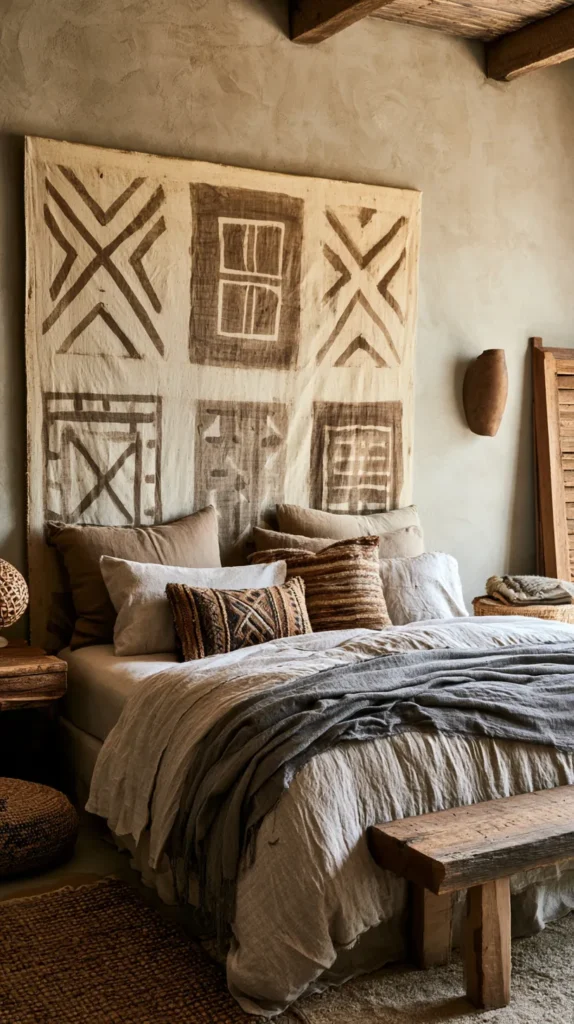
Mudcloth, Bogolanfini, is the hand-woven cotton textile of Mali whose geometric patterns are applied using fermented mud that reacts with the tannins in the pre-treated fabric to create the deep brown and cream designs that make the cloth immediately recognisable.
As a headboard panel, a length of genuine or quality reproduction mudcloth mounted to the wall behind the bed creates the room’s most significant design statement. The geometric patterns of mudcloth, each carrying specific cultural meaning within the Bamana tradition, create a wall surface of visual richness and cultural depth that no manufactured textile can replicate.
The earthy brown and cream palette of mudcloth is the perfect starting point for the Afrohemian bedroom. It establishes the warm, earth-toned foundation from which every other element can develop.
Source genuine mudcloth from African textile suppliers and fair-trade retailers who work directly with Malian weavers where possible. The investment in authentic cloth rather than pattern-printed reproduction is an investment in the actual tradition rather than its visual likeness.
Why mudcloth as the headboard feature is the ideal Afrohemian starting point:
- The geometric patterns establish a specific African textile tradition as the room’s primary visual language
- The warm brown and cream palette is the perfect earthy foundation for the full Afrohemian palette
- The handmade quality of genuine mudcloth is immediately visible in its surface and creates the artisanal warmth the aesthetic requires
- Mounting on the wall requires no bed frame modification and creates a dramatic visual effect
- The cultural specificity of mudcloth patterns gives the room genuine meaning rather than appropriated pattern
- The textile references a specific living craft tradition rather than a generic idea of “African” design
2. A Layered Textile Bed With Kente, Kanga, and Natural Linen
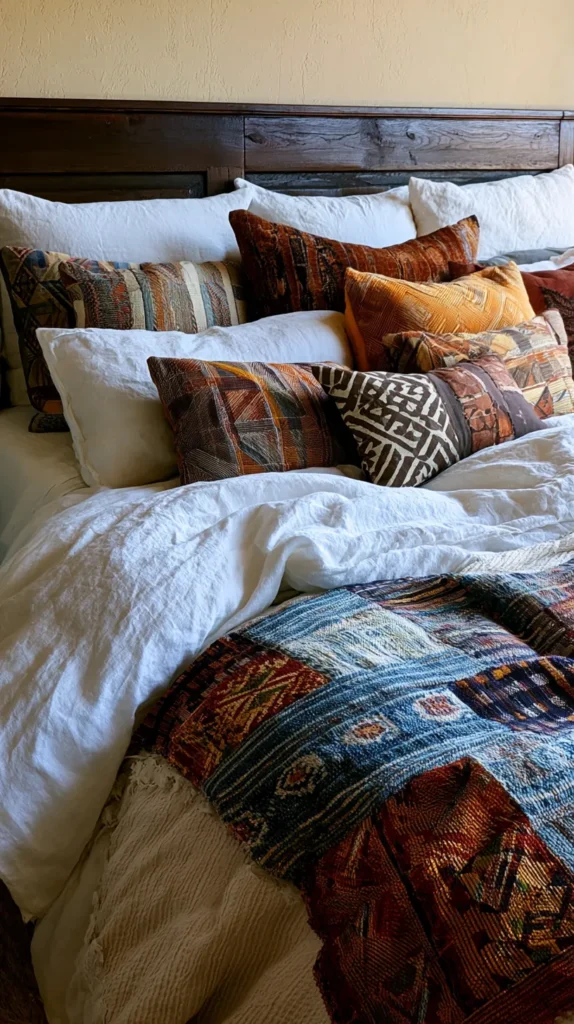
The Afrohemian bed is built in layers.
Not the controlled, matched layers of a hotel room bed. The accumulated layers of a person who collects beautiful textiles and puts them all on the bed because they are beautiful and they belong together.
A base of natural, undyed linen in warm oatmeal. A cotton blanket in a simple stripe. Then the specific textiles of the Afrohemian tradition added as accents. A kente cloth woven runner at the foot of the bed. A kanga wrap in a vivid print draped over one corner. A mudcloth cushion cover beside a natural linen cushion beside an embroidered pillow in a warm accent colour.
The layers should feel generous and slightly abundant rather than sparse and controlled. The Afrohemian bed is the bed that looks like it was made with love and without measurement.
The colour palette across the layers should maintain the earthy coherence of the aesthetic. Warm browns, terracotta, ochre, deep greens, cream, and black. The African textile pieces provide the vivid pattern element. The natural linen and cotton provide the quiet ground.
3. Woven Rattan and Natural Fibre Furniture
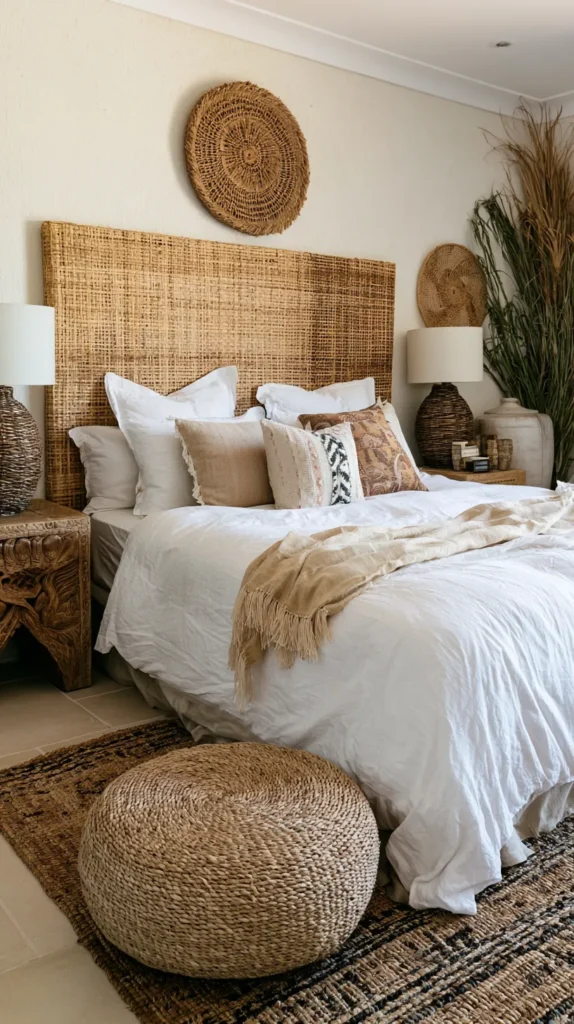
The furniture of the Afrohemian bedroom speaks the language of natural materials.
Rattan headboards with their organic weave. A wicker bedside table with its irregular texture. A carved wooden stool serving as a bedside surface. A low rattan chair in the corner with a mudcloth cushion. A wooden chest at the foot of the bed in a rich natural finish.
These materials are the bridge between the African and the Bohemian traditions. Rattan and wicker are as central to the Bohemian aesthetic as they are to the material culture of many African and African diaspora domestic spaces. Natural wood in its warm, grain-visible form suits both vocabularies simultaneously.
Choose furniture with visible maker’s marks and imperfect surfaces rather than machine-smooth finishes. The slight irregularity of a hand-woven rattan headboard, the toolmarks in a carved wooden piece, the variation in the natural fibre weave of a bedside basket, all of these communicate the handmade quality that the Afrohemian aesthetic values above precision.
4. An Earthy Colour Palette of Terracotta, Ochre, and Warm Brown
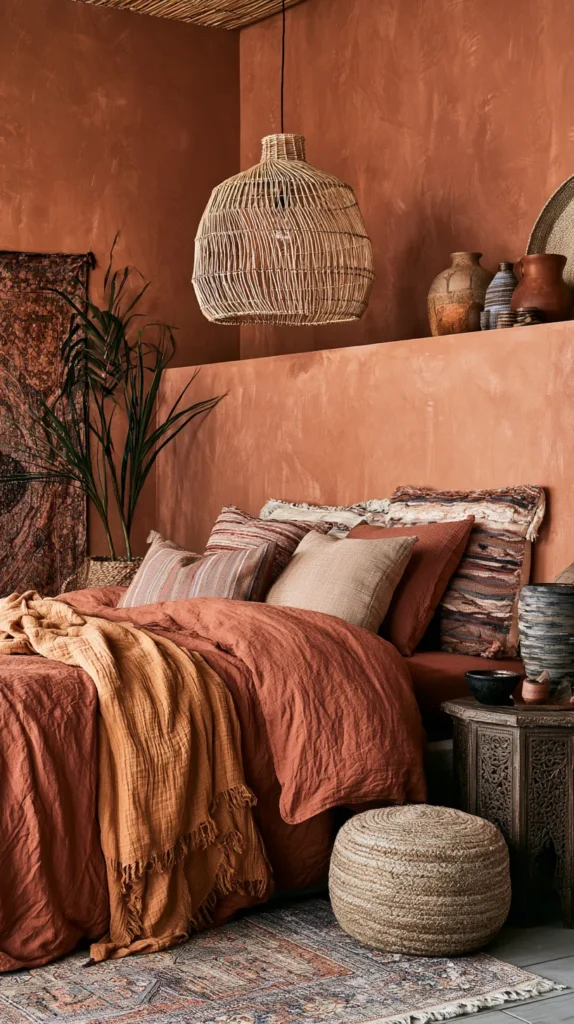
The Afrohemian bedroom lives in the earth tones.
Not the grey neutrals of Scandinavian minimalism. Not the bright, saturated colours of maximalist interior design. The specific warm palette of the African landscape and its traditional textiles. Terracotta. Ochre. Warm chocolate brown. Deep sienna. Forest green. The dusty, warm amber of natural raffia. Cream.
These colours work together because they share the same warm undertone. They are not fighting each other for dominance. They are variations on the same earth, the same warmth, the same organic material origin.
A terracotta wall behind the bed. Ochre in the cushion covers and the woven throws. Deep brown in the wooden furniture and the mudcloth patterns. Forest green in the plants that are abundant in this room. Cream in the linen that grounds everything.
The palette deepens with the layering of these tones across different materials and textures. The more layers, the richer the total effect.
5. Macramé and Woven Wall Hangings
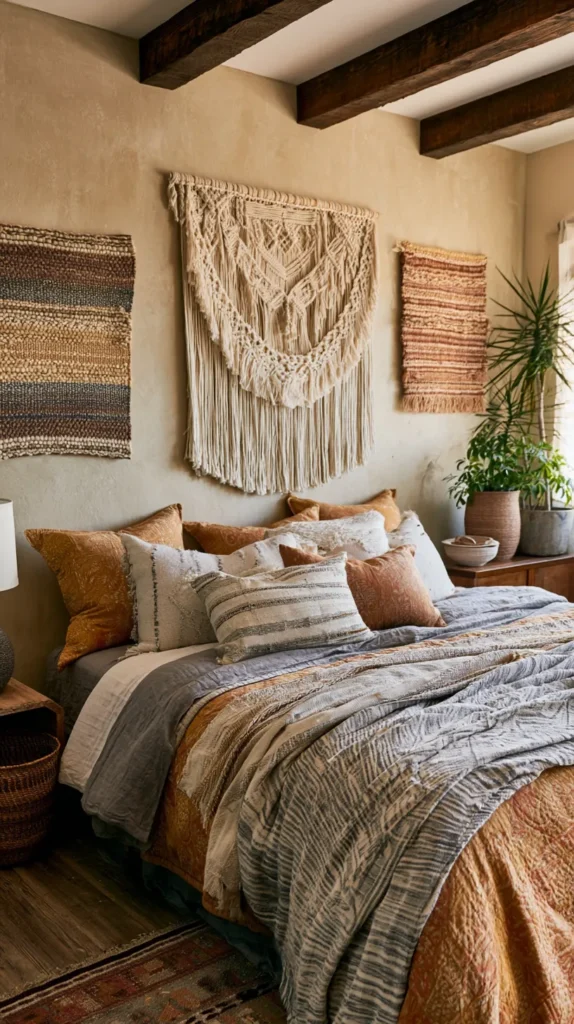
The Bohemian half of the Afrohemian bedroom contributes the woven textile wall art tradition that makes the walls as richly layered as the bed.
Macramé wall hangings in natural cotton or jute. Woven tapestries in warm earth tones. Smaller woven pieces in geometric patterns that reference the textile traditions of both Africa and the Bohemian aesthetic simultaneously.
The hanging should be positioned in relation to the mudcloth headboard feature rather than competing with it. If the mudcloth is the primary wall element, the macramé or weaving should be placed elsewhere in the room, on an adjacent wall or in a corner, as a complementary element rather than a competing one.
The natural fibre of the macramé and the natural fibre of the African textiles elsewhere in the room create material coherence across the room’s textile elements. The cotton of the macramé and the cotton of the mudcloth are in the same material family. This coherence holds the room together across the different cultural references.
6. A Canopy Bed or Draped Fabric Overhead
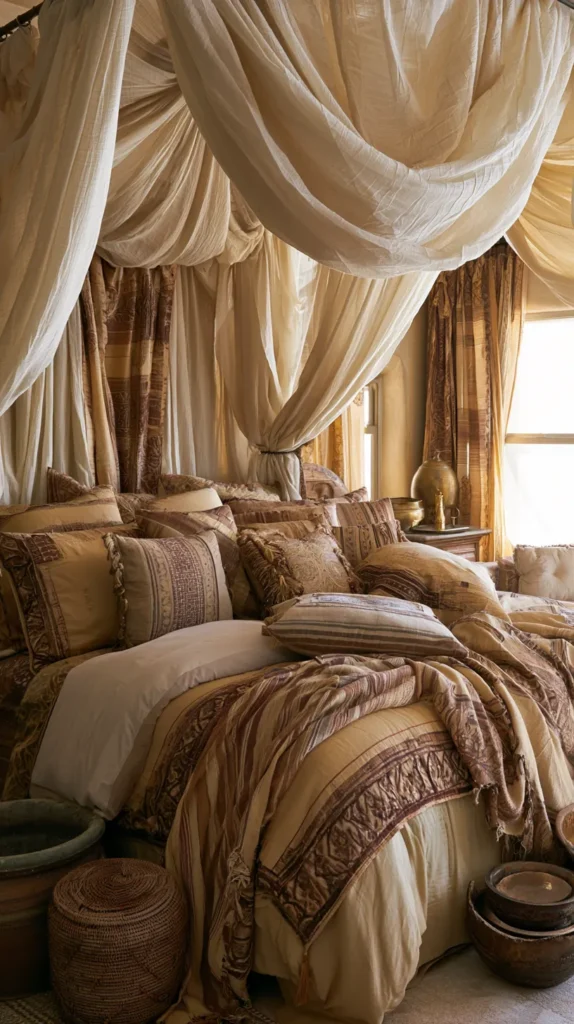
The canopy is both an Afrohemian design element and a practical comfort.
A simple canopy structure, a wooden or metal ring suspended from the ceiling above the bed with fabric draped from it, creates the enclosed, sheltered sleeping space that is deeply connected to the experience of interior warmth and privacy.
The fabric of the canopy should be in the sheer, light materials that allow air movement while filtering light. Natural cotton gauze. A lightweight woven fabric in a warm neutral. A sheer print fabric that casts filtered colour onto the bed beneath.
For a more dramatic effect, the canopy fabric can be one of the vivid African prints, a kanga or chitenge, that introduces colour and pattern from above. This overhead pattern combined with the textiles of the bed below creates a fully immersive textile experience in the sleeping space.
7. Adinkra or Kente-Inspired Printed Cushions
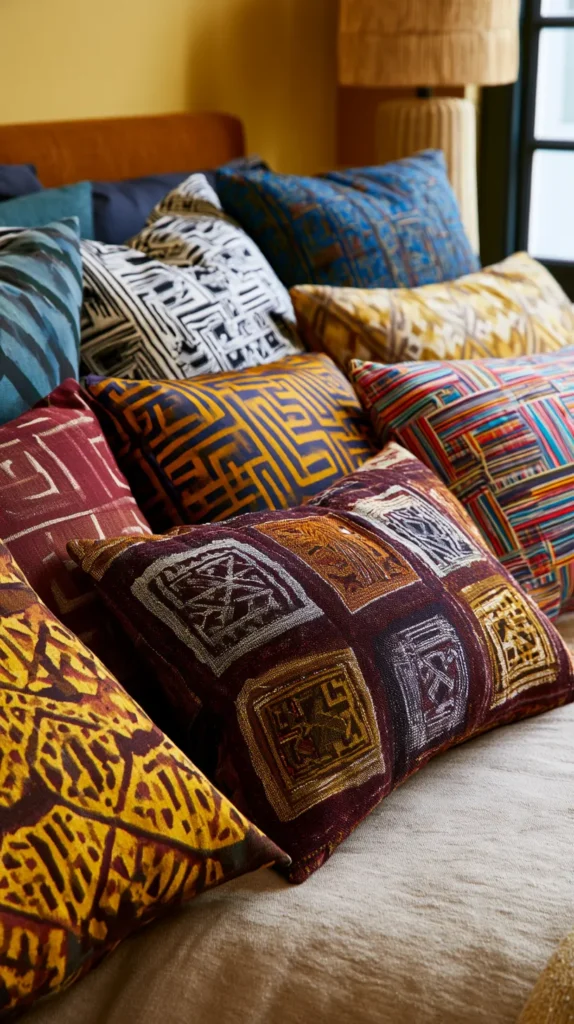
The Adinkra symbols of the Akan people of Ghana and Côte d’Ivoire are among the most visually sophisticated systems of symbolic communication in any cultural tradition.
Geometric and figurative symbols representing concepts like wisdom, endurance, love, unity, and adaptability, printed in black on fabric using carved stamps, create cushion covers of genuine cultural depth alongside their visual beauty.
Adinkra-printed cushions on the Afrohemian bed add the symbolic dimension that purely decorative pattern cannot. The cushion with the Dwennimmen symbol representing humility and strength carries that meaning into the room. The Adinkra for Sankofa, the bird looking backward to retrieve what was left behind, represents learning from the past in a bedroom where the accumulation of meaningful objects is part of the design philosophy.
Kente-woven cushion covers, in the royal colours of yellow, green, and red, add a different Ghanaian textile tradition to the room. The woven structure of kente is as visually striking as its colour and the cushion format allows genuine kente fabric to be incorporated without the full investment of a kente garment.
8. Wooden Carved Masks and Sculpture as Room Objects
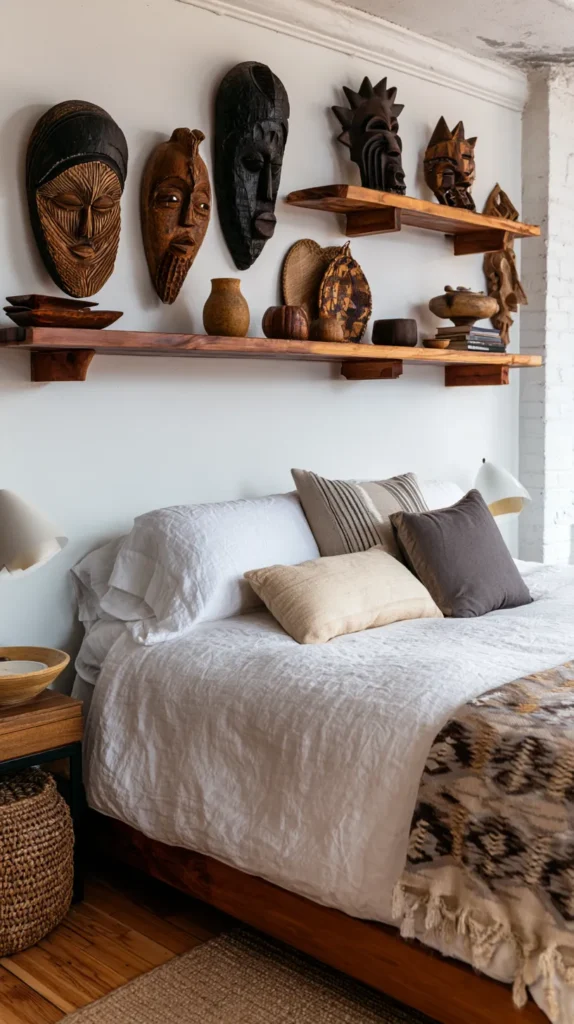
African carved wooden objects, masks, figurines, and sculptural forms, have been influential in Western art and design since the early twentieth century.
In the Afrohemian bedroom they belong as room objects with genuine cultural dimension rather than as exotic decoration. A carved wooden mask positioned on a shelf or wall bracket. A figurine of African origin on the bedside table. A wooden sculpture of artistic quality on a plinth in the corner.
These objects should be chosen and positioned with the care given to any significant artwork. Their placement communicates their importance. On the floor in a corner they look accumulated. On a dedicated shelf at eye height they are treated as the art objects they are.
The acquisition of African carved objects carries the same ethical dimension as any acquisition of cultural material. Source from African artists and fair-trade suppliers wherever possible. Avoid objects of genuine ceremonial or sacred significance that belong in their cultural context rather than as domestic decoration.
9. Abundant Plant Life Throughout the Room
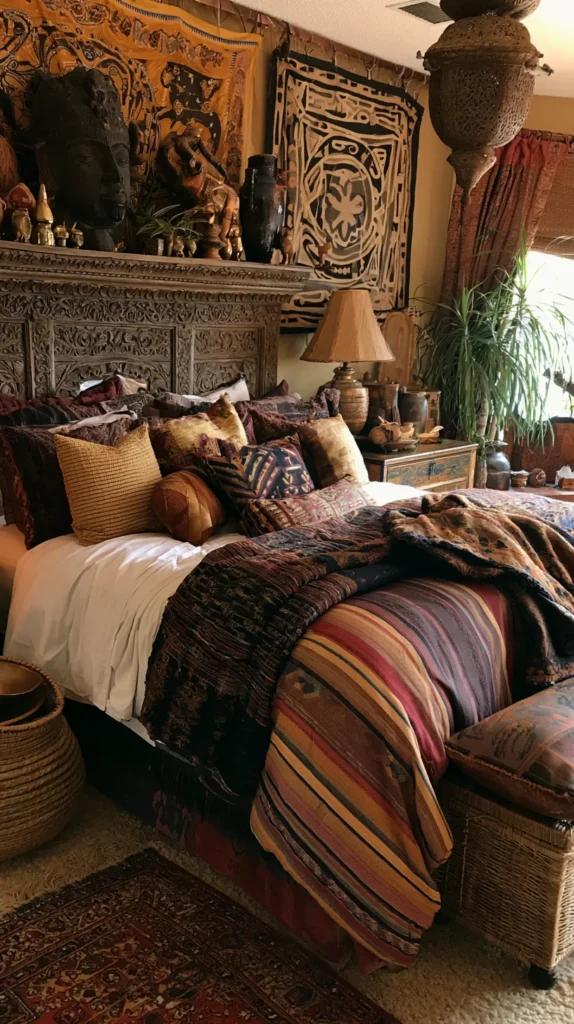
The Afrohemian bedroom is not a minimal room and it is not a still room.
It is alive.
Plants are as central to the aesthetic as the textiles and the wooden objects. Not the carefully placed single specimen of a minimalist approach. The generous, slightly chaotic abundance of plants that spill over their pots and trail from shelves and fill corners with green in the way that both African interiors and Bohemian bedrooms share.
Large tropical plants with dramatic foliage. A monstera in the corner reaching toward the ceiling. Trailing pothos from a high shelf. A snake plant beside the bed with its architectural upright form. Cacti and succulents on the windowsill. Small terracotta pots of herbs and flowering plants wherever a surface is available.
The plants connect the Afrohemian bedroom to the natural world in the most direct way. They are living, they grow, they respond to light and water, they bring the organic quality of the outside world into the most designed of interior spaces.
10. Rattan Pendants and Woven Lighting
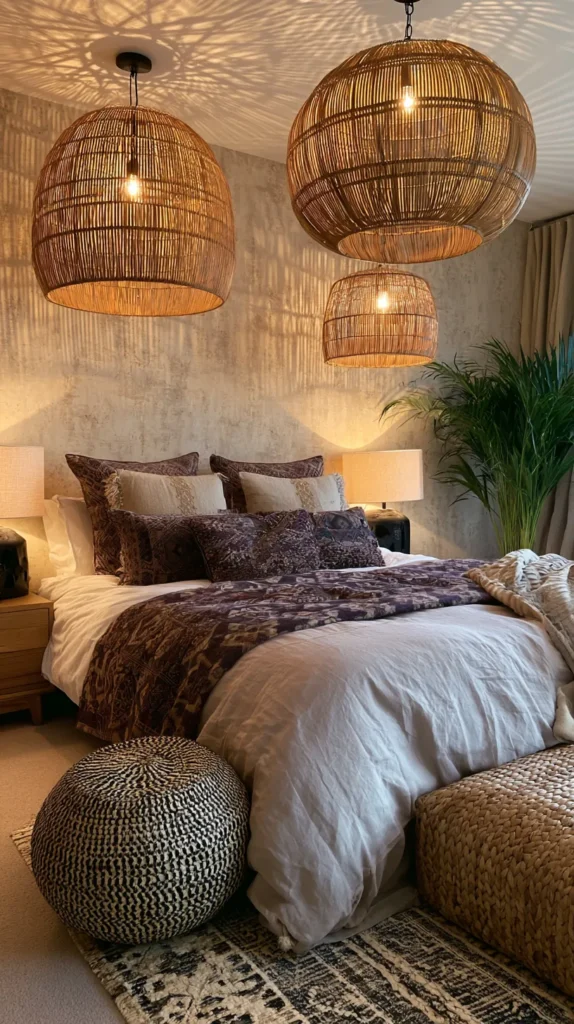
The lighting in the Afrohemian bedroom should be warm and it should use natural materials.
Rattan pendant lights in organic, hand-woven forms that cast warm patterned light across the ceiling and walls. The light passing through the open weave of a rattan pendant creates moving shadow patterns that make the room’s walls feel alive in the evening.
A single large rattan pendant above the bed as the primary bedroom light, with smaller bedside lamps in warm ceramic or wooden bases, creates the layered, warm lighting that the Afrohemian aesthetic requires.
The pendant form should be simple and organic rather than elaborate. A round or oval woven shade. A natural material that complements the room’s other natural materials. The pendant should look like it belongs to the same material world as the rattan furniture and the woven textiles rather than introducing a foreign design language.
11. A Gallery Wall of African Art and Photography
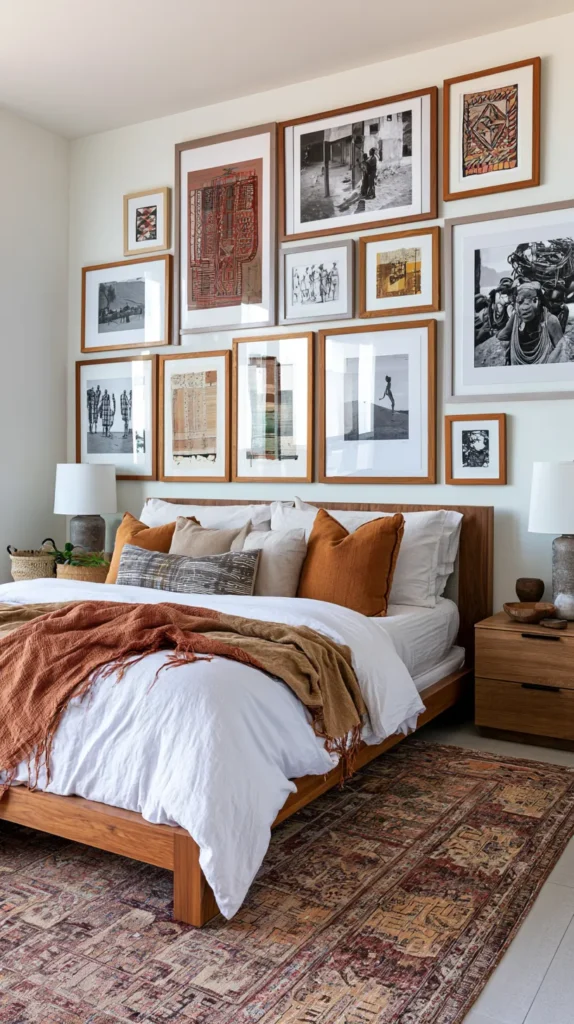
The Afrohemian bedroom gallery wall is the wall that tells the room’s cultural story most explicitly.
African contemporary art prints beside vintage photography of African cities and landscapes. Images of African fashion and textiles beside graphic works by African or African diaspora artists. Maps of the African continent beside travel photographs of specific meaningful places.
The gallery wall should celebrate specific cultural and artistic traditions rather than generic “African” imagery. The specific artist whose work you have researched and admire. The specific country or region whose textile tradition is represented in the room’s cushions. The specific photographer whose image captures something essential about a particular African urban or rural landscape.
Frame consistently for visual coherence. Natural timber frames or simple black frames throughout. The varied sizes of the artworks within a consistent framing approach creates the gallery quality that makes the wall a composition rather than an accumulation.
12. A Jute or Sisal Rug With an African Woven Overlay
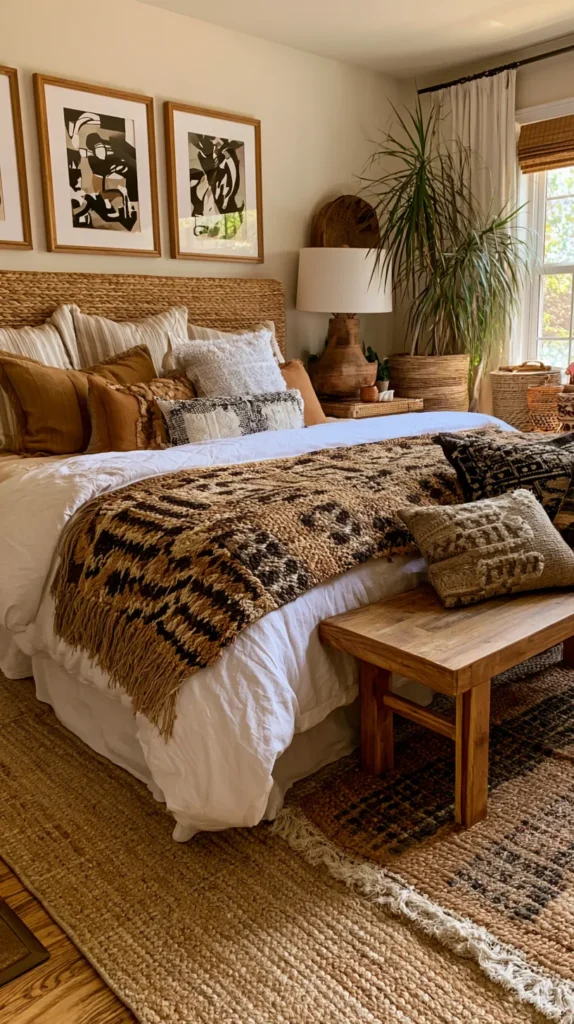
The rug in the Afrohemian bedroom uses the layering principle that defines the whole aesthetic.
A base rug of natural jute or sisal in a warm natural tone. Laid over it, a smaller woven rug from an African or African-influenced tradition. A Moroccan Beni Ourain in cream and black. A flat-woven kilim in warm earth tones. A hand-woven textile floor piece from a West African market.
The two-rug approach creates the layered depth at floor level that the bed’s layered textiles create at sleeping level. The room has the same abundant, collected quality from the floor to the ceiling.
13. Terracotta Pots and Natural Ceramic Accents
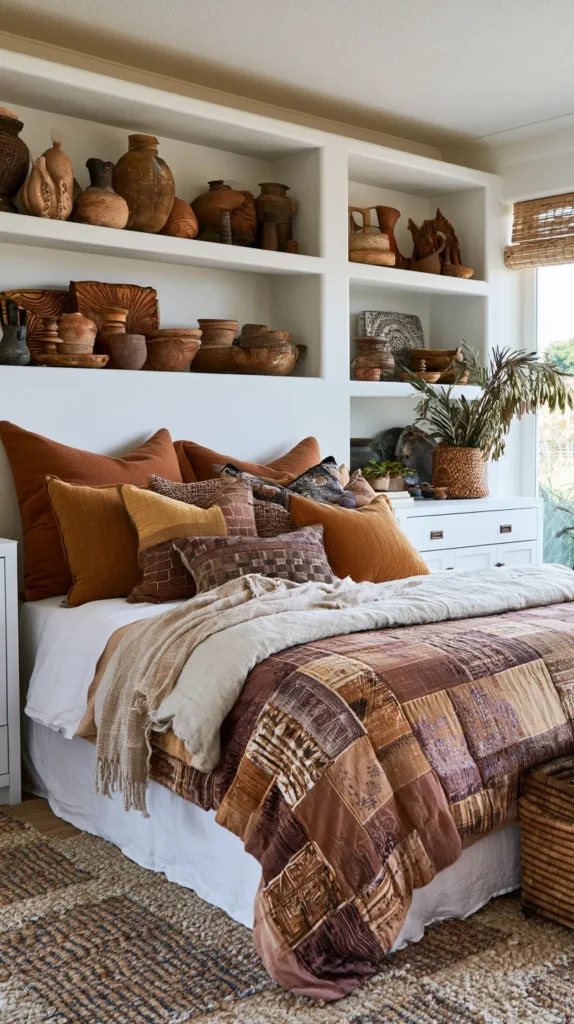
The Afrohemian bedroom uses ceramics with the same warmth and natural quality as every other material in the room.
Terracotta pots for the plants. Ceramic vessels of African origin or influence on the shelves. Unglazed earthenware bowls holding small objects, crystals, jewellery, dried botanicals, on the bedside table and the dresser.
The terracotta palette of these ceramic elements connects directly to the room’s earthy colour foundation. The unglazed surface of a terracotta pot has the same organic, slightly rough quality as the mudcloth and the rattan and the natural linen. The material coherence of the room is carried through even the smallest objects.
14. A Dresser or Vanity Styled as a Cultural Altar
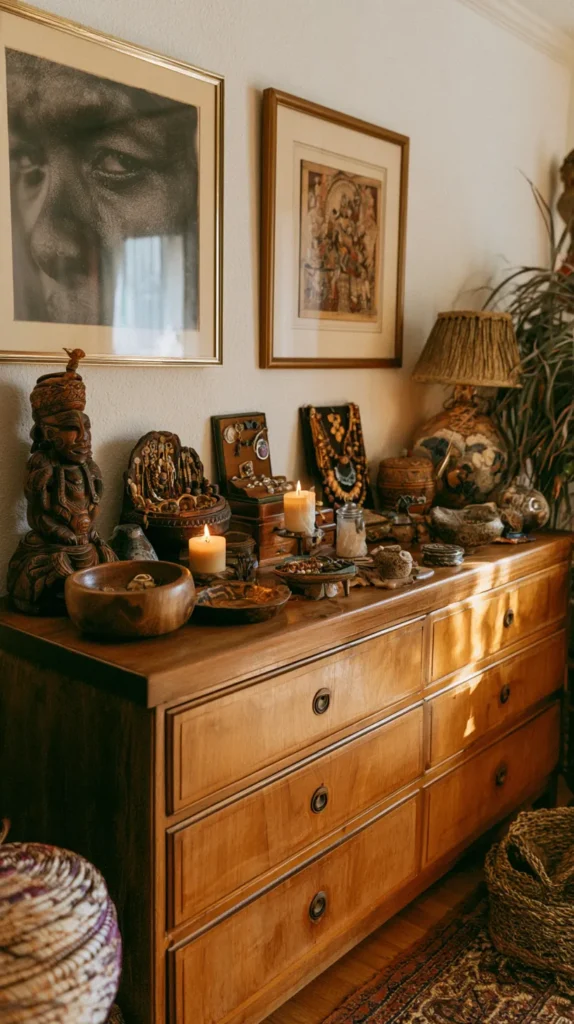
The dresser top in the Afrohemian bedroom is not simply the surface where hair products and jewellery accumulate.
It is the room’s personal altar. The surface where the objects of daily ritual and specific meaning are arranged with intention.
A wooden bowl of polished stones or cowrie shells. A small framed photograph of significance. Dried botanicals in a terracotta vase. A candle in a holder of cultural resonance. Jewellery arranged on a fabric square rather than stored away. A small carved figure of personal meaning.
This arrangement is not styled for photography. It is styled for the person who lives with it, who sees it each morning and evening, who adds and removes elements as the room and its meaning evolves.
The dresser as altar is the Afrohemian bedroom’s most personal element and its most authentic expression of the aesthetic’s core value. That design is not decoration for its own sake but the creation of an environment that reflects and supports a specific, intentional way of being in the world.
How to Build an Afrohemian Bedroom Authentically
Authenticity in the Afrohemian aesthetic begins with intention rather than acquisition.
Understand the specific traditions you are drawing from before you introduce their objects into your space. The mudcloth has a specific cultural origin. The Adinkra symbols carry specific meanings. The kente cloth has a royal and ceremonial significance within Akan culture. Understanding these contexts does not require encyclopaedic knowledge but it does require the curiosity to ask and the respect to learn.
Source African textiles and objects from African producers and artisans wherever possible. The fair-trade supply chains that connect African weavers, potters, and craftspeople to international buyers allow the economic value of the cultural product to benefit the communities that produced it.
Let the room develop over time through genuine collecting rather than trying to create the aesthetic in a single purchase. The Afrohemian bedroom that looks right is the bedroom where things arrived from different places at different times because the person who lives in it genuinely collects with intention.
Common Mistakes in Afrohemian Bedroom Design
Treating African textiles as generic pattern elements. A mudcloth pattern printed on a cheap reproduction and purchased purely for its visual effect misses the cultural depth that makes the authentic object significant. Choose textiles whose origin and tradition you know.
Over-matching and over-coordinating. The Afrohemian aesthetic is built on the productive tension between elements from different cultural traditions. Over-coordination reduces this tension and produces a room that looks like a themed product range rather than a genuinely inhabited space.
Using only one cultural reference. The Afrohemian bedroom draws from the vast diversity of African cultural traditions rather than a single generic idea of Africa. Mudcloth from Mali and kente from Ghana and adinkra from the Akan and carved objects from central African traditions are all different things from different places.
Neglecting the Bohemian half of the equation. The macramé, the layered textiles, the abundant plants, the collected objects from various sources, are as essential to the aesthetic as the African elements. Without the Bohemian warmth and informality the room becomes an African design showcase rather than an Afrohemian lived space.
Being too tidy. The Afrohemian bedroom has a deliberate abundance. The layers of textiles on the bed. The plants in every available corner. The objects on every surface. This abundance is not clutter. It is the visual expression of a life lived with full engagement with the material and cultural world.
Quick Summary
- Mudcloth as the headboard feature establishes the room’s primary cultural textile reference and earthy colour palette
- A layered bed of natural linen, kente, kanga, and mudcloth cushions creates the accumulated textile warmth of the aesthetic
- Rattan and woven natural fibre furniture bridges the African and Bohemian material traditions in both function and form
- The earthy palette of terracotta, ochre, warm brown, and forest green creates the warm, grounded atmosphere the aesthetic requires
- Macramé and woven textile wall hangings add the Bohemian craft tradition alongside the African textile features
- A fabric canopy above the bed creates an enclosed, intimate sleeping space within the layered textiles of the room
- Adinkra and kente cushions add specific cultural meaning alongside pattern beauty to the textile collection
- Carved wooden masks and figures positioned as art objects bring three-dimensional sculptural depth to the room
- Abundant tropical plants throughout create the living, organic warmth that connects the room to the natural world
- Rattan pendant lighting creates warm patterned light and adds natural material coherence to the room’s other organic elements
- A gallery wall of African contemporary art, photography, and graphic work tells the room’s cultural story with specificity
- A layered jute base rug with a woven African overlay creates floor-level depth that echoes the bed’s textile layering
- Terracotta pots and unglazed ceramic vessels maintain the earthy material palette through the room’s smallest objects
- The dresser styled as a personal altar with culturally significant objects is the room’s most authentic and most personal element
- Source from African artisans and fair-trade suppliers, learn the cultural context of what you bring into the room, and let it develop through genuine collecting over time
The Afrohemian bedroom is the bedroom of a person who is genuinely curious about the world.
Who finds beauty in the textile traditions of cultures they have taken the time to understand. Who layers a Ghanaian kente beside a natural linen because both are beautiful and because beauty from different traditions placed together is more interesting than beauty from a single source.
Who sleeps in a room that tells the story of a specific, considered, culturally engaged life.
That room is worth creating slowly and getting right.
Start with one piece of mudcloth and a terracotta pot of a plant.
The rest arrives with time and intention.