
15 Linen Bedroom Ideas for a Soft Breathable Aesthetic
There is a material that understands rest better than any other available to a bedroom — a material that softens with every wash rather than deteriorating, that breathes in summer and insulates in winter, that wrinkles in a way that is specifically beautiful rather than simply creased, and that communicates, through its specific quality of honesty, that the room it inhabits was designed for genuine comfort rather than for the appearance of it.
Linen is that material. Not the stiff, formal linen of a tablecloth starched into submission, but the lived-in, washed-many-times, slightly tumbled linen of a bedroom that understands that genuine softness is earned through use rather than purchased in the first wash.

A linen bedroom is not a white bedroom or a minimal bedroom or a neutral bedroom, though it may be any of these things. It is specifically a material bedroom — a room whose entire character derives from the honest quality of natural fibre in its most generous and its most breathable form.
The natural variation of the linen weave, the specific warmth of undyed linen, the way it catches light differently from every thread direction — these are the qualities that produce the specific aesthetic pleasure the linen bedroom delivers and that no synthetic alternative, however close in colour, can approach.
The fifteen ideas below cover every element of the linen bedroom.
1. The Natural Linen Bedding Foundation
Budget: $80 – $400
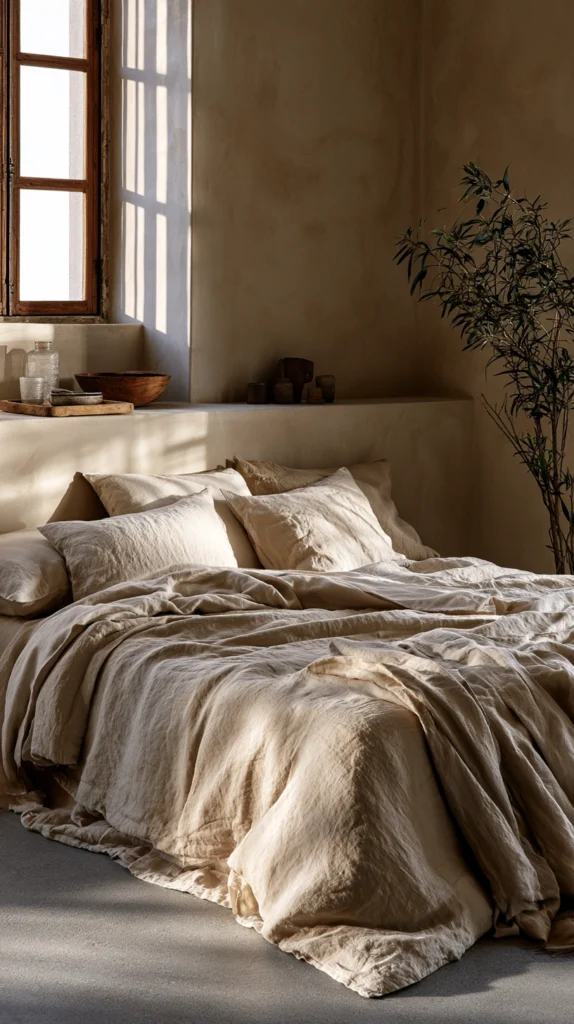
The linen bedroom begins at the bed — specifically with a duvet cover in genuine washed linen, an Oxford linen pillowcase with a two-centimetre flange, and a linen flat sheet between the duvet and the sleeper. The quality of the linen bedding determines the quality of every other decision in the room — a bed dressed in genuine washed linen produces the specific, softly rumpled quality that makes the linen bedroom specifically beautiful.
A washed linen duvet cover in natural or undyed linen — $80 – $200 for a king size. Linen Oxford pillowcases — $30 – $80 for a set. A linen flat sheet — $40 – $100. A linen fitted sheet — $30 – $80.
Decor tip: Buy linen bedding in a size slightly larger than the bed requires — a king duvet cover on a standard double bed — so that the linen pools slightly over the sides rather than sitting precisely at the mattress edge. A linen duvet cover that is slightly too large for the bed reads as generous, soft, and specifically beautiful. One that fits exactly reads as correctly sized, which is less specifically linen in its character.
2. The Undyed Linen Colour Palette
Budget: $30 – $150
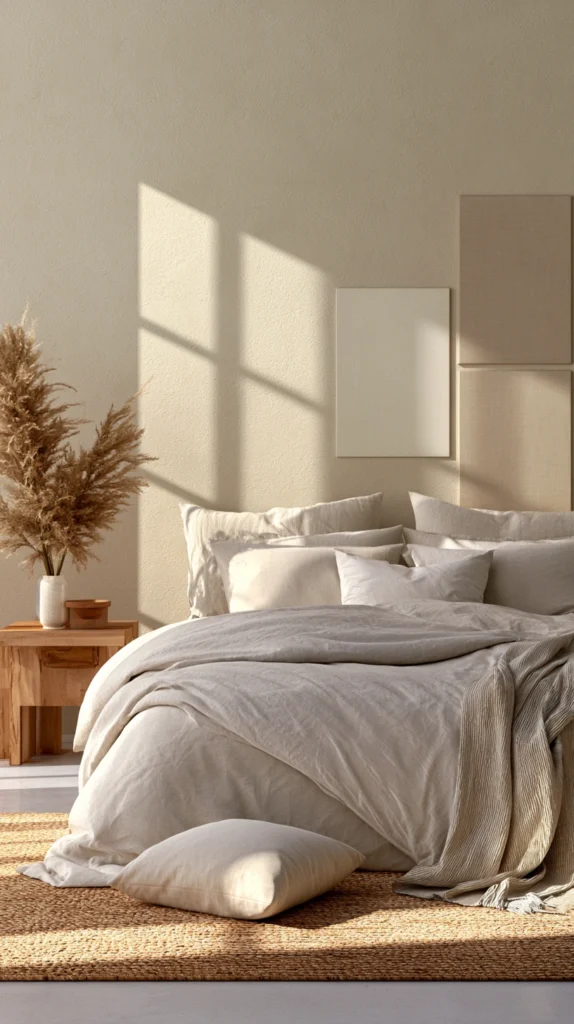
The linen bedroom palette runs from the palest, most washed-out natural linen — almost white, with a very slight warm undertone — through the honey beige of dried grass and the warm tan of raw flax, to the darker, slightly brown-toned linen of an undyed heavy weave. These are not neutral colours. They are the specific warm tones of a natural material in its most honest state, and they produce a room of warmth and depth without any additional colour required.
A quality warm ivory or natural linen-toned paint — $20 – $50 per litre in a flat or chalk finish. Two to three litres for a standard bedroom — $40 – $150. The ceiling in the same warm tone or one shade lighter.
Styling tip: Paint the bedroom walls in a tone that matches the lightest linen in the room — the washed linen pillowcase or the undyed cotton sheet — so that the wall colour reads as the same material world as the bedding, only applied to a flat surface rather than a woven one. A wall that matches the linen rather than contrasting with it produces the specific quality of a room where every surface belongs to the same material premise.
3. The Linen Upholstered Headboard
Budget: $150 – $800
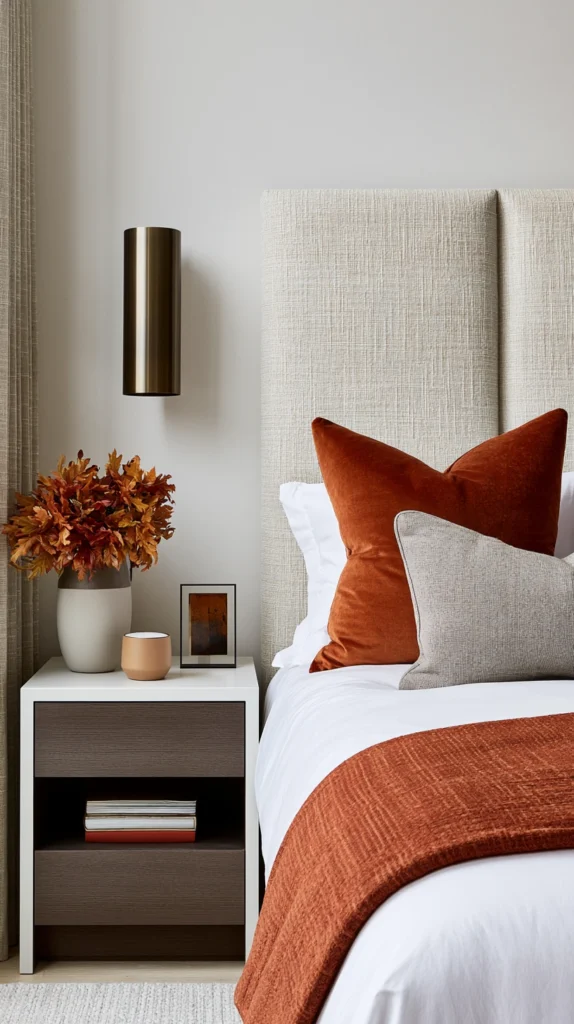
A headboard upholstered in natural linen — in a Belgian linen weave, a textured slubbed linen, or a plain linen in the bedroom’s undyed palette — is the linen bedroom’s most architecturally significant single piece. Linen upholstery beside linen bedding produces the specific quality of a room where the material decision was consistent from the wall to the furniture to the bedding — every textile speaking the same honest, natural language.
A linen-upholstered headboard in a standard king size — $150 – $500. A bespoke version in a specific linen fabric — $400 – $800. A DIY version — a timber frame padded with wadding and covered in purchased linen fabric — $60 – $150 in materials.
Styling tip: Choose a headboard linen with a slightly more pronounced weave or a slightly deeper natural tone than the bedding linen — the headboard appearing marginally richer and more textured than the pillow surface against it. The slight material difference between the headboard and the bedding prevents both from reading as the same surface at different scales, which can produce a room that lacks tonal contrast.
4. The Linen Curtain Wall
Budget: $80 – $400
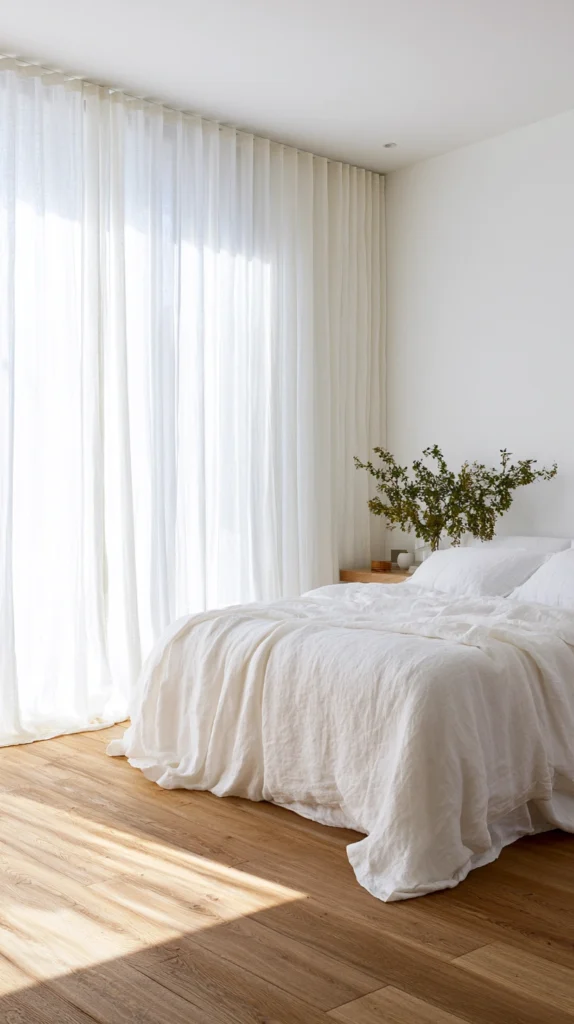
Floor-to-ceiling linen curtains — in natural undyed linen, hung from simple brass or natural timber rods at ceiling height and pooling two to three centimetres on the floor — are the linen bedroom’s most vertically generous and the most materially complete window treatment. Linen curtains filter natural light into a warm, slightly golden quality that flatters the linen palette throughout the day.
Natural linen curtain panels — $40 – $100 per panel. Two to three panels per window — $80 – $300 per window. Ceiling-height rods in brass or natural timber — $25 – $60 per window. A blackout lining if complete darkness is required — $10 – $30 per panel.
Styling tip: Hang linen curtains in a simple, ungathered heading — a tab top, a simple eyelet, or a plain pinch pleat — rather than an elaborate formal heading. Linen’s character is honest and unpretentious, and a formal heading contradicts the material’s fundamental quality. The simple heading is not the economical choice. It is the aesthetically correct one for a material that communicates its beauty through simplicity.
5. The Linen and Natural Timber Pairing
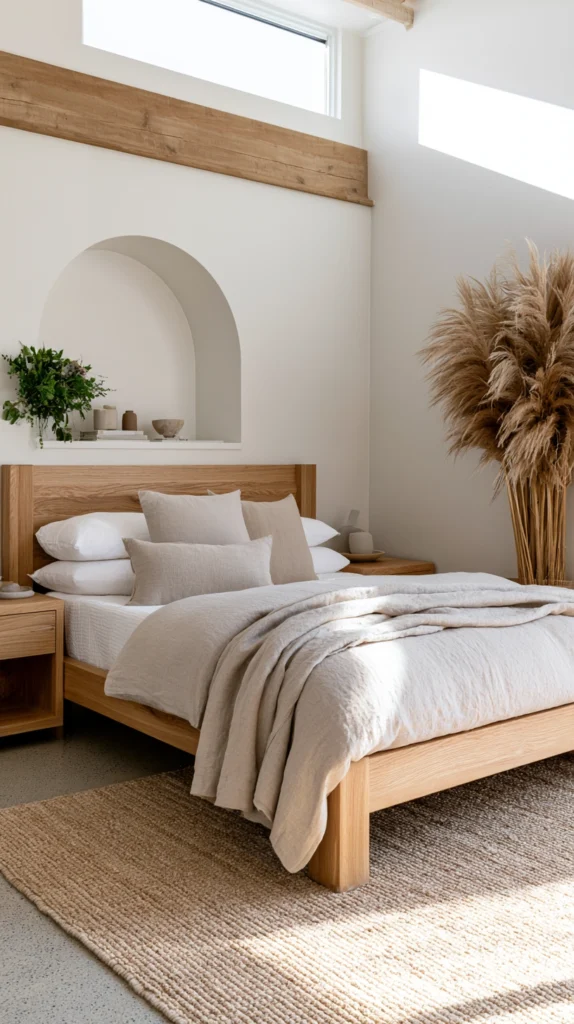
Budget: $100 – $1500
Natural timber beside natural linen — in warm oak bedside tables, a honey pine bed frame, or a warm beech floor — is the linen bedroom’s most consistently beautiful material pairing. Both materials belong to the same honest, natural world — the flax plant and the timber tree both processed with minimal intervention and expressing their natural character rather than a manufacturer’s colour choice.
A warm oak or pine bed frame — $200 – $600. Natural timber bedside tables — $60 – $200 each. A warm timber floor in oak or pine — $30 – $80 per square metre in materials. A timber mirror frame — $40 – $120.
Styling tip: Choose timber pieces in a warm, unlacquered or lightly oiled finish rather than a varnished or polyurethane-coated alternative beside linen. An oiled timber beside linen reads as two honest natural materials in genuine relationship — both expressing their material character rather than a surface treatment. A heavily varnished timber beside linen reads as a natural-coloured synthetic surface beside a genuine natural material — which produces a quality tension between the two.
6. The Layered Linen Throw and Cushion Arrangement
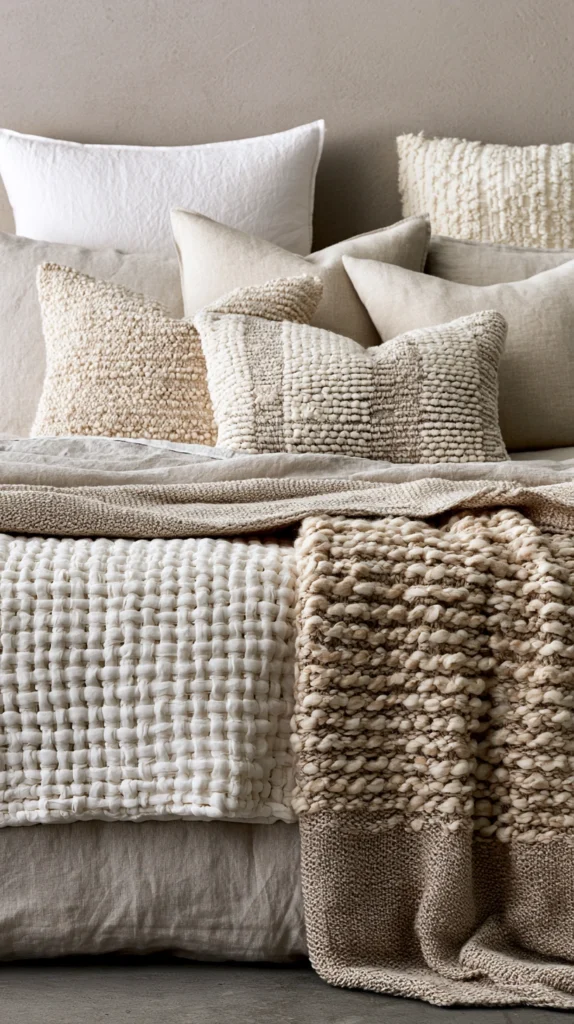
Budget: $60 – $300
A layered textile arrangement in the linen bedroom — a heavyweight woven linen throw draped at the foot of the bed, a waffle-weave linen blanket folded beneath it, and three or four linen cushions in the palette’s natural tones arranged at the headboard — produces the specific quality of abundance within restraint that makes the linen bedroom specifically beautiful. Many linen textures, all in the same natural tone family.
A heavyweight woven linen throw — $50 – $150. A waffle-weave linen blanket — $40 – $100. Linen cushion covers in natural tones — $20 – $50 each. A stonewashed linen bolster cushion — $30 – $70.
Styling tip: Choose the linen throw and blanket in slightly different natural tones — one in a lighter, more washed linen and one in a slightly deeper, more tan-toned linen — so that the layered arrangement has visible tonal depth rather than reading as a stack of identical materials. Tonal variation within the linen palette produces a bed of genuine warmth and visual complexity. Identical tones throughout produce a bed that reads as a matched set.
7. The Linen Window Seat or Reading Corner
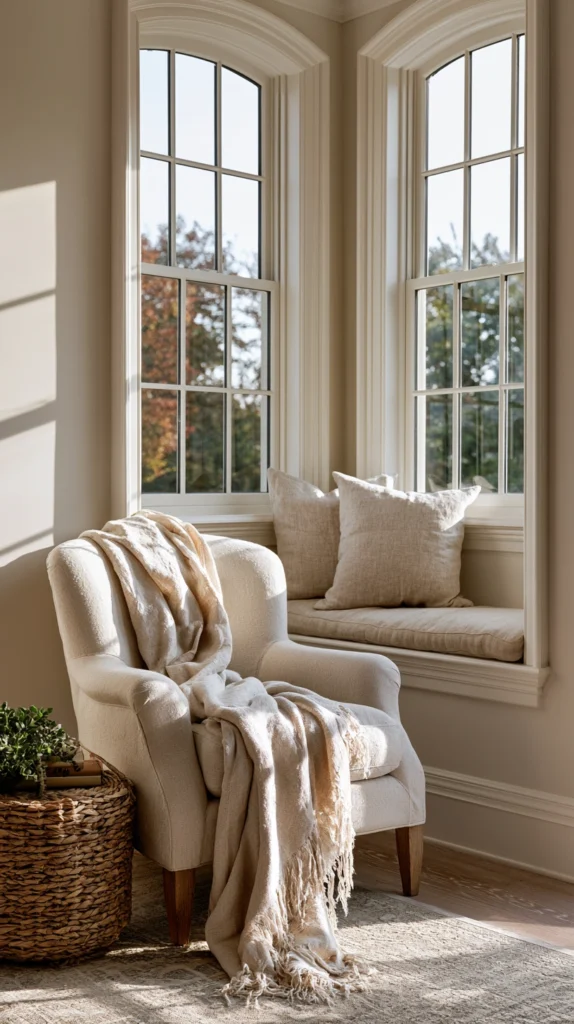
Budget: $100 – $600
A window seat or reading corner in the linen bedroom — a cushioned bench at the window covered in natural linen, or a small armchair in a linen upholstery with a linen throw and a basket of books beside it — extends the material’s honest, breathable character to the bedroom’s secondary zone and provides a genuinely comfortable position for the non-sleeping hours spent in the room.
A window seat cushion covered in natural linen — $60 – $200 in materials. A linen-upholstered armchair — $150 – $500. A woven basket for books — $15 – $40. A linen throw for the chair — $40 – $100.
Styling tip: Position the reading corner at the window that receives the best quality of natural morning light — linen is a material of natural light, and a linen-covered reading chair in morning light is one of the most specifically beautiful domestic visual compositions available in a bedroom of this palette. The morning light on the natural linen reads as warm, golden, and specifically honest — the material at its most specific.
8. The Linen-Toned Wall Treatment
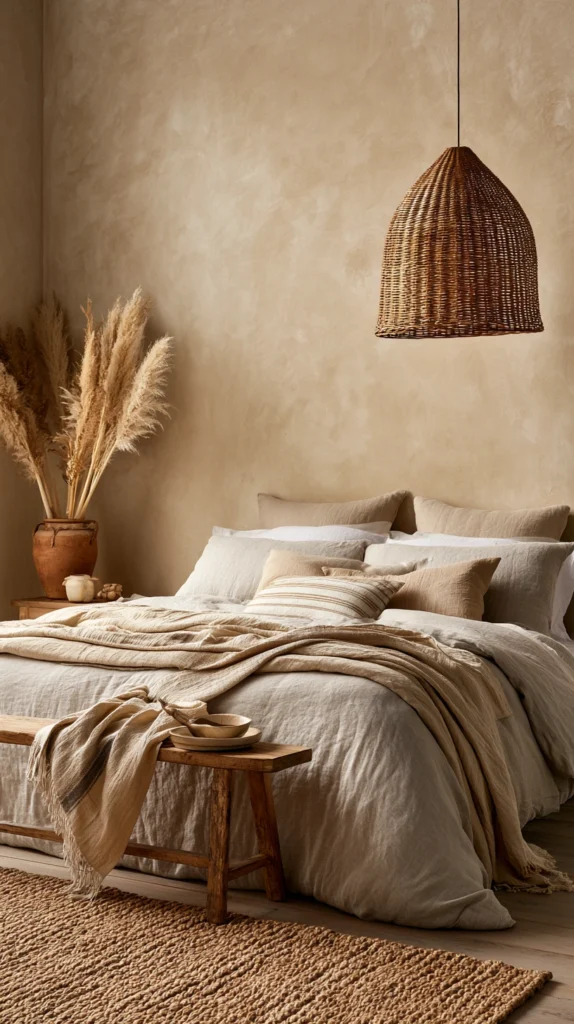
Budget: $40 – $300
A wall treatment in the linen bedroom that references the material’s texture — a limewash paint application producing a naturally varied surface that mimics the slight variation of a woven textile, or a Roman clay finish with a trowelled application that reads as textured without adding a pattern — gives the room’s walls a surface quality that flat paint cannot produce and that belongs to the same honest, slightly imperfect world as the linen textile.
A limewash paint in a warm ivory or natural linen tone — $25 – $60 per litre. A Roman clay finish in the same tone — $30 – $80 in materials. A grasscloth wallpaper in a natural undyed tone — $20 – $50 per roll, three to four rolls for a standard bedroom.
Styling tip: Apply the limewash in crosshatched strokes with a wide, slightly dry brush rather than in the rolling motion of standard paint — the crosshatching producing the natural tonal variation that makes limewash read as specifically similar in character to a woven textile. A limewash applied with a roller produces an even, slightly mottled surface. Applied with a dry brush in crosshatched strokes, it produces a warm, slightly directional variation that reads as organic and specifically beautiful.
9. The Natural Linen Lighting Shade
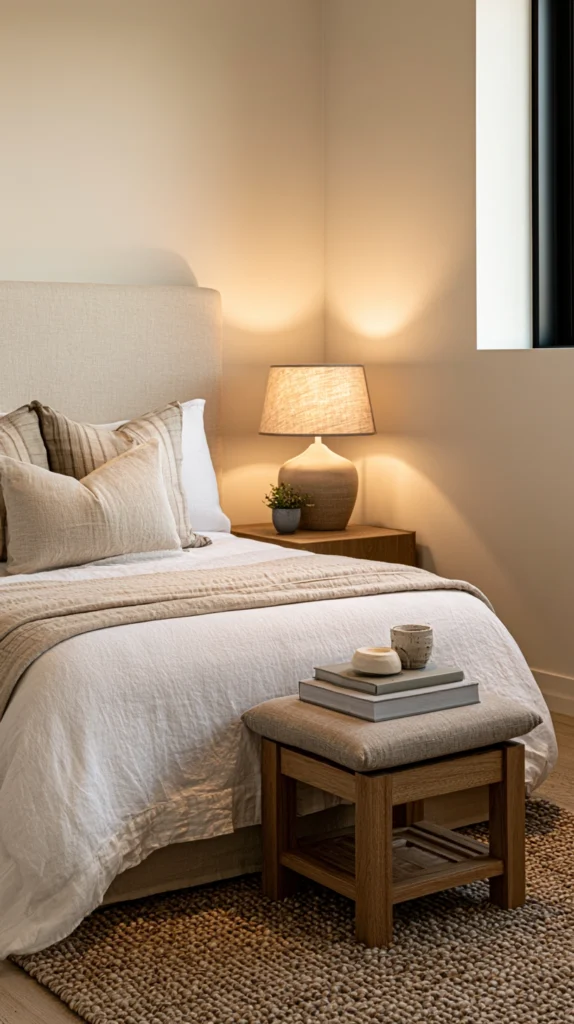
Budget: $30 – $200
A bedside lamp with a natural linen shade — or a pendant above the bed with a linen-covered shade that filters the light to a warm, soft quality — is the linen bedroom’s most atmospheric lighting choice. Light through a natural linen shade produces a specific quality of warmth — slightly filtered, slightly amber, specifically gentle — that no other shade material approaches.
A bedside lamp with a natural linen shade — $40 – $120 each. A linen pendant shade — $30 – $100. A warm LED bulb at 2700K — $5 – $10 per fitting.
Styling tip: Replace any white or coloured lamp shades in the linen bedroom with natural linen alternatives — the difference in light quality through a natural linen shade versus a synthetic white shade is immediately and specifically apparent. A linen shade produces light that belongs to the bedroom’s material world. A synthetic shade produces light that belongs to a different world that happens to be in the same room.
10. The Linen Storage and Organisation Layer
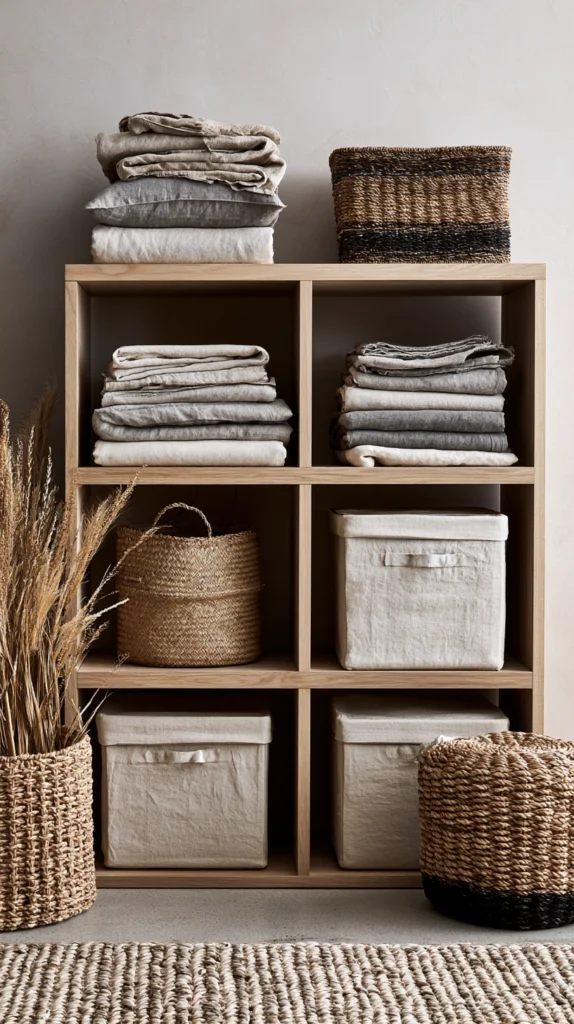
Budget: $30 – $150
Linen storage — woven baskets for laundry, linen-covered boxes for bedside storage, a natural cotton rope basket for extra blankets, and folded linen stacked openly on a shelf — brings the material’s honest, practical character to the room’s functional layer. Storage in a linen bedroom should look like part of the room rather than like storage.
Woven storage baskets — $15 – $40 each. A natural cotton rope basket — $20 – $50. Linen-covered storage boxes — $10 – $30 each. Folded linen stacked on an open shelf — free using linen already owned.
Styling tip: Fold spare linen and display it openly on a bedroom shelf rather than storing it in a wardrobe or a drawer — a stack of beautifully folded linen on a shelf in a linen bedroom communicates both abundance and the specific quality of a room where the material is genuinely understood and genuinely celebrated. A stack of folded linen is as beautiful as any ceramic or botanical object and costs nothing to display.
11. The Linen and White Ceramic Still Life
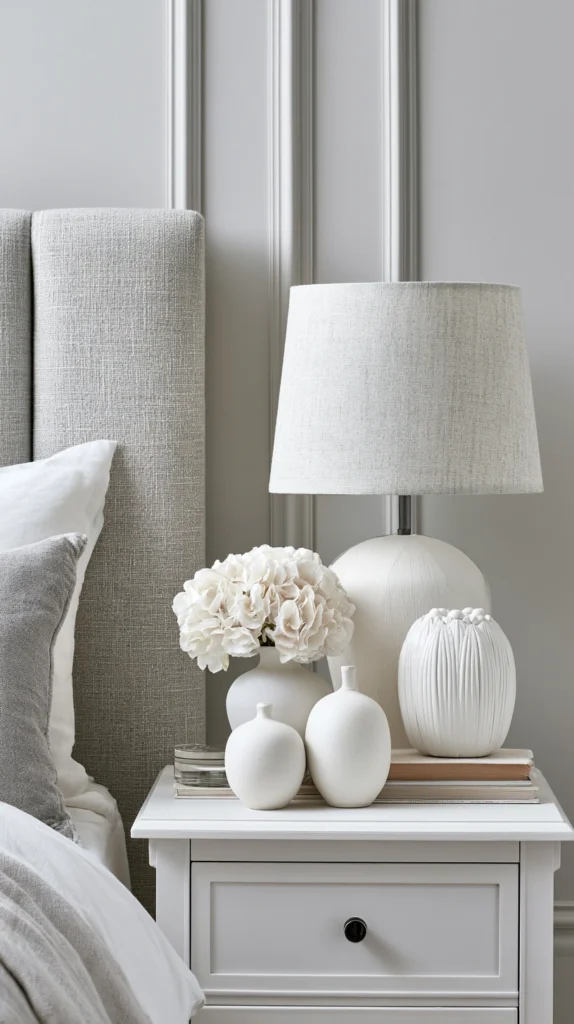
Budget: $20 – $100
The linen bedroom’s surface styling — the objects on the bedside table and the shelf — benefits from a still life in the palette’s most honest materials: white or cream ceramics, natural timber, dried botanicals, a small smooth stone, and a candle in an unglazed vessel. These are the objects that belong beside linen — sharing its honesty, its restraint, and its connection to the natural world.
White or cream ceramic bedside objects — $8 – $25 each. A dried botanical in a simple ceramic vessel — $10 – $30. A small smooth stone used as a paperweight or object of contemplation — free if personally found. An unglazed ceramic candle holder — $10 – $25. Total still life investment: $38 – $80 for a bedside arrangement of genuine and specifically beautiful material coherence.
Styling tip: Limit the bedside table in a linen bedroom to four or five objects maximum — the lamp, a candle, a small ceramic, a book, and one botanical element. The linen bedroom’s specific quality of breathable, unhurried calm is produced in part by the surface restraint that prevents the room from reading as cluttered. Fewer objects on the bedside table communicate the same quality as fewer colours on the wall — that the room was edited rather than accumulated.
12. The Linen and Lavender Botanical Element
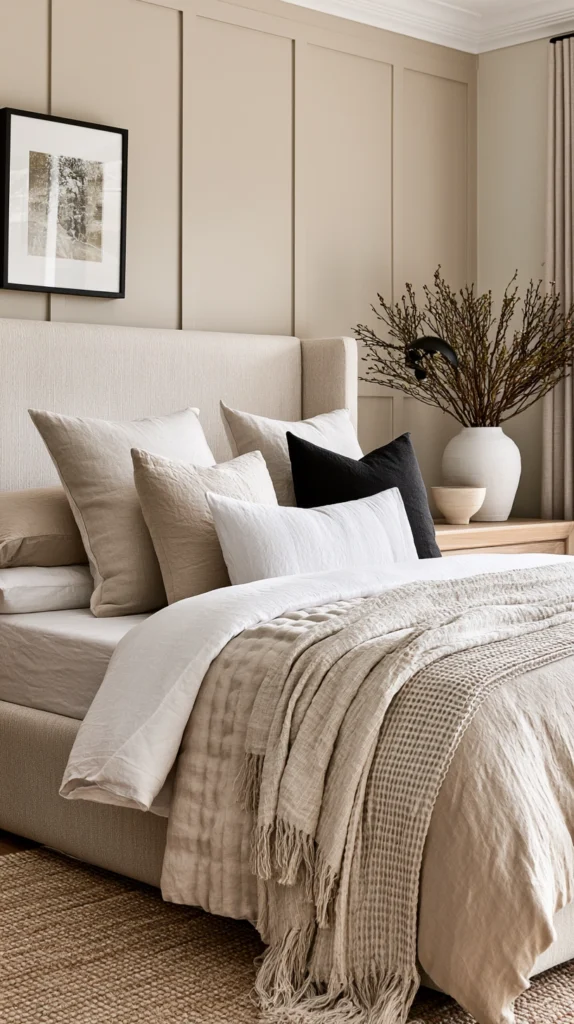
Budget: $10 – $60
Lavender in a linen bedroom — a dried lavender bundle tied with natural twine hung above the headboard, a small ceramic pot of fresh lavender on the windowsill, or a lavender-filled linen sachet beneath the pillow — introduces the botanical element that most naturally and most honestly belongs beside linen. Lavender and linen have co-existed in the linen cupboard and the bedroom for centuries — their combination communicating the specific quality of a domestic tradition of genuine, honest care.
Dried lavender bundles — $8 – $20. Fresh lavender in a ceramic pot — $5 – $15. A linen sachet of dried lavender — $5 – $15 from a specialist maker or $3 – $8 made from linen scraps and dried lavender. Total lavender investment: $16 – $50 for the botanical element most specifically connected to the linen bedroom’s material and cultural history.
Styling tip: Hang a small dried lavender bundle above the headboard — tied with natural twine and suspended from a simple hook — rather than placing it in a vase. A hung bundle of dried lavender reads as a domestic tradition — a gesture of care for the quality of sleep within the room. The same lavender in a vase reads as a dried floral arrangement. The hanging gesture communicates intention; the vase communicates decoration.
13. The Linen Bedroom With Natural Light Maximisation
Budget: $0 – $200
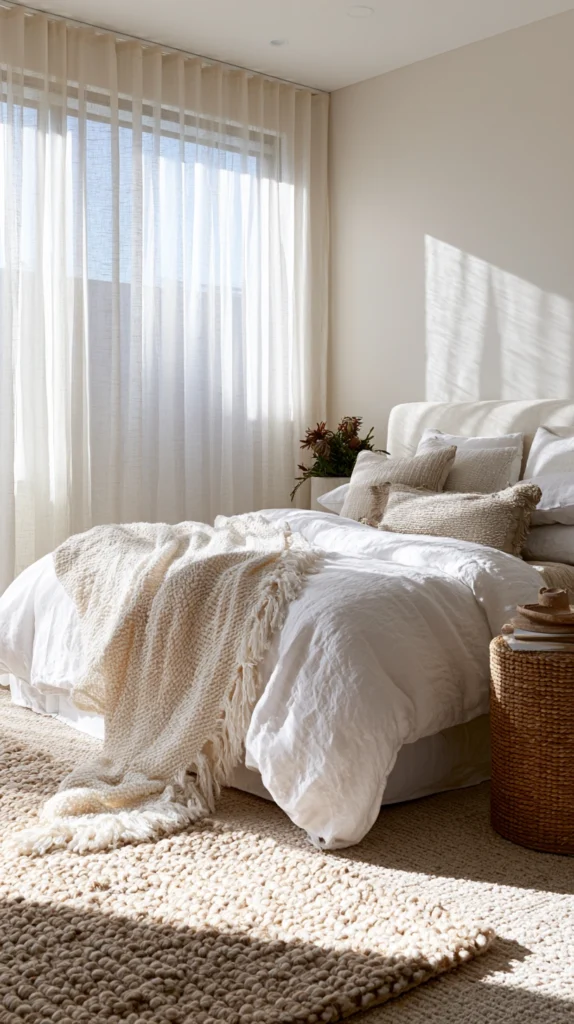
The linen bedroom performs most beautifully in natural light — the specific quality of morning sun through linen curtains, or the diffused quality of a cloudy day through unlined linen panels, producing a warm, slightly golden quality of interior illumination that the linen material is specifically designed to inhabit. Maximising the natural light in a linen bedroom is a material decision as much as a practical one.
Replacing existing heavy curtains with sheer linen panels — $80 – $200 in linen fabric. Removing a curtain entirely from a window that requires no privacy — free. Cleaning the windows to maximise light transmission — free.
Styling tip: Leave at least one window in the linen bedroom without any window treatment — simply bare glass — if privacy and light quality allow. A bare window in a linen bedroom fills the room with an unfiltered quality of natural light that communicates the outdoor, honest, unprocessed quality of the material in the most direct possible way. The bare window is the most honest version of a linen bedroom’s window treatment.
14. The Guest Linen Bedroom
Budget: $100 – $600
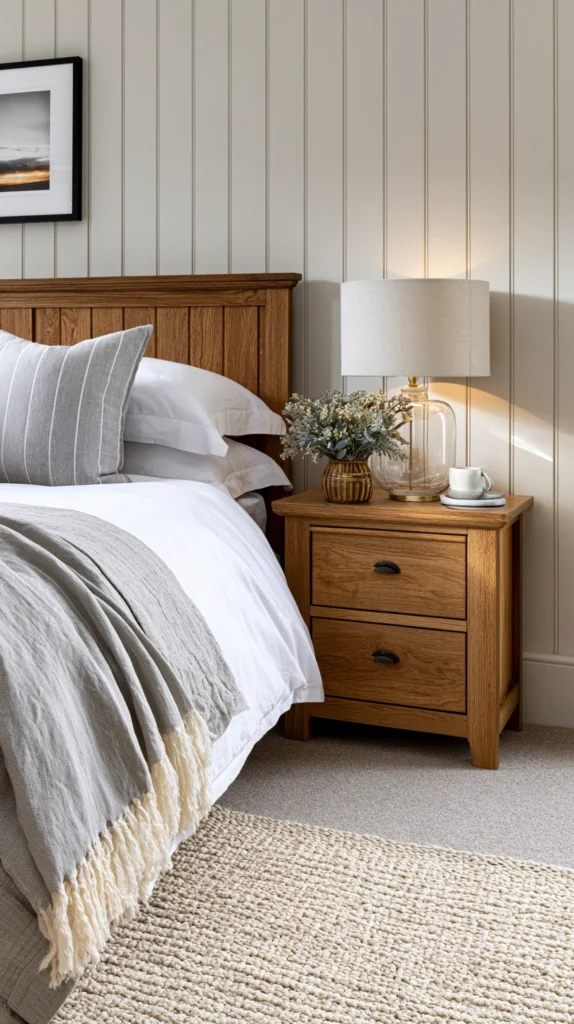
A linen guest bedroom — a spare room given the linen treatment specifically for the comfort of guests — communicates a quality of genuine hospitality through material honesty rather than decoration. A guest room dressed in genuine washed linen, with a lavender sachet on the pillow and a small ceramic carafe of water on the bedside table, communicates that the host thought about the guest’s sleep quality rather than simply providing a bed.
A complete set of guest linen bedding — $100 – $300. A linen throw on the guest bed — $40 – $100. A lavender sachet for the pillow — $5 – $15. A small ceramic carafe and glass on the bedside — $15 – $40. A linen or woven hand towel laid across the foot of the bed — $15 – $30.
Styling tip: Wash all guest linen immediately before the guest’s arrival rather than using linen stored in a cupboard — freshly washed linen has a specific quality of warmth and cleanliness that stored linen, however freshly laundered before storage, cannot quite replicate. The guest who sleeps in freshly washed linen sleeps in a genuinely considered material experience.
15. The Fully Realised Linen Bedroom
Budget: $400 – $3000
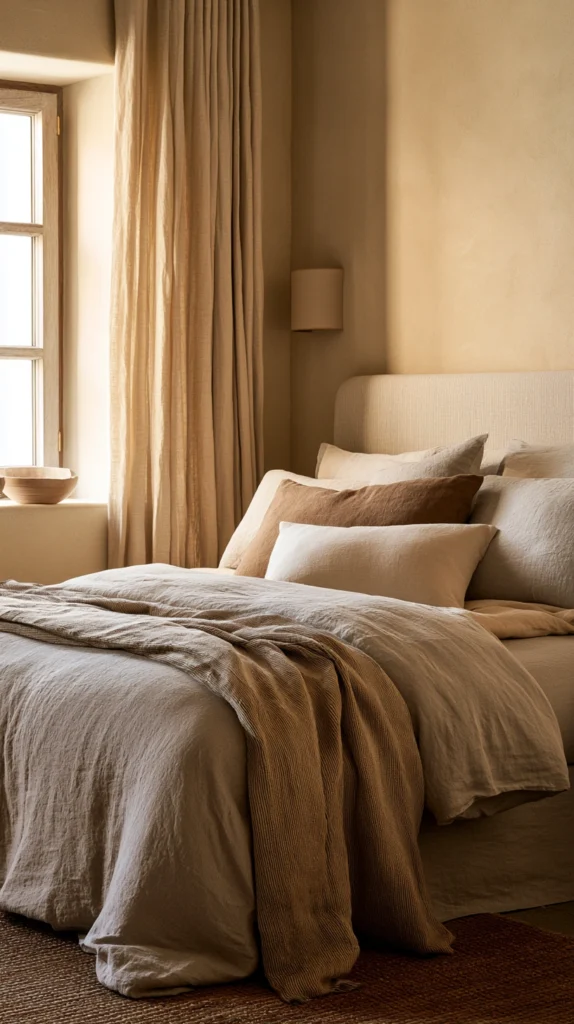
The fully realised linen bedroom — warm ivory limewash walls, natural linen curtains on brass rods pooling on a warm oak floor, a linen-upholstered headboard in a slightly deeper natural linen, layered washed linen bedding from deep natural at the foot to pale ivory at the pillows, a heavyweight woven linen throw draped at the foot, natural linen lamp shades providing warm filtered light on warm oak bedside tables,
white and cream ceramics and a dried lavender bundle on the bedside surfaces, a linen-covered reading chair in the morning light corner with a woven basket of books beside it, dried lavender hung above the headboard on natural twine, woven storage baskets below the bed for extra blankets, a stack of folded linen on the open shelf above the wardrobe,
and the specific quality of warm morning light filtering through undyed linen curtains and casting a golden, slightly textured quality of illumination across the room’s every linen surface simultaneously — is a bedroom of genuinely breathable, genuinely unhurried, and genuinely specific material beauty.
Limewash walls: $60 – $180. Linen curtains: $120 – $400. Linen headboard: $150 – $500. Linen bedding: $150 – $380. Throws and cushions: $100 – $320. Oak bed frame: $200 – $600. Oak bedside tables: $120 – $400. Linen lamp shades: $80 – $240. Reading chair: $150 – $500. Ceramics and botanicals: $50 – $150. Storage and organisation: $50 – $150. Total fully realised linen bedroom: $1230 – $3820 for a room of profound and specifically earned material calm — built not from colour or pattern or statement furniture but from the accumulated, consistent, daily-improving quality of genuine natural linen in every position where a textile can be.
Styling tip: Do not iron the linen in the fully realised linen bedroom. The specific quality of the material — the quality that makes the linen bedroom specifically, irreplaceably beautiful — is present in the tumbled, slightly creased surface of washed linen that was allowed to dry naturally.
An ironed linen bedding surface is a beautifully pressed textile that happens to be made of linen. An unironed, naturally dried linen bedding surface is specifically, characteristically, and completely linen — the material expressing its full character rather than being subdued into an approximation of its stiffer, more formal predecessors. Let the linen be what it is. What it is, when allowed to be, is beautiful.
Wash it often. Dry it in natural air when possible. Let it wrinkle naturally. Do not iron it.
And then sleep in it, every night, in the specific quality of warmth and breathability and genuinely honest material softness that earned linen its particular, enduring, and entirely deserved reputation as the most beautiful textile available to a bedroom that takes the quality of rest seriously.