
15 Slim Shoe Storage Ideas for Narrow Hallways
Narrow hallways can be some of the most challenging spaces in a home to organize, especially when shoes start piling up near the door. Without enough width for bulky cabinets or traditional shoe racks, footwear quickly becomes visual clutter and a daily frustration.
Yet shoes are one of the first things you need when heading out and the first things you want to take off when you come home, making hallway storage essential rather than optional.

Slim shoe storage is all about smart proportions, vertical thinking, and multi-functional design. With the right solutions, even the tightest hallway can stay tidy, stylish, and easy to navigate. These 15 slim shoe storage ideas are designed specifically for narrow hallways, helping you keep shoes organized without sacrificing flow, comfort, or aesthetics.
1. Slim Shoe Cabinets With Flip-Down Compartments

Slim shoe cabinets with flip-down fronts are one of the best solutions for narrow hallways. These cabinets are designed with angled internal shelves that store shoes vertically, allowing the unit to stay remarkably shallow while still holding multiple pairs.
Because they sit flush against the wall, they don’t interrupt foot traffic or make the hallway feel cramped. Closed fronts keep shoes hidden, which instantly makes the space look cleaner and more intentional. These cabinets work especially well in minimalist or modern homes where visual calm is a priority.
Mounting the cabinet slightly off the floor can make the hallway feel lighter and easier to clean.
2. Wall-Mounted Shoe Racks for Vertical Storage
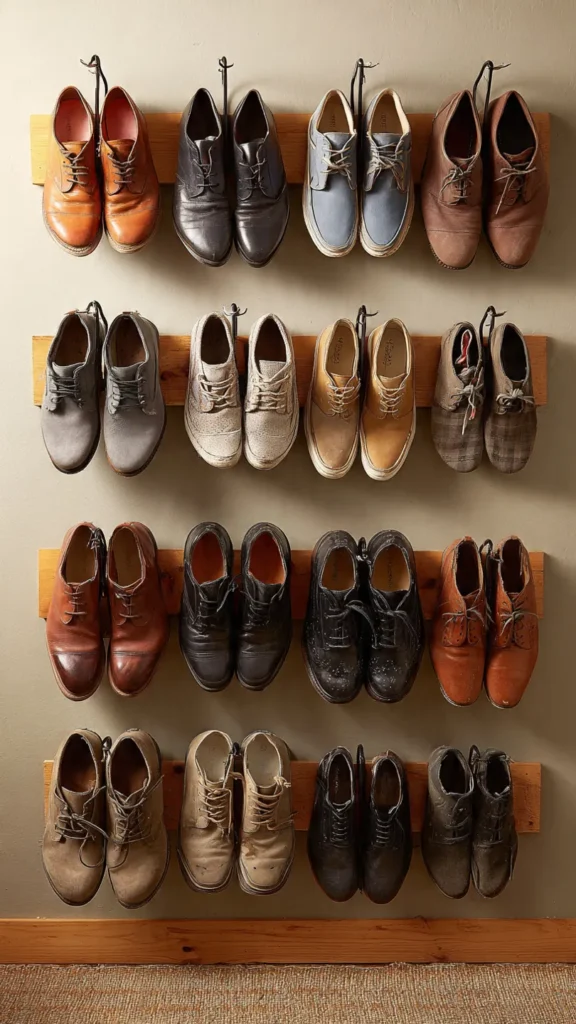
Wall-mounted shoe racks take advantage of vertical wall space, which is often underused in narrow hallways. Instead of spreading shoes across the floor, these racks stack them upward, freeing up valuable walking space.
They come in various styles, from simple metal rails to sleek wooden panels with integrated slots. Keeping shoes off the floor makes cleaning easier and visually opens up the hallway. This solution is ideal for households that prefer easy access to frequently worn shoes.
Spacing the racks evenly and limiting them to one wall helps maintain a balanced, uncluttered look.
3. Floating Shelves for Minimalist Shoe Display

Floating shelves aren’t just for décor. When installed low along a hallway wall, they can serve as slim shoe storage without adding bulk. Each shelf holds a few pairs while maintaining a clean, streamlined profile.
This idea works best for curated storage rather than large collections. Displaying only the shoes you wear most often keeps the hallway functional without overwhelming it. Neutral-toned shelves that match the wall color help them visually blend in.
Floating shelves also allow flexibility, as they can be adjusted or expanded over time.
4. Narrow Shoe Benches With Hidden Storage

A narrow shoe bench combines seating and storage in one compact piece, making it ideal for hallways that need function without depth. Many slim benches include internal compartments or lift-up seats that conceal shoes entirely.
The bench provides a place to sit while putting on shoes, which is especially helpful for children or older family members. When closed, the storage keeps shoes out of sight, maintaining a tidy appearance.
Choosing a bench with a depth of under 12 inches ensures it won’t obstruct the hallway.
5. Vertical Shoe Towers for Tight Spaces

Vertical shoe towers are tall, narrow units designed to store shoes upward instead of outward. They can fit into small wall gaps, corners, or unused sections of hallway without encroaching on walking space.
These towers often have open shelves or cubbies, making it easy to grab shoes quickly. While open storage is more visible, keeping the collection limited and organized prevents visual clutter.
Vertical shoe towers are especially useful in apartments or homes where hallway width is extremely limited.
6. Over-the-Door Shoe Organizers

Over-the-door shoe organizers are a practical solution for very narrow hallways or entry doors where floor space is nonexistent. Hanging behind a door, these organizers keep shoes completely off the floor and out of the way.
They can hold multiple pairs without affecting hallway flow. Fabric organizers with pockets are softer visually, while clear pockets make it easy to see what’s inside.
This option is ideal for renters or anyone looking for non-permanent storage that’s easy to install and remove.
7. Slim Pull-Out Shoe Drawers

Slim pull-out shoe drawers are often built into cabinetry or custom hallway units, offering hidden storage that’s easy to access. These drawers slide out smoothly, allowing you to see all your shoes at once without bending or digging.
Because they’re integrated into existing cabinetry or narrow consoles, they maintain a streamlined look. This solution works well in modern homes or renovated spaces where built-in storage is an option.
Even shallow drawers can hold multiple pairs when designed efficiently.
8. Under-Console Shoe Storage

If your hallway includes a slim console table, the space underneath can double as shoe storage. Low-profile baskets, trays, or narrow racks can slide neatly beneath the console without adding extra furniture.
This approach keeps shoes organized while maintaining an open feel. Using matching baskets creates a cohesive look and helps contain visual clutter.
Under-console storage works best when limited to everyday shoes, keeping the hallway functional without overcrowding.
9. Recessed Wall Niches for Built-In Storage
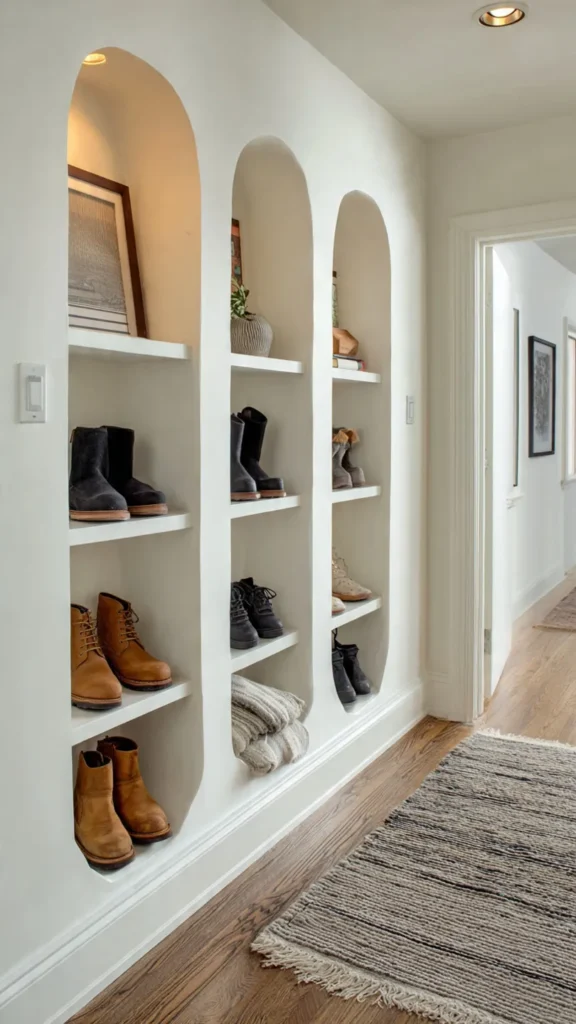
For homes undergoing renovation or redesign, recessed wall niches offer one of the slimmest shoe storage solutions possible. Built directly into the wall cavity, these niches provide storage without protruding into the hallway.
They can be open or fitted with slim doors for a cleaner look. Recessed niches are ideal for narrow hallways where every inch matters and floor space must remain completely clear.
While more permanent, this solution offers a highly polished and custom appearance.
10. Ladder-Style Shoe Racks

Ladder-style racks lean gently against the wall and use vertical rails to hold shoes. Their angled design keeps them slim while offering surprising capacity.
These racks work well in casual or contemporary interiors and are easy to move if needed. Because they’re visually light, they don’t overwhelm narrow spaces.
Limiting the rack to one side of the hallway ensures the space remains easy to navigate.
11. Slim Closed Cabinets for Visual Calm

Closed cabinets designed specifically for narrow hallways offer excellent shoe storage without visual clutter. These cabinets are often only a few inches deep but can store multiple pairs using angled or staggered shelves.
Keeping shoes hidden makes the hallway feel cleaner and more spacious. Matching the cabinet color to the wall helps it blend in seamlessly.
Closed cabinets are ideal for households that want a tidy, minimalist look even in high-traffic areas.
12. Stackable Modular Shoe Units

Stackable shoe units allow you to customize storage height based on your needs. Each module is slim, and stacking vertically keeps the footprint small.
This flexible system is perfect for growing shoe collections or shared households. You can start with a few modules and add more as needed without changing the layout.
Choosing uniform modules in neutral colors helps maintain a cohesive hallway design.
13. Built-In Shoe Storage Under Stairs

If your narrow hallway runs alongside a staircase, the space beneath can be transformed into slim shoe storage. Pull-out drawers or narrow cabinets under the stairs make use of space that would otherwise go unused.
This hidden storage keeps shoes completely out of sight while maintaining hallway flow. It’s especially useful for families with multiple pairs of shoes in daily rotation.
Even shallow under-stair storage can make a significant difference in organization.
14. Peg Rail Shoe Storage for Lightweight Footwear

Peg rails aren’t just for coats. In narrow hallways, low-mounted peg rails can hold lightweight shoes like sandals, flats, or slippers by their straps or loops.
This unconventional approach keeps shoes off the floor and adds a unique visual element to the hallway. It works best as supplementary storage rather than a primary solution.
Keeping the peg rail minimal ensures the hallway stays functional and uncluttered.
15. Minimalist Shoe Trays With Defined Limits

Sometimes the slimmest solution is simply a well-designed boundary. A narrow shoe tray placed along one wall defines a clear limit for shoe storage without adding bulk.
This approach works best in very tight hallways where furniture isn’t an option. By limiting the tray’s size, you naturally control how many shoes are left out, encouraging regular rotation and organization.
Choosing a low-profile tray in a neutral tone helps it blend into the floor and maintain visual calm.
Slim shoe storage is not about cramming more into a narrow hallway but about choosing solutions that respect the space while supporting daily routines. By thinking vertically, embracing multi-functional designs, and setting intentional limits, even the tightest hallway can stay organized and inviting. With the right slim storage ideas, shoes no longer become an obstacle but a seamlessly managed part of your home’s flow.