15 Monochrome Bedroom Ideas That Feel Soft and Stylish
Monochrome bedrooms have transcended their minimalist origins to become sanctuaries of sophistication and serenity. Far from the stark, cold spaces they’re sometimes mistaken for, today’s monochrome bedrooms embrace texture, layering, and thoughtful design to create environments that feel both calming and supremely stylish.
Whether you’re drawn to crisp blacks and whites or softer variations in single-color families, these fifteen ideas prove that limiting your palette doesn’t mean limiting your creativity.

Understanding the Monochrome Approach
Before diving into specific ideas, it’s worth understanding what makes monochrome design so compelling. Working within a single color family forces you to think differently about space, relying on texture, pattern, and light to create visual interest rather than color contrast.
This constraint paradoxically offers tremendous freedom, allowing you to experiment with materials and forms in ways that might feel overwhelming in a multi-colored scheme.
1. Layered White with Natural Textures
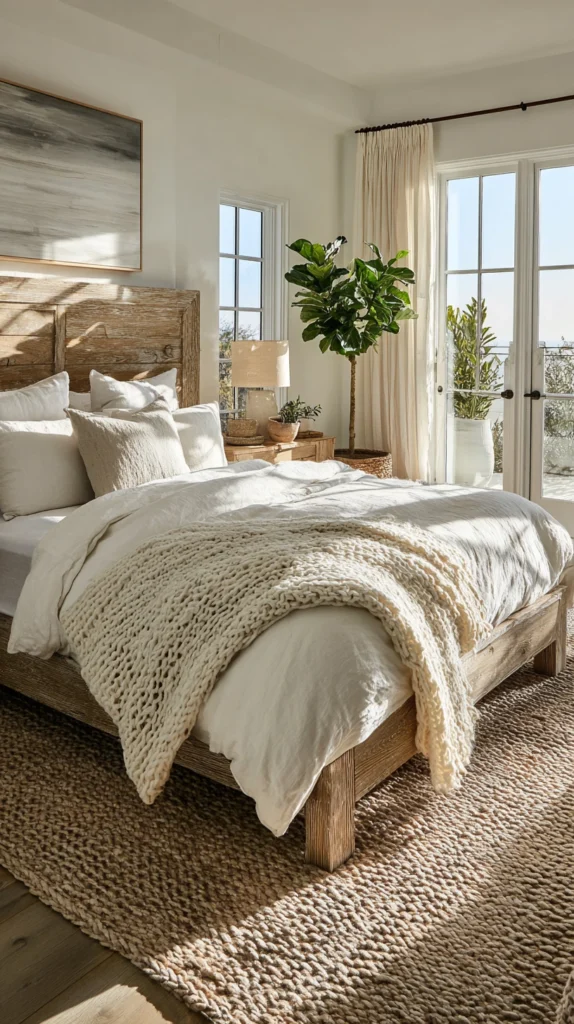
An all-white bedroom becomes anything but boring when you layer different textures throughout the space. Start with crisp white walls and ceiling, then introduce warmth through natural materials like jute rugs, linen bedding in off-white or cream, and chunky knit throws in ivory. Incorporate white-washed wood furniture or a rattan headboard, as the varying textures catch light differently throughout the day, creating subtle shadows and depth that keep the eye engaged.
2. Charcoal and Concrete Serenity
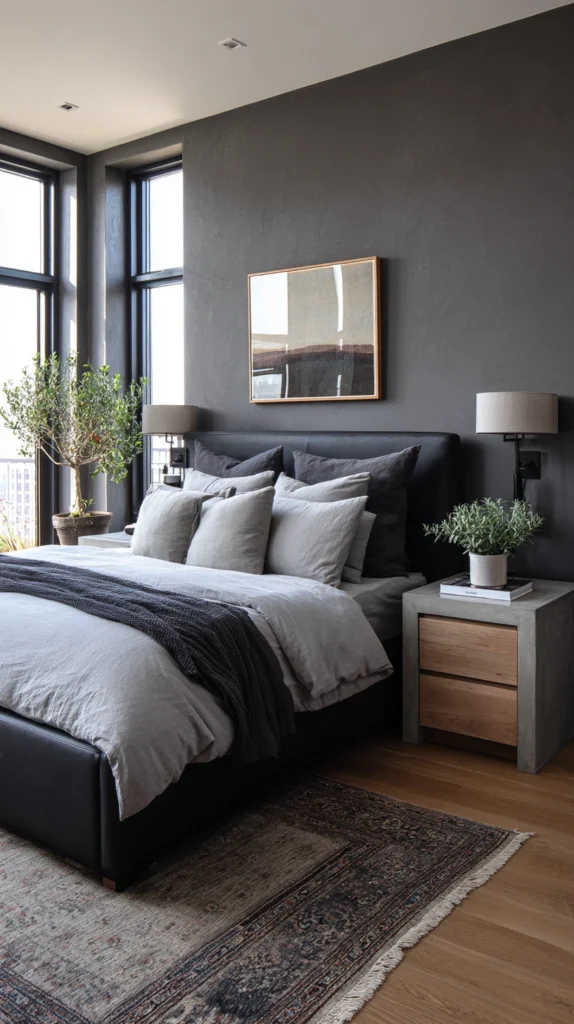
For those who prefer darker monochrome schemes, a charcoal gray palette offers remarkable sophistication. Paint walls in a deep charcoal shade and pair them with concrete-look bedside tables or polished concrete floors, then balance the darkness with soft gray bedding in multiple shades from dove to slate.
The key to preventing this scheme from feeling oppressive is lighting—install multiple light sources at different heights, including bedside sconces, statement pendants, and LED strips behind the headboard.
3. Tonal Beige Warmth
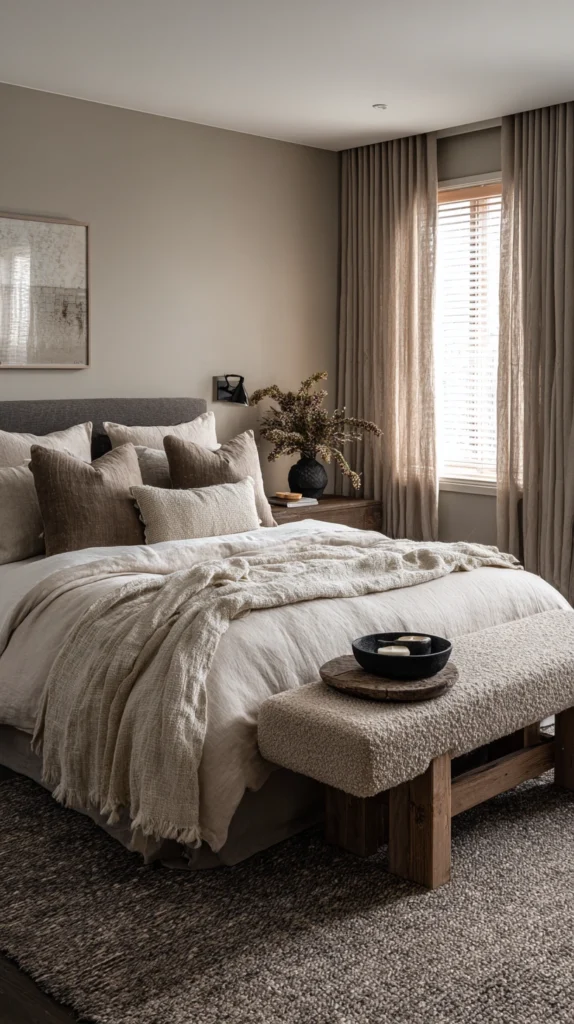
Beige has experienced a renaissance in interior design, and nowhere does it shine more beautifully than in a monochrome bedroom. Create a cocooning effect by layering shades from pale sand to deep taupe, starting with warm beige walls in textured finishes like Venetian plaster. Choose bedding in complementary beige tones mixing matte cotton with lustrous silk or sateen, and add a bouclé bench at the foot of the bed for additional texture.
4. Black and White Graphic Drama
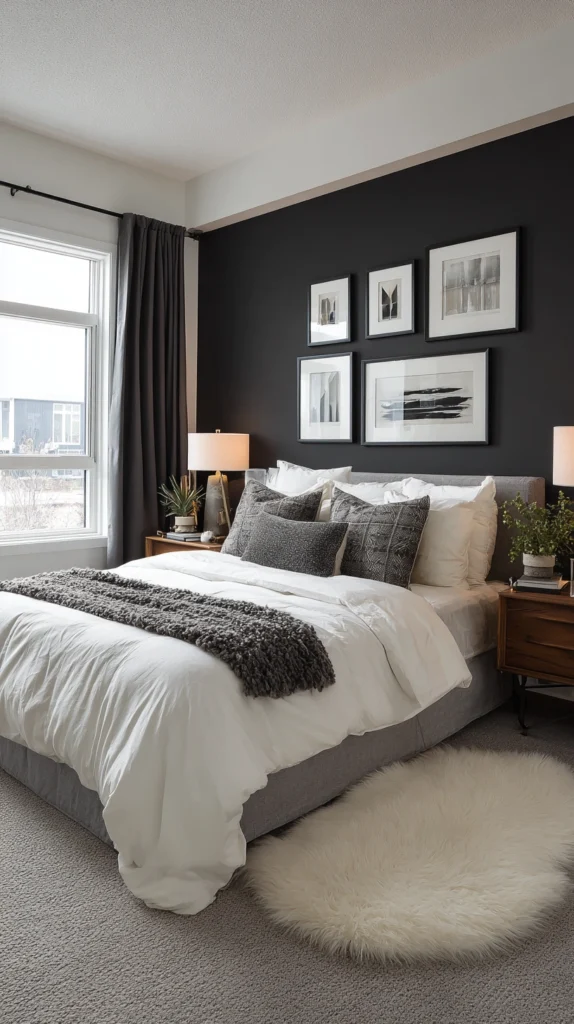
The classic black and white combination offers endless possibilities for creating drama while maintaining softness. Rather than harsh contrasts, soften the scheme by choosing off-black charcoal and warm whites, with a black accent wall behind the bed paired with white bedding and pale gray walls. The trick is balancing the proportions—in a bedroom, you typically want more white than black to maintain an airy, restful feeling.
5. Soft Gray Gradient
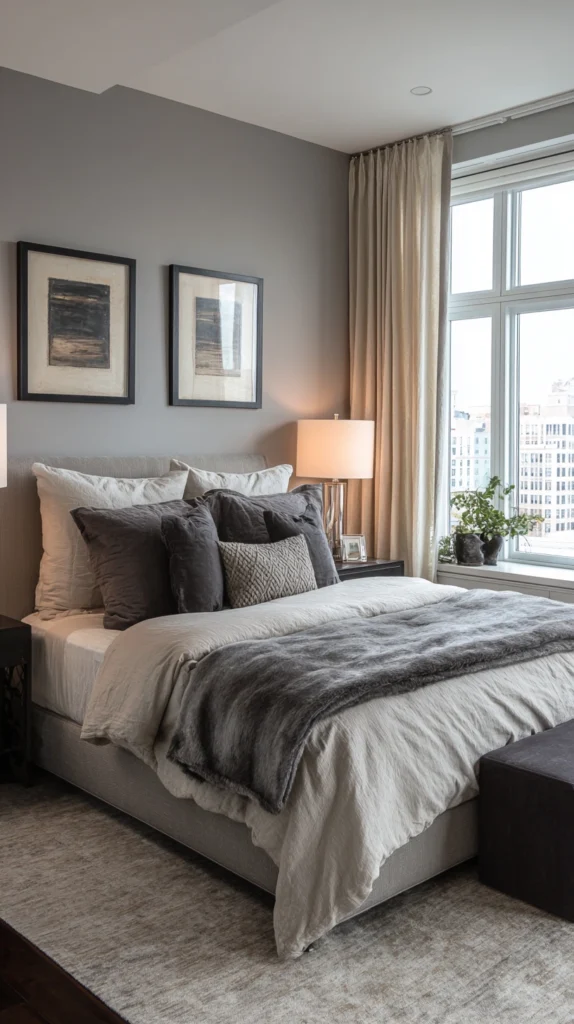
Create visual flow by working with a gradient of gray tones, from nearly white at the ceiling to darker gray at the floor. Paint the ceiling in the palest dove gray, walls in a medium gray, and consider darker gray wainscoting or baseboards. Layer bedding in various gray tones, perhaps starting with charcoal sheets, medium gray duvet, and pale gray pillows for a graduated approach that feels organic and soothing.
6. Cream and Ivory Elegance
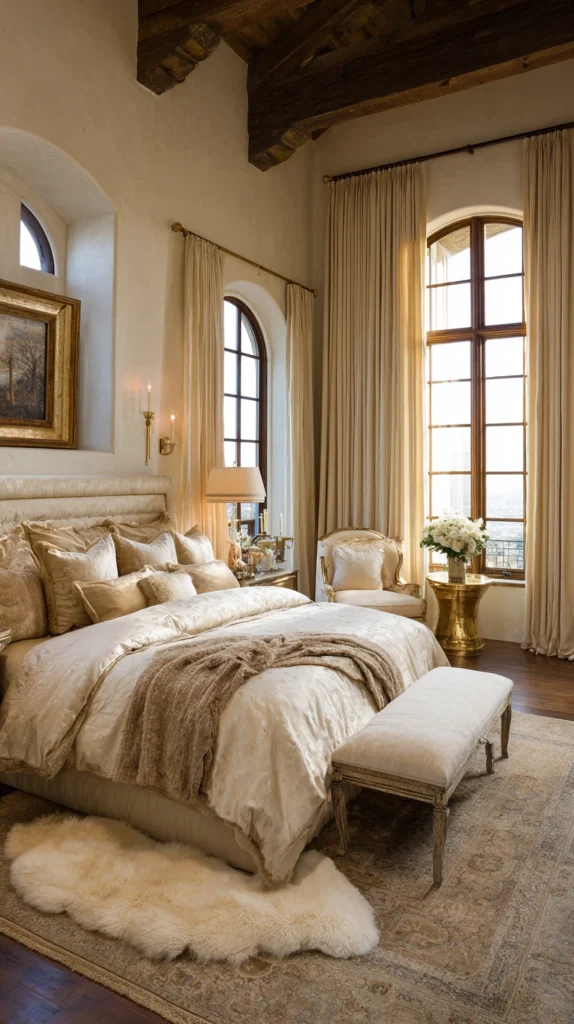
For ultimate softness, work within the cream and ivory family to create a bedroom that feels like being wrapped in cashmere. Choose walls in a warm white with subtle yellow or pink undertones, then layer bedding in various cream tones from buttercream to champagne. Introduce aged brass or gold hardware that reads as warm neutrals, along with velvet curtains in ivory and a wool area rug in cream.
7. Industrial Monochrome with Soft Elements

Combine the rawness of industrial design with softness through a carefully curated monochrome palette. Expose brick walls in their natural state or paint them matte black, then soften the effect with abundant textiles in coordinating grays like oversized floor cushions and thick plush rugs. The juxtaposition of hard materials like concrete, metal, and brick with ultra-soft fabrics creates compelling tension while remaining cohesive through color.
8. Monochrome with Metallic Accents

While strictly speaking, metallics introduce color, silver, pewter, and gunmetal gray can function as neutral extensions of a gray monochrome scheme. Create a glamorous bedroom by pairing soft gray walls with silver-leafed furniture, mercury glass lamps, and satin bedding with a subtle sheen. The reflective surfaces amplify light and add a sense of luxury without disrupting the monochrome calm.
9. Scandinavian White and Wood
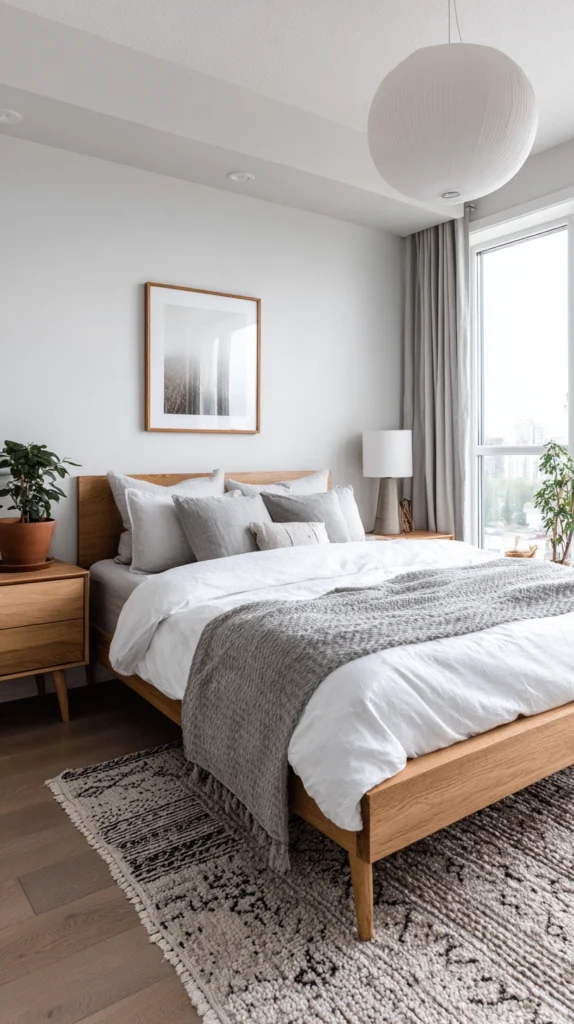
The Scandinavian approach to monochrome embraces white as the foundation but introduces natural wood as a warm neutral element. Paint everything white, from walls to ceiling to floorboards, then introduce light wood furniture in birch, ash, or pine. Add soft gray textiles for depth and warmth while keeping the overall aesthetic minimal and clean-lined for a fresh, airy, and effortlessly stylish space.
10. Tonal Blue Tranquility

Move beyond traditional neutrals by working monochromatically within the blue family, layering shades from pale ice blue through slate to navy. Paint walls in a soft blue-gray, use navy for curtains or an upholstered headboard, and choose bedding that incorporates multiple blue tones. The key to keeping this scheme soft is maintaining lower saturation levels with dusty, muted blues rather than bright, vibrant shades.
11. Greige Sophistication
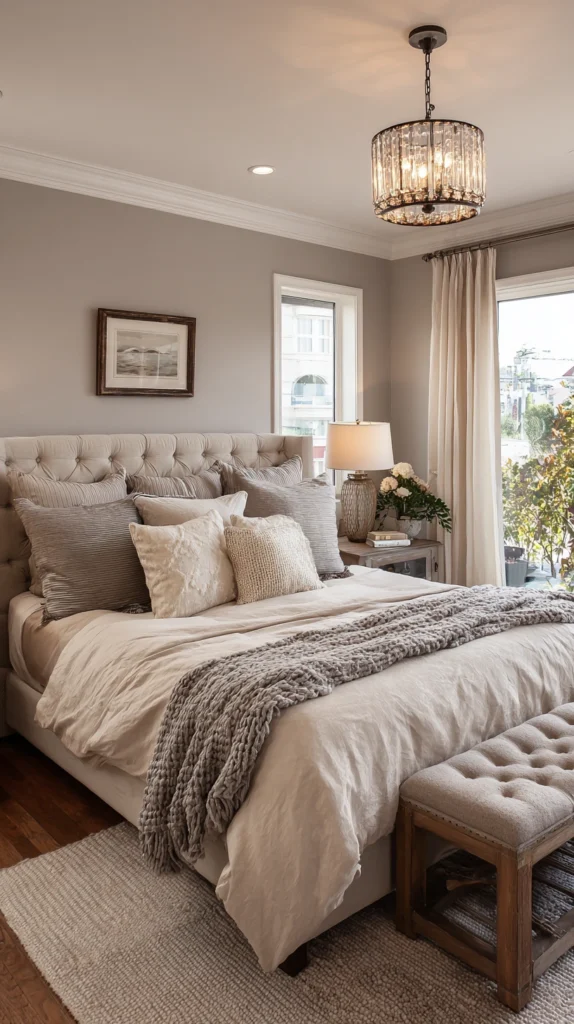
Greige—that perfect marriage of gray and beige—offers warmth without skewing too yellow, creating a current and sophisticated monochrome bedroom. Choose a mid-tone greige for walls, then layer lighter and darker variations throughout the space. Greige works particularly well with natural materials like linen, cotton, and wood, all of which have inherent color variation that complements the complexity of greige.
12. Pale Pink Serenity
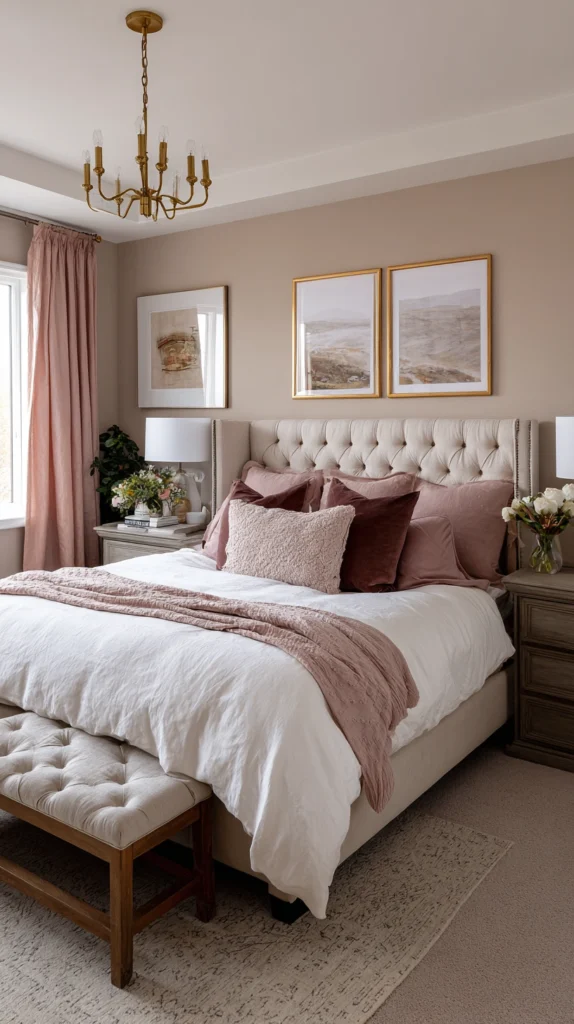
Challenge the notion that monochrome must be neutral by working within the pale pink family using blush, shell pink, dusty rose, and mauve. Paint walls in the palest blush, choose bedding in varying pink tones, and incorporate deeper mauve in curtains or an accent chair. The trick is keeping the tones muted and sophisticated rather than bright or juvenile, while natural materials like raw wood and stone keep the scheme grounded.
13. Charcoal and White Balance
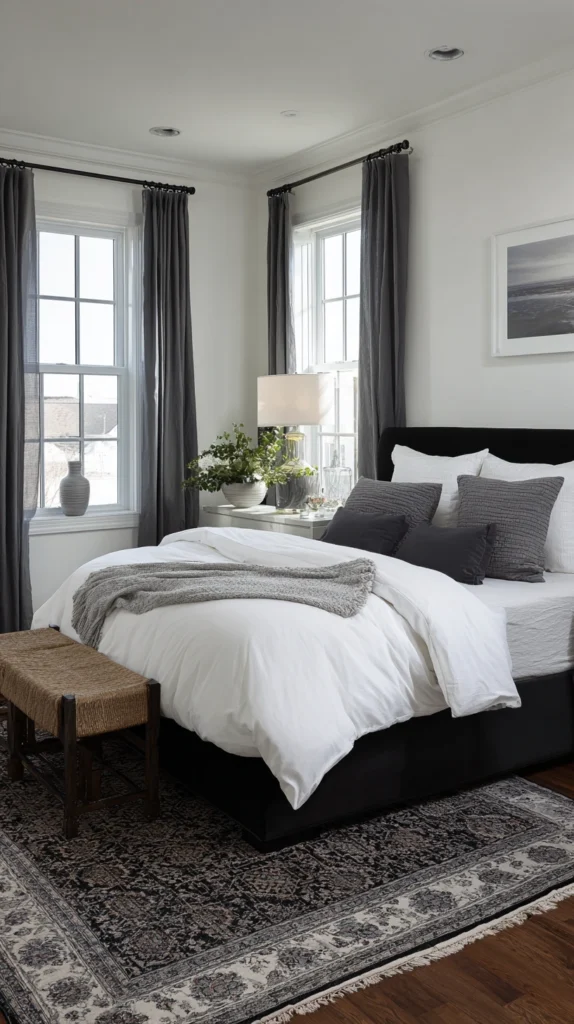
Find the sweet spot between light and dark by balancing charcoal and white in equal measures using white walls as a base. Introduce charcoal through substantial elements like the bed frame, curtains, or a large area rug to create visual weight without making the room feel heavy. Layer bedding in both tones, perhaps with white sheets, a charcoal duvet, and mixed pillows for high contrast that creates energy while the limited palette maintains calm.
14. Textured Neutrals with Pattern
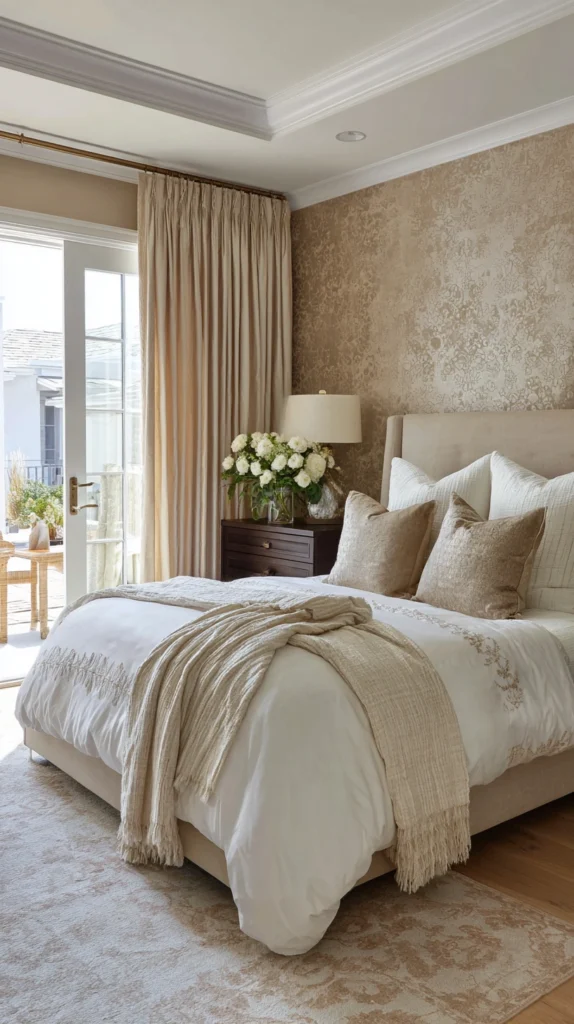
Prove that monochrome doesn’t mean monotonous by introducing pattern through texture rather than color within a neutral palette of whites, creams, and beiges. Consider wallpaper with a tone-on-tone damask pattern, bedding with white embroidery on white fabric, or curtains with a subtle jacquard weave. These patterns create depth and interest while maintaining the serene quality of a monochrome scheme, with the eye registering the pattern subconsciously.
15. Minimal Black Accents on White
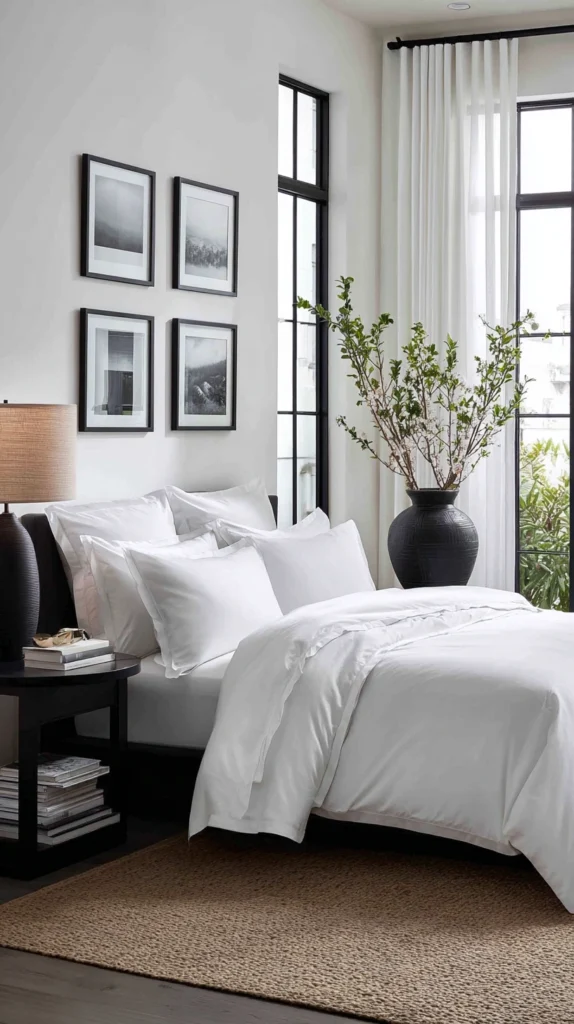
For those who love the crispness of an all-white bedroom but want just a touch of definition, introduce minimal black accents strategically. Keep 90% of the room white, from walls to bedding to furniture, then add black through carefully chosen details like matte black picture frames, sleek hardware, or a black reading lamp. These small touches provide visual punctuation without disrupting the peaceful, airy quality of the white space.
Bringing It All Together
Creating a monochrome bedroom that feels soft and stylish requires attention to texture, light, and proportion. The absence of color variety means these other elements must work harder to create visual interest and comfort.
Invest in quality textiles with beautiful drapes and interesting weaves, consider how natural and artificial light will interact with your chosen tones throughout the day, and don’t be afraid to layer your monochrome palette with subtle variations.
The beauty of monochrome design lies in its ability to create a restful, cohesive environment that serves as a perfect backdrop for sleep and relaxation. By limiting the visual noise that comes from multiple colors, you create space for your mind to rest. Monochrome bedrooms are not just stylish choices, but functionally superior spaces for restoration and peace.