15 Entryway Storage Ideas for Homes With No Mudroom
Not every home comes with the luxury of a mudroom, yet the entryway still has to handle shoes, bags, coats, keys, packages, umbrellas, and the daily chaos of coming and going. Without proper storage, this small but high-traffic area can quickly become cluttered, stressful, and visually overwhelming.
The good news is that with smart design and thoughtful organization, even the tiniest entryway can become functional, tidy, and welcoming.
Entryway storage is about more than just hiding mess. It’s about creating smooth routines, saving time, and making your home feel calm the moment you walk through the door.

Whether you live in an apartment, a narrow hallway home, or a house with no designated drop zone, these ideas will help you maximize every inch without needing a full mudroom.
Below are 15 practical, space-smart, and stylish entryway storage ideas designed specifically for homes with no mudroom.
1. Wall-Mounted Hooks for Everyday Essentials

Wall-mounted hooks are one of the simplest and most effective storage solutions for entryways with limited space. They take advantage of vertical space, keep items off the floor, and make frequently used belongings easy to grab on the way out.
Installing a row of hooks near the door provides a dedicated spot for coats, bags, hats, scarves, and even dog leashes. Hooks work especially well in narrow hallways where bulky furniture would feel intrusive. Choosing sturdy, well-spaced hooks prevents overcrowding and keeps the area looking organized rather than cluttered.
For added functionality, hooks can be paired with a small shelf above for décor or baskets, creating a compact storage zone without consuming valuable floor space.
2. Slim Console Table With Hidden Storage

A slim console table is ideal for entryways that lack depth but still need surface space and storage. Many modern console tables come with drawers or lower shelves that provide discreet storage for keys, mail, wallets, and other small essentials.
This piece serves as both a functional drop zone and a visual anchor for the entryway. Keeping the tabletop minimal prevents visual clutter, while drawers keep everyday items out of sight. Adding a mirror above the console enhances light and makes the space feel larger, while also offering a last-minute outfit check before leaving.
In very tight spaces, a wall-mounted floating console can provide the same benefits without occupying floor space.
3. Entryway Bench With Built-In Storage

A storage bench is one of the most practical additions for homes without a mudroom. It provides seating for putting on shoes while offering hidden storage underneath for footwear, bags, or seasonal accessories.
Benches with lift-up lids conceal clutter completely, while those with cubbies or drawers offer easy access. This solution is perfect for families, as it encourages shoes and backpacks to be stored neatly instead of scattered throughout the home.
Choosing a bench with a slim profile ensures it fits comfortably even in narrow entryways. Cushioned tops add comfort, while durable materials ensure the bench stands up to daily use.
4. Vertical Shoe Storage to Save Floor Space

Shoes are often the biggest source of entryway clutter. When there’s no mudroom, vertical shoe storage becomes essential. Tall, narrow shoe cabinets or stackable organizers use height instead of width, making them perfect for small spaces.
These units can store multiple pairs while maintaining a slim footprint. Closed cabinets keep shoes out of sight and reduce visual noise, while open racks offer quick access for frequently worn footwear.
Placing shoe storage near the door helps maintain clean floors throughout the home and creates a natural routine of removing shoes upon entry.
5. Over-the-Door Organizers

Over-the-door organizers are an underrated storage solution for entryways without built-in closets. They make use of space that often goes unused and are especially helpful in apartments or rental homes where permanent installations may not be possible.
These organizers can hold shoes, umbrellas, cleaning supplies, hats, gloves, and even pet accessories. Because they hang behind the door, they don’t interfere with walkway space, making them ideal for tight entryways.
Choosing neutral or fabric-based organizers keeps the look tidy and less industrial, helping the entryway feel more like a curated space and less like storage.
6. Floating Shelves for Lightweight Storage
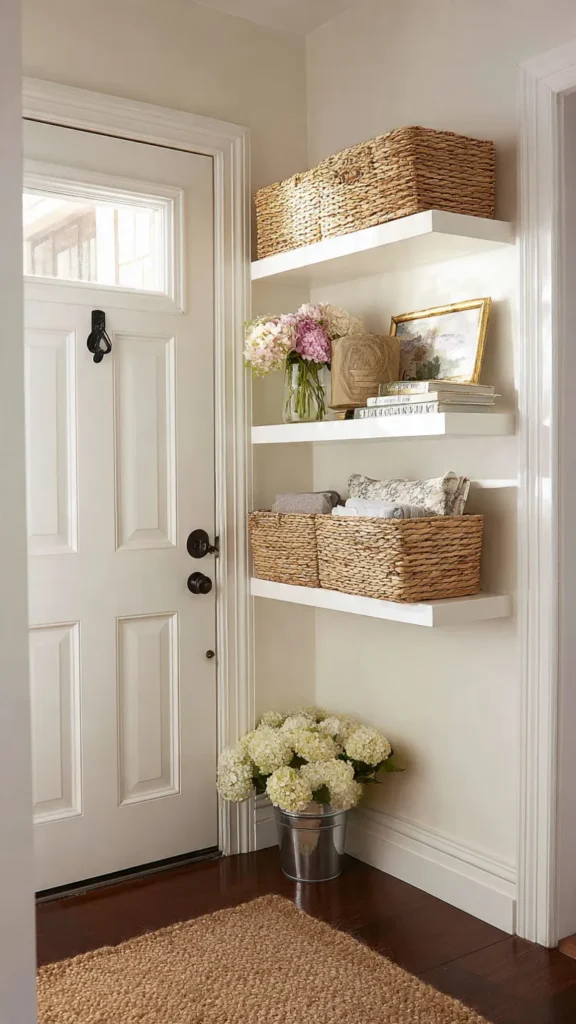
Floating shelves provide storage without adding bulk, making them perfect for small entryways. Mounted at eye level or above, they offer space for baskets, décor, mail trays, or small plants.
Using baskets on shelves helps conceal clutter while maintaining a clean look. Shelves can also serve as a display area for personal touches, making the entryway feel warm and welcoming rather than purely functional.
The key is to avoid overcrowding. A few well-placed shelves with intentional styling can provide storage while keeping the area visually open and airy.
7. Multi-Functional Furniture Pieces
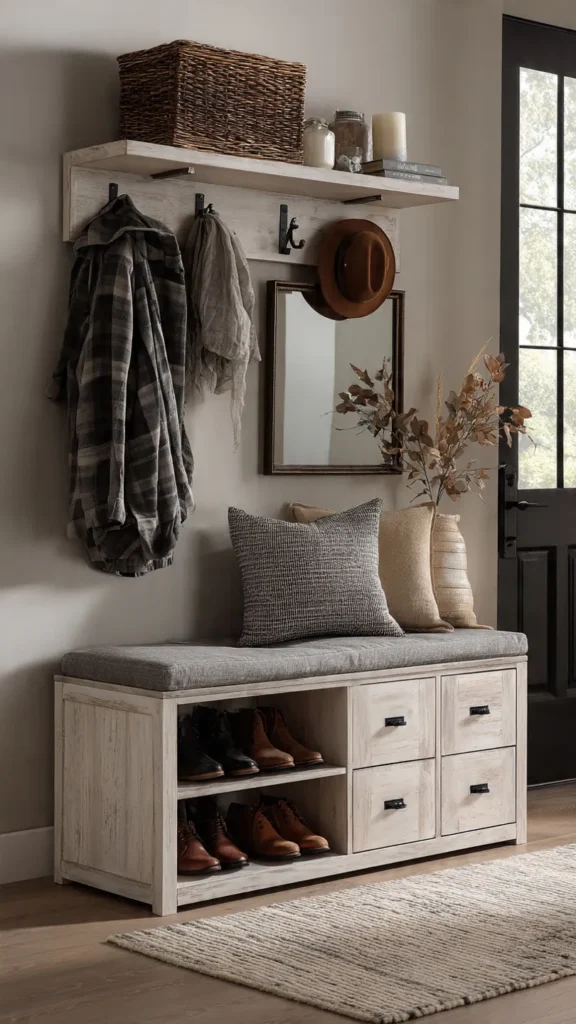
When space is limited, furniture should do more than one job. Multi-functional entryway pieces combine seating, storage, and surfaces in one compact design.
Examples include benches with drawers, storage ottomans, hall trees with built-in benches, or cabinets with integrated coat racks. These all-in-one solutions reduce the need for multiple pieces of furniture, helping the entryway feel less crowded.
Multi-functional furniture is especially useful in studio apartments and small homes where every square foot needs to work harder.
8. Use of Baskets and Bins for Organized Storage

Baskets and bins are simple yet powerful tools for keeping entryways tidy. They can be placed on shelves, under benches, inside cabinets, or even on the floor if space allows.
Baskets are ideal for storing scarves, gloves, reusable bags, umbrellas, and miscellaneous items that otherwise end up scattered. Labeling baskets helps maintain organization, especially in busy households.
Choosing baskets in cohesive colors or natural textures adds warmth and style while keeping storage practical and flexible.
9. Narrow Storage Cabinets for Small Hallways

In homes with narrow entryways, traditional cabinets can feel too bulky. Narrow storage cabinets designed specifically for tight spaces offer vertical storage without blocking movement.
These cabinets are perfect for shoes, cleaning supplies, bags, or seasonal items. Closed doors help maintain a clean, streamlined look, which is especially important in small spaces where visual clutter can feel overwhelming.
Placing a cabinet against the longest wall ensures maximum storage while preserving flow through the entryway.
10. Pegboards for Customizable Storage

Pegboards offer highly customizable storage and are ideal for entryways that need flexibility. Hooks, shelves, and baskets can be rearranged as needs change, making pegboards perfect for evolving households.
They can hold coats, keys, bags, hats, and even small shelves for mail or décor. Pegboards work well in modern, minimalist, or industrial-style interiors but can be adapted to more traditional homes with the right finish.
Because pegboards use vertical space, they are especially useful in small entryways where floor space is limited.
11. Hidden Storage Under Stairs or Niches

If your entryway sits near a staircase or architectural nook, this area can become valuable hidden storage. Built-in cabinets, drawers, or benches under stairs make excellent use of otherwise wasted space.
These hidden solutions are ideal for storing shoes, coats, cleaning supplies, or seasonal items. Because the storage is integrated, it keeps the entryway looking clean and intentional.
Custom built-ins may require more planning, but even simple shelving in these spaces can significantly improve storage capacity.
12. Entryway Closet Optimization

If your home has a small entry closet instead of a mudroom, optimizing it can dramatically improve storage. Adding shelving, hanging organizers, shoe racks, and baskets transforms a basic closet into a functional drop zone.
Using vertical space inside the closet allows you to store more without expanding outward. Door-mounted organizers can further increase capacity.
Keeping the closet organized prevents overflow into the entryway and helps maintain a tidy first impression of your home.
13. Mirror Cabinets for Dual Function

Mirror cabinets combine reflective surfaces with hidden storage, making them perfect for compact entryways. The mirror visually enlarges the space while the cabinet behind it stores small essentials like keys, sunglasses, wallets, or documents.
This dual-purpose solution is especially useful in apartments where wall space is limited. It provides both functionality and visual enhancement without requiring multiple pieces of furniture.
Mirror cabinets also add a polished, finished look to the entryway, making the space feel more intentional and designed.
14. Rolling Carts for Flexible Storage

Rolling carts offer flexible storage that can be moved as needed. In entryways, they can hold shoes, bags, packages, or cleaning supplies and be tucked away when not in use.
This solution is ideal for renters or those who like adaptable spaces. A slim rolling cart fits easily in corners or against walls and can be repurposed for other rooms if needed.
Choosing a cart with multiple tiers maximizes storage while maintaining a small footprint.
15. Minimalist Drop Zone for Clutter Control

Sometimes the most effective storage solution is a well-designed minimalist drop zone. A small tray, bowl, or wall-mounted organizer near the door can prevent everyday clutter from spreading.
Designating specific spots for keys, mail, phones, and wallets creates a simple routine and reduces daily stress. Even in very small entryways, a tiny shelf or ledge can serve this purpose.
The key is consistency. When every item has a designated home, the entryway remains tidy without needing large furniture or complex storage systems.
An entryway without a mudroom doesn’t have to be chaotic or cramped. With thoughtful planning, vertical storage, multi-functional furniture, and smart organization, even the smallest space can become efficient, welcoming, and beautifully organized.
The right storage solutions not only reduce clutter but also make daily routines smoother, helping your home feel calm and functional from the moment you step inside.