15 Ways to Use Banana Peels in Your Garden
Banana peels are one of the most nutrient-rich and most persistently underused garden resources available in almost every household. Every banana consumed produces a peel containing significant quantities of potassium, phosphorus, calcium, and magnesium that plants need for healthy growth, strong root development, abundant flowering, and productive fruiting. Most of these peels go directly into the bin — a genuinely wasteful disposal of a genuinely valuable garden resource.

The beauty of banana peel gardening is its complete accessibility. No specialist equipment, no specialist knowledge, and no cost beyond the bananas you were going to buy anyway. Every method returns valuable nutrients to the garden rather than adding them unnecessarily to landfill.
Here are 15 genuinely effective ways to use banana peels in your garden.
1. Bury Directly in the Planting Hole
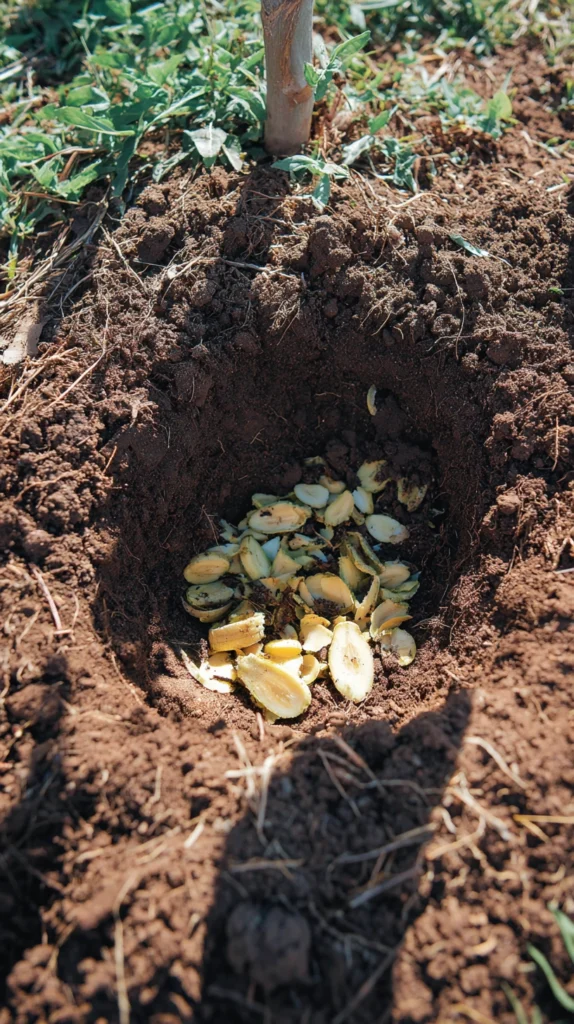
Placing one or two peels at the bottom of a planting hole before setting in a new plant delivers a slow-release source of potassium and phosphorus directly to the developing root zone. As the peels decompose they release nutrients gradually in direct proximity to the roots that benefit most. Cut peels into smaller pieces before burying to accelerate decomposition and nutrient release — whole peels take significantly longer to break down.
Pro Tip: Allow at least a week between burying banana peels and planting if burying a large quantity in a single hole. Fresh peel decomposition generates a small amount of heat — insufficient to harm established roots but potentially damaging to freshly transplanted seedlings. A brief waiting period eliminates any risk of transplant shock related to the initial decomposition activity.
2. Banana Peel Liquid Fertiliser
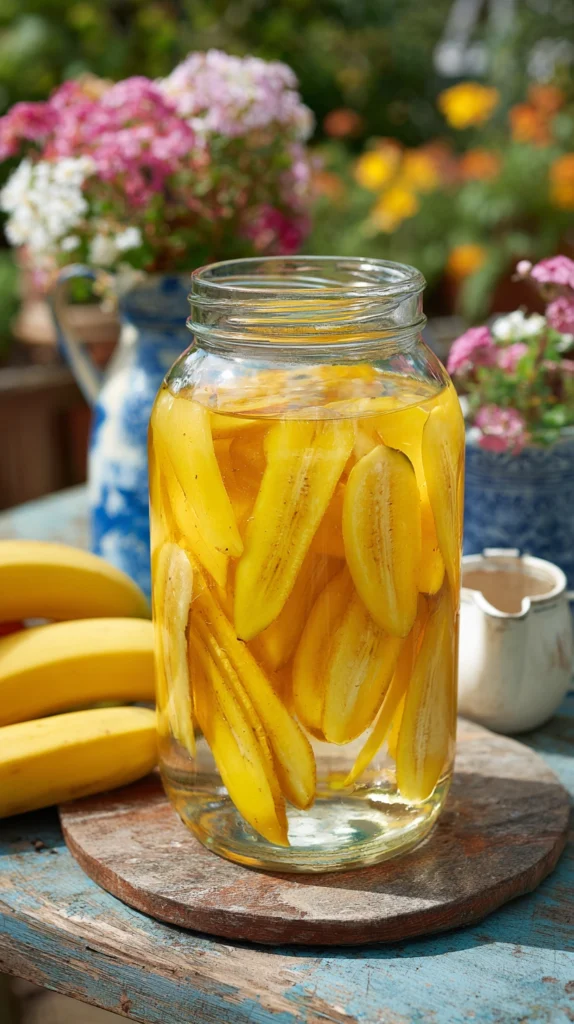
Soaking banana peels in water for 24 to 48 hours produces a potassium-rich liquid fertilizer that can be applied directly to the soil around plants. Place two or three peels in a jar of water, leave to soak, remove the peels, and use the resulting liquid as a direct soil drench. Particularly effective for flowering and fruiting plants — tomatoes, peppers, roses, and dahlias — where potassium directly drives abundant flower and fruit production.
Pro Tip: Use the banana peel liquid within 48 hours of removing the peels. The liquid develops anaerobic bacterial activity if left unused for several days, producing an unpleasant odour that makes it genuinely unpleasant to handle. Fresh, recently strained liquid fertiliser is effective, odour-free, and completely pleasant to use as a regular soil drench throughout the growing season.
3. Add to the Compost Heap
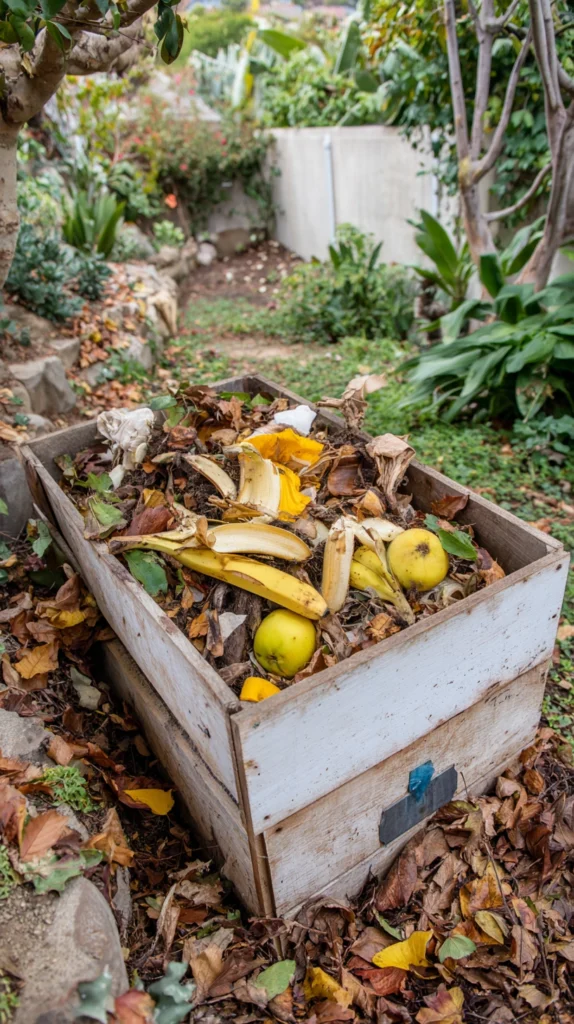
Banana peels are one of the most nutrient-dense green materials available for composting — adding them contributes significant potassium, phosphorus, and calcium that enriches the finished compost. Cut or tear peels into smaller pieces before adding to accelerate decomposition. Add peels to the center of the heap rather than the surface to reduce the attraction of fruit flies drawn to fresh peel at an open compost heap surface.
Pro Tip: Balance banana peel additions with adequate brown carbon material — dry leaves, cardboard, and straw. Banana peels are high in nitrogen as well as potassium and a heap receiving large quantities without adequate carbon becomes wet and slow to decompose. A roughly equal volume of carbon material added with each peel addition maintains the correct balance for efficient, fast-decomposing compost.
4. Mulch Around Plants
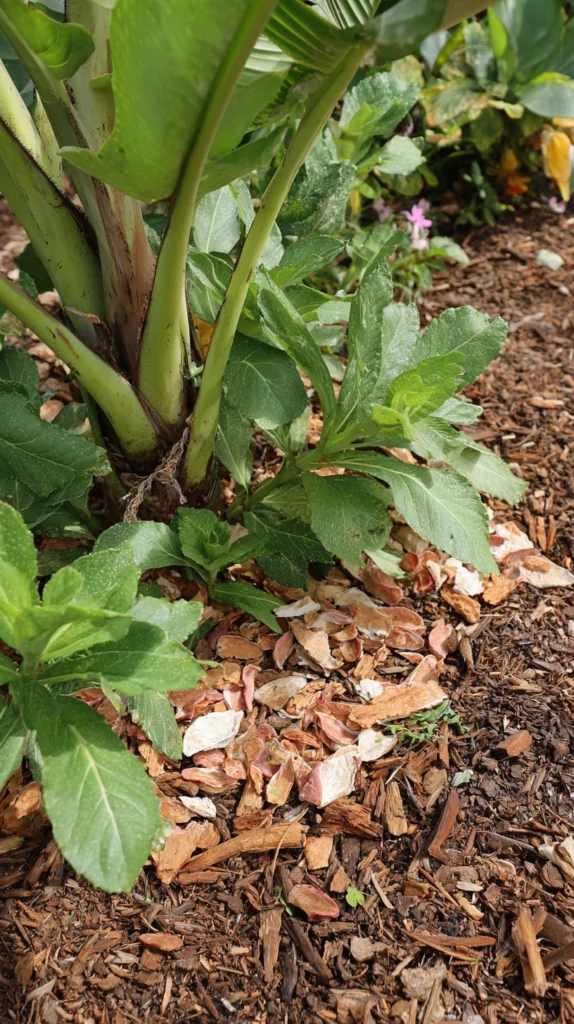
Placing chopped banana peel pieces directly on the soil surface around plants delivers nutrients gradually as they decompose while contributing to moisture retention and weed suppression. Nutrients leach downward into the root zone with each rainfall, providing a continuous low-level nutrient supply. Chop peels into pieces no larger than 2 centimetres for a mulch that decomposes quickly and does not create an untidy surface layer.
Pro Tip: Cover chopped banana peel mulch with a layer of conventional organic mulch — wood chip or bark — to prevent the pieces from drying out on the surface before they decompose. Exposed banana peel pieces dry quickly in warm sunny conditions — becoming leathery and slow to decompose rather than breaking down rapidly into the soil surface as intended.
5. Fermented Banana Peel Fertiliser
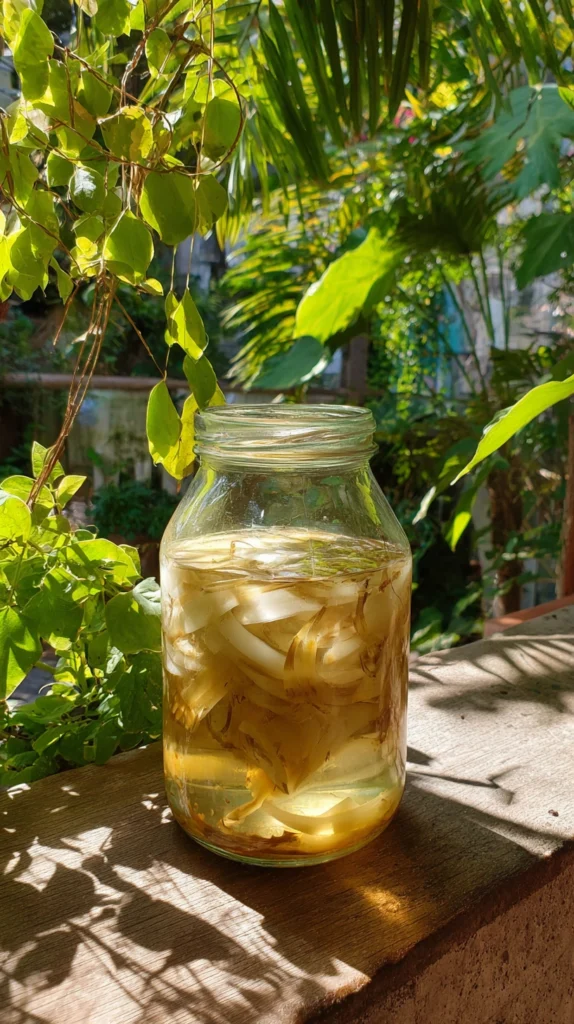
Fermenting banana peels — submerging them in water with a small amount of sugar or molasses for one to two weeks — produces a fermented liquid fertilizer of considerably greater potency than a simple water soak.
The fermentation process increases the bioavailability of nutrients and produces beneficial microorganisms that improve soil health simultaneously. Dilute the finished liquid at a ratio of 1 part to 10 parts water before application to prevent root burn.
Pro Tip: Dilute fermented banana peel liquid more generously — at 1 to 20 rather than 1 to 10 — for seedlings and young plants. The concentrated nutrients in fermented liquid can cause root burn in young plants at the standard dilution. The more generous dilution delivers beneficial nutrients without any risk of damage to the most vulnerable plants in the garden.
6. Banana Peel Pest Deterrent
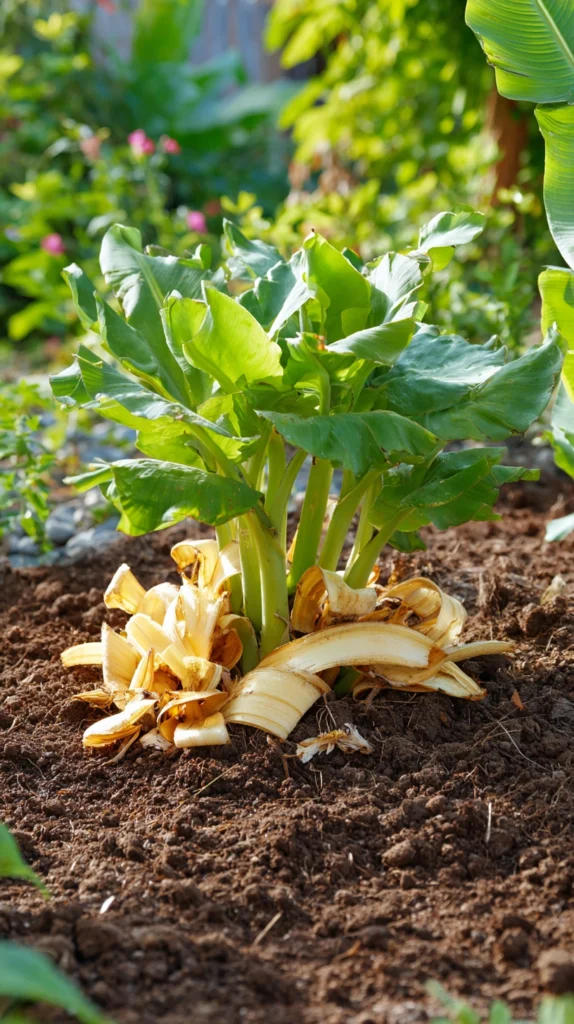
Placing banana peel pieces on the soil surface around susceptible plants deters aphids and other soft-bodied pests. The natural compounds in banana peel — particularly ethylene gas released as the peel begins to decompose — are believed to repel aphids and create an unfavorable environment for several common pest species. Place fresh peel pieces at the base of roses and pepper plants at the beginning of the season for ongoing preventative deterrence. Replace weekly as previous pieces decompose.
Pro Tip: Combine the banana peel deterrent with other companion planting strategies rather than relying on it alone. Banana peel has a genuine deterrent effect but is most effective as one element of an integrated pest management approach rather than a standalone control measure in gardens with significant aphid pressure.
7. Improve Rose Health and Flowering
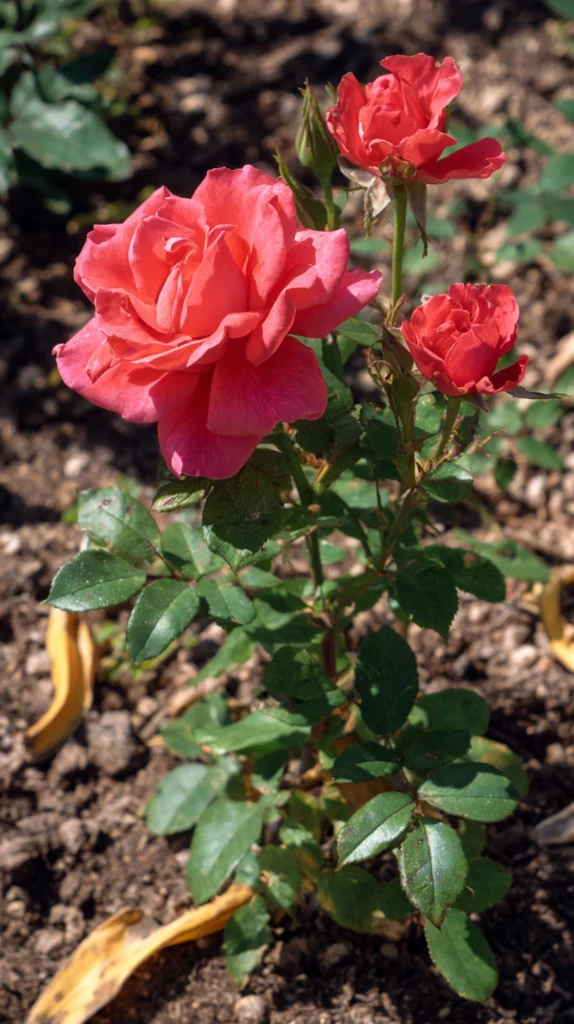
Roses respond most visibly and most dramatically to banana peel nutrition — the high potassium content directly supports abundant flower production and disease resistance. Regular banana peel application throughout the growing season produces noticeably more abundant flowering, stronger stems, and improved overall plant health.
Bury chopped peel pieces around the root zone at monthly intervals, apply liquid fertilizer as a soil drench, or use peel pieces as a surface mulch — any method consistently applied produces genuinely measurable improvements.
Pro Tip: Apply banana peel nutrition to roses at the beginning of the growing season as the first new growth emerges in spring rather than waiting until plants are already in active growth. Early season potassium availability supports the development of strong stems and healthy leaf canopy that underpin the entire season’s flower production.
A well-nourished rose in spring produces a significantly better flowering season than one receiving potassium supplementation only after flowering has already begun.
8. Seedling Nutrient Boost
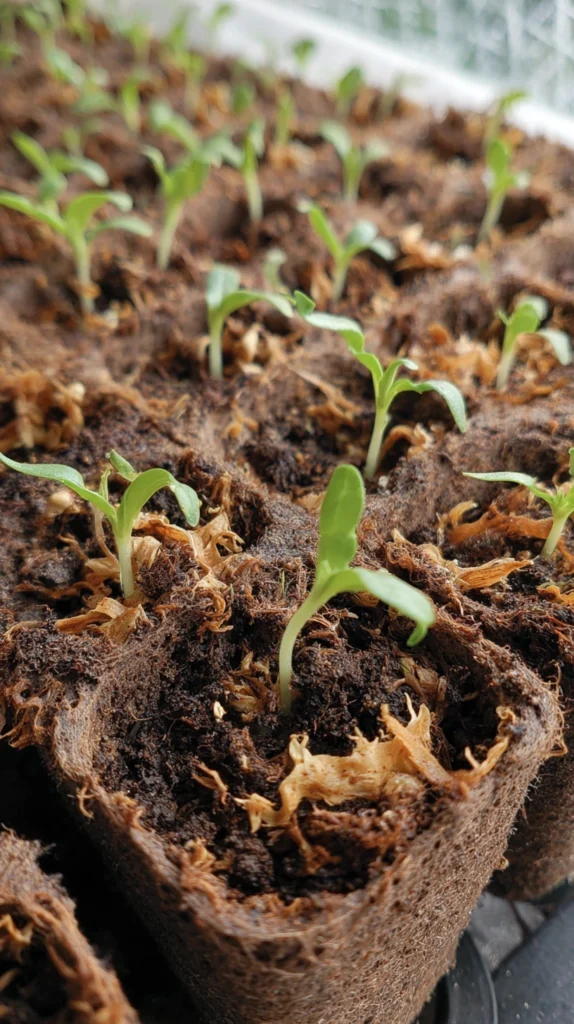
Placing a small piece of banana peel at the base of each seedling cell — beneath the compost before sowing — provides a gentle slow-release nutrient source that supports seedling development without the risk of root burn from concentrated fertilisers. The gradually released nutrients of a decomposing peel piece are perfectly matched to the modest nutritional requirements of a developing seedling. Cut peels into approximately 1 centimetre square pieces for use in seed cells.
Pro Tip: Use only very small pieces in seed cells and small seedling pots. The decomposition of a large peel piece in a confined compost volume can temporarily affect pH and moisture levels in ways that are unhelpful for germination. A small 1 centimetre piece provides adequate nutrient benefit without creating any of the potential issues associated with larger quantities of decomposing organic material in a small confined volume.
9. Feed Houseplants
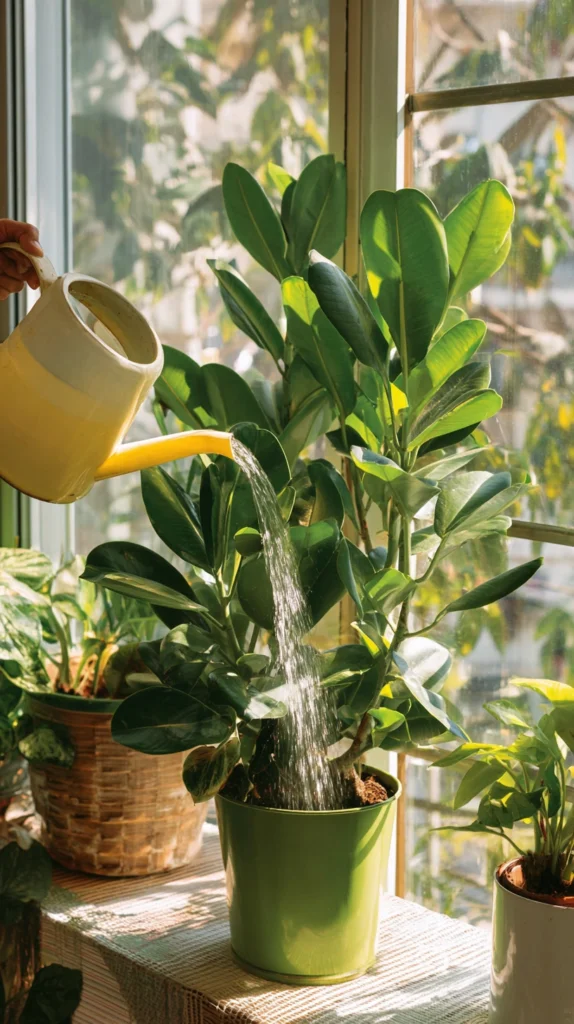
Indoor houseplants — particularly flowering varieties and those grown for lush foliage — respond positively to banana peel liquid fertiliser applied as a soil drench. The potassium and phosphorus supports flowering and contributes to the glossy deep green foliage that is the primary aesthetic goal of foliage plant cultivation. Apply at monthly intervals during the active growing season and reduce to every six to eight weeks during winter when growth slows and nutritional requirements reduce.
Pro Tip: Wipe the leaves of large-leafed houseplants with the inside of a fresh banana peel as a natural leaf polish. The natural oils and trace nutrients in the inner peel surface remove dust, add a subtle shine, and deliver a small amount of topical nutrient directly to the leaf surface — a completely safe treatment that enhances the appearance of monsteras, rubber plants, and peace lilies without the residue of commercial leaf shine products.
10. Attract Beneficial Insects
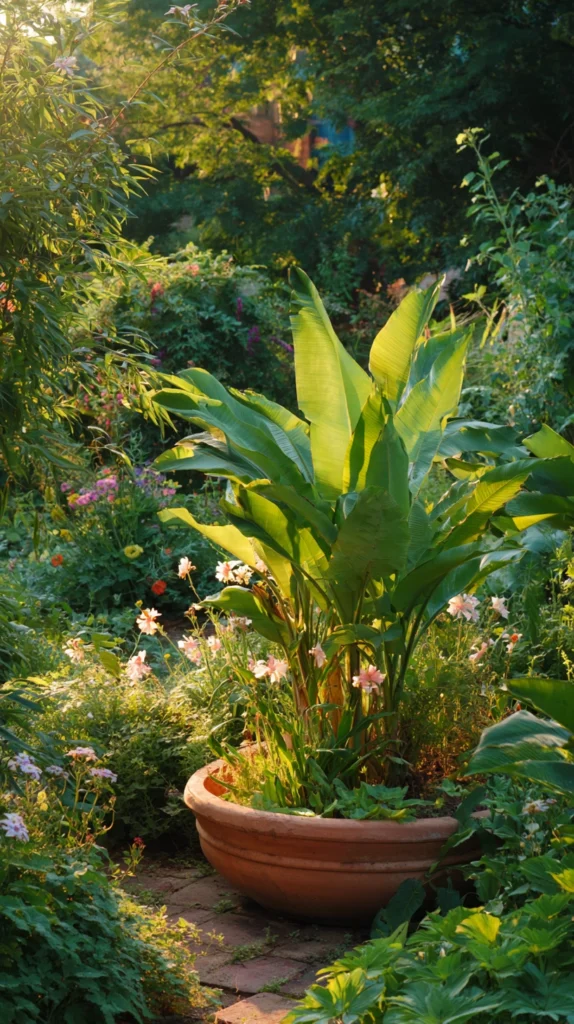
Placing overripe banana peels in a shallow dish in the garden attracts butterflies, beneficial beetles, and other invertebrates that feed on the fermenting sugars. Creating a dedicated feeding station improves the overall ecological health of the garden and encourages pollinating and predatory insects that benefit the entire garden ecosystem. Position in a sunny sheltered area away from high-traffic zones where human activity would deter feeding insects.
Pro Tip: Add a small amount of overripe banana flesh alongside the peel for maximum attractiveness. The fermenting flesh is significantly more attractive to beneficial insects than the peel alone — the combined feeding station creates a more powerful attractant and a more consistent presence of beneficial insects throughout the growing season.
11. Improve Soil Structure
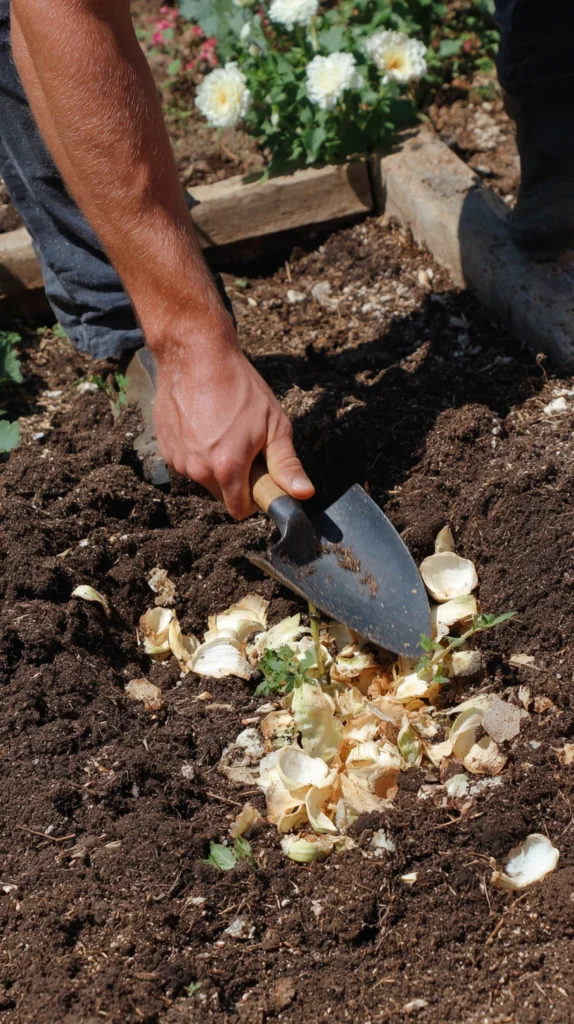
Chopped banana peels dug directly into the soil contribute organic matter that improves structure over time as the peels decompose.
Organic matter from decomposing peels improves water retention in sandy soils, improves drainage in clay soils, and increases biological activity in the soil microbiome — benefits that extend well beyond the nutritional potassium and phosphorus contribution. Incorporate into the top 10 to 15 centimetres of soil during autumn bed preparation for beds planted in spring.
Pro Tip: Chop banana peels as finely as possible before soil incorporation for the fastest possible decomposition. Finely chopped peels decompose within a few weeks in active soil. Whole or coarsely chopped peels in the same soil may take several months — significantly delaying the organic matter and nutrient benefits. A simple food processor makes fine chopping fast and effortless.
12. Support Tomato Plant Health
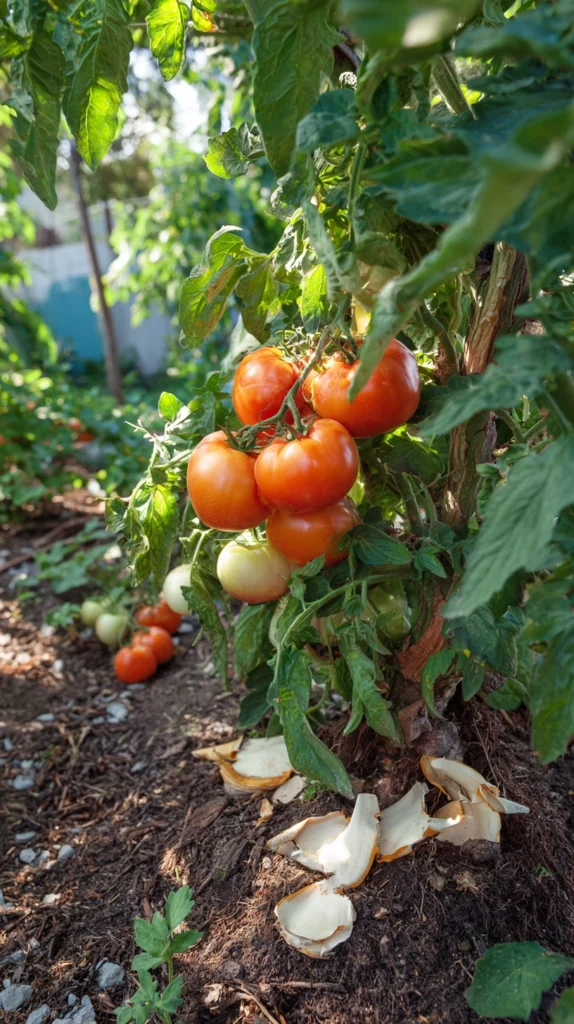
Tomatoes are potassium-hungry plants that respond dramatically to adequate potassium throughout the growing season — the nutrient driving fruit set, fruit development, fruit color, and disease resistance simultaneously.
Apply banana peel nutrition from the point of first flower formation onwards when potassium demand increases significantly as fruit development begins. Continue applications at weekly intervals throughout the fruiting season for plants that maintain productivity and health through the full growing season.
Pro Tip: Combine banana peel potassium nutrition with adequate magnesium supplementation for tomatoes showing signs of magnesium deficiency — yellowing between the leaf veins on older leaves. Banana peels contain some magnesium but not sufficient to correct an established deficiency. A foliar spray of diluted Epsom salts alongside regular banana peel applications corrects the deficiency and restores the healthy deep green foliage of a well-nourished tomato plant.
13. Speed Up Compost Decomposition
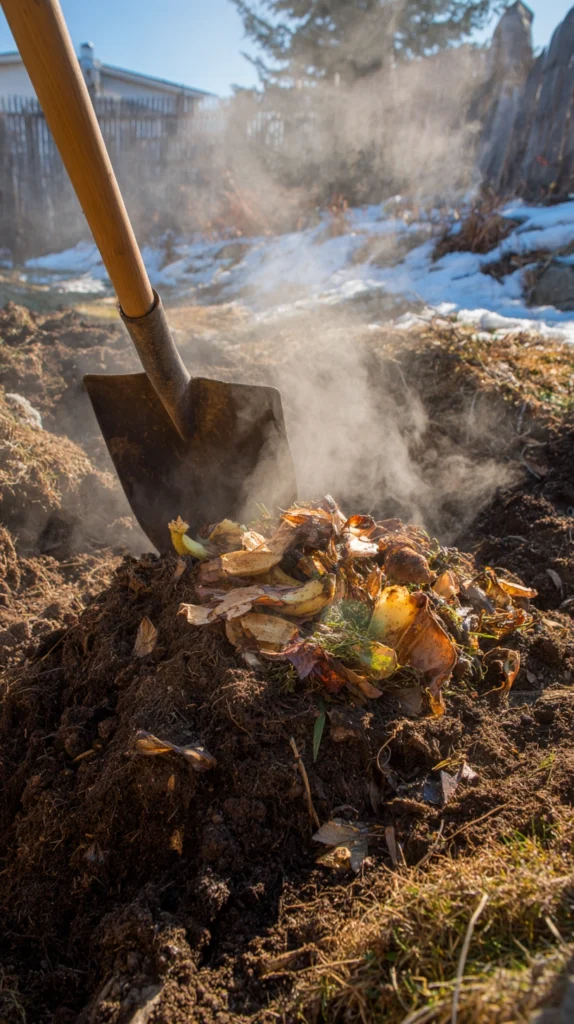
Adding banana peels to a slow or struggling compost heap provides a significant boost of nitrogen and microbial activity that accelerates the decomposition of surrounding materials.
The sugars and nitrogen in fresh peels attract and feed the decomposer microorganisms that drive composting — the increased microbial population speeds the breakdown of surrounding carbon-rich materials that were previously decomposing too slowly. Bury peel pieces in the center of a slow heap for maximum effect.
Pro Tip: Combine banana peel additions to a slow heap with adequate moisture and aeration — turning the heap and watering if internal materials are dry. Banana peels provide the nitrogen and microbial boost a slow heap needs but those microorganisms also require moisture and oxygen to function at maximum activity. Turning and watering alongside the peel addition creates all the conditions needed to accelerate decomposition significantly.
14. Deter Garden Slugs
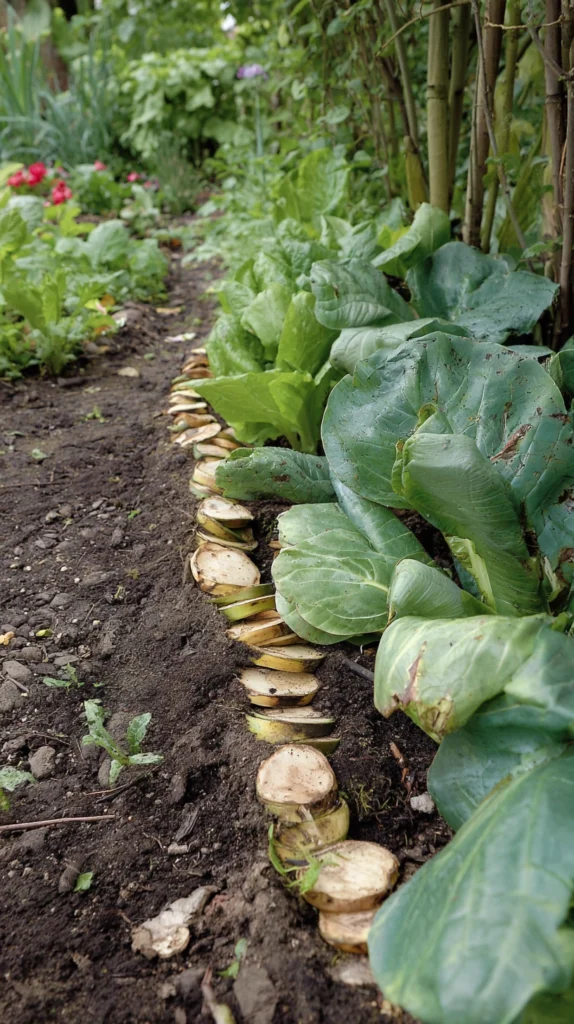
Placing banana peel strips around the perimeter of slug-susceptible plantings creates a natural deterrent barrier. Slugs are deterred by the surface texture and natural compounds of fresh banana peel and tend to avoid crossing a peel barrier to reach plants beyond it. Lay peel strips in an overlapping ring around vulnerable plants or along the front edge of a bed containing susceptible seedlings. Replace every few days as the strips decompose and lose their deterrent effect.
Pro Tip: Use this method in combination with other slug deterrent strategies rather than as a standalone control for gardens with heavy slug pressure. Banana peel slug deterrence is genuinely effective as a preventative barrier but is unlikely to provide complete protection in wet conditions when slug activity is most intense. Combined with copper tape, wool pellets, or nematode treatment it contributes to a genuinely effective integrated slug management strategy.
15. Enrich Potting Compost
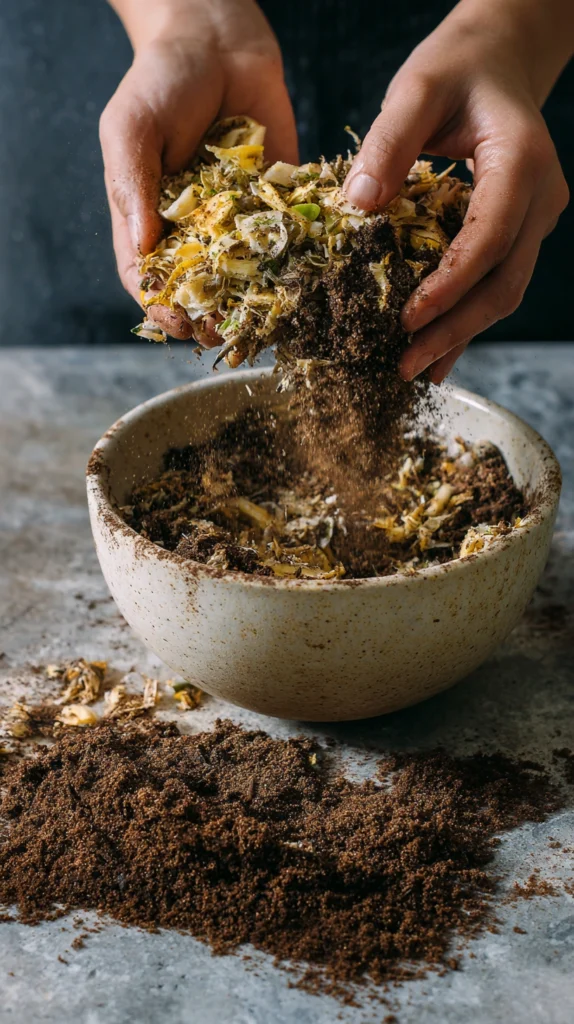
Blending dried and powdered banana peel into homemade potting compost — at approximately one part peel powder to ten parts compost by volume — creates a nutrient-enriched growing medium providing gentle slow-release potassium and phosphorus throughout the growing season.
Dry peels completely in a low oven or food dehydrator until completely brittle, then grind to powder in a blender. The dried powder stores indefinitely in a sealed container and is ready to mix into potting compost whenever new containers are being prepared.
Pro Tip: Dry banana peels thoroughly until completely brittle before grinding. Partially dried peels that retain any moisture do not grind to a fine powder and create clumps within the compost mixture rather than distributing evenly.
Completely brittle peels grind to a fine consistent powder in seconds and incorporate smoothly throughout the full volume of the potting mix for genuinely well-distributed nutrient availability from the first day of planting.
The Most Useful Thing in the Fruit Bowl
A banana peel going into the bin is a missed opportunity — a small one individually but genuinely significant when multiplied across an entire growing season of discarded peels. The potassium, the organic matter, and the microbial activity that each peel represents costs nothing and requires almost nothing to put to genuinely good use.
Start with the simplest method. Bury a peel beside a plant you want to encourage. Watch what happens. And discover that the most useful thing in the fruit bowl is the part most people throw away.