
15 Thrifted Living Room Decor Ideas That Look Designer on a Budget
The living room that looks like it cost a fortune rarely did.
What it looks like is that someone made specific, intelligent decisions about what to buy, where to buy it, and how to use what they found. The designer living room is not the expensive living room. It is the considered living room. And consideration costs nothing.

Thrift stores, charity shops, estate sales, car boot sales, online marketplaces for secondhand goods, these are the design resources that professional stylists and interior designers have always used. The perfect vintage side table. The excellent art print in a cheap frame that wants replacing. The handsome ceramic that someone else paid full retail for and then decided to part with.
The thrifted living room that looks designer is not a lucky accident. It is the result of knowing what to look for, knowing what to do with it when you find it, and knowing what does not need to be thrifted and should be purchased new instead.
Here are 15 ideas that build that room.
Why Thrifted Interiors Often Look More Considered Than Bought-New Ones
The bought-new living room has a specific visual quality.
Everything arrived from the same era. From the same aesthetic moment. From catalogues and showrooms curated by the same trend cycle. The result, when everything is new from the same period, is a room that looks assembled from a single source rather than developed over time.
The thrifted living room looks different because it is different. Objects from different periods, sourced from different places, each carrying a slightly different design sensibility. The mid-century side table beside the contemporary art print. The Victorian mirror above the modern sofa. The Scandinavian lamp beside the rustic wooden bowl.
This layering of periods and sensibilities, when the individual pieces are good quality and the curation is considered, creates a room that looks like a person lives in it rather than a room that looks like it was delivered last week.
Designers have always known this. The best-looking rooms in any magazine have almost always included a significant proportion of vintage and found pieces. Not because they are cheaper but because they are better. More specific. More interesting. More resistant to looking dated because they have already been through their dating.
1. A Large Vintage Mirror as the Room’s Statement Object
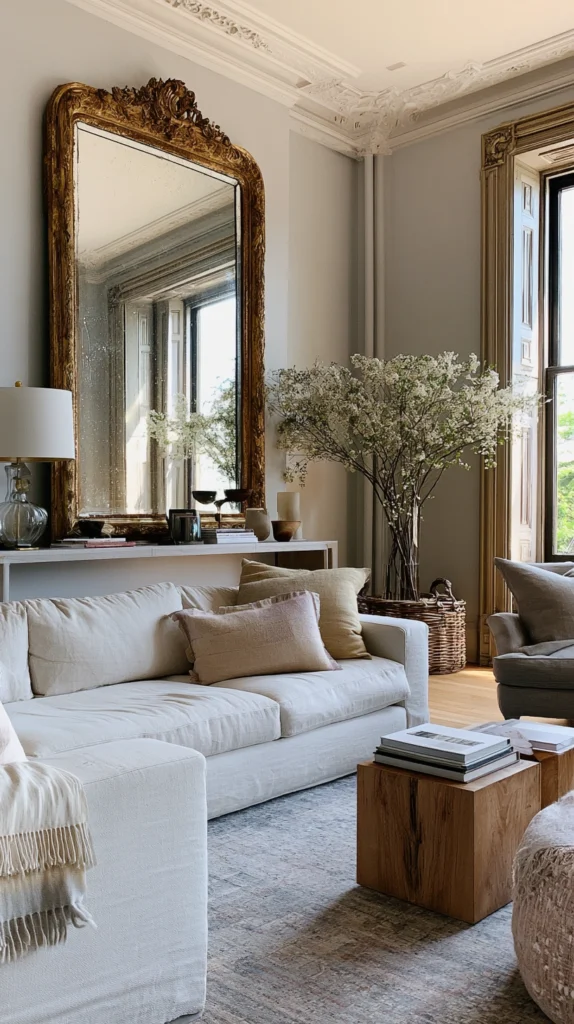
The large mirror is the thrift store find with the highest living room impact.
Mirrors at retail are expensive. The large, ornate, beautifully framed mirror that would be the room’s focal point costs far more new than the same mirror found at a charity shop or an antique market.
This is the object to hunt for first. The specific quality of an old mirror, the slight variation in the glass’s reflection, the patina on the frame, the weight that communicates quality material, these are qualities that reproduce badly and age beautifully. An old ornate mirror is more beautiful than a new reproduction of the same design.
Look specifically for mirrors at the wrong price because they have the wrong frame colour. A gilded mirror that has gone green or a dark wood frame that has faded unevenly is a mirror one afternoon’s work with metallic paint or wood stain from returning to full quality. The frame condition is irrelevant to the purchase decision. The mirror’s size and the frame’s form are what matters.
What to look for in a thrifted mirror:
- Scale generous enough to make a wall statement rather than merely fill a small space
- A frame with interesting moulding or form that repaints or refinishes well
- Glass without significant damage, small age spots and slight irregularity in the reflection are attractive rather than problematic
- A weight that communicates solid construction rather than thin chipboard
- A proportional relationship between mirror and frame that is balanced rather than either overwhelming the other
2. Vintage Lamp Bases Rewired With New Shades
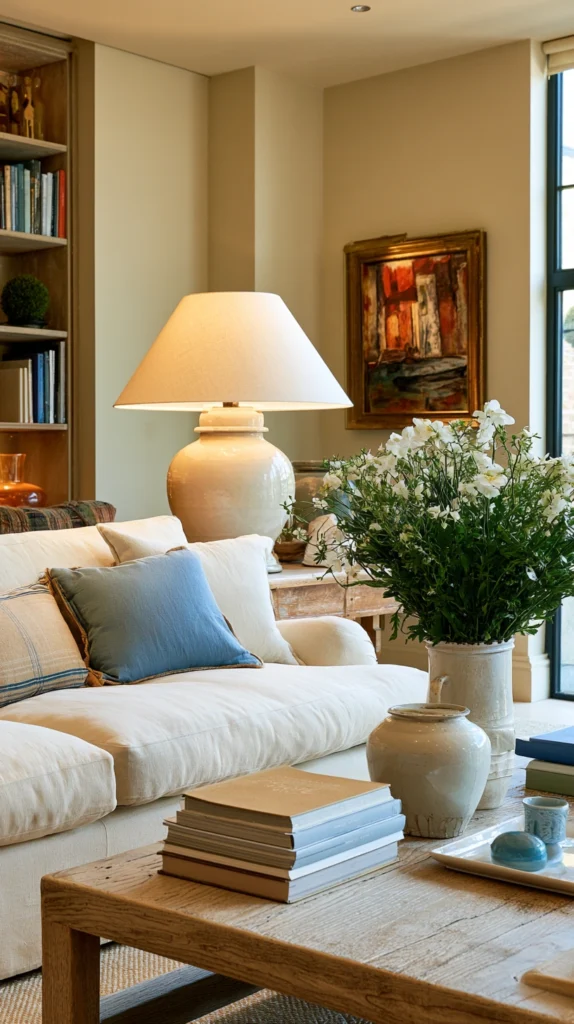
Lamps are the thrift store category that most consistently underperforms at resale.
People see the old shade, the outdated proportions, the colour that did not suit them, and they pass. The lamp base, which may be a beautiful ceramic, a quality brass column, or a well-formed sculptural shape, is dismissed with its outdated shade.
This is the opportunity.
Buy the lamp base without the shade. Take it home. Buy a new shade of the right proportions from a lamp supplier, a simple drum shade in white linen or a coolie shade in a warm neutral. Have the base rewired by an electrician if the wiring is old. The combination of the quality vintage base and the new shade creates a lamp that looks both considered and individual.
Ceramic lamp bases from the 1950s through the 1980s are the most consistently beautiful thrift lamp bases. The forms of this period, bulbous vase forms, straight column forms, organic asymmetric shapes, are as contemporary in their interest as any lamp base produced today. They are also free from the cost premium of period design revival.
3. An Inherited or Found Sofa With New Upholstery
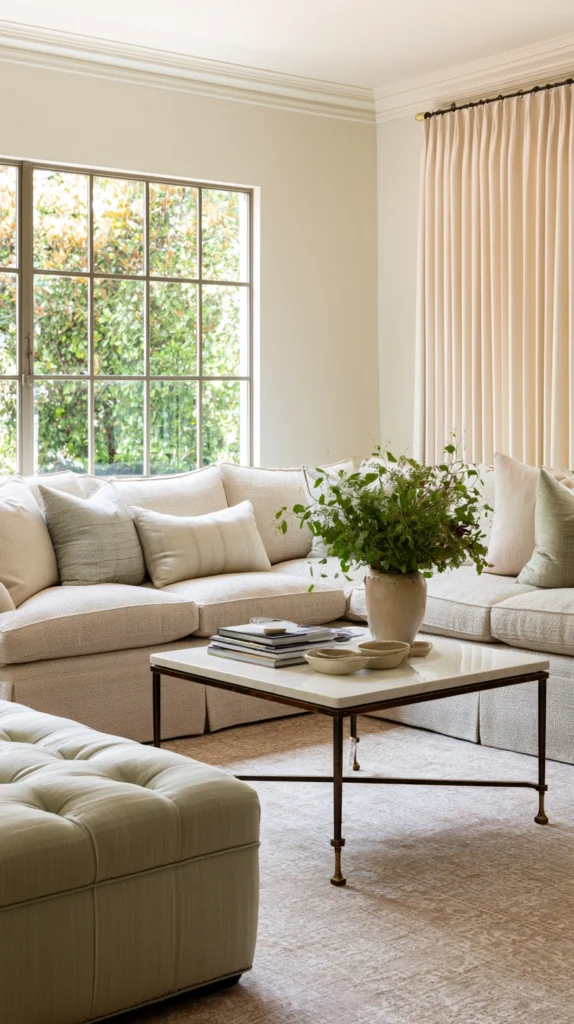
The sofa is the living room piece that most people buy new out of hygiene concerns rather than any design preference.
This concern is usually manageable. A professional upholstery clean before any reupholstery work or before use removes the vast majority of what accumulates in used upholstery.
The inherited or found sofa with good bones, the one with solid hardwood frame, good spring suspension, and a form that is still beautiful, is the sofa that wants new fabric to be as good as it was when new or better. The reupholstered vintage sofa in a quality contemporary fabric is a piece of furniture of genuinely higher quality than the same price spent on a new sofa of typical construction.
The cost of reupholstery varies considerably. A simple two-seater sofa reupholstered in a quality fabric by a professional can cost as much as a mid-range new sofa. The result is a piece of furniture built to a standard that new mid-range cannot match, finished in a fabric chosen specifically for the room.
4. Vintage Framed Art Reframed in Contemporary Frames
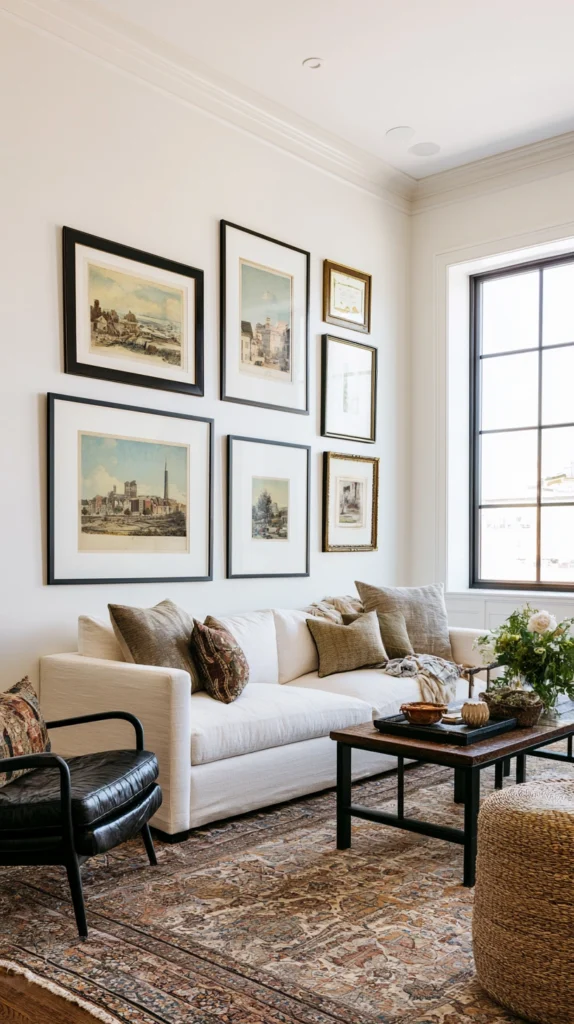
The art in charity shops and estate sales is the thrift store category with the widest quality range and the most consistent undervaluation.
Original oil paintings in poor frames that obscure their quality. Watercolours in brown-stained mounts that make the colours look duller than they are. Prints with excellent graphic quality in the wrong frame scale. In every case the art is the value and the frame is the problem.
The intervention is simple. Remove the art from its existing frame and mount. If the art’s own condition is good, reframe in a simple, quality contemporary frame in a finish that suits the room. A simple natural timber frame. A thin black metal frame. A white painted wood frame.
The same print or painting that looked dated and tired in its brown wood frame looks like a considered design choice in a clean black frame with a proper mount. The art has not changed. The presentation has changed everything.
5. A Thrifted Coffee Table Refinished or Painted
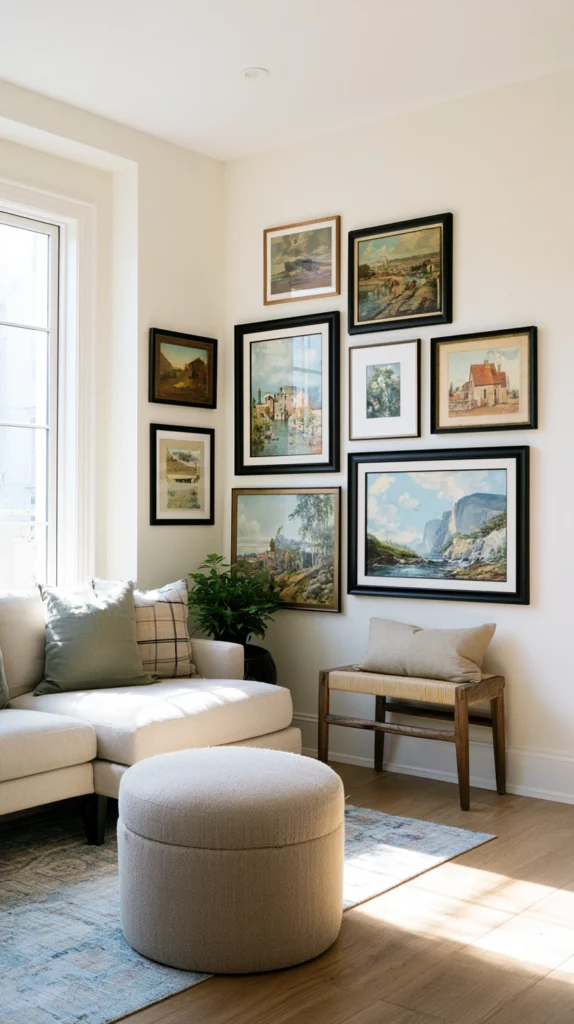
The coffee table is the living room piece most often available at charity shops and estate sales in good structural condition with poor surface treatment.
Scratched veneer. Worn lacquer. A colour that belongs to a previous decade. These surface conditions make the table visually unappealing and therefore cheap. They make it structurally irrelevant. A coffee table with solid legs and a good structure beneath a poor surface is a piece of furniture one painting session from being exactly the table the room needs.
A mid-century Danish teak coffee table with a scratched and faded surface, painted in chalk paint in a rich dark tone and waxed, becomes a designer-quality piece of furniture from a single afternoon of work. The bones of the Danish furniture tradition, the tapered legs, the considered proportions, the solid timber construction, are unchanged. Only the surface has been refreshed.
The same approach applies to tables in marble-effect formica with original solid timber frames. The formica is replaced or painted. The timber frame remains. The result is a piece of quality furniture at thrift store cost plus an afternoon’s work.
6. A Gallery Wall Built Entirely From Thrifted Frames and Art
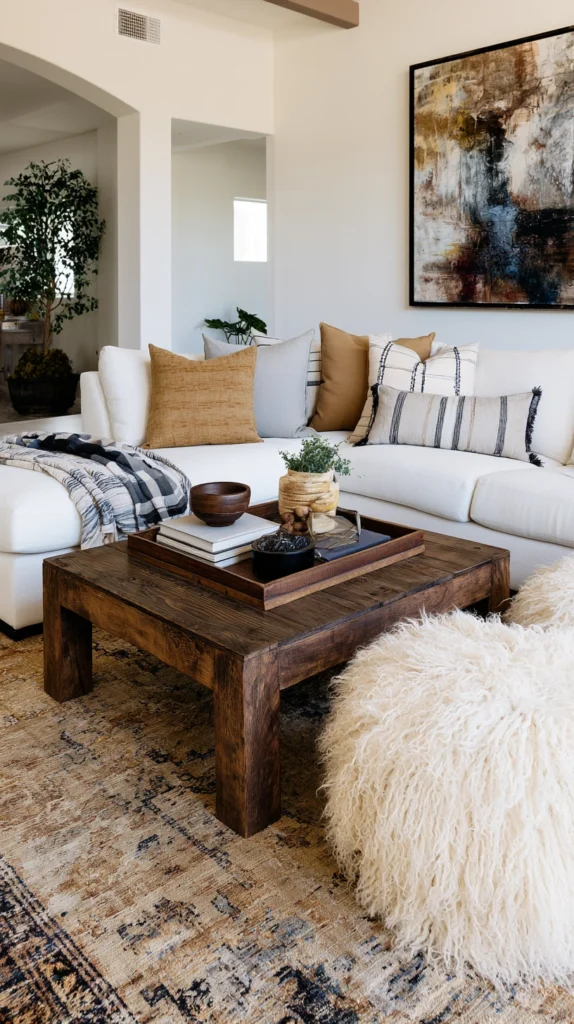
The gallery wall that is composed entirely of found and thrifted pieces is the living room design statement with the most personal and most unique character.
No two gallery walls built this way are the same. Every frame came from somewhere different. Every piece of art arrived from a different source. The wall is a visual autobiography of the person’s browsing of markets, shops, and online marketplaces over several months.
The key to the thrifted gallery wall looking designed rather than accumulated is consistent framing. Not identical frames but consistent in colour or material. All frames painted the same white or the same black. All frames in natural timber tones. All frames in gold metallic. This consistent treatment of the varied finds creates the visual coherence that a mixed collection of different frame styles and colours cannot achieve.
The art itself within the frames can be as varied as the sources suggest. Vintage botanical prints beside contemporary photography beside children’s drawings beside abstract images cut from design magazines. The frame colour consistency holds them together.
7. Thrifted Ceramics as a Considered Shelf Display
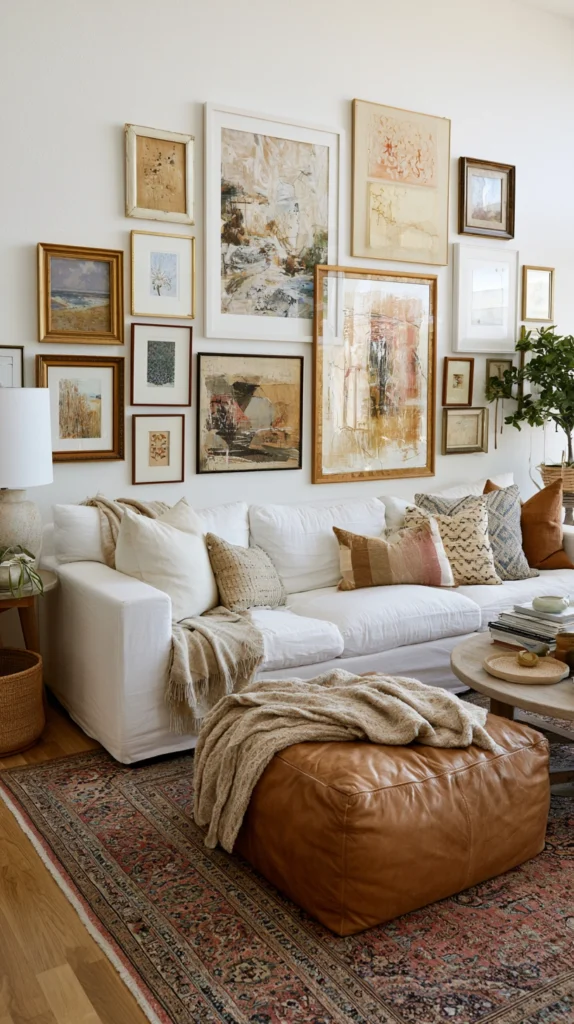
The ceramics section of any charity shop is the most reliable source of quality decorative objects at low cost.
Not because charity shops are filled with valuable ceramics that have been donated by people who did not know their value. Most charity shop ceramics are genuinely low monetary value. But their visual value, the form, the glaze colour, the specific quality of the object as a room element, is often entirely independent of their monetary value.
A collection of ceramics in a consistent colour family, grouped together on a shelf, reads as a considered display regardless of the individual cost of each piece. Ten ceramic objects in the same cream, off-white, and pale grey tonal range create a display that looks curated. The same ten objects in ten different colours look like what they are.
The rule for the thrifted ceramic shelf display is the same colour family across all pieces regardless of form. Vary the heights and the shapes and the textures. Keep the colour consistent. The result looks like a design decision rather than an accumulation.
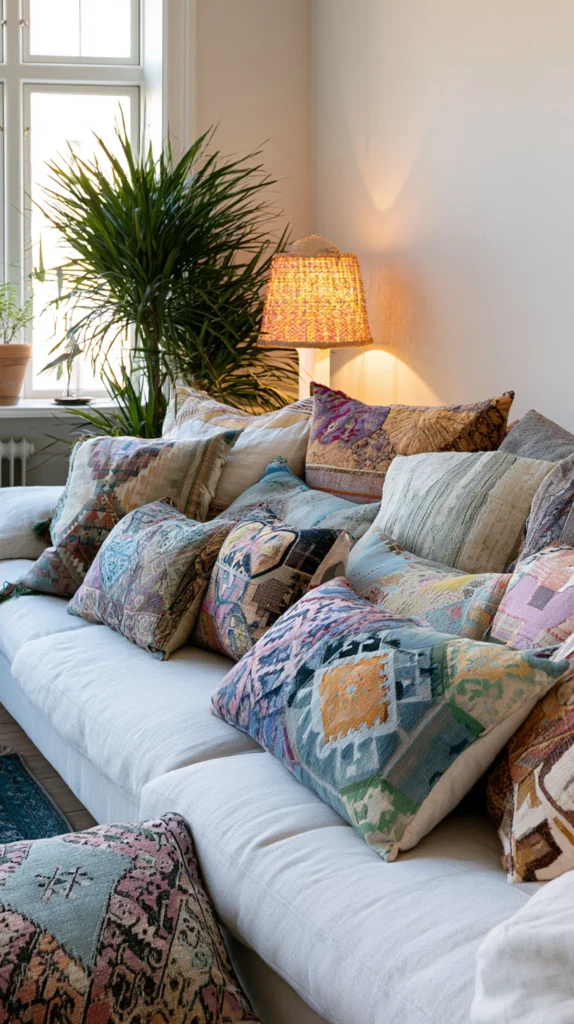
8. Vintage Textile Cushion Covers Sewn From Found Fabric
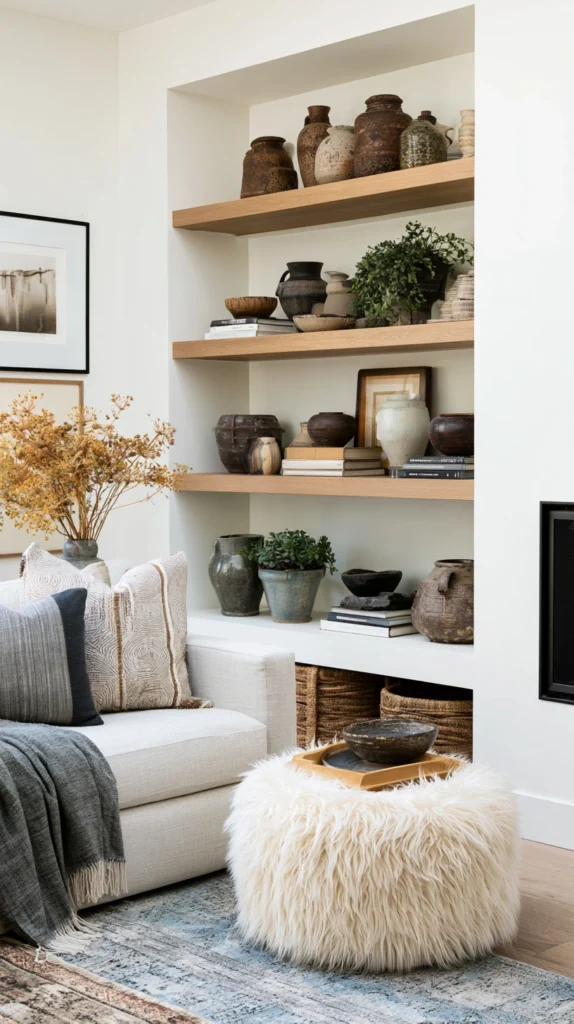
The cushion cover is the most accessible living room textile project and the one that produces the most immediate visible result from a small investment in found or thrifted fabric.
A thrifted fabric, a curtain or a tablecloth or a bedspread in a beautiful pattern or colour that would cost many times its thrift price as an upholstery fabric, can be cut into cushion covers of any size. The basic cushion cover is a rectangle of fabric with one side left open for a removable insert. The sewing skill required is approximately the level produced by an afternoon’s practice.
The quality and character of the resulting cushion cover depends entirely on the quality of the fabric found rather than on any design expenditure. An embroidered tablecloth cut into cushion covers produces cushions of extraordinary decorative quality. A curtain in a beautiful vintage pattern produces cushions that no catalogue can match because they no longer exist in retail.
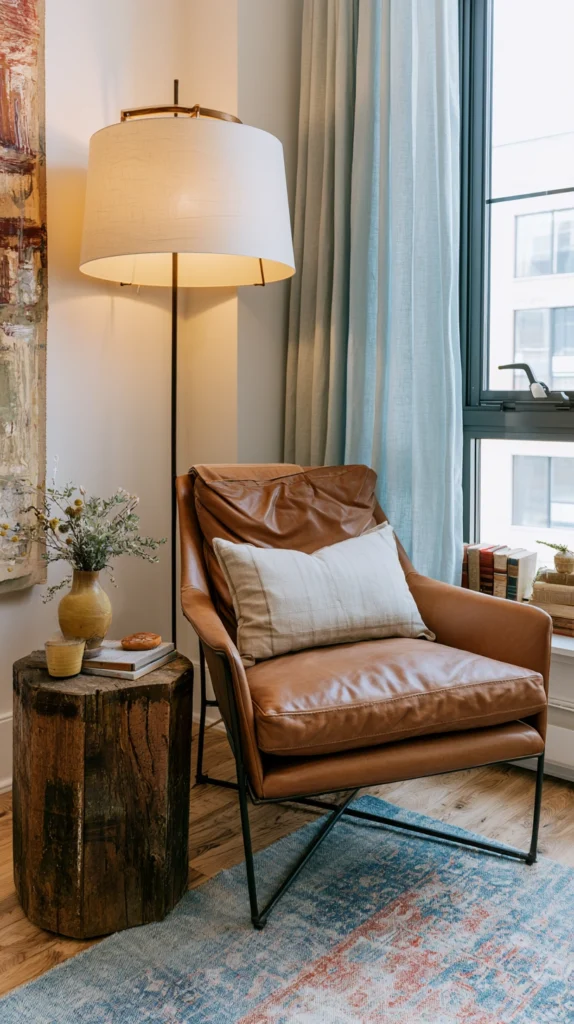
9. A Thrifted Side Table Cleaned and Kept As Found
Not everything thrifted needs to be refinished, repainted, or reframed.
Some objects found at charity shops and estate sales are already exactly what they need to be. They simply need to be cleaned and placed in the right position in the right room.
The patina of a genuinely old side table, the slight wear on the edges, the darkening of the handles from years of use, the specific colour that old wax produces on old timber, these are not defects. They are the qualities that make old furniture more beautiful than new furniture trying to replicate them.
The rule for keeping found objects as-found is that the object must be genuinely beautiful in its current state. Not merely adequate. Not merely functional. Genuinely beautiful. If cleaning reveals a surface that is beautiful, keep it. If cleaning reveals a surface that is damaged rather than patinated, refinish it.
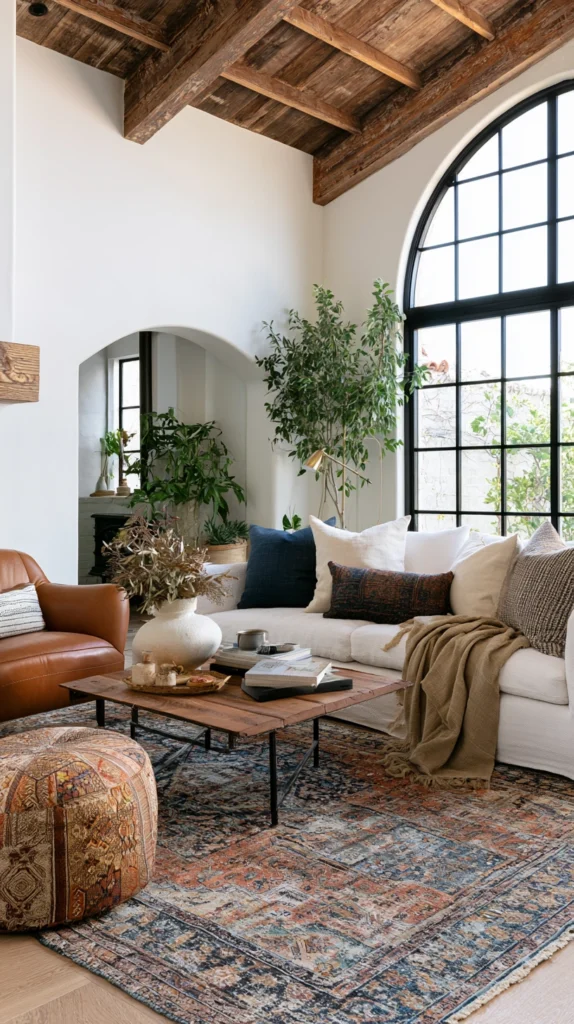
10. A Vintage Rug That Grounds the Whole Room
Vintage rugs are the thrift find with the most transformative effect on any living room.
A good vintage rug, in the Persian, Turkish, or kilim tradition, with its complex pattern and its faded, slightly muted colours, is worth more as a living room element than any equivalent-sized contemporary rug at the same price. The age of a vintage rug softens its colours toward tones that suit rooms better than the original vivid versions. The wear patterns that develop over decades of use create the specific visual texture of a floor covering that has a history.
Online marketplaces for vintage goods are the best source for vintage rugs beyond what charity shops and estate sales provide. The rug that fits exactly the right dimensions and the right palette is more findable online where the range is wider than in any single physical shop.
A vintage rug under the living room seating arrangement grounds the whole room in a single piece. Everything else in the room changes character in relation to the rug beneath it. The contemporary sofa above a vintage rug looks better than the same sofa above a new rug of equivalent cost.
11. Plants Propagated or Found Rather Than Purchased
The plant collection in the thrifted living room does not need to be purchased.
Most common houseplants propagate freely from cuttings. Pothos root in a glass of water within two weeks. Tradescantia shoots taken from an established plant and placed in damp compost root within a month. String of hearts cuttings placed on the soil of the parent plant produce new plants without any further intervention.
A request to a friend or neighbour with an established plant collection, asking for cuttings, produces free plants of quality that reflect the established health of the parent plant.
The terracotta pot that holds the plant comes from the charity shop. The plant came from a friend’s established pothos. The total cost of a beautiful plant in a terracotta pot in the living room corner is the pot and an afternoon.
The living room with ten plants in terracotta pots of different sizes, all propagated from cuttings given freely, looks genuinely and immediately good. The cost is negligible. The effect is disproportionately large.
12. Candles and Holders From Market Stalls
Candles and candle holders are the living room accessories that most immediately create atmosphere and the category where thrift spending goes furthest.
Simple brass candle holders at charity shop prices produce the same quality of warm amber light as the same holders at retail. The candle inside burns at the same rate regardless of where the holder came from.
Vintage candlestick holders in brass, silver plate, or ceramic from charity shops and market stalls accumulate into a collection of mismatched warmth that looks more beautiful on a side table or a fireplace mantle than any matching set from a homeware retailer.
Group the holders in an odd number, three or five, at different heights. The mismatched heights and finishes look gathered rather than purchased and gathered always looks better than matching-set in this context.
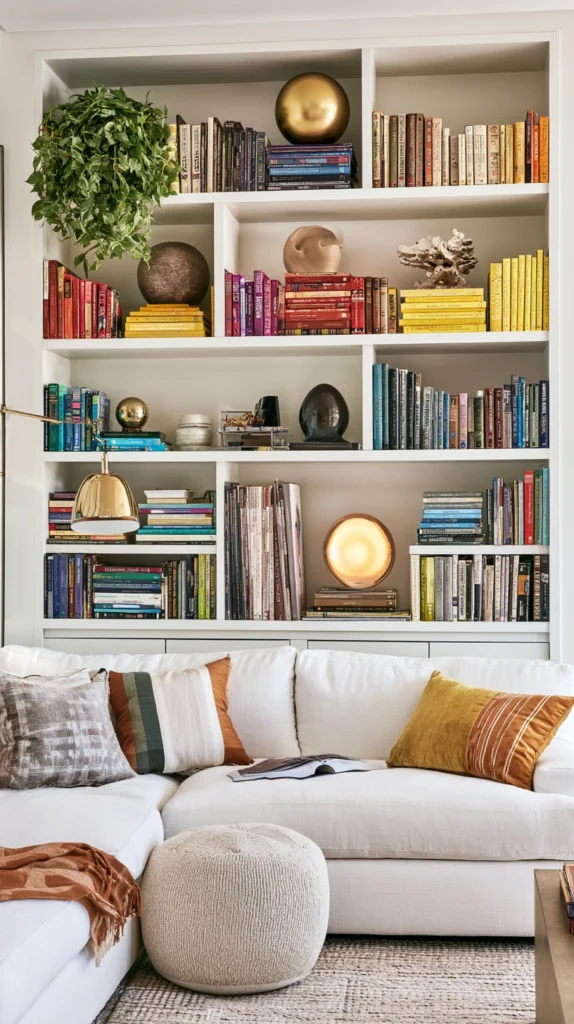
13. Thrifted Books as Decorative Elements
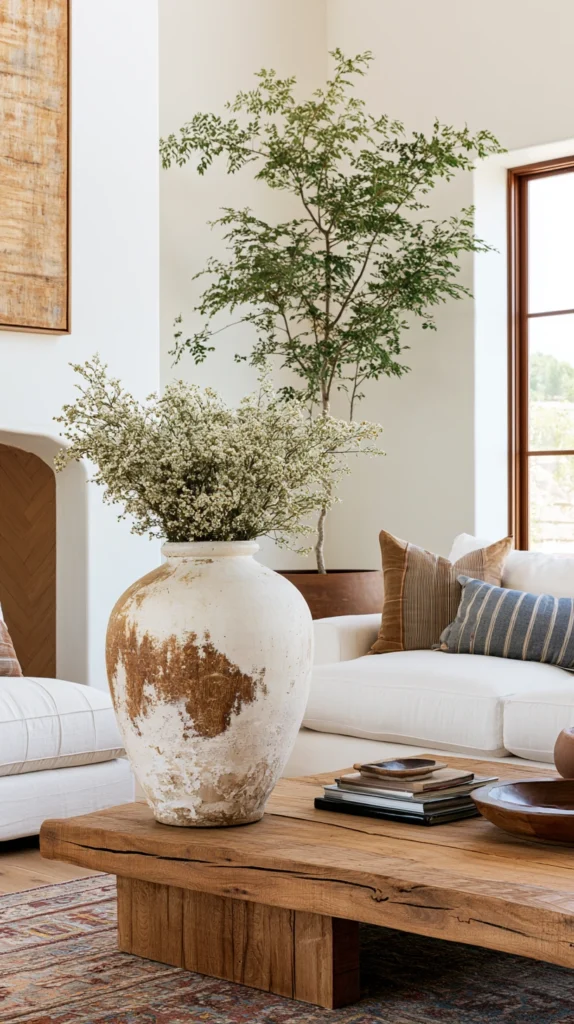
The living room bookshelf composed entirely of thrifted books is both the most honest and the most visually interesting version of the styled bookshelf.
Charity shops consistently have an abundance of books of varying quality for very modest prices. The styling potential of books is in their spines, their sizes, and their colours rather than their content for display purposes.
Books arranged by spine colour on a bookshelf create a visual display of colour blocks that looks designed. Cream and white spines together. Deep tones together. The colour arrangement transforms a random collection of titles into a designed surface.
Horizontal stacks of books of similar size create levels within a shelf. A ceramic object placed on top of a horizontal stack of four or five books is a different composition from the same object placed on the shelf beside vertical books.
14. A Statement Plant Pot Made From a Thrifted Object
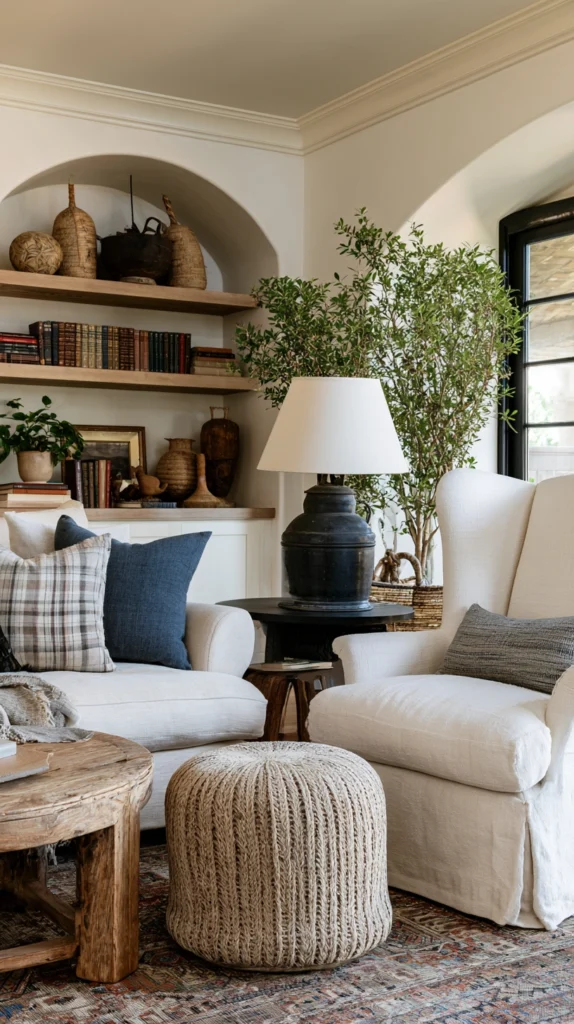
The plant pot is the living room accessory category where the most creative and most individual solutions come from repurposing found objects rather than purchasing specific plant pot products.
A large vintage ceramic bowl with a saucer beneath it holding a tropical plant. An old galvanised steel bucket as a pot for a small tree. A terracotta pot found at an estate sale that is already more beautiful than any contemporary pot at the same size. A wicker basket with a plastic liner inside holding a trailing plant.
These repurposed containers look more considered than any off-the-shelf plant pot precisely because they were not designed for the purpose. The slightly unexpected material in the plant context creates the small design surprise that makes a room feel interesting rather than predictable.
15. Editing as the Final Design Step
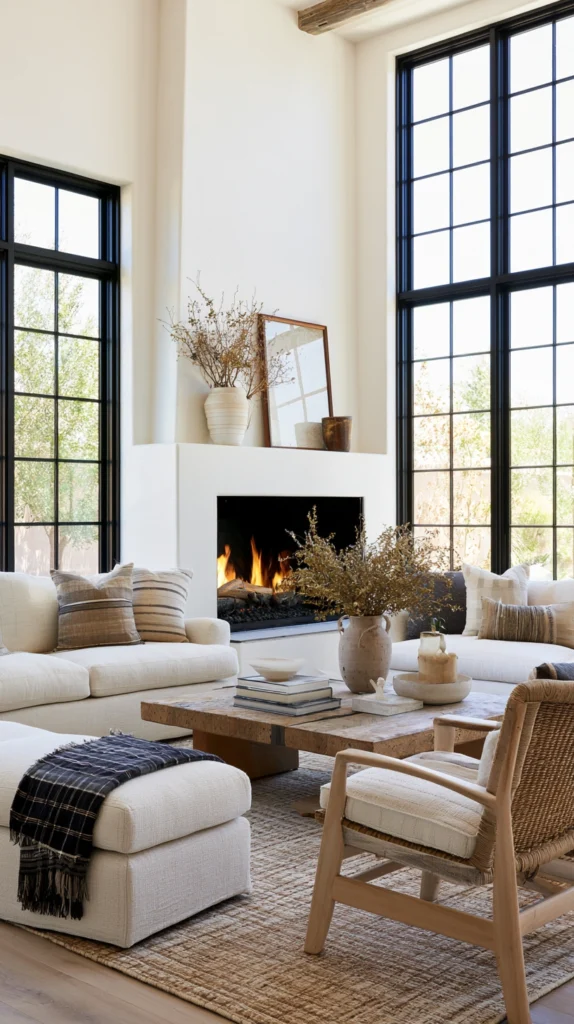
The thrifted living room that looks designer is almost always the one that has been edited as rigorously as it has been assembled.
Every thrift find that did not work when placed in the room. Every piece that was fine but not great. Every object that occupied shelf space without earning it. These pieces leave the room again. They return to the charity shop or the marketplace for someone else to find.
The edited thrifted room, with only the pieces that genuinely work in relation to each other and in relation to the space, looks as considered as any designed interior. Better, in many cases, because the pieces have a specific quality of having been chosen from the full range of what exists rather than from a single retailer’s curated catalogue.
The designer living room is the room where everything has been considered and where anything that could not justify its presence has been removed. This is true regardless of whether the objects were thrifted, inherited, or purchased new. The editing is the design.
How to Thrift Effectively for a Living Room
The successful thrift shopper for a specific room has a list.
Not a rigid shopping list of specific objects. A list of the qualities and the functions that the room needs rather than the specific forms those qualities and functions might take. The room needs a side table. Not a specific side table in a specific style. A side table with good bones that can be placed on the left of the sofa at the right height for a lamp and a glass.
With this functional and qualitative brief in mind, every thrift visit assesses objects against what the room needs rather than against whether the object is beautiful in isolation.
Measure the room before any significant purchase. Know the dimensions of the wall the mirror will hang on. Know the floor area the rug needs to cover. Know the height and width of the sofa beside which the side table will sit. The thrift find that is exactly right in every way except its dimensions is the thrift find that will not work in the room regardless of how beautiful it is.
Photograph everything in the room before each thrift visit. The sofa colour. The current state of the shelves. The wall the mirror will go on. With the room’s actual appearance in front of you on the phone, the assessment of whether a found object will work becomes significantly more accurate.
Common Mistakes in Thrifted Living Room Design
Keeping everything found regardless of whether it works. The thrifted living room becomes a charity shop in the home when nothing is edited. The discipline of editing, keeping only what genuinely works in relation to everything else, is as important as the discipline of finding.
Neglecting the investment pieces. Some living room elements should not be thrifted. The sofa that will be used daily for a decade. The rug that anchors the room. The lighting that determines the room’s atmosphere. These may be worth buying new or buying from quality vintage sources rather than from general charity shops. The thrift spend is effective around a core of considered investments.
Buying pieces with poor structural condition. The warped shelf. The wobbly chair leg. The lamp with deteriorated wiring. The table with a broken joint. These structural problems are significant. Surface problems are almost always solvable. Structural problems often are not or are expensive to fix relative to the object’s value.
Under-investing in frames. The found artwork in a cheap frame still looks like found artwork in a cheap frame. The investment in quality frames for thrifted art is the investment that makes the art look like a design decision.
Not editing for colour coherence. The thrifted living room with twenty different accent colours across its accumulated objects looks like a thrift shop rather than a designed room. A consistent accent colour palette, applied as a filter to what is kept regardless of individual object quality, creates the visual coherence that makes the room look designed.
Quick Summary
- A large vintage mirror with a refinished frame is the highest-impact thrift find for any living room wall
- Vintage lamp bases rewired and given new shades create individual, quality lighting from charity shop bases
- Found sofas with good bones reupholstered in quality contemporary fabric exceed new mid-range sofas in quality
- Thrifted art reframed in contemporary frames transforms the presentation without changing the art
- Coffee tables in poor surface condition with good structure, repainted or refinished, become designer-quality pieces
- A gallery wall of thrifted frames and art unified by consistent frame colour creates a uniquely personal wall installation
- Charity shop ceramics grouped by colour family on a shelf read as curated display regardless of individual monetary value
- Thrifted fabric cut and sewn into cushion covers produces unique textile quality that no catalogue can match
- Some thrifted pieces are already exactly right and need only cleaning and placement in the right position
- A vintage rug found online or at markets transforms the room beneath all the furniture that sits on it
- Plants propagated freely from cuttings in thrifted terracotta pots create an abundant green living room at minimal cost
- Mismatched candlestick holders in brass and silver plate from charity shops create accumulated warmth at table level
- Books arranged by spine colour on thrifted shelves create a designed visual surface from functional objects
- Thrifted objects repurposed as plant containers create unexpected combinations that look more considered than standard pots
- Rigorous editing of the thrifted collection, keeping only what genuinely works in relation to everything else, is the final design step
The designer living room is not the expensive living room.
It is the room where every object earned its place. Where nothing sits without justification. Where the specific combination of specific things creates something that feels genuinely considered and genuinely personal.
Thrift stores and markets and secondhand platforms are full of the right specific things.
The work is finding them.
The skill is editing what you find until only the right things remain.
That room exists for anyone willing to do both.