15 Spice Rack Ideas for an Organized and Beautiful Kitchen
A well-organized spice collection makes an outsized difference to the daily experience of cooking. When every spice is visible, labeled, and immediately accessible, cooking becomes more spontaneous and more enjoyable. When the spices are in a chaotic cupboard where finding the cumin requires emptying half the shelf, cooking becomes a slightly reluctant activity preceded by a frustrating search.
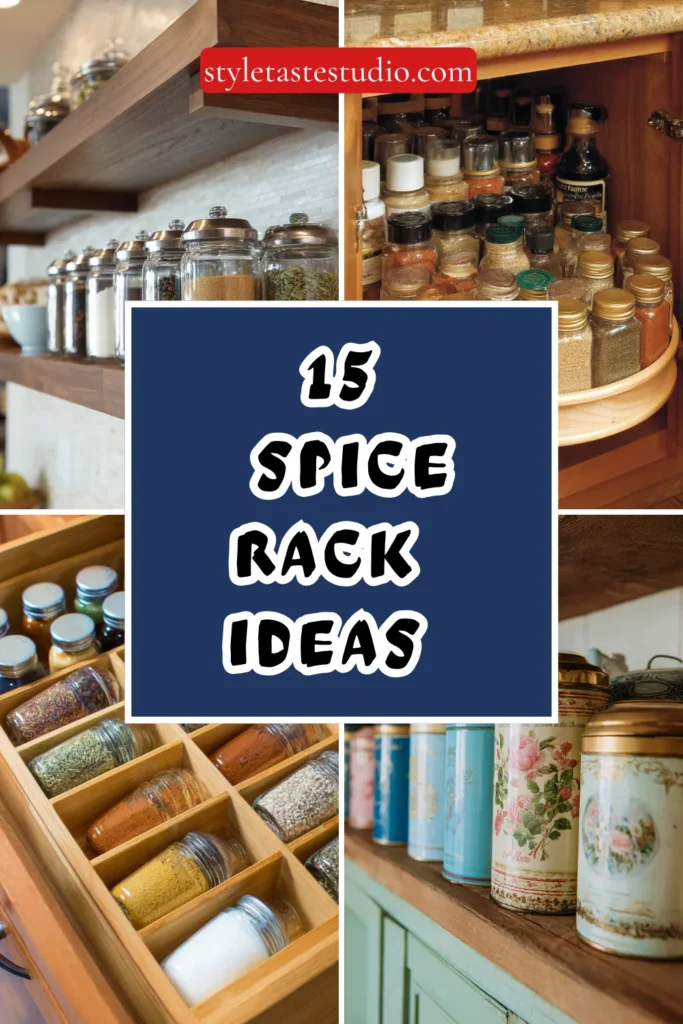
The spice rack is also one of the most visible details in any kitchen — a small display area where organization and aesthetics combine in a way that contributes significantly to the kitchen’s overall character. A beautiful, well-organized spice display makes a kitchen look genuinely considered. A chaotic spice collection makes even an otherwise beautiful kitchen look slightly neglected.
Here are 15 spice rack ideas that bring genuine order, genuine beauty, and genuine daily pleasure to the most used collection in any kitchen.
1. Spice Pegboard Station
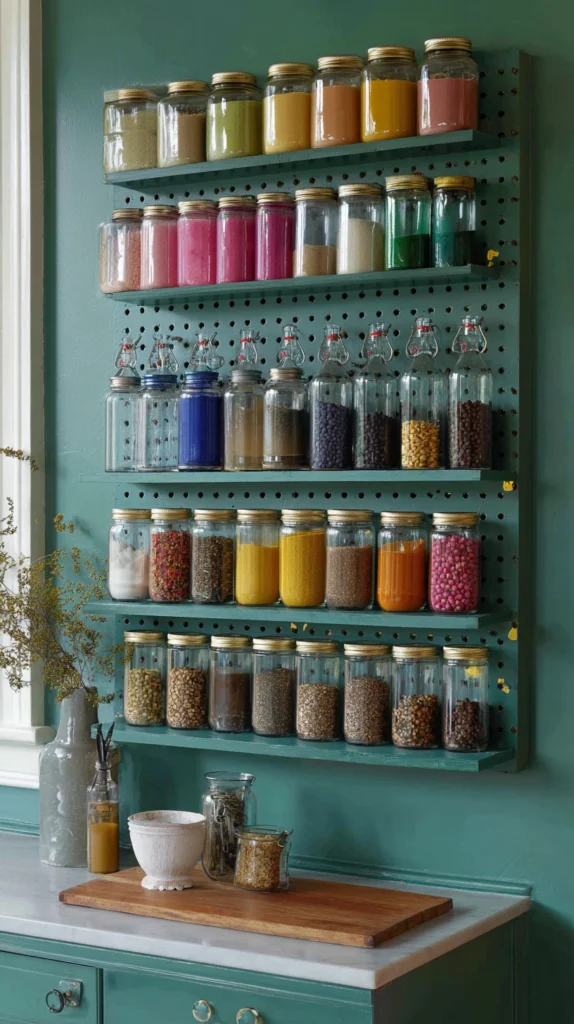
A dedicated spice pegboard station — a section of pegboard mounted at eye height in the kitchen, fitted specifically with small shelf attachments, jar hooks, and narrow rail holders sized for spice jars rather than general tools — creates a completely customizable spice display that adapts to any collection size and any jar format. Unlike a fixed shelf that locks the display into a single configuration, the pegboard station evolves freely as the spice collection grows, changes, and reorganizes itself over time.
The visual appeal of a well-dressed spice pegboard is considerable — the combination of the organized grid of the pegboard surface, the varied heights of the shelf and hook attachments, and the warm colors of the spice jars creates a kitchen wall feature of genuine visual interest and considered, functional beauty.
Pro Tip: Paint the pegboard in a color that contrasts with the spice jar labels — a deep sage green, a warm charcoal, or a rich navy — rather than leaving it in its raw natural state. A colored pegboard background makes every jar label immediately readable against the surface and creates a kitchen wall feature of genuine visual impact rather than a utilitarian storage board that happens to hold spices.
2. Floating Shelf Spice Display
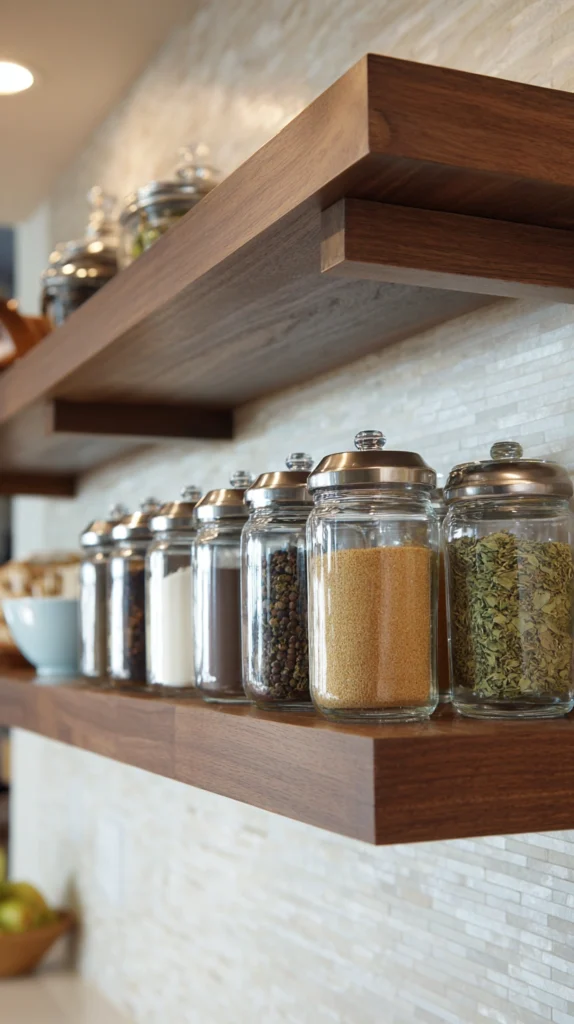
A dedicated floating shelf at eye height — styled exclusively as a spice display — creates a kitchen feature of genuine visual warmth and organizational clarity. Choose consistent jar sizes and shapes for visual coherence — matching glass jars with metal lids or a set of ceramic pots in a consistent color family. Add a small plant or ceramic oil pourer at one end for the considered, styled quality that distinguishes a beautifully designed kitchen detail from a purely practical storage solution.
Pro Tip: Position the floating spice shelf within arm’s reach of the primary cooking position — the hob or main preparation area — rather than in the most visually prominent location regardless of access. A shelf requiring two steps to reach during active cooking interrupts the flow in a way that a shelf within arm’s reach entirely prevents. Practical proximity to the point of use is the single most important positioning consideration.
3. Drawer Spice Insert
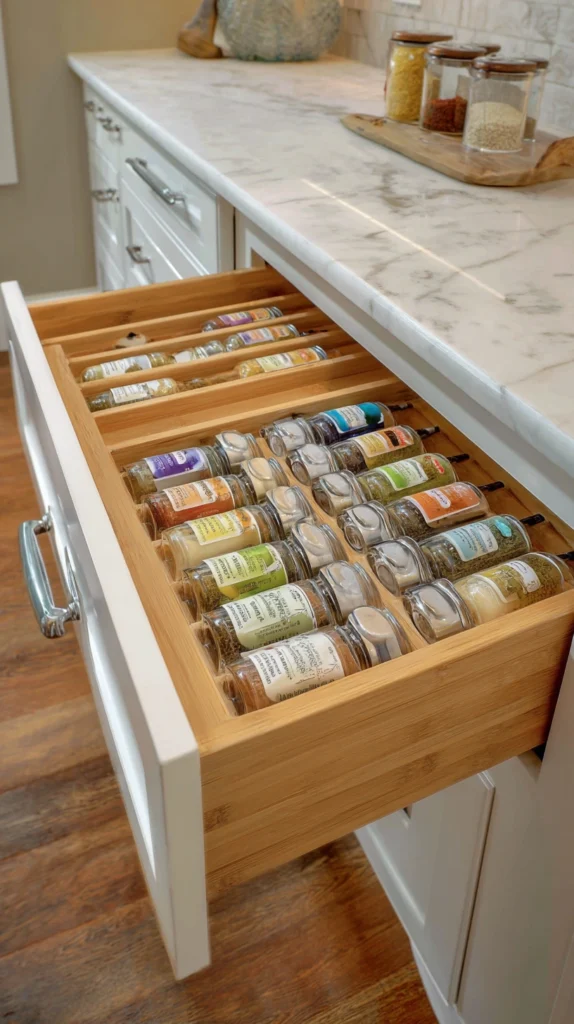
A dedicated drawer spice insert — a tray organizer that lays spice jars horizontally in a single layer within a kitchen drawer with every label facing upward — creates the most spatially efficient and practically effective spice storage system available. The drawer insert keeps spices completely hidden when closed and completely organized and accessible when open. Lay all jars horizontally with labels facing upward and the entire collection is visible in a single glance from directly above.
Pro Tip: Measure the drawer interior dimensions precisely before purchasing a spice insert and choose jar heights that fit the insert depth with small clearance above the lid when the drawer is closed. Jars too tall for the drawer depth prevent it from closing — a frustrating daily problem. Confirming height compatibility before purchase prevents this entirely avoidable issue.
4. Tiered Countertop Spice Rack
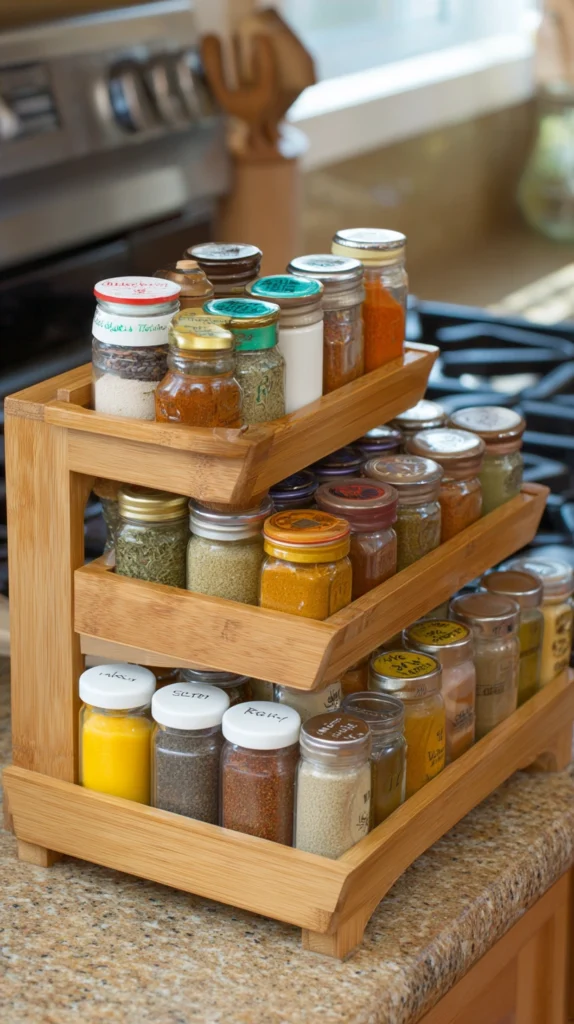
A tiered countertop rack — a stepped display of two or three levels positioning every jar at a different height — ensures the labels on back-row jars are visible above the front-row ones, solving the fundamental problem of single-level storage where back-row jars are obscured. Build a simple tiered rack from timber offcuts or purchase a purpose-made version in bamboo or metal. Position immediately beside the hob for the most practically useful spice display location in the kitchen.
Pro Tip: Limit the countertop tiered rack to the twenty most frequently used spices rather than attempting to accommodate the entire collection. An overcrowded tiered rack loses the clarity and accessibility that makes the format so effective. Less frequently used spices stored in a supplementary cabinet system keeps the countertop rack uncluttered, navigable, and genuinely useful in the active daily cooking environment.
5. Pull-Out Cabinet Spice Organizer
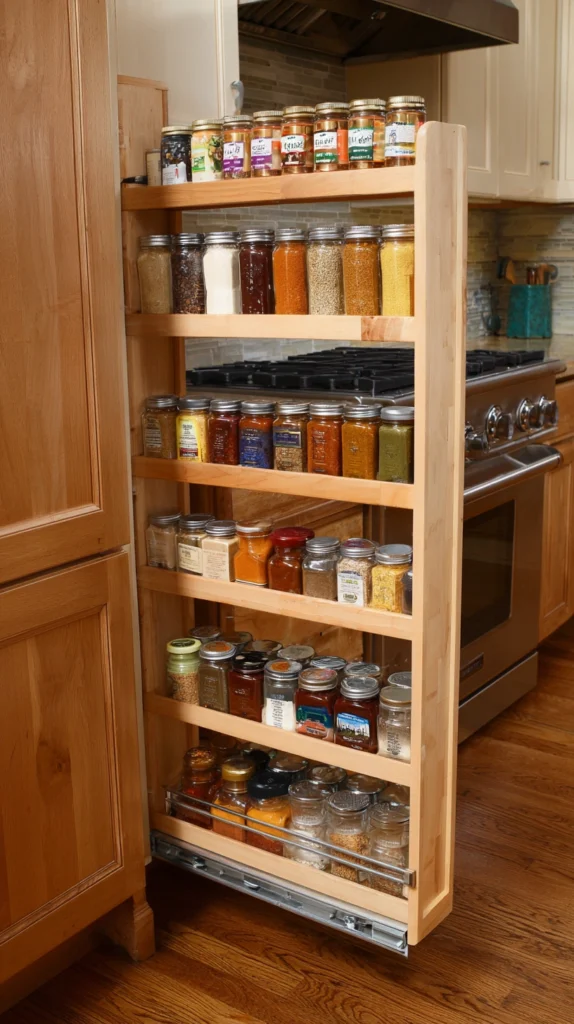
A pull-out spice organizer fitted within a standard kitchen cabinet — a narrow rack that slides out to reveal the full spice collection in a single accessible row — makes use of the narrow dead spaces beside appliances and between cabinets that are otherwise unusable. Pull-out spice racks are available from 10 centimetres width upward and fit within kitchen cabinets with minimal modification. The pull-out mechanism conceals the collection completely when not in use while maintaining complete practical accessibility.
Pro Tip: Install the pull-out spice rack in the cabinet immediately adjacent to the hob rather than in the most convenient available cabinet regardless of cooking position. The few steps saved by reaching into a cabinet beside the hob rather than crossing the kitchen genuinely make a difference to how spontaneously spices are used during cooking. Proximity to the point of use matters as much for a pull-out rack as for any other spice storage format.
6. Wall-Mounted Timber Shelf with Lip
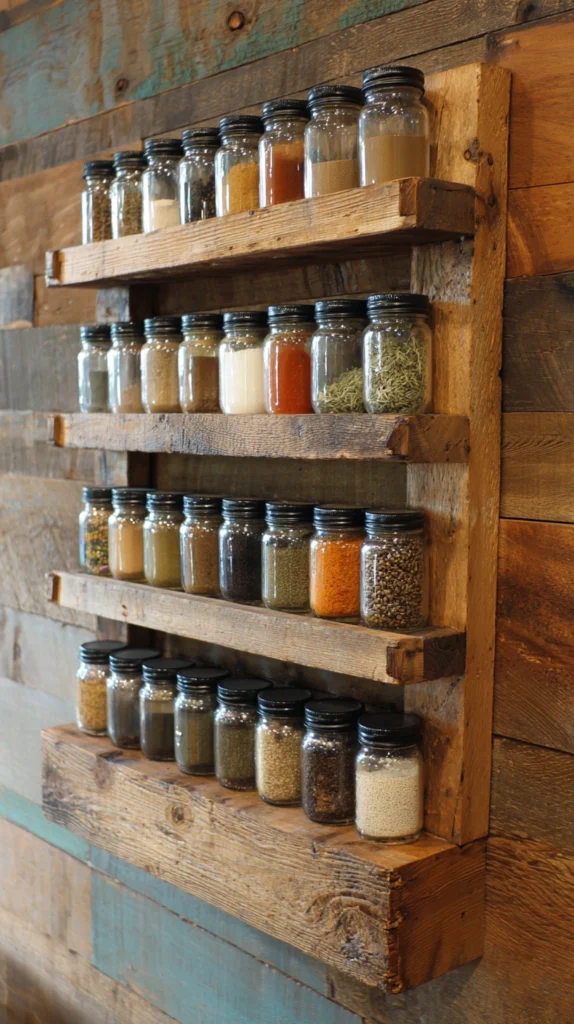
A wall-mounted timber shelf with a small front lip — a narrow raised edge that prevents jars from sliding forward — creates a simple, beautiful, and reliable open spice display that suits every kitchen aesthetic. The front lip allows jars to be stored with labels facing outward and visible at a glance without any risk of falling. Build from a single length of 20cm wide timber with a 2cm lip along the front edge and two simple bracket supports.
Pro Tip: Install two parallel lipped shelves stacked vertically — the upper shelf approximately 15 centimetres above the lower — rather than a single wide shelf. Two narrow parallel shelves accommodate double the jar capacity in the same horizontal wall space and are more visually interesting, more accessible, and more practically efficient than a single wide shelf holding the same number of jars in a less organized arrangement.
7. Lazy Susan Turntable Spice Organizer
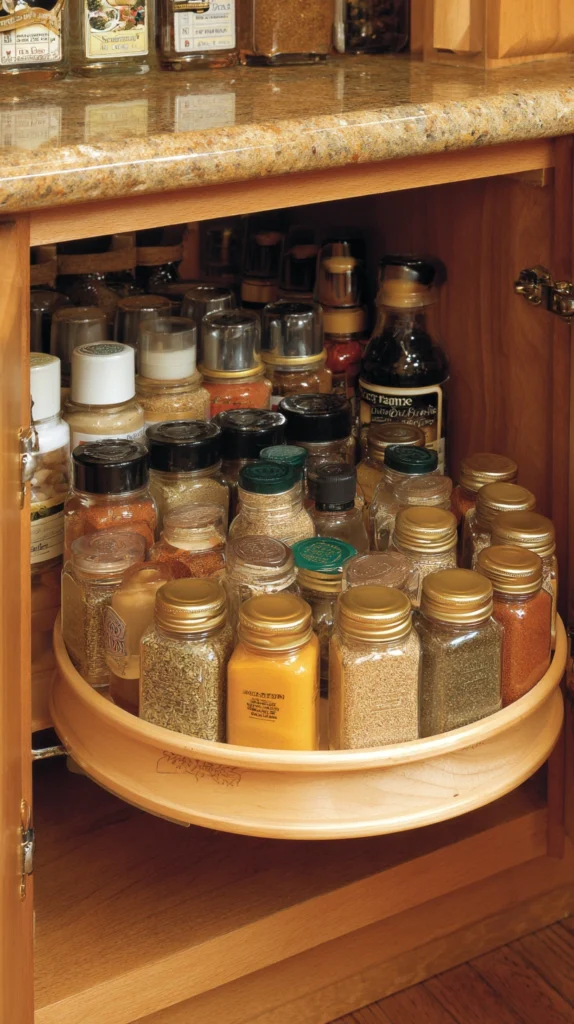
A lazy Susan turntable placed inside a kitchen cabinet transforms a deep, poorly accessible shelf into a completely visible and accessible spice storage system. Every jar is accessible with a single rotation — no reaching to the back, no removing front jars to access back ones, no blind searching in a dark cabinet corner. A two-tier lazy Susan with a rotating upper level and a fixed lower level accommodates a generous spice collection in a single cabinet shelf position.
Pro Tip: Choose a lazy Susan with a raised outer rim on each tier rather than a flat turntable platform. A flat platform allows jars to slide toward the edge during rotation and fall from the platform. A rimmed turntable contains jars within the boundary during rotation and prevents any movement regardless of how quickly it spins or how close jars are positioned to the platform edge.
8. Chalkboard Label Spice System
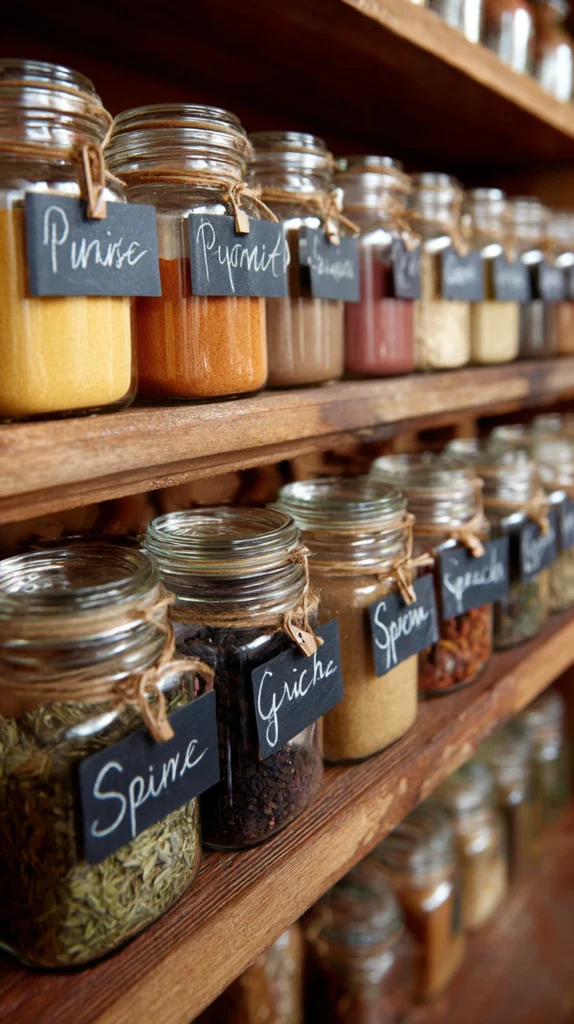
A consistent chalkboard label system — each jar fitted with a small chalkboard label on which the spice name is written in chalk — creates a collection of extraordinary visual cohesion and organizational elegance. The labels are erasable and rewritable — allowing jars to be repurposed as the collection evolves — and the consistent hand-lettered quality of chalk writing creates a display of artisan, handcrafted character that suits every kitchen aesthetic from rustic to contemporary.
Pro Tip: Use a chalk pen rather than standard chalk for kitchen spice labels. Standard chalk smudges, transfers onto fingers during jar handling, and fades with any moisture contact from wet hands or kitchen steam. A chalk pen creates a semi-permanent, smudge-resistant label that maintains its legibility and neat appearance through daily kitchen use while remaining erasable and rewritable when jar contents change.
9. Over-Door Spice Rack
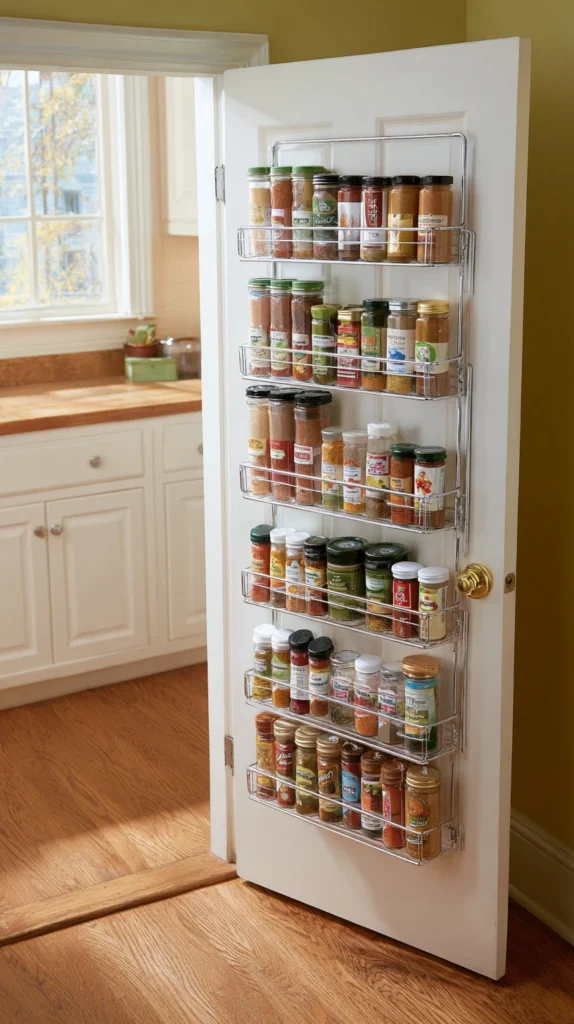
An over-door spice rack — a purpose-made narrow shelf unit that hooks over the inside of a pantry or cabinet door — uses the door surface as a storage zone that is completely invisible when closed and completely accessible when open.
Over-door racks fit virtually any standard door width and accommodate spice collections of every size. For kitchens where cabinet and countertop space is limited the door surface is a genuinely available storage zone that standard kitchen planning almost entirely ignores.
Pro Tip: Check the clearance between the inside of the door and the front of the cabinet shelf immediately behind it before installing an over-door rack. Many kitchen cabinet doors have insufficient clearance for an over-door rack to fit without preventing the door from closing completely. Measure the available clearance before purchasing and choose a rack whose shelf depth is confirmed to fit within it when the door is closed.
10. Uniform Jar Spice Drawer System
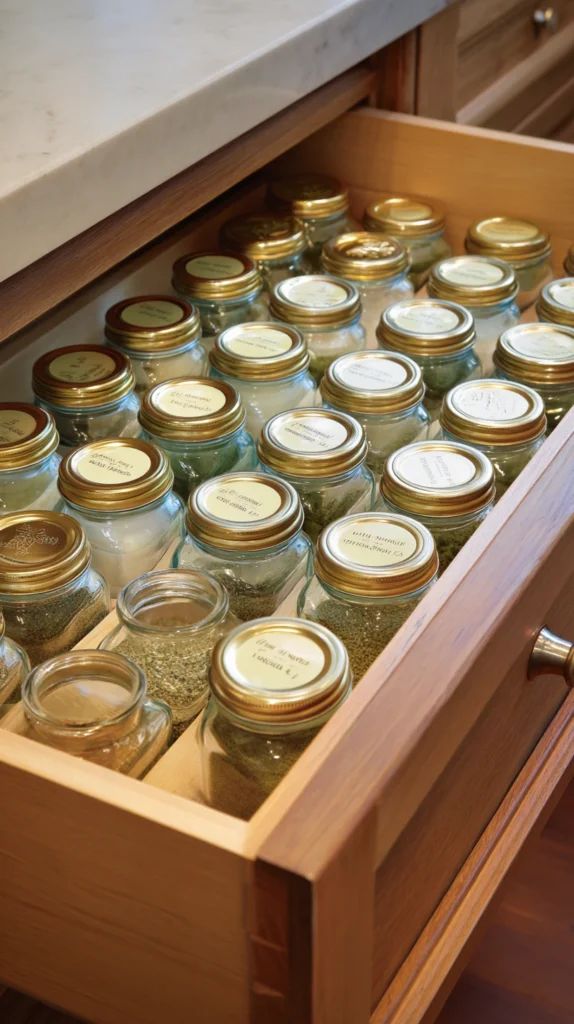
A complete spice drawer system — a full set of uniform glass jars in a consistent size and shape, each labeled identically, laid horizontally with labels facing upward — creates the most visually complete and organizationally satisfying spice storage available.
Invest in a full set of matching glass spice jars, transfer the entire collection into them, label consistently, and arrange in the drawer with all labels facing upward. The transformation from mismatched containers to a uniform, labeled, organized drawer is one of the most immediately satisfying kitchen organization projects available.
Pro Tip: Decant spices into the uniform jar system in a single dedicated session rather than gradually over time. A drawer where some jars are filled and labeled and others are still in original retail packaging looks incomplete and unresolved — losing the visual coherence that makes the uniform jar system so beautiful. A single hour or two of dedicated decanting and labeling creates the complete, consistent system from the first day.
11. Spice Wall Grid with Hanging Jars
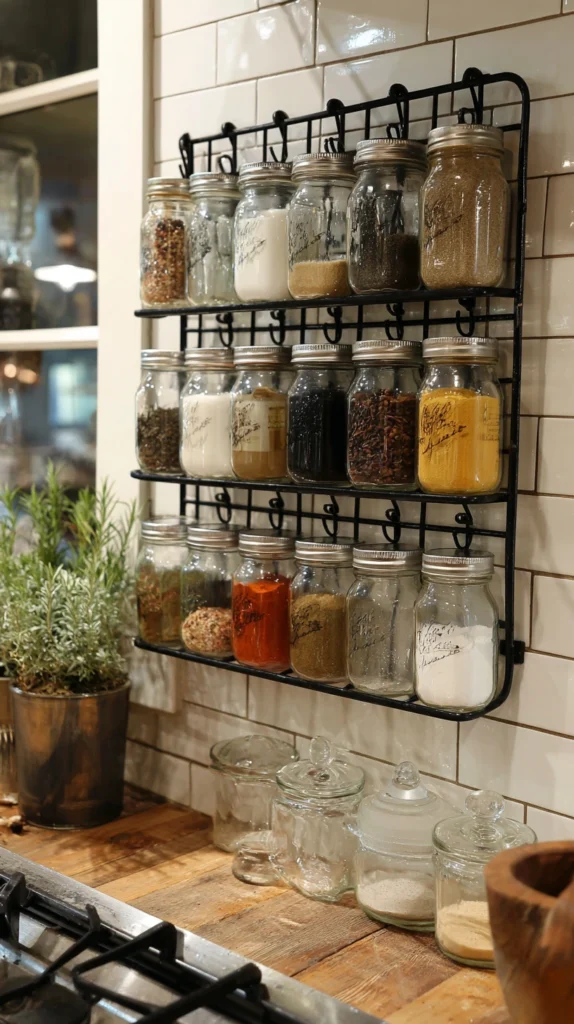
A grid of copper or black metal wire fixed to the kitchen wall — from which small glass jars hang on individual S-hooks or clip fittings — creates a kitchen wall feature of contemporary industrial beauty and genuine organizational clarity.
Source a pre-made wire grid panel from a kitchen or office supplies shop and hang uniform small glass jars from individual clip fittings on the grid surface. The functional beauty of a professional kitchen is the clear aesthetic reference and it translates beautifully into a domestic kitchen context.
Pro Tip: Position the wire grid spice display away from the direct heat and steam zone immediately above the hob. Heat and moisture from cooking directly below accelerates spice degradation in the nearest jars — spices stored in warm, moist conditions lose their potency significantly faster than those in cool, dry positions.
A location on the wall adjacent to rather than directly above the cooking zone maintains better spice quality throughout the collection.
12. Narrow Pull-Out Pantry Spice Tower
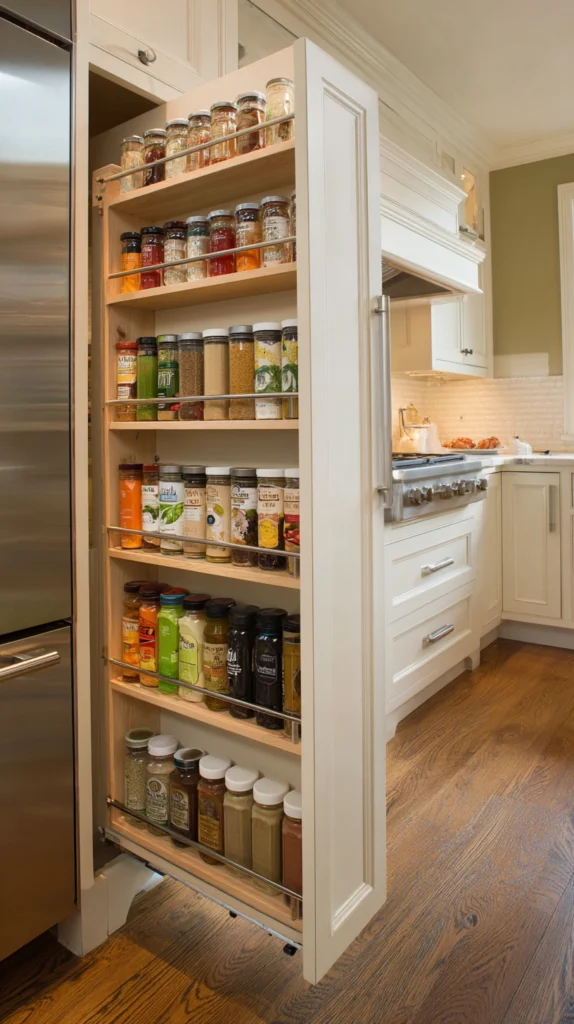
A narrow floor-to-ceiling pull-out pantry tower — fitted into a 15 to 20 centimetre gap between a kitchen appliance and an adjacent cabinet — creates a vertically organized spice tower of extraordinary storage capacity in a footprint that would otherwise be completely wasted dead space. The pull-out tower slides out on smooth drawer runners to reveal every shelf simultaneously — the entire spice collection visible in a single glance from front to back.
Pro Tip: Organize the pull-out spice tower with the most frequently used spices at the most ergonomically convenient heights — between waist and shoulder level — and less frequently used spices on the higher and lower shelves.
An organization system aligned with actual use frequency makes the tower genuinely efficient in daily cooking rather than simply providing organized storage of the complete collection regardless of how often each spice is actually needed.
13. Vintage Tin Spice Collection
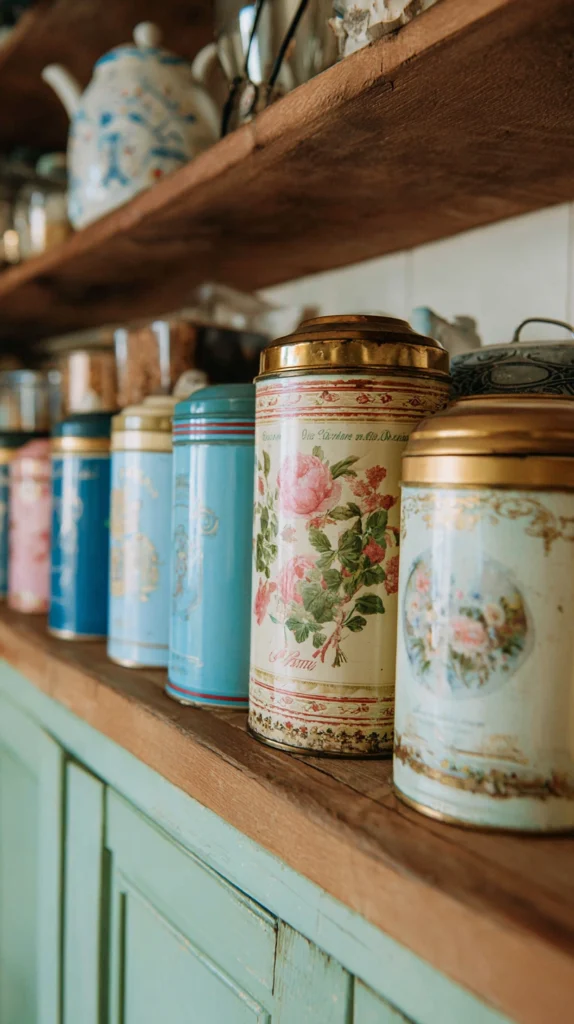
A collection of matching vintage tins — small decorative metal containers sourced from antique markets or vintage kitchenware shops — creates a kitchen spice display of extraordinary individual character and nostalgic charm.
Source a matching set in a consistent color family or decorative style for the most visually cohesive collection and display on an open shelf or in a purpose-built spice cabinet. The warm, aged character of vintage tins creates a kitchen display of genuine historical warmth.
Pro Tip: Check the airtight seal quality of any vintage tin before committing it to spice storage. Vintage tin lids that have lost their original seal allow air exchange that accelerates spice deterioration — losing the potency and fragrance that makes the collection worth organizing. Tins with a good snug-fitting lid creating an audible seal when closed are appropriate for spice storage. Tins with loose, poorly fitting lids are better used for decorative display of non-perishable items.
14. Bamboo Spice Organizer Tray
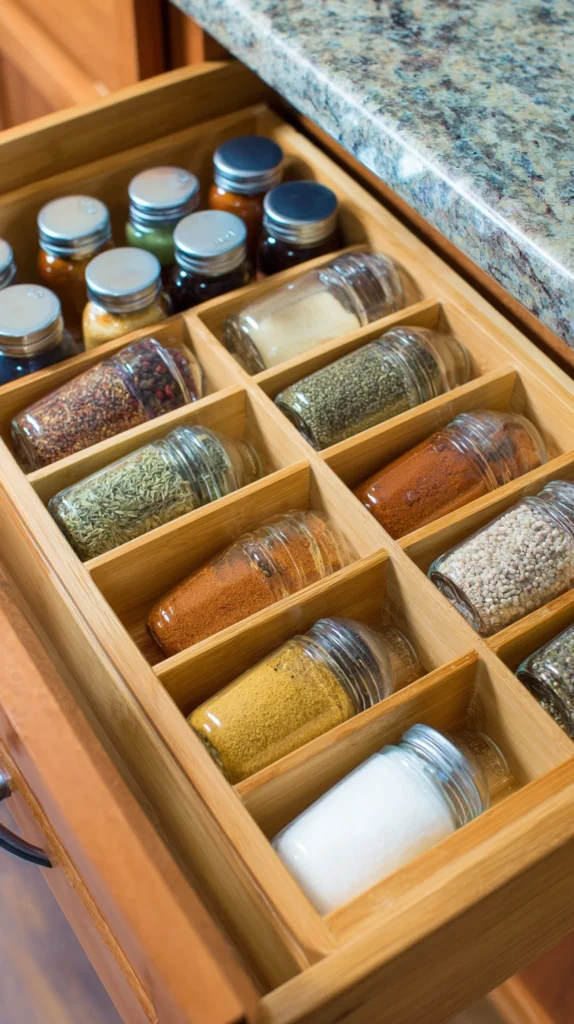
A bamboo spice organizer tray — a divided wooden tray with individual compartments holding standard spice jars upright in a single organized layer — creates a clean, natural, and genuinely beautiful system for use within a kitchen drawer or on a pantry shelf. The divided compartments hold each jar in its own defined position — preventing the jar migration and tipping that makes undivided drawer spice storage so persistently frustrating. Each jar stands upright and stable and can be removed without disturbing any neighbour.
Pro Tip: Choose a bamboo spice tray with compartments sized for a specific jar diameter rather than generic open divisions. A tray with compartments precisely sized for the jars being used holds each jar snugly — preventing movement during drawer opening and closing. A tray with oversized compartments allows jars to slide, tip, and fall within the compartment — defeating the organizational purpose of the divided tray system entirely.
15. Glass-Front Spice Cabinet
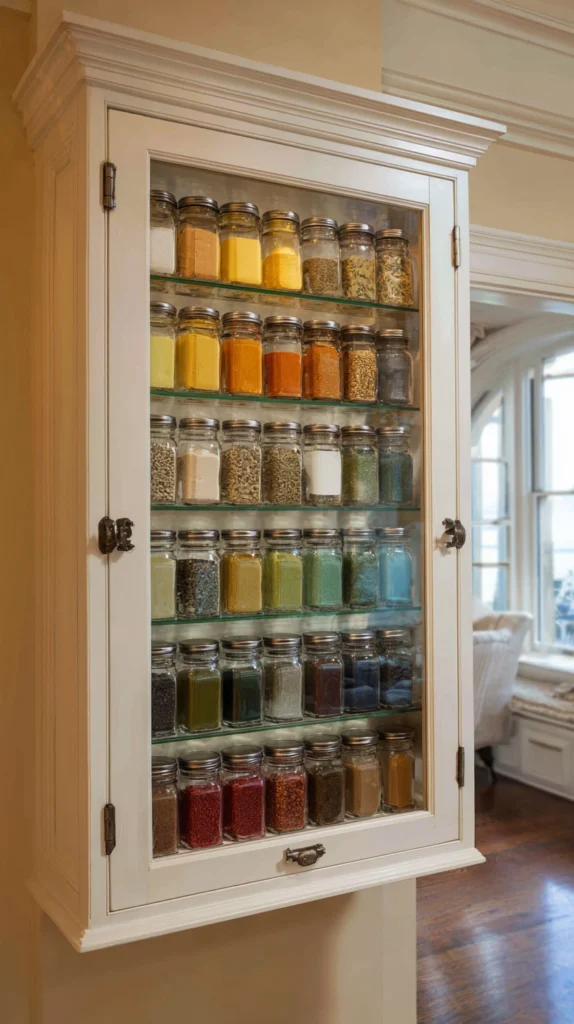
A dedicated wall-mounted spice cabinet with glass-front doors — allowing the organized spice collection to be visible from outside the closed cabinet — creates the most complete and most considered spice storage solution available. The cabinet contains and organizes the full collection, the glass doors maintain the visual accessibility of an open display, and the enclosed environment protects spices from light and heat degradation that open storage systems cannot prevent.
Pro Tip: Paint the cabinet interior in a contrasting color to the kitchen walls — a deep rich tone that makes the spice jars stand out clearly through the glass doors. A cabinet interior painted the same color as the kitchen walls creates a flat, undifferentiated display that loses the visual impact of the glass-front format. A contrasting interior color creates genuine visual depth and makes the organized spice collection genuinely beautiful as a kitchen display feature.
An Organized Spice Collection Changes How You Cook
The kitchen with a genuinely organized spice collection is the kitchen where cooking is more spontaneous, more creative, and more enjoyable. When every spice is visible, labeled, and immediately to hand, reaching for the smoked paprika or the toasted fennel seed becomes a natural, effortless part of cooking rather than an interruption of it.
Choose the system that fits your kitchen, your cooking style, and your available space. Invest in consistent jars and labels that make any system genuinely beautiful. And discover what it feels like to cook in a kitchen where everything is exactly where it should be.