15 Small Home Office Ideas That Boost Focus and Style
Working from home has become part of everyday life for many people, but creating a functional home office in a small space can feel challenging.
Limited square footage doesn’t mean you have to sacrifice comfort, productivity, or style. With thoughtful planning, smart furniture choices, and intentional design, even the smallest corner can become a focused and inspiring workspace.
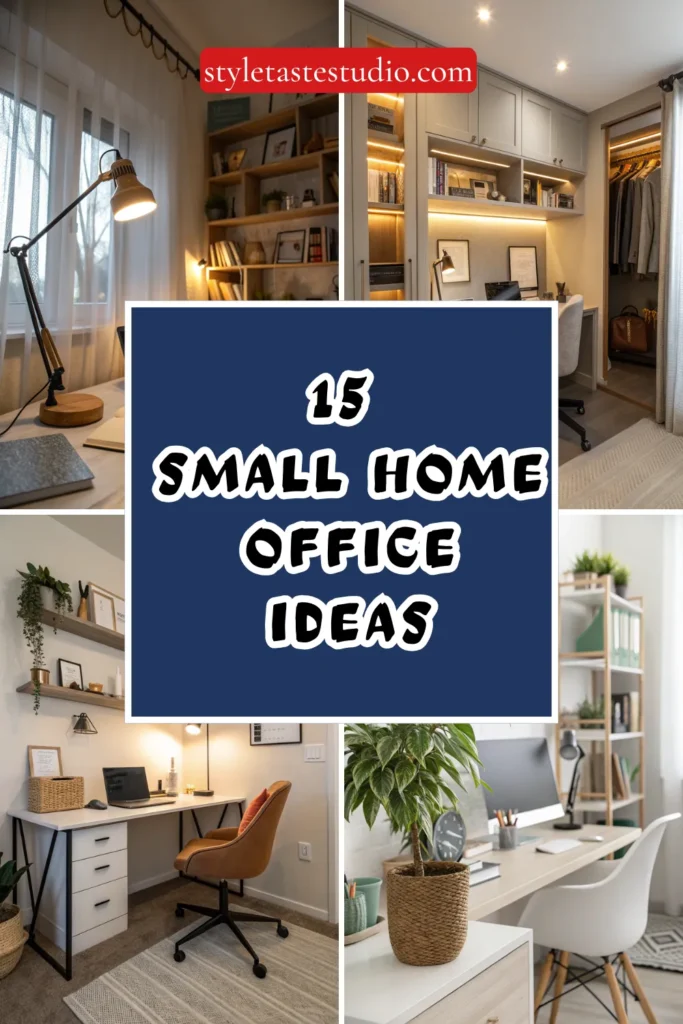
A well-designed small home office supports concentration, minimizes distractions, and reflects your personal style. From clever storage solutions to lighting strategies and color choices, these ideas help you build a workspace that feels both practical and polished. Below are 15 small home office ideas that balance focus and style beautifully.
1. Create a Dedicated Office Corner
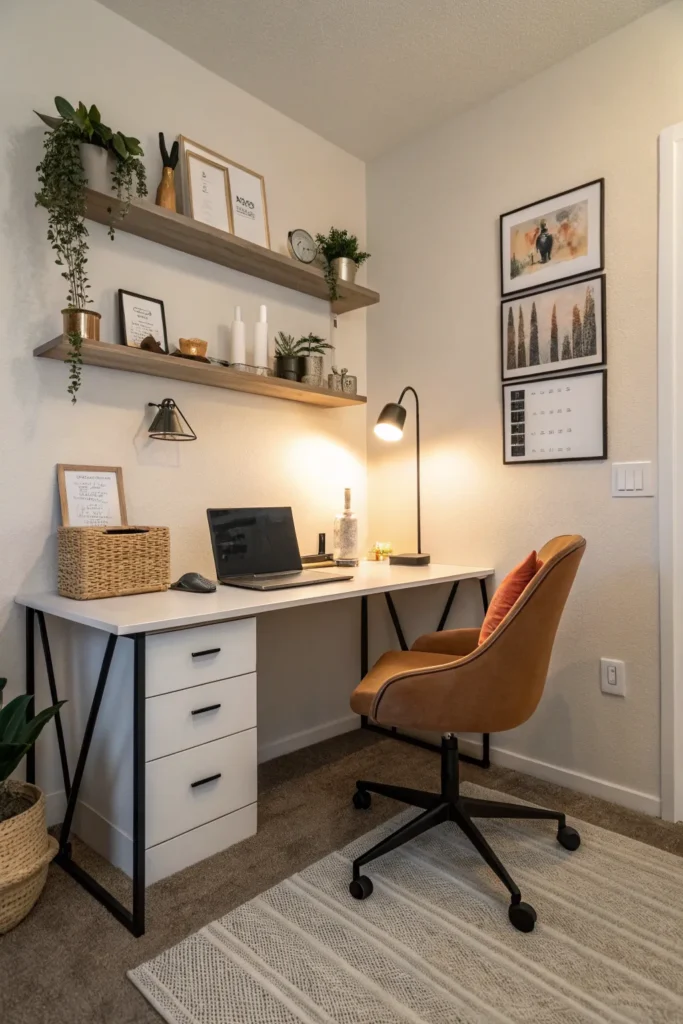
One of the most effective ways to establish a productive home office in a small space is to define a dedicated corner. This helps mentally separate work from rest, even when everything happens in the same room.
Choose a quiet corner with access to natural light if possible. A compact desk, a comfortable chair, and a small lamp are often all you need. Add a rug or wall art to visually define the area and make it feel intentional rather than temporary.
2. Use a Wall-Mounted or Floating Desk
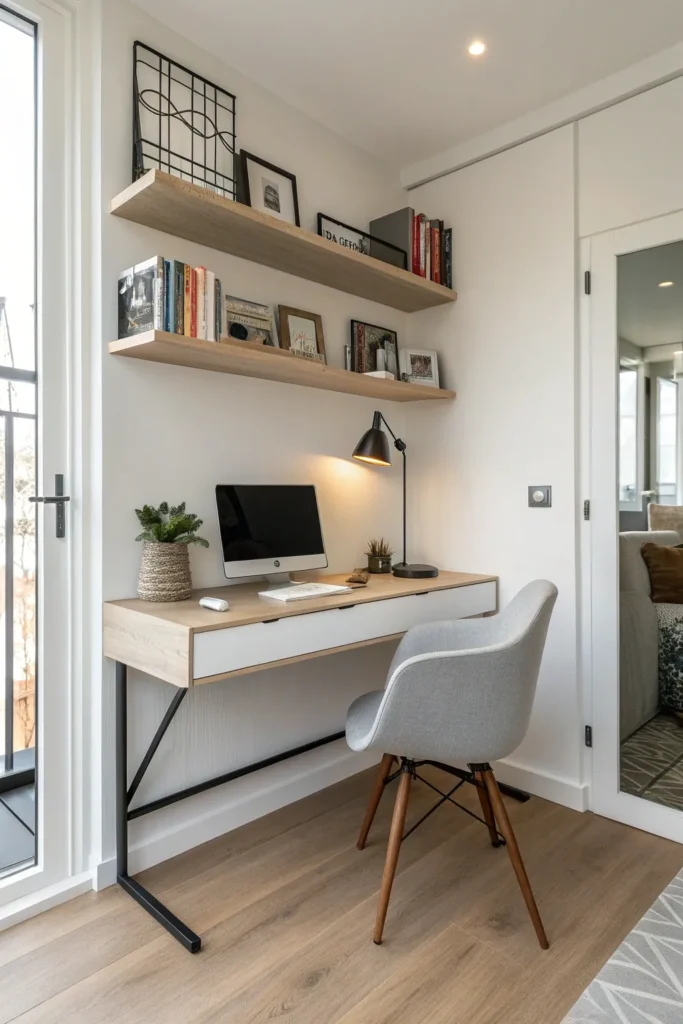
When floor space is limited, a wall-mounted or floating desk can be a game changer. These desks take up minimal room while still offering a functional work surface.
Floating desks keep the space visually light and uncluttered, which can improve focus. Pair the desk with a slim chair or stool that tucks neatly underneath when not in use. This approach works especially well in apartments, bedrooms, or multipurpose living spaces.
3. Take Advantage of Vertical Storage
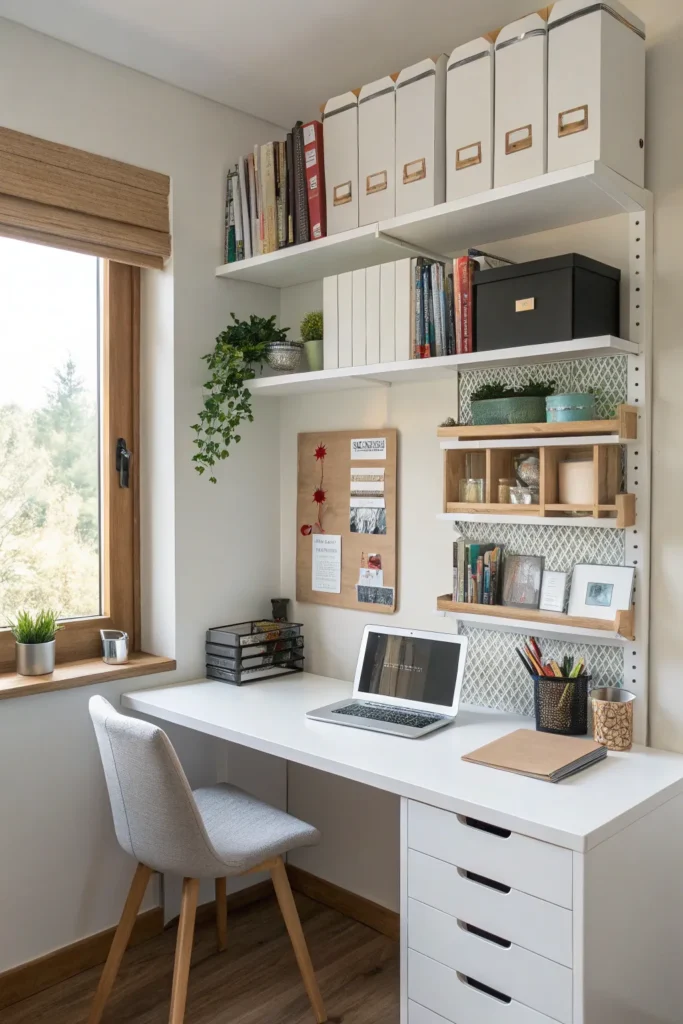
Small home offices benefit greatly from vertical storage solutions. When floor space is tight, looking upward opens up new possibilities.
Install floating shelves, wall-mounted cabinets, or pegboards above your desk to store office supplies, books, and decor. Vertical storage keeps essentials within reach while freeing up your desk surface, helping maintain a clean and organized workspace.
4. Choose a Compact Desk With Storage
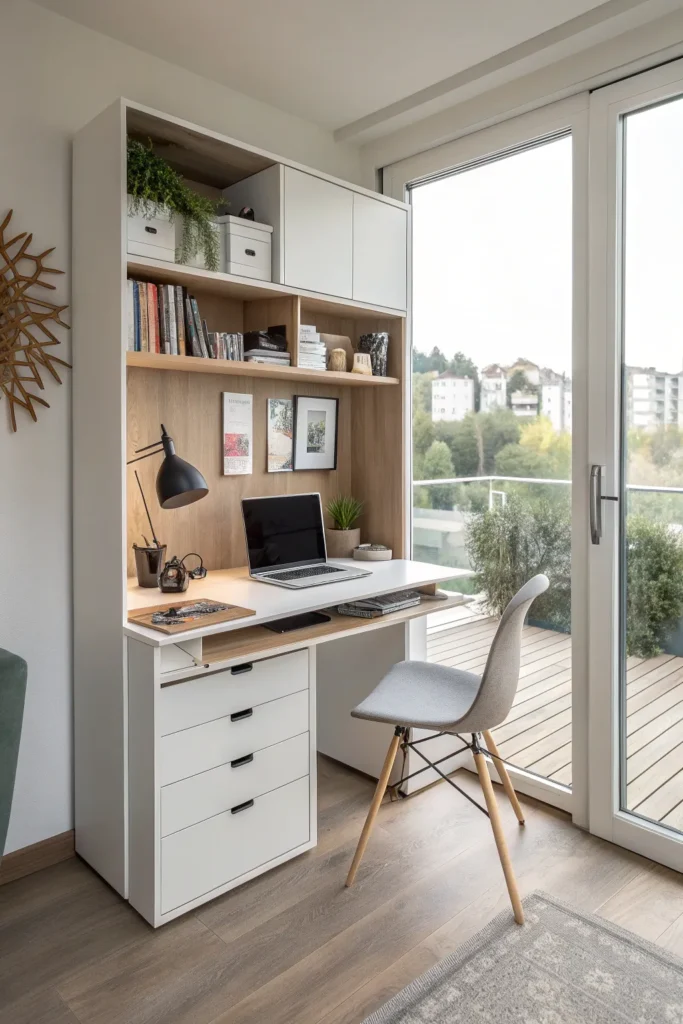
A desk with built-in storage helps keep clutter under control in small offices. Drawers, shelves, or cubbies allow you to store paperwork and supplies without adding extra furniture.
Look for desks with a slim profile and hidden storage to maintain a clean aesthetic. Keeping items out of sight reduces visual distractions and supports better focus throughout the workday.
5. Design a Home Office in a Closet
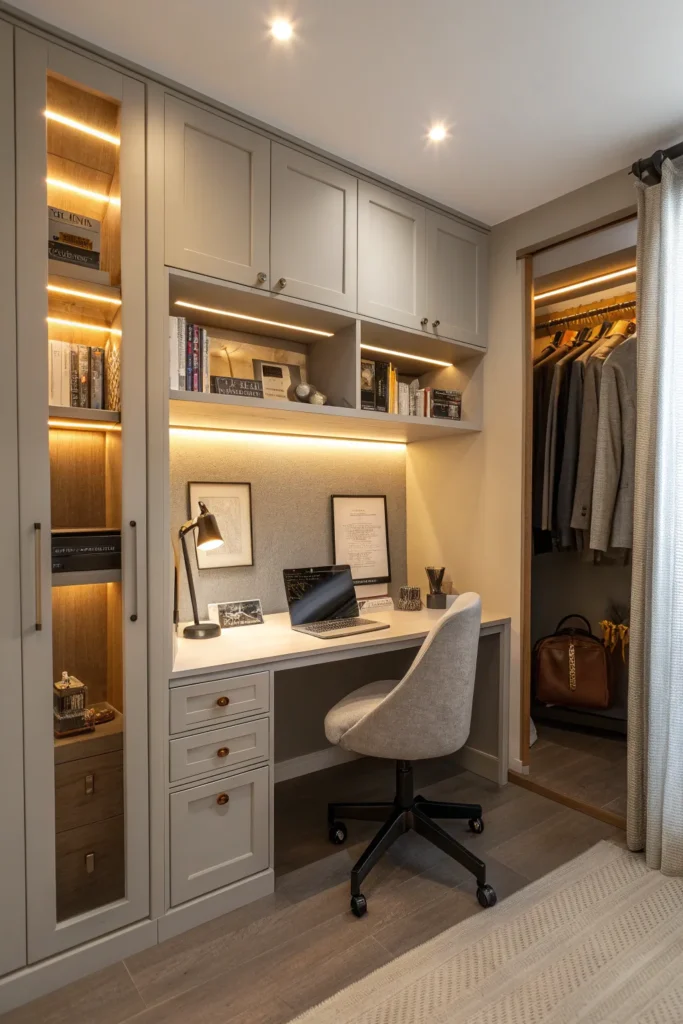
Closet offices, often called “cloffices,” are an excellent solution for small homes. They provide a designated workspace that can be closed off at the end of the day.
Remove the closet doors or replace them with curtains or sliding panels. Install a desk or countertop, add shelves above, and incorporate task lighting. Painting or wallpapering the interior helps distinguish the office area and adds personality.
6. Use Light, Neutral Colors to Open Up the Space
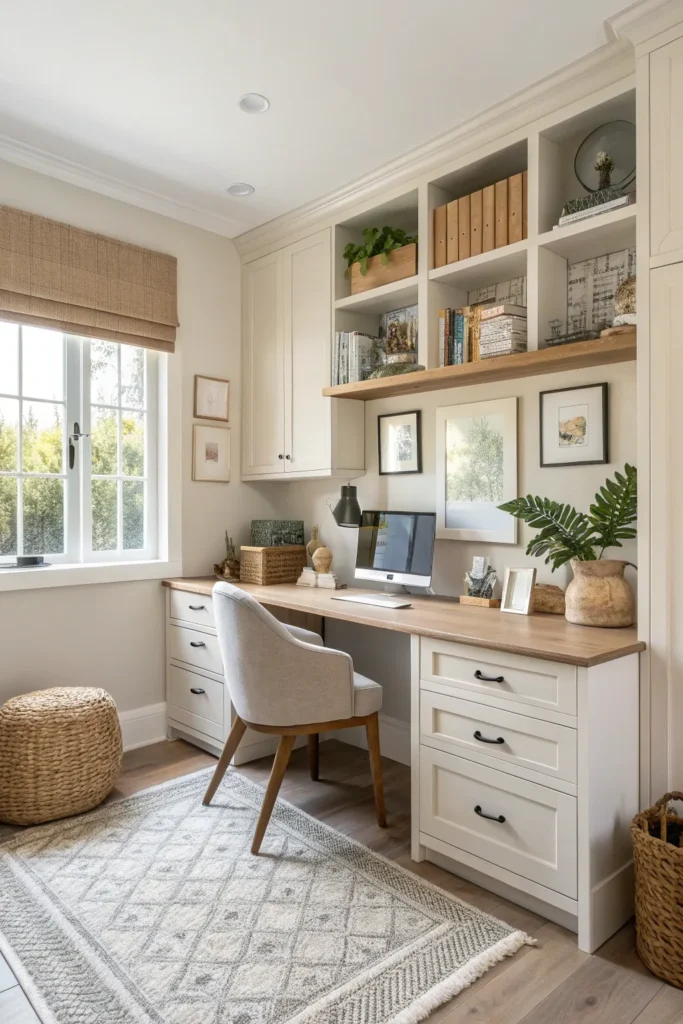
Color plays a major role in how a small home office feels. Light, neutral tones help reflect light and make compact spaces feel larger and more open.
Soft whites, warm beiges, pale grays, and muted earth tones create a calm backdrop that supports concentration. You can add interest with subtle accents through artwork, textiles, or accessories without overwhelming the space.
7. Add Personality With Minimal Decor
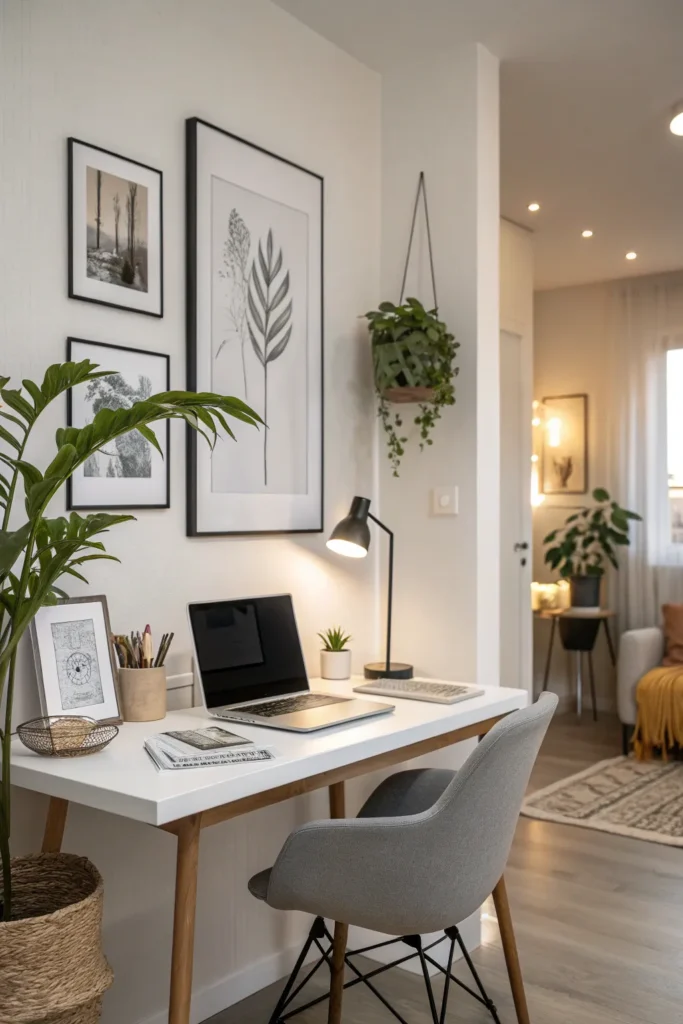
While clutter can hinder focus, a small amount of personal decor can make your home office more inviting and inspiring.
Choose a few meaningful items such as framed artwork, a plant, or a stylish desk accessory. Keeping decor minimal ensures your workspace remains clean and distraction-free while still reflecting your personal style.
8. Invest in an Ergonomic Chair
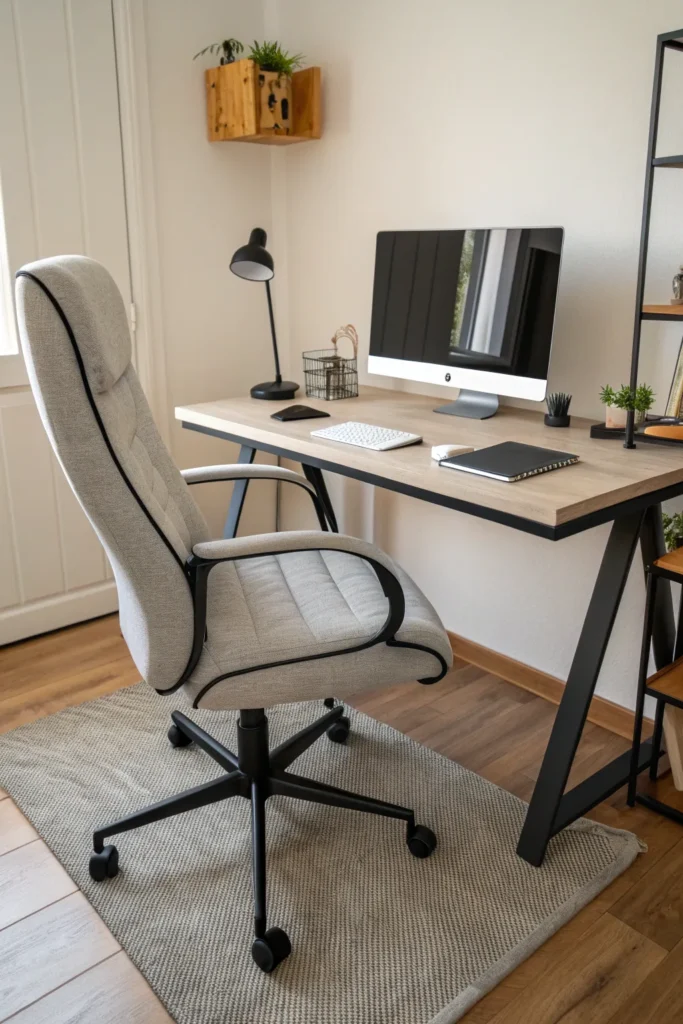
Comfort is essential for productivity, especially in small home offices where you may spend long hours seated. An ergonomic chair supports proper posture and reduces physical strain.
Look for a chair that fits your space without overpowering it. Many modern ergonomic chairs are designed with slim profiles and stylish finishes that complement contemporary interiors.
9. Maximize Natural Light Whenever Possible
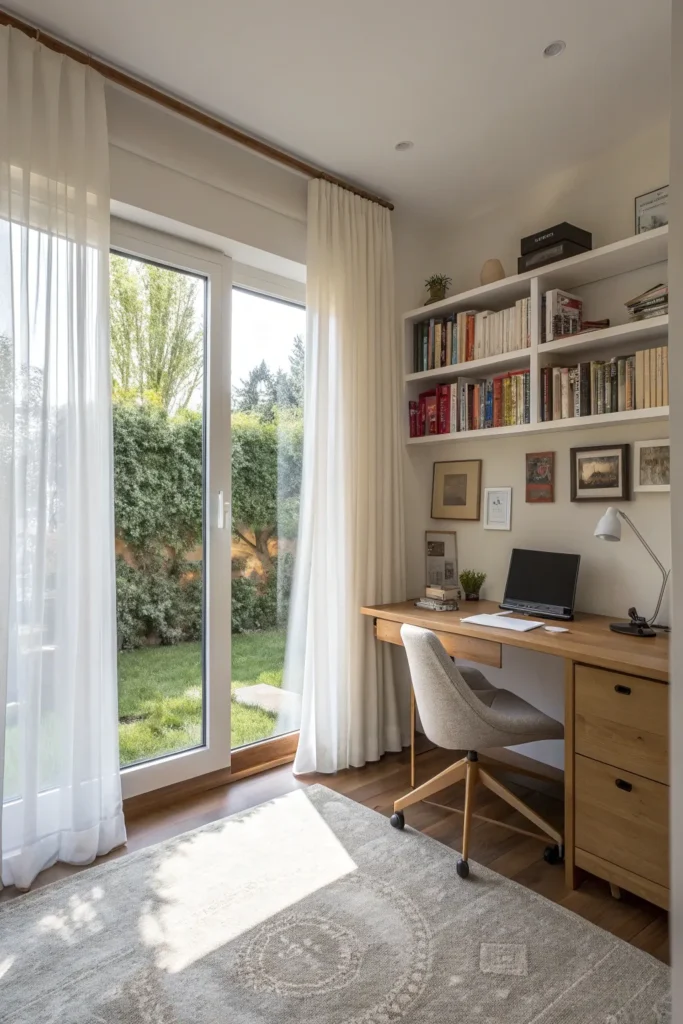
Natural light has a powerful effect on mood and focus. Position your desk near a window if possible to benefit from daylight and outdoor views.
If privacy is a concern, use sheer curtains or light-filtering blinds to soften the light without blocking it entirely. Natural light reduces eye strain and makes small offices feel more open and energizing.
10. Incorporate Warm, Layered Lighting
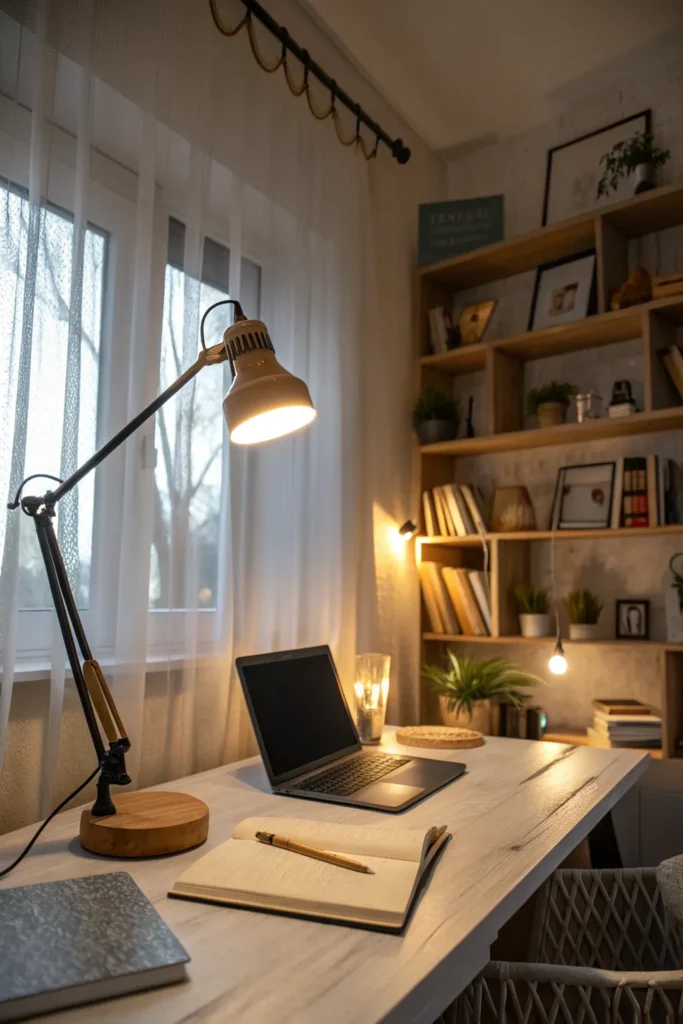
When natural light is limited, layered lighting becomes essential. A combination of ambient, task, and accent lighting helps create a comfortable and functional workspace.
Use a desk lamp for focused work, overhead lighting for general illumination, and a small accent light to add warmth. Warm-toned bulbs prevent the space from feeling harsh or clinical, supporting longer, more comfortable work sessions.
11. Keep Cables and Tech Organized
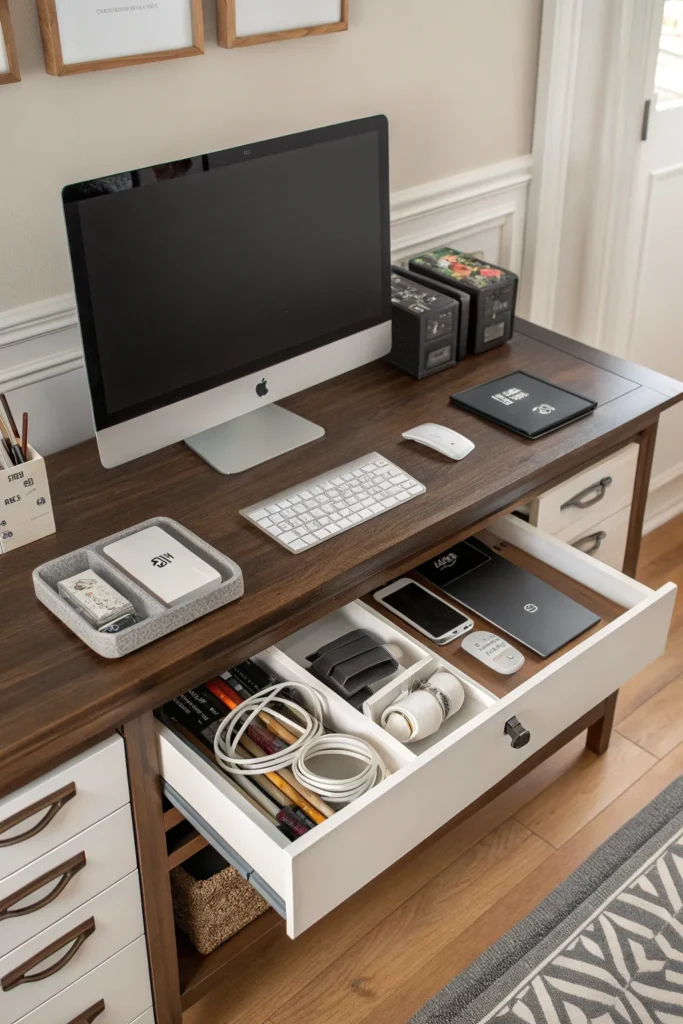
Visual clutter can quickly disrupt focus in a small home office, especially when it comes from tangled cables and tech accessories.
Use cable organizers, cord clips, and storage boxes to keep wires out of sight. Choose wireless accessories when possible to reduce clutter on your desk. A tidy tech setup helps maintain a calm, professional environment.
12. Use Multi-Functional Furniture
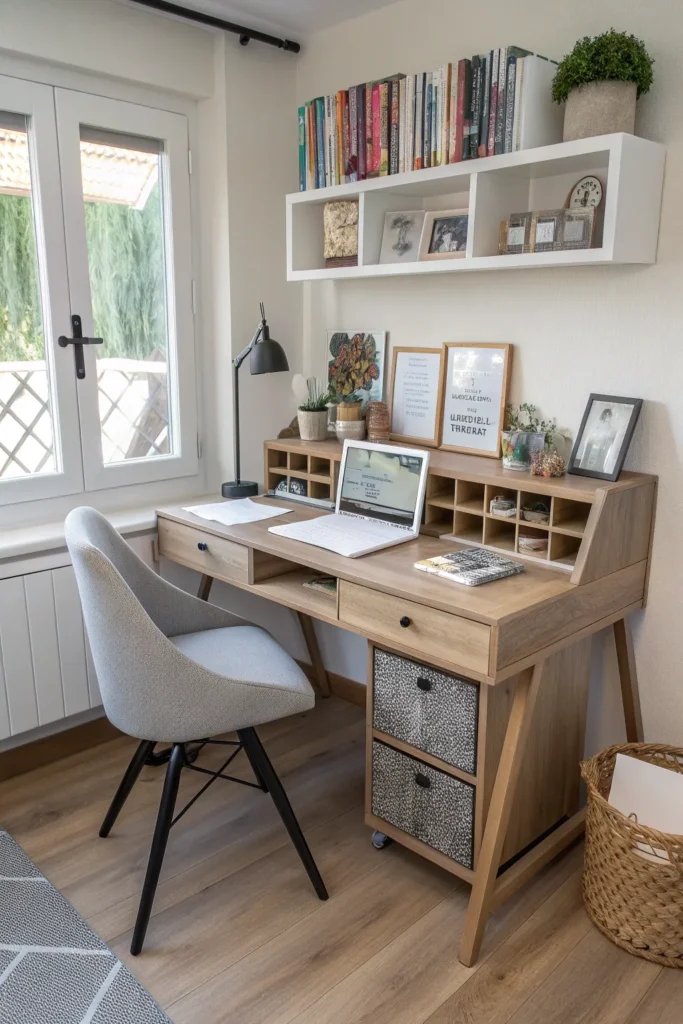
Multi-functional furniture is a smart solution for small home offices. Pieces that serve more than one purpose help maximize space and efficiency.
Consider desks that double as console tables, storage ottomans that provide seating and storage, or shelving units that function as room dividers. These flexible solutions adapt to changing needs without overcrowding the space.
13. Add Greenery for Focus and Freshness
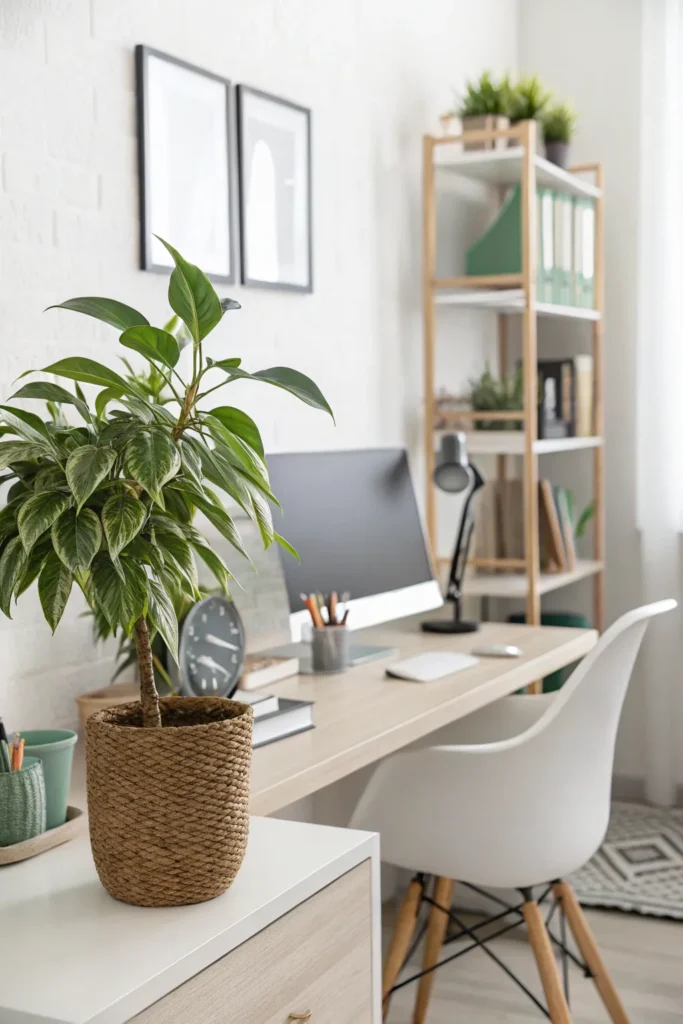
Plants bring life and energy into a small home office. They help soften hard lines, improve air quality, and create a more pleasant working environment.
Choose low-maintenance plants like snake plants, pothos, or succulents. Even a small plant on your desk or shelf can make a noticeable difference in how the space feels.
14. Create Visual Separation in Shared Spaces
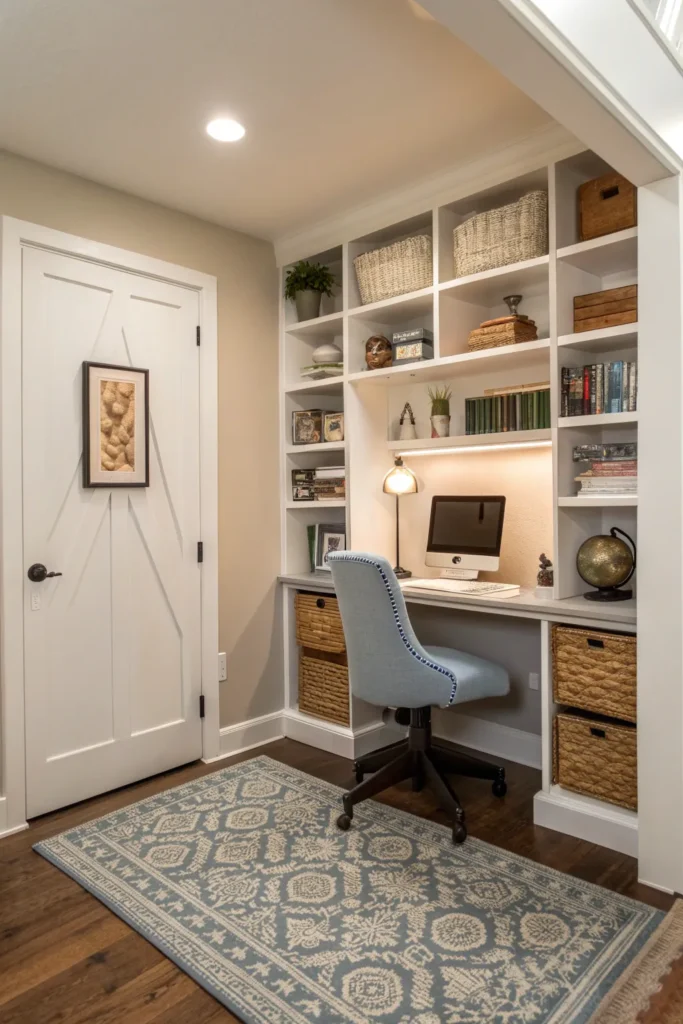
If your home office is part of a shared room, visual separation helps maintain focus and boundaries. This can be achieved without building walls.
Use room dividers, shelving units, curtains, or rugs to define the office area. Visual separation signals a shift into work mode and helps minimize distractions from the rest of the room.
15. Keep the Layout Simple and Intentional
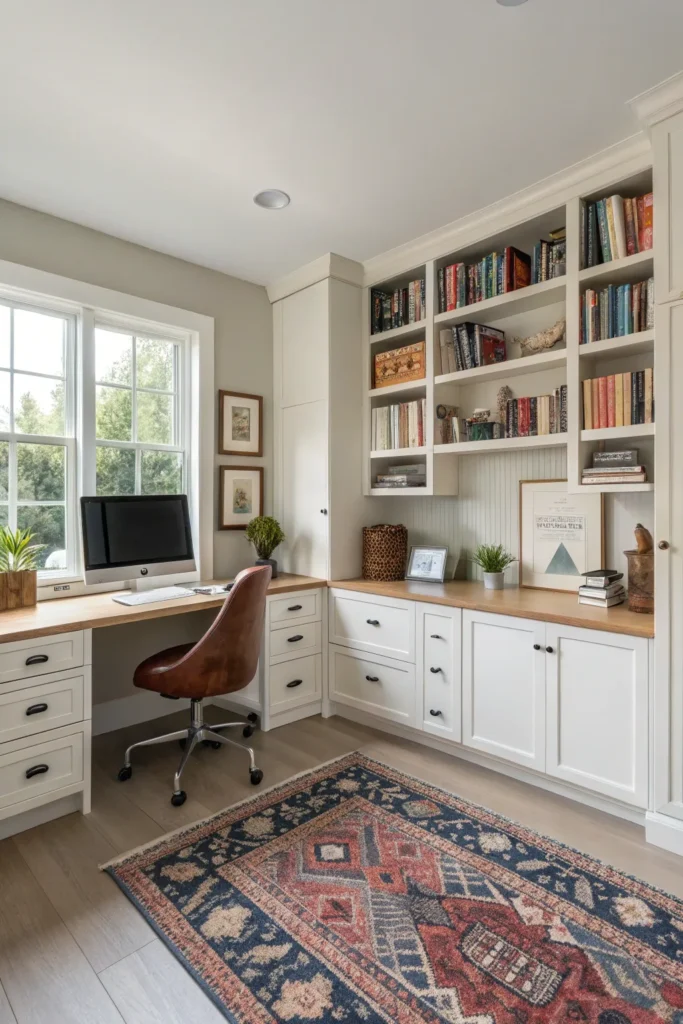
Simplicity is key in small home office design. Every item should serve a purpose, whether functional or aesthetic.
Avoid overcrowding the space with unnecessary furniture or decor. A simple, intentional layout promotes focus, efficiency, and a sense of calm, making it easier to stay productive throughout the day.
Designing a Small Home Office That Works for You
The most effective small home offices are tailored to individual work styles. Some people need plenty of storage and desk space, while others prefer a minimalist setup with fewer distractions. Understanding how you work best allows you to design a space that truly supports your productivity.
Pay attention to ergonomics, lighting, and organization, as these elements have a direct impact on focus and comfort. Small adjustments, such as repositioning your desk or improving lighting, can significantly enhance your daily work experience.
Style and Productivity Can Coexist
A small home office doesn’t have to feel cramped or purely utilitarian. With thoughtful design, it can be both stylish and highly functional. By combining smart storage, efficient layouts, and intentional decor, you can create a workspace that feels inspiring rather than restrictive.
These 15 small home office ideas prove that limited space doesn’t limit potential. With the right approach, you can build a home office that boosts focus, reflects your personal style, and supports your workday with ease and confidence.