15 Rectangle Living Room Layout Ideas for Perfect Space Planning
Rectangle living rooms present both opportunities and challenges in interior design, offering generous wall space and clear sight lines while requiring thoughtful furniture arrangement to prevent the dreaded “bowling alley” effect. Modern approaches to rectangular room layouts embrace the space’s natural proportions while creating distinct functional zones that feel intimate and purposeful rather than stretched or disconnected.
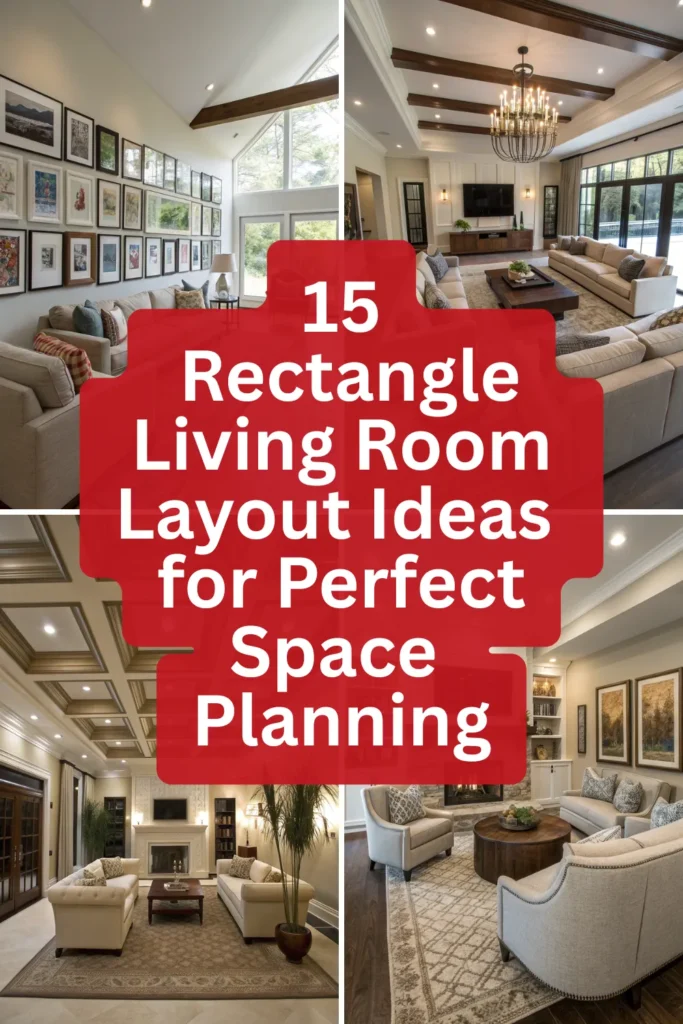
Successful rectangular living room design relies on understanding traffic flow patterns, focal point creation, and visual weight distribution that guides the eye naturally throughout the space. Contemporary layout strategies use furniture placement, area rugs, lighting, and architectural elements to break up long expanses while maintaining the room’s inherent sense of spaciousness and flow.
1. Floating Furniture Arrangement with Central Focus

Create an intimate conversation area by floating the main seating group away from walls toward the center of the room, anchored by a substantial coffee table and area rug that define the space while allowing traffic flow around the perimeter. Position a sectional sofa perpendicular to the room’s length with accent chairs creating a U-shaped arrangement.
Install a statement light fixture like a modern chandelier or oversized pendant above the seating area to establish vertical emphasis and draw attention to the central gathering space. Add console tables behind the sofa for additional surface area and visual weight, and position tall floor lamps at room corners to provide ambient lighting while emphasizing the room’s full dimensions. Complete with artwork groupings on the long walls that create visual stops and prevent the eye from racing to the room’s end.
2. Dual Zone Layout with Living and Dining Areas
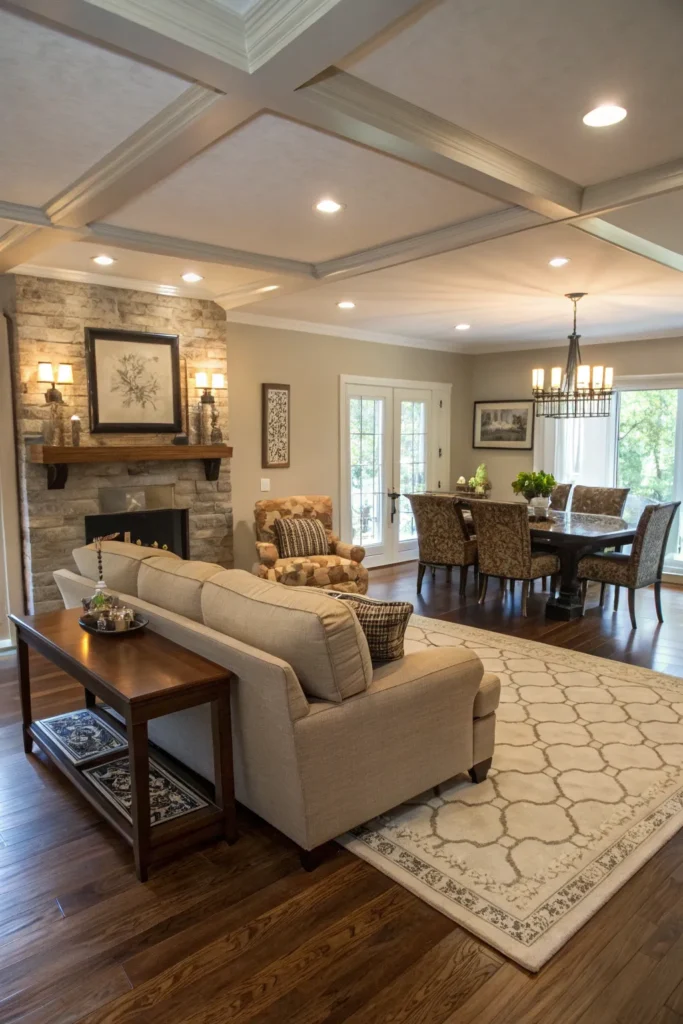
Divide the rectangular space into two distinct functional areas by creating a living zone at one end and dining area at the other, connected by a central walkway that maintains flow while establishing clear purpose for each area. Use area rugs to define each zone visually while coordinating colors and patterns.
Position the living area around a focal point like a fireplace or entertainment center, with seating arranged to encourage conversation while maintaining sight lines to the dining area. Place the dining table and chairs in the remaining space with adequate clearance for chair movement and serving access. Add a console table or room divider at the transition point to provide subtle separation while maintaining openness, and install layered lighting appropriate for each area’s function.
3. L-Shaped Sectional with Corner Emphasis

Anchor one end of the rectangular room with a large L-shaped sectional that creates a cozy corner seating area while leaving the remainder of the space open for additional functions like a home office, reading nook, or children’s play area. Position the sectional to face the room’s main focal point.
Add a substantial area rug that extends well beyond the sectional’s footprint to ground the seating area visually, and include a large coffee table that serves the entire sectional comfortably. Install built-in shelving or an entertainment center along one long wall to provide storage and display while adding architectural interest. Complete with accent lighting including table lamps on end tables and floor lamps that define the seating area’s boundaries.
4. Symmetrical Layout with Balanced Furniture Placement
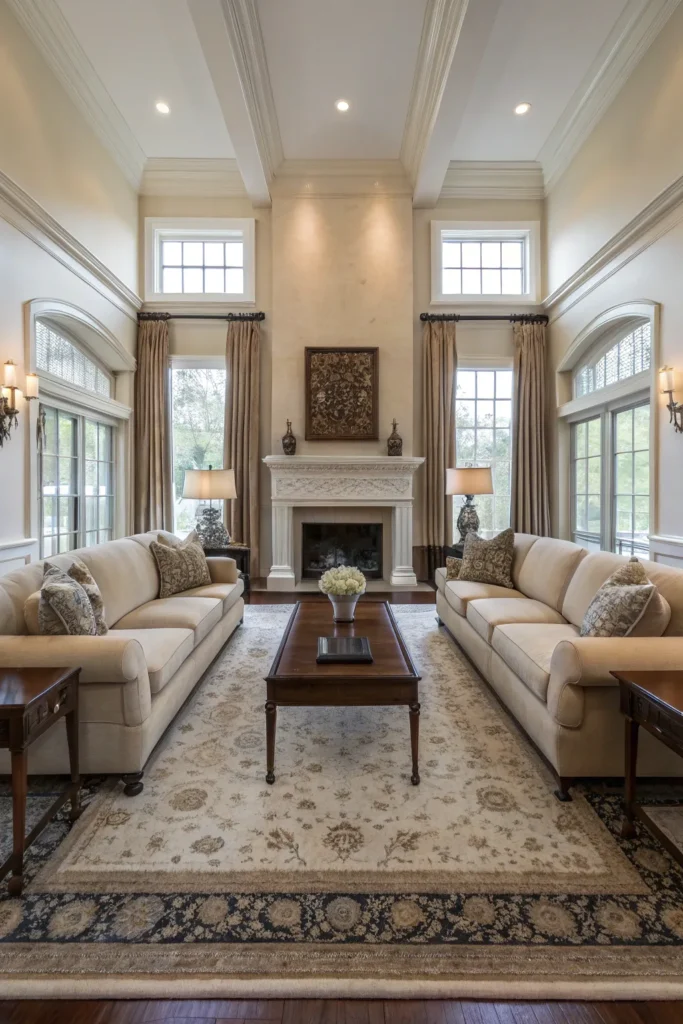
Create formal elegance by arranging furniture in symmetrical groupings along the room’s long axis, positioning matching sofas facing each other across a central coffee table with identical end tables and lamps providing perfect balance and classical proportions.
Install a dramatic focal point like a fireplace, large artwork, or built-in entertainment center at one end of the room to anchor the symmetrical arrangement, and add matching accent chairs or ottomans to complete the formal seating group. Use identical window treatments on both long walls to enhance the balanced feeling, and include a substantial area rug that unifies the entire arrangement while providing visual weight appropriate for the formal layout.
5. Gallery Wall with Furniture Following Art
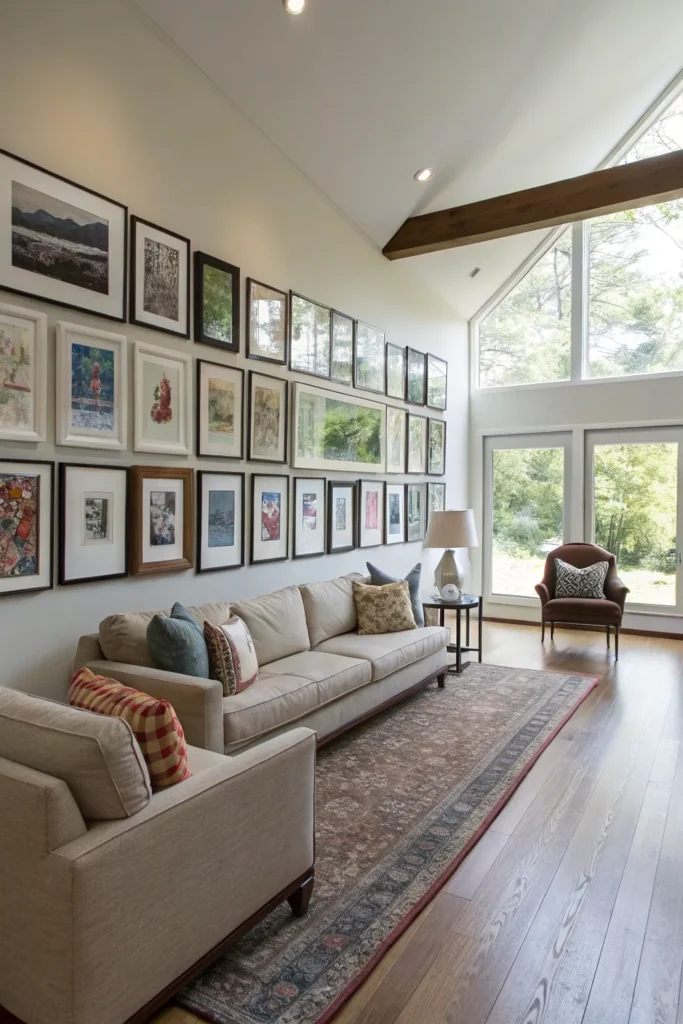
Design the room around a dramatic gallery wall along one long side, then arrange furniture to complement and view the art display while creating comfortable seating that doesn’t compete with the visual impact of the artwork collection.
Position a long, low sofa parallel to the gallery wall at optimal viewing distance, complemented by a sleek coffee table and minimalist accent chairs that don’t obstruct sight lines to the art. Add museum-quality lighting including picture lights and adjustable track systems that highlight the artwork while providing ambient room lighting. Include simple accessories and neutral colors throughout the space that allow the art collection to serve as the primary color and visual interest source.
6. Angled Furniture Placement with Dynamic Flow

Break up the rectangular room’s rigid geometry by placing major furniture pieces at angles to the walls, creating more dynamic traffic patterns and visual interest while maintaining functional seating arrangements and clear pathways throughout the space.
Position the main sofa at a 45-degree angle to one corner, complemented by accent chairs and coffee table arranged to create an intimate conversation area that feels less formal than traditional parallel arrangements. Add area rugs that follow the angled furniture placement, and include lighting that highlights the diagonal arrangement while providing adequate illumination for all seating areas. Use accessories and plants to soften the angled edges while maintaining the dynamic visual effect.
7. Long Sofa with Accent Chairs Cluster
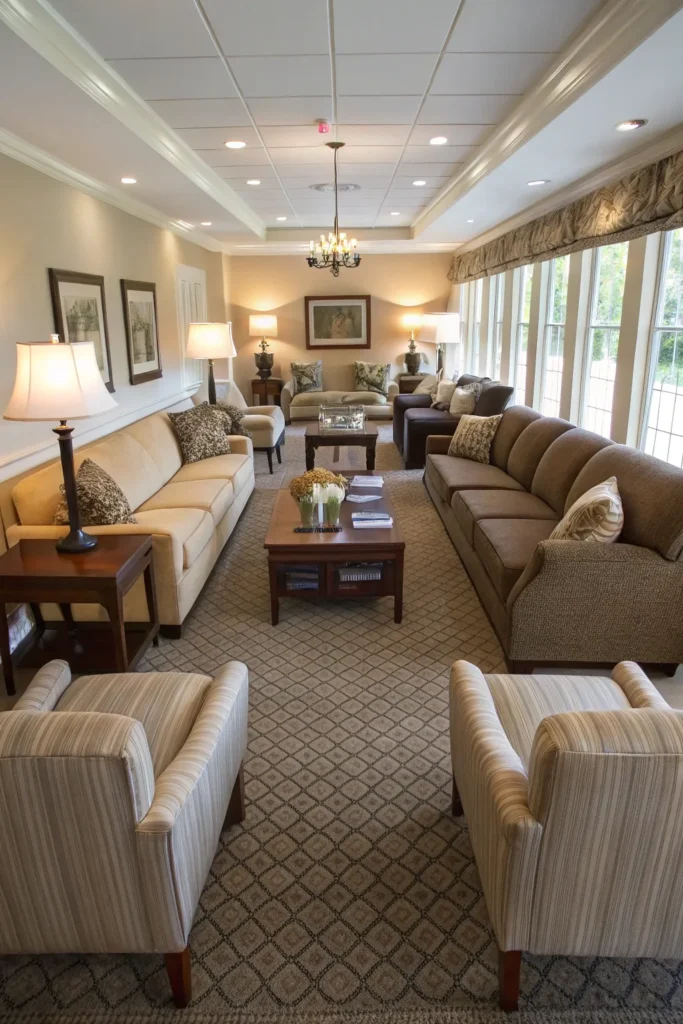
Install one long sofa along the room’s length, then create visual interest and functional seating by clustering accent chairs in complementary styles and colors at the opposite end, connected by a substantial coffee table arrangement that serves both seating areas.
Choose accent chairs in varying heights and styles that provide visual texture while maintaining color coordination with the main sofa, and position them to create intimate conversation areas while maintaining sight lines throughout the room. Add side tables between chairs for drinks and personal items, and include floor lamps or table lamps that provide task lighting for reading while contributing to the overall ambient lighting scheme.
8. Built-In Entertainment Center with Seating Arc
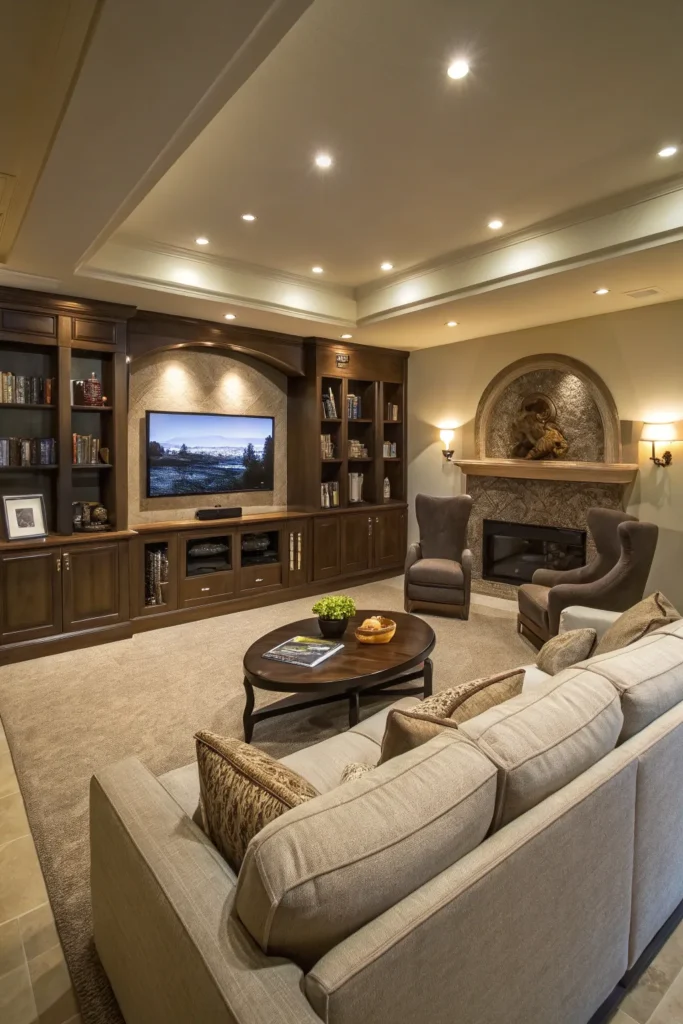
Design the room around a built-in entertainment center that spans one short wall, then arrange seating in an arc formation that provides optimal viewing angles for all seats while creating an intimate theater-like atmosphere for family entertainment.
Install custom cabinetry that includes storage for media equipment, books, and decorative objects while housing the television at appropriate viewing height. Position a sectional sofa and accent chairs in a curved arrangement that faces the entertainment center, with a large coffee table providing central surface area. Add dimmable lighting throughout the room that can be adjusted for television viewing while maintaining ambient light for other activities.
9. Multiple Seating Groups with Distinct Functions

Create several smaller seating arrangements within the rectangular space, each serving different functions like intimate conversation, television viewing, reading, or game playing, connected by coordinated color schemes and furniture styles while maintaining individual identity.
Position a main conversation group around a central coffee table, add a reading chair with good lighting near a window, and include a game table with appropriate seating in the remaining space. Use area rugs to define each seating group visually while coordinating patterns and colors that unify the overall room design. Add appropriate lighting for each function including task lighting for reading and games, ambient lighting for conversation, and adjustable lighting for television viewing.
10. Window Wall Focus with Furniture Arrangement
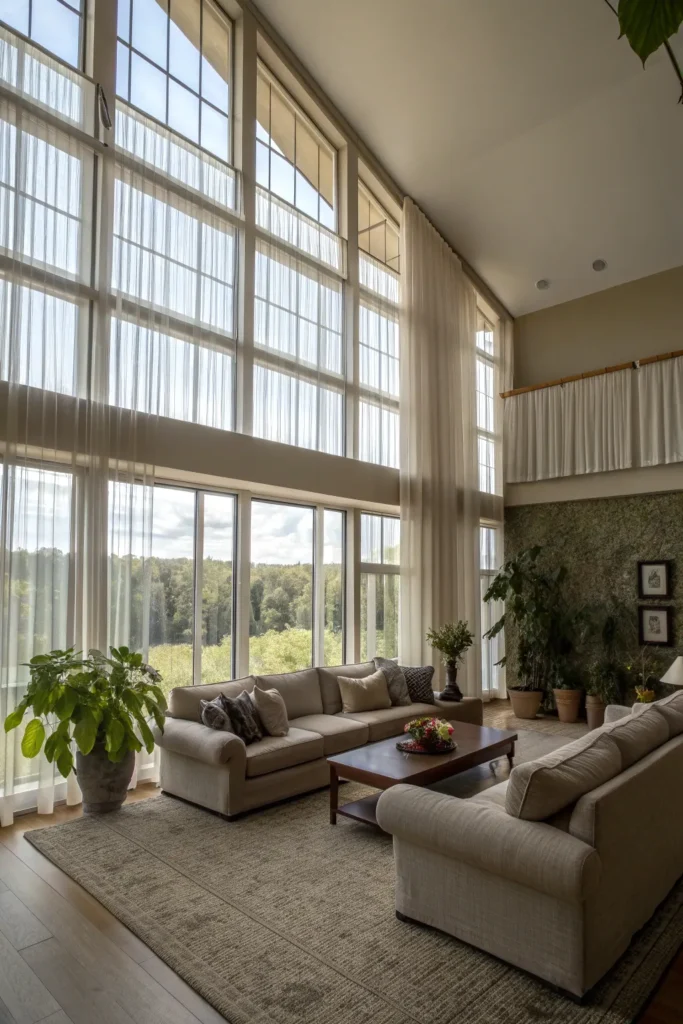
Take advantage of windows along one long wall by arranging furniture to maximize natural light while creating seating that enjoys outdoor views, using window treatments that provide privacy when needed while maintaining the connection to exterior spaces.
Position the main seating group to face the windows while maintaining comfortable conversation distances, and add window-side seating like a bench or chaise lounge that takes full advantage of natural light for reading or relaxation. Install layered window treatments including sheers for diffused light and heavier panels for privacy and light control. Complete with plants that benefit from the natural light while softening the architectural lines of the windows.
11. Fireplace Focal Point with Radial Seating

Design the entire room layout around a fireplace focal point, whether existing or added, by creating seating arrangements that radiate outward from the hearth while maintaining clear sight lines and comfortable conversation distances for both intimate gatherings and larger groups.
Position the main sofa facing the fireplace with accent chairs angled to create a semi-circular conversation area, and add additional seating that can be moved closer to the fire during colder months. Install built-in shelving or cabinetry flanking the fireplace to provide storage and display while enhancing the architectural importance of the focal point. Include a substantial mantelpiece that can accommodate seasonal decorations and artwork that complements the room’s overall design theme.
12. Open Shelving Room Divider with Dual Spaces

Install a tall, open shelving unit perpendicular to the room’s length to create subtle division between two functional areas while maintaining visual connection and natural light flow throughout the space. Use the shelving to display books, plants, and decorative objects that enhance both sides of the room.
Create distinct seating arrangements on each side of the divider, perhaps a formal living area on one side and a casual family room or home office on the other, connected by coordinated color schemes and flooring materials. Position the shelving unit to allow natural traffic flow while providing partial privacy for different activities, and include lighting on both sides that creates ambiance while highlighting the displayed objects.
13. Conversation Pit with Lowered Seating Area

Create a unique focal point by designing a sunken conversation area in the center of the rectangular room, using low-profile furniture and strategic lighting to create an intimate gathering space that feels separate from the room’s perimeter while maintaining visual connection.
Install built-in seating with plush cushions around the lowered area, complemented by a low coffee table and soft area rug that define the space. Add accent lighting including recessed fixtures in the lowered ceiling and table lamps that create warm, intimate illumination for evening conversations. Use the room’s perimeter for additional functions like a home bar, library area, or display space that serves the central conversation area.
14. Modular Furniture System with Flexible Configuration
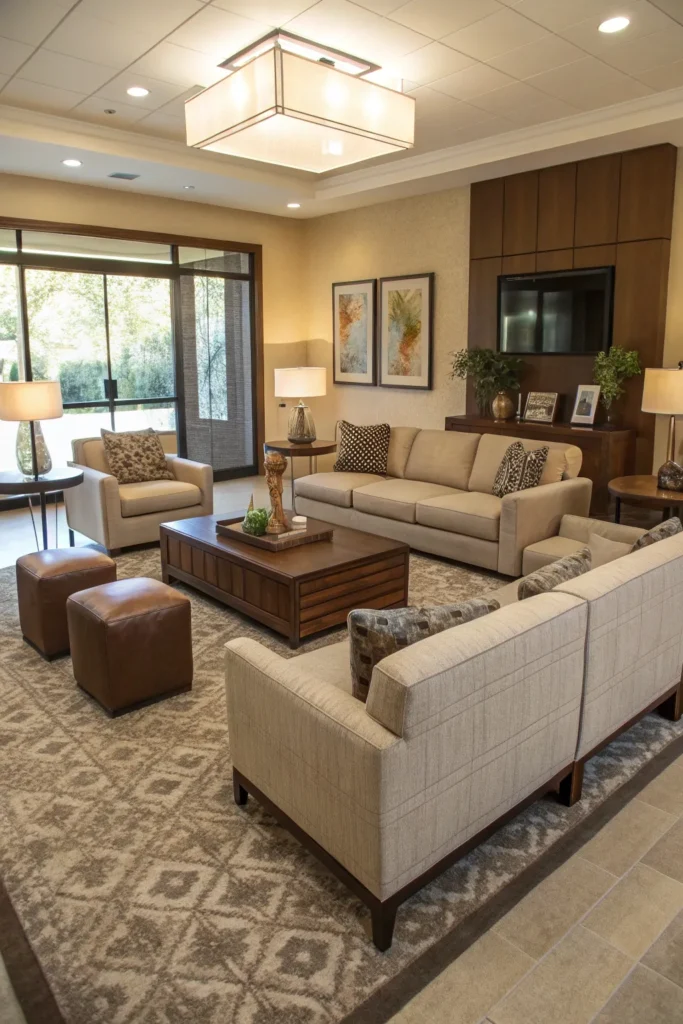
Design an adaptable living room using modular furniture pieces that can be reconfigured for different occasions and activities, allowing the rectangular space to serve multiple functions while maintaining style consistency and comfort for daily use.
Choose modular seating systems that can be arranged as individual chairs, love seats, or large sectionals depending on needs, complemented by nesting tables and storage ottomans that provide surface area and organization while adapting to different configurations. Include mobile lighting solutions like floor lamps and table lamps that can be repositioned with furniture changes, and use coordinated accessories that work with various arrangements.
15. Dramatic Ceiling Treatment with Furniture Supporting Architecture

Install distinctive ceiling treatments like coffered details, exposed beams, or dramatic lighting installations that draw attention upward while arranging furniture to complement and support the architectural drama without competing for visual attention.
Position furniture in clean, simple arrangements that allow the ceiling treatment to serve as the room’s primary design statement, using neutral colors and minimal accessories that enhance rather than distract from the architectural elements. Add appropriate lighting that highlights the ceiling details while providing functional illumination for seating areas, and include tall plants or architectural accessories that bridge the connection between floor and ceiling elements.
Mastering Proportions in Elongated Spaces
The key to successful rectangular living room design lies in understanding how furniture scale and placement can either emphasize or minimize the room’s elongated proportions, creating spaces that feel balanced and appropriately sized rather than stretched or cramped.
Furniture selection becomes crucial in rectangular rooms, with pieces that are too small appearing lost in the space while oversized furniture can overwhelm and restrict movement. The goal is finding the sweet spot where furniture feels substantial enough to anchor the room while maintaining appropriate scale relationships and comfortable traffic flow patterns.
Visual weight distribution requires careful consideration of how dark and light elements, tall and low pieces, and busy and simple patterns work together to create balanced compositions that guide the eye naturally throughout the space rather than emphasizing the room’s longest dimension.
Creating Intimacy Within Expansive Rectangles
Large rectangular living rooms present the challenge of maintaining human-scale comfort within generous proportions, requiring design strategies that create intimate gathering spaces without losing the sense of spaciousness that makes these rooms desirable.
Lighting plays a crucial role in defining intimate areas within larger spaces, with layered lighting schemes that can create cozy evening atmospheres while providing bright, energetic daytime illumination. Table lamps, floor lamps, and accent lighting allow for customization of ambiance while architectural lighting provides overall illumination and emphasizes the room’s best features.
Color and texture application can either expand or contract perceived space, with warm colors and rich textures creating cozy feelings while cool colors and smooth surfaces maintain spacious sensations. The most successful rectangular room designs balance these elements to create spaces that feel both grand and welcoming, adapting to different moods and occasions throughout daily life.