15 Open-Shelf Kitchen Styling Ideas That Stay Clutter-Free
Open shelving in kitchens offers beauty, accessibility, and a sense of airiness that closed cabinets simply cannot match. However, the greatest challenge lies in maintaining that curated, clutter-free look while actually using your kitchen daily.
These fifteen styling ideas prove that open shelves can remain both functional and beautiful, combining smart organization strategies with aesthetic principles that create Instagram-worthy displays that actually work in real life.
Understanding the Open-Shelf Philosophy
Before styling open shelves, it’s crucial to understand that less is genuinely more in this context. Unlike closed cabinets where you can cram items haphazardly, open shelves demand intentionality—every item must earn its place both functionally and aesthetically. The goal is creating a system where beautiful display and practical storage coexist seamlessly, making items easy to access while maintaining visual harmony.
1. Color-Coordinated Dishware Display
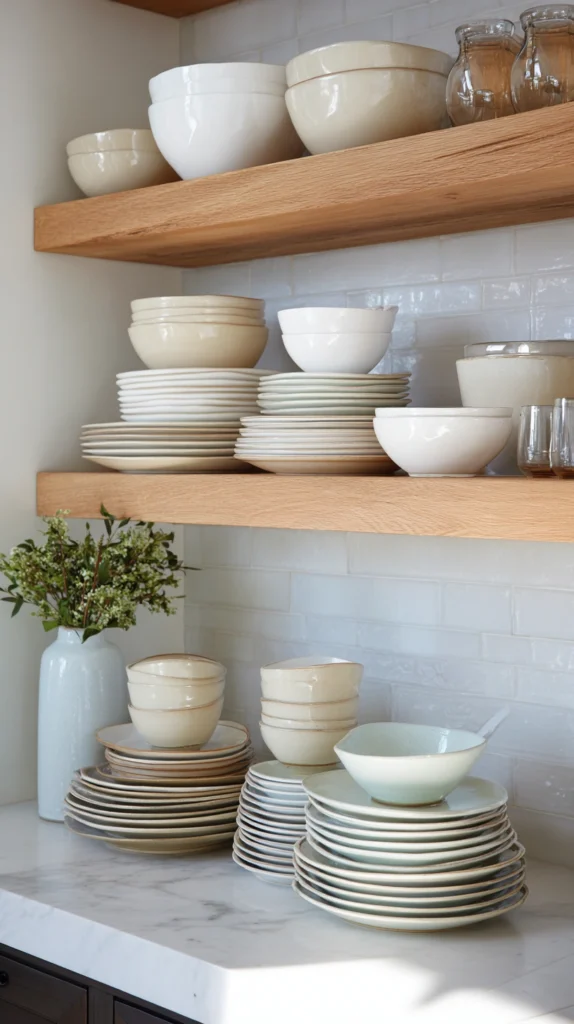
Organize dishes, bowls, and glassware by color to create instant visual cohesion that feels curated rather than chaotic. Stack white plates together, group cream-colored bowls separately, and arrange glassware by type and size.
This monochromatic or tonal approach allows you to store substantial quantities while maintaining a clean, intentional appearance. The uniformity tricks the eye into perceiving organization even when shelves hold many items, and retrieving what you need remains intuitive.
2. The Rule of Three Strategy
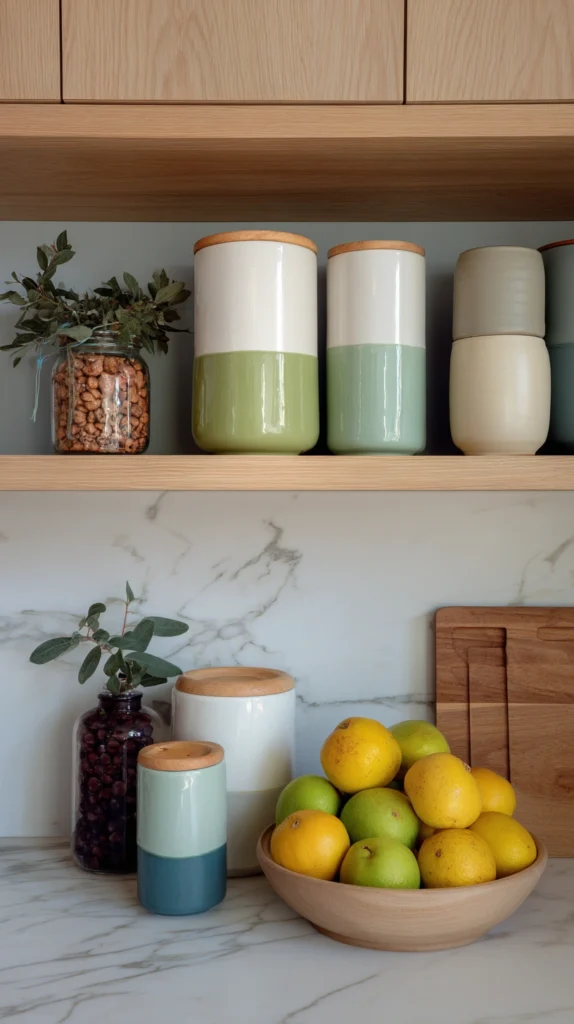
Apply the design principle of grouping items in odd numbers—particularly threes—to create balanced, visually appealing arrangements. Place three canisters of varying heights together, arrange three cookbooks stacked with a small plant on top, or group three ceramic bowls in graduating sizes.
This odd-number grouping feels natural and aesthetically pleasing while preventing the rigid, symmetrical look that even numbers can create, and it naturally limits how much you place on each shelf.
3. Front-Facing Label System
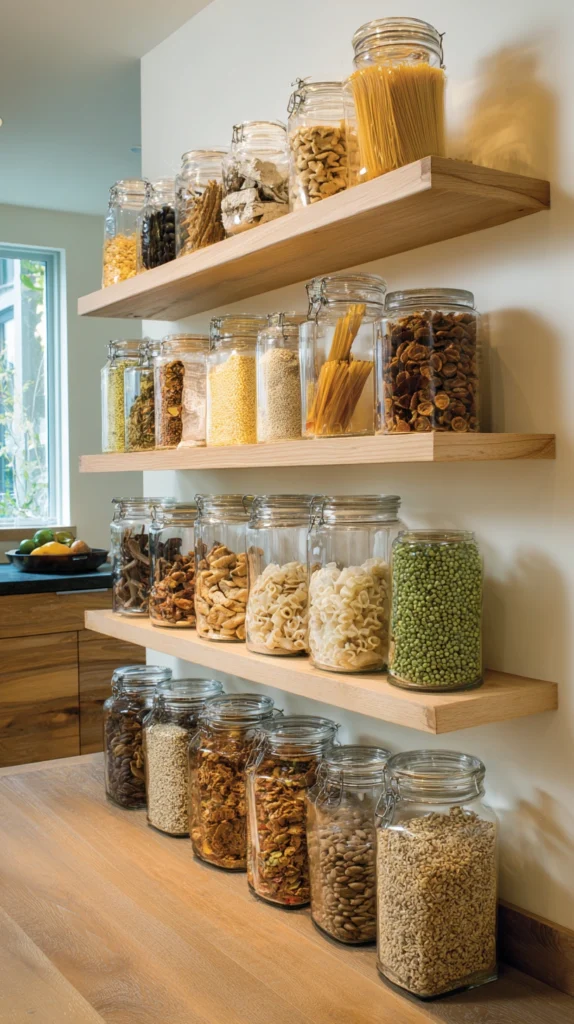
Turn all jars, bottles, and packaged goods so labels face forward, creating a store-like display that looks intentional and organized. Decant dry goods into matching glass jars with coordinating labels for a cohesive appearance that elevates everyday staples into decorative elements.
This approach works particularly well with oils, vinegars, spices, and baking supplies, transforming functional storage into attractive display while making ingredients immediately identifiable and accessible.
4. Vertical Stacking with Intention
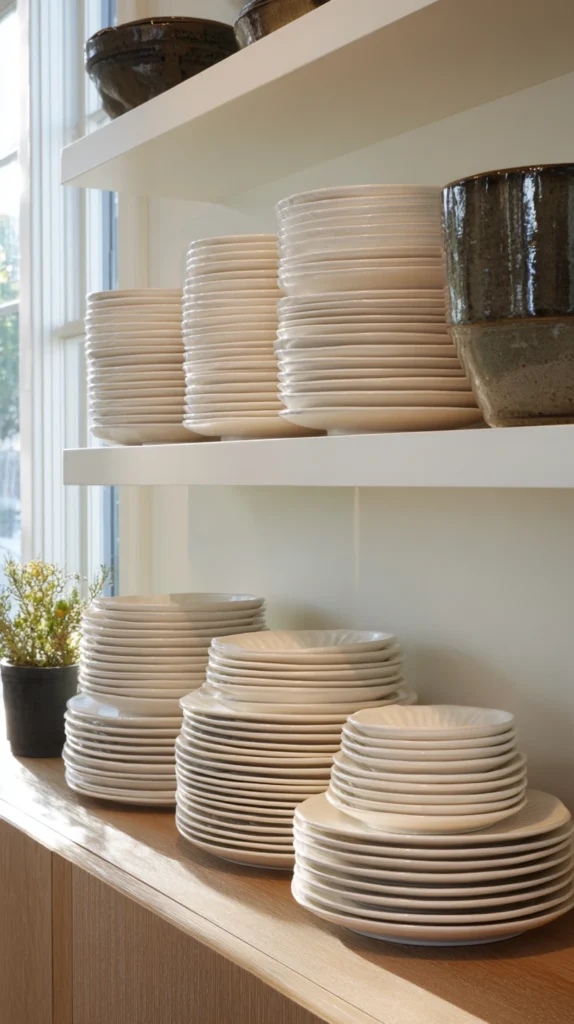
Maximize storage while maintaining visual appeal by stacking items vertically rather than spreading them horizontally across shelves. Stack dinner plates in sets of six to eight, nest mixing bowls by size, and arrange mugs in tidy rows.
Leave deliberate negative space between groupings to prevent the cluttered appearance that occurs when every inch is filled. The vertical stacking provides surprising capacity while the breathing room maintains the curated aesthetic essential to successful open shelving.
5. Natural Material Cohesion
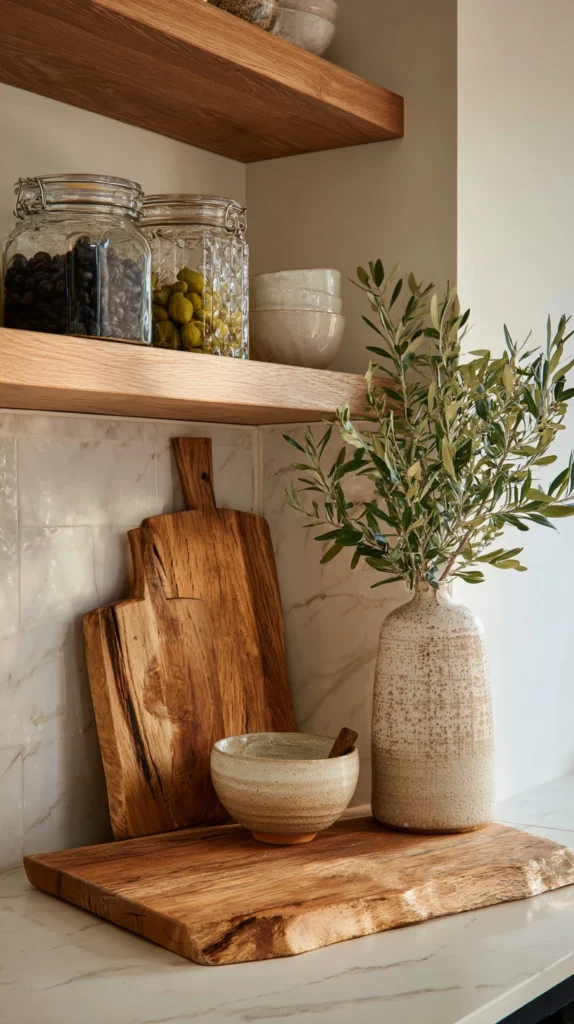
Limit open shelf contents to natural materials—wood, ceramic, glass, linen, and metal—for an inherently cohesive look regardless of specific colors or styles. Exclude plastic containers, bright packaging, and synthetic materials that disrupt visual harmony.
The natural material palette creates automatic unity because these materials share organic origins and complementary textures, and they photograph beautifully while aging gracefully rather than looking cheap or dated over time.
6. Styled Cookbooks as Decor
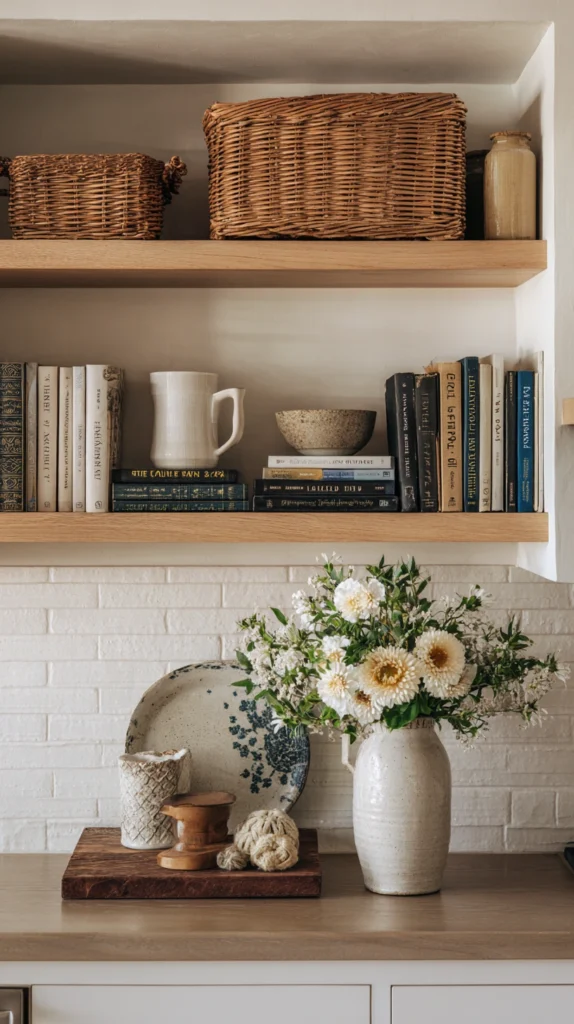
Treat cookbooks as decorative objects by displaying only your most beautiful volumes with appealing spines or covers. Stack books horizontally in groups of two to four, using them as platforms for small objects like salt cellars, egg cups, or tiny potted herbs. Arrange books by color or size to create rhythm along the shelf, and rotate your display seasonally to keep things fresh while the majority of your cookbook collection remains stored elsewhere.
7. The One-In-One-Out Rule
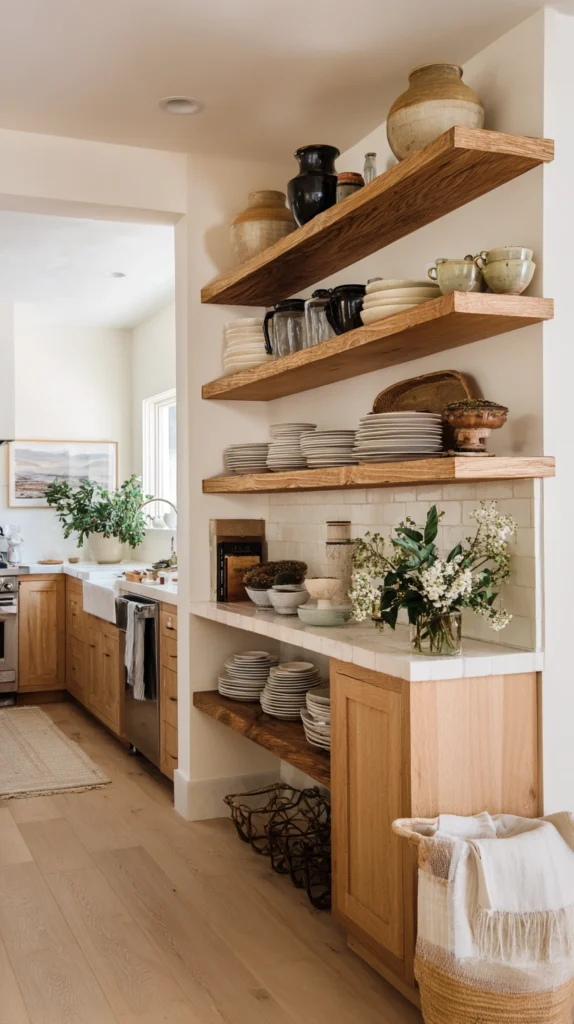
Maintain clutter-free shelves by implementing a strict one-in-one-out policy where adding any new item requires removing something currently displayed. This discipline prevents the gradual accumulation that transforms organized shelves into cluttered messes over time.
Regularly edit your display, removing items you don’t use or that no longer serve the aesthetic, and be ruthless about keeping only what genuinely deserves the prime real estate that open shelving represents.
8. Floating Shelf Minimalism
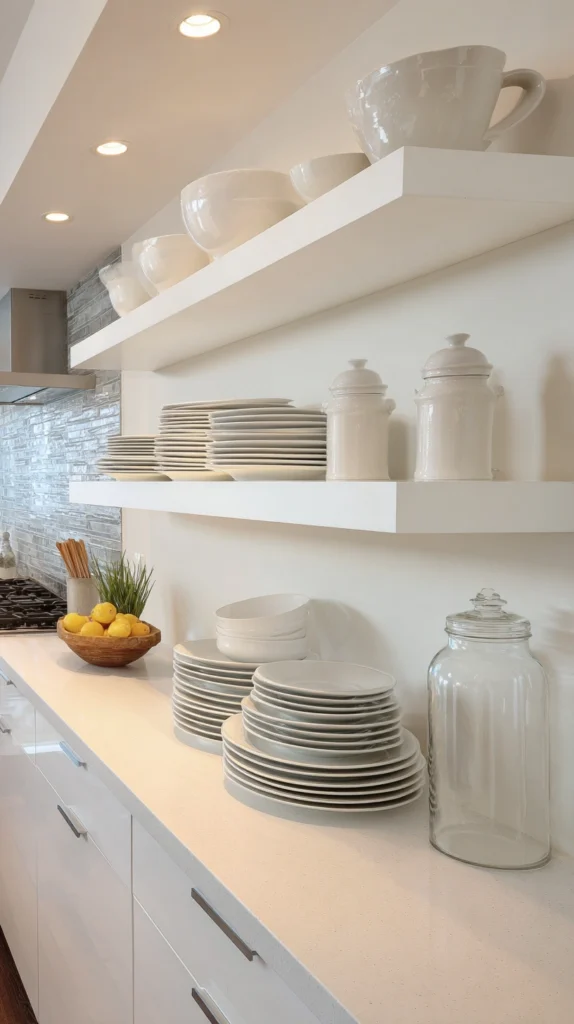
Install floating shelves and embrace extreme minimalism by displaying only a few carefully chosen items per shelf with abundant negative space. Perhaps a single row of white plates on one shelf, three matching canisters on another, and a small collection of glassware on a third.
This approach requires discipline but creates a gallery-like quality that feels sophisticated and intentional, proving you don’t need to fill every shelf to justify having them.
9. Basket and Box Containment
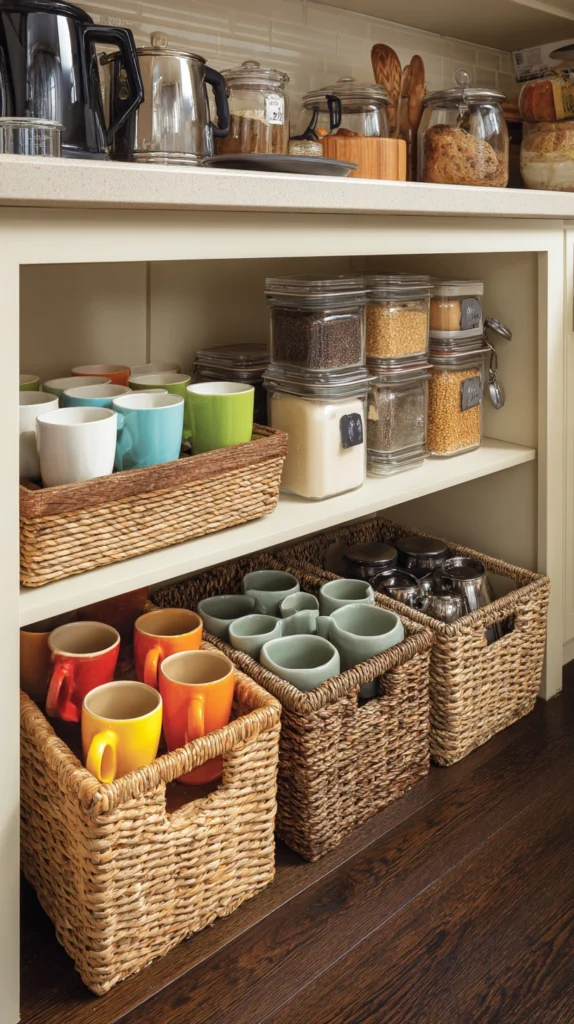
Use attractive baskets, wooden boxes, or ceramic containers to corral smaller items that would otherwise create visual chaos. Store tea bags in a woven basket, keep napkins in a wooden box, or group spices in a ceramic container.
These containers create visual boundaries that organize miscellaneous items into cohesive units, and they allow you to maintain open shelving’s aesthetic while hiding less attractive necessities that you need regularly.
10. Symmetrical Balance Approach
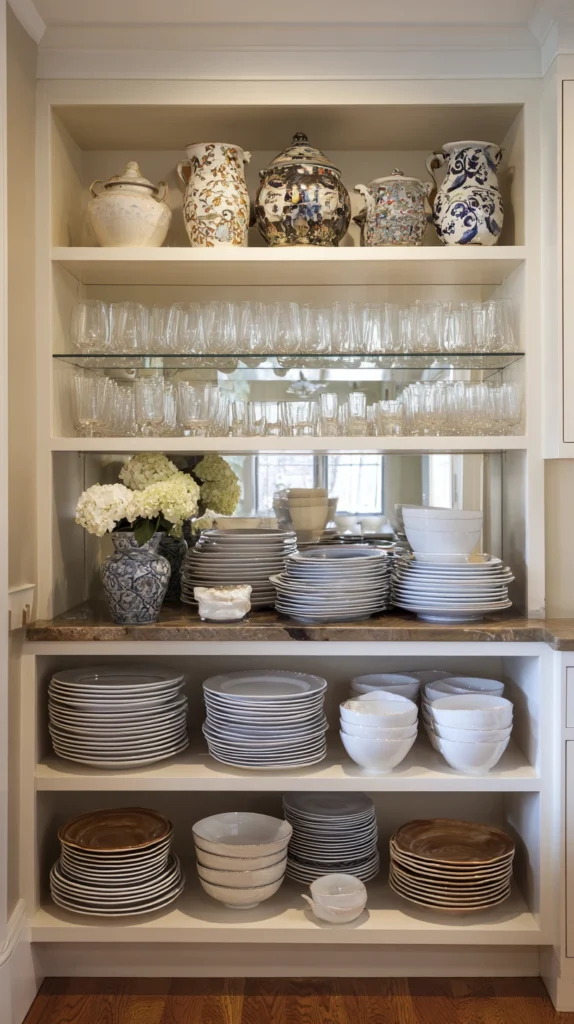
Create calm, orderly open shelving by arranging items symmetrically with matching elements on either side of a center point. Place identical canisters flanking a central bowl, arrange matching stacks of plates on both ends of a shelf with glassware centered, or position similar items in mirror-image configurations.
Symmetry feels inherently organized and intentional, making it an excellent approach for those who struggle with more organic styling methods while ensuring everything has a specific place.
11. Seasonal Rotation System
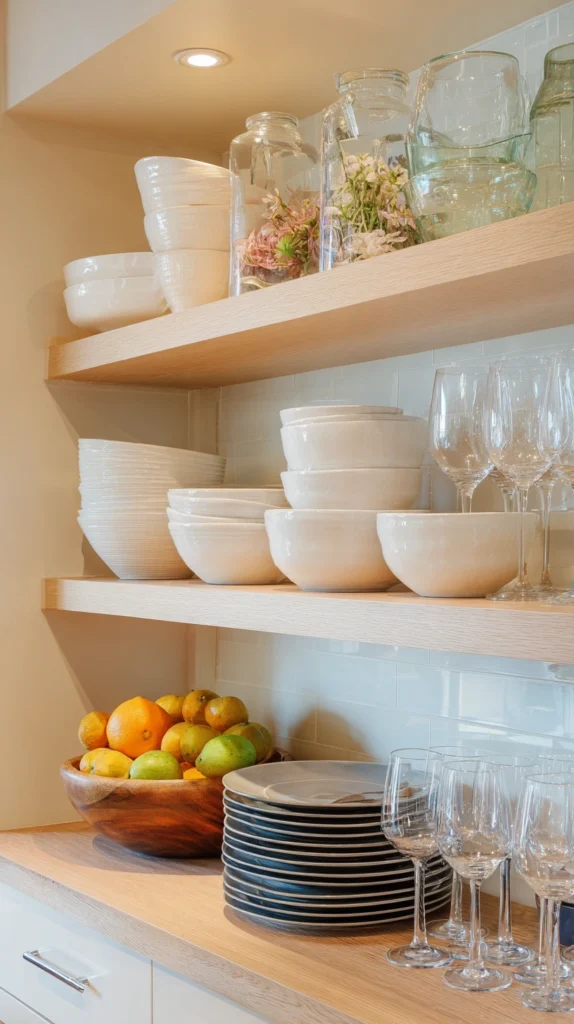
Keep open shelves feeling fresh and clutter-free by rotating items seasonally, displaying only what’s currently relevant. Show bright glassware and lightweight dishes in summer, then swap to earthier pottery and heavier serveware in fall and winter.
Store off-season items in closed cabinets or the basement, which prevents overcrowding while allowing you to enjoy variety throughout the year without purchasing entirely new collections.
12. Height Variation for Visual Interest
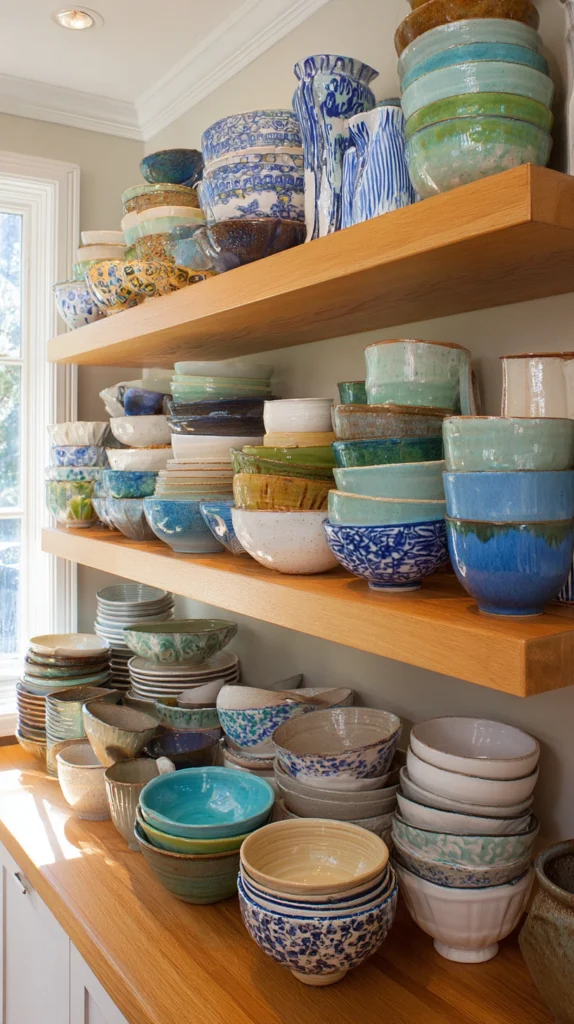
Arrange items at varying heights to create dynamic visual rhythm that’s more engaging than uniform rows. Place tall items like pitchers or vases next to shorter stacks of plates, position cutting boards vertically behind horizontal bowl stacks, or use small risers to elevate certain pieces.
This height variation guides the eye around the display in an interesting pattern while maintaining organization through grouping similar items despite their different heights.
13. Daily-Use-Only Philosophy
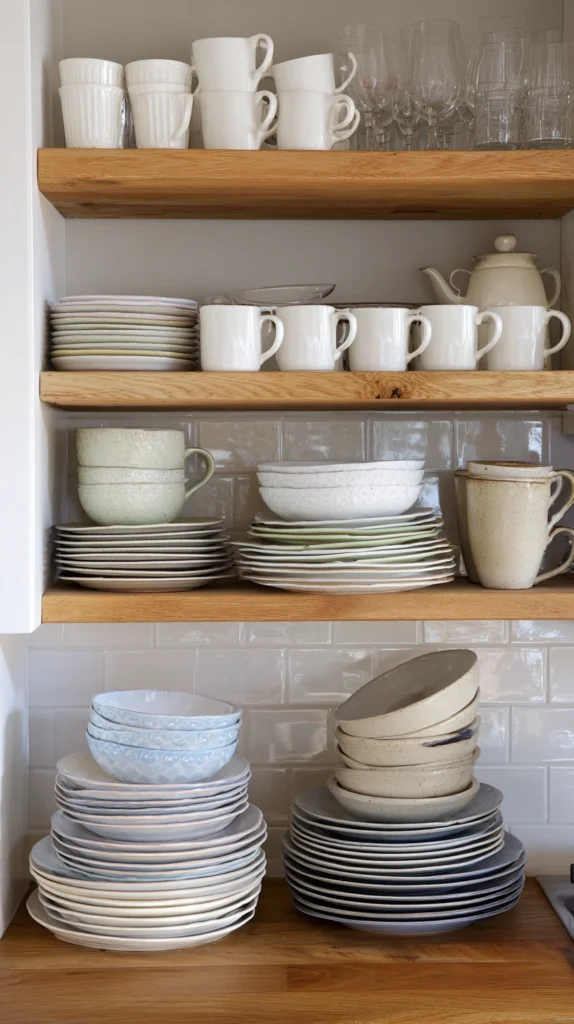
Display exclusively items you use daily or weekly, storing special occasion pieces and rarely used equipment in closed cabinets. This ensures everything on open shelves serves a functional purpose, preventing decorative-only items from accumulating while maintaining legitimacy as working kitchen storage.
The daily-use requirement naturally limits what goes on shelves, and retrieving items becomes second nature when you know exactly where your most-used pieces live.
14. Monochromatic White Collections
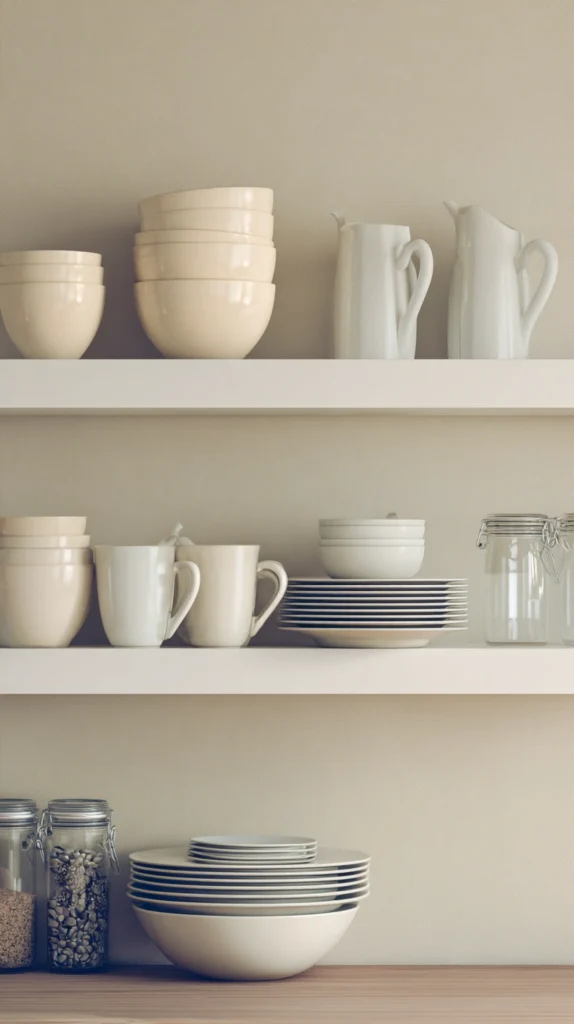
Commit to displaying only white or cream-colored items on open shelves for foolproof visual cohesion regardless of styles or sources. White dishes, ceramics, and glassware create a unified, gallery-like appearance even when mixing vintage finds with modern pieces.
This approach maximizes flexibility while maintaining a clean aesthetic, and white’s reflective quality brightens kitchens while never clashing with changing decor or accessories in surrounding spaces.
15. Functional Art Gallery Style
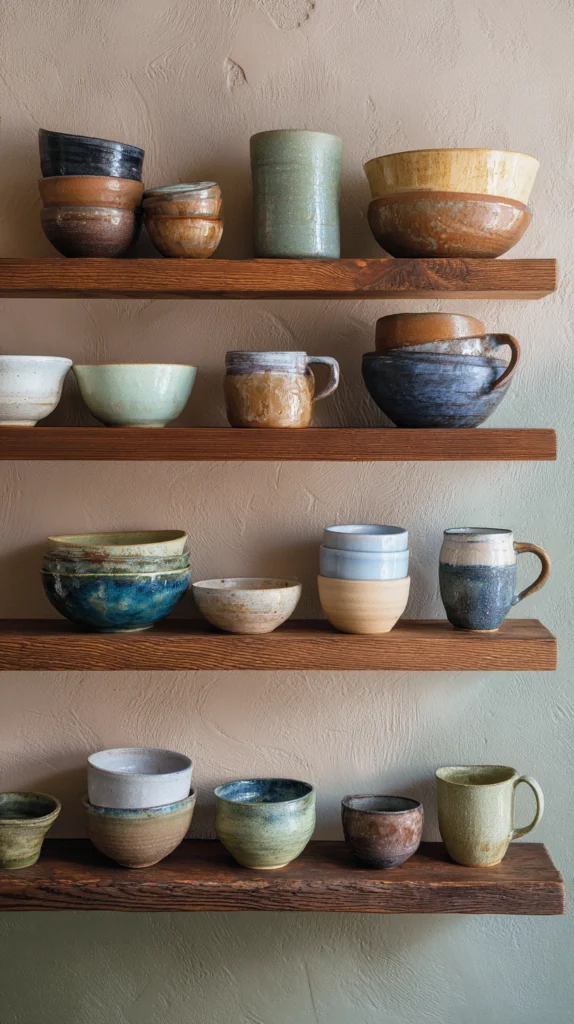
Curate open shelves like an art gallery, displaying only your most beautiful, functional pieces as if they were sculptural objects. Choose items with interesting shapes, beautiful glazes, or compelling forms that deserve to be seen rather than hidden.
Arrange them with the same thoughtfulness you’d apply to arranging artwork, using negative space deliberately and considering how pieces relate to each other visually while remaining accessible for regular use.
Shelf Depth Considerations
The depth of your open shelves significantly impacts their functionality and appearance. Shallower shelves of eight to ten inches work beautifully for dishes and glassware, preventing items from getting lost behind each other while maintaining accessibility.
Deeper shelves of twelve to fourteen inches accommodate larger items but require strategic arrangement with taller items at the back and shorter pieces in front, ensuring everything remains visible and accessible.
Lighting Makes the Difference
Proper lighting transforms open shelves from storage into display, highlighting your carefully curated collections. Install LED strip lights under each shelf to illuminate contents from above, washing items with flattering light that enhances colors and glazes.
Alternatively, use small picture lights or directed spotlights to create dramatic highlighting effects, and consider the color temperature—warm white (2700-3000K) creates inviting ambiance while cool white (4000K+) provides crisp, modern clarity.
Cleaning and Maintenance Reality
Open shelves require significantly more cleaning than closed cabinets because displayed items accumulate dust, cooking grease, and splatters. Commit to weekly dusting of shelf contents and monthly deep cleaning where you remove everything, clean the shelves, and wash items before replacing them.
This maintenance prevents the grimy buildup that makes open shelving feel like a chore, and regular handling naturally prompts you to edit your display, removing things you’re not actually using.
Mixing Open and Closed Storage
The most functional kitchens combine open shelving with closed cabinet storage, using each where it works best. Display your most beautiful everyday dishes on open shelves while storing mismatched pieces, bulky appliances, and cleaning supplies in closed cabinets.
This balanced approach provides the visual lightness and accessibility of open shelving without requiring everything you own to meet display-worthy standards, creating realistic solutions for actual cooking and living.
Creating Zones Within Shelving
Organize open shelves into functional zones that make sense for your cooking workflow and natural habits. Designate one area for coffee and tea supplies, another for baking essentials, and a third for dinner service.
These invisible zones create organization that goes beyond mere aesthetics, making your kitchen more efficient because everything has a logical home based on use rather than just appearance, reducing the time spent searching for items.
Dealing with Daily Dishes
The reality of open shelving includes managing dirty dishes that can’t be immediately washed, which threatens your carefully styled display. Implement a system where dirty items go directly into the dishwasher or a designated washing area rather than back on open shelves.
Keep a beautiful tray or basket for temporarily corralling items that need hand washing, preventing them from disrupting your styled shelves while maintaining functionality during busy periods.
Color Psychology in Arrangement
The colors you display on open shelves affect the kitchen’s emotional tone and perceived organization. Whites and creams create calm, spacious feelings while darker tones like charcoal or navy add drama and grounding weight.
Warm tones like terracotta and honey create cozy, inviting atmospheres while cool blues and grays feel fresh and crisp. Understanding these psychological effects helps you curate displays that not only look organized but also support the emotional atmosphere you want in your kitchen.
The Editing Process
Successful clutter-free open shelving requires regular editing where you critically assess each item’s worthiness of display. Remove anything chipped, stained, or broken immediately, and be honest about whether you actually use items taking up valuable shelf space.
Consider whether each piece contributes to the overall aesthetic—if something disrupts visual harmony and isn’t used daily, store it elsewhere or consider donating it to maintain your carefully curated display.
Backdrop Matters
The wall behind open shelves significantly impacts how organized and cohesive your display appears. Paint the wall in a color that complements or matches your dishware for a unified appearance where items seem to float rather than compete with busy backgrounds.
Tile or stone backsplashes work beautifully behind open shelves, adding texture while providing a forgiving surface for food splatters, and the solid backdrop creates visual boundaries that help define your display.
Investment in Quality Storage Pieces
Clutter-free open shelving becomes easier when you invest in quality storage containers, dishes, and accessories worth displaying. Beautiful glass canisters with wooden lids, handmade ceramic containers, and well-designed serving pieces elevate everyday storage into decorative elements.
While these items cost more initially, they serve dual purposes as both functional storage and attractive display, eliminating the need for purely decorative objects that consume space without adding utility.
Embracing Imperfect Perfection
The most livable open shelving strikes a balance between styled perfection and real-life functionality. Allow your display to look slightly imperfect—a few dishes drying on the rack, a cookbook left open to today’s recipe, or coffee mugs awaiting their next use.
This “lived-in” quality makes open shelving feel achievable rather than aspirational, reminding you that your kitchen exists to be used, not just photographed, while still maintaining the organization that prevents true clutter.
Conclusion
Open-shelf kitchen styling that remains clutter-free requires combining aesthetic principles with practical systems that support daily use. The key lies in curation—thoughtfully selecting what earns a place on display, organizing it with intention, and maintaining discipline about what stays and what goes.
By implementing these fifteen strategies, you create open shelving that enhances your kitchen’s beauty and functionality rather than becoming a high-maintenance burden.
Remember that successful open shelving is personal, reflecting your actual cooking habits, aesthetic preferences, and lifestyle realities. What works in a minimalist cook’s kitchen differs dramatically from a baker’s needs or a family with young children.
Adapt these ideas to your circumstances, maintaining the core principles of intentionality, regular editing, and functional beauty. The result will be open shelving that genuinely works for you—beautiful enough to inspire you daily, organized enough to reduce stress, and functional enough to support the cooking and living you actually do rather than an idealized version that exists only in magazine spreads.