15 Entryway Decor Ideas: Welcome the World into Your Home
The entryway is more than just a transitional space between outside and inside—it’s the opening statement of your home’s story. Drawing inspiration from international design traditions allows you to create an entryway that reflects global sophistication, cultural appreciation, and personal wanderlust.
Whether you’ve traveled extensively or simply admire the aesthetic wisdom of different cultures, incorporating international elements into your entryway transforms this often-overlooked space into a captivating introduction to your home.
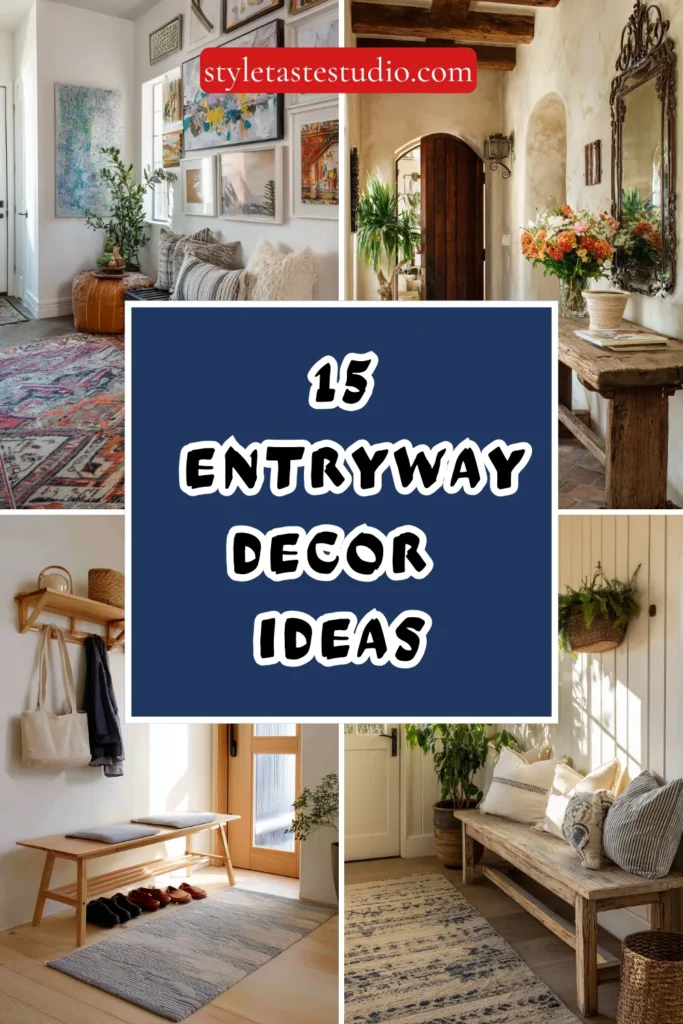
These fifteen entryway decor ideas blend practical function with distinctive style, offering inspiration from every corner of the globe. Each approach brings unique character while solving the universal challenges of entry spaces: storage, first impressions, and the seamless transition between outdoor and indoor living.
1. Japanese Genkan: The Art of Removal
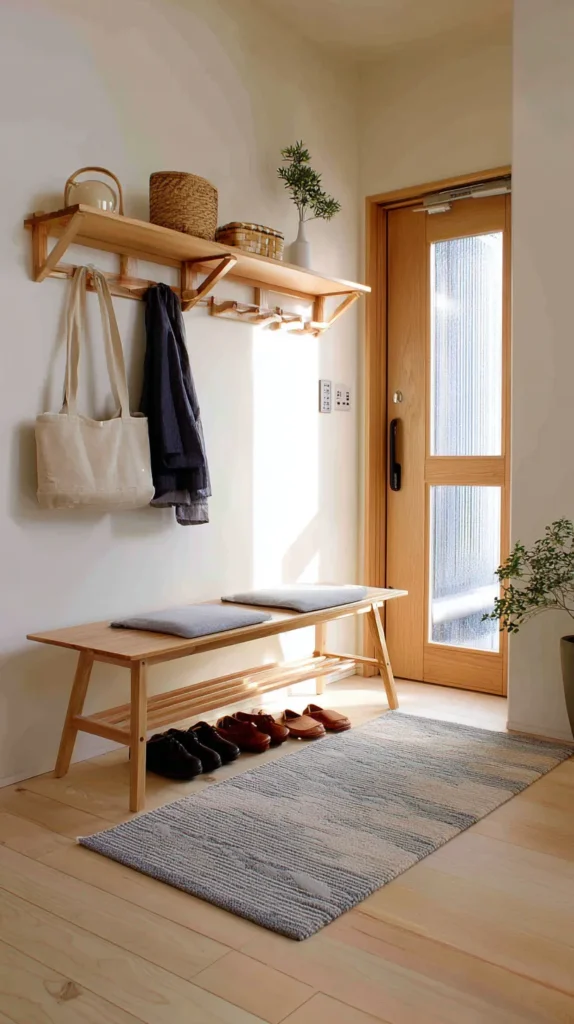
The Japanese genkan is a sunken entryway area specifically designed for removing shoes before entering the main living space. This intentional separation between outside and inside reflects a philosophy of cleanliness and respect for the home. Recreating this concept doesn’t require architectural renovation—a designated shoe storage area with a low bench and beautiful slatted shelving accomplishes the same purpose.
Consider adding a small wooden step or platform to visually delineate the space, complemented by natural materials like bamboo, light woods, and stone. A simple ceramic dish for keys and a minimalist wall hook for coats maintain the uncluttered aesthetic. The genkan teaches us that entryways should facilitate rituals of arrival and departure, creating mindful transitions rather than chaotic dumping grounds.
2. Moroccan Riad: Colorful First Impressions
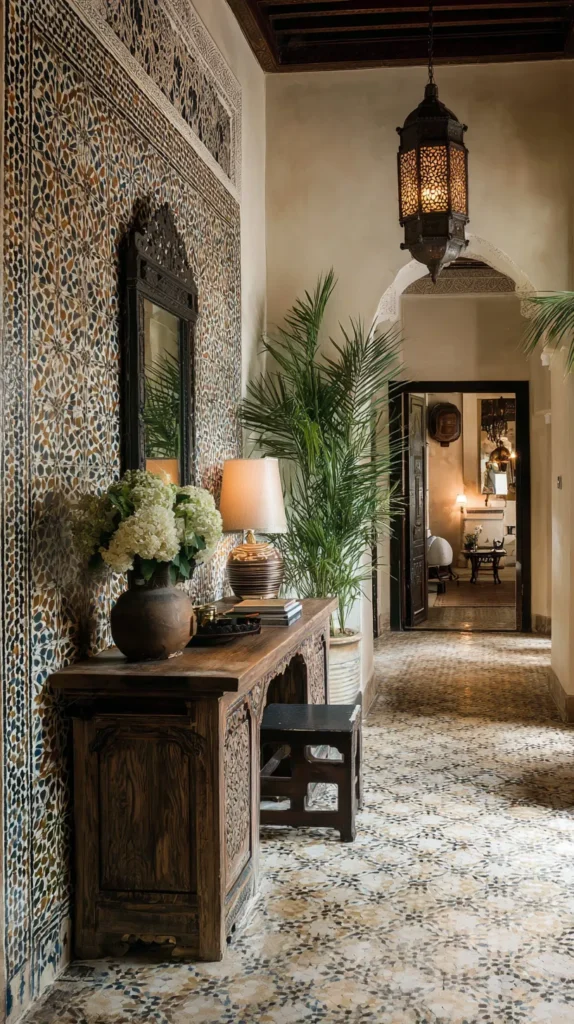
Moroccan design embraces bold color, intricate patterns, and layered textures that immediately transport visitors to another world. Transform your entryway with vibrant zellige tiles—or budget-friendly tile decals—in geometric patterns. A carved wooden console table, ornate mirror with metallic filigree details, and jewel-toned textiles create instant drama.
The Moroccan approach teaches us that entryways can be unapologetically bold. Add a pierced metal lantern for ambient lighting, place a pouf for putting on shoes, and incorporate lush plants in decorative ceramic pots. The key is embracing maximalism with intention: each colorful element should feel deliberate rather than cluttered, creating a cohesive jewel-box effect.
3. Scandinavian Hygge: Warm Minimalism
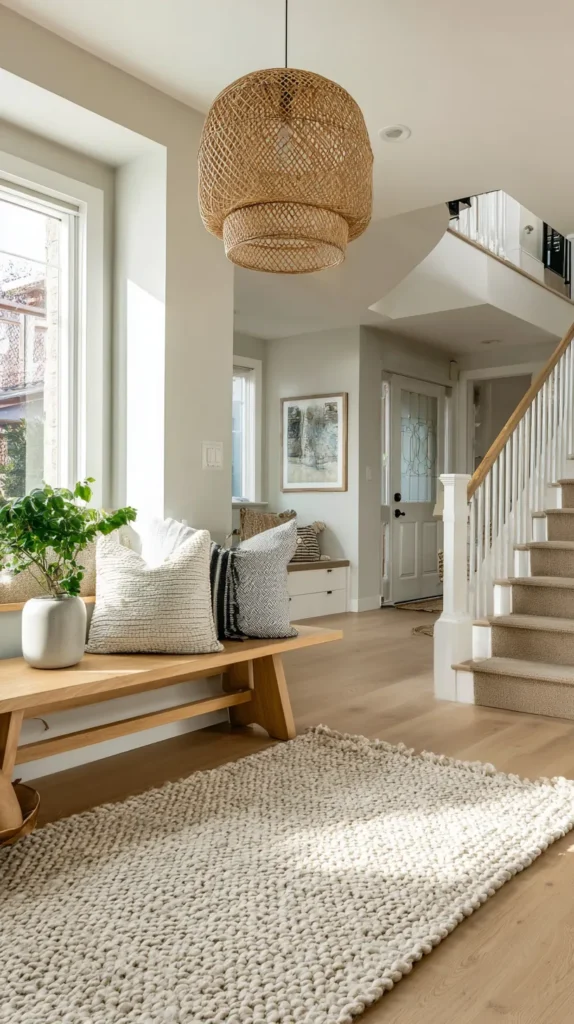
Scandinavian design masters the balance between minimalism and warmth—essential for entryways in cold climates. This approach emphasizes light woods, white or neutral walls, and carefully edited furnishings that serve clear purposes. A simple wooden bench with built-in storage, wall-mounted pegs for coats, and a woven basket for shoes create functional elegance.
The magic lies in warm details: a sheepskin throw draped over the bench, candles on a narrow shelf, and soft lighting from a sculptural pendant lamp. Scandinavian entryways prove that “less is more” doesn’t mean cold or unwelcoming—thoughtful simplicity creates calm, ordered spaces that feel like exhaling after a busy day outside.
4. Mexican Hacienda: Rustic Elegance
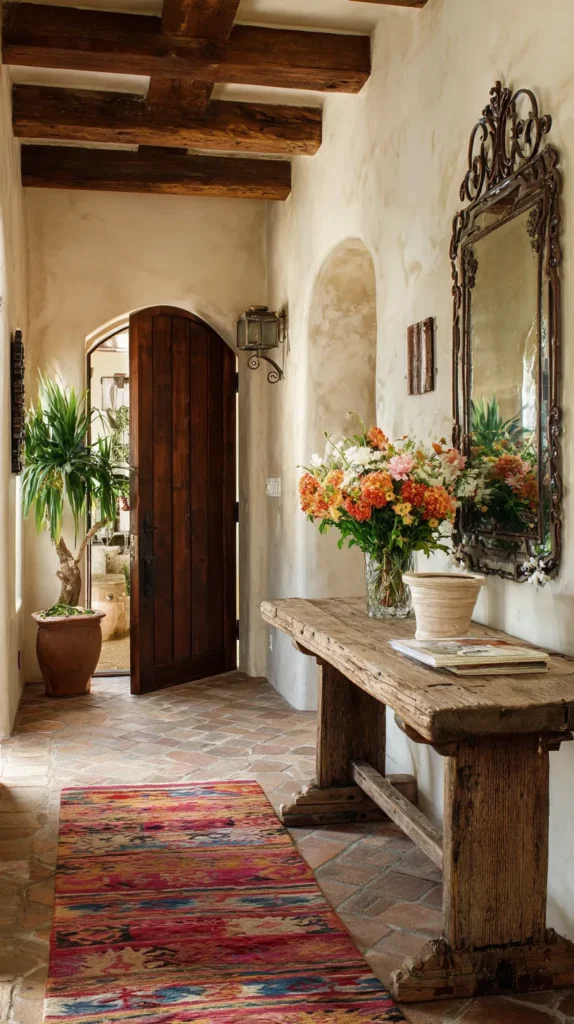
Mexican hacienda style brings warmth through earthy terracotta, wrought iron, and vibrant textiles. Paint your entryway in warm ochre, terracotta, or sunset orange tones. Add a rustic wooden console with wrought iron details, topped with colorful Talavera pottery or a wooden bowl filled with decorative items.
Incorporate a large wrought iron mirror, which adds both function and dramatic architectural presence. Textile elements—a vibrant woven runner, embroidered pillows on a bench, or a handwoven wall hanging—inject personality and craft tradition. Mexican design reminds us that entryways should feel lived-in and welcoming rather than formal and precious, inviting guests to relax immediately.
5. French Country: Effortless Sophistication
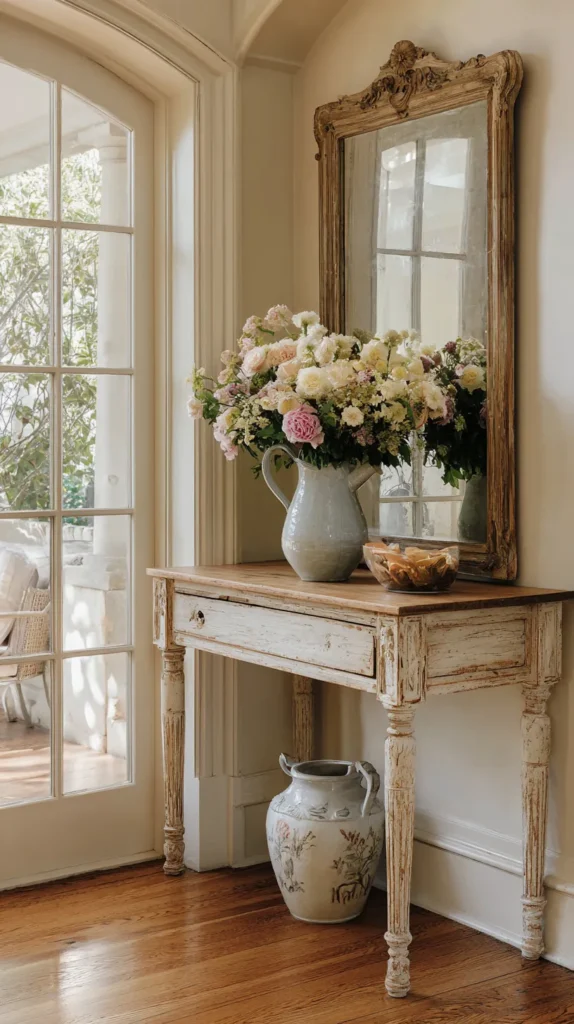
French country style embodies relaxed elegance through antique or vintage-inspired pieces, soft neutral palettes, and romantic details. A distressed painted console table, ornate mirror with an aged gilt frame, and fresh flowers in a ceramic pitcher create quintessential French charm without requiring authentic antiques.
The French approach values beautiful imperfection—chippy paint, worn wood, and collected-over-time aesthetics feel more authentic than perfectly matched sets. Add a vintage wire basket for umbrellas, linen storage bags hanging from hooks, and perhaps a small upholstered stool. This style teaches that sophistication comes from quality and character rather than newness or perfection.
6. Indian Haveli: Jewel-Toned Richness
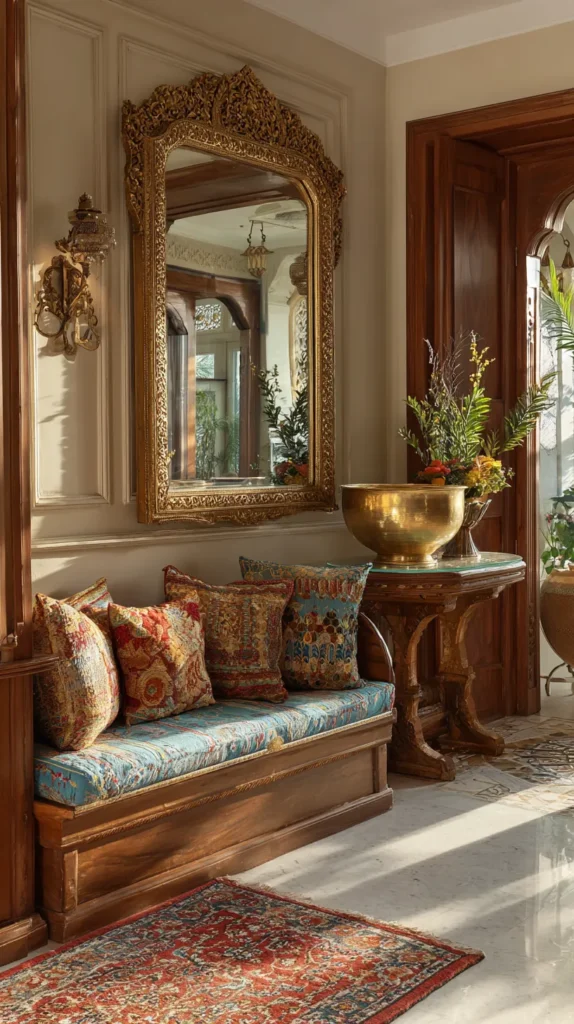
Traditional Indian havelis feature carved wooden doors, vibrant colors, and ornate details that celebrate craftsmanship. Bring this opulence to your entryway through a carved wooden mirror or screen, brass accents, and rich textiles in deep reds, oranges, and gold tones.
Consider a low wooden bench with carved details or a painted trunk that provides storage while serving as visual interest. Brass bowls, decorative hanging bells, and block-printed textiles add layers of authentic texture. Indian design demonstrates that entryways can celebrate abundance and decoration, creating an immediately festive atmosphere that makes every arrival feel special.
7. British Colonial: Travel-Inspired Layers
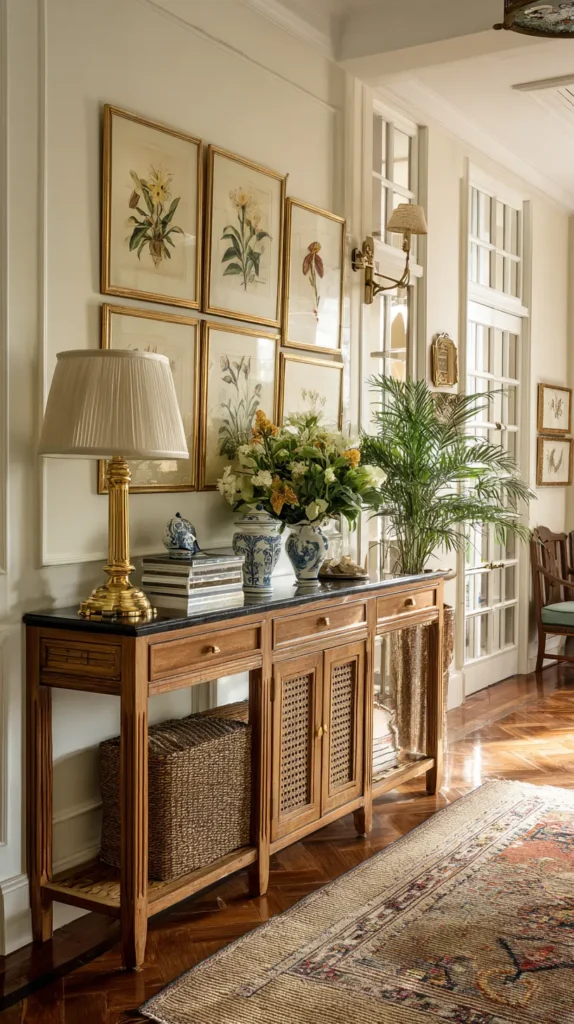
British colonial style reflects the fusion of European sensibilities with tropical influences, creating a worldly aesthetic perfect for entryways. Dark wood furniture, botanical prints, natural fiber rugs, and vintage travel accessories like leather trunks or hat boxes evoke adventure and exploration.
A campaign-style chest of drawers provides storage while reinforcing the travel theme. Add framed vintage maps, a brass bar cart for keys and mail, and potted palms or ferns. This approach works particularly well for those who love collecting souvenirs from travels, as the eclectic, curated aesthetic accommodates diverse objects unified by a sense of discovery.
8. Greek Island: Sun-Bleached Simplicity
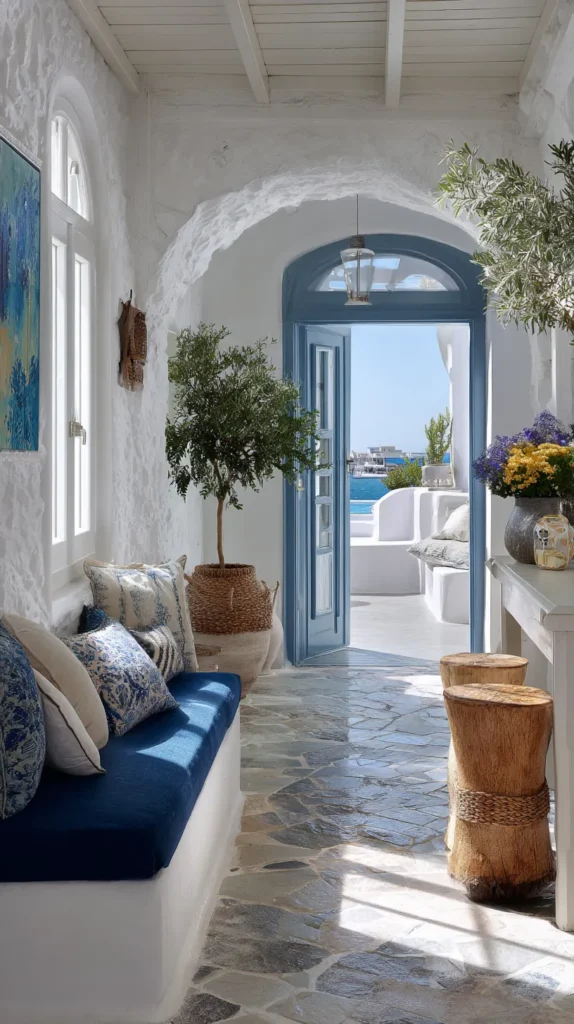
Greek island style captures the essence of Mediterranean living through whitewashed walls, blue accents, and natural materials that reflect sun, sea, and simplicity. Paint your entryway crisp white and add pops of cobalt blue through painted furniture, ceramic accents, or textiles.
Incorporate natural materials like jute rugs, woven baskets, and driftwood accessories. A simple wooden bench painted white or soft blue, paired with open shelving for casual storage, maintains the breezy aesthetic. Greek design teaches that entryways in warm climates should feel open and airy, facilitating easy flow between indoor and outdoor spaces while reflecting natural surroundings.
9. Chinese Tea House: Symbolic Harmony
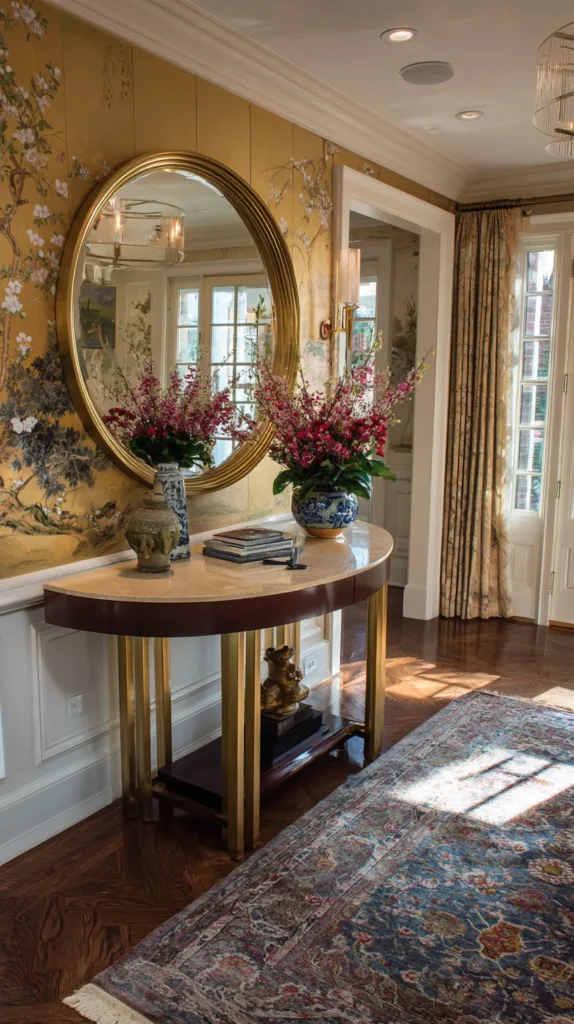
Traditional Chinese design emphasizes balance, symbolism, and the harmonious flow of energy. Create an entryway that incorporates these principles through symmetrical furniture arrangement, a console table with Chinese-inspired hardware, and symbolic decorative elements like bamboo plants or lucky coins.
Red is considered auspicious in Chinese culture, making it an excellent accent color for the entryway through painted doors, decorative panels, or textiles. Add a round mirror—the circle representing wholeness—and ensure the space remains uncluttered to allow positive energy to flow. This approach teaches that entryway design can serve spiritual and philosophical purposes beyond mere aesthetics.
10. Tuscan Villa: Old-World Warmth
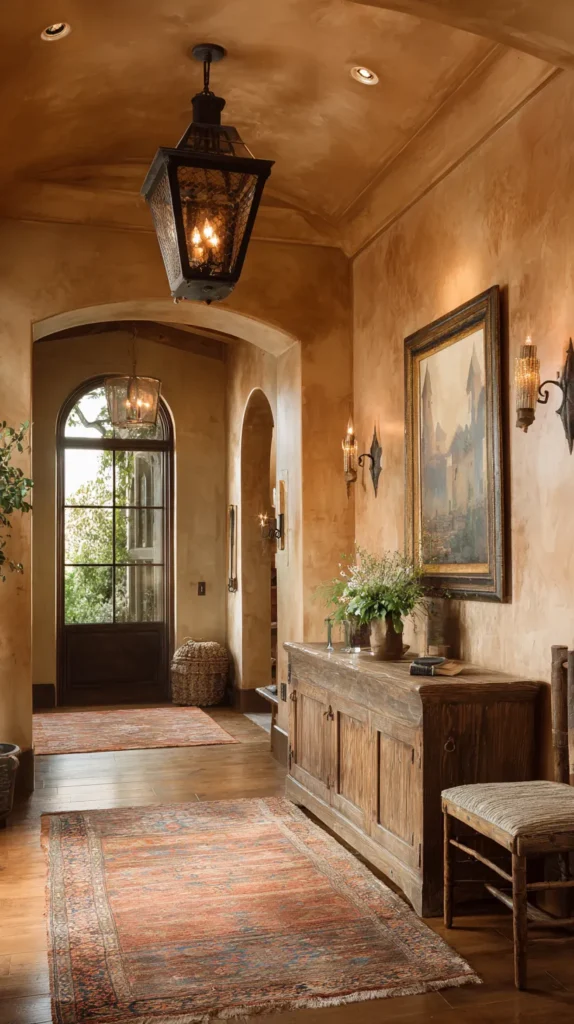
Tuscan style brings the warmth of Italian countryside villas through warm plaster walls in golden yellows or burnt siennas, wrought iron details, and aged wood furnishings. A sturdy wooden console table, terracotta pottery, and an iron wall-mounted candelabra create an instant old-world atmosphere.
Add texture through exposed brick (or brick veneer), aged plaster techniques, and natural stone or tile flooring. Olive branches in a ceramic vessel, vintage wine crates for storage, and warm lighting from iron fixtures complete the transformation. Tuscan design reminds us that entryways should feel grounded and substantial, reflecting the permanence and history of home.
11. Bohemian Nomad: Eclectic Layers
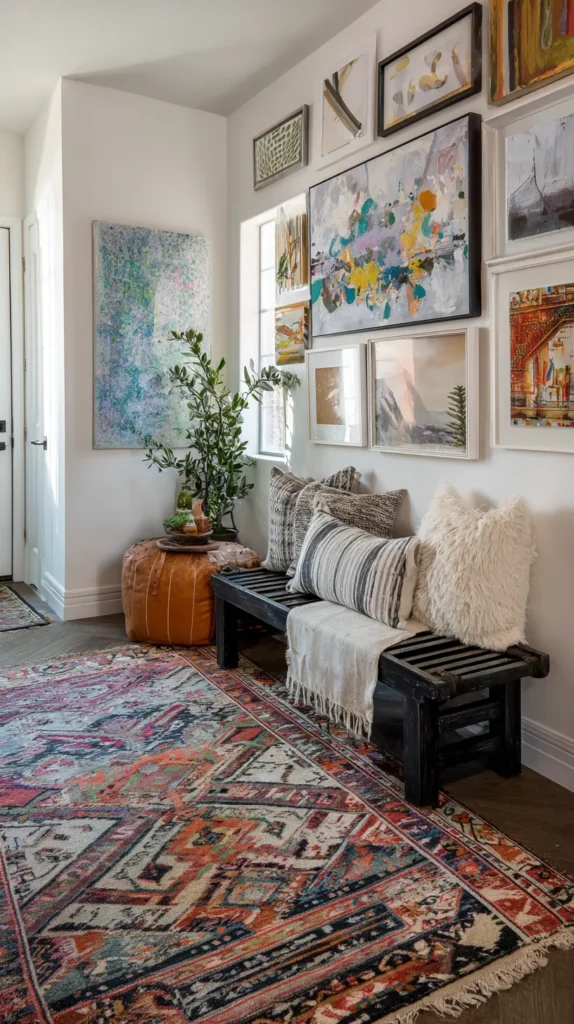
Bohemian style celebrates global eclecticism, mixing patterns, textures, and cultural influences with artistic freedom. This approach works beautifully in entryways where you want to showcase collected treasures from travels or thrift stores. Layer vintage rugs, mix textile patterns freely, and display an ever-changing gallery wall of art and photographs.
A repurposed vintage piece—perhaps an old door as a coat rack or a painted ladder for hanging textiles—adds character. Macramé wall hangings, plants in varied containers, and mismatched hooks create casual, creative energy. Bohemian entryways teach that rules are meant to be broken, and personal expression matters more than matching sets or design formulas.
12. Balinese Zen: Natural Sanctuary
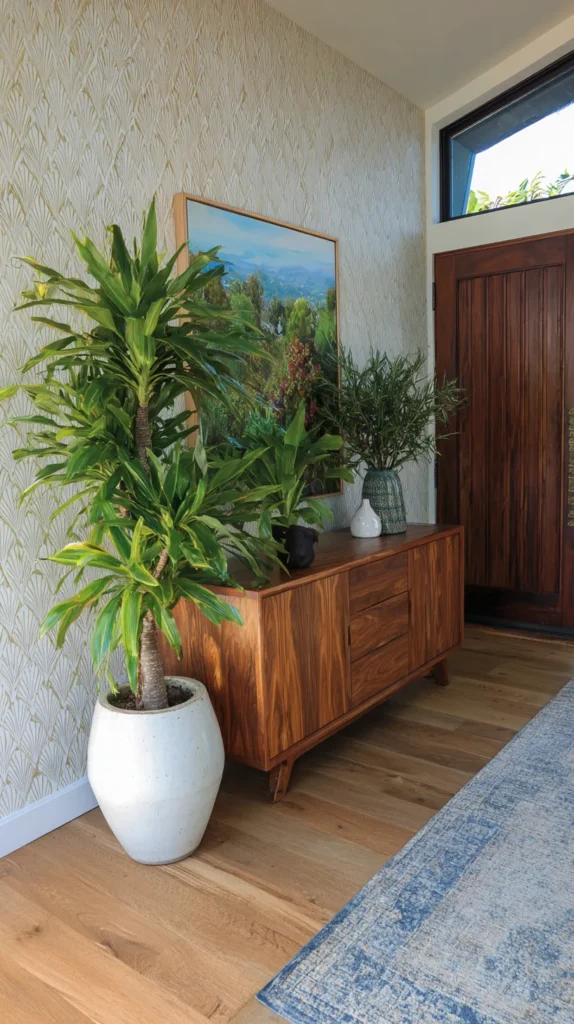
Balinese design transforms entryways into serene sanctuaries through natural materials, carved wood, and tropical elements. A teak console table, carved wooden panels or screens, and natural fiber storage baskets create immediate calm. The key is incorporating organic textures—rattan, bamboo, stone, and dark exotic woods.
Add a water feature if space allows, or simply include the sound element through wind chimes. Lush plants, particularly palms or orchids, bring life and connect indoor spaces to tropical landscapes. Balinese entryways demonstrate that arrival spaces can facilitate immediate decompression, helping residents leave stress outside while welcoming guests into peaceful refuge.
13. Nordic Cottagecore: Cozy Tradition
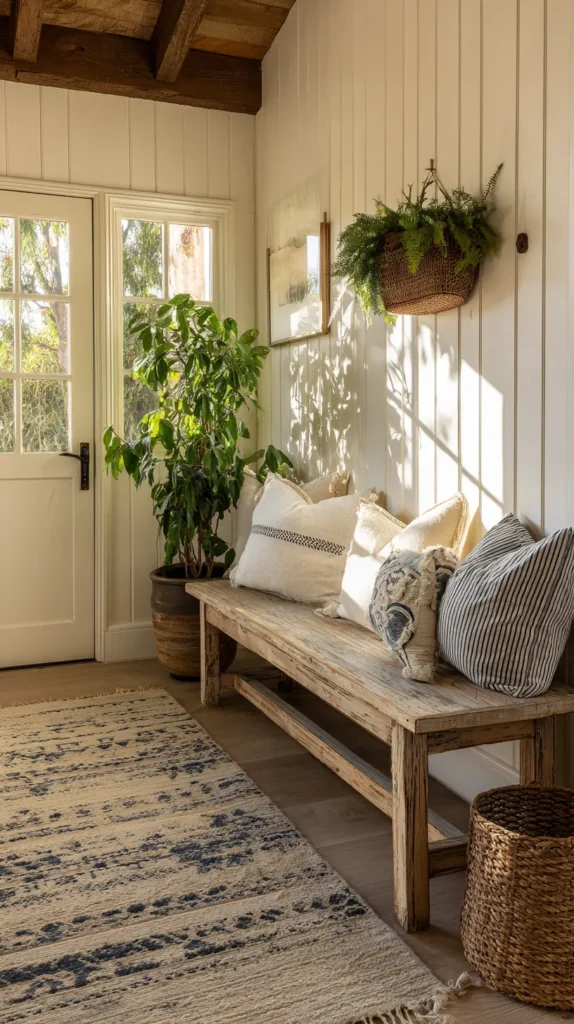
Nordic cottagecore blends Scandinavian simplicity with rustic, handcrafted charm. Incorporate painted wood furniture in muted colors—sage green, dusty blue, or traditional red—combined with folk art patterns and natural textiles. A painted wooden bench with woven cushions, traditional wool textiles, and simple handcrafted decorative items create warmth without clutter.
Add practical elements like a wall-mounted drying rack for wet mittens and coats, reflecting the Nordic climate’s practical demands. Candles, evergreen branches in winter, and simple floral arrangements in summer connect the entryway to seasonal rhythms. This style teaches that entryways can honor craft traditions and seasonal living while maintaining functional simplicity.
14. Middle Eastern Majlis: Grounded Welcome
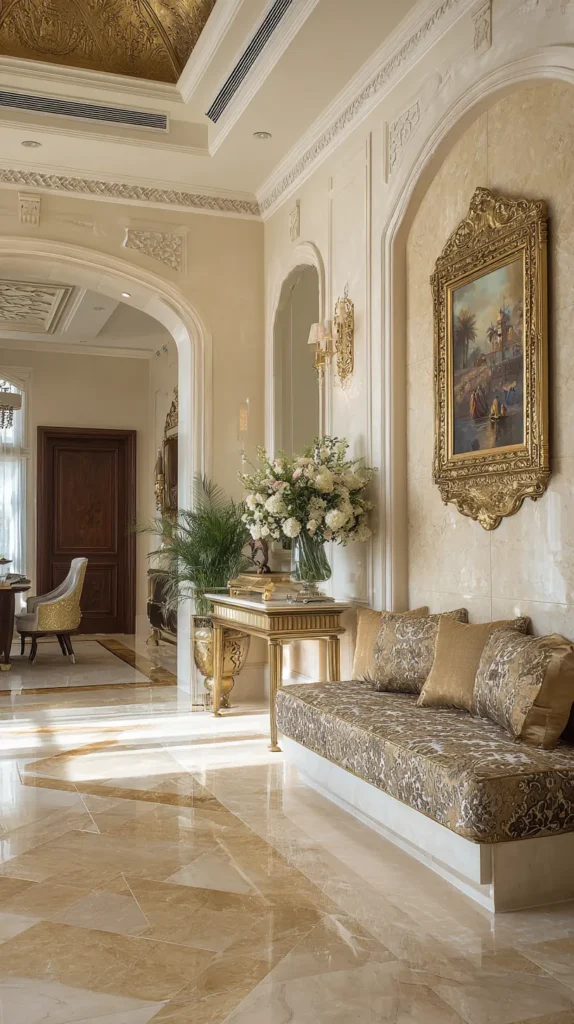
The Middle Eastern majlis tradition emphasizes low seating, rich textiles, and grounded hospitality. While traditional majlis rooms feature floor cushions, adapt this concept to entryways through a low upholstered bench with abundant cushions in rich fabrics like velvet or silk with embroidered details.
Incorporate geometric patterns through tiles, textiles, or wall stencils. A large ornate mirror, metallic accents in brass or copper, and layered textiles create luxurious warmth. Middle Eastern design reminds us that entryways should invite lingering and conversation rather than hurried passing through—making guests feel immediately welcome and valued.
15. Brazilian Modernism: Bold Geometry
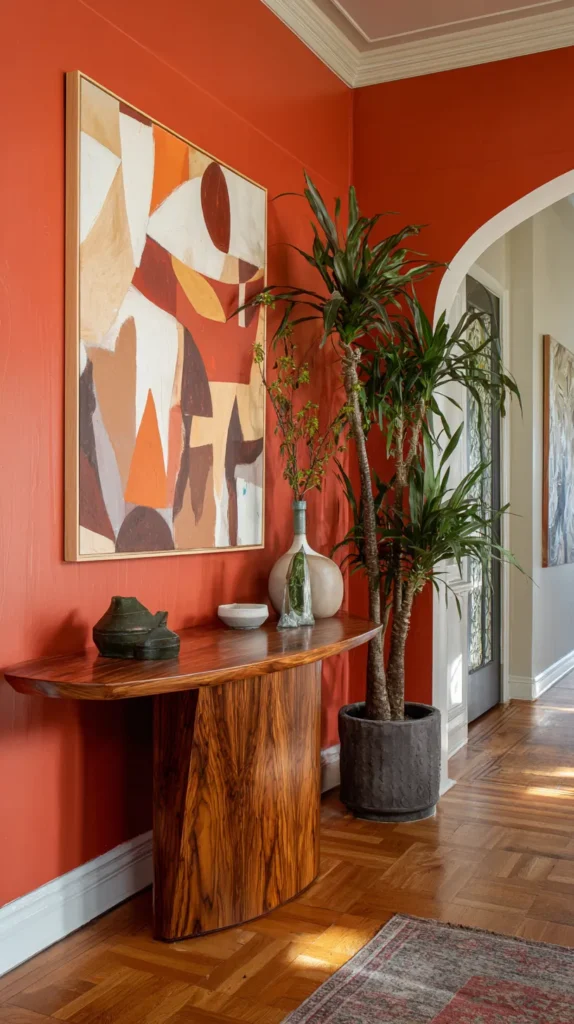
Brazilian modernism combines mid-century clean lines with tropical boldness, featuring vibrant colors, organic shapes, and indoor-outdoor flow. Paint an accent wall in saturated tropical color—coral, emerald, or cobalt. Add a sleek console table with organic curves, geometric tile patterns, and bold abstract art.
Incorporate natural materials like woven rattan or leather alongside more modern elements like metal and glass. Lush tropical plants in sculptural pots blur boundaries between interior and exterior. Brazilian design teaches that modernism need not be cold—warmth comes through bold color choices, natural materials, and the generous incorporation of living plants.
Blending Global Influences
The beauty of international inspiration is that you needn’t commit entirely to one aesthetic. Many successful entryways blend elements from multiple traditions, creating personalized global fusion spaces.
A Japanese-inspired shoe storage system might pair beautifully with Moroccan tiles and Scandinavian lighting. The key is finding common threads—perhaps natural materials, a specific color palette, or a shared design principle like minimalism or pattern-layering.
Your entryway tells the story of who you are and what you value. International design elements allow you to communicate worldliness, cultural appreciation, and aesthetic sophistication while solving practical problems.
Whether you gravitate toward the serene simplicity of Japanese design, the vibrant celebration of Mexican style, or the collected eclecticism of bohemian spaces, these global traditions offer time-tested wisdom for creating entryways that are truly welcome.
The world’s design traditions remind us that entryways deserve thoughtful attention—they’re not just pass-through spaces but opportunities to create meaningful transitions, express identity, and welcome others into the sanctuary we call home.