15 Creative Ceiling Designs That Add Architectural Interest
The ceiling is the room’s most consistently neglected surface. It represents, in most homes, between a quarter and a third of the total interior surface area of any given room, and yet it receives a fraction of the decorating attention that floors, walls, and furniture command — painted a flat white in the vast majority of cases and then essentially forgotten, a blank overhead plane that does nothing to enhance the room’s character, spatial quality, or sense of architectural intention.

This neglect is a significant missed opportunity, because the ceiling’s influence on the experience of a room is disproportionate to the attention it typically receives.
A ceiling that is designed rather than simply finished changes the room beneath it in ways that wall color, flooring, and furniture cannot replicate — it alters the perception of height, warmth, and enclosure; it introduces pattern, texture, and depth into the visual field from a position and at a scale that no other surface can match; and it signals, more clearly than almost any other single design decision, that the space has been genuinely thought about rather than simply assembled. Here are fifteen ceiling design ideas that bring architectural interest to rooms of every style, scale, and budget.
1. The Coffered Ceiling for Classical Depth
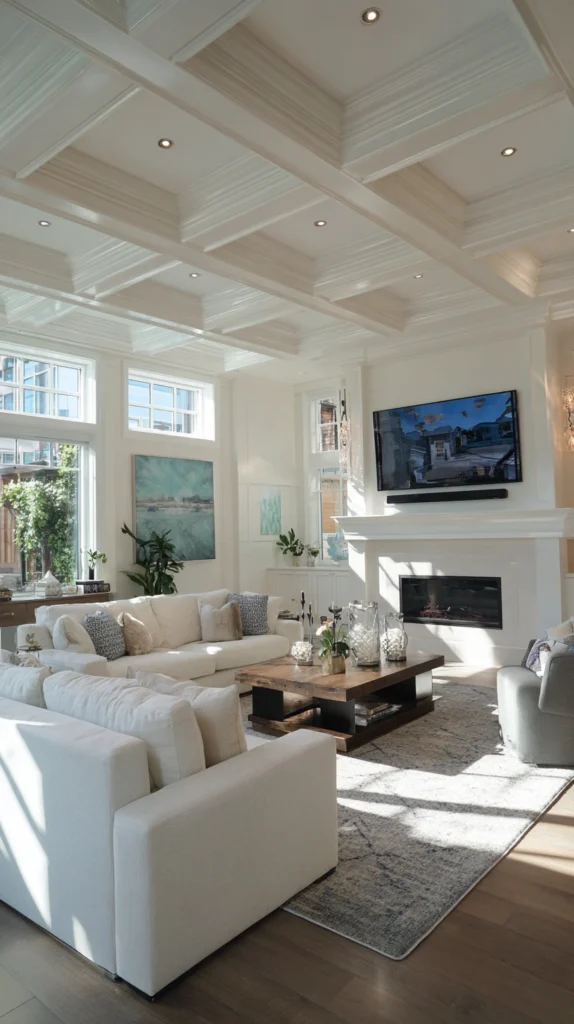
The coffered ceiling — a grid of recessed panels formed by intersecting beams that divide the ceiling surface into a regular pattern of squares or rectangles — is one of architectural history’s most enduring ceiling treatments, present in ancient Greek and Roman buildings, in Renaissance palaces, and in the grand domestic architecture of the Georgian and Federal periods, and remaining entirely relevant in contemporary interiors where it is deployed with sufficient confidence.
The coffer creates depth in the ceiling surface — each panel recessed behind the surrounding beam structure — and this depth changes the character of the overhead plane from a flat, inert surface to a three-dimensional composition that casts shadows and catches light in ways that vary through the day as the light source moves.
Coffered ceilings can be constructed from solid timber in high-specification traditional installations, from plaster moldings in period-appropriate treatments, or from MDF grid systems that deliver the visual effect at a fraction of the cost and installation complexity.
The depth of the coffer — the distance between the beam faces and the panel surface — determines the drama of the result: shallow coffers in a low-ceilinged room maintain the architectural rhythm without reducing the apparent ceiling height; deeper coffers in rooms with generous ceiling height create a more emphatic three-dimensional effect that fully justifies the architectural investment.
2. Exposed Timber Beams for Warmth and Authenticity
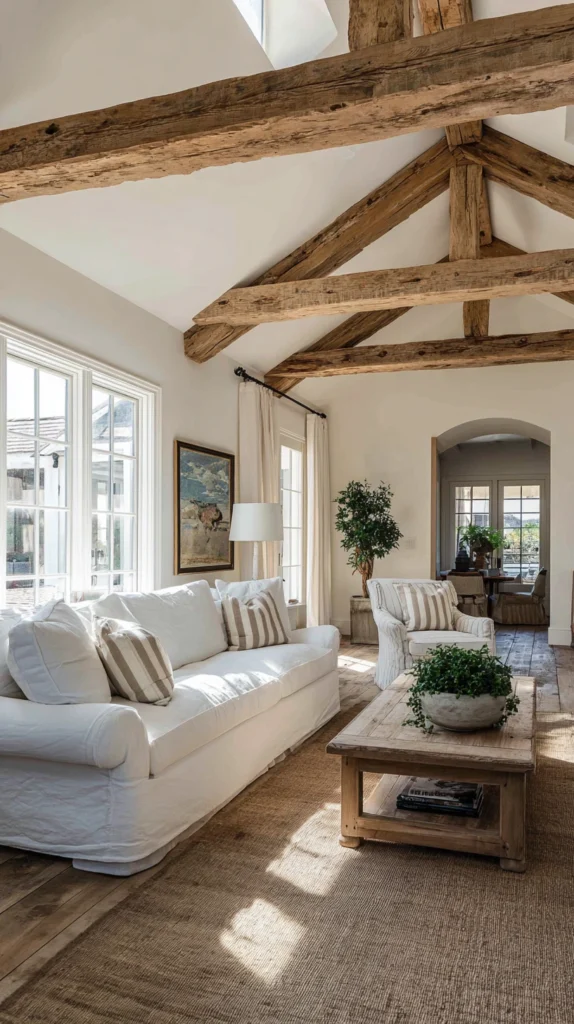
Exposed timber beams — whether genuine structural members uncovered by the removal of plasterboard that was applied over them in a misguided modernization, or decorative beams applied to the ceiling surface to create the visual effect of a traditional construction — are the most reliably warm and authentic ceiling treatment available for homes where the architectural context supports them.
In a farmhouse, cottage, barn conversion, or any vernacular building where timber-framed construction is historically appropriate, genuine exposed beams are an asset of immeasurable value whose presence transforms the character of the room beneath them in a way that no applied finish or decorative treatment can replicate.
The timber should be cleaned and treated to reveal its grain and color without being over-finished — a light application of oil or wax rather than a polyurethane lacquer, which seals the wood’s surface and gives it a plasticky brightness entirely at odds with the authenticity it is supposed to express.
In homes where genuine beams are not available, high-quality hollow beam casings in solid timber or resin construction can be applied to existing ceiling joists to create a convincing effect, provided the scale and spacing of the beams is calibrated to the room’s proportions rather than simply placed arbitrarily.
3. A Painted Ceiling in a Deeper Tone Than the Walls
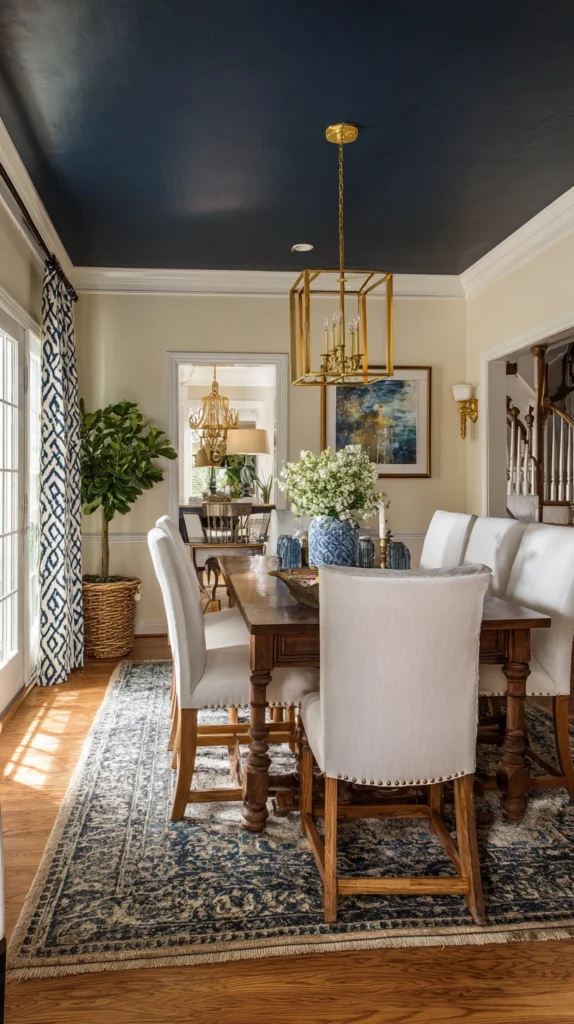
The painted ceiling is the most accessible and most immediately impactful ceiling design intervention available to any room in any home, requiring no structural work, no specialist installation, and no significant budget — only paint, a roller, and the willingness to break the convention of the white ceiling that has governed domestic interiors for decades.
Painting the ceiling in a deeper tone than the surrounding walls — the same color as the walls but intensified by one or two steps, or a complementary deep color from the same palette — creates a sense of enclosure and intimacy that lowers the apparent ceiling height in the most pleasurable way, making the room feel more cave-like, more cozy, and more deliberately designed. A room with sage green walls and a deep forest green ceiling.
A room with warm white walls and a terracotta ceiling. A room with pale blue walls and a deep navy ceiling that makes the whole space feel like the interior of a beautifully lacquered box. The painted ceiling is also the most reversible ceiling design decision available — a change of color requires only a fresh coat of paint — which makes it the ideal starting point for homeowners who want to experiment with ceiling design without permanent commitment.
4. Tongue and Groove Timber Paneling Overhead
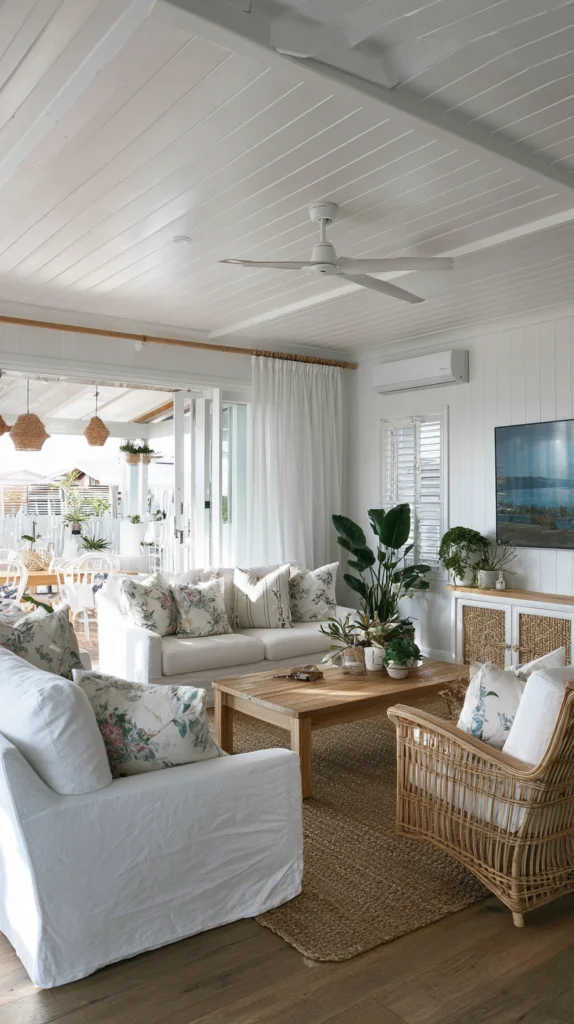
Tongue and groove timber boards installed horizontally across the ceiling surface — the boards running parallel to the room’s long axis or perpendicular to it depending on the spatial effect desired — create a ceiling of considerable warmth, texture, and informal elegance that is one of the most beloved ceiling treatments in American domestic architecture, familiar from coastal cottages, Craftsman bungalows, and the screened porches that are among the most well-loved spaces in Southern residential design.
The timber can be left in its natural state and oiled to bring out the grain, painted in a white or near-white for a fresh, beach house quality, stained in a deep dark tone for a more dramatic effect, or finished in the pale sage or blue-gray that has become the definitive porch ceiling color in American coastal architecture for reasons both aesthetic and folkloric.
Installation is within the reach of a confident DIY practitioner with basic woodworking skills, and the result — a fully paneled timber ceiling that transforms the room’s character — is one of the most significant visual improvements available at the material cost of tongue and groove boarding.
5. A Medallion and Decorative Plasterwork Ceiling
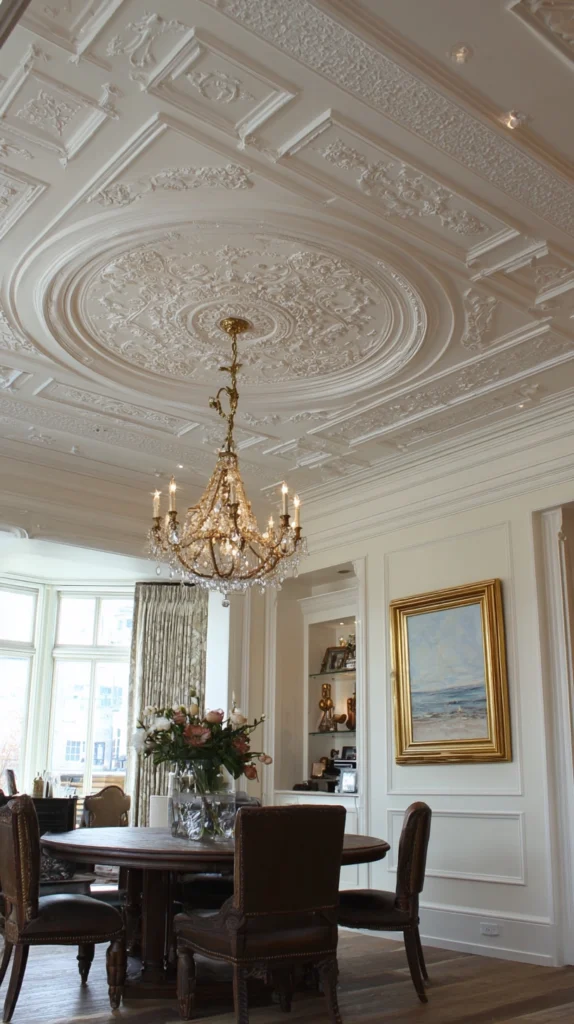
Plaster ceiling decoration — the ornate molded centerpieces, cornices, and applied decorative elements that characterized the domestic interiors of the Georgian, Victorian, and Edwardian periods — is enjoying a revival that reflects both a genuine appreciation for craft tradition and a broader reaction against the decades of stripped-back minimalism that eliminated these details from interiors throughout the late twentieth century.
A plaster ceiling rose or medallion — a decorative circular motif surrounding the ceiling’s central light fitting — is the most accessible entry point into decorative plasterwork, available in high-quality reproductions at a range of sizes and in a range of historical styles.
Combined with a picture rail molding at the wall-ceiling junction and a simple cornice or cove at the ceiling’s perimeter, a central medallion completes the architectural language of a period-influenced interior with a historical authenticity that other ceiling treatments cannot approach. Paint the plasterwork in the same color as the ceiling for a subtle, tonal effect, or in a contrasting white against a colored ceiling for maximum definition and visual impact.
6. A Stretched Fabric or Tensile Ceiling
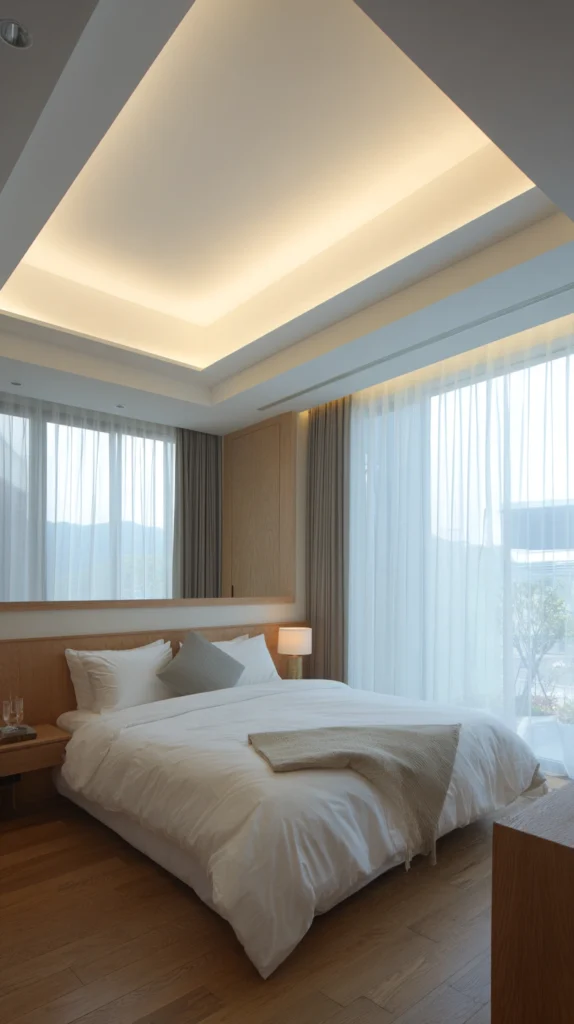
The stretched fabric ceiling — a translucent or opaque fabric membrane tensioned across the room’s ceiling plane, supported on a perimeter track, and backlit with LED panels to create a glowing, luminous overhead surface — is one of the most dramatic and most contemporary ceiling treatments available, creating an effect that has no precedent in traditional domestic architecture and that transforms the room beneath it into something closer to an experiential space than a conventional interior.
The backlit version creates the impression of a uniform, glowing sky overhead — a quality of light that is simultaneously modern and deeply ancient in its evocation of open sky.
The non-backlit version in a decorative fabric — a sheer woven textile, a patterned silk, a plain linen stretched tight against an ornate ceiling — creates a softer, more intimate effect that conceals a damaged or uninteresting ceiling while adding a textile warmth that painted and plastered surfaces cannot achieve. The technology has become significantly more accessible in the residential market, with DIY-installable systems available alongside professional installation services.
7. A Tray Ceiling with Accent Lighting
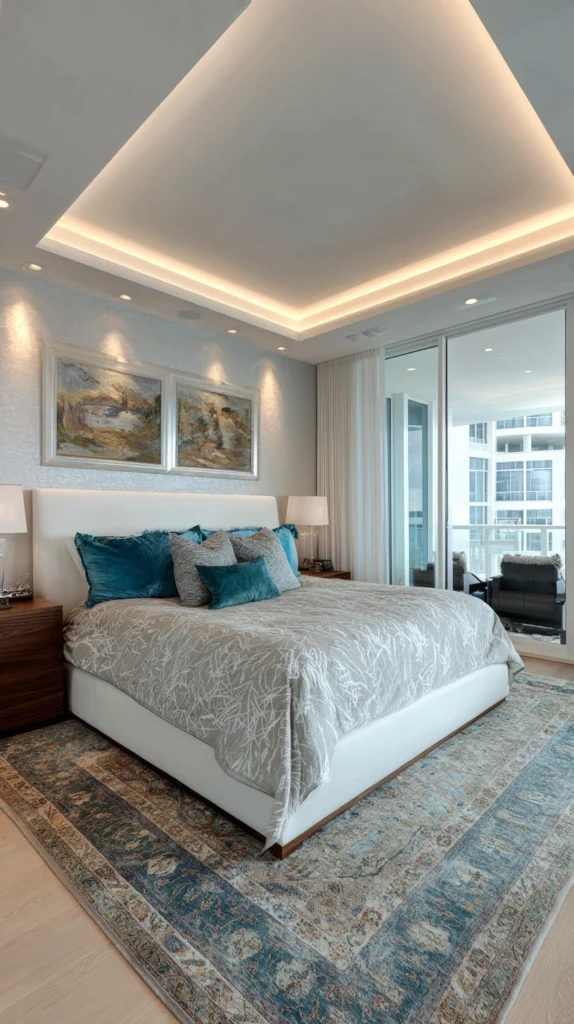
The tray ceiling — a ceiling whose central section is raised above the surrounding perimeter, creating an architectural step that defines a central zone overhead — is one of the most effective structural ceiling design interventions available for rooms of standard height, because it creates the illusion of greater ceiling height in the center of the room while maintaining the lower perimeter height that accommodates practical lighting, mechanical systems, and the visual comfort of a room that does not feel excessively lofty.
The step between the perimeter and the central raised section is the design opportunity: an LED strip light mounted within this step, directed upward into the raised section, creates a cove lighting effect that illuminates the upper ceiling with a warm, indirect glow that defines the tray’s geometry and provides the most flattering possible ambient illumination for the space below.
The raised central section can be painted in a contrasting or complementary color to the surrounding perimeter for additional visual definition, and the perimeter can accommodate conventional lighting, crown molding, or exposed timber beams that provide further architectural interest at the room’s edges.
8. A Geometric Wallpaper or Stenciled Pattern
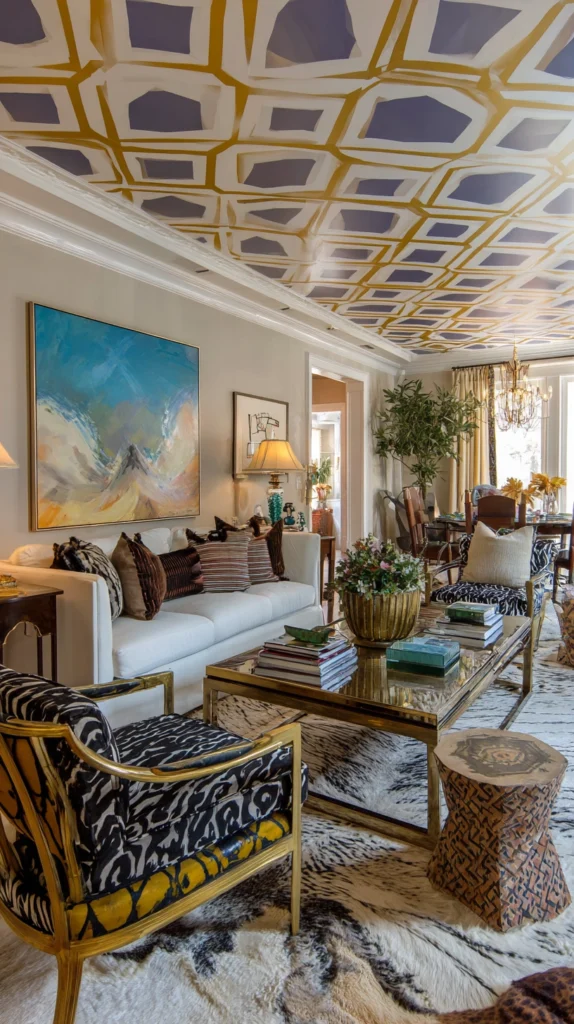
The papered or stenciled ceiling is the ceiling design treatment with the longest domestic history — European aristocratic interiors of the seventeenth and eighteenth centuries featured elaborately painted and gilded ceilings as a matter of course — and its contemporary application, using modern wallpapers or paint stencils to introduce pattern to the overhead surface, is one of the most dramatic and most accessible ceiling transformations available.
A large-scale geometric wallpaper applied to the ceiling — a bold stripe, a graphic diamond, an abstract repeat — creates a visual impact when viewed from below that no wall application of the same paper can match, because the ceiling’s scale and the unusual orientation of viewing it from below give the pattern a monumentality that the same paper on a wall cannot achieve.
Stenciling — the application of a repeated pattern using a physical stencil and paint — is the more economical and more customizable alternative, allowing patterns to be scaled and colored with complete precision. Both approaches are transformative in rooms where the architecture is otherwise undistinguished, and both reward the investment of ceiling preparation — a perfectly smooth and primed surface — before application.
9. A Living Green Ceiling Installation
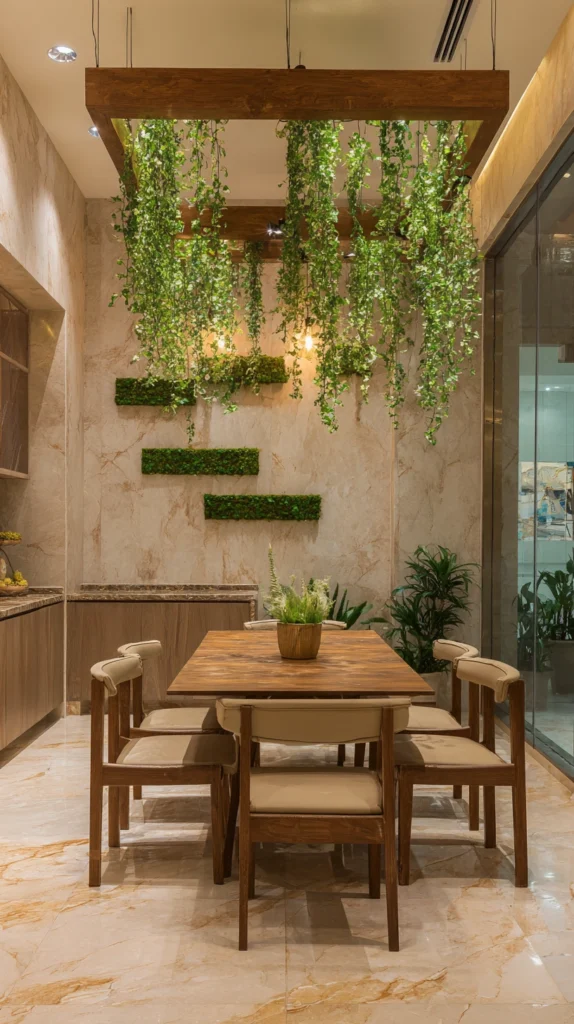
Bringing plant material overhead — in a living ceiling installation that mounts living or preserved plants to the ceiling surface or to a suspended framework below it — is the most biophilically ambitious ceiling treatment available, and in the right context it creates an interior experience that is genuinely without parallel.
A preserved moss ceiling — sheet moss, bun moss, and reindeer moss mounted directly to the ceiling surface in a continuous or patterned application — requires no irrigation, no light supplementation, and no maintenance beyond occasional cleaning, and the visual effect of a green, textured, organic ceiling overhead is one that every person who experiences it describes in terms of extraordinary calm and wellbeing.
A fresh or faux plant installation on a suspended ceiling framework — a grid of metal or timber to which plants, trailing vines, and botanical elements are attached — requires more infrastructure and in the case of living plants more maintenance, but creates an indoor garden canopy of extraordinary visual beauty that transforms the room beneath it into something closer to a forest glade than a domestic interior.
10. Acoustic Ceiling Tiles with Design Intent
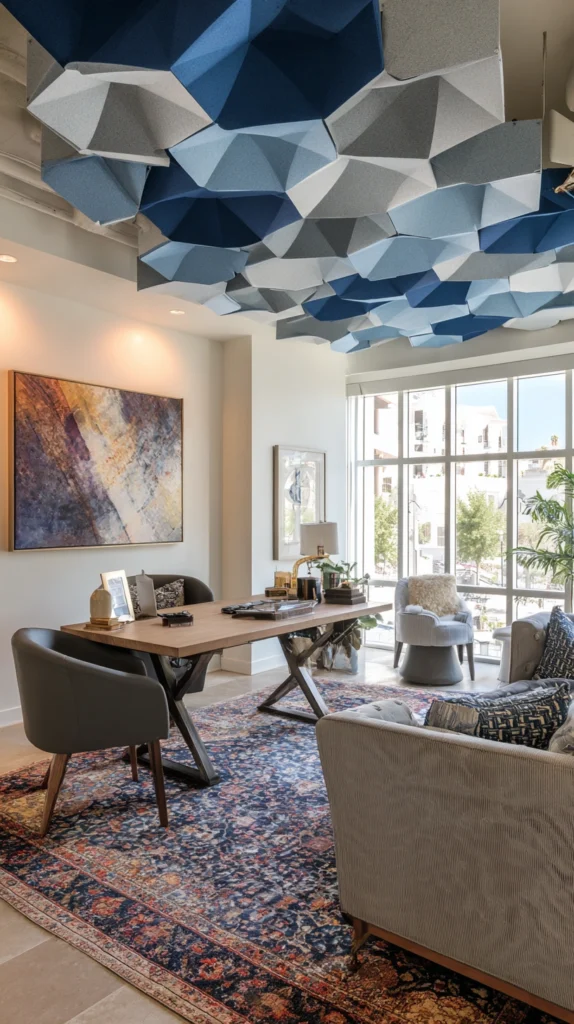
Acoustic ceiling tiles — panels of sound-absorbing material installed across the ceiling surface to reduce reverberation in rooms with hard floors and reflective walls — are typically associated with commercial and office environments where acoustic performance is the primary criterion and aesthetics are secondary.
The contemporary acoustic tile market has changed this calculus significantly, with panels available in a range of shapes, surface finishes, and installation configurations that allow acoustic performance to be delivered within a genuinely beautiful ceiling design.
Hexagonal acoustic panels in a soft fabric covering, arranged in a geometric pattern against a painted ceiling with deliberate gaps between the tiles. Cloud-form acoustic panels suspended below the ceiling on adjustable wire hangers at different heights, creating a sculptural suspended ceiling installation that treats sound and aesthetics as equal priorities.
Acoustic tiles in custom colors that complement the room’s palette rather than defaulting to the institutional white or gray of commercial products.
11. A Mirrored Ceiling Panel for Light Amplification
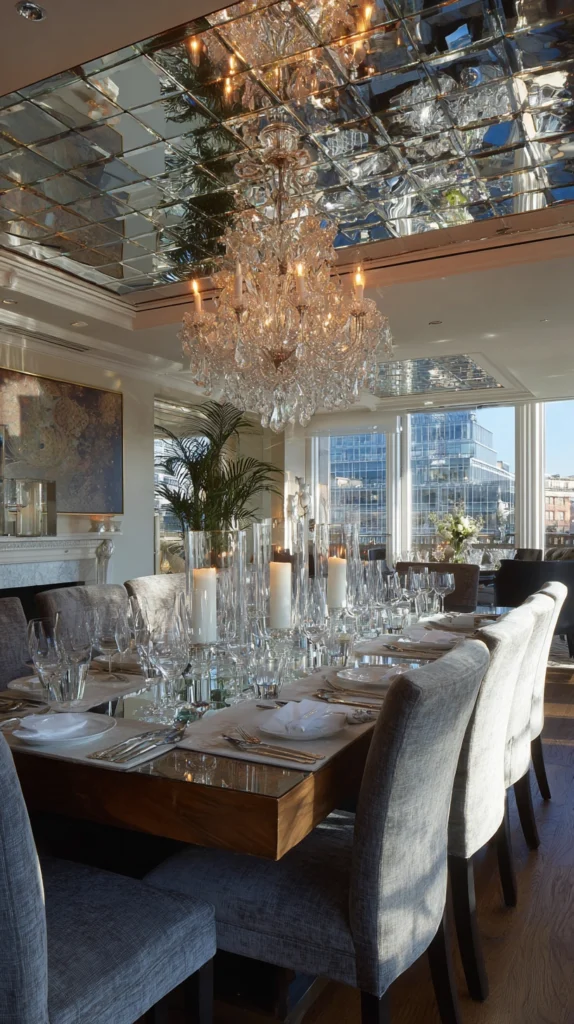
A mirrored ceiling — whether a single large panel, a series of smaller tiles, or an antique mirror arrangement — is the ceiling treatment that does the most to transform the spatial experience of a small or dark room, because it reflects the room’s contents, the light sources within it, and any natural light entering through windows upward and overhead in a way that substantially amplifies the room’s apparent size and luminosity.
A full mirrored ceiling in a small bathroom makes the room feel twice its actual height and distributes natural light with an efficiency that no other ceiling treatment can match.
A mirrored panel above a dining table reflects the table setting and the faces of the diners in a way that is both glamorous and genuinely useful — the reflected candle or pendant light above the table creates a doubled light source that illuminates the dining scene from above and below simultaneously.
Antique mirrored panels — with the slight tarnish and foxing of aged silver backing — create a ceiling treatment of considerable beauty and warmth that the hard clarity of the new mirror cannot replicate.
12. A Coffered Grid in a Contrasting Color
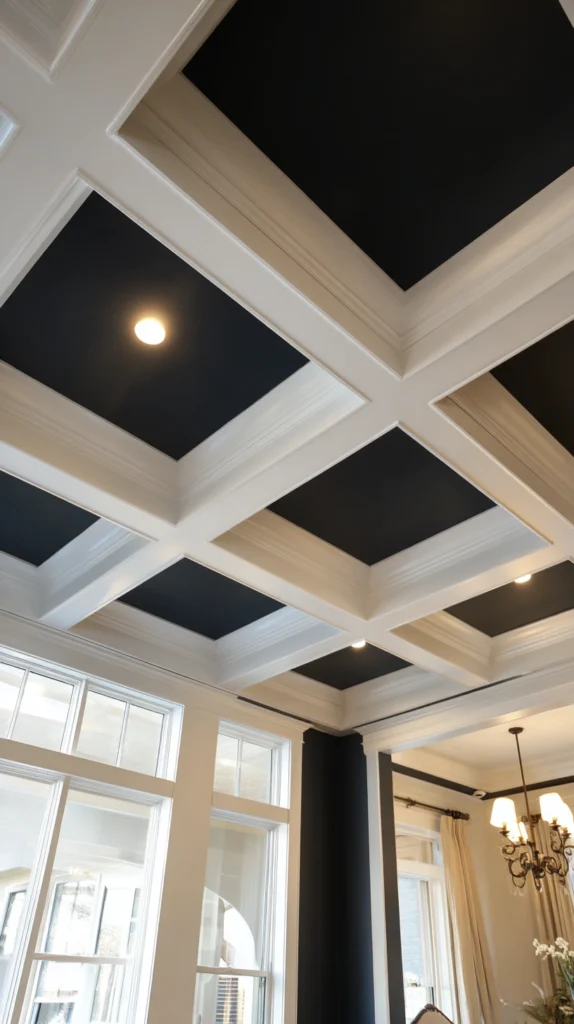
Taking the coffered ceiling concept and introducing a deliberate color contrast between the beam faces and the panel surfaces — rather than the conventional single-color treatment that most coffered ceilings receive — amplifies the three-dimensional quality of the ceiling’s geometry and creates a graphic overhead composition that functions as architectural art. A white beam grid against a navy panel.
A dark timber beam against a cream panel. A black grid against a warm terracotta panel. The contrast makes the geometry of the coffer immediately and clearly readable from below, and the panel’s color — particularly when it is a saturated or deep tone — creates the impression of looking up into a series of beautifully colored recesses that have genuine spatial depth.
The color within the coffered panels should relate to at least one other color in the room’s palette, creating a visual connection between the ceiling and the walls and furnishings below that integrates the ceiling into the room’s overall design language rather than allowing it to sit as a separate decorative gesture.
13. A Sloped or Vaulted Ceiling Celebrated Rather than Hidden
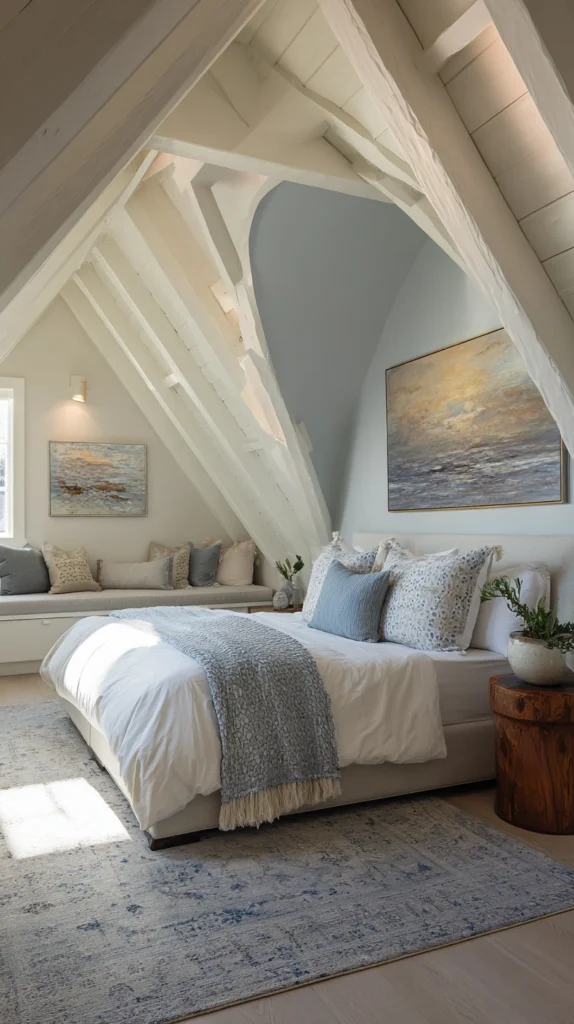
In rooms where the ceiling slopes — the attic rooms, the upper floors of older houses with pitched roofs, the converted outbuildings where the roof structure sits close to the habitable space — the architectural character of the slope is frequently treated as a problem to be managed rather than a quality to be celebrated, and the resulting spaces — low, horizontally divided, the slope hidden behind a flat ceiling — lose the spatial interest that the sloped ceiling could contribute.
Leaving the slope visible, and treating it as the room’s primary architectural feature, requires nothing more than the decision not to install the horizontal ceiling that convention suggests.
The sloped ceiling creates a room of dynamic spatial interest — the ceiling height varies from a low, intimate edge to a high, generous apex — and this variation in overhead height creates zones within the room that suit different activities and different moods.
Treat the sloped surface with the same care as any other significant architectural feature: paint it a considered color, introduce lighting at the low edge to illuminate the slope from below, and position furniture to take advantage of the spatial variety that the slope creates.
14. A Pressed Metal or Tin Ceiling Panel
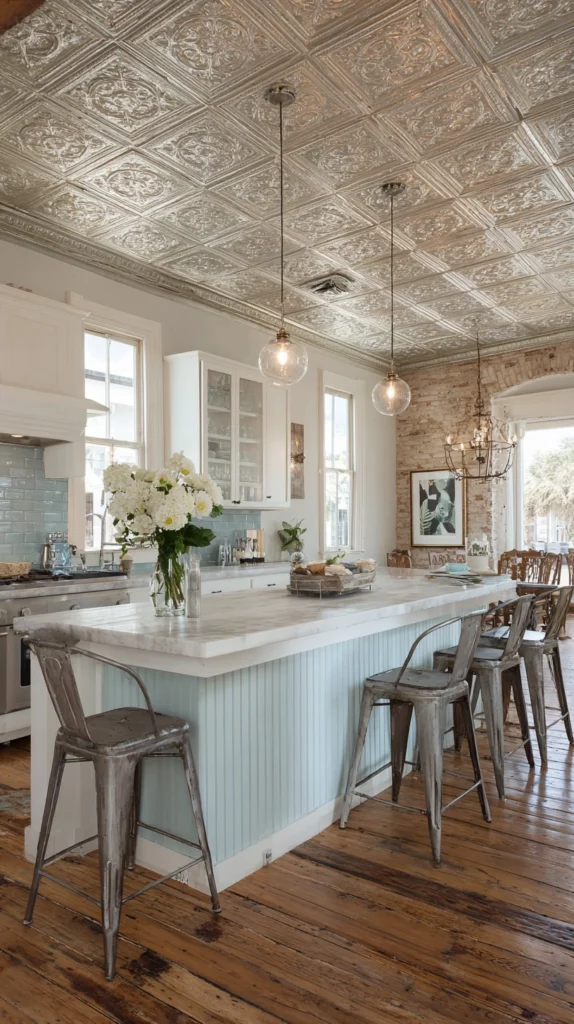
The pressed metal ceiling tile — a stamped sheet of thin metal, typically steel or aluminum, embossed with a repeating decorative pattern and installed in a grid across the ceiling surface — is an American domestic and commercial tradition with roots in the mid-nineteenth century, when the pressed tin ceiling was used in homes, shops, saloons, and civic buildings across the country as an economical and fire-resistant alternative to plaster ornament.
The patterns available in contemporary reproductions range from the simple geometric to the elaborately floral, and the surface finishes range from raw steel and painted options to polished copper and antique gold that give the ceiling the warmth of a precious metal at a fraction of the cost.
Installed in a room with appropriate architectural context — a Victorian commercial building conversion, a Craftsman interior, a rustic loft space — the pressed metal ceiling has an authenticity and a visual richness that is inseparable from the material’s history. Painted in a deep color or in a metallic finish that reflects the light with every slight curve of the embossed surface, it creates a ceiling of genuine splendor.
15. A Suspended Pendant Light Installation as Ceiling Design
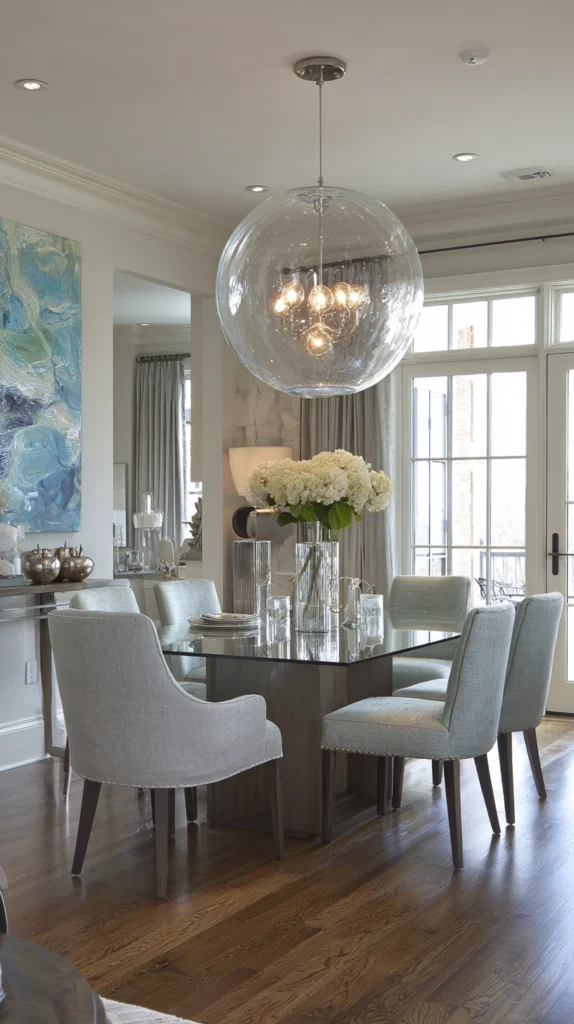
The final ceiling design idea on this list is not a surface treatment at all but a suspended installation — a collection of pendant lights, hung from the ceiling at varying heights and in a deliberate spatial arrangement, that transforms the overhead plane from a passive surface into an active visual field of light, shadow, and object. A cloud of glass globe pendants suspended at different heights across a dining room ceiling.
A grid of industrial pendants hung at precise intervals in a kitchen. A cascade of woven rattan pendants descending to different levels in a bedroom. A single monumental pendant light — a sculptural object of genuine scale and presence — centered in a room and hung low enough to function as the space’s primary focal point.
The pendant light installation does not require any modification to the ceiling surface itself — only the mounting points from which the pendants hang — but its effect on the room’s overhead experience is as dramatic as any structural or decorative ceiling treatment, because it fills the visual field above eye level with objects of beauty and light that the eye travels among with genuine pleasure every time it lifts from the room below.