15 Bedroom Feng Shui Layout Ideas for Better Energy
Creating a harmonious bedroom environment goes beyond aesthetic appeal. According to the ancient Chinese practice of feng shui, the arrangement and design of your sleeping space can significantly influence the quality of your rest, relationships, and overall well-being.
By implementing thoughtful feng shui principles, you can transform your bedroom into a sanctuary that promotes positive energy flow, restful sleep, and personal rejuvenation.

Feng shui, which literally translates to “wind and water,” is based on the concept of chi—the life force energy that flows through all living things and spaces. When chi flows smoothly and abundantly through your bedroom, it creates an environment conducive to rest, romance, and renewal. Conversely, blocked or stagnant energy can lead to restless sleep, relationship discord, and feelings of unease.
The bedroom holds particular significance in feng shui practice because it’s where we spend approximately one-third of our lives in a vulnerable, unconscious state. During sleep, we’re most receptive to the energies surrounding us, making the bedroom layout and design critically important for our physical and emotional health.
Here are fifteen essential feng shui layout ideas to optimize the energy in your bedroom and create a space that truly supports your well-being.
1. Position Your Bed in the Commanding Position

The commanding position is perhaps the most fundamental principle in bedroom feng shui. Your bed should be positioned diagonally from the door, allowing you to see the entrance while lying down, but not be directly in line with it. This placement creates a sense of security and control, as you can observe who enters your space without being in the direct path of energy rushing through the doorway.
Avoid placing your bed directly against the wall that contains the door, as this creates blind spots that can trigger subconscious anxiety. The commanding position allows you to rest with awareness and confidence, knowing you can see what’s coming while remaining protected and grounded.
2. Ensure Solid Support with a Headboard

A sturdy, solid headboard represents stability and support in your life, particularly in your career and relationships. The headboard should be firmly attached to the bed frame and positioned flush against the wall, creating a sense of backing and protection while you sleep.
Choose headboards made from solid materials like wood or upholstered fabric rather than metal bars or open slats. The headboard acts as a metaphorical mountain behind you, offering strength and security. Avoid headboards with shelving or storage compartments directly above your head, as these can create oppressive energy and subconscious worry about things falling.
3. Create Balance with Nightstands on Both Sides

Symmetry in the bedroom promotes balance and equality, particularly important for couples. Place matching or complementary nightstands on both sides of the bed, each with its own lamp. This arrangement supports partnership energy and ensures both individuals have equal space and importance in the relationship.
Even if you’re single, maintaining this balanced setup invites partnership energy into your life and prevents feelings of isolation or incompleteness. The nightstands should be in proportion to your bed—neither too large nor too small—and should ideally reach approximately the same height as your mattress.
4. Remove Electronics and Reduce EMF Exposure

Electronic devices emit electromagnetic fields that can disrupt sleep quality and interfere with the natural flow of chi. Remove televisions, computers, exercise equipment, and other technology from your bedroom, or at minimum, keep them covered when not in use and unplugged at night.
If you must keep your phone in the bedroom, place it across the room rather than on your nightstand, and switch it to airplane mode during sleep hours. The bedroom should be a sanctuary for rest and intimacy, not a workspace or entertainment center. This separation helps your mind associate the bedroom exclusively with relaxation and sleep, improving both sleep quality and relationship intimacy.
5. Clear the Space Under Your Bed

The area beneath your bed should remain clear to allow chi to circulate freely around your sleeping body. Storing items under the bed creates stagnant energy and can manifest as blocked energy in your life, potentially leading to health issues or feeling stuck in various life areas.
If storage is absolutely necessary due to space constraints, limit it to soft items like linens or out-of-season clothing in enclosed containers. Never store items related to the past, broken objects, or anything that carries negative associations, as these energies will influence your subconscious mind throughout the night.
6. Avoid Positioning Your Bed Under a Window

Windows represent openings where energy can escape, and sleeping directly under a window can leave you feeling unsupported and vulnerable. The wall behind your headboard should be solid, providing stability and protection. If your only option is to place the bed under a window, use substantial window treatments that can be closed at night to create a sense of solidity.
Heavy curtains, Roman shades, or plantation shutters can help mitigate the unstable energy created by window placement. Additionally, consider positioning the headboard slightly away from the wall to create a small buffer zone if the window is directly behind the bed.
7. Keep Mirrors Out of Direct View from Bed

Mirrors are powerful feng shui tools that activate and redirect energy, but they can be too stimulating in the bedroom. Avoid positioning mirrors where they directly reflect the bed, as this can create restless energy, disturb sleep, and according to feng shui tradition, invite third-party energy into relationships.
If you must have a mirror in the bedroom, position it where it doesn’t reflect the bed, or cover it with fabric or a decorative screen at night. Mirrored closet doors can be particularly problematic; consider replacing them with solid doors or draping them with curtains during sleep hours.
8. Choose Soothing, Balanced Colors

Color psychology plays a significant role in feng shui bedroom design. Opt for soft, skin-tone colors that promote relaxation and intimacy. Excellent choices include warm beiges, soft creams, gentle terracottas, dusty roses, and muted cocoas. These colors create a cocooning effect that supports rest and romance.
Avoid overly stimulating colors like bright red, intense orange, or vibrant purple in large amounts, as these can be too activating for a rest space. Cool blues and greens should also be used sparingly, as they can create too much yin energy, potentially leading to feelings of sadness or isolation. If you love these colors, incorporate them through artwork or accessories rather than wall colors or bedding.
9. Incorporate Pairs and Symmetry for Relationship Energy

Feng shui emphasizes the importance of pairs in creating relationship harmony. Beyond the matching nightstands, incorporate pairs throughout the bedroom: two lamps, two decorative pillows, paired artwork, or matching decorative objects. This doubling principle reinforces partnership energy and balance.
Even imagery and artwork should reflect partnership—choose pieces depicting pairs of birds, couples, or symmetrical designs rather than solitary figures. This principle applies whether you’re in a relationship or seeking one, as it programs the energy of the space to support partnership and connection.
10. Eliminate Clutter and Maintain Organization

Clutter represents stagnant energy and creates chaos in both your physical space and your mind. A cluttered bedroom leads to disturbed sleep, increased stress, and blocked energy in corresponding life areas. Keep surfaces clear, clothes put away, and belongings organized in closed storage.
Pay particular attention to the area around your bed, ensuring nightstands hold only essential items. Clutter in the bedroom particularly affects rest quality and relationship harmony, as the subconscious mind processes the visual chaos even while sleeping. Implement the habit of tidying the bedroom before sleep each night, creating a peaceful environment that signals to your brain it’s time to rest.
11. Avoid Exposed Beams or Sloped Ceilings Above the Bed

Structural elements like exposed beams, sloped ceilings, or heavy light fixtures directly above the bed create oppressive “cutting chi” that can manifest as pressure, health issues, or relationship problems in the areas of the body beneath the beam. If possible, position your bed away from these architectural features.
If relocation isn’t possible, remedies include draping fabric across the beam, painting it the same color as the ceiling to visually minimize it, or hanging two bamboo flutes at 45-degree angles on the beam to lift and redirect the energy. Heavy chandeliers or ceiling fans should also be repositioned away from hanging directly over the bed.
12. Maintain Proper Distance from Walls

Your bed should have some breathing room from the walls on all accessible sides, allowing chi to circulate completely around the sleeping area. While the headboard should be against the wall, leave at least a few inches of space on the sides and foot of the bed for energy flow.
This circulation principle applies to other furniture as well—avoid pushing all pieces flush against walls in a small bedroom. Even a few inches of space creates a sense of flow and prevents the stagnant energy that comes from blocked pathways. The goal is to create a sense of spaciousness and ease, even in compact rooms.
13. Choose Proper Bed Height and Avoid Platform Beds

The ideal bed height allows chi to flow underneath, which requires the bed to be raised off the floor with a proper frame and legs. Very low platform beds or mattresses placed directly on the floor restrict energy circulation and can lead to feelings of being stuck or limited in life.
The optimal bed height allows you to sit on the edge with your feet flat on the floor and your knees at approximately a ninety-degree angle. This height supports both energy flow and physical comfort when getting in and out of bed. Storage beds with solid bases that block airflow should be avoided, as they trap stagnant energy beneath your sleeping body.
14. Incorporate Natural Elements and Living Energy
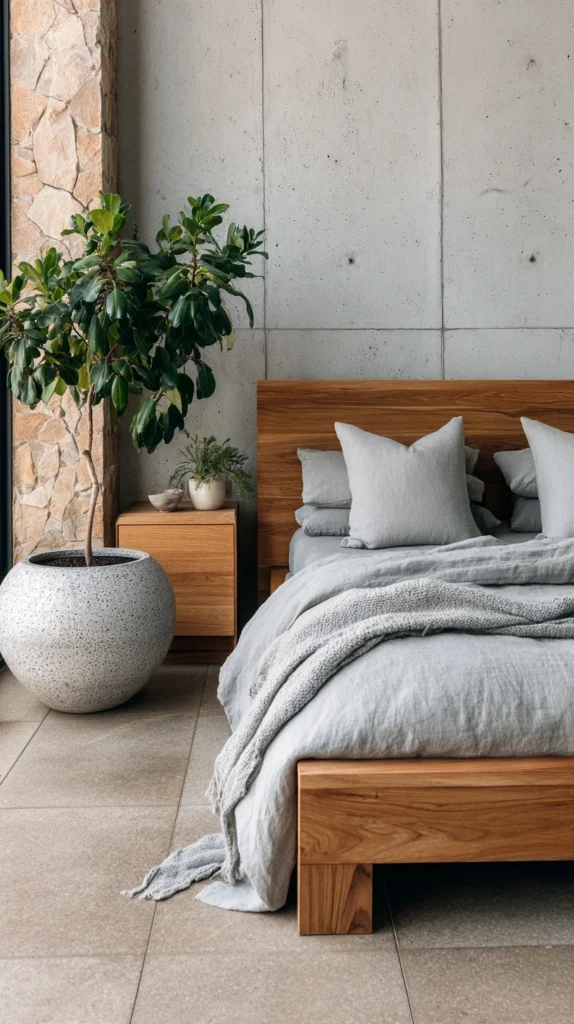
Bring nature into your bedroom through carefully selected plants, natural materials, and organic textures. While some feng shui practitioners advise against bedroom plants, others recognize that certain varieties with rounded leaves and gentle energy can enhance the space when placed appropriately—away from the bedside where they might be too active during sleep hours.
Natural materials like wood furniture, cotton or linen bedding, wool rugs, and stone or ceramic accessories ground the space and connect it to earth energy. These elements create a sense of authenticity and calm that synthetic materials cannot replicate. Fresh flowers (avoiding dried arrangements, which represent dead energy) can also introduce life force and beauty, particularly when displayed in pairs.
15. Control and Layer Lighting for Flexibility

Lighting represents fire energy in feng shui and should be adjustable to support different activities and moods in the bedroom. Avoid harsh overhead lighting, instead creating layers with bedside lamps, wall sconces, and perhaps accent lighting that can be dimmed in the evening.
The ability to modulate light levels supports the natural circadian rhythm and creates appropriate energy for different times of day. Bright, yang lighting in the morning energizes you for the day, while soft, warm lighting in the evening signals the body to prepare for rest. Install dimmer switches or use three-way bulbs to create flexibility, and choose warm-toned bulbs over cool, blue-tinted light that can interfere with melatonin production.
Bringing It All Together
Implementing these feng shui bedroom layout principles creates a foundation for improved sleep, enhanced relationships, and greater overall well-being. Remember that feng shui is both an art and a practice—you don’t need to implement every principle perfectly or all at once.
Start with the changes that resonate most strongly with you and that address your primary concerns, whether that’s improving sleep quality, enhancing romance, or simply creating a more peaceful retreat.
The most powerful aspect of feng shui is the intention you bring to your space. As you arrange and design your bedroom, do so mindfully, considering how each element supports your goals and well-being. Your bedroom should ultimately feel like a personal sanctuary—a place where you can completely relax, rejuvenate, and connect with yourself or your partner.
Trust your intuition as you apply these principles. If something doesn’t feel right despite following guidelines, adjust accordingly. The ultimate goal is creating a space that supports your unique energy and lifestyle while honoring the timeless wisdom of balanced, harmonious design.