15 TV Wall Accent Ideas That Don’t Overwhelm the Room
A TV wall is often the visual anchor of a living space, yet it’s also one of the easiest areas to overdesign. Too many textures, heavy materials, or bold colors can quickly make a room feel cluttered and visually exhausting.
The key to a successful TV wall accent is balance — enhancing the wall just enough to give it character while allowing the rest of the room to breathe.

A well-designed TV wall should frame the screen, integrate with surrounding décor, and quietly elevate the room’s style without demanding constant attention. Whether your space is large or compact, modern or classic, these 15 TV wall accent ideas focus on subtle sophistication, thoughtful materials, and timeless appeal.
1. Soft Neutral Paneling for Subtle Depth
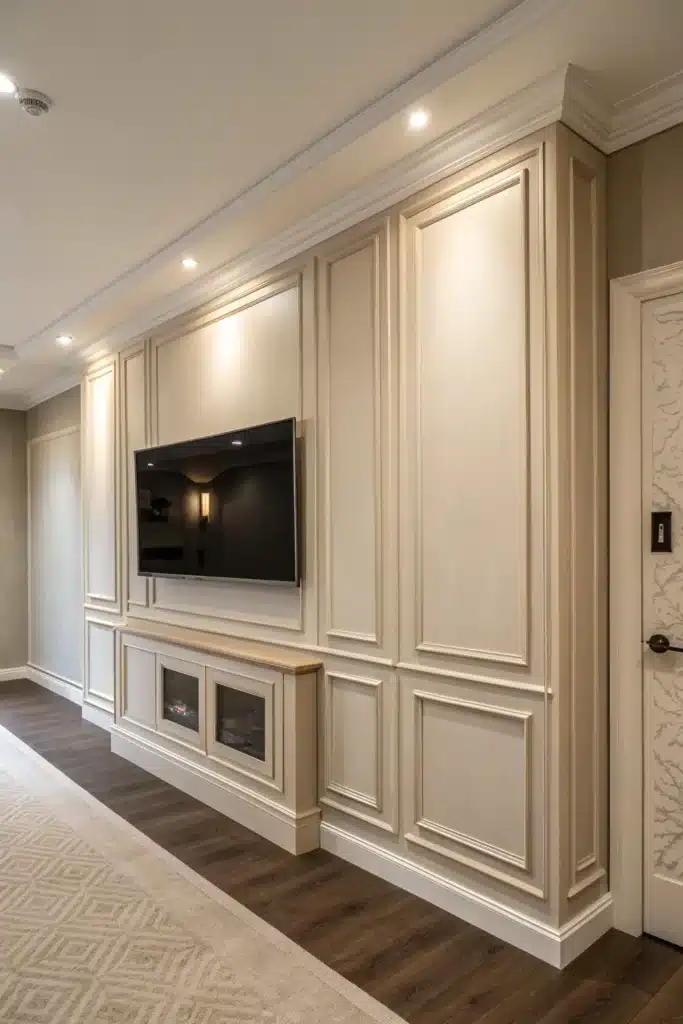
Neutral wall paneling is one of the most refined ways to accent a TV wall without overpowering the space. Light wood slats, painted MDF panels, or shallow fluted detailing add dimension while maintaining a calm visual rhythm.
Soft neutrals like beige, warm gray, or greige create depth without harsh contrast. The TV blends naturally into the wall, allowing furniture and décor to shine instead. This approach works beautifully in minimalist and modern interiors where texture is preferred over bold color.
Paneling also helps visually organize the wall, making the TV feel intentional rather than an afterthought.
2. Matte Painted Accent Wall
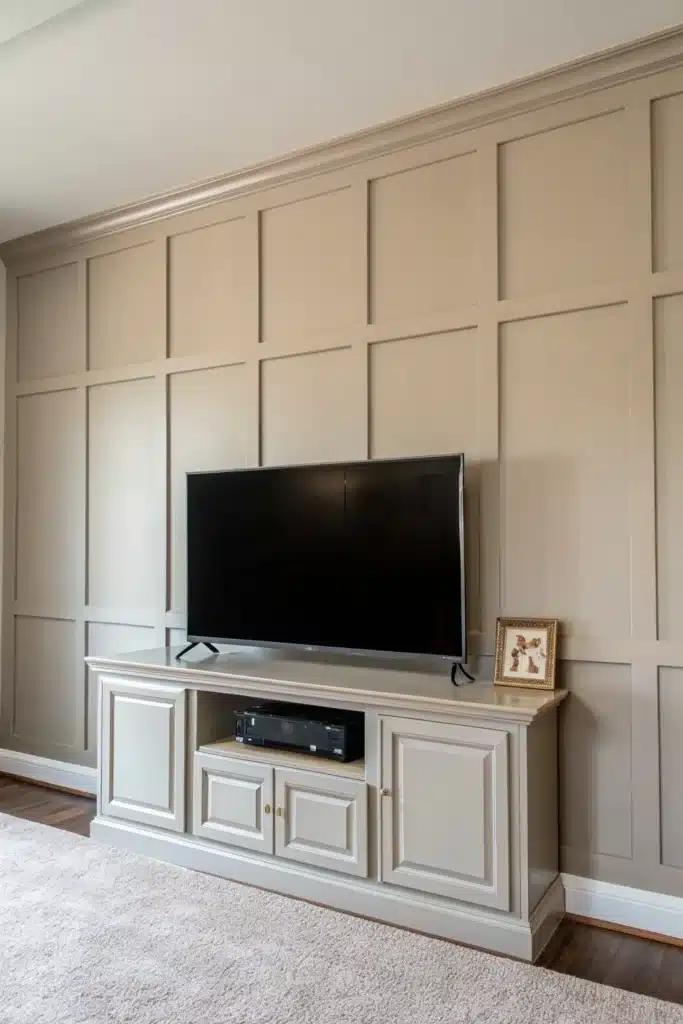
A single matte-painted wall behind the TV can create a defined focal point while remaining understated. Unlike glossy finishes, matte paint absorbs light, reducing glare and keeping the screen comfortable to watch.
Muted shades such as charcoal, clay, taupe, or soft olive provide contrast without dominating the room. The TV visually recedes into the darker tone, which actually makes the wall feel calmer and more cohesive.
This idea is ideal for renters or anyone looking for a simple, budget-friendly accent with a high-end feel.
3. Floating Media Console for Visual Lightness
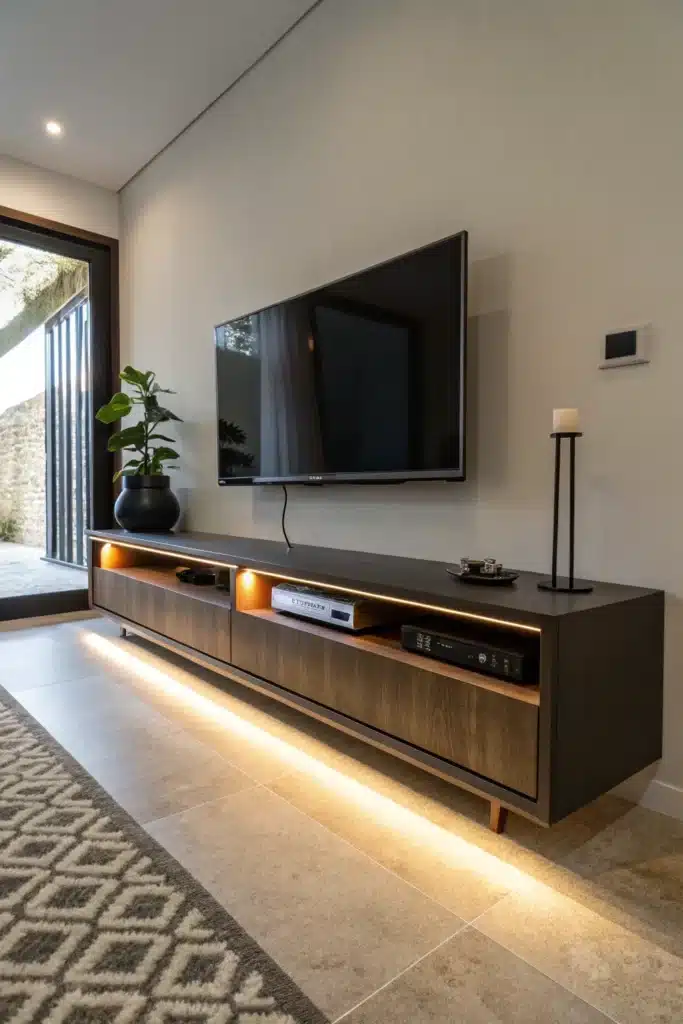
A floating media console instantly makes a TV wall feel lighter and more open. By lifting storage off the floor, the wall gains breathing room and avoids a bulky, ground-heavy look.
Choose streamlined designs with handle-free drawers and smooth finishes. Keeping the console slightly wider than the TV helps visually anchor the screen while maintaining balance.
The negative space beneath the console adds to the illusion of openness, especially in smaller living rooms.
4. Minimalist Built-In Shelving
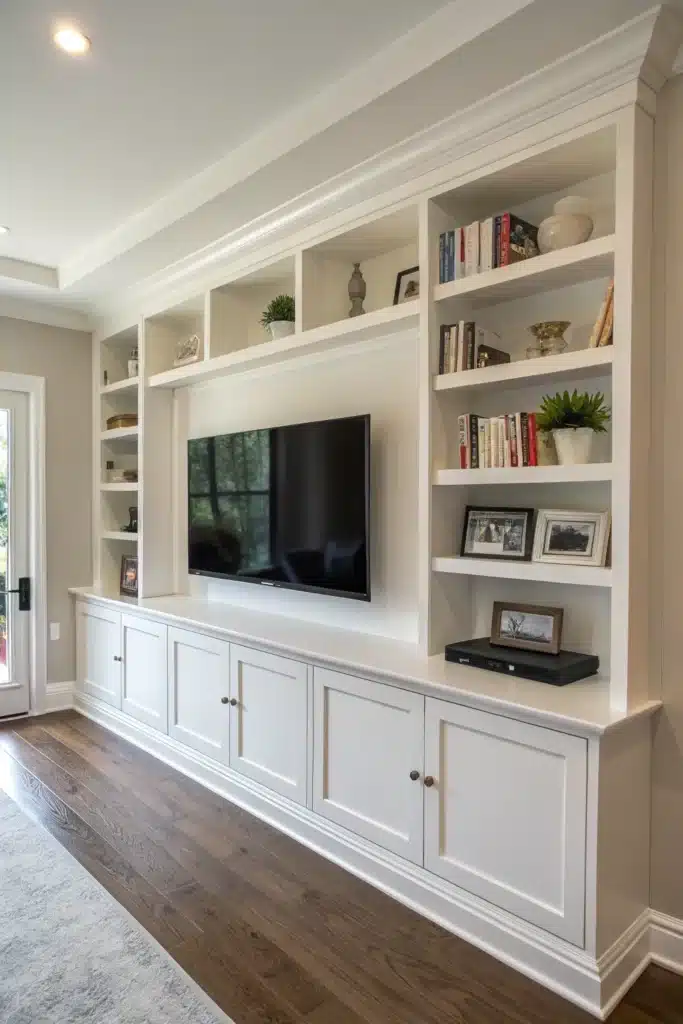
Built-in shelving around a TV can feel elegant rather than overwhelming when kept minimal. The key is restraint — slim shelves, limited décor, and plenty of empty space.
Opt for shelves that match the wall color to create a seamless look. Display only a few well-chosen pieces such as books, ceramics, or sculptural objects. This prevents visual clutter and keeps attention centered on the TV wall as a whole.
This approach blends function and design while maintaining a clean, curated aesthetic.
5. Light Wood Accents for Warmth

Light wood tones bring warmth and softness to a TV wall without adding heaviness. Oak, ash, or maple finishes work particularly well in contemporary and Scandinavian-inspired interiors.
Using wood as vertical slats, a backing panel, or a low-profile console introduces natural texture that balances the technology of the TV. The result feels inviting and grounded rather than stark or cold.
Keeping the wood finish light ensures the wall remains airy and visually approachable.
6. Textured Wallpaper with a Quiet Pattern
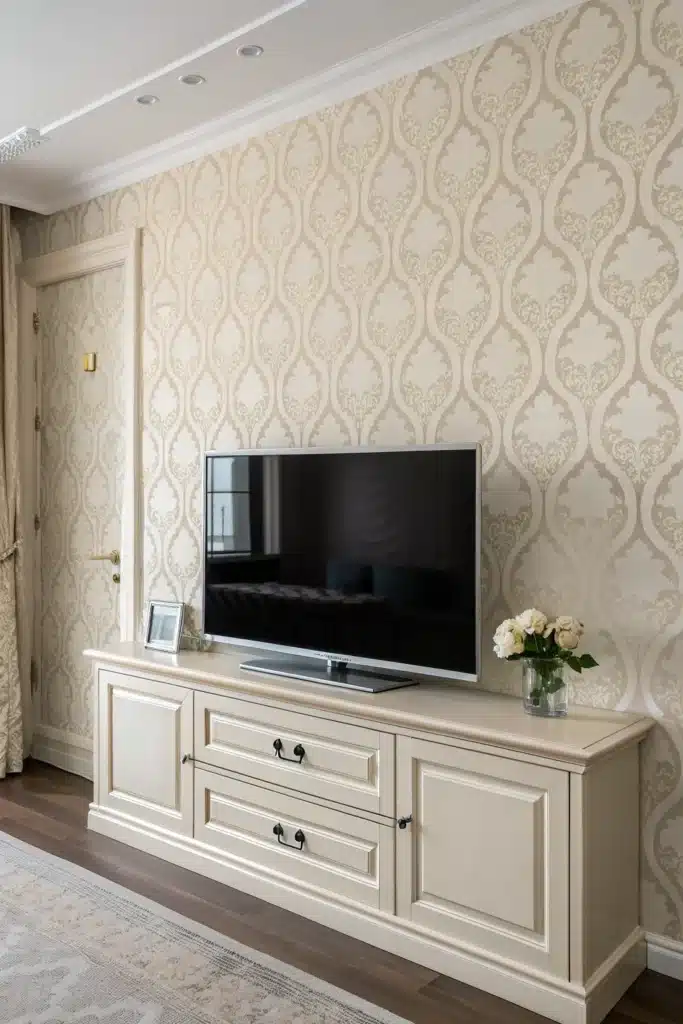
Wallpaper doesn’t have to be bold to make an impact. Subtle textures like linen, grasscloth-inspired patterns, or tone-on-tone geometrics can elevate a TV wall without competing for attention.
Choose wallpapers with low contrast and soft movement. These textures add interest when viewed up close but fade into the background from a distance, allowing the TV to remain the focus.
This idea works especially well in living rooms where you want a layered, sophisticated look rather than a dramatic statement.
7. Low-Contrast Stone or Porcelain Panels
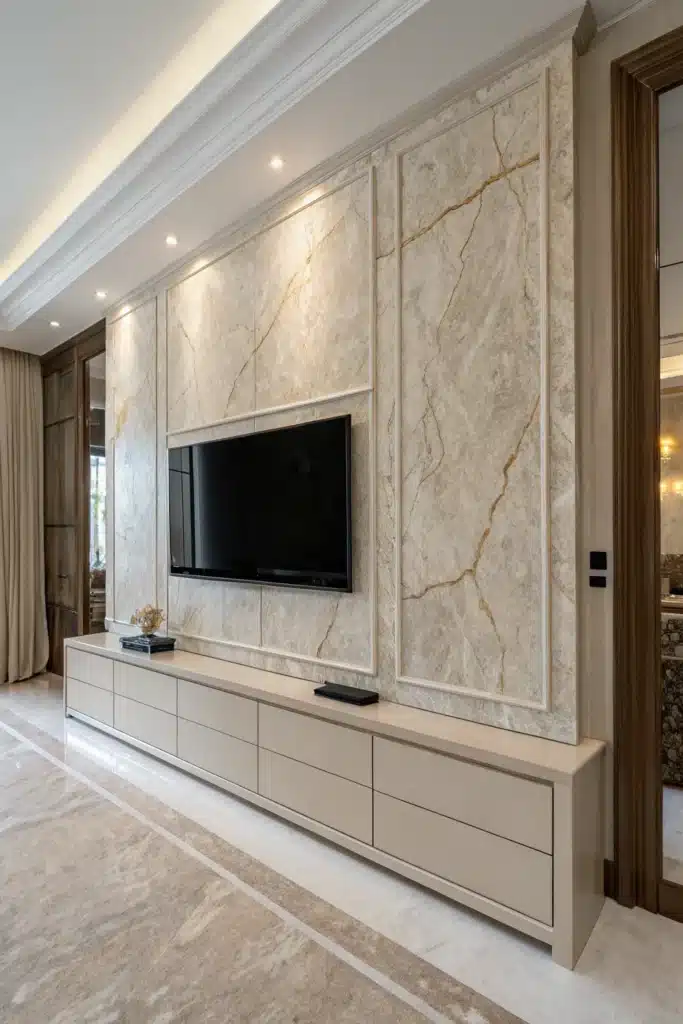
Stone-inspired surfaces can feel luxurious without overwhelming when used in light tones and simple layouts. Porcelain slabs with soft veining or limestone textures offer elegance while remaining visually calm.
Keeping the color palette neutral ensures the TV doesn’t clash with the background. The smooth, continuous surface creates a refined backdrop that elevates the entire room.
This approach works best when paired with minimal furniture and warm lighting to balance the coolness of stone finishes.
8. Recessed TV Wall for a Streamlined Look

Recessing the TV into the wall creates a built-in appearance that feels clean and intentional. This technique reduces visual bulk and helps the screen sit flush rather than protruding into the room.
A recessed wall niche can be framed with subtle trim or painted a slightly darker shade for gentle contrast. The result is a sleek, architectural look that feels custom without being flashy.
This idea is particularly effective in modern interiors and compact spaces.
9. Slim Vertical Trim Details

Adding vertical trim details behind the TV introduces structure and elegance without clutter. Thin battens or grooves draw the eye upward, subtly enhancing ceiling height.
Keeping the trim color close to the wall color ensures the pattern feels soft rather than graphic. The TV remains visually grounded while the wall gains quiet sophistication.
This design works beautifully in transitional interiors that blend classic and modern elements.
10. Tonal Color Layering

Instead of using strong contrast, tonal layering creates depth through variations of the same color family. For example, a warm gray wall paired with a slightly darker console and soft gray décor feels cohesive and calm.
The TV naturally blends into the tonal palette, reducing its visual dominance. This approach is especially effective for open-plan spaces where continuity matters.
Tonal layering creates interest without visual noise, making the room feel harmonious.
11. Fabric or Upholstered Wall Panels

Fabric wall panels add softness and acoustic benefits while keeping the TV wall visually gentle. Neutral textiles such as felt, boucle, or woven fabrics introduce texture without shine or harsh lines.
These panels work well in media rooms or living spaces where comfort is a priority. The fabric backdrop absorbs sound and light, enhancing both aesthetics and functionality.
Keeping the palette neutral ensures the wall feels cozy, not heavy.
12. Asymmetrical Balance with Décor

Perfect symmetry isn’t always necessary. An asymmetrical layout can feel more relaxed and modern when done thoughtfully.
Place the TV slightly off-center and balance it with a slim shelf, plant, or artwork on one side. Keeping décor minimal prevents the arrangement from feeling busy.
This approach adds character while maintaining visual calm, especially in casual living spaces.
13. Frameless TV with Clean Wall Integration

A frameless TV mounted cleanly on the wall blends more seamlessly into its surroundings. When paired with a simple accent wall, the screen feels less like a standalone object and more like part of the architecture.
Concealing cables and avoiding heavy frames keeps the wall uncluttered. The result is sleek, modern, and easy on the eyes.
This idea works well for design-forward homes that value simplicity.
14. Soft LED Backlighting for Atmosphere

LED backlighting behind the TV adds depth without adding physical elements. A soft, warm glow creates a floating effect that enhances ambiance without distracting from the screen.
Avoid harsh or colorful lighting. Neutral white or warm tones keep the look sophisticated and calming. The gentle illumination also reduces eye strain during evening viewing.
This is an excellent option for adding interest without visual overload.
15. Art-Like Integration with a Gallery Feel

Treating the TV as part of a curated wall rather than the sole focus can reduce its visual dominance. Surrounding the screen with simple artwork in similar tones creates balance and cohesion.
Keeping frames minimal and spacing generous ensures the wall feels intentional, not crowded. The TV blends into the arrangement rather than standing out.
This approach works particularly well in living rooms where style and comfort coexist.
Final Thoughts
A successful TV wall accent doesn’t shout — it quietly supports the room’s design. By choosing subtle materials, soft colors, and thoughtful layouts, you can create a TV wall that feels refined rather than overwhelming.
The most effective designs allow the TV to exist comfortably within the space instead of competing with it. Whether you prefer modern simplicity or layered elegance, these ideas prove that less truly is more when it comes to TV wall accents. When balance is achieved, the entire room feels calmer, more cohesive, and effortlessly stylish.