15 Succulent Hanging Garden Ideas
Succulents are among the most versatile, most visually extraordinary, and most forgiving plants available to any gardener, and their remarkable adaptability to hanging and vertical growing formats makes them one of the most exciting and most design-forward plant choices for a hanging garden.
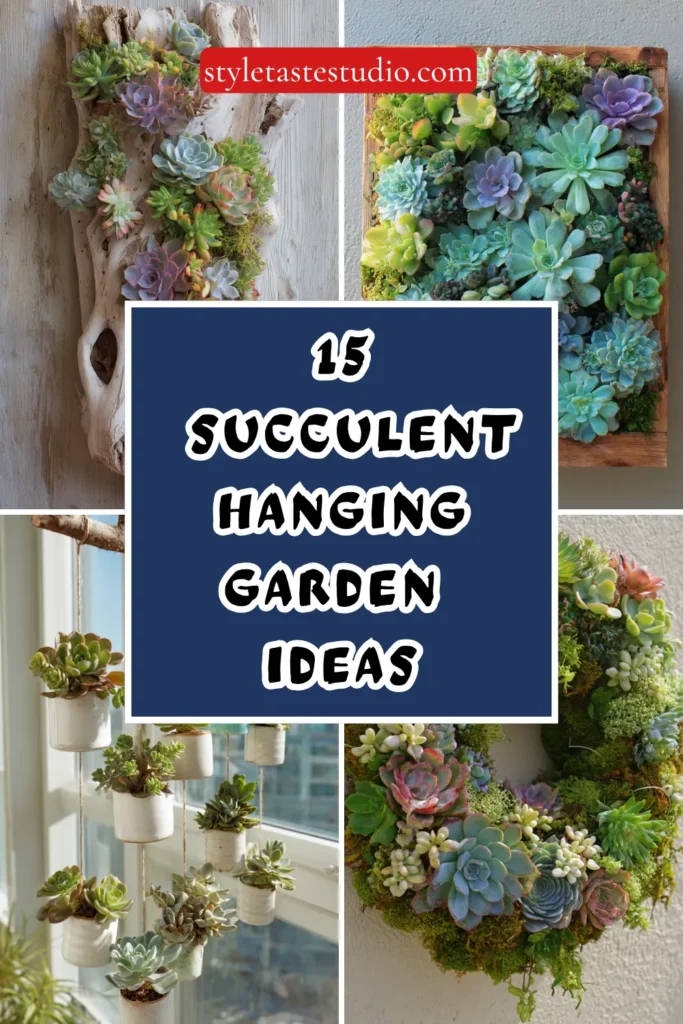
Their thick, water-storing leaves, their extraordinary variety of color, form, and texture, and their ability to thrive in conditions that would defeat most other plants make succulents the ideal candidate for the creative, unconventional growing arrangements that a hanging garden demands. Here are 15 succulent hanging garden ideas that are beautiful, practical, and genuinely inspiring.
1. Create a Hanging Succulent Wreath
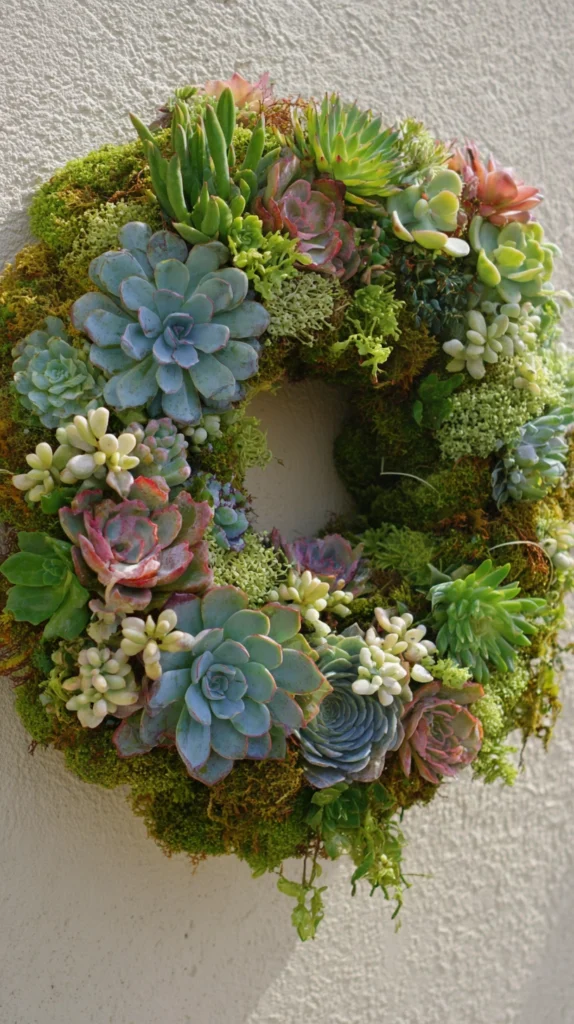
A hanging succulent wreath is one of the most beautiful and most striking living plant displays available for an interior or exterior wall surface. Construct the wreath base from a wire wreath frame filled with a mixture of sphagnum moss and cactus compost, then plant individual succulent cuttings through the moss surface at close spacing until the entire wreath surface is covered with a dense, lush tapestry of succulent rosettes in varying sizes, colors, and textures.
The finished wreath is a genuine living work of art that improves in beauty as the succulents establish and fill out over the weeks following planting.
Water a hanging succulent wreath by immersing it in a basin of water for approximately fifteen minutes every two to three weeks rather than watering from above, which can dislodge the moss planting medium and disturb the newly rooted cuttings.
Hang the wreath horizontally during the establishment period of approximately six to eight weeks to allow the cuttings to root firmly into the moss before the wreath is hung vertically on the wall. Once established, the wreath can be hung vertically and will maintain its form indefinitely with minimal care.
2. Plant a Hanging Basket of Mixed Succulents
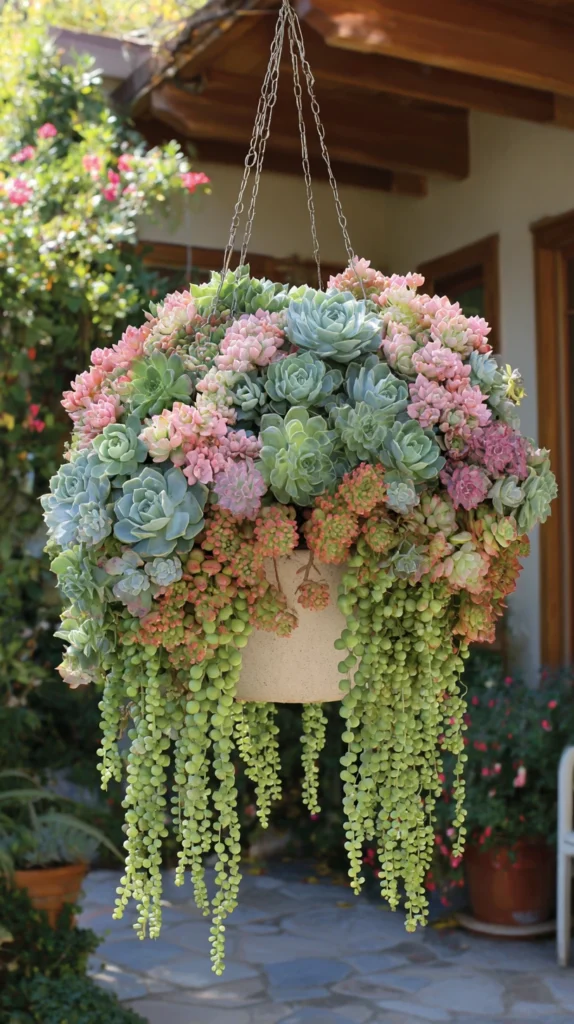
A generously planted hanging basket of mixed succulent varieties creates one of the most colorful and most texturally rich hanging plant displays available. Choose a basket with adequate drainage holes and fill it with a free-draining cactus and succulent compost mix, then plant a selection of succulent varieties with contrasting rosette sizes, colors, and growth habits.
A combination of compact echeverias in soft blue-grey and dusty pink tones, trailing string of pearls cascading over the basket edge, and a few larger specimen sedum or aeonium rosettes as the central structural plants creates a hanging basket of extraordinary visual variety and botanical interest.
3. Hang a Driftwood Succulent Display
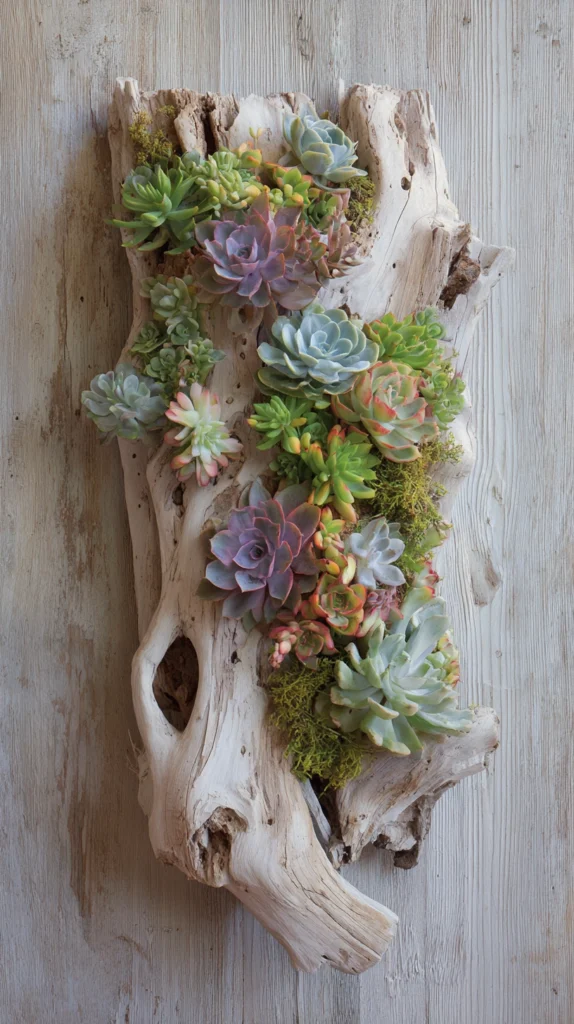
Attaching succulent rosettes and cuttings directly to a piece of weathered driftwood using floral wire, hot glue, or a small amount of cactus compost tucked into natural crevices in the wood surface creates a wall-hung display of extraordinary natural character and material beauty.
The combination of the pale, bleached surface and organic sculptural form of the driftwood with the jewel-like colors and geometric rosette forms of the succulents creates a display that is simultaneously a piece of natural sculpture and a living plant installation.
Hang the driftwood display on a well-lit interior wall where the succulents will receive the indirect bright light they require without the direct intense sunlight that would scorch their leaves.
4. Create a Hanging Succulent Terrarium
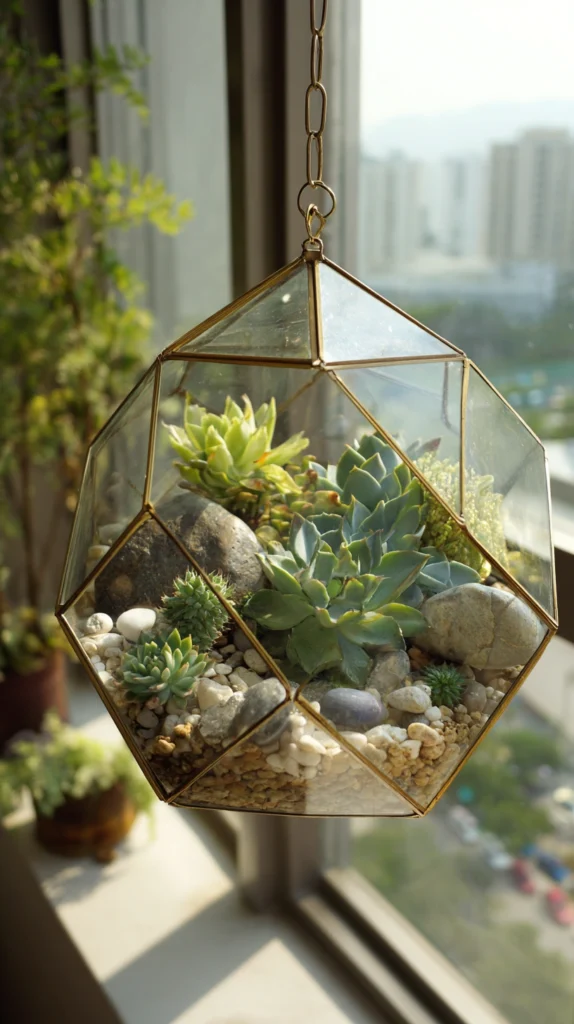
A geometric glass terrarium suspended from the ceiling on a length of leather cord or macramé rope creates a floating, jewel-box succulent display of exceptional contemporary elegance.
Choose a terrarium in a clean geometric form. a hexagonal, triangular, or octagonal glass and metal enclosure. and plant the interior with a small landscape of miniature succulent varieties, fine gravel, and a small piece of decorative stone. The glass enclosure showcases the succulents from every angle and creates the impression of a tiny, self-contained world suspended in the air above the viewer.
5. Use a Hanging Shoe Organizer as a Planter
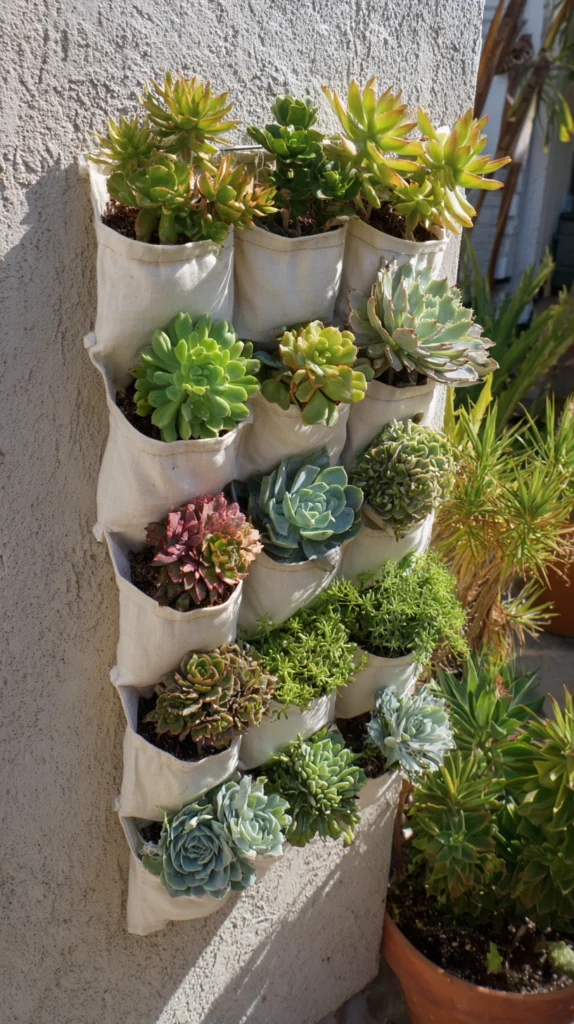
A fabric or felt hanging shoe organizer repurposed as a vertical succulent planter is one of the most inventive and most immediately practical hanging succulent garden ideas available. Fill each pocket of the shoe organizer with a free-draining succulent compost mix and plant a different succulent variety in each individual pocket for a vertical garden of considerable variety and visual interest.
The multiple pocket format creates an instant grid of individual succulent plantings that covers a large wall area at minimal cost using a widely available, inexpensive material. Hang the succulent organizer on a sheltered exterior wall or in a bright interior position for the most productive and most visually effective result.
6. Plant a Macramé Hanging Planter
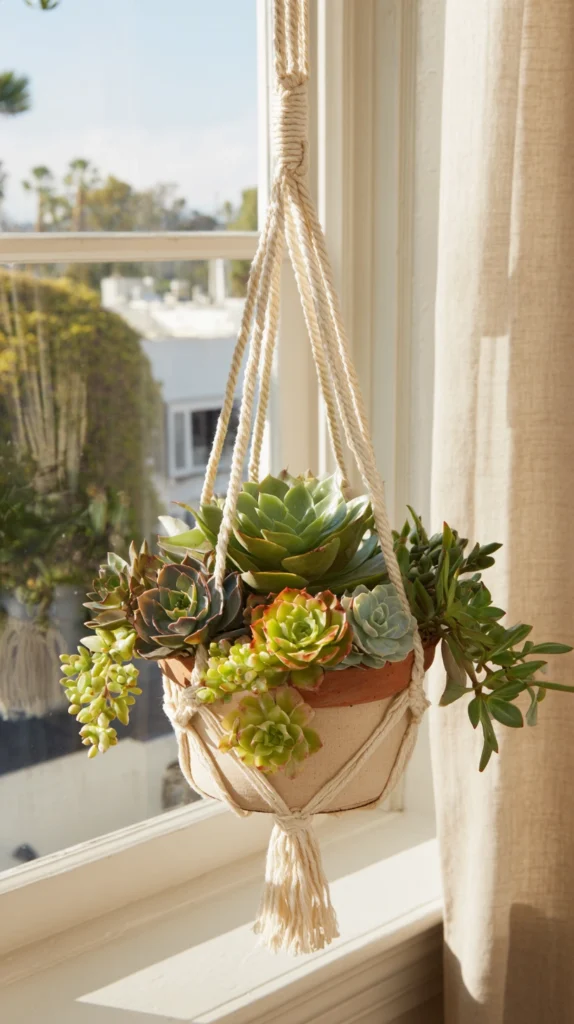
A macramé hanging planter. the knotted cotton cord hanging that became a signature of 1970s interior design and has returned with considerable contemporary elegance. combined with a small terracotta or glazed ceramic pot of mixed succulents creates a hanging plant display of warm, handcrafted texture and botanical beauty.
The natural cotton cord of the macramé planter provides a warm, organic contrast to the cool, geometric perfection of the succulent rosettes within the pot, and the hanging format positions the succulents at a height where their extraordinary variety of form and color can be appreciated at eye level. Choose a macramé planter with a pot holder sized appropriately for the specific pot being used to ensure a secure and well-balanced display.
7. Create a Hanging Succulent Picture Frame
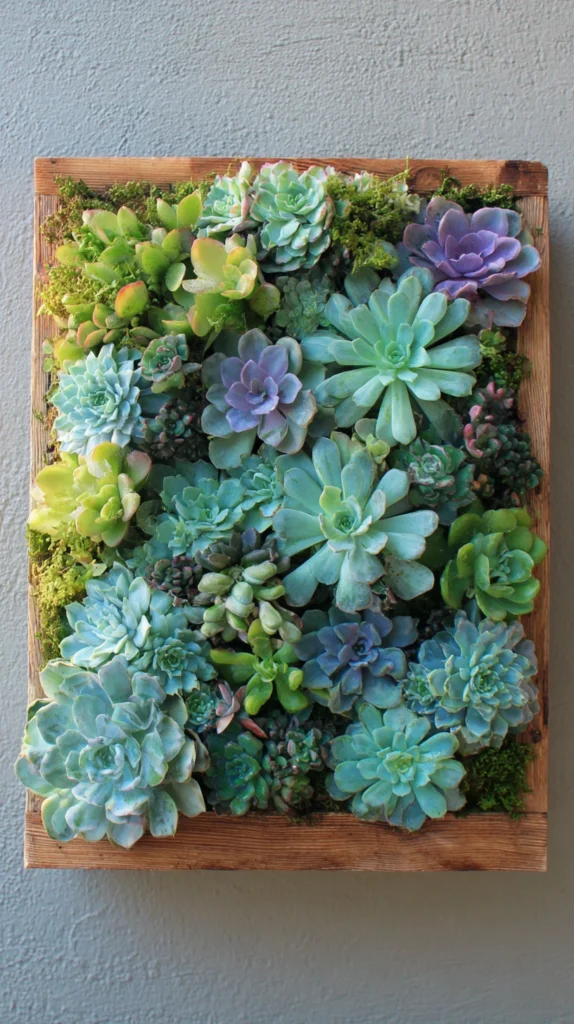
A timber picture frame fitted with a shallow tray of chicken wire and sphagnum moss planted with compact succulent rosettes creates a living wall art piece of genuine originality and considerable botanical beauty.
Construct the frame from timber of sufficient depth to accommodate a shallow growing tray. approximately 5 to 8 centimeters. and fill the tray with a mixture of sphagnum moss and cactus compost packed firmly behind the chicken wire front.
Plant compact succulent varieties. echeveria, sempervivum, and haworthia. through the chicken wire at close spacing for a frame that fills in quickly and presents a dense, jewel-like tapestry of succulent rosettes within its timber surround.
8. Hang Terracotta Pots in a Vertical Arrangement
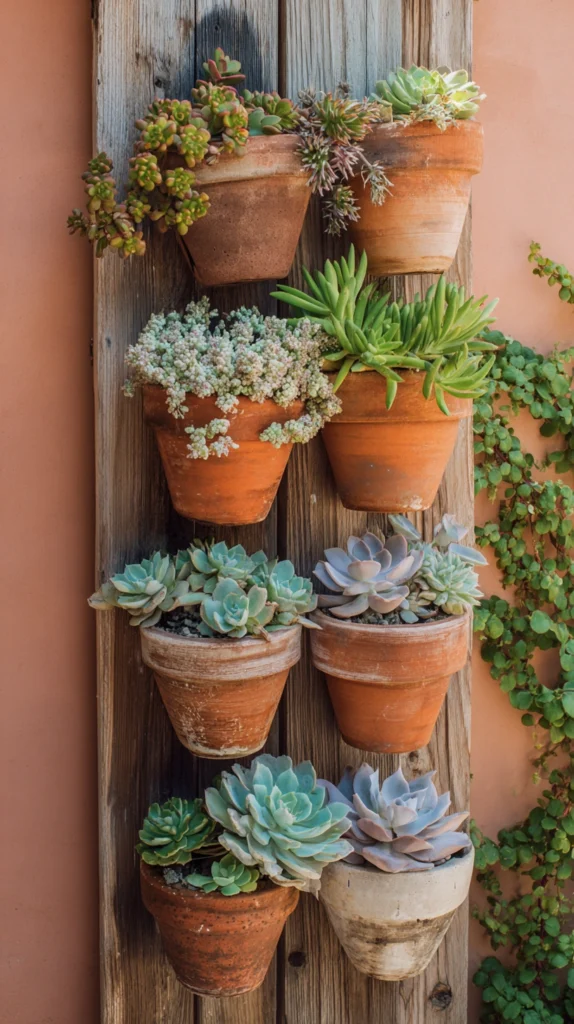
A series of terracotta pots of varying sizes hung on a wall-mounted timber board or a length of rope at staggered heights creates a vertical succulent garden of warm, rustic character and considerable visual interest.
The warm, earthy tone of terracotta coordinates beautifully with the blue-grey, dusty pink, and deep purple tones of most succulent varieties, and the natural variation in surface texture and weathering between individual terracotta pots creates a display with the accumulated, collected quality of objects gathered over time.
Plant each pot with a single specimen succulent variety for a clean, botanical display, or with a small mixed arrangement of complementary varieties for a more abundant effect.
9. Create a Hanging Succulent Chandelier
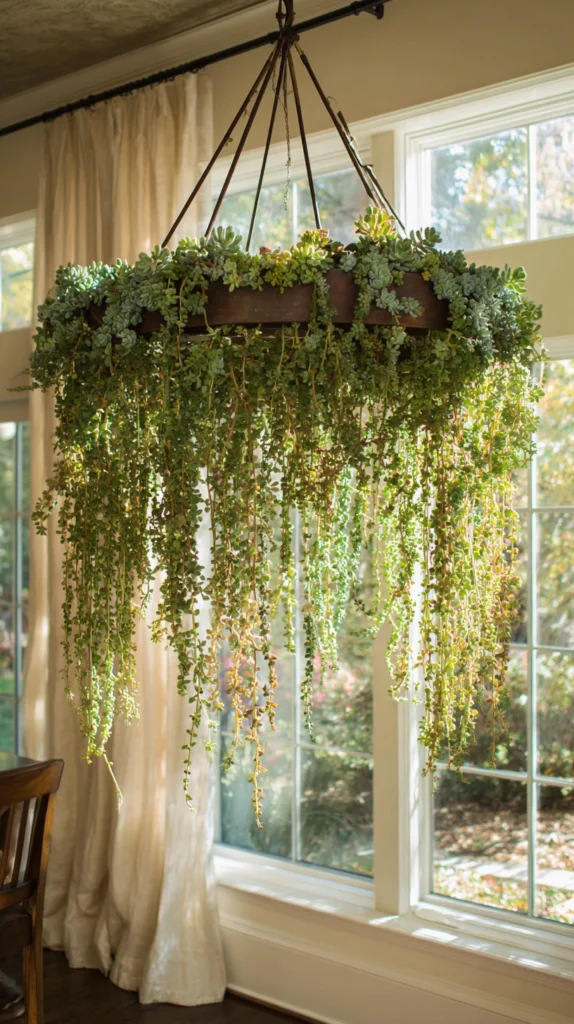
A hanging succulent chandelier. a circular metal frame suspended from the ceiling on chains or ropes and planted with trailing succulent varieties that cascade downward from the frame. creates a ceiling-hung living installation of extraordinary visual drama and botanical richness.
Attach small hanging baskets or individual pots of trailing succulent, string of pearls, string of bananas, donkey’s tail. to the circular metal frame at regular intervals for a chandelier that drips with cascading succulent growth and creates a genuinely spectacular living ceiling feature. Position the succulent chandelier near a skylight or a bright window where the trailing plants will receive adequate light throughout the year.
10. Plant a Living Wreath of Sempervivum
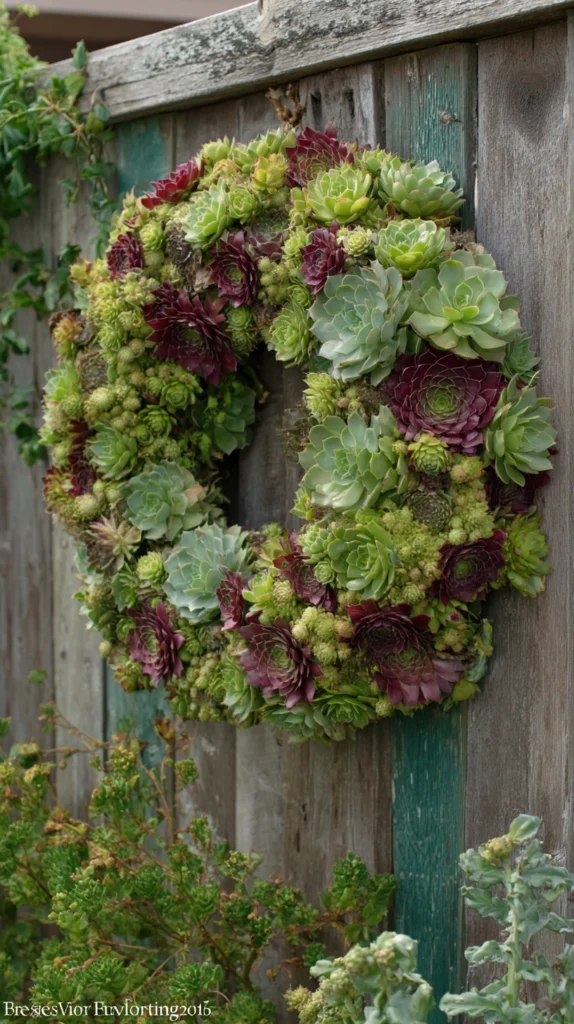
Sempervivum. The hardy succulent commonly known as houseleek or hen and chicks. is one of the most robust and most cold-tolerant succulent genera available and makes a particularly beautiful and long-lasting living wreath for outdoor use in temperate climates.
Plant a wire wreath frame filled with gritty, free-draining compost with a dense arrangement of sempervivum rosettes in varying sizes and the full color range of the genus. from bright green through silvery grey to deep red and chocolate purple. for a wreath of remarkable color variety and genuine hardiness that will survive outdoors in most temperate climates throughout the year.
11. Hang a Vertical Succulent Panel
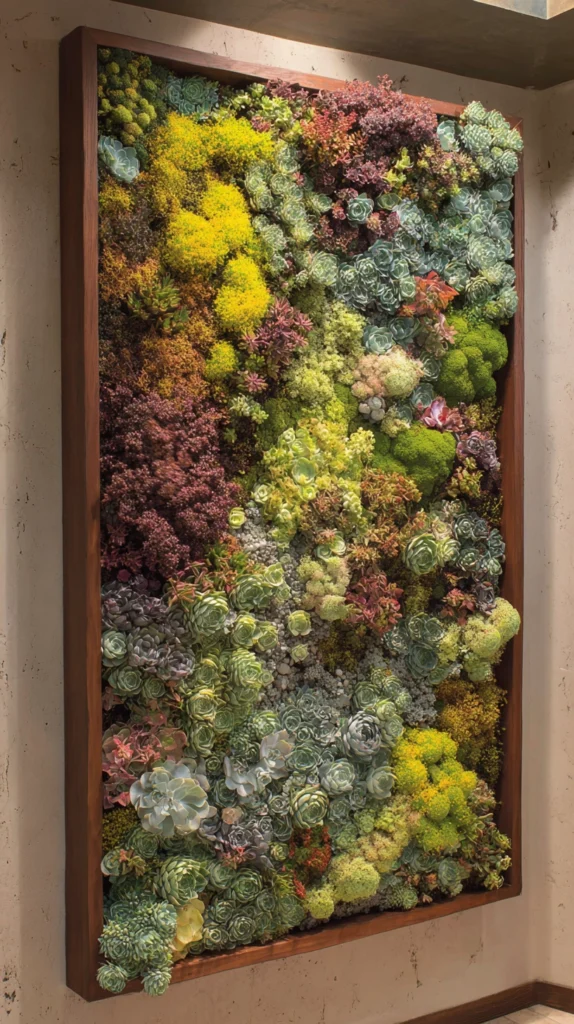
A vertical succulent panel. a framed planting tray of sphagnum moss and cactus compost planted with a dense arrangement of succulent varieties and hung on an exterior or interior wall. creates a large-scale living wall installation of considerable impact and botanical richness.
Design the panel planting as a deliberate composition. grouping varieties by color, size, or texture to create bands, circles, or abstract patterns within the overall planted surface.
A succulent panel planted with a deliberate design has the quality of a botanical artwork as much as a conventional planted display, and the living, growing nature of the plants ensures that the composition evolves and changes subtly over time as the succulents mature.
12. Create a Hanging Succulent Mobile
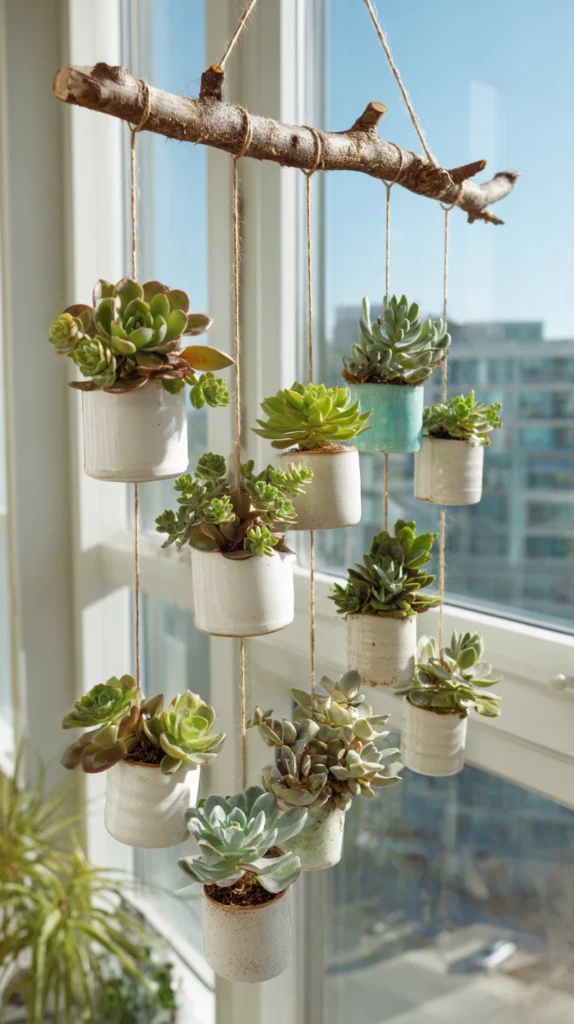
A hanging mobile constructed from a series of small terracotta or ceramic pots suspended at varying heights from a central branch or a horizontal timber rod creates a dynamic, three-dimensional succulent display that moves gently in air currents and presents the plants at multiple heights simultaneously. Plant each pot with a single compact succulent variety and vary the pot sizes for a mobile with visual rhythm and botanical variety.
A succulent mobile hung in front of a well-lit window creates a botanical installation that casts beautiful plant shadows on the wall behind it and frames the window view with living succulent color and form.
13. Use Kokedama for a Japanese Hanging Garden
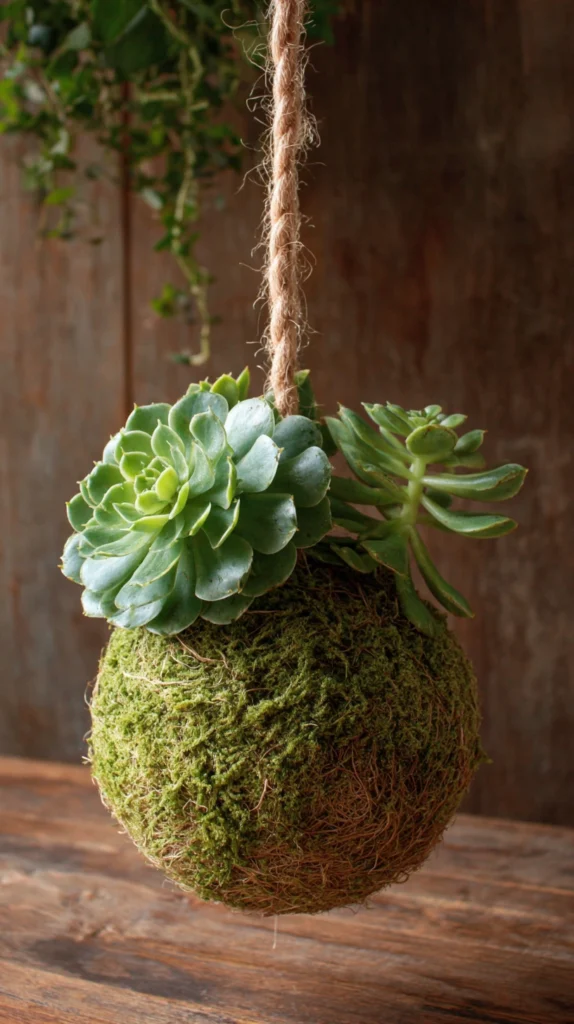
Kokedama. the Japanese art of wrapping plant roots in a ball of moss and soil and suspending the resulting moss ball by a length of natural cord. creates a hanging succulent garden of extraordinary simplicity, elegance, and cultural resonance.
Wrap the root ball of a compact succulent variety in a mixture of cactus compost and bonsai soil, then cover the entire ball with fresh sphagnum moss secured with natural jute twine wrapped repeatedly around the ball until the moss surface is completely and evenly covered. Suspend the finished kokedama from a length of natural cord at a height that allows the succulent rosette above the moss ball to be appreciated at eye level.
14. Create a Hanging Bottle Garden
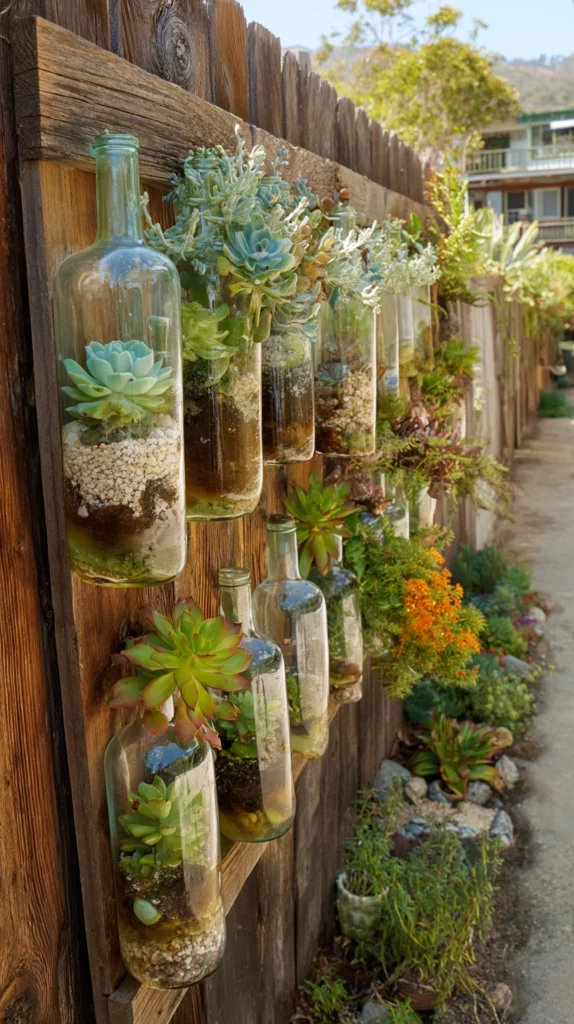
Repurposing glass bottles. wine bottles, beer bottles, or small mineral water bottles. as individual succulent planters and hanging them as a collection on a wall-mounted rod or timber board creates a hanging succulent garden of considerable originality and inventive charm.
Fill each bottle with a layer of fine gravel for drainage, topped with a cactus and succulent compost mix, and plant a single compact succulent cutting through the bottle neck into the compost within. The glass bottle format allows the roots and the growing medium of each succulent to be seen through the transparent container, adding an additional visual dimension to the hanging display.
15. Design a Full Hanging Succulent Wall
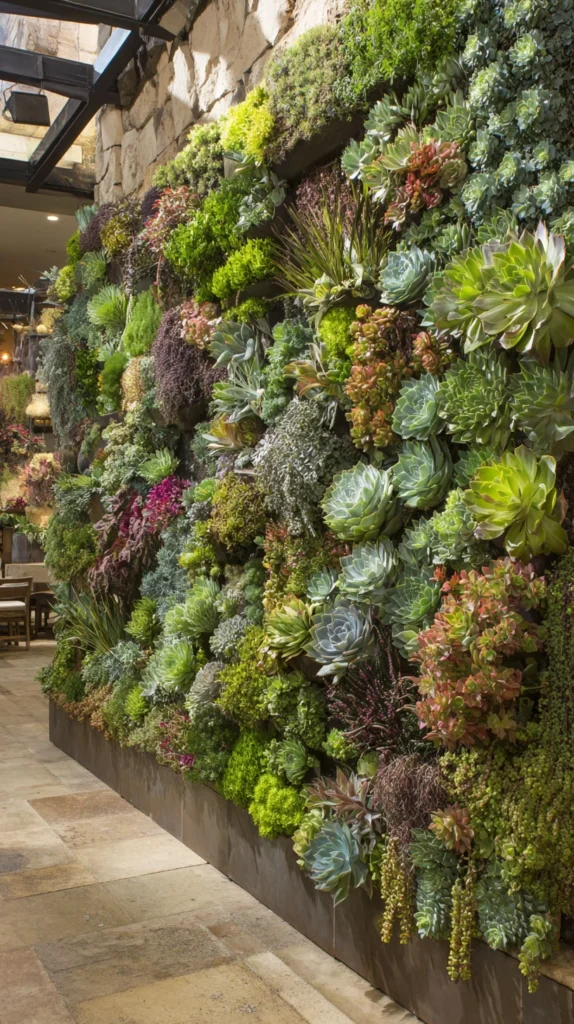
A full hanging succulent wall. an entire wall surface covered with a modular system of hanging planters, pots, frames, and panels planted with a comprehensive collection of succulent varieties. creates the most ambitious and most visually spectacular hanging succulent garden available.
Design the wall as a deliberate botanical composition. varying the sizes, shapes, and formats of the individual planting units. mixing hanging pots with wall-mounted frames, vertical panels with individual specimen plants. for a wall installation of extraordinary variety, complexity, and living botanical richness that functions simultaneously as the most impressive garden feature and the most extraordinary piece of living wall art the property contains.
The Hanging Succulent Garden as Living Art
A hanging succulent garden is not merely a collection of plants displayed on a wall or suspended from a ceiling. It is a living artwork that evolves, changes, and improves with every week of growth and every season of careful tending.
The succulents that populate it bring their extraordinary variety of color, form, and texture to a format that celebrates rather than conceals their remarkable individual beauty, creating a hanging garden of genuinely extraordinary botanical and artistic quality that rewards close attention and daily appreciation in equal measure.