15 Open and Airy Studio Apartment Divider Ideas
The studio apartment presents one of interior design’s most interesting and most demanding challenges.
Everything happens in the same space — sleeping, working, cooking, relaxing, entertaining — and the question of how to organize that space so that each function feels sufficiently distinct from the others, without sacrificing the openness and light that make studio living appealing in the first place, is one that most studio dwellers spend a significant portion of their tenancy trying to answer.

The instinct to divide the space is correct. Research on productivity, sleep quality, and general wellbeing consistently supports the idea that our brains benefit from clear spatial signals about what a particular area is for — that a sleeping area that feels separate from a working area produces better sleep and better work simultaneously, and that an eating area that feels distinct from a lounging area makes both activities more pleasurable.
The challenge is achieving that separation without walls, without permanent construction, and without making the space feel smaller or darker than it already is. The solutions are more varied, more beautiful, and more practical than most people realize. Here are fifteen ideas for dividing a studio apartment in ways that are genuinely open and genuinely airy.
1. The Bookcase as Room Divider
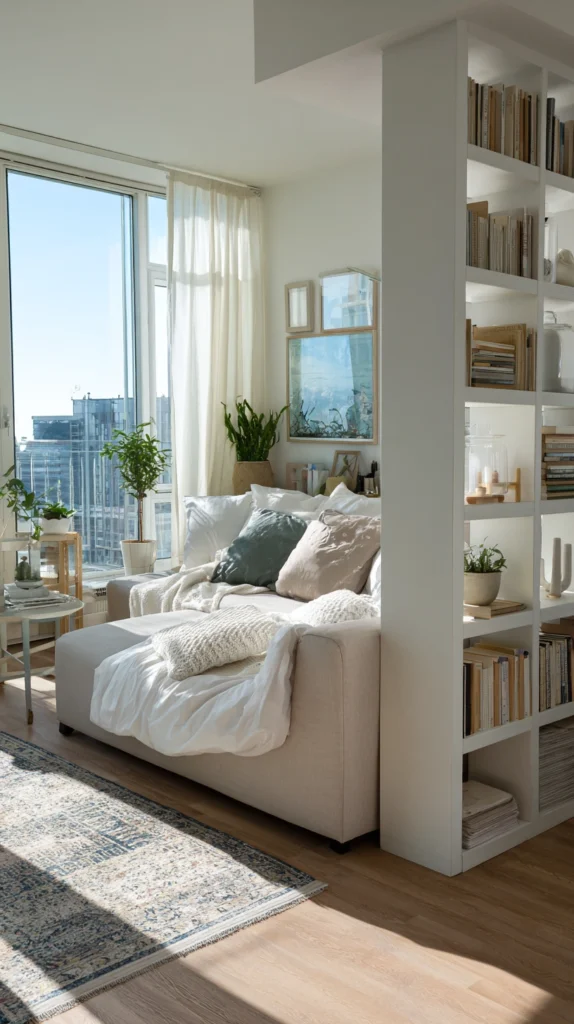
The freestanding bookcase used as a room divider is the studio apartment solution that has stood the test of time most convincingly, and its continued relevance reflects the fact that it solves multiple problems simultaneously with a single piece of furniture.
A bookcase positioned perpendicular to the wall — extending into the room rather than sitting against it — creates a spatial boundary between two zones while providing storage, display space, and visual interest on both sides.
The key decisions are height and density. A bookcase that reaches the ceiling provides maximum visual separation but can feel heavy and dark; a bookcase that stops two feet below the ceiling maintains the visual connection between the two zones while clearly defining them at eye level and below.
Open-backed bookcases allow light to pass through and maintain visual permeability; solid-backed versions provide more complete separation but reduce light transmission. For the most airy result, choose an open-backed design in a light timber or white finish, and allow breathing space between the books and objects on its shelves rather than packing it to capacity.
2. Hanging Curtains from Ceiling Tracks
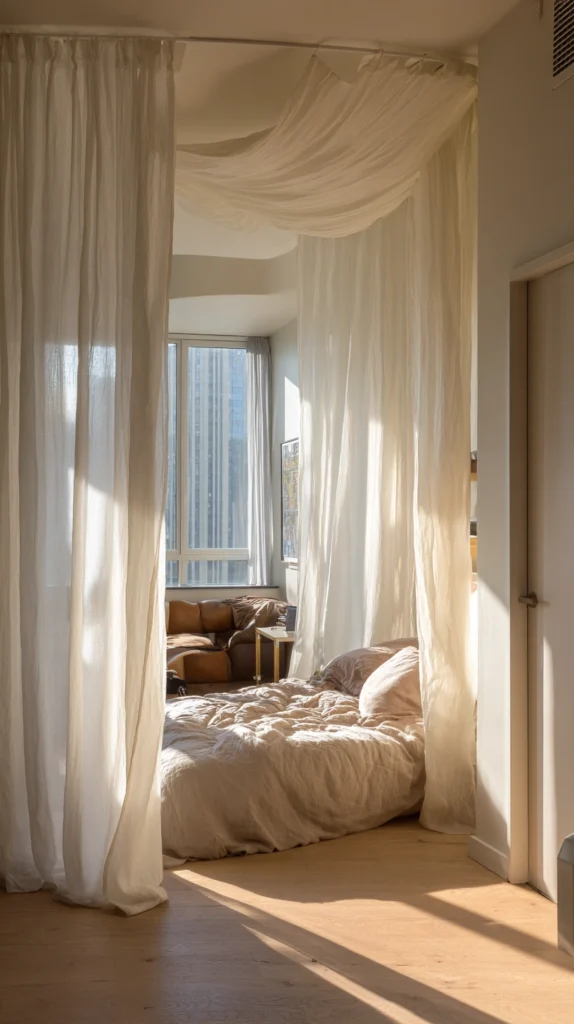
The ceiling-mounted curtain track is the studio divider that offers the most flexibility of any option available, because it allows the partition to be present when separation is desired and absent when it is not — a quality that no structural or furniture-based divider can match.
A curtain track mounted flush to the ceiling, running the full width of the studio or across a specific zone boundary, with floor-length curtains in a lightweight natural fabric — linen, cotton voile, or a semi-sheer woven textile — creates a soft, light-filtering partition that transforms the spatial organization of the room at the pull of a panel.
Draw the curtains to enclose the sleeping area for sleep or privacy; open them fully during the day to restore the studio’s open plan. The fabric choice is critical: heavy, lined curtains will darken and close the space; sheer or semi-sheer fabrics filter light beautifully while maintaining airflow and a sense of visual continuity between zones. Choose a fabric in a color that complements both sides of the space it divides.
3. A Sofa Positioned as a Spatial Boundary
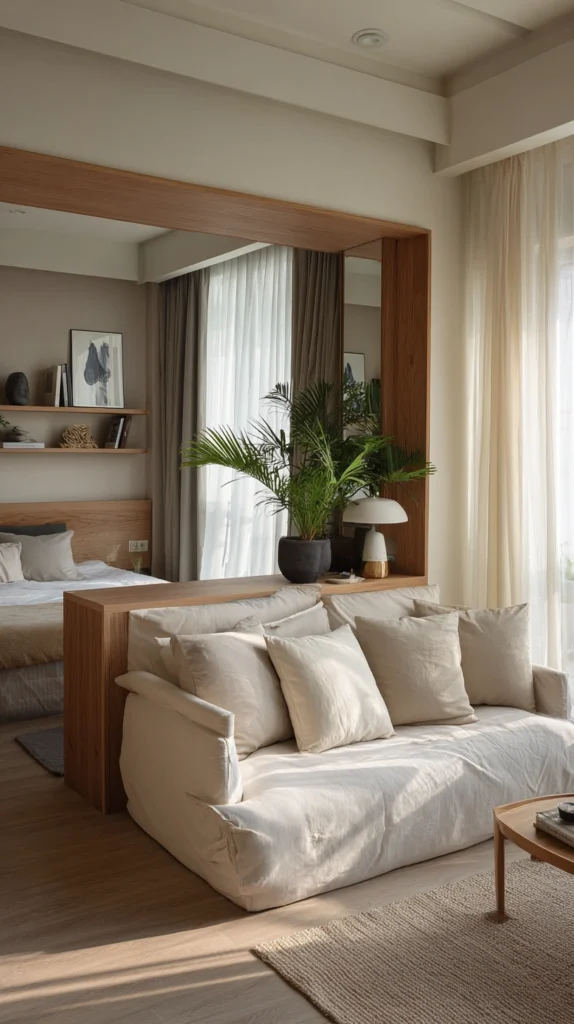
One of the simplest and most space-efficient studio dividing strategies requires no additional furniture or structural work at all — simply the deliberate positioning of the sofa with its back facing the sleeping or working zone rather than pushed against a wall.
A sofa floating in the middle of a studio apartment, with its back oriented toward the bed area and its face toward the living area, creates an immediate and convincing spatial division that costs nothing beyond the willingness to move furniture away from the walls.
The back of the sofa functions as the boundary — low enough to maintain visual continuity with the sleeping zone behind it, but sufficient to signal clearly that this side is for relaxation and that side is for rest. Add a narrow console table directly behind the sofa — flush against the sofa back — and the division gains a further functional dimension, the console providing a surface for a lamp, books, or plants that further reinforce the boundary.
4. A Plant Wall or Dense Greenery Arrangement
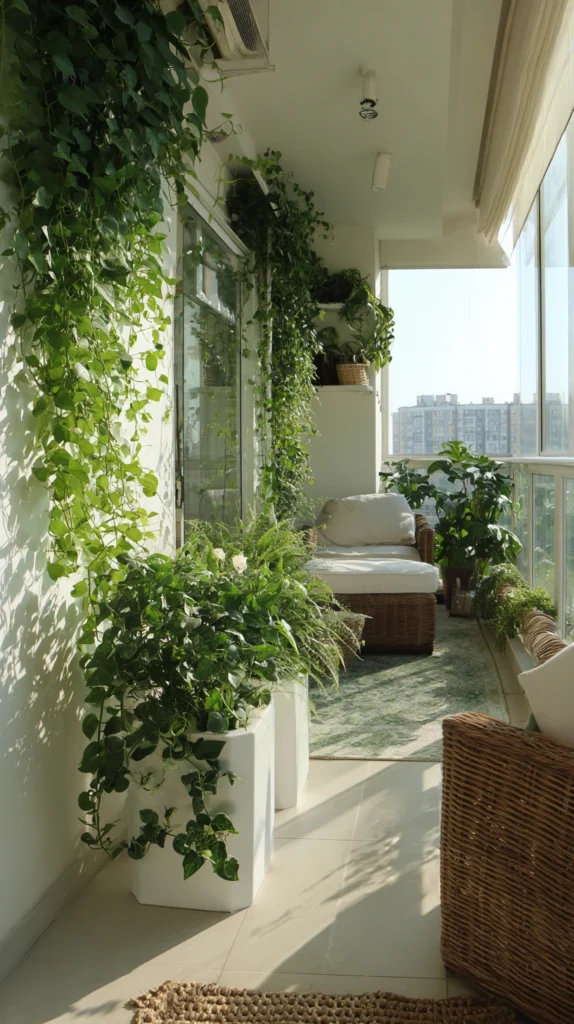
A carefully constructed arrangement of large indoor plants used as a living room divider is one of the most biophilically satisfying studio division strategies available, and in the right space — one with adequate natural light to sustain the planting — it produces a boundary of genuine natural beauty that no manufactured alternative can replicate.
The plants should be chosen for size, density, and structural presence: large fiddle-leaf figs, tall snake plants, Monstera deliciosa on moss poles, bird of paradise plants, and towering bamboo are all candidates for a plant divider that reaches ceiling height or close to it. Group the plants in a line running across the studio at the zone boundary, allowing their leaves and forms to overlap and interlock into a continuous green mass.
The result is a living screen that filters light, absorbs sound, improves air quality, and creates a spatial boundary that is simultaneously defined and completely permeable — you can see through it, hear through it, and move through it while experiencing it clearly as a spatial threshold.
5. Japanese Shoji Screens for Translucent Elegance
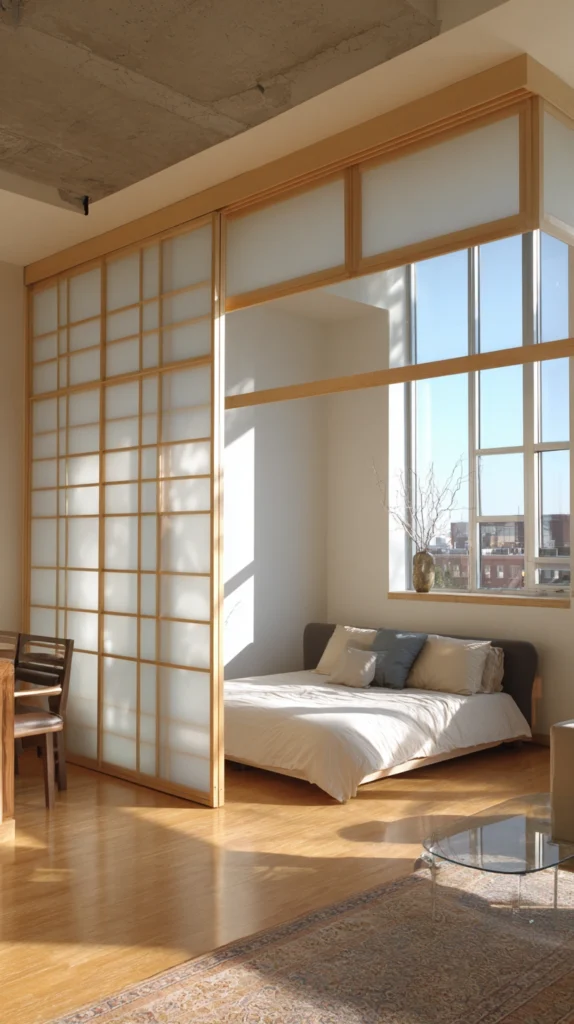
The Japanese shoji screen — a sliding or folding panel constructed from a lightweight timber frame infilled with translucent washi paper — is perhaps the most elegant portable room divider ever designed, and its aesthetic is as relevant in a contemporary Western studio apartment as it is in its original architectural context. Shoji screens allow light to pass through while obscuring direct views, creating the sensation of a separate space without the darkness that opaque partitions introduce.
The paper surface glows warmly when backlit, which means that a sleeping area enclosed by shoji screens at night is softly lit by whatever ambient light exists on the other side, and is never in the complete darkness that solid partitions create.
Modern shoji screens are available in a range of sizes and configurations — single panels, bi-fold, sliding on floor tracks — and their minimal, rectilinear aesthetic suits contemporary interiors particularly well. The timber frame can be finished in natural wood, white, or black depending on the studio’s color palette.
6. A Raised Platform for the Sleeping Zone
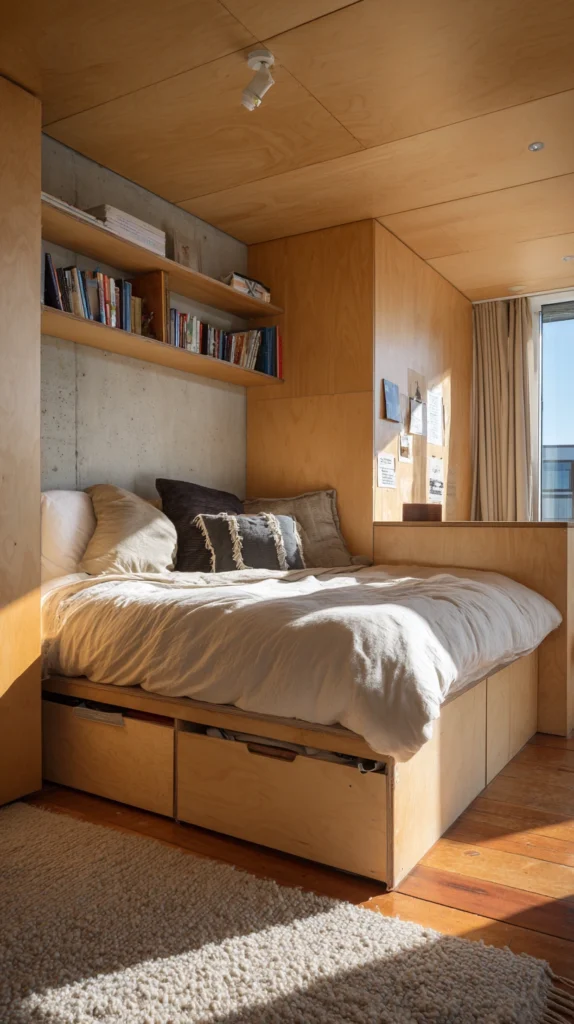
Raising the sleeping area on a platform — a low timber deck elevated three to eight inches above the studio’s main floor level — creates a spatial distinction between zones that is felt physically as well as seen visually, and the psychology of this physical distinction is remarkably powerful.
Stepping up onto the sleeping platform signals a transition in a way that no visual boundary alone can replicate, because it requires a physical act — the lift of a foot, the shift of weight — that is unmistakably a threshold crossing.
The platform itself can incorporate storage drawers in its base, making it simultaneously a spatial divider and a storage solution, and its edges can serve as informal seating for the living zone below. The platform should be clearly defined in its material — a different timber species, a different floor covering, a change from the main studio floor — so that the distinction between the two levels is visually reinforced as well as physically experienced.
7. A Pegboard or Slatwall Panel Divider
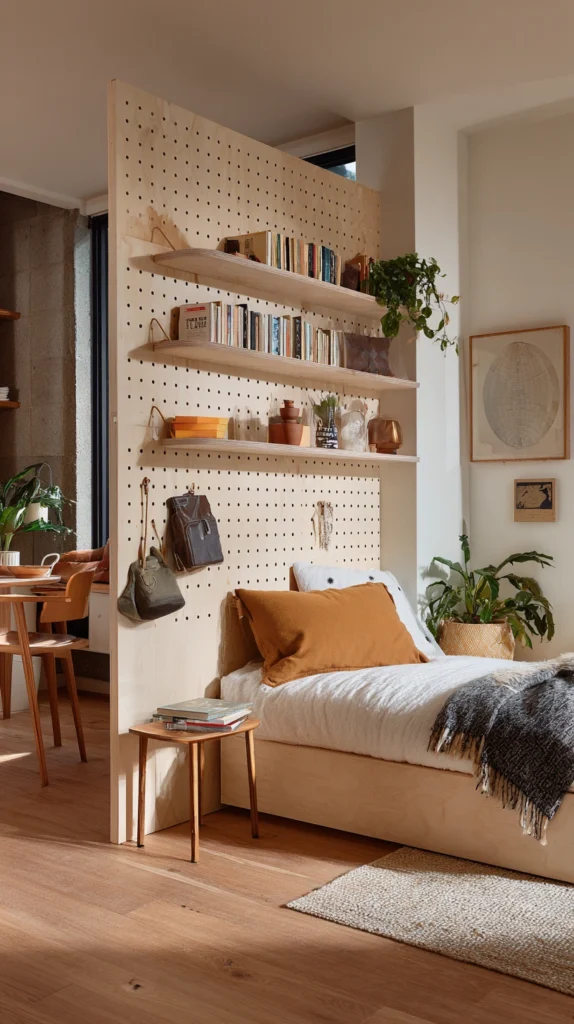
A pegboard or slatwall panel — a sheet material perforated or grooved to accept hooks, shelves, and accessories — used as a freestanding room divider combines the spatial division function with a highly flexible storage and display surface that can be reconfigured infinitely as needs and aesthetics change.
A floor-to-ceiling pegboard panel on a freestanding base, finished in a matte paint color that suits the studio’s palette, creates a room divider with genuine visual presence and an organizational surface on both sides — one side facing the living area might hold kitchen utensils, books, and plants; the other side facing the sleeping area might hold clothing accessories, a mirror, and bedside storage.
The panel’s perforated or grooved surface adds texture and visual interest that a solid panel lacks, and the accessories attached to it — the small shelves, the hooks, the planted pots — give it a life and character that evolves as the studio’s occupant evolves.
8. A Sliding Barn Door on a Ceiling Track
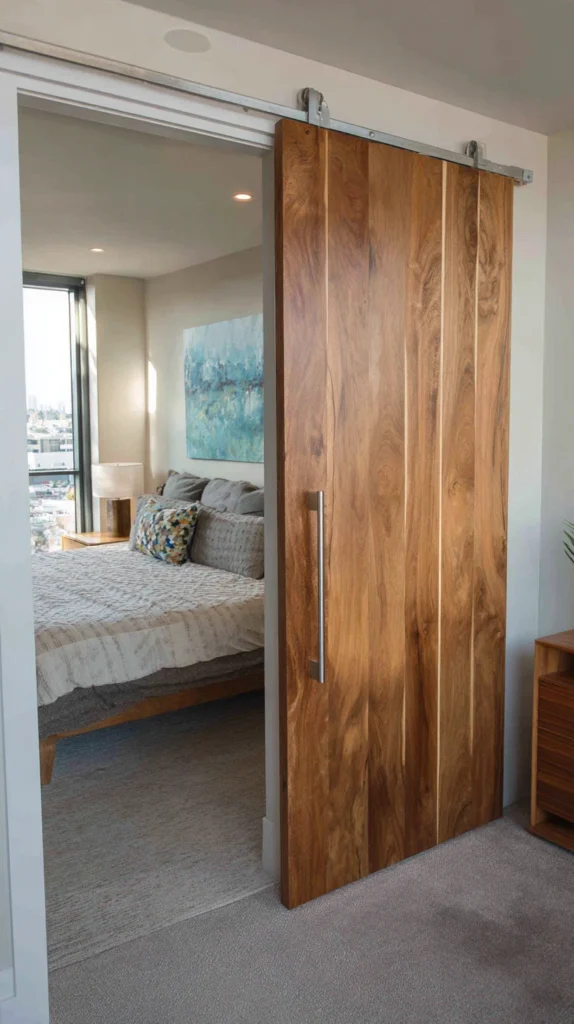
The sliding barn door — a single large panel that travels on a ceiling-mounted track to cover or reveal an opening — has become something of a design cliché in recent years, but its continued popularity in studio apartment contexts reflects the fact that it genuinely works.
A well-chosen barn door panel in a material and finish that suits the studio’s aesthetic — natural timber, painted MDF, mirror-faced panel, or a fabric-upholstered surface — creates a flexible partition that occupies no floor space when open and provides significant visual separation when closed.
The mirror-faced barn door variant is particularly effective in studios where natural light is limited, because when open it reflects light back into the space with genuine impact. When closed, it creates a fully private sleeping area while simultaneously bouncing whatever light exists in the living zone back toward it.
9. A Kitchen Island or Breakfast Bar as Divider
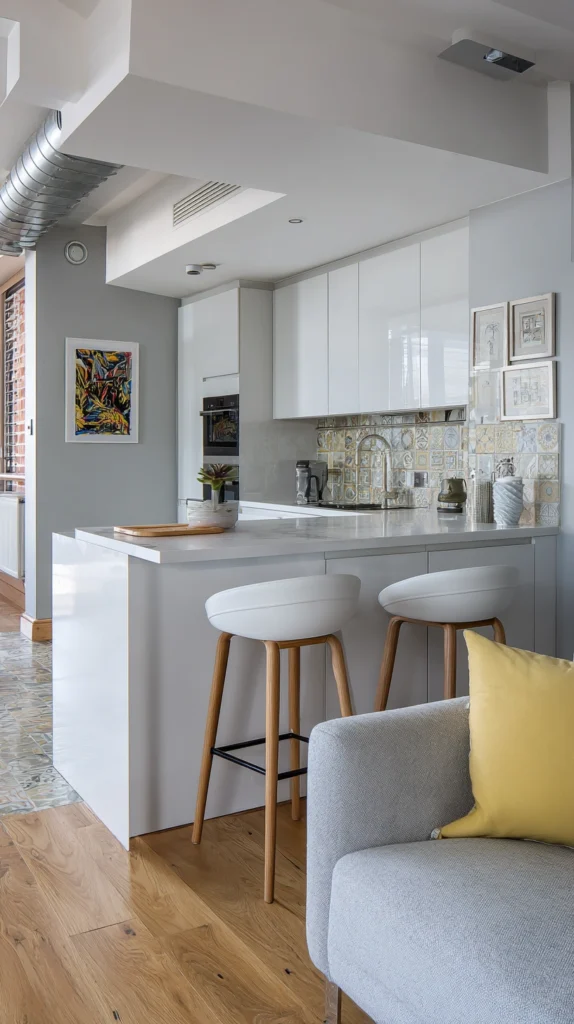
In studios where the kitchen occupies one end of the open-plan space, a kitchen island or breakfast bar positioned at the boundary between the kitchen and living zones serves simultaneously as a room divider, a food preparation surface, a dining area, and a storage unit — a density of function that is exactly what studio living requires from every piece of furniture and every spatial decision.
The island should be high enough on the living zone side to screen the kitchen counter from direct view when seated in the living area — a breakfast bar height of approximately ninety centimeters is sufficient — and should be sized proportionally to the studio’s overall dimensions rather than to the kitchen zone alone.
Bar stools on the living zone side create a casual dining area that keeps the kitchen and living functions distinct while maintaining the visual and social connection that makes open-plan studio living pleasant.
10. Macramé or Woven Textile Hangings
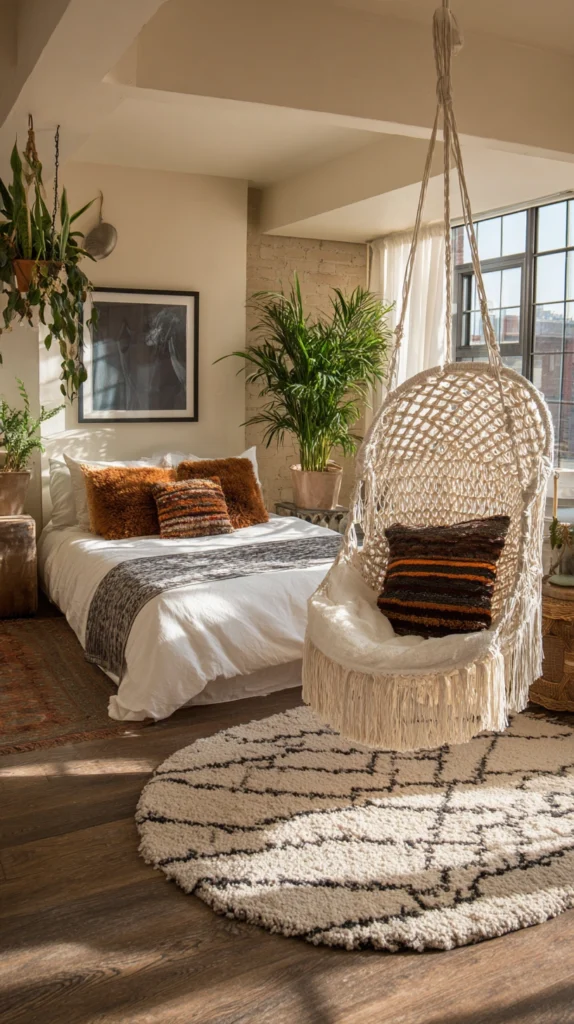
Large-format macramé or woven textile hangings suspended from a ceiling-mounted dowel or rod are enjoying a significant design revival, and in a studio apartment context they offer a dividing function alongside their undeniable decorative presence.
A substantial macramé panel — dense enough to create visual mass while remaining open enough to allow light and air to pass through — hung from ceiling to floor at a zone boundary creates a textile partition of considerable warmth and texture that suits Bohemian, natural, and eclectic interiors particularly well.
The open weave of macramé means that it never darkens the space it divides, and the movement it introduces — the gentle sway in response to airflow — gives the studio an organic liveliness that rigid partitions cannot achieve. Choose natural fibers in undyed or naturally dyed tones for the most sophisticated result.
11. A Glass Block or Lucite Panel Divider
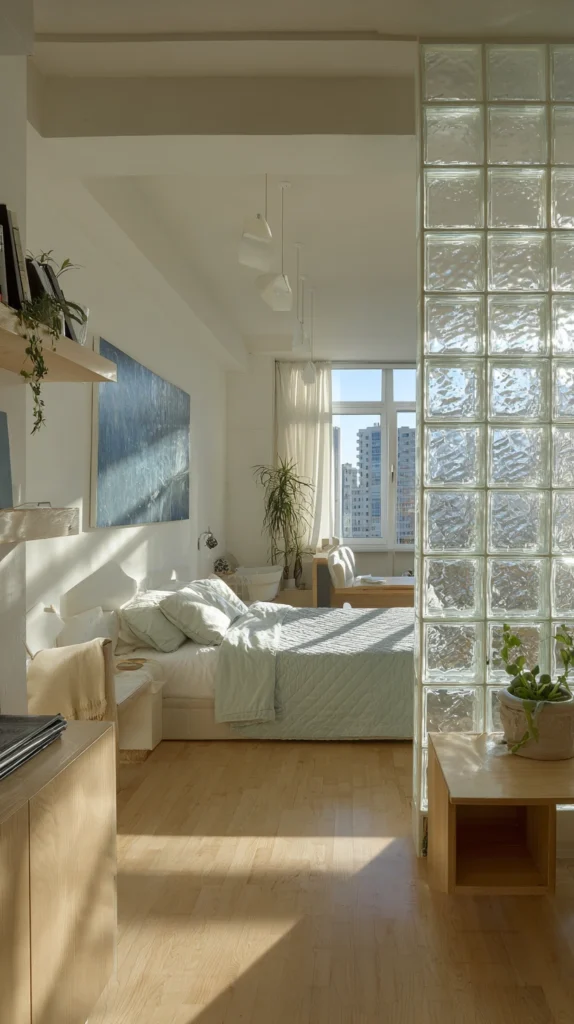
Glass block walls — constructed from translucent glass units mortared or clipped together into a panel — bring light through a partition while providing visual privacy, making them one of the few genuinely solid divider options that does not compromise the studio’s relationship with natural light. A partial glass block partition — rising from floor to counter height or from floor to chest height — between a kitchen and living zone, or between a sleeping area and the rest of the studio, allows light to travel through the partition from whichever zone is brighter at any given time of day, effectively distributing natural light more evenly through the studio than a solid partition would permit.
Lucite or acrylic panels achieve a similar effect in a lighter-weight, easier-to-install format, and their complete transparency — as opposed to the translucency of a frosted glass block — maintains visual connection while clearly defining the spatial boundary.
12. A Murphy Bed with Integrated Cabinetry Wall
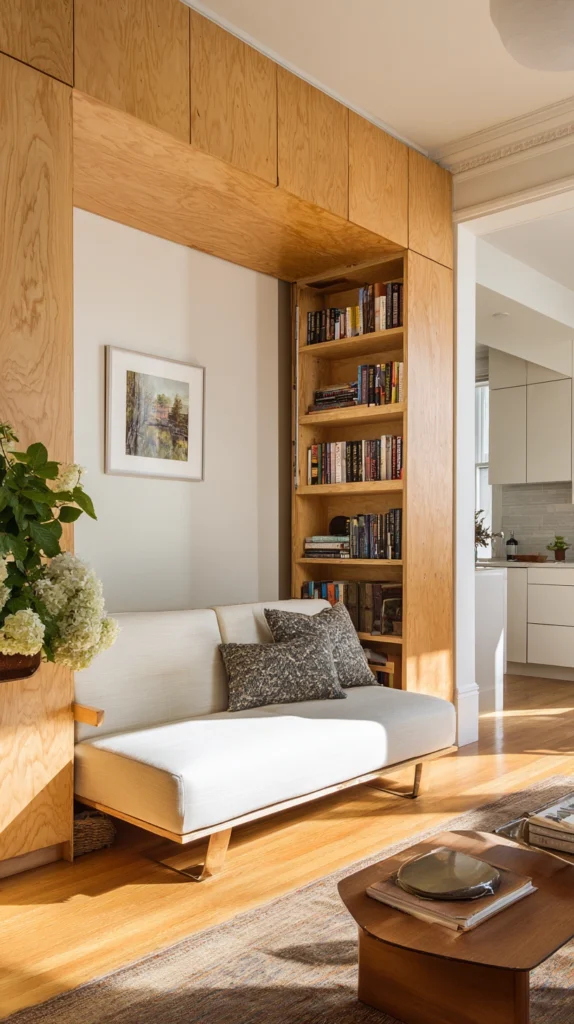
The Murphy bed — a bed that folds into a wall cabinet when not in use — is the studio apartment’s most space-efficient and most transformative single piece of furniture, because it solves the problem of the sleeping zone’s permanent spatial footprint by making the bed present only when it is needed.
A well-designed Murphy bed integrated into a full-height cabinetry wall creates a room divider that contains the sleeping zone, the storage requirements, the desk space, and the display surfaces of the studio within a single architectural element that reads as a wall rather than a piece of furniture.
When the bed is folded away during the day, the sleeping zone effectively ceases to exist as a spatial presence, and the entire studio functions as a living and working space without the constant visual reminder of the bed that dominates so many studios at all hours.
13. An Arched Opening Built from Plasterboard
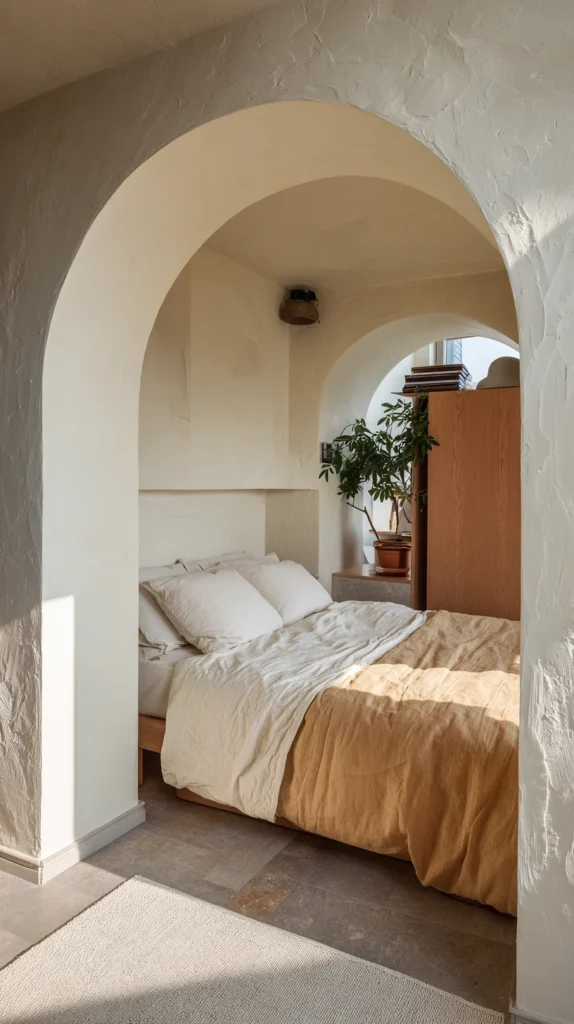
For studio dwellers who are permitted to make structural modifications — or who own their space — building a partial plasterboard wall with an arched opening is an investment that transforms the spatial experience of the studio more completely than any furniture-based divider can achieve.
A partial wall rising to approximately two meters, with an arched opening cut through it at the boundary between sleeping and living zones, creates genuine spatial separation without full enclosure — the arch allows visual connection, light transmission, and movement between zones while the wall provides the acoustic and psychological separation that a studio without partitions cannot offer.
The arch adds an architectural character to the space that is disproportionate to its construction complexity, and the partial height of the wall maintains the studio’s connection to the ceiling plane overhead, preserving the sense of openness that full-height walls would compromise.
14. A Desk and Shelving Unit as Working Zone Divider
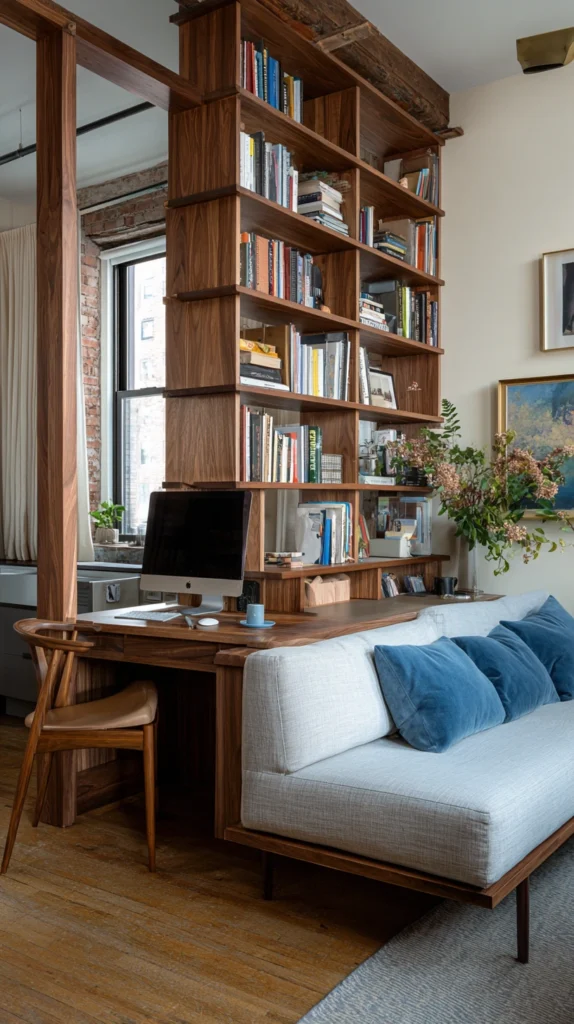
In studios where a dedicated working space is as important as a dedicated sleeping space, a substantial desk and shelving combination — a unit that provides both a working surface and a vertical storage and display structure — can serve as the divider between the working zone and the living or sleeping zones rather than simply being placed against a wall.
A desk with a full-height shelving tower at one end, positioned perpendicular to the room’s main axis, creates a spatial boundary between the working zone on one side and the relaxation zone on the other, with the shelving providing visual screening, storage, and display simultaneously.
The desk faces the working zone, is equipped for productivity, and is screened by the shelving from the sofa and sleeping areas so that the visual association between the work surface and the rest of the studio is broken.
15. Light as a Spatial Divider
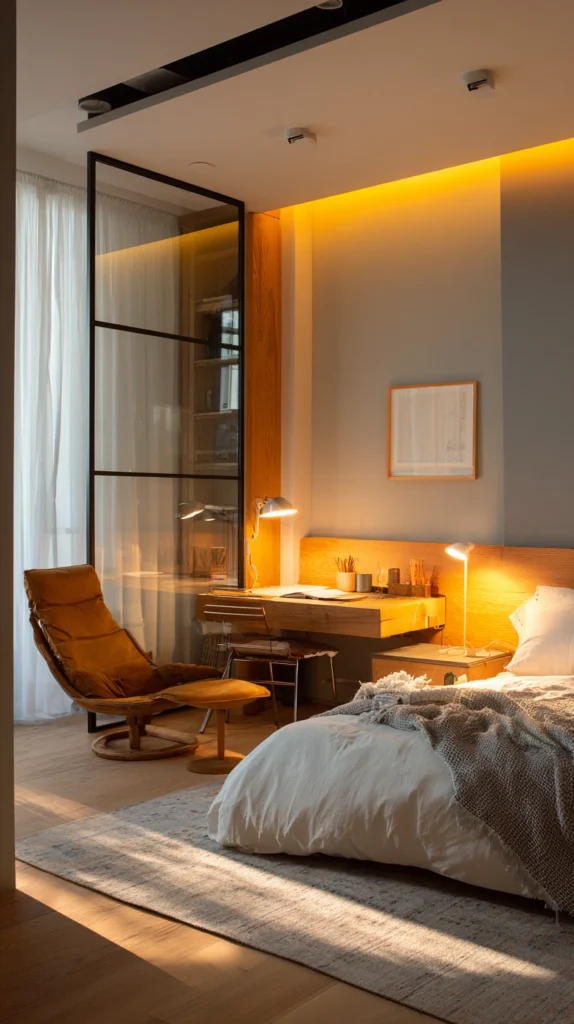
The final and most architecturally sophisticated studio divider is not an object at all but a quality — the deliberate use of lighting design to create distinct atmospheric zones within the studio’s open plan that function as spatial divisions without any physical boundary whatsoever.
Different lighting circuits for different zones — warm, low ambient lighting in the sleeping area, task lighting at the desk, pendant and lamp lighting in the living area — allow each zone to be lit independently at an intensity and color temperature appropriate to its function, creating atmospheres that are distinctly different from each other despite existing within the same volume of space.
In the evening, a sleeping area lit only with a bedside lamp in a warm tone feels entirely separated from a living area lit with string lights and a floor lamp, even though there is nothing between them. Light, used deliberately and with understanding of its spatial power, is the most elegant and most invisible room divider available.