15 Split-Level Living Room Ideas That Feel Seamless and Modern
Split-level living rooms present a unique design challenge that, when executed thoughtfully, can become the most dynamic and visually interesting space in your home.
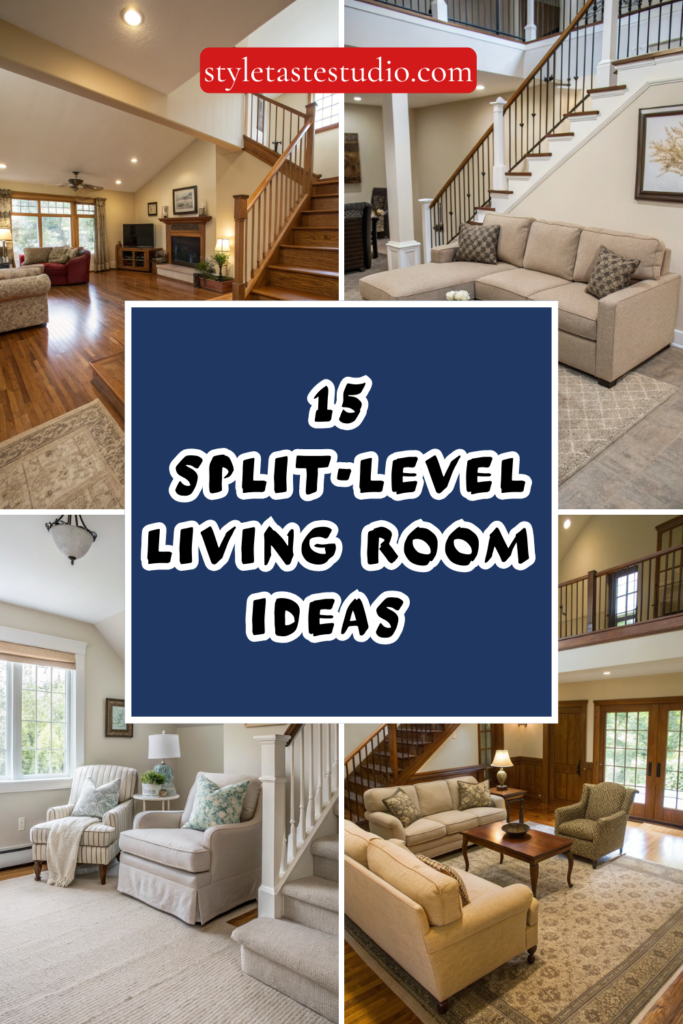
These multi-tiered areas offer natural zones for different activities while maintaining an open, connected feel that’s essential for modern living. The key to success lies in creating visual continuity between levels while celebrating the architectural distinction that makes these spaces special.
1. Embrace Unified Flooring Throughout
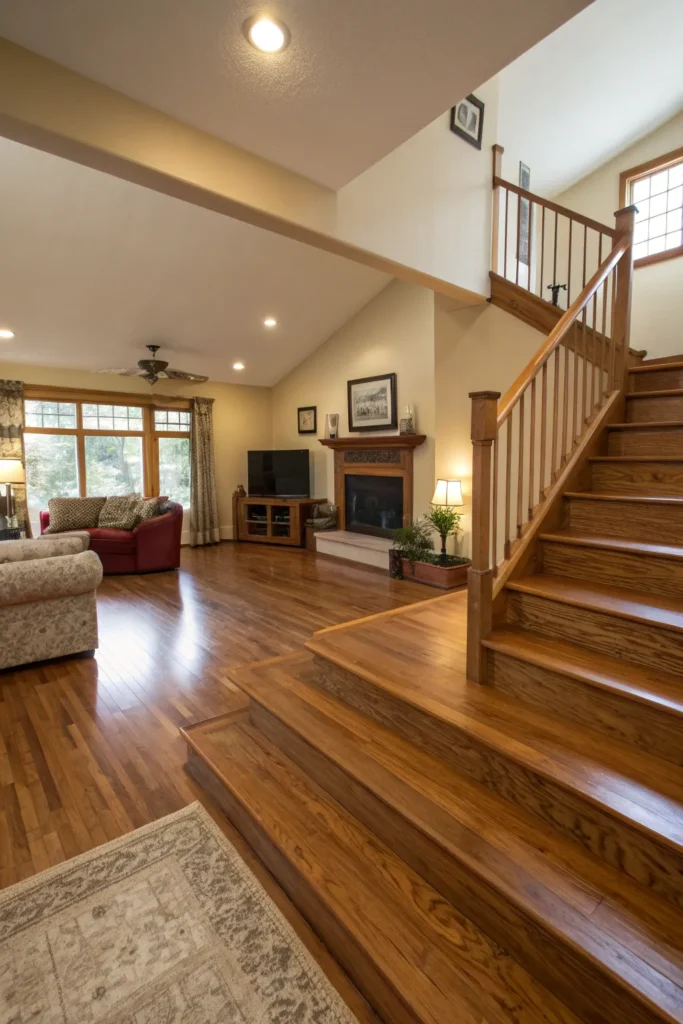
One of the most effective ways to create seamless flow in a split-level living room is through consistent flooring materials across both levels. Wide-plank hardwood, luxury vinyl, or large-format tiles that extend from the upper to lower level create an uninterrupted visual line that makes the entire space feel cohesive.
This approach works particularly well when you want to minimize the visual interruption of the level change and create a sense of expansiveness that draws the eye across the entire room.
2. Create a Statement Staircase
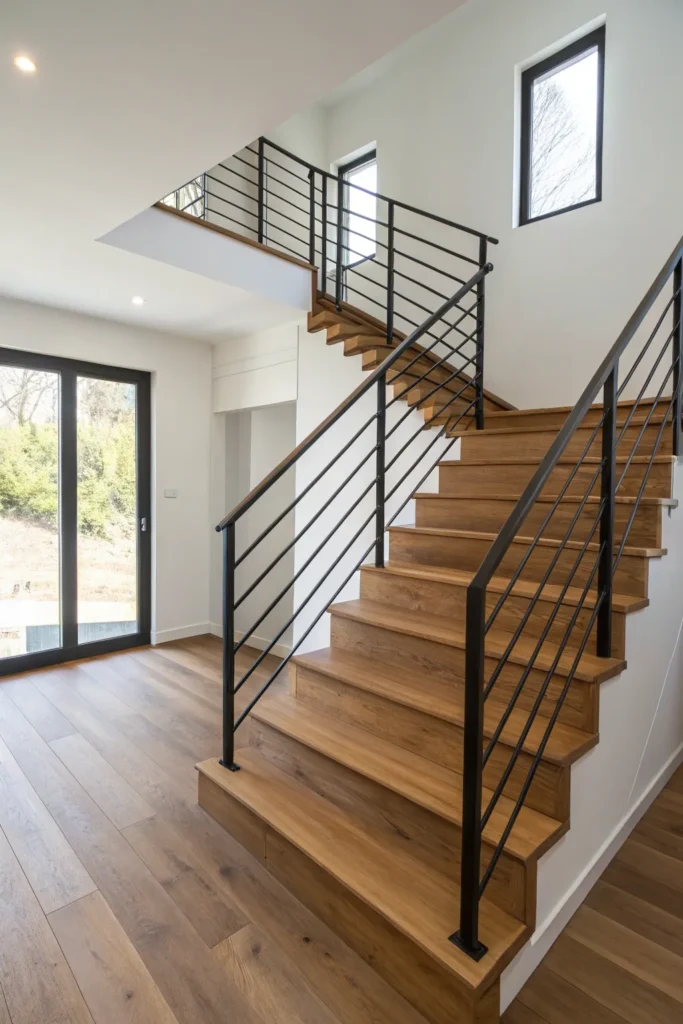
The steps connecting your split levels don’t have to be purely functional—they can become a sculptural focal point that enhances your modern aesthetic.
Consider floating treads with glass or cable railings that maintain sightlines between levels, or install LED strip lighting beneath each step for a dramatic contemporary effect. Materials like blackened steel, white oak, or even concrete can transform these transitional steps into an architectural statement that elevates the entire space.
3. Use Color to Unify Different Zones
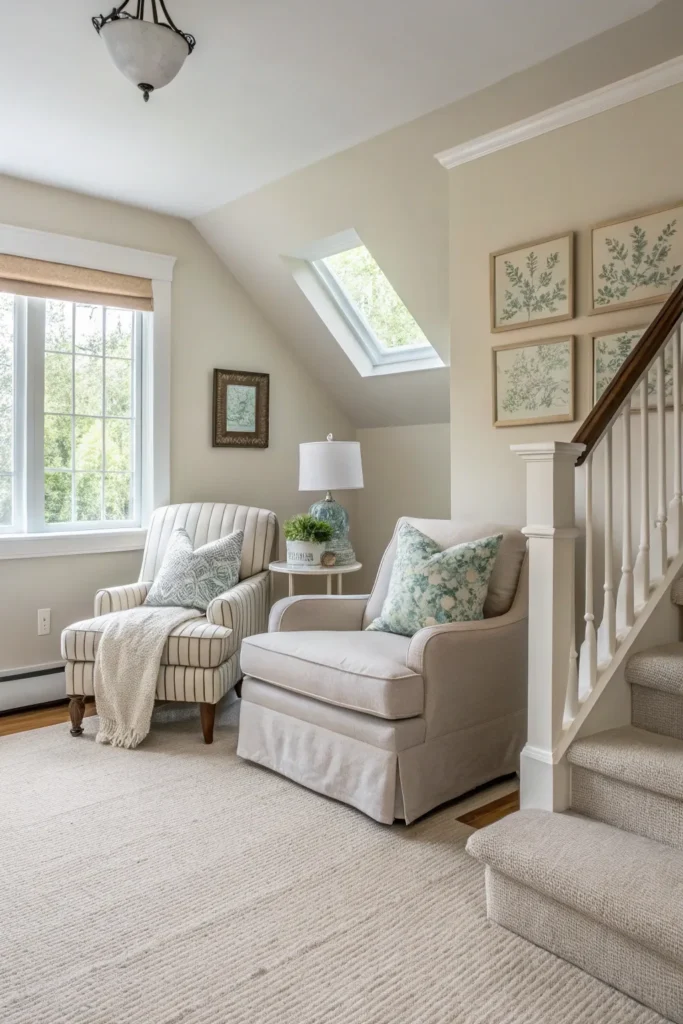
A carefully curated color palette can work wonders in making split-level areas feel like one cohesive living room rather than two separate spaces.
Paint both levels in the same neutral shade, or use a monochromatic scheme with subtle variations in tone to distinguish areas without creating harsh divisions. This approach allows you to maintain visual interest while ensuring that the eye travels smoothly from one level to the next without jarring interruptions.
4. Install Continuous Ceiling Treatments
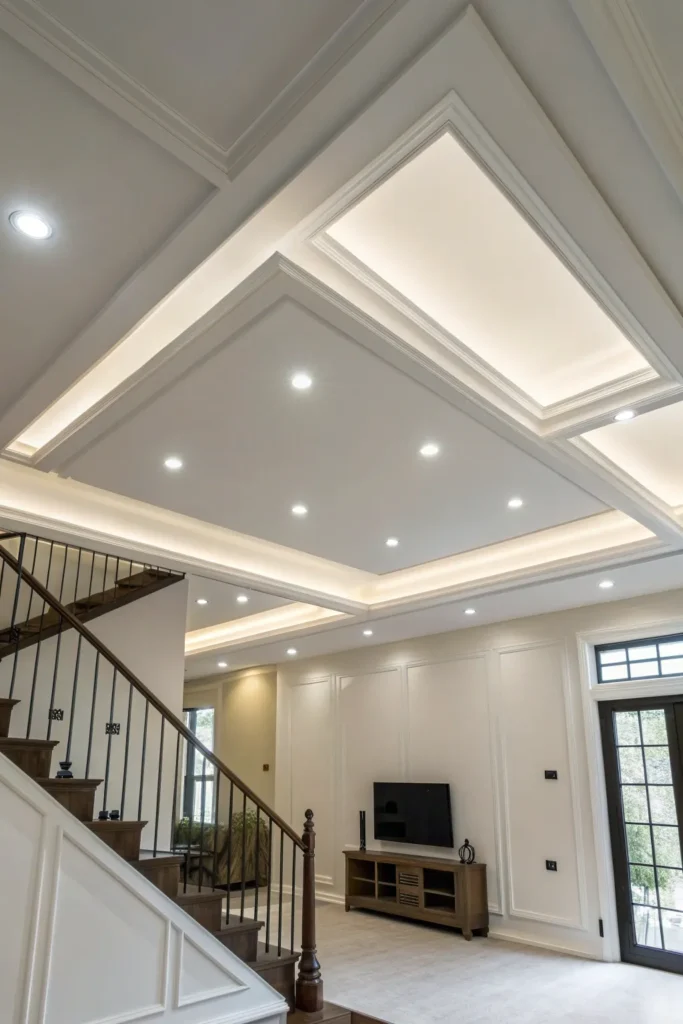
Drawing attention upward with consistent ceiling design helps counterbalance the floor-level division and creates vertical unity in split-level spaces.
Consider extending the same wood paneling, coffered design, or painted finish across both levels, or install a dramatic linear lighting system that runs the length of the room. Exposed beams that span both areas can also create a strong visual connection that makes the level change feel intentional rather than awkward.
5. Anchor Each Level with Area Rugs
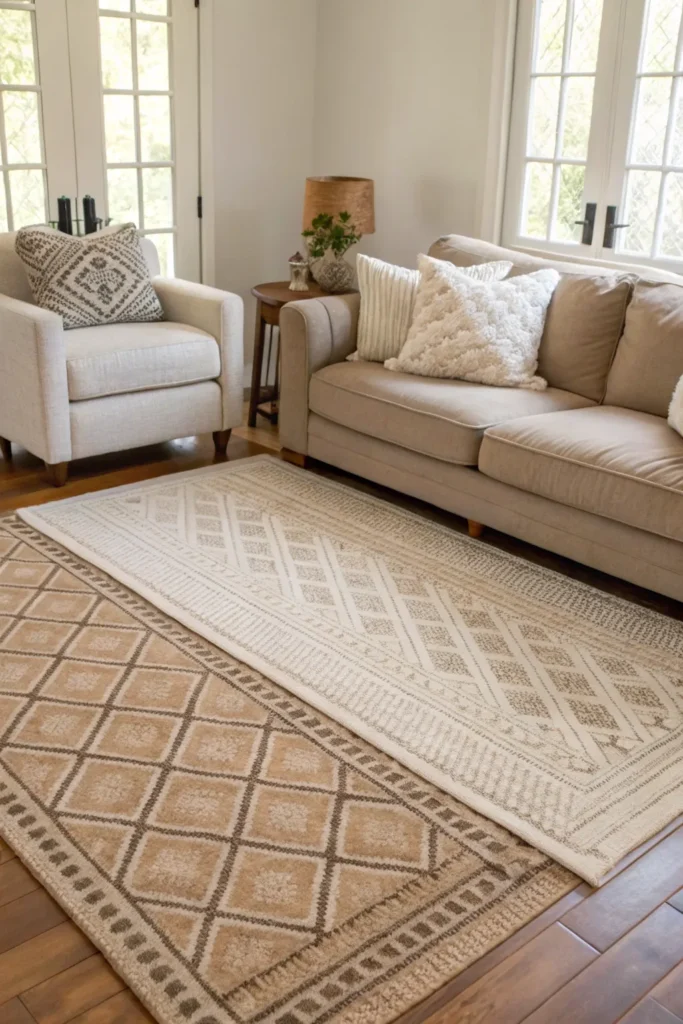
While maintaining flooring consistency is important, strategically placed area rugs can define each level’s purpose without disrupting the overall flow. Choose rugs in complementary colors or patterns that share common design elements—perhaps geometric patterns in different scales or natural fibers in varying textures.
This approach allows you to create distinct conversation areas or functional zones while maintaining the visual thread that ties the entire living room together.
6. Optimize Furniture Placement for Flow
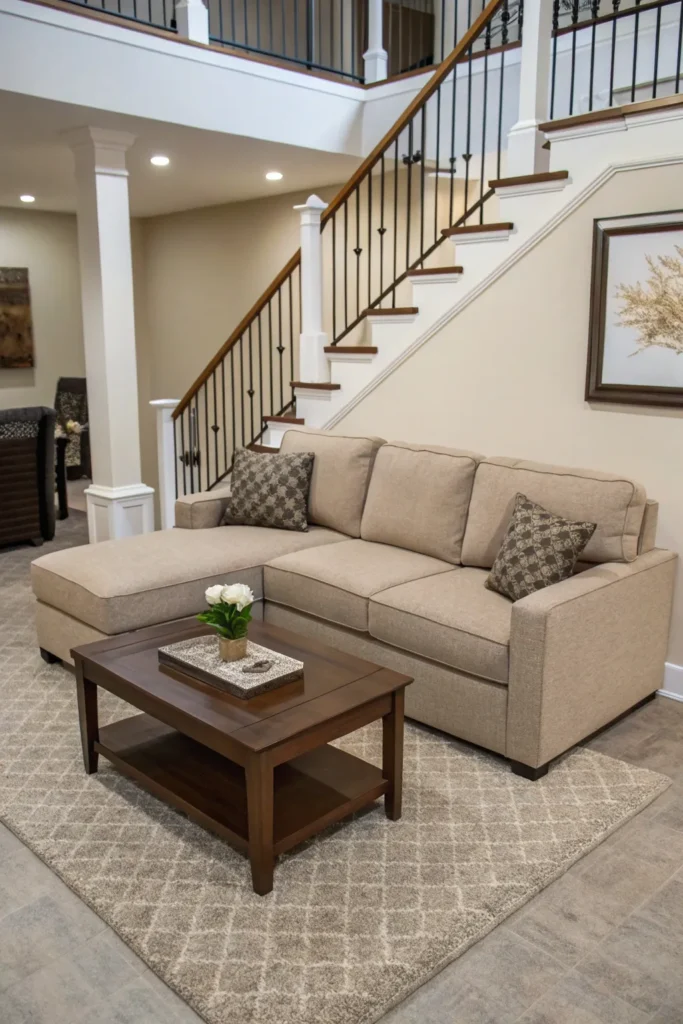
The arrangement of your furniture can either highlight the split-level design as a feature or work against it, so thoughtful placement is crucial.
Position seating to face across levels to encourage interaction and create sightlines that connect the spaces, rather than turning furniture inward on each level. Consider placing a sofa parallel to the step-down area or positioning chairs to create conversation zones that span both levels naturally.
7. Incorporate Floor-to-Ceiling Windows
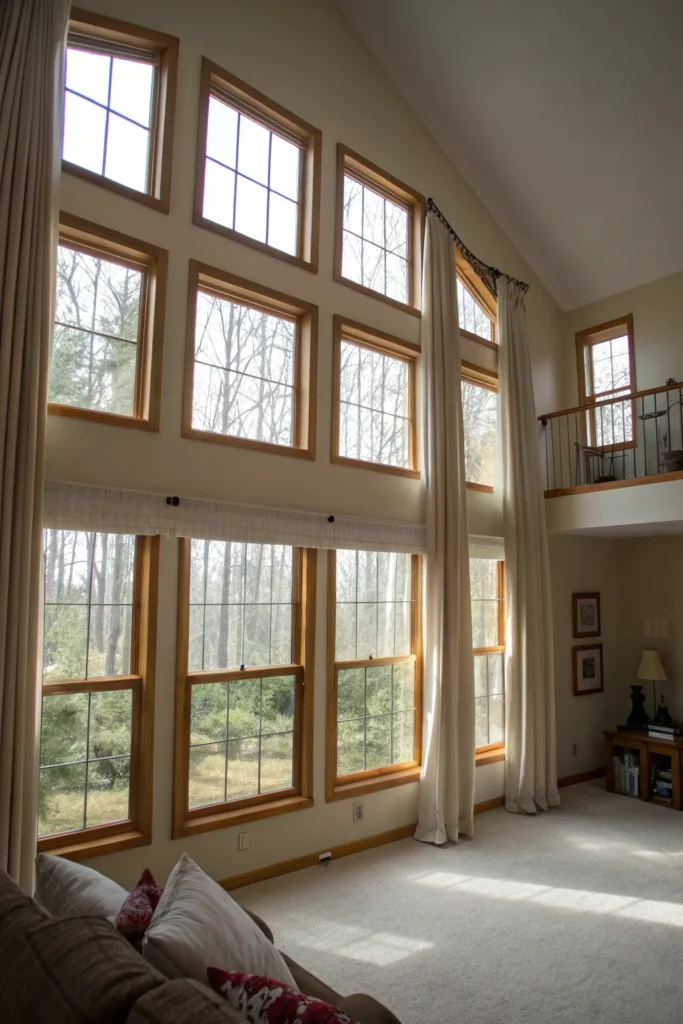
Maximize natural light and create dramatic vertical continuity by installing windows that span both levels of your split-level living room. This approach not only floods the space with daylight but also creates a strong architectural element that unifies the different floor heights.
The uninterrupted glass draws the eye upward and outward, making the room feel larger while diminishing the visual impact of the level change.
8. Design with Symmetrical Elements
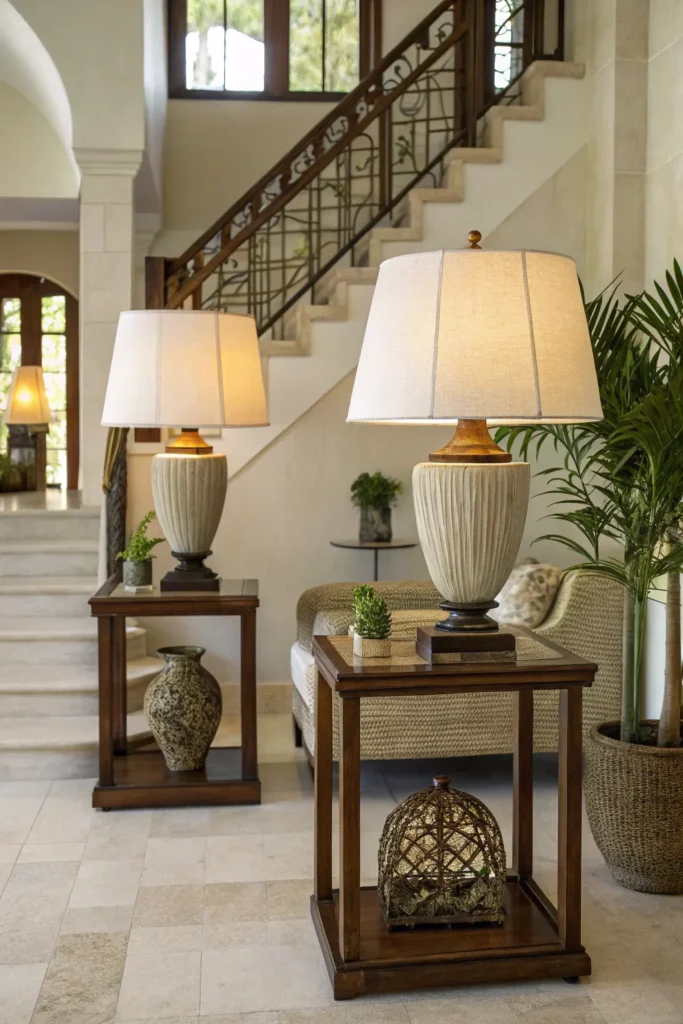
Introducing symmetry across both levels can create a sense of intentional design that makes the split feel purposeful rather than accidental.
Consider matching built-in shelving units on each level, positioning identical pendant lights at strategic points, or creating mirror-image furniture arrangements that acknowledge both areas. This balanced approach gives the room a polished, considered aesthetic that feels distinctly modern.
9. Add a Double-Sided Fireplace
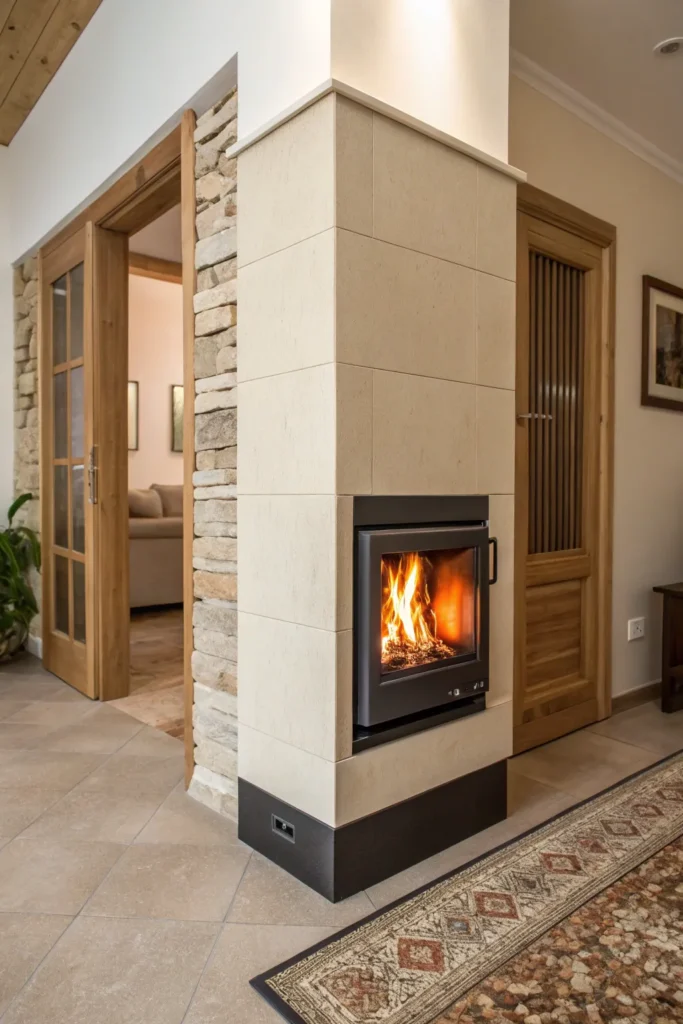
A fireplace that’s visible from both levels serves as a stunning focal point while creating warmth and ambiance throughout the entire living room.
Modern linear gas fireplaces work particularly well in split-level spaces, especially when installed in a floor-to-ceiling stone or tile surround that spans both levels. This feature naturally draws people to gather around it regardless of which level they’re on, fostering connection between the spaces.
10. Implement Strategic Lighting Layers
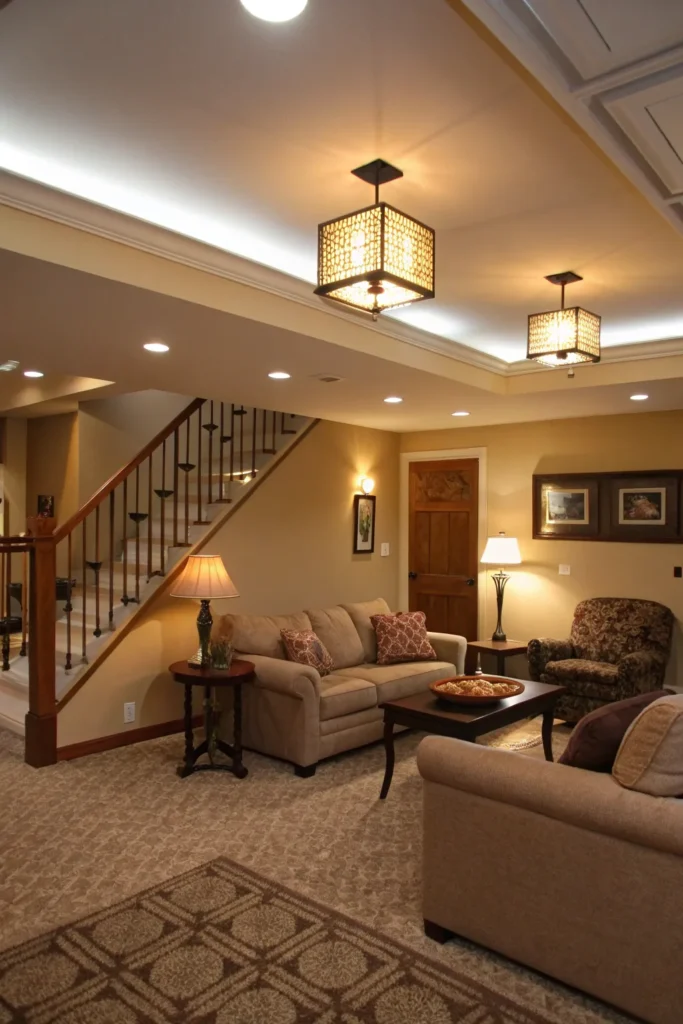
Thoughtful lighting design can minimize the visual disruption of different floor heights while highlighting the unique architecture of your split-level room.
Combine recessed ceiling lights with floor lamps, table lamps, and accent lighting to create layers that work across both levels. Consider installing dimmer switches to adjust the ambiance and use lighting to guide the eye smoothly from one area to the next.
11. Use Railings as Design Features
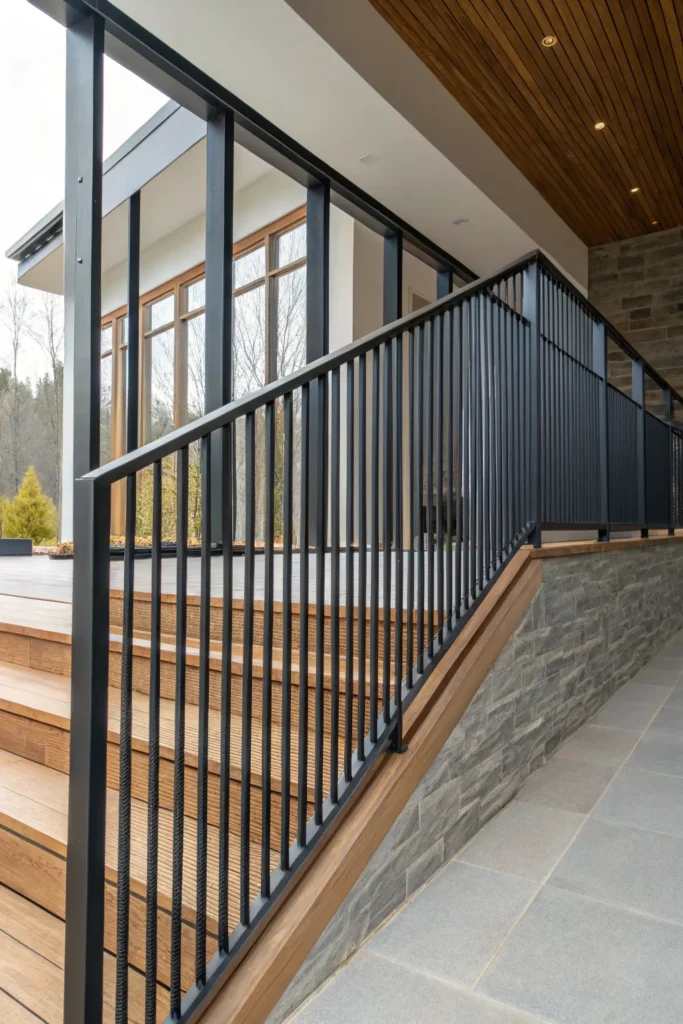
The railing separating your split levels doesn’t have to be a barrier—it can become a sophisticated design element that enhances your modern aesthetic.
Sleek glass panels create transparency and maintain visual connection, while horizontal cable railings offer an industrial-modern vibe without blocking sightlines. For a warmer approach, consider wooden slat railings with spacing that allows light and views to pass through while providing necessary safety.
12. Create Visual Height with Vertical Elements
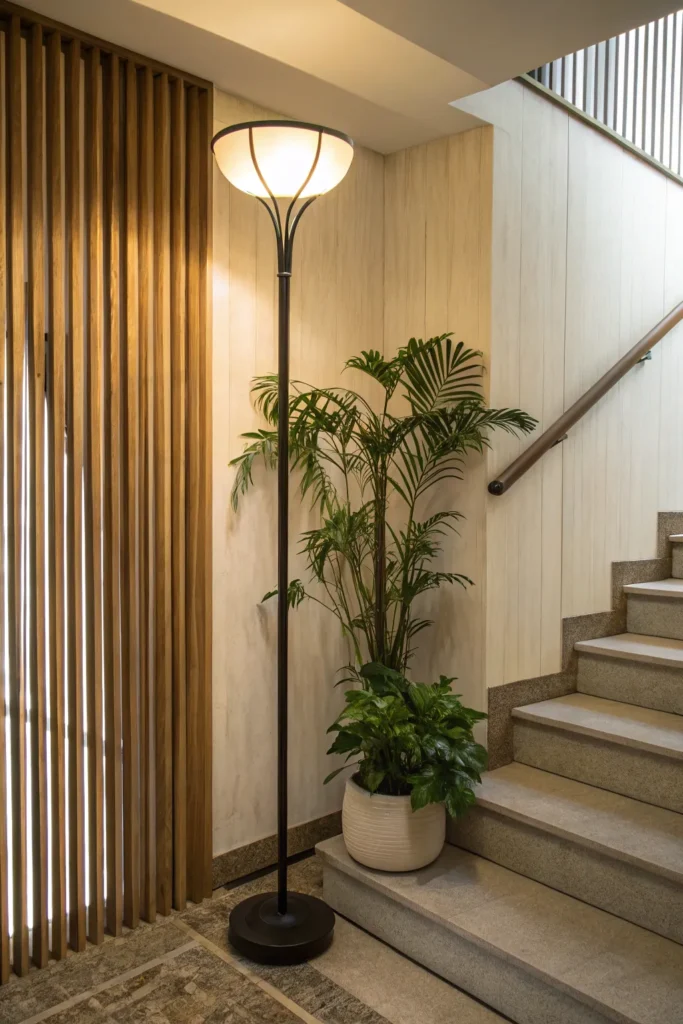
Tall plants, floor-to-ceiling bookcases, or vertical art installations can emphasize the ceiling height and create visual connections between levels.
These elements draw the eye upward and help minimize the horizontal division created by the floor level change. Fiddle-leaf figs, bird of paradise plants, or architectural cacti work beautifully in modern split-level spaces, adding organic texture while enhancing the sense of verticality.
13. Coordinate Built-In Storage Across Levels
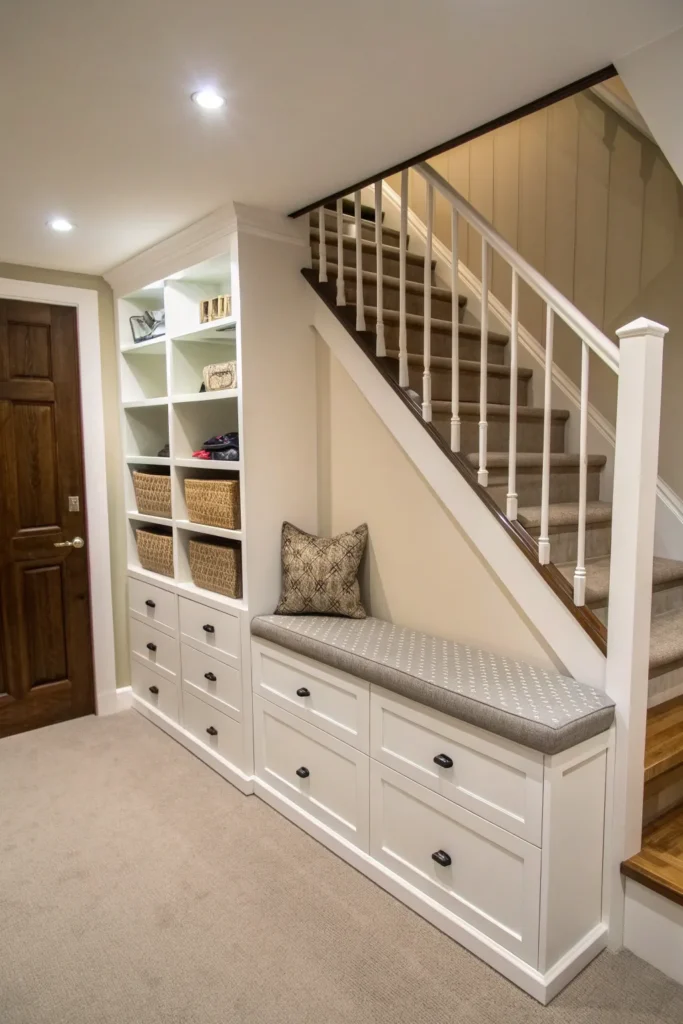
Custom built-ins that acknowledge both levels can create architectural unity while providing essential storage and display space.
Consider a wall of shelving that steps down with the floor level, maintaining consistent top height while the base follows the room’s natural progression. This approach makes the level change feel like an intentional design feature while offering practical benefits and visual interest.
14. Establish Conversation Zones That Span Levels
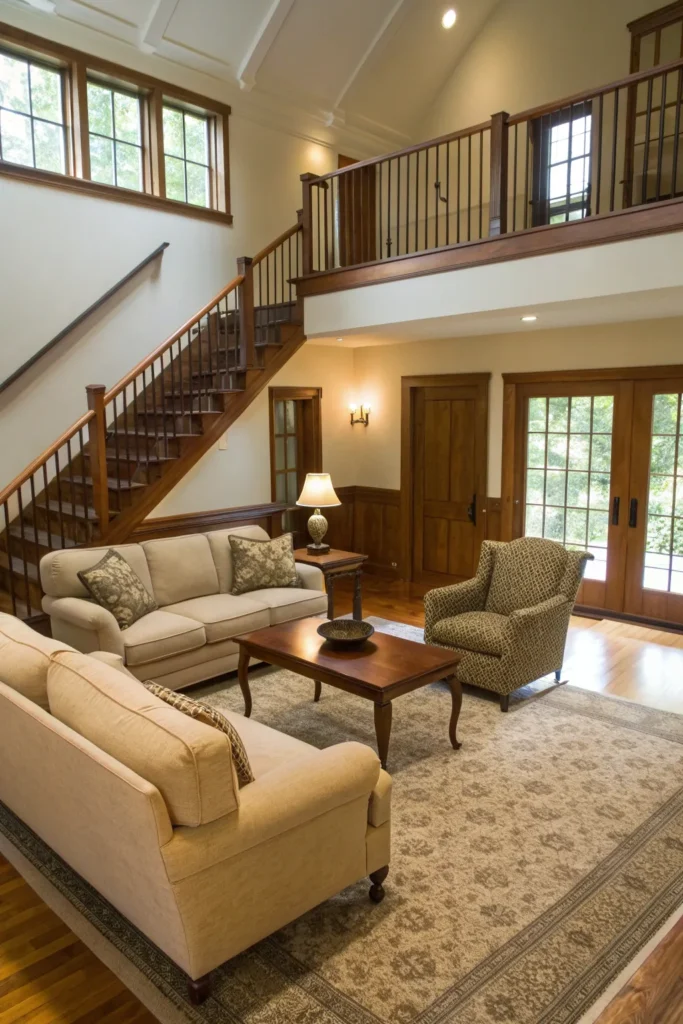
Rather than treating each level as entirely separate, create seating arrangements that encourage interaction across the split. Position a sectional sofa that wraps around the step, or arrange chairs and ottomans that invite people to gather at the transition point. This strategy celebrates the unique architecture while ensuring the space functions as one cohesive living area where family and guests can connect comfortably.
15. Balance Scale and Proportion
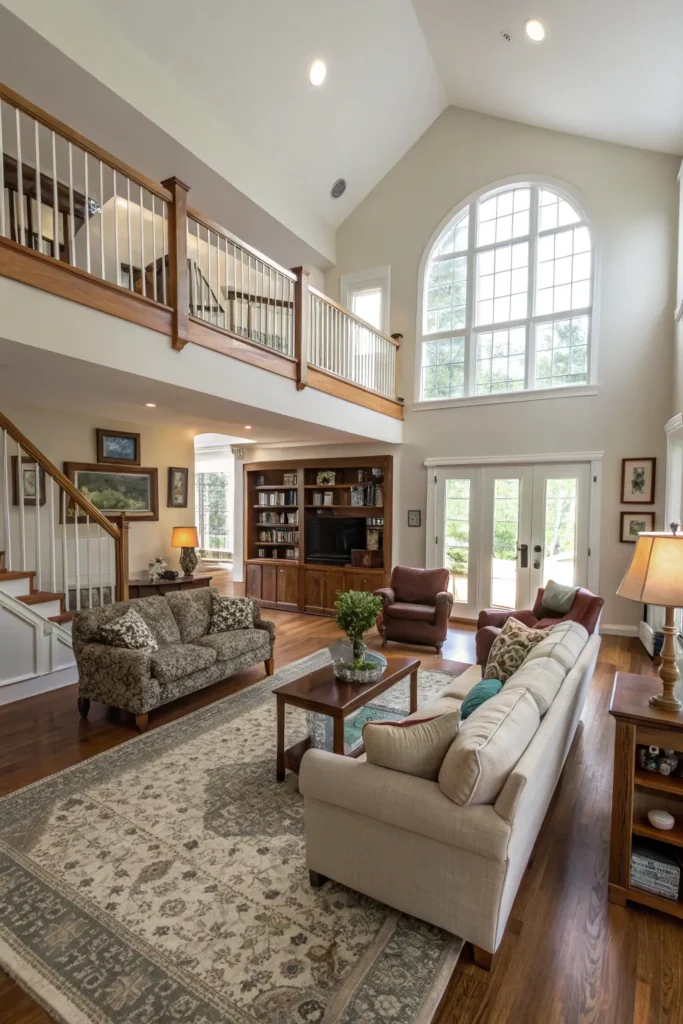
Furniture sizing becomes particularly important in split-level rooms where you want to maintain visual balance across different elevations.
Avoid placing all your largest pieces on one level, which can make the space feel lopsided and emphasize the division rather than creating harmony. Instead, distribute visual weight evenly—perhaps a large sectional on the lower level balanced by substantial built-ins or a significant art piece on the upper level.
The beauty of split-level living rooms lies in their inherent versatility and the opportunity they provide to create distinct yet connected spaces within your home. By implementing these design strategies, you can transform what might initially seem like an architectural challenge into your home’s most compelling and functional gathering space.
The key is to embrace the split rather than fight against it, using design elements that acknowledge the different levels while creating seamless visual and functional flow.
Modern split-level living rooms succeed when they balance definition with connection, creating zones that serve different purposes while maintaining a cohesive aesthetic throughout. Whether you’re working with a mid-century split-level home or a contemporary design, these principles can help you create a living room that feels intentionally designed, thoroughly modern, and perfectly suited to how we live today.
The result is a space that’s greater than the sum of its parts, where the split-level architecture becomes a defining feature that adds character, dimension, and visual interest to your home.