15 Smart Storage Ideas for Homes Without Basements
There is a particular kind of domestic frustration that comes from living in a home without a basement, and it is not simply about square footage. It is about the absence of the great organizational safety valve — that below-grade catch-all where seasonal items disappear, where the holiday decorations live between their brief annual appearances, where sporting equipment and power tools and the things you need occasionally but not daily can exist without occupying the space where you actually live.

Basement-free homes — whether urban apartments, ranch-style houses, modern builds on slab foundations, or older homes in climates where basements were never the convention — force their inhabitants to confront a storage problem that those with basements can simply defer underground.
The good news is that this confrontation, properly engaged with, produces homes that are more organized, more beautiful, and more livable than their basement-equipped counterparts, precisely because nothing gets to hide. Every storage solution must earn its place in the visible world, and the discipline that requires almost always results in better outcomes. Here are fifteen ideas for meeting that challenge with intelligence and style.
1. Treat Every Vertical Surface as Untapped Real Estate
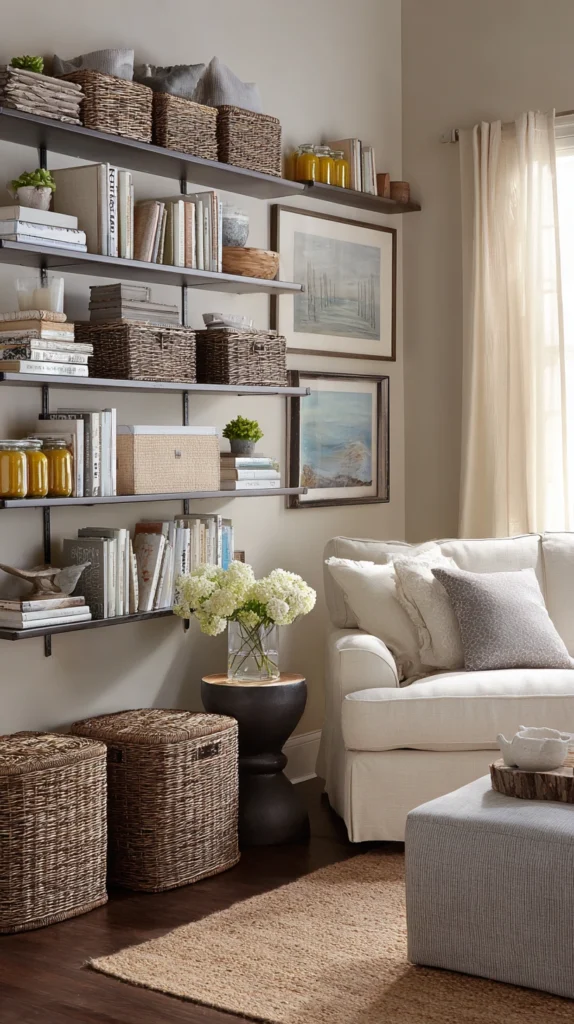
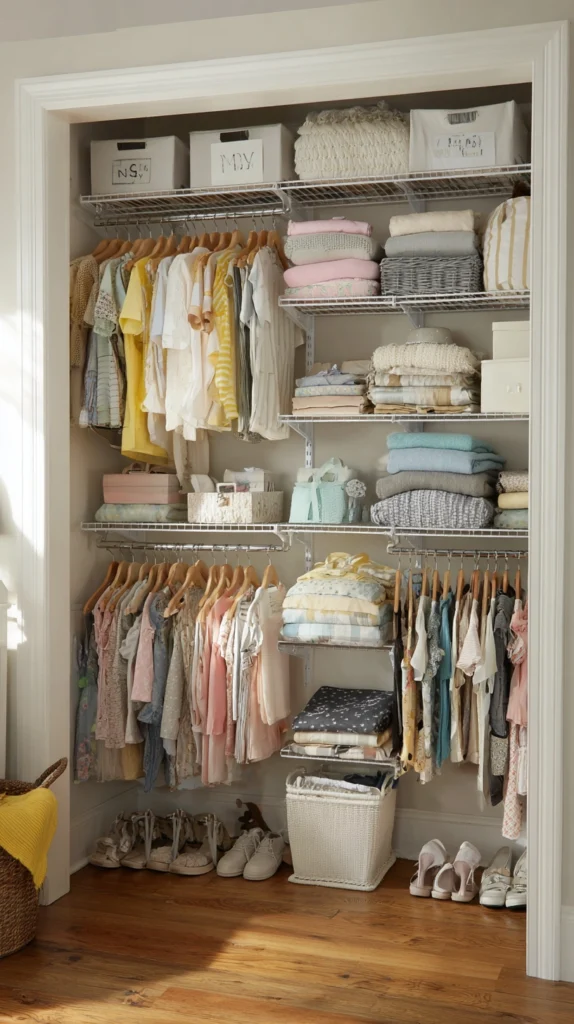
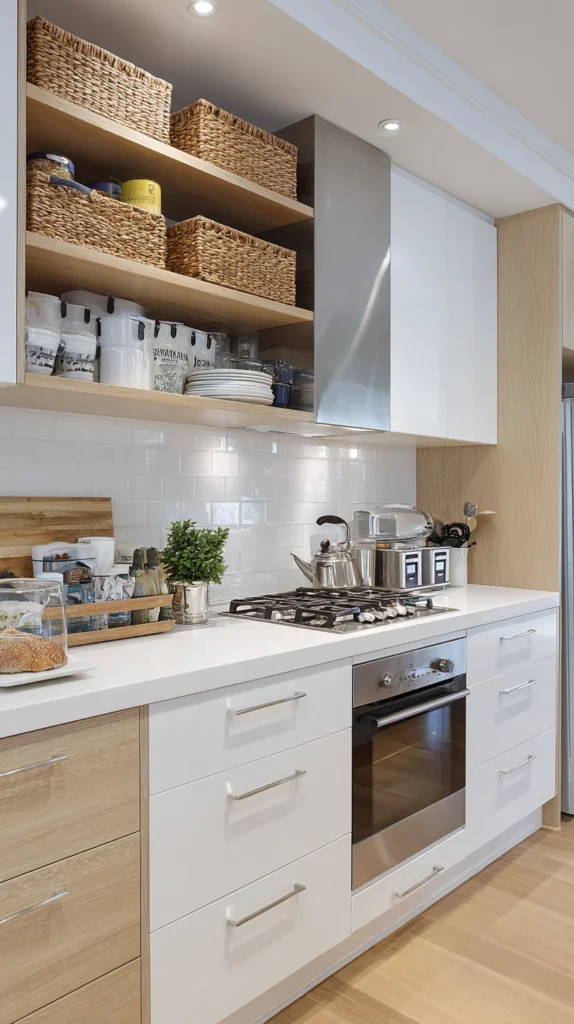
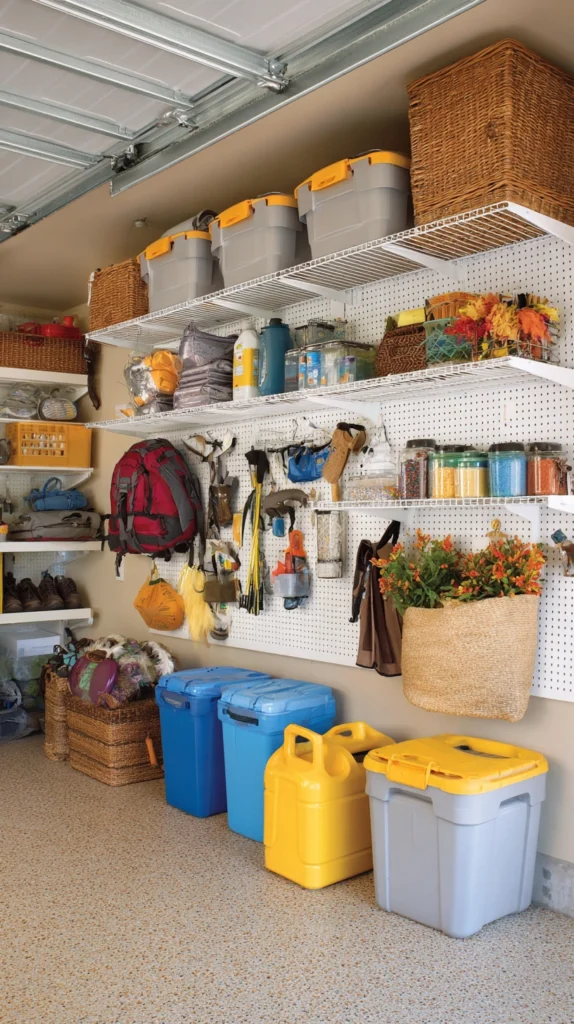
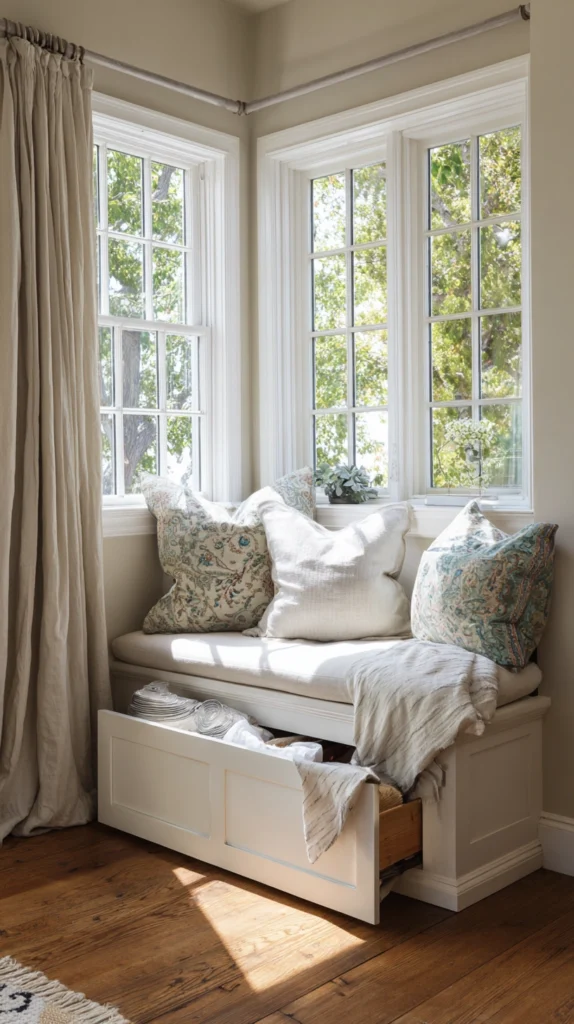
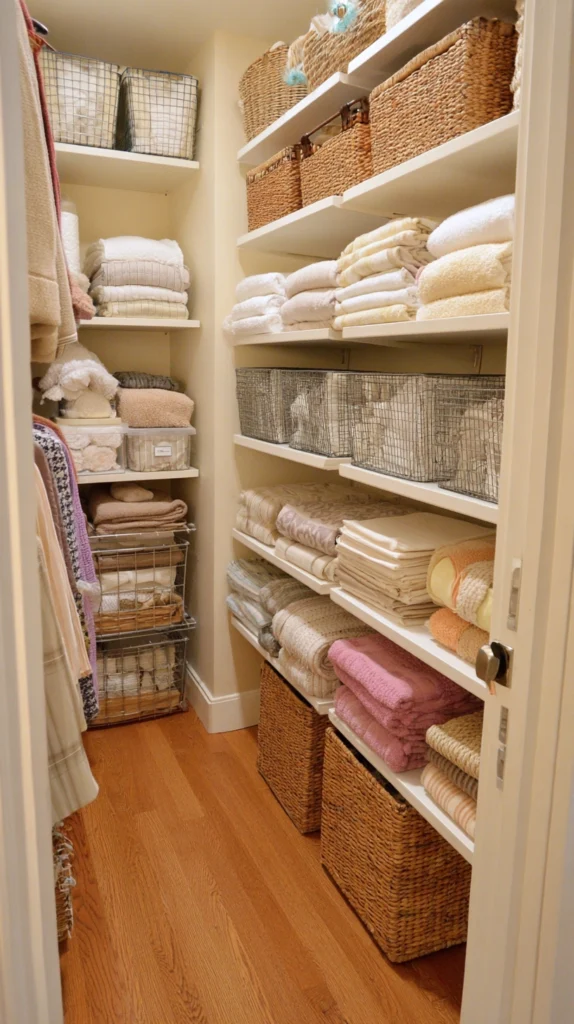
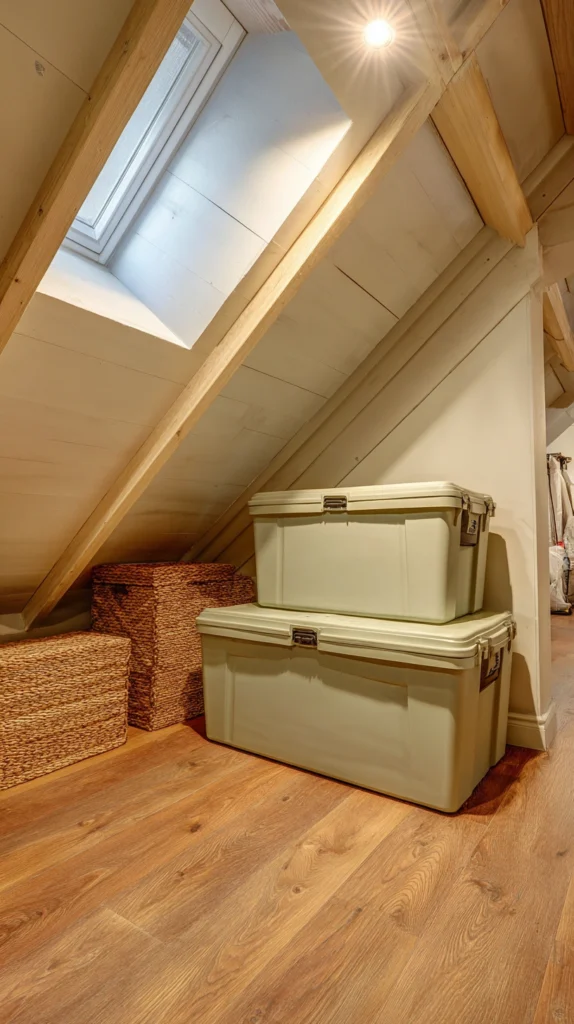
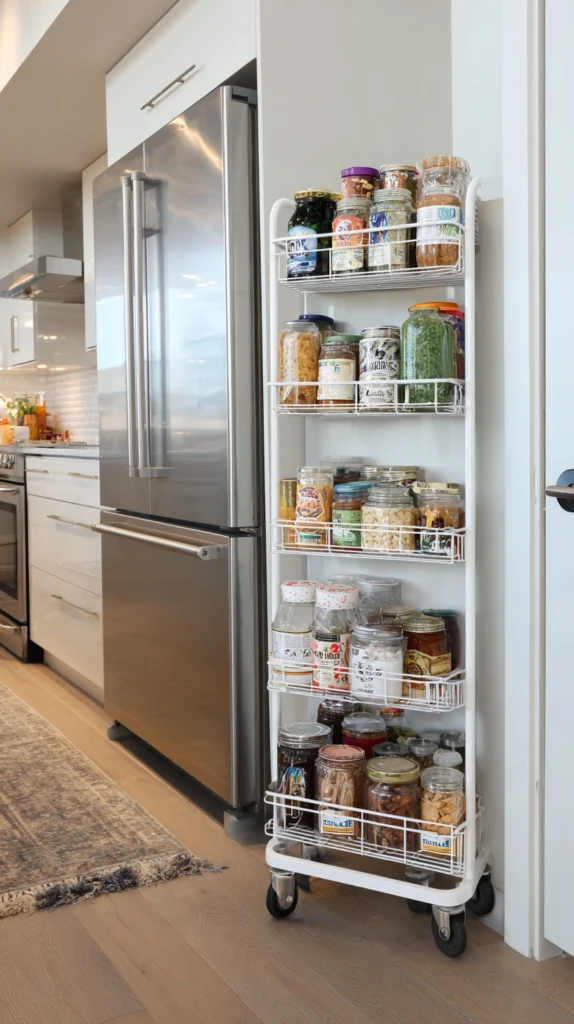
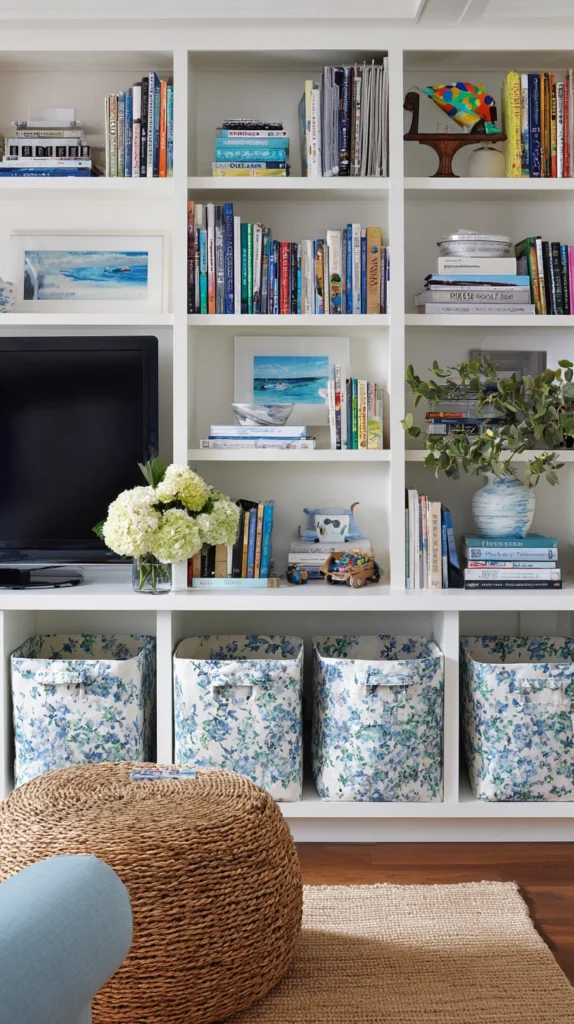
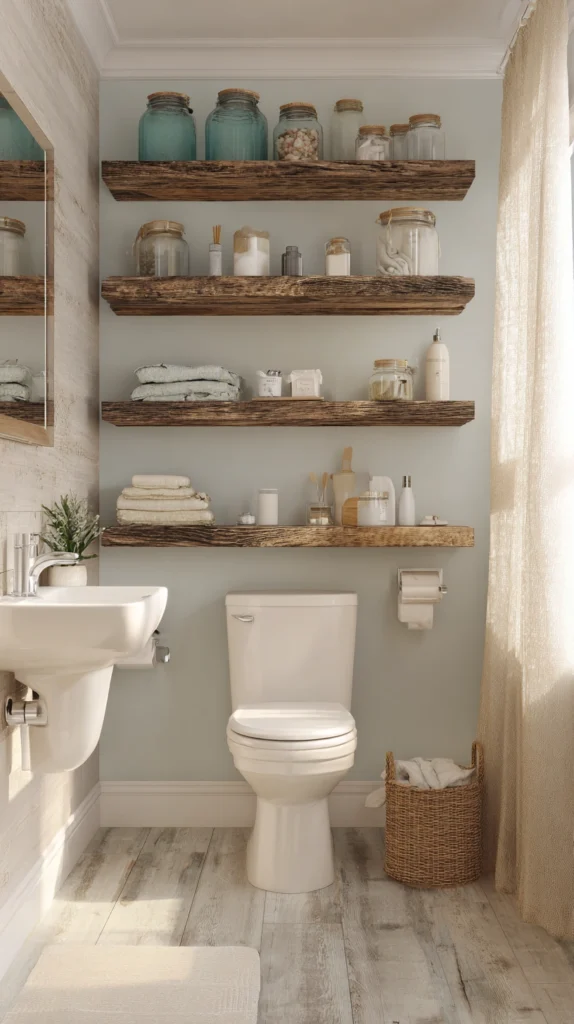
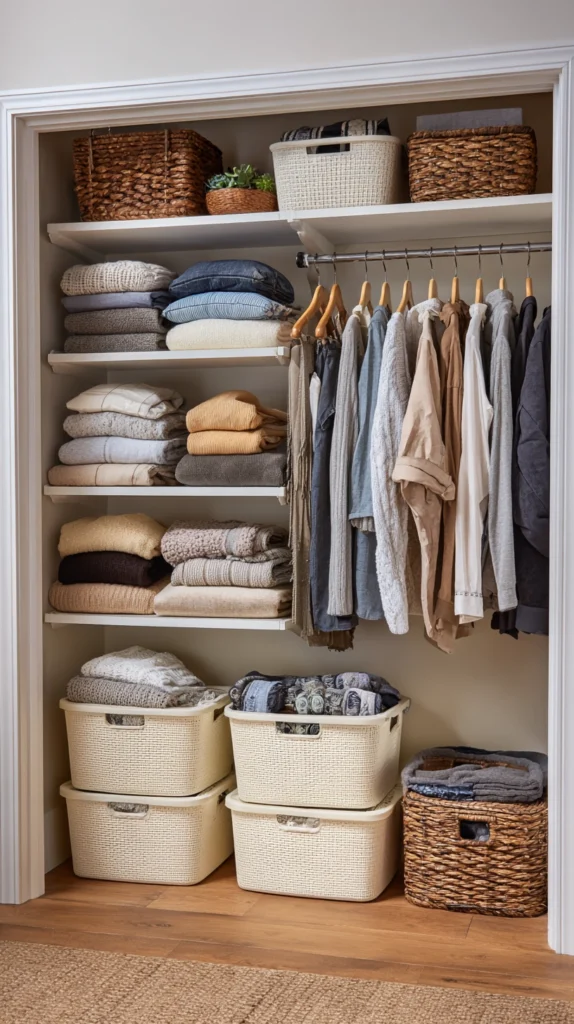
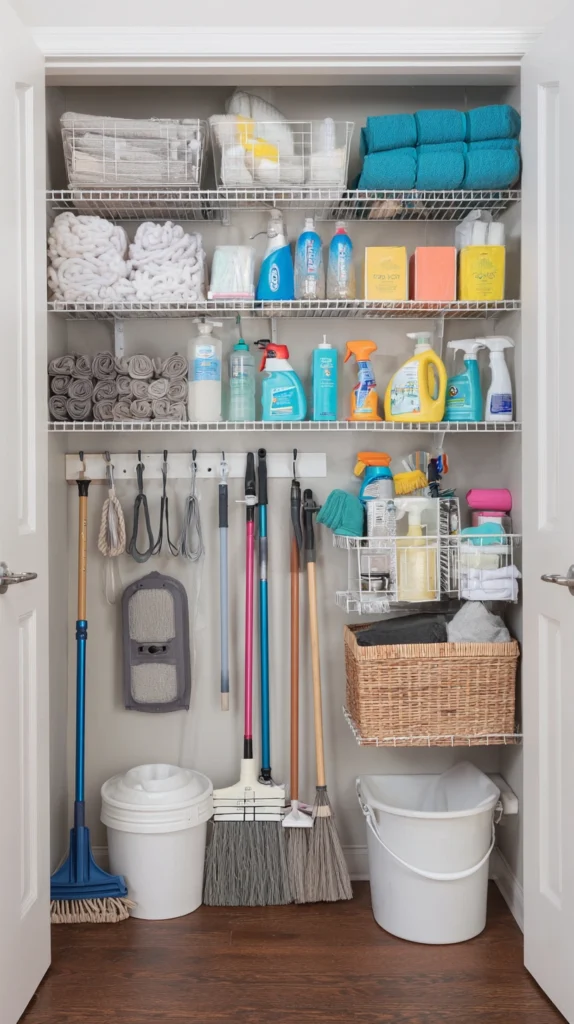
The single most important mindset shift available to the basement-free homeowner is the decision to stop thinking horizontally and start thinking vertically. Floor space is finite and contested. Wall space, in most homes, is vastly underutilized — a continuous expanse of vertical real estate that extends from the floor to the ceiling and represents, in a typical room, significantly more surface area than the floor it rises above.
Built-in shelving that runs from baseboard to ceiling, floating shelves installed in columns rather than single rows, pegboard systems on utility room or kitchen walls, tall freestanding bookcases and armoires that claim the full vertical dimension of a room — all of these interventions convert unused wall space into functional storage without removing a single square foot of floor area from the living environment.
The ceiling height matters here: in a room with nine or ten foot ceilings, the top two feet above eye level represent a storage zone that can hold seasonal and infrequently accessed items invisibly, leaving the more accessible lower shelving for everyday use.
2. Invest in a Mudroom System Even Without a Dedicated Room
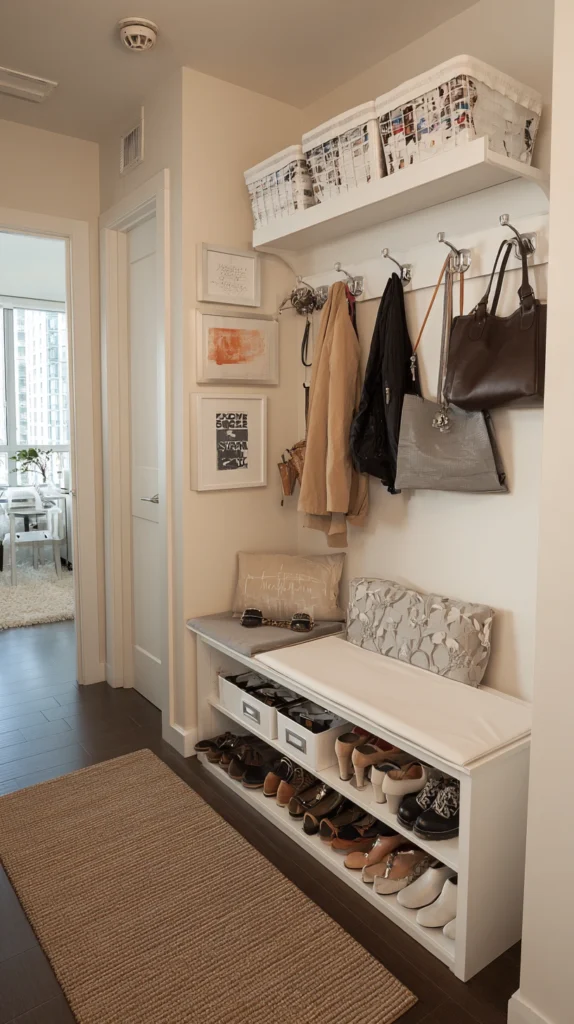
The mudroom is one of the basement’s most important functional cousins — a transitional zone where the chaos of outdoor life is contained before it spreads into the living space — and the absence of both basement and dedicated mudroom in many homes creates a storage and organizational problem that radiates outward from the entry zone in ways that affect the entire house. The solution is to create a mudroom function within whatever entry space exists, however modest.
A narrow console with hooks above it and a bench with storage below converts even a small entryway into a system capable of handling coats, bags, shoes, umbrellas, dog leads, and the daily accumulation of items that would otherwise colonize every horizontal surface in sight.
Wall-mounted hook rails at different heights — adult level, child level, and a lower row for bags and backpacks — combined with a shallow shelf above for keys, mail, and small items create a complete entry system that occupies perhaps twelve inches of depth and transforms the daily experience of coming and going.
3. Choose Furniture That Does Double Duty
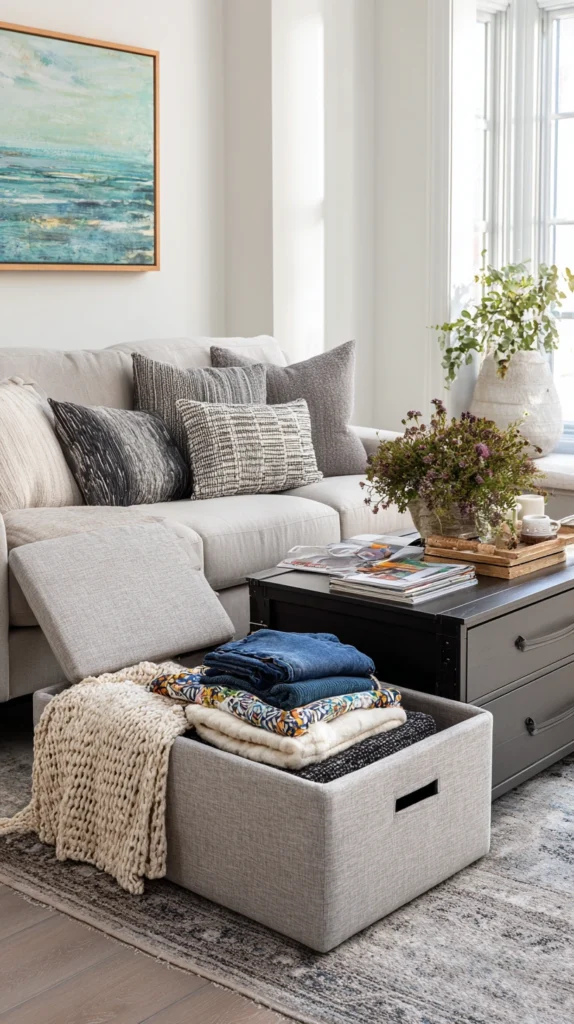
In a home without a basement, every piece of furniture should be evaluated not only for its primary function but for its storage potential, and any piece that offers only one without the other deserves scrutiny before it earns its place. An ottoman that opens to reveal interior storage for throws, board games, or remote controls. A bed frame with deep drawers built into its base.
A dining bench with a hinged seat concealing a long storage compartment. A coffee table with a lower shelf or internal drawer. A window seat built over a series of deep pull-out drawers.
These dual-function pieces are not compromises — many of the most beautiful and well-designed furniture pieces available today offer integrated storage as a fundamental design feature rather than an afterthought, and the best of them are completely indistinguishable from their purely decorative counterparts until you need them to be otherwise.
4. Build an Under-Stair Storage System
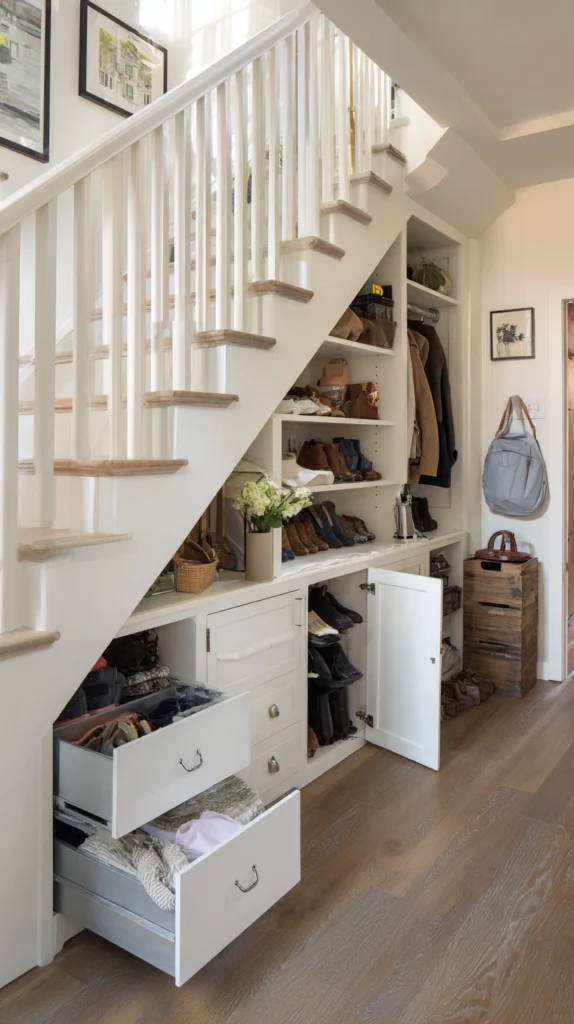
If your home has a staircase, the triangular void beneath it represents one of the most consistently underutilized storage opportunities in residential architecture. The space beneath a standard staircase, properly excavated and fitted, can accommodate a remarkable volume of stored items — in some homes, this single zone replaces the equivalent of a small closet.
The approach depends on the staircase’s construction and accessibility, but options range from simple pull-out drawers built into the riser faces, to a series of custom cubby doors that open into deep triangular storage compartments, to a complete fitted shelving system accessed through a single larger door.
At the minimum, even an unfinished under-stair space fitted with simple shelving and good lighting becomes a viable home for the seasonal, occasional, and bulky items that would otherwise have nowhere logical to live.
5. Maximize Bedroom Closet Systems
Most standard bedroom closets are furnished with a single hanging rail and one shelf above it — a configuration that uses perhaps thirty percent of the closet’s actual storage potential. A properly designed closet system, installed either professionally or via one of the excellent modular systems now available from retailers at a range of price points, can triple or quadruple the usable storage within the same footprint by exploiting the full height of the closet, differentiating between hanging zones for long and short garments, and incorporating shelving, drawers, and specialized storage for shoes, accessories, and folded items.
In a basement-free home, the bedroom closet must work harder than it would otherwise need to, and investing in a system that allows it to do so pays dividends not only in the closet itself but in the overall organization of the bedroom and the home.
6. Use the Space Above Kitchen Cabinets
The gap between the tops of kitchen cabinets and the ceiling — that awkward zone that most people fill with decorative objects that collect grease and dust in roughly equal measure — is actually a viable storage zone for items used infrequently but needed seasonally.
Large serving platters, oversized pots and casserole dishes, the stand mixer that comes out only for holiday baking, spare small appliances — all of these can live above the kitchen cabinets in baskets, bins, or simple stacked arrangements without affecting the daily functionality of the kitchen in any meaningful way.
The key is containment: open stacks of random items above cabinets look chaotic, while identical baskets or clearly labeled bins look intentional and can even contribute positively to the kitchen’s visual character. Add a small step stool to the kitchen’s storage toolkit and this elevated zone becomes genuinely accessible rather than theoretically available.
7. Rethink the Garage as Primary Storage Infrastructure
For homes without basements but with an attached or detached garage, the garage represents the closest functional equivalent available, and most garages are organized at a fraction of their potential capacity.
A properly organized garage — with wall-mounted shelving systems, ceiling-mounted storage platforms for seasonal and bulky items, pegboard or slat wall systems for tools and equipment, and designated zones for different categories of stored items — can absorb an enormous volume of the seasonal, sporting, and utilitarian storage that a basement would otherwise handle.
The investment in proper garage organization pays for itself quickly in the reclaimed order it creates throughout the rest of the house, and the systems available today are considerably more robust, versatile, and even attractive than the improvised shelf-and-hook arrangements that characterize most residential garages.
8. Install Window Seats with Deep Storage Beneath
A window seat is one of those architectural additions that improves a room simultaneously from a comfort, aesthetic, and organizational perspective — a relatively rare combination in home improvement.
Built across a bay window, along a wall beneath a standard window, or in an alcove, a window seat with deep storage drawers or a hinged lid concealing interior space adds both a beloved sitting destination and a significant volume of hidden storage to any room it occupies. In a child’s bedroom, the window seat stores toys, games, and craft supplies invisibly. In a living room, it holds extra throws, cushions, board games, and media accessories. In a hallway, it provides seating for putting on shoes while concealing seasonal footwear, sports gear, and outdoor accessories. The cushion above makes the storage below invisible and the seat itself genuinely comfortable — a combination that earns its place in any basement-free home.
9. Create a Dedicated Linen Closet System
Linen storage is one of the most consistent pain points in basement-free homes, where the absence of underground storage means that spare bedding, seasonal duvets, extra towels, and table linens must find space within the inhabited floors of the house.
A dedicated linen closet — or a section of a larger closet converted to this purpose — fitted with shelving at appropriate intervals for different linen categories, creates a centralized and organized home for all textile storage.
Label each shelf zone clearly, fold and stack consistently — hotel-style rolling or tri-fold methods minimize volume significantly — and use vacuum compression bags for the bulkiest seasonal items like winter duvets and spare pillows. The space saved by compression bags in a linen closet is substantial enough to make the modest investment genuinely worthwhile.
10. Think Strategically About Attic Access
Where a basement handles storage below the living space, an attic handles it above, and in a home without a basement the attic — if one exists and is accessible — deserves to be treated as primary storage infrastructure rather than a forgotten void.
Properly boarding the attic floor to create a safe walking surface, installing adequate lighting, and organizing the space with labeled bins and clearly defined zones for different storage categories converts an underutilized cavity into a functional equivalent of basement storage.
Climate control is the primary limitation — attics experience temperature extremes that make them unsuitable for electronics, certain fabrics, and anything sensitive to heat or cold — but for holiday decorations, seasonal sporting equipment, luggage, and archived documents in proper containers, a well-organized attic serves the storage function admirably.
11. Deploy Slim Rolling Carts in Unexpected Places
The rolling cart — narrow, tall, fitted with several shelves, and mounted on lockable wheels — is one of the most versatile storage tools available to the basement-free homeowner, because it exploits the slim vertical gaps between and beside furniture that are otherwise completely wasted. A slim rolling cart between the refrigerator and the kitchen wall holds spice jars, canned goods, or cleaning supplies in a space that would otherwise contribute nothing.
The same cart between a washer and dryer holds laundry supplies in the utility room. In a bathroom, a slim rolling cart beside the vanity holds toiletries and towels. In a home office, it slides under the desk when not needed and rolls out to provide immediate access to supplies. The mobility is part of the value — these carts can be repositioned as needs change, which gives them a flexibility that fixed storage cannot match.
12. Use Labeled Bins and Baskets as a Storage Language
In a basement-free home where storage is necessarily distributed throughout the living space rather than concentrated in a dedicated below-grade zone, the risk of organizational chaos is real and constant. The antidote is a consistent storage language — a system of matching or coordinating bins, baskets, and containers used throughout the home to contain like items and signal clearly, through labels, what lives where.
Woven seagrass baskets on living room shelves hold remotes, chargers, and small electronics. Labeled canvas bins in the utility room hold cleaning supplies by category. Identical linen-covered boxes on bedroom shelves contain accessories, documents, and seasonal items.
The visual consistency of matched containers transforms distributed storage from something that looks cluttered into something that looks designed, and the labeling system means that every item in the house has a known home and can be retrieved and returned without a search.
13. Maximize Bathroom Storage with Wall-Mounted Additions
Bathrooms in basement-free homes must frequently absorb cleaning supply storage, spare toiletry stock, and household first aid and medication storage that would elsewhere live in a utility basement. A bathroom that is working at this expanded capacity needs a storage system that goes well beyond the standard vanity cabinet and medicine chest.
Wall-mounted shelving above the toilet — a consistently underused zone in most bathrooms — adds significant storage in a location that consumes no floor space. A tall, slim bathroom cabinet beside the vanity provides additional enclosed storage for supplies that prefer to be out of sight.
Magnetic strips on the inside of cabinet doors hold small metal items. Over-door organizers on the back of the bathroom door add a further tier of storage. Together, these additions can transform a bathroom’s storage capacity without altering its floor plan or requiring any significant construction.
14. Rotate Seasonal Items Systematically
In a home without a basement, the management of seasonal items — holiday decorations, seasonal clothing, sporting equipment for activities limited to specific times of year — requires a more deliberate system than the basement model, where seasonal rotation simply means carrying things up or down the stairs and depositing them in a general area.
A formal seasonal rotation system, based on clearly labeled weatherproof bins stored in the attic, garage, or highest closet shelves, and a twice-yearly transfer schedule that moves current-season items to accessible storage and off-season items to remote storage, keeps the home’s active storage from being crowded with items that are irrelevant for six to eight months of the year.
This system requires an initial investment of time and organization but then runs with minimal maintenance, and the reduction in active storage pressure it creates throughout the house is substantial and immediately felt.
15. Design a Utility Closet That Works as Hard as a Basement
Every basement-free home has, or should have, a utility closet — a single space dedicated to the practical, unglamorous infrastructure of domestic life. Cleaning equipment, tool storage, household maintenance supplies, spare light bulbs, batteries, extension cords, and the miscellaneous practical items that accumulate in every household need a dedicated home, and without a basement that home must be a well-designed closet.
The key is treating this closet with the same organizational seriousness you would bring to any other storage system in the house — fitted shelving at appropriate heights, hooks on the back of the door for mops and brooms, labeled bins for different supply categories, and a clear organizational logic that makes everything findable in the thirty seconds between deciding you need it and needing it.
A utility closet designed with genuine intention is the closest functional replacement for a basement that a basement-free home can achieve, and when it works well, the absence of the basement below becomes genuinely difficult to notice.