15 Smart Bed Placement Ideas for Small Bedrooms
The bed is the largest piece of furniture in the bedroom and, in a small bedroom, the piece around which every other spatial decision must organize itself.
It is not optional, it cannot be folded away during the day without significant mechanical infrastructure, and it occupies a footprint that in a small room can represent thirty to fifty percent of the total available floor area before a single other piece of furniture has been introduced.

The challenge of placing a bed in a small bedroom is therefore not simply an aesthetic one — it is a spatial puzzle whose solution determines whether the room functions comfortably as a sleeping, dressing, and living space or whether it functions as a bed with a narrow corridor around it that is tolerated rather than enjoyed.
The good news is that the conventional wisdom about bed placement — against the wall opposite the door, centered on that wall, flanked by matching bedside tables — is a convention rather than a rule, and departing from it intelligently opens up a range of placement strategies that can transform the experience of a small bedroom more completely than any other single design decision. Here are fifteen ideas for placing a bed in a small bedroom in ways that maximize space, light, comfort, and the overall quality of the room’s daily experience.
1. The Corner Placement Strategy
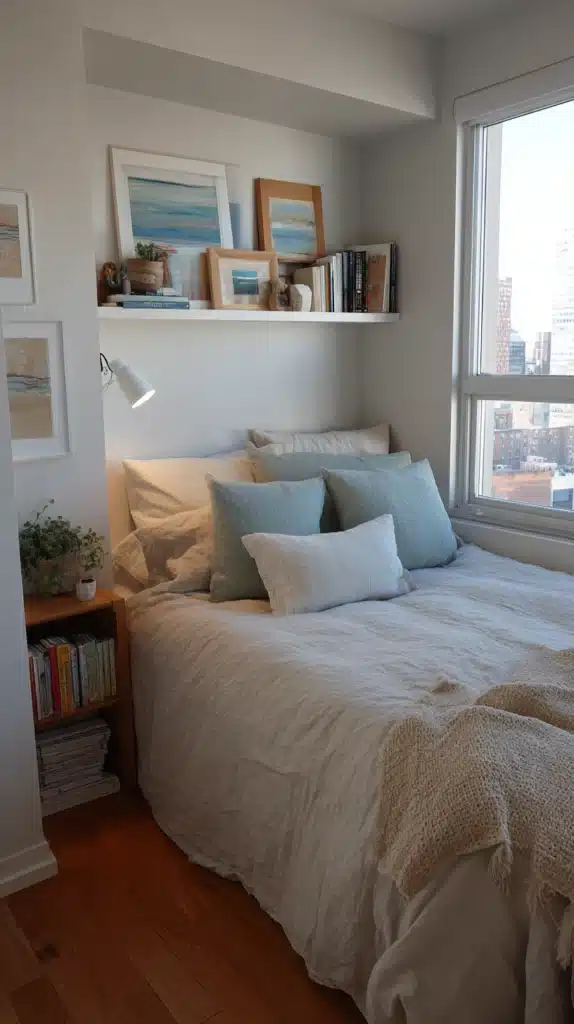
Pushing the bed into a corner — one side of the bed against the wall, the headboard against the adjacent wall — is the placement strategy that releases the maximum floor area in a small bedroom, because it consolidates the bed’s footprint into the room’s least functionally useful zone and leaves a continuous open floor area on the two remaining sides.
The practical objection to corner placement is that it makes the bed difficult to make from one side and requires the person who sleeps against the wall to climb over their partner to exit. For a single sleeper, or for a couple where one person consistently sleeps on the outside, neither objection is significant. For a couple who alternate sides or who both value easy independent exit, the corner placement requires a more honest conversation about priorities.
The design solution to the aesthetic challenge of an asymmetric bed arrangement — one side against the wall, no bedside table possible on that side — is to embrace the asymmetry rather than fight it: a wall-mounted reading light and a small wall-mounted shelf on the wall-side provide the bedside function without floor footprint, while a conventional bedside table on the open side maintains the familiar bedside arrangement for the occupant who uses it.
2. Floating the Bed in the Room’s Center
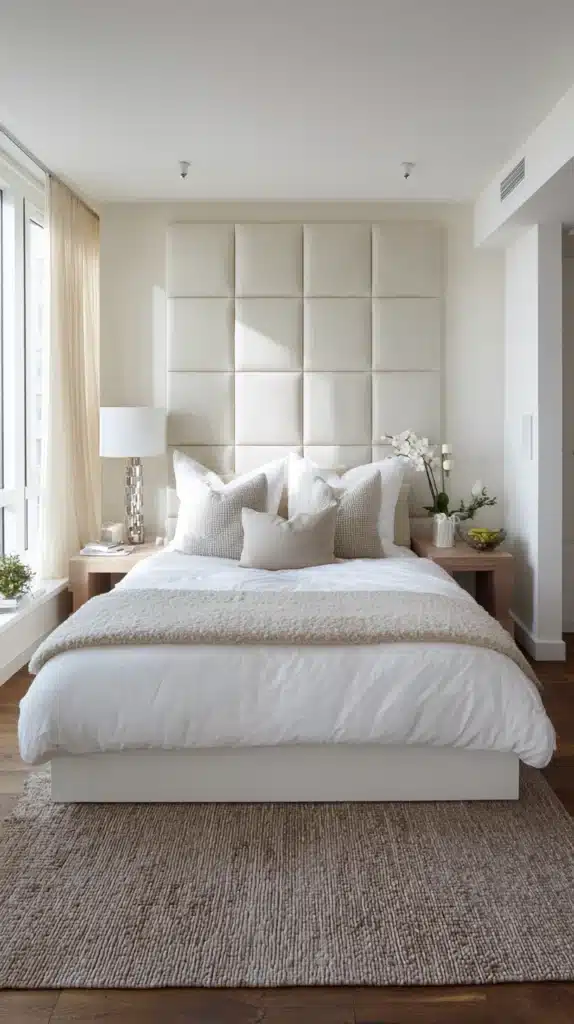
The counterintuitive move of placing the bed in the center of the room — not pushed against any wall, with space on all four sides — works best in rooms where the bed’s footprint, while large relative to the room, still leaves functional space on all sides when centered. The benefit of center placement is the visual expansiveness it creates: a bed that does not touch any wall allows the eye to travel around it, which makes the room feel larger than a bed pushed against a wall in the same room. Access from both sides is unrestricted, bed-making is easy, and the arrangement has a hotel-like quality of generous symmetry that feels luxurious.
The challenge is that center placement requires sufficient room for bedside tables on both sides and a meaningful clearance at the foot of the bed — at minimum sixty centimeters — that does not feel like an obstacle course. In a room that is slightly wider than it is long, or in a square room, center placement frequently works better than the conventional wisdom of wall-placement would predict.
3. The Alcove Bed — Using Architectural Features
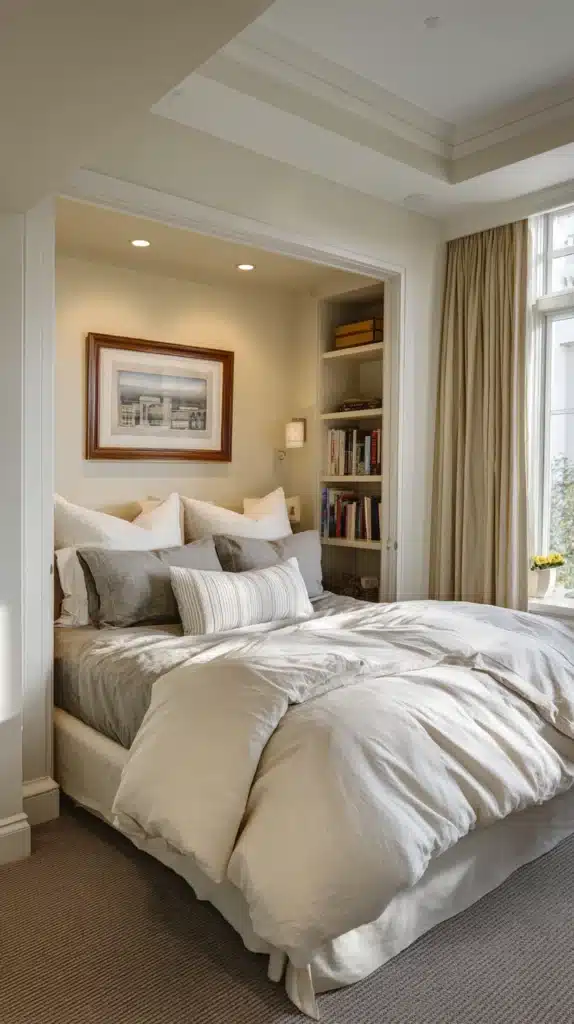
Where the bedroom has an alcove — a recessed area created by a chimney breast, a structural column, or a deliberate architectural feature — placing the bed within the alcove creates a sleeping niche with genuine architectural definition, the sensation of a room within a room that is one of the most appealing qualities of any sleeping space.
The alcove contains the bed’s footprint within a defined zone, leaving the remainder of the room open for dressing and other functions, and the enclosure of the alcove creates the psychological intimacy that promotes sleep quality.
If the alcove is slightly wider than the bed, the revealed space on either side can house built-in bedside shelving or small cabinet units that are flush with the alcove walls, maintaining the feeling of enclosure while providing the bedside storage that daily routine requires. If the bedroom has no existing alcove, building one — a partial stud wall on each side of the bed’s proposed position — creates the same effect at relatively modest construction cost.
4. The Bed Under the Window

Placing the bed under a window is conventionally discouraged — the draft concern, the light intrusion, the loss of the window as a visual feature — and yet in a small bedroom where every other wall position is more problematic, the window wall often represents the most spatially efficient bed placement available.
The practical concerns are manageable: blackout blinds fitted within the window reveal address the light intrusion completely; a bed with a tall upholstered headboard creates a thermal barrier between the sleeper’s head and the glass; and a well-fitted blind combined with heavy curtains eliminates any meaningful draft issue in all but the most poorly insulated windows.
The aesthetic benefit of the under-window placement is that it frees the room’s other three walls for furniture, storage, and display in a way that no other placement strategy can match, and the view from the bed — sky, garden, or whatever the window frames — can be genuinely beautiful when woken by light rather than alarm.
5. The Platform Bed for Visual Space Creation
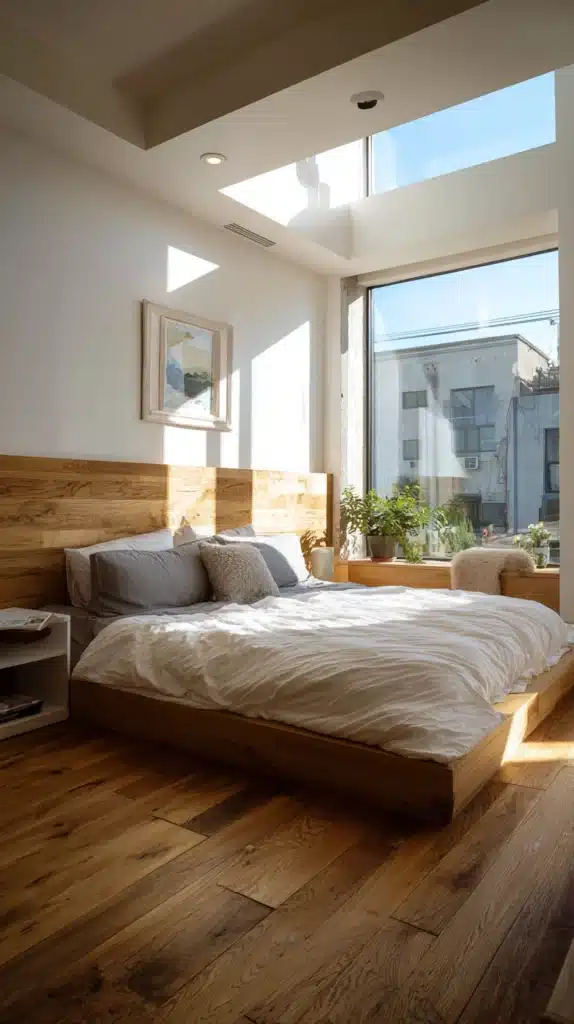
A platform bed — a bed whose base is a low, solid platform rather than a raised frame with legs — sits significantly lower to the ground than a conventional bed frame and creates a visual spaciousness in a small bedroom that the same mattress on a higher frame cannot.
The lower the bed sits, the higher the ceiling appears relative to it, and the uninterrupted horizontal line of the low platform extending toward the walls creates the optical impression of a wider, more generous floor area than the actual dimensions support.
Platform beds also eliminate the under-bed space that creates visual clutter when visible and requires management when used for storage, though this eliminates the under-bed storage option that many small bedroom strategies depend on.
Choose a platform in a material and finish that suits the room’s aesthetic — natural timber for a warm, Japandi-influenced bedroom; upholstered platform in a performance fabric for a more plush, hotel-inspired space; painted MDF for a budget-conscious contemporary result.
6. The Murphy Bed for Dual-Function Rooms
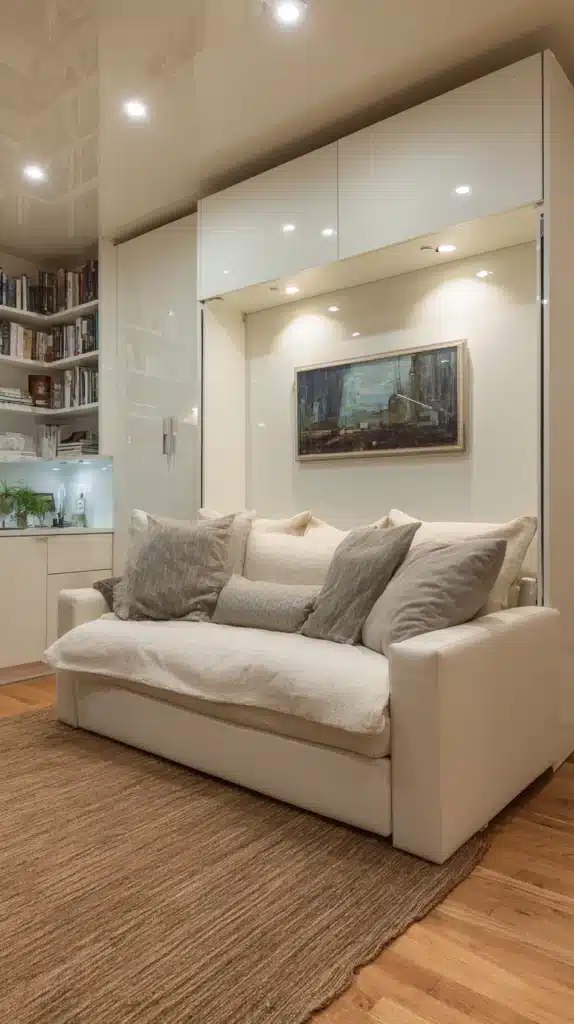
The Murphy bed — a bed mounted on a wall mechanism that allows it to be folded vertically into a cabinet or wall unit during the day — is the small bedroom solution with the highest spatial return available, because it eliminates the bed’s footprint from the daytime floor plan entirely.
A bedroom with a Murphy bed installed is a bedroom that can function as a home office, a yoga or exercise space, a creative studio, or a sitting room during working hours and revert to a sleeping room in less than thirty seconds at the end of the day.
The quality and aesthetic sophistication of Murphy bed systems have improved enormously in the past decade, and the best systems now integrate seamlessly into full-height cabinetry walls that look, when closed, like a handsome fitted wardrobe with no visual indication of the bed concealed within.
The mechanism should be of professional quality — a smooth, counterbalanced system that can be operated safely by a single person — and the mattress must be specified to suit the vertical storage orientation.
7. Bed Perpendicular to the Longest Wall
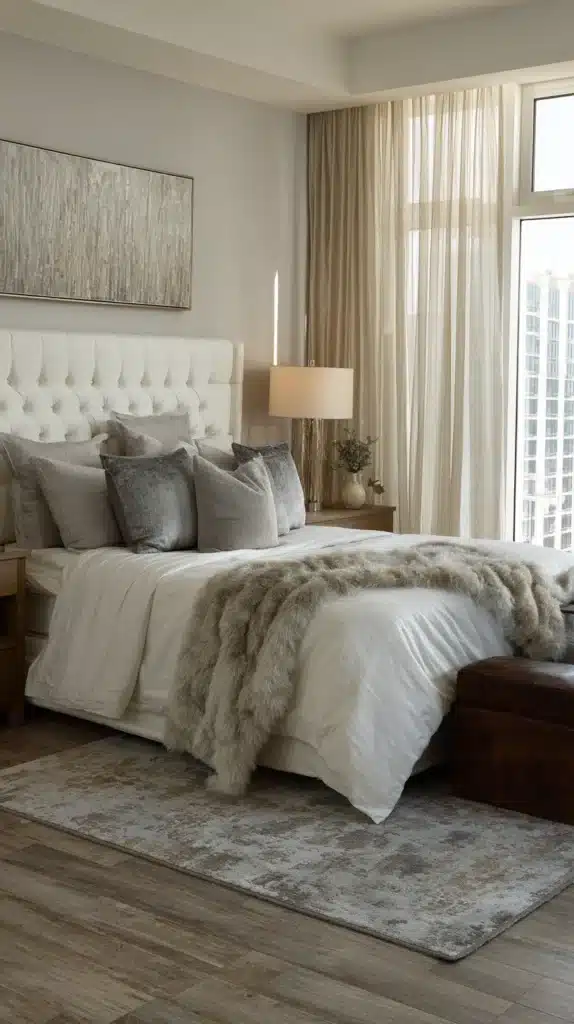
In a rectangular bedroom where the conventional placement of the bed against the shorter wall creates a narrow, corridor-like floor plan, placing the bed perpendicular to the longest wall — with the headboard against the long wall and the bed extending toward the center of the room — often produces a better spatial result despite appearing at first glance to reduce the available floor area.
Perpendicular placement on the long wall creates a wider visual field when entering the room, because the eye travels along the length of the wall rather than across the bed’s width to reach the wall behind it.
The floor area released on either side of the bed — between the foot of the bed and the opposite wall — is more accessible and more usable than the narrow strip between a wall-placed bed’s side and the room’s side walls. This placement works particularly well in rooms where the door is centered on one of the shorter walls, because the entering view is of the room’s full width rather than a bed blocking the visual depth.
8. The Loft Bed for Vertical Space Exploitation
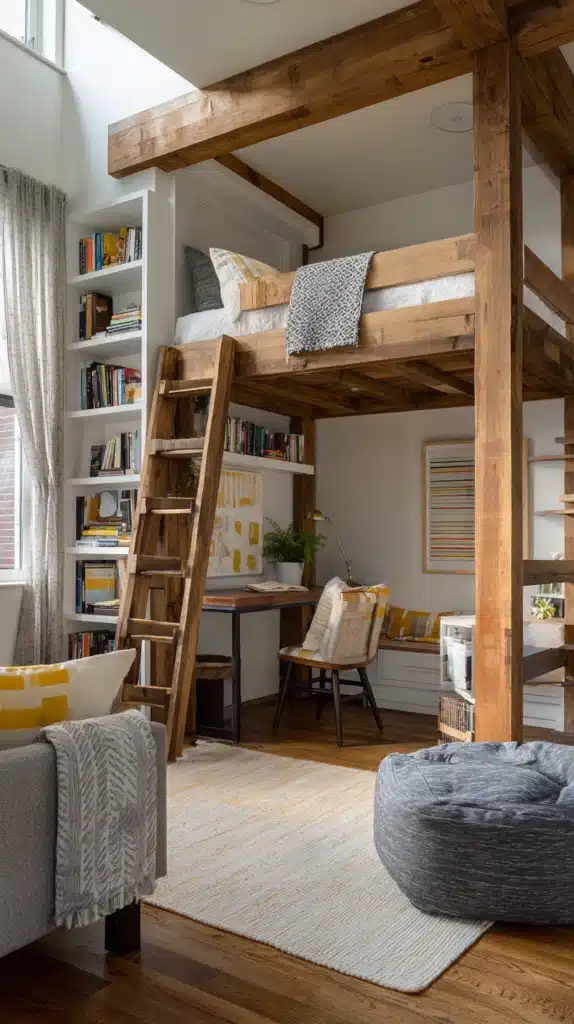
The loft bed — a bed elevated on a frame to ceiling height or close to it, with usable space beneath the sleeping platform — is the small bedroom solution that exploits the third dimension most aggressively, converting the vertical space above a desk, sofa, wardrobe, or storage area into sleeping quarters and freeing the entire floor area below for daytime function.
Loft beds are most naturally associated with children’s rooms, but well-designed adult loft bed systems — with properly engineered frames in solid timber or steel, thoughtful ladder or stair access, and built-in shelving or railing at sleeping level — create adult sleeping spaces of genuine character and surprising comfort.
The ceiling height is the critical variable: a room with a ceiling height below 2.4 meters will not accommodate a loft bed without creating a claustrophobically low sleeping space; a room with a ceiling of 2.7 meters or above gives sufficient clearance for a comfortable sleeping level with excellent functional space below.
9. The Daybed Configuration for Studio Bedrooms
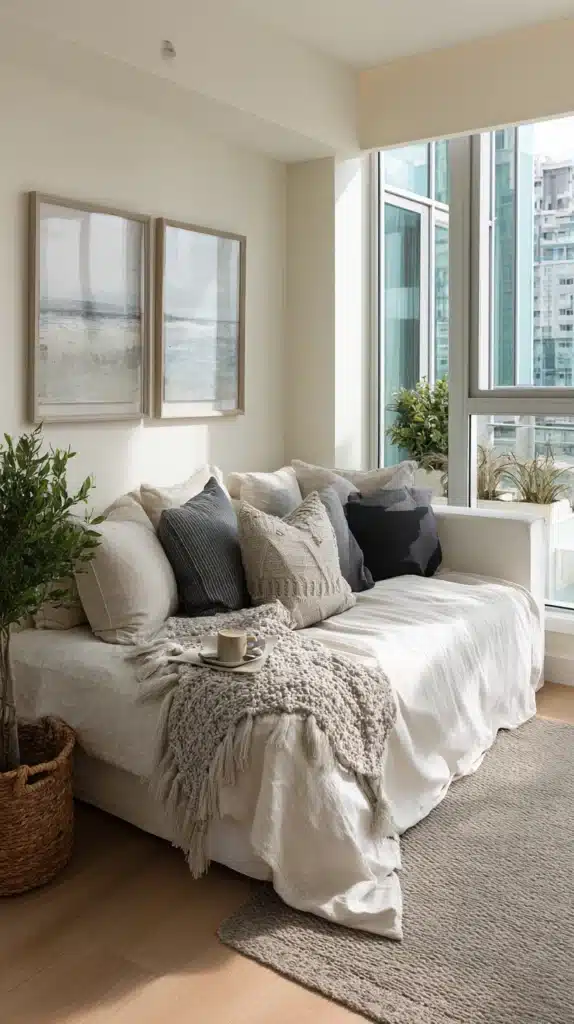
A daybed — a bed sized and styled to function as a sofa during the day and a sleeping surface at night — allows the small bedroom to perform as a sitting room in its daytime configuration without any mechanical transformation required. The daybed is positioned against the wall, dressed with cushions and a throw along its back edge for daytime use, and stripped back to its sleeping configuration at night.
This approach works particularly well in a studio where the bedroom and sitting room are the same room, but it is also relevant in a small bedroom that doubles as a home office or creative space, where the bed’s daytime presence as a sofa makes the room feel less dominated by sleep function during working hours.
Choose a daybed with a clean-lined frame — metal, timber, or upholstered — that suits both its day and night functions aesthetically, and invest in a mattress of sufficient quality that the sleeping experience is not compromised by the daybed format.
10. Diagonal Bed Placement for Unexpected Dynamism
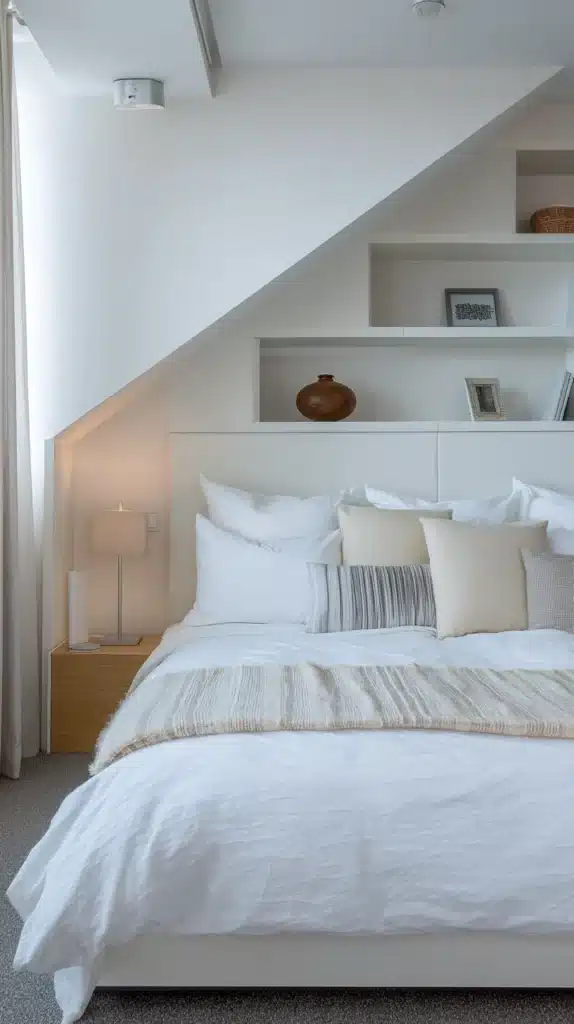
Placing the bed at a forty-five degree angle to the room’s walls — diagonally across the corner rather than parallel to any wall — is a placement strategy that most small bedroom advice would dismiss as a waste of space, and yet in specific room configurations it creates visual dynamism and a sense of spatial generosity that conventional placement cannot produce.
The diagonal bed requires a corner large enough that the angled headboard does not intrude into the room’s circulation paths, and the triangular spaces created in the two corners behind the headboard become storage or display zones — a small shelf or cabinet tucked into each triangle.
The visual effect is one of movement and energy, the diagonal line of the bed cutting across the room’s rectilinear geometry in a way that feels distinctly designed. This placement works best in a square room where the diagonal creates symmetry, and in a room with high enough ceilings that the dramatic gesture has sufficient visual breathing room.
11. The Built-In Bed with Integrated Storage Surround
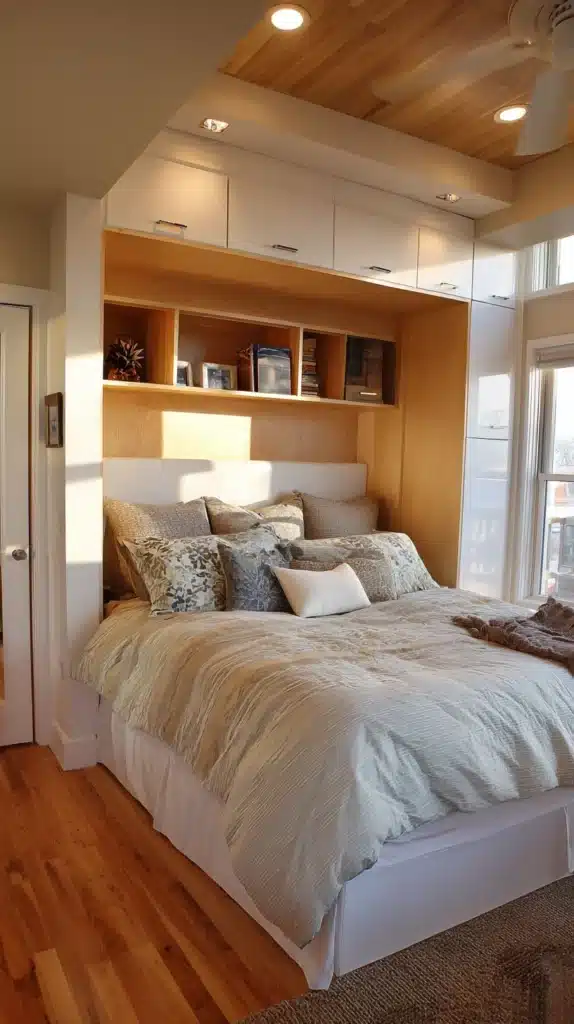
A bed designed as part of a built-in furniture system — the bed positioned within a framework of custom cabinetry that incorporates the headboard, bedside storage, overhead shelving, and wardrobe space within a single architectural composition — converts the bedroom’s largest piece of furniture from a freestanding object that occupies space into an architectural element that generates space through the storage it contains.
The built-in bed surround is the small bedroom’s most complete spatial solution, because it replaces the bed plus bedside tables plus wardrobe plus overhead shelving — four separate furniture pieces each with their own floor footprint — with a single integrated unit that occupies only the wall space it is built against.
The design of the surround should relate to the room’s overall aesthetic rather than simply maximizing storage at the expense of visual quality — timber doors, considered proportions, integrated lighting within the overhead sections, and a headboard that is beautiful as well as functional.
12. The Bed in a Dormer Recess
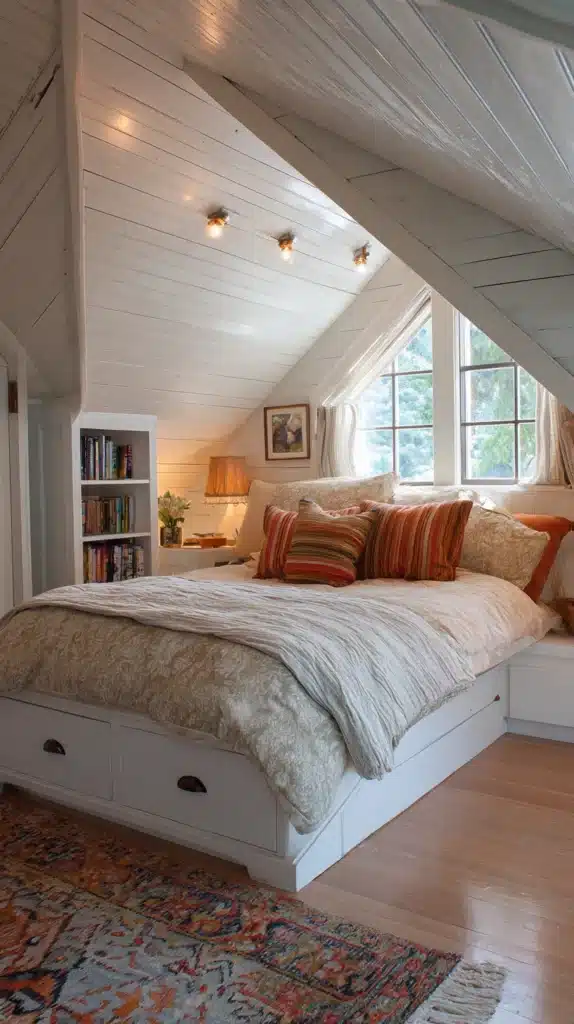
In rooms with a sloping ceiling — the attic bedrooms and top-floor spaces that are among the most characterful sleeping rooms in any house — placing the bed within the lowest section of the ceiling, where the slope meets the floor, is both the most practical and the most spatially beautiful placement available.
The bed tucks under the slope so that its head is at the point where the ceiling is lowest and the foot extends toward the room’s full-height center, leaving the usable standing space of the room available for dressing and movement.
The low ceiling above the sleeping area creates an extraordinary quality of intimate enclosure — the dormer ceiling feels like a tailored space rather than a constraint — and the full-height center of the room, freed of the bed, feels generous and open relative to the compactness of the sleeping recess behind it. Line the triangular spaces at each side of the bed under the slope with built-in drawers or shelving for storage that uses space that conventional furniture cannot reach.
13. The Bed Positioned for Morning Light Optimization

The relationship between the bed’s placement and the room’s light sources — which windows exist, which direction they face, and at what time of day they receive their best light — is a placement consideration that most bedroom design advice overlooks in favor of purely spatial concerns, and yet it is one that has measurable impact on sleep quality and daily wellbeing.
A bed positioned so that the sleeper’s face receives morning light from the east-facing window is a bed that supports the natural circadian awakening process that alarm clocks disrupt — the gradual brightening of the room as the sun rises creates a far more pleasant and more physiologically appropriate awakening than the shock of an alarm in darkness.
Analyze the room’s light before committing to a placement, and where possible position the bed so that the natural morning light falls on the sleeping face rather than on the feet, the wall, or the ceiling above the pillow.
14. The Sliding or Folding Room Divider Bed Placement
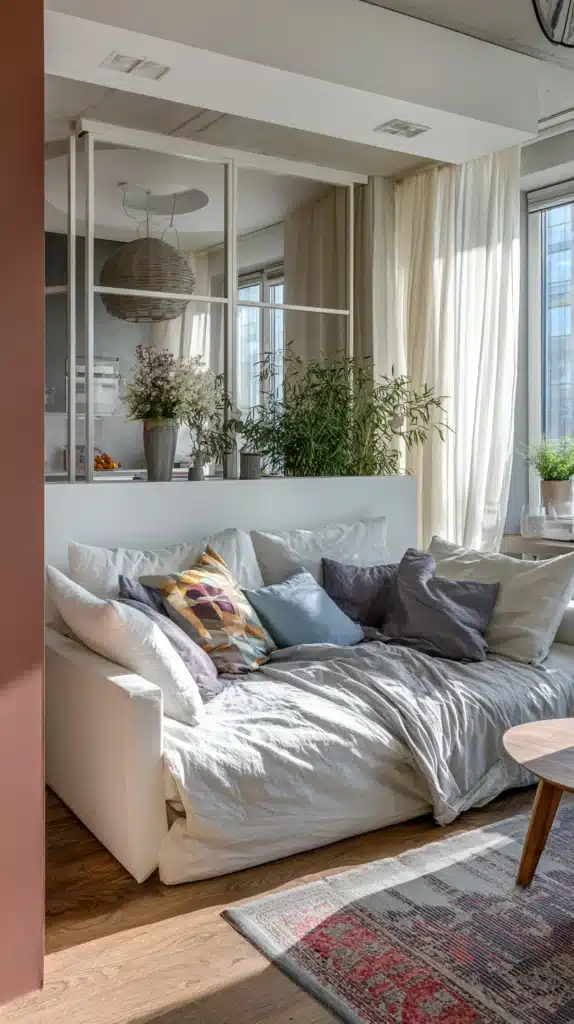
In a small bedroom shared by two people with genuinely different sleep and wake schedules — one working from home, one commuting; one a light sleeper, one a heavy one — placing the bed against the wall that the room divider will travel along, and installing a sliding or folding screen between the bed zone and the remainder of the room, creates a bedroom within a bedroom that allows the room’s two functions to coexist without constant mutual disruption.
The screen can be a simple sliding paper panel, a set of folding louvred doors, or a fabric-panelled folding screen — the choice of material and weight determining the degree of light, sound, and privacy separation it provides.
When open, the room reads as a single space; when closed, the bed zone becomes a private sleeping enclosure. This arrangement is particularly effective in rooms where a second function — a desk, a dressing area, or exercise space — needs to be visually and acoustically separated from the sleeping zone.
15. The Bedside Table Replacement Strategy for Maximum Space
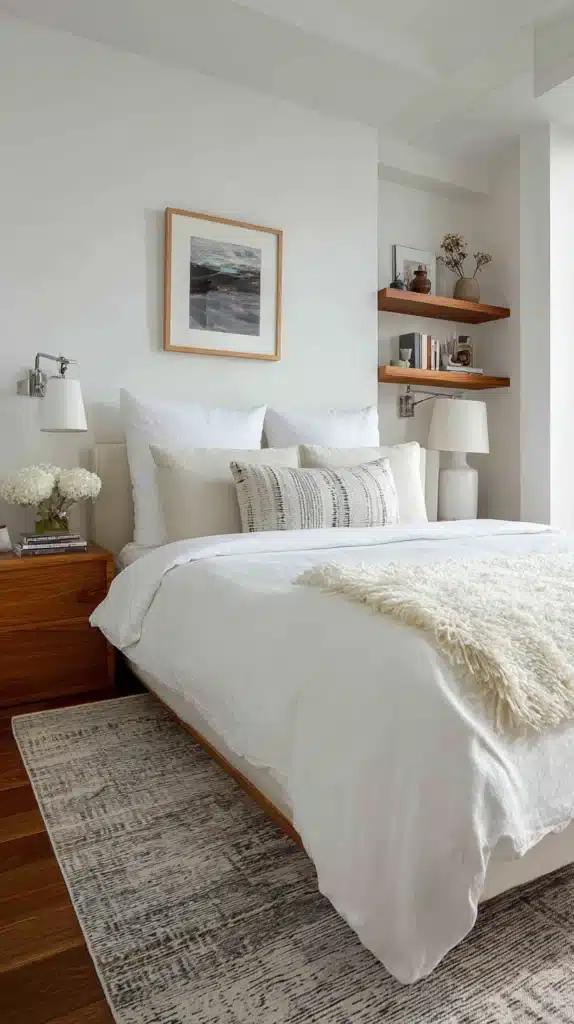
The final and most practically impactful small bedroom bed placement idea is not about the position of the bed itself but about what surrounds it — specifically, the replacement of conventional floor-standing bedside tables with wall-mounted alternatives that provide identical function in zero floor footprint.
Wall-mounted bedside shelves, swing-arm reading lights, and wall-mounted charging points replace the bedside table and lamp entirely, freeing the floor area on each side of the bed for the unimpeded circulation that makes a small bedroom feel generous rather than cramped.
A small floating shelf at mattress height — wide enough for a glass of water, a phone, a book, and a charging cable — combined with a wall-mounted adjustable arm lamp provides everything a bedside table offers in perhaps twelve centimeters of wall depth.
In a bed with two people and two sides, replacing both bedside tables with wall-mounted equivalents can recover forty to sixty centimeters of floor width — a spatial gain that changes the daily experience of the room as dramatically as any placement strategy on this list.