15 Small Dining Room Paint Ideas That Make the Space Look Bigger
Transforming a cramped dining room into an open, inviting space doesn’t require major renovations or knocking down walls. Sometimes, all it takes is the right paint color and a smart approach to application.
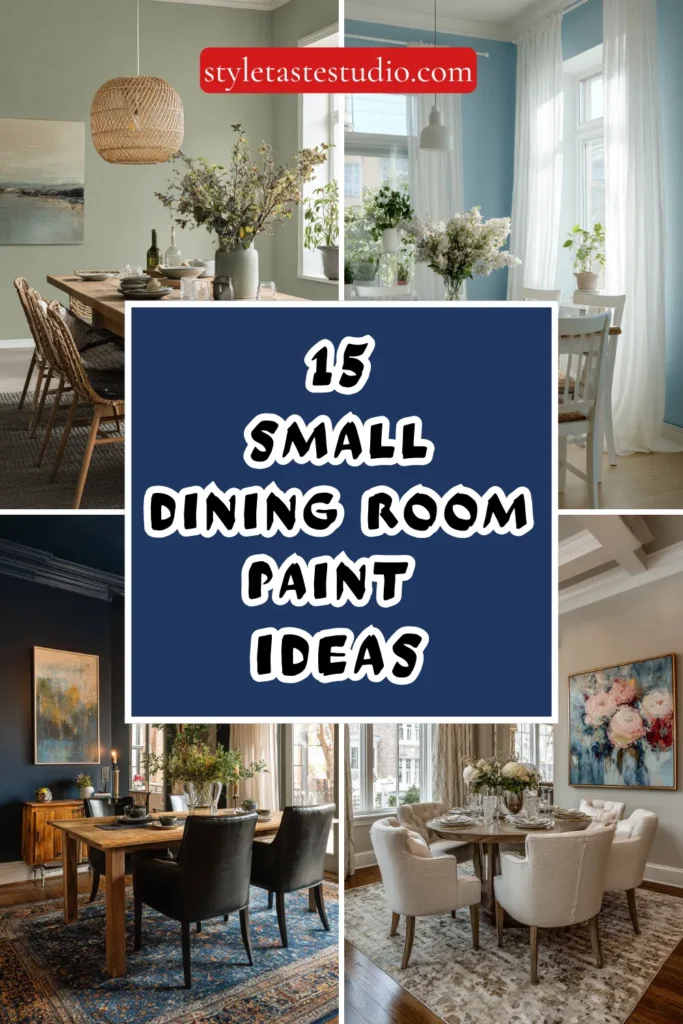
Paint has the incredible power to manipulate our perception of space, making rooms feel taller, wider, and more expansive than their actual measurements suggest.
If you’re struggling with a small dining area, these 15 paint ideas will help you maximize every square inch while creating a beautiful backdrop for family meals and entertaining.
1. Pure White Walls: The Ultimate Space Expander
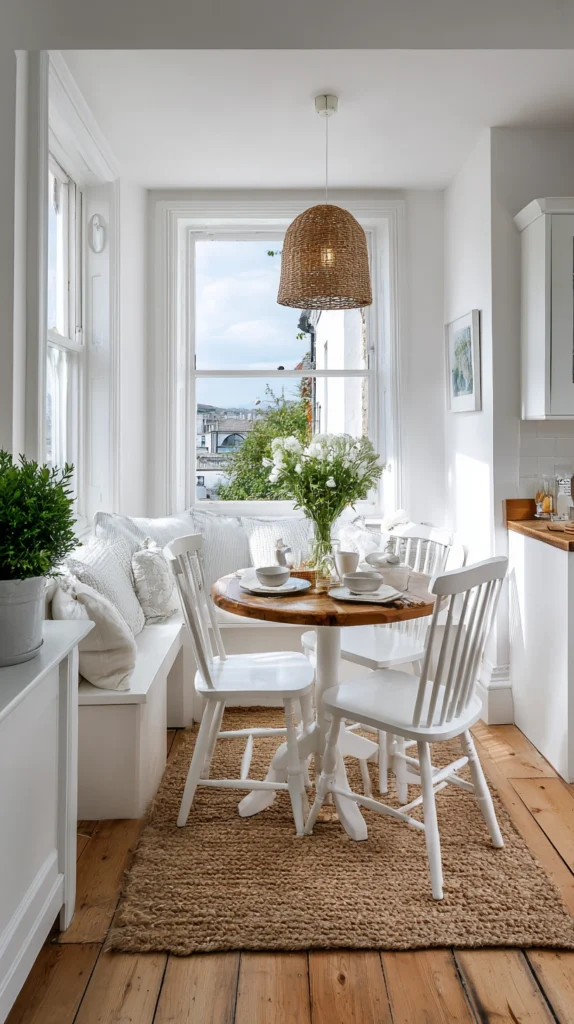
There’s a reason white remains the go-to choice for small spaces—it simply works. Pure white paint reflects maximum light, creating a bright, airy atmosphere that makes walls seem to recede.
The lack of color allows your eye to move freely around the room without interruption, eliminating visual barriers that make spaces feel confined. Choose a crisp, clean white with minimal undertones for the most dramatic effect. Pair it with white trim and ceiling to create a seamless envelope that erases boundaries and makes your dining room feel significantly larger.
2. Warm Off-White: Inviting Without Closing In
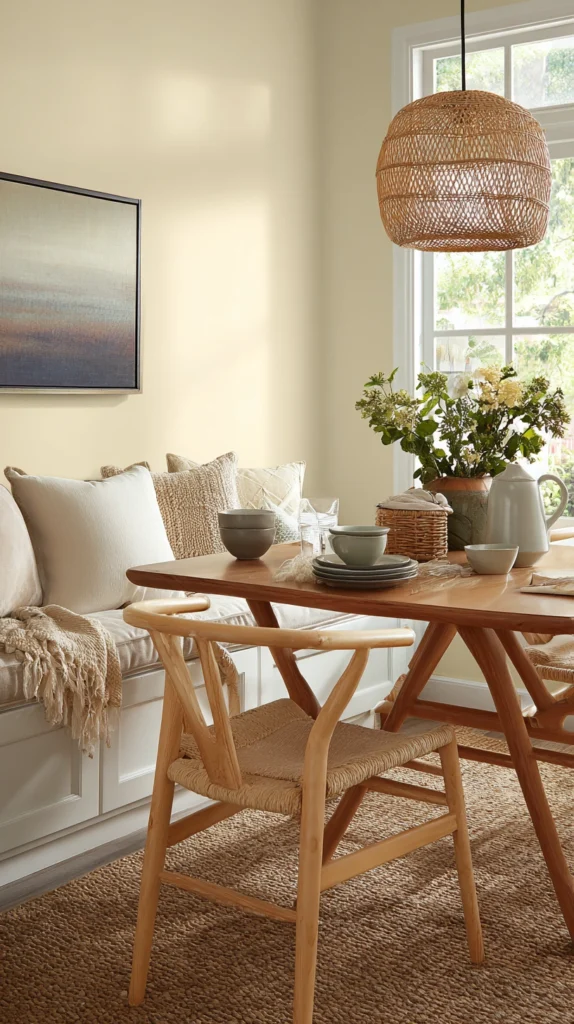
If stark white feels too clinical or cold for a dining space, consider warm off-whites and creams. These shades maintain the space-expanding properties of white while adding a welcoming, comfortable quality that’s perfect for gathering around the table. Look for colors with subtle yellow, beige, or pink undertones that bring warmth without compromising brightness.
These softer neutrals work beautifully with natural wood furniture and create an elegant foundation for layering textures and accessories.
3. Pale Sky Blue: Creating Airiness
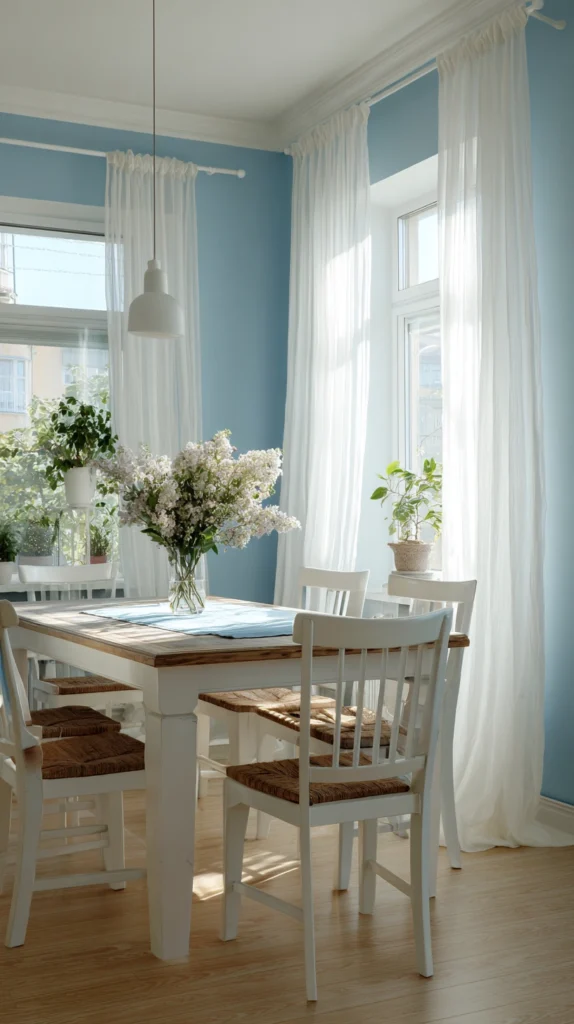
Light blue has unique spatial qualities that make it particularly effective in compact dining rooms. Blue naturally recedes from the eye, creating the illusion that walls are farther away than they actually are. This mimics the effect of looking at the open sky, bringing an airy, peaceful quality to your dining space.
Opt for barely-there blues—think robin’s egg, powder blue, or soft aqua. These shades work especially well in rooms with good natural light and pair beautifully with white trim for a fresh, coastal-inspired aesthetic.
4. Soft Dove Gray: Modern and Spacious
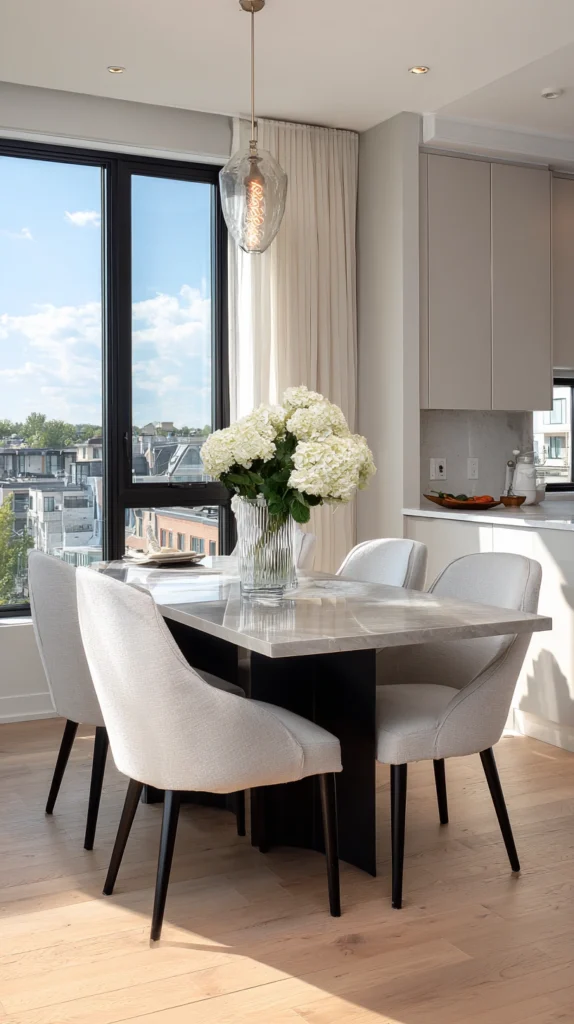
Gray has become incredibly popular in modern interiors, and lighter shades can work wonders in small dining rooms. Soft dove grays bring contemporary sophistication while maintaining excellent light-reflective properties. The key is choosing grays that lean toward the lighter end of the spectrum with warm or cool undertones that complement your dining furniture. Gray creates a neutral backdrop that allows colorful artwork, vibrant table settings, and decorative accessories to truly pop without overwhelming the space.
5. Gentle Lavender: Unexpected Brightness
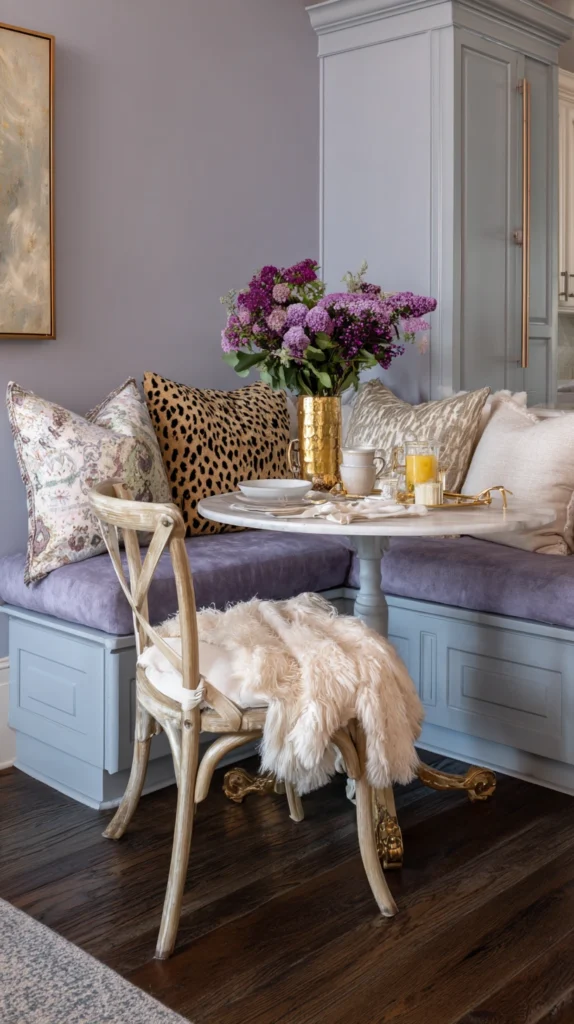
For those wanting something beyond standard neutrals, gentle lavender offers a delightful surprise. This soft purple shade brightens spaces while adding personality and charm. The gray undertones in modern lavenders keep them sophisticated rather than overly sweet or pastel.
Lavender brings a subtle warmth that’s perfect for dining rooms, creating an atmosphere that’s both relaxing and slightly romantic. This unexpected choice works particularly well when you want your dining room to stand out while still feeling spacious.
6. Greige: The Perfect Balance
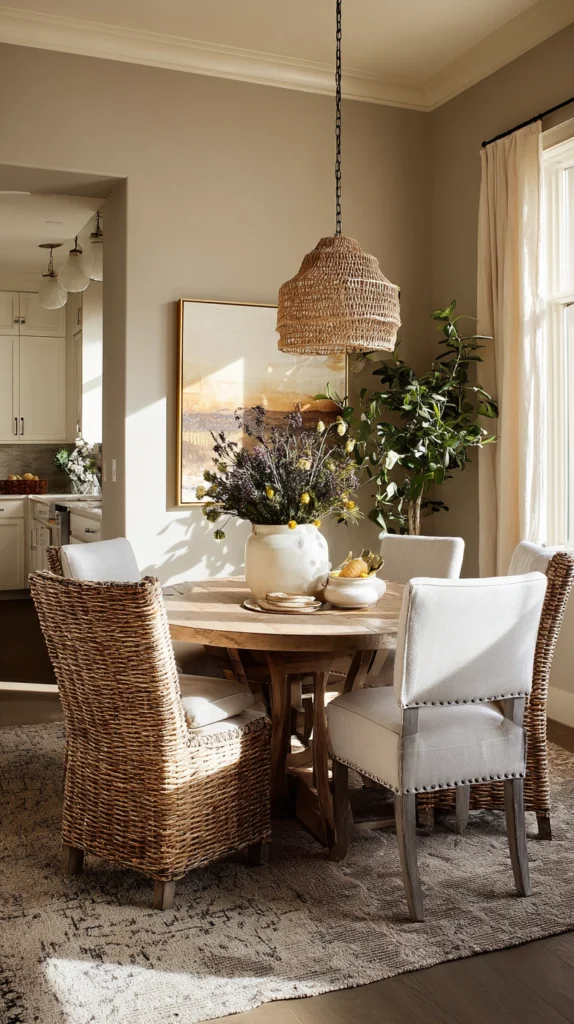
Greige—that beautiful blend of gray and beige—offers the best of both worlds. This versatile neutral brings warmth and depth while maintaining the light-reflective qualities that make small spaces feel larger.
Greige works with virtually any decor style, from traditional to contemporary, and provides more visual interest than plain white without sacrificing that open, airy feeling. It’s particularly effective in dining rooms where you want a sophisticated backdrop that doesn’t compete with your furniture or artwork.
7. Soft Sage Green: Natural and Calming
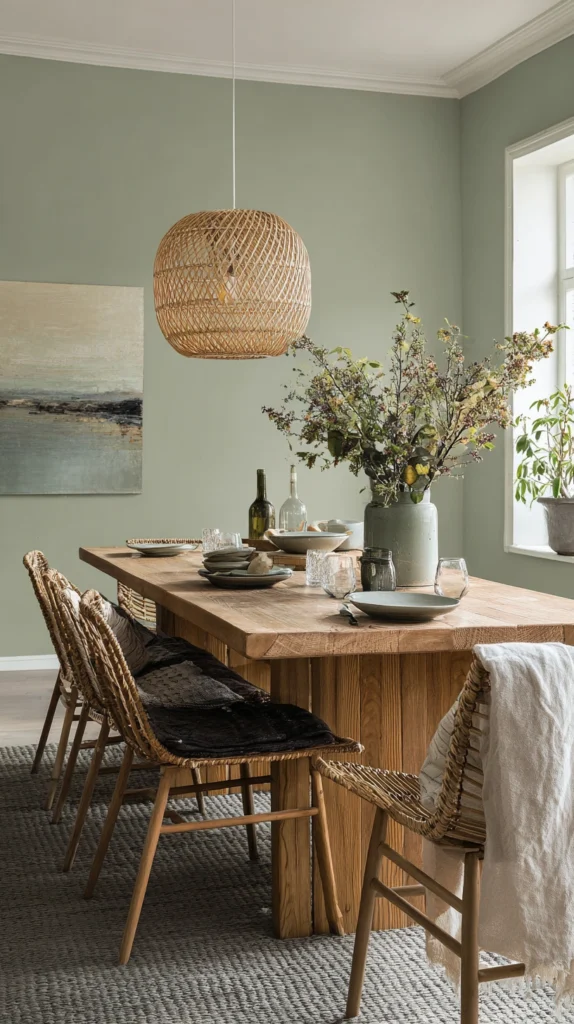
Muted sage green creates a serene, nature-inspired environment that feels both fresh and spacious. This earthy shade has a receding quality similar to blue while bringing organic warmth to your dining area.
Soft greens pair beautifully with natural wood tables, rattan chairs, and botanical artwork, creating a cohesive look that feels grounded yet airy. The key is keeping the shade light and muted—avoid bright or saturated greens that can overwhelm a small space.
8. Pale Butter Yellow: Sunshine in a Can
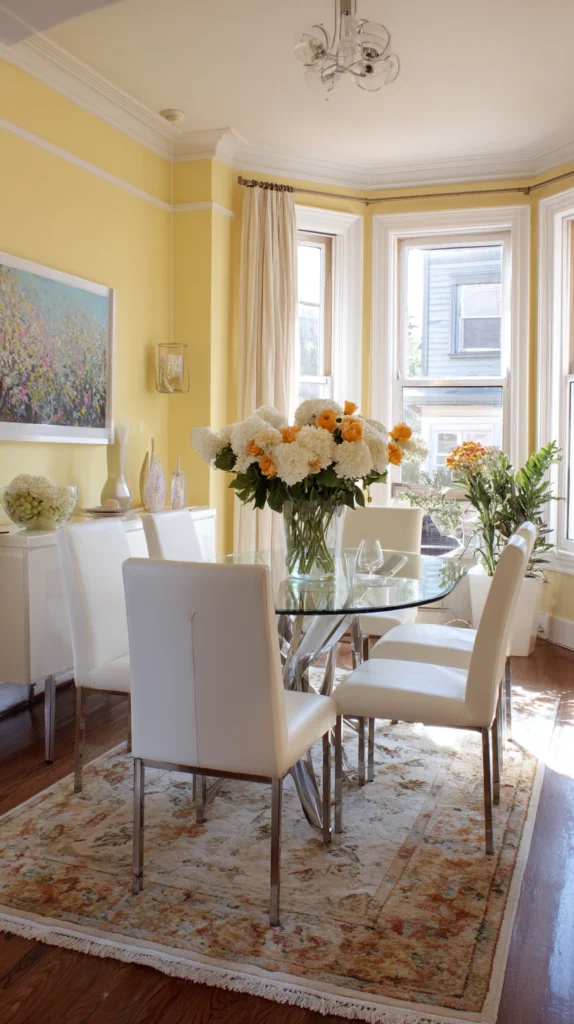
Light yellow can transform a dark or windowless dining room by introducing warmth and brightness. Yellow’s highly reflective nature bounces light around the space, creating the illusion of sunshine even on overcast days.
However, restraint is crucial—opt for pale, buttery yellows rather than bright or saturated shades. The right yellow creates a cheerful, welcoming environment that makes every meal feel like a special occasion while visually expanding your space.
9. Monochromatic Scheme: Seamless Continuity
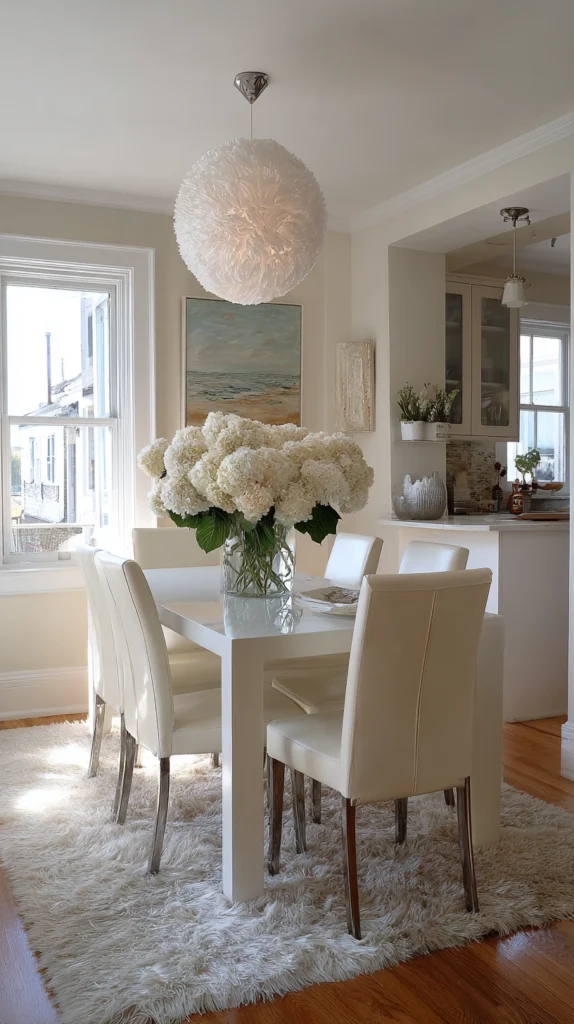
One of the most effective tricks for making small dining rooms feel larger is painting everything—walls, trim, doors, and ceiling—in the same color. This monochromatic approach eliminates visual breaks that fragment space and make rooms feel choppy.
When your eye can travel uninterrupted from floor to ceiling, the room appears more cohesive and expansive. This technique works with any light color and creates a sophisticated, designer-quality look that elevates your entire space.
10. Deep Navy or Charcoal: The Bold Paradox
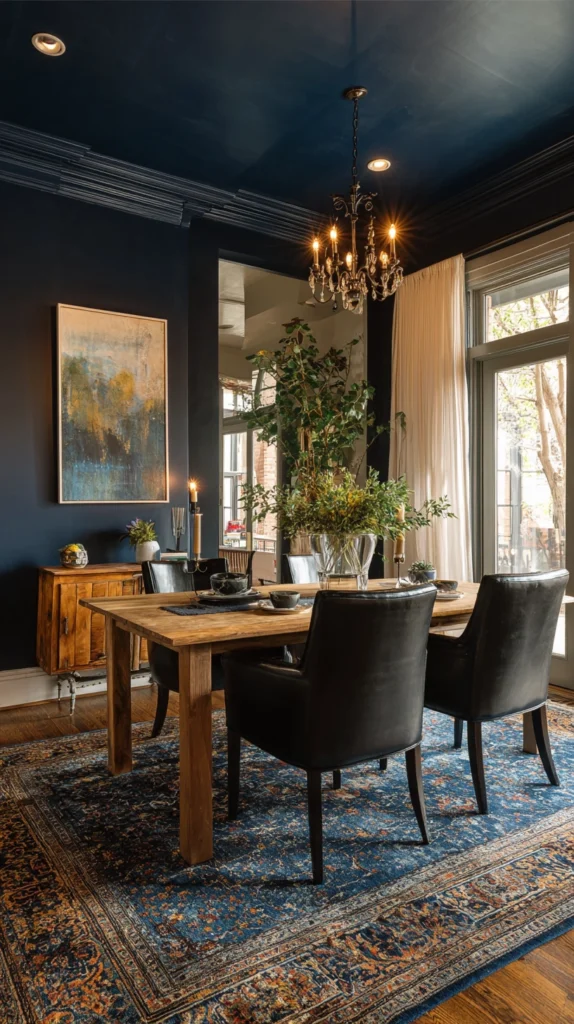
Here’s where things get interesting—dark colors can actually make small dining rooms feel larger. While this seems counterintuitive, deep shades like navy, charcoal, or forest green create visual depth by making walls recede into shadow.
The room’s corners and edges become less defined, making it difficult for the eye to determine exact dimensions. This creates a cocoon-like effect that feels intimate yet surprisingly spacious. The key is committing fully—paint walls and ceiling in the same dark shade and ensure you have excellent lighting to prevent the space from feeling cave-like.
11. Gradient Effect: Floor to Ceiling Flow
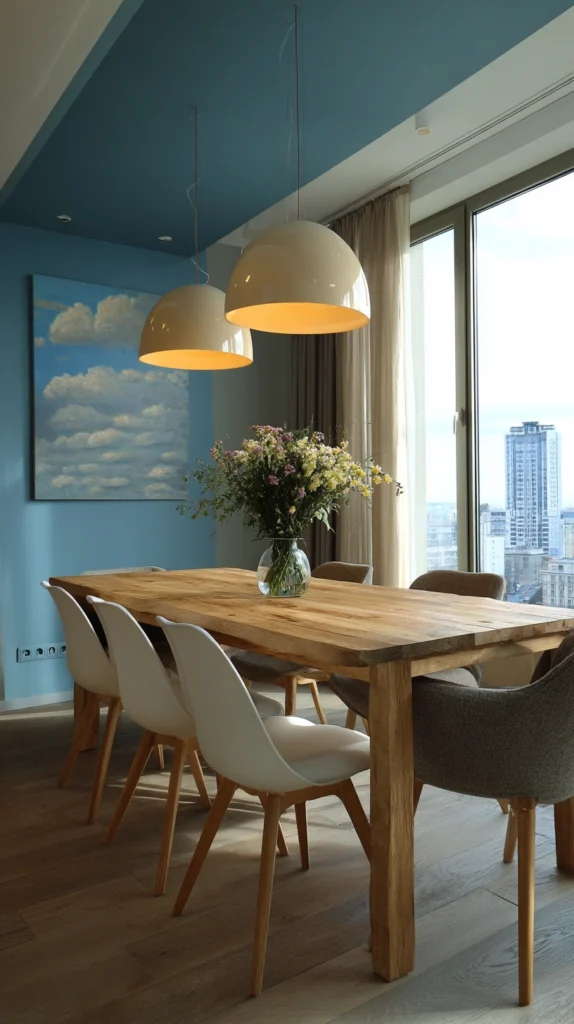
Creating a gradient from darker at the floor to lighter at the ceiling draws the eye upward and creates the perception of height. This ombre technique might involve painting wainscoting or lower walls in a medium tone, transitioning to pale or white on upper walls and ceiling.
The gradual shift creates visual movement that makes ceilings seem taller while adding sophisticated dimension. This approach works particularly well in dining rooms with chair rails or existing architectural details.
12. Glossy or Semi-Gloss Finish: Light Multiplication
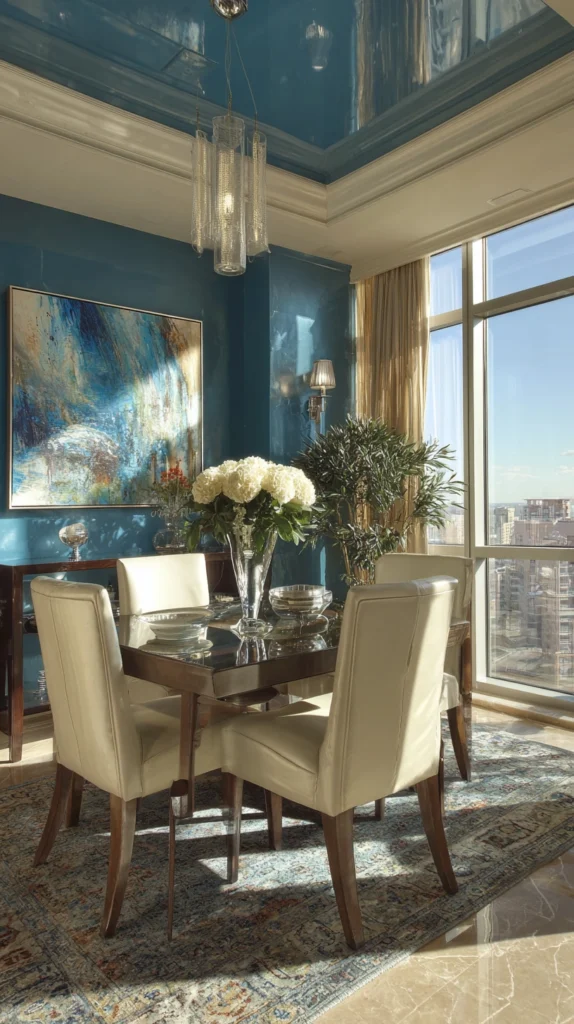
Don’t overlook the importance of paint finish in expanding your space. Higher sheen levels reflect more light, effectively multiplying the brightness in your dining room. Consider semi-gloss or even high-gloss finishes, particularly on trim, molding, and doors.
The reflective quality bounces light around the room, creating sparkle and dimension. While you might keep walls in eggshell or satin, using glossier finishes strategically can significantly enhance the space-expanding effect.
13. Feature Wall in Receding Color
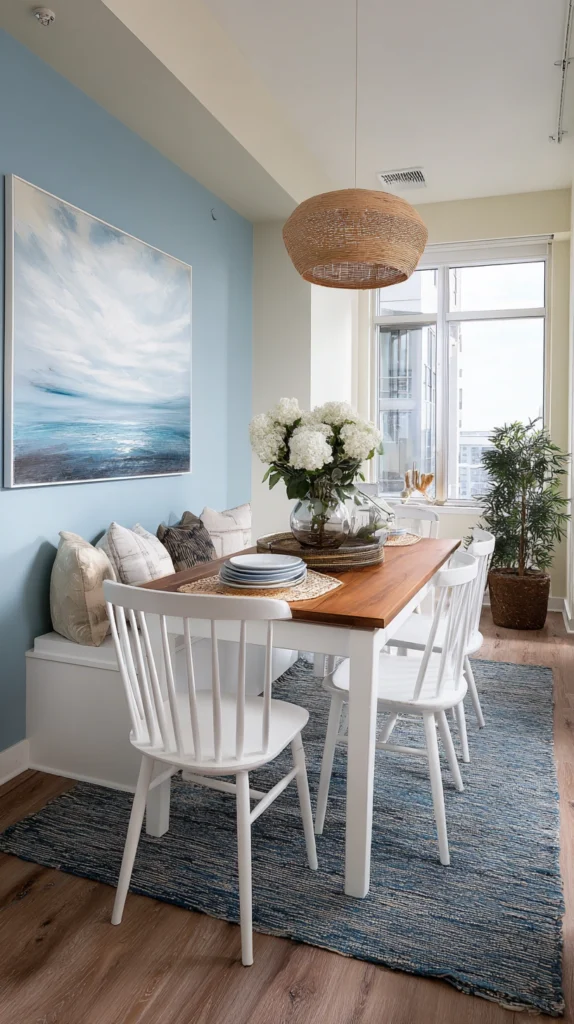
An accent wall doesn’t have to shrink your space if done strategically. Paint the wall farthest from the dining room entrance in a slightly deeper or bolder shade while keeping other walls light. This creates a focal point and visual depth without closing in the space. The key is choosing colors that recede—blues, greens, or soft purples—rather than advancing colors like red or orange. This technique adds dimension and interest while maintaining that crucial sense of openness.
14. Painted Ceiling: The Fifth Wall
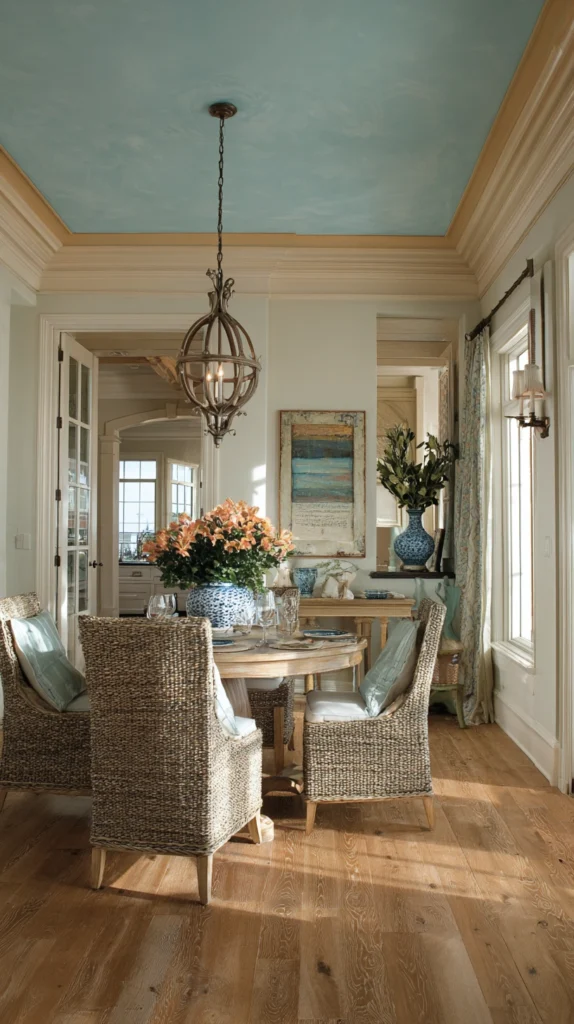
Your ceiling deserves as much attention as your walls when planning your paint strategy. A light-colored ceiling—whether pale blue, soft gray, or the same shade as your walls—creates the illusion of height and openness.
Alternatively, painting the ceiling a shade or two darker than walls can add a cozy dimension without shrinking the space. In rooms with good lighting, even a deep navy or charcoal ceiling can create a stunning night-sky effect that paradoxically makes the space feel more expansive.
15. Color Drenching: Total Immersion
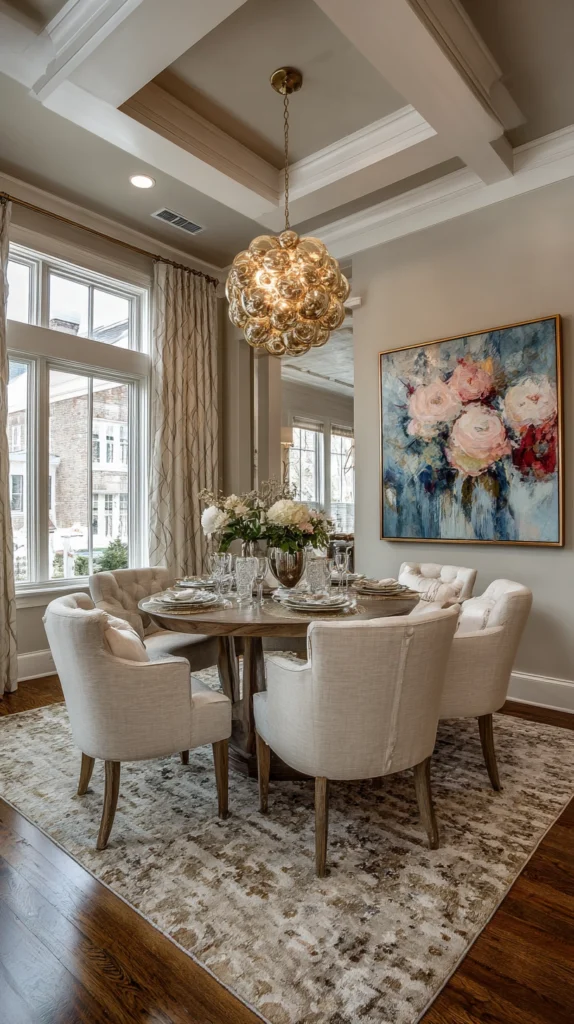
This trendy technique involves painting absolutely everything in the same color—walls, ceiling, trim, doors, and sometimes even floors or furniture. This creates ultimate continuity with zero visual interruptions.
In a light color, color drenching produces a serene, cloud-like environment that maximizes spaciousness. In a darker shade, it creates that boundary-blurring effect where you can’t tell where walls end and ceiling begins, making the room feel mysteriously larger. This bold approach requires commitment but delivers stunning results.
Making Your Paint Choice Work Harder
Beyond selecting the perfect color, consider these additional strategies to ensure your small dining room reaches its full potential:
Sample Extensively: Never choose paint based on tiny chips alone. Buy sample pots and paint large swatches on multiple walls. Observe how the color looks in morning light, afternoon sun, and evening artificial light. Colors can appear dramatically different depending on lighting conditions and time of day.
Consider Your Home’s Flow: If your dining room opens directly into adjacent spaces, consider how your paint choice relates to neighboring rooms. Maintaining a cohesive color palette throughout connecting spaces creates visual continuity that makes your entire home feel more spacious.
Account for Natural Light: The amount and quality of natural light dramatically affects how paint colors appear. South-facing rooms with abundant sunlight can handle cooler tones, while north-facing rooms benefit from warmer shades. East-facing dining rooms look beautiful in soft, morning-appropriate colors, while west-facing rooms can embrace sunset-inspired hues.
Match Your Lighting Plan: Artificial lighting significantly impacts paint color. Warm-toned LED bulbs enhance warm paint colors but can make cool colors look muddy. Cool-white bulbs complement blues and grays beautifully. Plan your lighting scheme alongside your paint selection to ensure they work harmoniously.
Prep Properly: The best paint color in the world won’t look good on poorly prepared walls. Fill holes, sand rough patches, and prime properly to ensure a smooth, professional finish that reflects light evenly.
The Psychology of Color in Dining Spaces
Remember that paint color affects mood as well as spatial perception. Your dining room serves as a gathering place for meals, conversations, and celebrations, so choose colors that create the atmosphere you want. Blues and greens promote calm and relaxation. Warm neutrals create coziness and comfort. Soft yellows generate cheerfulness and energy. Consider not just how the color affects space perception but also how it influences the dining experience itself.
Bringing It All Together
Making a small dining room feel larger through paint is both an art and a science. Understanding how colors interact with light, how finishes affect reflection, and how the eye perceives space allows you to make informed decisions that transform your dining area.
Whether you choose the classic safety of crisp white, the sophistication of soft gray, the unexpected charm of pale lavender, or the bold drama of deep navy, the right paint color can completely reimagine your dining room’s proportions.
The beauty of paint is its accessibility—it’s one of the most affordable and impactful changes you can make to any space. If you don’t love your first choice, you can always repaint. Don’t be afraid to experiment and trust your instincts. Your small dining room has tremendous potential waiting to be unlocked with just a few coats of the perfect color.
With thoughtful paint selection, proper application, and attention to lighting and finish, your compact dining room can become a space that feels open, inviting, and perfectly suited for creating memories around the table. The right color sets the stage for countless meals, conversations, and celebrations in a room that feels anything but small.