15 Scandinavian Bedroom Ideas That Feel Warm, Not Cold
Scandinavian design has captivated the interior design world for decades, celebrated for its clean lines, functional simplicity, and ethereal aesthetic. However, a common misconception persists—that Nordic-inspired spaces inevitably feel cold, sterile, or uninviting.
This couldn’t be further from the truth. Authentic Scandinavian design prioritizes hygge, the Danish concept of coziness and contentment, creating spaces that embrace warmth, comfort, and livability alongside minimalist principles.

The secret to warm Scandinavian bedrooms lies in understanding that minimalism doesn’t mean emptiness, and simplicity doesn’t require sacrificing comfort. Nordic countries experience long, dark winters, making their homes sanctuaries of warmth and light.
Scandinavian interiors reflect this need through thoughtful layering, natural materials, soft textiles, and strategic lighting that transforms potentially stark spaces into welcoming retreats. These fifteen ideas demonstrate how to capture the essence of Scandinavian design while creating a bedroom that feels genuinely inviting, personally meaningful, and wonderfully cozy.
1. Embrace Natural Wood in Warm Tones
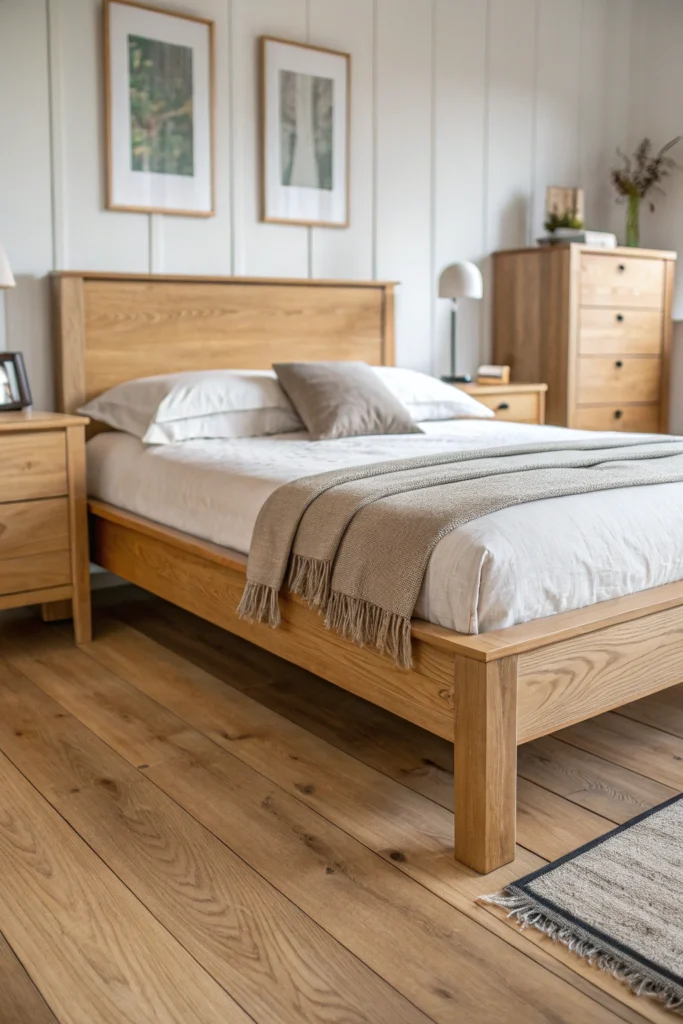
Scandinavian design celebrates wood in its most beautiful, natural forms. Rather than painted or heavily treated finishes, incorporate wood furniture and architectural elements in warm honey, amber, and blonde tones.
Light oak, birch, beech, and ash bring organic warmth that immediately counteracts any potential coldness in minimalist spaces. These woods possess inherent golden undertones that radiate warmth, especially when natural light plays across their grain.
Consider a substantial wooden bed frame with visible grain patterns, floating shelves in light oak, or a beautiful wooden bench at the foot of your bed. Hardwood flooring in natural finishes establishes foundational warmth that anchors the entire room.
The key lies in celebrating wood’s natural character—knots, grain variations, and organic imperfections add personality and authenticity. Avoid overly uniform or processed-looking wood pieces. Instead, seek furniture where the material’s natural beauty takes center stage, bringing the comforting essence of nature directly into your sleeping space.
2. Layer Multiple Textures Through Textiles
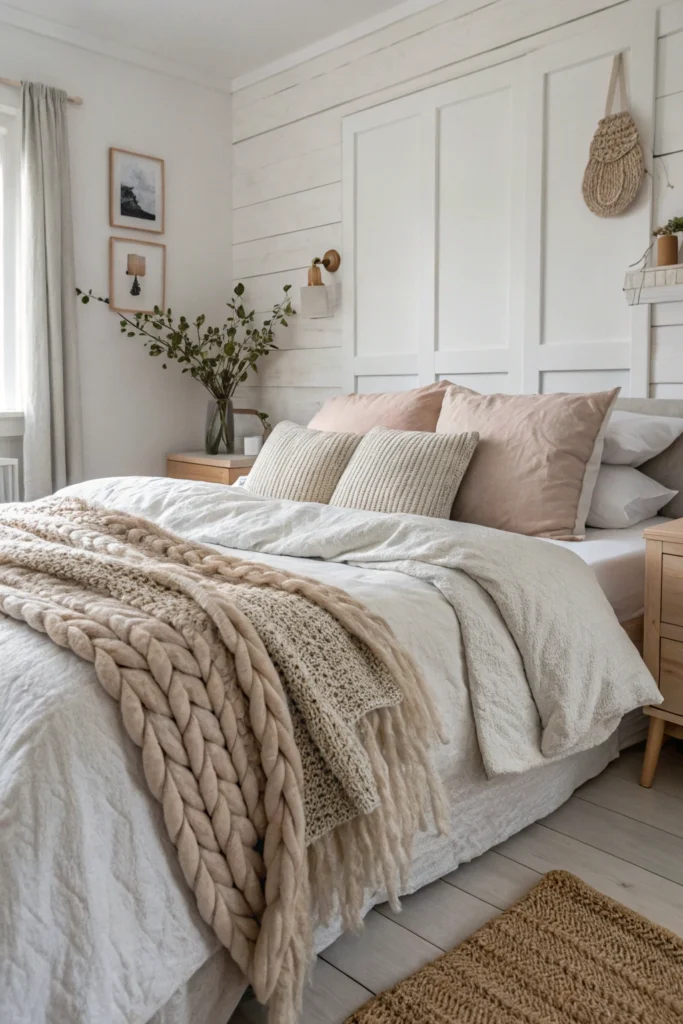
Textile layering transforms Scandinavian bedrooms from minimalist to magnificently cozy. Start with your bed as the focal point for textile abundance—crisp linen sheets, a chunky knit blanket, a lightweight duvet, a textured bedspread, and an assortment of pillows in varied fabrics create inviting depth. Mix materials freely—smooth cotton with nubby wool, soft velvet with crisp linen, fluffy sheepskin with woven throws.
Extend this layering beyond the bed. Place a substantial wool or jute rug beside the bed where your feet land each morning. Drape a knitted throw over a reading chair. Add linen curtains that pool slightly on the floor. Include cushions in different weaves and weights.
This abundance of soft, touchable materials invites physical comfort while absorbing light and sound, creating intimate, cocooning atmospheres. The beauty of Scandinavian textile layering lies in maintaining a cohesive, restrained color palette while varying textures extensively, proving that visual simplicity and sensory richness coexist beautifully.
3. Incorporate Sheepskin and Faux Fur Accents
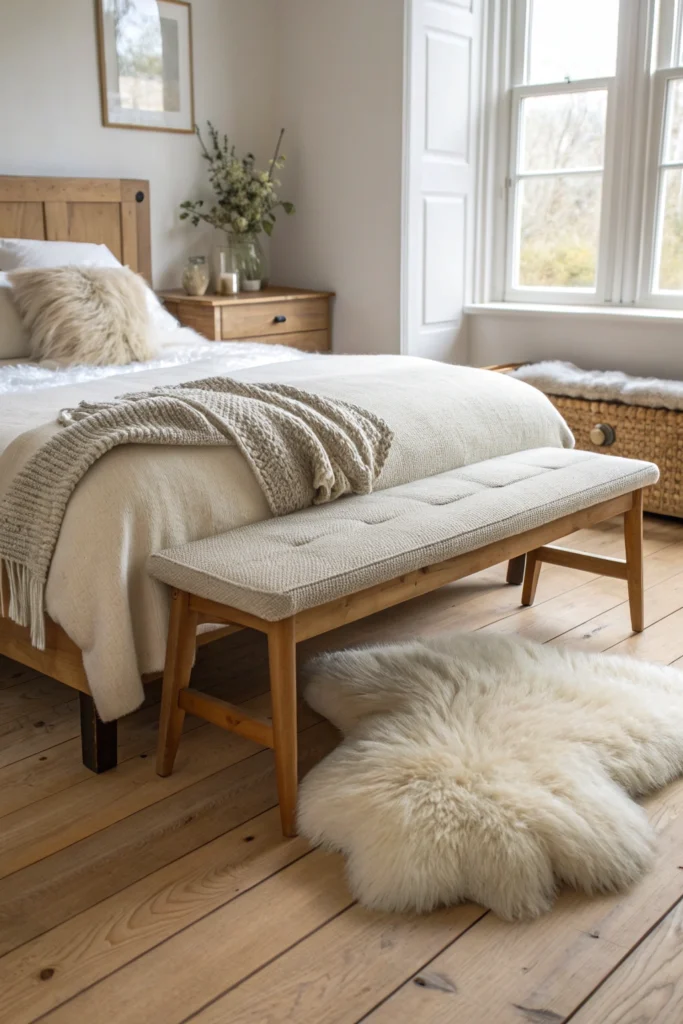
Nothing says Scandinavian warmth quite like sheepskin rugs and throws. These incredibly soft, tactile elements instantly elevate comfort levels while adding organic texture that prevents spaces from feeling too clean or untouchable.
Drape a genuine sheepskin over the foot of your bed, layer one across a bench, or place sheepskin rugs on either side of the bed as luxurious landing pads.
For those preferring cruelty-free options, high-quality faux fur provides similar visual and textural warmth. The key lies in choosing pieces with natural, organic appearances rather than overly perfect or synthetic-looking options. White and cream sheepskins work beautifully in traditional Scandinavian palettes, while taupe, grey, or even subtle blush tones add contemporary warmth.
These elements connect to Nordic traditions where animal hides provided essential warmth and comfort, bringing historical authenticity alongside undeniable coziness. The contrast between sleek, minimal furniture and soft, organic sheepskin creates the perfect Scandinavian balance.
4. Create Warm Lighting Layers
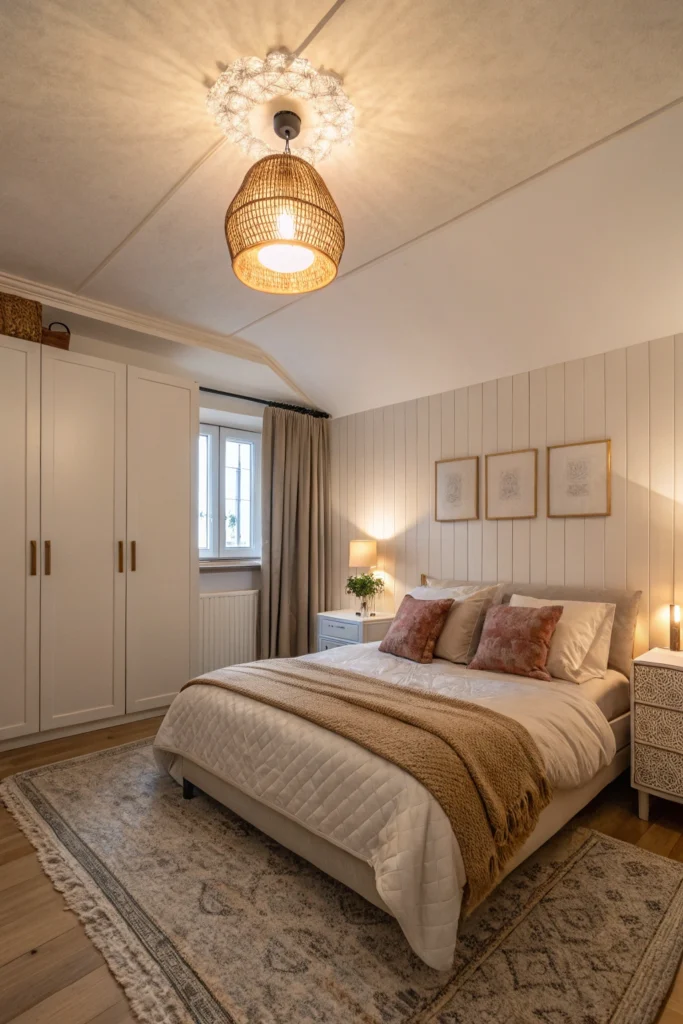
Lighting makes or breaks Scandinavian bedroom warmth. Harsh overhead fixtures create the clinical coldness people fear, while thoughtfully layered lighting establishes inviting ambiance.
Install dimmable overhead lights for practical illumination, then supplement with multiple softer sources—bedside table lamps with warm LED bulbs, wall sconces flanking the bed, string lights draped subtly along shelving, and candles clustered on surfaces.
Choose light fixtures in natural materials—wooden pendants, linen drum shades, ceramic table lamps, or sculptural paper lanterns. The fixtures themselves become warm design elements rather than purely functional necessities. Consider color temperature carefully—warm white bulbs around 2700K to 3000K create the cozy glow that transforms spaces in the evening. Scandinavians master the art of atmospheric lighting, understanding that homes should glow rather than glare.
Install lighting on multiple switches or circuits, allowing you to activate different combinations based on time of day and desired mood, ensuring your bedroom always feels welcoming.
5. Introduce a Warm, Neutral Color Foundation
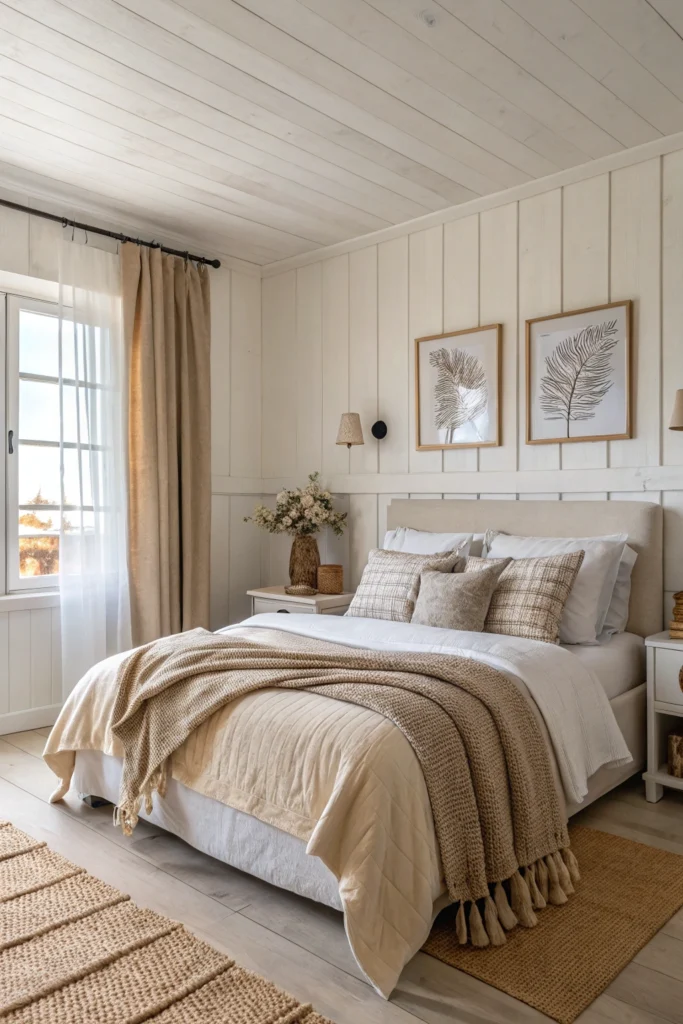
While Scandinavian design famously embraces white, the warmest interpretations incorporate creamy whites, soft beiges, warm grays, and gentle taupes rather than stark, cool whites. These warmer neutrals provide the clean, airy foundation Scandinavian design requires while eliminating the sterile quality that cooler whites can create.
Paint walls in shades like Swiss coffee, natural linen, warm white, or greige—colors that shift subtly throughout the day as natural light changes.
Build your color scheme in layers within this warm neutral foundation. Consider an off-white ceiling, slightly warmer walls, and natural wood flooring creating gentle tonal progression. Add bedding in layered neutrals—perhaps stone-colored linen sheets, a cream duvet, a taupe throw, and pillows mixing whites, beiges, and soft grays.
This monochromatic approach maintains Scandinavian simplicity while the warm undertones prevent coldness. The room feels cohesive and calm without appearing clinical or impersonal, proving that restraint in color doesn’t require sacrificing warmth.
6. Display Meaningful Personal Objects Thoughtfully
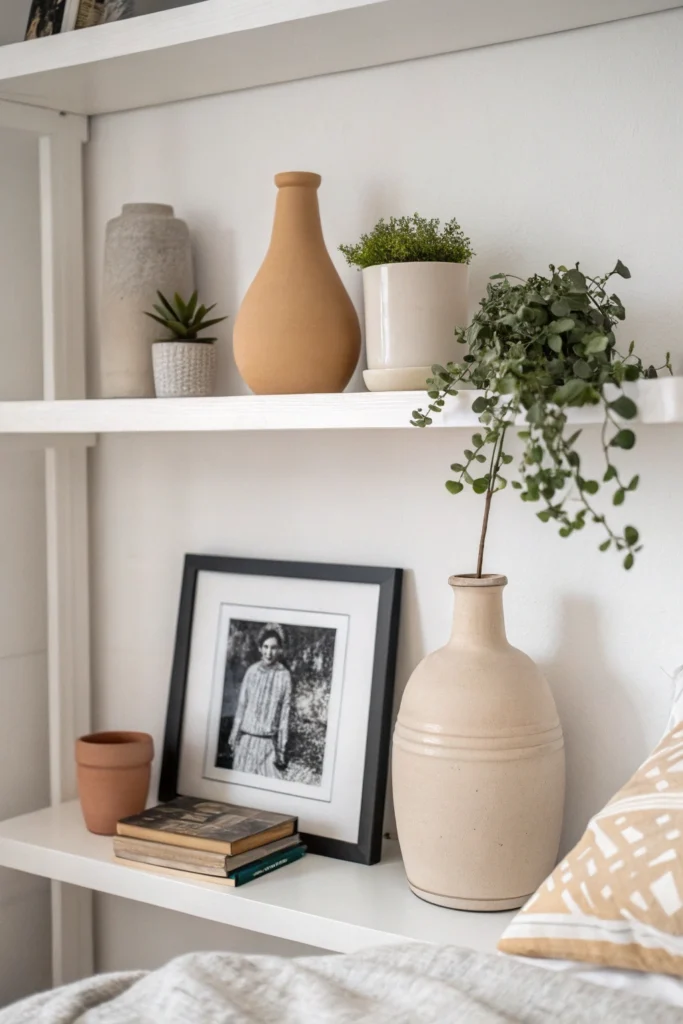
Scandinavian minimalism doesn’t mean eliminating personal belongings—it means curating them intentionally. Display objects that genuinely matter to you, editing ruthlessly to showcase only pieces bringing joy or meaning. Arrange a small collection of ceramics on a shelf, display a cherished photograph in a simple frame, or showcase a beautiful vase with fresh or dried branches.
The key lies in thoughtful editing and deliberate placement rather than cluttered accumulation. Choose display objects in natural materials—wooden bowls, ceramic vessels, woven baskets, or stone objects. These organic elements add warmth while maintaining the clean aesthetic Scandinavian design requires. Group objects in odd numbers, varying heights and proportions for visual interest.
Leave generous empty space around displayed items, allowing each piece to breathe and be genuinely appreciated. This approach creates personalized spaces that feel lived-in and loved while maintaining the serene, uncluttered quality essential to Scandinavian interiors.
7. Add Warmth Through Organic, Rounded Shapes
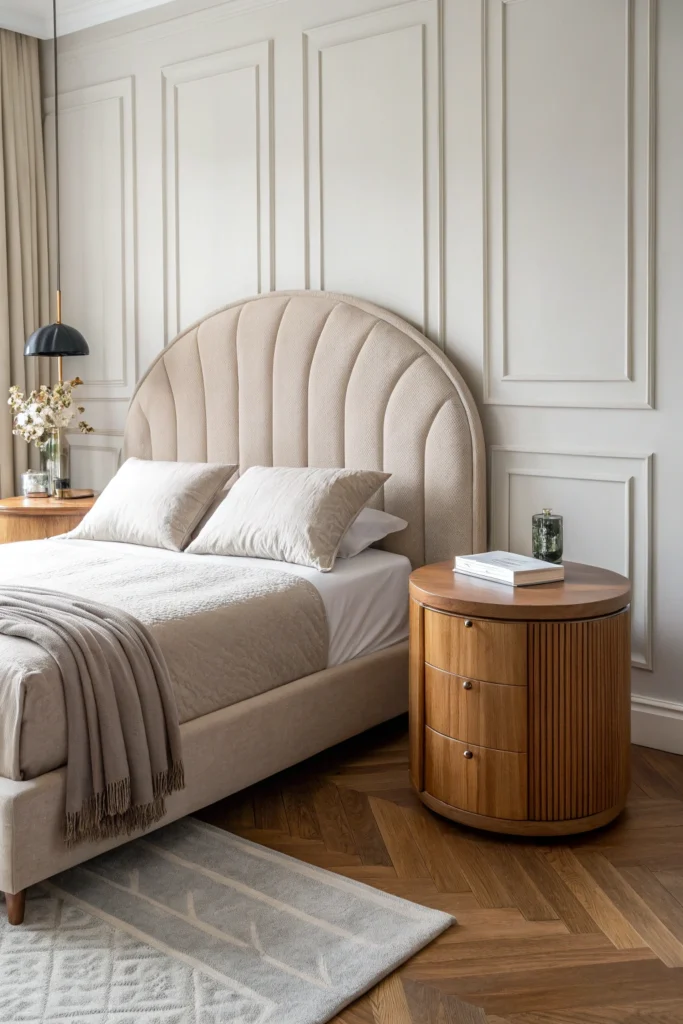
Incorporate furniture and objects with soft, rounded edges rather than exclusively angular pieces. Curved headboards, round bedside tables, oval mirrors, and organic sculptural objects introduce gentle, welcoming shapes that feel embracing rather than harsh. This subtle shift from purely geometric forms to more organic silhouettes dramatically impacts a room’s emotional temperature.
Consider an upholstered headboard with gentle curves, a round ottoman at the foot of your bed, or spherical pendant lights. These rounded elements feel inherently softer and more approachable than sharp-cornered alternatives. The organic quality connects to nature, reinforcing Scandinavian design’s deep relationship with the natural world.
Mix rounded and angular elements for balance—perhaps a curved headboard against straight-lined walls, or round bedside tables flanking a rectangular bed. This interplay creates visual interest while maintaining the clean simplicity Scandinavian style requires, proving that warmth and minimalism enhance rather than contradict each other.
8. Incorporate Living Plants and Natural Elements
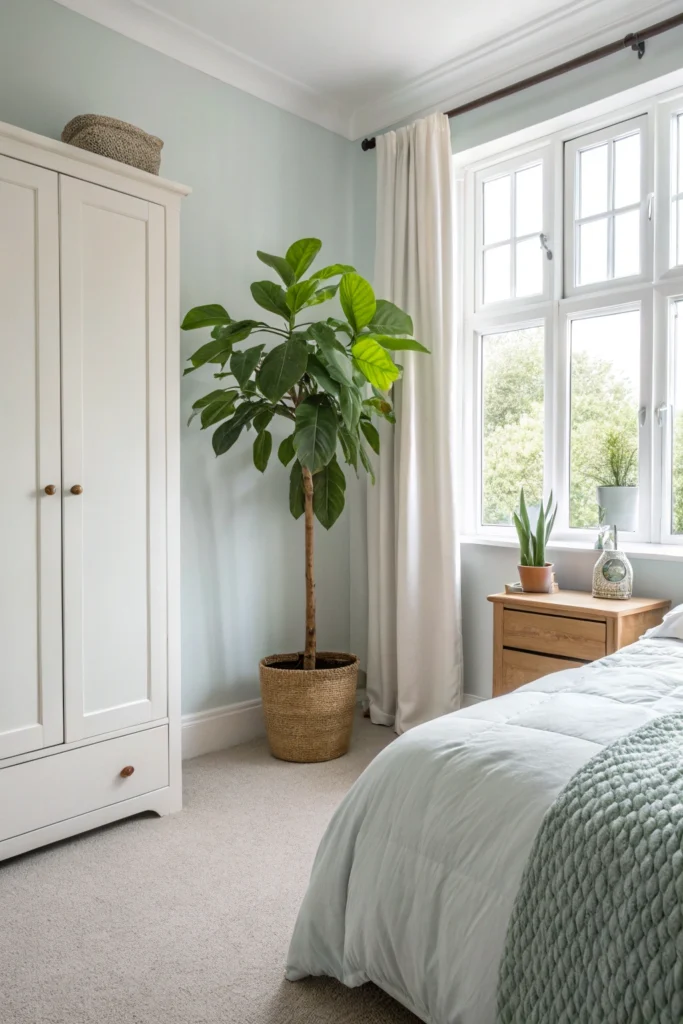
Bringing nature indoors stands central to Scandinavian living. Plants add life, color, and organic warmth that no amount of furniture can replicate. Choose easy-care varieties suited to bedroom conditions—snake plants, pothos, peace lilies, or monstera deliciosa. Place substantial plants in corners, cluster smaller plants on shelves, or hang trailing varieties near windows.
Extend this natural connection beyond living plants. Display branches in tall vases—pussy willow, birch, or eucalyptus bring sculptural beauty and subtle fragrance. Incorporate natural elements like stones, driftwood, or pine cones in simple arrangements.
Use wooden trays, woven baskets, or ceramic planters in earthy tones. These organic elements create visual and emotional warmth while purifying air and connecting your bedroom to the natural world. The presence of living, growing things makes spaces feel nurturing and alive, fundamentally opposed to the sterile coldness people sometimes associate with minimalism.
9. Install Cozy Window Treatments
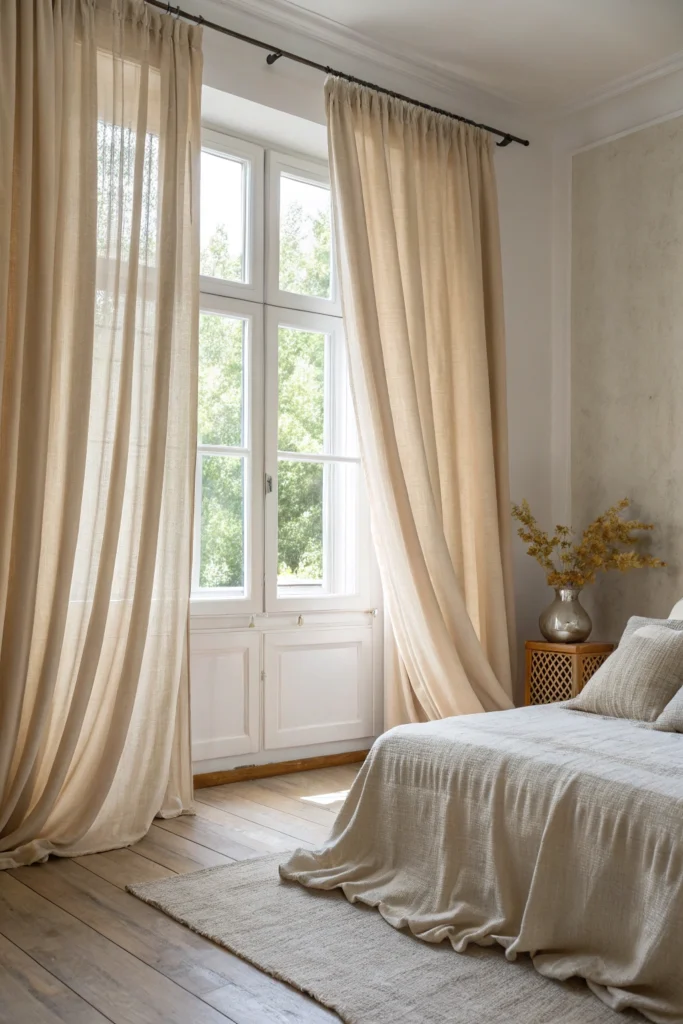
Windows deserve special attention in Scandinavian bedrooms. While maximizing natural light remains important, appropriate window treatments add essential warmth and privacy. Choose linen curtains in natural, undyed tones that diffuse light beautifully while maintaining airiness. Floor-length curtains that puddle slightly create luxurious, welcoming impressions, especially when hung from ceiling height to elongate walls visually.
Layer window treatments for flexibility—sheer linen panels for daytime privacy that still welcome light, combined with heavier linen or cotton curtains for complete darkness and insulation during sleep. Avoid overly structured or formal treatments; instead, embrace the casual, lived-in quality of natural fabrics that drape organically. Wooden curtain rods in light finishes reinforce the natural material palette.
During darker months, drawn curtains in warm fabrics make rooms feel cocooned and protected, while open curtains maximize precious natural light, demonstrating the practical flexibility that defines Scandinavian design.
10. Create a Reading Nook for Hygge Moments
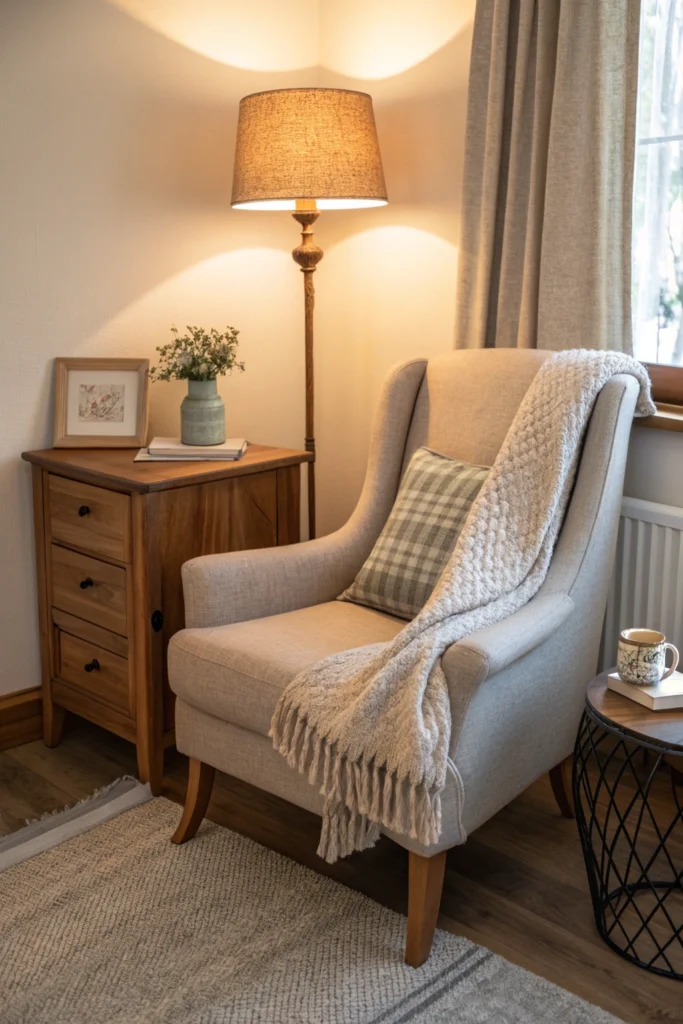
Dedicate a corner of your bedroom to a cozy reading nook embodying hygge principles. Position a comfortable chair near a window, add a small side table for tea or books, include a warm throw and cushions, and ensure adequate lighting through a beautiful floor or table lamp. This dedicated comfort zone transforms your bedroom from purely functional sleeping space into a nurturing personal retreat.
Choose a chair with generous proportions—perhaps a classic mid-century modern armchair, a cushioned papasan, or an upholstered wingback in natural linen. The reading nook becomes a layering opportunity—pile the chair with soft cushions and throw in complementary neutrals, creating an irresistibly inviting spot.
Add a small wool rug beneath the chair defining the zone. Include a basket for books and magazines. This intentional comfort area demonstrates that Scandinavian design prioritizes livability and daily pleasure, not just visual aesthetics, creating spaces that genuinely enhance quality of life.
11. Use Warm Metallics Sparingly
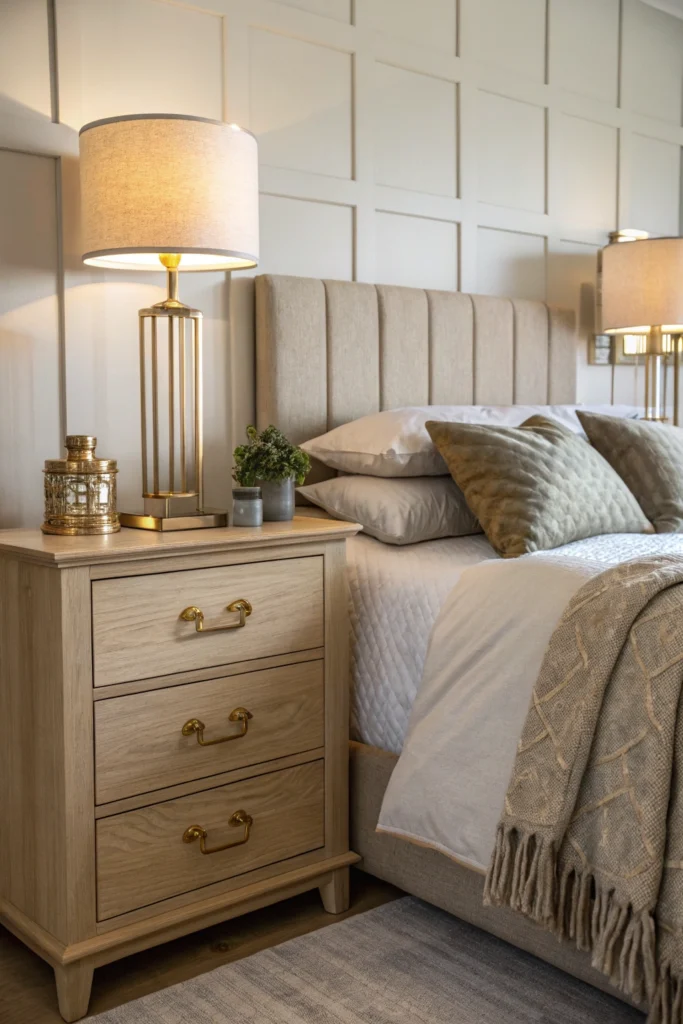
While Scandinavian design often features metals, choosing warm metallics over cool ones significantly impacts overall warmth. Brass, copper, bronze, and warm gold finishes add richness and subtle luxury that complements natural materials beautifully. Incorporate these finishes through light fixtures, drawer pulls, mirror frames, or decorative objects.
The key lies in restraint—a few well-placed metallic elements create sophisticated accents without overwhelming the natural, organic foundation. Perhaps brass bedside lamps, copper plant pots, or a round mirror with a thin gold frame. These warm metals catch and reflect light, adding a gentle shimmer that makes spaces feel alive and dynamic.
Avoid mixing too many metal finishes; instead, commit to one or two warm metallic tones used consistently throughout the space. This creates cohesion while the warm undertones of brass and copper reinforce the inviting atmosphere you’re cultivating.
12. Incorporate Handcrafted and Artisanal Pieces
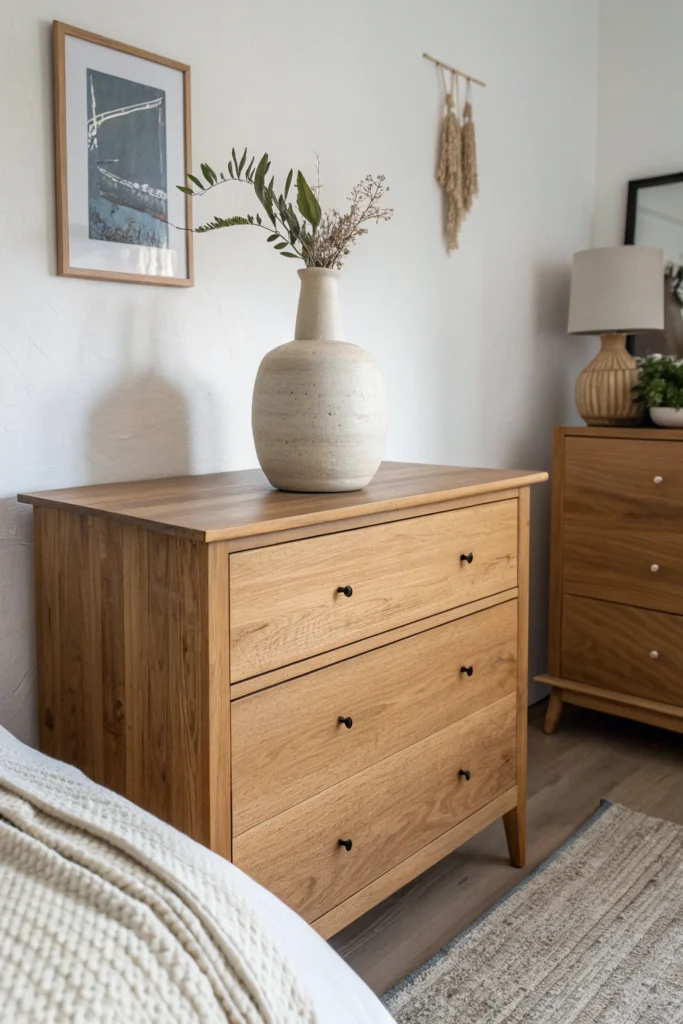
Scandinavian design deeply values craftsmanship and quality construction. Incorporate handmade ceramics, woven wall hangings, hand-thrown pottery, or artisan-crafted furniture that showcase human touch and skill. These pieces bring warmth through their inherent imperfections, variations, and the connection to the makers’ hands and intentions.
A hand-thrown ceramic vase displays subtle irregularities that mass-produced alternatives lack. A woven wall hanging adds texture and artistry while supporting traditional crafts. A hand-carved wooden bowl brings organic beauty to your dresser.
These artisanal elements tell stories and create emotional connections that transform houses into homes. Seek pieces from local craftspeople when possible, building personal connections to the objects surrounding you. This emphasis on quality over quantity, craftsmanship over mass production, and meaningful objects over disposable décor defines the warmth inherent in authentic Scandinavian living.
13. Design with Low-Profile, Grounded Furniture
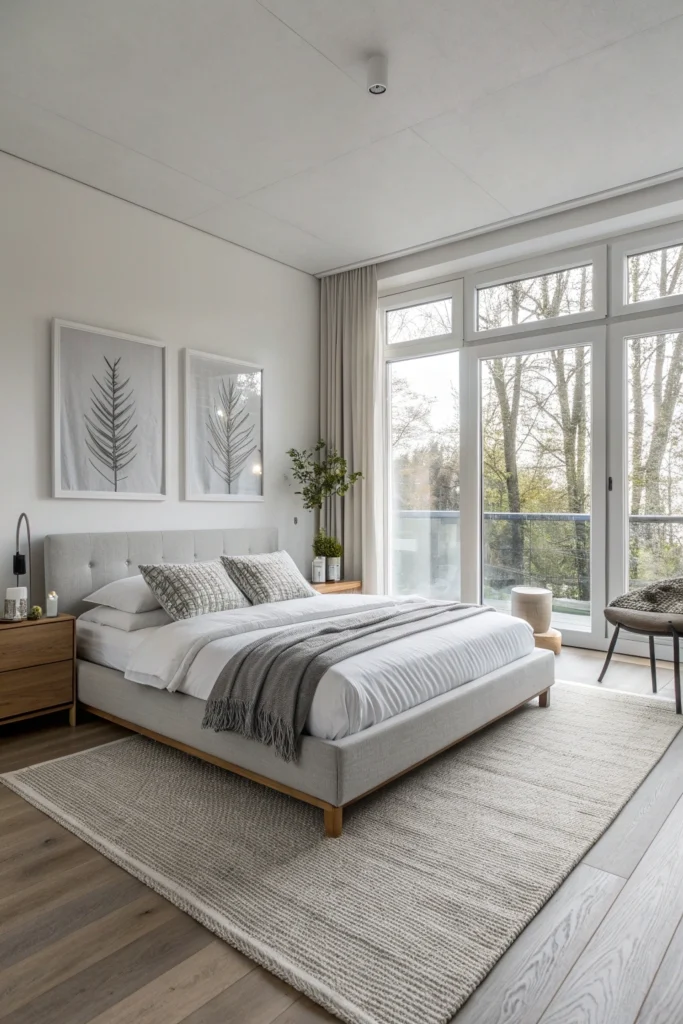
Scandinavian bedrooms often feature low-profile furniture that creates grounded, secure feelings rather than floating or elevated sensations.
Platform beds without tall footboards, low dressers, and floor-level seating establish visual calm while making rooms feel spacious and airy. This low furniture orientation connects to Japanese influence on Scandinavian design, emphasizing the meditative quality of simplified forms.
Low furniture allows architectural elements like windows and vertical wall space to breathe, preventing visual clutter even in smaller bedrooms. Choose a platform bed with integrated storage, low bedside tables that don’t interrupt sightlines, and perhaps a low bench for seating. This furniture arrangement creates horizontal emphasis that feels restful and stable.
The abundance of visible wall space above low furniture provides opportunities for art, textiles, or simply beautiful emptiness, maintaining the serene quality central to Scandinavian interiors while the substantial, grounded furniture provides comforting solidity.
14. Add Warmth Through Natural Fiber Rugs
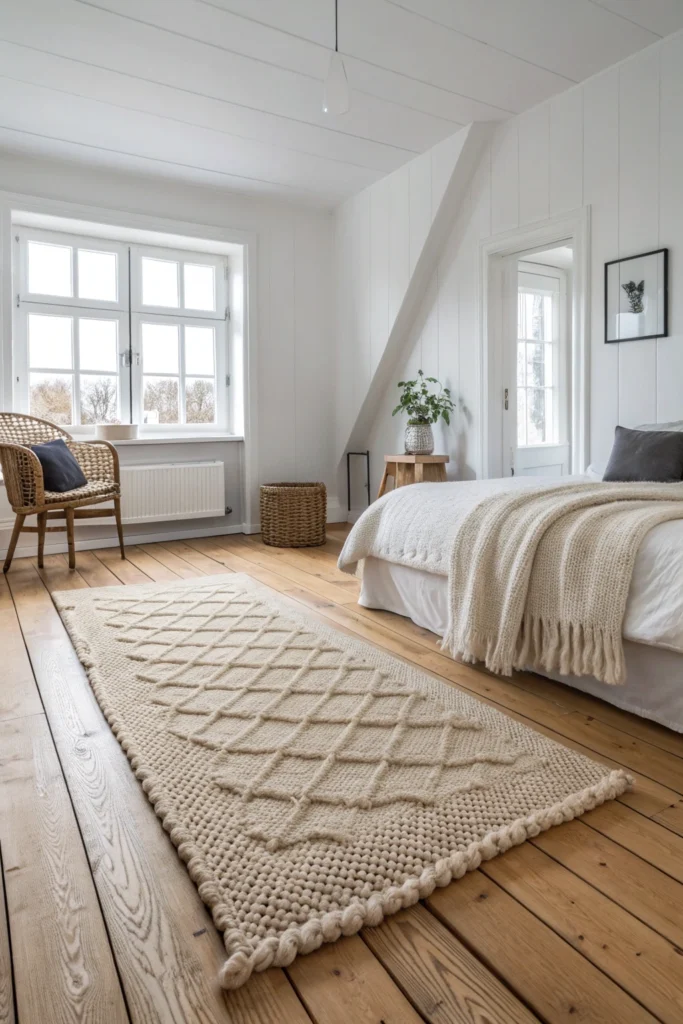
Flooring significantly impacts perceived warmth. Even with beautiful hardwood, substantial natural fiber rugs add essential texture and comfort. Jute, sisal, wool, and seagrass rugs in warm tones create organic foundations that feel wonderful underfoot while visually warming spaces. Layer rugs for additional coziness—perhaps a large jute rug anchoring the room with a softer sheepskin or wool rug layered on top beside the bed.
Natural fiber rugs provide textural interest without busy patterns that might conflict with Scandinavian simplicity. Their organic, slightly irregular textures add character and warmth while maintaining neutral color palettes. Wool rugs offer particular luxury—naturally soft, insulating, and available in beautiful natural tones from cream to charcoal.
Ensure rugs extend well beyond furniture footprints, creating generous borders that make spaces feel intentionally designed rather than minimally furnished. The substantial presence of quality natural rugs transforms cold hardwood into warm, welcoming flooring.
15. Embrace Imperfect, Wabi-Sabi Elements
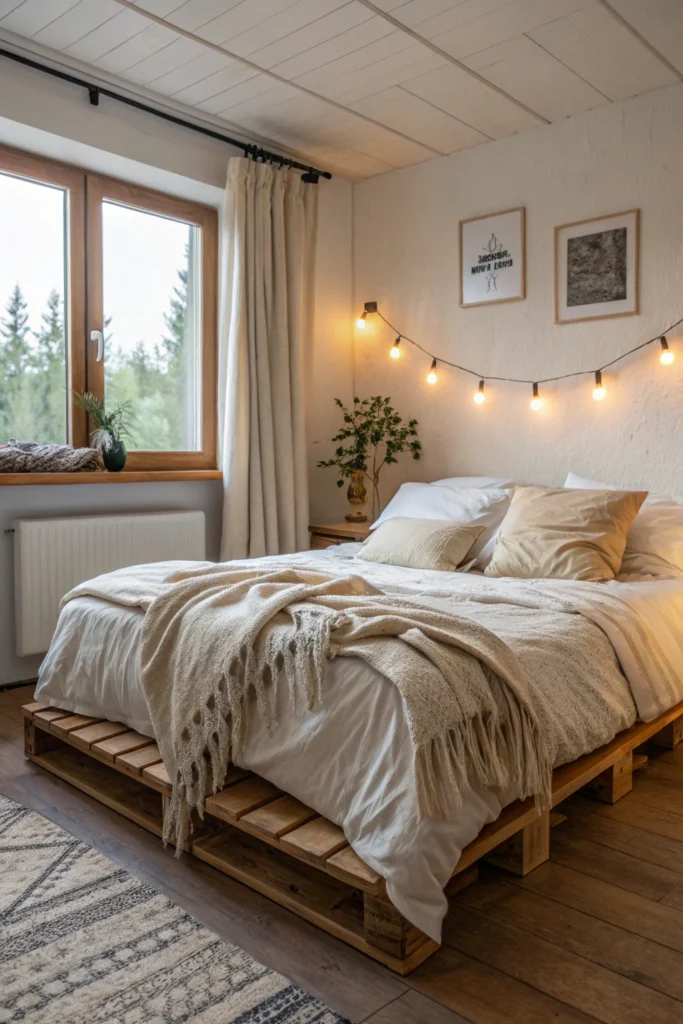
Perfect minimalism can feel cold and untouchable. Introducing wabi-sabi—the Japanese philosophy celebrating imperfection and impermanence—adds approachable warmth to Scandinavian bedrooms.
Choose furniture with visible wood grain and natural variations, display ceramics with irregular glazing, incorporate vintage pieces with gentle wear, and embrace the beautiful imperfection of handmade textiles with slight irregularities.
This philosophy transforms spaces from museum-like perfection to lived-in comfort. A linen duvet with natural wrinkles appears more inviting than crisply pressed alternatives. A wooden stool with visible grain patterns and minor variations feels more authentic than uniform pieces. Vintage nightstands with gentle patina tell stories that new furniture cannot.
This embrace of natural aging, organic variation, and honest materials creates the warmth that makes Scandinavian bedrooms feel genuinely welcoming rather than simply aesthetically pleasing, proving that the most beautiful spaces honor real life in all its imperfect, comfortable glory.