15 Rustic Patio Ideas for a Warm Outdoor Living Space
A rustic patio is one of those outdoor spaces that feels genuinely welcoming rather than simply well-designed. The combination of natural materials, weathered textures, warm lighting, and the kind of comfortable, unpretentious furnishing that invites people to sit down and stay for hours creates an outdoor living space with real character and genuine warmth that polished, contemporary patio designs sometimes lack.
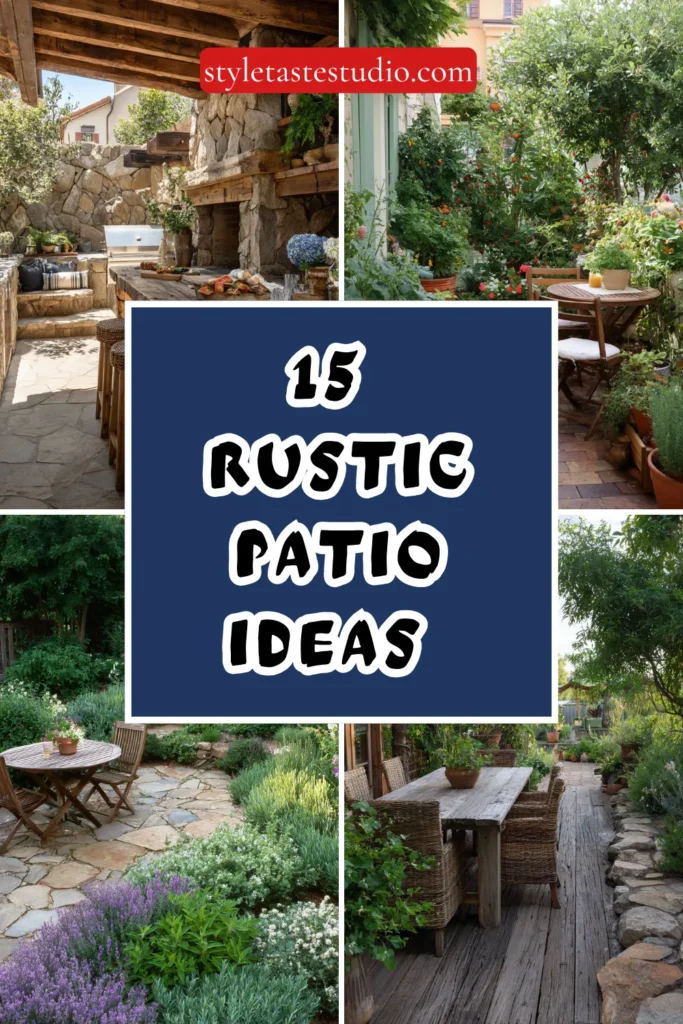
Rustic does not mean rough or unfinished — it means honest. Natural timber that shows its grain. Stone that carries the marks of time. Iron that has developed a patina. Materials that reference the landscape they come from and improve with age rather than deteriorating toward replacement. A well-designed rustic patio looks better after ten years of outdoor life than it did on the day it was completed.
Here are 15 rustic patio ideas that create an outdoor living space of genuine warmth, natural beauty, and lasting character.
1. Reclaimed Timber Deck with Stone Border
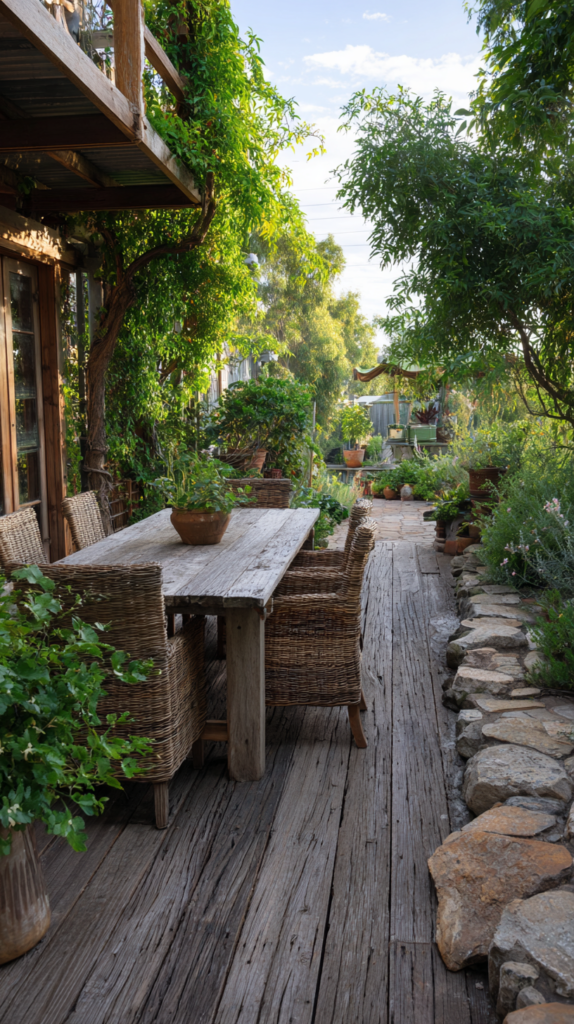
A reclaimed timber deck — built from salvaged railway sleepers, old barn boards, or reclaimed hardwood planking — with a border of natural irregular stone creates a patio surface of extraordinary material character and warmth.
The history embedded in reclaimed timber — the nail holes, the grain variation, the weathered surface texture — creates a patio floor of genuine individuality that no new timber can replicate.
Lay the reclaimed timber boards in a simple, clean pattern — parallel runs or a straightforward herringbone — and edge the deck perimeter with a course of natural fieldstone or irregular flagstone set in mortar. The combination of the warm timber surface and the natural stone border creates a patio floor that references both the woodland and the landscape simultaneously — a completely natural material pairing of genuine beauty.
Pro Tip: Treat reclaimed timber deck boards with a penetrating hardwood oil rather than a surface paint or varnish. Surface finishes on reclaimed timber peel and crack as the aged wood expands and contracts through seasonal temperature changes — creating a maintenance burden that becomes exhausting over time.
A penetrating oil soaks into the timber rather than sitting on the surface, feeds the wood from within, enhances the natural grain and color, and simply requires reapplication rather than stripping and refinishing when it needs refreshing.
2. Natural Stone Flagstone Patio
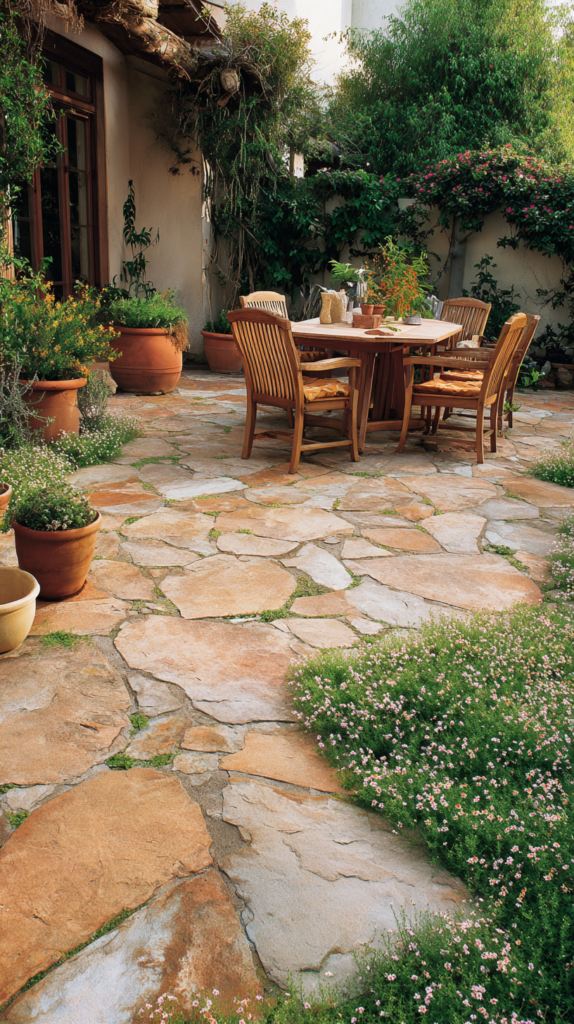
A flagstone patio — laid in natural, irregular stone with generous planting gaps between the flags filled with low-growing thyme, chamomile, or creeping jenny — creates a patio surface of extraordinary organic beauty that looks as though it has been part of the landscape for generations. The irregular edges of natural flagstone, the variation in color and texture between individual stones, and the softening effect of low plants growing between them creates a surface of genuine, unhurried natural beauty.
Choose locally sourced stone wherever possible — the connection between the patio material and the local geology creates a visual authenticity that imported stone rarely achieves in the same landscape. Sandstone, limestone, and granite all create beautiful flagstone patios in different color families — warm honey and buff tones from sandstone, cool grey and blue-grey from limestone, and warm pink-grey from granite.
Pro Tip: Lay flagstone on a properly prepared sub-base — a compacted layer of hardcore topped with sharp sand — rather than directly on soil or a minimal sand bed. Flagstone laid without adequate sub-base preparation settles unevenly within a single season of frost and thaw cycles, creating a trip-hazard surface of rocking and tilting individual flags. A properly prepared sub-base maintains the level surface of the patio permanently regardless of the severity of winter weather.
3. Fire Pit Patio with Log Seating
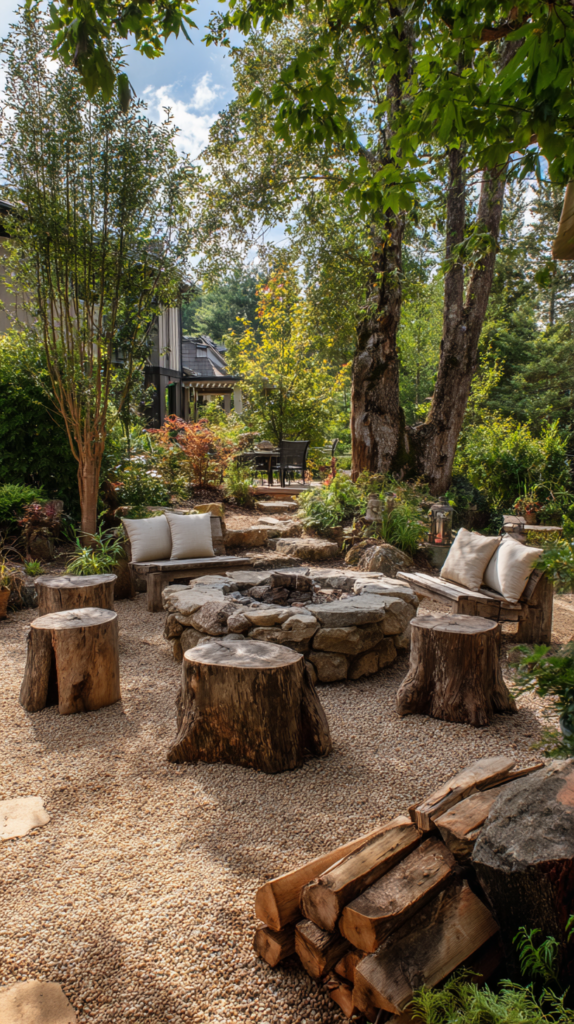
A central fire pit — built from a ring of natural fieldstone or from a simple steel bowl set on a gravel base — surrounded by log rounds used as informal seating creates the most genuinely rustic patio arrangement available. The fire pit becomes the social heart of the outdoor space and the log seating creates an informal, egalitarian gathering circle that encourages real conversation and genuine relaxation in a way that formal patio furniture rarely does.
Source large, flat-topped log rounds from a local tree surgeon or timber merchant — oak, beech, and elm all make beautiful, long-lasting log seats that develop their own character with outdoor weathering over time. Arrange them at comfortable conversational distances around the fire pit and allow moss and lichen to develop on the cut surfaces naturally — the biological weathering of outdoor timber is one of the most beautiful natural processes in any garden setting.
Pro Tip: Seal the top surface of log round seating with a single coat of exterior decking oil to reduce moisture absorption through the end grain while allowing the sides and base to breathe naturally.
End grain — the cut face of a log round — absorbs water many times faster than side grain and is the primary entry point for the moisture that causes log rounds to crack and split in freeze-thaw conditions. A single annual application of oil to the top surface dramatically extends the life and the appearance of log round seating.
4. Rustic Pergola with Climbing Roses
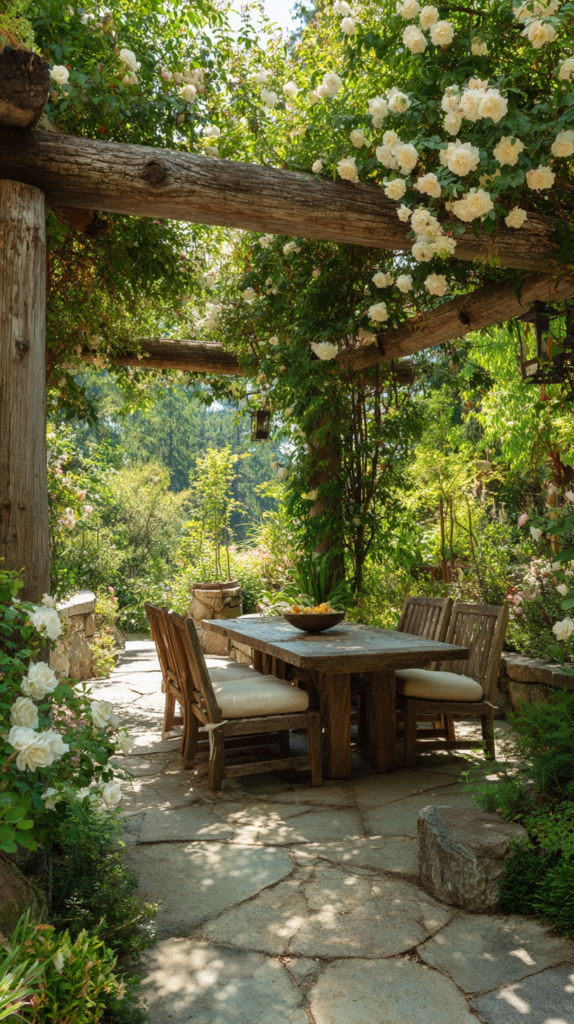
A pergola built from rough-sawn or natural round timber posts — bark-on larch poles, hand-hewn oak uprights, or pressure-treated round timber — with horizontal beams and cross rails of the same natural material creates a patio overhead structure of genuine rustic architectural beauty. The natural, unprocessed quality of round timber or rough-sawn wood gives the pergola a character and an authenticity that planned, machined timber alternatives lack.
Dress the rustic pergola with climbing roses — Rosa Albertine, Rosa Bobbie James, or the fragrant New Dawn — allowed to grow with relative freedom rather than rigidly trained. Abundance and slight informality in the climbing plant coverage reinforces the rustic quality of the structure — a perfectly groomed rose on a rustic pergola creates a slight visual discord between the wildness of the timber and the formality of the planting.
Pro Tip: Treat the base of all timber posts in a rustic pergola with a preservative end-grain sealant before installation and consider using metal post spike connectors to keep the timber post bases above soil contact level.
Timber in direct soil contact is the most vulnerable point of any outdoor wooden structure — the combination of soil moisture, biological activity, and fluctuating conditions causes rot at soil level significantly faster than anywhere else on the structure. Metal post spikes eliminate soil contact entirely and extend the structural life of a timber pergola dramatically.
5. Dry Stone Wall Patio Border
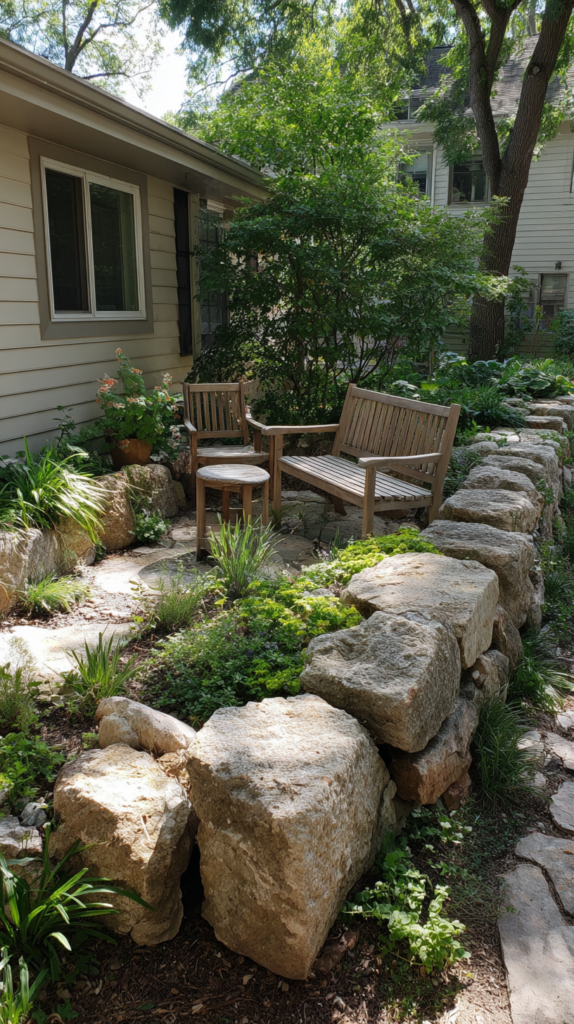
Dry stone walls — stone laid without mortar in the traditional agricultural dry-stone walling technique — used as patio borders, raised bed edges, and retaining walls create a patio setting of genuine landscape connection and enduring natural beauty.
Dry stone walling is one of the most ancient and most beautiful of all landscape construction techniques and its characteristic appearance — the irregular coursing, the slightly tapered profile, the moss and lichen that colonise the surfaces over time — creates a patio border of extraordinary authenticity.
Use locally sourced stone of the type used in traditional dry stone walls in your region — the walls will have a visual authenticity and a landscape connection that imported or non-local stone cannot achieve. A low dry stone wall of 40 to 60 centimetres height around the patio perimeter creates a defined boundary, additional informal seating along its top surface, and a habitat for small wildlife and plants in the wall gaps.
Pro Tip: Plant the gaps and crevices of dry stone patio walls with small drought-tolerant plants — thyme, aubretia, sempervivum, and small ferns — that establish in the wall fabric and create a living surface of biological richness and natural beauty. Plants growing in the wall crevices reinforce the ancient, established quality of the dry stone walling aesthetic and create a habitat of genuine ecological value for insects, small lizards, and invertebrates that inhabit the wall structure.
6. Gravel Patio with Reclaimed Brick Edging
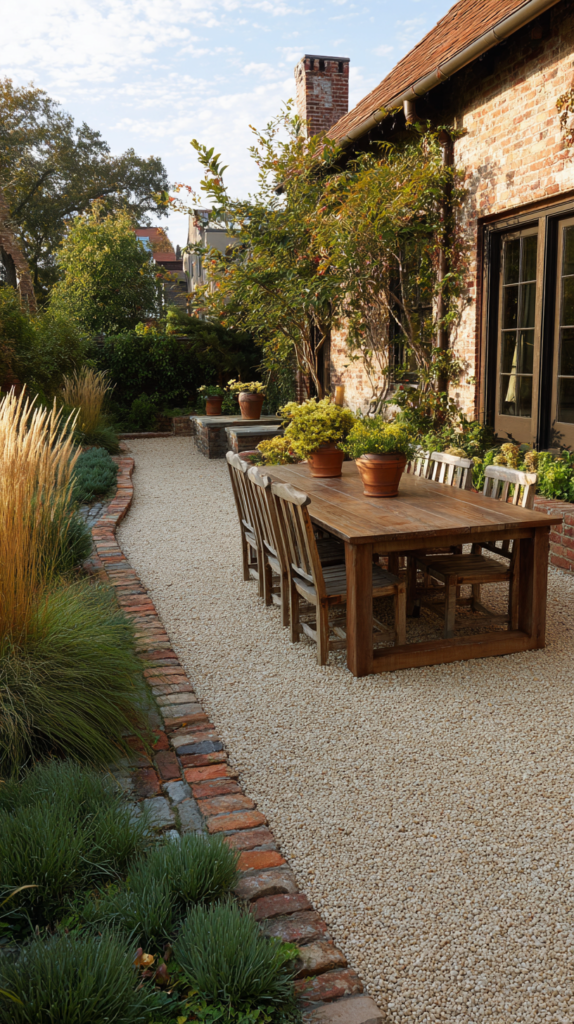
A gravel patio surface — self-binding gravel, pea gravel, or crushed natural stone in a warm honey or buff tone — edged with courses of reclaimed brick creates a patio of relaxed, cottage-garden informality and natural material warmth. Gravel is the most forgiving, most affordable, and most naturally beautiful of all patio surface materials and its informal, slightly imprecise quality suits the rustic patio aesthetic perfectly.
Reclaimed brick edging — old stock bricks or handmade bricks salvaged from a demolition — creates a patio border of warm, aged character that new bricks cannot replicate. The variation in color and texture between individual reclaimed bricks, the softening of the edges that comes with age and weathering, and the historical connection implied by genuinely old materials all contribute to a patio border of genuine authenticity and warmth.
Pro Tip: Install a weed membrane beneath the gravel layer of a gravel patio before laying the surface material. Gravel without a membrane allows weed seeds to establish in the soil beneath and grow up through the gravel surface within a single season — creating a maintenance burden that compounds year on year as the weed root systems develop. A good quality woven geotextile membrane beneath the gravel prevents weed establishment effectively while allowing natural drainage through the patio surface.
7. Rustic Outdoor Kitchen with Stone Worktop
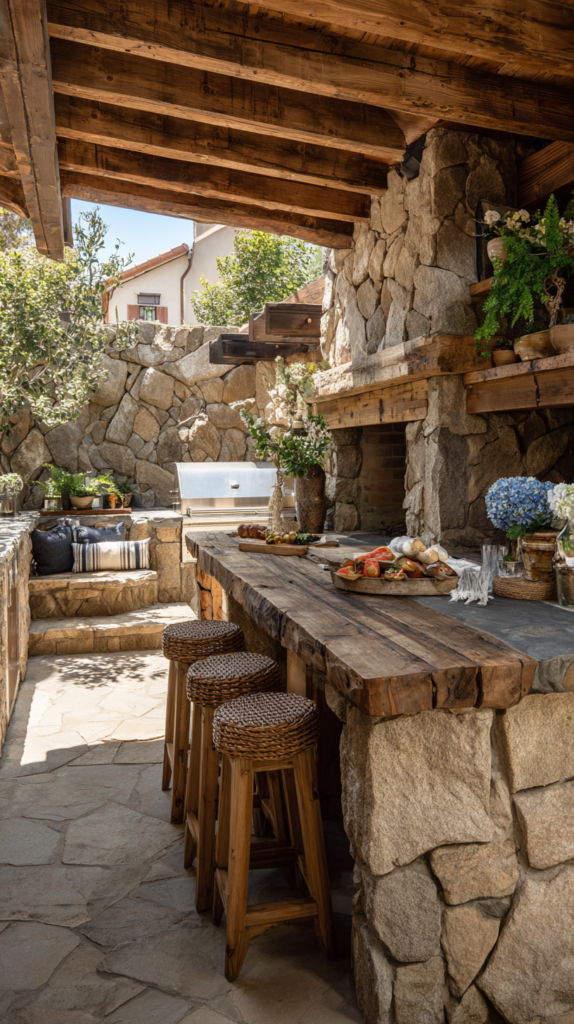
A rustic outdoor kitchen — a built-in barbecue or fire grill constructed from natural stone or reclaimed brick, with a natural stone slab worktop, reclaimed timber storage below, and a simple overhead timber structure for shade and shelter — creates a cooking and gathering space of genuine rustic character and practical excellence.
The natural stone worktop is the defining material element of the rustic outdoor kitchen — limestone, slate, or granite in a natural, slightly rough finish rather than a polished surface creates a worktop of genuine material beauty that suits the outdoor environment far better than the polished stone surfaces of indoor kitchen design. The outdoor worktop will develop a natural patina of weathering over time that enhances rather than diminishes its beauty.
Pro Tip: Seal any natural stone outdoor kitchen worktop with a penetrating stone impregnator before first use and reapply annually. Natural stone in an outdoor cooking environment is exposed to food acids, cooking oils, and weather that will stain and degrade unsealed stone surfaces rapidly.
A good penetrating impregnator — not a surface sealant but a penetrating treatment — protects the stone from within without altering its natural appearance or creating a surface film that weathers poorly outdoors.
8. Lantern and Candlelight Patio Lighting
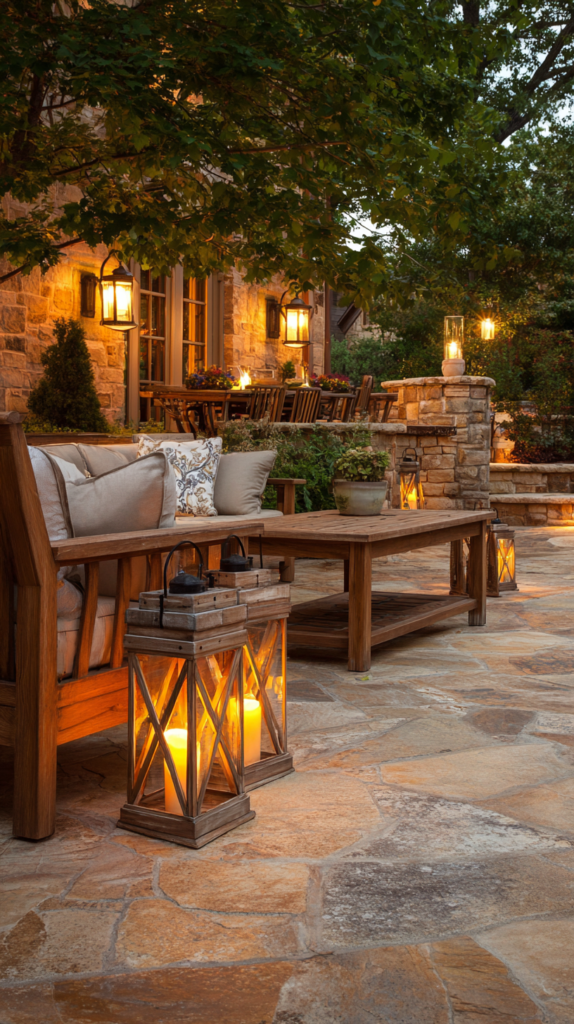
A rustic patio lit entirely with lanterns and candles — iron lanterns hanging from the pergola structure, storm lanterns on the table, pillar candles in glass hurricane holders on every surface, and clusters of tea lights in mason jars along the patio border wall — creates an evening atmosphere of extraordinary warmth and romance that no electric lighting system can replicate.
The quality of candlelight and lantern light on a rustic patio — warm, moving, casting soft shadows across natural stone and weathered timber — is entirely different from the quality of even the warmest electric light. It is alive in a way that electric light is not, responsive to the movement of the air, creating an atmosphere of genuine intimacy that makes every evening gathering on the patio feel like a genuinely special occasion.
Pro Tip: Use citronella candles and lanterns for the primary patio lighting on warm summer evenings rather than standard candles. Citronella provides effective insect deterrence — particularly important on warm summer evenings when biting insects are most active — while providing the same warm, beautiful candlelight quality as standard candles.
The citronella fragrance is pleasant rather than chemical, adding a clean herbal note to the patio atmosphere that complements rather than detracts from the outdoor evening experience.
9. Rustic Patio with Vintage Garden Furniture
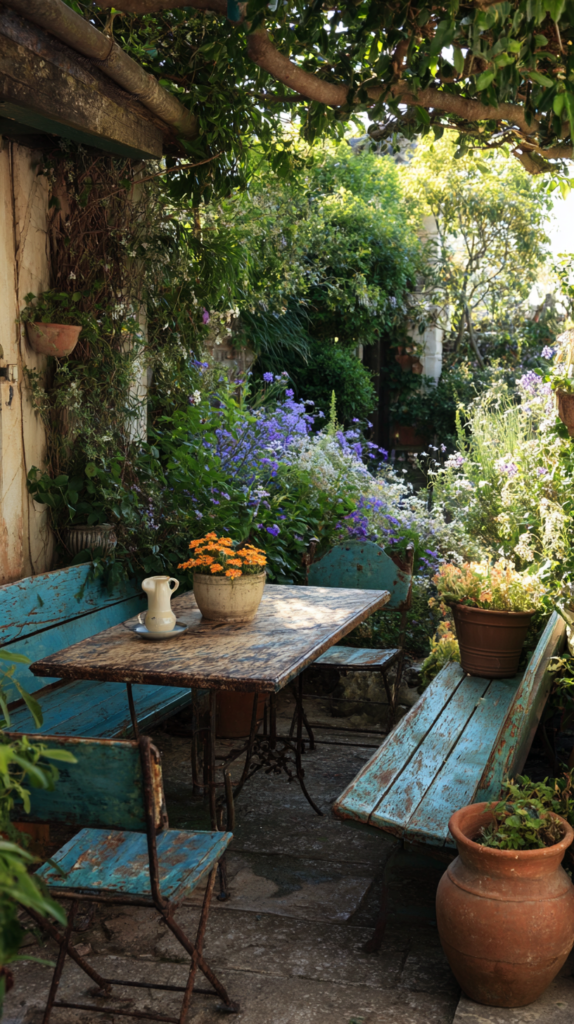
A patio furnished with vintage or genuinely antique garden furniture — a cast iron table and chairs with their original paint worn to a beautiful distressed patina, a vintage teak bench weathered to a silver-grey, a collection of mismatched old wrought iron chairs painted in complementary colors — creates a patio of genuine character and collected beauty that no new furniture range can replicate.
Vintage garden furniture is widely available at salvage yards, antique markets, and online resale platforms and the investment in genuinely old pieces with genuine patina and genuine character creates a patio that looks naturally evolved rather than recently purchased.
The imperfection, the variation, and the history of vintage pieces is precisely what gives a rustic patio its particular quality of warmth and authenticity.
Pro Tip: Resist the temptation to restore vintage garden furniture to its original pristine condition before placing it on a rustic patio. The worn paint, the weathered surfaces, and the gentle distress of genuinely old garden furniture is not a flaw — it is the quality that makes vintage pieces so beautiful in a rustic outdoor setting.
A light clean and a protective wax coat maintains the furniture and prevents further deterioration without stripping the patina that gives it its character and its value.
10. Herb Garden Patio Border
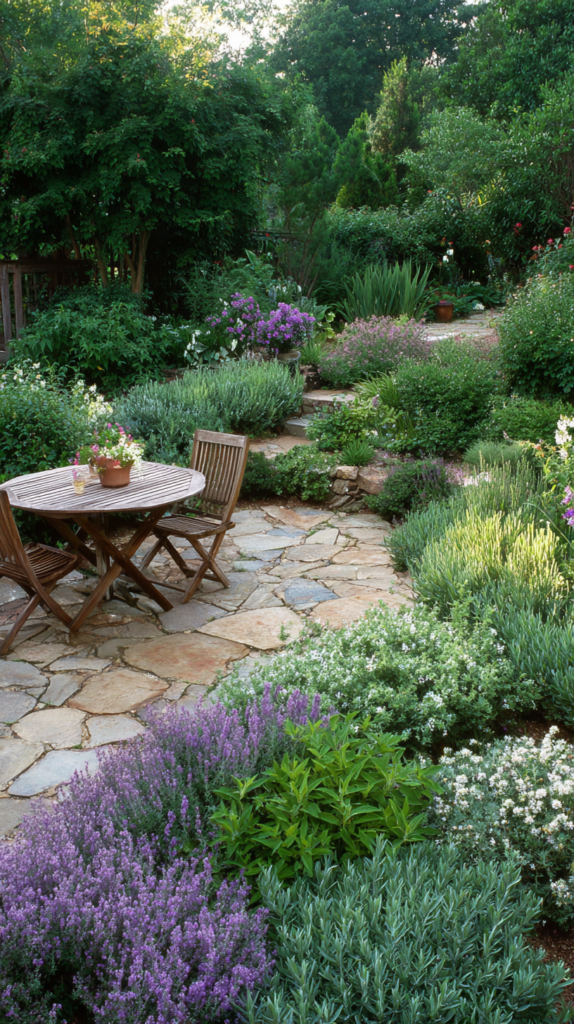
A patio bordered on one or more sides by a dense, fragrant herb planting — lavender, rosemary, thyme, sage, and oregano planted generously in the border immediately adjacent to the patio surface — creates an outdoor living space of extraordinary sensory richness. Sitting on a patio surrounded by fragrant herbs on a warm afternoon, with bees working the lavender flowers and the air carrying the clean, resinous scent of rosemary and thyme, is one of the most genuinely pleasurable outdoor experiences available in any garden setting.
The herb border also provides a practical harvest within arm’s reach of the outdoor kitchen or the dining table — fresh herbs gathered directly from the patio border for cooking, for garnishing, and for fragrant table arrangements creates a direct, satisfying connection between the patio as a living space and the productive garden around it.
Pro Tip: Plant lavender and rosemary at the patio edge rather than in the center of the herb border where they will need to be stepped over or reached past to harvest. Edge planting of the most fragrant herbs means every person who enters or exits the patio brushes against the plants as they pass — releasing the fragrance with every contact and creating a sensory experience that permeates the entire patio without any deliberate effort.
11. Rustic Patio Water Feature
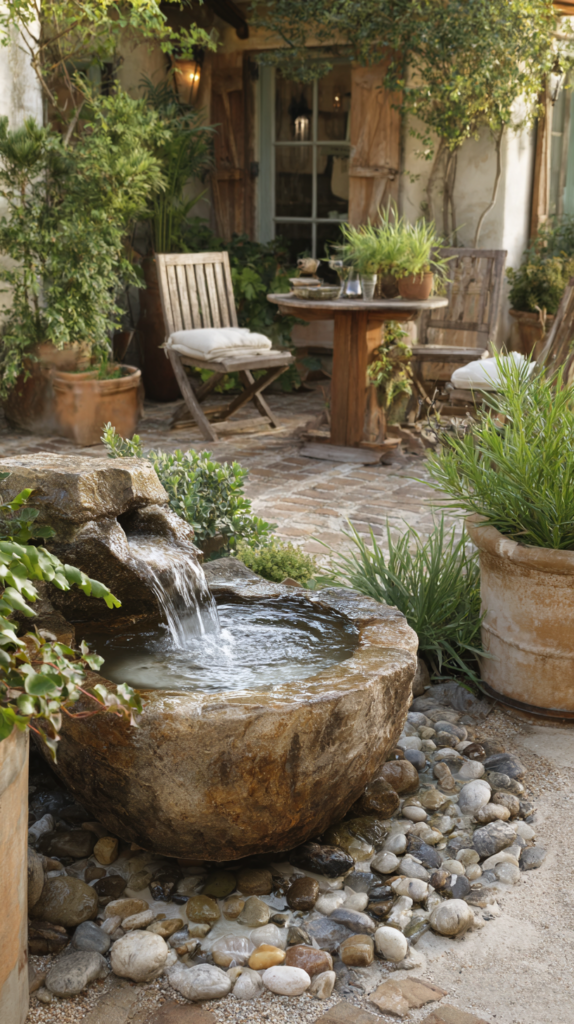
A simple water feature on a rustic patio — a natural stone trough filled with water and planted with miniature water plants, a millstone fountain with water bubbling gently from the center, or a simple recirculating pump in a large ceramic pot — adds the sound and visual quality of moving water to the patio atmosphere in a completely natural, unobtrusive way.
The sound of gently moving water on a patio creates a quality of ambient calm that masks intrusive urban noise — traffic, neighbours, general background sound — and replaces it with something genuinely natural and restorative.
Even a very small water feature creates a surprising degree of ambient sound masking and the visual quality of reflected light and moving water surface adds a dimension of natural beauty to the patio that no static decorative object can provide.
Pro Tip: Position a patio water feature in partial shade rather than in full sun — particularly in warm climates or during summer months. Full sun accelerates algae growth in any outdoor water feature dramatically, requiring significantly more frequent cleaning and water treatment to maintain a clear, attractive water surface.
Partial shade dramatically reduces algae growth, extends the intervals between cleaning, and maintains the natural, clear water quality that makes a water feature genuinely beautiful rather than a source of maintenance frustration.
12. Rustic Patio with Outdoor Rug and Throw Blankets
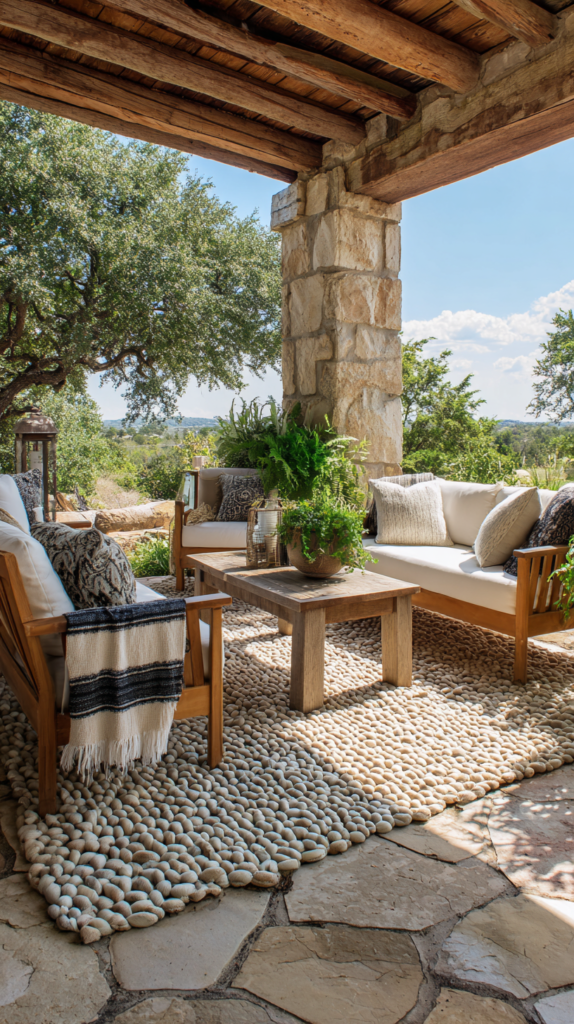
Layering a rustic patio with the same textile richness that creates warmth and comfort indoors — a large outdoor rug in a natural jute, sisal, or weather-resistant cotton pattern beneath the seating area, throw blankets in warm wool or cotton draped over the chair backs, and cushions in natural linen and canvas fabrics on every seat — transforms the outdoor space into something that feels as genuinely comfortable as an indoor living room.
The textile layering of a rustic patio softens the hard material surfaces of stone, timber, and iron that define the rustic aesthetic and creates a space that looks genuinely inviting rather than simply well-constructed.
A patio with beautiful materials but no textile softening feels like a museum of natural materials rather than a living space — the rugs, throws, and cushions are what make it somewhere people actually want to spend time.
Pro Tip: Choose outdoor textiles with genuine weather resistance — look for fabrics specifically described as solution-dyed rather than surface-dyed. Solution-dyed fabrics have color embedded throughout the fiber rather than applied to the surface — they resist fading in UV light significantly better than surface-dyed alternatives and maintain their color and character through multiple seasons of outdoor exposure. Investing in genuinely weather-resistant textiles prevents the rapid color fade and deterioration that makes cheaper outdoor fabrics look tired and shabby within a single season.
13. Potted Kitchen Garden Patio
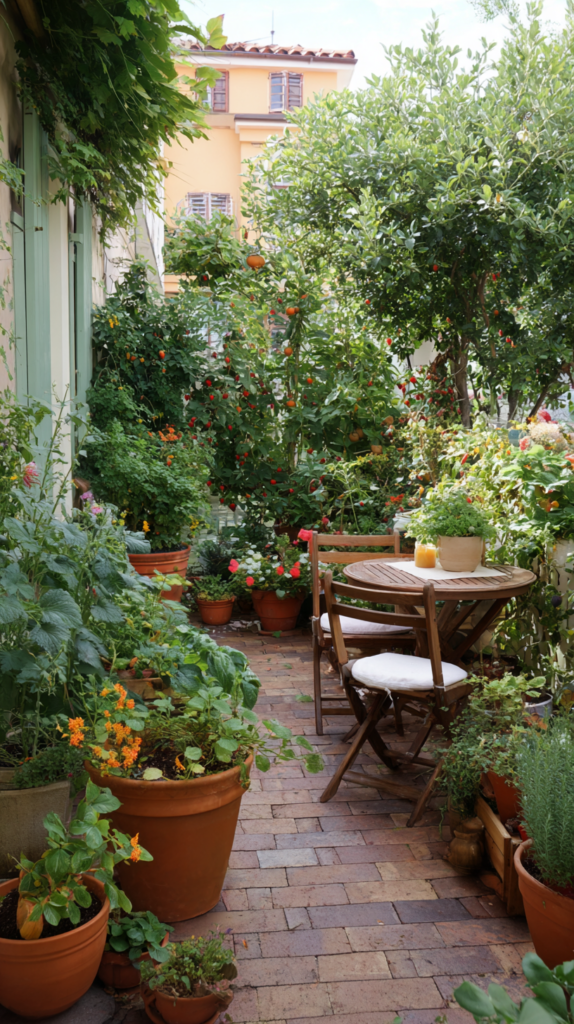
A patio populated with generous terracotta pots and reclaimed timber planters containing a kitchen garden — tomatoes, herbs, strawberries, salad leaves, and edible flowers — creates a productive, beautiful, and completely rustic outdoor living space where food production and relaxed outdoor living coexist naturally and beautifully.
Large, aged terracotta pots in varying sizes clustered on the patio surface, along the walls, and on any available elevated surfaces create a visual abundance of natural material warmth and productive planting that makes the patio feel genuinely alive and purposeful.
The combination of ornamental and edible planting in a single rustic container display blurs the boundary between the decorative and the productive garden in the most visually beautiful way possible.
Pro Tip: Group terracotta pots in clusters of different sizes rather than spacing them individually at equal distances across the patio surface. Clustered pot groupings create natural focal points of green abundance that look organic and considered.
Individually spaced pots at regular intervals create a rigid, uniform arrangement that looks like a plant display rather than a lived-in, natural garden environment. Varied clustering is the single most effective way to give a container garden the natural abundance that distinguishes a beautiful potted kitchen garden from a merely functional one.
14. Reclaimed Brick Patio with Moss Joints
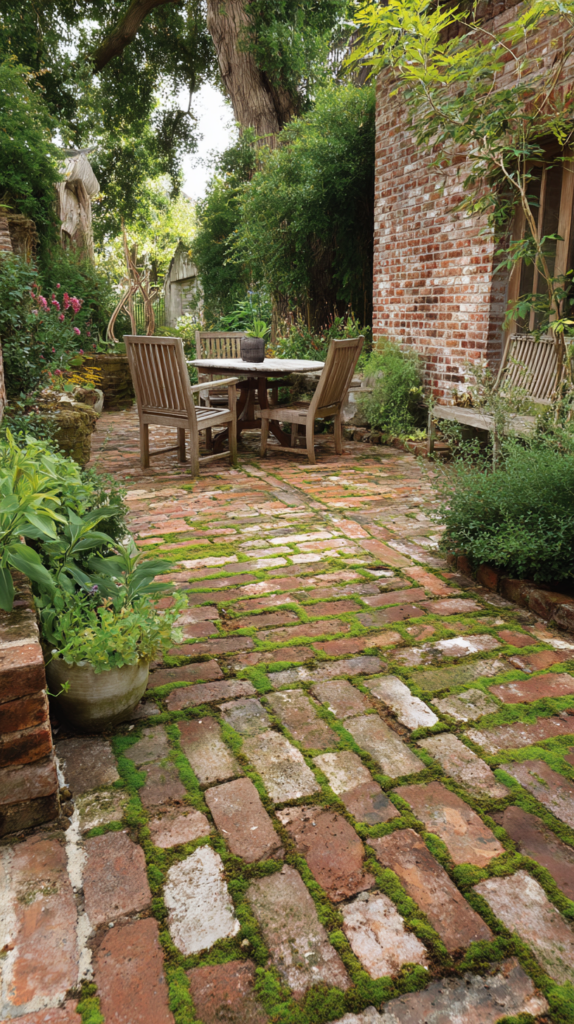
A patio surface laid in reclaimed brick — old stock bricks, reclaimed engineering bricks, or salvaged handmade bricks in warm red and buff tones — with the joints deliberately left unpointed to allow moss and small plants to establish in the gaps creates a patio surface of extraordinary aged beauty.
The moss-jointed brick patio looks as though it has been part of the garden for a hundred years rather than having been recently constructed and creates a quality of established, natural permanence that no new surface material can achieve quickly.
Lay the reclaimed bricks in a traditional herringbone or basketweave pattern for maximum visual interest and structural stability and leave the joints slightly recessed and unpointed after laying. Brush soil and a small amount of yoghurt mixed with water into the joints to encourage moss establishment — the yoghurt provides the slightly acidic, nutrient-rich medium that moss spores need to germinate and establish in the brick joints.
Pro Tip: Seal the brick surface — but not the joints — with a clear breathable masonry sealer after laying and before encouraging moss growth in the joints. Sealing the brick surface prevents the brick faces from developing the algae and biological growth that makes brick surfaces slippery and difficult to clean while leaving the joints open for the deliberate moss establishment that creates the beautiful aged appearance.
This selective treatment — sealed brick faces and planted joints — gives the patio the best of both maintenance practicality and natural aesthetic beauty.
15. Rustic Patio Cinema Corner
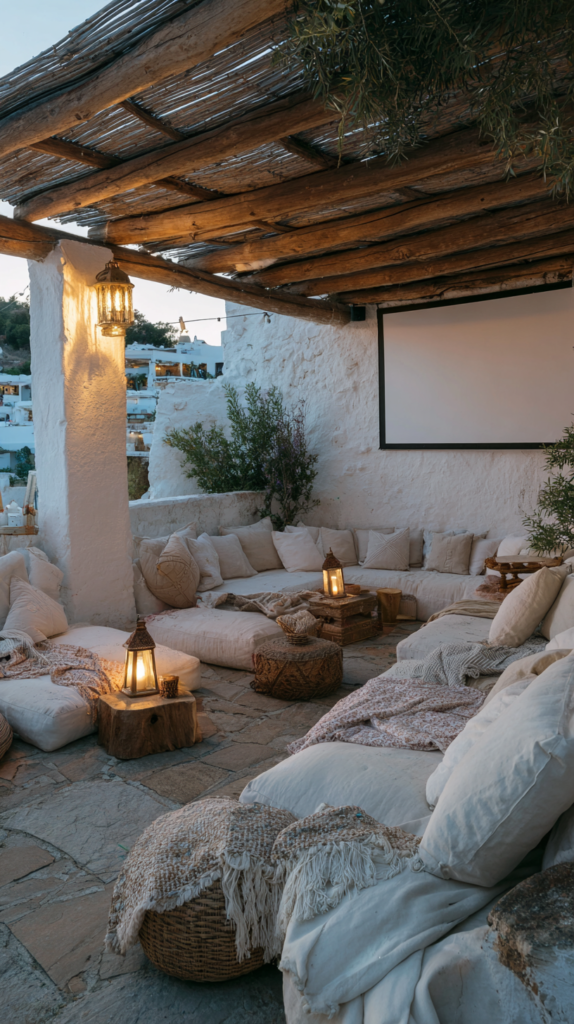
A rustic patio cinema corner — a weatherproof projector mounted on a reclaimed timber bracket, a simple white-washed stone or timber wall as the projection surface, and deep, comfortable outdoor seating arranged in a relaxed curve beneath a pergola or a simple canopy — creates the most sociable and genuinely enjoyable rustic patio feature for warm summer evenings.
The rustic cinema corner works because the natural materials create the warmth and the comfort that make a long outdoor evening genuinely pleasant rather than simply novel.
Deep outdoor sofas with generous cushions and throw blankets, a fire pit or outdoor heater for warmth as the evening progresses, and the warm, flickering quality of a projected image on a natural surface creates an outdoor cinema experience of genuine, distinctive character.
Pro Tip: Use a wall of whitewashed natural stone or rough lime-plastered timber as the projection surface rather than a commercial projection screen for a rustic patio cinema. A whitewashed natural wall surface provides sufficient reflectivity for a good projected image in low-light evening conditions and maintains the rustic material aesthetic of the patio completely.
A commercial white projection screen introduced into a carefully considered rustic patio material palette creates an incongruous visual element that disrupts the natural warmth and consistency of the surrounding design.
Build It Naturally and It Will Last
A rustic patio built from honest natural materials — reclaimed timber, natural stone, aged brick, weathered iron — does not age toward replacement. It ages toward beauty.
Every season of outdoor weathering deepens the character of the materials, every year of plant growth softens the hard edges, and every gathering of people in a genuinely welcoming outdoor space adds a layer of living memory to a place that was designed to be used, loved, and lived in.
Build your rustic patio with the best natural materials your budget allows. Furnish it with genuine comfort and genuine warmth. Plant it generously. Light it beautifully. And let time do the rest.