15 Stunning Rose Garden Ideas
A rose garden is one of the most romantically beautiful and most historically resonant garden styles available to any gardener with the passion and the patience to pursue it.
Roses have been cultivated, celebrated, and loved for thousands of years across virtually every culture and every continent, and their combination of extraordinary flower beauty, intense fragrance, and remarkable variety of form, color, and habit makes them the most universally beloved garden plant in the world.
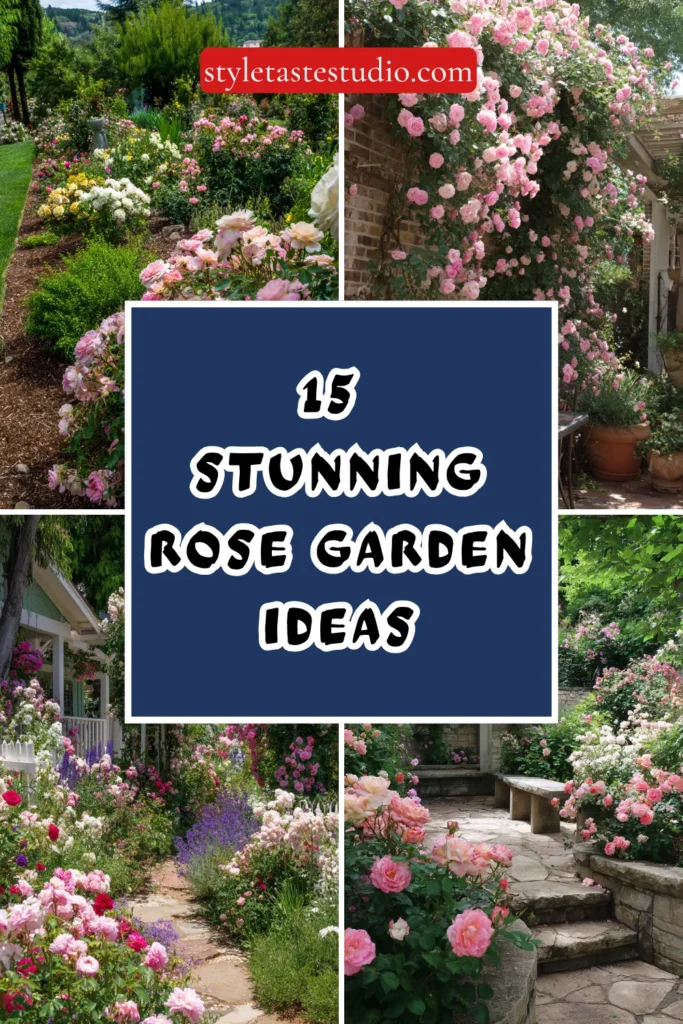
A well-designed rose garden in full summer bloom is one of the most sensory and most emotionally resonant garden experiences available anywhere in the horticultural world. Here are 15 stunning rose garden ideas that are beautiful, practical, and genuinely inspiring.
1. Design a Classic Formal Rose Garden
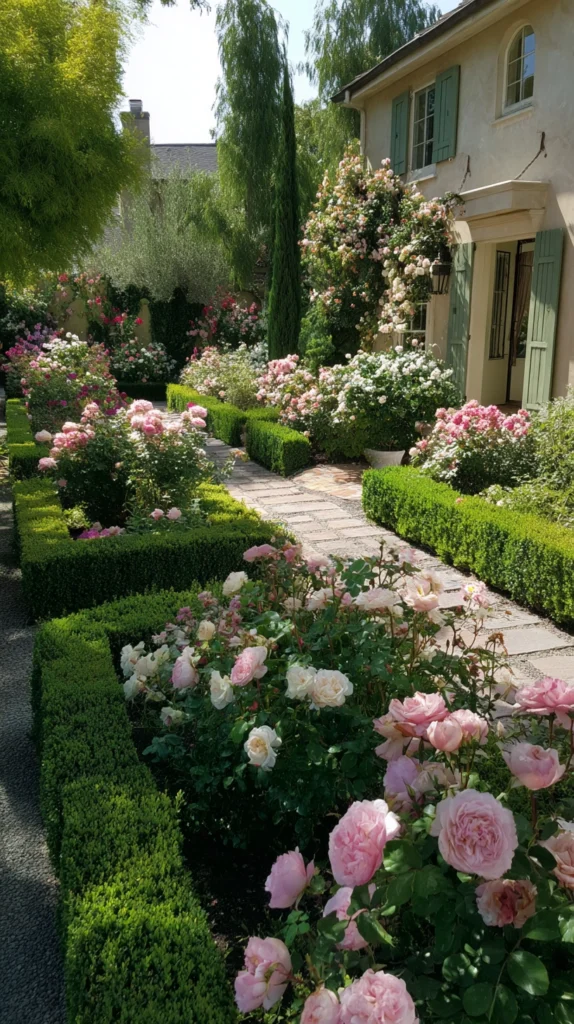
A classic formal rose garden. a symmetrical layout of geometric planting beds defined by low clipped hedges of box or lavender, intersected by gravel paths, and centered on a focal point of a sundial, a stone urn, or a classical statue. is the most historically authentic and most architecturally resolved rose garden style available.
The formal layout provides a permanent structural framework of considerable beauty even in winter when the roses are dormant, and the geometric beds filled with carefully chosen rose varieties create a display of extraordinary color and fragrance through the summer months. Design the formal rose garden on paper before any construction begins, ensuring the geometry of the layout is balanced and coherent when viewed from above.
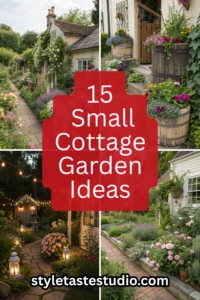
2. Create a Cottage Rose Garden
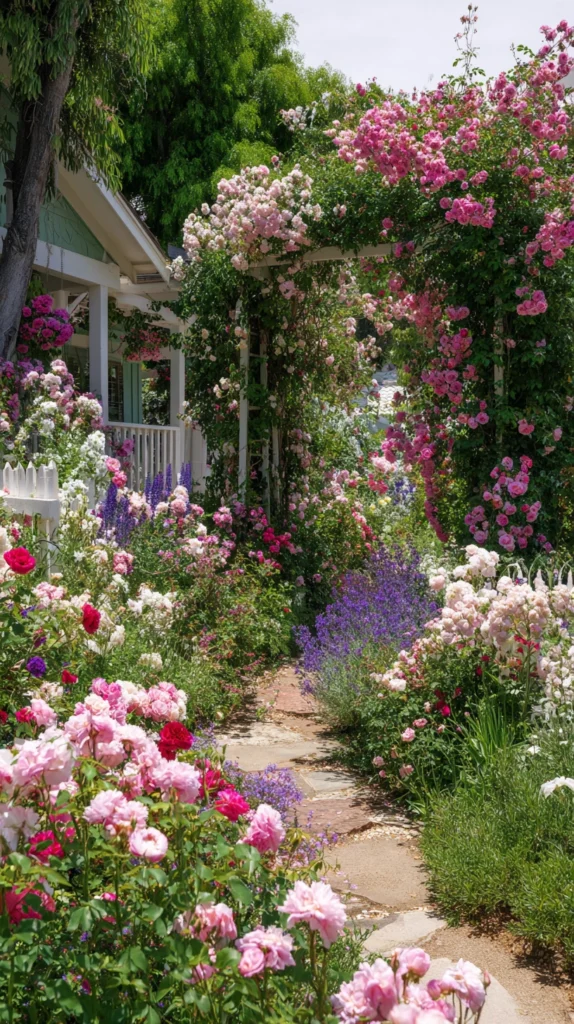
A cottage rose garden. an exuberant, seemingly informal planting of climbing roses, shrub roses, and old garden varieties interwoven with companion plants of hardy geraniums, lavender, alliums, and foxgloves in a planting that appears spontaneous but is carefully considered. creates one of the most beloved and most distinctively English garden styles available.
The cottage rose garden celebrates the beautiful accidents of plants growing together in close proximity, of roses scrambling through companion shrubs, and of color combinations that should not work together but somehow do so with extraordinary charm and vitality.
3. Plant a Rose Arch Entrance
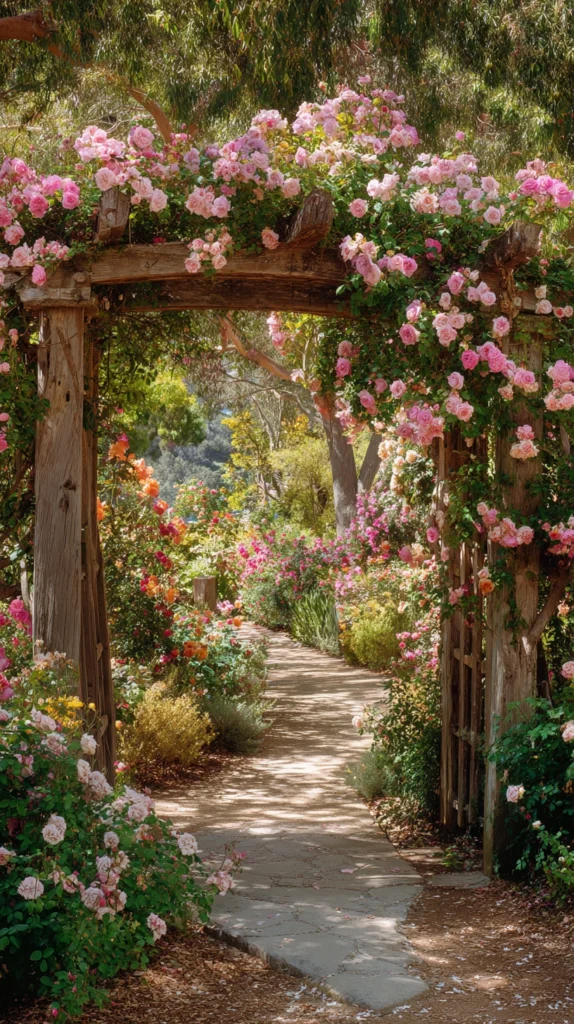
A rose arch at the entrance to the garden or at the transition between two garden areas creates one of the most romantic and most dramatically beautiful garden features available. A robust timber or metal arch planted with a vigorous climbing rose on each side creates a flowering threshold that frames the view through it with a canopy of bloom and fragrance from early summer onward.
Choose climbing roses with complementary colors for the two sides of the arch. A pale blush pink rose on one side and a deeper rose pink on the other. or a single white climbing rose for a pure, luminous entrance arch of exceptional elegance and simplicity.
4. Design a Rose Pergola Walk
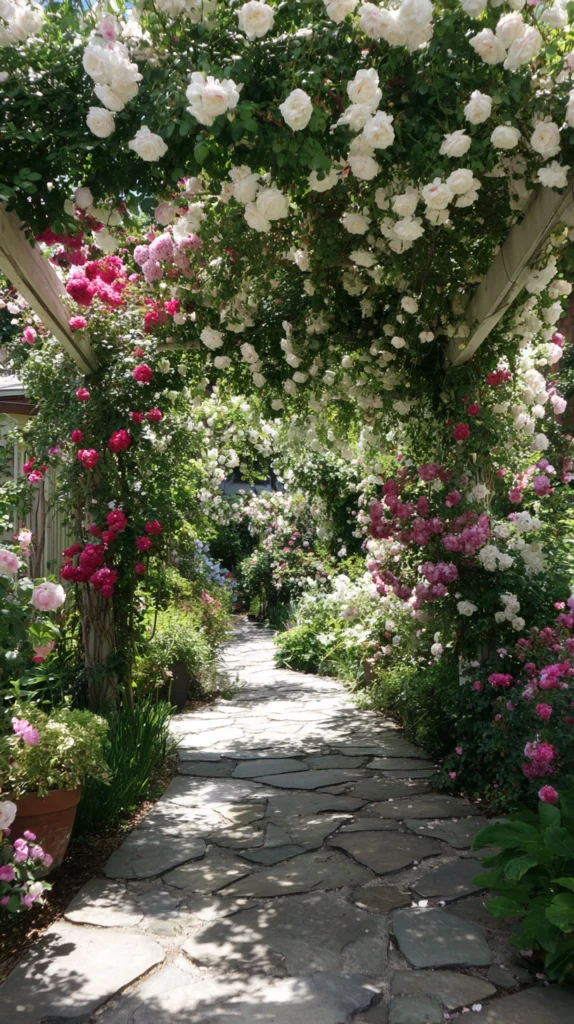
A rose pergola walk. a series of arches connected by longitudinal beams to form a tunnel-like structure covered in climbing roses. creates a garden feature of extraordinary romantic beauty and sensory richness. Walking through a rose pergola in full bloom is one of the most extraordinary garden experiences available.
The overhead canopy of roses, the fragrance concentrated within the tunnel of the pergola, and the play of dappled light through the rose-covered structure create a sensory environment of remarkable intensity.
Choose a combination of climbing roses in complementary colors and with staggered flowering seasons for a pergola that provides continuous bloom across the longest possible period.
5. Create a Rose and Lavender Border
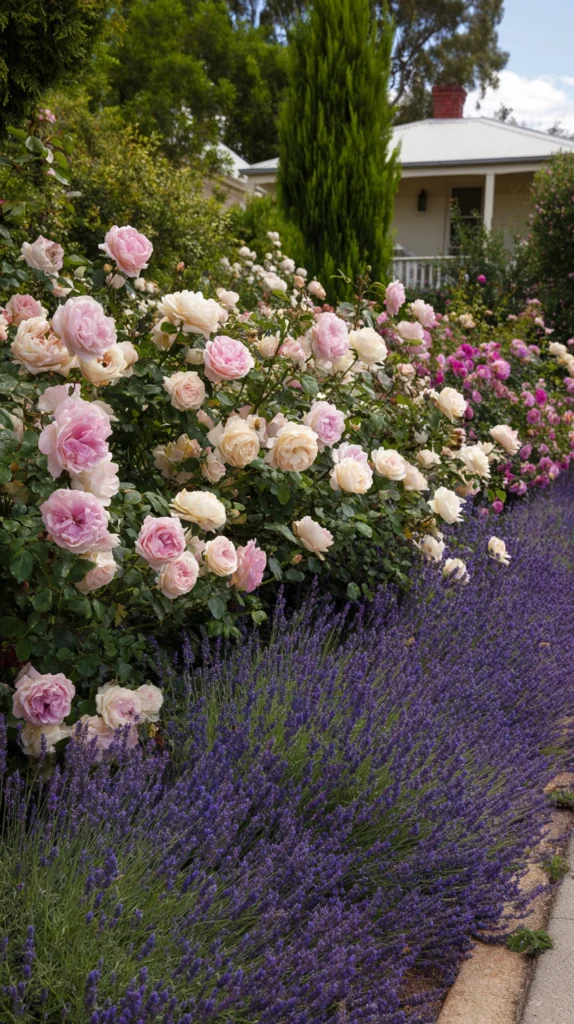
A planting combination of roses and lavender is one of the most classically beautiful and most aromatically generous pairings available in garden design.
The cool, silver-grey foliage and deep purple-blue flowers of lavender provide the perfect visual and chromatic foil for the warm pinks, deep reds, and creamy whites of rose blooms, and the two plants share the same cultural requirements of full sun, good drainage, and minimal feeding that makes them natural companions in the garden border.
Plant lavender in generous drifts along the front edge of a rose border for a combination that is beautiful from spring through to autumn.
6. Establish a Climbing Rose Wall
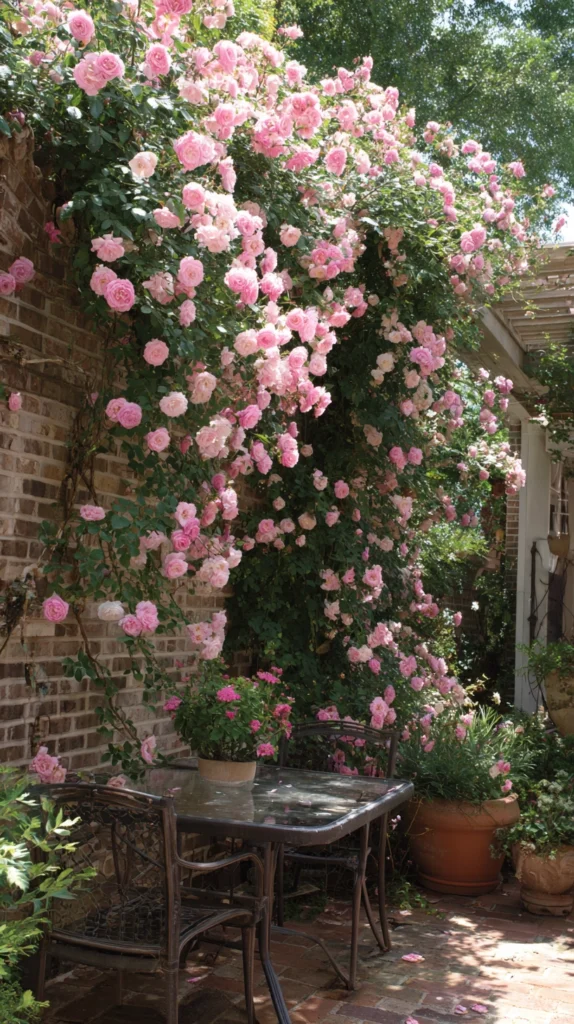
A wall or fence covered in climbing roses creates a garden boundary of extraordinary seasonal beauty that transforms a purely functional structural element into one of the most spectacular features of the entire garden.
A south or west-facing wall provides the warmth, shelter, and reflected heat that most climbing roses thrive in, and the wall surface provides the permanent support structure against which the rose can be trained and tied in as it develops over the years.
Choose a climbing rose variety appropriate to the available wall space. a vigorous, large-flowered climber for a generous wall. a more compact repeat-flowering climber for a smaller or north-facing wall.
7. Plant a Single-Color Rose Garden
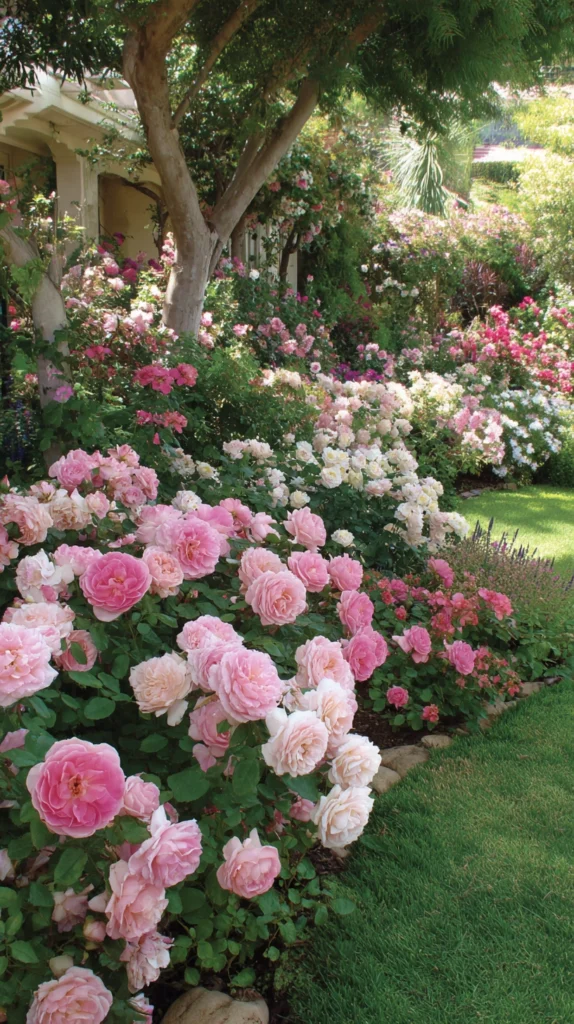
A rose garden planted exclusively in a single color. an all-white rose garden of extraordinary luminous purity. an all-red rose garden of deep, passionate intensity. an all-pink rose garden of romantic, feminine warmth. creates a garden of visual impact and emotional coherence that a mixed-color rose planting of equivalent scale cannot match.
The restriction of the palette to a single color family focuses the attention on the variety of form, texture, and fragrance within the chosen color range and creates a garden experience of unusual depth and sensory concentration. Choose varieties within the single color that provide variation in tone. from the palest blush to the deepest rose pink within an all-pink garden. for a planting of genuine tonal complexity.
8. Use Roses in Containers
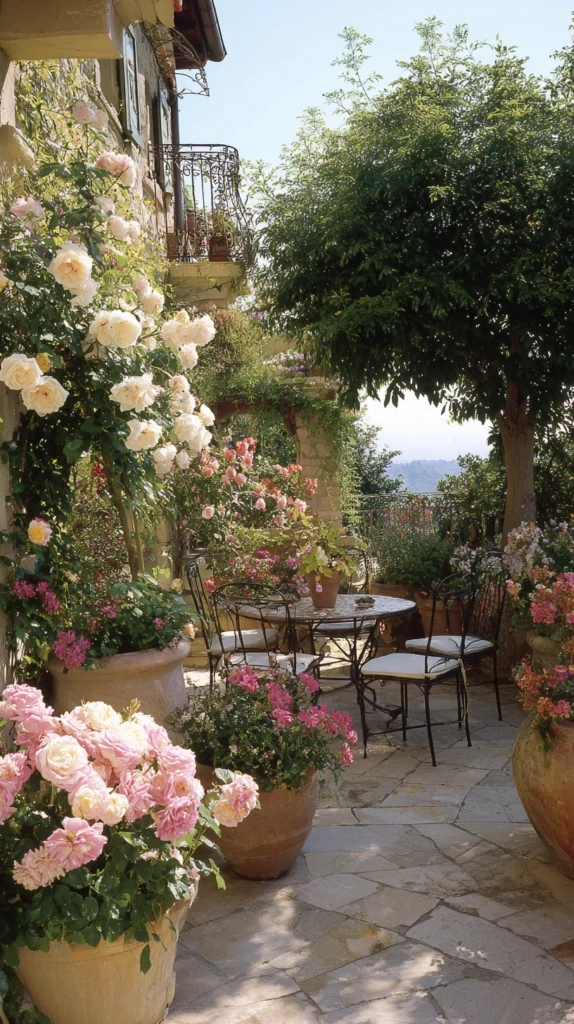
Growing roses in large containers creates a flexible, design-adaptable rose garden that suits small spaces, paved gardens, terraces, and any outdoor area where in-ground planting is not possible or practical.
A collection of patio roses in large terracotta pots, a standard rose in a generous stone planter, or a compact climbing rose in a tall container trained up a slim obelisk all create a rose garden presence within a small outdoor space that in-ground planting of equivalent impact would require significantly more space to achieve. Choose compact, repeat-flowering rose varieties specifically bred for container culture for the most productive and most visually rewarding result.
9. Create a Rose Cutting Garden
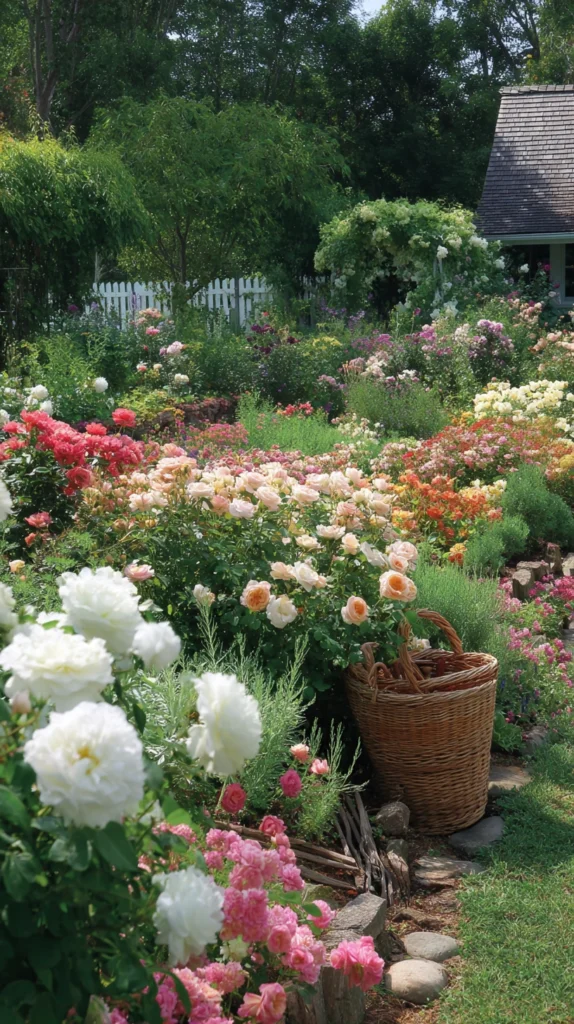
A dedicated rose cutting garden. a section of the garden planted specifically with roses for cutting and bringing into the house. is one of the most practically generous and most personally rewarding rose garden styles available. Unlike an ornamental rose border where cutting flowers diminishes the garden display, a cutting garden is planted specifically for harvest, with roses grown in rows for easy access and productive cutting throughout the season.
Plant a selection of varieties with different flowering seasons, different color palettes, and different fragrance profiles for a cutting garden that provides a continuous supply of extraordinary roses from early summer through to the first frosts of autumn.
10. Design a Sunken Rose Garden
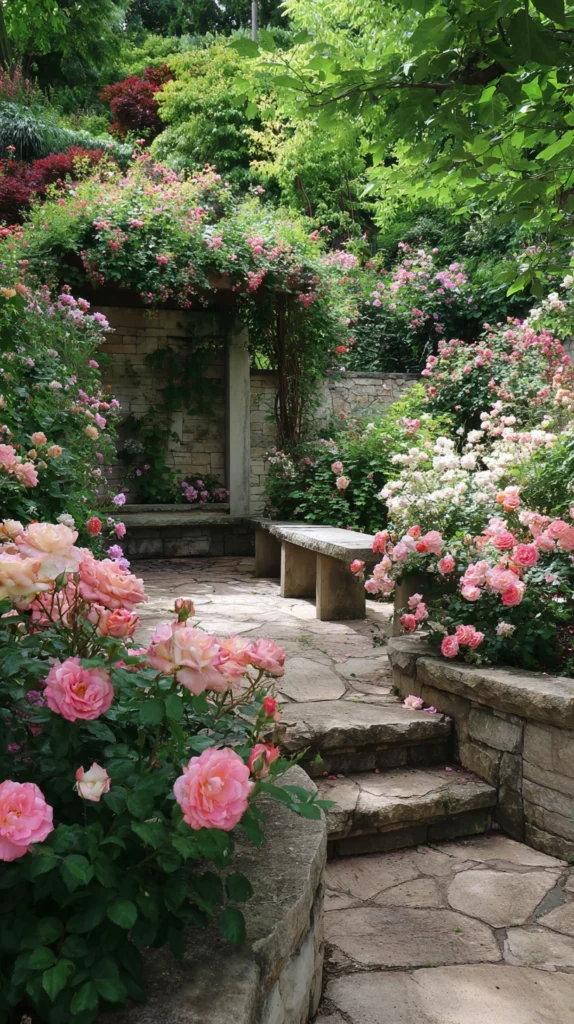
A sunken rose garden. a garden space set below the surrounding ground level, accessed by steps or a gentle ramp, and planted with roses in the beds surrounding the sunken central area. creates a garden feature of considerable spatial drama and sensory intensity.
The sunken format concentrates the fragrance of the roses within the enclosed space, creating a perfumed environment of extraordinary richness on warm, still evenings when the scent accumulates rather than dispersing into the open air. The surrounding raised beds bring the rose flowers to eye level and closer, allowing their beauty to be appreciated at an unusually intimate distance.
11. Underplant Roses with Perennial Companions
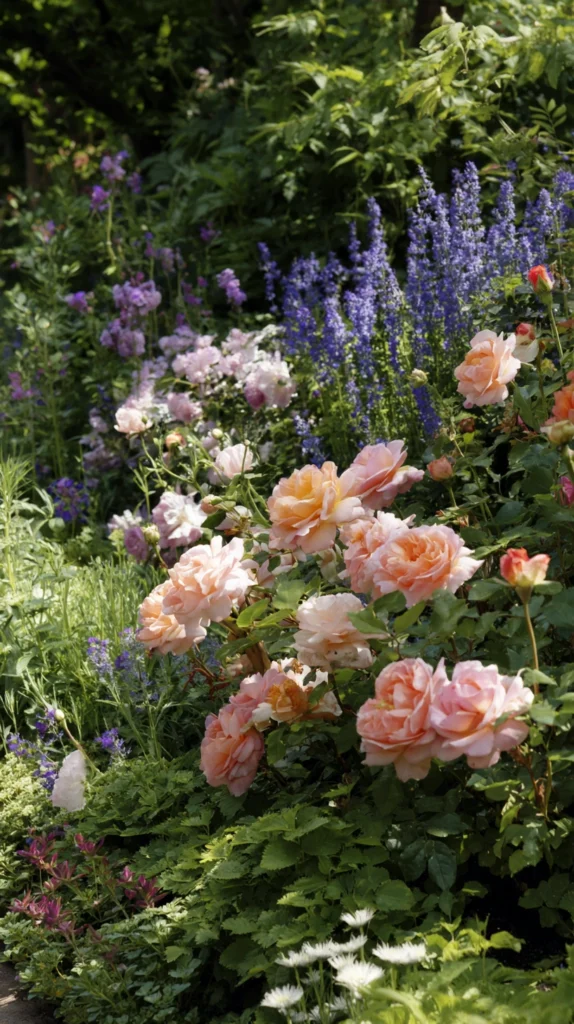
Underplanting roses with carefully chosen perennial companions extends the seasonal interest of the rose garden, suppresses weeds between the rose stems, and creates a planting of layered visual complexity that a garden planted with roses alone cannot achieve. Hardy geraniums, alchemilla mollis, catmint, stachys byzantina, and viola are among the most effective and most beautiful rose companions available.
They fill the base of the rose border with foliage and flower through the early season before the roses take over the display, and they continue to contribute interest during the gaps between rose flowering flushes throughout the summer.
12. Install a Rose Obelisk Feature
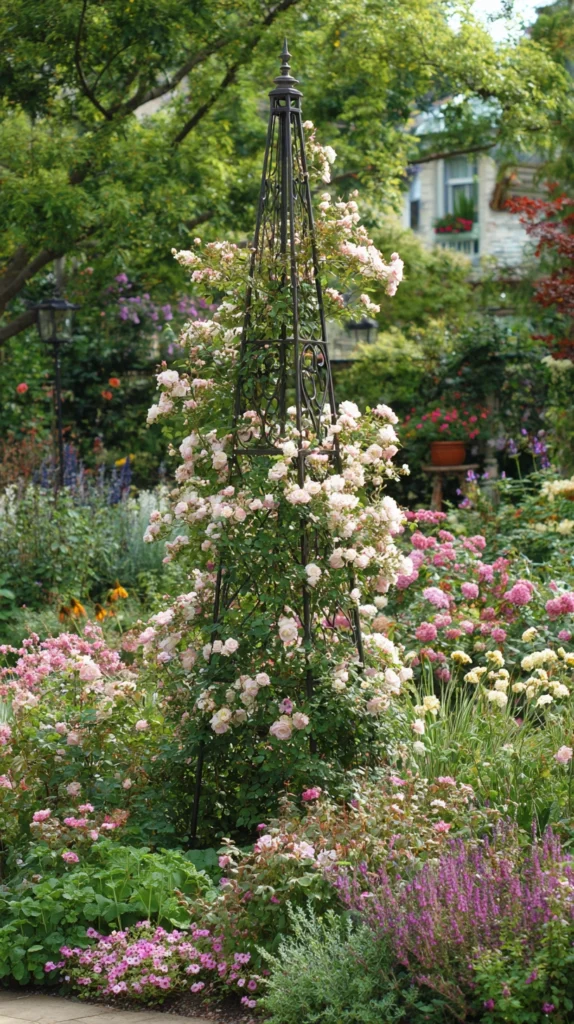
A rose obelisk. a tall, slim, pyramidal structure of timber or metal positioned within a border or at a path junction and planted with a climbing or scrambling rose trained up its frame. creates a vertical accent of considerable decorative quality and spatial drama within the rose garden.
The obelisk format allows a climbing rose to be grown as a freestanding feature within an open garden area rather than requiring a wall or fence for support, and the geometric form of the obelisk provides a strong visual anchor within the border that is as interesting in winter when the rose is dormant as in summer when it is in full bloom.
13. Create a Rose Meadow
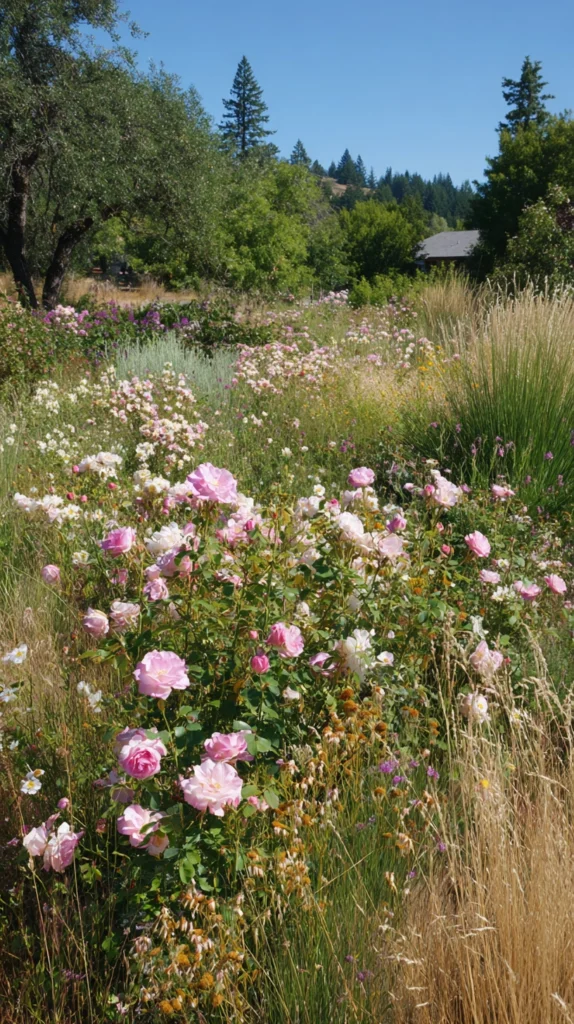
A rose meadow. large, robust shrub roses and species roses planted at generous spacing within a ground cover of low-growing wildflowers and grasses that are allowed to grow naturally between the rose stems. creates a rose garden of extraordinary naturalistic beauty and considerable ecological value.
Species roses. Rosa rugosa, Rosa glauca, Rosa moyesii. with their single or semi-double flowers, their attractive hips, and their robust, disease-resistant constitution are the most appropriate roses for a meadow planting. The informal, naturalistic quality of a rose meadow is entirely different from the manicured formality of a traditional rose garden and creates a planting of genuine wildness and romance.
14. Plant Fragrant Old Garden Roses
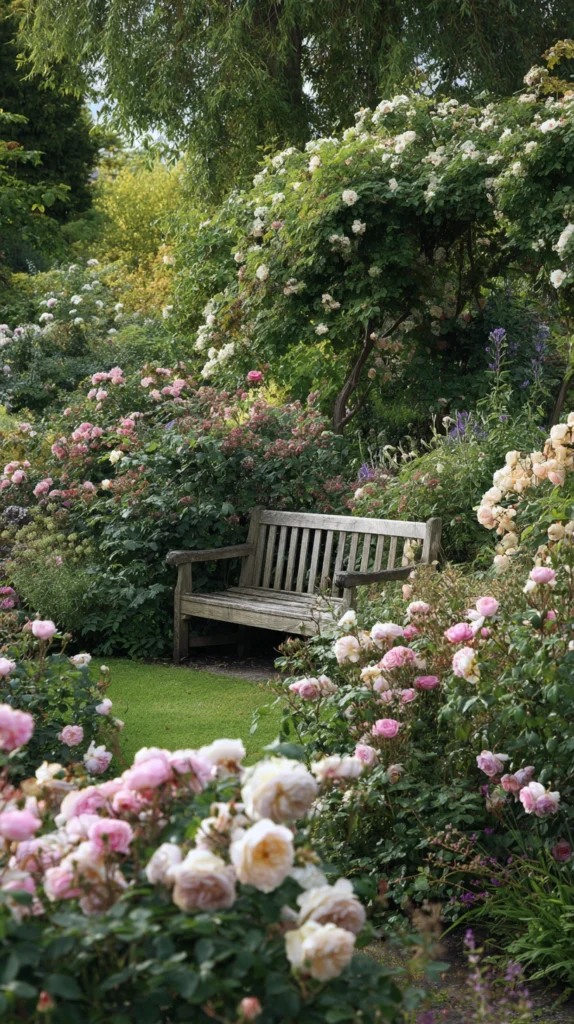
Old garden roses. the classes of roses that predate the introduction of the hybrid tea rose in the nineteenth century, including gallicas, damasks, albas, centifiolias, and moss roses. are the most extraordinarily fragrant roses available and their planting in a dedicated fragrant rose garden creates a sensory experience of remarkable intensity and historical resonance.
Old garden roses typically flower in a single flush in early summer rather than the repeat flowering of modern varieties, but the abundance, the fragrance, and the historical beauty of their flowers during that single flush is so extraordinary that the absence of repeat flowering is entirely forgiven and entirely forgotten.
15. Maintain the Rose Garden with Consistent Care
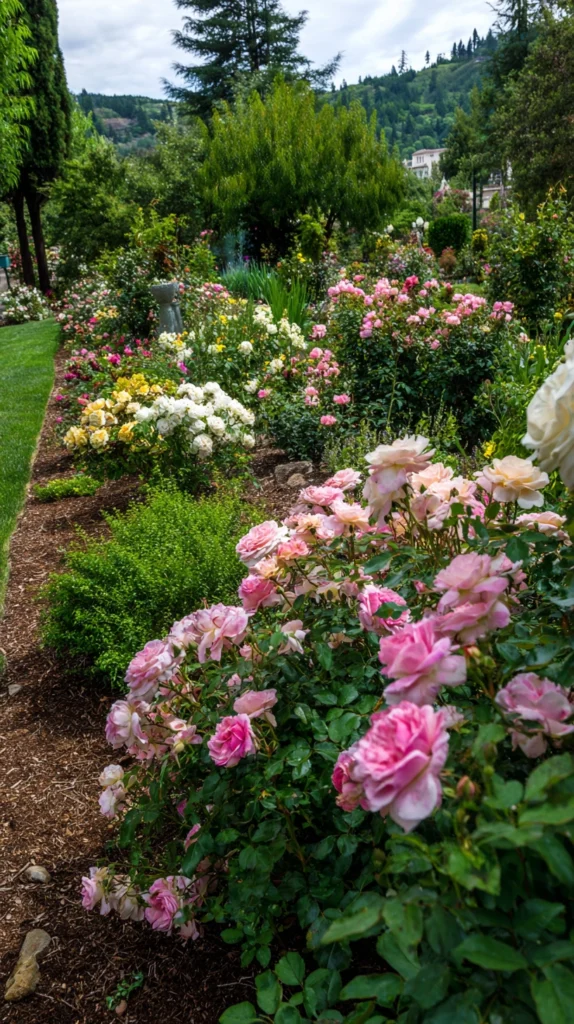
The final and most important rose garden principle is consistent, attentive, and knowledgeable care. A rose garden that is fed regularly with a specialist rose fertilizer, pruned at the correct time and in the correct manner for each rose type, deadheaded through the season to encourage repeat flowering, watered during dry spells, and monitored for the pest and disease problems that roses are susceptible to will produce a display of extraordinary beauty and extraordinary abundance season after season.
A rose garden that is neglected quickly loses its vitality, its flowering productivity, and its beauty, becoming a thorny, overcrowded disappointment rather than the garden of extraordinary romance and fragrance that it was designed to be.
The Rose Garden as a Lifelong Love
A rose garden is not a project to be completed and left. It is a living relationship between the gardener and the most extraordinary flowering plant in the horticultural world. It requires knowledge, patience, consistent attention, and the willingness to learn from both success and failure over multiple growing seasons.
The gardener who commits to that relationship will be rewarded with a garden of such beauty, such fragrance, and such seasonal richness that it will remain one of the most valued and most deeply loved spaces in their life for as long as they tend it.