15 Rental-Friendly Living Room Upgrades That Feel Custom
There’s something inherently frustrating about rental living. You’re paying for a space that should feel like home, yet you’re constrained by lease agreements, security deposits, and landlords who’d rather keep everything beige and boring.
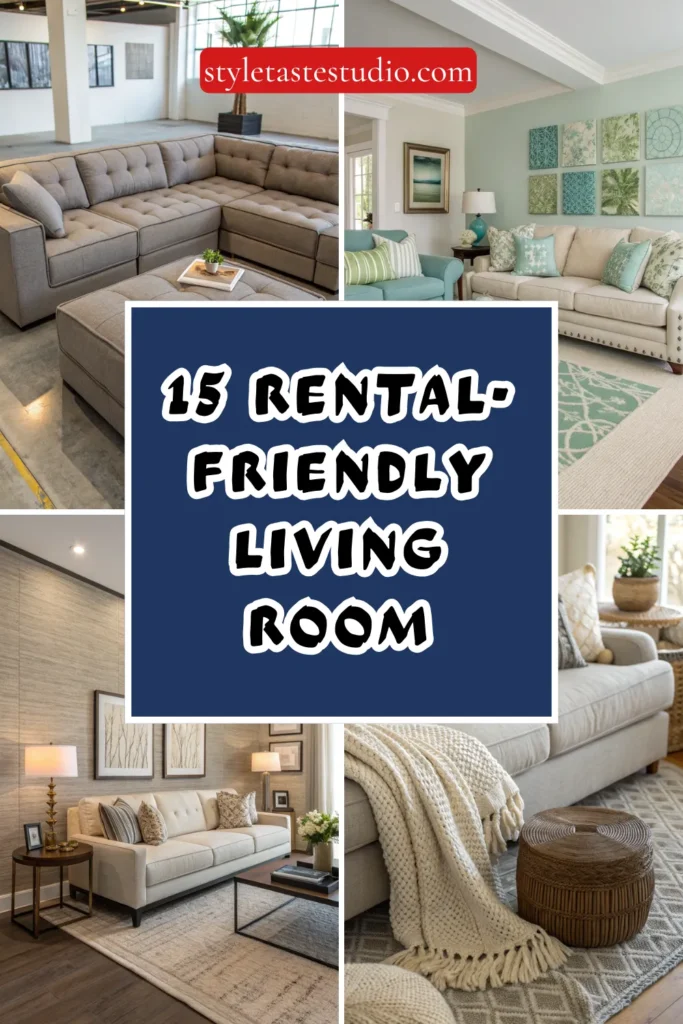
But here’s the thing: temporary doesn’t have to mean uninspired. The modern renter has cracked the code on creating spaces that rival professionally designed homes, all while keeping every modification completely reversible.
The beauty of today’s rental-friendly upgrades lies in their sophistication. We’re not talking about college dorm aesthetics or makeshift solutions that scream “temporary.”
These are legitimate design interventions that bring personality, warmth, and that coveted custom feel to your living room without jeopardizing your security deposit. Whether you’re working with a cramped studio or a spacious apartment, these upgrades will transform your rental into a space that feels distinctly yours.
1. Removable Wallpaper That Actually Looks Expensive
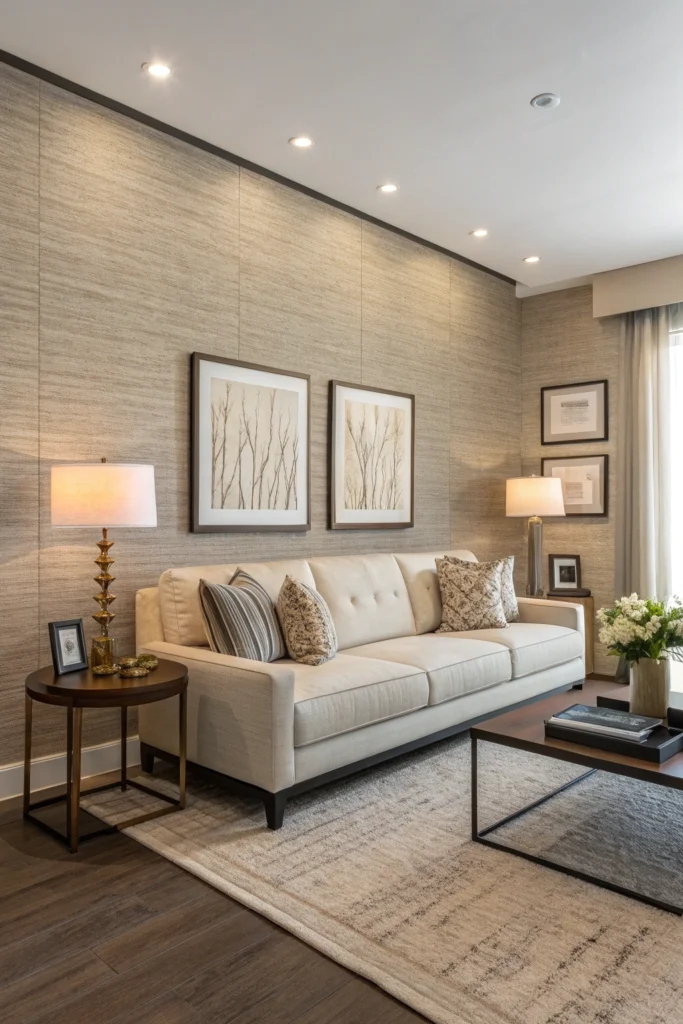
Let’s start with the transformation that delivers the most dramatic impact: removable wallpaper. The rental-friendly wallpaper of today bears no resemblance to the sticky, plasticky versions from years past. Modern peel-and-stick options come in textures and patterns that rival traditional wallpaper, from grasscloth textures to hand-painted florals and geometric designs that wouldn’t look out of place in a boutique hotel.
The key is choosing quality over quantity. Instead of wallpapering every wall, select one statement wall, typically the one behind your sofa or the wall you see when entering the room. This creates a focal point that anchors the entire space.
Opt for sophisticated patterns like subtle marbling, abstract brush strokes, or textured linen looks that add depth without overwhelming. The installation is straightforward, and removal is genuinely damage-free when you follow the manufacturer’s instructions, making this the ultimate commitment-free way to add architectural interest.
2. Floating Shelves That Skip the Studs
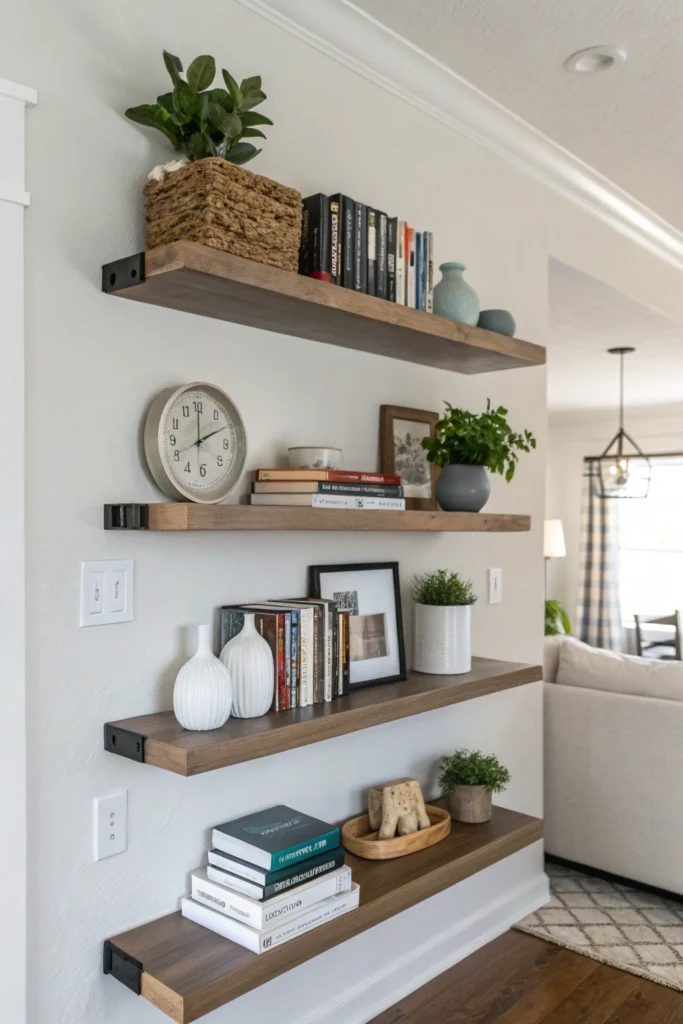
Storage and display space can make or break a living room’s functionality, but drilling into walls isn’t always an option. Enter the new generation of damage-free hanging systems that use specialized adhesive strips capable of holding significant weight. These aren’t your average command strips; they’re engineered to support floating shelves that can hold books, plants, and decorative objects without leaving a trace.
Style these shelves with intention. Create asymmetrical arrangements that draw the eye upward, making your ceilings feel higher. Mix books with small sculptures, framed photos, and greenery for a curated look. The beauty of this approach is its flexibility. You can rearrange, add, or remove shelves as your style evolves, something impossible with traditional built-ins.
3. Layered Lighting That Creates Ambiance
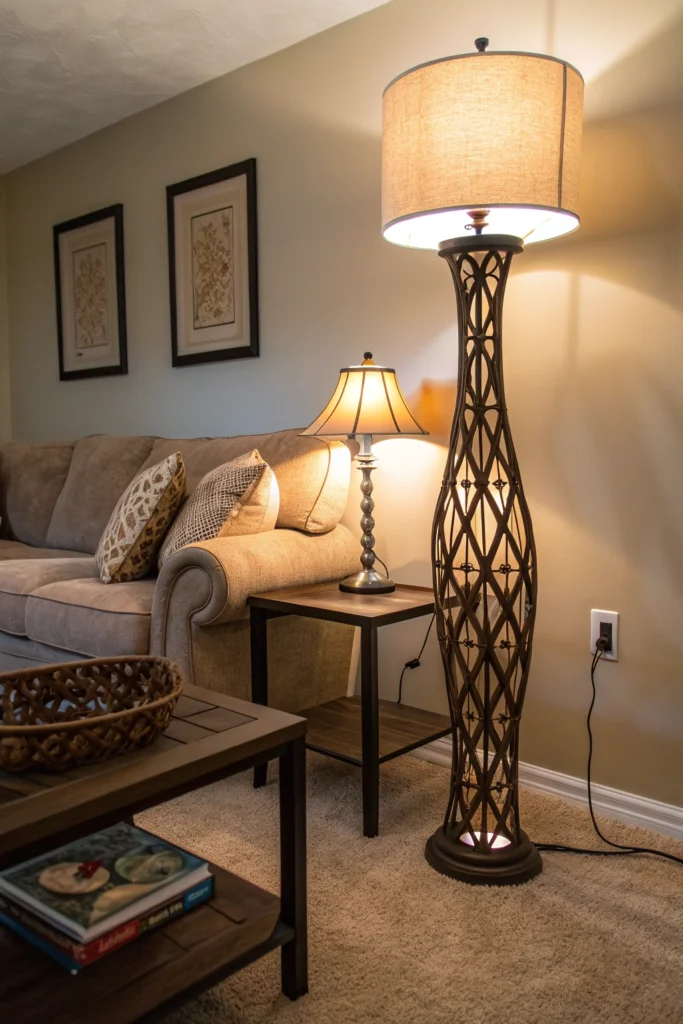
Overhead lighting in rentals is notoriously harsh and unflattering. The solution isn’t replacing fixtures, which often requires electrician-level work, but rather creating layers of light that make overhead fixtures almost irrelevant. Start with sculptural floor lamps that serve as functional art pieces. Arc lamps, for instance, can provide overhead-style lighting without any installation, while tripod floor lamps add architectural interest.
Add table lamps on console tables or side tables, choosing designs that make statements. Then comes the game-changer: battery-operated or plug-in picture lights and LED strip lighting. These can highlight artwork, create subtle backlighting behind furniture, or wash walls with warm light. The result is a living room with multiple lighting moods, from bright and functional to intimately dim, all controlled without touching a single existing fixture.
4. Area Rugs as Foundation and Art
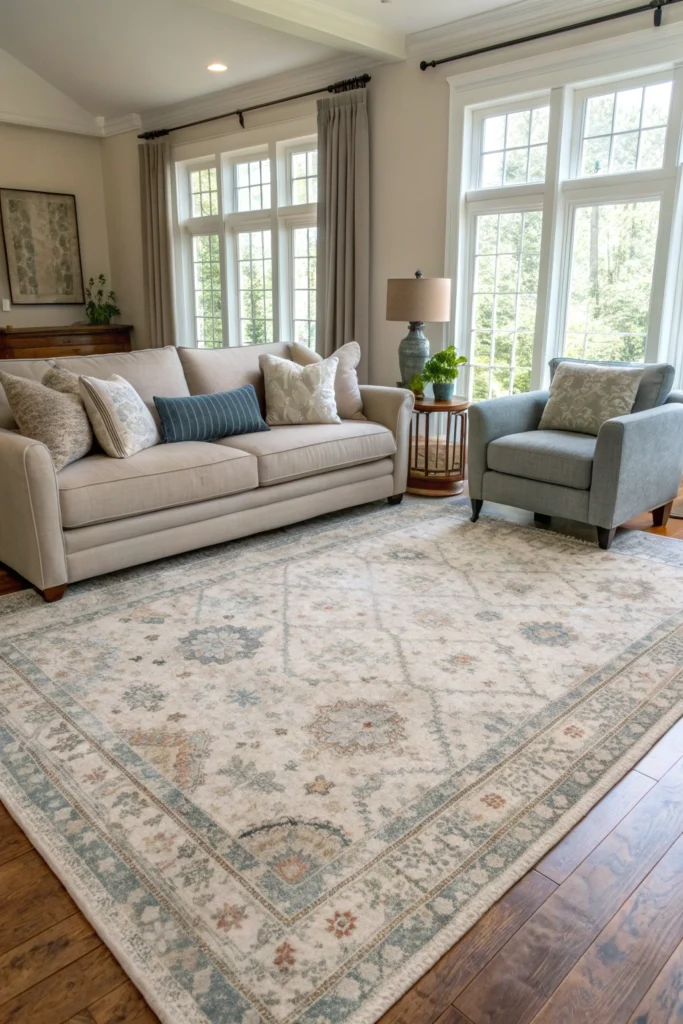
Never underestimate the transformative power of a generous area rug. In rentals with dated flooring or generic carpet, a well-chosen rug doesn’t just cover problems; it redefines the entire space. The rule here is to go larger than you think necessary.
Your rug should be big enough that all furniture either sits completely on it or has at least the front legs resting on it.
This creates cohesion and makes the room feel intentionally designed. Choose rugs with texture and visual interest, whether that’s a vintage Persian style, a modern abstract pattern, or a chunky natural fiber. The rug becomes your foundation, the piece from which all other design decisions flow. It’s also completely portable, making it an investment that moves with you from rental to rental.
5. Strategic Furniture Arrangement That Maximizes Flow
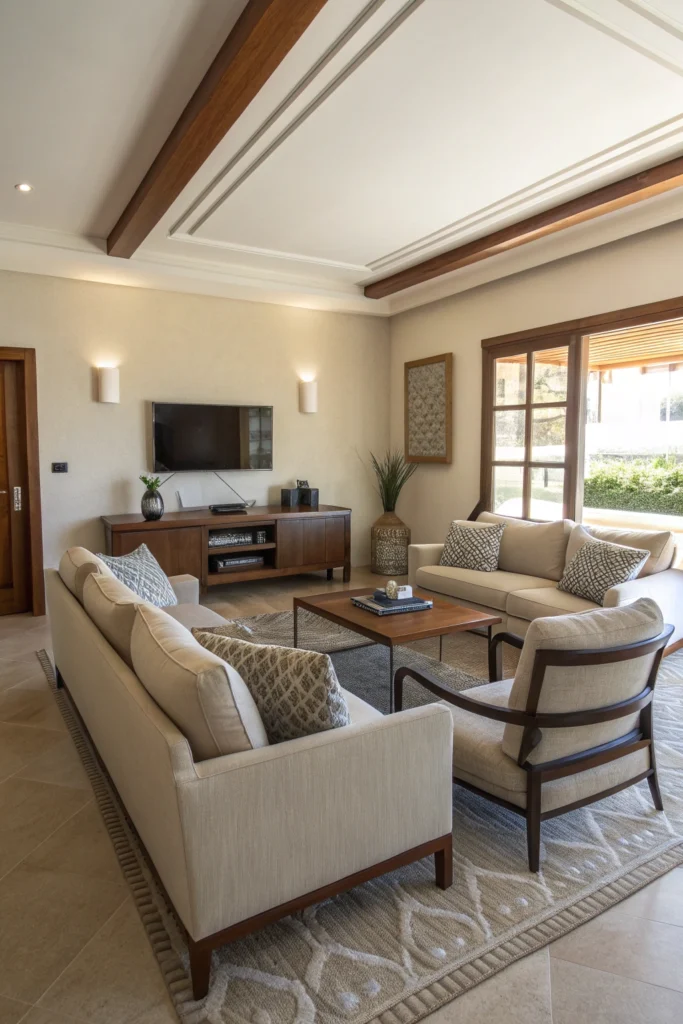
You can’t change your living room’s dimensions, but you can dramatically alter how it feels through thoughtful furniture placement. Start by pulling furniture away from walls.
This counterintuitive move actually makes spaces feel larger by creating depth and defined zones. Position your sofa to create conversation areas rather than defaulting to the TV-facing setup.
Use furniture to create distinct areas within open layouts. A sofa can divide living and dining spaces, while a bookshelf placed perpendicular to a wall can create a pseudo-entryway or office nook. The goal is to make your rental’s layout feel intentional rather than dictated by where the previous tenant left their marks on the carpet. This costs nothing but transforms everything.
6. Curtains That Reach for the Ceiling
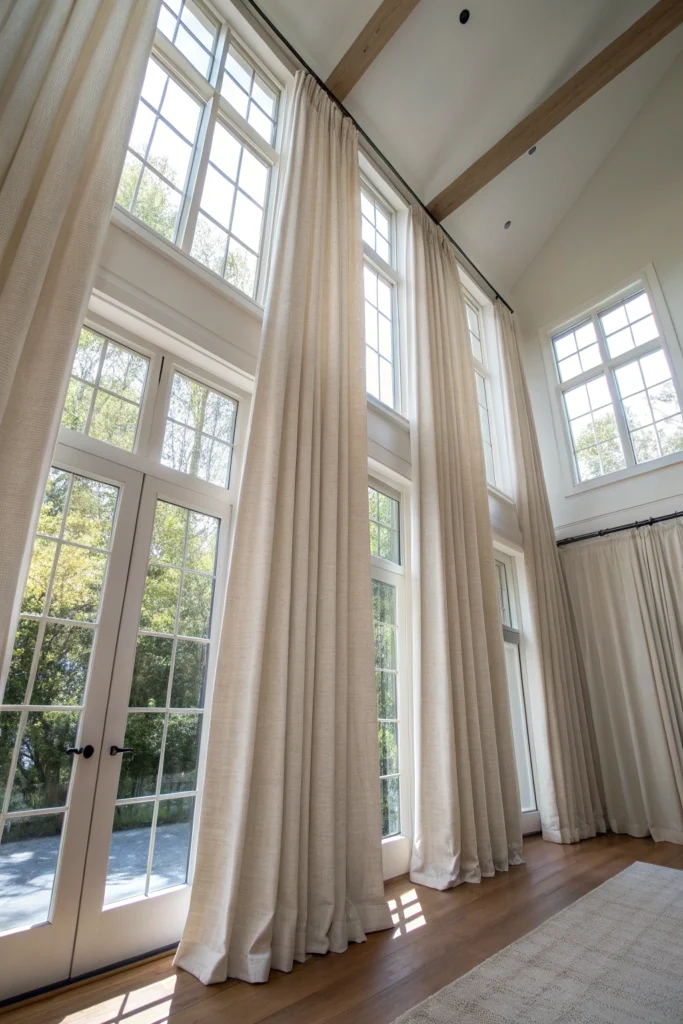
Builder-grade blinds are the enemy of sophisticated interiors. The fix is simple but incredibly effective: install curtain rods as close to the ceiling as possible and hang curtains that just kiss or puddle slightly on the floor. This vertical emphasis makes ceilings appear higher and windows more substantial, even if they’re actually quite modest.
Choose curtains in natural fabrics like linen or cotton blends in colors that complement your palette. For rentals with challenging window placements, use tension rods that require zero hardware. The financial investment is minimal, but the visual impact rivals custom window treatments. When you move, simply pack them up, no patching or painting required.
7. Modular Seating That Adapts to Your Life
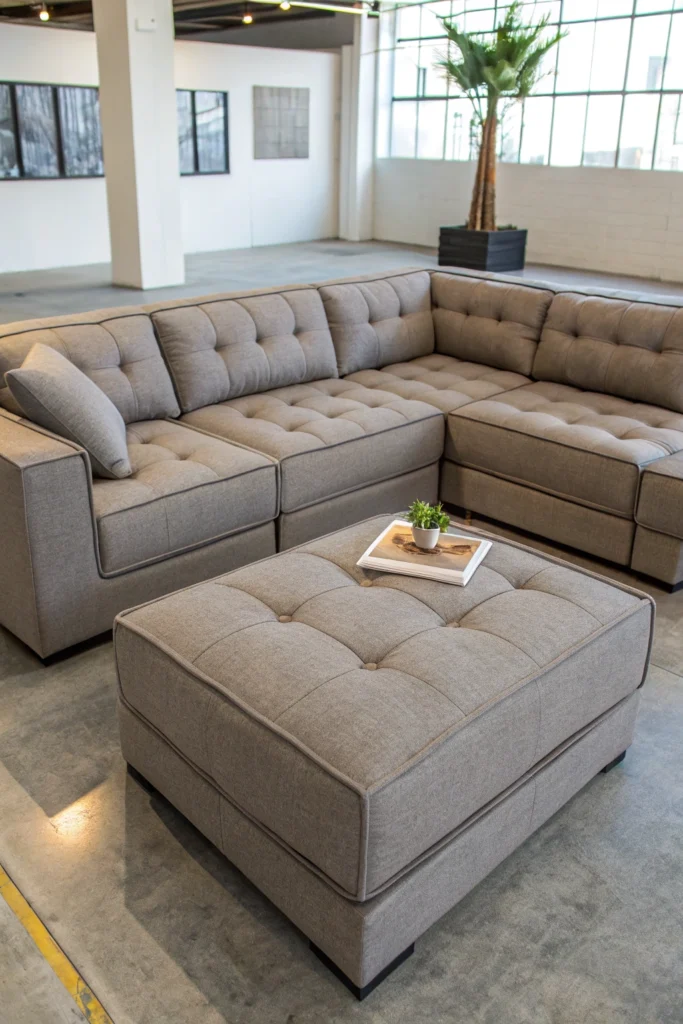
Traditional sofas lock you into one configuration, but modular seating systems give you the flexibility renters need. These pieces can be reconfigured for different layouts, social situations, or when you move to a new space with different dimensions.
Look for systems with ottomans that double as coffee tables or extra seating, chairs that can be grouped or separated, and sectionals that break down into individual components.
The modern rental lifestyle often involves moving, hosting, or adapting to changing circumstances. Modular furniture accommodates all of this while maintaining a cohesive, designed look. Plus, investing in quality modular pieces means you’re buying furniture that grows with you rather than becomes obsolete with your next move.
8. Gallery Walls with Damage-Free Hanging Systems
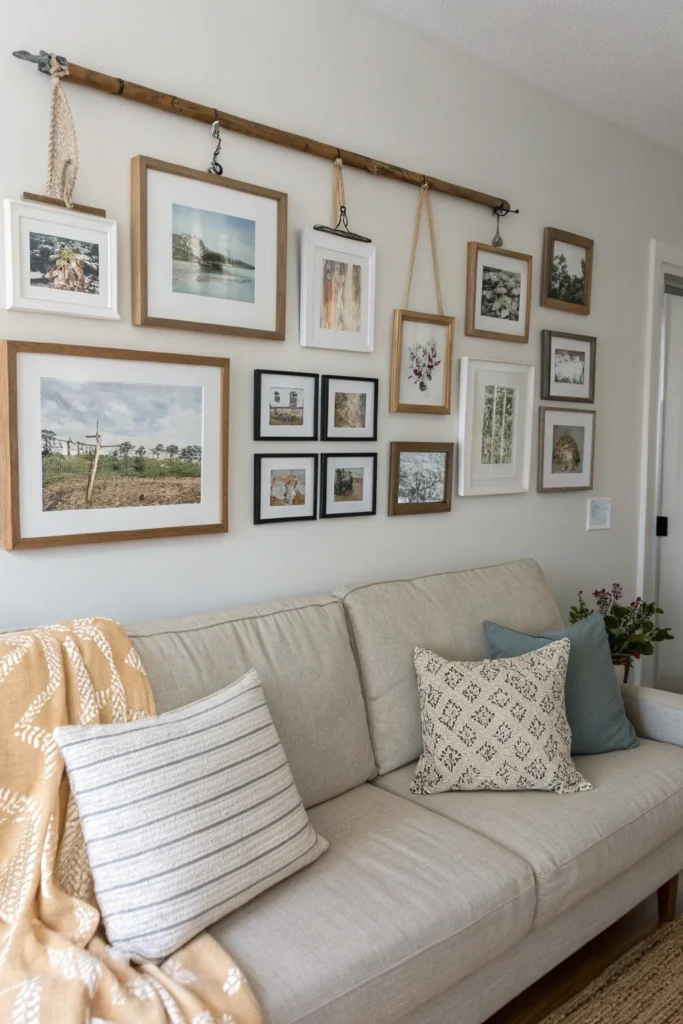
Art transforms spaces from generic to personal, but creating gallery walls in rentals has always been tricky. Today’s damage-free picture hanging strips have evolved to support substantial weight, allowing you to create impressive art displays without a single nail hole. The key to gallery walls that feel curated rather than chaotic is planning the layout on the floor first.
Mix frame sizes and styles, but maintain consistency through matting or color palette. Include three-dimensional objects like small shelves or mirrors to add depth. The beauty of using removable hanging systems is the freedom to experiment. If a layout isn’t working, you can adjust without consequence. This encourages the kind of thoughtful curation that makes spaces feel custom and collected over time.
9. Plants as Living Architecture
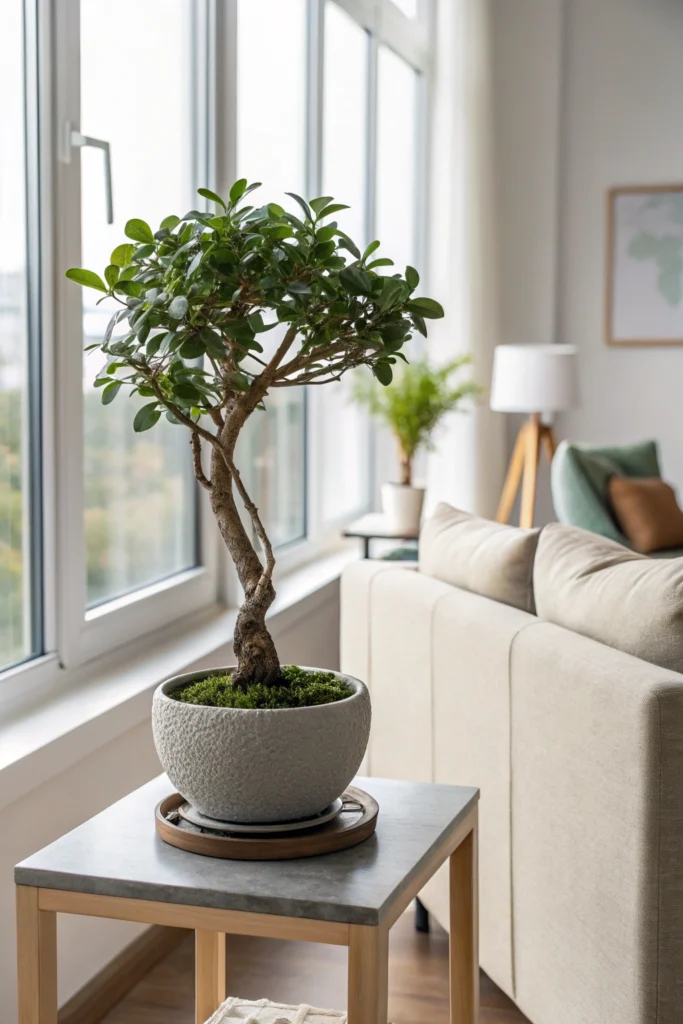
Greenery brings life, literally and figuratively, to rental living rooms. But beyond the basic potted plant on a side table, consider using plants as architectural elements. Large floor plants like fiddle leaf figs, bird of paradise, or monstera deliciosa create vertical interest and fill empty corners with organic sculpture. Group smaller plants at varying heights on plant stands or stacked books to create lush vignettes.
Hanging plants add dimension without consuming floor space, perfect for smaller rentals. Use ceiling hooks designed for rentals or leverage existing fixtures like curtain rods. The combination of varied plant heights, textures, and positions creates a layered, designed look that feels intentional and custom. Plus, plants improve air quality and bring a sense of calm that no amount of furniture can achieve.
10. Accent Walls Through Strategic Paint
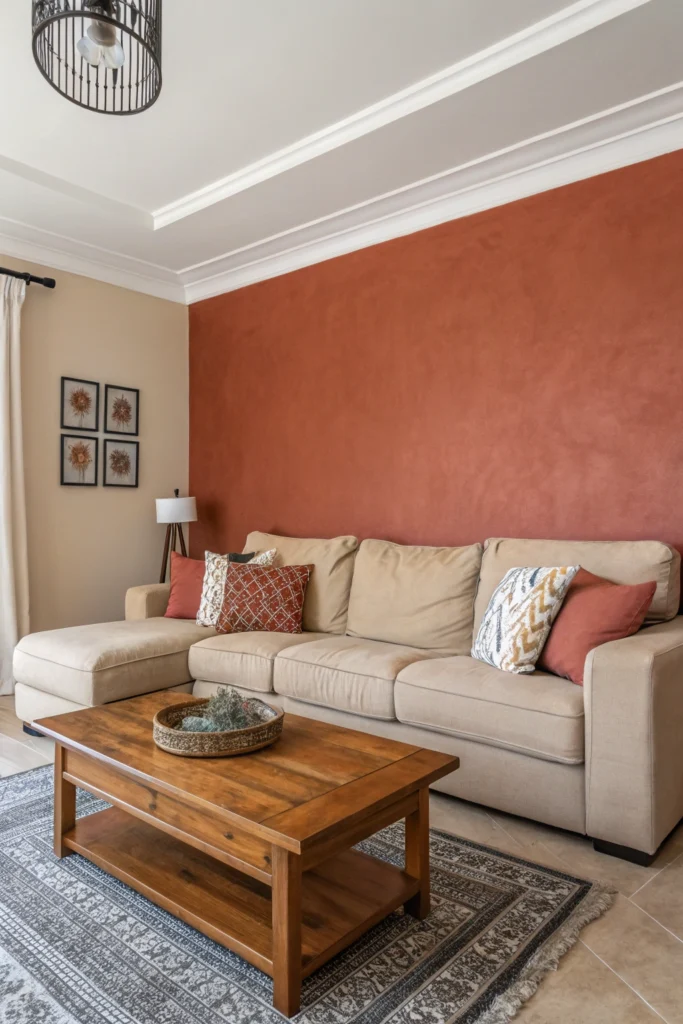
While some landlords prohibit painting, many allow it with the agreement that you’ll return walls to their original color. If you’re in this category, don’t paint everything. Instead, choose one accent wall in a sophisticated, modern color. Deep jewel tones, warm terracottas, or moody charcoal can completely transform a space’s mood.
The single accent wall approach minimizes the repainting you’ll need to do when moving while maximizing impact. It creates a focal point and allows you to incorporate bolder colors you might hesitate to use throughout an entire room.
Keep your original paint for touch-ups and repainting, and document the original color with photos and paint chips. This level of preparation makes the eventual restoration straightforward.
11. Textural Layers That Add Depth
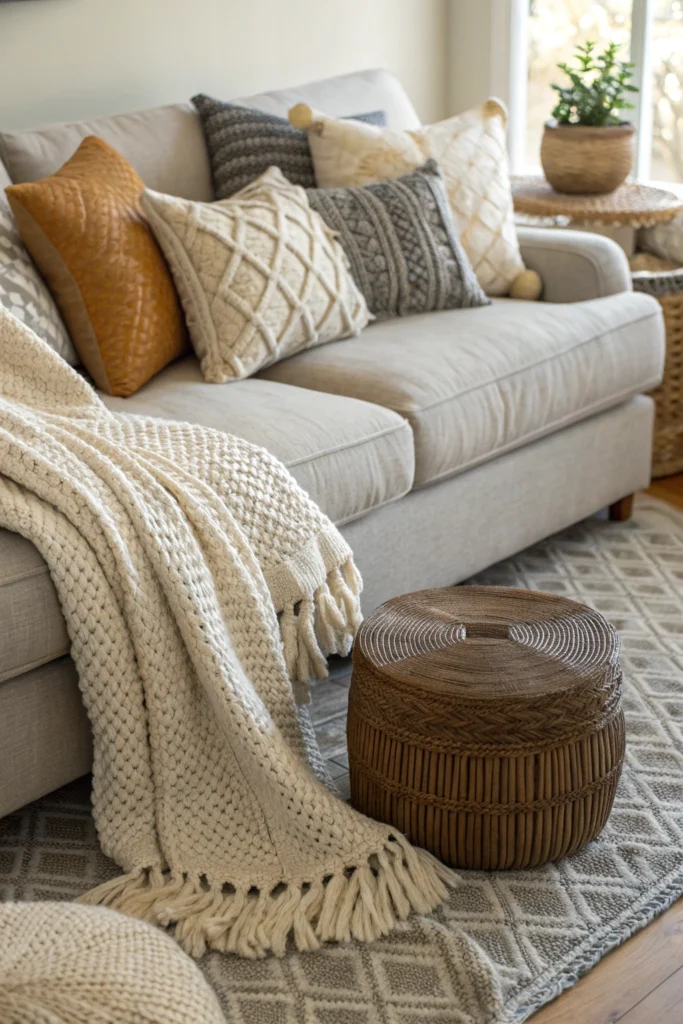
Texture is what separates spaces that feel flat from those with dimension and interest. Layer different textiles throughout your living room: a chunky knit throw over your sofa, velvet or linen pillows in varying sizes, a jute or wool rug underfoot, and perhaps a leather or upholstered ottoman. These elements create tactile variety that makes spaces feel rich and considered.
The beauty of textural layering is that it’s completely portable and endlessly customizable. You can adjust with seasons, changing from lightweight linens in summer to heavier wools and velvets in winter. This approach also allows you to incorporate trends in small, affordable doses through pillow covers or throws rather than major furniture investments.
12. Mirrors That Multiply Light and Space
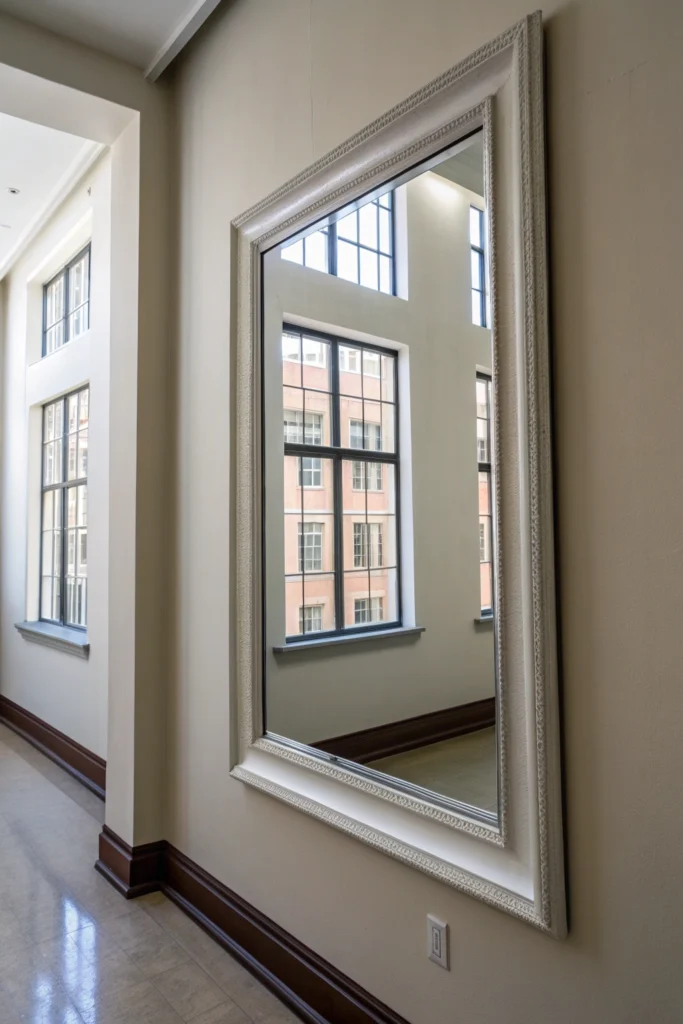
Mirrors are the secret weapon of rental design, capable of making small spaces feel exponentially larger and dark rooms significantly brighter. A large leaning mirror, propped against a wall rather than hung, creates impact without installation. Position mirrors opposite windows to bounce natural light throughout the room, or use them to reflect interesting architectural details or views.
Consider mirrors with interesting frames that serve as art pieces themselves. Vintage finds, modern geometric designs, or ornate traditional frames all bring personality while serving a functional purpose. The leaning approach is particularly renter-friendly, allowing you to move mirrors easily and avoid wall damage entirely.
13. Smart Storage That Disappears
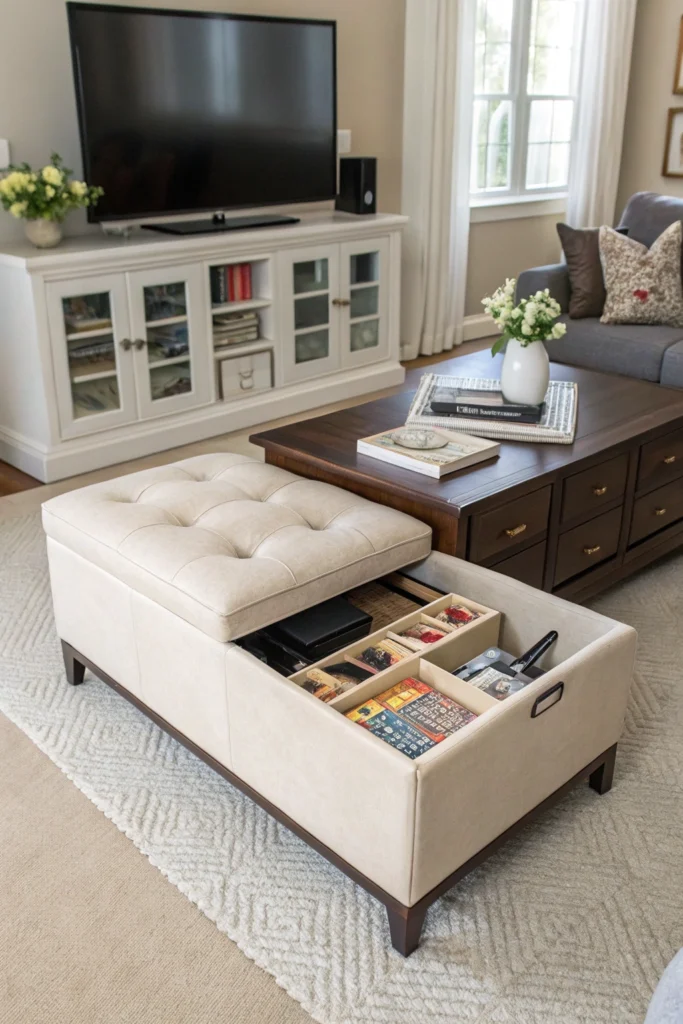
Clutter is the enemy of custom-looking spaces, but rental living rooms rarely come with adequate storage. The solution is furniture that works double duty. Ottoman coffee tables with hidden storage, console tables with drawers and shelves, and media consoles with ample cabinet space keep necessary items accessible but invisible.
Choose storage furniture with clean lines and quality construction that doesn’t advertise its utilitarian purpose. Woven baskets tucked under console tables or on shelves add texture while corralling remotes, magazines, and other living room detritus. The goal is a space that feels serene and uncluttered, where everything has a home and nothing disrupts the carefully crafted aesthetic.
14. Statement Furniture Pieces That Anchor the Room
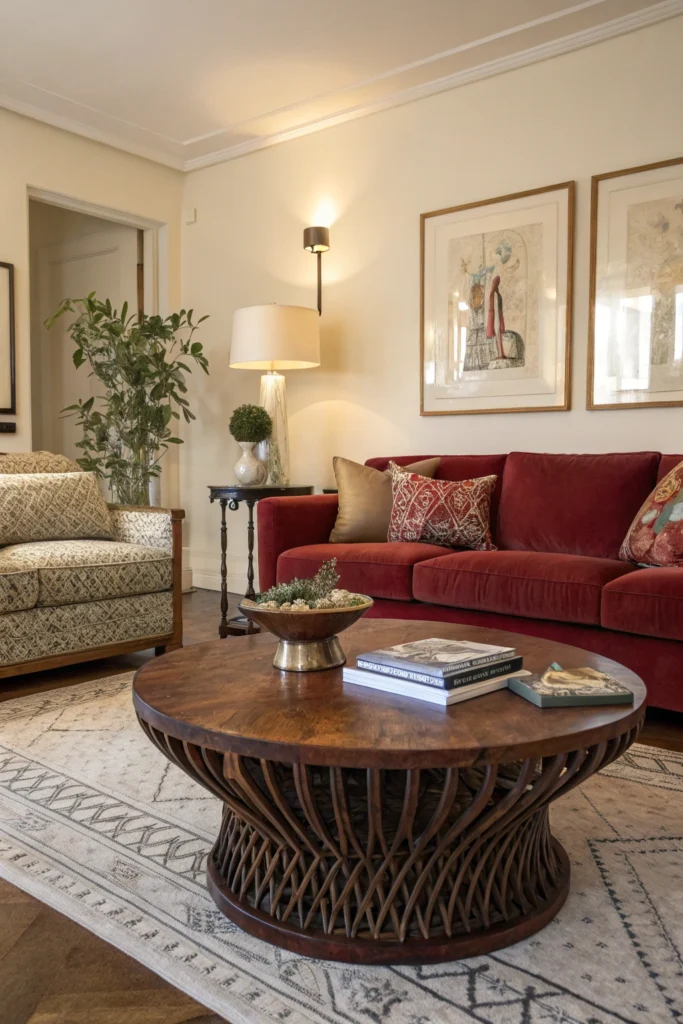
Every well-designed living room needs an anchor, a piece so distinctive it elevates everything around it. In rentals where you can’t modify the architecture, this statement piece becomes even more critical. It might be a vintage credenza, a sculptural coffee table, a velvet sofa in a saturated color, or an iconic designer chair.
This doesn’t necessarily mean expensive. It means thoughtfully chosen. Scour secondhand shops, estate sales, and online marketplaces for pieces with character. One exceptional piece carries more weight than a room full of adequate furniture. It tells visitors that this space was curated with intention, that someone with taste and vision lives here, temporary lease or not.
15. Cohesive Color Palette That Unifies
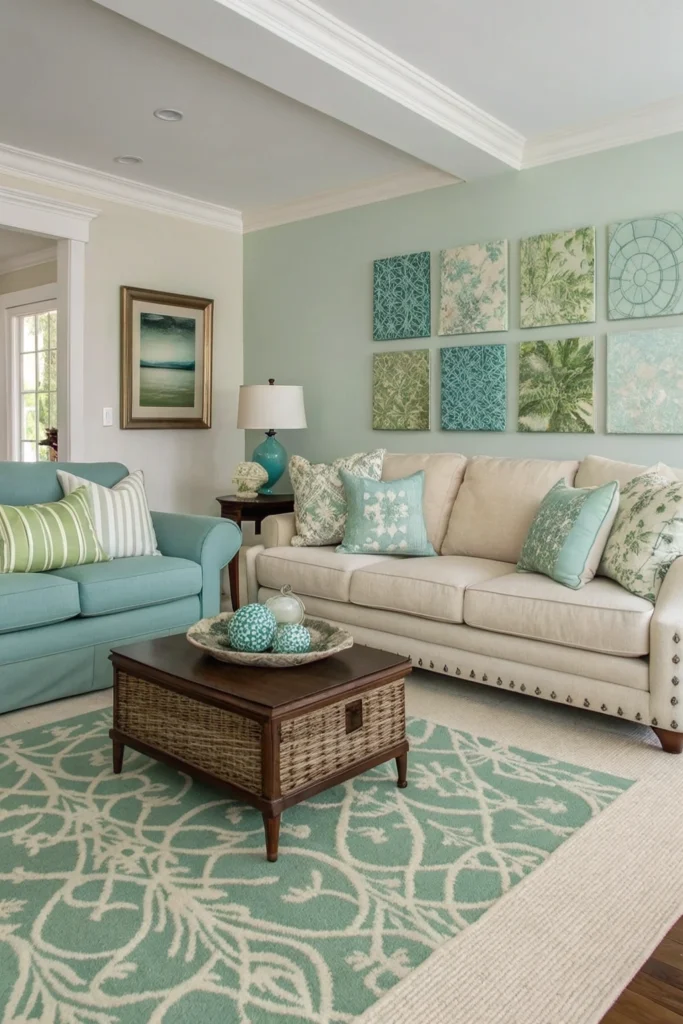
The fastest way to make a rental feel custom is establishing and maintaining a cohesive color palette. Choose three to five colors that appear throughout the space in varying proportions. This might be a neutral base with two accent colors and metallic accents, or a monochromatic scheme with textural variation.
Apply this palette consistently across textiles, artwork, decorative objects, and even book covers displayed on shelves. This repetition creates visual harmony that makes spaces feel professionally designed. It also makes future purchases easier since you have clear parameters.
When everything works together coloristically, even modest furniture and accessories read as sophisticated and intentional.
The rental living room of today doesn’t need to accept mediocrity. These fifteen upgrades prove that temporary spaces can feel permanent, that leases don’t limit creativity, and that security deposits can remain intact while style flourishes.
The modern renter understands that home isn’t about ownership; it’s about creating spaces that reflect who you are and how you want to live. These upgrades make that possible, one reversible change at a time.