15 Pergola Ideas and Designs for Every Outdoor Space
A pergola is one of those outdoor structures that transforms a garden or backyard from a space you pass through into a space you actually want to spend time in. It defines an area, creates a sense of shelter without enclosing it completely, and provides the framework for climbing plants, lighting, and outdoor living that turns a plain patch of garden into something genuinely special.
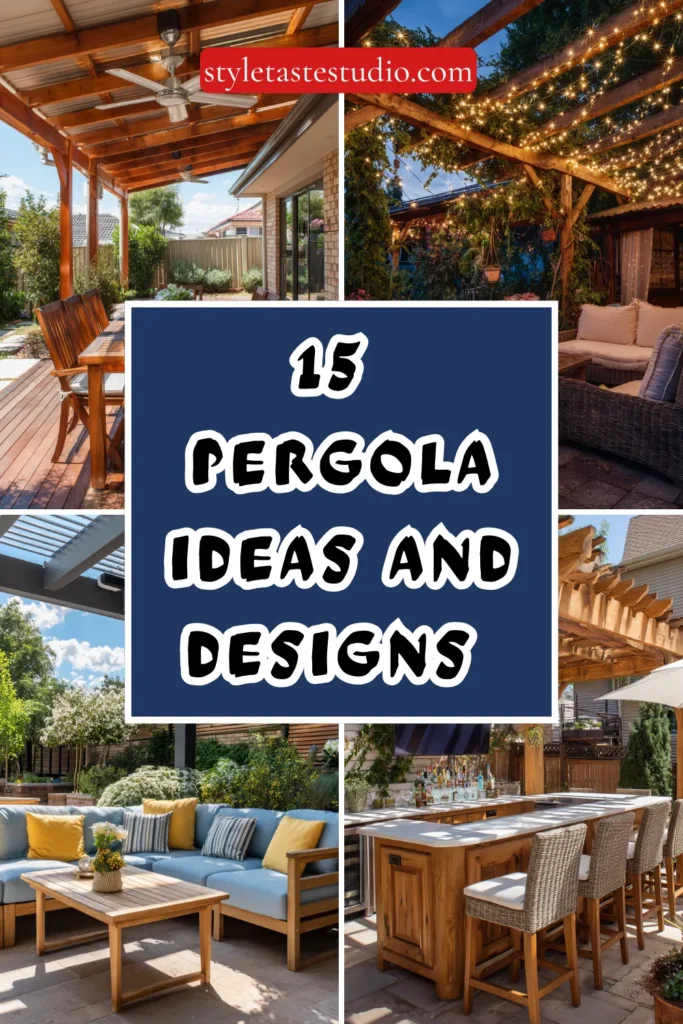
The best pergolas do two things simultaneously — they function brilliantly as a practical outdoor living structure and they look beautiful as a garden feature in their own right. Getting both right requires thinking carefully about materials, scale, positioning, and the way the pergola relates to the house and garden around it.
Here are 15 pergola ideas and designs that cover every style, every budget, and every outdoor space.
1. Classic Timber Pergola with Climbing Roses
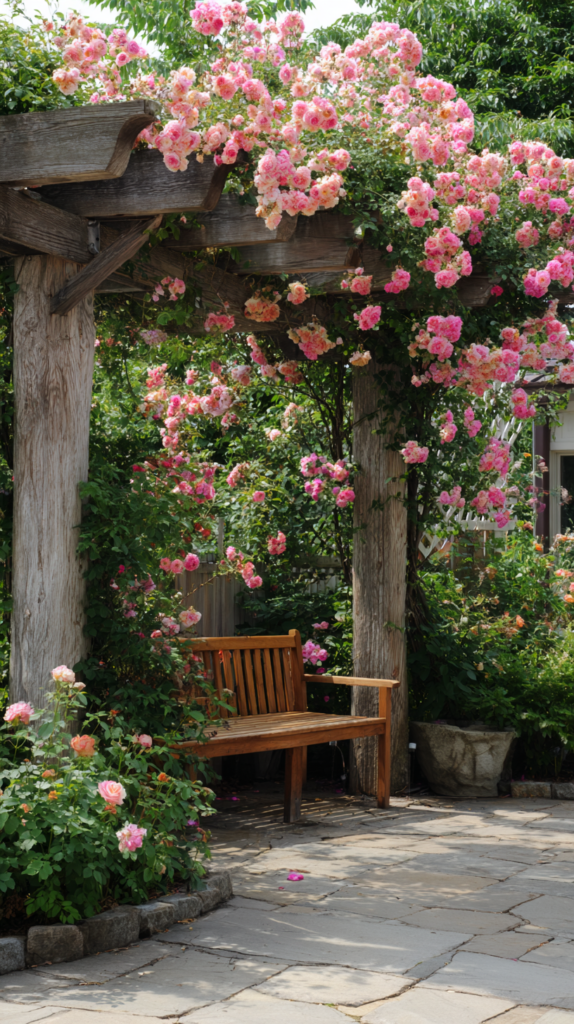
The classic timber pergola draped in climbing roses is one of the most enduringly beautiful garden structures imaginable. The combination of the warm, natural timber frame and the abundance of climbing roses in full bloom creates a garden feature of extraordinary romantic beauty that improves with every passing year as the roses establish and fill the structure more completely.
Build the frame from pressure-treated oak, cedar, or redwood for the best combination of natural beauty and weather resistance. Choose vigorous climbing rose varieties — Generous Gardener, Compassion, or New Dawn — that will cover the structure generously within two to three seasons. Train the stems along the horizontal beams and tie in regularly to encourage even coverage across the whole frame.
Pro Tip: Plant climbing roses at the base of each pergola post rather than in a single cluster at one end. Roses planted at each post establish coverage from multiple starting points simultaneously and fill the pergola frame significantly faster and more evenly than a single planting that must travel the full length of the structure before the far end shows any coverage at all.
2. Modern Minimalist Steel Pergola
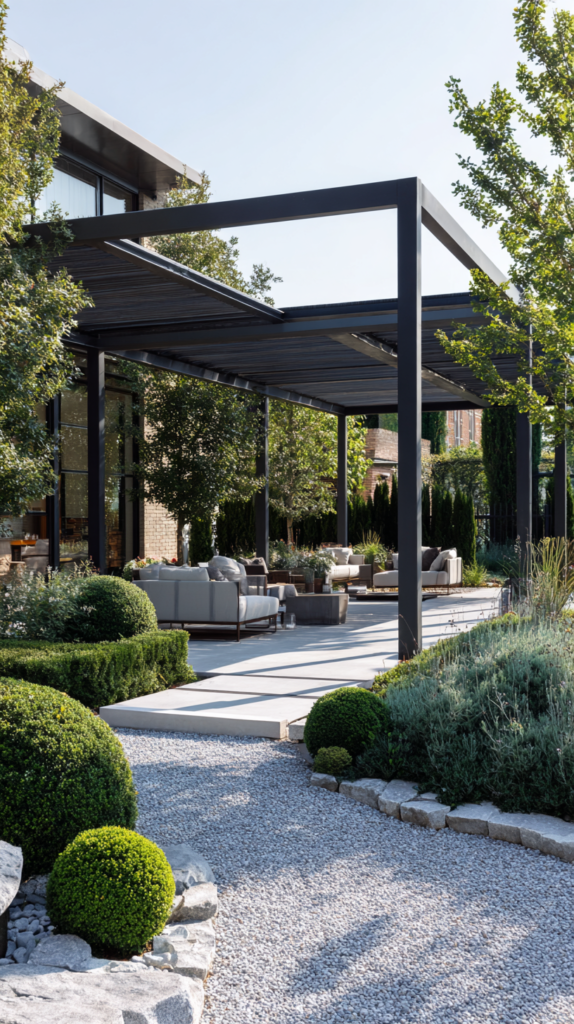
A steel pergola with clean lines, minimal ornamentation, and a precise geometric form creates an outdoor structure of contemporary architectural quality that suits modern homes and gardens with equal conviction. The structural honesty of exposed steel, the precision of welded joints, and the slender profiles achievable in metal create a pergola aesthetic that timber simply cannot replicate.
Powder-coated steel in matte black, anthracite grey, or a warm bronze tone all create a striking visual statement in a garden. Pair with simple gravel, large format paving, and architectural planting — ornamental grasses, clipped box, and structural perennials — for a complete outdoor living aesthetic that feels designed and intentional from every angle.
Pro Tip: Specify powder-coated rather than painted steel for a modern pergola that will live outdoors permanently. Powder coating is applied electrostatically and cured under heat, creating a finish that is significantly more durable, chip-resistant, and weather-resistant than conventional paint. A powder-coated steel pergola requires virtually no maintenance beyond an occasional wash and will maintain its appearance for many years without repainting.
3. Pergola with Outdoor Kitchen
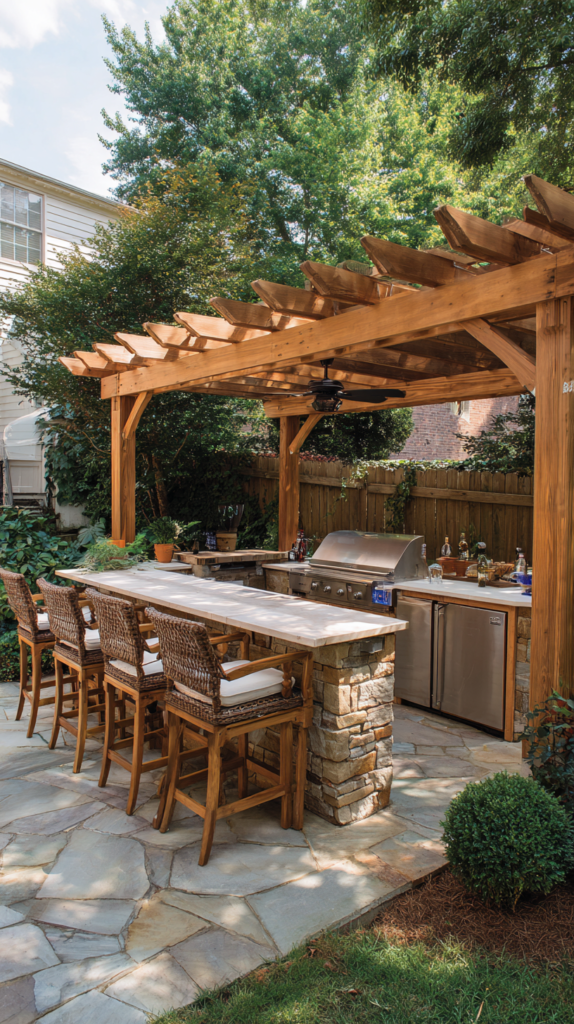
A pergola positioned directly over an outdoor kitchen — providing shade, weather protection, and a defined ceiling that makes the cooking area feel like a genuine outdoor room — is one of the most practically valuable and frequently used pergola designs available. The structure creates an outdoor kitchen that is usable in light rain and during the hottest summer days when an exposed cooking area would be unbearable.
Design the pergola with enough height above the cooking surface to allow smoke and cooking vapors to escape freely — a minimum of 2.4 metres clear height above the cooking level is a good starting point. Add a ceiling fan within the pergola to improve airflow during cooking and install weatherproof electrical outlets for appliances and lighting.
Pro Tip: Include a dedicated exhaust fan or a gap in the pergola roofing directly above the grill or hob position to allow cooking smoke to escape vertically rather than spreading horizontally through the entire pergola space. A small open panel or a louvred section directly above the primary cooking position is all that is required and makes the outdoor kitchen significantly more comfortable to cook in during extended sessions.
4. Pergola with Wisteria
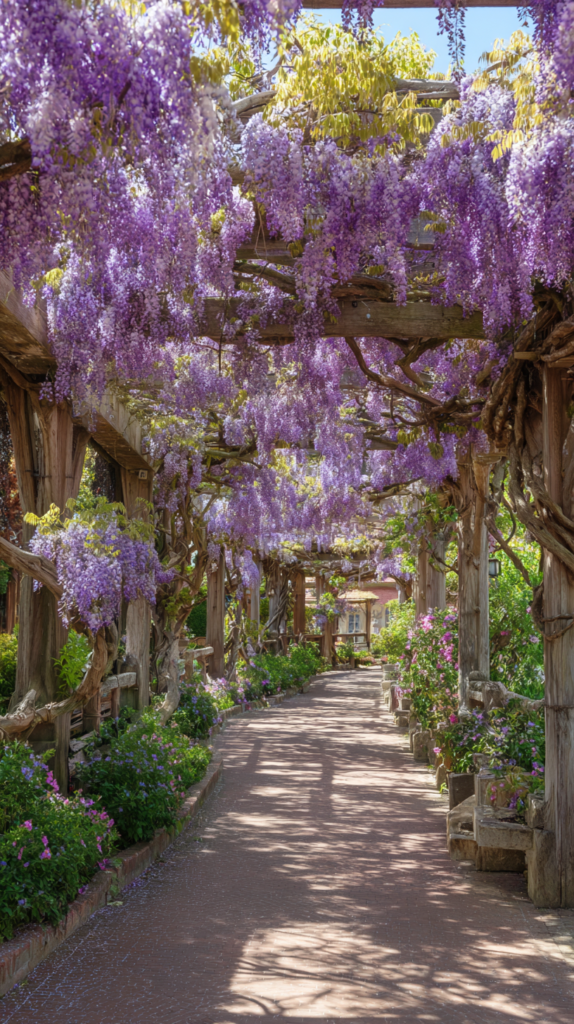
A pergola planted with wisteria is one of the most spectacular garden features possible — for approximately three weeks in late spring the entire structure disappears under a canopy of cascading purple, lilac, or white flower racemes of extraordinary beauty and fragrance. The transformation from bare timber to floral canopy happens so dramatically and so completely that it consistently stops people in their tracks.
The challenge with wisteria is the establishment period — it can take three to five years for a young plant to cover a pergola frame and begin flowering reliably. The wait is entirely worth it. A mature wisteria on a well-built pergola is one of those garden features that defines the entire space for a generation and becomes something guests specifically travel to see during the brief flowering window.
Pro Tip: Choose Wisteria sinensis or Wisteria floribunda rather than Wisteria brachybotrys for covering a pergola structure. The former two species are the most vigorous, the most reliably flowering, and the most widely available in named varieties with specific flower colors and fragrance. Prune twice a year — once in summer to shorten the long whippy growth and once in winter to cut back to two or three buds — to build the flowering framework that produces the spectacular display.
5. Pergola with Retractable Canopy
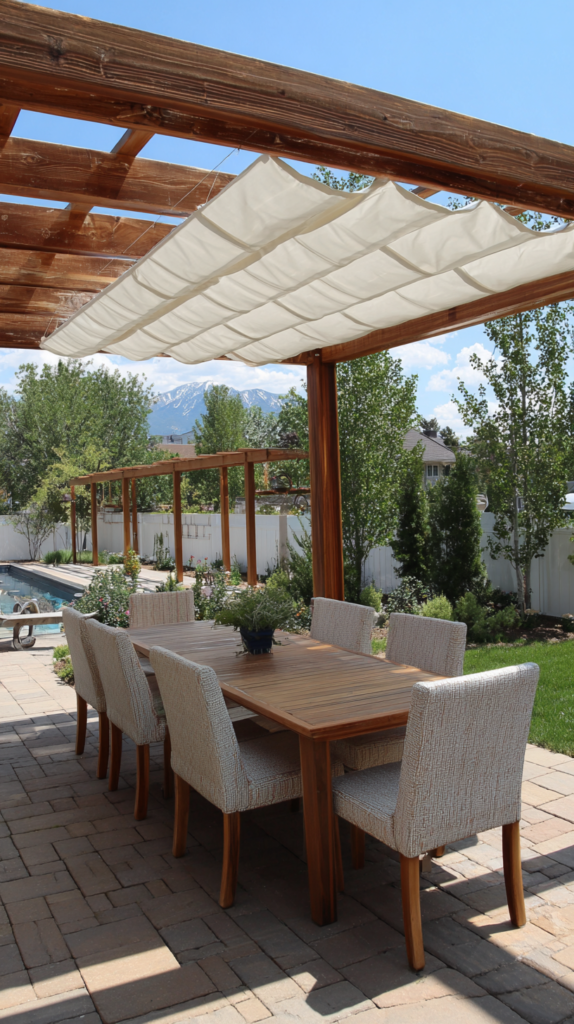
A pergola fitted with a retractable fabric canopy — a shade sail or a purpose-made retractable awning system that extends to cover the pergola roof when needed and retracts when not required — combines the open, airy quality of a traditional pergola with the practical weather protection of a covered structure in a single, flexible design.
The retractable canopy transforms the pergola from a fair-weather structure into an all-conditions outdoor room. Rain during a summer party becomes manageable rather than catastrophic. Harsh midday sun during a family lunch becomes comfortable rather than unbearable. The flexibility to choose between open sky and covered protection makes a pergola with retractable canopy one of the most genuinely useful outdoor living structures available.
Pro Tip: Choose a canopy fabric with a high UV protection rating — at least UPF 50 — for a pergola used during the middle of the day in summer. Standard shade fabrics offer varying levels of UV protection and the difference between a fabric that blocks 50 percent of UV and one that blocks 95 percent is significant in terms of skin protection for people sitting beneath it for extended periods. Check the specific UV rating rather than relying on general descriptions of shade quality.
6. Rustic Wooden Pergola with Fairy Lights
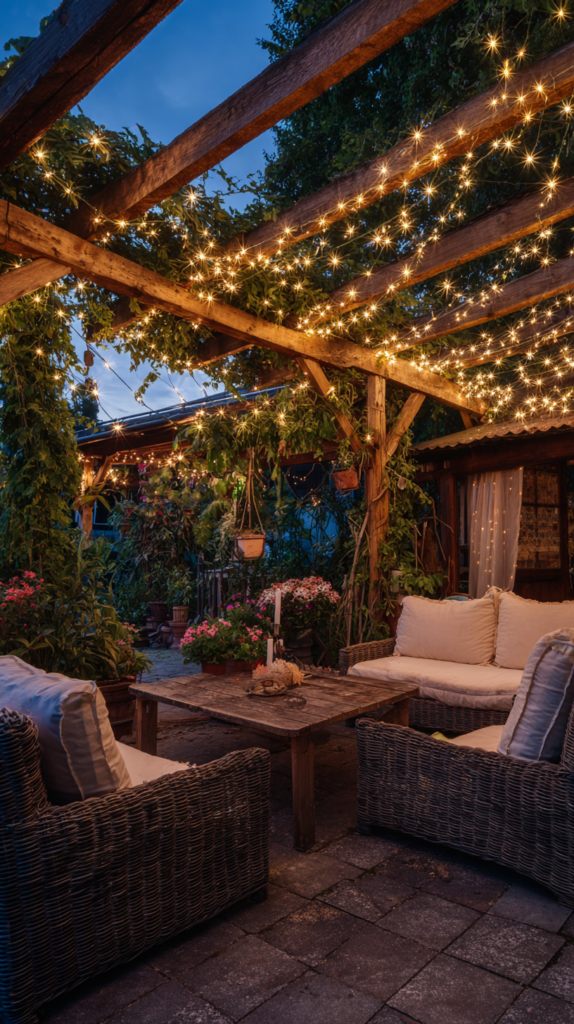
A rustic timber pergola — built from rough-sawn or reclaimed timber with an informal, slightly imperfect character — strung with thousands of warm white fairy lights creates one of the most magical outdoor evening environments possible. The combination of the organic warmth of natural timber and the soft, warm glow of fairy lights overhead creates an atmosphere that genuinely transforms any outdoor occasion.
The rustic aesthetic suits a wide range of garden styles — cottage gardens, farmhouse settings, relaxed country spaces — and the fairy lights work in all seasons, extending the pergola’s appeal well beyond the summer months into autumn and even mild winter evenings. A fire pit or an outdoor heater within the pergola extends the season further and makes the lit structure a year-round destination.
Pro Tip: Use solar-powered fairy lights rather than mains-powered ones wherever the pergola is not adjacent to a convenient electrical supply. Modern solar fairy lights have improved dramatically in quality and brightness and will illuminate reliably throughout a summer evening from a full day’s charge. Avoid cheap solar lights with weak batteries — invest in quality solar lights with large panel capacity and lithium batteries for reliable performance throughout the season.
7. Attached Pergola as a House Extension
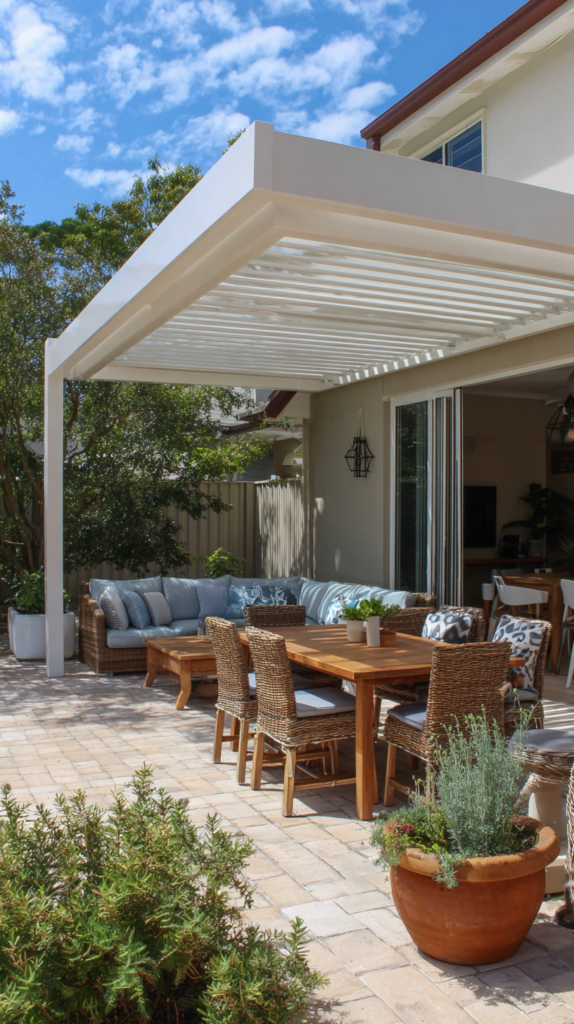
An attached pergola — built directly against the house wall with one end of the structure supported by the house rather than by freestanding posts — creates a covered outdoor transition space between the house interior and the garden that feels like a genuine extension of the living space rather than a separate garden structure.
The attached pergola suits houses with French doors, bifold doors, or large sliding glass doors that open directly onto the garden — the pergola extends the interior living space outward in a way that makes the boundary between inside and outside pleasantly ambiguous. It provides weather protection immediately outside the door, creates a shaded outdoor seating area, and adds genuine usable space to the home without the cost or complexity of a full extension.
Pro Tip: Check local planning regulations and any requirements for structural connection to the house wall before building an attached pergola. In many jurisdictions an attached pergola falls within permitted development allowances and requires no formal planning permission, but the rules vary by location, house type, and the specific dimensions of the proposed structure. Confirming the permitted development status before starting work prevents potentially costly complications later.
8. Pergola with Outdoor Dining Area
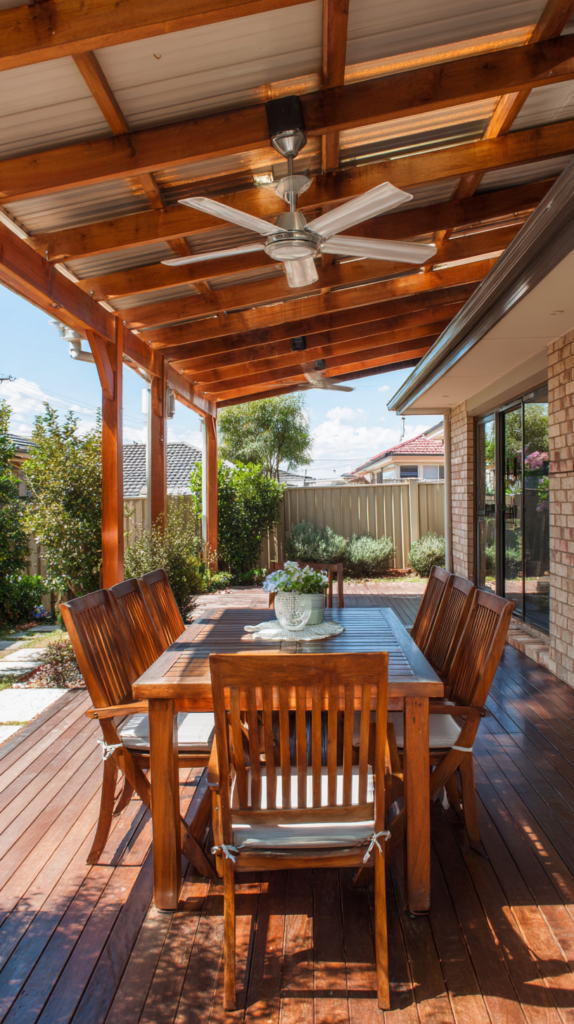
A pergola positioned over a dedicated outdoor dining table and chairs creates a defined, sheltered dining room in the garden that encourages regular outdoor meals rather than the occasional optimistic attempt that ends with retreating indoors when the sun becomes too strong or the breeze picks up unexpectedly.
The dining pergola works best when sized precisely for the table and chairs it will cover — generous enough to allow easy movement of chairs and comfortable access from all sides, but not so oversized that the structure loses the intimate, room-like quality that makes outdoor dining feel genuinely pleasant. Size the pergola to extend approximately one metre beyond the table footprint on all sides as a minimum.
Pro Tip: Install a ceiling fan within a dining pergola for summer comfort — it makes an enormous practical difference to the usability of an outdoor dining space on still, warm summer days when the air beneath a pergola can become significantly warmer than the surrounding garden. A ceiling fan rated for outdoor use creates enough airflow to make the space comfortable without creating the draught that an ordinary electric fan produces at table level.
9. Pergola with Outdoor Lounge and Fire Pit
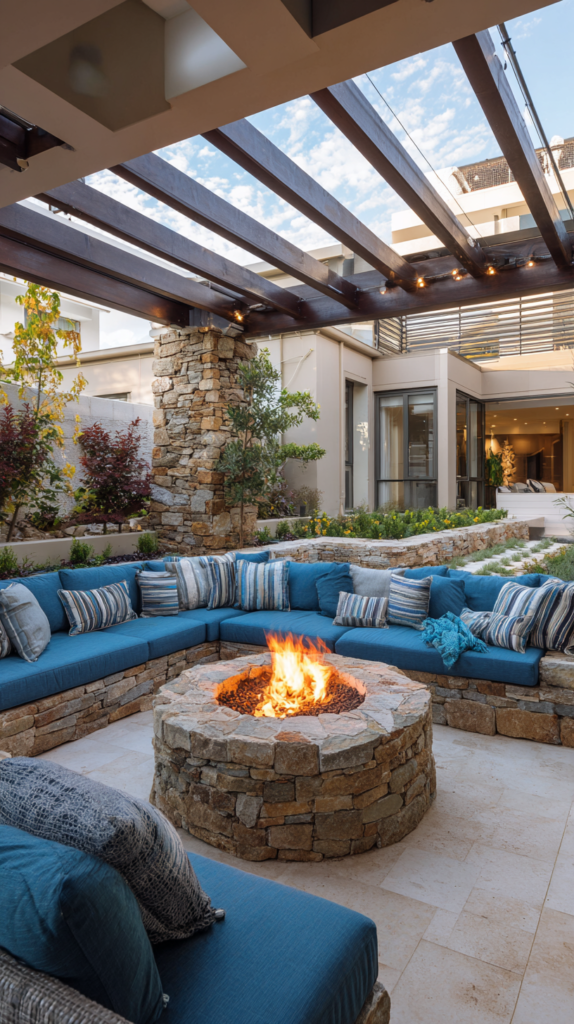
A pergola designed around an outdoor lounge — deep, weatherproof sofas and armchairs grouped around a central fire pit or a wall-mounted outdoor fireplace — creates the most sociable and genuinely inviting outdoor living space possible. The combination of the defined overhead structure, the comfortable seating, and the warmth and light of an open fire creates an outdoor room that people want to spend hours in.
The fire pit position within the pergola requires careful consideration — it must be far enough from any timber or fabric elements to eliminate any fire risk and directly beneath a ventilation opening in the roof to allow smoke to escape freely. A built-in stone or steel fire pit with a spark guard is significantly safer within a pergola than a freestanding portable fire bowl.
Pro Tip: Install the outdoor lounge pergola on a slightly raised platform — even a single step up from the garden level — to create a visual and physical distinction between the lounge space and the surrounding garden. A raised platform gives the pergola the quality of a defined room rather than a structure sitting on the garden surface, and the slight elevation creates better sightlines from the seating into the garden beyond.
10. Pergola with Vegetable Garden
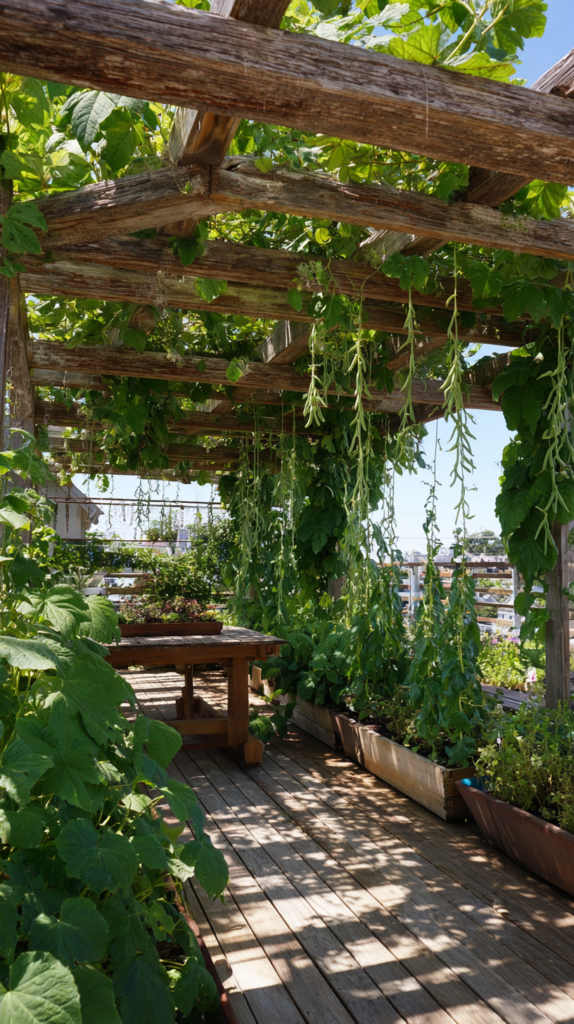
A pergola positioned within or adjacent to the vegetable garden — providing a shaded working area, a framework for climbing vegetables, and a pleasant destination within the productive garden — turns the vegetable plot into a genuinely enjoyable outdoor space rather than a purely functional one.
Train climbing beans, cucumbers, squash, and grape vines up the pergola posts and across the horizontal beams. The productive plants provide shade and greenery while simultaneously producing food — a combination of ornamental and productive function that suits any garden where space is at a premium. Add a simple potting bench and tool storage within the pergola to create a complete garden working station.
Pro Tip: Orient a vegetable garden pergola on a north-south axis rather than east-west wherever the site allows. A north-south oriented pergola allows sunlight to reach the climbing plants on both sides of the structure throughout the day as the sun tracks from east to west. An east-west oriented pergola creates a permanent shadow on the north-facing side that significantly reduces the productivity of plants growing on that elevation.
11. Corner Pergola for Small Gardens
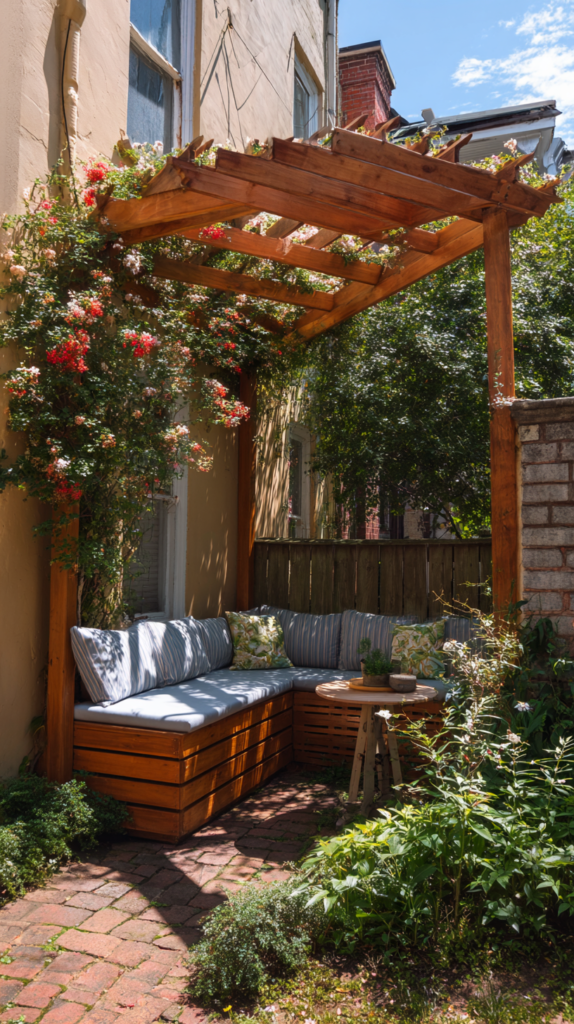
A corner pergola — designed to fit into the corner of a garden or patio where two boundary walls or fences meet — creates a defined outdoor room in the smallest possible footprint, making it ideal for compact urban gardens and small backyards where a full-size freestanding pergola would overwhelm the available space.
The corner position provides two solid walls as part of the structure — the existing boundary walls or fences — which simplifies construction and creates a naturally sheltered, enclosed quality that freestanding pergolas lack. The two open sides maintain connection to the garden while the two enclosed sides create the intimate, room-like atmosphere that makes a corner pergola feel genuinely cosy.
Pro Tip: Paint or render the two boundary walls within a corner pergola in the same color as the pergola frame for a cohesive, finished look that makes the whole corner feel like a single, unified design. Mismatched boundary wall finishes and pergola timber color within the same small corner space create a visually fragmented effect that diminishes the intimate, room-like quality that makes the corner pergola design so effective in small gardens.
12. Pergola with Outdoor Bar
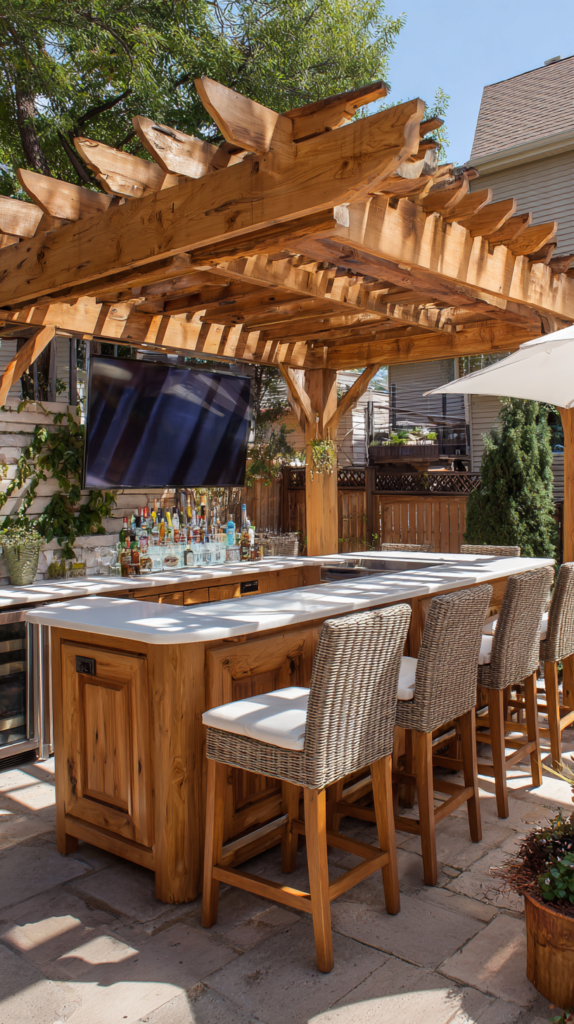
A pergola designed around an outdoor bar — a built-in counter with bar stools on the guest side, storage and preparation space on the host side, and a small sink and drinks refrigerator integrated into the counter — creates the most sociable outdoor entertaining structure available. The bar counter creates a natural gathering point and a defined activity within the pergola space.
Build the bar counter from the same material as the pergola frame for a cohesive look — timber, concrete, or a combination of both all work beautifully. Install waterproof storage for glassware and bottles within the counter structure and add a weatherproof sound system to the pergola for the complete outdoor entertaining experience.
Pro Tip: Position the outdoor bar within the pergola so that the host side of the counter faces into the garden and the guest side faces the house. This orientation allows the host to welcome guests arriving from the house while maintaining a clear view of the entire garden and any children playing within it — the most practical and sociable position for an outdoor bar in any family garden setting.
13. Pergola with Swing Bed
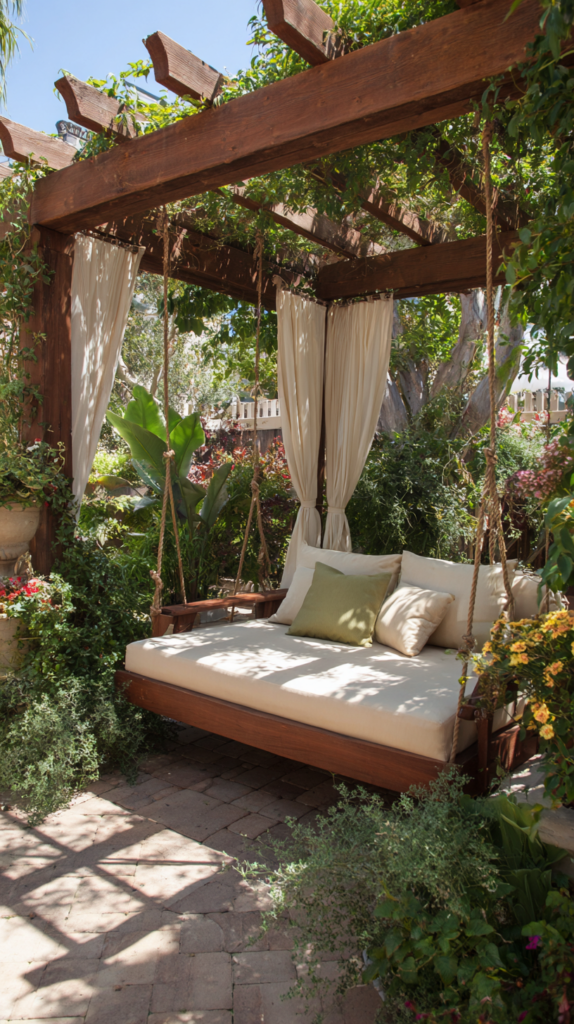
A deep, cushioned swing bed suspended from the structural beams of a pergola creates one of the most genuinely luxurious and relaxing outdoor features a garden can contain. The gentle movement of the swing, the dappled light filtering through climbing plants overhead, and the comfort of a proper cushioned surface combine into an outdoor experience that is impossible to replicate with conventional garden furniture.
Hang the swing bed from heavy-duty eyebolts fixed into the main structural beams of the pergola — not into the decorative infill elements — and use marine-grade rope or stainless steel chain rated well above the expected load. Add a canopy of sheer fabric above the swing for additional privacy and shade and surround with generous planting that creates a sense of verdant enclosure.
Pro Tip: Weight the swing bed cushion with a heavy base pad rather than using a light cushion that shifts with every movement. A heavy, well-fitted base cushion remains in position as the swing moves and provides a stable, comfortable sleeping surface rather than the constantly adjusting, slipping cushion arrangement that lightweight alternatives produce. The quality of the cushion makes or breaks the swing bed experience entirely.
14. Pergola Tunnel Garden Path
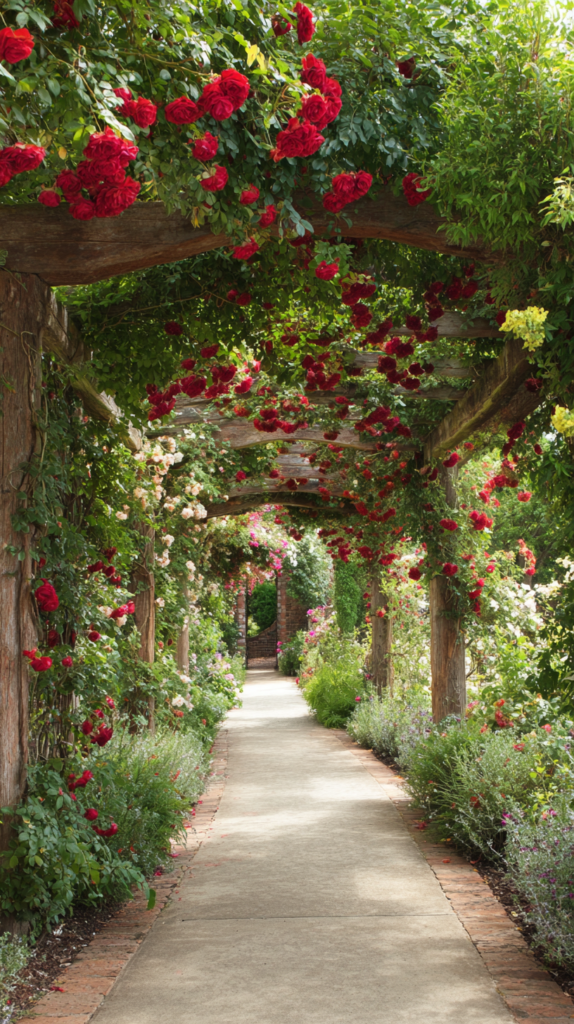
A pergola tunnel — a series of connected arch frames creating a covered walkway or garden path — creates one of the most dramatic garden features possible. Walking through a tunnel of climbing roses, wisteria, or grape vines in full growth is a genuinely extraordinary sensory experience that makes even a short garden path feel like a journey through something magical.
Space the arch frames at one metre intervals along the path length and connect them with horizontal rails along both sides and the top. Choose a single vigorous climber to cover the entire tunnel for the most cohesive effect — Rambling Rector rose, Kiftsgate rose, or wisteria all create spectacular tunnel coverage within a few seasons of planting.
Pro Tip: Ensure the tunnel pergola path is wide enough for two people to walk side by side comfortably — a minimum internal width of 1.2 metres and preferably 1.5 metres. A tunnel that forces single-file walking loses much of the pleasure of the experience and becomes impractical as a main garden path. Generous width that allows two people to share the experience simultaneously is what makes a pergola tunnel feel like a feature rather than a bottleneck.
15. Pergola with Outdoor Cinema
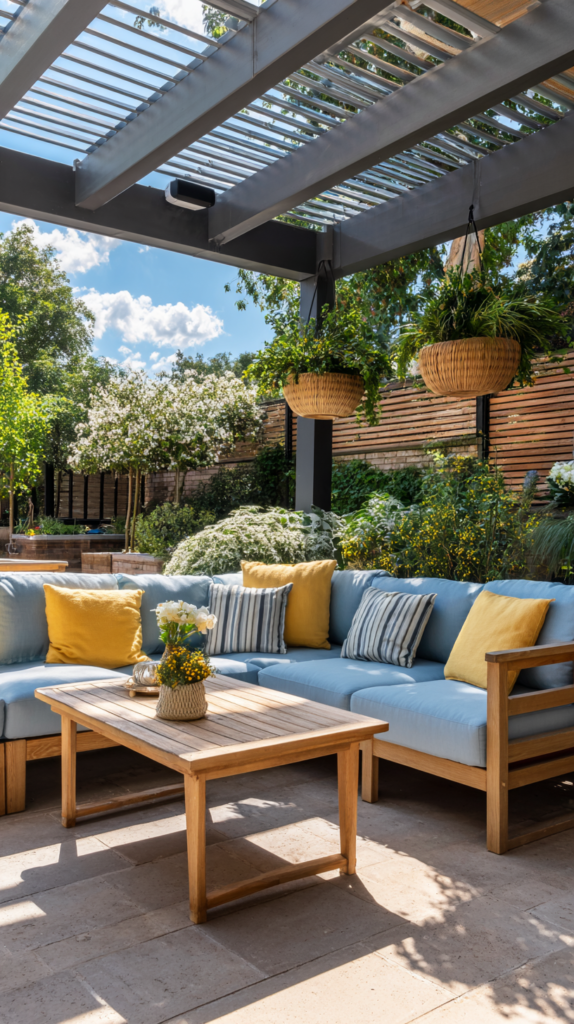
A pergola with a pull-down projection screen at one end and a projector mounted on the overhead beam creates a permanent outdoor cinema that transforms summer evenings into genuinely memorable occasions. The overhead structure supports the projector at the correct height and distance for the screen size, protects the equipment from light dew, and creates the enclosed, room-like atmosphere that makes outdoor cinema feel genuinely immersive.
Install weatherproof speakers within the pergola structure — either ceiling-mounted or integrated into the side posts — and run a waterproof power supply to the projector mount and speaker positions. Add deep, comfortable outdoor seating, provide blankets for cooler evenings, and the outdoor cinema pergola becomes the most popular destination in the garden from the first warm evening of summer onward.
Pro Tip: Install a motorised, retractable projection screen rather than a fixed one for a pergola outdoor cinema that maintains its visual appeal when not in use. A fixed white projection screen visible within the pergola during daylight hours dominates the space visually and reduces the appeal of the structure for daytime uses. A motorised screen that rolls up completely when not in use preserves the pergola’s everyday aesthetic while making the cinema function instantly available whenever it is wanted.
The Right Pergola Transforms Everything Around It
A well-designed pergola does not just add a structure to a garden — it adds a reason to be in the garden. It creates destinations, defines spaces, and provides the framework around which outdoor life organises itself naturally.
Choose the design that suits your space, your lifestyle, and the way you actually want to use your garden. Build it well, plant it generously, and light it beautifully. A pergola done right becomes the most used and most loved feature in any outdoor space — and the garden you had before it will quickly become impossible to imagine returning to.