15 Perennials for Shaded Areas in Small Gardens
Small shaded gardens present unique challenges requiring plants that thrive without direct sunlight while remaining appropriately scaled to compact spaces without overwhelming limited square footage.
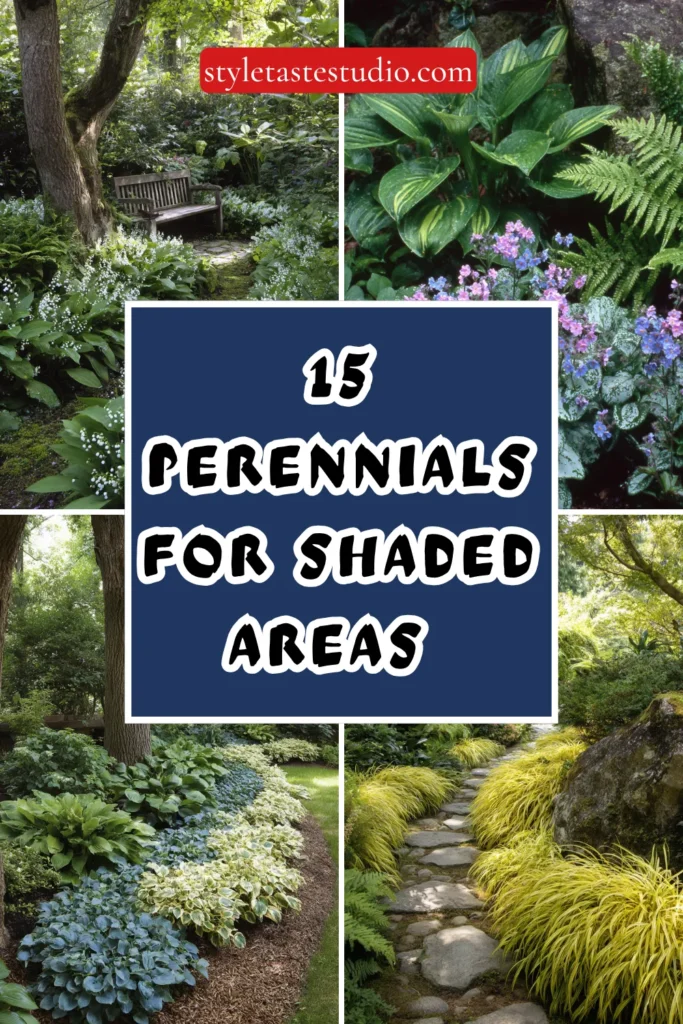
The right shade perennials transform dim corners, north-facing beds, and areas beneath trees into lush, colorful gardens that rival sunny borders in beauty and interest. Successful shade gardening requires understanding different shade types from dappled light beneath deciduous trees to deep year-round shade cast by structures or evergreens, then selecting plants matched to specific conditions.
These 15 perennials excel in shaded small gardens, offering attractive foliage, beautiful flowers, compact growth habits, and reliable performance year after year without requiring the constant replacement annuals demand.
1. Hostas in Miniature Varieties
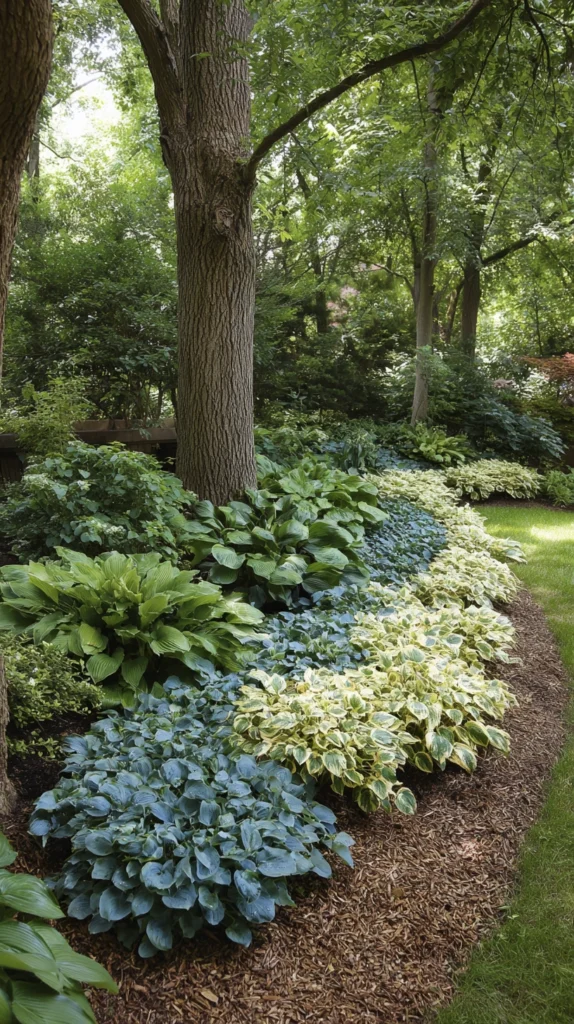
Choose compact hosta cultivars staying under 12 inches tall and wide, providing the classic shade garden appeal without consuming excessive space in small beds. Varieties like ‘Blue Mouse Ears,’ ‘Tiny Tears,’ or ‘Stiletto’ offer the beautiful foliage hosts are known for in appropriately scaled packages for confined areas.
Plant hostas in groups of three or five create impact through repetition while their varied leaf colors from blue-green to gold to variegated patterns add visual interest. Position toward bed fronts where their mounding forms create neat edges while taller companions occupy background positions.
2. Astilbe for Feathery Flowers
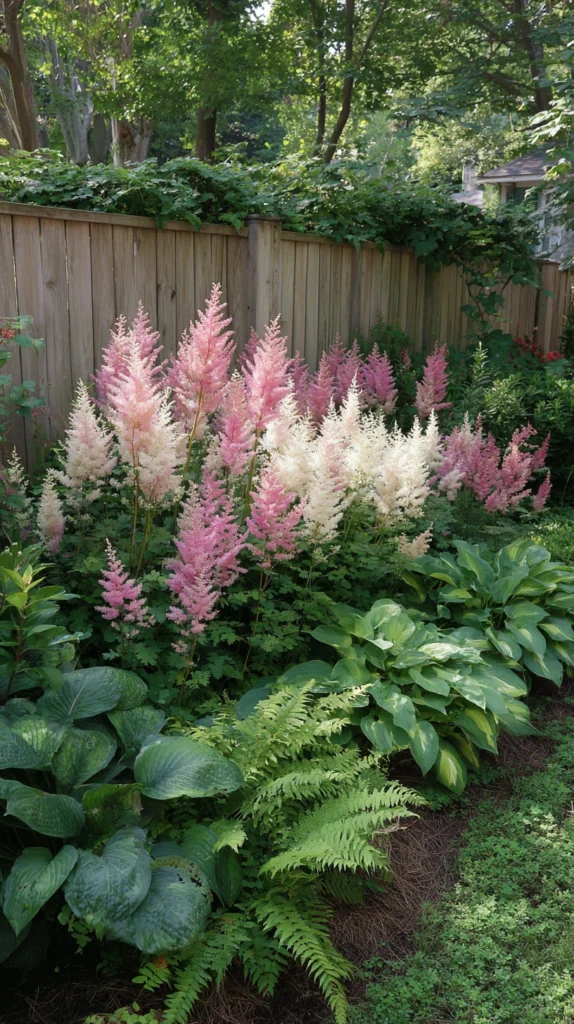
Introduce vertical interest and summer color through astilbe’s plume-like flowers rising above ferny foliage in shades of white, pink, red, or lavender throughout early to mid-summer. Select compact varieties like ‘Sprite,’ ‘Pumila,’ or dwarf cultivars remaining under 18 inches tall, avoiding towering varieties that would overwhelm small gardens.
Plant astilbe in consistently moist soil where they’ll thrive, or amend beds with compost improving moisture retention if your site tends toward dryness. The feathery flower plumes create wonderful textural contrast against broader-leaved companions like hostas or heuchera.
3. Heuchera for Year-Round Color
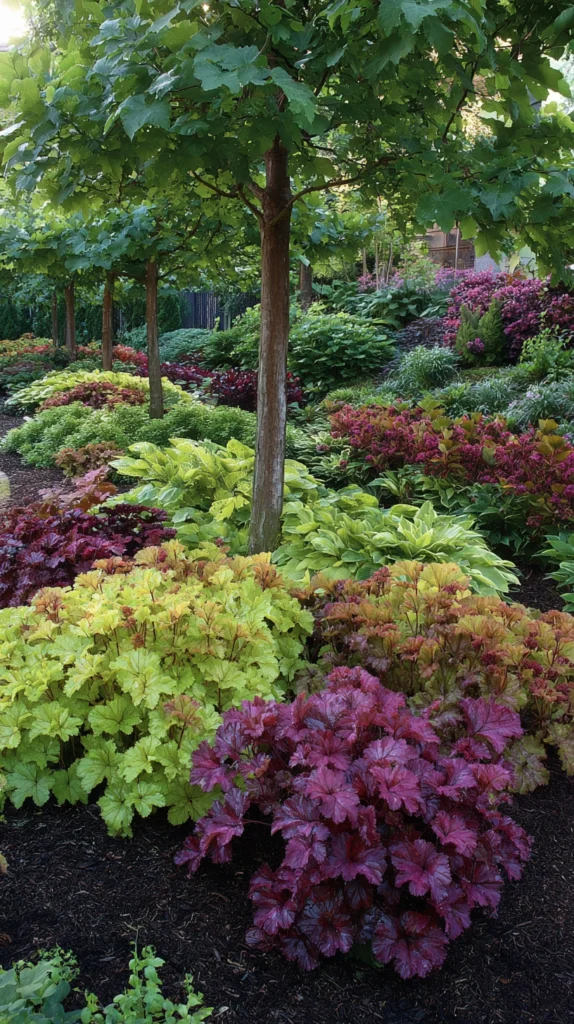
Provide continuous foliage interest through heuchera’s colorful leaves in shades ranging from lime green to deep purple, coral, and bronze requiring minimal space while delivering maximum impact. Choose varieties with colors complementing your garden palette, grouping three plants of single varieties for cohesive impact rather than scattering individual specimens randomly. Heuchera tolerates more sun than many shade perennials, making it excellent for transitional areas receiving morning sun and afternoon shade. Remove spent flower stalks unless you appreciate their airy presence, as the primary ornamental value comes from the beautiful foliage lasting all season.
4. Japanese Forest Grass
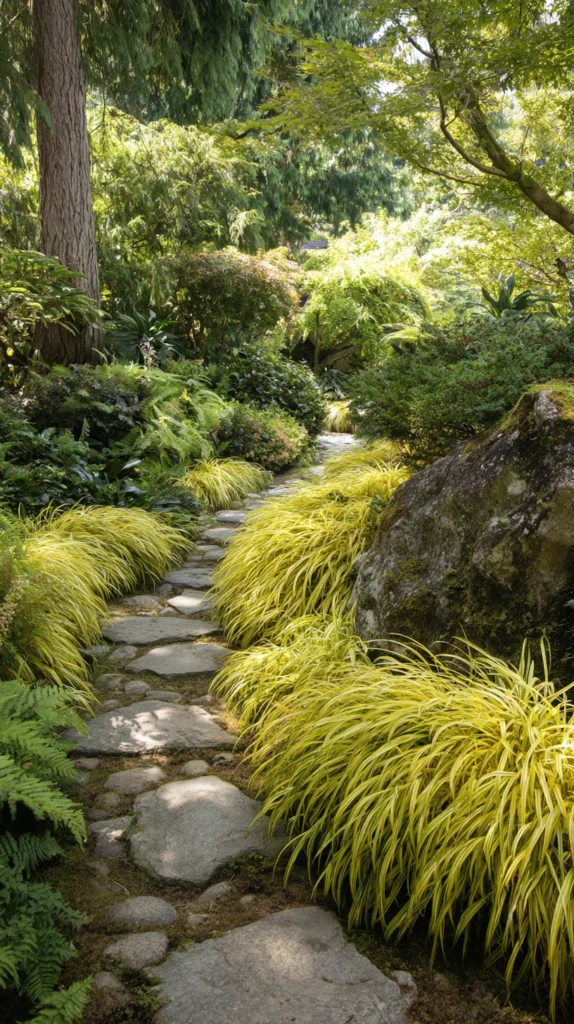
Add movement and fine texture through Japanese forest grass (Hakonechloa) cascading in graceful mounds with narrow leaves creating flowing effects in gold or variegated patterns. The compact mounding habit typically reaching 12-18 inches tall and wide fits perfectly in small gardens while the unusual growth pattern adds distinctive character.
Plants where the cascading form can be appreciated such as along path edges, container plantings, or tumbling over low walls. The grass provides interest across three seasons with fresh spring growth, summer color, and beautiful bronze fall tones before going dormant in winter.
5. Bleeding Heart in Dwarf Forms
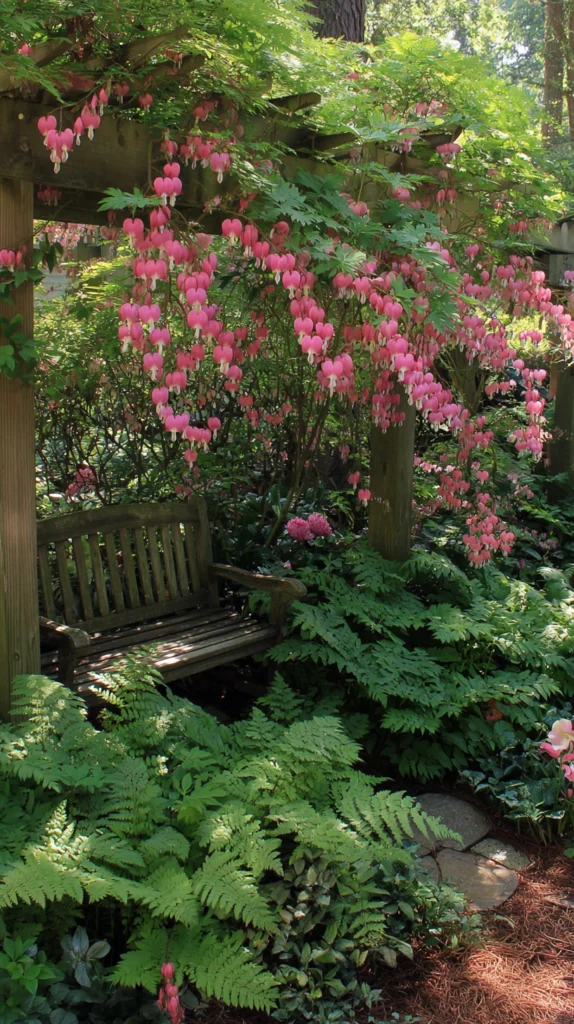
Create romantic garden moments through bleeding heart’s distinctive dangling heart-shaped flowers in spring using dwarf varieties fitting small garden proportions. ‘King of Hearts’ remains compact at 10-12 inches producing dark pink flowers throughout summer unlike common bleeding hearts that go dormant after spring.
Plant bleeding hearts in your garden’s shadiest spots where they’ll thrive when other plants struggle, providing beautiful fern-like foliage even after flowering concludes. Pair with spring bulbs that bloom simultaneously creating layered spring displays in coordinating colors.
6. Tiarella for Delicate Blooms
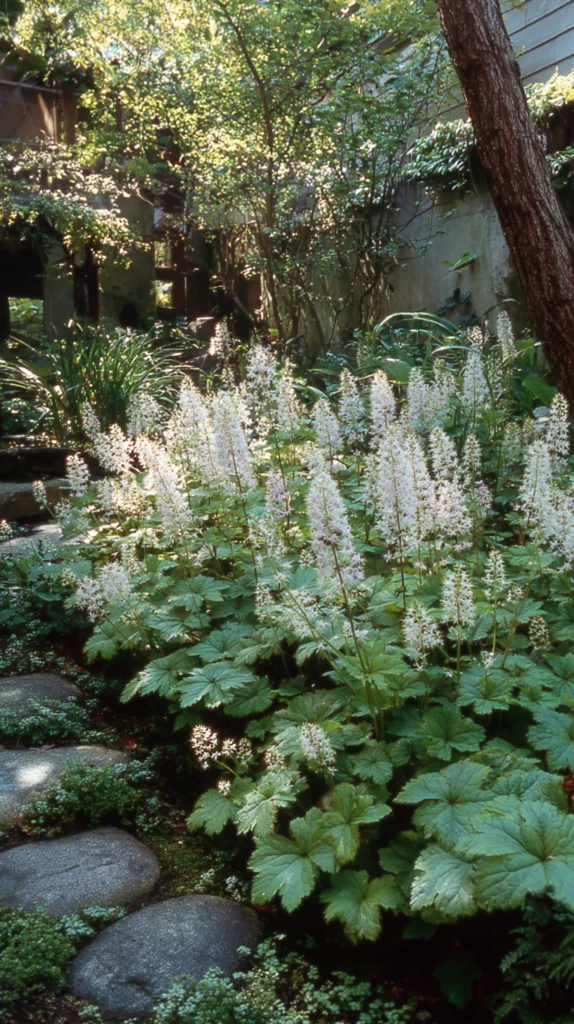
Introduce foam flowers (Tiarella) producing bottlebrush-like white or pink blooms above attractive evergreen or semi-evergreen foliage in compact mounding forms. These North American natives adapt readily to garden conditions, tolerating various shade levels and spreading slowly to form attractive groundcovers without aggressive invasion.
Plant in groups for impact where their relatively small flowers create collective presence, or use individually in container combinations with other shade lovers. The foliage often develops burgundy or bronze tones in cooler weather providing seasonal interest beyond the spring flowering period.
7. Lungwort for Early Color
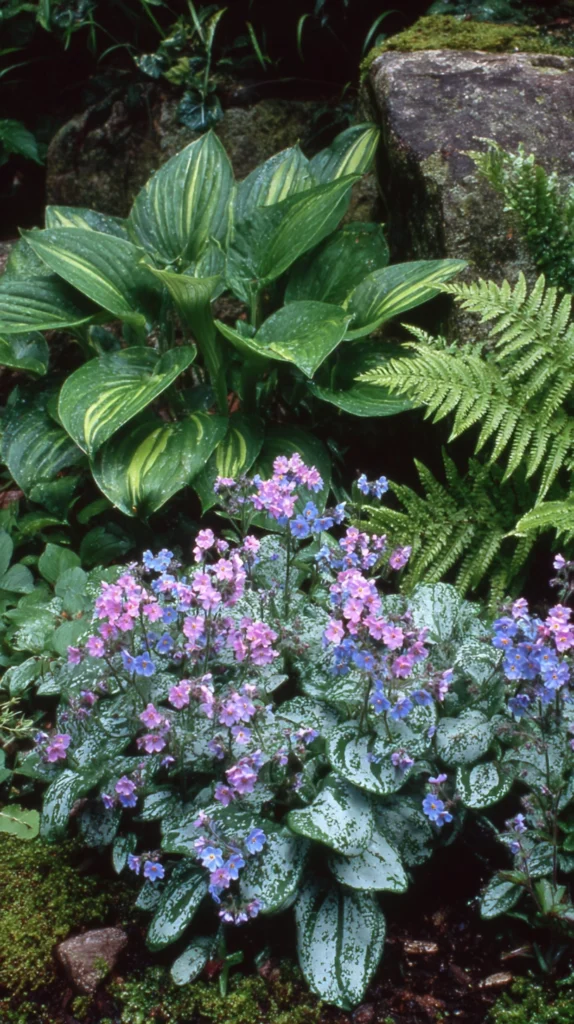
Welcome spring with lungwort’s (Pulmonaria) spotted silvery foliage and early flowers in pink, blue, purple, or white appearing when little else blooms in shaded areas. The compact clumping habit typically 10-12 inches tall spreads slowly, never overwhelming neighbors or requiring aggressive division like some perennials.
Choose varieties with heavily spotted or silvered foliage creating year-round interest rather than depending solely on the brief spring flowering period. Plant lungwort in your garden’s shadiest areas where the silver foliage brightens dim corners throughout the growing season.
8. Ferns for Textural Interest
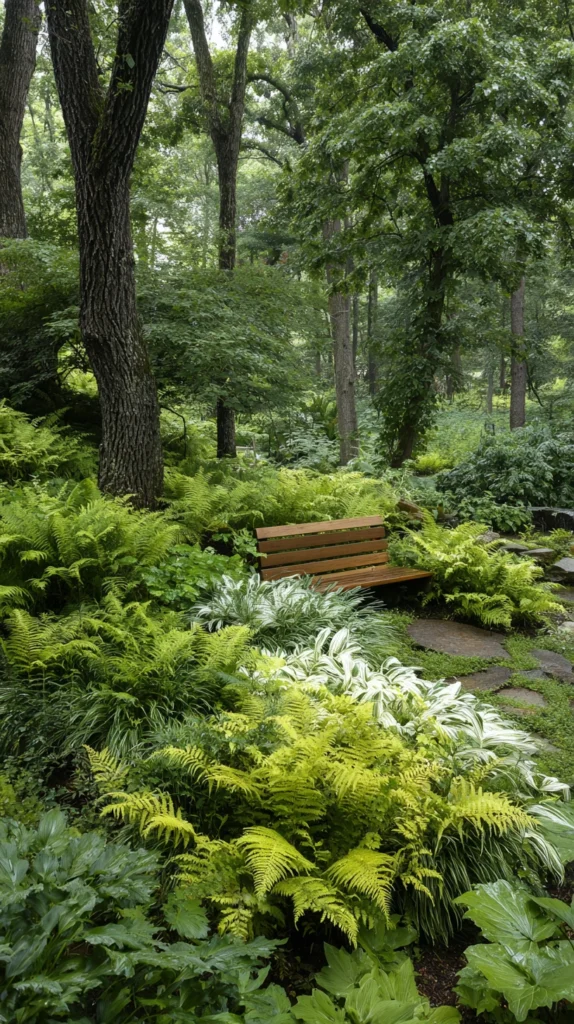
Incorporate ferns providing classic shade garden texture through their delicate fronds in sizes ranging from tiny 6-inch specimens to 24-inch varieties appropriate for small gardens. Japanese painted fern offers burgundy and silver coloring adding unexpected color to the typically green fern palette, while autumn fern provides coppery new growth in spring.
Plant ferns in groups creating lush backdrops for flowering companions, or feature individual specimens where their architectural forms deserve solo attention. Most ferns spread slowly and remain well-behaved, never becoming invasive problems in small confined spaces.
9. Brunnera for Spring Flowers
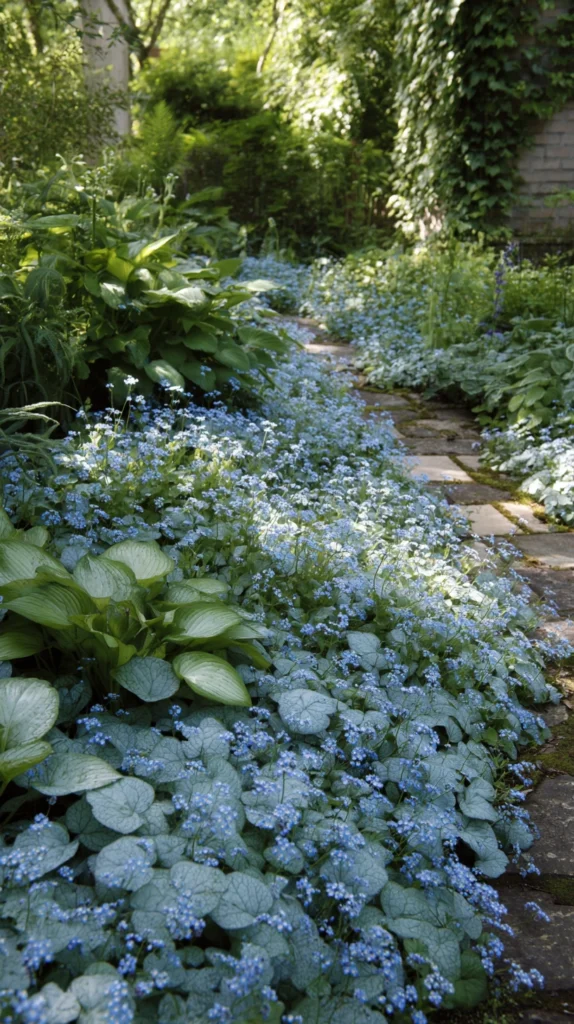
The plant Siberian bunyip (Brunnera) produces clouds of tiny forget-me-not-like blue flowers in spring followed by beautiful heart-shaped leaves, often variegated with silver patterns. Varieties like ‘Jack Frost’ or ‘Silver Heart’ offer stunning silvered foliage brightening shade gardens throughout summer long after flowers fade.
The compact 12-15 inch mounding habit fits small gardens perfectly while the foliage remains attractive all season without the midsummer decline some perennials experience. Position where morning light highlights the silvered leaves creating luminous effects in otherwise dim areas.
10. Hellebores for Winter Interest
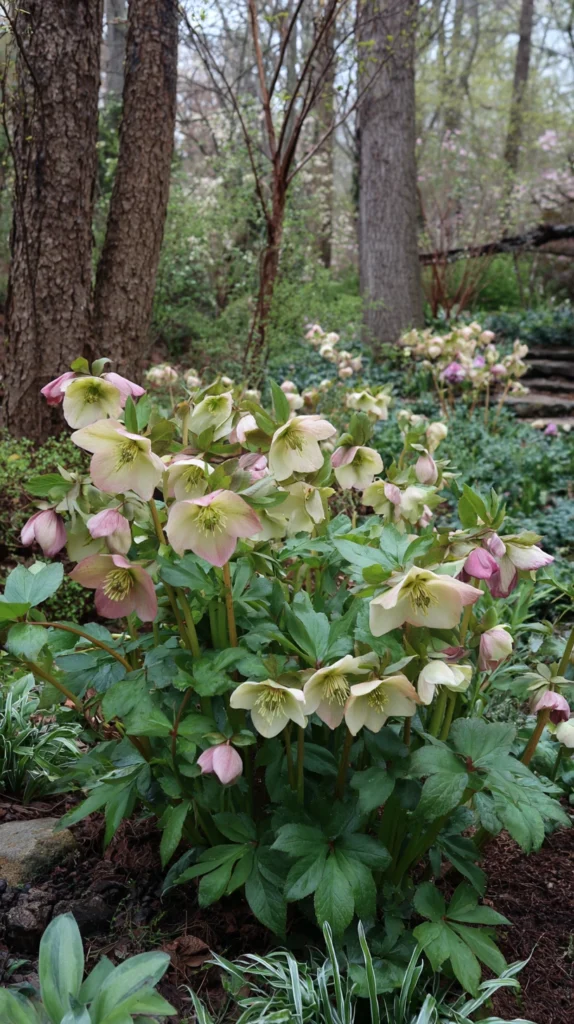
Extend your garden’s season through hellebores blooming in late winter to early spring when few other perennials provide interest, with evergreen foliage creating year-round structure. These drought-tolerant once established perennials thrive in dry shade beneath trees where many plants struggle, making them valuable for challenging sites.
Choose named varieties in specific colors rather than seed-grown plants ensuring you receive the flower colors and forms you desire. Plant hellebores where you’ll notice their early blooms from windows or frequently traveled paths, as they bloom when outdoor time is limited.
11. Coral Bells Varieties
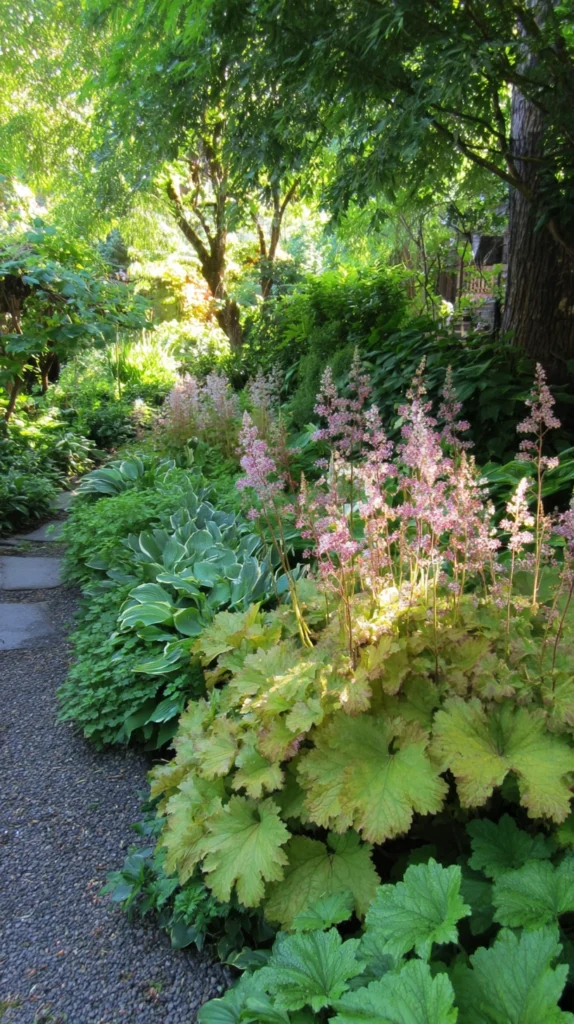
Expand beyond standard heuchera exploring heucherella hybrids combining heuchera and tiarella traits creating plants with beautiful foliage and more prominent flowers than either parent.
These hybrids typically remain compact at 10-15 inches spreading slowly to fill small spaces without overwhelming neighbors or requiring constant division. Choose foliage colors coordinating with your garden’s palette, creating harmonious combinations rather than chaotic collections of clashing colors. Plant in groups of three or five for impact, or use as edging plants creating neat colorful borders along small garden paths.
12. Ajuga Ground Cover
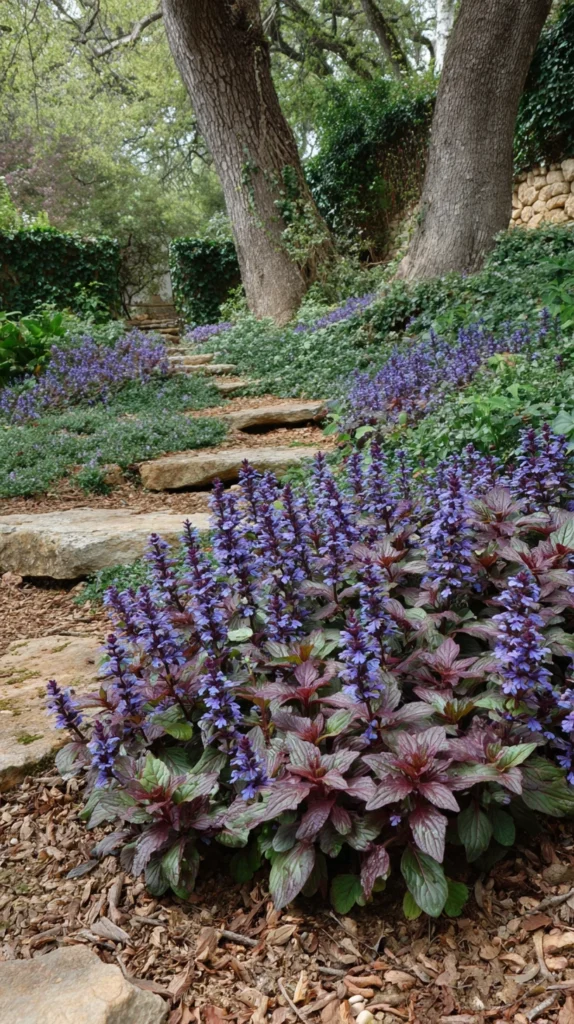
Create weed-suppressing carpets using ajuga’s quick-spreading habit filling gaps between larger perennials while producing spikes of blue, purple, or white flowers in spring. Choose varieties with colored foliage like burgundy ‘Chocolate Chip’ or variegated forms creating year-round interest beyond the brief flowering period.
Monitor ajuga in very small gardens as it can become aggressive, but its speed makes it valuable for quickly covering bare soil preventing weed establishment. Plant ajuga in areas where spreading is acceptable such as beneath shrubs or trees where grass struggles to grow.
13. Lily of the Valley
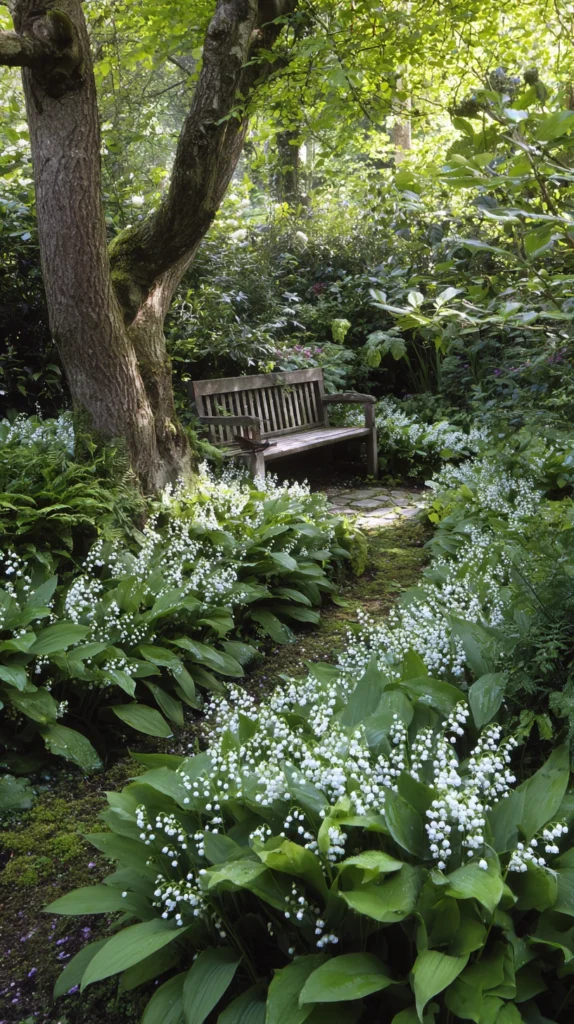
Introduce sweet fragrance through the lily of the valley’s tiny white bell-shaped flowers in late spring above ground-covering green foliage spreading steadily in shaded areas. This old-fashioned favorite thrives in dry shade once established, making it valuable for difficult areas beneath mature trees where many plants fail.
Contain lily of the valley within borders using edging materials as it spreads readily and can invade adjacent areas if left unchecked. Plant where you’ll appreciate the wonderful fragrance during the brief flowering period, perhaps near seating areas or along paths.
14. Epimedium for Dry Shade
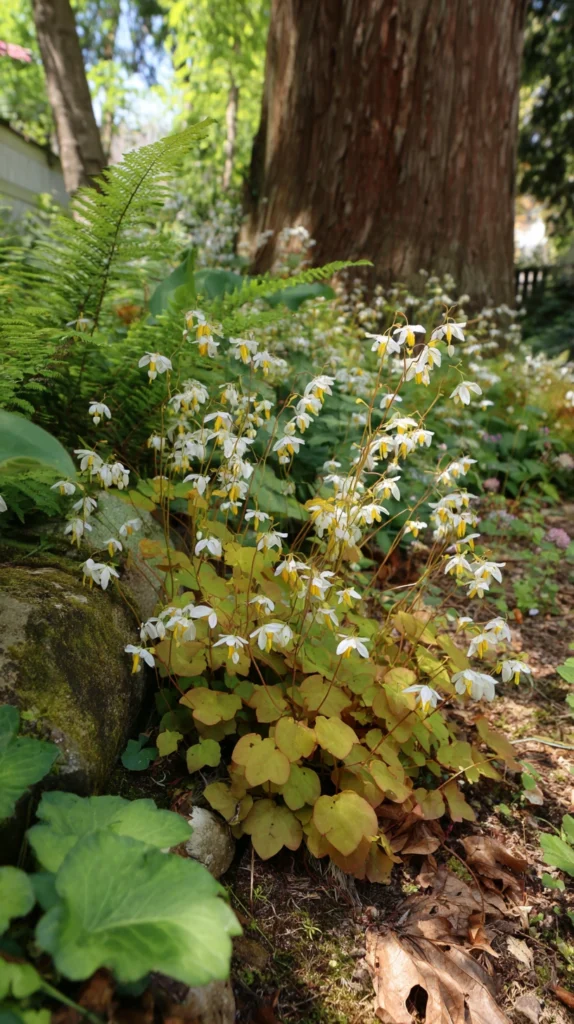
Solve dry shade challenges using epimedium’s drought tolerance once established, delicate spring flowers, and attractive heart-shaped foliage creating effective ground covers. These underutilized perennials thrive where many shade lovers struggle, particularly in root-heavy soil beneath mature trees.
Cut back old foliage in late winter allowing new growth and spring flowers to display clearly rather than being hidden beneath previous year’s leaves. Choose varieties with evergreen or semi-evergreen foliage in mild climates providing year-round coverage and interest.
15. Solomon’s Seal for Elegance
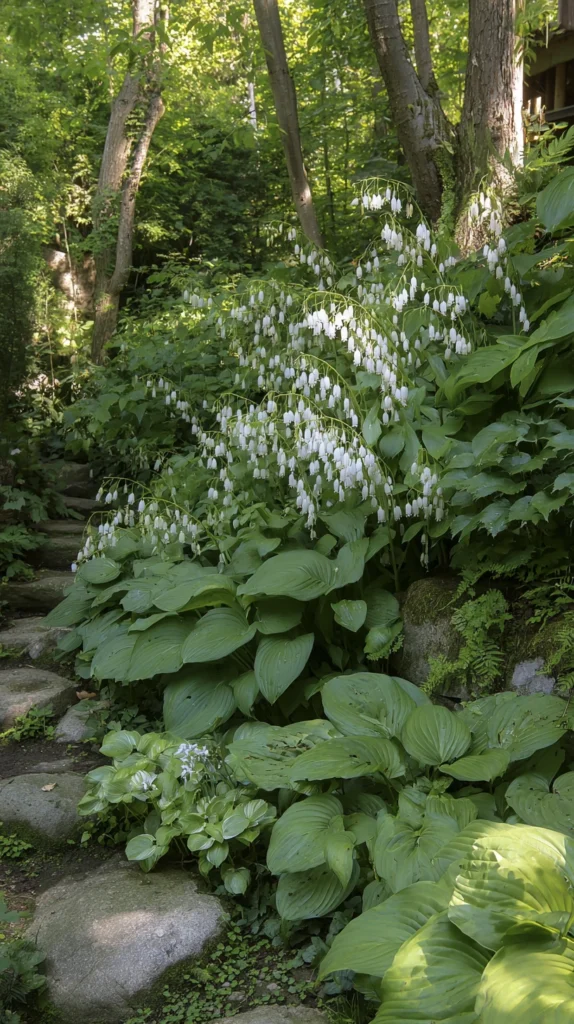
Add architectural elegance through Solomon’s seal’s arching stems lined with dangling white bell-shaped flowers in spring followed by attractive foliage throughout summer. The graceful form creates wonderful textural contrast against mounding plants like hostas or heuchera, while the vertical then arching habit adds dimensional interest.
Variegated forms offer additional foliage interest with white or cream edges brightening shade gardens, though they typically grow slightly less vigorously than solid green varieties. Plant Solomon’s seal toward bed backs where the arching stems can display fully without being obscured by foreground plantings.
Creating Beautiful Shaded Small Gardens
Successfully combining these shade perennials requires understanding your specific shade conditions, soil moisture levels, and climate zone ensuring plant selections match your site rather than fighting against existing conditions.
Amend soil with compost before planting, improving drainage in heavy soils or moisture retention in sandy conditions creating optimal growing environments. Mulch beds maintain consistent moisture while suppressing weeds, particularly important during establishment when regular watering ensures survival and strong root development.
Design with repetition grouping three or five of single varieties rather than planting one each of fifteen different species creating cohesive plantings rather than chaotic collections. Most importantly, embrace your shade viewing it as opportunity rather than limitation, creating beautiful gardens proving shaded small spaces can rival sunny borders in beauty, interest, and gardening satisfaction.