15 Patio Tile Ideas for a Beautiful Outdoor Space
A tiled patio is one of the most enduring and most genuinely beautiful outdoor surface choices available. The right tile transforms a patio from a functional outdoor platform into a designated outdoor room — a surface of genuine material quality that sets the tone for every furniture piece, every plant, and every gathering that takes place within it.
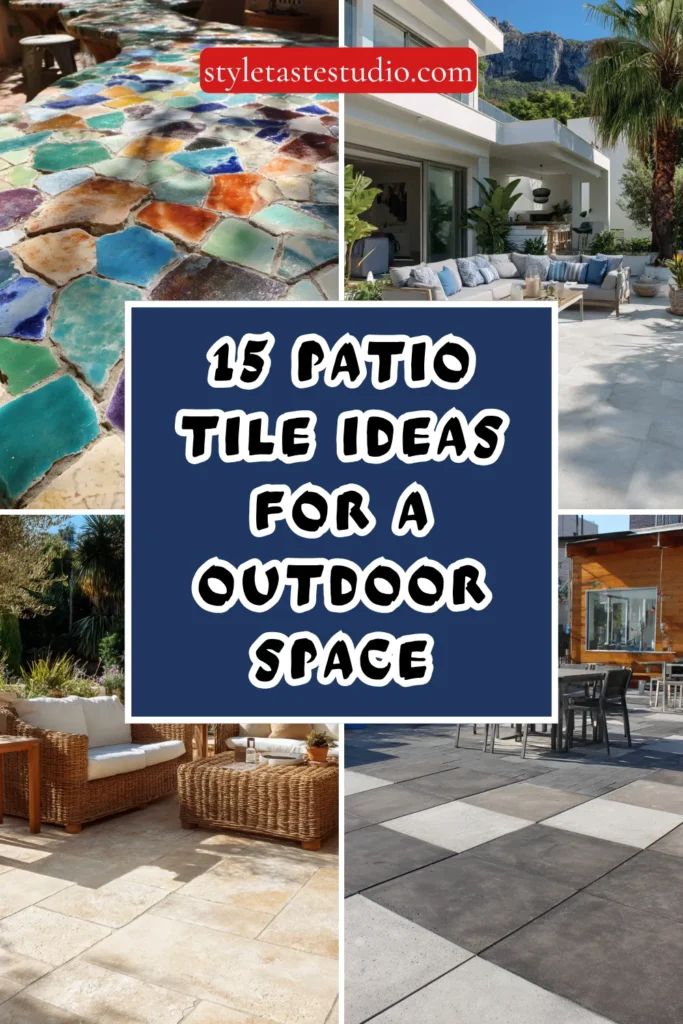
Tile handles weather, foot traffic, and outdoor furniture with complete resilience and looks genuinely better cleaned and maintained than any alternative surface material.
Here are 15 patio tile ideas that create a beautiful and genuinely functional outdoor space.
1. Large Format Porcelain Stone Effect
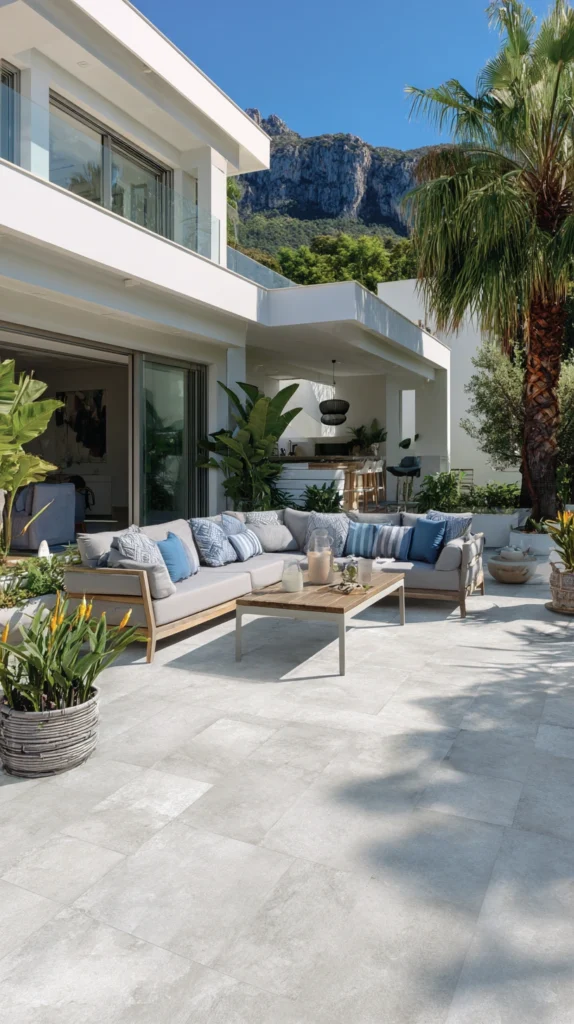
Large format porcelain tiles in a natural stone effect — 600mm by 600mm or 900mm by 900mm in a limestone, travertine, or sandstone visual — create a patio of maximum contemporary elegance and complete practical performance.
The large format minimizes the number of joints across the patio surface, creating a clean continuous visual plane of considerable architectural quality. Porcelain provides the warm natural appearance of genuine stone with dimensional consistency, low maintenance, and complete frost resistance.
Pro Tip: Specify outdoor-rated porcelain tiles with a minimum R11 slip resistance rating. Indoor porcelain tiles installed outdoors create a dangerously slippery surface when wet — an unacceptable safety hazard. Outdoor-rated porcelain with the correct slip resistance provides a beautiful, safe, and completely durable patio surface in every weather condition throughout the year.
2. Traditional Terracotta Tiles
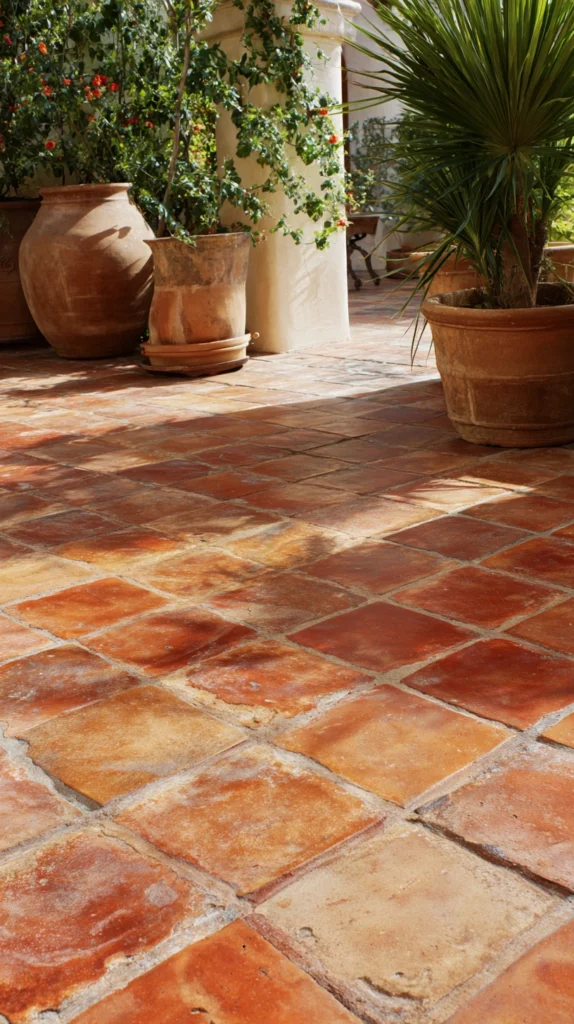
Traditional terracotta tiles — the warm earthy orange-red clay tiles used for outdoor flooring in Mediterranean cultures for centuries — create a patio of extraordinary warmth, genuine antiquity, and completely timeless beauty. Terracotta develops a natural patina over time — absorbing the weathering and use of the years to create a tile surface of genuine accumulated character that no manufactured alternative can replicate.
Pro Tip: Seal terracotta patio tiles with a penetrating terracotta sealer before first use and reseal annually. Unsealed terracotta is highly porous — absorbing water and staining material rapidly and developing the patchy stained appearance that is the primary maintenance challenge of terracotta in an outdoor setting. A penetrating sealer protects the tile from within without altering its natural warm appearance.
3. Slate Patio Tiles
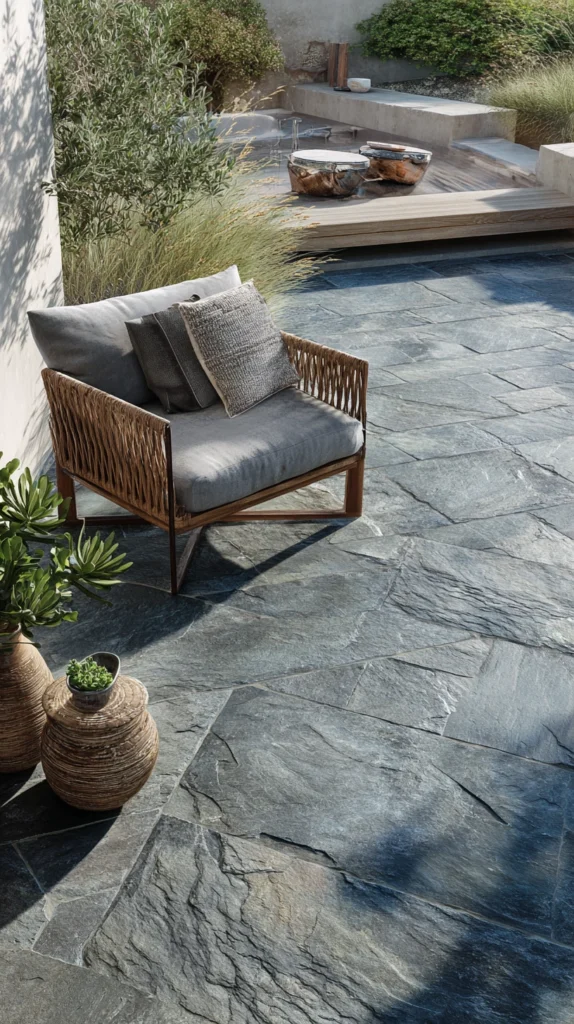
Natural slate tiles — in characteristic dark blue-grey tones with the distinctive layered cleavage planes of the stone — create a patio of cool contemporary drama and genuine geological beauty.
Slate has natural slip resistance from its slightly textured riven surface, handles frost and temperature cycling with complete resilience, and creates a surface of considerable visual sophistication that suits contemporary, industrial, and minimalist outdoor aesthetics.
Pro Tip: Choose riven slate — the naturally split surface that reveals the stone’s cleavage planes — rather than machine-cut smooth slate. Riven slate has a naturally textured surface that provides excellent grip in wet conditions. Machine-cut smooth slate creates a surface of considerable beauty but significantly reduced slip resistance that makes it unsuitable for an outdoor patio application where wet conditions are regularly encountered.
4. Encaustic Cement Tiles
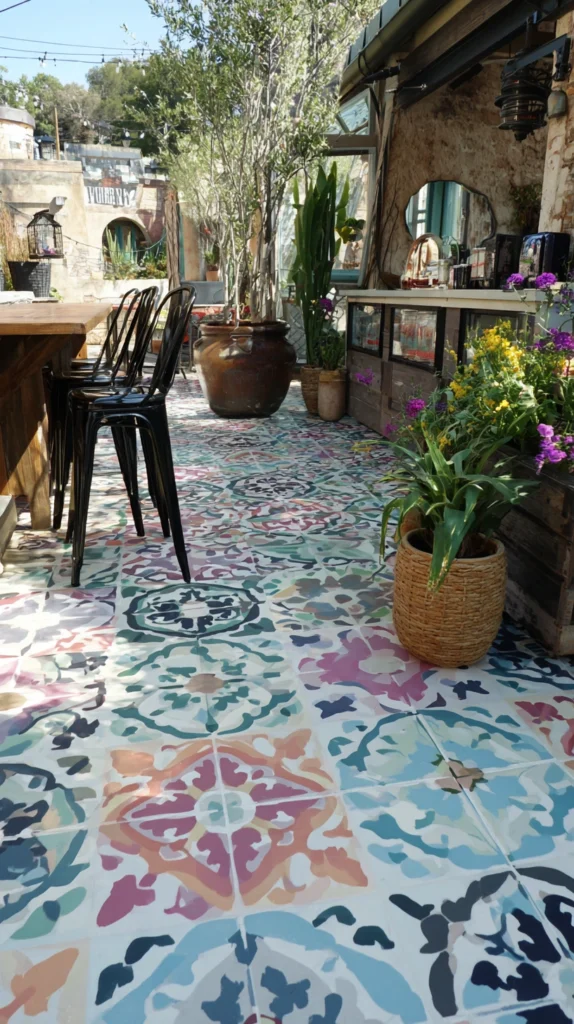
Encaustic cement tiles — handmade tiles with geometric or floral patterns created from pigmented cement inlaid into the tile surface during manufacture — create a patio of extraordinary decorative richness and completely individual artistic character. The pattern is integral to the tile material rather than applied to its surface — meaning the design remains visible and beautiful through decades of wear rather than fading as applied pattern finishes inevitably do.
Pro Tip: Seal encaustic cement tiles before installation rather than after — applying two or three coats of penetrating sealer to the tile surface before grouting to prevent grout penetrating the porous tile surface and creating permanent staining within the tile pattern. Grout staining within the intricate geometric patterns of encaustic tiles is extremely difficult to remove without damaging the tile surface itself.
5. Limestone Patio Tiles
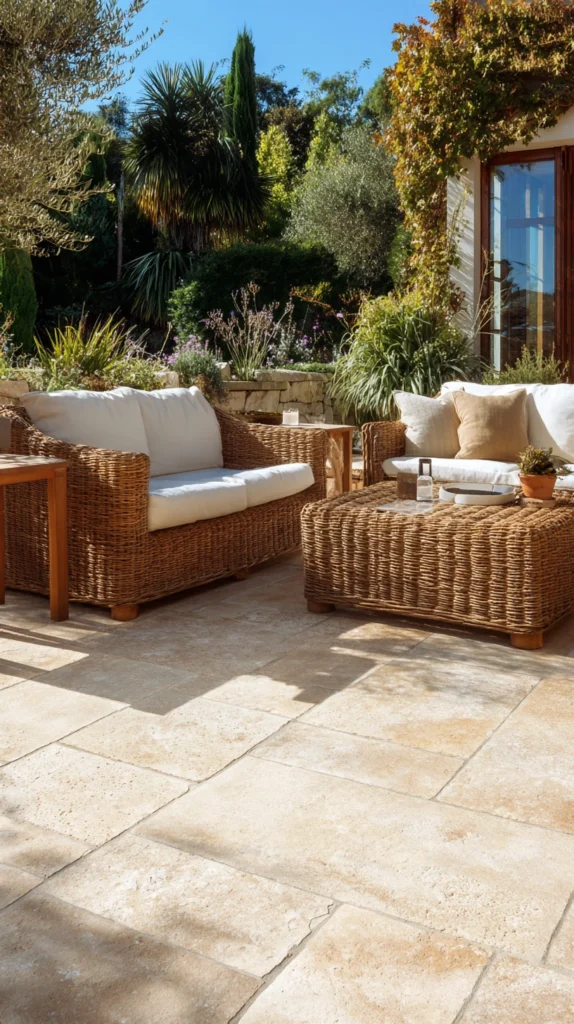
Natural limestone tiles — in warm honey, buff, or pale grey tones with the characteristic soft luminous quality of this fine-grained sedimentary stone — create a patio of classical warmth and genuine architectural refinement. Limestone has been used for outdoor paving in the finest European gardens for centuries — its warm luminous quality creating a patio surface that glows in sunlight and appears to generate its own warm light from within the pale stone.
Pro Tip: Choose a tumbled or brushed limestone finish rather than a polished or honed finish for outdoor patio application. Polished and honed limestone becomes dangerously slippery outdoors when wet. Tumbled limestone has a naturally textured slightly worn surface that provides adequate grip in wet conditions while maintaining the warm luminous quality of the natural stone.
6. Sandstone Patio Tiles
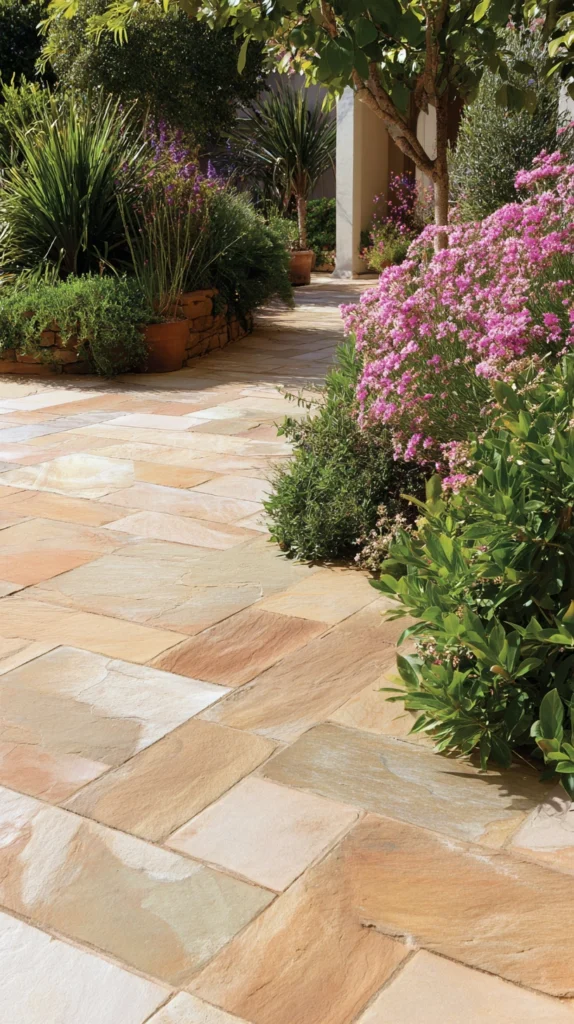
Natural sandstone tiles — in warm pink, buff, and honey tones with the characteristic grainy warm texture of this sedimentary stone — create a patio of considerable natural warmth and genuine garden character. The variation in color and texture across adjacent sandstone tiles creates a patio surface of natural organic variety that uniform manufactured tiles entirely lack. Sandstone suits garden environments of every style and every planting aesthetic.
Pro Tip: Choose sandstone in a calibrated rather than uncalibrated format — calibrated sandstone has been machine-cut to a consistent thickness that allows it to be laid on a consistent bed depth with a level surface. Uncalibrated sandstone varies in thickness from piece to piece and requires skilled hand-laying to achieve a level surface — a significantly more complex and time-consuming installation that most standard tiling contractors are not equipped to execute to a high standard.
7. Concrete Paver Tiles
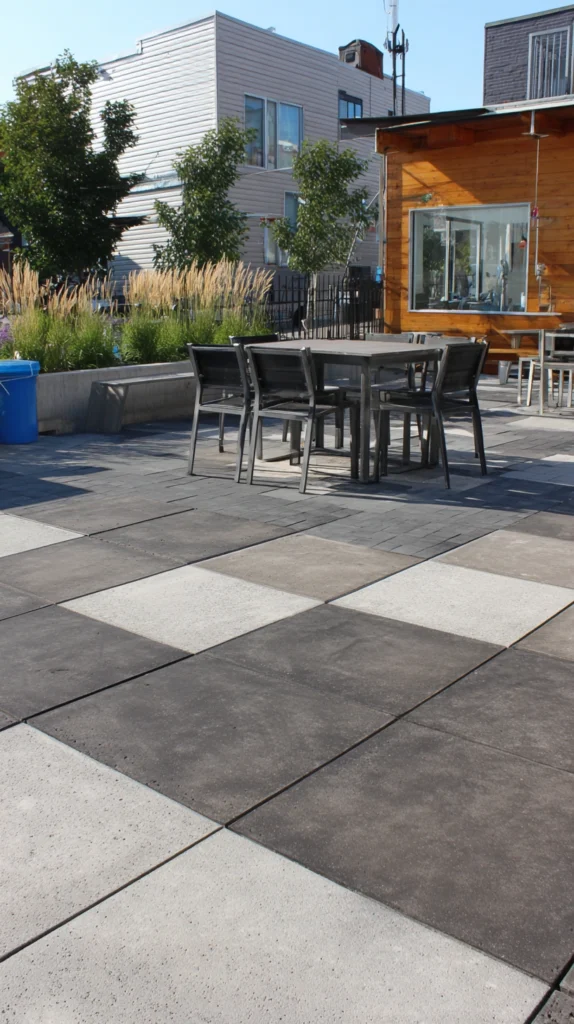
Large format concrete paver tiles — square or rectangular cast concrete in warm grey, charcoal, or buff tones — create a patio of considerable contemporary design confidence and genuine practical durability. Concrete pavers are among the most affordable of all quality patio tile options and among the most genuinely durable — handling freeze-thaw cycling, UV exposure, and heavy foot traffic with complete resilience over many decades of outdoor use.
Pro Tip: Choose concrete pavers with an exposed aggregate or brushed finish rather than a smooth cast finish. Smooth concrete is one of the most slippery of all outdoor surface materials when wet — an exposed aggregate or brushed finish creates a textured surface that provides adequate grip in all weather conditions while maintaining the clean contemporary aesthetic of large format concrete paving.
8. Black and White Geometric Patio Tiles
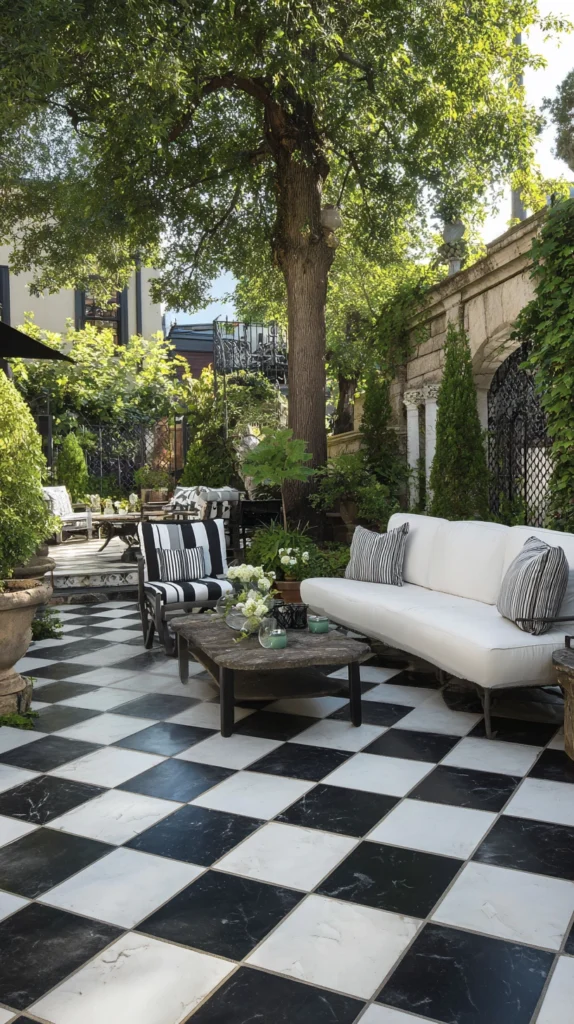
A patio tiled in a black and white geometric pattern — the classic checkerboard, a complex geometric star pattern, or a bold contemporary graphic design — creates a patio of maximum graphic impact and complete design confidence. Black and white geometric tiling creates a visual statement of genuine bold contemporary design that reads beautifully from interior rooms looking out — the graphic pattern visible through glazed doors as a designed outdoor room of considerable visual character.
Pro Tip: Use large format black and white tiles — at least 400mm by 400mm for each color unit — rather than small mosaic-scale tiles for an outdoor patio geometric pattern. Small mosaic-scale geometric patterns lose their graphic impact at the larger scale of an outdoor patio viewed from a standing distance. Large format geometric patterns maintain their bold graphic quality at the outdoor viewing distance.
9. Reclaimed Stone Patio Tiles
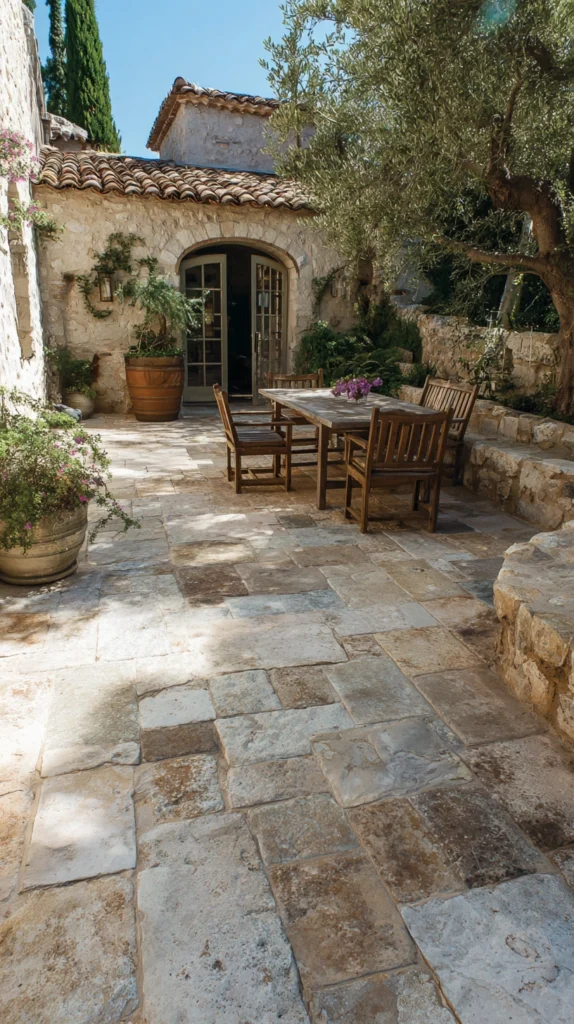
Reclaimed stone tiles — old Yorkshire flagstones, reclaimed French limestone, or antique terracotta from demolished buildings — create a patio of extraordinary historical character and completely individual material identity. Each piece of reclaimed stone carries the evidence of its previous life — the worn edges, the weathered surface, the patina of use — creating a patio of authentic accumulated character that new stone cannot immediately achieve.
Pro Tip: Source reclaimed stone tiles from a single consistent source — a single demolition or a single salvage dealer — for a patio of genuine visual consistency. Reclaimed stone from multiple sources of different ages and different quarries creates a visually fragmented surface that looks assembled rather than authentically coherent. Consistent sourcing creates a patio of genuine material unity and authentic historical character.
10. Travertine Patio Tiles
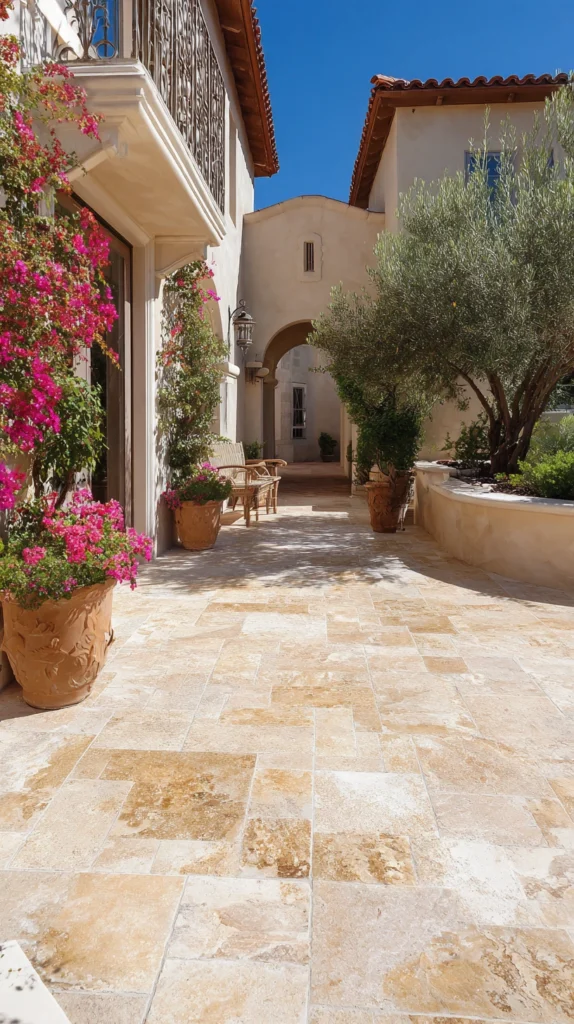
Travertine tiles — the warm honey and cream toned stone with its characteristic natural voids and cross-cut patterning — create a patio of considerable Mediterranean warmth and genuine natural material beauty. Travertine has a quality of warm sun-soaked antiquity that few other stones can match — its characteristic color range of warm cream, honey, and amber creating a patio that glows with natural warmth in every light condition.
Pro Tip: Choose filled and honed travertine rather than unfilled or polished travertine for outdoor patio application. Unfilled travertine collects water and debris in the natural voids that is difficult to clean and can create trip hazards as the void edges wear.
Polished travertine creates a dangerously slippery outdoor surface when wet. Filled and honed travertine provides a smooth consistent safe and genuinely beautiful outdoor surface.
11. Terracotta Hexagonal Tiles
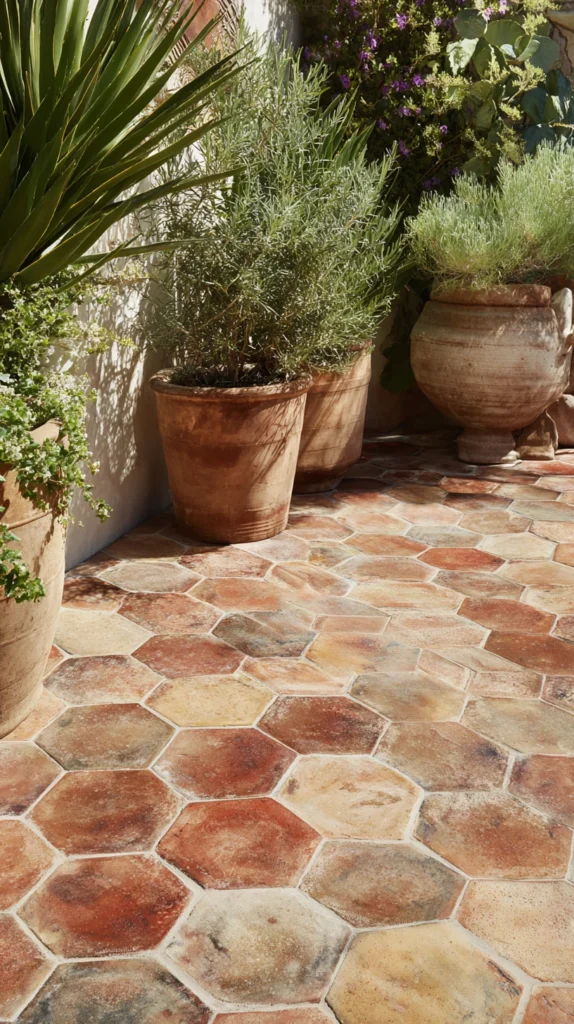
Terracotta hexagonal tiles — the classic honeycomb pattern of six-sided terracotta tiles — create a patio of considerable visual interest and genuine material richness. The hexagonal format creates a different visual rhythm from rectangular and square tiles — the honeycomb pattern creates a surface that reads as both geometric and organic simultaneously with a quality of natural warmth that the earthy terracotta color amplifies beautifully.
Pro Tip: Use terracotta hexagonal tiles in a consistent single size throughout the patio. Mixing hexagonal tiles of different sizes creates a visual complexity that overwhelms the elegant geometric simplicity of the hexagonal pattern. A consistent single size of hexagonal terracotta creates the clean considered geometric surface that makes this tile format so specifically and genuinely beautiful as a primary patio material.
12. Timber Effect Porcelain Patio Tiles
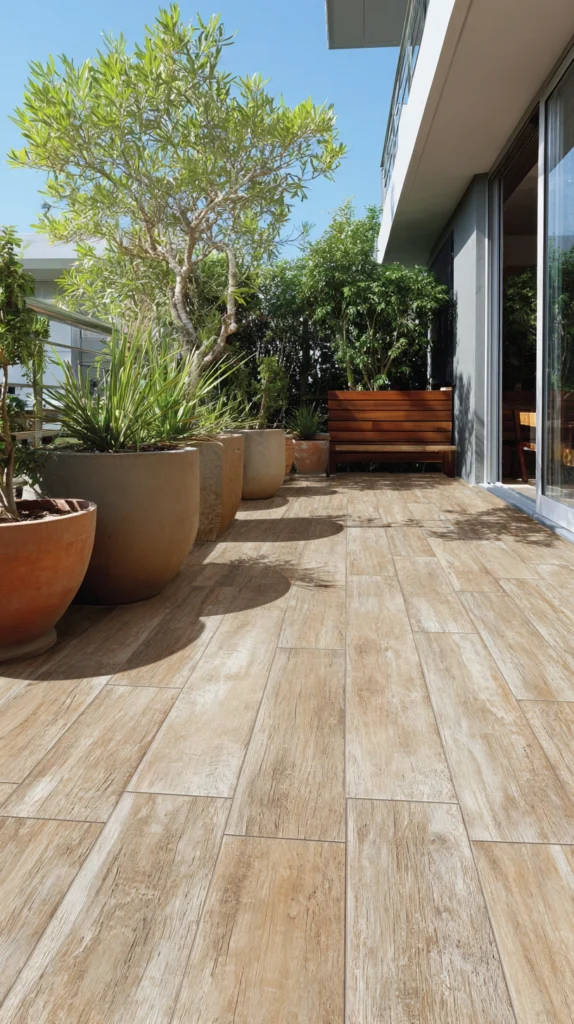
Timber effect porcelain tiles — outdoor-rated porcelain in convincing timber plank formats that replicate the warmth and grain of real timber — create a patio of genuine timber warmth without the maintenance, the weathering, and the biological growth challenges of actual timber decking. The timber effect plank format reads visually as a timber deck from a normal viewing distance while providing the complete durability, frost resistance, and low maintenance of a porcelain surface.
Pro Tip: Lay timber effect porcelain patio tiles in a staggered board pattern — offsetting the joints between adjacent rows by half the tile length — rather than in a fully aligned grid pattern. Fully aligned joints in a timber effect tile create a grid pattern that reveals the tiles as manufactured units rather than replicating the natural visual rhythm of genuine timber decking boards.
13. Blue and White Portuguese Azulejo Tiles
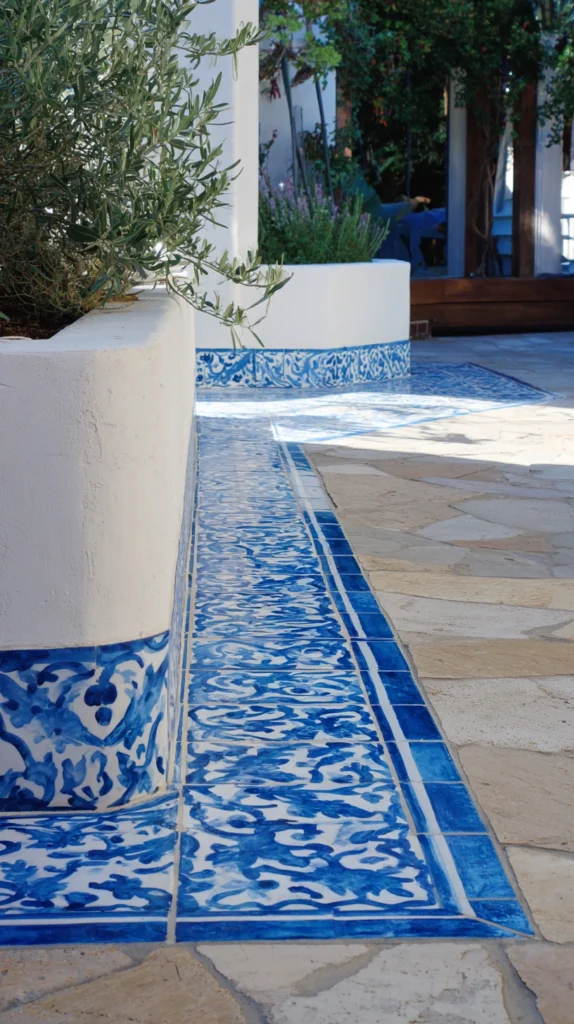
Portuguese azulejo tiles — the traditional blue and white hand-painted ceramic tiles that define the aesthetic of Portuguese and Brazilian architecture — used as feature elements within a patio create a surface of genuine cultural beauty and extraordinary decorative richness. A border of blue and white azulejo tiles around the perimeter of a simple grey or cream patio, or an azulejo feature panel on a garden wall above the patio, creates a patio of considerable cultural character and genuine artistic beauty.
Pro Tip: Seal blue and white azulejo tiles used in an outdoor application with a penetrating ceramic sealer before installation and reseal annually. Traditional azulejo tiles have a slightly porous glaze that can absorb staining material and develop surface crazing in frost conditions if left unsealed. A penetrating sealer maintains the crisp beautiful blue and white quality of the traditional azulejo surface through years of outdoor exposure.
14. Moroccan Zellige Feature Tiles
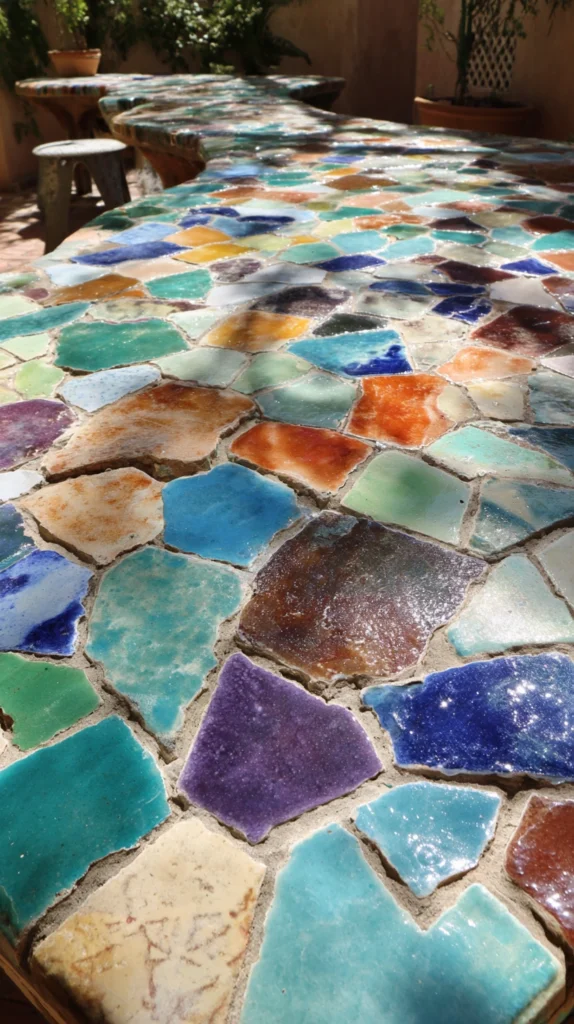
Moroccan zellige tiles — handmade irregularly shaped glossy glazed ceramic tiles in vivid colors and complex geometric patterns — create a patio feature of extraordinary decorative richness and genuine cultural beauty.
A zellige-tiled fountain surround, a zellige outdoor dining table top, or a zellige feature panel within a simpler tile patio creates a patio of remarkable visual complexity and genuine artistic character that is completely and genuinely individual.
Pro Tip: Use zellige tiles as feature elements within a simpler tile patio rather than as the primary patio surface material. The irregular thickness and glossy glazed surface of zellige makes them impractical as a primary walkway or seating area surface — the uneven surface creating trip hazards and the glossy glaze creating slip hazards in wet conditions. As a feature panel or table top the extraordinary beauty of zellige creates a patio focal point of genuine visual spectacle.
15. Handmade Spanish Floor Tiles
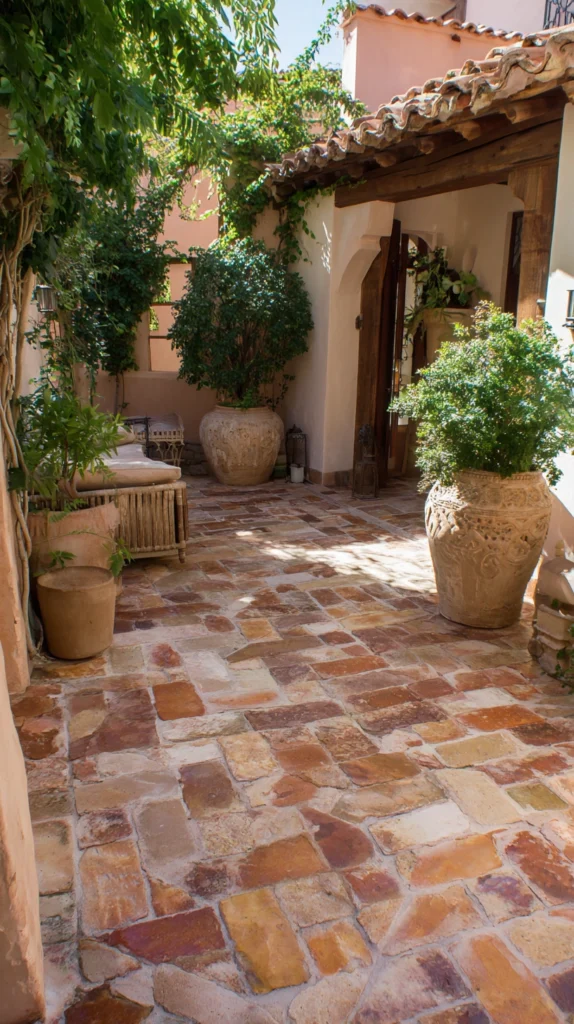
Handmade Spanish floor tiles — the rustic slightly irregular warm-toned ceramic tiles produced in the traditional tile-making tradition of Andalusia and Catalonia — create a patio of extraordinary warm character and genuine artisan beauty.
The slight variations in size, color, and surface texture that characterize genuinely handmade Spanish tiles create a patio surface of organic natural variety — each tile subtly different from its neighbors, the overall surface reading as a warm living material rather than a uniform manufactured product.
Pro Tip: Allow for a 10 to 15 percent variation in tile dimensions when planning a handmade Spanish floor tile patio installation. Genuine handmade tiles vary in size more significantly than machine-made alternatives and require wider grout joints of 8 to 12 millimetres — wider than the 2 to 5 millimetres used for precision machine-made tiles — to accommodate the dimensional variation and create a joint width authentically appropriate to the traditional aesthetic.
Tile the Patio and Tile It Well
Choose the tile that suits the character of the home and the garden. Specify the correct outdoor rating and slip resistance. Install on a properly prepared base with the care and precision that a permanent surface deserves. And discover that a genuinely beautiful tiled patio is one of the most enduring and most rewarding outdoor investments available at any garden budget level.