15 Old Shutter Decor Ideas
Old shutters are one of the most versatile and most characterful reclaimed materials available to the home decorator, and their consistent appearance in salvage yards, antique markets, and roadside finds makes them one of the most accessible as well.
They carry within their aged timber the specific quality that no new material can manufacture: the patina of genuine use, the layers of paint that have accumulated over decades of seasonal application, the slight warping and the hardware wear that communicate a long functional life honestly and without apology. The old shutter’s visual appeal derives precisely from this evidence of age.

It is not the pristine perfection of new timber or the uniform finish of a manufactured product but the specific beauty of a material that has been outside in the weather, that has been painted and repainted, that has opened and closed thousands of times on the windows of houses that may no longer exist.
Bringing old shutters into the domestic interior or using them in the garden transforms this aged material into decoration of genuine character and authentic warmth that the mass-produced decorative object, however skillfully designed, simply cannot replicate. Here are fifteen ideas for using old shutters with the creative intelligence and the practical consideration that this remarkable reclaimed material deserves.
1. A Headboard That Becomes the Room’s Focal Point
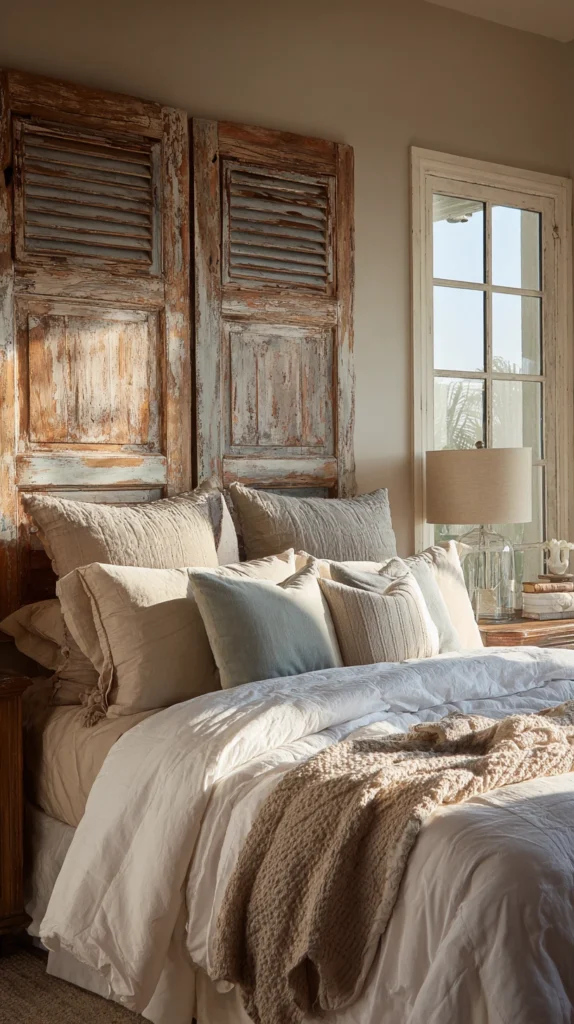
A pair of old shutters positioned behind the bed as a headboard creates a bedroom focal point of immediate character and considerable visual presence. The shutters’ louvered surface brings texture, depth, and the specific aged quality of the reclaimed material to the wall behind the bed in a way that a conventional upholstered or timber headboard cannot approach.
The shutters should be of a width that relates proportionally to the bed’s dimensions. A pair of full-height shutters flanking a king-size bed creates a headboard composition of generous scale and balanced symmetry. A single wide shutter centered behind a smaller bed creates a more graphic, asymmetric composition.
The shutters can be fixed directly to the wall at the appropriate height or mounted on a simple timber batten that positions them at the correct distance from the floor. Paint them in a tone drawn from the bedroom’s palette for a cohesive, designed result, or leave the original paint layers exposed for the authentic aged character that the reclaimed material most honestly possesses.
The bedside lamps, the bedlinen, and the wall color should be chosen in relationship to the shutter headboard rather than independently of it, treating the shutters as the room’s primary design element and organizing the surrounding palette to complement their specific color and material character.
2. A Garden Privacy Screen with Planting Integration
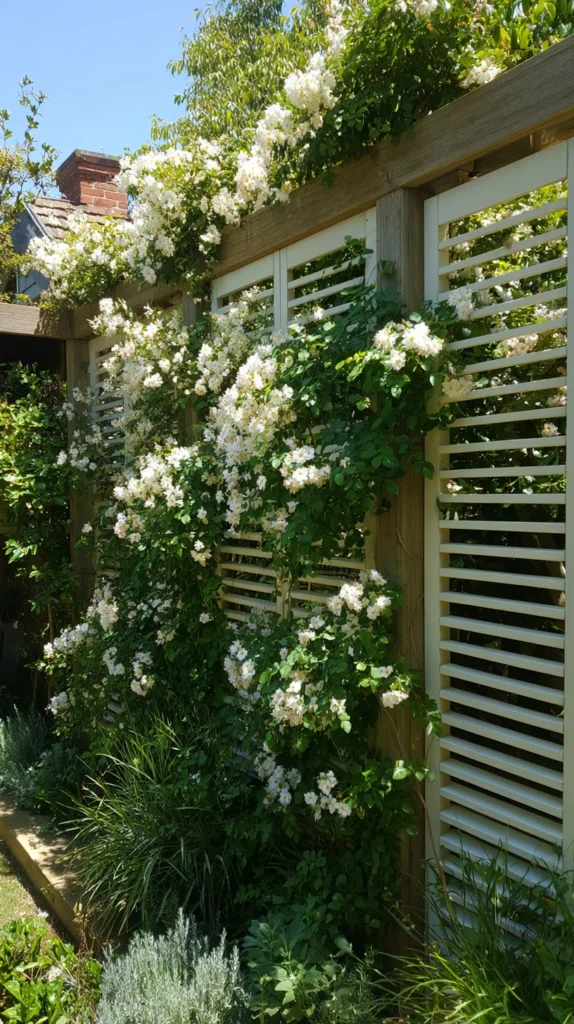
Old shutters fixed to a simple timber frame and positioned in the garden as a privacy screen or a visual boundary between zones create an outdoor structure of genuine rustic character that the purpose-built garden screen cannot replicate. The louvered slats allow airflow and filtered light through the screen while providing the visual privacy that the garden’s open areas often require.
The shutter screen’s timber frame should be constructed from treated timber of adequate size to support the shutters’ weight and to resist the lateral forces that wind creates on any vertical garden structure. Post foundations should be set at a depth appropriate to the screen’s height, with a minimum of one third of the post’s total length below ground for adequate stability.
Climbing plants trained through and over the shutter screen create the integration of the built and the natural that the garden’s most successful structural features achieve. Jasmine, clematis, or a climbing rose threaded through the louvered slats and over the frame’s top rail transforms the shutter screen from a static structure into a living garden feature of changing seasonal beauty.
The shutters’ paint finish weathers naturally in the outdoor environment, developing the further patina of garden exposure that adds to rather than diminishing the character of the aged material. An annual treatment with a penetrating timber oil maintains the structural integrity of the wood without compromising the authentic aged surface quality.
3. A Rustic Shelving Unit for Kitchen Display
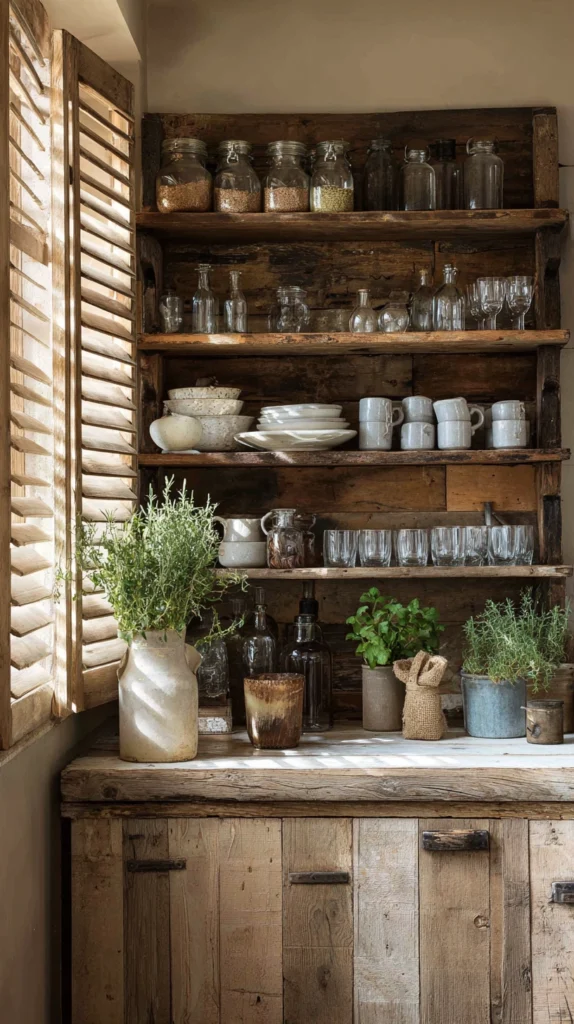
Old shutters used as the back panel of an open shelving unit create a kitchen display surface of considerable rustic character, providing the visual backdrop against which ceramics, glass, and stored food items are displayed with an aged, farmhouse quality that the plain wall or the standard cabinet back cannot provide.
The shelving unit can be constructed simply. A pair of shutters fixed side by side to the wall provide the back panel, and simple timber shelves of appropriate depth fixed to the wall through the shutter surface or supported on individual brackets create the display levels. The shelf depth should be calibrated to the items the shelves will hold.
The louvered surface of the shutter back panel creates a visual texture behind the displayed objects that a flat painted surface entirely lacks. Ceramic plates, glass jars of stored ingredients, small potted herbs, and the accumulated objects of a kitchen that is genuinely used and genuinely loved all appear to have a greater advantage against the aged, textured shutter surface than against any smooth alternative.
Paint the entire unit, shutters and shelves together, in a single color for a cohesive farmhouse kitchen aesthetic. Alternatively, leave the shutters in their original aged paint layers and paint the shelves in a complementary tone, creating a material distinction between the back panel and the shelf surfaces that draws attention to the shutter’s reclaimed character.
4. An Outdoor Potting Station Backdrop
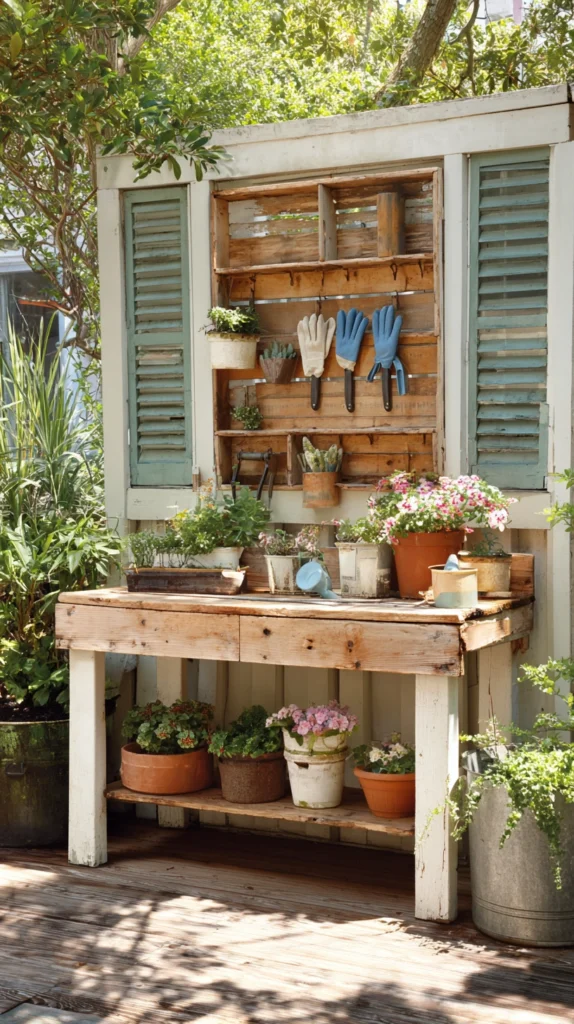
A potting station constructed against a backdrop of old shutters fixed to the garden wall or fence creates an outdoor working space of complete rustic character. The shutters’ louvered surface provides the backdrop for the potting bench’s activity while their hardware, hooks, and the various fixings that old shutters typically carry provide ready-made hanging points for tools, twine, and the accumulated small equipment of the potting routine.
The potting bench itself can be constructed from reclaimed timber in keeping with the shutter’s material character, creating a potting station of complete material consistency. A simple worktop of adequate depth fixed to a frame of reclaimed timber, with the shutters providing the backing wall and the tool storage surface, creates a working space of genuine charm and practical functionality.
Additional hooks, small shelves, and hanging wire baskets fixed to the shutter surface expand the potting station’s storage capability beyond what the hooks already present in the aged hardware provide. Terracotta pots, gardening gloves, seed packets, and the various small items of the potting routine all find their natural home in the organized, character-rich environment of the shutter-backed station.
The outdoor exposure of the shutters in this application should be managed with an annual timber treatment that maintains the wood’s structural integrity. The goal is not to restore the shutters to a pristine condition but to preserve the aged surface while preventing the deterioration that untreated exterior timber eventually suffers.
5. A Window Frame Mirror Display
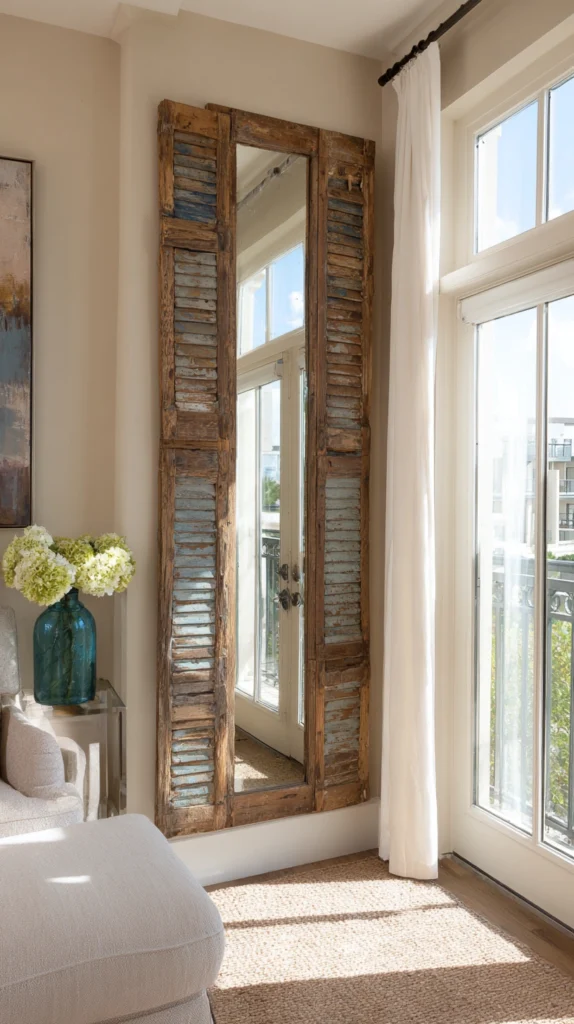
Old shutters flanking a large mirror on the living room or hallway wall create a composed display of considerable visual impact. The shutters frame the mirror’s reflective surface with their aged, louvered character, creating the suggestion of a window with its shutters open to reveal the reflection beyond, a trompe l’oeil of considerable charm.
The mirror should be of a size and a format that relates proportionally to the shutters on either side. A tall, narrow mirror flanked by full-height shutters creates a composition of vertical emphasis and maximum theatrical quality. A wider mirror with shutters positioned at a lower height on either side creates a more horizontal, console table-friendly composition.
The shutters can be fixed at a slight angle to the wall, as if genuinely open on window hinges, to reinforce the window illusion and create the three-dimensional interest of a composition that projects slightly from the wall surface. This angled positioning also catches the room’s light on the louvered surface at a more favorable angle than the flat wall-mounted position.
The wall color behind and around the composition should be chosen to maximize the visual impact of the shutters and mirror together. A deep, saturated wall color creates the most dramatic backdrop for the pale aged timber of the shutters and the reflective surface of the mirror, creating a composed vignette of considerable sophistication.
6. A Photo Gallery with Louvered Clips
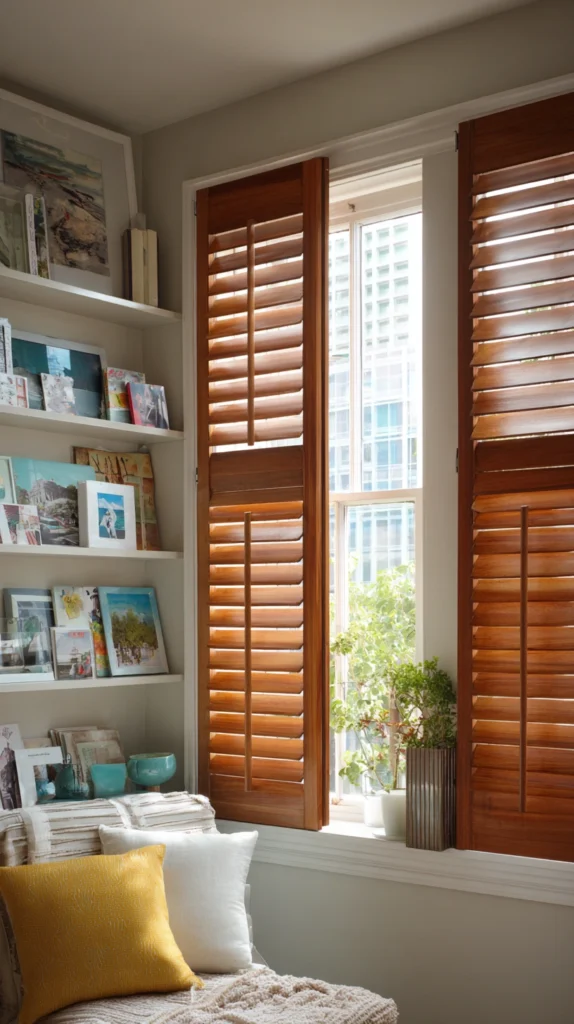
The louvered surface of an old shutter provides a ready-made display system for photographs, postcards, small artworks, and printed ephemera. The slats’ slight angle creates a natural grip for photos and cards inserted between adjacent slats, creating a display that requires no fixing to the photos themselves and can be changed and rearranged as frequently as the collection evolves.
A large single shutter or a pair of shutters fixed to the wall of a hallway, a study, or a bedroom creates a display surface of generous capacity. The louvered surface can hold dozens of photos and cards in a composition that develops organically as items are added, removed, and repositioned over time, creating a living display that the static gallery wall cannot become.
The shutter’s aged surface creates a backdrop of material warmth for the photographs displayed against it. Color photographs gain additional vibrancy against the muted, aged tones of the timber. Black and white photographs create a tonal conversation with the shutter’s surface that has a specific elegance and a specific nostalgic quality.
Small clips, timber pegs, or lengths of twine threaded through the slats and used to hang items that are too small to be inserted between slats extend the display system’s versatility. The result is a photo display of genuine character and genuine flexibility that the commercial photo display system, however well designed, cannot replicate.
7. A Decorative Room Divider
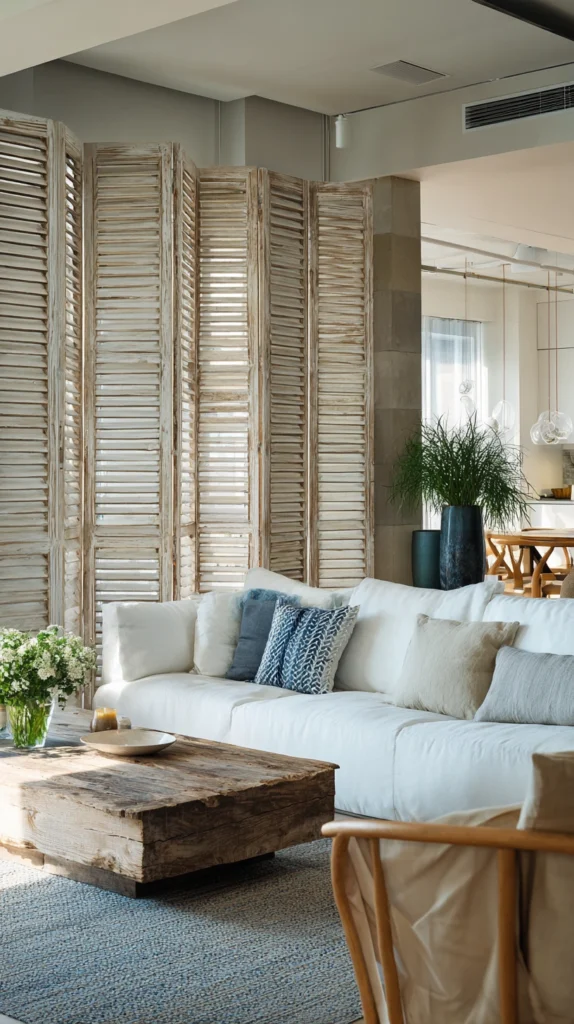
A pair or a set of old shutters hinged together into a folding screen creates a room divider of complete reclaimed character that defines spatial zones in an open plan living area, bedroom, or studio with the casual, artful quality of a found object given a designed purpose. The hinged configuration allows the divider to be repositioned and reconfigured as the room’s spatial requirements change.
The hinges connecting the shutters should be of adequate strength for the combined weight of the panels and should be positioned at the top and bottom of each join to prevent the screen from racking under its own weight. Piano hinges along the full height of each join create the most stable and most visually refined connection between panels.
The shutter screen’s louvered surface allows light to pass between the defined zones, maintaining the sense of spatial connection across the division while creating the visual boundary that the zone definition requires. This filtered quality of the division, neither fully open nor fully closed, is one of the louvered shutter’s most distinctive and most useful spatial properties.
A light source positioned behind the shutter screen creates the dramatic effect of light filtered through the louvered slats onto the surrounding floor and walls. The pattern of light and shadow that the louvered surface casts when backlit transforms the functional room divider into a decorative element of considerable atmospheric beauty.
8. A Bathroom Wall Feature
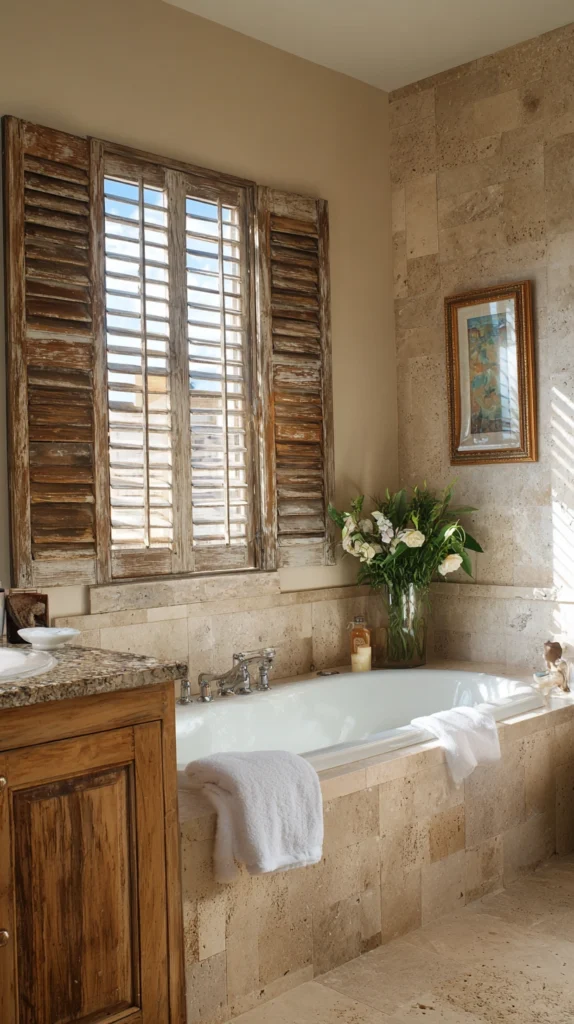
Old shutters used as a decorative wall feature in a bathroom, fixed flat to the wall above the bathtub or beside the vanity, create a bathroom of unexpected rustic character that the standard tile and mirror bathroom entirely lacks. The shutters’ louvered surface provides visual texture and aged material warmth at the room’s primary focal point.
The shutters used in a bathroom must be properly sealed against the moisture that the bathroom’s humid environment produces. A thorough application of a penetrating moisture-resistant sealant to all surfaces of the shutter before installation, and a waterproof topcoat appropriate to the ambient humidity level, protects the timber from the swelling, warping, and mold growth that unsealed timber in a bathroom environment eventually suffers.
The bathroom shutter feature works particularly well above the bathtub, where its louvered surface creates the decorative backdrop for the bathing experience in a material that references the outdoor shutter’s original function of filtering light and air. Candles, small plants, and bath accessories arranged on a narrow shelf directly below the shutter complete the composed bathroom vignette.
Paint the bathroom shutters in a tone that relates to the bathroom’s palette. A soft sage green or a warm cream creates a botanical, spa-like quality. A deep charcoal or a matte black creates a more dramatic, boutique hotel quality that the louvered surface’s texture reinforces with considerable effectiveness.
9. An Outdoor Bar Serving Hatch
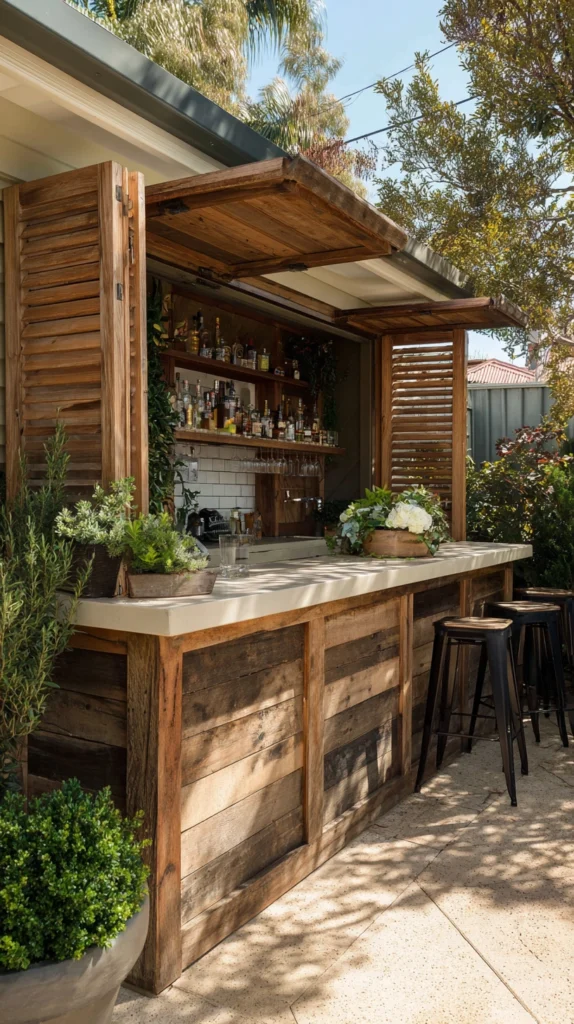
Old shutters used as the hinged serving hatch of an outdoor bar or kitchen, opening outward from the bar’s front face to create the serving counter’s horizontal surface when open and closing to secure the bar when not in use, create an outdoor entertaining structure of complete character and practical intelligence. The shutter’s original function as a hinged, opening and closing panel makes it ideally suited to the serving hatch application.
The shutter serving hatch should be fixed on heavy-duty exterior hinges that support the shutter’s weight in the open horizontal position without sagging. A simple prop or a fold-down leg support holds the open shutter at the correct serving counter height, and a simple latch on the interior face secures it in the closed position when the bar is not in use.
The bar structure itself can be constructed from reclaimed timber, old pallets, or any combination of reclaimed materials that relates to the shutter’s aged character. The entire outdoor bar, from the reclaimed timber frame to the old shutter serving hatch to the distressed timber shelving for bottles and glasses, creates an outdoor entertaining structure of complete material consistency and complete rustic charm.
String lights fixed to the bar structure’s overhead framing and candles on the serving counter create the specific atmospheric quality of the outdoor evening bar that the shutter’s aged character and the reclaimed material’s warmth most naturally suit.
10. A Seasonal Wreath and Garland Display
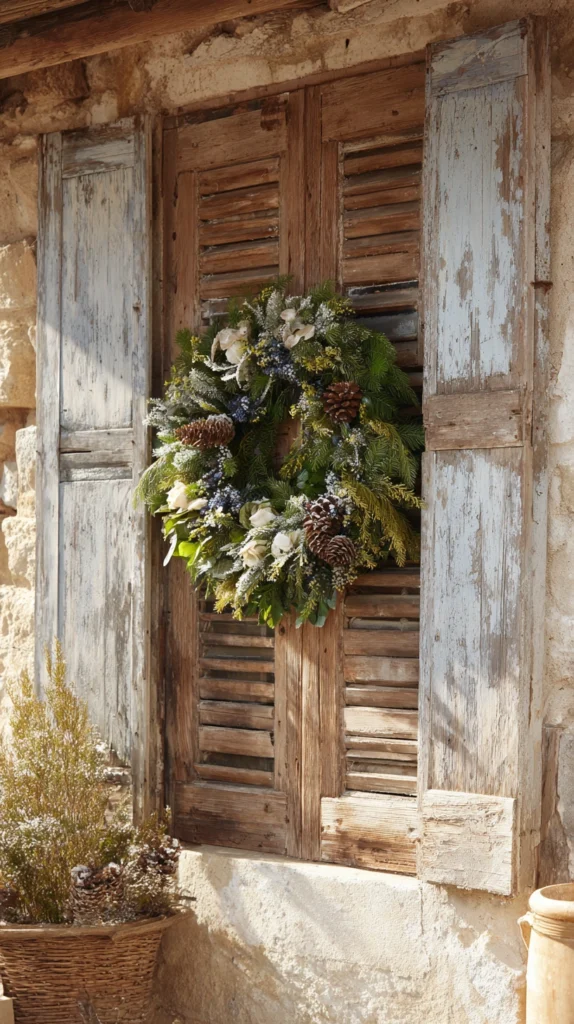
The louvered surface and the hardware of an old shutter provide a natural mounting system for seasonal wreaths, garlands, and the various decorative arrangements that mark the domestic year’s progression through its seasons and celebrations. A shutter hung on the front door or on the external wall beside the entry creates a seasonal display surface of considerable character.
Spring garlands of dried flowers and fresh herbs, summer arrangements of garden-cut blooms in small hanging vases clipped to the slats, autumn wreaths of dried seed heads and turning leaves, and winter arrangements of evergreen branches and warm-lit baubles each find their natural home on the aged shutter’s louvered surface. The shutter’s neutral aged tone relates to the natural materials of every seasonal arrangement with equal warmth.
The shutter can be hung from a single hook at its top rail on the wall or door surface, allowing it to be lifted off for repositioning and for the changing of seasonal decorations without leaving permanent wall fixings in multiple positions. A ribbon or a length of natural twine through the top louver creates a simple hanging loop that suits the casual, reclaimed character of the display.
The seasonal shutter display is the home’s most visible expression of the domestic year’s rhythm, and its reclaimed material character gives each seasonal arrangement a backdrop of genuine warmth and authenticity that the fresh white door or the plain wall cannot provide.
11. A Children’s Bedroom Chalkboard Feature
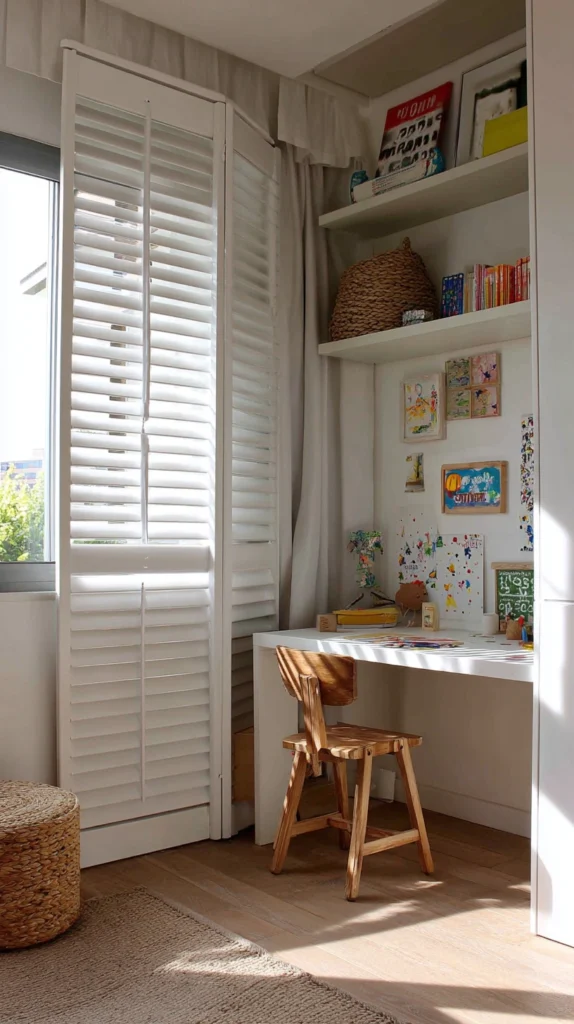
An old shutter painted with chalkboard paint on its flat frame surfaces, with the louvered slats left in the original timber finish creating a textured contrast with the chalkboard areas, creates a children’s bedroom feature of considerable creativity and practical play value.
The chalkboard surface provides the writing and drawing area, and the louvered slats provide the hanging points for small artworks, notes, and the accumulated creative output of childhood.
The chalkboard paint should be applied to the flat rails and stiles of the shutter frame in two to three coats with the appropriate preparation and curing time that chalkboard paint requires before use. A chalk seasoning treatment, rubbing the flat side of a chalk piece over the entire surface and then erasing it before first use, prepares the surface for clean erasure and prevents permanent ghosting of the first marks made on it.
The shutter should be fixed securely to the bedroom wall at a height appropriate to the child’s reach, with the bottom rail at a comfortable writing height and the full surface accessible from a standing position. A small timber shelf fixed directly below the shutter creates the chalk tray that holds the chalk pieces and the eraser without them migrating to the floor.
The combination of the chalkboard surface and the louvered display surface creates a children’s bedroom feature of complete play and creative value that grows with the child, serving the drawing and writing needs of the early years and the note-pinning and display needs of the older child’s bedroom.
12. A Vertical Garden Frame
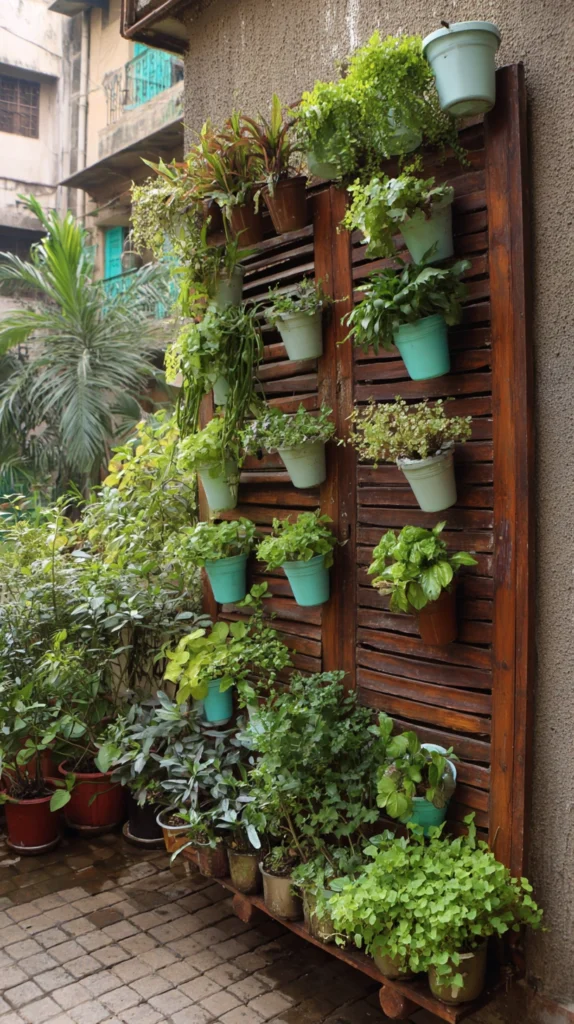
An old shutter used as the frame for a vertical garden, with small pots, hanging planters, and moss-filled wire baskets attached to the louvered surface and the frame at various heights, creates a living wall feature of complete character and genuine botanical beauty. The shutter’s aged timber provides the perfect backdrop for the living green of the plants against the warm, muted tone of the reclaimed wood.
The shutter should be fixed to the wall or to a freestanding support frame with a gap of at least five centimeters between the shutter’s back face and the wall surface behind it, allowing airflow that prevents moisture buildup and the timber decay that the watering of the plants would otherwise cause. A waterproof membrane fixed to the wall behind the shutter provides additional moisture protection.
Small terracotta pots wired to the louvered slats, hanging tin cans repurposed as planters, and clip-on pot holders designed for louvered surfaces all create the planting positions that the vertical garden requires. Succulents and drought-tolerant plants are the most forgiving species for the vertical garden’s challenging growing conditions of limited soil volume and variable moisture.
The vertical shutter garden is the indoor or outdoor feature that most completely reconciles the reclaimed material’s aged character with the living, growing quality of genuine plants. The combination of the two, the aged timber and the living green, creates a feature of complete natural beauty that no manufactured garden product can replicate with the same authentic warmth.
13. A Laundry Room Organizer
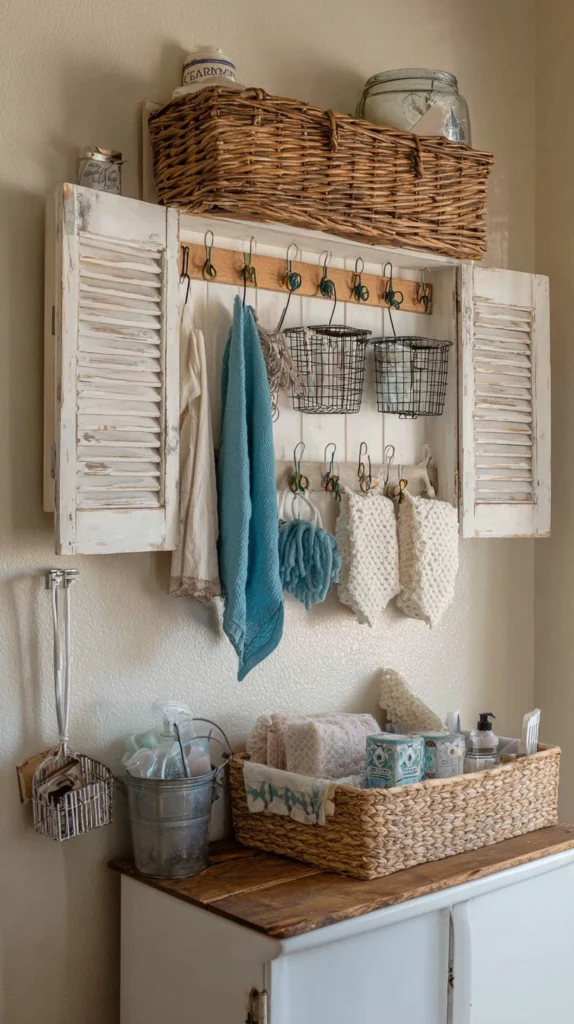
An old shutter fixed to the laundry room wall creates an organizational system of immediate practicality and genuine character in the room that most frequently suffers from being functional without being beautiful. The louvered slats hold pegs, hooks, and wire baskets for the organization of the laundry room’s accumulated small items with the simple mechanical grip of the angled slat surface.
Wooden pegs inserted between the slats hold individual items of clothing awaiting attention, delicate items drying flat, and the small garments that the laundry routine produces in quantities that no amount of available surface can comfortably accommodate. Wire baskets clipped to the slats hold cleaning products, sewing supplies, and the miscellaneous small items of the laundry function.
A length of twine threaded between two slats at an appropriate height creates an additional drying line for small items within the laundry room itself, supplementing the primary drying provision with a secondary line for the items that require more careful drying conditions than the outdoor line provides. The shutter’s aged character is completely at home in the utility quality of the laundry environment.
Paint the laundry room shutter in a fresh, clean tone that relates to the room’s functional character. A crisp white or a fresh sage green creates a laundry room aesthetic of organized cheerfulness that the purely functional laundry room with its standard white walls and wire shelving entirely lacks.
14. A Bedside Table Alternative
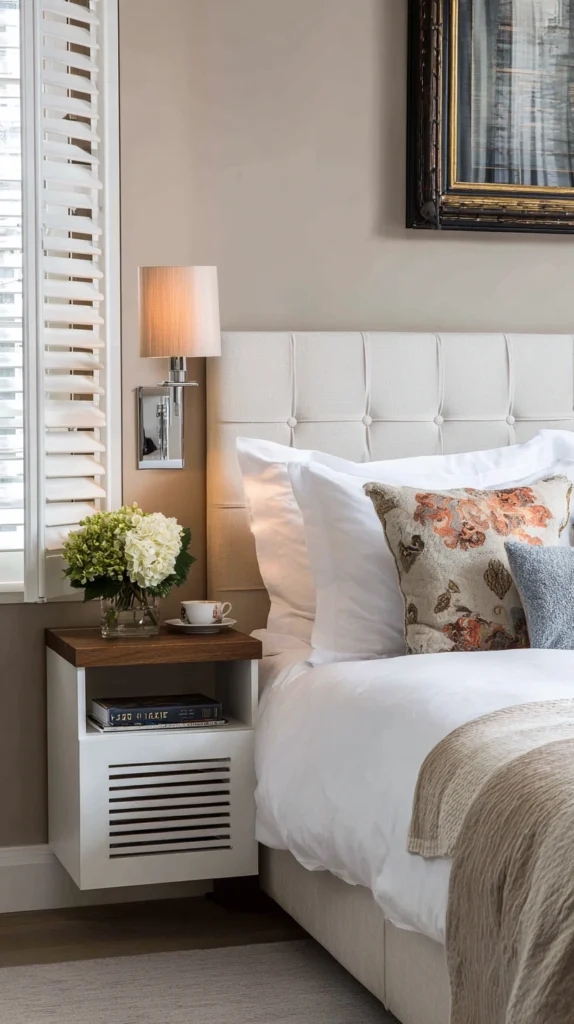
A single old shutter fixed to the wall beside the bed at bedside table height, with a small timber shelf fixed horizontally through the louvered surface at the appropriate height and the remaining surface used for hanging and display, creates a bedside storage solution of complete character and considerable spatial efficiency in bedrooms where the floor space beside the bed is too limited for a standard bedside table.
The shelf should be of adequate depth for the bedside table’s essential functions, at minimum deep enough to hold a lamp, a book, and a glass of water in a stable arrangement. A small lip along the shelf’s front edge prevents items from being swept off during the night by the restless sleeper’s reaching arm.
The louvered surface above and below the shelf holds the phone charger cable threaded through the slats for cable management, a small hook for the reading glasses or a hanging plant, and the various small items of the bedtime routine that the bedside environment collects. The shutter’s full surface area creates a much more generous organizational system than the standard bedside table’s single flat top.
The wall-mounted shutter bedside solution is particularly effective in small bedrooms where every centimeter of floor space contributes to the room’s sense of spatial generosity. The elimination of the bedside table’s legs from the floor area, even in a space of modest dimensions, creates a perceptible improvement in the room’s ease of movement and visual spaciousness.
15. Design a Whole-Home Shutter Collection
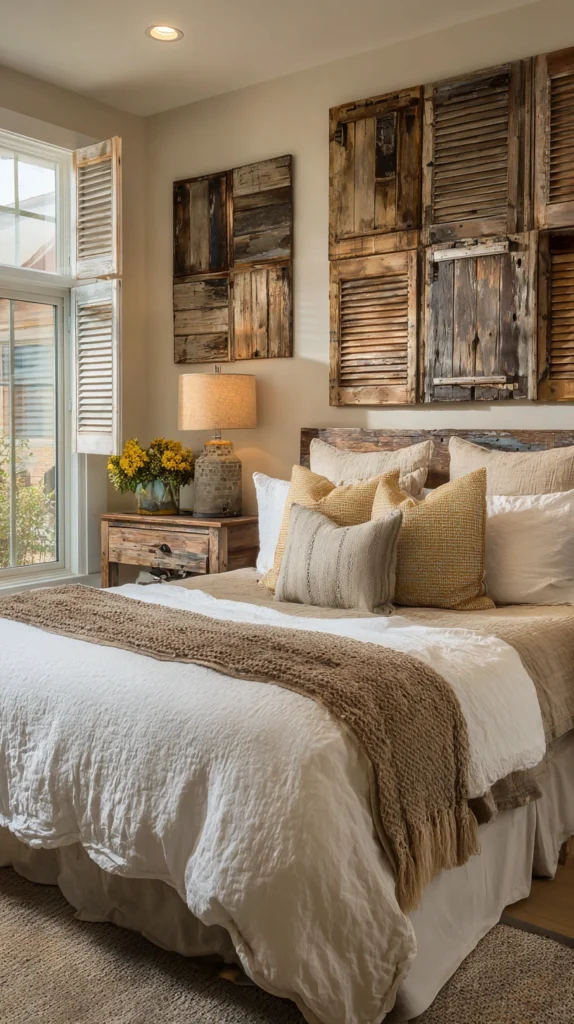
The final old shutter decor idea is the most ambitious and the most personally rewarding for the homeowner who genuinely loves reclaimed materials and the specific character they bring to the domestic interior.
It is the deliberate collection of old shutters of different sizes, colors, and conditions, assembled over time from salvage yards, markets, and opportunistic finds, and deployed throughout the home as a consistent material thread.
A home in which old shutters appear in multiple rooms and in multiple applications, each use specific to the room’s function but all sharing the consistent material character of the aged timber, creates an interior of extraordinary warmth and personal expression.
The shutter headboard in the bedroom, the shutter shelving in the kitchen, the shutter room divider in the study, and the shutter vertical garden on the patio together create a home whose material identity is as specific and as genuine as the reclaimed material that expresses it.
The collection should be assembled without excessive selectivity. The shutters that are slightly too wide, slightly too short, or in a color that does not immediately seem to suit the intended application are often the ones that produce the most interesting and most creative uses once their specific dimensions and character are engaged honestly.
The imperfect shutter finds its perfect application as naturally as any found object in the hands of a maker who is genuinely paying attention.
The whole-home shutter collection is ultimately the expression of a decorating philosophy rather than a specific design scheme. It is the commitment to the authentic, the aged, and the genuinely found over the manufactured, the perfect, and the purchased new, and the specific warmth and character that this commitment creates in the domestic interior is one that every visitor feels immediately and that every occupant lives better within every day.