15 Old Door Outdoor Decor Ideas to Transform Your Garden
An old door is one of those objects that most people discard without a second thought — pulled from a renovation skip, leaned against a wall at a salvage yard, or simply left in a garage after a remodel. But an old door brought into the garden with intention and imagination becomes something genuinely extraordinary.
The history embedded in a weathered timber door — the worn paint, the original hardware, the grain of wood that has absorbed decades of weather — gives it a character and a presence that no new garden ornament can replicate.
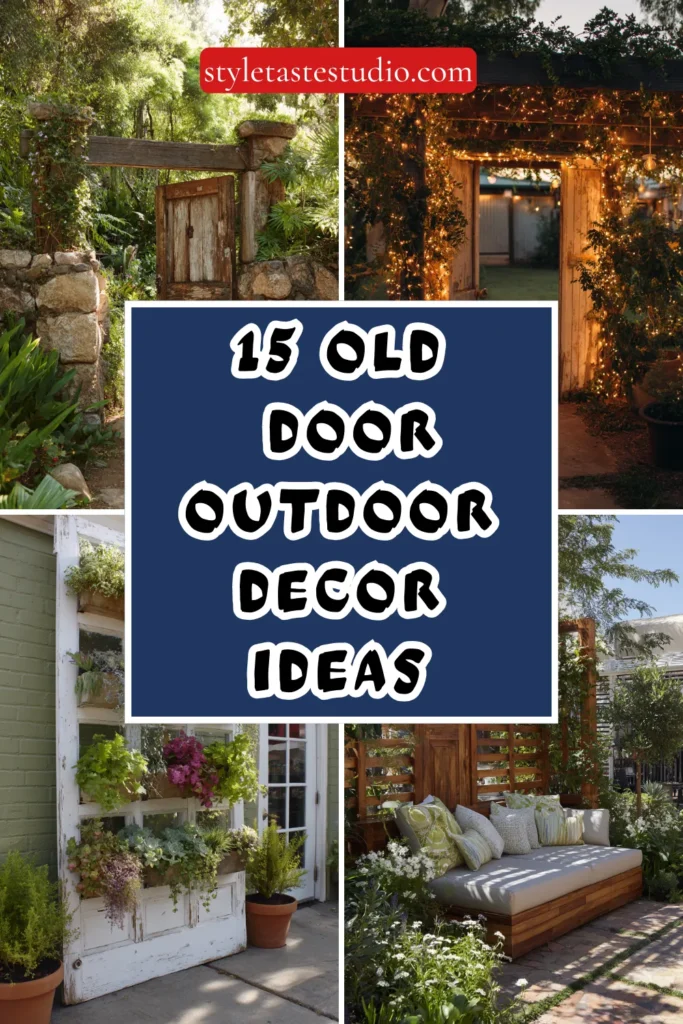
The beauty of old door garden decor is its versatility. A single old door can become a garden gate, a trellis, a mirror frame, a potting bench backing, a planter display, or a purely decorative focal point depending on how it is used and where it is placed. The material is free or nearly free. The creative possibilities are almost limitless. And the results, when done well, are genuinely beautiful.
Here are 15 old door outdoor decor ideas that transform a discarded object into a garden feature of real character and lasting beauty.
1. Freestanding Garden Gate Feature
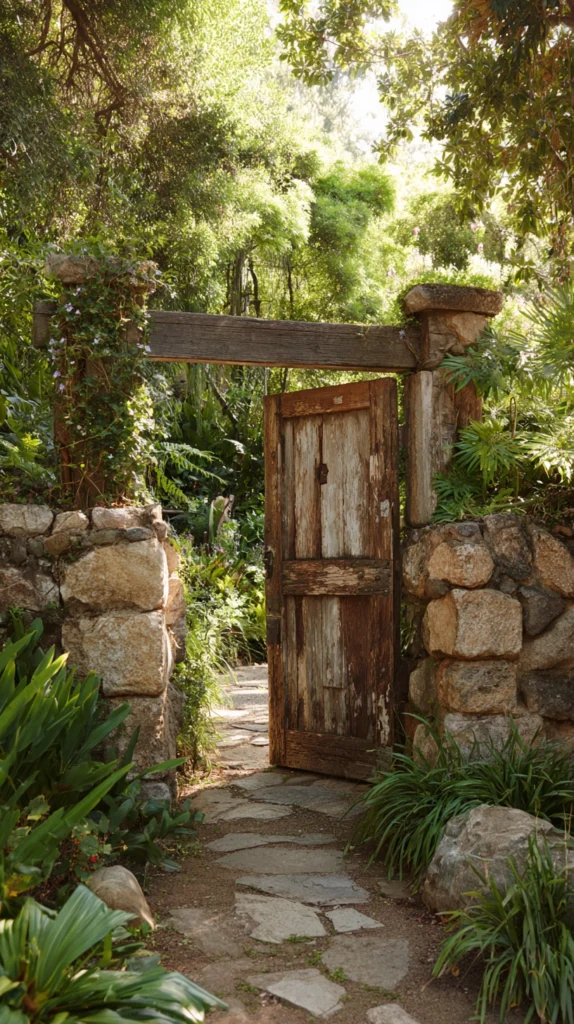
An old door installed as a freestanding garden gate feature — set into a simple timber or stone frame within a garden border, hedge, or pathway — creates a garden focal point of extraordinary character that implies a boundary, a threshold, and a destination beyond even when it stands entirely alone without a wall or fence on either side.
The freestanding door gate works on a powerful psychological principle — the human instinct to walk through a doorway, to discover what lies beyond a threshold, draws visitors through the garden space in a way that no sign or pathway alone achieves. A beautiful old door in a garden hedge or border creates a moment of genuine architectural drama from very simple, very affordable materials.
Pro Tip: Choose an old door with its original hardware — hinges, handle, latch, and knocker — intact for a freestanding gate feature.
The original hardware contributes enormously to the authenticity and character of the piece and the working mechanical elements — a latch that actually fastens, hinges that actually swing — give the installation a quality of genuine function that purely decorative alternatives lack. Original hardware on an old door is almost always more beautiful than any replacement.
2. Climbing Plant Trellis
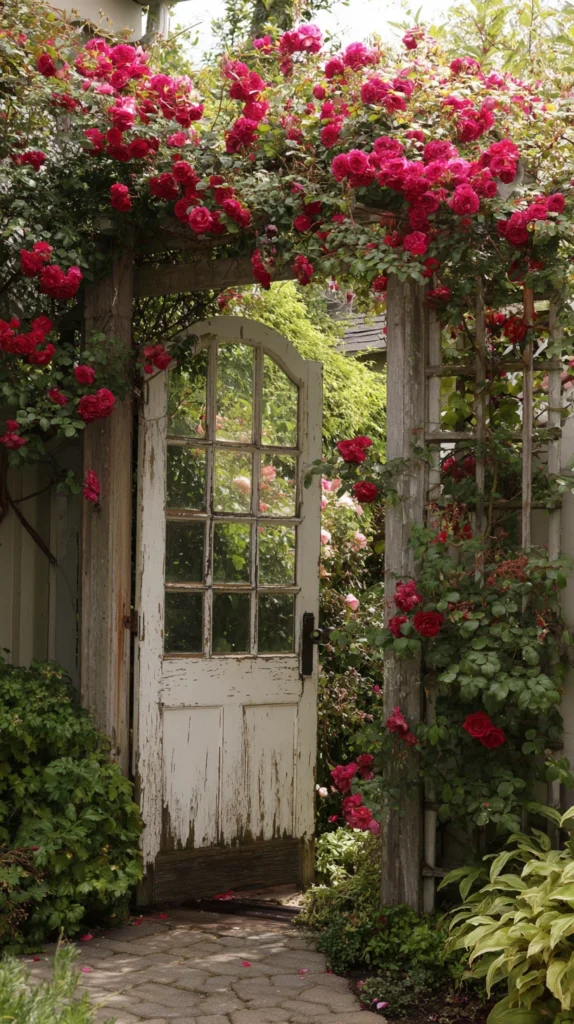
Leaning an old door against a garden wall, a fence, or a freestanding post and wire support and training climbing plants up through the door frame and panel structure creates a plant support of genuine ornamental beauty. The door frame provides a structured grid of horizontal rails, vertical stiles, and panel recesses that climbing plants explore and fill in a completely natural, organic way.
Roses, clematis, jasmine, and climbing hydrangea all use an old door trellis enthusiastically — their stems weaving through the door hardware, their flowers appearing at the window openings and panel junctions in a way that makes the door and the plant appear to have grown together over time.
The combination of the weathered timber and the living plant creates a garden feature of extraordinary natural beauty.
Pro Tip: Remove the door panels from a panelled door before using it as a climbing plant trellis — leaving only the structural frame of stiles, rails, and muntins.
The open frame allows climbing plants to grow through the structure in three dimensions rather than simply up the surface, creates a more open and airy visual effect, and allows better light and air circulation for the plant. A panel-free door frame is also significantly lighter and easier to position and secure than a full door with panels intact.
3. Outdoor Mirror Frame
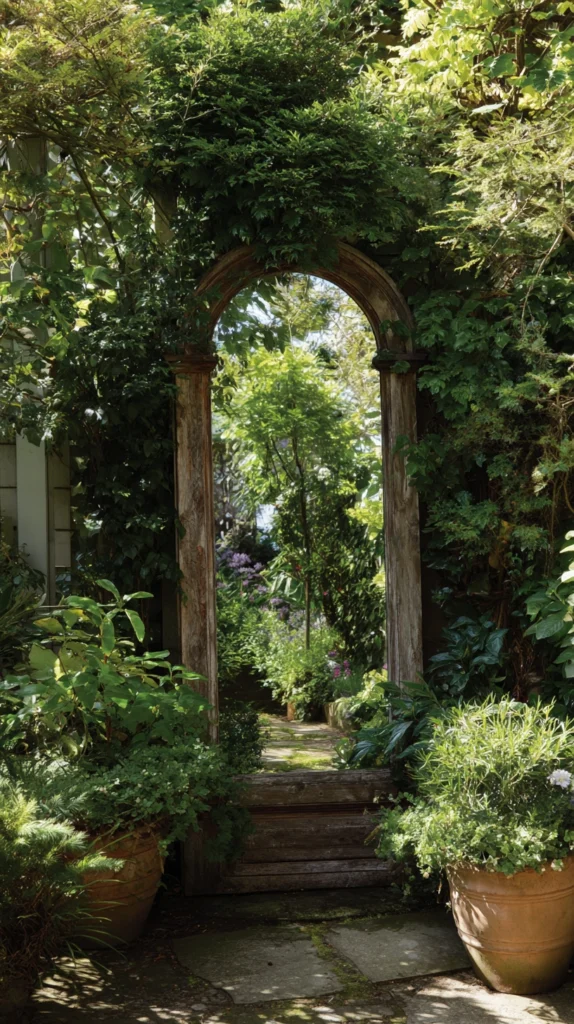
An old door with its panels replaced by mirror glass — or a single large mirror fitted within the main central panel opening — creates an outdoor garden mirror of extraordinary ornamental impact. Garden mirrors amplify light, create the illusion of space beyond the actual garden boundary, and add a quality of mysterious depth to a planting scheme that no other garden ornament provides.
A large Victorian or Edwardian door with a single tall panel opening fitted with weatherproof mirror glass and positioned at the end of a garden path or within a dense planting border creates the impression of a gateway into a continuation of the garden beyond — an illusion that is simultaneously obvious and genuinely effective in expanding the perceived scale of even the smallest garden.
Pro Tip: Use acrylic mirror sheet rather than glass mirror for an outdoor door mirror installation. A glass mirror in an outdoor setting is heavy, fragile, and creates a genuine safety risk if broken by wind, falling branches, or accidental impact.
Acrylic mirror sheet is lightweight, virtually unbreakable, cuts easily to any panel size with standard workshop tools, and provides the same reflective quality as glass mirror in outdoor viewing conditions. It is the only genuinely safe outdoor mirror material for a garden installation.
4. Potting Bench Backing Panel
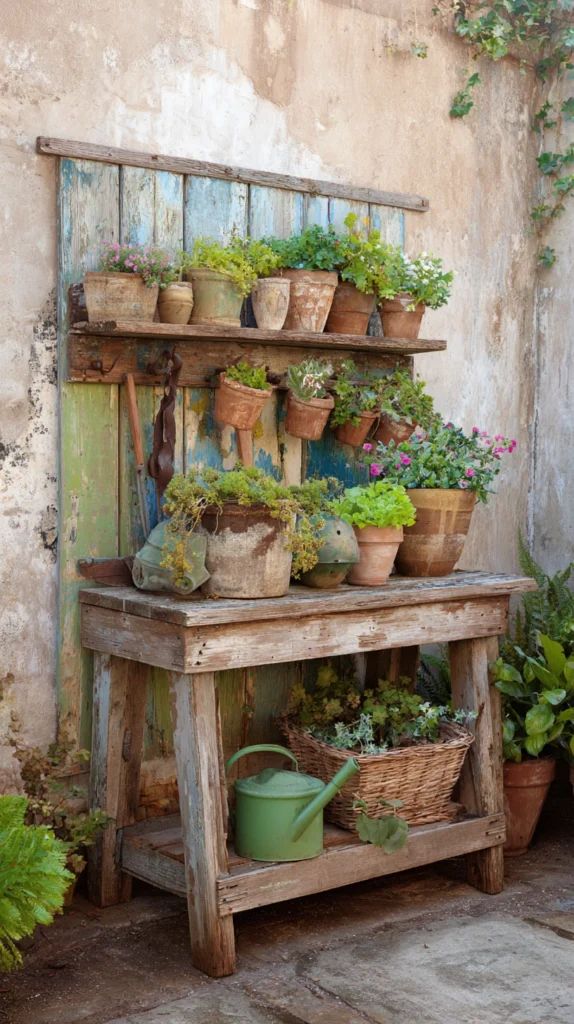
An old door laid horizontally on a simple timber trestle frame creates the surface of a potting bench — the door surface providing a characterful, naturally beautiful work surface for garden tasks. Alternatively, an old door stood upright behind a conventional potting bench as a backing panel creates a wall of hooks, shelves, and hanging storage that transforms a basic potting station into a genuinely beautiful and highly functional garden workspace.
Attach S-hooks to the door rails for hanging tools, fix small timber shelves to the door stiles for pots and seed packets, and use the original door knob and handle as additional hanging points for twine, labels, and small implements. The old door potting station has the character and the natural beauty of a genuinely old garden building and creates a working garden space that is as pleasurable to be in as it is functional to use.
Pro Tip: Treat the door surface of an outdoor potting bench with a penetrating exterior oil rather than leaving it untreated in a working garden environment. A potting bench surface is exposed to water, compost, fertilizer, and constant abrasion that degrades untreated timber rapidly.
An annual application of exterior oil maintains the timber surface, deepens the natural grain color beautifully, and extends the working life of the door potting bench surface through many seasons of intensive garden use.
5. Vertical Planter Display
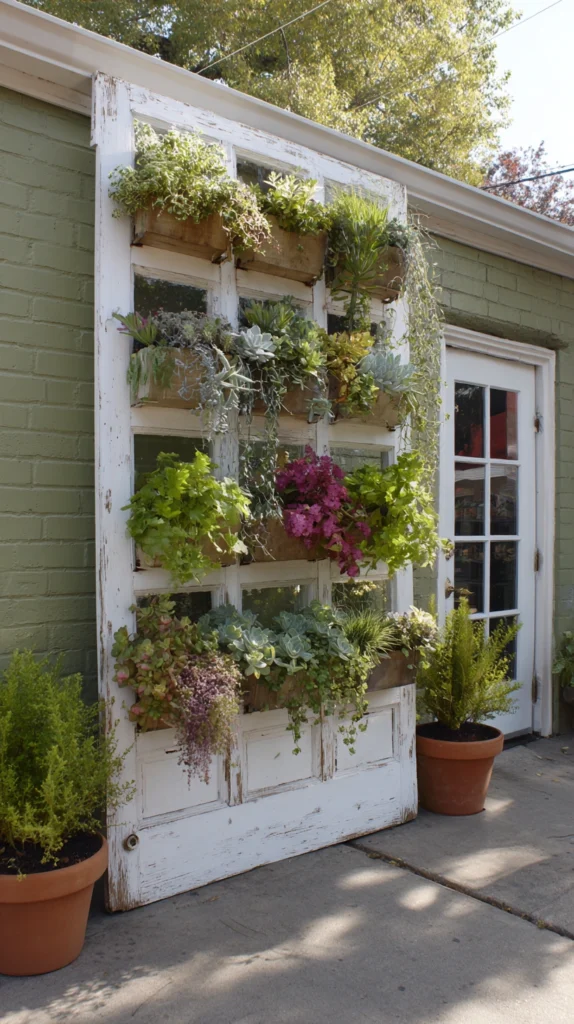
An old door laid flat on a slight angle against a wall or fence and used as a backing structure for a vertical planter display — individual pots hung from the door hardware, small planter boxes attached to the door rails, and trailing plants growing through the panel openings — creates a living wall of considerable visual impact from a single discarded object and a collection of ordinary garden containers.
The door provides the structural framework that organises a collection of individual pots and planters into a coherent, visually unified display. Without the door backing the same collection of pots would look random and unrelated.
With the door as the organising structure they read as a considered, intentional garden display of genuine character. Succulents, herbs, trailing nasturtiums, and small annual flowers all suit the vertical door planter format beautifully.
Pro Tip: Use the original door hardware — hinges, knocker, letterbox, and handle — as hanging points for individual pots and planters in a vertical door planter display. The hardware provides ready-made hanging points of genuine ornamental quality and the incongruity of a letterbox or door knocker used as a pot hanger creates a detail of wit and originality that makes the installation genuinely memorable.
Original hardware repurposed in unexpected ways is one of the most effective and least expensive sources of garden ornament available.
6. Garden Room Divider
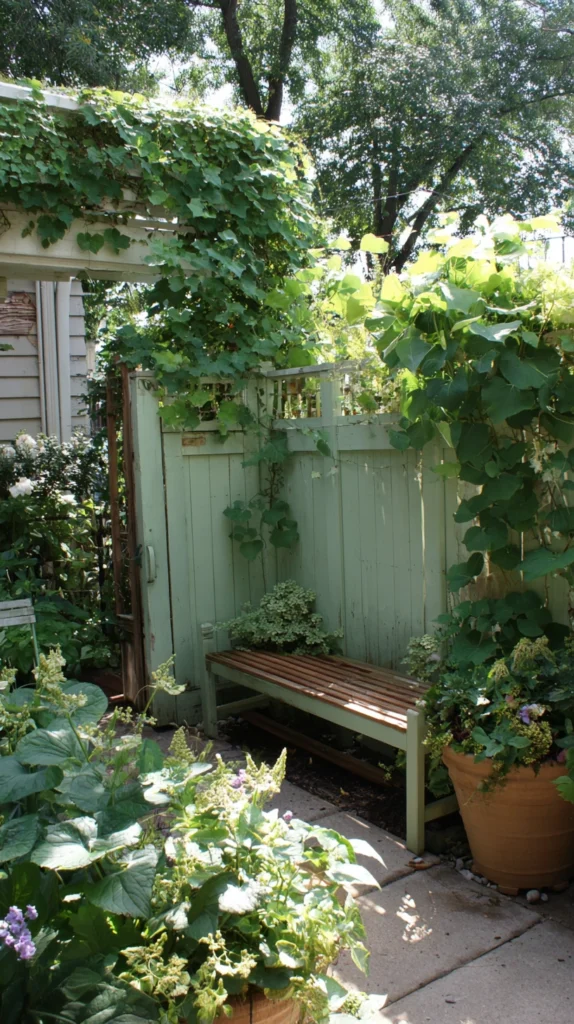
A pair of old doors — or a single wide door — used as a freestanding garden room divider creates a visual boundary between different areas of the garden without the permanence or cost of a wall or fence. The door divider defines garden rooms, creates visual interest and mystery, and provides a structure for climbing plants and hanging decorations that adds height and vertical interest to a flat garden space.
Set the doors into a simple timber frame sunk into the ground with metal post spikes — a stable, weatherproof installation that can be relocated if the garden design evolves. Paint the doors in a color that complements the wider garden palette — a deep sage green, a warm terracotta, or a deep charcoal — and allow climbing plants to begin establishing on both faces of the door divider from the first season.
Pro Tip: Install the garden room divider door at a slight angle to the main sightline of the garden rather than perfectly perpendicular to it. A door divider set at a slight angle creates a more dynamic visual effect — drawing the eye along the door surface and implying a pathway around it — than a flat perpendicular installation that simply blocks the view. The angled position also creates a more interesting and complex interaction with the garden planting on either side of it.
7. Outdoor Chalkboard
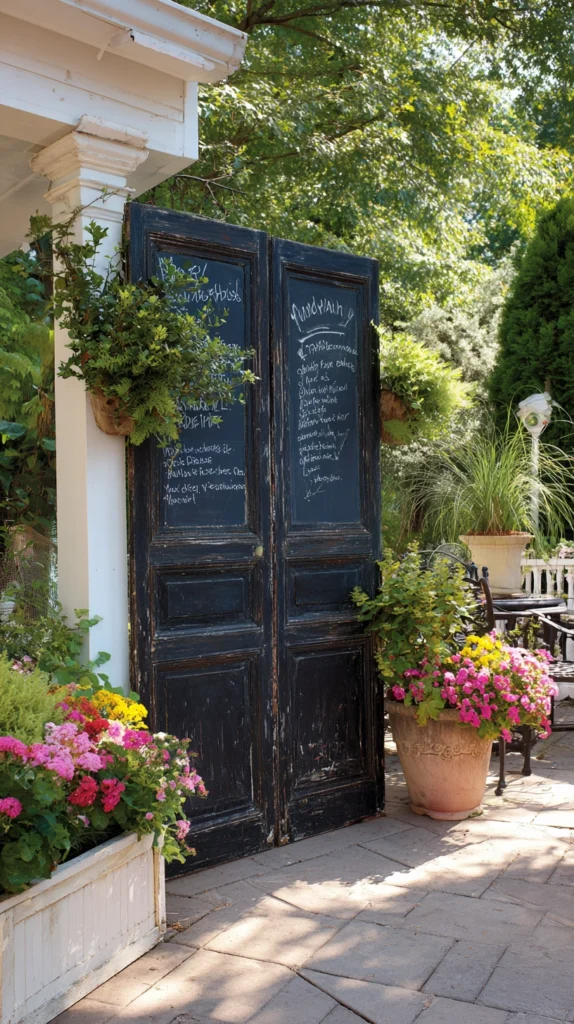
An old door with its panels painted with specialist chalkboard paint creates a large, beautiful, and completely weatherproof outdoor chalkboard for the garden — a menu board for an outdoor kitchen, a welcome message board at the garden entrance, an activity board for children in the garden, or simply a surface for seasonal messages and artwork that changes with the mood and the occasion.
The scale of a full door chalkboard is its greatest practical asset — large enough to write a full menu, a list of garden activities, or a generous welcome message in a size that is easily readable from a comfortable distance. The aged, weathered quality of the door frame surrounding the chalkboard painted panels gives the finished installation a character and warmth that a purpose-made chalkboard sign cannot match.
Pro Tip: Apply a minimum of three coats of chalkboard paint to door panels for an outdoor chalkboard installation — building up a sufficiently thick, consistent surface that erases cleanly without leaving ghost marks of previous writing. Fewer coats produce a surface that is too thin to erase completely, resulting in a palimpsest of previous messages visible beneath every new one.
Three full coats with complete drying between each creates a surface that erases cleanly and maintains its deep, rich black tone through many seasons of outdoor use.
8. Fairy Light Door Installation
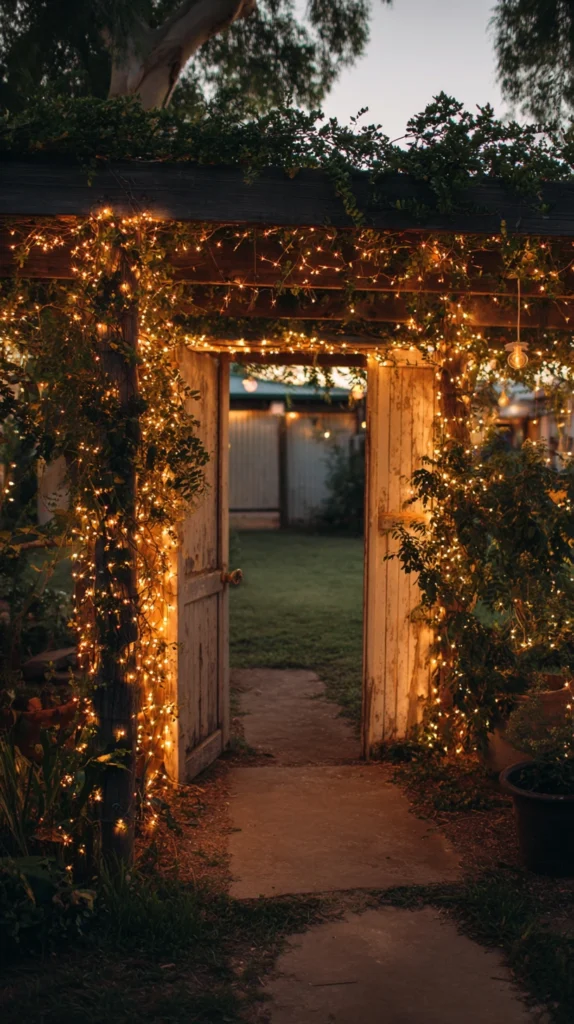
An old door hung in the garden — from a branch, from a pergola beam, or in a freestanding frame — and dressed with hundreds of warm white fairy lights wound through the frame, the hardware, and any remaining glazing bars creates a garden installation of extraordinary romantic beauty for evening garden events, outdoor entertaining, and permanent garden decoration.
The fairy light door installation is at its most spectacular at dusk and after dark when the warm light of the fairy lights illuminates the aged grain of the timber, casts warm shadows through the door frame, and creates a glowing portal of light within the garden that is genuinely magical in its visual effect. For a garden party, a wedding, or a summer evening gathering the fairy light door creates an instantly memorable focal point.
Pro Tip: Use solar-powered fairy lights rather than mains-powered ones for a fairy light door installation that is located away from a convenient electrical supply. Modern solar fairy lights provide sufficient illumination for a beautiful evening garden installation from a full day’s charge and eliminate the cable management challenge of running mains power to a freestanding garden installation.
Position the solar panel on top of the door frame or on a nearby surface with good daytime sun exposure for reliable nightly illumination.
9. Water Feature Backdrop
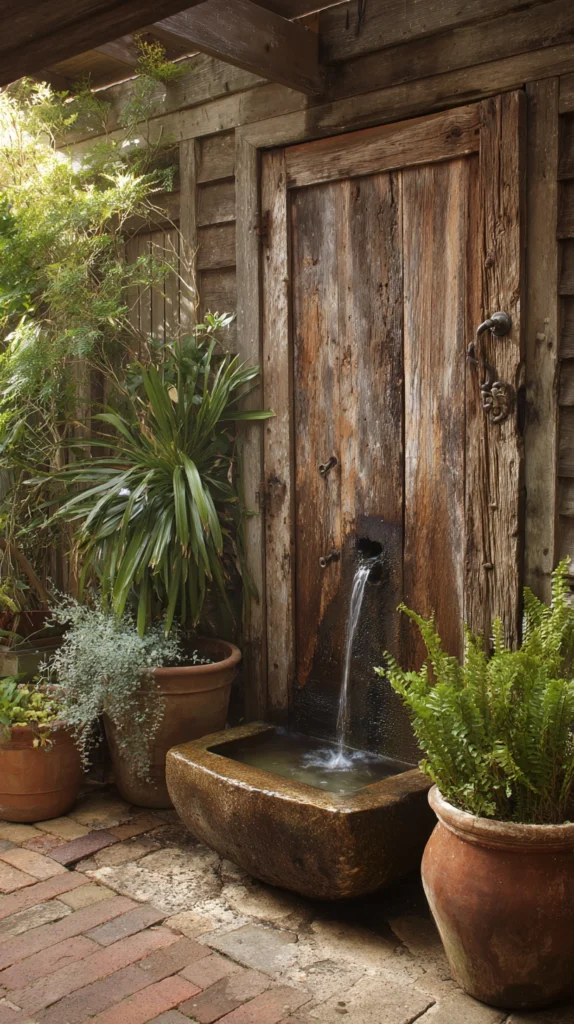
An old door positioned as a backdrop to a garden water feature — a wall fountain, a recirculating water spout, or a series of water bowls arranged in front of the door surface — creates a water feature installation of genuine character and natural material beauty. The aged timber of the door provides a warm, textural backdrop that makes the water element more visually impactful than a plain wall or fence background would achieve.
Attach a simple recirculating wall fountain fitting directly to the door surface — a lion’s head or a simple copper spout — with the water falling into a trough or basin positioned at the base of the door. The water staining that develops on the door surface over time as water splashes and runs across the timber adds to rather than detracts from the aged, weathered character of the installation.
Pro Tip: Seal the door surface thoroughly with an exterior waterproof timber treatment before installing a wall fountain fitting that will direct water across the door face. Untreated timber exposed to constant water contact will develop rot at the point of contact within a relatively short time regardless of the original quality of the timber.
A good penetrating waterproof treatment does not prevent the natural weathering and character development of the timber but protects it from the accelerated rot that constant water contact would otherwise cause.
10. Outdoor Art Gallery Wall
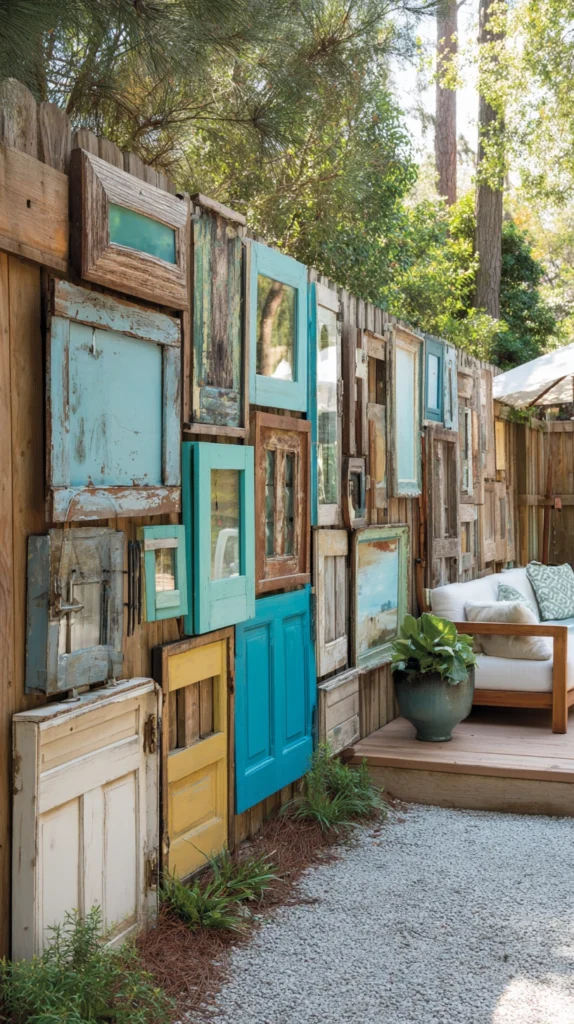
Multiple old doors of varying sizes — hung vertically on a garden wall or fence at gallery-appropriate spacing — create an outdoor art gallery display surface for weatherproof artworks, mirrors, decorative plates, metal wall sculptures, and any outdoor-appropriate decorative object that benefits from a beautiful, characterful backing surface.
The gallery of old doors creates a visual feature of considerable scale and impact on a plain garden wall and the variation in door size, style, and color between individual doors creates an installation of natural eclecticism and collected charm. Hang weatherproof artwork directly on the door surfaces, lean framed pieces against the lower rails, and use the original door hardware as additional display hooks for hanging objects.
Pro Tip: Paint the old doors in the outdoor art gallery wall in a consistent color palette — either all the same tone or in a family of two or three closely related colors — to create visual cohesion across a collection of doors that may vary significantly in style, size, and original character.
A consistent color palette unifies the varied doors into a single, considered installation. Doors left in their original varied paint conditions without a unifying color treatment can look like a random collection rather than a deliberate installation.
11. Children’s Outdoor Play Feature
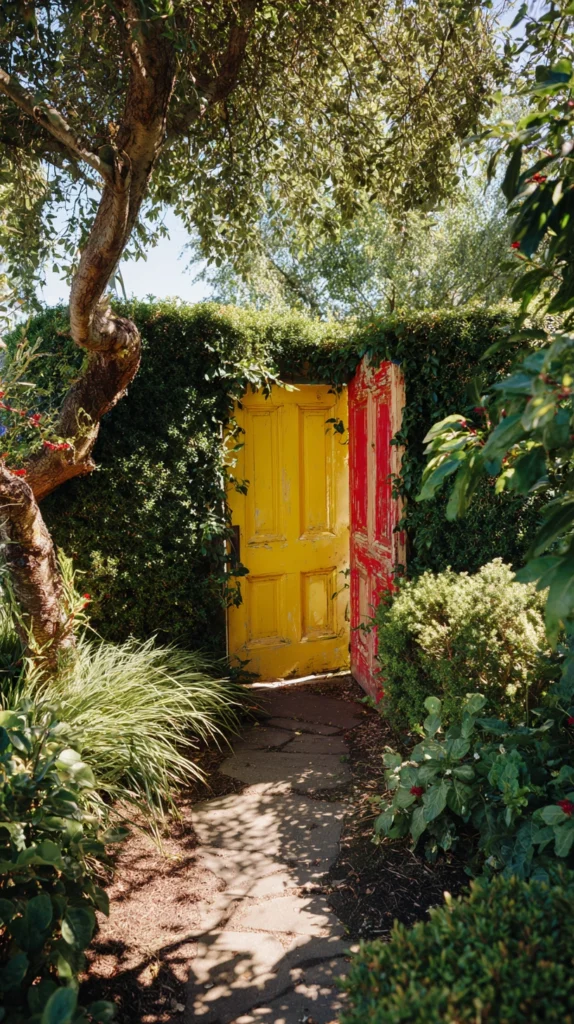
An old door installed in the garden as part of a children’s outdoor play feature — a painted door set into a garden hedge as an entry to a secret play garden, a door used as the entrance to a den or playhouse, or a door leaned against a tree as the entrance to an imaginary castle or forest dwelling — creates a play feature of extraordinary imaginative richness that no purpose-made plastic play equipment can replicate.
The old door as a children’s play feature works because children respond instinctively to the theatrical quality of a real door — the experience of opening and closing a real door, of crossing a genuine threshold, of the weight and the sound of a real latch engaging, creates a quality of imaginative play that a painted panel or a plastic gate entirely lacks. A real door in a garden hedge creates a genuinely magical play experience.
Pro Tip: Sand all surfaces of any old door used in a children’s play setting thoroughly and remove all original paint if there is any possibility that the paint contains lead — a genuine concern with doors of significant age.
Test the existing paint with a lead test kit available from hardware stores before any child makes contact with the surface. Strip and refinish with a child-safe exterior paint if lead is detected or if the age and provenance of the door make lead contamination a realistic possibility.
12. Rustic Garden Sign Board
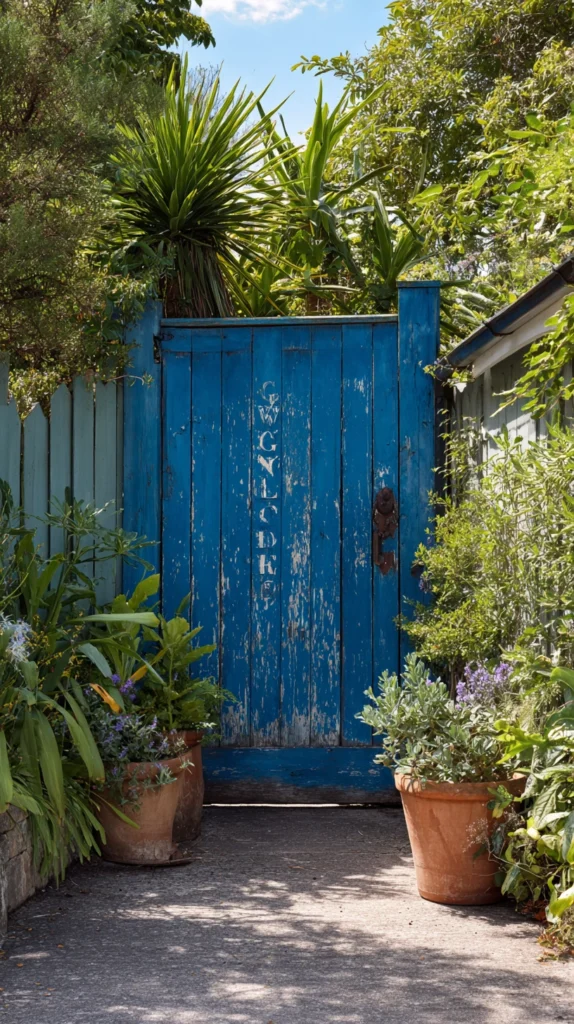
An old door used as a large-scale garden sign board — painted with garden quotes, plant names, directional arrows, or simply a welcome message in hand-lettered script — creates a garden entrance feature or a garden room marker of genuine character and personal warmth. The scale of a full door provides a sign surface that is dramatically more impactful and visually generous than any conventional garden sign.
Paint the door in a deep, rich background color — a deep sage green, a warm terracotta, a midnight navy — and letter the sign content in a contrasting tone using exterior paint and a lettering brush or a paint marker. The aged quality of the door surface showing through around the painted lettering gives the sign a quality of genuine age and established character that a new sign board can never replicate.
Pro Tip: Apply a final coat of exterior matte varnish over the lettered surface of an outdoor sign door to protect the hand-lettered content from weather, UV fading, and physical contact. Exterior paint lettering without a protective topcoat begins to fade, chip, and wear within a single outdoor season — particularly in high-traffic areas where physical contact with the door surface is likely.
A single coat of exterior matte varnish over the finished lettering extends the legibility and the appearance of the sign through multiple outdoor seasons without altering the hand-crafted, aged quality of the finished piece.
13. Seasonal Wreath Display Door
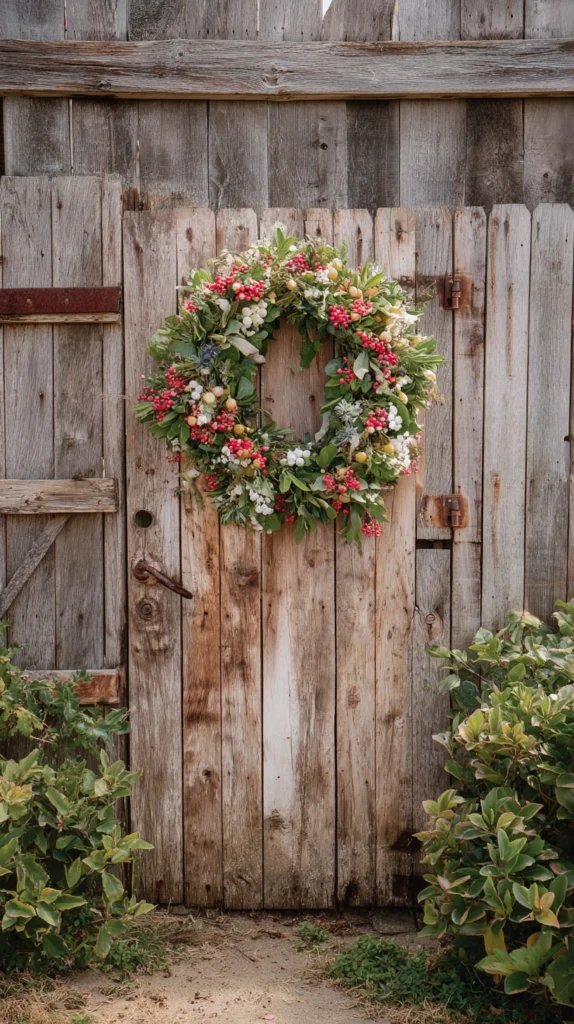
An old door installed at the garden entrance — leaning against a wall, hung on a fence, or set into a freestanding frame — and used as the display surface for a changing series of seasonal wreaths, garlands, and botanical decorations creates a garden feature that evolves with every season and provides a reason to engage creatively with the garden throughout the year.
A spring wreath of fresh flowers on the old door, replaced by a summer garland of herbs and roses, replaced by an autumn arrangement of dried seed heads and berried branches, replaced by a winter wreath of evergreen and berries — the door becomes a living calendar of seasonal botanical beauty that marks the passage of the year in the most naturally beautiful way available.
Pro Tip: Install a simple wreath hook on the old door rather than relying on the original door knocker or handle as the sole hanging point for seasonal decorations. A purpose-installed wreath hook at the correct height for the wreath or garland being displayed — centered on the door, at eye height, with a strong enough gauge to support a generous, heavy wreath — provides a stable and correctly positioned hanging point that keeps the decoration centered and level throughout the season.
14. Outdoor Headboard Garden Feature
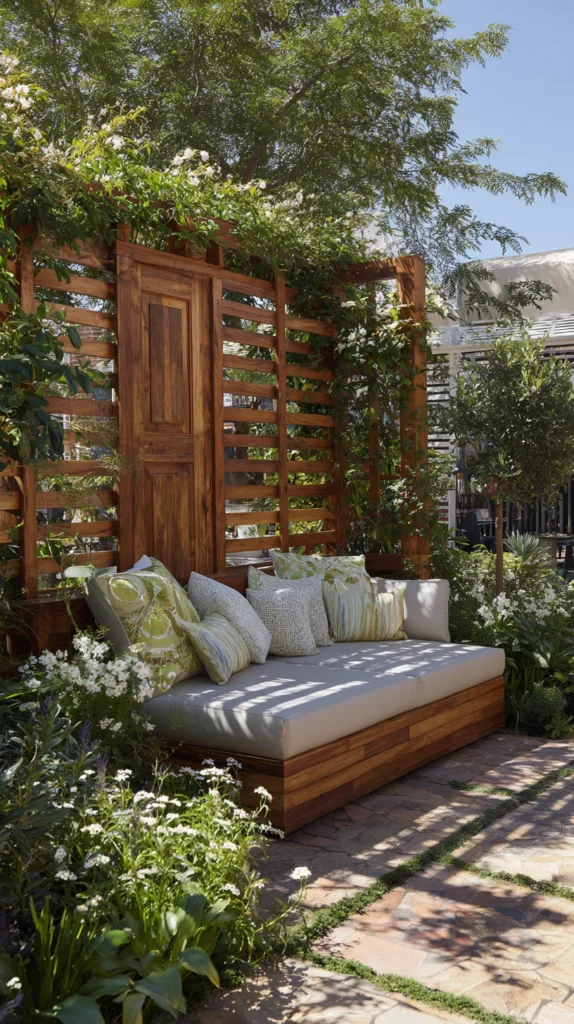
An old door used as an outdoor headboard feature — positioned behind a garden daybed, a hammock, or a pair of outdoor chairs to create a visual backing that defines the seating area and gives it the quality of an outdoor room — creates a garden living space of genuine, distinctive character. The door headboard provides the vertical element that transforms an open seating arrangement into a defined, enclosed outdoor room.
An ornate Victorian door behind a garden daybed dressed with outdoor cushions and throws creates a garden bedroom of extraordinary romantic character. A simple painted farmhouse door behind a pair of weathered timber chairs creates a defined outdoor sitting room of rustic warmth and natural material beauty.
The door provides the backdrop that makes the outdoor seating arrangement feel considered and complete rather than simply positioned in the garden.
Pro Tip: Secure an old door used as an outdoor headboard feature firmly to a wall, fence, or purpose-built timber backing frame rather than simply leaning it in a freestanding position. An unsecured leaning door is vulnerable to being blown over by wind — a safety risk in any garden setting and a particular concern in a seating area where people are directly in front of the door surface. A firmly secured door provides the safety and the stability that allows the feature to be genuinely used and enjoyed without anxiety.
15. Moon Gate Door Arch
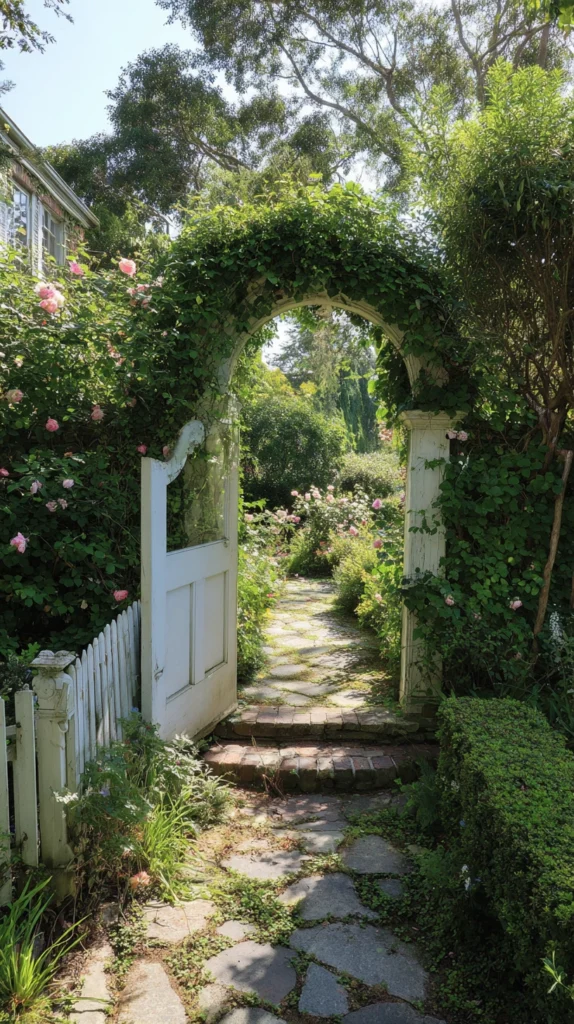
An old door with its panels completely removed — leaving only the structural outer frame — installed in a garden border or hedge as a moon gate-style arch creates a garden feature of genuine architectural beauty and classic garden design pedigree. The door frame becomes a window into the garden beyond — a defined rectangular opening in the planting that frames the view through it in a way that draws the eye and the feet forward irresistibly.
Paint the stripped door frame in a single confident color — white for maximum contrast against green planting, black for a contemporary graphic quality, or deep sage for a naturalistic blending with the surrounding garden — and position it to frame the most beautiful view available in the garden beyond. The framed view changes with every season as the planting on the far side of the frame evolves and grows.
Pro Tip: Plant the border or hedge immediately surrounding the stripped door frame arch with climbing plants that will grow across and through the frame opening over time — blurring the boundary between the constructed frame and the living planting and creating an installation that evolves from a clearly architectural feature into something that appears to have grown organically from the garden itself.
A door frame arch half-consumed by climbing roses or clematis after several seasons of growth is one of the most beautiful garden features that time and patience can create.
Give Old Doors a Garden Life Worth Having
Every old door that ends up in a garden rather than a landfill is a small act of genuine creative resourcefulness — taking a discarded object with real character, real history, and real material beauty and giving it a new purpose in a setting that reveals those qualities rather than concealing them.
The garden is the perfect destination for objects that have lived a long life and carry the evidence of it. Weathered timber, worn hardware, faded paint — these are not flaws in an old door. They are exactly the qualities that make it beautiful, and exactly the qualities that make it belong in a garden that values natural character over manufactured perfection.