15 Night time Outdoor Lighting Ideas for a Beautifully Lit Yard
When the sun goes down, your yard does not have to disappear into darkness. Thoughtful outdoor lighting transforms a garden, patio, or backyard into an entirely different kind of space after nightfall — one that feels intimate, dramatic, or magical depending on how you approach it.
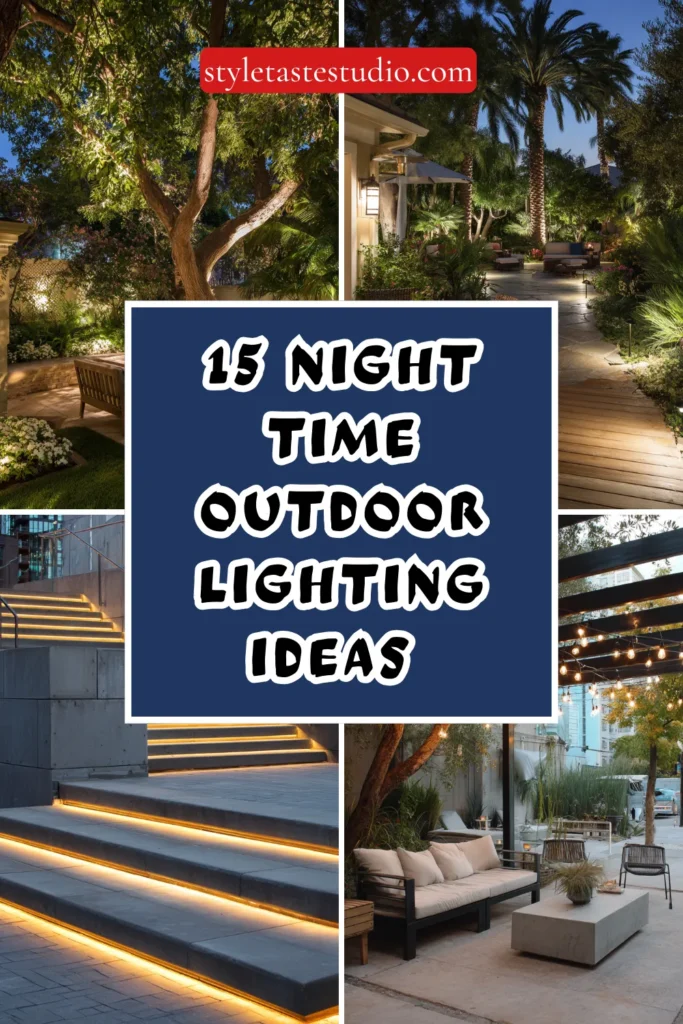
The right lighting design does not just illuminate; it sculpts, highlights, and creates atmosphere. It extends the usability of your outdoor spaces well into the evening and adds a layer of security without sacrificing beauty.
Here are fifteen nighttime outdoor lighting ideas that will leave your yard looking spectacular from dusk until dawn.
1. String Lights Draped Overhead
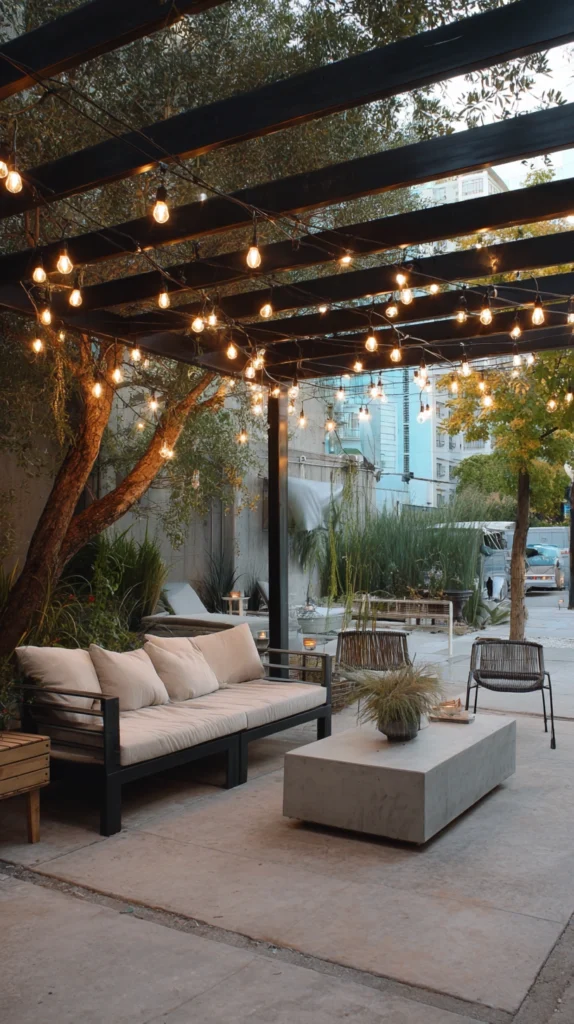
There is a reason string lights appear on virtually every outdoor entertaining space worth admiring. When draped overhead between posts, trees, or pergola beams, they create an instant canopy of warm, golden light that feels festive without being garish.
The trick is in the bulb choice and the spacing. Vintage Edison bulbs with visible filaments cast a particularly warm amber glow that flatters both people and plants beneath them. For larger yards, layering multiple rows of string lights at slightly different heights adds depth and makes the space feel like an open-air room with a luminous ceiling.
2. In-Ground Uplighting for Trees
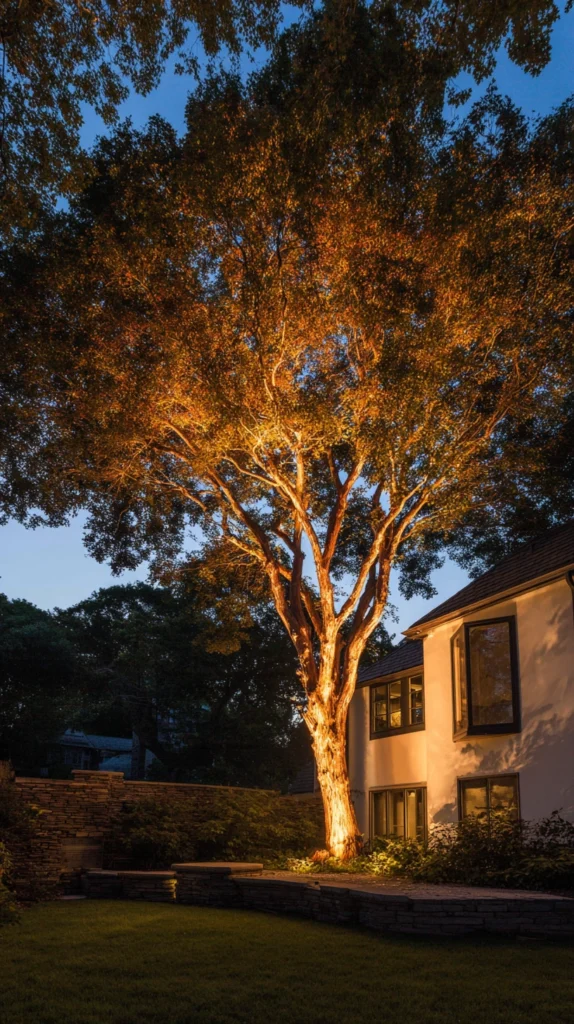
Placing low-voltage LED fixtures directly in the ground at the base of mature trees and angling them upward is one of the most dramatic techniques in outdoor lighting. The upward beam catches the texture of the bark, illuminates the underside of the canopy, and creates towering columns of light that give a yard an almost theatrical quality after dark.
A single large oak or olive tree transformed by uplighting becomes an architectural focal point that anchors the entire garden. Use warm white LEDs for a natural feel or experiment with soft amber tones during seasonal celebrations.
3. Path Lighting Along Walkways
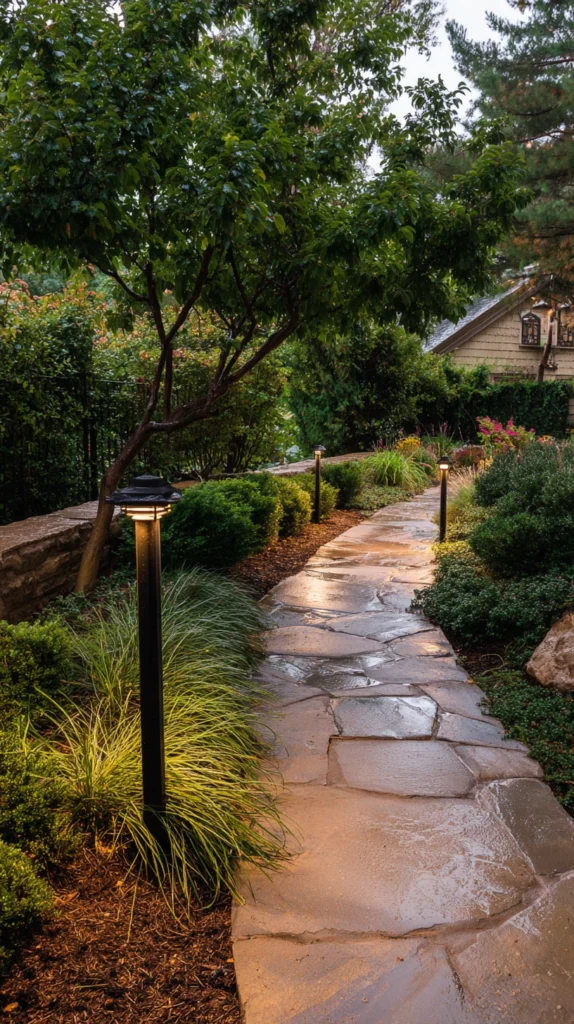
Guiding the Eye as Much as the Foot
Path lights serve a dual purpose. They provide practical illumination for safe walking while simultaneously drawing the eye along a line through the garden, directing attention toward a doorway, a water feature, or a garden focal point beyond. Low-profile bollard lights spaced evenly along a stone or gravel path create a runway effect that feels elegant and considered. For a softer approach, fixtures that cast light downward in a gentle pool rather than outward in all directions keep the atmosphere subtle and avoid the harsh, airport-runway look that over-bright path lighting can produce.
4. Lanterns and Candlelight on Surfaces
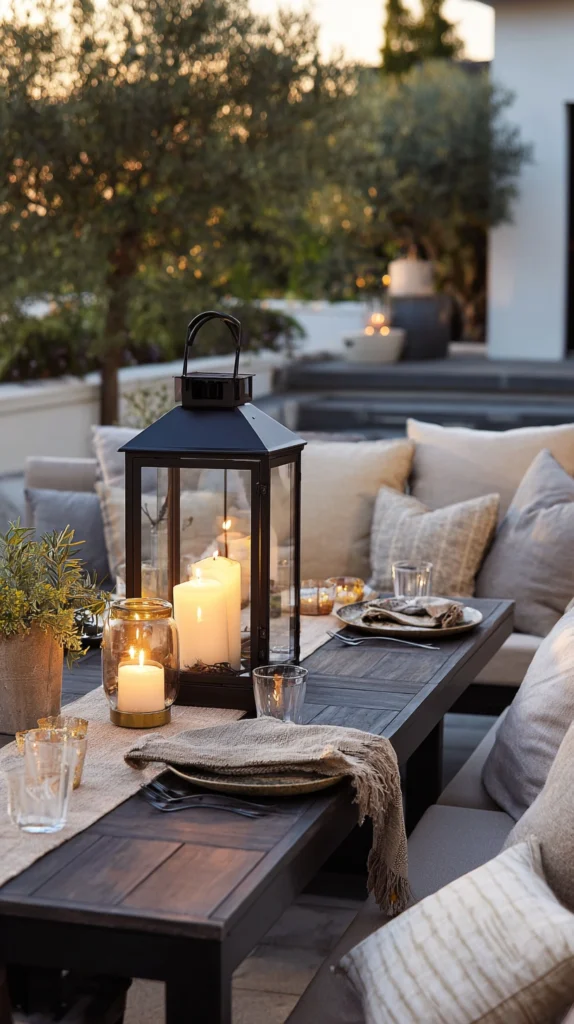
Nothing competes with the warmth of actual flame when it comes to the outdoor atmosphere. Grouping lanterns of varying heights on a dining table, along a low wall, or clustered around a seating area introduces a flickering, living quality to the light that no LED can fully replicate.
Hurricane lanterns with pillar candles, Japanese paper lanterns, and Moroccan-style pierced metal lanterns each bring their own character. For a more permanent solution, gas-powered lanterns mounted on posts or walls deliver the same warm flame effect without the need to light individual candles each evening.
5. Step and Riser Lighting
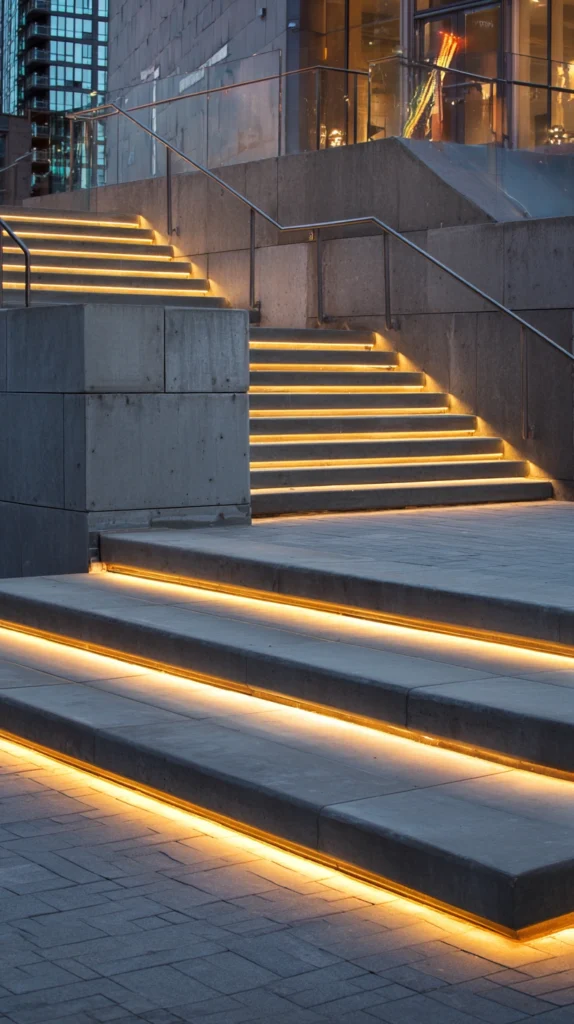
Lighting built directly into the risers of outdoor steps is both practical and visually striking. Recessed LED strips or individual fixture inserts cast a soft horizontal band of light across each step, creating a cascading light effect that looks intentional and polished.
This kind of lighting is particularly effective on wide, sweeping garden steps made from stone or concrete where the horizontal lines of each riser become a design feature in their own right. Step lighting also significantly improves safety in sloped gardens where unlit stairs can become genuinely hazardous after dark.
6. Wall Wash Lighting

Turning Surfaces Into Glowing Backdrops
Wall washing involves placing fixtures at the base of a wall and directing light upward across its entire surface, creating an even, luminous glow that turns fences, retaining walls, and exterior facades into glowing backdrops.
The technique works particularly well on textured surfaces such as rough stone, exposed brick, or rendered concrete where the light catches surface irregularities and creates subtle shadow play. A long garden wall transformed into a softly glowing plane of light provides the perfect backdrop for planting beds in the foreground, making the whole composition feel carefully staged.
7. Underwater Pool and Pond Lighting
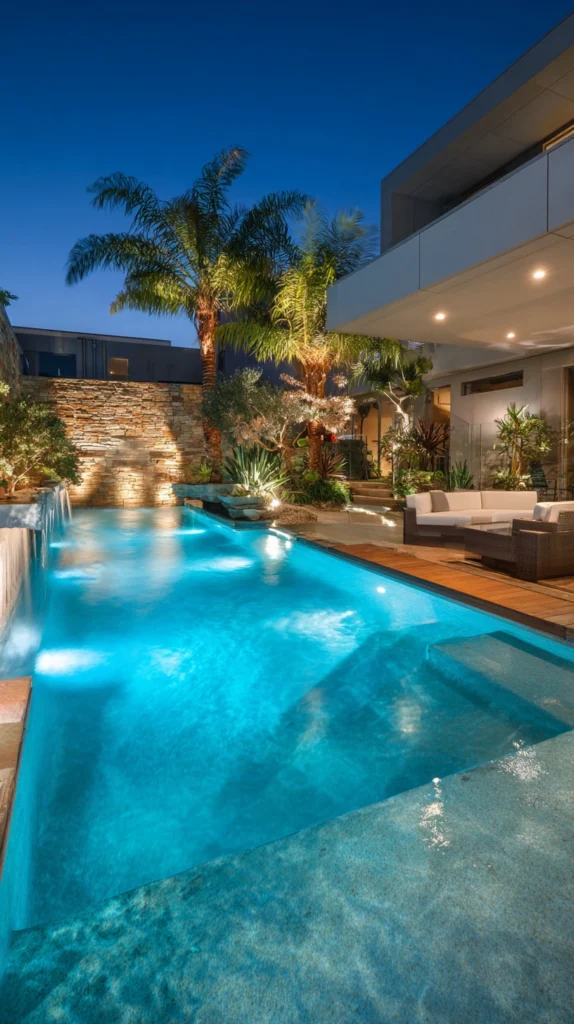
If your yard includes a swimming pool, water feature, or ornamental pond, lighting from beneath the water surface opens up an entirely new dimension of nighttime beauty. Submerged LED fixtures cast light upward through the water column, creating a glowing, almost liquid-light effect that is mesmerizing to look at. In a pool, this transforms the water into a glowing centrepiece visible from the house. In a pond or water feature, it highlights the movement of water and the shapes of aquatic plants. Color-changing underwater LEDs allow you to shift the mood from cool blue to warm amber depending on the occasion.
8. Pendant Lights Over Outdoor Dining Areas
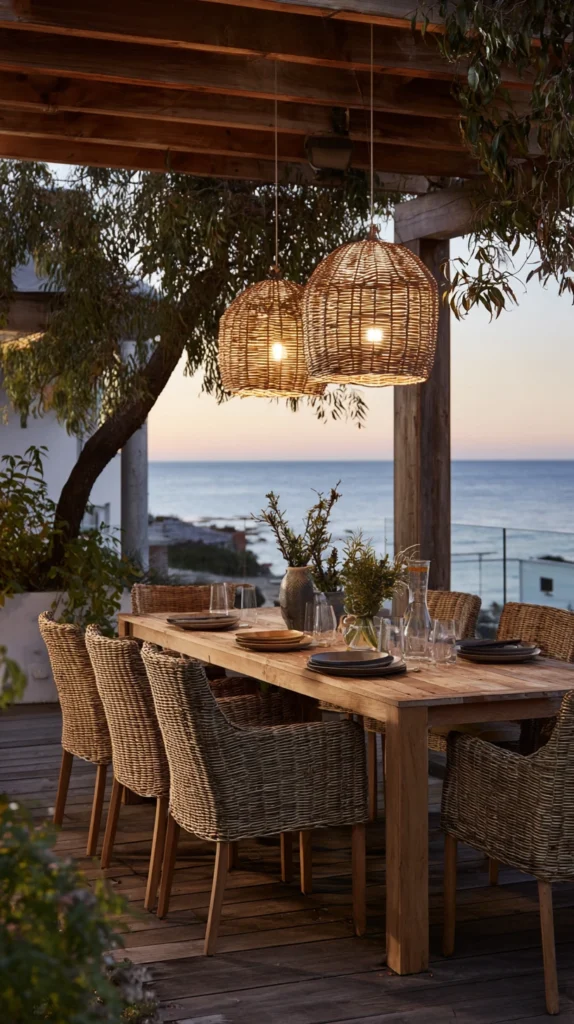
Outdoor pendant lights hung above a dining table or kitchen island create the same intimate, focused atmosphere that interior pendant lighting achieves indoors.
Weather-resistant pendant fixtures suspended from a pergola, a sail shade structure, or purpose-built overhead beams bring light directly to the table level where it is most flattering for both food and faces. Rattan, wicker, and open metal cage pendants are particularly popular choices because they add texture and warmth while casting attractive patterned shadows on the surfaces below.
9. Silhouette Lighting for Dramatic Contrast

The Art of Lighting What You Cannot See
Silhouette lighting is one of the more theatrical techniques available to outdoor lighting designers. Rather than illuminating a plant or object directly, you place a light source behind it so that the object appears as a dark, dramatic shape against a glowing background.
A sculptural agave, a stand of ornamental grasses, or an interestingly shaped shrub placed in front of an illuminated wall creates a striking two-dimensional shadow figure that has enormous visual impact. This technique rewards gardens with strong architectural planting and works particularly well when the backdrop is a smooth, light-coloured rendered wall.
10. Festoon Lights Around a Patio Perimeter
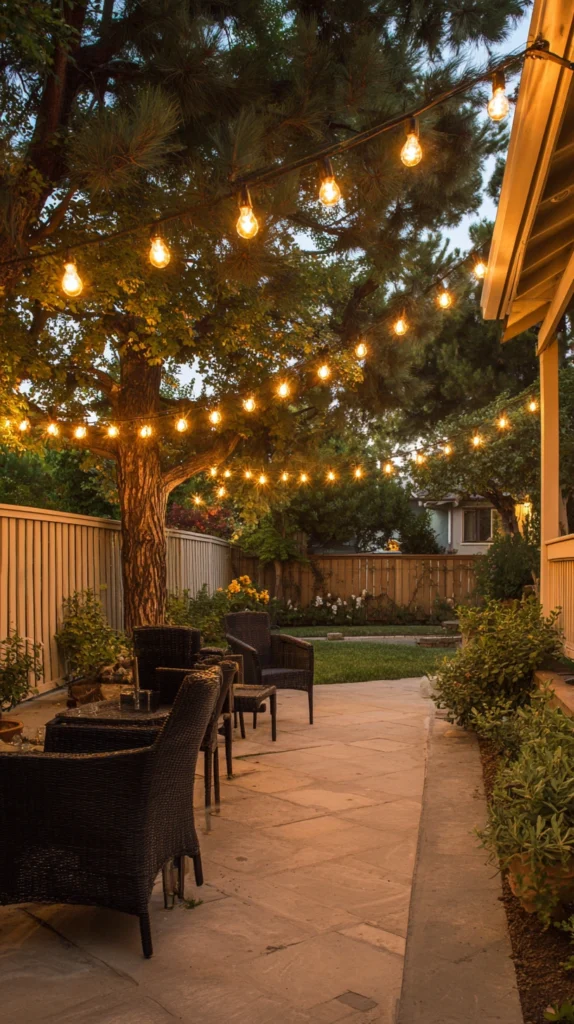
While similar to overhead string lights, festoon lights used around the perimeter of a patio rather than overhead create an entirely different effect. Running along fence lines, wrapped around pergola posts, or threaded through hedge tops, they define the boundary of the outdoor space and give it a sense of enclosure and warmth.
This boundary lighting makes a patio or seating area feel like a room with defined walls, increasing the sense of intimacy and encouraging people to settle in and stay longer. Warm white festoon lights in particular make outdoor entertaining spaces feel almost impossibly inviting.
11. Moonlighting from Tree Canopies
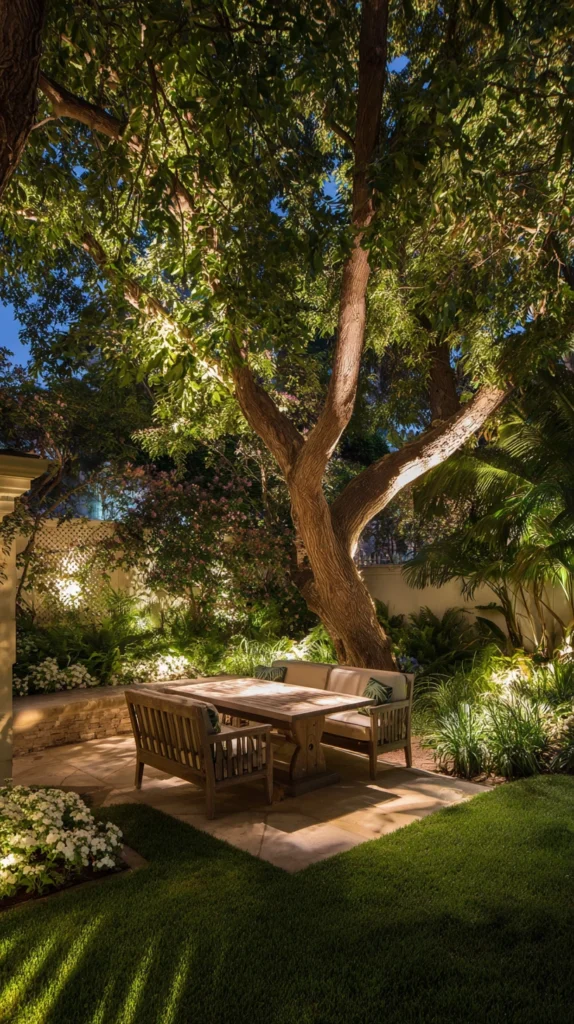
Mimicking Nature’s Own Light Show
Moonlighting is a technique that involves placing fixtures high in the canopy of a large tree and directing the light downward through the branches. The result mimics the effect of moonlight filtering through foliage — dappled, soft, and full of movement as the breeze shifts the leaves. Unlike uplighting, which draws attention to the tree itself, moonlighting uses the tree as a diffuser and creates beautiful light patterns on everything beneath it, including lawns, pathways, and seating areas. It is one of the most naturalistic and romantic lighting effects achievable in a domestic garden.
12. Recessed Ground Lights in Decking
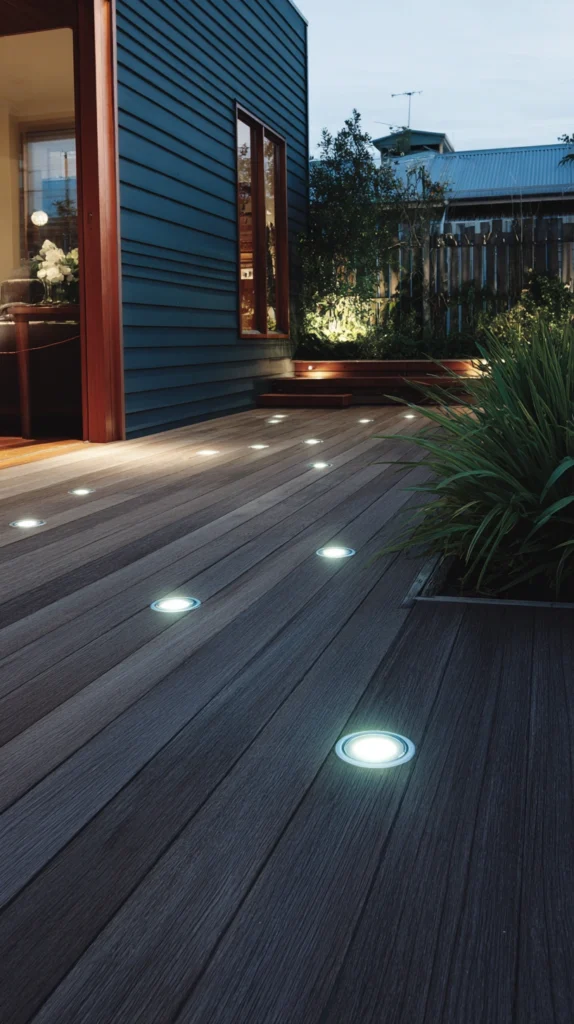
Deck lighting using recessed fixtures set flush into the deck surface is a clean, contemporary approach that provides both illumination and visual interest without introducing any visible hardware above the deck plane.
Small circular or square recessed lights set in a grid or pattern across the decking glow gently underfoot, defining the space and providing enough light for safe movement without flooding the area with brightness. This approach works particularly well when the deck itself is a beautiful material like hardwood or composite, as the lighting highlights the surface rather than competing with it.
13. Garden Spotlight Clusters on Feature Plants
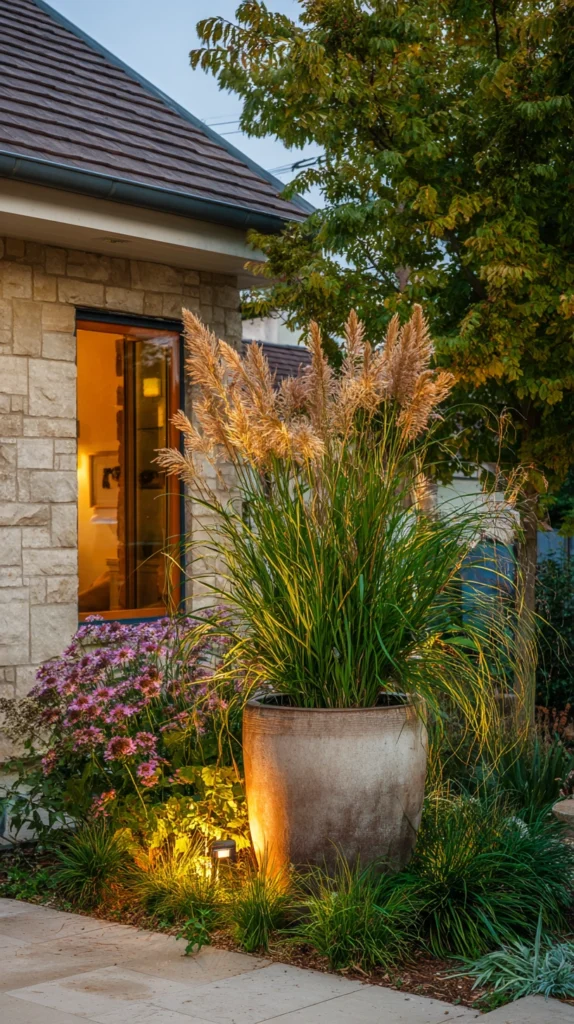
Rather than lighting an entire planting bed evenly, directing two or three spotlights at a single spectacular plant or garden sculpture creates a sense of hierarchy and drama.
A large ceramic urn, a topiary ball, a dramatic phormium, or a statement sculpture given this focused treatment becomes an immediate focal point visible from inside the house as well as from the garden itself. Spotlights with adjustable heads are particularly useful here because they allow you to redirect the beam as plants grow and change through the seasons.
14. Fairy Lights Woven Through Hedges and Shrubs
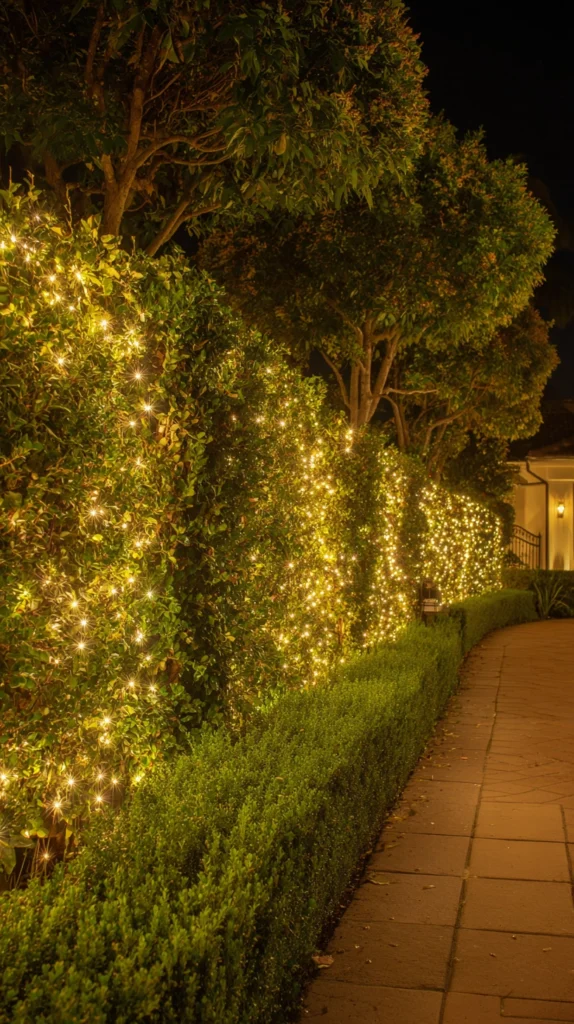
Weaving warm white fairy lights through the branches and foliage of hedges, topiary, or loose flowering shrubs creates a soft, magical glow from within the planting itself. The effect is entirely different from any other lighting technique because the source is hidden and diffuse, making the hedge or shrub appear to be generating its own inner light.
This technique is especially effective in winter when deciduous shrubs have lost their leaves and the bare branching structure becomes a delicate framework for the lights to cling to, creating something that looks genuinely enchanting.
15. Smart Lighting Systems with Dynamic Control
Designing Light That Responds to Your Life
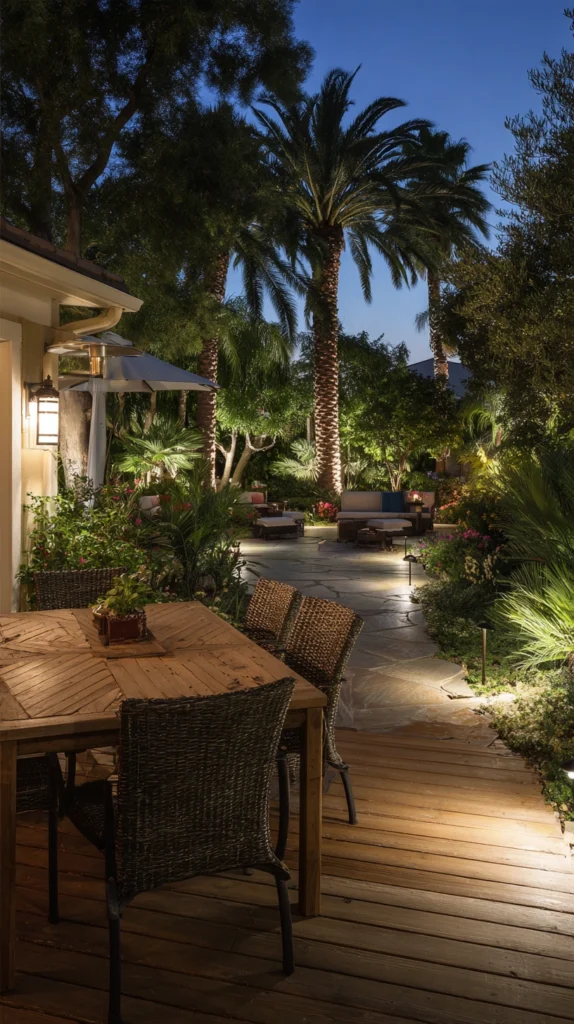
The most sophisticated approach to outdoor lighting today involves connecting all your fixtures to a smart home system that allows you to control brightness, colour temperature, and timing from a single app or voice command. Smart outdoor lighting allows you to create scenes — a bright, practical setting for outdoor cooking, a dim and romantic setting for after-dinner drinks, and a security-focused setting that floods the property with light when motion is detected. The technology means your lighting design is never static; it evolves through the evening and responds to whatever you need from your outdoor space at any given moment.
Bringing It All Together
The most beautifully lit yards are never the result of a single idea applied uniformly. They layer different techniques at different heights, combine focused and ambient light, and balance practical illumination with purely decorative effects.
Start with the features you most want to highlight — a magnificent tree, a water feature, a dining terrace — and build your lighting plan outward from those focal points. The result will be a yard that does not simply become invisible when darkness falls but reveals an entirely different, equally beautiful version of itself every single evening.