15 Modern Fireplace Ideas for a Sleek Contemporary Home
A modern fireplace is one of the most powerful single design elements available in a contemporary home. It provides the warmth, the focal point, and the particular quality of gathered fire-centered domestic life that humans have organized their living spaces around for the entirety of recorded history — and it does so within a design language of clean lines, honest materials, and considered restraint that suits the contemporary interior with complete natural ease.
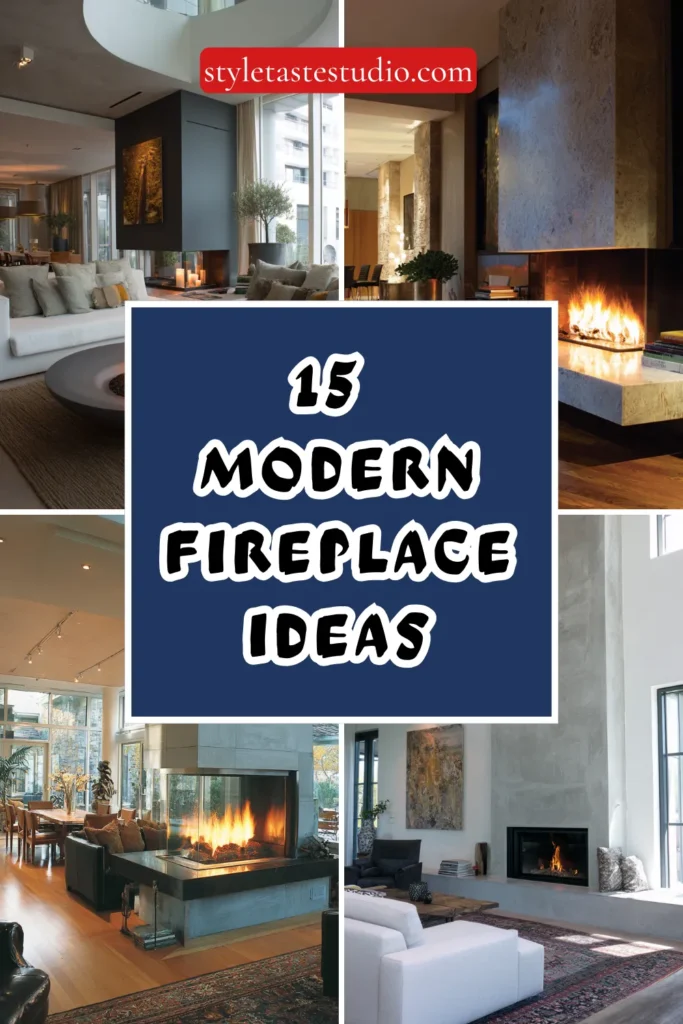
The modern fireplace treats the fire itself as the design feature and the surrounding architecture as the frame that reveals the fire with maximum clarity and minimum distraction. The most beautiful modern fireplaces are the ones that disappear almost completely around the fire — the fire visible, the architecture almost invisible.
Here are 15 modern fireplace ideas that bring genuine warmth and genuine design confidence to any contemporary home.
1. Floor-to-Ceiling Concrete Surround
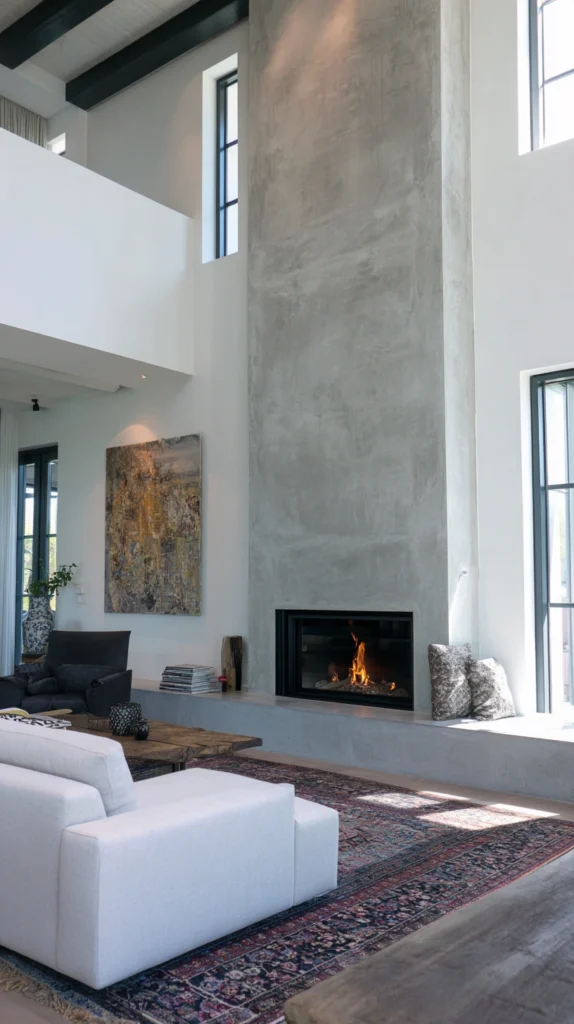
A floor-to-ceiling concrete fireplace surround — a full-height chimney breast clad in smooth seamless concrete from floor to ceiling — creates a fireplace of maximum architectural authority and genuine contemporary material beauty.
The monolithic quality of a full-height concrete chimney breast makes an immediate and powerful statement of design confidence. Polished concrete creates a surface of almost metallic reflectivity. Raw concrete with a board-formed finish creates extraordinary textural richness and genuine material honesty.
Pro Tip: Commission a concrete fireplace surround from a specialist fabricator rather than attempting a poured-in-place finish as a DIY project. The quality depends entirely on the consistency of mix, the precision of formwork, and the skill of the finishing — variations create inconsistencies in color and texture that are extremely difficult to correct in a material that is both highly visible and permanent.
2. Linear Gas Fireplace
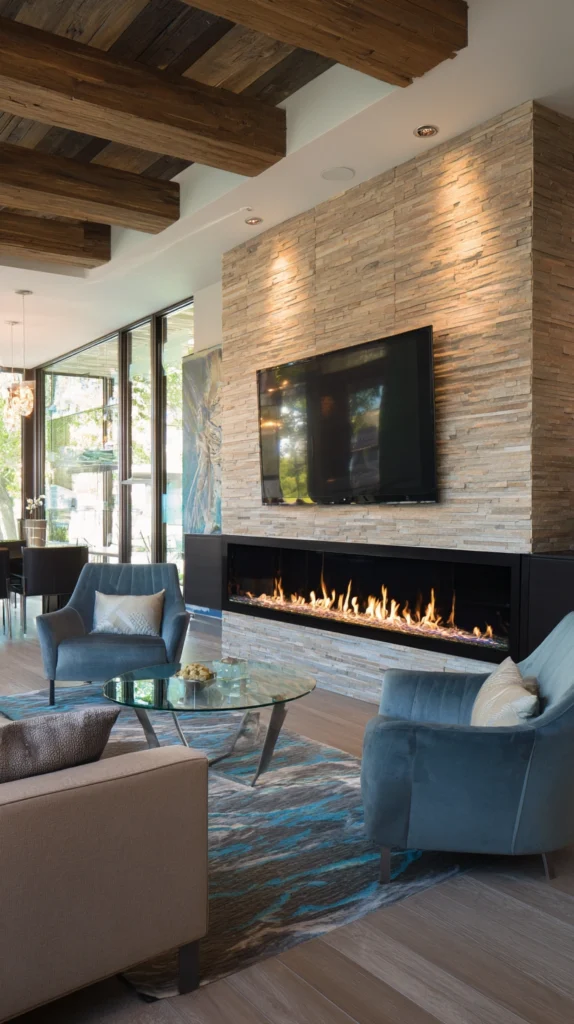
A linear gas fireplace — a wide low horizontal fire opening significantly wider than it is tall — creates a fireplace of completely contemporary proportions that references the clean horizontal emphasis of modern interior architecture. The linear format suits the wide open-plan living spaces of contemporary homes and creates a fire that fills the full width of the fireplace wall with a horizontal ribbon of flame rather than the concentrated vertical fire of a conventional grate.
Pro Tip: Specify a linear gas fireplace with a reflective black glass or mirror rear panel rather than a conventional brick or ceramic rear panel. The reflective rear panel doubles the apparent depth of the flame bed — the fire appearing to extend into a deep mirror-backed space of considerable visual drama rather than burning against a flat rear wall.
3. Frameless Wall-Flush Fireplace
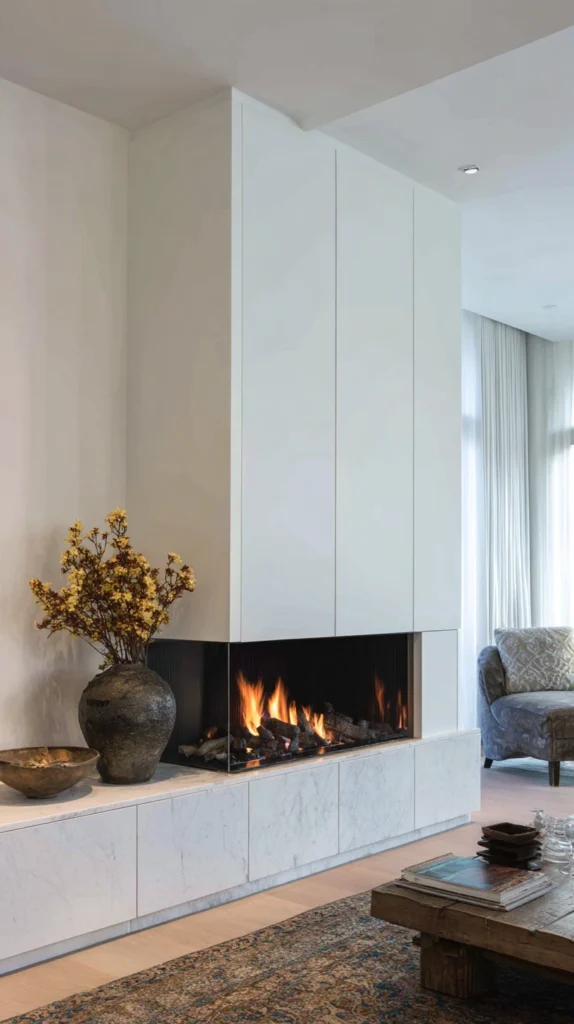
A frameless wall-flush fireplace — a fire opening set precisely flush with the surrounding wall surface, with no surround, no frame, no mantel, and no visible transition between the wall and the fire opening — creates the most minimalist and most architecturally pure fireplace available.
The wall continues uninterrupted to the precise edge of the fire opening and stops — the fire revealed as a pure rectangular aperture of light and warmth in an otherwise continuous wall plane.
Pro Tip: Use a plastered painted wall finish carried right to the fire opening edge rather than any surrounding material.
Any surround — even a thin line of contrasting tile or stone — creates a visual frame that partially defeats the purpose of the frameless installation. A seamlessly plastered wall surface carried to the fire opening edge in a single continuous material creates the genuine frameless quality that makes this fireplace format so specifically and completely beautiful.
4. Double-Sided See-Through Fireplace
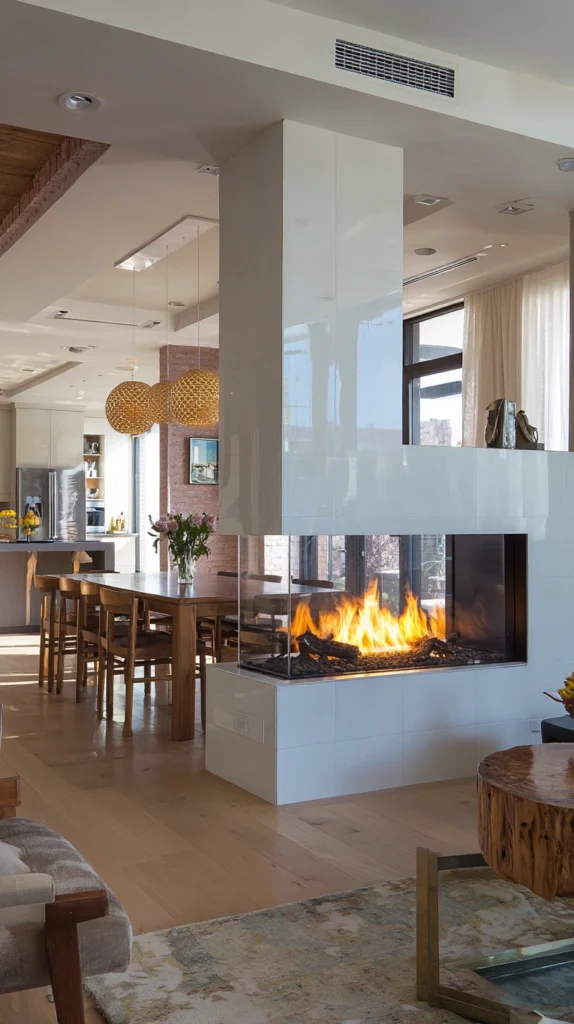
A double-sided see-through fireplace — a fire visible from two rooms simultaneously through a shared fire opening — creates a fireplace of extraordinary spatial drama and genuine functional versatility.
The fire seen through the opening from one room creates a window of warm living light into the adjacent space. The double-sided format suits the installation between a living room and dining room, between living room and master bedroom, or between indoor and outdoor space.
Pro Tip: Specify independent airflow management for each face — a damper or airflow control for each room-facing side that can be adjusted independently. The two open faces create complex airflow dynamics that can result in smoke being drawn into one room while combustion air is drawn from the other. Independent airflow management allows these dynamics to be balanced effectively for clean comfortable burning in both rooms simultaneously.
5. Recessed Fireplace with Floating Hearth
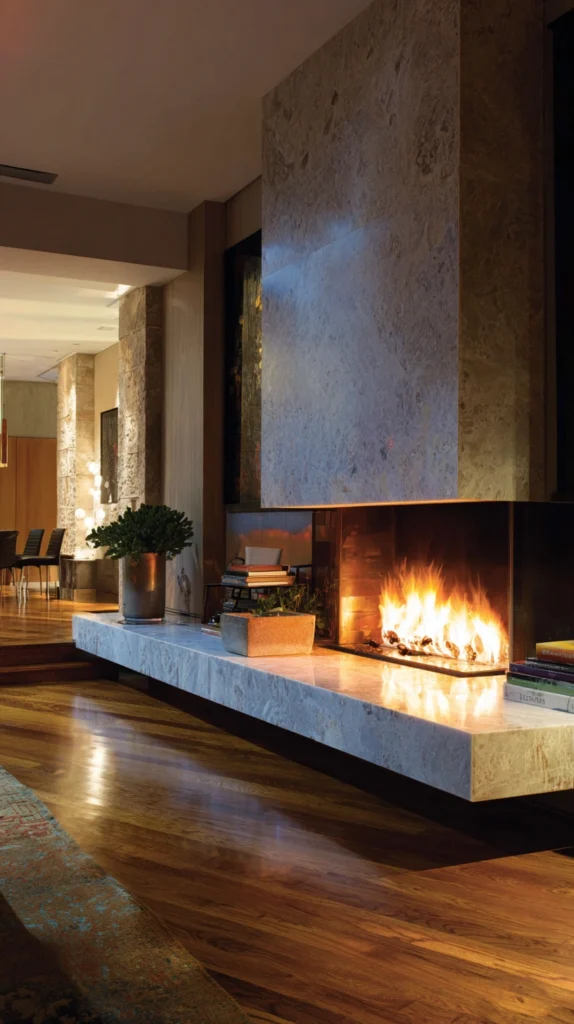
A recessed fireplace set into the wall surface with a minimal floating hearth that projects from the wall face at floor level creates a fireplace of considerable spatial elegance and genuine architectural sophistication. The recessed format removes the fireplace from the room plane entirely — the fire visible within the wall as a deep glowing recess. The floating hearth — a single slab of stone, concrete, or steel projecting horizontally without any visible support — creates a minimal architectural base of genuine contemporary beauty.
Pro Tip: Extend the floating hearth slab at least 40 centimetres beyond the fire opening on both sides for a hearth that creates a strong horizontal design element anchoring the fireplace composition.
A floating hearth extending only to the edge of the fire opening looks undersized and provides minimal practical ember containment — both a design and a safety compromise in a format that depends on confident proportions for its architectural quality.
6. Steel and Glass Fireplace
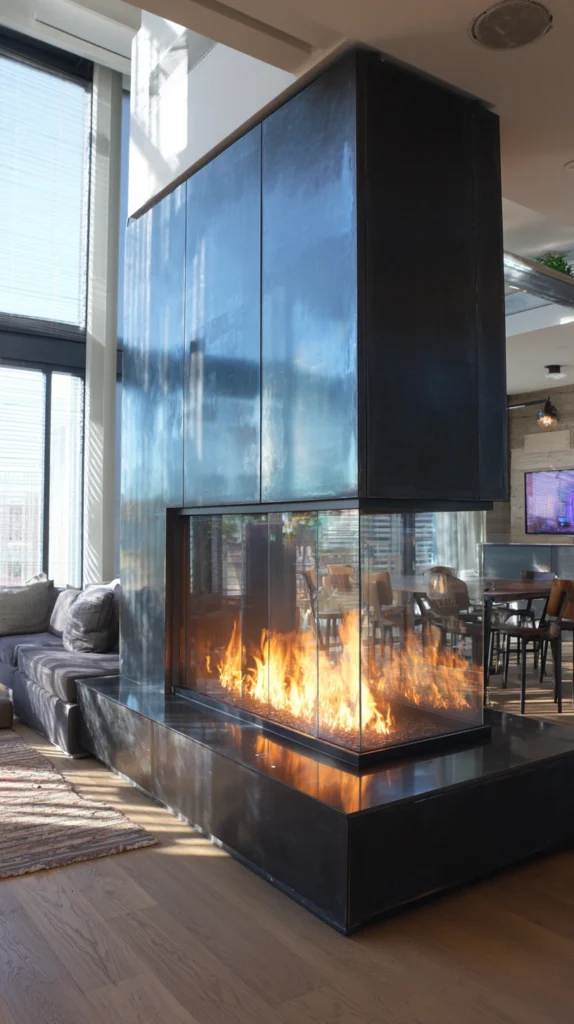
A fireplace enclosure constructed from structural steel with large glass panels on the front and sides creates a fireplace of industrial material honesty and considerable visual transparency. The steel and glass enclosure reveals the fire from multiple angles simultaneously.
Blackened steel alongside large glass panels creates a fireplace of maximum material contrast — the deep black of the steel framework against the warm orange glow of the fire creating a fireplace of extraordinary visual presence.
Pro Tip: Specify toughened borosilicate glass rather than standard toughened glass for the panels. Borosilicate glass has significantly higher thermal shock resistance and withstands rapid temperature changes without cracking that standard toughened glass can develop under the extreme thermal cycling of a fireplace glass panel. The additional cost is modest relative to the replacement cost and safety concern of a failed glass panel.
7. Bioethanol Fireplace
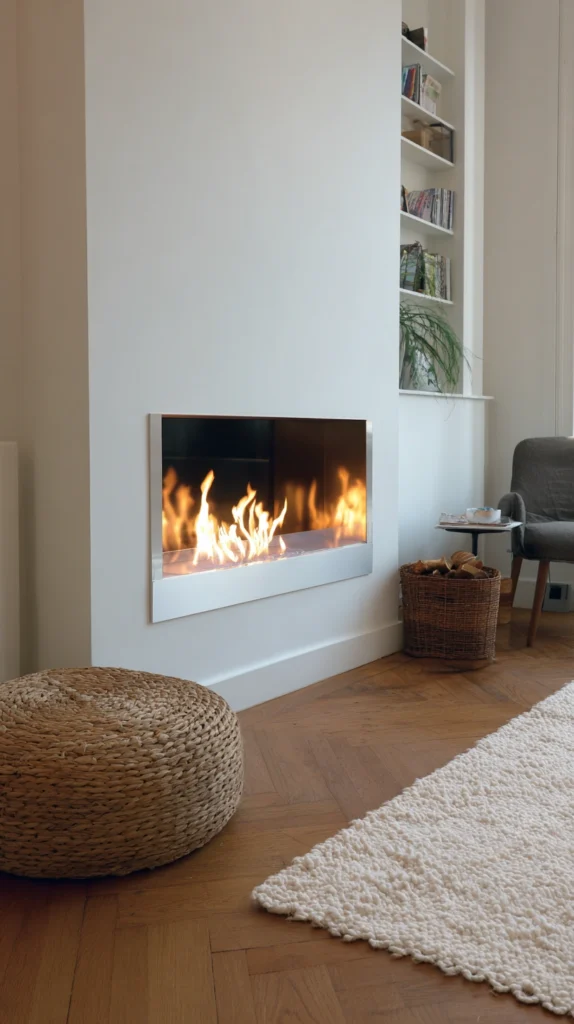
A bioethanol fireplace — a fire that burns clean odourless bioethanol fuel without any flue, chimney, or external ventilation requirement — is the most installation-flexible modern fireplace available. It can be installed in any room, in any wall, on any surface, and at any height without any structural modification to the building. Bioethanol fireplaces are available in every format — wall-mounted, floor-standing, table-top, and fully recessed — and in every aesthetic from the most minimal frameless wall installation to the most dramatic sculptural fire installation.
Pro Tip: Specify a bioethanol fireplace with an automatic fuel valve and electronic ignition system rather than a manual fill and light system. Manual bioethanol fireplaces require careful fuel management — overfilling creating a spill fire risk. An automatic valve and electronic ignition manages fuel delivery precisely and creates a fire that is as safe and as easy to use as any gas appliance.
8. Stone Feature Wall Fireplace
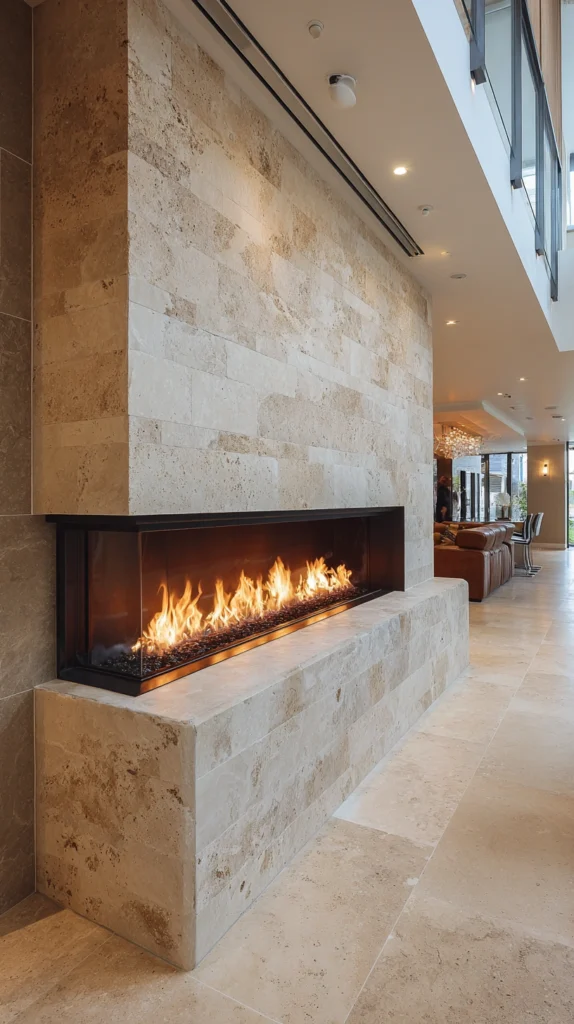
A fireplace set within a full wall of natural stone — the stone carried from floor to ceiling and wall to wall with the fire opening as a defined aperture within the stone plane — creates a fireplace of extraordinary natural material richness and genuine geological beauty. Limestone in a warm honey tone creates warmth and classical beauty. Slate in a deep blue-grey creates cool contemporary drama. Schist with its natural metallic reflections creates a surface of extraordinary visual complexity.
Pro Tip: Choose stone in a single consistent installation format — all pieces at the same coursing height, all pieces laid in the same orientation, all joints at the same consistent width. A stone wall laid in inconsistent course heights or irregular joint widths looks accidental rather than designed — losing the quality of intentional architectural consideration that makes a stone feature wall fireplace so genuinely beautiful and so architecturally resolved.
9. Minimal Plaster Surround
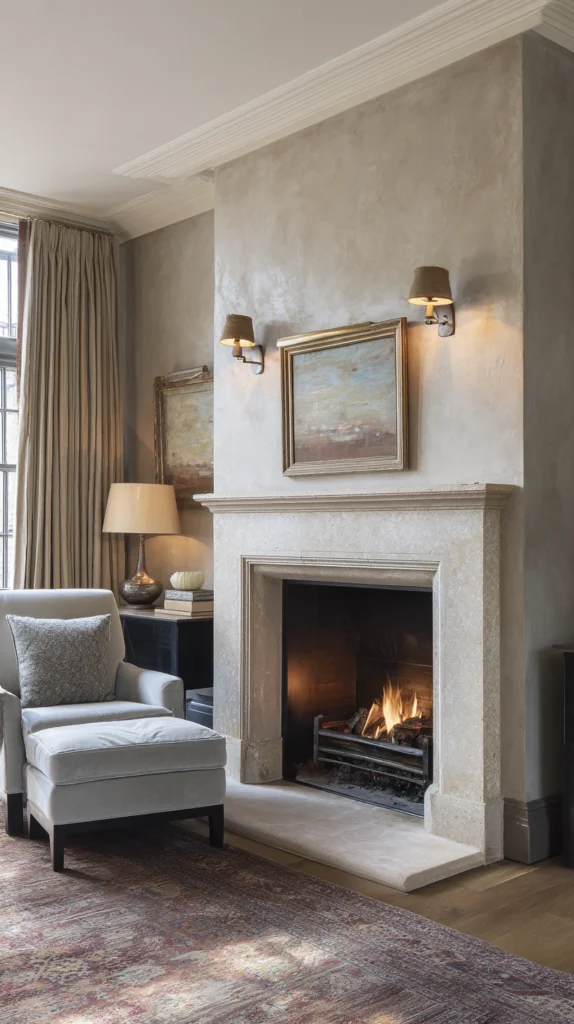
A fireplace surround constructed entirely from plaster — smoothly troweled and painted in a color that matches or slightly contrasts with the surrounding wall — creates a fireplace of maximum material restraint and genuine contemporary minimalism.
The plaster surround disappears almost completely into the wall — the fire the only visible element, the architecture virtually invisible. A subtle chamfered edge at the fire opening creates visual definition without material complexity — the most refined approach to modern fireplace design.
Pro Tip: Apply the plaster surround and the surrounding wall surface with the same plaster mix, the same trowel technique, and the same painter in a single continuous session. Different application sessions create visible differences in surface texture and paint sheen that reveal the junction between the surround and the wall — undermining the seamless quality that makes the minimal plaster surround so specifically and completely beautiful.
10. Three-Sided Peninsula Fireplace
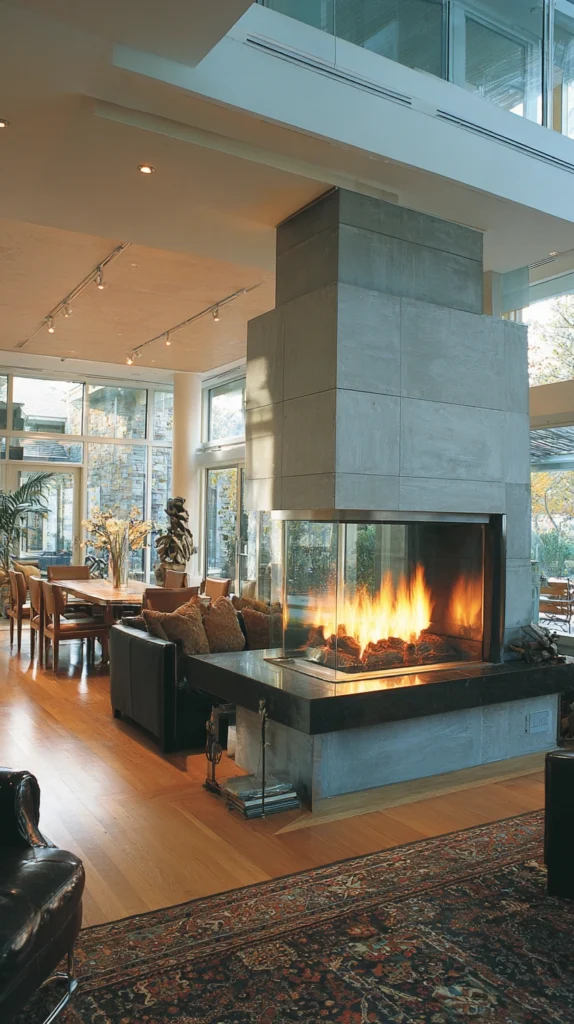
A three-sided peninsula fireplace — a fire visible on three sides, projecting from a wall into the room — creates a fireplace of maximum fire visibility and genuinely immersive fire experience.
The three-sided format allows the fire to be seen and experienced from every seating position in the room simultaneously. The peninsula format also creates a natural room divider — the fireplace defining the boundary between the living zone and an adjacent dining or circulation zone while providing warmth and visual connection between both spaces.
Pro Tip: Design the base structure of a three-sided peninsula fireplace as a solid anchored element that is visually heavier and more substantial than the glass and frame above it.
A low stone, concrete, or steel base grounds the projecting fireplace structure visually and prevents the floating unresolved quality that a peninsula fireplace on a lightweight base can create. The solid base creates the visual weight that makes the projecting structure look architecturally intentional and structurally convincing.
11. Outdoor-Indoor Fireplace
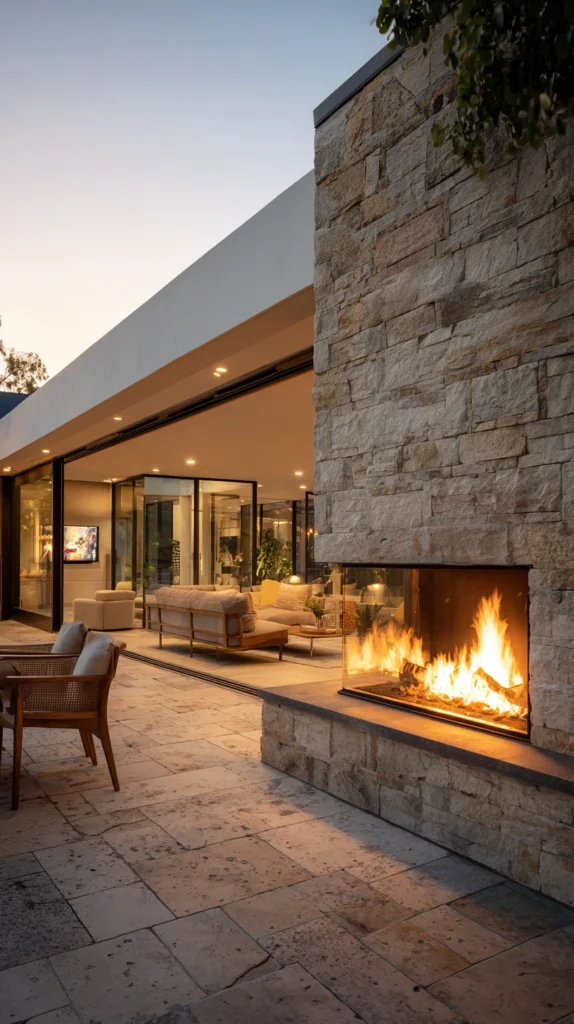
A fireplace installed in the wall between an indoor living space and an outdoor terrace — visible and functional from both sides simultaneously — creates the most spatially ambitious of all modern fireplace installations.
The indoor-outdoor fire dissolves the boundary between interior and exterior in the most direct and most dramatically beautiful way available in any architectural detail. The fire visible from both sides simultaneously creates a gathering quality in both spaces and a visual drama at the architectural threshold.
Pro Tip: Specify the outdoor face with a weather-resistant surround material — steel, stone, or concrete — that withstands the full range of outdoor weather conditions without any maintenance requirement.
The indoor face can be finished in any interior material. The outdoor face must be specified for permanent outdoor exposure — a material failure on the outdoor face is significantly more difficult and more costly to remediate than the same failure on a conventional interior fireplace surround.
12. Suspended Fireplace
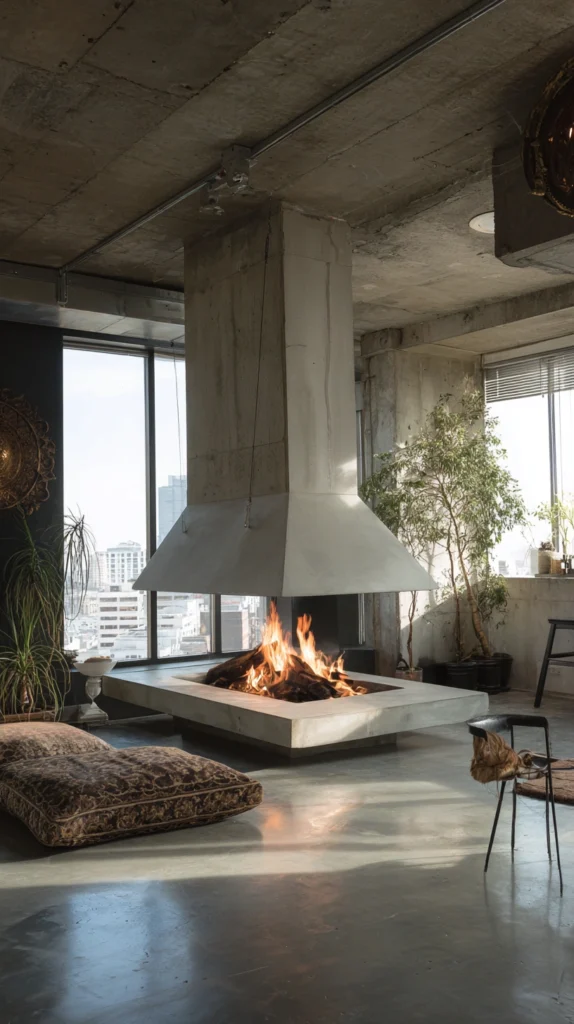
A suspended fireplace — a fire enclosure hanging from the ceiling by a single structural cable or rod, hovering above the floor surface without any contact with the walls or the floor — creates a fireplace of extraordinary sculptural presence and complete architectural originality.
The suspended format removes the fireplace from every conventional architectural surface — it occupies the room as a pure three-dimensional fire object, visible from every angle, suspended in space above a simple non-combustible floor surface.
Pro Tip: Specify the suspension system to be structurally engineered for the specific load of the specific fireplace model plus a safety margin of at least three times the static load — accounting for the dynamic loads of thermal expansion, vibration, and incidental lateral forces that a hanging fire enclosure experiences during heating and cooling cycles. The suspension system is the critical safety element and must be engineered rather than estimated.
13. Fireplace Within a Bookcase Wall
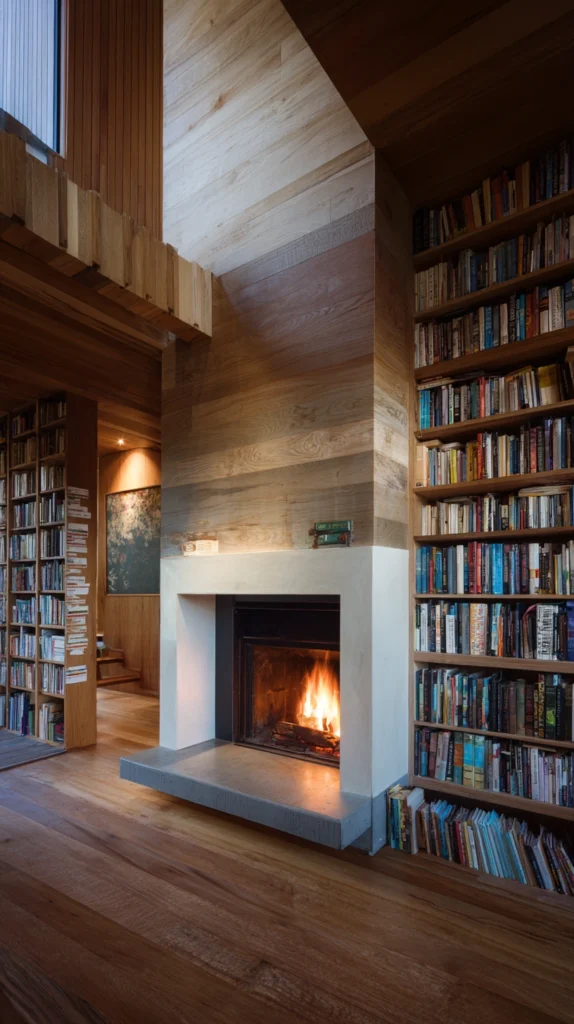
A fireplace integrated within a floor-to-ceiling bookcase wall — the fire opening set at a comfortable viewing height within the bookcase framework, with shelving filling the surrounding structure on both sides and above — creates a living room of complete integrated domestic warmth where fire and books exist as equal complementary elements of a single unified wall composition.
The combination of books, fire, and the quality of light that both provide creates a room of extraordinary appeal that guests are consistently reluctant to leave.
Pro Tip: Maintain adequate clearance between the fire opening and any combustible bookcase material — timber shelving, books, and timber framework — for a safe installation meeting the fireplace manufacturer’s specified combustible material clearance distances. The combination of fire and bookcase in close proximity requires careful dimensional coordination between the fire installation requirements and the bookcase design before finalizing the complete wall composition.
14. Pivoting or Rotating Fireplace
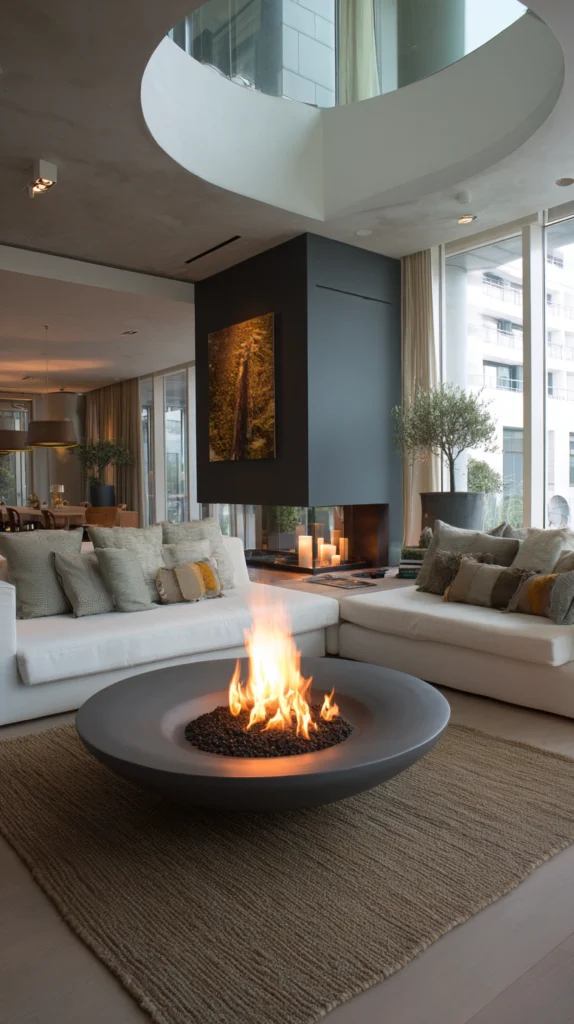
A pivoting or rotating fireplace — a suspended or pedestal-mounted fire bowl that rotates through 360 degrees to direct the fire toward any point in the room — creates a fireplace of complete spatial flexibility and considerable visual drama.
The rotating format allows the fire to be oriented toward the seating arrangement, toward a specific person, or toward the room’s primary view — creating a fire experience of unusual flexibility and a fireplace installation of genuinely sculptural beauty.
Pro Tip: Specify a pivoting fireplace with a locking mechanism that secures the fire in any chosen orientation rather than allowing it to rotate freely during use.
A freely rotating fire enclosure that can be moved by incidental contact during a gathering creates a genuine safety concern — the fire potentially rotating toward a seating position, curtain, or other combustible element during use. A locking mechanism ensures the fire remains in the intended position throughout each use.
15. Ethanol Fireplace as Room Sculpture
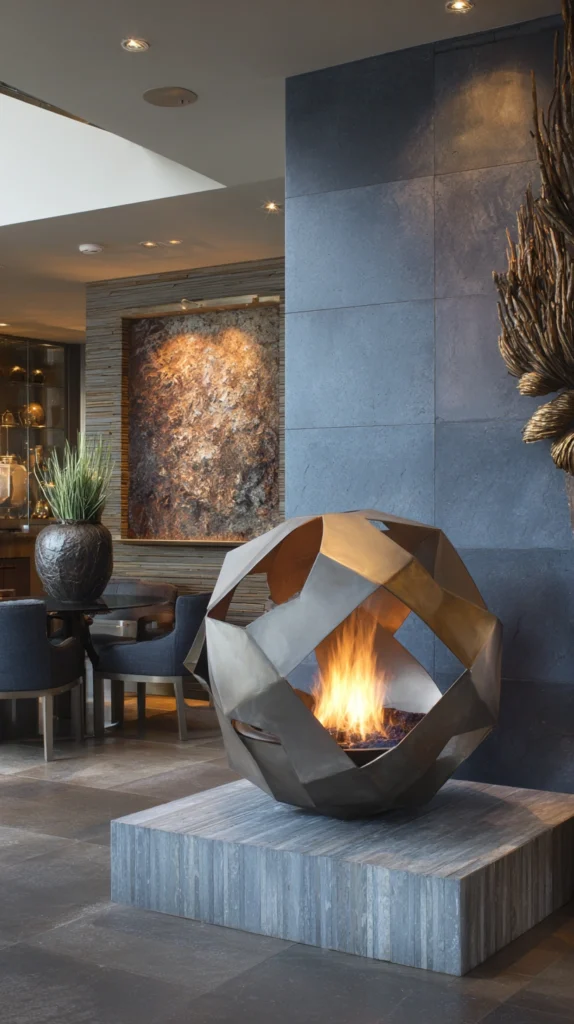
A designer ethanol fireplace — a sculptural fire object designed as much as an aesthetic statement as a functional heating appliance — positioned as the room’s primary design focal point creates a contemporary interior of maximum decorative impact and genuine fire warmth simultaneously.
Designer ethanol fireplaces are available in sculptural forms — spheres, cylinders, ellipses, and abstract geometric forms — that function as genuine pieces of contemporary design art when unlit and as extraordinary fire sculptures when burning.
Pro Tip: Position a sculptural ethanol fireplace on a non-combustible base — a stone slab, a concrete platform, or a steel plate — that is generously sized relative to the fireplace footprint.
A sculptural fireplace on a non-combustible base of appropriate size creates the visual and practical pedestal that both grounds the sculptural form in the room and contains any incidental fuel or flame that might occur in the event of an unexpected spill or ignition irregularity during use.
Modern Fire Is Ancient Warmth
The modern fireplace resolves the oldest domestic need — the need for fire at the center of the home — with the design language and the material honesty of contemporary architecture.
It strips away centuries of decorative accretion and returns the fire to its essential quality — warmth, light, and the particular quality of gathered fire-centered domestic life that remains, despite everything that has changed, as genuinely necessary and as genuinely irreplaceable as it has always been.
Choose the format that suits the room. Specify the materials with genuine care. Install with the precision the format demands. And discover that a room with a genuinely beautiful modern fire in it is a room that is fundamentally more alive, more warm, and more worth being in than the same room without one.