15 Low-Maintenance Landscape Ideas for Effortless Outdoor Beauty
Low-maintenance landscaping has evolved from basic xeriscaping into sophisticated design approaches that maximize visual impact while minimizing ongoing care requirements. Modern sustainable landscaping embraces native plants, efficient irrigation systems, and strategic hardscaping to create outdoor spaces that thrive with minimal intervention while providing year-round beauty and functionality.
The key to successful low-maintenance design lies in understanding your local climate, soil conditions, and natural ecosystem patterns, then working with these elements rather than against them. Today’s approaches focus on creating self-sustaining landscapes that become more beautiful over time, requiring only seasonal adjustments and occasional maintenance to maintain their designed appearance and ecological balance.
Native Prairie Garden with Ornamental Grasses
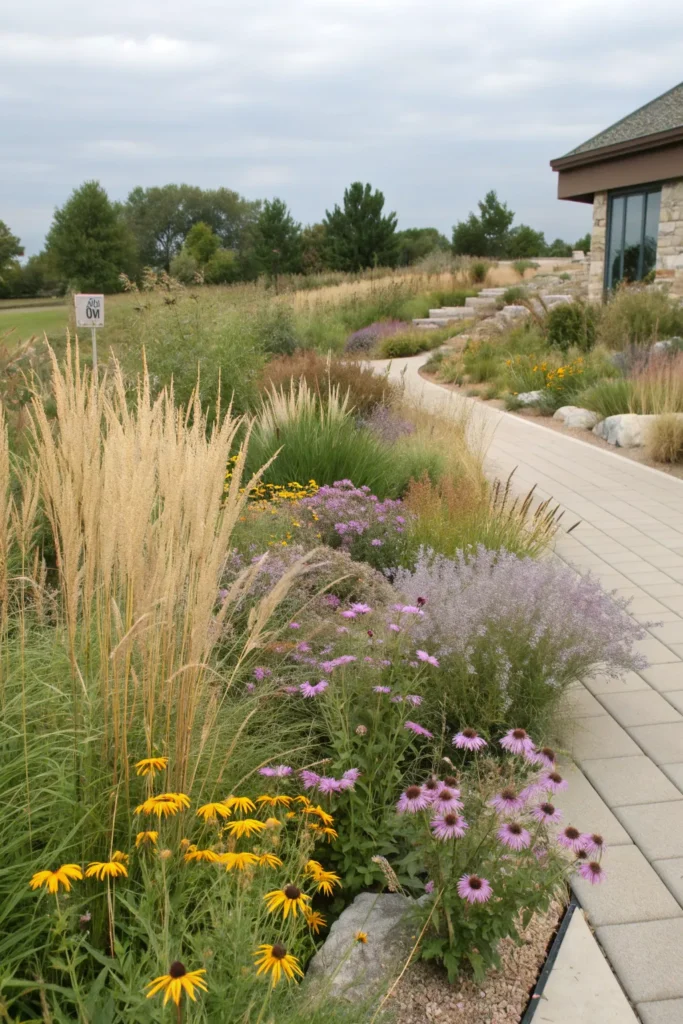
Establish a naturalistic prairie landscape using native grasses like little bluestem, buffalo grass, and feather reed grass combined with drought-tolerant wildflowers such as purple coneflower, black-eyed susan, and native asters that require no irrigation once established and provide habitat for beneficial wildlife.
Create flowing, informal borders that follow natural contours, incorporating large drifts of single species for maximum visual impact with minimal complexity. Install permeable pathways using decomposed granite or natural stone that complement the prairie aesthetic while providing access for occasional maintenance. Add strategically placed boulders or weathered wood elements as focal points, and establish rain gardens in low areas to capture and filter stormwater naturally while supporting plant growth.
Succulent Rock Garden with Architectural Appeal
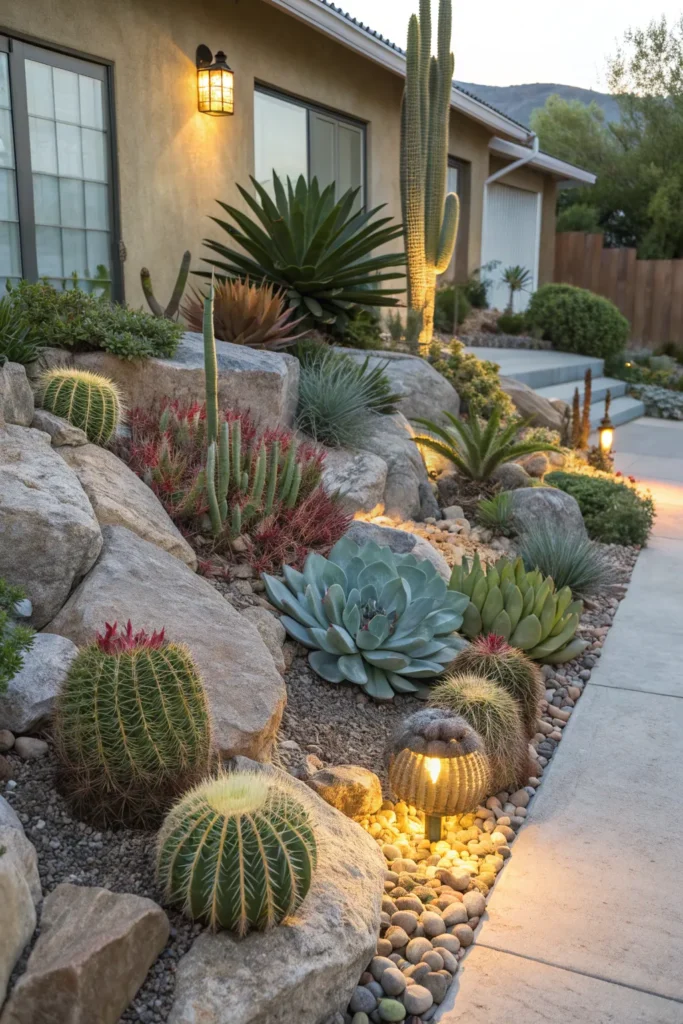
Design dramatic landscapes using architectural succulents like agave, aloe, and barrel cactus combined with colorful sedums and echeveria arranged among natural stone formations that create sculptural garden rooms requiring minimal water and virtually no ongoing care once established.
Install efficient drip irrigation systems with timers that provide occasional deep watering during establishment and extreme drought periods, then rely on natural rainfall for long-term maintenance. Use decomposed granite or gravel mulch to provide excellent drainage while suppressing weeds, and incorporate large specimen rocks as both design elements and windbreaks. Add LED accent lighting that highlights plant forms and textures for dramatic nighttime displays that require no additional maintenance.
Ornamental Grass Meadow with Seasonal Interest
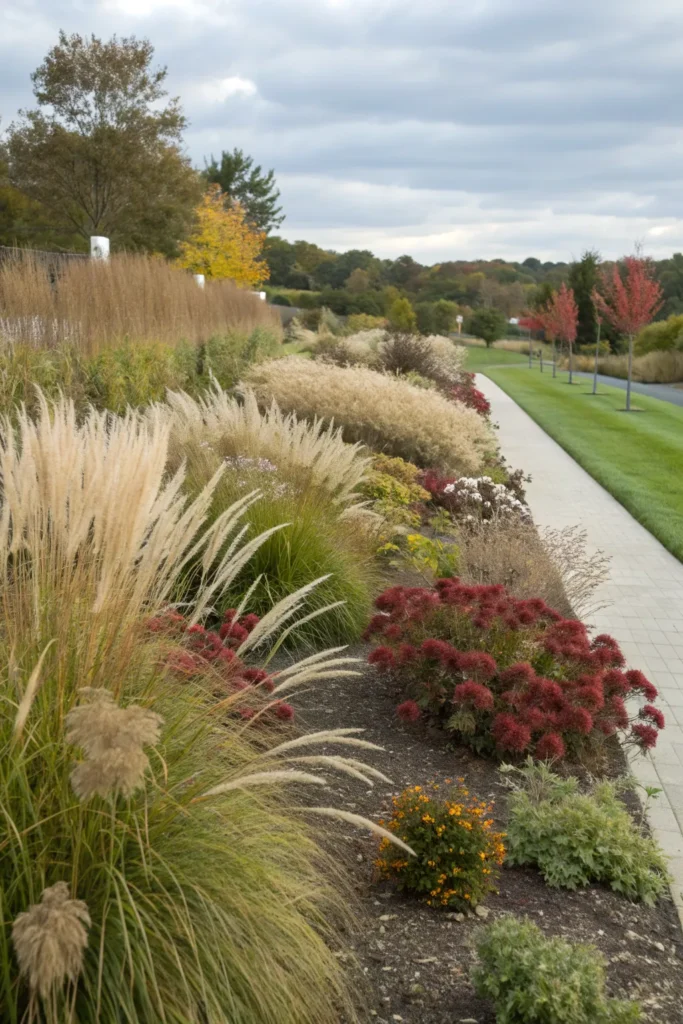
Establish flowing landscapes dominated by ornamental grasses like fountain grass, maiden grass, and switchgrass that provide four-season interest through changing foliage colors, dramatic seed heads, and winter structure while requiring only annual cutting and occasional division.
Create naturalistic plantings that follow existing topography, incorporating gentle berms and swales that enhance drainage while adding visual interest. Install automated irrigation systems for establishment year, then rely on natural precipitation for ongoing needs. Add seasonal bulbs like alliums and native wildflowers that naturalize throughout the grass plantings, and include strategically placed evergreen shrubs for winter structure and bird habitat.
Drought-Tolerant Shrub Border with Evergreen Structure
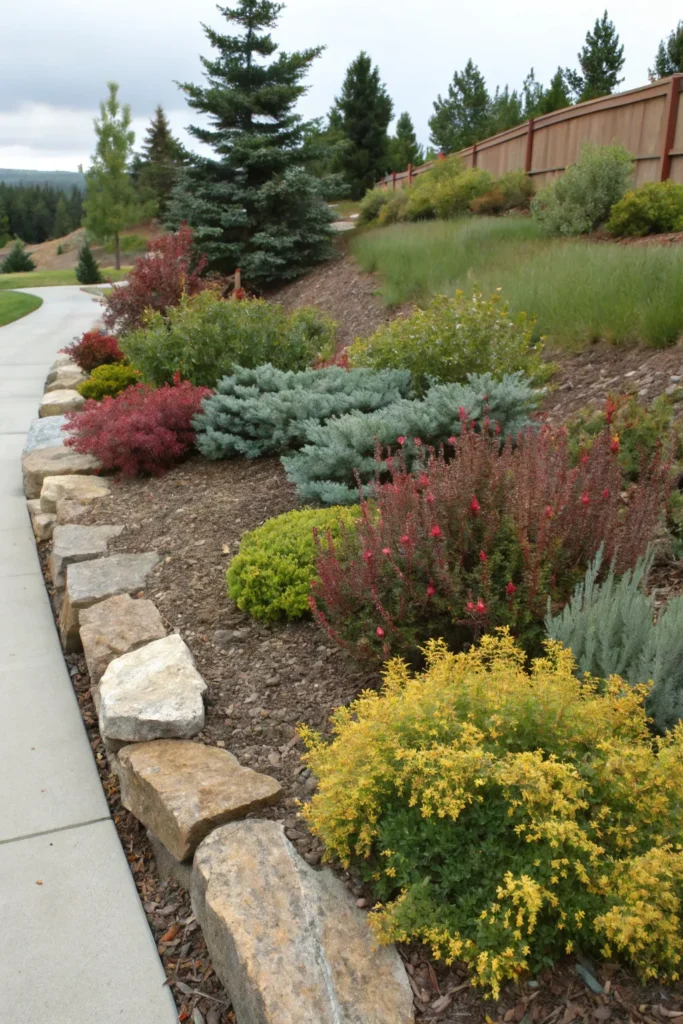
Design permanent landscape frameworks using drought-tolerant shrubs like barberry, spirea, potentilla, and native serviceberry that provide year-round structure, seasonal flowers, and wildlife habitat while requiring minimal pruning and no regular irrigation once established.
Arrange shrubs in informal groups with adequate spacing for mature size, eliminating future overcrowding and maintenance issues. Install efficient irrigation during establishment, then transition to natural rainfall supplemented by occasional deep watering during extended drought periods. Use organic mulch to suppress weeds and conserve moisture, and incorporate natural stone elements or weathered wood features that complement the shrub plantings while requiring no ongoing care.
Ground Cover Carpet with Weed Suppression
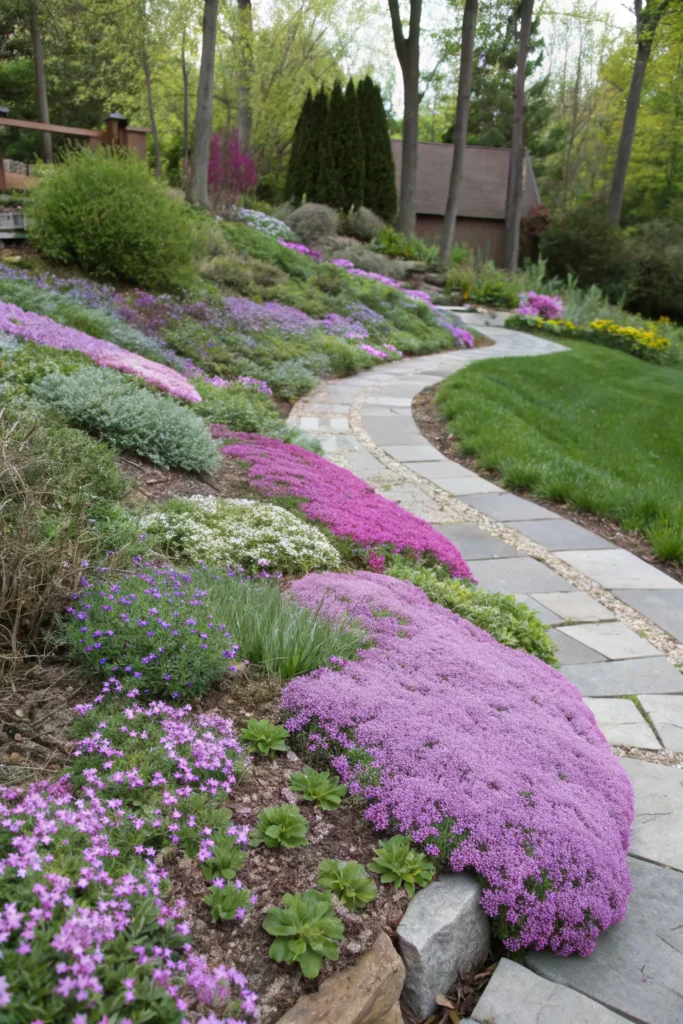
Eliminate traditional lawn areas by establishing dense ground cover plantings using spreading perennials like creeping phlox, wild ginger, ajuga, and native strawberry that form living carpets requiring no mowing, minimal watering, and natural weed suppression once established.
Prepare planting areas by eliminating existing vegetation and installing landscape fabric or cardboard barriers, then plant ground covers at appropriate spacing for coverage within two growing seasons. Install temporary irrigation for establishment, then rely on natural rainfall for ongoing moisture needs. Create walking paths using stepping stones or mulched trails, and edge planting areas with permanent materials like steel or stone to maintain clean lines without ongoing trimming.
Rain Garden with Native Wetland Plants
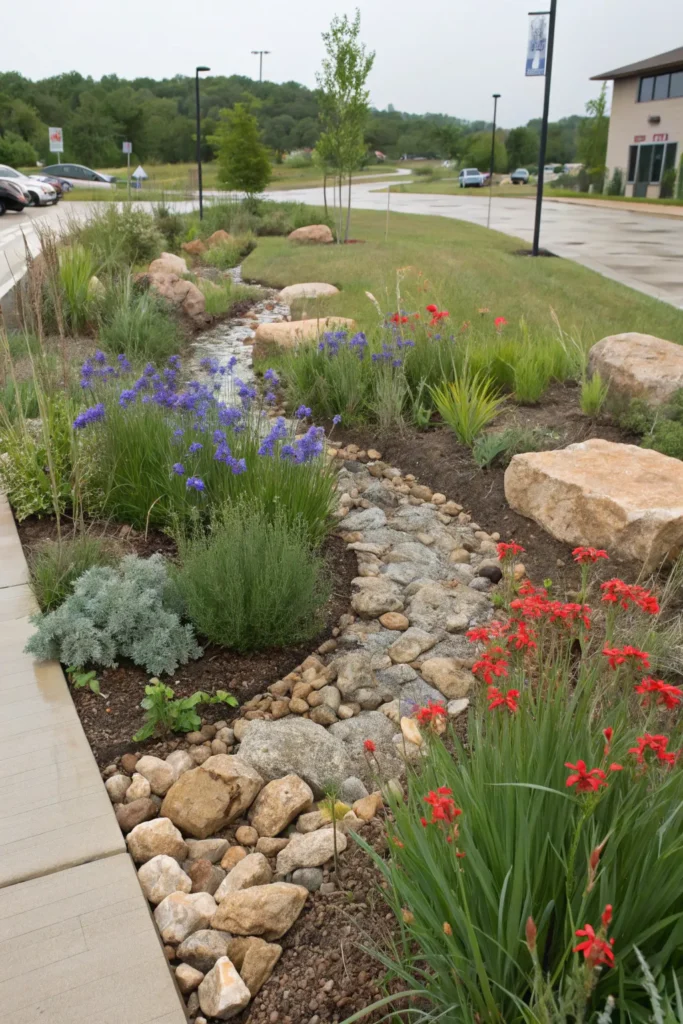
Transform low-lying or drainage problem areas into functional rain gardens using native plants like cardinal flower, blue flag iris, and native sedges that thrive in temporarily wet conditions while filtering stormwater and providing wildlife habitat with no ongoing irrigation needs.
Design basin-shaped gardens that capture runoff from roofs, driveways, and other impermeable surfaces, sizing them to handle typical storm events while preventing overflow during extreme weather. Plant with species adapted to both wet and dry conditions, ensuring garden function even during drought periods. Use natural stone or native plantings to stabilize edges, and incorporate overflows that direct excess water to appropriate drainage areas.
Wildflower Meadow with Pollinator Support
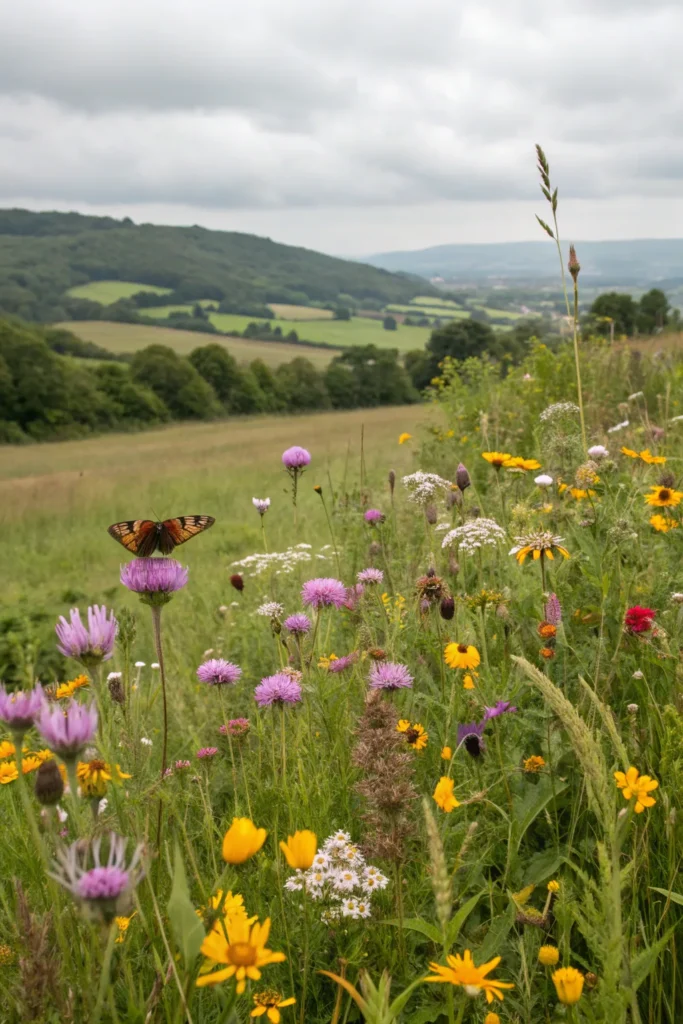
Establish annual and perennial wildflower meadows using regional native species that self-seed and naturalize, creating ever-changing displays that support pollinators while requiring only occasional mowing and no fertilization, irrigation, or pest control once established.
Prepare planting areas by removing existing vegetation and loosening soil without adding amendments, as most wildflowers prefer lean, well-draining conditions. Sow seeds in fall or early spring according to species requirements, and provide minimal supplemental watering during germination if natural rainfall is insufficient. Mow annually after seed set to prevent woody plant invasion, and allow natural succession to create diverse plant communities over time.
Stone and Gravel Garden with Minimal Planting
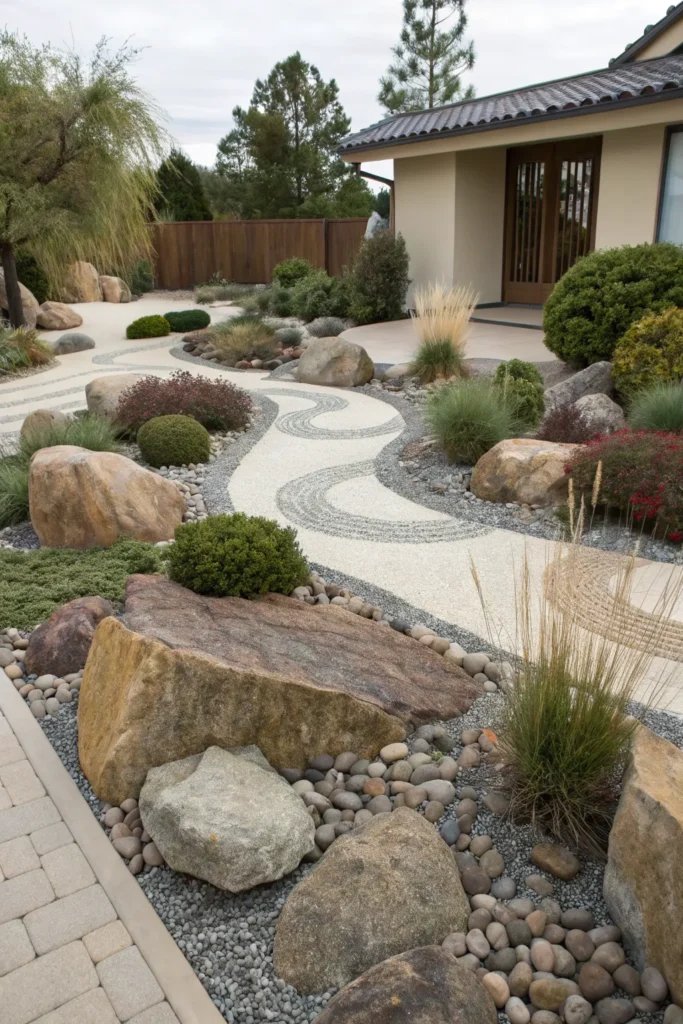
Create sophisticated landscapes using decorative gravel, natural stone, and strategically placed drought-tolerant plants that provide visual interest through texture, form, and seasonal color while requiring virtually no ongoing maintenance beyond occasional weeding and plant replacement.
Design using principles of Japanese zen gardens or contemporary minimalism, incorporating different gravel sizes and colors to create patterns and define spaces. Install landscape fabric underneath gravel areas to prevent weed growth, and use edging materials to maintain clean lines between different materials. Select plants with strong architectural forms like ornamental grasses, small trees, or sculptural shrubs that serve as living sculptures within the stone landscape.
Evergreen Foundation Planting with Year-Round Structure
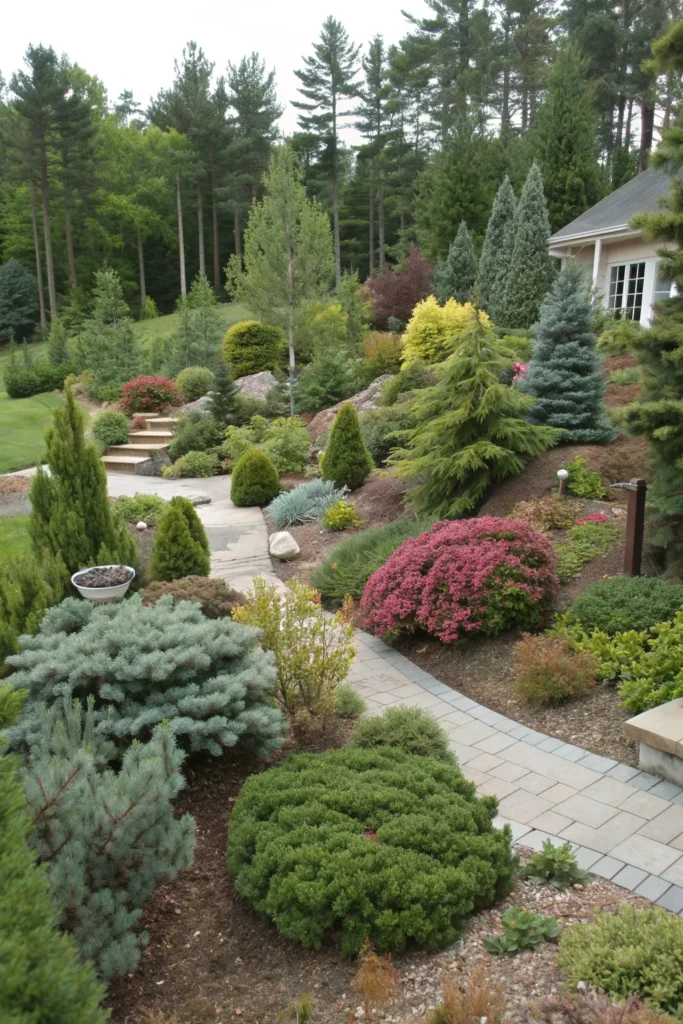
Establish a permanent landscape framework using diverse evergreen shrubs and small trees like juniper, pine, spruce, and native rhododendron that provide year-round color and structure while requiring minimal pruning and no seasonal cleanup or replacement.
Plant evergreens with adequate spacing for mature size, eliminating future overcrowding and maintenance issues. Choose species appropriate for local climate and soil conditions, ensuring long-term success without ongoing amendments or special care. Install mulch to suppress weeds and conserve moisture, and incorporate hardscape elements like pathways and seating that complement the evergreen plantings while requiring no seasonal maintenance.
Naturalized Bulb Garden with Spring Impact
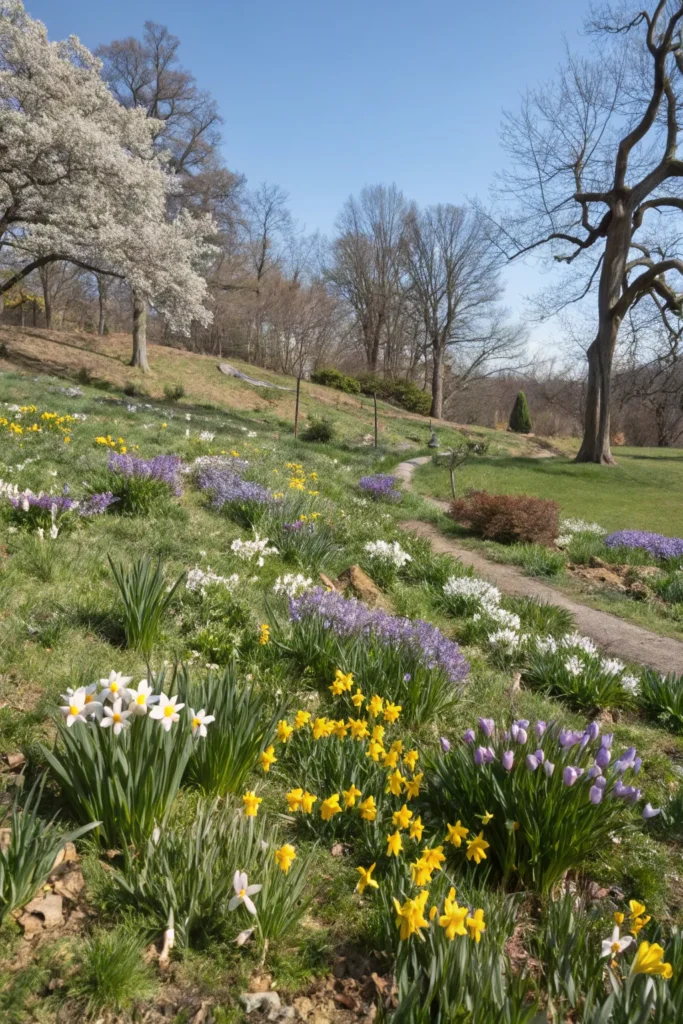
Plant large quantities of naturalizing bulbs like daffodils, crocuses, and alliums in informal drifts throughout existing landscape areas, creating spectacular spring displays that multiply over time while requiring no ongoing care beyond allowing foliage to die back naturally.
Choose bulb species adapted to local climate conditions and plant in fall at appropriate depths and spacing for naturalization. Allow areas to remain unmown until bulb foliage yellows, then resume normal maintenance schedules. Plant bulbs in existing ground cover areas, under deciduous trees, or in meadow settings where their spring growth cycle complements other plants’ dormant periods.
Automated Drip Irrigation with Efficient Water Use
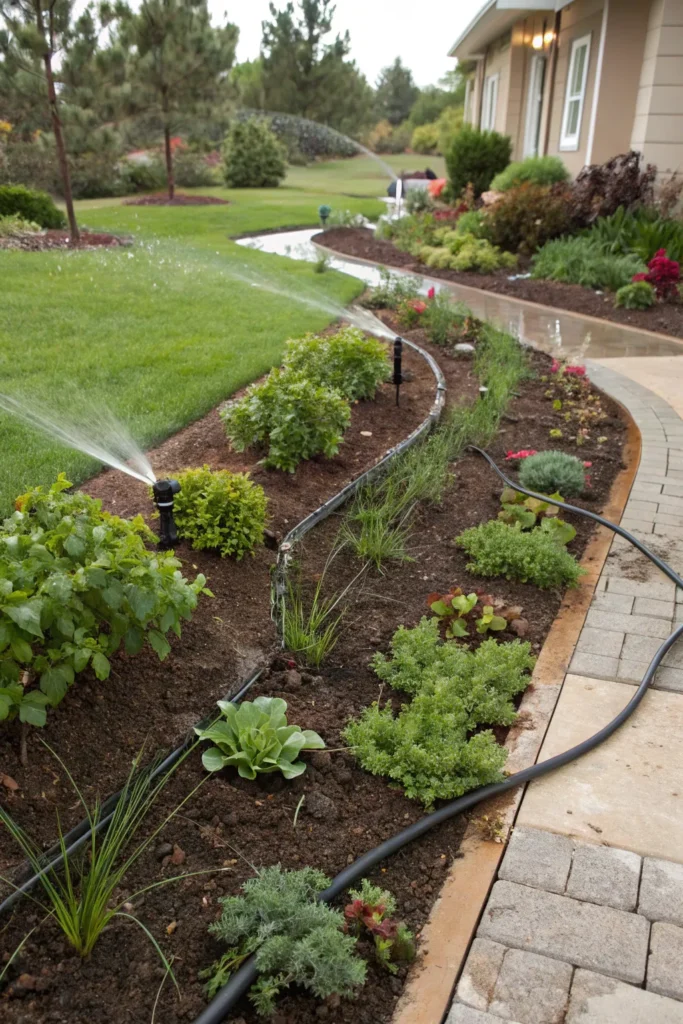
Install comprehensive drip irrigation systems with smart controllers that adjust watering schedules based on weather conditions, soil moisture, and plant needs, ensuring efficient water use while maintaining plant health with minimal ongoing attention to irrigation management.
Design systems with separate zones for different plant types and water requirements, allowing customized irrigation schedules that prevent both overwatering and drought stress. Use pressure-compensating emitters and self-flushing dripline to ensure consistent water delivery and prevent system clogs. Include rain sensors and soil moisture monitors that automatically suspend irrigation during periods of adequate natural rainfall.
Living Mulch with Functional Ground Cover
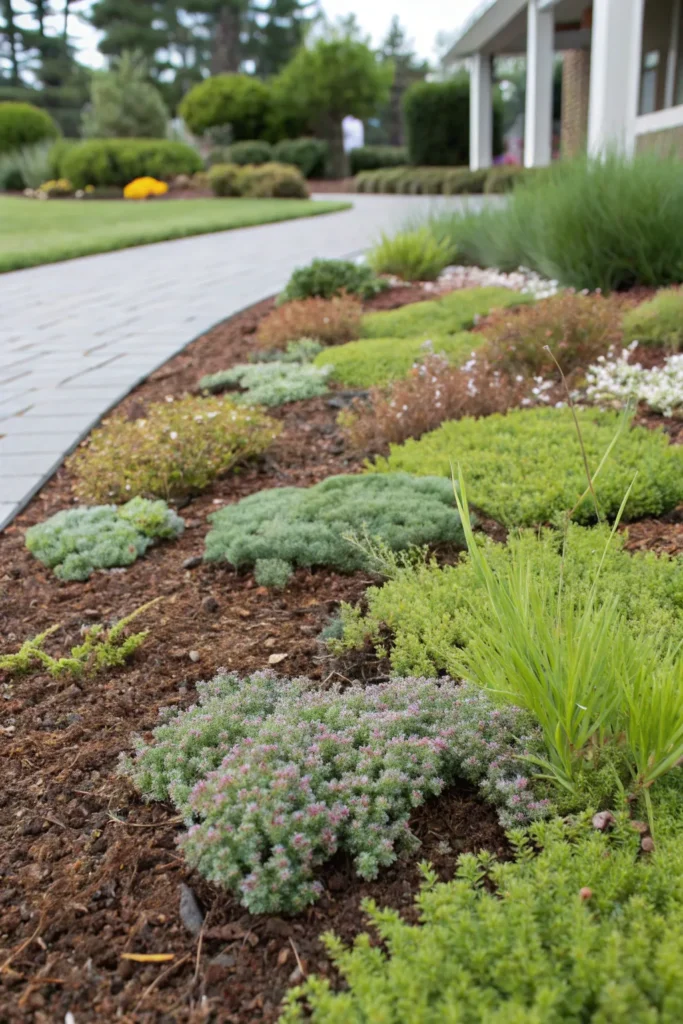
Replace traditional mulch with living ground covers like creeping thyme, sedum, or native moss that suppress weeds, conserve soil moisture, and provide seasonal interest while eliminating the need for regular mulch replacement and reducing long-term maintenance costs.
Select ground covers appropriate for specific site conditions including sun exposure, soil type, and foot traffic requirements. Plant at appropriate spacing for coverage within two growing seasons, and provide temporary mulch around new plantings until coverage is established. Choose species that require minimal fertilization and naturally suppress competing vegetation through dense growth habits.
Hardscape Integration with Minimal Planting
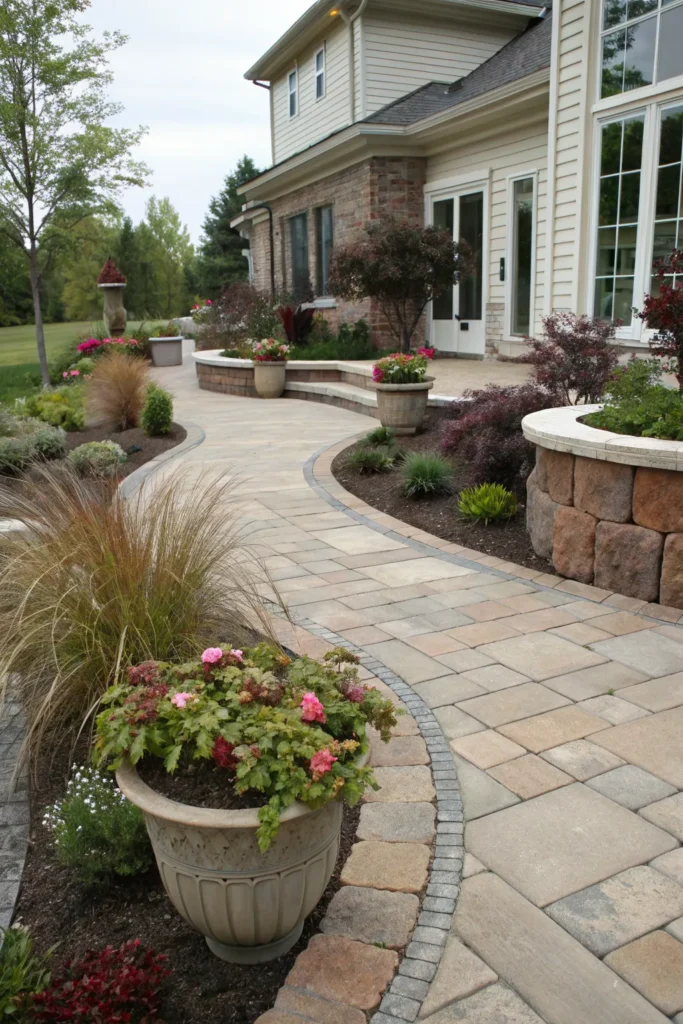
Design landscapes that emphasize permanent hardscape elements like patios, walkways, retaining walls, and architectural features, using strategic plant placement to soften edges and provide seasonal interest while minimizing overall plant maintenance requirements.
Select plants with strong architectural forms and long-lasting appeal that complement hardscape materials and require minimal care. Use containers for seasonal color that can be moved or replaced without disrupting permanent landscape elements. Design hardscape areas to handle drainage and snow removal efficiently, reducing ongoing maintenance needs while providing functional outdoor spaces.
Self-Seeding Annual Garden with Natural Succession
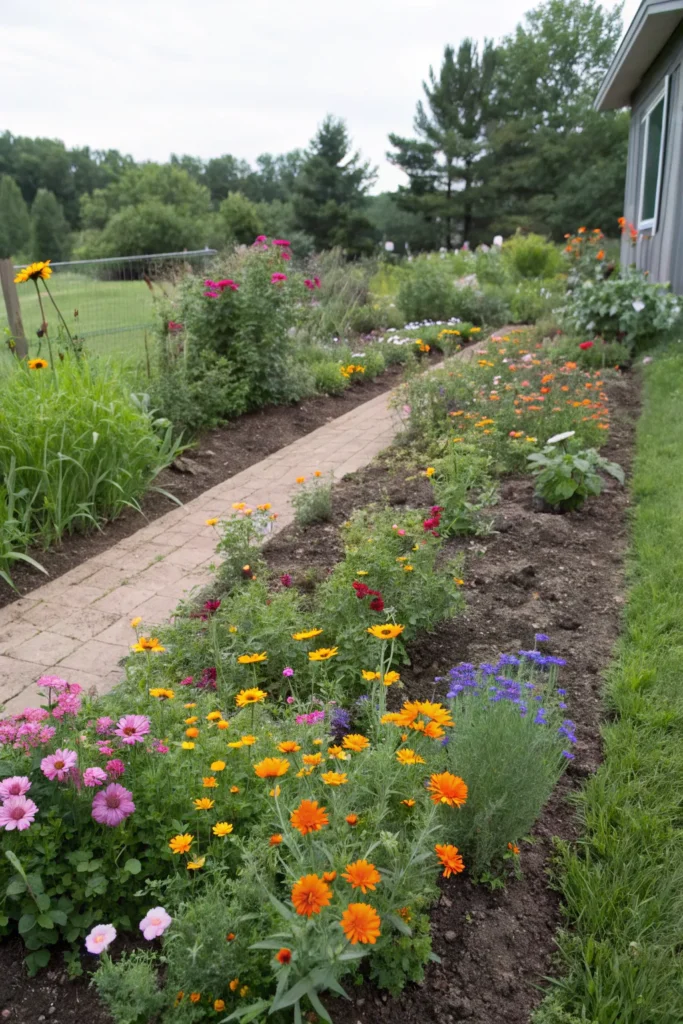
Establish gardens using self-seeding annual flowers like cosmos, zinnias, marigolds, and bachelor buttons that create changing displays each year while requiring only occasional soil disturbance and no regular replanting or ongoing maintenance beyond allowing natural seed dispersal.
Prepare planting areas with loose, well-draining soil that allows easy seed germination and root establishment. Plant initial seeds or transplants according to species requirements, then allow plants to complete full growing cycles including seed production and dispersal. Avoid heavy mulching that prevents seed germination, and provide minimal soil disturbance to allow natural reseeding while controlling unwanted weeds.
The Science of Sustainable Landscape Design
Successful low-maintenance landscaping relies on understanding ecological principles that create self-sustaining plant communities requiring minimal human intervention. Native plant communities evolved over thousands of years to thrive in specific climate and soil conditions, developing natural partnerships and growth cycles that eliminate many maintenance requirements associated with non-native plantings.
Soil health forms the foundation of low-maintenance landscapes, with healthy soil biology supporting plant nutrition, disease resistance, and water retention without ongoing amendments or interventions. Building soil organic matter through composting, appropriate plant selection, and minimal disturbance creates conditions where plants thrive naturally while reducing fertilization, irrigation, and pest control needs.
Water cycle management through strategic plant placement, mulching, and irrigation design ensures efficient use of both natural precipitation and supplemental watering, creating landscapes that remain attractive during both wet and dry periods while reducing overall water consumption and maintenance requirements.
Beyond Maintenance: Creating Landscapes That Improve Over Time
The ultimate goal of low-maintenance landscape design extends beyond simply reducing ongoing care requirements to creating outdoor spaces that become more beautiful, functional, and ecologically valuable over time through natural processes and minimal intervention.
Succession planting strategies allow landscapes to evolve naturally while maintaining desired aesthetic and functional characteristics, incorporating plants at different maturity stages that will assume various roles as the landscape develops. This approach creates dynamic environments that change seasonally and annually while reducing the need for major renovations or replanting projects.
Wildlife habitat integration transforms low-maintenance landscapes into functional ecosystems that support birds, beneficial insects, and other wildlife while providing natural pest control and pollination services. These ecological functions reduce long-term maintenance needs while creating landscapes that contribute positively to local environmental health and biodiversity conservation efforts.