15 Living Room Zoning Ideas for Open-Concept Homes
Open-concept living has become the hallmark of modern home design, offering spaciousness, natural light, and a sense of freedom that traditional compartmentalized layouts simply can’t match.
However, the absence of walls presents its own unique challenge: how do you create distinct functional areas without sacrificing the open, airy feel that makes these spaces so appealing?
The answer lies in thoughtful zoning strategies that define spaces through design elements rather than physical barriers, allowing you to enjoy the best of both worlds—openness and organization.
1. Define Zones with Area Rugs
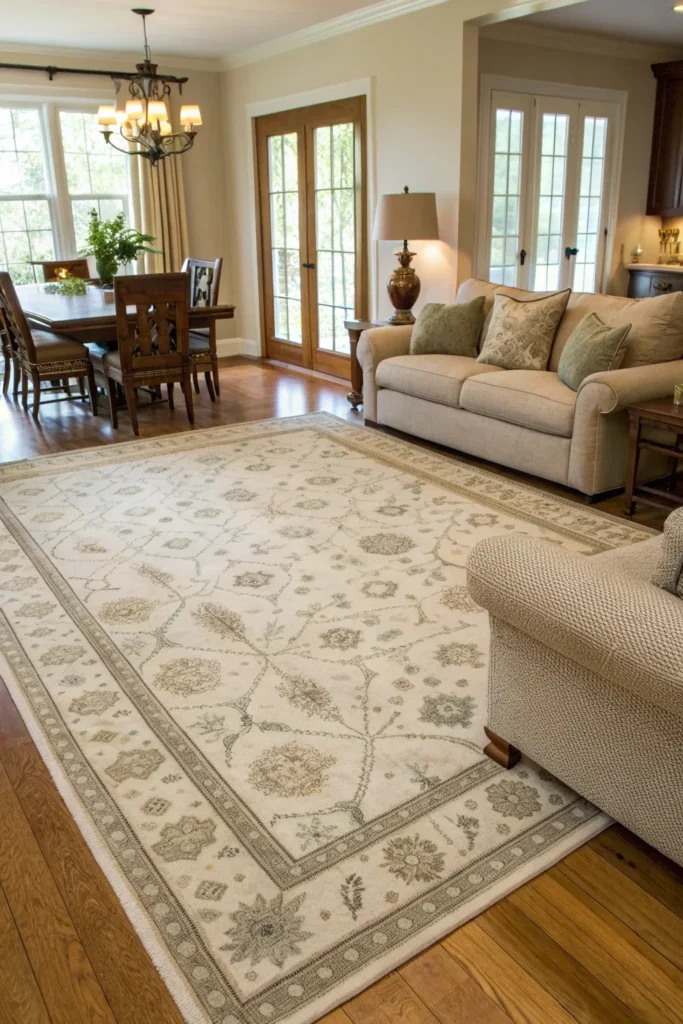
Area rugs are perhaps the most versatile and accessible tool for creating visual boundaries in open-concept living rooms without erecting physical dividers. A large rug anchoring your seating area instantly signals where the living zone begins and ends, while a different rug in the dining area creates a separate identity for that space.
Choose rugs that complement each other through coordinating colors or patterns rather than matching exactly, which helps maintain visual interest while ensuring the spaces feel connected and cohesive.
2. Create Boundaries with Furniture Arrangement
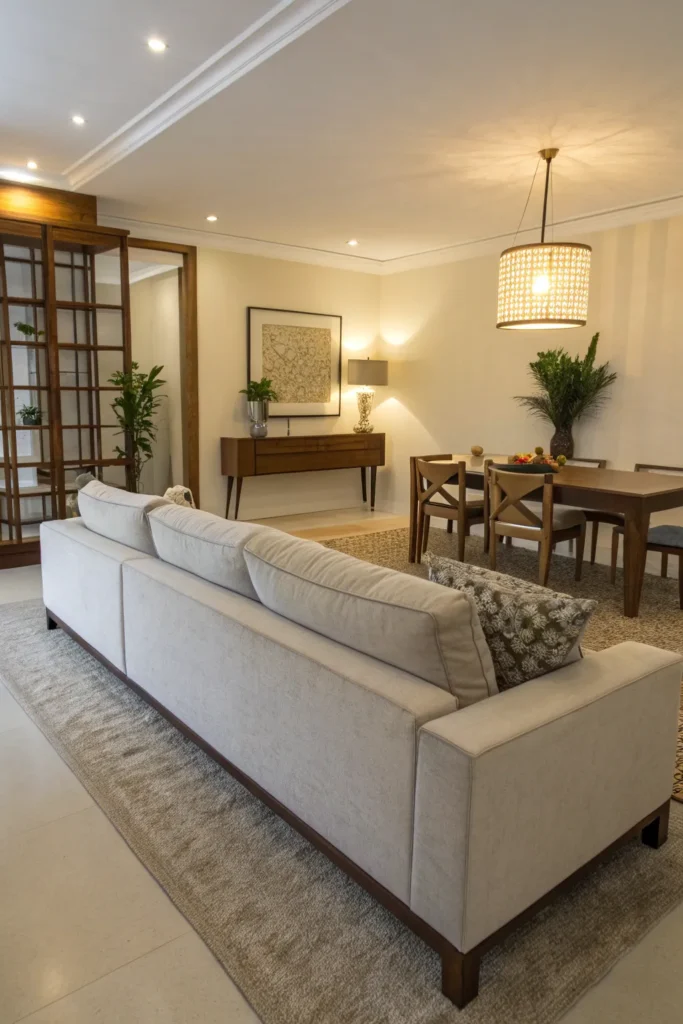
Strategic furniture placement can effectively delineate different zones while maintaining the flow that makes open-concept homes so desirable. Position your sofa with its back to the dining area or kitchen to create a subtle boundary that defines the living space without blocking sightlines.
Consider using a console table behind the sofa to further emphasize this division while providing practical surface space for lamps, books, or decorative objects that enhance the room’s functionality.
3. Install Partial Wall Dividers
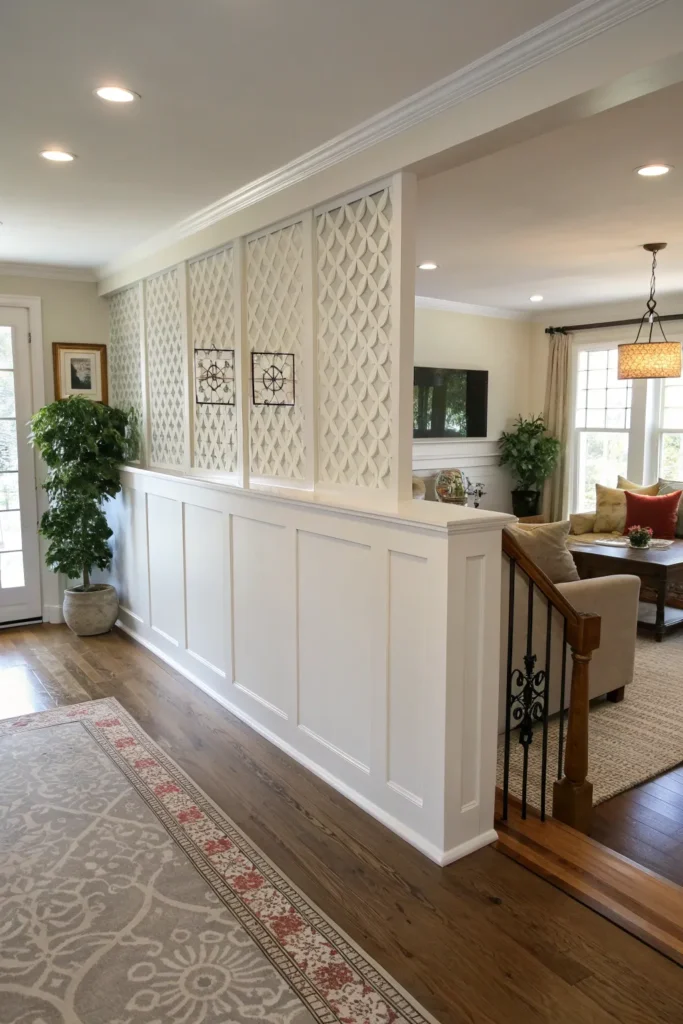
Half-walls or pony walls offer a permanent yet open solution for zoning that provides some separation without completely closing off areas. These structures typically rise three to four feet from the floor, creating visual distinction while allowing light and conversation to flow freely between spaces.
Top them with a countertop-style surface to create additional display or storage space, or incorporate built-in shelving that serves both sides of the divider for maximum functionality.
4. Use Lighting to Distinguish Areas
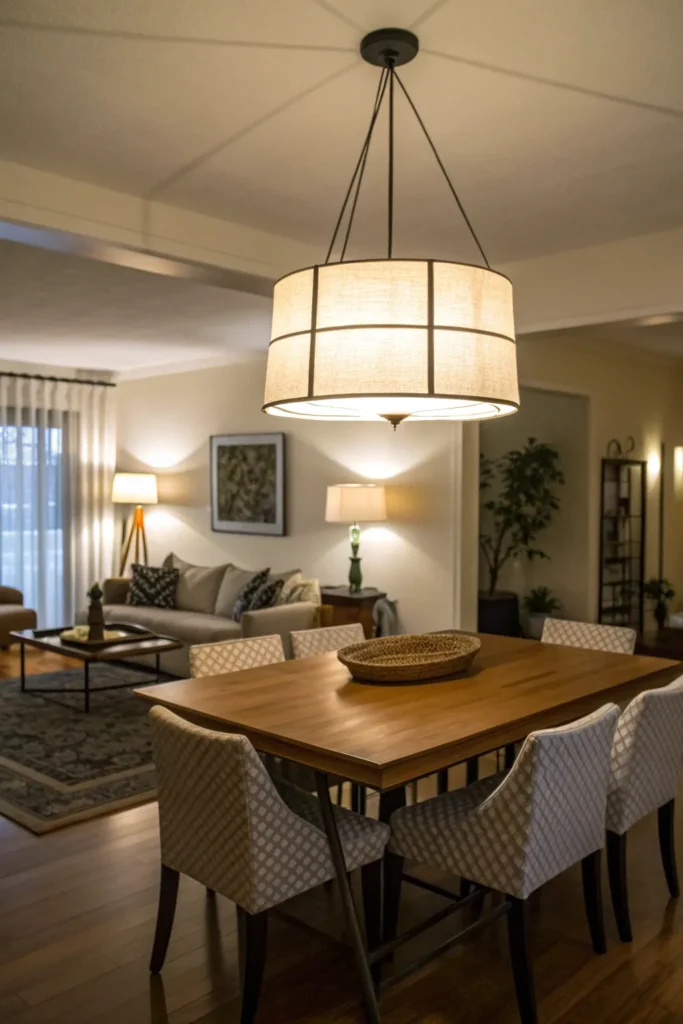
Different lighting schemes can powerfully communicate the unique purpose of each zone within your open-concept living room.
Install a statement chandelier or pendant cluster over your dining area while using table lamps and floor lamps to create ambient lighting in the living zone. This layered approach not only provides practical illumination for different activities but also creates visual cues that help the eye distinguish between functional areas without physical separation.
5. Incorporate Freestanding Shelving Units
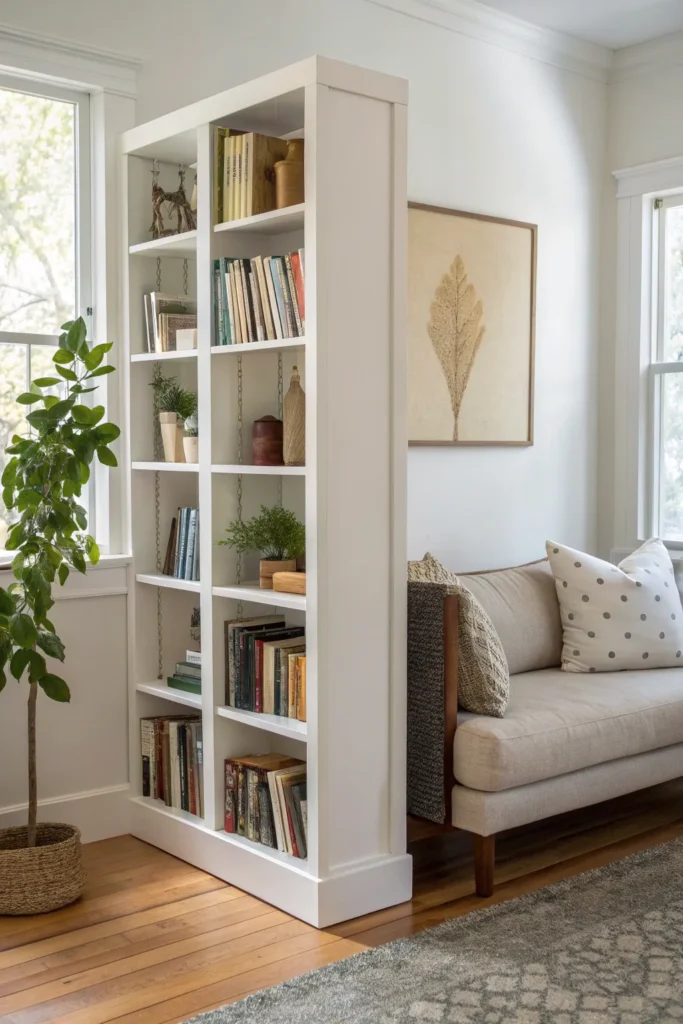
Open shelving units serve double duty as both storage solutions and space dividers that maintain the airy quality essential to open-concept design. Position a tall bookcase perpendicular to the wall to separate your living area from a home office nook or reading corner, ensuring you choose a piece with an open back so light can filter through.
Fill the shelves with a curated mix of books, plants, and decorative objects that look attractive from both sides and contribute to the overall aesthetic of your space.
6. Designate Zones with Ceiling Treatments
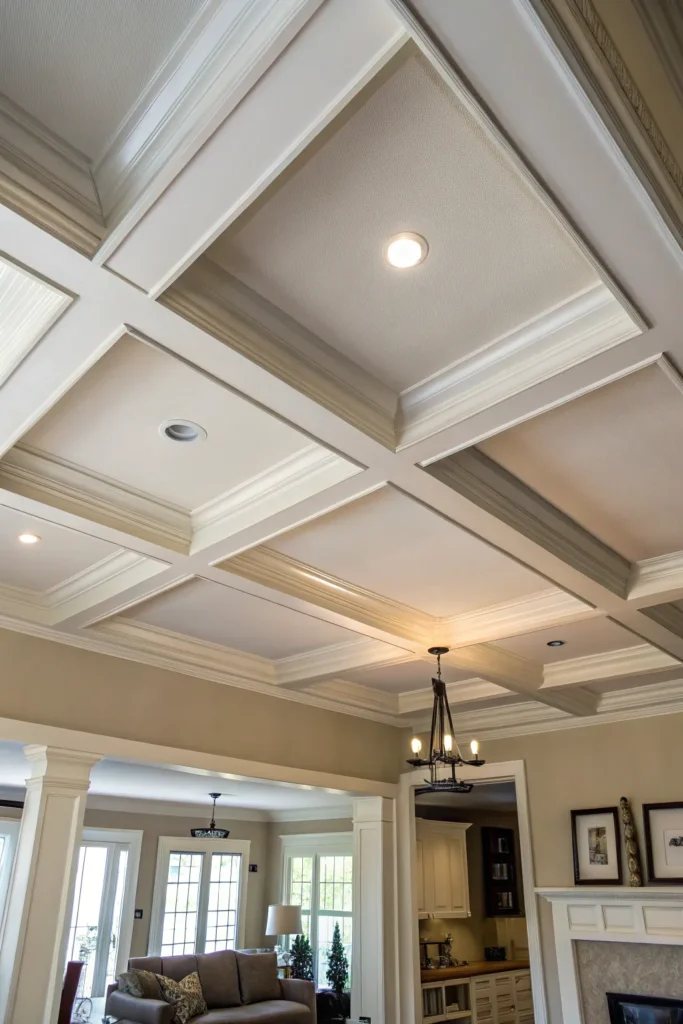
Drawing the eye upward with varied ceiling designs can create subtle but effective zoning without cluttering the floor plan or obstructing views. Consider installing coffered ceilings, exposed beams, or different paint colors on the ceiling above specific areas to denote their unique purposes.
This overhead differentiation works particularly well in homes with higher ceilings where the vertical space offers ample opportunity for creative design interventions that don’t interfere with the open flow below.
7. Establish Boundaries with Color Blocking
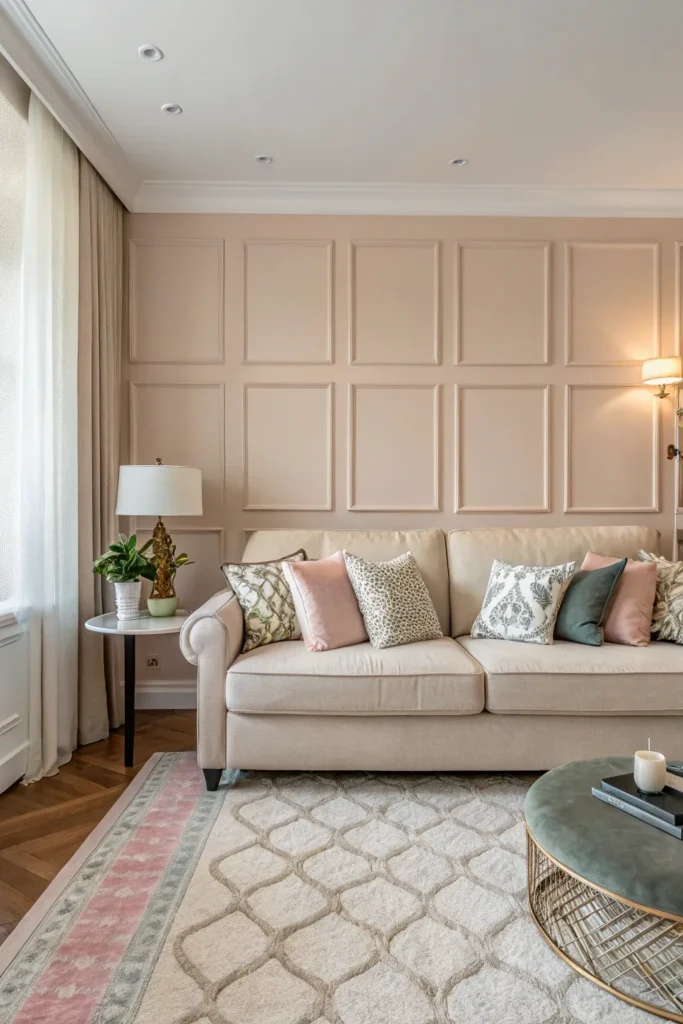
Strategic use of color on walls can define different zones while maintaining visual continuity throughout your open-concept space. Paint an accent wall behind your living area in a bold hue while keeping surrounding walls neutral, or use the same color family in varying intensities across different zones.
This approach creates psychological boundaries that help occupants understand the function of each area while the color relationships ensure the overall space feels harmonious and intentional rather than disjointed.
8. Add Architectural Elements Like Columns
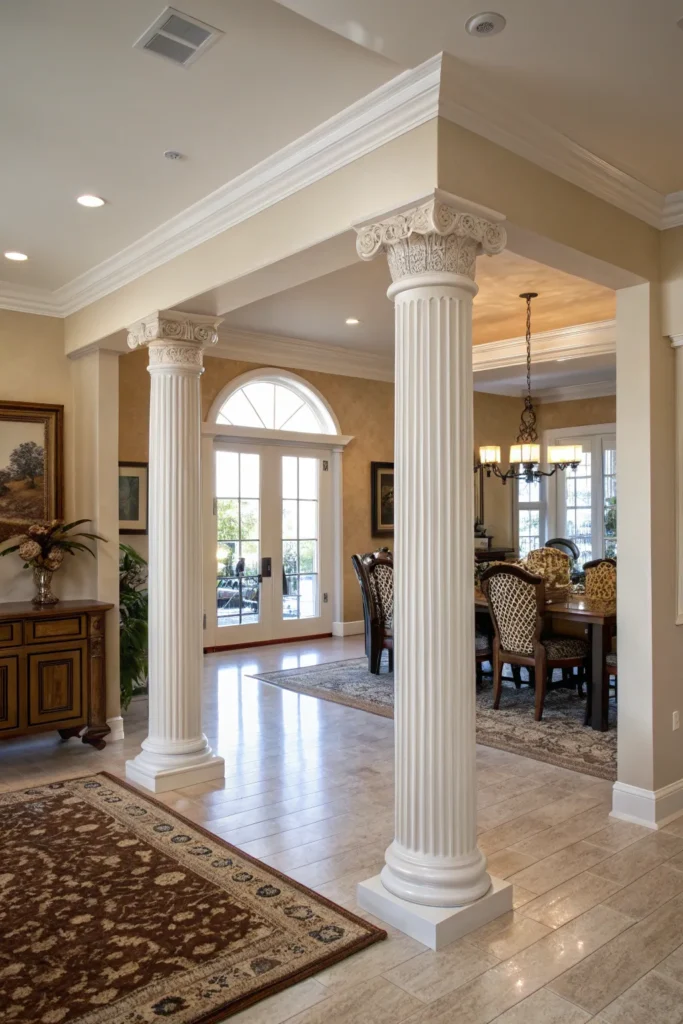
Installing decorative columns or posts at strategic transition points can create elegant markers between zones without fully enclosing any area.
These vertical elements provide visual anchors that help define where one space ends and another begins, and they can be designed to match your home’s architectural style. Consider using columns to frame the entrance to your living area from the kitchen, or position them to support overhead beams that further emphasize the spatial division.
9. Utilize Different Flooring Materials
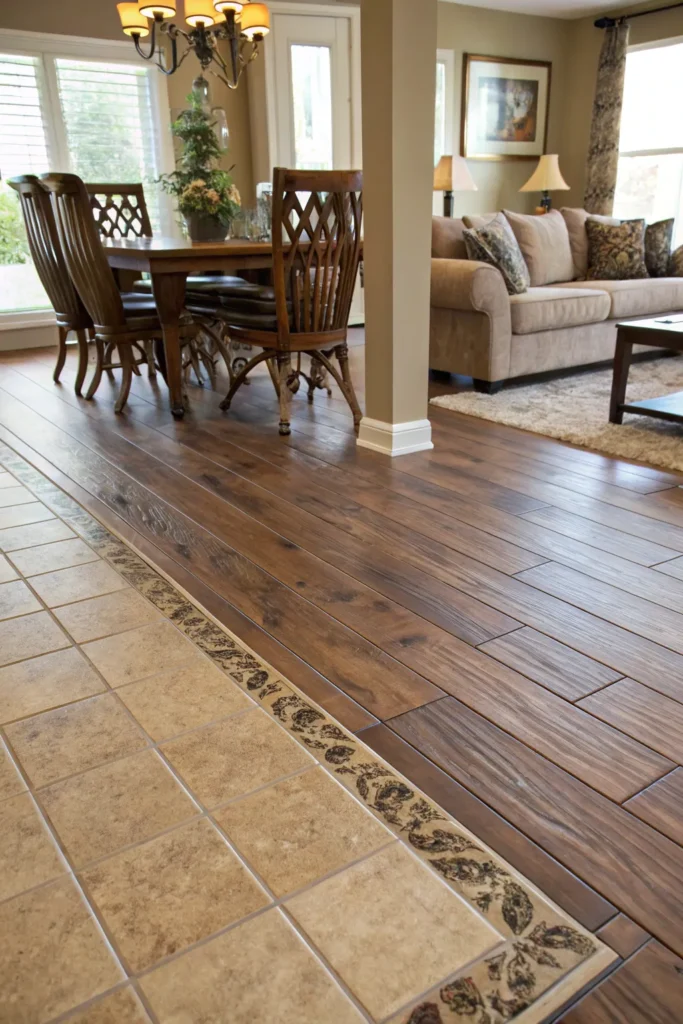
Transitioning between flooring types offers a tactile and visual method of zoning that immediately communicates functional differences between areas. Install hardwood in your living zone and switch to tile in the adjacent dining area, or use the same material in different patterns or directions to create subtle differentiation.
This strategy works especially well when combined with other zoning techniques, as the floor change reinforces the boundaries established by furniture arrangement or rugs.
10. Incorporate Sliding Panels or Screens
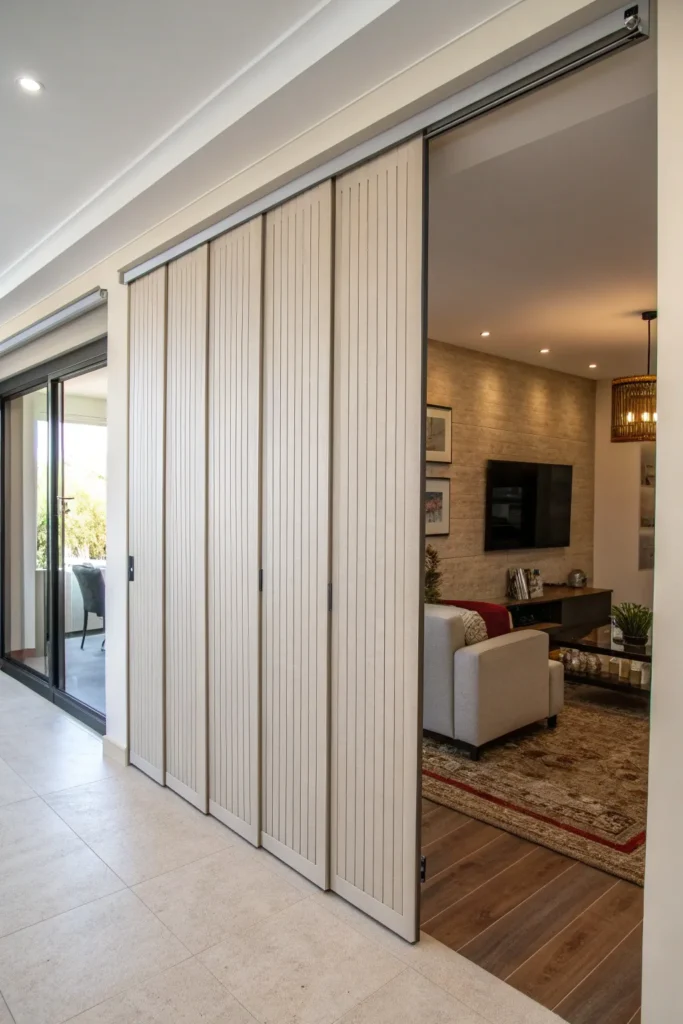
Movable panels provide the flexibility to open up your space completely or create temporary privacy when needed, making them ideal for modern open-concept living. Install ceiling-mounted sliding doors with frosted or clear glass, wooden slats, or fabric panels that can glide closed to separate your living area from a home office or guest space.
When open, these panels stack neatly against the wall and virtually disappear, maintaining the open feel while offering options for those moments when you need to define boundaries more firmly.
11. Create Zones with Platform Levels
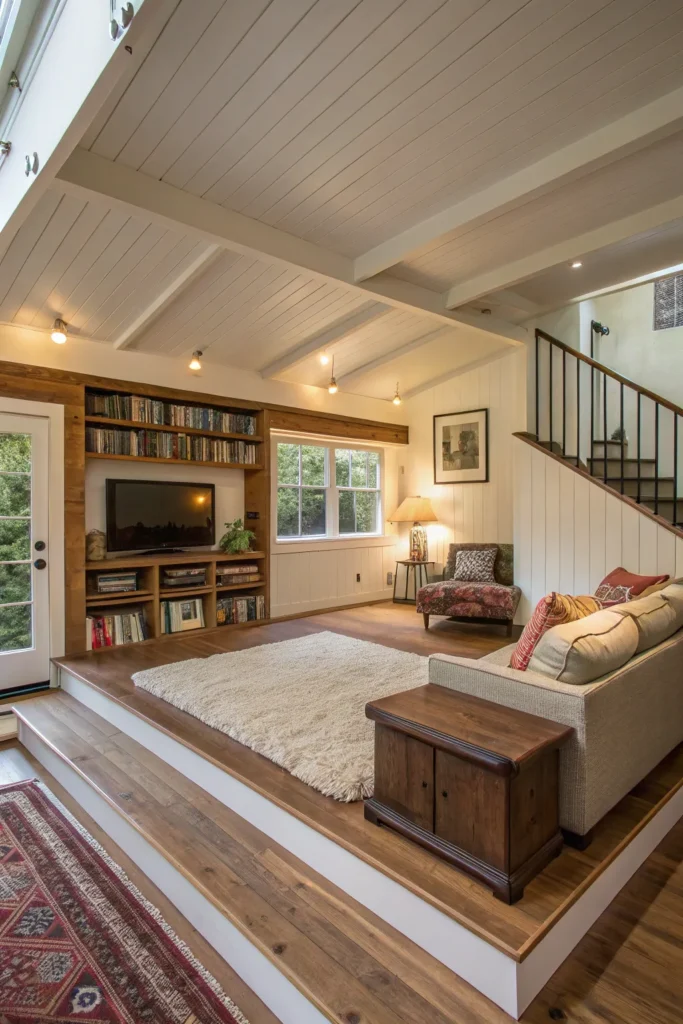
Introducing subtle elevation changes can effectively demarcate different areas while adding architectural interest to your open-concept space. A raised platform of just six to twelve inches can distinguish a living area from the rest of the room, creating a conversation pit effect that feels intimate and defined.
This approach works particularly well when combined with integrated storage beneath the platform or built-in seating along its edges, maximizing both functionality and visual impact.
12. Define Spaces with Built-In Furniture
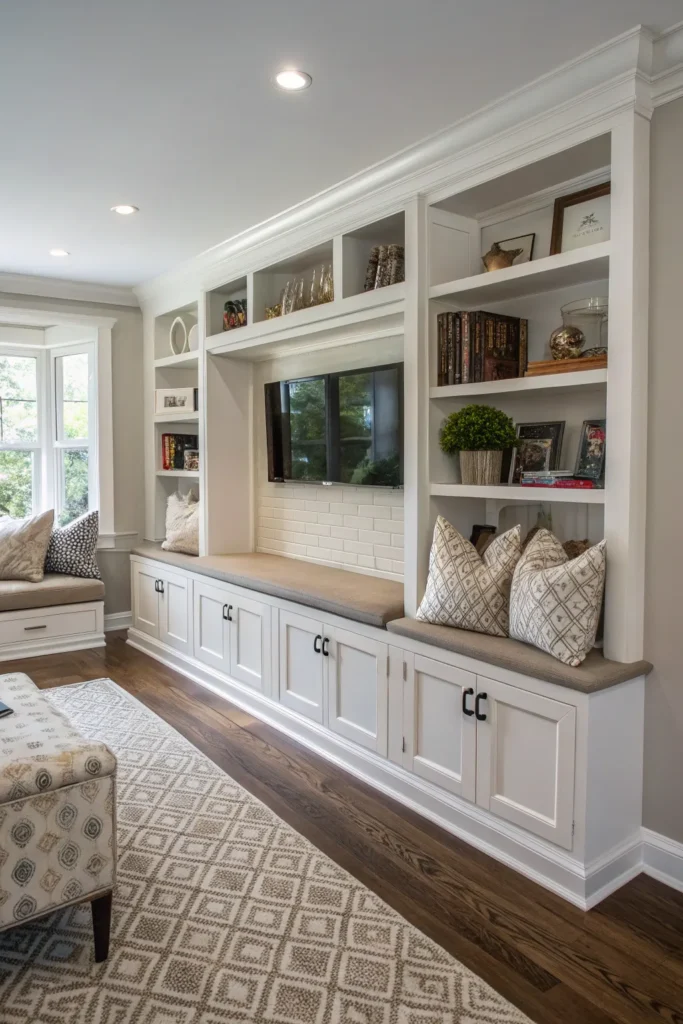
Custom built-ins designed specifically for your space can create natural zones while maximizing storage and maintaining the clean lines essential to modern aesthetics.
A built-in banquette or window seat establishes a cozy reading nook, while a media console that extends into a room divider can separate your living area from a dining space. These permanent installations feel intentional and cohesive, appearing as integral parts of the home’s architecture rather than afterthoughts.
13. Use Plants as Natural Dividers
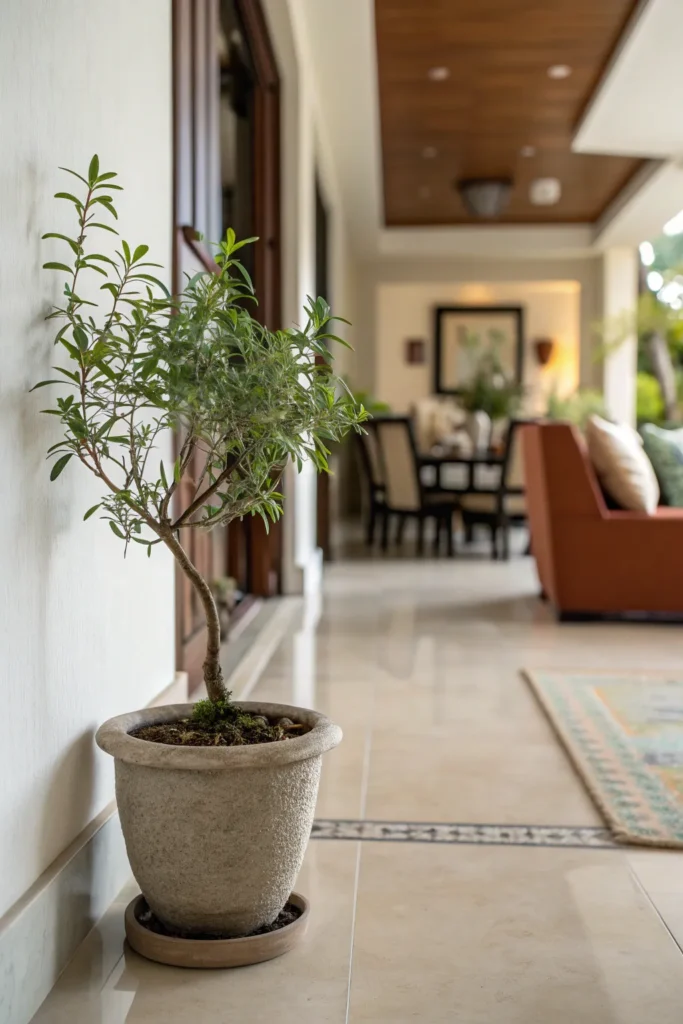
Large potted plants or groupings of greenery can create soft, organic boundaries that define spaces while improving air quality and adding life to your home.
Position tall plants like fiddle-leaf figs, monstera deliciosa, or birds of paradise at transition points between zones, or create a living wall of cascading pothos and philodendrons on a vertical planter. This biophilic approach to zoning brings warmth and texture to your space while maintaining the openness that makes these layouts so appealing.
14. Establish Zones Through Gallery Walls
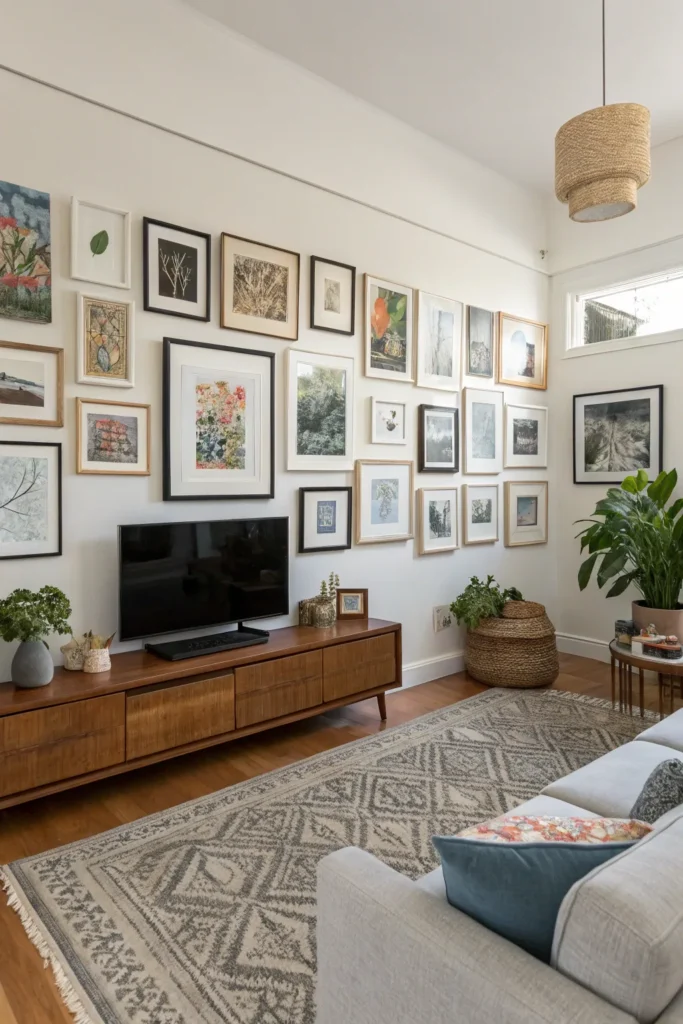
Strategically placed artwork and photo displays can create visual anchors that help define different areas within your open-concept living room.
Dedicate one wall to a carefully curated gallery that becomes the focal point of your living zone, establishing it as a distinct area with its own identity. The concentrated visual interest draws the eye and creates an implied boundary, while the art itself contributes personality and style that reflects your aesthetic preferences.
15. Implement Multifunctional Furniture Pieces
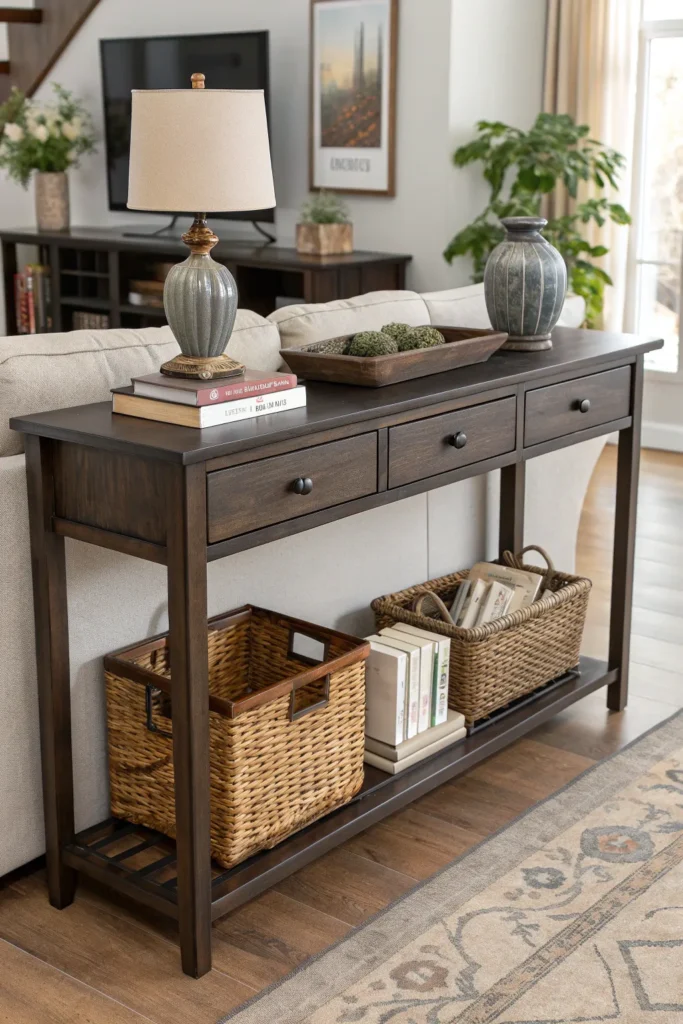
Furniture that serves multiple purposes can help define zones while maximizing the functionality of your open-concept space without adding clutter. A storage ottoman positioned between your living and dining areas provides seating, storage, and a visual marker of transition between spaces.
Console tables with shelving on both sides can back a sofa while providing display space that looks intentional from every angle, effectively creating a boundary that enhances rather than restricts the flow of your home.
The success of zoning in open-concept homes depends on striking the right balance between definition and openness, ensuring each area has a clear purpose while maintaining the spatial generosity that makes these layouts so desirable.
By layering multiple zoning strategies—perhaps combining area rugs with strategic lighting and thoughtful furniture placement—you create redundancy that makes the spatial organization feel natural and inevitable rather than forced or arbitrary.
The key is to avoid over-dividing your space, which can negate the very benefits that drew you to an open-concept layout in the first place. Instead, focus on the minimum intervention necessary to create functional clarity, allowing the zones to emerge organically from your design choices rather than imposing rigid boundaries that feel restrictive.
This restraint ensures your home maintains its sense of flow and spaciousness while providing the structure needed for comfortable, organized living.
Open-concept living rooms thrive when zoning enhances rather than constrains, when boundaries serve to organize without isolating, and when design elements work together to create a space that feels both expansive and intimate.
Whether you’re working with a modest apartment or a sprawling great room, these zoning strategies can help you create distinct areas for relaxing, entertaining, working, and dining—all while preserving the light-filled, connected atmosphere that makes open-concept homes so compelling for modern life.