15 Living Room Trends 2026
The living room is changing in ways that reflect something deeper than the cyclical rotation of colors and materials that defines the conventional interior design trend cycle. The shifts visible in the most considered and most influential living room interiors of 2026 are not simply aesthetic departures from the preceding years’ dominant styles.
They are the expression of a fundamental reassessment of what the living room is for, how it should feel to the people who inhabit it daily, and what qualities of material, light, color, and spatial organization create the specific domestic comfort that the contemporary household most genuinely needs.
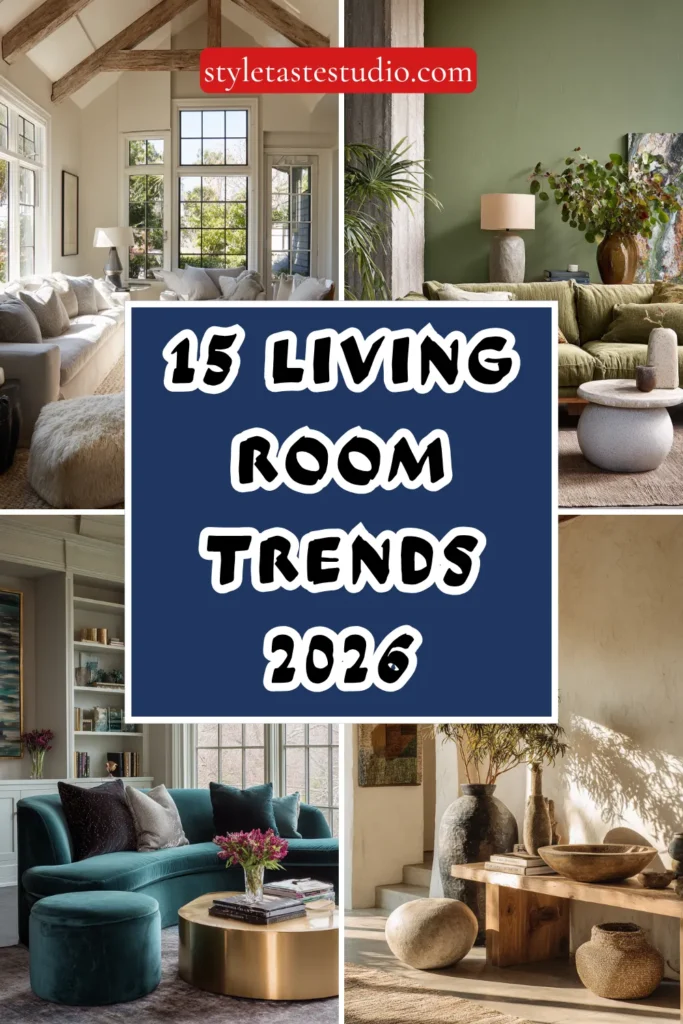
The retreat from the stark, photographically perfect minimalism of the preceding decade is now complete. The living room of 2026 is warm, layered, materially rich, and designed with the specific and honest intention of being genuinely comfortable rather than visually impressive at the expense of daily livability.
The trends collected here are not the fleeting decorative preferences of a single season. They are the directional shifts of genuine cultural significance whose influence will be felt throughout the decade and whose adoption in the living room creates a space of enduring quality rather than premature obsolescence. Here are fifteen living room trends defining 2026 with the intelligence and the practical guidance to bring each one into the home with genuine design confidence.
1. Warm, Saturated Wall Colors Replace Cool Neutrals
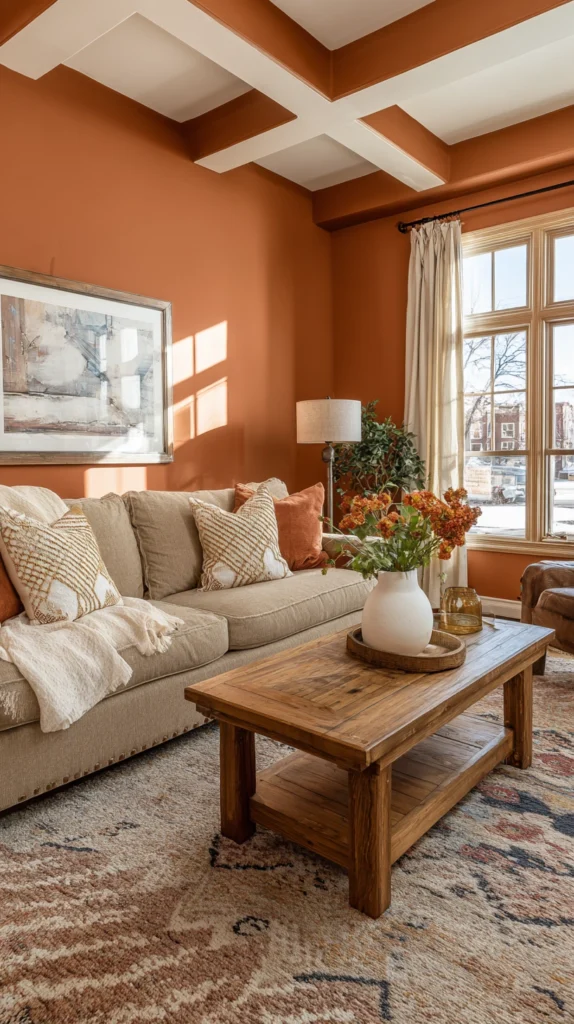
The cool grey and the stark white that dominated living room wall colors for the better part of a decade are being decisively replaced by the warm, saturated tones that create the enveloping, atmospheric quality that the contemporary living room’s primary function as a restorative domestic sanctuary most directly requires.
Terracotta, deep ochre, warm sage, dusty rose, and the various warm neutrals with strong yellow or red undertones are the wall colors defining 2026’s most admired living room interiors.
The shift is not simply a color fashion change. It reflects the growing understanding that the cool, neutral interior creates a visually restful space that is simultaneously emotionally cool, and that the warm, saturated wall color creates the specific psychological warmth of an enveloping environment that the cold neutral cannot approach regardless of how well it is furnished and accessorized.
Apply the warm wall color with confidence to all four walls and the ceiling simultaneously, creating the color-drenched living room whose monochromatic chromatic commitment creates the most complete and most powerfully atmospheric version of the warm wall color trend. The half-committed single feature wall in a warm color surrounded by cool neutral walls creates a chromatic tension that the fully committed warm room entirely resolves.
2. Curved and Organic Furniture Forms
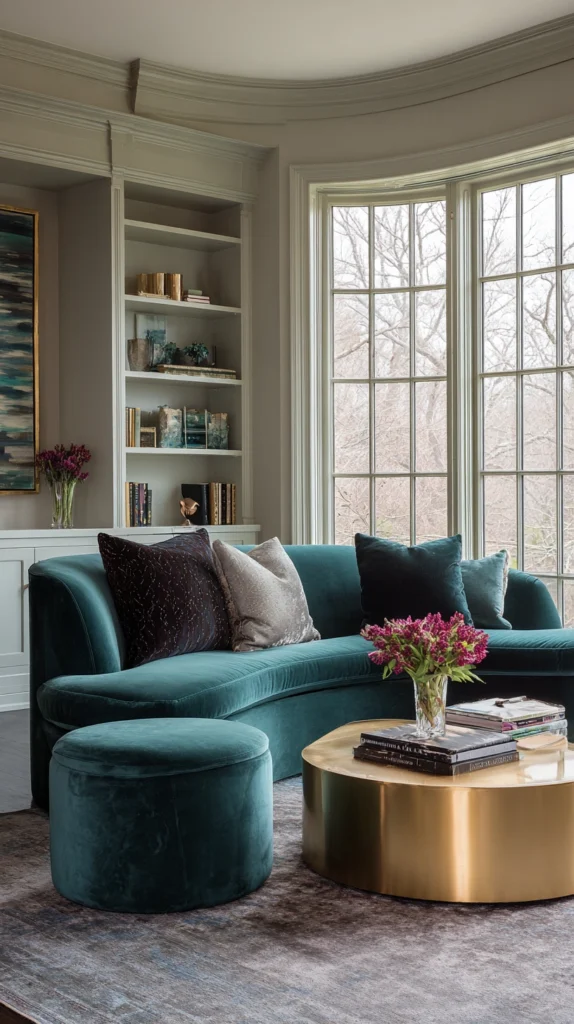
The straight-edged, rectilinear furniture of the preceding decade’s minimalist aesthetic is giving way to the curved, organic forms that the 2026 living room most consistently features.
Rounded sofas with curved backs, circular ottomans, kidney-shaped side tables, and the various furniture forms that reference the natural world’s organic geometries rather than the architect’s ruler and set square create the living room of softened, welcoming visual quality that the angular furniture cannot approach in terms of tactile and psychological warmth.
The curved sofa is the 2026 living room’s most significant single furniture statement. A sofa whose back describes a gentle curve rather than a straight horizontal line creates a seating form of considerably greater visual interest and considerably greater spatial generosity than the rectilinear equivalent, and its organic form creates the room-organizing focal point of a piece of furniture that is also a sculptural object.
Combine curved furniture with straight architectural elements for the most resolved version of the organic furniture trend. The curved sofa against the straight wall, the circular coffee table on the rectangular rug, and the rounded side table beside the rectilinear fireplace creates the visual tension between the organic and the architectural that defines the trend’s most sophisticated expression.
3. Tactile and Textural Layering
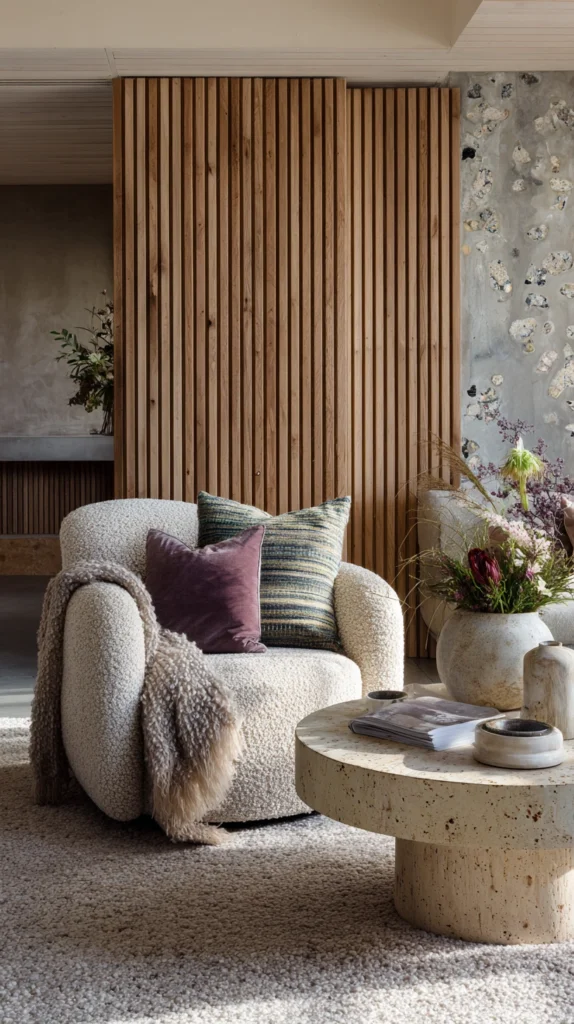
The 2026 living room is defined by an abundance of tactile surface variation that engages the hand as directly as the eye and creates the specific sensory richness of a room that rewards physical contact as well as visual appreciation.
Bouclé upholstery, chunky knit throws, shaggy wool rugs, linen cushion covers, velvet accent pieces, and the various natural textile surfaces of the contemporary living room’s layered interior create the tactile environment of the room that is genuinely, physically pleasurable to inhabit.
The layering principle extends beyond the textiles to the room’s hard surfaces. Fluted timber paneling on the feature wall, travertine on the coffee table surface, rattan on the side table base, and the rough texture of a handmade ceramic lamp base all contribute to the tactile richness of the room that is designed to be touched and felt rather than simply admired from a distance.
The layered tactile interior’s organizational challenge is the management of visual complexity. Too many competing textures without the unifying discipline of a consistent color palette creates the visual chaos of a room that is rich but incoherent. A consistent warm neutral palette applied across the varied textural surfaces creates the unity within which the textural variety operates as richness rather than disorder.
4. Vintage and Antique Furniture Integration
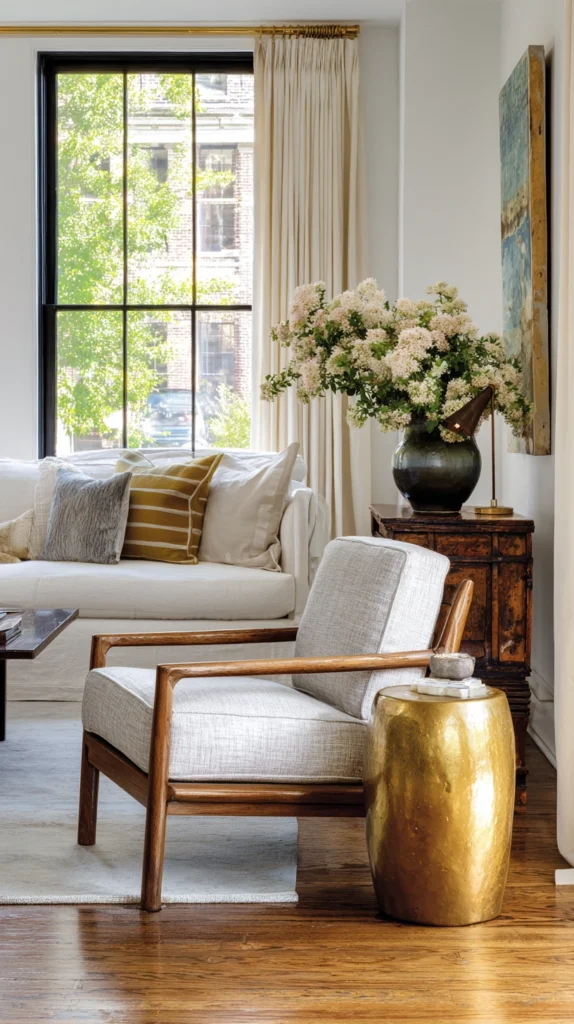
The 2026 living room is emphatically not a room of entirely new furniture. The integration of genuine vintage and antique pieces within the contemporary living room is one of the trend year’s most consistent and most culturally significant design directions, reflecting the growing rejection of the disposable, fast-furniture culture and the recognition that the well-made object of genuine age possesses a quality of material character and historical depth that no newly manufactured piece can replicate.
A single antique piece within the contemporary living room, an eighteenth-century side table, a Victorian nursing chair, a mid-century armchair in its original upholstery, creates the specific warmth of a room that contains something genuinely old alongside the new.
The antique piece’s material quality, its patina of age, and its evidence of genuine craftsmanship create the contrast that makes the surrounding contemporary furniture appear more considered and more deliberately chosen by comparison.
The vintage and antique furniture integration works most powerfully when the older pieces are chosen for their specific material quality and their specific design character rather than simply for their age. A genuinely beautiful antique integrated into a contemporary room creates the cultural depth of a collected interior. A merely old piece without particular design merit creates the inconsistency of an interior that has not been assembled with genuine curatorial intention.
5. Maximalist Bookcase Displays
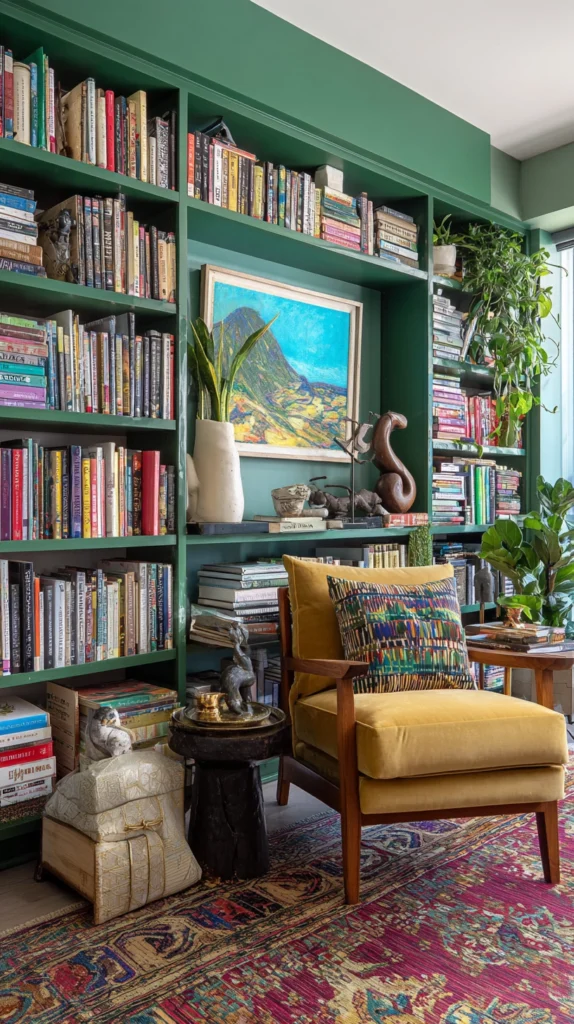
The bookcase as a living room feature of serious decorating ambition is one of 2026’s most consistently present design directions. The floor-to-ceiling bookcase dressed with a dense, varied, and personally expressive collection of books, objects, plants, and art creates the living room backdrop of maximum intellectual warmth and personal depth that the sparse, minimally styled shelf of the preceding years entirely lacked.
The maximalist bookcase’s styling philosophy is abundance within organization. Every shelf is full, but every shelf is composed with genuine attention to the relationship between the books, the objects, and the spaces between them.
The color coordination of the book spines, the consistent framing of the small artworks hung on the bookcase’s back panel, and the strategic placement of the plants at the bookcase’s corners and upper shelves create the abundant but organized aesthetic of the maximalist bookcase at its most considered.
The bookcase’s back panel, the wall surface within the bookcase’s depth behind the books and objects, should be treated as a designed surface rather than an incidental background. Painted in a deep, contrasting color, covered in a rich wallpaper pattern, or lined in a warm fabric, the back panel transforms the bookcase from a storage unit into a decorative feature of complete visual richness.
6. Natural Stone as a Primary Material
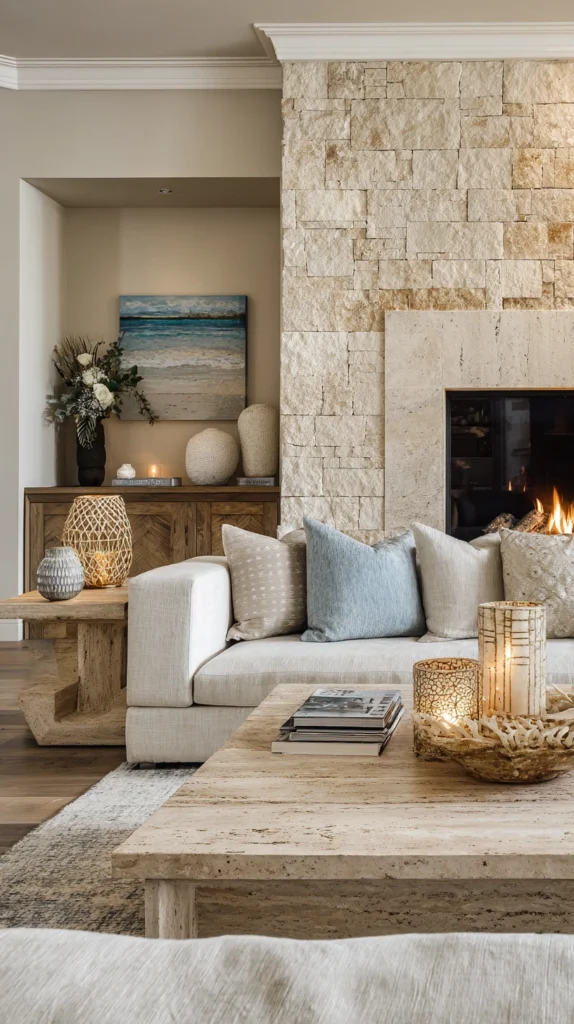
Natural stone in the living room, travertine, limestone, marble, and the various geological materials that carry within their surfaces the specific warmth and material authenticity of the earth’s own making, is one of 2026’s most powerfully present material trends. Stone coffee tables, stone side tables, stone fireplace surrounds, stone floor tiles, and stone decorative objects all contribute to the living room’s material grounding in the natural world that the synthetic material palette entirely lacks.
Travertine is the stone of the most specific cultural moment in 2026, its warm honey and cream tones and its characteristic cellular surface creating the material warmth that marble’s cooler perfection and limestone’s austere restraint cannot approach in terms of the specific domestic comfort quality the 2026 living room most values.
Combine natural stone with warm timber, natural linen, and the other organic materials of the living room to create the complete material ecosystem of the biophilic interior. The stone’s geological permanence, the timber’s organic warmth, and the linen’s botanical origin create the material narrative of a living room whose every surface references the natural world rather than the factory floor.
7. Earthy and Botanical Color Palettes
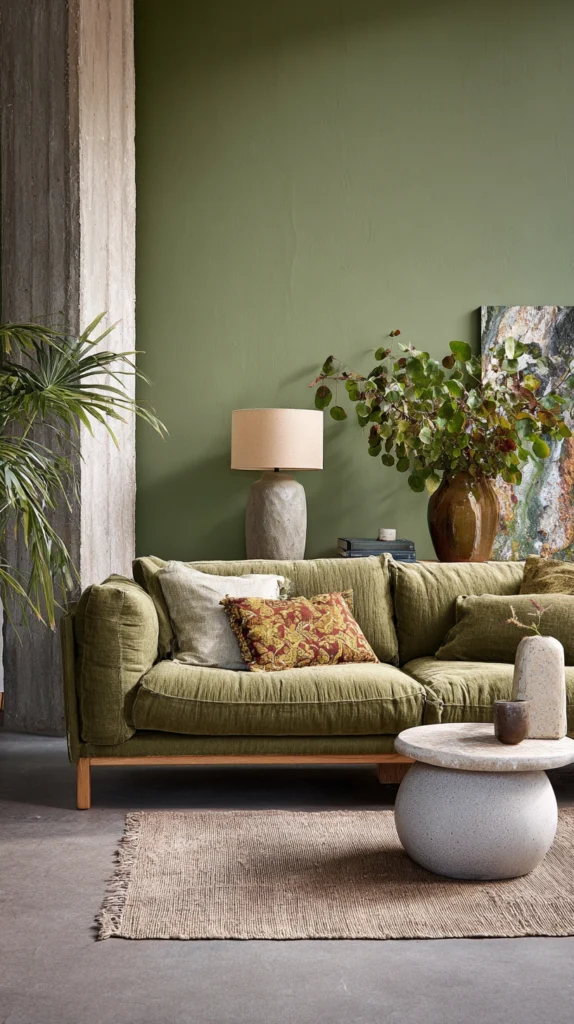
The living room color palette of 2026 is emphatically drawn from the natural world rather than the paint manufacturer’s trend chart. The colors of the forest floor, the botanical garden, the Mediterranean landscape, and the geological earth create the palette of warm greens, deep terracottas, warm ochres, dusty roses, and the various natural neutrals of sand, stone, and bark that define the most admired living room interiors of the trend year.
The botanical palette’s specific quality is the relationship between its component colors, all drawn from the same natural reference rather than assembled from contrasting color theory combinations. The forest green, the bark brown, the lichen grey, and the mushroom beige exist in relationship to each other in the natural world and create the same sense of organic coherence when brought together in the living room’s color scheme.
Introduce the botanical palette through the layered application of all its component colors simultaneously rather than the selection of a single botanical color applied to one surface.
The room where the forest green wall, the bark brown timber, the lichen grey stone, and the mushroom beige linen all coexist creates the complete botanical palette experience whose richness the single-color application cannot approach.
8. Linen and Natural Fabrics Dominate Upholstery
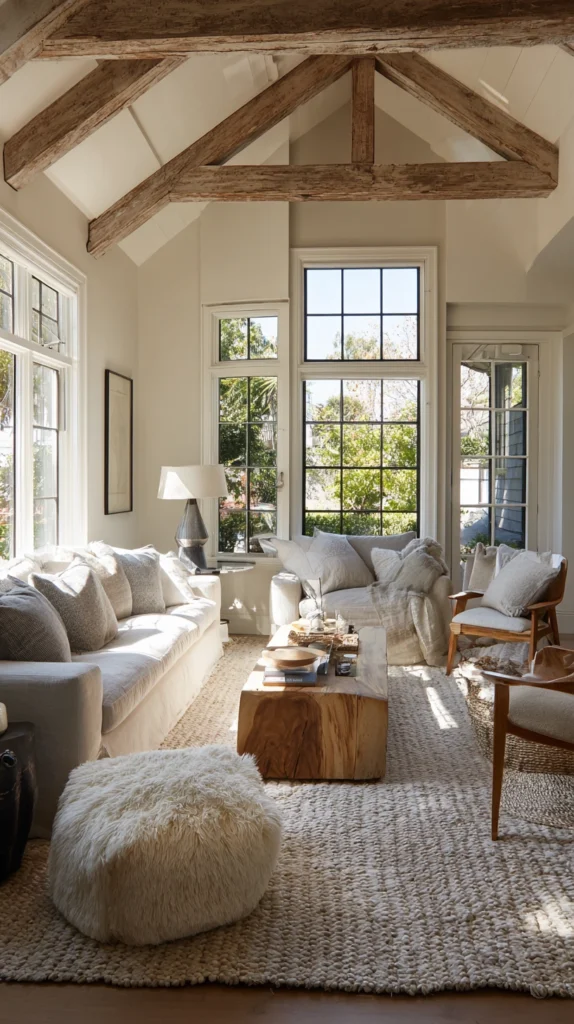
The synthetic upholstery fabric, the polyester microfiber, the acrylic velvet, and the various manufactured textile surfaces of the fast-furniture era are being replaced in the 2026 living room by the natural fiber upholstery that creates the specific tactile quality of a surface that improves with age and use rather than deteriorating from it. Linen is the upholstery fabric of the most significant cultural moment, its natural irregularity of weave, its warm natural color range, and its specific quality of softening and improving with every wash and every year of use creating the domestic textile of most authentic and most enduring quality.
Linen upholstery in the living room creates the specific quality of a piece of furniture that belongs to the domestic interior rather than arriving from a warehouse in a plastic wrap that communicates the newness and the disposability of the fast-furniture culture.
A linen sofa with a year of daily use on its surface has more visual character and more tactile pleasure than a new synthetic sofa of equivalent cost.
9. Statement Ceiling Treatments
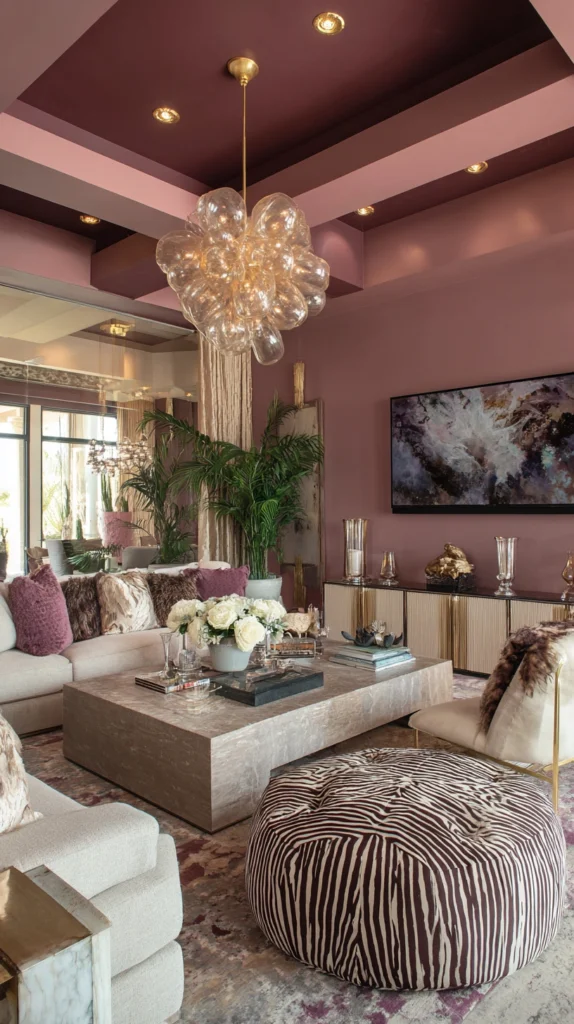
The ceiling’s potential as the living room’s most dramatically impactful decorating surface, the room’s fifth wall, is being recognized and exploited in the 2026 living room with a confidence and creativity that the flat, white, unaddressed ceiling of the conventional domestic interior entirely lacks.
Painted ceilings in deep, saturated colors, wallpapered ceilings in botanical or geometric patterns, coffered ceilings in warm timber, and the various ceiling treatments that bring the decorating ambition of the room’s four walls to the overhead surface are all present in the most admired 2026 living room interiors.
The deep, color-drenched ceiling is the single most dramatic and most immediately transformative ceiling treatment available. A ceiling painted in the same saturated tone as the walls, or in a tone two to three shades deeper than the walls, creates the enveloping quality of a room whose color surrounds the occupant on all six surfaces rather than the five that the conventional white ceiling leaves unchromatic.
10. Handmade and Artisanal Objects
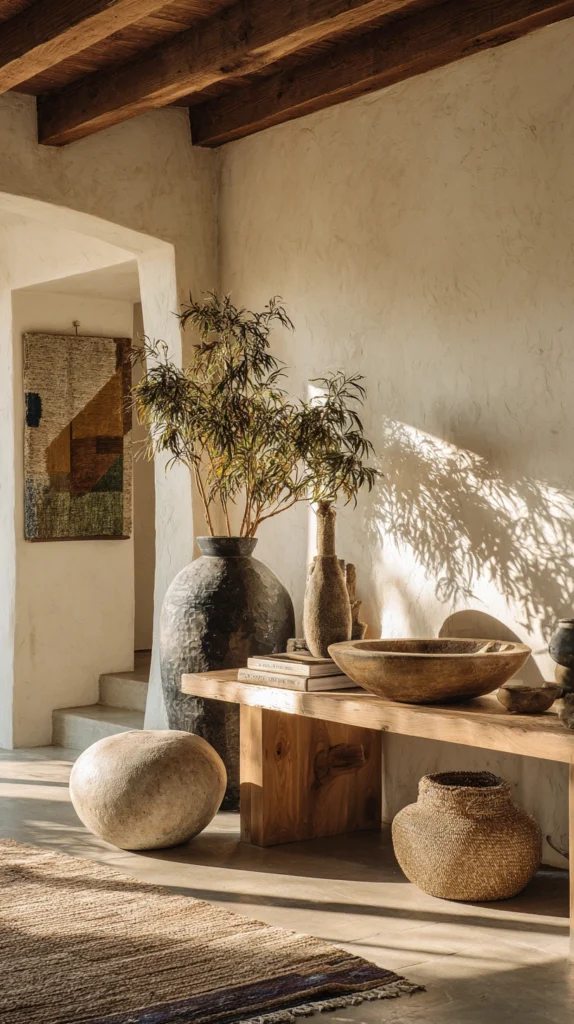
The mass-produced decorative object is losing its dominant position in the 2026 living room to the handmade piece whose specific qualities of material individuality, visible craft process, and human scale create the decorating collection of genuine cultural value and personal expression.
Handmade ceramics, hand-thrown pottery, hand-woven textiles, hand-carved timber objects, and the various artisanal products of the maker tradition create the living room of authentic material richness that the mass-produced decorative accessory cannot replicate regardless of its design quality.
The handmade object’s specific quality is its imperfection. The slight irregularity of the hand-thrown bowl, the visible brush mark in the ceramic glaze, and the subtle variation of the hand-woven textile surface all communicate the presence of a human maker in a way that the machine-made object’s perfect uniformity specifically eliminates. This human presence is the living room’s most valuable and most irreplaceable decorating quality in 2026.
11. Biophilic Design Integration
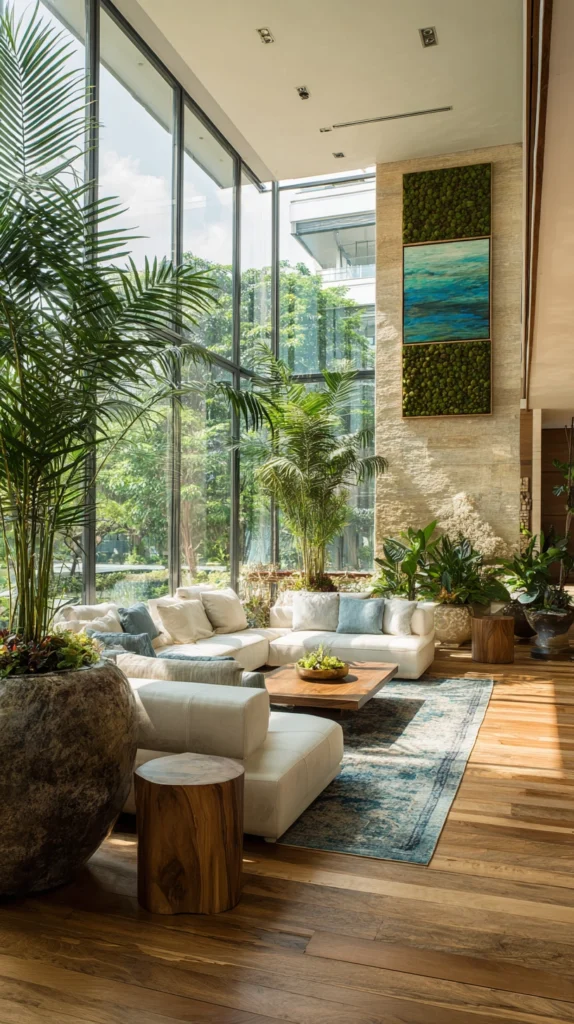
The integration of the living world into the living room, through the generous provision of indoor plants, natural materials, natural light, and the various design strategies of the biophilic design tradition that connect the domestic interior to the natural world beyond its walls, is one of 2026’s most consistently present and most deeply culturally embedded design directions.
The biophilic living room is not the room with a few houseplants on the windowsill. It is the room whose entire design philosophy is organized around the principle of bringing the natural world’s qualities of material warmth, sensory richness, and living variety into the domestic interior.
Large specimen plants in generous ceramic pots, living moss walls, dried botanical arrangements, natural stone surfaces, timber floors with visible grain, and the generous provision of natural light through large, unobstructed windows create the biophilic living room of complete natural material immersion.
12. Warm Ambient Lighting Replaces Overhead Fixtures
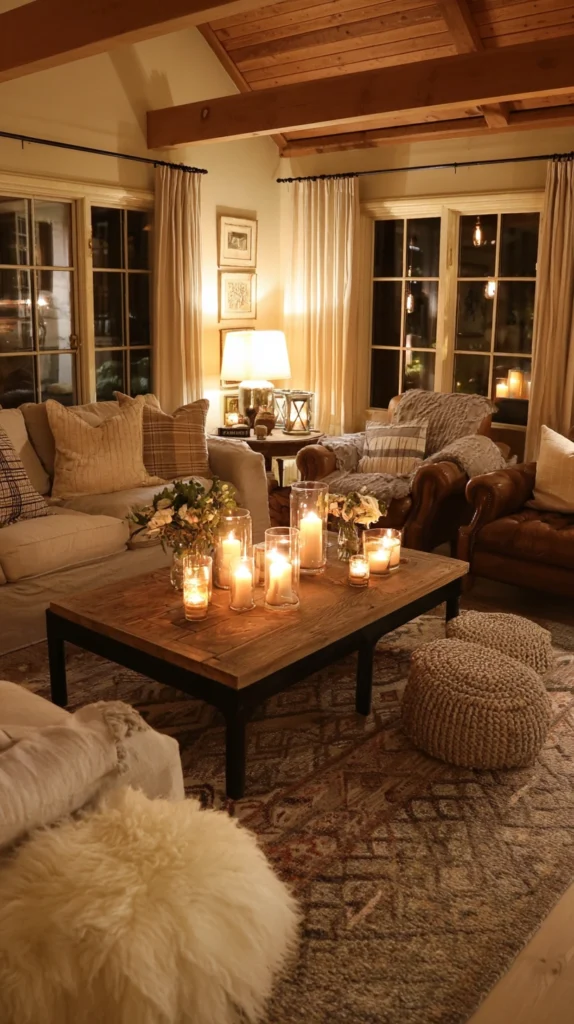
The single overhead light fixture is disappearing from the 2026 living room, replaced by the layered ambient lighting system of multiple warm-toned sources at varied heights that creates the atmospheric quality of a room lit for its inhabitants rather than illuminated for its visitors.
Table lamps, floor lamps, wall sconces, picture lights, candles, and the various warm light sources of the low-level, layered lighting scheme create the living room whose evening atmosphere is one of its most powerfully attractive qualities.
The light source’s color temperature is the 2026 living room’s most critically specified lighting parameter. A color temperature of 2700K or below creates the warm, amber-toned light of the incandescent era whose specific quality of skin-flattering, materially enriching warmth defines the atmospheric living room.
A color temperature above 3000K creates the cooler, more functional quality of the working environment that the living room’s restorative function specifically does not require.
13. Grounding Dark Base Colors
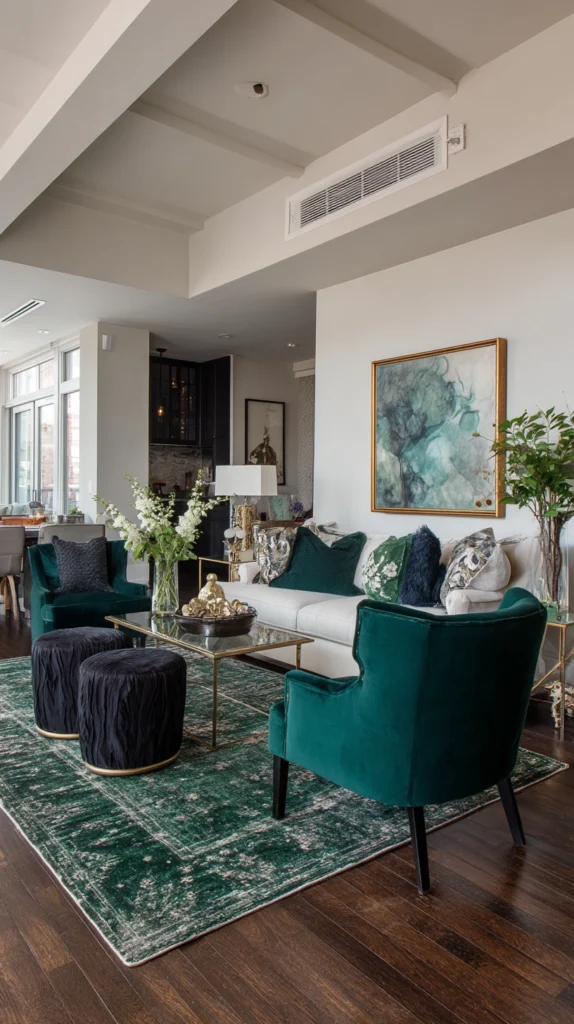
The use of dark, grounding colors at the living room’s base, on the floor, the lower walls, and the heaviest pieces of furniture, creates the visual stability of a room whose color scheme follows the natural world’s principle of dark earth at the base and lighter sky above.
Deep timber floors in a dark walnut or ebony stain, dark stone tile, deep-colored rugs in burgundy or forest green, and the dark-legged furniture of the contemporary living room all contribute to the grounding base color trend.
The dark base creates the specific quality of a room that feels anchored and settled rather than the floating, ungrounded quality of the living room whose lightest surfaces are at floor level and whose heaviest visual weight is at the ceiling.
The natural world organizes its tonal weight consistently from dark earth to light sky, and the living room that follows this principle creates the specific quality of environmental rightness that the inverted tonal scheme entirely lacks.
14. Multifunctional Living Room Spaces
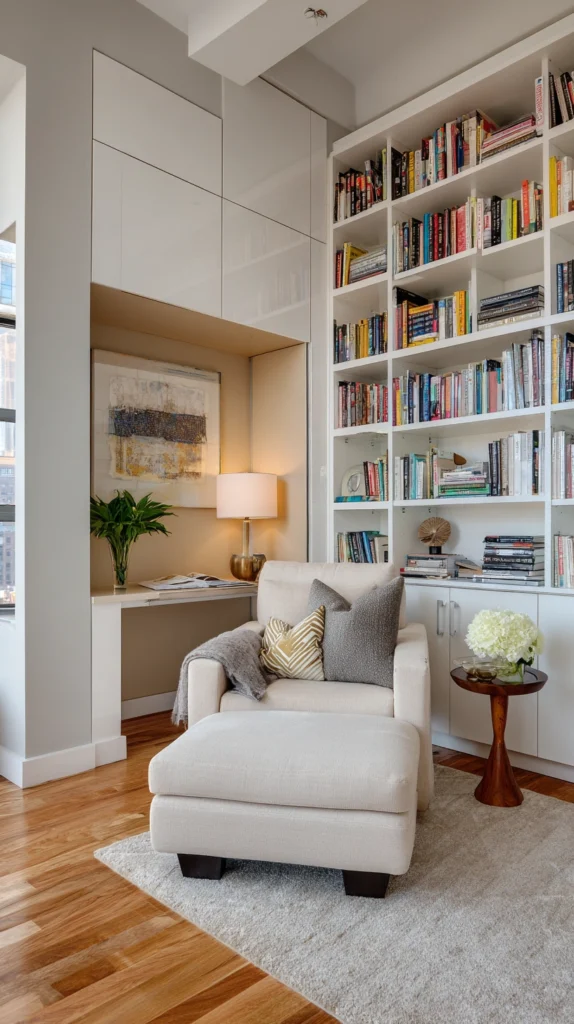
The 2026 living room is no longer exclusively dedicated to the single function of relaxed social gathering. It is the home’s most spatially intelligent multi-functional room, accommodating the home office function, the reading function, the exercise function, and the creative practice alongside the primary social function in a spatial organization of complete, considered intelligence.
The furniture and the layout are designed to transition between these functions efficiently and without the visual disruption that the poorly planned multi-functional room creates.
The hideaway home office within the living room bookcase, the reading corner defined by its specific chair, lamp, and side table within the larger seating arrangement, and the exercise corner whose equipment folds away behind the sliding panel are the specific interventions that create the multi-functional living room of 2026’s most pragmatic and most spatially intelligent design direction.
15. Quieter, More Personal Aesthetic Choices
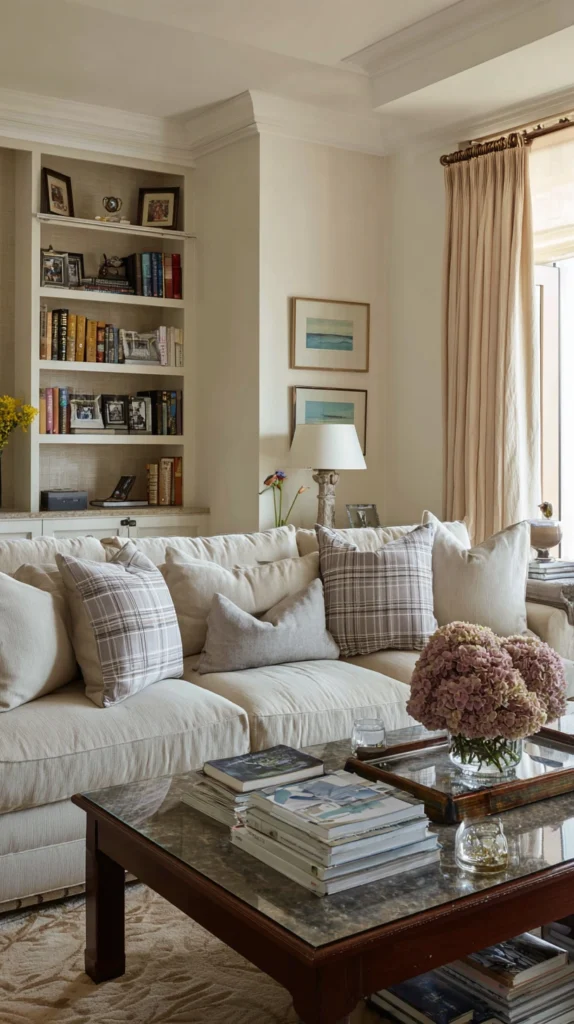
The final and most culturally significant 2026 living room trend is the movement away from the trend-driven, socially validated aesthetic choice toward the quieter, more personal, more deeply individual decorating decision that reflects the genuine preferences and the genuine life of the specific household rather than the aspirational lifestyle of the design publication’s imagined reader.
The 2026 living room of most enduring quality is not the room that reflects the year’s most prominent trend directions with the greatest fidelity. It is the room that reflects the specific people who live in it with the greatest honesty and the greatest love.
The personal living room, the room whose objects carry personal meaning, whose colors reflect genuine preference rather than trend validation, whose furniture has been chosen for the specific comfort it provides to the specific bodies that sit in it every day, and whose overall character communicates something true and specific about the household’s actual life and values, is the living room of most enduring design quality available in any year and any trend cycle.
The trend of 2026 that matters most is the trend toward the genuinely personal, the honestly inhabited, and the specifically loved domestic interior whose quality of authentic human warmth no amount of trend-perfect styling can replicate or replace.