15 Kitchen Peninsula Ideas for a Smarter More Beautiful Kitchen
A kitchen peninsula is one of the most practical and most design-confident additions available to any kitchen layout. It provides additional counter space, additional storage, a casual dining surface, a social gathering point, and a defined boundary between the kitchen and the living or dining space — all from a single well-designed element that costs significantly less than a full kitchen island and requires no additional floor clearance on all four sides.
The peninsula is the kitchen element that makes an open-plan home genuinely liveable rather than simply visually open. It creates the zone definition that open-plan living requires — the kitchen clearly separated from the living space while remaining visually and socially connected to it.
Here are 15 kitchen peninsula ideas that create a smarter and more beautiful kitchen.
1. Waterfall Edge Peninsula
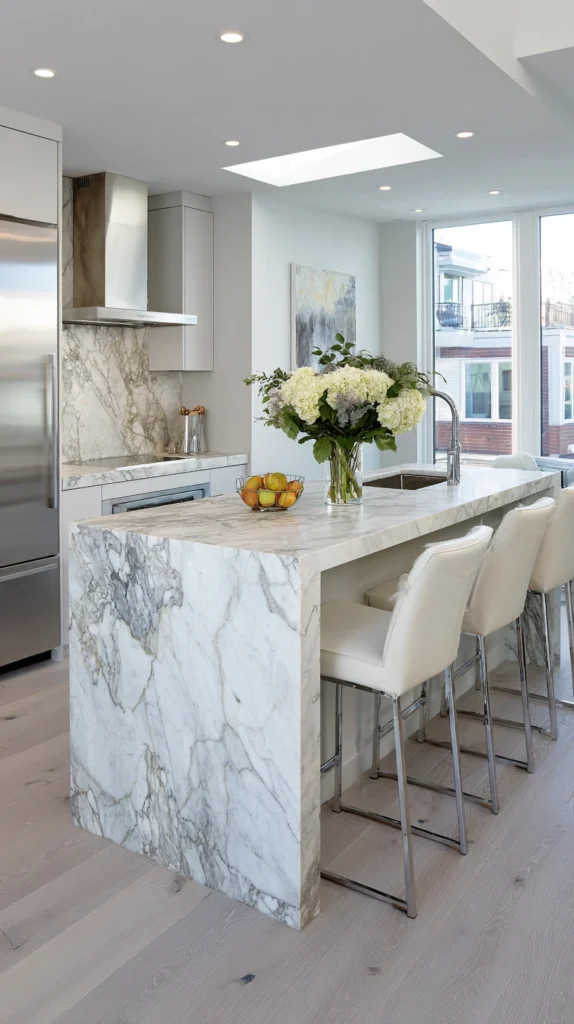
A waterfall edge peninsula — where the countertop material continues vertically down one or both ends to the floor, creating a continuous uninterrupted surface plane — creates a kitchen of maximum contemporary elegance and genuine material drama.
The waterfall edge transforms the peninsula from a functional counter on a cabinet base into a genuinely sculptural piece of kitchen architecture. Marble, quartz, and porcelain all create spectacular waterfall edge peninsulas — the continuous surface revealing the full beauty of the material’s veining and texture from both the horizontal and vertical plane simultaneously.
Pro Tip: Match the direction of veining or pattern across the horizontal countertop and the vertical waterfall end panel for a peninsula of genuine material coherence.
Mismatched veining direction between the horizontal and vertical surfaces creates a visible discontinuity that undermines the seamless quality that makes a waterfall edge so specifically beautiful. A specialist stone fabricator can book-match the panels from a single slab for complete veining continuity.
2. Peninsula with Breakfast Bar Overhang
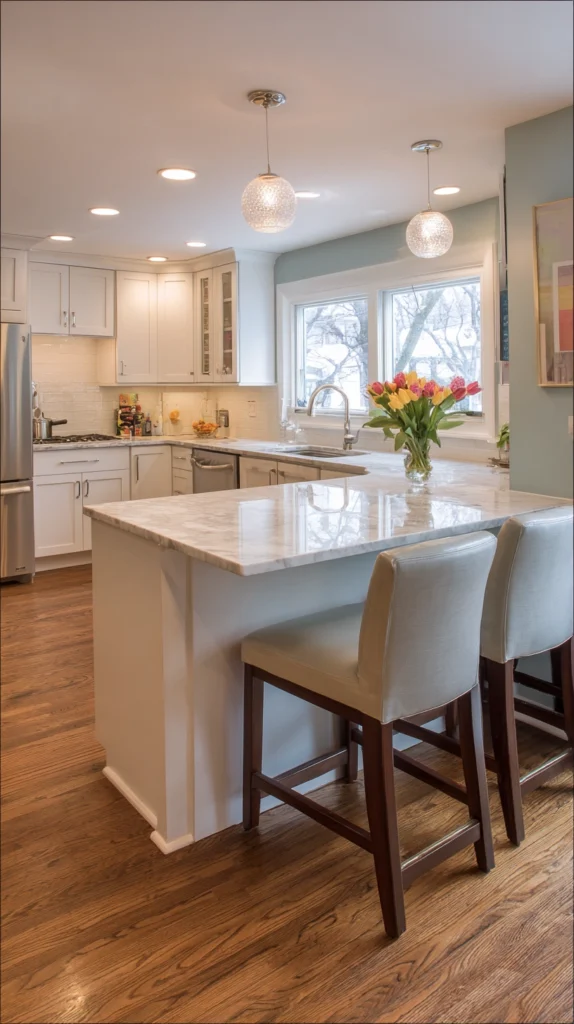
A peninsula with a generous countertop overhang on the living room side — a 300 to 400mm overhang creating comfortable knee clearance for bar stools underneath — creates the most practical and most socially generous kitchen peninsula available. The breakfast bar overhang transforms the peninsula from a purely functional kitchen element into a genuine casual dining and social gathering surface. It is the element at which morning coffee is drunk, children do homework while dinner is prepared, and guests gather during parties while the host continues cooking.
Pro Tip: Specify a countertop overhang of at least 300mm for genuine knee clearance in seated bar stool use. An overhang of less than 300mm creates a surface too shallow for comfortable seated use — guests perching forward with nowhere for their knees to go. A 350 to 400mm overhang is the optimal dimension for maximum seated comfort at a kitchen peninsula breakfast bar.
3. Two-Tone Peninsula
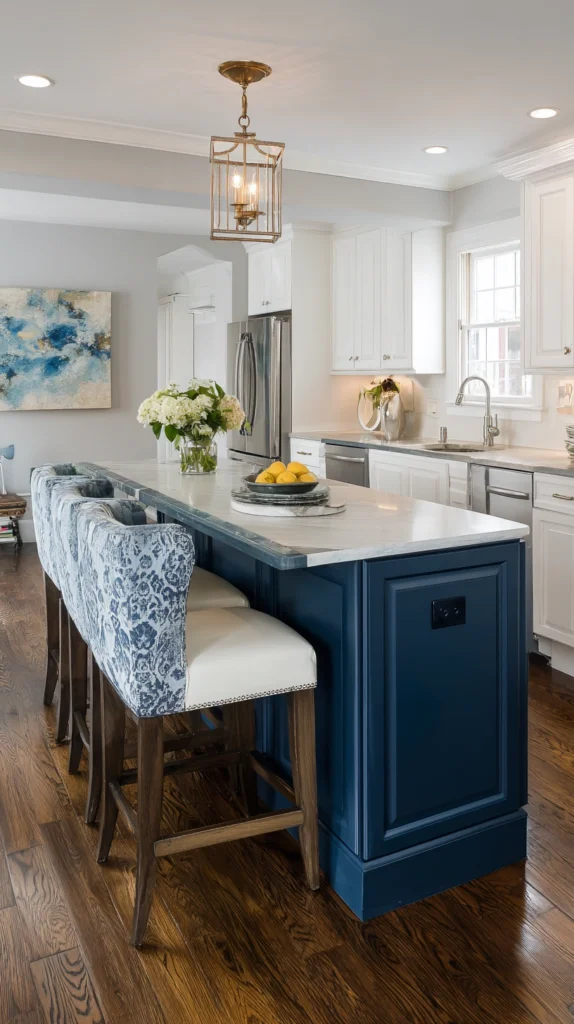
A two-tone peninsula — the peninsula cabinetry in a contrasting color or finish to the main kitchen cabinetry — creates a kitchen of considerable design confidence and genuine visual interest.
A navy peninsula alongside white cabinetry, a forest green peninsula alongside warm cream cabinetry, or a natural timber peninsula alongside painted cabinetry creates a kitchen focal point of genuine color depth and deliberate design originality. The two-tone peninsula visually communicates its role as the kitchen’s gathering and social element rather than simply an extension of the working kitchen counter.
Pro Tip: Choose the peninsula color in a deeper richer tone than the main kitchen cabinetry for a two-tone combination of genuine visual hierarchy — the deeper peninsula color creating the visual anchor that makes the lighter kitchen cabinetry appear fresher and more luminous by contrast. A peninsula in a lighter tone than the main cabinetry creates a visual imbalance — the lighter peninsula appearing to float without the grounding weight that a deeper tone provides.
4. Open Shelf Peninsula
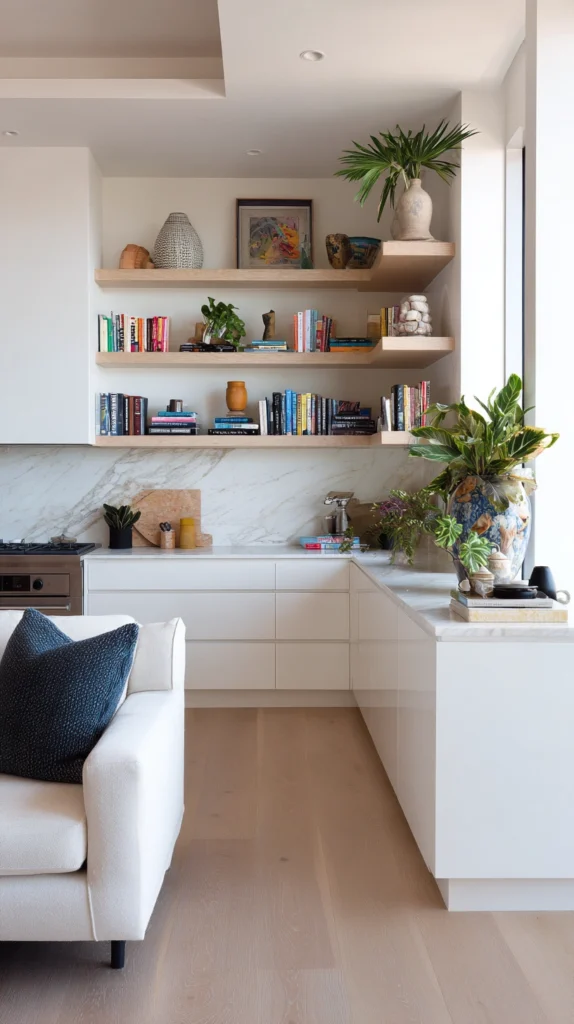
A peninsula with open shelving on the living room side — floating shelves integrated into the peninsula structure facing the living space — creates a peninsula of genuine display and storage versatility. The open shelves create a visual connection between the kitchen and the living space — books, plants, ceramics, and collected objects displayed on the peninsula shelves creating a visual thread between the two zones that closed cabinetry alternatives entirely lack.
Pro Tip: Style the open peninsula shelves with a consistent visual language — a unified color palette, a consistent material theme, or a deliberate balance of object types. Open shelves on the living room side are always visible from the primary living area seating — their appearance contributing to the overall aesthetic of the open-plan space as significantly as any decorative choice made in the living room itself.
5. Peninsula with Integrated Wine Storage
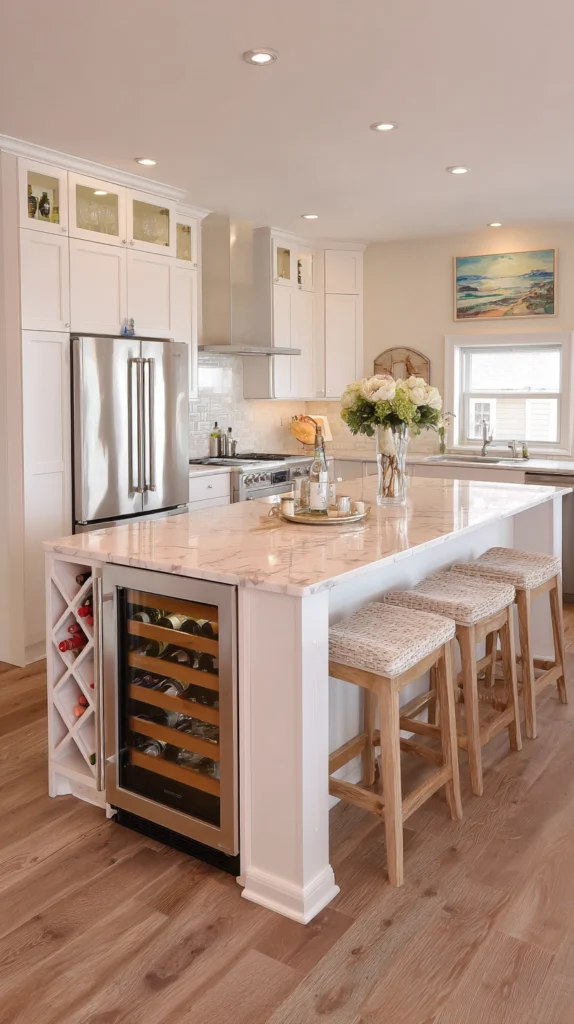
A peninsula incorporating dedicated wine storage — a wine fridge integrated into the peninsula base, open wine rack shelving within the peninsula structure, or a combination of both — creates a peninsula of genuine entertaining functionality and considerable visual warmth. The wine storage peninsula creates an informal bar zone that makes the peninsula the natural gathering and drinks center for any gathering — the wine immediately accessible, the glasses stored above, and bar stool seating alongside.
Pro Tip: Position an integrated wine fridge on the living room side rather than the kitchen side for a wine storage solution accessible to guests without requiring them to enter the working kitchen zone. A wine fridge accessible from the living room side allows guests to help themselves during a gathering without interrupting the cooking activity on the kitchen side — a practical consideration that significantly improves the social functionality of the peninsula during entertaining.
6. Peninsula with Pendant Lighting
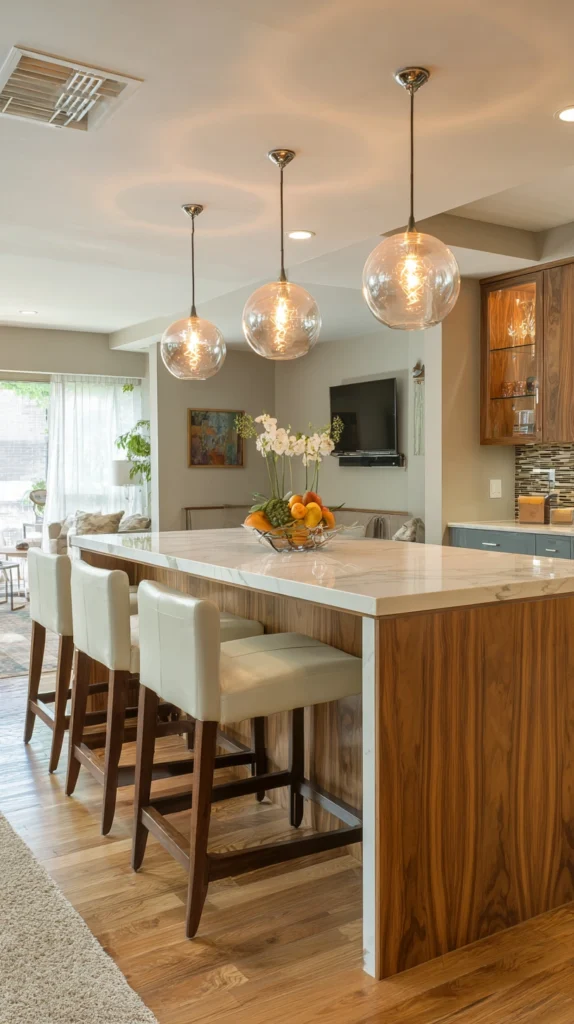
A kitchen peninsula dressed with pendant lights hanging directly above — three pendants in a row for a standard peninsula, two for a smaller format — creates a kitchen of genuine atmospheric warmth and considerable design confidence. Pendant lights above a peninsula create the overhead lighting that makes the peninsula a genuinely inviting gathering surface in the evening — the warm pool of light from each pendant creating the intimate atmosphere of a restaurant table within the domestic kitchen.
Pro Tip: Hang pendant lights at a height of 700 to 750mm above the countertop surface — low enough to create an intimate pool of directed light but high enough to maintain clear sightlines across the peninsula for social interaction. Pendants hung too high lose their intimate lighting quality. Pendants hung too low obstruct sightlines and create a claustrophobic quality that works against the social openness of the peninsula format.
7. Butcher Block Peninsula Top
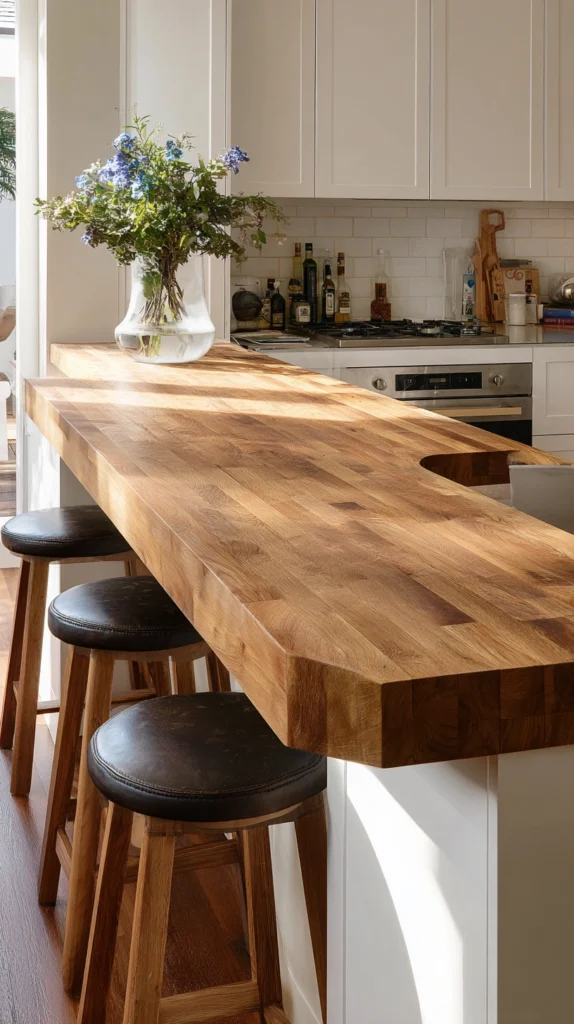
A peninsula with a butcher block timber countertop — a thick warm end-grain or long-grain timber surface in oak, maple, or walnut — creates a kitchen of genuine material warmth and considerable artisan character.
The butcher block peninsula top introduces the organic warmth of natural timber into the kitchen in a way that stone and manufactured countertop materials cannot — the warm golden tone, the natural grain variation, and the genuine tactile quality creating a peninsula of extraordinary sensory richness.
Pro Tip: Oil a butcher block peninsula countertop with food-safe mineral oil at monthly intervals for the first year of use and quarterly thereafter — applying the oil generously and allowing it to soak in for several hours before wiping off the excess. Regular oiling maintains the deep natural color of the timber, prevents surface cracking, and creates the genuine deep-toned beauty that a well-maintained butcher block countertop develops over years of use.
8. Curved Peninsula
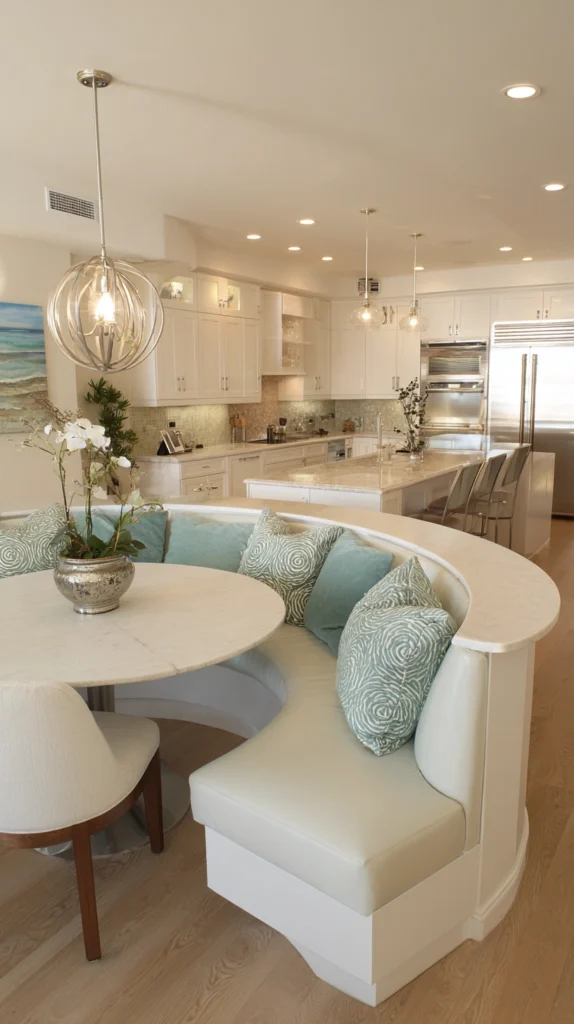
A curved peninsula — either a fully circular or semi-circular end rather than the conventional square or rectangular format — creates a kitchen of unusual spatial grace and genuine design originality. The curved end softens the geometry of the kitchen, creates a more comfortable and more socially inviting approach to the peninsula seating, and eliminates the sharp corner that conventional rectangular peninsulas create at their exposed end.
Pro Tip: Specify the curved end in a radius of at least 450mm for a curve that reads as a genuine architectural gesture rather than a slightly rounded corner. A small radius of 100 to 200mm creates a corner that appears merely softened. A generous radius of 450mm or more creates a genuinely curved end that reads as a deliberate circular form and creates the spatial grace that makes a curved peninsula so specifically and completely beautiful.
9. Peninsula with Drawers on Both Sides
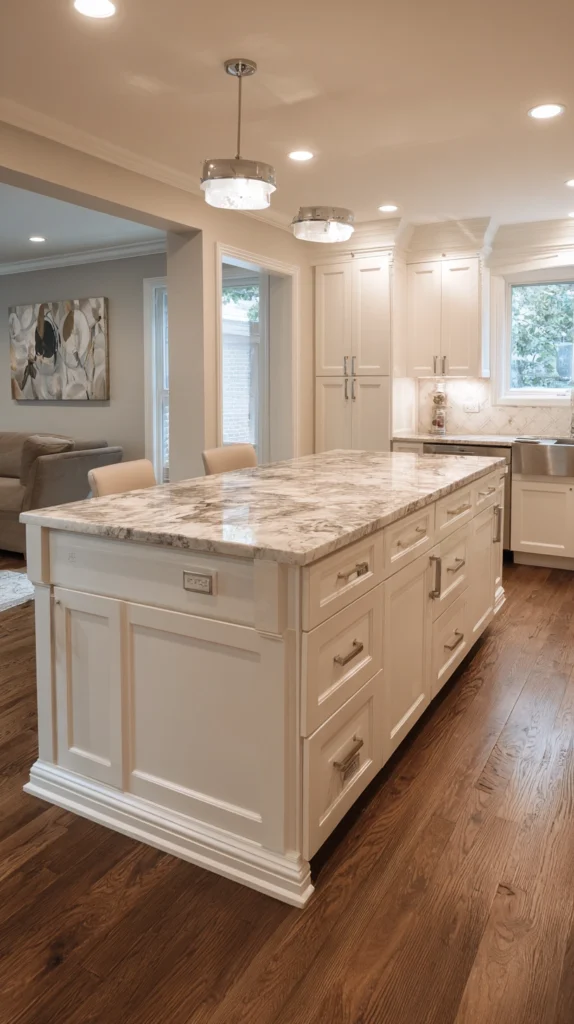
A peninsula with drawer storage on both the kitchen side and the living room side uses the full depth of the peninsula structure for productive storage rather than wasting the living room side cabinet depth on inaccessible back-of-cabinet space. The kitchen side houses cooking utensils, cutlery, and kitchen accessories. The living room side houses table linens, entertaining accessories, and general household storage — creating the most practically efficient peninsula format available.
Pro Tip: Specify soft-close drawer mechanisms on all peninsula drawers regardless of the overall kitchen budget level. Peninsula drawers are the most frequently used storage in any kitchen — accessed multiple times per meal preparation throughout the day.
Soft-close mechanisms on high-use drawers justify their additional cost many times over in the quality of the daily kitchen experience they create — eliminating the noise and jarring of hard-closing drawers from the most frequently used element of the kitchen.
10. Marble Peninsula with Brass Hardware
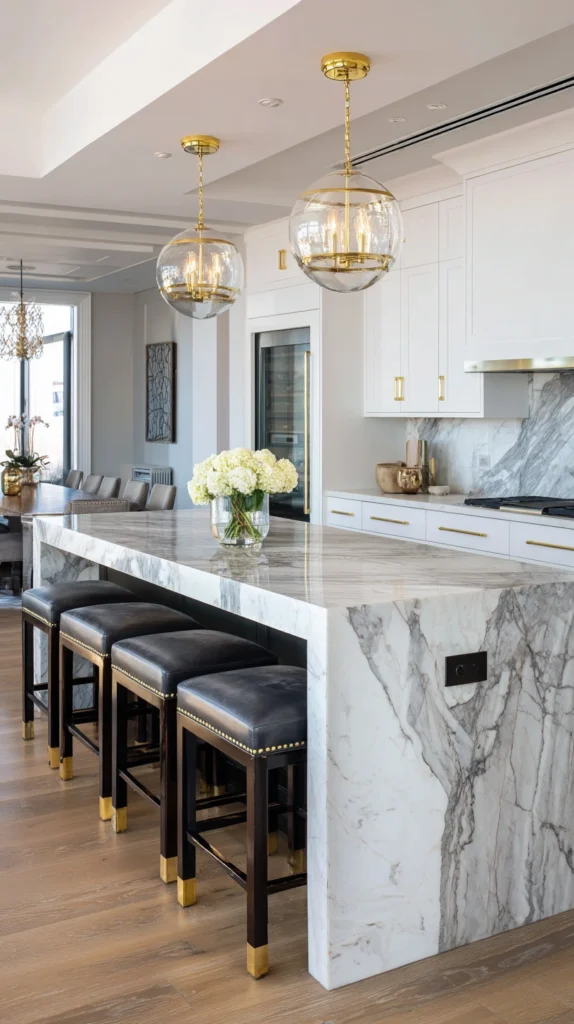
A marble or marble-effect quartz peninsula countertop with warm brass hardware — drawer pulls, cabinet handles, and bar stool legs in brushed or antique brass — creates a kitchen of considerable material luxury and genuine considered elegance. The combination of the cool luminous quality of marble and the warm golden glow of brass creates one of the most beautiful and most enduringly sophisticated material pairings available in any kitchen design.
Pro Tip: Choose brushed or unlacquered brass hardware rather than lacquered brass for genuine material authenticity and beautiful natural aging. Lacquered brass maintains a uniform bright finish indefinitely but looks slightly artificial alongside the natural organic beauty of genuine marble. Unlacquered brass develops a warm slightly deepened patina over time — aging gracefully in a way that complements the natural variation of marble and creates a peninsula of genuinely beautiful naturally aged material character.
11. Peninsula with Integrated Cooktop
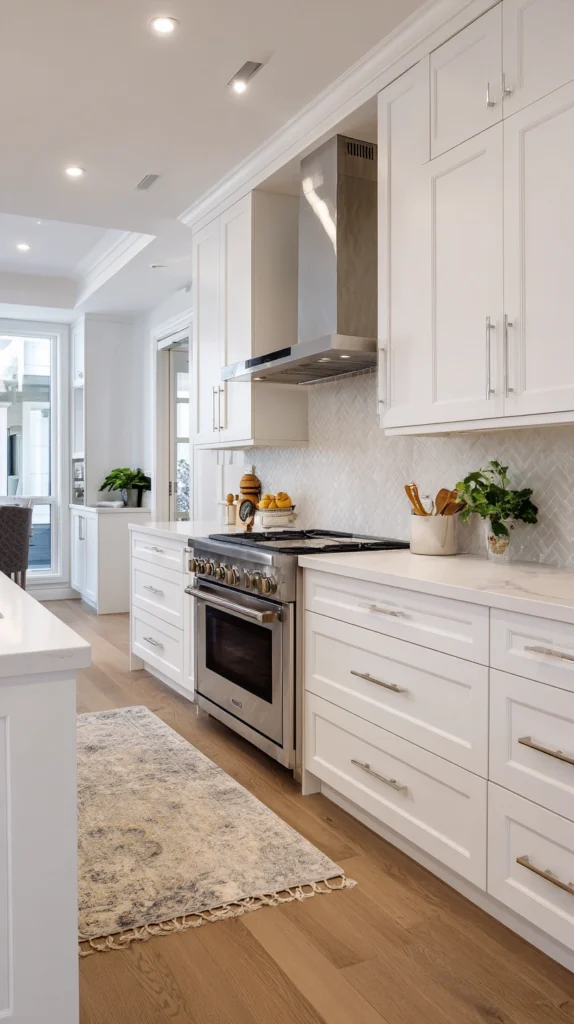
A peninsula with an integrated cooktop — the cooking surface positioned within the peninsula rather than against the kitchen wall — creates a kitchen of complete social integration where the cook faces the living space while cooking rather than facing the wall. The cooktop peninsula is the most sociable kitchen format available — the cook included in the gathering, able to maintain conversation and eye contact with guests while preparing food.
Pro Tip: Specify a downdraft extraction system rather than an overhead pendant hood for a cooktop peninsula. An overhead pendant hood above a peninsula cooktop creates a visual and physical barrier between the cook and the living space — partially defeating the social purpose of the cooktop peninsula format. A downdraft extractor integrated into the peninsula surface maintains the open unobstructed sightline between kitchen and living space that makes the social cooktop peninsula so specifically valuable.
12. Peninsula as Room Divider
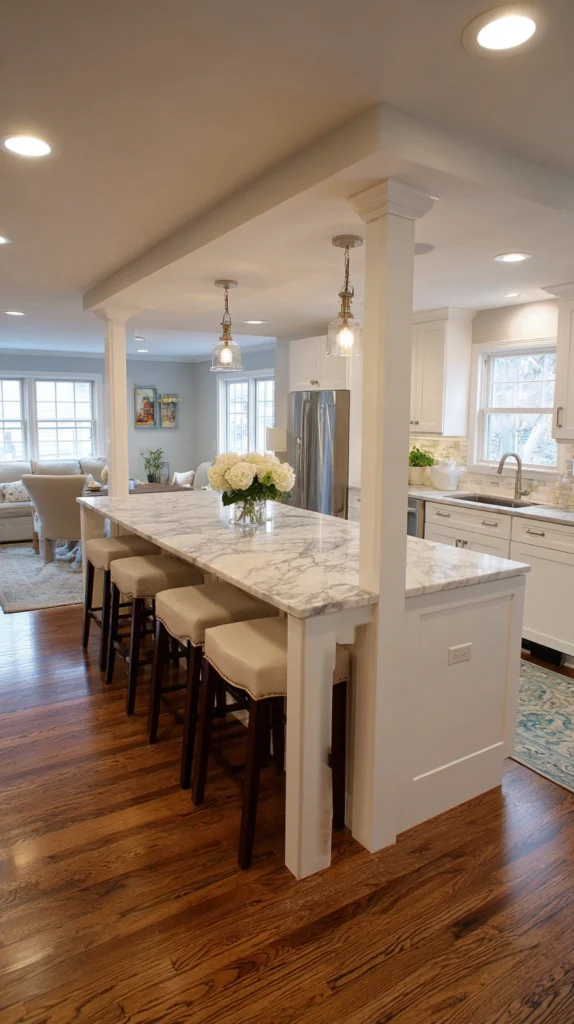
A peninsula used as the primary room divider between the kitchen and the living space — functioning simultaneously as a kitchen counter on one side and a storage and display unit on the other — creates the most spatially efficient and most architecturally considered use of the peninsula format. The room divider peninsula defines both spaces simultaneously — giving the kitchen a clear boundary and the living room a defined back wall with storage and display capacity.
Pro Tip: Design the living room side of a room divider peninsula to a height of 900mm — standard kitchen counter height — rather than extending it to ceiling height. A peninsula at counter height maintains the visual openness and the social connection between the kitchen and the living space that makes open-plan living so specifically appealing. A full-height room divider delivers neither the openness of a peninsula nor the genuine acoustic privacy of a wall.
13. Industrial Style Peninsula
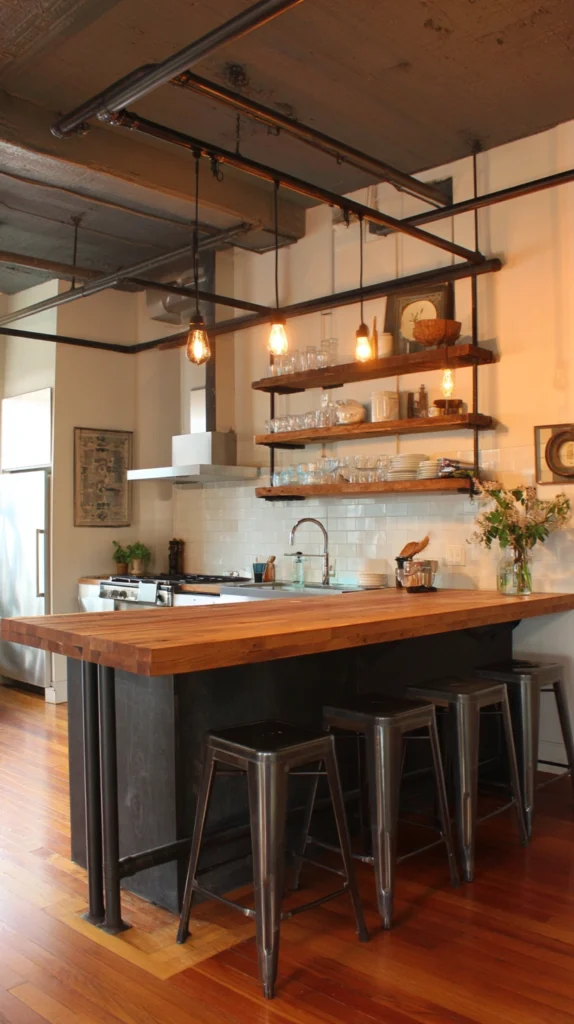
An industrial style peninsula — a raw steel or blackened steel frame supporting a thick timber or concrete countertop, with open metal shelving on the living room side and industrial bar stools alongside — creates a kitchen of considerable raw material character and genuine urban design confidence. The industrial peninsula suits loft, warehouse conversion, and contemporary urban kitchen aesthetics with complete natural ease.
Pro Tip: Balance the visual weight of an industrial steel peninsula frame with warm natural material accessories — timber bar stools, warm pendant lights in aged brass or copper, natural linen bar stool cushions. The industrial peninsula looks most beautiful and most genuinely inviting when its raw material character is warmed by natural material companions rather than amplified by additional cold or clinical accessories that push the aesthetic toward uncomfortable rather than considered.
14. Peninsula with Integrated Seating Nook
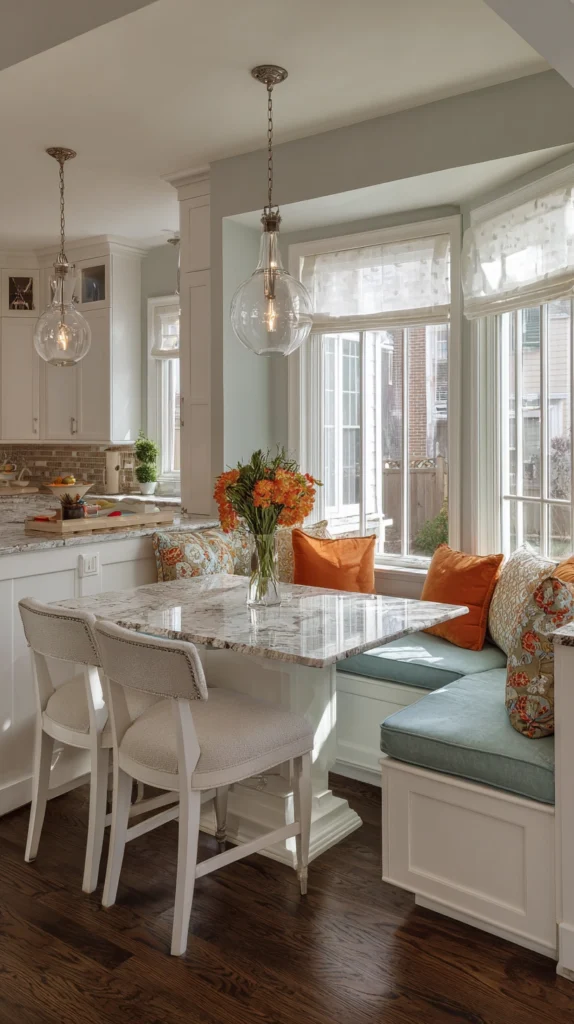
A peninsula designed with an integrated seating nook — a U-shaped counter arrangement where the peninsula wraps around three sides to create an enclosed casual dining booth — creates a kitchen dining feature of extraordinary intimacy and complete spatial efficiency. The seating nook uses the peninsula structure to create three sides of the booth — eliminating the need for additional furniture while creating a dining experience of considerable comfort and genuine domestic warmth.
Pro Tip: Design the seating nook at dining table height — bench at 450mm, table surface at 720mm — rather than at bar stool height. A seating nook at dining table height is significantly more comfortable for extended mealtimes than a bar height nook — the lower seated position and standard table height creating the ergonomic comfort of a conventional dining table within the space-efficient format of an integrated kitchen booth.
15. Peninsula with Hidden Charging Station
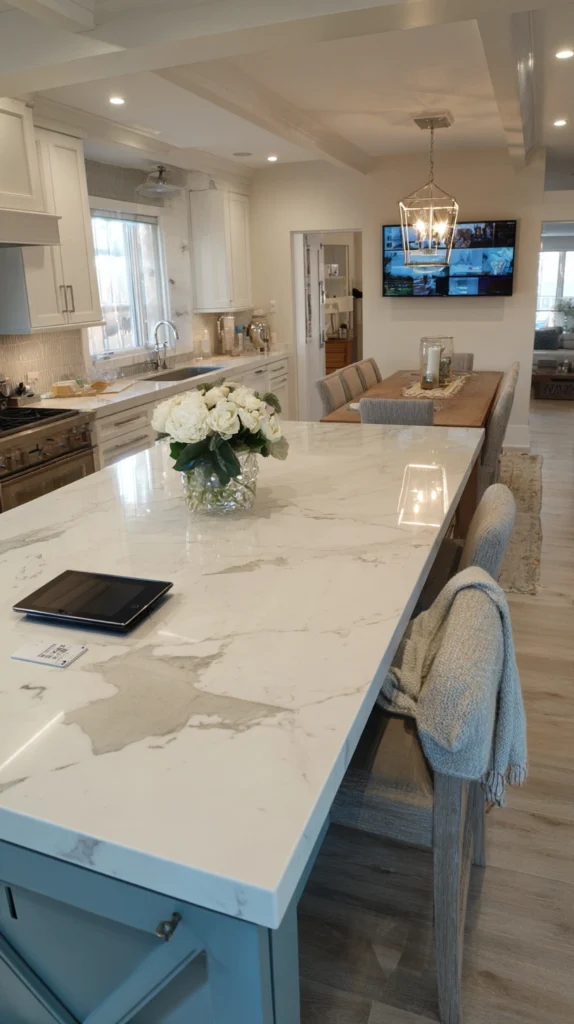
A peninsula incorporating a hidden charging station — flush-mounted wireless charging pads, concealed USB ports, and cable management routing within the peninsula structure — creates a peninsula of complete contemporary functionality that addresses the most persistent practical challenge of modern domestic life without any visible compromise to the clean aesthetic of the countertop surface.
Pro Tip: Position the hidden charging station at the end of the peninsula closest to the primary seating area rather than at the kitchen work end. A charging station at the kitchen work end creates a conflict between device charging and food preparation use of the same countertop zone. A charging station at the seating end serves the natural resting place of devices during social gathering and casual daily life.
The Peninsula Makes the Kitchen Complete
A well-designed kitchen peninsula is not simply an additional counter — it is the element that defines how the kitchen relates to the rest of the home. It creates the social gathering surface, the zone definition, the casual dining opportunity, and the additional storage that transforms a purely functional kitchen into a genuinely sociable, genuinely beautiful and genuinely complete domestic space.
Choose the format that suits the specific layout, the specific social life, and the specific aesthetic of the kitchen it will inhabit. And discover that the peninsula more than any other single kitchen element is the decision that makes the whole room work.