15 Kitchen Lighting Layout Ideas Designers Swear By
Kitchen lighting dramatically affects functionality, safety, and atmosphere, yet it’s often one of the most overlooked elements in kitchen design. Professional designers understand that proper lighting requires layering multiple sources at different heights and intensities to create spaces that work beautifully at any time of day.
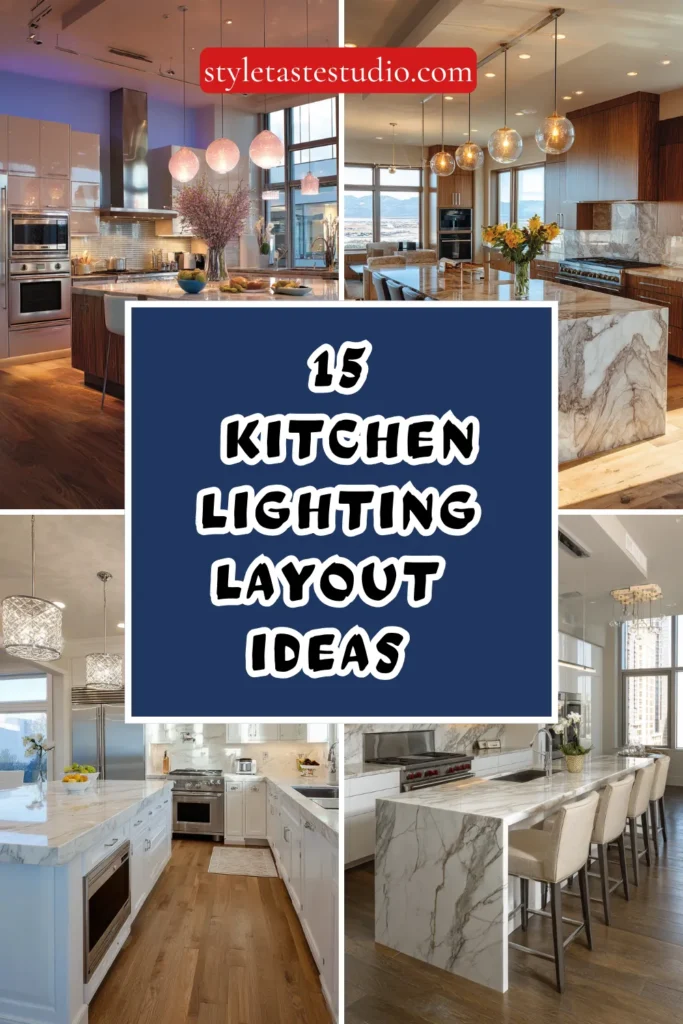
These fifteen lighting layout ideas represent the strategies designers consistently employ to transform ordinary kitchens into well-lit, inviting spaces that function flawlessly for cooking, entertaining, and everyday living.
Understanding Lighting Layers
Before exploring specific layouts, grasp the fundamental principle that excellent kitchen lighting combines three distinct layers: ambient lighting provides overall illumination, task lighting focuses on work surfaces, and accent lighting adds drama and visual interest.
Each layer serves a specific purpose, and the magic happens when all three work together harmoniously, controlled by separate switches or dimmers that allow you to adjust lighting to match activities and moods throughout the day.
1. Recessed Lighting Grid Foundation
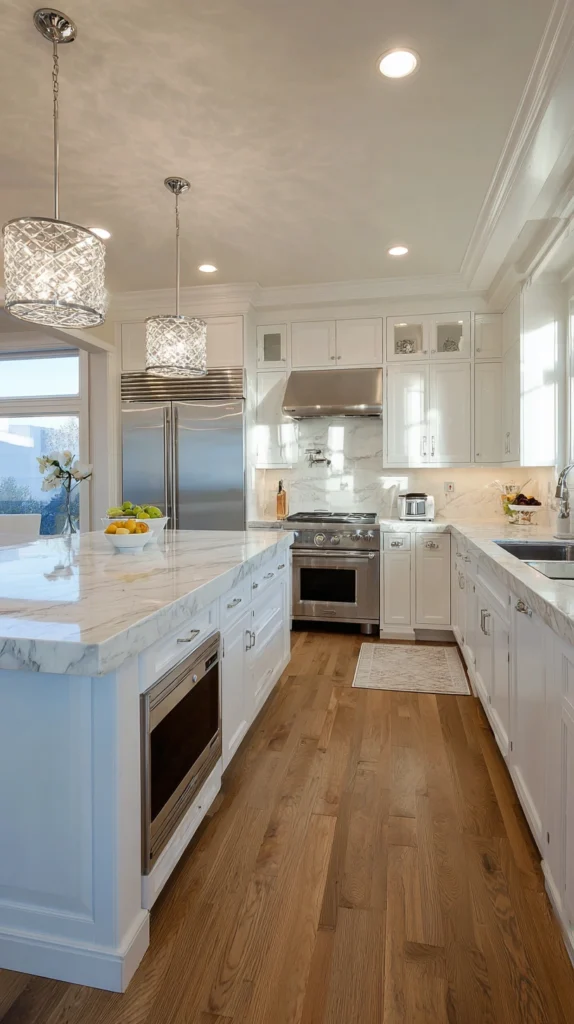
Create a foundation of recessed lights arranged in a grid pattern across the ceiling, spacing fixtures approximately four to six feet apart. This ambient layer provides even, shadow-free general illumination that makes the entire kitchen functional and safe.
Designers typically use four-inch or six-inch recessed cans with LED bulbs in warm white (2700-3000K) for inviting light that doesn’t feel harsh or institutional, and they position lights to avoid placing them directly above where people typically stand to prevent unflattering shadows on faces.
2. Pendant Trio Over Islands
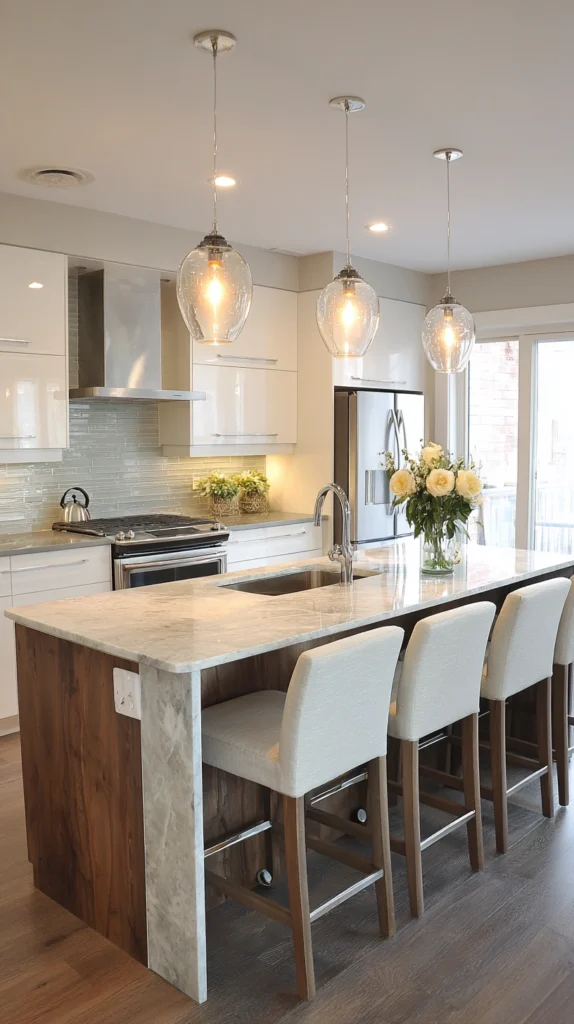
Hang three pendant lights over kitchen islands, spacing them evenly with approximately thirty to thirty-six inches between fixtures. Position pendants thirty to thirty-six inches above the counter surface for optimal task lighting without blocking sightlines across the island.
Designers swear by this trio arrangement because odd numbers feel more balanced than pairs, the spacing prevents dark zones between lights, and the elevated position creates intimate lighting for both food preparation and casual dining while adding sculptural beauty to the kitchen’s visual center.
3. Under-Cabinet Task Lighting Strip
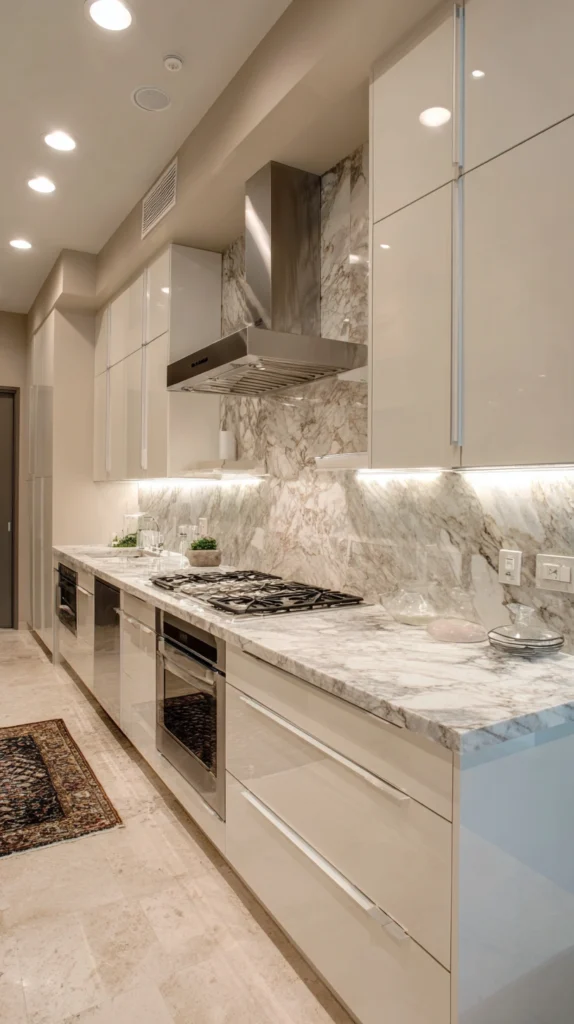
Install LED strip lighting or puck lights under all upper cabinets to eliminate shadows on countertops where you prep food, chop vegetables, and read recipes. Position lights toward the front edge of cabinets so they illuminate the counter surface rather than the backsplash, and choose warm white LEDs that render food colors accurately.
This layer makes kitchen tasks significantly easier and safer while adding a subtle glow that makes kitchens feel warm and inviting even when overhead lights are dimmed for evening ambiance.
4. Perimeter Recessed with Central Chandelier
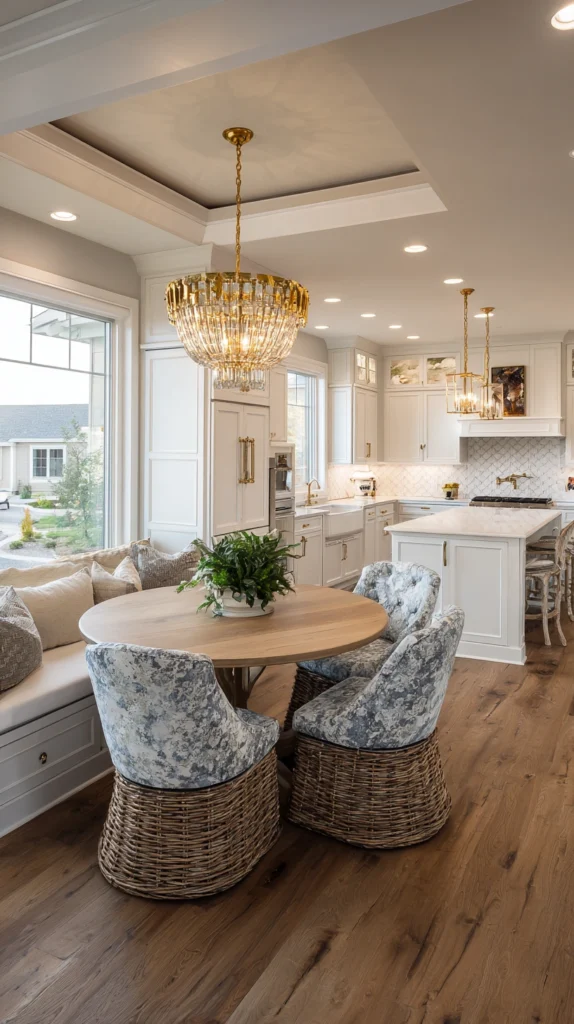
Combine recessed lights around the room’s perimeter with a statement chandelier or large pendant centered over a dining table or island. The recessed fixtures provide functional ambient light while the central fixture creates a focal point and task lighting for specific areas.
Designers love this layout because it balances practicality with visual drama, the chandelier draws the eye upward to emphasize ceiling height, and dimming controls allow the space to transition from bright workspace to intimate dining room depending on the occasion.
5. Track Lighting Flexibility System
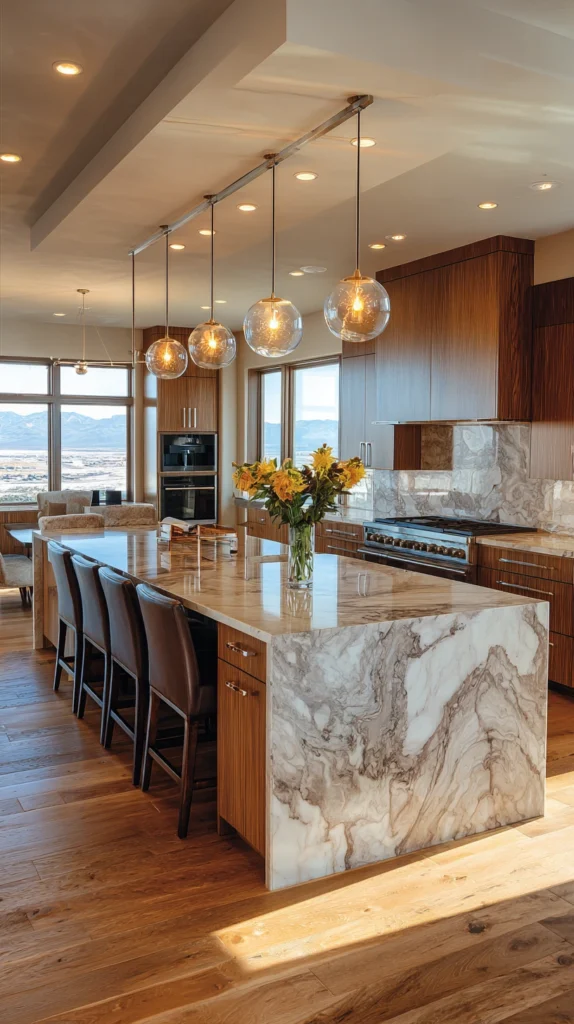
Install track lighting along the ceiling’s center or perimeter with adjustable heads that direct light exactly where needed. This system excels in kitchens with varied ceiling heights, angled ceilings, or where future flexibility matters because you can reposition lights as needs change.
Designers appreciate track lighting’s ability to provide both ambient and accent lighting from a single system, its contemporary aesthetic that suits modern kitchens, and the option to highlight artwork, open shelving, or architectural features while maintaining functional illumination.
6. Cove Lighting for Ambient Glow
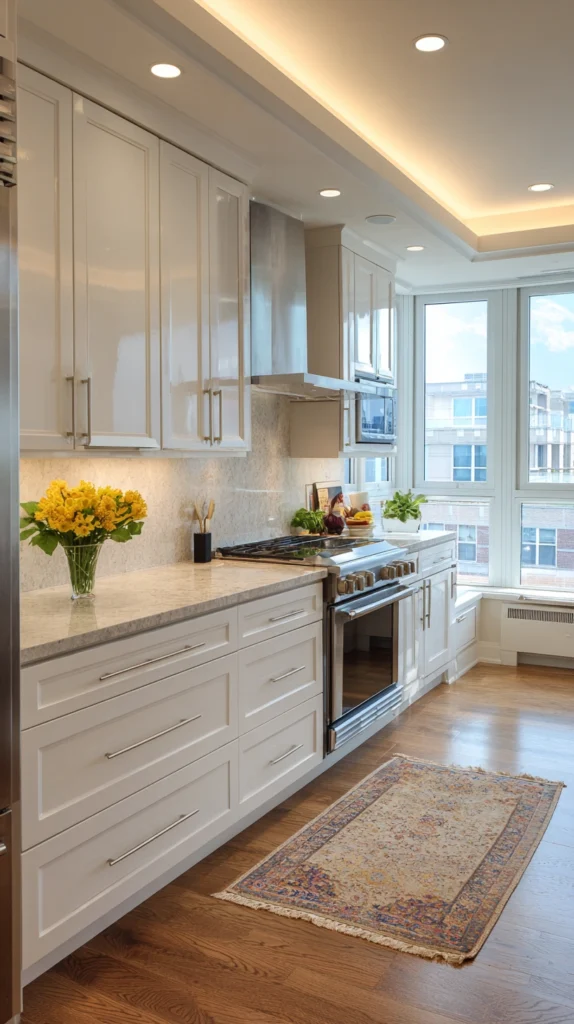
Build a cove or soffit above upper cabinets and install LED strip lighting that washes the ceiling with soft, indirect light. This uplighting creates beautiful ambient illumination without the glare of direct fixtures, making kitchens feel taller and more spacious.
Designers employ this technique particularly in kitchens with lower ceilings where it visually raises the room, and they often specify color-changing LEDs that allow homeowners to adjust the mood from energizing cool white for morning cooking to relaxing warm amber for evening entertaining.
7. Toe-Kick Lighting for Drama
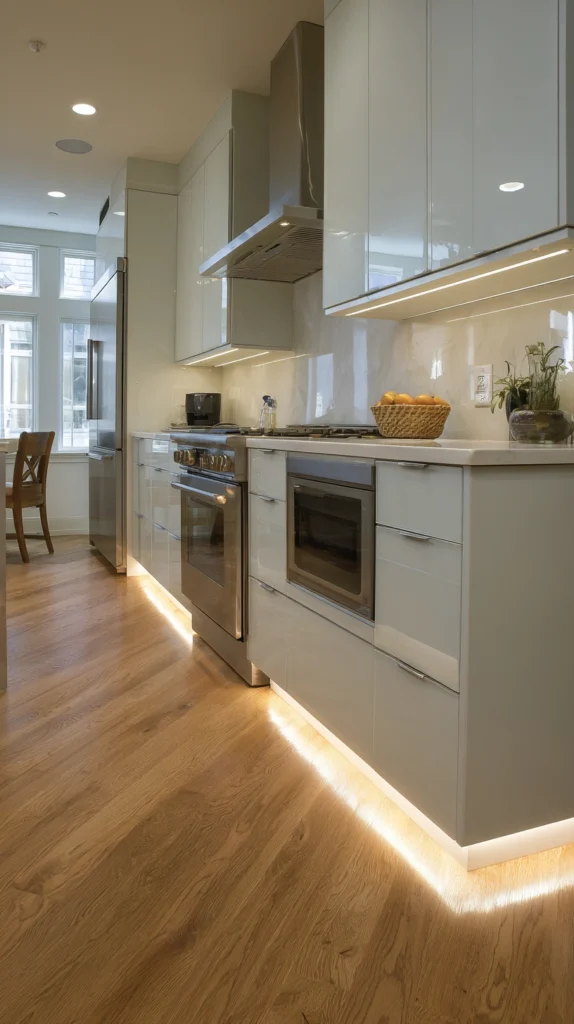
Install LED strips in the recessed toe-kick area under base cabinets, creating a floating effect where cabinets appear to hover above the floor.
This subtle accent lighting provides gentle nighttime navigation without turning on overhead lights, adds unexpected design sophistication, and makes kitchens feel larger by emphasizing the floor plane. Designers particularly appreciate toe-kick lighting in modern or contemporary kitchens where it enhances clean-lined cabinetry while providing practical low-level illumination that doesn’t disturb others during late-night kitchen visits.
8. Sconce Flanking Strategy
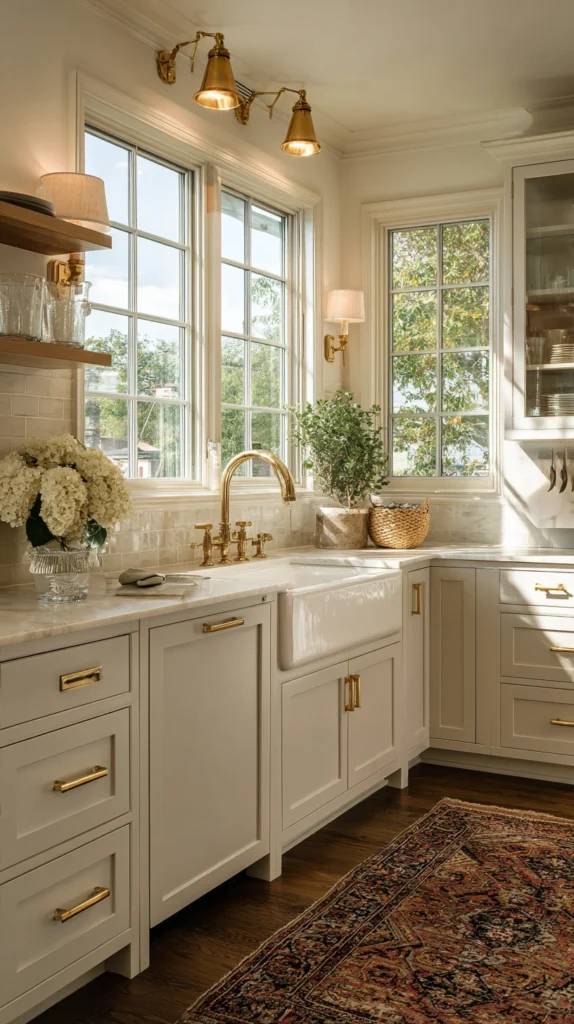
Mount wall sconces on either side of windows, at the ends of upper cabinet runs, or flanking a range hood to add decorative lighting at eye level. This human-scale lighting creates warmth that overhead fixtures alone cannot achieve while filling visual gaps on walls where cabinets don’t reach.
Designers strategically place sconces to balance the room’s lighting vertically, create rhythm through repetition, and introduce decorative fixture styles that reflect the kitchen’s overall aesthetic from traditional brass candlesticks to sleek contemporary cylinders.
9. Layered Island Lighting Approach
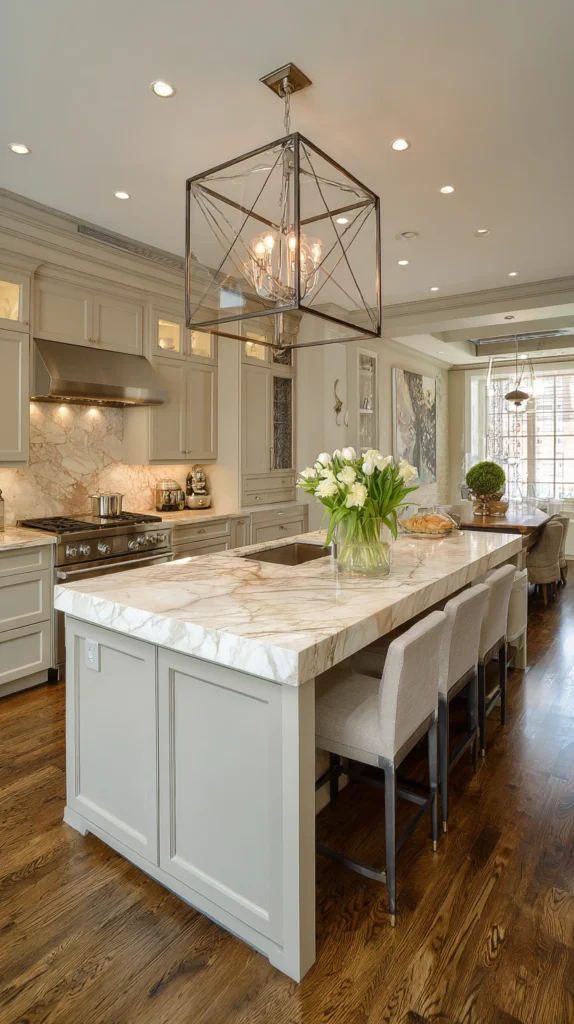
Combine multiple lighting types over kitchen islands: pendant lights for task illumination and style, recessed lights for general coverage, and small accent lights that highlight the island’s base or underside. This comprehensive approach ensures the island functions perfectly for food prep, homework, and entertaining while looking spectacular from every angle.
Designers layer island lighting because this multifunctional surface demands versatility—bright task lighting for chopping vegetables, softer ambient light for casual meals, and dramatic accent lighting for evening cocktail parties.
10. Linear Suspension Over Tables
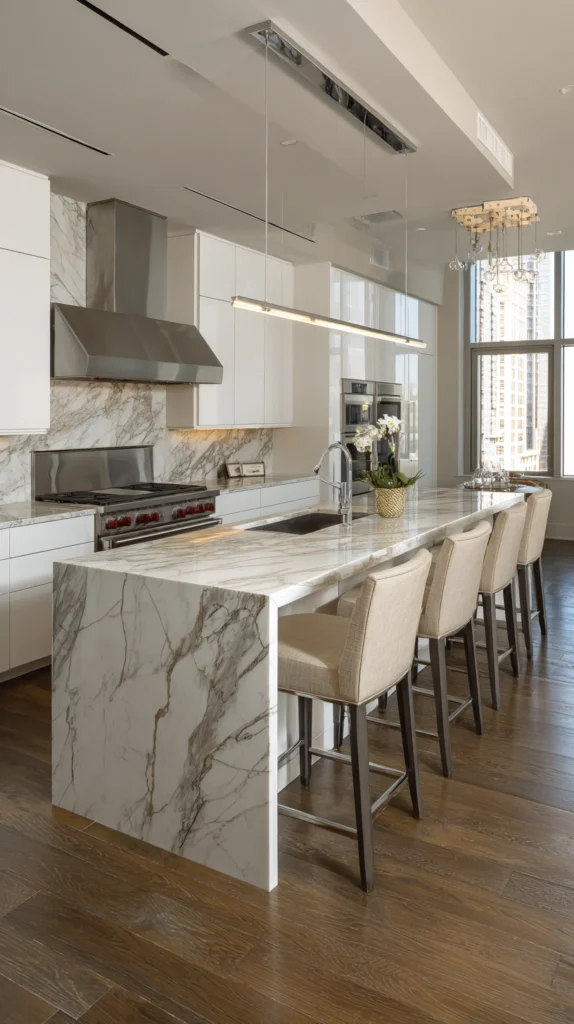
Hang linear suspension fixtures—long rectangular pendants or multiple pendant clusters arranged in a line—over dining tables or long islands. These fixtures provide even task lighting across the entire length while making a bold design statement that defines the dining or gathering zone.
Designers specify linear fixtures when they want to emphasize a space’s horizontal axis, need to light long surfaces without installing multiple separate fixtures, or desire a contemporary aesthetic that feels intentional rather than the traditional approach of centering a single fixture.
11. In-Cabinet Display Lighting
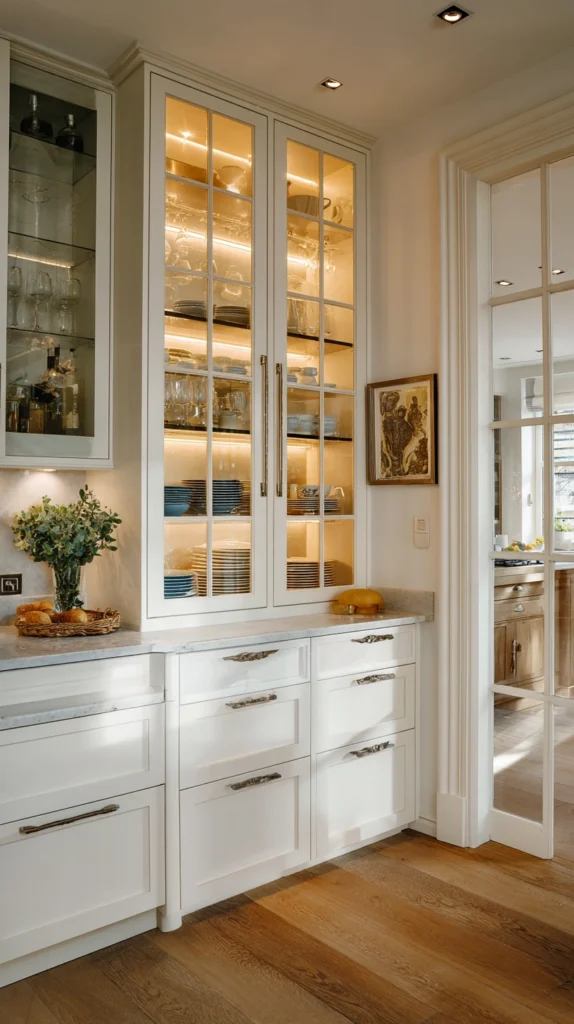
Install small LED puck lights or strip lights inside glass-front cabinets to illuminate displayed dishes, glassware, or collections, transforming cabinets into illuminated display cases. This accent lighting adds visual interest and depth while making it easy to find items inside cabinets even when ambient lighting is dimmed.
Designers incorporate cabinet lighting to create focal points that draw attention to beautiful collections, add sparkle through illuminated glassware, and introduce lighting layers at mid-height that balance overhead and under-cabinet sources.
12. Skylight and Pendant Combination
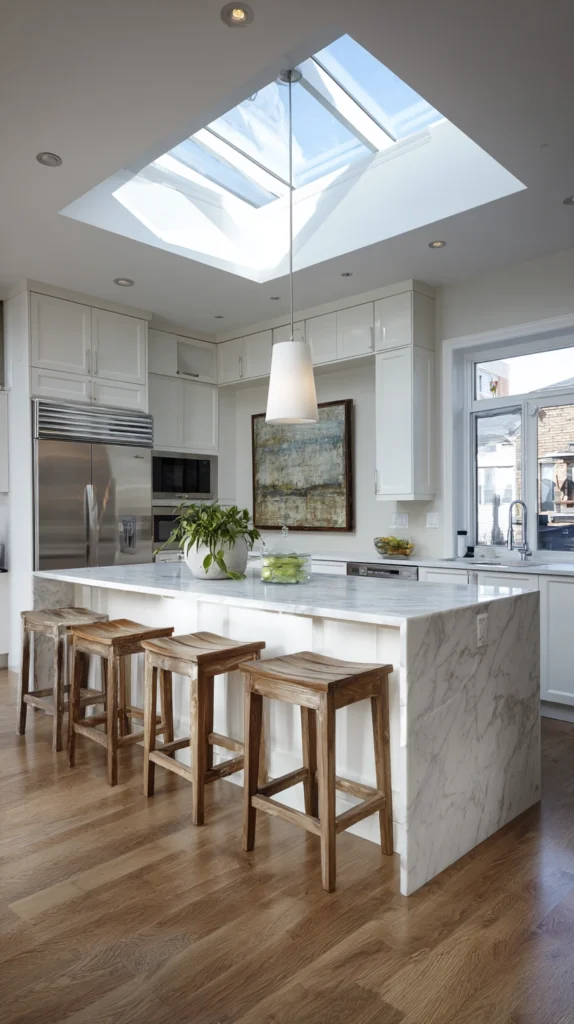
In kitchens with skylights or large windows, designers position pendant lights to complement natural light rather than compete with it. Hang pendants where natural light doesn’t reach—perhaps over an island away from windows—and choose fixtures that look beautiful whether illuminated or not since daytime may not require them.
This strategy maximizes natural light’s benefits while ensuring adequate illumination during evening hours, and designers carefully select pendant styles that create interesting shadows and reflections when backlit by daylight streaming through windows.
13. Flush-Mount Grid for Low Ceilings
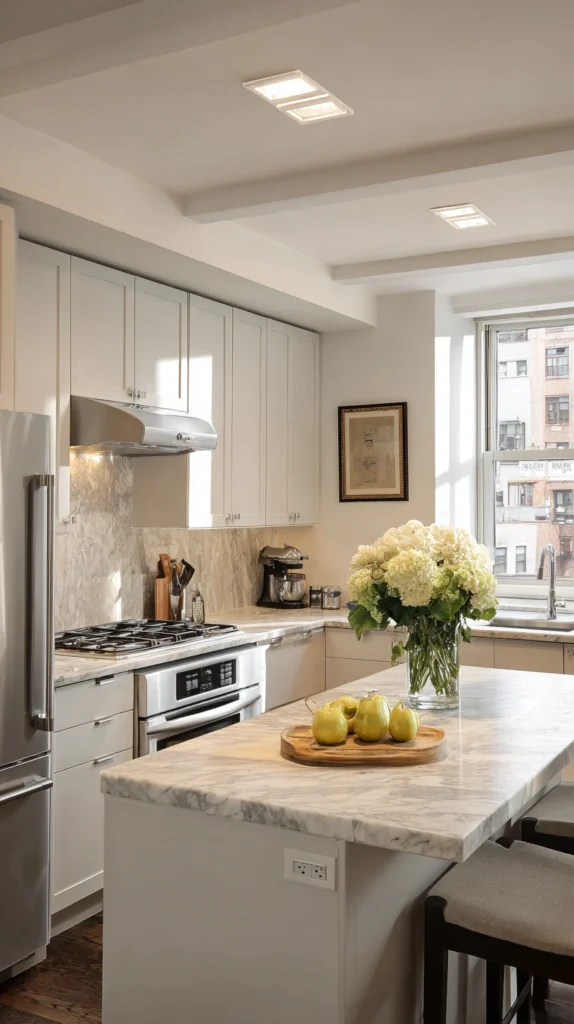
In kitchens with ceiling heights under eight feet, designers use flush-mount or semi-flush fixtures arranged in a grid pattern instead of recessed cans or pendants. These fixtures provide necessary clearance while delivering ambient light, and contemporary designs offer significant style beyond basic builder-grade options.
Designers layer this ambient lighting with under-cabinet task lights and perhaps small pendants over a breakfast nook where ceiling height isn’t constrained, creating adequate lighting diversity despite the low-ceiling challenge that rules out dramatic hanging fixtures.
14. Chandelier Over Sink Statement
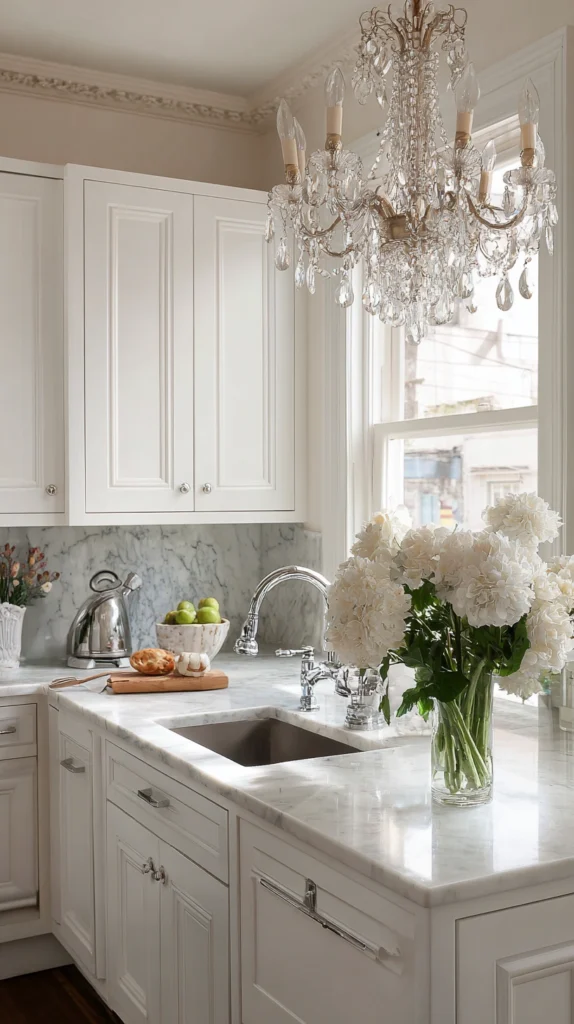
Position an unexpected chandelier or decorative pendant centered over the kitchen sink, elevating this utilitarian zone into a design moment. This placement provides excellent task lighting for washing dishes and food prep while adding personality and visual interest to an area typically lit only by overhead ambient sources.
Designers love this strategy because it breaks conventions by treating the sink as worthy of special attention, introduces eye-level sparkle and reflection through the fixture, and often positions the light where it’s visible from adjacent rooms, creating a welcoming beacon.
15. Smart Lighting Scene Programming
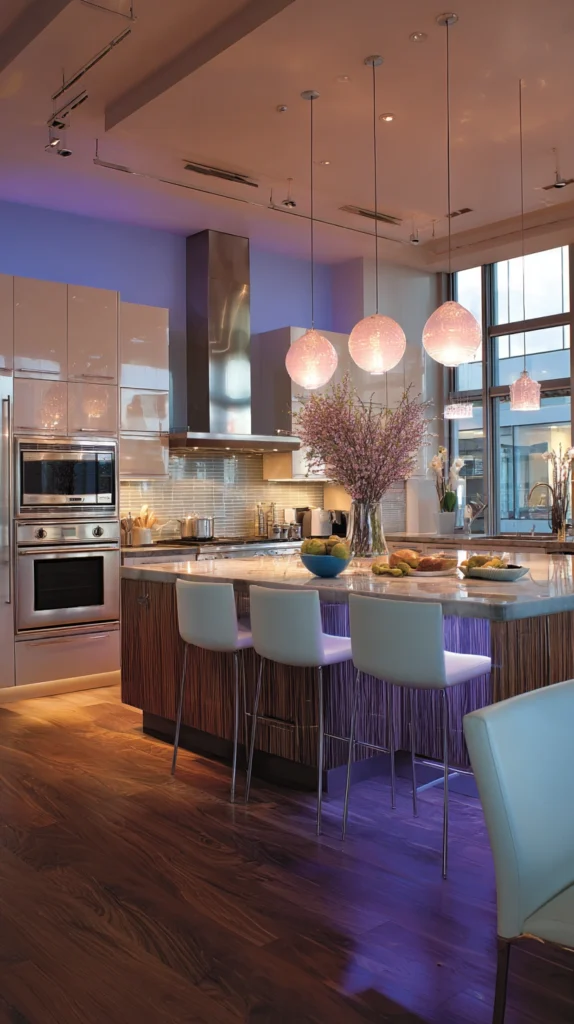
Design lighting layouts with smart switches and bulbs that allow programming preset scenes for different activities and times of day. Create a “cooking” scene with all task and ambient lights at full brightness, an “entertaining” mode with accent lights highlighted and overhead fixtures dimmed, and a “cleanup” setting that illuminates the sink and perimeter while softening island lighting.
Designers increasingly incorporate smart technology because it maximizes lighting versatility without additional fixtures, allows homeowners to easily optimize lighting for any situation, and can integrate with voice control or automated schedules for effortless operation.
Calculating Lumens and Brightness
Professional designers calculate lighting needs based on lumens—the actual light output—rather than wattage, which measures energy consumption. Kitchens require approximately fifty lumens per square foot for ambient lighting, with task areas needing seventy-five to one hundred lumens per square foot.
A typical one hundred-square-foot kitchen therefore needs five thousand lumens of ambient light plus additional task lighting, which might translate to four recessed LED fixtures providing twelve hundred lumens each, plus under-cabinet lighting adding twenty-five lumens per linear foot.
Color Temperature Strategy
The color temperature of light bulbs dramatically affects a kitchen’s atmosphere and functionality. Designers typically specify warm white (2700-3000K) for ambient and accent lighting because it creates inviting, flattering light that makes food and people look their best.
Task lighting can use slightly cooler temperatures (3000-3500K) for better color rendering when chopping vegetables or reading recipes, but designers avoid temperatures above 4000K in residential kitchens because the bluish light feels institutional rather than welcoming despite its brightness.
Dimmer Switch Essentials
Every lighting layer should be controlled by dimmer switches that allow adjustment for different times of day and activities. Designers specify dimmers for recessed lights, pendants, under-cabinet strips, and accent lighting, often grouping controls so a single panel manages multiple zones.
This flexibility transforms kitchens from bright workspaces during meal prep to softly lit gathering spaces for evening wine with friends, and dimmers significantly extend bulb life while reducing energy consumption when full brightness isn’t necessary.
Avoiding Common Layout Mistakes
Designers identify several lighting mistakes to avoid: centering lights in the room rather than over work surfaces creates shadows where you need illumination most; installing pendants too high makes them ineffective for task lighting; using mismatched color temperatures creates disjointed, uncomfortable lighting; and neglecting dimmer controls eliminates flexibility for different moods and uses.
Perhaps the most common error is under-lighting—being too conservative with fixture quantity or wattage results in dim, unwelcoming kitchens that feel unsafe and unpleasant to work in.
Safety and Code Compliance
Kitchen lighting must comply with electrical codes and safety standards, particularly regarding fixture placement near water sources. Designers ensure lights near sinks are rated for damp locations, maintain proper clearances from cooking surfaces, and verify that all fixtures are appropriately rated for kitchen use where temperature and humidity fluctuate. They also consider emergency lighting—whether from windows, skylights, or battery-backup fixtures—that provides safe navigation during power outages in a room filled with sharp objects and hot surfaces.
Fixture Scale and Proportion
The physical size of lighting fixtures must relate properly to the kitchen’s scale and the surfaces they illuminate. Designers use formulas to determine appropriate sizes: pendant diameters should be roughly one-third to one-half the width of islands or tables they light, chandelier width in inches should equal room length plus width in feet, and multiple fixtures should relate to each other proportionally.
Undersized fixtures look insignificant and provide insufficient light, while oversized fixtures overwhelm spaces and can obstruct sightlines or create hazardous head-bumping situations.
Reflective Surfaces Consideration
Kitchen finishes dramatically affect how lighting performs, and designers account for these interactions when planning layouts. Glossy backsplashes and polished counters reflect light, effectively multiplying illumination but potentially creating glare; matte surfaces absorb light, requiring more fixtures or higher wattage for equivalent brightness.
Designers might specify fewer recessed lights in kitchens with white quartz counters and glass tile backsplashes than in spaces with dark granite and matte subway tiles, adjusting layouts based on how materials will interact with light.
Natural Light Integration
Successful kitchen lighting layouts work harmoniously with natural light from windows and skylights rather than ignoring this significant illumination source. Designers position task lighting where natural light doesn’t reach, choose fixtures that look beautiful during daytime when they’re not illuminated, and specify controls that automatically adjust artificial light based on available daylight.
They also consider how natural light changes throughout the day, ensuring evening artificial lighting compensates for the warmth of sunset rather than creating jarring contrast.
Maintenance Accessibility
Designers consider long-term maintenance when planning lighting layouts, ensuring homeowners can realistically access fixtures for bulb changes and cleaning. They avoid placing recessed lights in impossible-to-reach cathedral ceilings without proper access or specifying elaborate chandeliers that require professional cleaning. LED fixtures with twenty-year lifespans reduce maintenance frequency, and designers often locate higher-maintenance decorative fixtures where stepladders can safely reach them rather than above islands or in ceiling centers that require scaffolding or professional assistance.
Budget Allocation Strategy
Professional designers allocate lighting budgets strategically, investing in quality where it matters most while economizing appropriately. They might specify expensive statement pendants over an island where they’re visible and appreciated while using builder-grade recessed cans hidden in the ceiling.
Investing in proper dimmer switches and controls provides more value than expensive fixtures without flexibility, and designers often recommend splurging on task lighting that affects daily functionality while keeping accent lighting simple and affordable since it’s used less frequently.
Future-Proofing Considerations
Forward-thinking designers build flexibility into lighting layouts that accommodate future changes in technology, preference, or function. They specify extra circuits and switch locations that might not initially have fixtures but allow additions later, recommend junction boxes in strategic locations where future pendants might hang, and increasingly design for smart home integration even if clients don’t immediately want it.
This future-proofing protects renovation investments and prevents costly electrical work when tastes change or technology evolves beyond current LED standards.
Conclusion
Kitchen lighting layout separates functional spaces from truly exceptional ones, and these fifteen strategies represent the accumulated wisdom of professional designers who understand that great lighting combines science, art, and practicality.
The most successful layouts layer multiple light sources at varying heights and intensities, provide independent control over each layer, and consider how lighting interacts with materials, natural light, and human activities throughout the day.
Remember that while these designer-approved strategies provide excellent starting points, the best lighting layout for your kitchen depends on your specific space, how you actually use your kitchen, and your personal aesthetic preferences.
A family that cooks together needs different lighting than a couple who entertains frequently or a single professional who primarily reheats takeout. Work with these principles, adapt them to your circumstances, and don’t hesitate to mock up proposed lighting using temporary fixtures or lamps before making permanent installations.
The goal is creating a kitchen where lighting enhances every activity from morning coffee preparation to midnight snack retrieval, making your kitchen not just functional but genuinely delightful to inhabit at any hour.