15 Best Kitchen Appliances That Are Actually Worth the Counter Space
Every kitchen has that graveyard of good intentions — the bread maker used twice, the juicer that became a dust collector, the pasta machine still in its box. Kitchen appliances have a unique ability to feel essential in the shop and completely unnecessary three weeks later at home.

The appliances on this list are different. These are the ones that genuinely earn their place — the tools that get used week after week, that make cooking faster, easier, or more enjoyable in ways that actually matter in real daily life. Some are investment pieces. Some are surprisingly affordable. All of them deliver on their promise in a way that the graveyard appliances never quite managed.
Here are 15 kitchen appliances that are genuinely worth buying, owning, and finding space for.
1. Stand Mixer
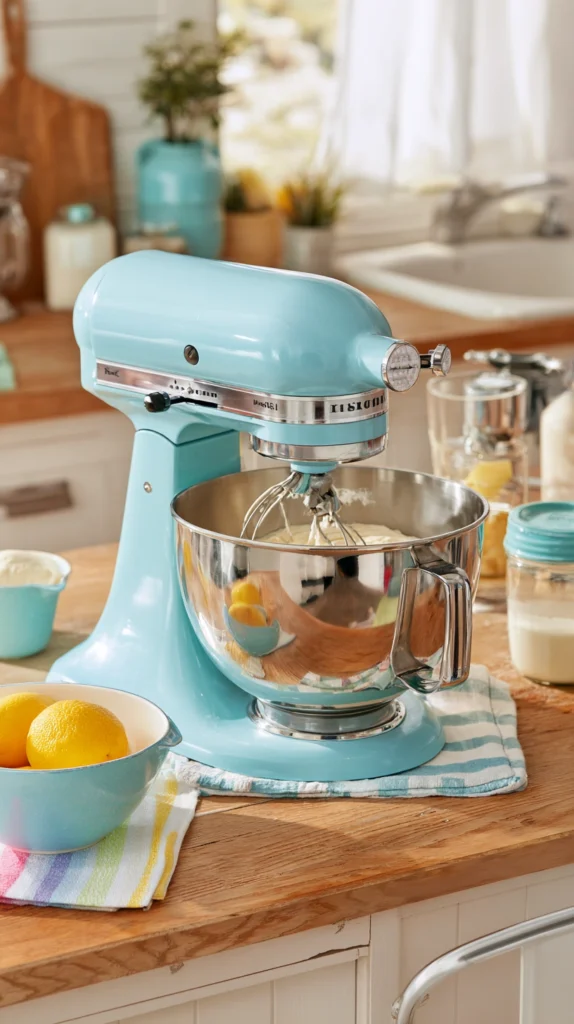
A good stand mixer is one of the most transformative appliances a kitchen can contain — and for anyone who bakes with any regularity, it is close to indispensable. It mixes, whips, and kneads with a power and consistency that hand mixing simply cannot match, and it does so entirely hands-free, leaving you to get on with other things while it works.
The KitchenAid Artisan remains the benchmark against which every other stand mixer is measured — robust, powerful, beautifully made, and available in an enormous range of colors that make it as much a design statement as a kitchen tool. The attachment ecosystem — pasta roller, meat grinder, ice cream bowl, vegetable spiraliser — extends its usefulness well beyond baking and makes it one of the most versatile single appliances in the kitchen.
Pro Tip: Always start a stand mixer on the lowest speed setting before increasing to the required speed for the task. Starting on a high speed — particularly with dry ingredients like flour — causes the contents to eject from the bowl before the mixer has a chance to incorporate them. The splash guard attachment is worth buying alongside the mixer for exactly this reason, particularly for liquid-heavy recipes.
2. High-Powered Blender
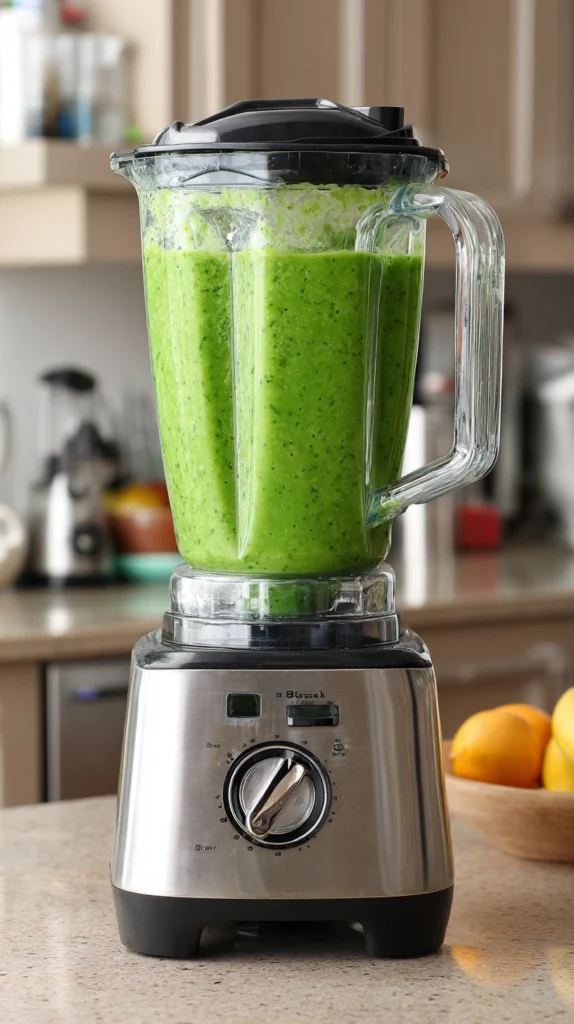
The difference between a cheap blender and a genuinely high-powered one is not subtle — it is the difference between a lumpy smoothie and a perfectly silky one, between a soup with visible chunks and one with a restaurant-quality finish, between nut butter that is almost smooth and one that is genuinely perfect. Power matters enormously in a blender and the gap between budget and premium models is significant.
Vitamix and Blendtec are the two brands that consistently define the high-powered blender category. Both produce blenders with motors powerful enough to blend frozen fruit, raw nuts, fibrous vegetables, and even hot soups with a smoothness that no standard blender can replicate. They are expensive investments but they are also virtually indestructible and come with warranties measured in years rather than months.
Pro Tip: Never fill a blender more than two thirds full when blending hot liquids — soup, sauces, or any hot preparation. Hot liquids expand when blended and create pressure inside a sealed blender jar that can force the lid off explosively, causing serious burns. Fill to no more than two thirds capacity, hold the lid firmly with a folded tea towel, and start on the lowest speed before gradually increasing.
3. Air Fryer
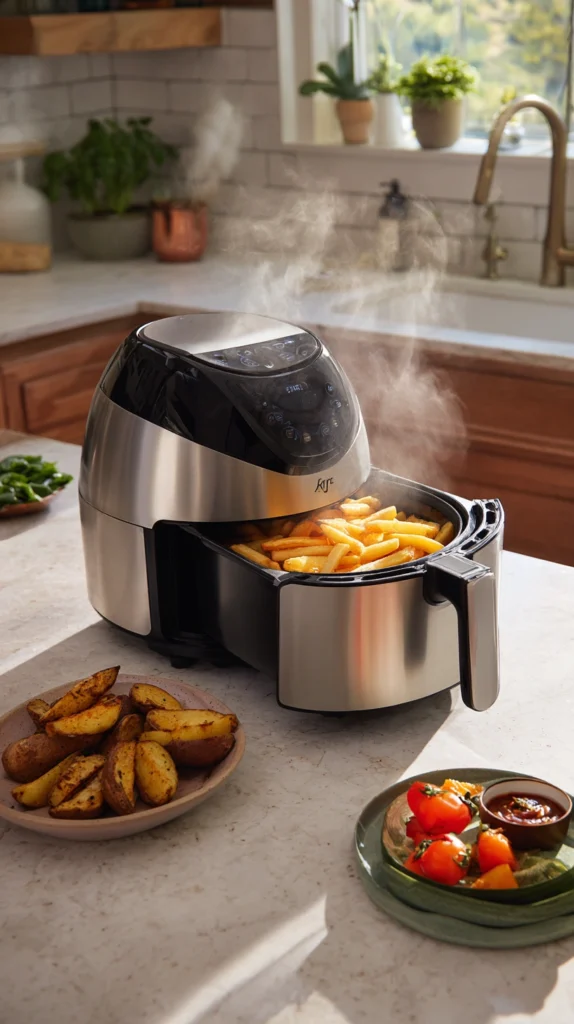
The air fryer has earned its place as one of the most genuinely useful kitchen appliances of the past decade — and the enthusiasm with which home cooks have adopted it is entirely justified by the results it delivers. Crispy chips, perfectly cooked chicken, roasted vegetables with genuinely caramelised edges, reheated leftovers that taste freshly cooked rather than microwaved — the air fryer does all of this faster, more energy-efficiently, and with considerably less oil than a conventional oven.
The key to choosing the right air fryer is getting the capacity right for your household. A compact two-litre air fryer suits a single person or couple cooking small portions. A family of four needs at least a five to six litre capacity to cook a proper meal without doing multiple batches. Drawer-style air fryers are easy to use and clean. Oven-style air fryers with a door and multiple shelves offer more cooking flexibility for larger volumes.
Pro Tip: Never overcrowd the basket of an air fryer. The entire cooking principle depends on hot air circulating freely around every surface of the food — overcrowding blocks this circulation and produces steamed, soggy results rather than the crisp, evenly cooked finish the appliance is designed to deliver. Cook in a single layer with space between pieces, doing multiple batches if necessary. The second batch will always cook faster than the first as the appliance is already fully preheated.
4. Instant Pot or Multi-Cooker
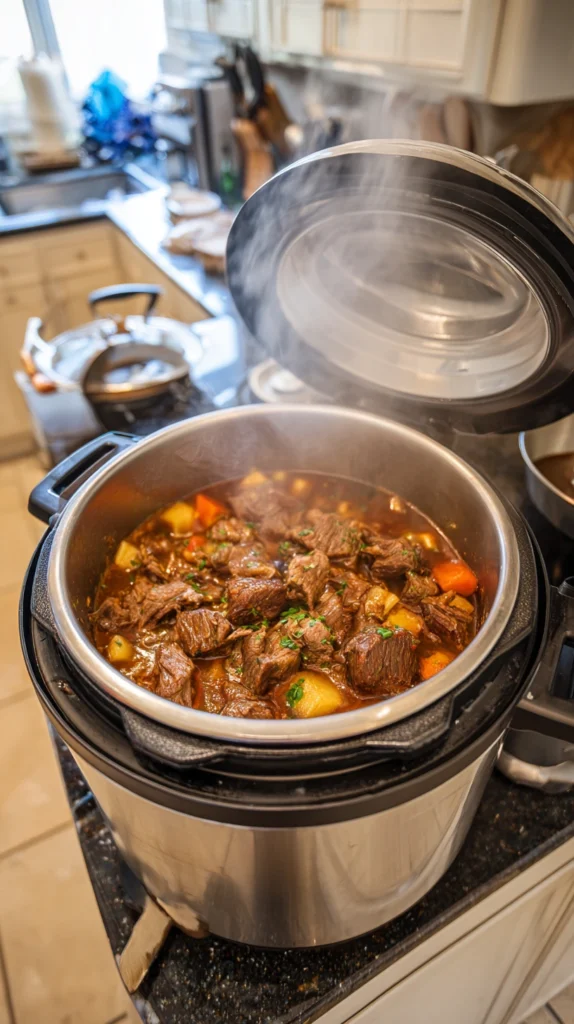
The multi-cooker — an appliance that combines a pressure cooker, slow cooker, rice cooker, steamer, sauté pan, and yogurt maker in a single countertop unit — is one of the most genuinely versatile kitchen appliances available at any price point. For households that cook varied meals from scratch regularly, it reduces cooking time for dishes that would normally take hours down to a fraction of that, and it does so with minimal hands-on attention required.
Dried chickpeas that would normally need overnight soaking and ninety minutes of simmering are done in thirty minutes from dry. A beef stew that would take three hours in a conventional oven is ready in forty-five minutes. Stock, rice, lentils, cheesecakes, pulled pork — the multi-cooker handles all of them with results that are consistently good and often genuinely excellent.
Pro Tip: Never fill a pressure cooker or multi-cooker above the maximum fill line marked inside the pot — typically around two thirds of the total capacity. Overfilling prevents the pressure release valve from functioning correctly and creates a safety risk. For foods that expand during cooking — beans, grains, and pasta — fill to no more than half capacity to allow adequate room for expansion without blocking the pressure valve.
5. Food Processor
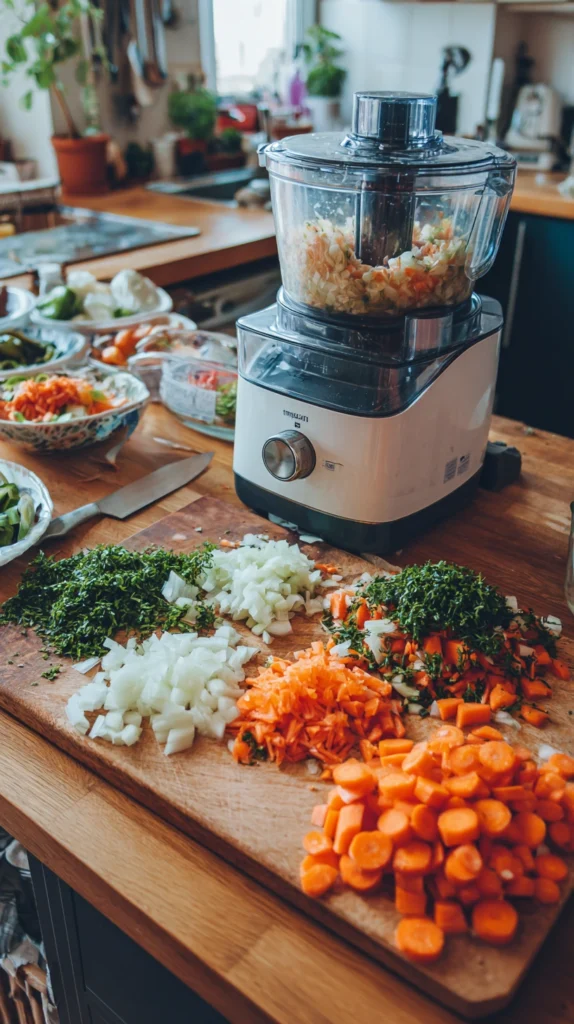
A food processor is the workhorse of the kitchen appliance world — unglamorous, unfashionable, and absolutely irreplaceable for anyone who cooks seriously from scratch. Chopping an onion by hand takes a minute. A food processor does it in three seconds. Making pastry by hand takes ten minutes of careful, cool-fingered work. A food processor does it in thirty seconds. Slicing a bowl of vegetables for a stir fry takes five minutes. The food processor does it in one.
The cumulative time saving of a food processor across a week of cooking is genuinely significant — and the consistency of the results, particularly for tasks like slicing and grating, is better than most people can achieve by hand. Magimix and Cuisinart produce the most consistently well-regarded food processors at the mid to upper end of the market, with bowls, blades, and discs built to last for years of daily use.
Pro Tip: Pulse rather than run continuously when chopping vegetables, herbs, or other ingredients that can quickly become over-processed. A series of short pulses gives you far more control over the final texture than running the motor continuously — the difference between roughly chopped onion and onion mush is often just a second or two of processing time. Check the texture between pulses and stop the moment you reach the desired consistency.
6. Electric Kettle
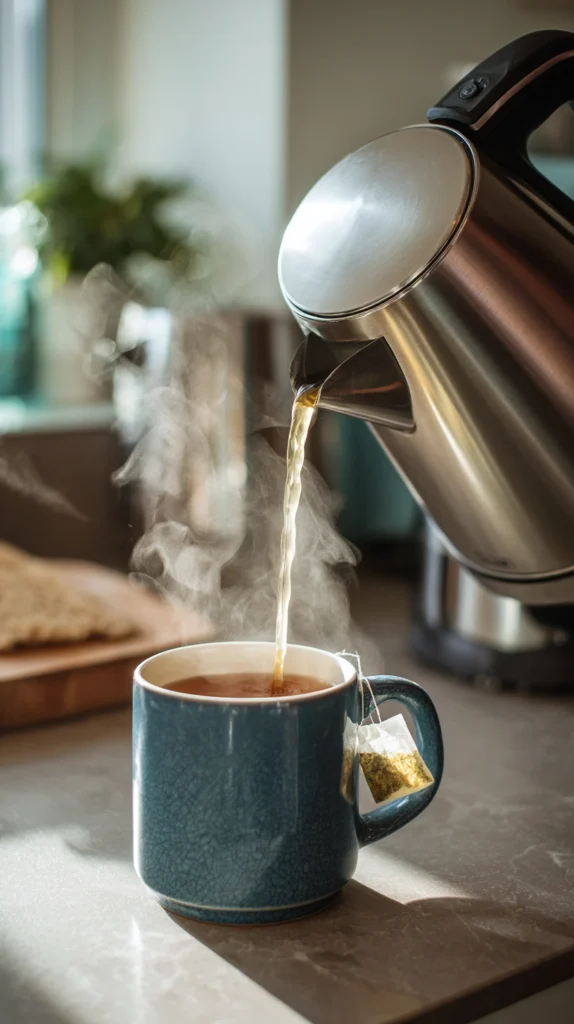
An electric kettle is so ubiquitous in most kitchens that it barely seems worth mentioning — and yet the quality range between a basic cheap kettle and a genuinely good one is larger than most people realise. A good kettle boils water faster, maintains temperature more accurately, pours more precisely, and lasts considerably longer than a budget alternative.
For serious tea and coffee drinkers, a variable temperature kettle — one that allows you to set a precise water temperature rather than always boiling to 100 degrees — is a revelation. Green tea brewed at 70 to 75 degrees tastes completely different — cleaner, sweeter, less bitter — than green tea brewed with fully boiling water. Pour over coffee at 93 to 96 degrees extracts more cleanly and evenly than coffee made with water at a full rolling boil.
Pro Tip: Descale your electric kettle regularly — every four to six weeks in a hard water area, every two to three months in a soft water area. Limescale buildup inside a kettle reduces heating efficiency, increases energy consumption, affects the taste of hot drinks made with the water, and shortens the working life of the heating element significantly. A solution of equal parts white vinegar and water brought to the boil and left for an hour removes limescale effectively and costs almost nothing.
7. Espresso Machine
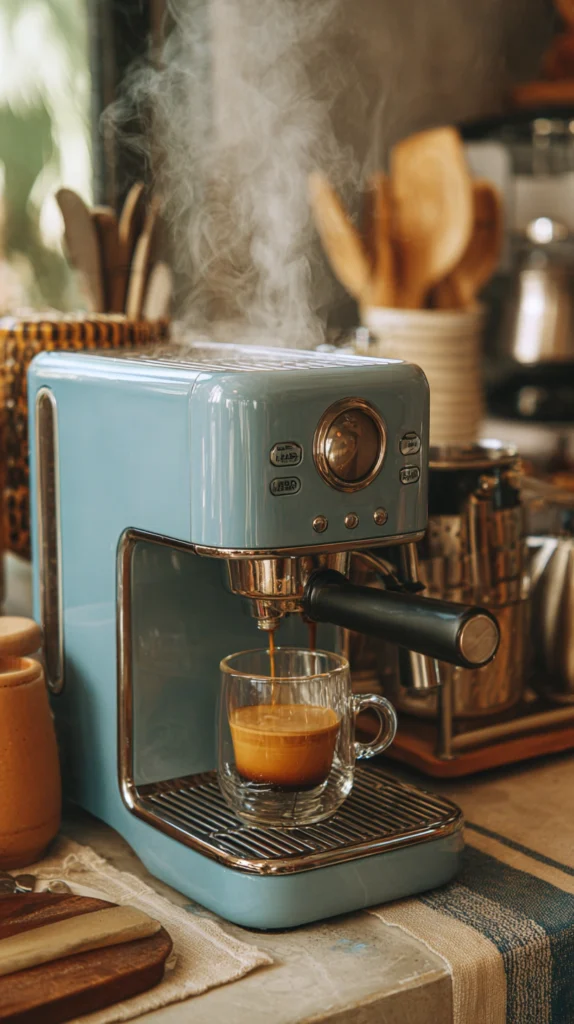
A good home espresso machine is one of those appliances that pays for itself surprisingly quickly for anyone who buys coffee from a café regularly. The daily flat white habit that costs four pounds a day — over a thousand pounds a year — becomes a fraction of that cost when made at home with a decent machine and quality beans, and with practice the results are genuinely comparable to a professional café.
The market divides broadly into bean-to-cup machines — which grind, tamp, and extract automatically with minimal user input — and semi-automatic machines — which require manual grinding, tamping, and extraction but offer greater control over the final result. Bean-to-cup machines suit convenience-focused households. Semi-automatic machines suit those who enjoy the process of espresso making as much as the result.
Pro Tip: Invest in a good burr grinder alongside an espresso machine rather than relying on pre-ground coffee. Freshly ground coffee makes a dramatic, immediately noticeable difference to the quality of espresso — the volatile aromatic compounds that give espresso its complexity and depth begin to dissipate within minutes of grinding.
Pre-ground coffee has already lost a significant proportion of these compounds by the time it reaches your machine, regardless of how good the beans were to begin with.
8. Sous Vide Precision Cooker
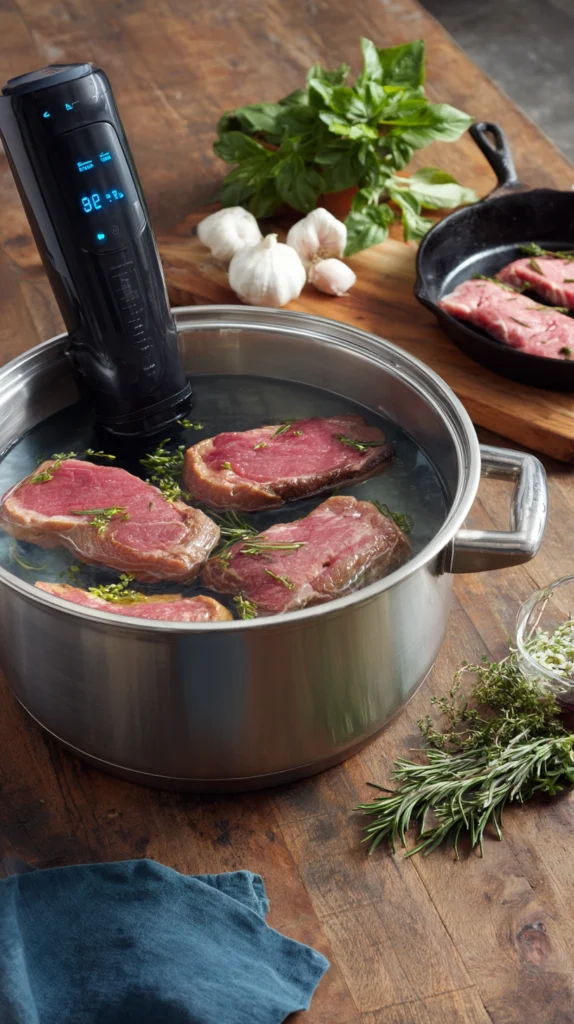
Sous vide — the technique of cooking vacuum-sealed food in a precisely temperature-controlled water bath — was until relatively recently the exclusive preserve of professional restaurant kitchens. The development of affordable immersion circulator devices has brought this technique into domestic kitchens, and for anyone who takes cooking seriously, it is a genuinely game-changing addition to the kitchen toolkit.
A chicken breast cooked sous vide at 65 degrees for an hour is incomparably juicier and more evenly cooked than one prepared by any conventional method. A steak cooked sous vide to the exact internal temperature required — then finished with thirty seconds per side in a screaming hot pan — is perfectly medium-rare from edge to edge with no grey ring of overcooked meat. The precision is simply not achievable by any other domestic cooking method.
Pro Tip: Pat food completely dry with kitchen paper before searing after sous vide cooking — this step is non-negotiable for a good result. Sous vide cooking produces perfectly cooked but very moist food surfaces, and any surface moisture present during searing converts to steam rather than allowing the Maillard reaction to create the browned, caramelised crust that makes the difference between a good result and a spectacular one.
9. Rice Cooker
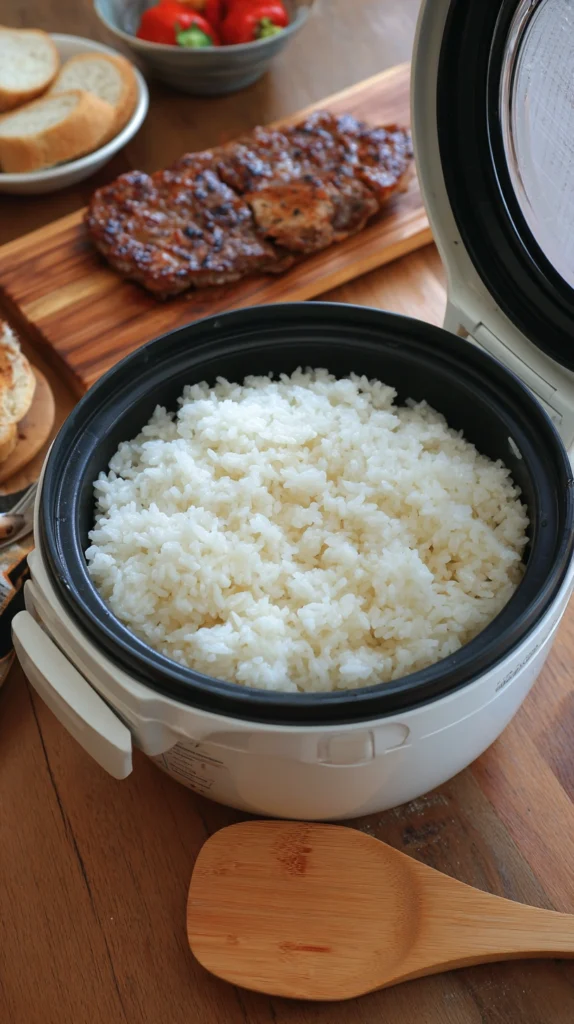
A rice cooker is one of those appliances that seems unnecessary until you own one — and after which the idea of cooking rice on the hob feels needlessly complicated and unreliable. Perfect rice every single time, with no watching, no timing, no draining, and no anxiety about whether you have got the ratio right — the rice cooker delivers all of this at the press of a single button.
Beyond rice, a good rice cooker handles quinoa, oats, steamed vegetables, and congee with equal reliability. For households that eat rice several times a week — and particularly for those cooking Japanese, Korean, Chinese, or South and Southeast Asian food regularly — a rice cooker is not a convenience appliance. It is an essential one.
Pro Tip: Rinse rice in cold water before adding it to a rice cooker — rinsing until the water runs clear rather than cloudy. Rinsing removes excess surface starch that causes rice to cook into a sticky, clumped mass rather than the separate, fluffy grains that a rice cooker is designed to produce. This single preparatory step makes a significant and immediately noticeable difference to the texture of the finished rice.
10. Toaster Oven or Mini Oven
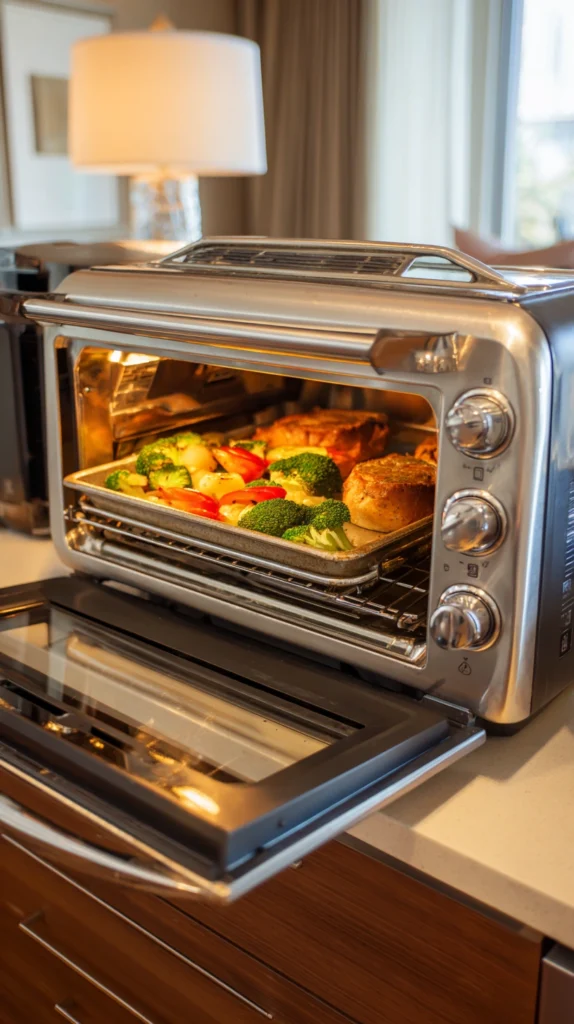
A toaster oven — or its more capable sibling, the mini countertop oven — is one of the most energy-efficient and practically useful kitchen appliances available, particularly for households that regularly cook for one or two people. Heating a full-size oven to cook a single chicken breast or to reheat a portion of leftovers is genuinely wasteful — a toaster oven does both in a fraction of the time, using a fraction of the energy.
The better countertop ovens — from brands like Breville, Cuisinart, and Sage — go considerably beyond basic toasting and reheating. They bake, roast, broil, and in models with a convection fan, produce results comparable to a full-size oven for small to medium quantities of food. For a small kitchen, a quality countertop oven can genuinely replace the main oven for the majority of everyday cooking.
Pro Tip: Position a countertop toaster oven with adequate clearance on all sides and above — at least 15 centimetres of clear space from any surface, cabinet, or wall. Countertop ovens generate significant heat from their exterior surfaces during operation, and positioning them too close to cabinets, walls, or overhead cupboards is a genuine fire risk. Check the manufacturer’s clearance requirements before choosing a permanent position.
11. Immersion Blender
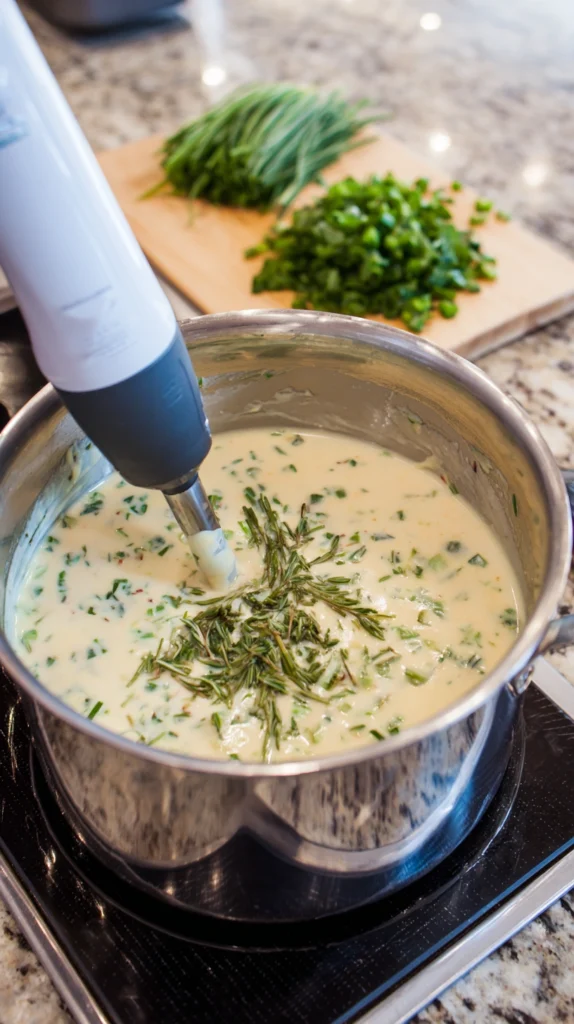
The immersion blender — also known as a stick blender or hand blender — is one of the best value-for-money kitchen appliances available. For the relatively modest cost of a good quality model, you gain the ability to blend soups directly in the pot without transferring hot liquid to a blender, make mayonnaise in thirty seconds in a narrow jar, blitz smoothies in the glass you will drink from, and puree sauces to a smooth finish without washing up a blender jug.
The immersion blender wins on convenience in a way that almost no other kitchen appliance can match — it takes seconds to get out, seconds to use, and seconds to clean, which means it actually gets used rather than sitting in a cupboard because the setup and cleanup feel like too much effort.
Pro Tip: Use a tall, narrow container rather than a wide, shallow bowl when using an immersion blender for best results. A narrow container keeps the blending head submerged in the ingredients throughout the blending process, preventing the splashing and spattering that occurs when the head breaks the surface of the liquid in a wide, shallow vessel. A tall jug or the pot the soup was cooked in are both ideal immersion blender containers for exactly this reason.
12. Digital Kitchen Scale
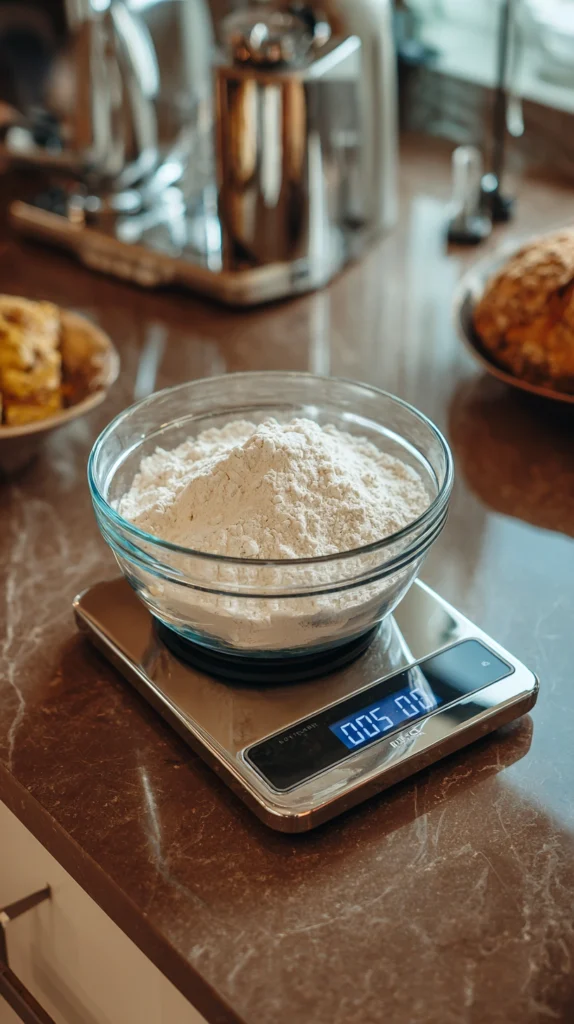
A digital kitchen scale is not a glamorous appliance — it is a small, flat, inexpensive tool that sits quietly on the counter and does one very simple thing. But that one thing — measuring ingredients by weight rather than by volume — makes a measurable and consistent difference to the quality of baked goods, the accuracy of recipes, and the efficiency of cooking in general.
Baking is chemistry, and the ratio of flour to liquid to fat to leavening in any baked product needs to be accurate for consistent results. Cup measurements are imprecise by nature — a cup of flour measured by one person can weigh thirty percent more than the same cup measured by another depending on how it is packed. Weight measurements eliminate this variability entirely and produce consistent results every time regardless of who is doing the measuring.
Pro Tip: Choose a digital kitchen scale with a capacity of at least five kilograms and a resolution of one gram for general kitchen use. A scale that only measures in five or ten gram increments is not accurate enough for small quantity baking ingredients — a few grams of difference in baking powder or salt makes a noticeable difference to the finished result.
One gram resolution across a five kilogram range covers everything from delicate spice measurements to large batch baking in a single affordable tool.
13. Slow Cooker
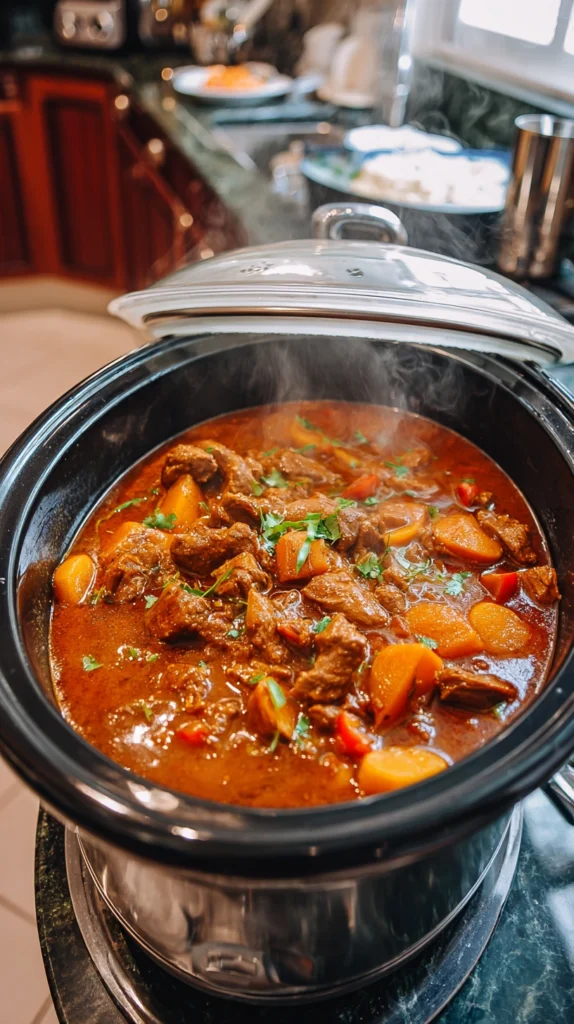
The slow cooker is one of the most genuinely life-improving kitchen appliances for busy households — and the simplicity of what it does is precisely what makes it so valuable. Put ingredients in, turn it on, go to work, come home eight hours later to a perfectly cooked meal that has been quietly doing its thing all day without requiring a single minute of your time or attention.
Slow cooker results for certain dishes — braised meats, stews, curries, soups, pulled pork, chilli — are not just convenient. They are genuinely better than the same dishes cooked quickly at higher temperatures. The extended low-temperature cooking breaks down collagen in tough meat cuts into gelatin, creating a richness and depth of flavour that a quick cook simply cannot produce.
Pro Tip: Brown meat thoroughly in a hot pan before adding it to a slow cooker whenever the recipe and your available time allows. The Maillard reaction that occurs during browning creates hundreds of complex flavour compounds that cannot develop in the moist, low-temperature environment of a slow cooker. Skipping the browning step produces perfectly edible but noticeably less flavourful results — the difference in depth and complexity of the finished dish is immediately apparent.
14. Bread Maker
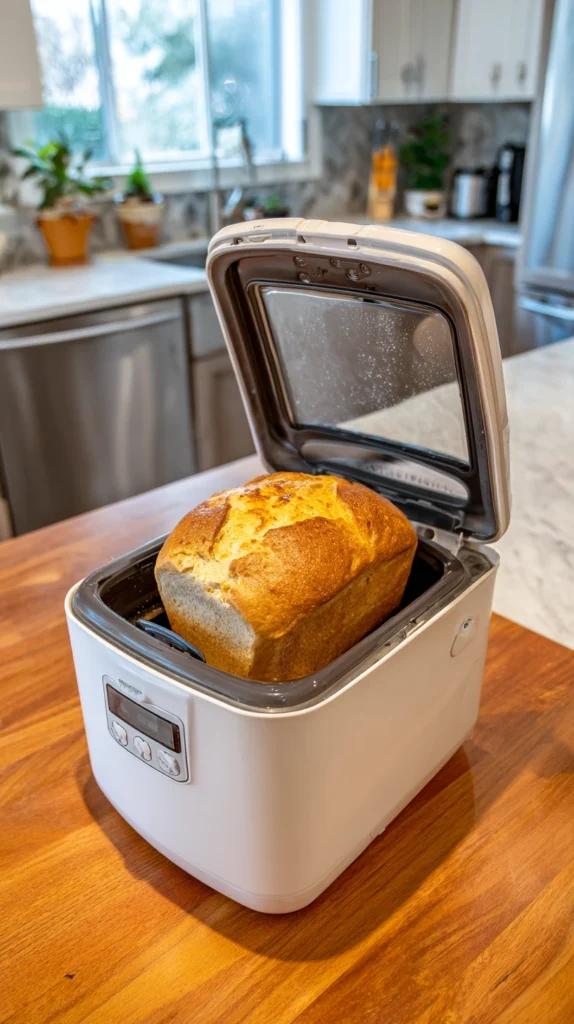
The bread maker is an appliance with a complicated reputation — millions were bought, used enthusiastically for a few weeks, and then quietly retired to a shelf or a car boot sale. The bread makers on this list earned their place precisely because they avoid this fate when used correctly — when chosen for what they are genuinely good at and used as a tool in a broader baking practice rather than as a complete solution to all bread-making needs.
The best use of a bread maker is not as a standalone bread factory but as a dough preparation tool — mixing, kneading, and proving dough automatically to a consistent standard while you get on with other things, with the proved dough then shaped by hand and baked in a conventional oven for a proper crust.
This approach combines the convenience of the machine with the quality of oven-baked bread and produces genuinely excellent results with minimal effort.
Pro Tip: Weigh ingredients for a bread maker recipe on a digital scale rather than using the measuring cups and spoons that typically come with the appliance. Bread making is sensitive to ingredient ratios — particularly the ratio of flour to water — and the imprecision of volume measurements causes more failed or disappointing bread maker loaves than any other single factor. Weight measurements produce consistent, reliable results and make troubleshooting a recipe significantly easier when adjustments are needed.
15. Vacuum Sealer
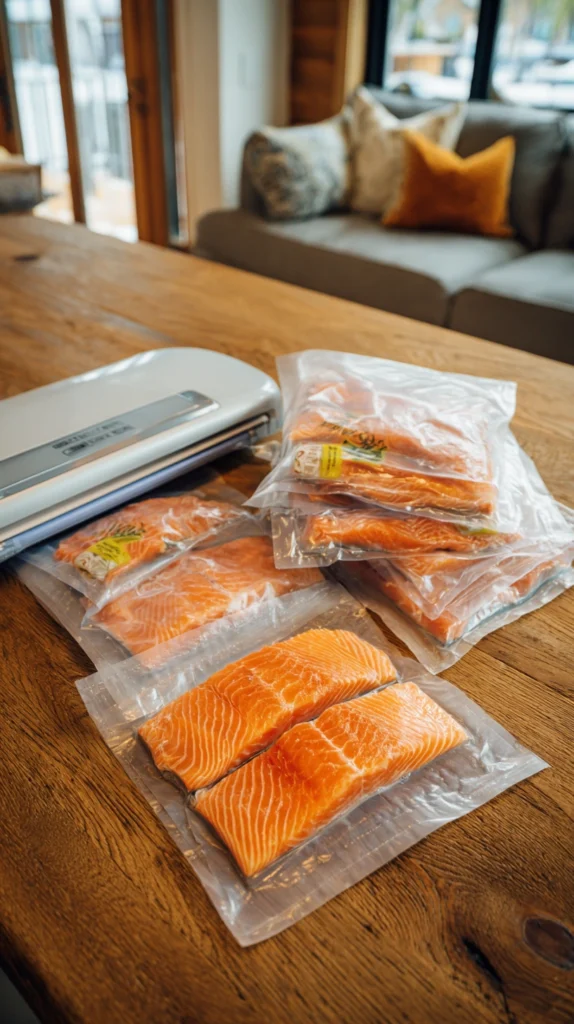
A vacuum sealer is the kitchen appliance that pays for itself most directly and most measurably — in reduced food waste, lower grocery bills, and significantly extended food storage life across every category of food in the kitchen. Meat that would last three days in the fridge lasts two weeks vacuum sealed. Cheese that would dry out in a week stays perfect for a month. Batch-cooked meals, marinated proteins, and prepped vegetables all store longer and better when vacuum sealed.
For households that buy in bulk, batch cook, or simply struggle with food going off before it can be used, a vacuum sealer genuinely changes the economics of food shopping. The savings in wasted food over the course of a year comfortably exceeds the cost of the appliance itself — making it one of the few kitchen appliances that pays a literal financial return on the investment.
Pro Tip: Label every vacuum-sealed bag clearly with the contents and the date of sealing before putting it in the fridge or freezer. Vacuum-sealed food is airtight and moisture-free, which means it often looks almost identical regardless of what is inside and when it was packaged.
A waterproof marker directly on the bag or a small piece of freezer tape with the relevant details prevents the frustrating situation of a freezer full of unidentifiable sealed packages that require opening to identify.
Buy Less, Choose Better, Actually Use It
The best kitchen is not the one with the most appliances — it is the one where every appliance genuinely gets used. Before buying any new kitchen appliance, the most honest question to ask is not whether it would be useful in theory but whether you will actually use it in practice, given your real cooking habits, your real schedule, and your real kitchen space.
The appliances on this list pass that test for most households most of the time. But the only one that matters is yours — buy the ones that solve a real problem in your real kitchen, and give yourself permission to ignore the rest entirely.