15 Japandi-Inspired Small Bathroom Ideas
Japandi is the design philosophy that emerges when Japanese minimalism meets Scandinavian hygge — two cultures that share a deep reverence for simplicity, natural materials, and intentional living.

In a small bathroom, this aesthetic is not just beautiful, it’s practical. Japandi design strips away the unnecessary and keeps only what serves a purpose, making it one of the most intelligent approaches to compact spaces.
Here are 15 ideas to bring this serene, refined style into your small bathroom.
1. Embrace a Neutral, Earthy Color Palette
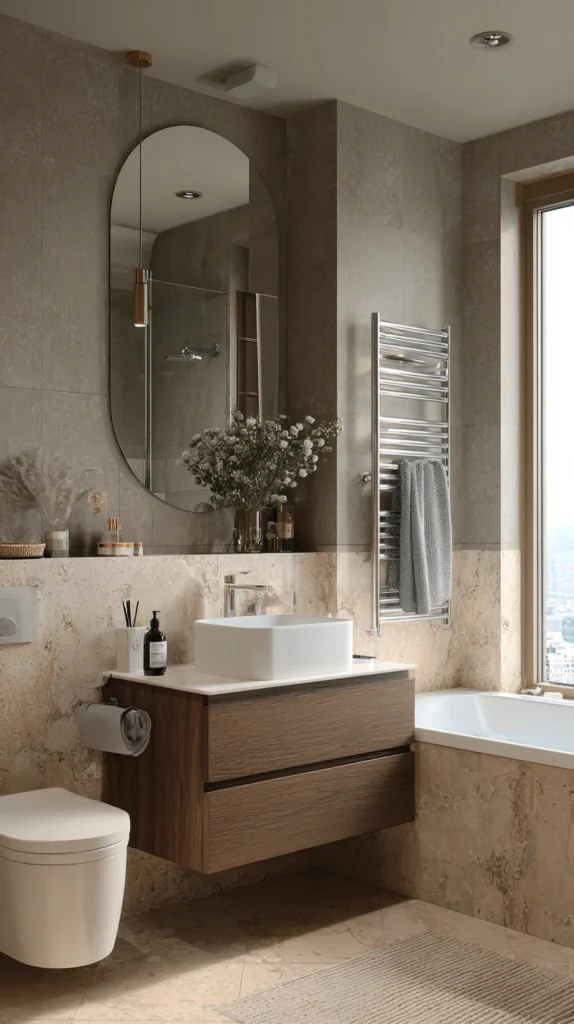
The foundation of any Japandi bathroom is its color story. Think warm whites, soft beiges, clay tones, muted sage, and deep charcoal. These colors are drawn from nature and work harmoniously together without competing for attention.
In a small bathroom, a monochromatic or tonal palette creates the illusion of more space because the eye isn’t interrupted by jarring contrasts. Consider painting walls in a warm greige or a dusty taupe, then pulling in slightly darker accents through towels and accessories. The goal is a palette that feels like an exhale — calm, cohesive, and grounding.
2. Use Natural Wood Accents Thoughtfully
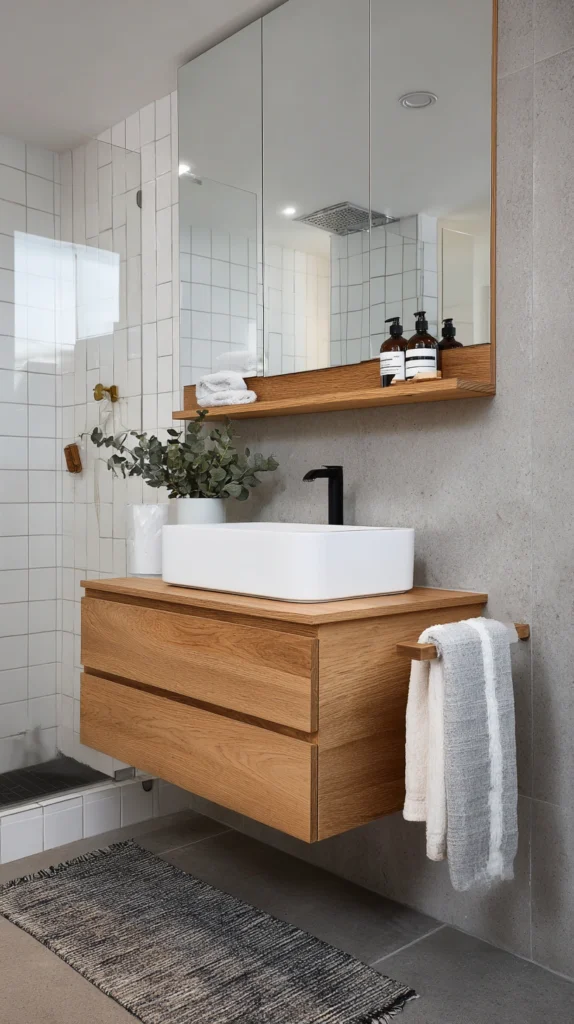
Wood is perhaps the most essential material in Japandi design. In a small bathroom, you don’t need to go overboard — even a single wooden element can transform the feel of the space. A teak bath mat, a wooden shelf, a timber vanity, or even wooden-framed mirrors bring organic warmth that prevents the minimalist aesthetic from feeling cold or clinical.
Japanese design favors woods with visible grain, like hinoki or oak, while Scandinavian design leans toward lighter birch and pine. Either way, ensure any wood used in the bathroom is sealed or naturally water-resistant to maintain its longevity.
3. Install a Floating Vanity
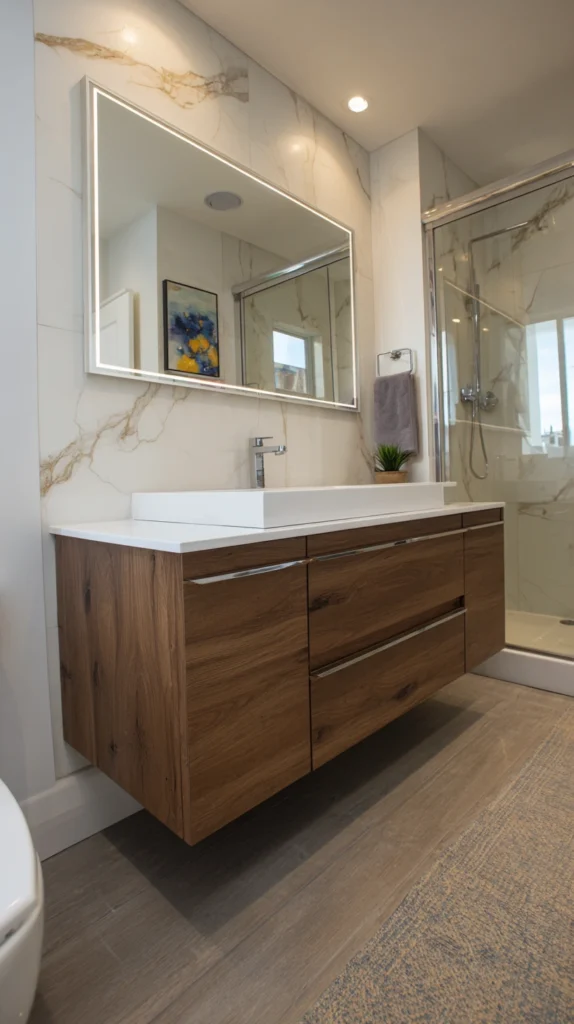
A wall-mounted or floating vanity is one of the most impactful changes you can make to a small bathroom. By lifting the vanity off the floor, you expose more of the floor surface, which visually expands the room and makes cleaning far easier.
In Japandi style, choose a vanity with clean, handle-free lines in a warm wood finish or a matte white. Avoid ornate hardware. The simplicity of the form should speak for itself. Pair it with an undermount or vessel sink in white ceramic for a look that feels both modern and timeless.
4. Incorporate Wabi-Sabi Philosophy
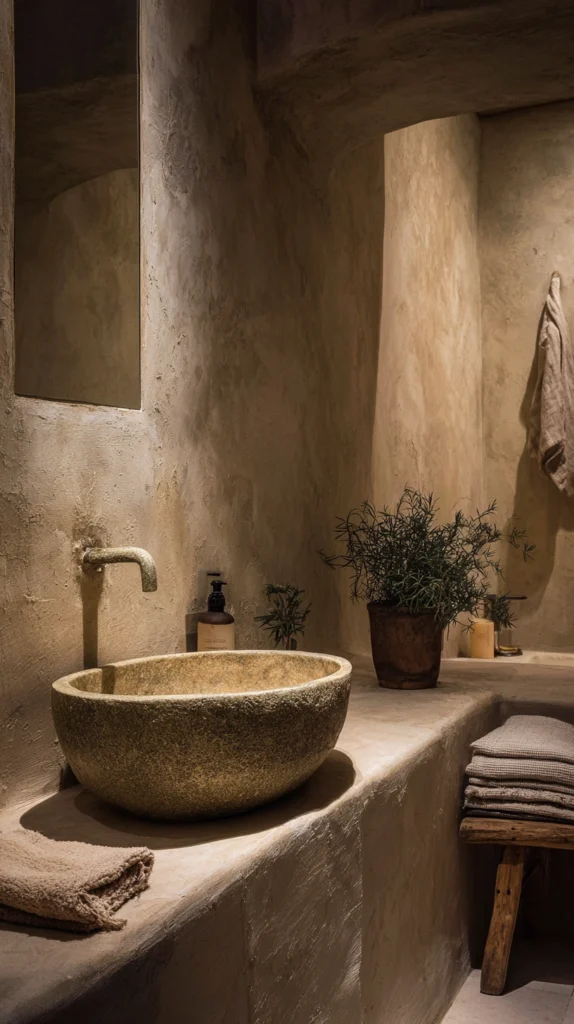
Wabi-sabi is the Japanese concept of finding beauty in imperfection and impermanence. In a bathroom context, this might mean choosing handmade ceramic soap dishes with slightly uneven edges, opting for linen towels with a natural, undyed texture, or selecting stone tiles that have variation in their pattern and tone.
Wabi-sabi liberates you from the pressure of perfection — it encourages you to appreciate the patina of materials as they age, the irregularity of handcrafted objects, and the quiet poetry of things that are simple and honest. This philosophy makes small bathrooms feel curated rather than minimal by accident.
5. Choose Large-Format or Zellige Tiles
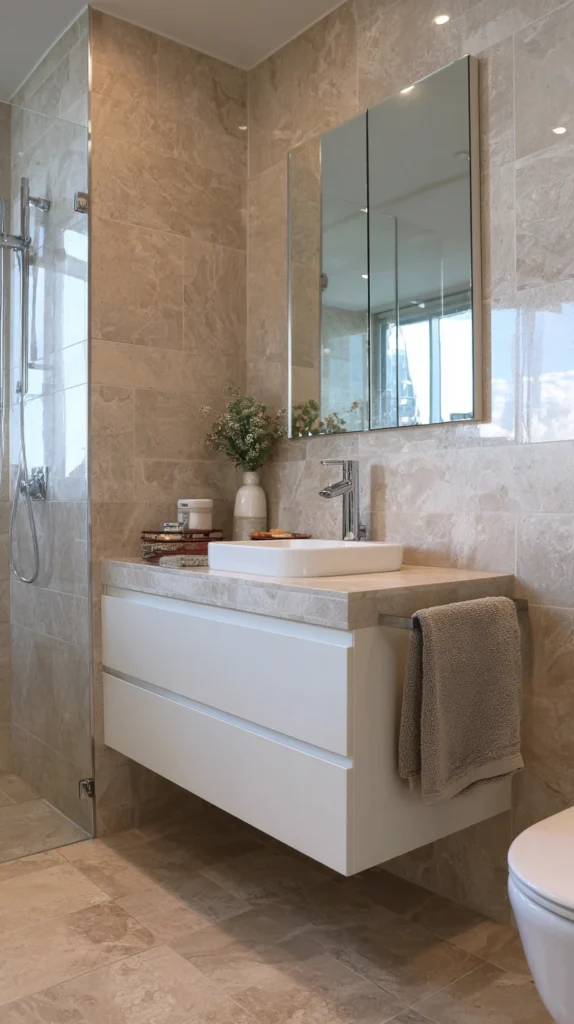
Tile choice has a huge impact on how small a bathroom feels. Large-format tiles in soft neutral tones minimize grout lines and create a more seamless, expansive visual effect.
Alternatively, zellige tiles — handmade Moroccan clay tiles with a slightly uneven, glossy surface — bring texture and soul without overwhelming the space. In a Japandi bathroom, stick to muted tones like sage green, dusty white, or warm terracotta for zellige.
Whether you go large and smooth or small and artisanal, keep the color palette restrained so the texture does the talking rather than the color.
6. Bring in Living Plants
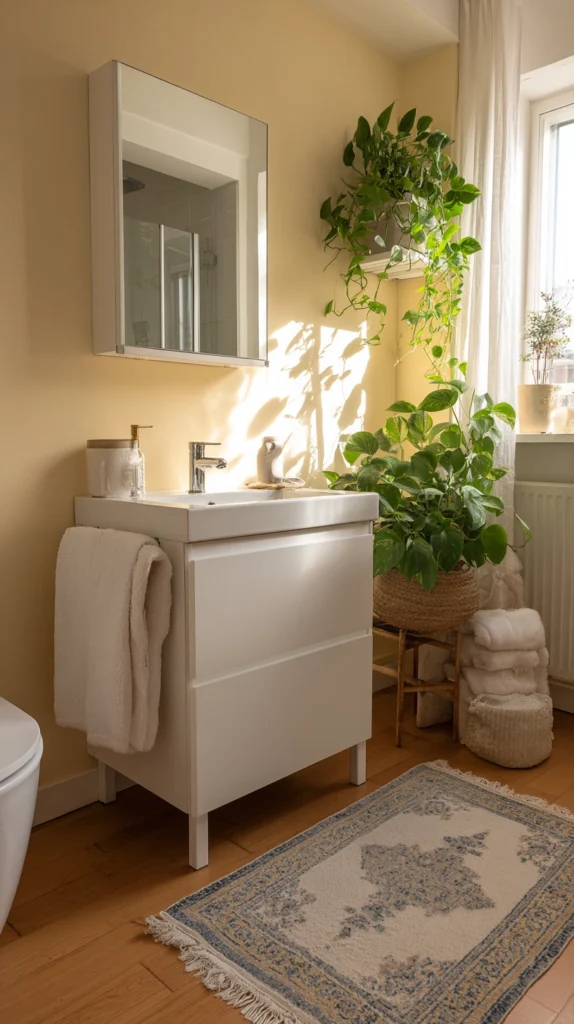
Nature is non-negotiable in Japandi design. A small bathroom is actually an ideal environment for certain plants because of the humidity and indirect light.
Bamboo, peace lilies, pothos, ferns, and air plants all thrive in bathroom conditions and contribute to that sense of being connected to the natural world. Even a single stem in a slim ceramic vase on the vanity can bring life and softness to an otherwise spare space.
Plants also improve air quality and add a layer of organic texture that no man-made material can fully replicate. Keep plant pots in matte black, raw clay, or warm white to stay true to the palette.
7. Opt for a Walk-In Shower with a Frameless Glass Panel
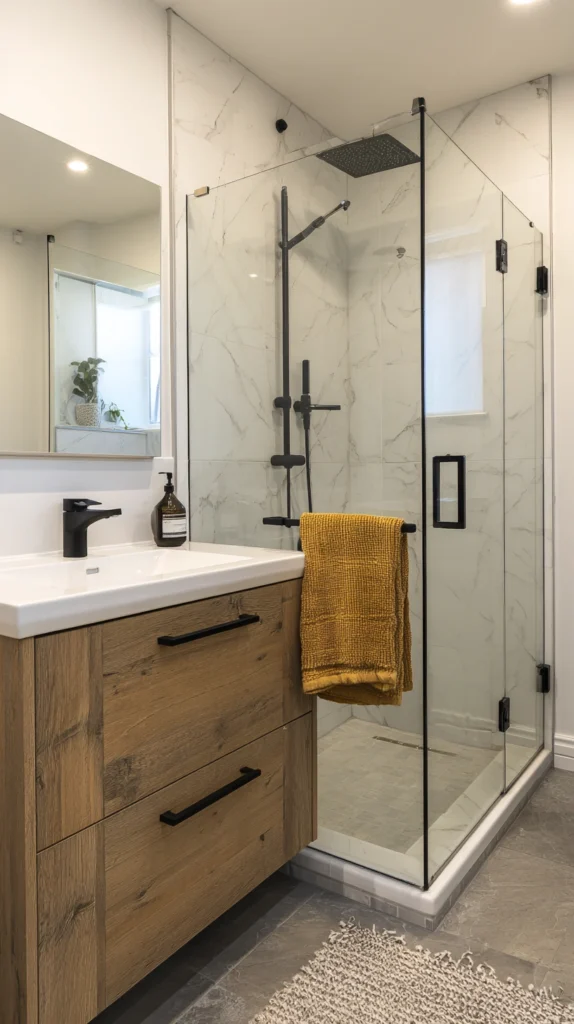
If your bathroom layout permits, replacing a traditional tub-shower combo with a walk-in shower dramatically opens up the space. A frameless glass panel instead of a full enclosure keeps the bathroom visually open — your eye can travel through the glass without obstruction, making the room feel larger.
In a Japandi bathroom, line the shower in large-format stone-look tiles, install a simple rainfall showerhead in matte black or brushed nickel, and keep the niche shelving minimal with just one or two essential products visible. The restraint itself becomes the design statement.
8. Use Matte Black Fixtures as Quiet Accents
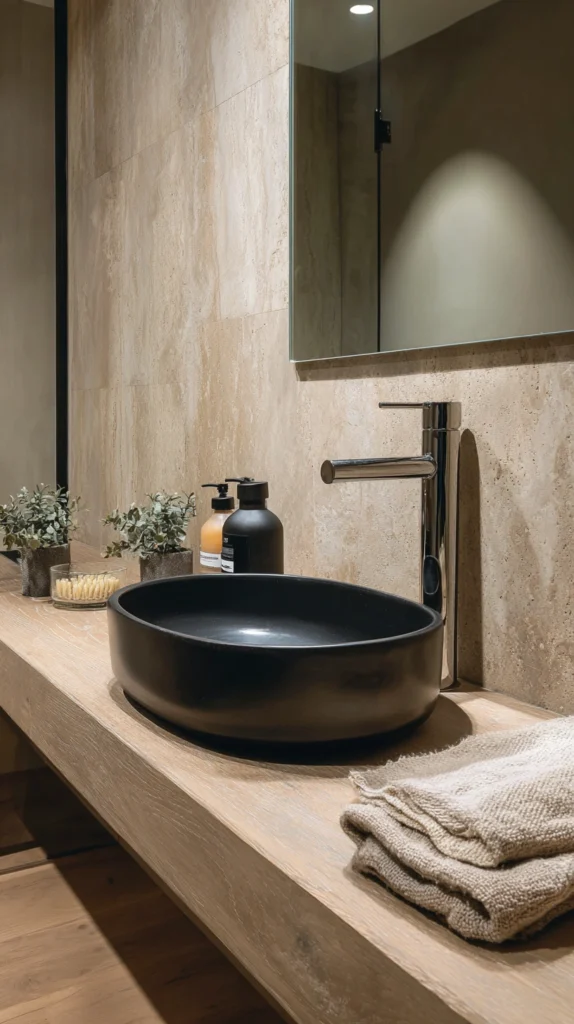
Hardware and fixtures in matte black have become a signature of the modern Japandi bathroom. Faucets, towel bars, shower heads, toilet paper holders — when unified in matte black, these small elements create a subtle visual rhythm throughout the space without adding visual clutter. Matte black works particularly well against warm neutrals and natural wood because it grounds the palette and adds definition without the coldness of chrome.
It also has a distinctly Japanese aesthetic quality, evoking the minimalist ink-on-paper sensibility that runs through so much of traditional Japanese art and architecture.
9. Add a Hinoki Wood Soaking Tub or Stool
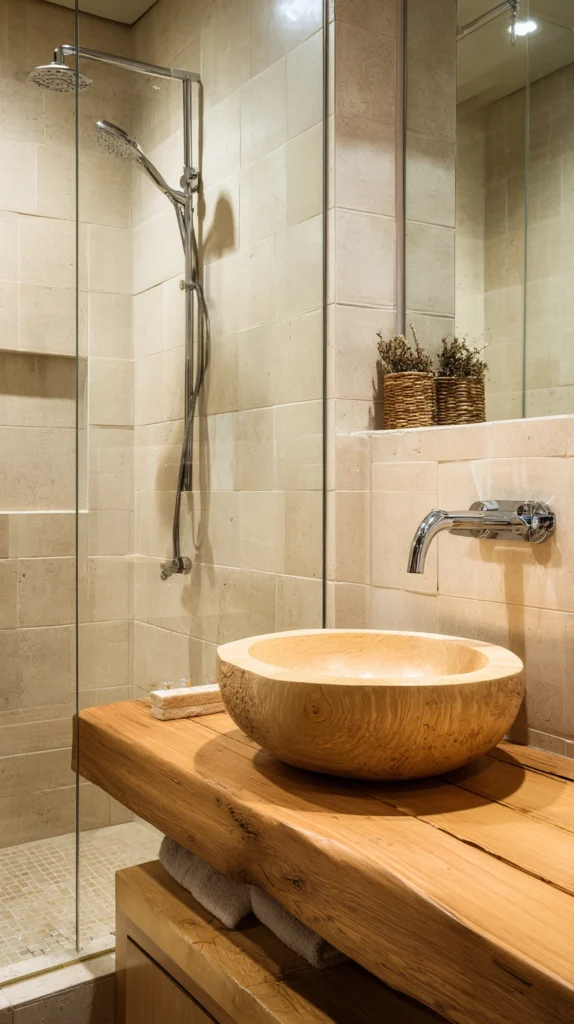
Hinoki cypress is a wood sacred to Japanese bathing culture. Traditionally used to construct ofuro — Japanese soaking tubs — hinoki has a natural antibacterial quality, releases a calming cedar-like scent when wet, and ages beautifully over time.
If space allows, a compact hinoki soaking tub is one of the most luxurious Japandi additions you can make to a small bathroom. If a full tub is out of reach, a simple hinoki bath stool or shower bench brings the same cultural reverence and sensory pleasure into the space at a fraction of the cost and footprint.
10. Keep Storage Hidden and Intentional
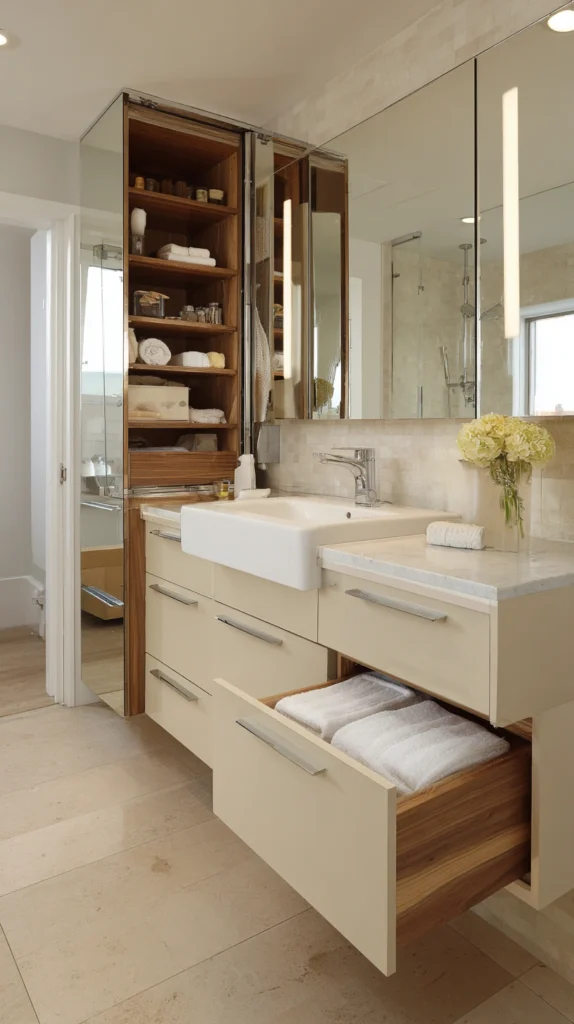
Clutter is the enemy of Japandi design. In a small bathroom, visible clutter is doubly damaging it shrinks the space and disrupts the sense of calm. The solution is storage that conceals without compromising the aesthetic.
Recessed niches in the shower wall, a floating vanity with deep drawers, a mirrored cabinet that replaces a standard mirror, and woven baskets tucked beneath a shelf are all excellent options. The Japanese concept of ma — the beauty of negative space — applies here. Resist the urge to fill every surface. Let some areas breathe. The empty space is part of the design.
11. Layer Textures Instead of Colors
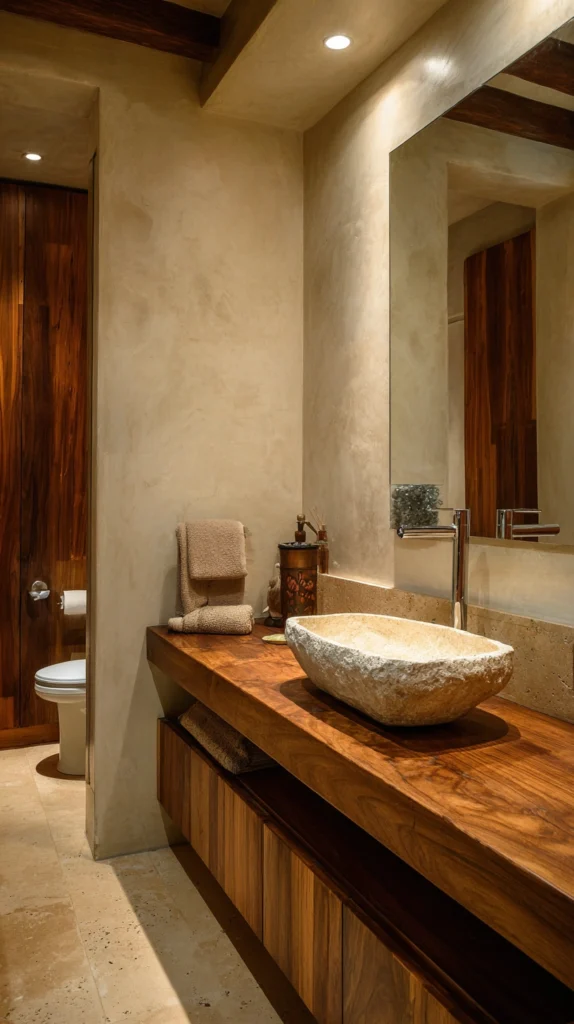
Since the Japandi palette is deliberately restrained, texture becomes the primary design tool. A small bathroom can feel rich and layered without a single bold color if you mix materials thoughtfully — smooth ceramic against rough linen, polished stone against raw wood, matte walls against a glossy tile floor.
Textured plaster walls are particularly popular in Japandi interiors right now, offering depth and warmth without pattern or color. A bouclé bath mat, a rattan towel basket, and a rough-hewn soap dish can add enormous tactile interest to a space that reads as calm and unified from a distance.
12. Install Indirect or Warm Lighting
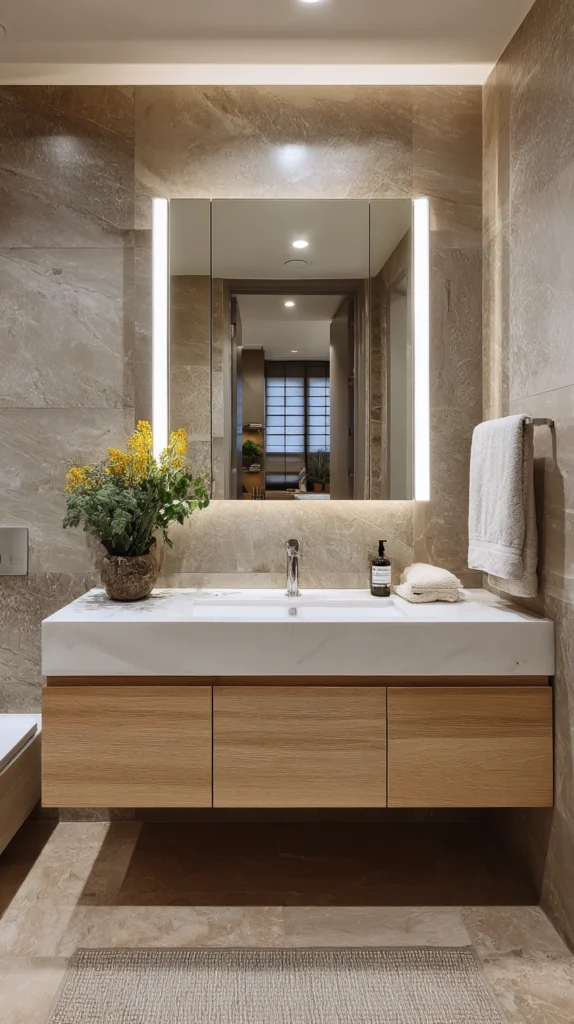
Lighting is one of the most underrated elements of bathroom design. Harsh overhead lighting flattens surfaces, eliminates shadow, and makes even beautiful materials look cheap. In a Japandi bathroom, the goal is warm, layered, and indirect light.
Consider a backlit mirror for gentle, flattering light at the vanity. Add warm LED strip lighting beneath a floating vanity or along a recessed ceiling detail. Wall sconces in matte black or brushed brass at either side of the mirror provide soft, even light without the harshness of a ceiling downlight. The effect should feel like candlelight — intimate, warm, and deeply human.
13. Use a Shoji-Inspired Room Divider or Frosted Glass
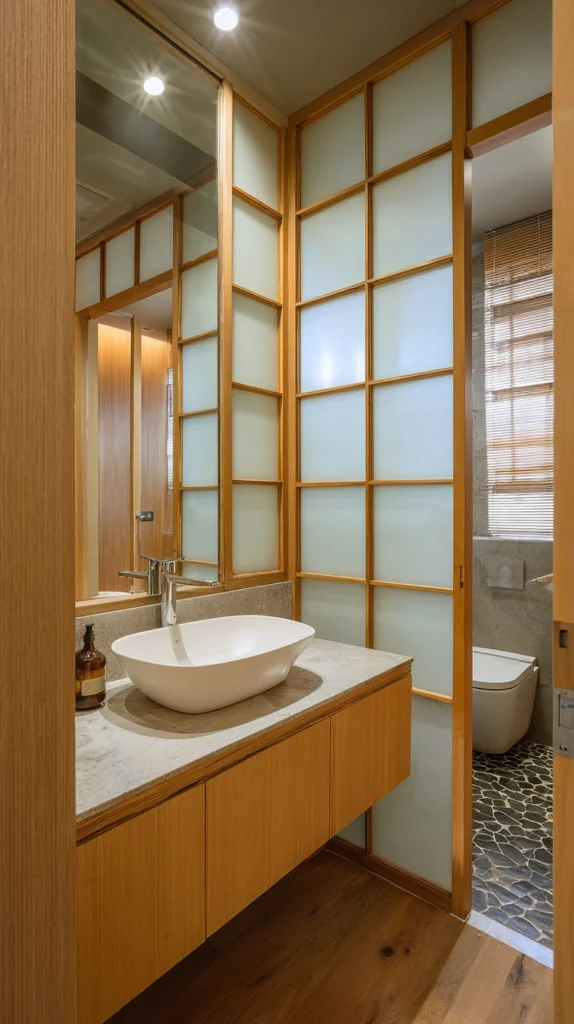
Shoji screens — the Japanese paper and wood lattice panels used to divide spaces — are one of the most iconic elements of Japanese interior design. In a bathroom, you can echo this aesthetic with frosted glass panels used to separate a toilet area from the main bathroom, or as a shower screen with a subtle grid pattern.
This maintains the lightness and translucency that Japandi interiors prize while adding a distinctly cultural reference. Even a frosted glass window with a simple wooden frame can bring this quality of filtered, diffused light into the bathroom — the Japanese call it komorebi, the dappled interplay of light and shadow through leaves.
14. Display Only What Is Beautiful
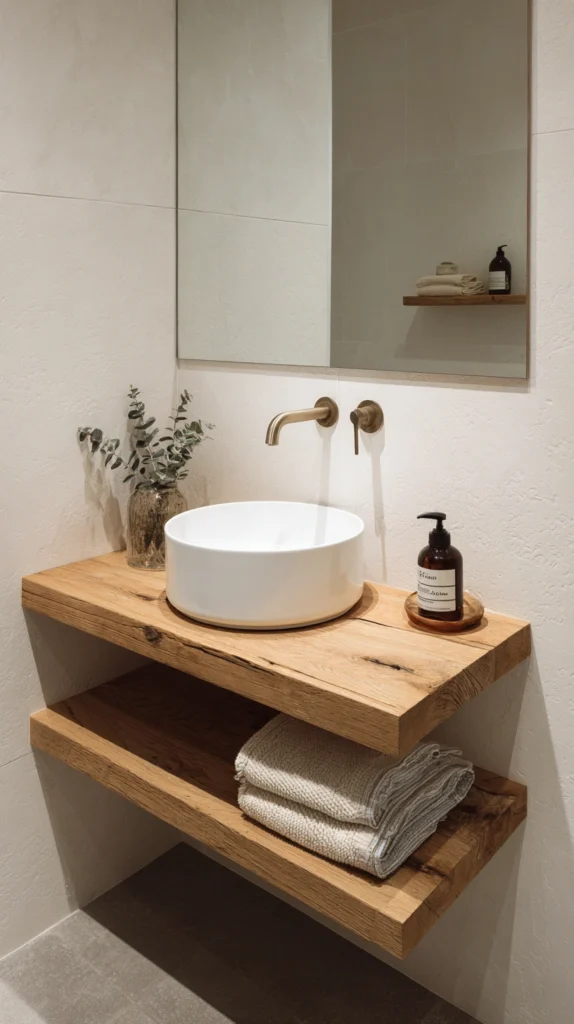
In a Japandi bathroom, everything on display should be intentional and beautiful. A single glass bottle of hand soap instead of a plastic pump. A small ceramic dish holding one bar of artisan soap. A folded linen towel draped over a rail rather than a stack of terry cloth towels crammed onto a shelf. A single dried eucalyptus stem in a bud vase.
The art of Japandi curation is learning to edit — to remove things until only the essential and the beautiful remain. In a small bathroom, this editing process also has the practical benefit of making the space feel twice as large.
15. Embrace Slowness as a Design Intention
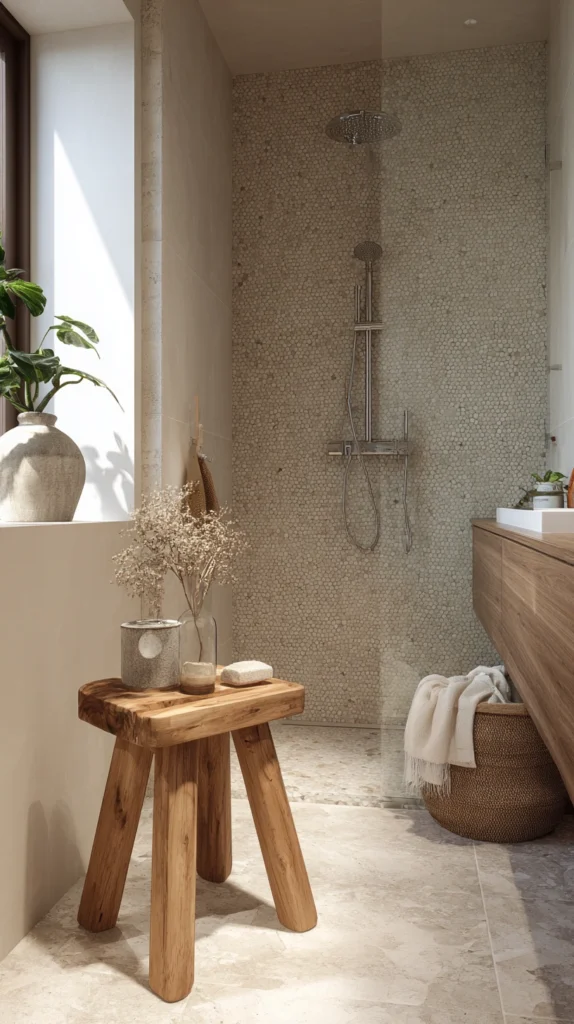
Perhaps the most important Japandi idea isn’t about materials or colors at all — it’s about intention. Both Japanese and Scandinavian cultures have a deep appreciation for the ritual of bathing, for slowing down, for treating the bathroom not as a functional utility room but as a place of restoration.
Design your small bathroom with this intention in mind. Every choice — the soap you display, the towel you hang, the plant you choose — should support a sense of presence and care. When a space is designed with that kind of thoughtfulness, even the smallest bathroom becomes somewhere you genuinely want to spend time.
The Bigger Picture
Japandi design proves that small doesn’t have to mean compromise. With the right philosophy guiding your choices — one rooted in simplicity, nature, craftsmanship, and intentional living — a small bathroom can become one of the most peaceful and considered rooms in your home.
The beauty of this aesthetic is that it asks you to slow down before you spend, to question before you add, and to find meaning in the materials and objects you choose to live with every day.