15 Home Inspo Ideas for a Cozy, Stylish Space
There is a word that has been so thoroughly overused in the domestic design conversation that it risks losing its meaning entirely: cozy.
Scroll through enough interior design content and the word attaches itself to everything — the stark minimalist living room with a single throw on the arm of a white sofa, the cavernous open-plan space with an undersized rug, the grey-on-grey bedroom that is technically styled but gives nothing back to the person who sleeps in it.

True coziness is not an aesthetic — it is a physical and psychological condition produced by specific environmental qualities: warmth, softness, enclosure, the sense that a room has been arranged for the genuine comfort of the people in it rather than for the approval of a camera.
The stylish home and the cozy home are not in opposition — the distinction between the home that is merely stylish and the home that is stylish and genuinely comfortable to be in is not a question of how much money has been spent or how carefully the furniture has been selected, but of whether the person who created the space was thinking about how it would feel to live in it or only how it would look in a photograph.
Here are fifteen ideas for achieving both simultaneously — rooms that are genuinely beautiful and genuinely wonderful to be in, in the specific combination that makes a house feel like a home.
1. Layer Your Textiles Far More Than You Think Is Necessary
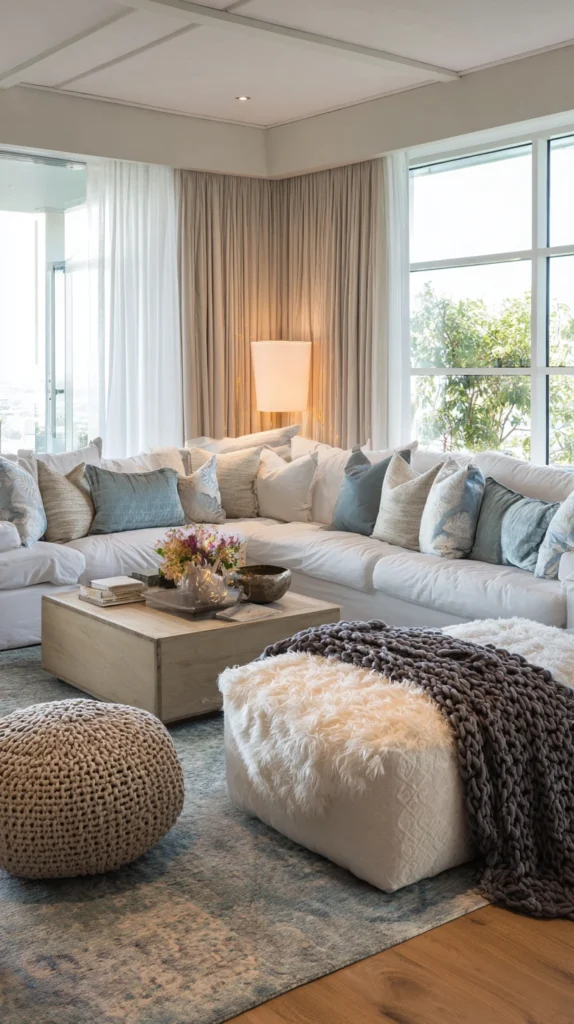
The single most reliably effective intervention available for making any room immediately more comfortable, more personal, and more visually rich is the addition of textiles — rugs, cushions, throws, curtains, upholstery — in quantities and combinations that most people’s instinct toward restraint prevents them from attempting.
The well-layered room is not the room with one nice cushion on each sofa seat and a single throw draped over the arm — it is the room with four to six cushions in complementary sizes, textures, and tonal variations on the sofa, a generous wool throw within easy reaching distance of every seat, a rug of sufficient size that all the primary seating pieces have their front legs on its surface, and curtains of sufficient weight and drop that they pool slightly at the floor.
Each textile layer adds a dimension of tactile warmth and visual depth that no hard surface — no paint, no tile, no timber — can replicate, and the combination of multiple textile layers creates the specific enveloping quality that genuine coziness requires.
Choose textiles in natural materials — wool, linen, cotton, velvet, sheepskin — whose tactile quality under hand and body is qualitatively richer than their synthetic equivalents at every budget level.
2. Choose Warm Paint Colors with Confidence
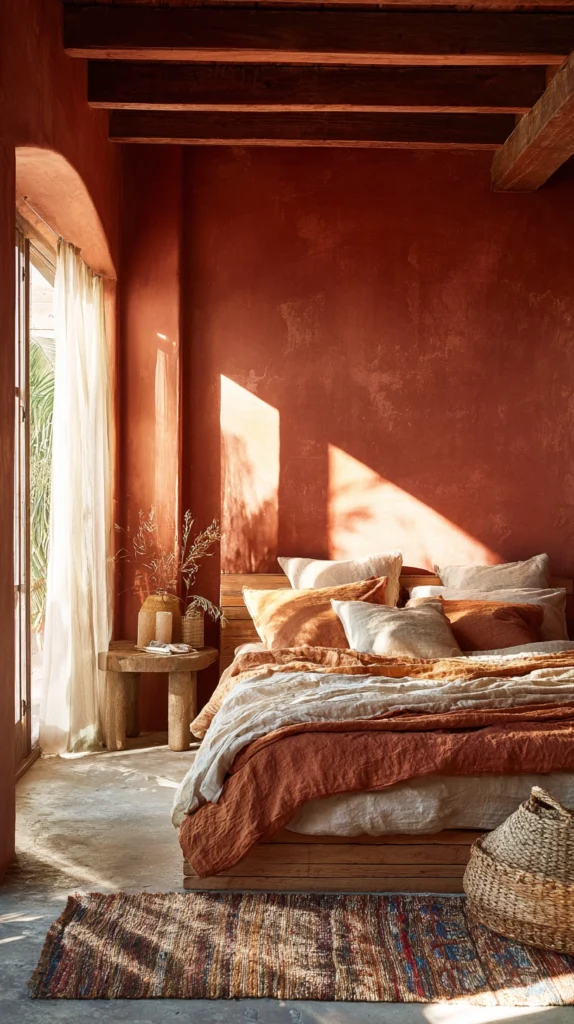
The white and grey interior has dominated residential design for long enough that the rooms painted in warm, saturated tones — the terracotta living room, the forest green study, the deep ochre bedroom — still feel like acts of considerable design courage when they are encountered in person, despite having appeared in every major interior design publication for the past several years.
Courage is rewarded consistently. A room painted in a warm, saturated color has a quality of enveloping comfort that the white room, however beautifully furnished, cannot approach — the color wraps the room’s occupants in a chromatic environment that feels warmer, more intimate, and more personally expressive than any neutral alternative.
The key to choosing a warm paint color with confidence is to test it generously — large paint sample boards viewed in the room’s specific light at different times of day — before committing, and to trust the instinct toward the slightly deeper, slightly more saturated version of the color you are considering. The paint shade that looks too dark on the sample card is almost invariably the right choice once it is on the wall and seen in relation to the room’s furniture and light.
3. Invest in One Genuinely Good Sofa
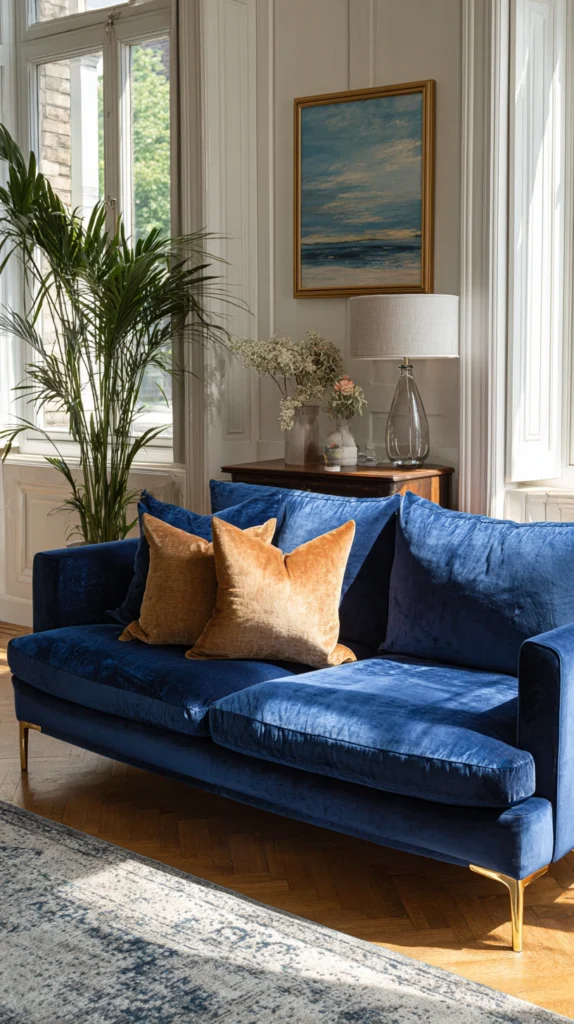
The sofa is the living room’s most used piece of furniture and the one whose quality — in construction, in materials, in the comfort it provides over years of daily use — has the greatest single impact on the experience of the room.
Most people significantly underinvest in their sofa relative to its importance, spending generously on decorative accessories and finishes while accepting a sofa of inadequate quality because the price of a genuinely good one feels disproportionate. It is not disproportionate.
A sofa of genuine quality — with a hardwood frame, quality spring seating, and a feather-wrapped foam cushion filling that recovers its shape reliably — provides a daily comfort experience that the cheaper alternative cannot approach, and it does so for a period of ten to twenty years that amortizes the additional cost to a very small daily increment.
Choose a sofa whose depth and seat height suit your specific body proportions — the sofa that is too deep for shorter people to sit comfortably with back support, or too low for taller people to rise from without difficulty, fails at its primary function regardless of its aesthetic quality.
4. Bring Natural Materials Into Every Room
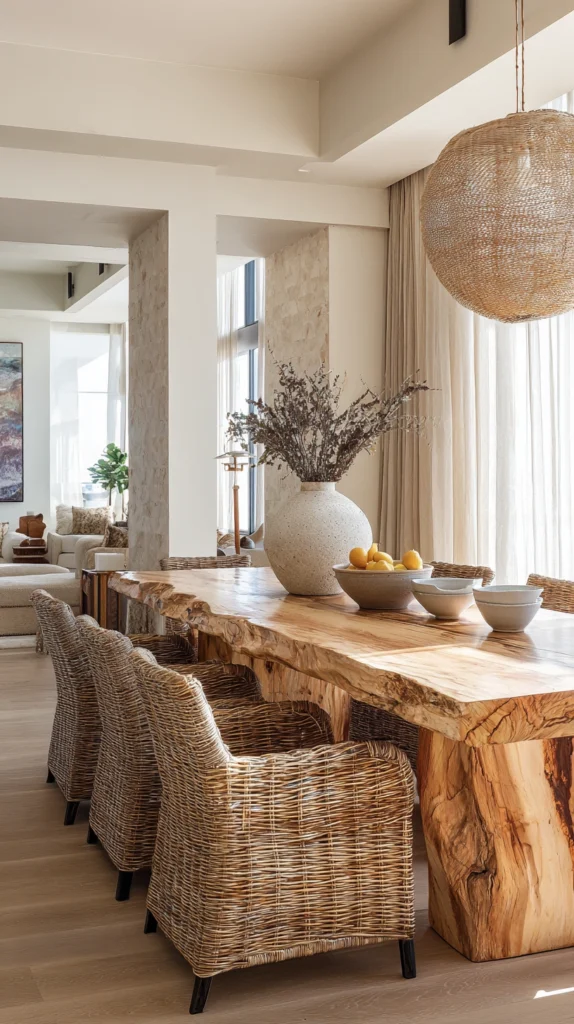
The home that uses natural materials generously — timber, stone, wool, linen, rattan, leather, ceramic — has a warmth and tactile richness that no purely synthetic interior can replicate, because natural materials carry within their surfaces the evidence of their biological and geological origins in ways that synthetic materials, however convincingly they imitate, cannot fake.
The grain of a timber floor is the record of the tree’s growth, each ring visible in the board’s surface. The texture of a linen cushion is the woven record of the flax plant’s fiber. The surface of a stone bowl carries the mineral variation of its geological formation.
These surfaces engage the eye and the hand with an interest and a depth that no manufactured material of equivalent function can provide, and their presence in a room creates the quality of material authenticity that makes a space feel genuine rather than decorated. Introduce natural materials at every scale — a large timber dining table and a small wooden salad bowl, a stone floor and a ceramic mug — so that the natural material presence is consistent throughout the home rather than concentrated in a few large statement pieces.
5. Create Deliberate Pools of Light
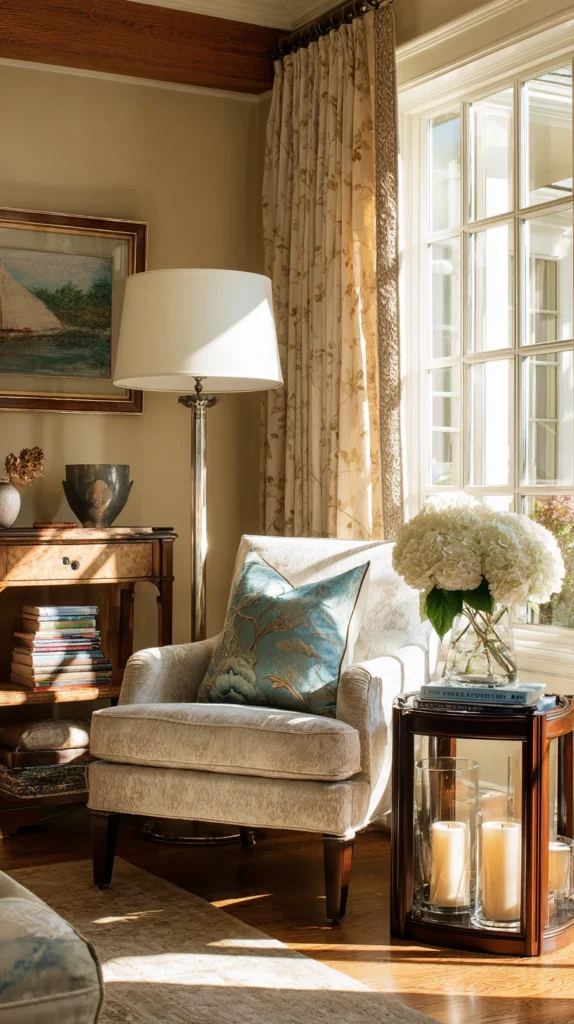
The overhead light — the single ceiling fixture that illuminates the room with even, undifferentiated brightness from above — is the lighting condition least suited to the creation of a cozy, intimate atmosphere, and the first step toward a genuinely comfortable room is the addition of multiple lower light sources that create the pools of warm illumination that the cozy interior requires. Table lamps on side tables beside the sofa, creating warm circles of light around the primary seating positions.
A floor lamp in the reading corner, directing warm light onto the chair and the page. Candles on the dining table, the coffee table, and the mantelpiece, their warm flame light creating the specific dynamic quality that no electric source can replicate. A picture light above a significant artwork, creating the focused illumination that the work deserves.
These multiple, lower, warmer light sources replace the overhead fixture’s flat utility with the layered atmosphere of a room that has been lit for the people in it rather than simply made visible. Install dimmer switches on every circuit that can accommodate them, and use the overhead light only when the room’s functional requirements demand it.
6. Display Books as a Design Element
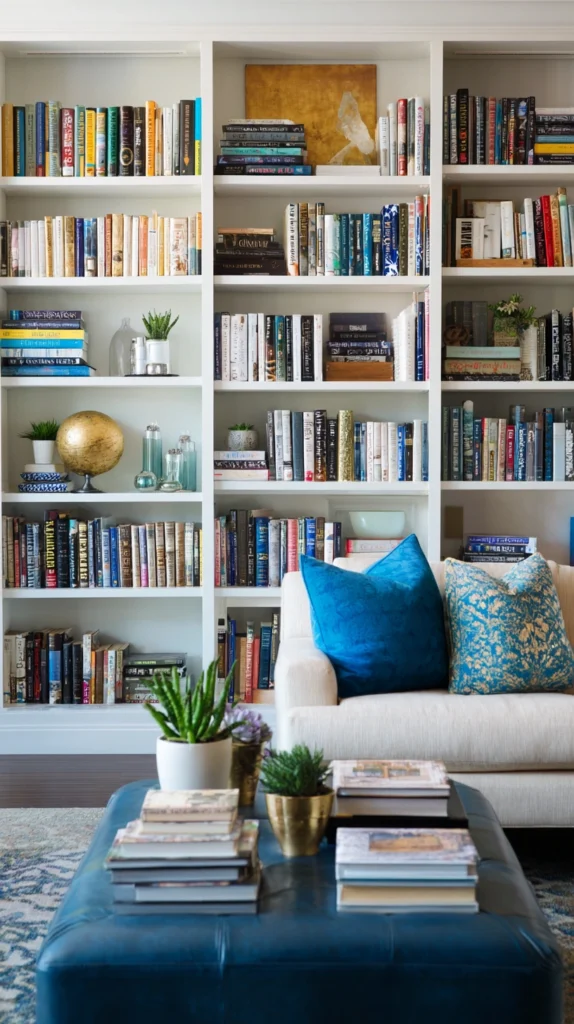
Books are the home’s most versatile and most personal decorating material, serving simultaneously as intellectual resources, as evidence of a lived and reading life, and as decorating elements of extraordinary versatility — their varied spines creating organic color compositions on shelves, their stacked horizontal forms serving as improvised risers and side tables, their covers providing the art for a coffee table surface.
A home that treats books as design elements — that places them on shelves with genuine aesthetic intention, stacks them thoughtfully on coffee tables and window ledges, allows them to accumulate in the rooms where they are read rather than restricting them to a designated bookcase — has a specific intellectual warmth and personal depth that no amount of purely decorative accessory investment can replicate.
Arrange books on open shelves with a combination of vertical shelving and horizontal stacking, mixing books with small objects and plants, and do not color-organize unless the resulting palette genuinely suits the room — the artificial rainbow of color-organized books is more Instagram-ready than genuinely beautiful in a room that is actually lived in.
7. Incorporate a Statement Rug as the Room’s Foundation
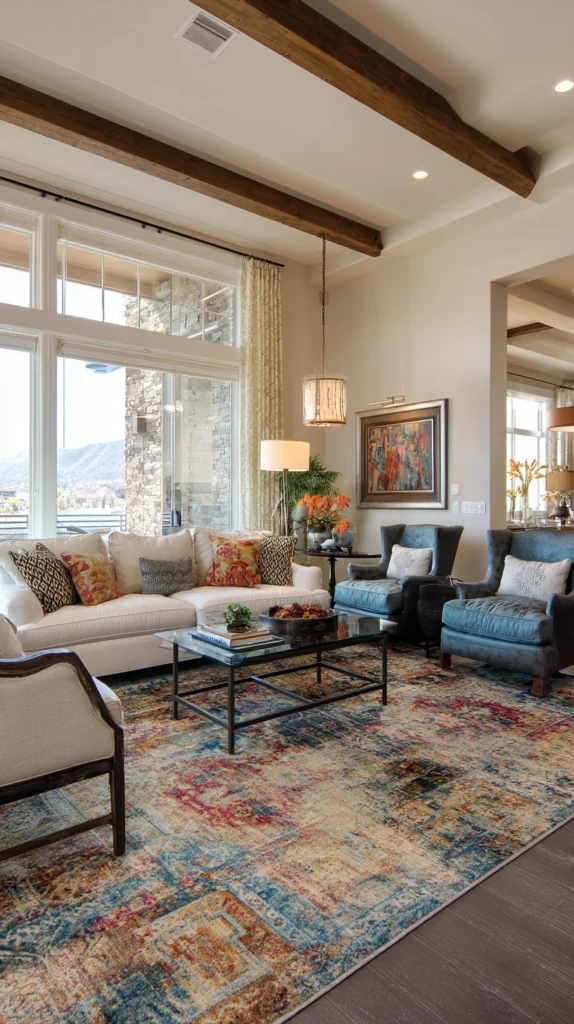
The rug is the room’s most important foundational design element — the surface that anchors the furniture arrangement, defines the room’s primary zone, and establishes the color and pattern language from which the surrounding design develops. A rug of genuine quality and genuine scale — large enough that all the primary furniture pieces have at least their front legs on its surface, substantial enough in pile and material that it softens the sound of the room and warms the floor perceptibly — creates a room with a grounded, organized quality that the same furniture arrangement on bare floor entirely lacks.
The rug choice should be made first rather than last in the living room design sequence — choosing the rug after all the furniture and paint has been selected produces the common problem of a rug that technically coordinates with everything but genuinely suits nothing. Choose a rug whose pattern and color contains several of the room’s existing tones alongside one or two tones that the room needs but currently lacks.
8. Add Architectural Interest with Simple Paneling
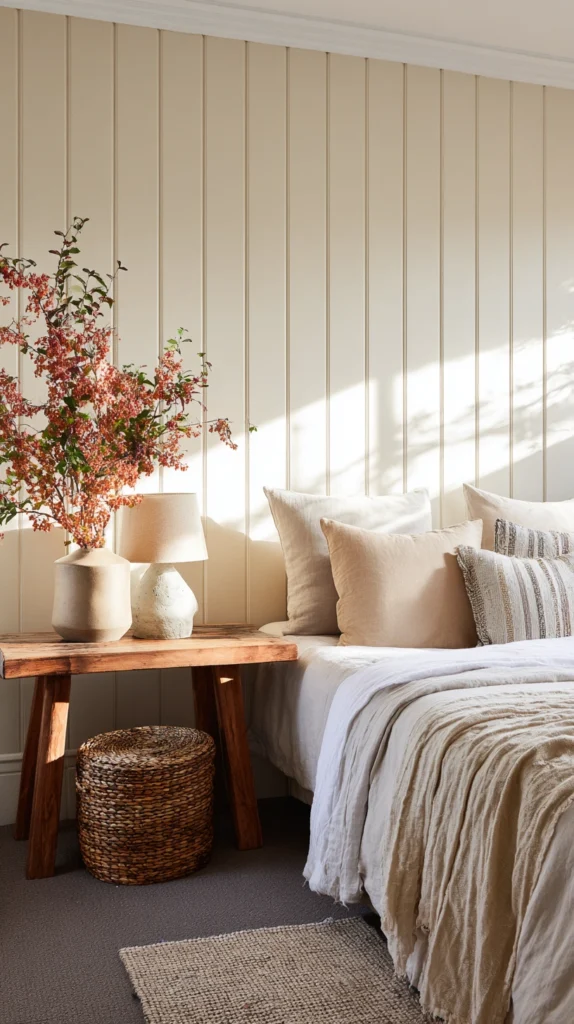
Wall paneling — the addition of timber moldings, battens, or pre-made panel systems to a flat wall surface to create the visual interest and architectural depth of a room with genuine period detail — is the home improvement that delivers the highest ratio of visual impact to installation difficulty available in residential interior design.
Simple vertical batten paneling on a feature wall, painted in the same color as the wall surface so that the shadow lines between the battens create the effect rather than color contrast, costs a morning of installation time and a modest material budget, and creates a room with the specific quality of architectural consideration that the plain-walled room entirely lacks.
More elaborate wainscoting, applied molding panels in a Georgian or Regency pattern, or horizontal shiplap boarding in a natural timber finish create proportionally greater visual impact for proportionally greater investment.
The paneled wall creates depth, shadow, and the suggestion of quality craftsmanship in a room even before furniture and decoration are introduced, and its contribution to the room’s overall coziness — the sense of a thoughtfully constructed interior — is significant and consistent.
9. Keep Surfaces Edited but Not Empty
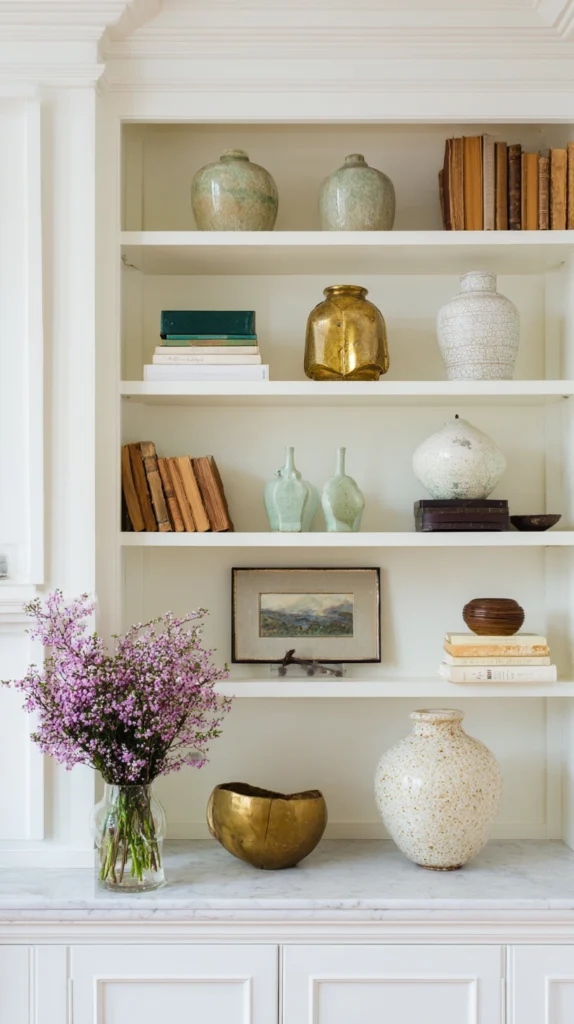
The domestic interior’s styling challenge is not usually the absence of objects but the management of too many — the accumulation of purchases, gifts, and sentimental objects that gradually colonizes every available surface until the room feels cluttered rather than curated.
The solution is not the minimalist’s prescription of empty surfaces — empty surfaces create rooms that feel unfinished and unlived in rather than serene — but the disciplined editor’s approach of keeping surfaces populated with a small number of genuinely good objects rather than a large number of adequate ones.
A mantelpiece with five carefully chosen objects of varying height, material, and personal significance is more beautiful and more personal than the same mantelpiece covered with fifteen objects, most of which are there because no one has decided where else they should go.
Edit surfaces to the point at which every remaining object can be named and its presence justified — by beauty, by function, or by the personal significance that makes an object irreplaceable — and resist the re-accumulation that follows every editorial clear-out.
10. Make the Bedroom a Genuine Sanctuary
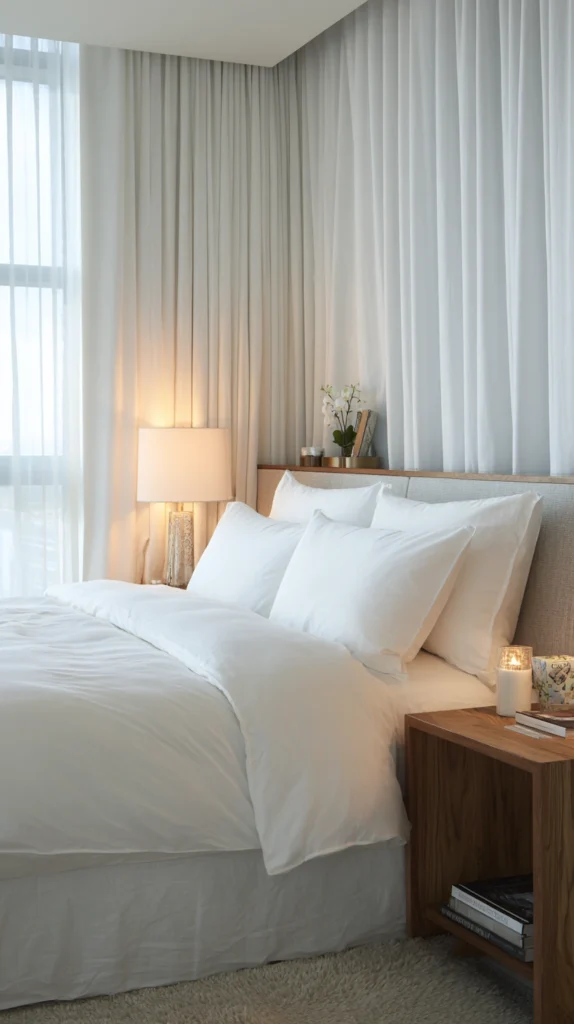
The bedroom’s primary function — the provision of a restorative sleeping environment — is undermined by almost every design decision that prioritizes its secondary functions: the television, the work desk, the exercise equipment, the laundry pile.
The bedroom that is designed first and most completely as a sleeping sanctuary — with quality linen, adequate darkness provision, a temperature that can be regulated independently of the rest of the house, and the absence of the alerting stimuli that the brain associates with wakefulness — produces a sleeping quality that has downstream effects on every waking hour of the day.
This does not require significant expenditure — quality blackout blinds, the removal of the television, a consistent temperature, and genuinely good bedding are the primary requirements — but it does require the discipline of protecting the bedroom’s primary function from the encroachment of other domestic activities.
The secondary functions of the bedroom that cannot be eliminated should be organized so that they are invisible during the hours when the room is used for sleeping — the work desk hidden behind a screen, the exercise equipment in a closet, the laundry in a closed hamper.
11. Introduce Scent as a Daily Design Element
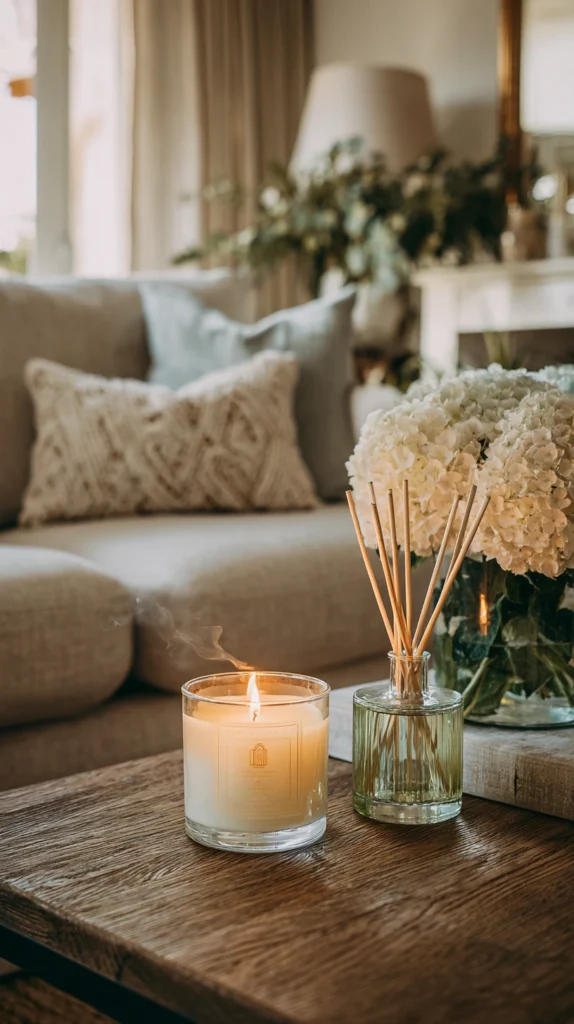
The olfactory dimension of the domestic interior is the one most completely neglected by conventional interior design guidance, despite being the sensory dimension with the most direct and most powerful influence on mood, memory, and the specific emotional quality of homecoming — the transition from the outside world to the home environment.
A home with a consistent, beautiful scent — the warm vanilla and sandalwood of a quality scented candle, the botanical freshness of a diffuser using quality essential oils, the specific olfactory identity of a home that is clean, warm, and aired without the artificial fragrance of commercial air freshener — creates a quality of sensory welcome that the visual environment alone cannot provide.
The scent choices for different rooms should reflect their specific atmospheric purpose: energizing citrus and herbal scents in the kitchen, calming lavender and sandalwood in the bedroom, warm woody scents in the living room, fresh linen scents in bathrooms.
The scent of a home is its most immediately perceived environmental quality and the one that contributes most directly to the feeling of arriving somewhere that is genuinely, specifically, unmistakably yours.
12. Hang Artwork at the Right Height
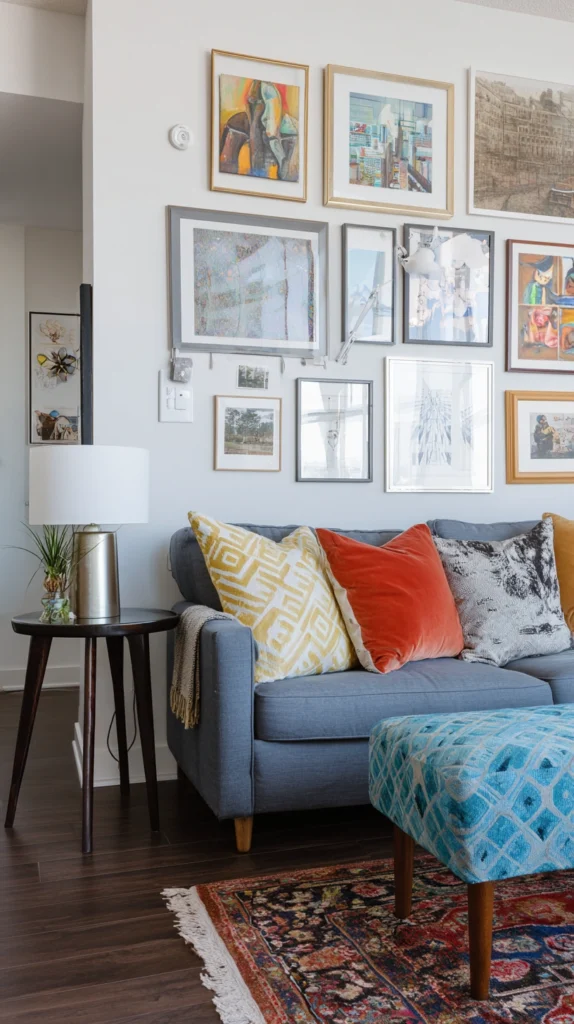
The most consistently committed error in domestic art hanging — committed across every style and every budget of residential interior — is the placement of artwork too high on the wall. Art hung at eye level when standing creates the experience of looking up at the work from every seated position in the room, which is both visually uncomfortable and relationally distant — you are below the art rather than in relationship with it.
The correct hanging height places the artwork’s center at approximately one hundred and forty-five to one hundred and fifty centimeters from the floor, which is the average eye height for a standing adult and creates the correct relationship between the artwork and the viewer in both the standing and seated positions.
A gallery wall of multiple works should maintain this average center height across the entire arrangement, with individual pieces arranged around it in a composition that varies in height while maintaining the overall group’s center of visual mass. The correctly hung artwork has a quality of presence and engagement that the same artwork at the wrong height entirely lacks.
13. Use Mirrors to Make Small Rooms Feel Generous
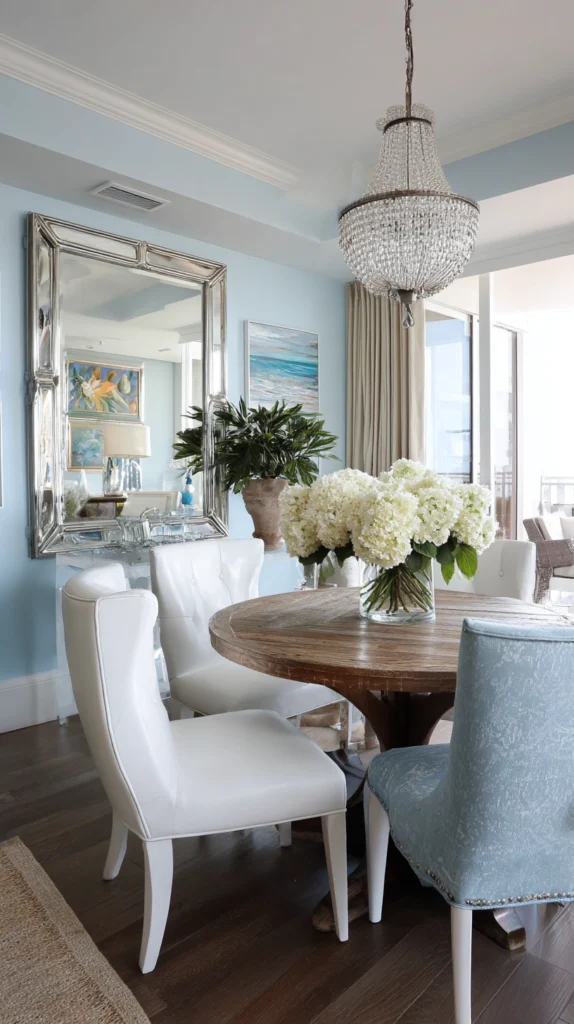
The mirror’s spatial function — the amplification of natural light, the visual doubling of the room’s depth, the suggestion of spatial generosity beyond the room’s actual boundaries — is one of the most powerful and most underutilized tools available for improving the quality of small or poorly lit rooms without any structural intervention.
A large mirror positioned on the wall opposite the room’s primary window reflects the window’s light back across the room, creating the impression of a second window and significantly increasing the room’s perceived brightness. A mirror at the end of a narrow corridor creates the illusion of continuation beyond the wall, transforming a claustrophobic enclosed space into one with apparent depth.
A mirrored wall in a small dining room doubles the visual presence of the table setting, the candlelight, and the gathered company, creating a dinner atmosphere of considerable theatrical richness. The mirror should be chosen for the quality of its frame as much as the quality of its glass — a beautiful mirror frame contributes to the room’s decorative scheme independently of its reflective function.
14. Create a Reading Corner as a Room Within a Room
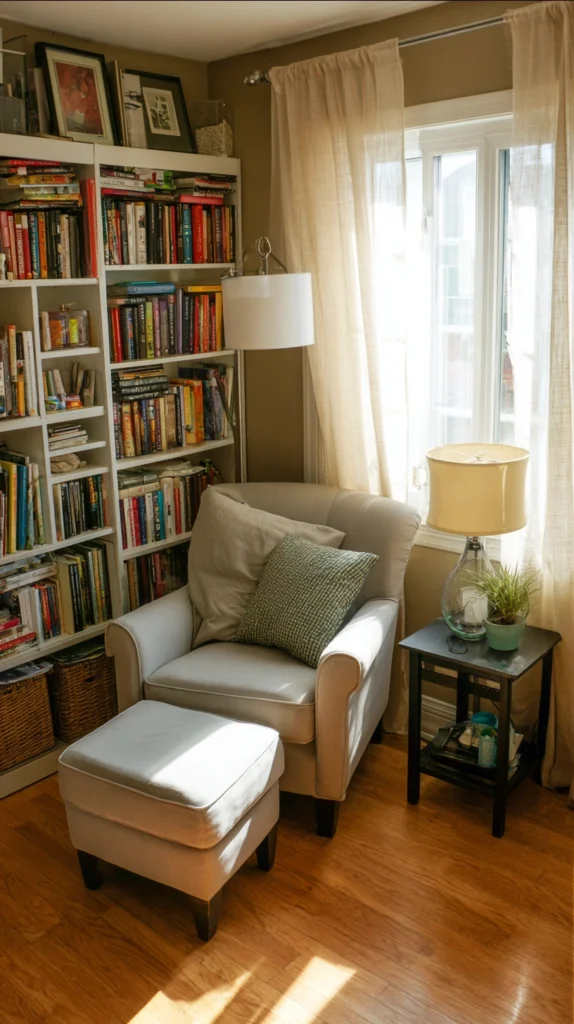
The reading corner — a specific, defined area of a larger room equipped with everything needed for extended, comfortable reading — is the domestic design gesture that most directly expresses the home’s commitment to the pleasures of its occupants rather than the maintenance of its appearance.
A well-designed reading corner requires only four elements: a genuinely comfortable chair whose depth and seat height suit the reader’s proportions, a lamp of adequate brightness positioned to illuminate the page without glare, a surface within easy reaching distance for a drink and a resting book, and a sense of enclosure that creates a psychological boundary between the reading zone and the rest of the room.
The enclosure can be as simple as the positioning of the chair in a corner with its back to the room, a bookcase flanking one side, and a floor lamp creating a cone of warm light that defines the zone.
A curtain hung behind the chair, a canopy above it, or built-in shelving on three sides creates a stronger enclosure and a more genuinely den-like quality. The reading corner is the room’s most honest commitment to the simple domestic pleasure of sitting still in a comfortable place and reading without interruption.
15. Make Your Home Smell, Feel, and Sound Like Comfort
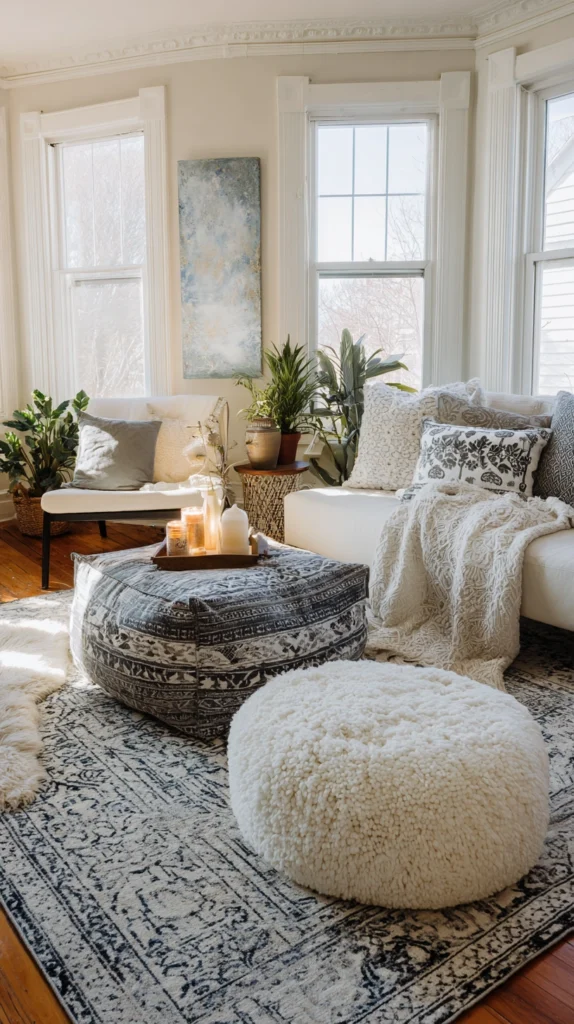
The final home inspo idea is the most holistic and the most personally meaningful: the recognition that a genuinely cozy, stylish home is one that engages all the senses rather than only the visual one, and that the investment in the non-visual dimensions of the home’s environment — the scent, the acoustic quality, the tactile richness of the surfaces that are touched daily, the quality of the air — produces a quality of domestic comfort that no amount of visual styling can substitute for. The room that looks beautiful in a photograph but is acoustically harsh, scentless, and furnished with materials that feel cheap under the hand is a room that fails at its fundamental purpose — the creation of an environment that is genuinely wonderful to spend time in.
The room that may not photograph spectacularly but that is warm, fragrant, acoustically soft, textilely generous, and furnished with objects that are genuinely pleasant to touch is a room that delivers on the home’s most essential promise: that within it, life is simply, consistently, and without apology, more comfortable and more pleasurable than it would be anywhere else.