15 Home Decor Trends Designers Say Are Timeless
Every few years the interior design industry generates a new wave of trends — a color of the year, a material moment, a furniture silhouette that suddenly appears everywhere simultaneously and then recedes almost as quickly as it arrived.
The homeowner who has decorated through several of these cycles knows the particular frustration of a space that felt current and considered at the moment of its creation and dated within five years, and the equally particular pleasure of discovering that some decisions — a specific floor, a particular palette, a quality of light — seem to improve with age rather than dating, to feel more right with every passing season rather than less.
The designers who have been working long enough to observe these cycles with some perspective consistently identify a set of principles, materials, and aesthetic choices that do not participate in the trend cycle at all — that were relevant before the current moment and will be relevant after it.
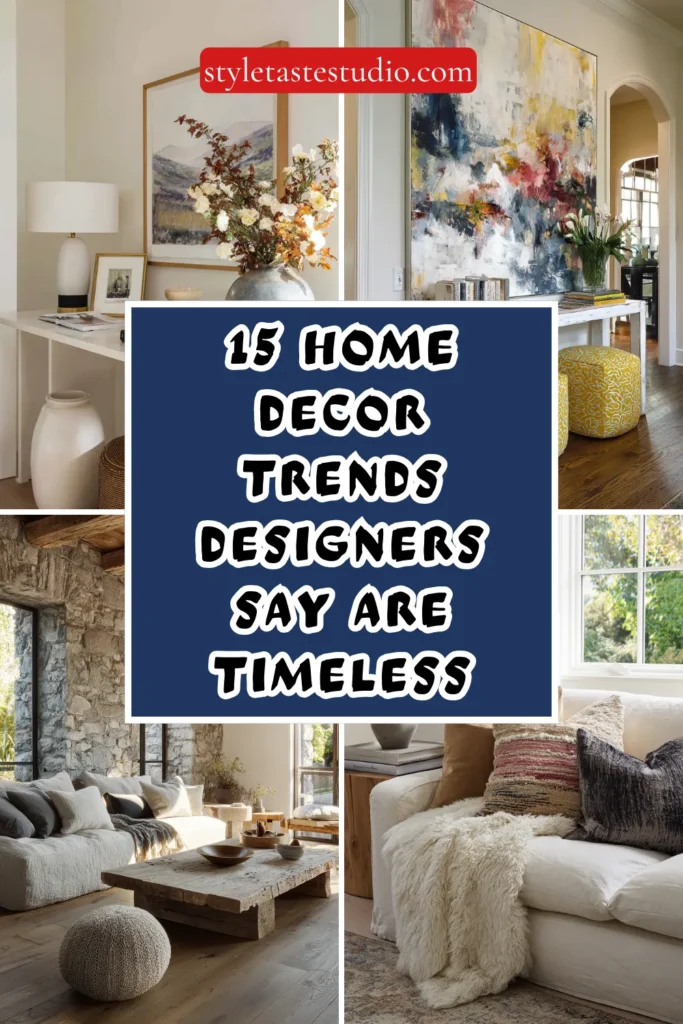
These are not boring choices. They are often the most beautiful and the most demanding choices available, precisely because they depend on genuine quality and genuine design intelligence rather than the temporary appeal of novelty. Here are fifteen of them.
1. Natural Materials Used Honestly
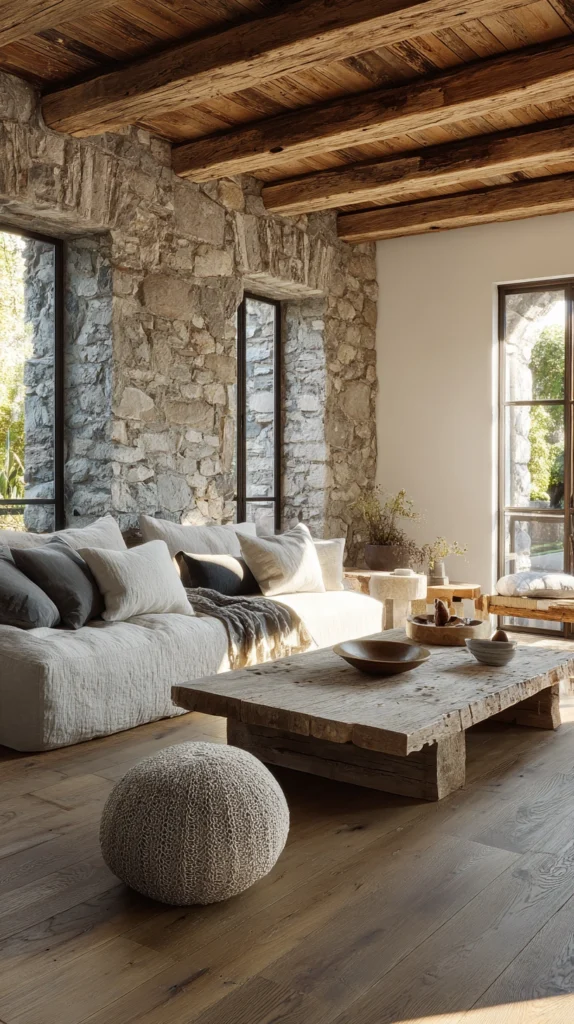
Every designer of serious reputation and long career will, when pressed for the most timeless decorating principle available, eventually arrive at the same answer: use natural materials and allow them to be what they are. Timber that shows its grain and its growth rings.
Stone that shows its mineral variation and its geological character. Linen that creases and softens and picks up the particular quality of whatever light falls through it. Wool that compresses under foot and recovers slowly, holding the warmth of a room it has been in for decades.
These materials have been present in human domestic environments for the entirety of recorded history, and their persistence is not a function of fashion but of the deep neurological response that natural materials consistently produce in human beings — a recognition of origin, a sense of organic rightness, a quality of warmth and authenticity that no synthetic alternative has yet been able to replicate fully.
The key word is honestly: natural materials used in imitation of other materials — wood-effect vinyl, stone-pattern laminate, faux marble in a material that is neither marble nor committed to being itself — lose the quality that makes the original compelling. The authenticity is the point.
2. Quality Over Quantity in Every Category
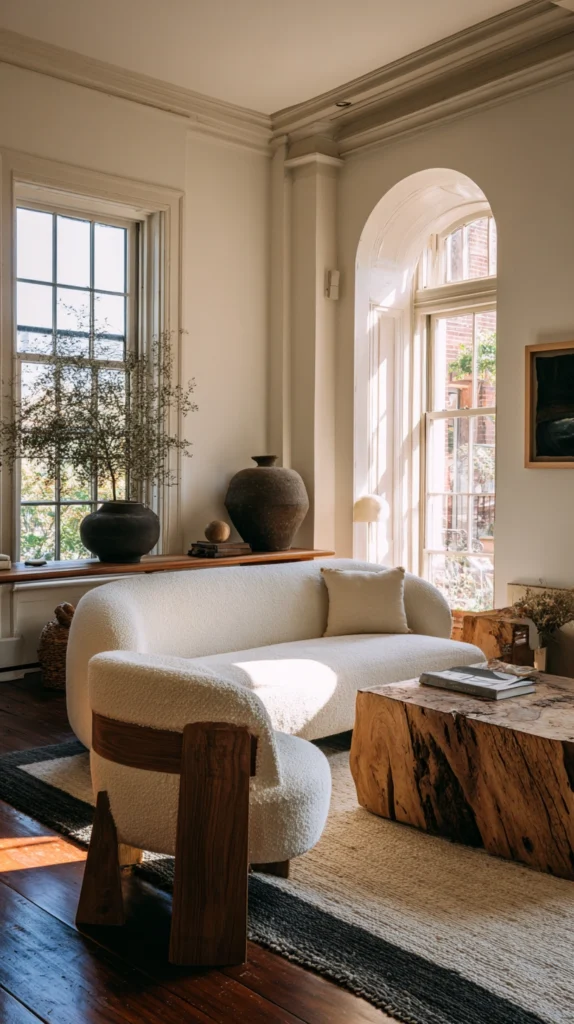
The design principle that designers most consistently articulate to clients who are setting up a new home or undertaking a significant renovation is the one that is most consistently resisted in the name of budget: buy fewer things of genuine quality rather than more things of adequate quality, and live with the gaps while saving for the right pieces rather than filling them with objects that will need to be replaced.
The sofa that will last thirty years because it is made from hardwood framing, eight-way hand-tied springs, and feather-wrapped foam cushions in a performance fabric will cost more than three sofas of equivalent size in cheaper construction — and it will be less expensive over the thirty-year period during which it is the only furniture purchase required.
This arithmetic is understood intellectually by almost everyone and practiced consistently by very few, which is why the homes that genuinely feel timeless are typically not the most expensively furnished but the most selectively furnished — spaces where every piece was chosen with deliberation and replaced almost never.
3. A Neutral Foundation with Color in the Details
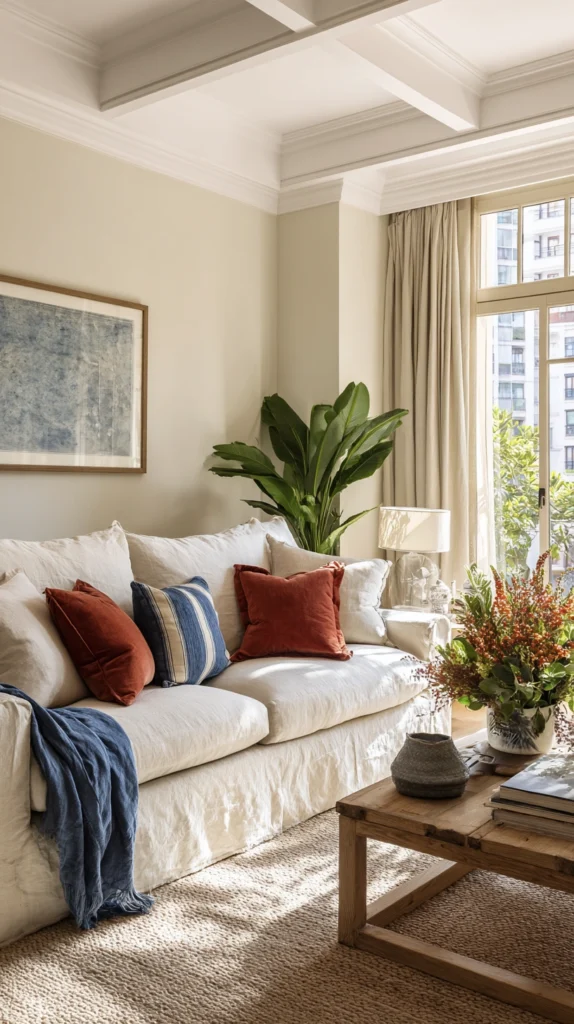
The timeless interior almost always has a neutral foundation — walls in warm white, off-white, stone, putty, or a soft greige; flooring in natural timber, stone, or a neutral woven material; upholstery in a durable neutral linen, wool, or leather — and introduces color through the elements that are most easily and most economically changed: cushions, throws, art, plants, books, ceramics, and the fresh flowers that have been replacing themselves seasonally for as long as people have been living in houses and cutting things from gardens.
This approach is sometimes criticized as timid or lacking in commitment, but the designers who advocate for it most strongly are not advocating for blandness — they are advocating for a distinction between the architectural and the decorative layers of a room, allowing the architectural layer to remain stable across decades while the decorative layer evolves with the seasons, with changing taste, and with the specific objects that a life accumulates over time. The neutral foundation is the canvas that makes every painting hung against it look right.
4. Art as the Room’s Most Personal Statement
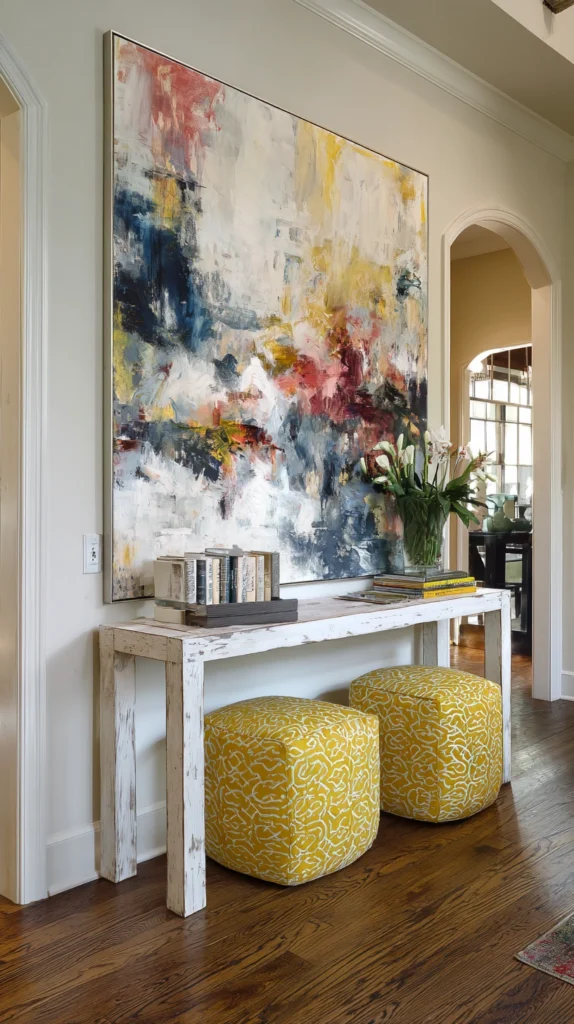
Every designer working at any level of the residential market will tell you that the quality of the art in a room — and by art they mean any object chosen for its visual merit and personal significance, from a framed child’s drawing to a significant original painting — does more for the room’s character and emotional resonance than any other single element.
Art is the evidence of the specific person who lives in the space, the proof that the room was made by someone with a genuine interior life and a personal history rather than assembled from a catalog by someone following a style prescription.
The timeless quality of this principle lies in its subjectivity: there is no trend that can date a piece of art you genuinely love, and a room with meaningful art will always feel more alive and more inhabited than an equivalent room decorated with equal skill but without it. Designers consistently advise buying art before furniture, treating it as the room’s organizing principle rather than its afterthought, and spending on it at least as generously as on any other decorating category.
5. The Power of Considered Lighting Design
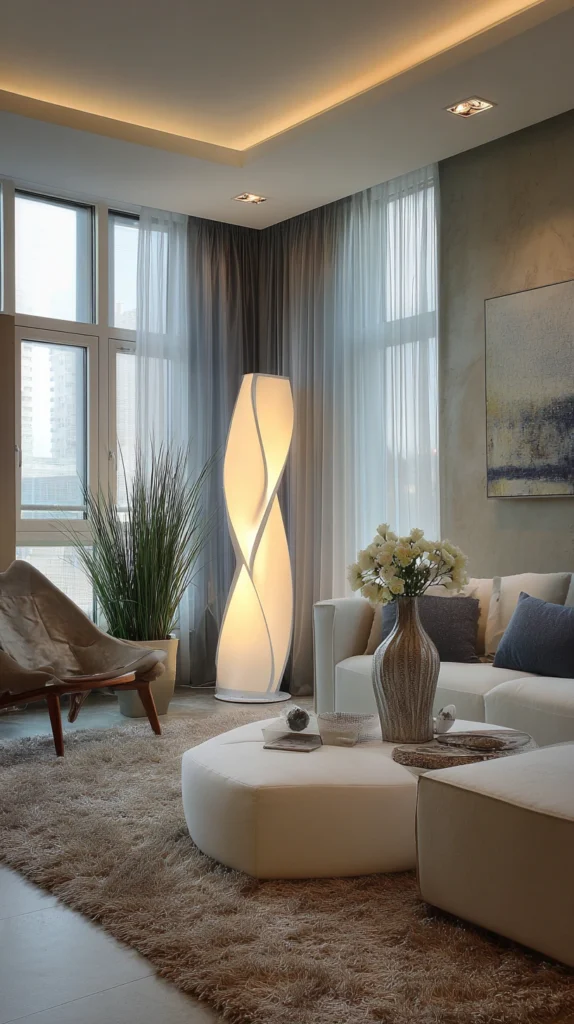
Lighting is the element of interior design that most dramatically affects the quality of daily life in a space and that is most consistently addressed as an afterthought rather than a foundation.
The designers who understand this most clearly treat lighting design as a prerequisite — something that must be resolved before any other decorating decision is made, because the quality of light in a space determines the quality of every other element within it.
A layered lighting scheme — ambient light for general illumination, task light for specific functional areas, accent light for art and architectural features, and decorative light for visual interest — creates a room that can be different at different times of day and for different purposes, adjusting from the bright clarity of a working afternoon to the warm, intimate glow of an evening dinner without changing any furnishing.
This flexibility is timeless because it responds to the constant, timeless variation of human activity and mood rather than to any fixed aesthetic preference.
6. Symmetry and Balance as Foundational Principles
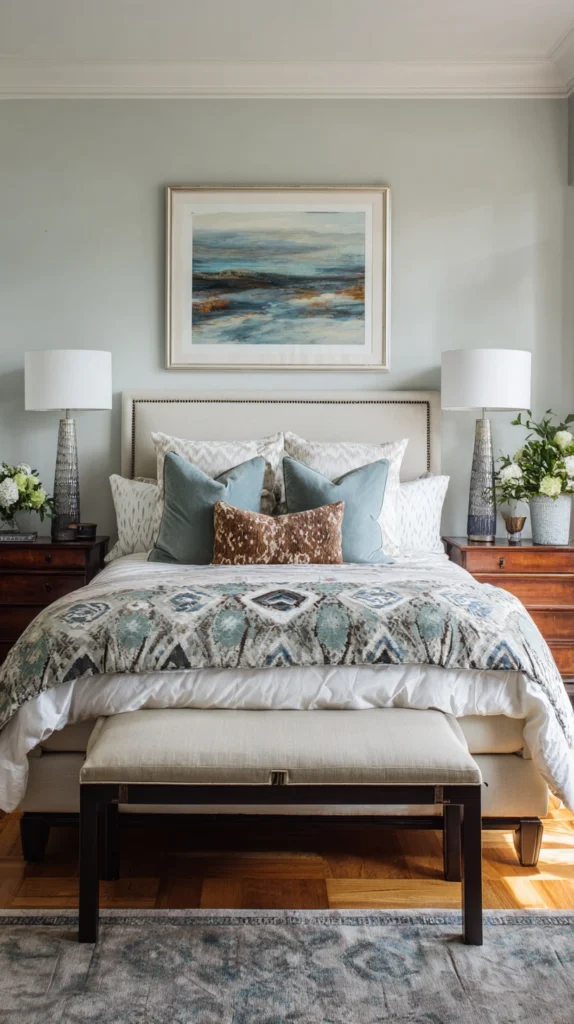
Human beings find symmetry beautiful at a level that precedes culture and education — it is a biological preference rooted in the evolutionary association between symmetrical form and health, genetic fitness, and environmental stability.
Interior designers who have understood this principle for long enough to have tested its limits consistently report that symmetry and balance in a room — matching bedside tables flanking a bed, paired chairs creating a conversation arrangement, a centered mantel composition balanced on both sides — create a quality of visual calm and order that asymmetric arrangements, however dynamically interesting, rarely replicate.
This is not to say that every room must be perfectly symmetrical, which would be both impossible in the reality of most domestic spaces and aesthetically deadening in its rigidity, but rather that the eye benefits from moments of symmetry within a room’s overall composition — anchors of visual balance around which the more organic and variable elements of the decoration can arrange themselves with freedom.
7. Layered Textiles for Warmth and Tactile Richness
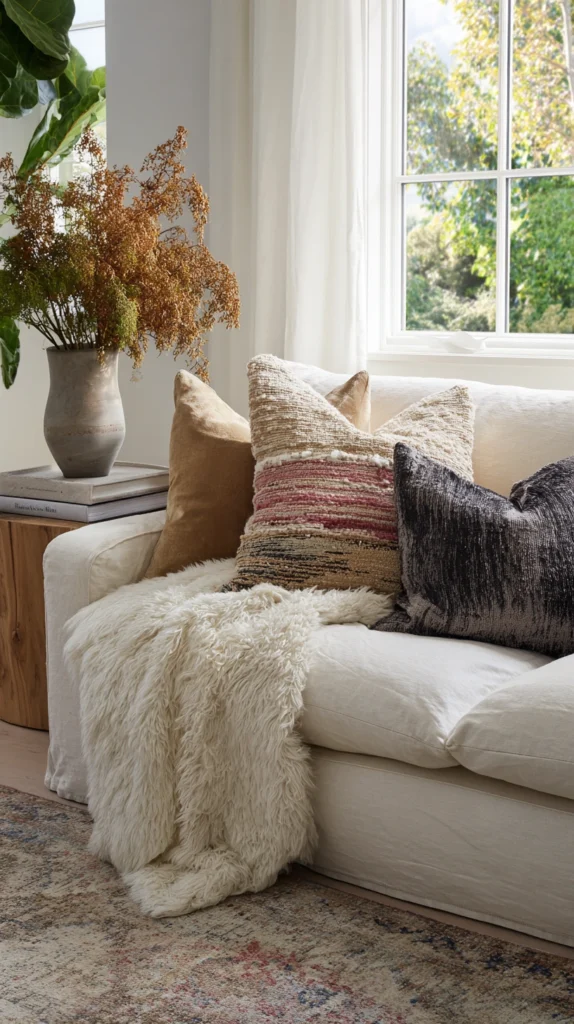
The layered textile approach — multiple fabrics of different weights, weaves, and textures combined on a single surface — is the design technique that most directly translates the abstract concept of comfort into physical reality, because it is the combination of different tactile experiences that makes a room feel genuinely enveloping rather than simply furnished.
A sofa that has a woven wool upholstery, linen cushions, a velvet bolster, and a cashmere throw offers the hand multiple different experiences of quality and warmth that a single-material sofa, however luxurious that material, cannot match.
A bed with a cotton fitted sheet, a linen flat sheet, a wool blanket, and a goose-down duvet in a quilted cover is a completely different sleeping experience from a bed with a single duvet, and not only because of the temperature regulation flexibility the layers provide.
The principle is timeless because it is rooted in the body’s experience of the physical world rather than in any cultural preference — the human nervous system’s response to tactile variety and richness is consistent across every era, every culture, and every design moment.
8. Plants as Living Architecture
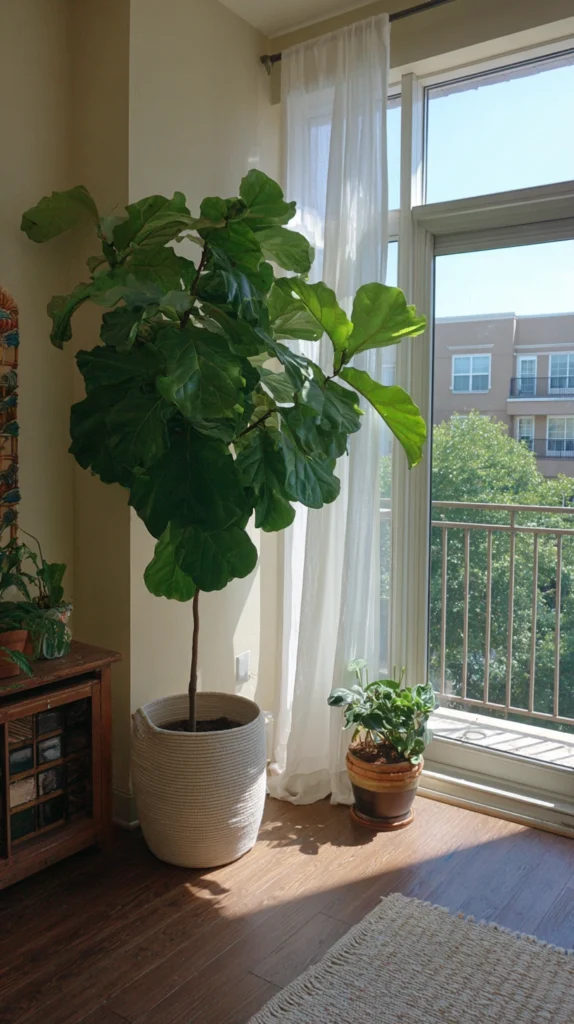
The presence of plants in interior spaces has been a constant across every culture and every period of domestic history for which evidence survives, and the most recent decades of scientific research have provided the explanatory framework for what every human being who has ever lived with plants has known instinctively: that they improve the quality of the interior environment in ways that are measurable, consistent, and deeply beneficial to wellbeing.
Designers who build plant material into their interior schemes — not as an afterthought accessory but as a foundational architectural element, with tall plants used to fill vertical space, trailing plants used to soften horizontal edges, and flowering plants used to introduce color and fragrance seasonally — create rooms that feel alive in a way that the most perfectly decorated plant-free room cannot achieve. The scale matters: a single small succulent on a desk is décor; a room with several significant plants at different heights is a different kind of space entirely.
9. Books as Decorative and Intellectual Infrastructure
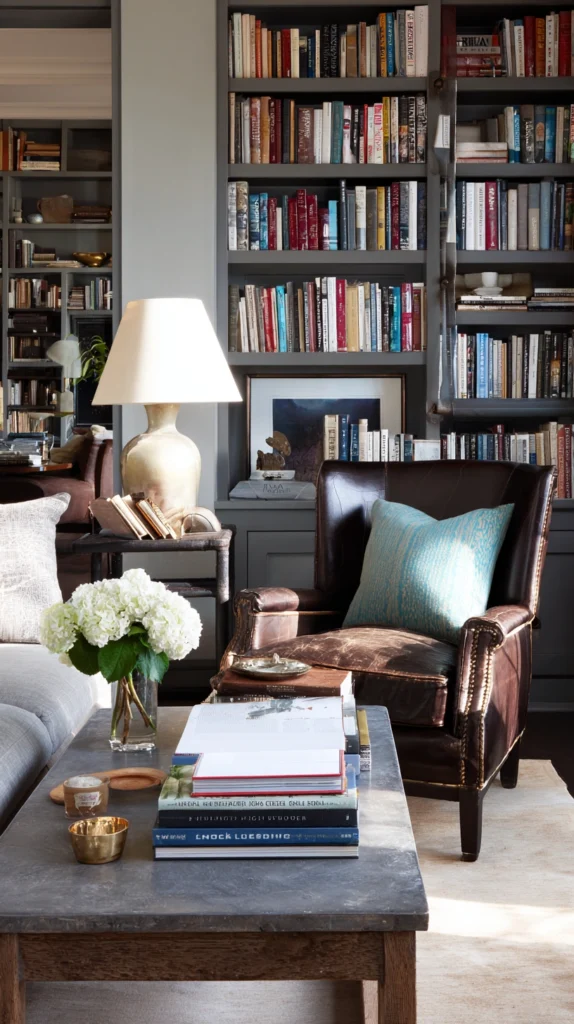
A room with books — genuinely read, personally chosen, reflecting the actual interests and intellectual history of the person who lives among them — is a room with a particular kind of depth and character that decorating cannot manufacture and money cannot simply buy.
Designers who understand this encourage their clients to allow books to be visible throughout the home rather than confining them to a single designated bookcase, and to use them as a decorative element rather than hiding them behind closed doors in the name of visual tidiness. Books on a coffee table. Books on a kitchen shelf. Books stacked on a bedside table with a reading glass and a lamp that is genuinely used.
These arrangements speak of a life being intellectually lived, and they contribute more to the feeling of an inhabited, characterful home than almost any purchased decorative object. The spine colors, the variety of sizes, the evidence of use and reading — dog-eared pages, bookmark ribbons — create a visual richness that cannot be replicated by any other means.
10. The Statement Rug as Room Foundation
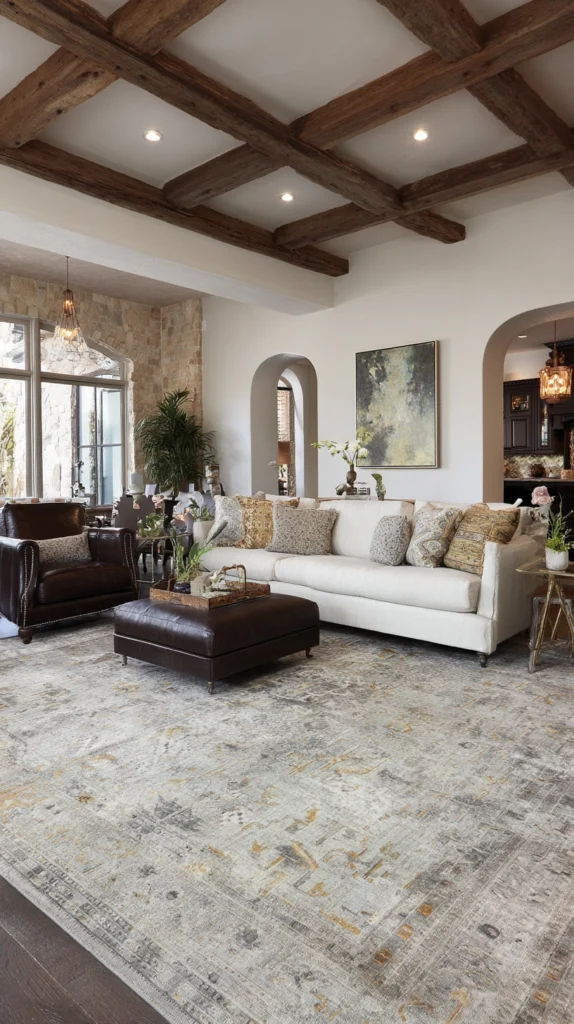
The rug is, after the floor itself, the most important surface in any room, and the designers who understand this most completely treat it as the room’s organizing principle rather than its finishing touch.
A genuinely significant rug — significant in scale, in quality, in the specificity of its pattern and color — determines the room’s palette, anchors the furniture arrangement, and establishes the quality register within which everything else is chosen.
The timeless rugs — the best antique Persians and Oushaks, the great contemporary weavers working in traditional techniques, the finest modern geometric designs — are timeless because they are objects of genuine craft and genuine visual intelligence, things that were made with skill and care to last indefinitely and that develop, like all great textiles, a quality of presence with age that they did not possess when new.
Designers consistently advise spending the majority of a soft furnishing budget on the rug rather than distributing it across cushions, throws, and curtains, because the rug’s visual impact and structural role in the room justify the concentration of investment.
11. Architectural Molding and Detail
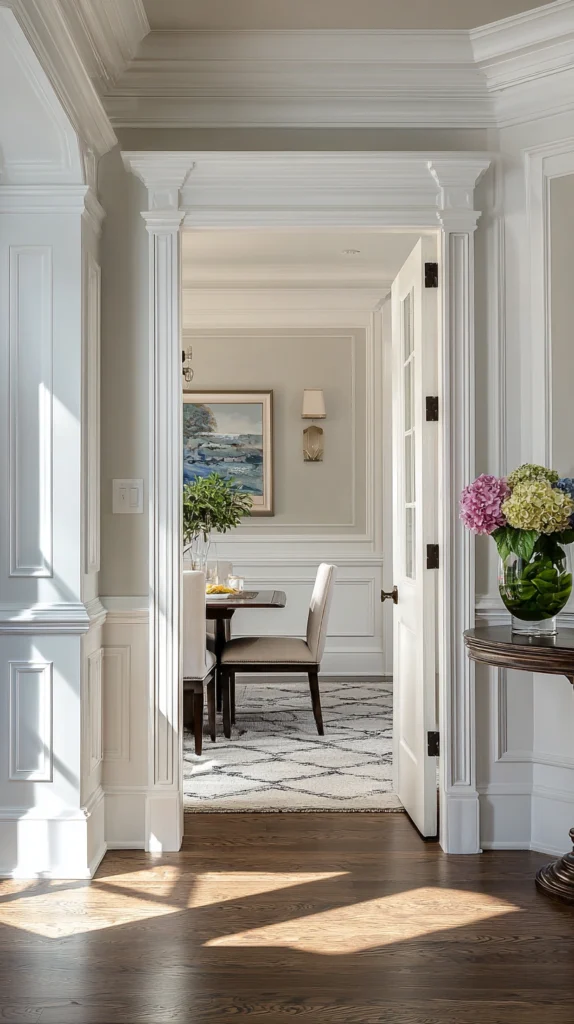
The homes that feel most architecturally satisfying — regardless of their period, style, or market value — are almost always homes with genuine architectural detail: crown molding at the ceiling perimeter, picture rails that define the proportional relationship between wall and ceiling, baseboards of sufficient depth and profile to ground the wall above them, door architraves that frame openings with appropriate ceremony.
These details are not expensive relative to the total cost of a home, but they are frequently omitted in new construction in the name of cost savings that are rarely justified by the aesthetic damage they cause.
Designers who add these details to rooms that were built without them — through the straightforward application of appropriate molding profiles — consistently report that the improvement in the room’s perceived quality and character is disproportionate to the cost and complexity of the intervention, and that no amount of furniture, art, or textile investment can fully compensate for a room’s absence of architectural bones.
12. Warm Metallics in Small, Confident Doses
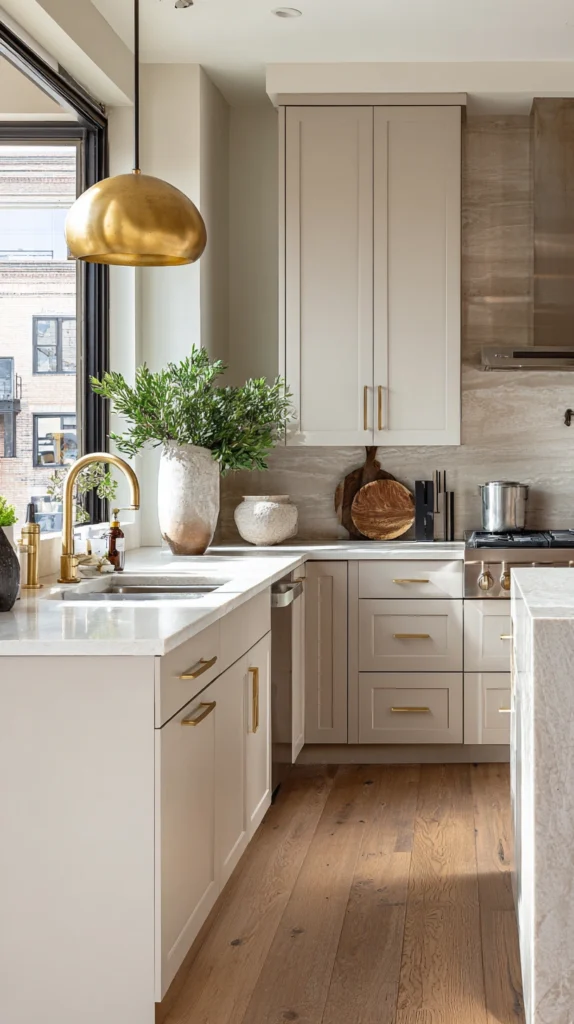
Brass, bronze, copper, and warm gold have appeared in the finest domestic interiors of virtually every culture and every period for the entirety of human history, and their presence in the contemporary home — in hardware, in lighting fixtures, in mirror frames, in decorative objects — is timeless precisely because it reflects the human eye’s consistent appreciation of warm reflective surfaces and the quality of light they create.
The key to using warm metallics in a way that transcends the trend cycle is restraint: a room where every surface and hardware element is brass reads as a trend statement specific to the moment of its creation; a room where brass appears in carefully chosen hardware, a single significant light fixture, and a few considered decorative objects reads as a room with a consistent and confident material sensibility that will remain relevant indefinitely.
The metal itself should be of genuine quality — unlacquered brass that develops a patina, solid bronze rather than plated alternatives — because the quality of the material’s aging is precisely what gives warm metals their timeless character.
13. An Edited, Curated Approach to Objects
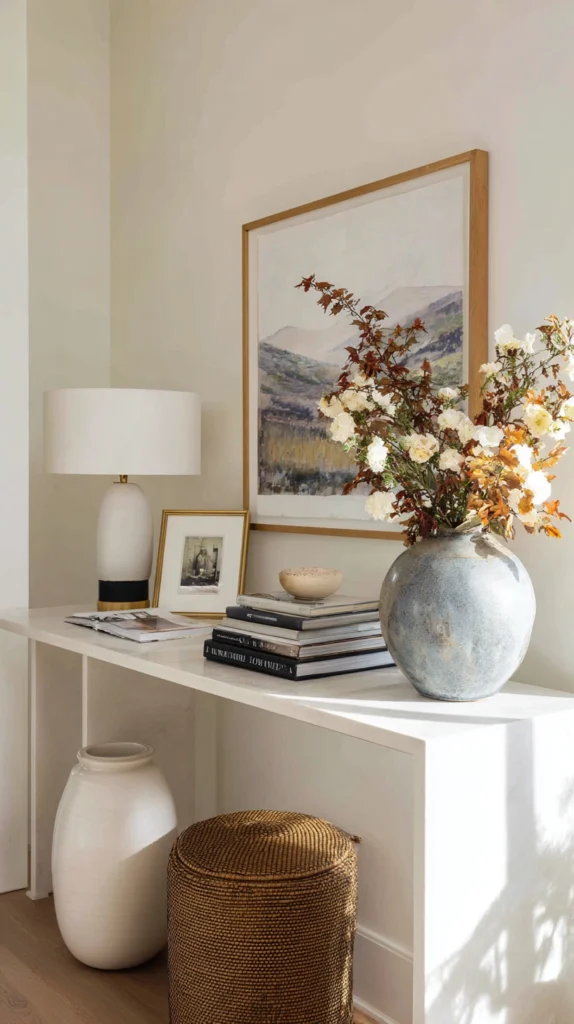
The timeless interior is never overcrowded. The designers who create spaces that look as right in twenty years as they did on the day of completion consistently practice and advocate for a principle of rigorous editing — the removal of everything that does not earn its place through genuine visual merit, functional utility, or personal significance — and the maintenance of that edited state through the ongoing willingness to reassess and remove as tastes, needs, and circumstances change.
An object earns its place on a shelf or surface by being genuinely beautiful, genuinely useful, or genuinely meaningful, and ideally by being all three simultaneously.
The edited interior is not empty or cold — a well-chosen collection of objects displayed with breathing space between them creates more visual pleasure and more sense of abundance than a crowded surface where nothing can be properly seen or appreciated. Curation is the skill, and it is a skill that improves with practice and with the honest self-assessment of why each object is in the room and what the room would be without it.
14. Connection to the Outdoors as a Design Priority
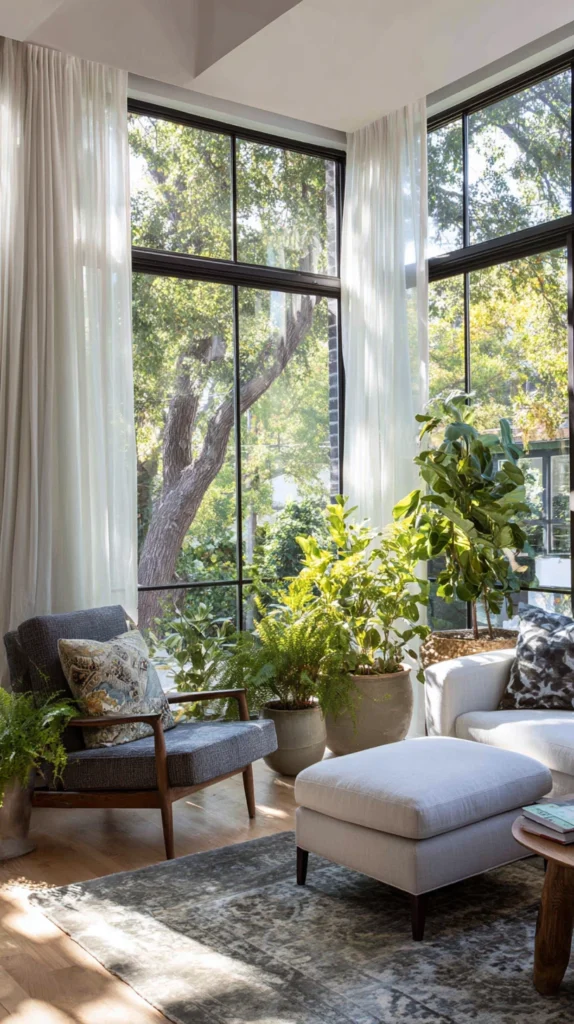
Every designer who works in residential interiors acknowledges, often with some emphasis, that the rooms they find most consistently successful are those that maintain a strong visual and physical connection to the outdoor environment — through windows that are not over-dressed with heavy treatments that block the view, through doors that open directly into gardens and terraces, through the use of plant material indoors that creates a visual continuity between the interior and the landscape beyond.
This connection is timeless because it is biological rather than cultural — the human nervous system’s positive response to natural views, natural light, and the visual presence of the outdoor environment is a documented and consistent phenomenon that no design trend can either manufacture or eliminate.
Rooms that look out onto a garden, that admit natural light generously throughout the day, and that use plant material to bring the outdoor environment inside feel better to spend time in than rooms without these qualities, regardless of how well those rooms are otherwise furnished and decorated.
15. The Courage to Reflect the Person Who Lives There
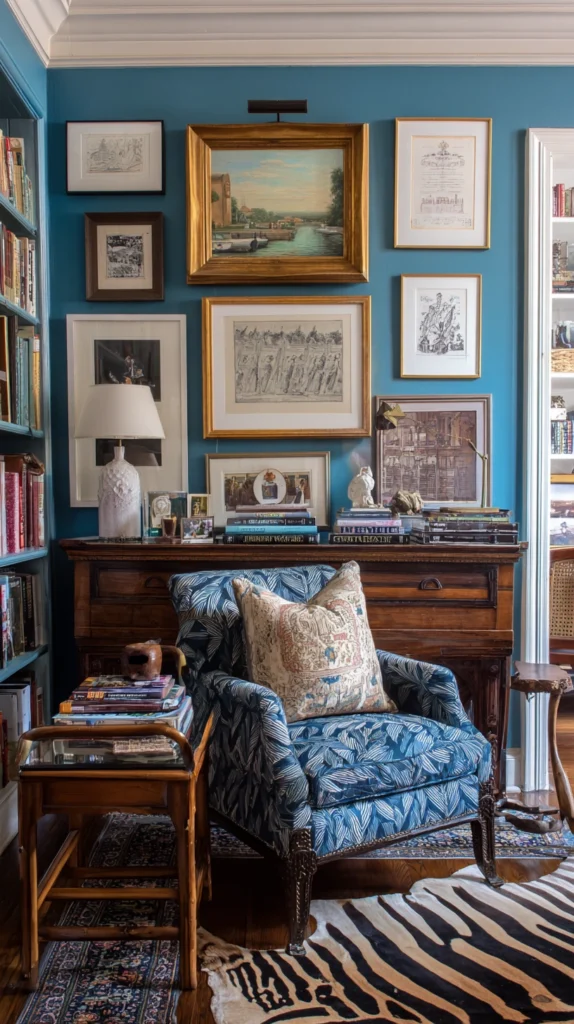
The final and most important principle that designers articulate as timeless is not a material, a technique, or an aesthetic choice at all, but a quality of relationship between the space and its inhabitant.
The rooms that feel most genuinely timeless — that resist the dating process that fashion inevitably imposes on trend-driven interiors — are those that feel unmistakably specific to the person who lives in them: specific in the art they have chosen, the books they have read, the objects they have collected, the colors they love, the textures they find comforting.
Specificity is timelessness in interior design because a space that belongs to a particular person, rather than to a particular moment, is not subject to the obsolescence that moment-specific spaces suffer from.
The goal of great interior design has never been to create a space that looks good in a magazine, though the best often do. It has always been to create a space that feels like home — a word whose depth and resonance are not accidental, and whose achievement, when it happens, is the most timeless design outcome available.