15 Hideaway Projects for Small Homes
The small home’s greatest organizational and aesthetic challenge is not the absence of space but the absence of concealment. Every object that lacks a dedicated home becomes a visible presence in a room that has no spare visual capacity to absorb clutter without the entire space feeling overwhelmed.
The kitchen counter that accumulates appliances, the living room that cannot hide its storage, the bedroom where the wardrobe overflows onto the chair are not failures of tidiness but failures of design.
The hideaway project addresses this challenge at its root. Rather than finding more visible storage, it finds ways to make storage disappear entirely, creating homes where every object has a place that closes, folds, slides, or lifts away from view when not in use. The result is a small home that feels significantly larger than its dimensions because its surfaces are consistently clear.
The projects collected here range from the simple weekend intervention to the more ambitious built-in solution, but all share the same fundamental principle. They replace the visible with the hidden, the permanent with the foldaway, and the cluttered surface with the clean one. Here are fifteen hideaway projects that transform the small home’s relationship with space.
1. The Murphy Bed with Integrated Shelving
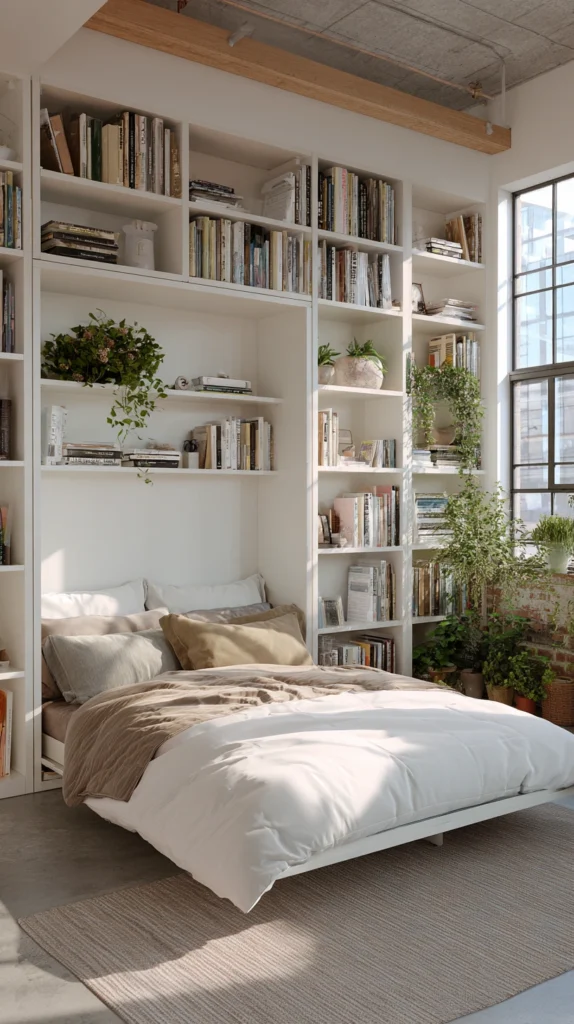
The Murphy bed is a mattress mounted on a hinged frame that folds flat against the wall when not in use. It is the single most space-transforming hideaway project available to the small home, particularly in a studio or bedroom that must also serve as a living or working space during daytime hours.
The integrated shelving unit surrounding the Murphy bed on both sides and above the fold-down panel creates the critical visual deception that makes the project work. When the bed is folded up, the wall reads as a full-height shelving unit with a central panel. When it folds down, the room becomes a bedroom without any further rearrangement required.
The shelving on either side should be of genuine depth and genuine utility, holding books, display objects, and the real storage requirements of the room rather than purely decorative items. Shallow shelving that reads as decorative rather than functional destroys the illusion and wastes the potential of the surrounding structure considerably.
Commission the unit from a joiner who specializes in Murphy bed installation, or use one of the quality proprietary systems available with detailed installation instructions. The mechanism quality determines the bed’s daily usability, and a smooth, counterbalanced fold-down that requires minimal effort will be used willingly every single day.
2. The Hideaway Home Office in a Wardrobe
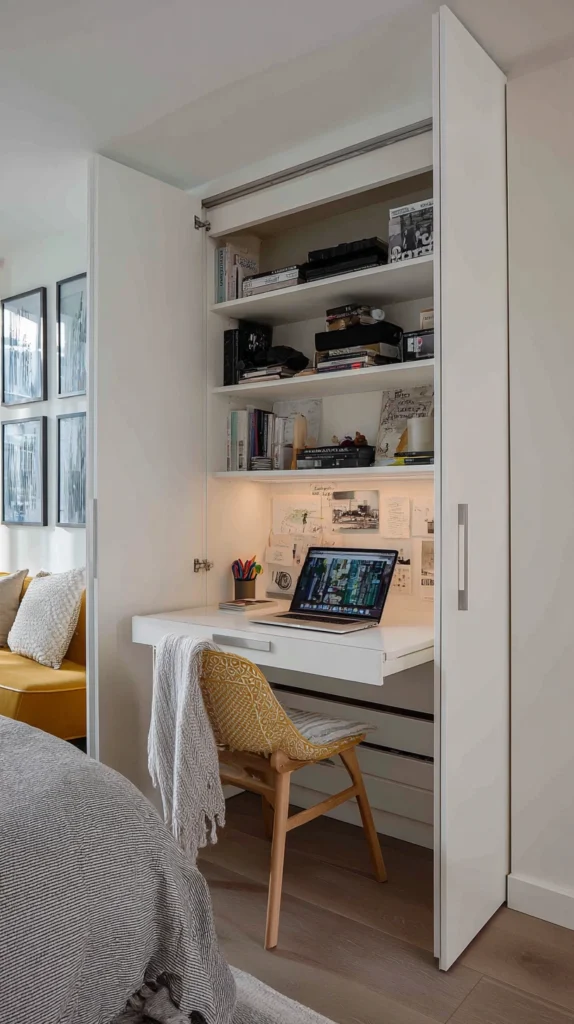
A standard double wardrobe, its interior converted to accommodate a fold-down desk, a compact shelving system for office equipment and files, and the electrical infrastructure for computer and lighting, creates a complete home office that disappears behind closed doors at the end of the working day.
The fold-down desk is the project’s critical element. It should be of adequate depth for a monitor, a keyboard, and the working surface that genuine desk work requires, with a minimum of fifty centimeters from wall to front edge when open. A desk of inadequate depth creates a working position of permanent discomfort.
The interior of the wardrobe home office should be lit independently of the room’s main lighting, with a dedicated LED strip along the upper shelf edge or a small desk lamp stored within the unit. Working in a dark enclosure creates eye strain and an oppressive atmosphere that a dedicated internal light source entirely resolves.
Cable management within the unit should be completed before the installation is finished. A single cable exit point at the base of the unit connecting to a floor-level power strip inside creates the clean, cable-free interior that makes closing the wardrobe doors at the end of the working day a genuinely satisfying act of daily completion.
3. Under-Stair Pull-Out Kitchen Pantry
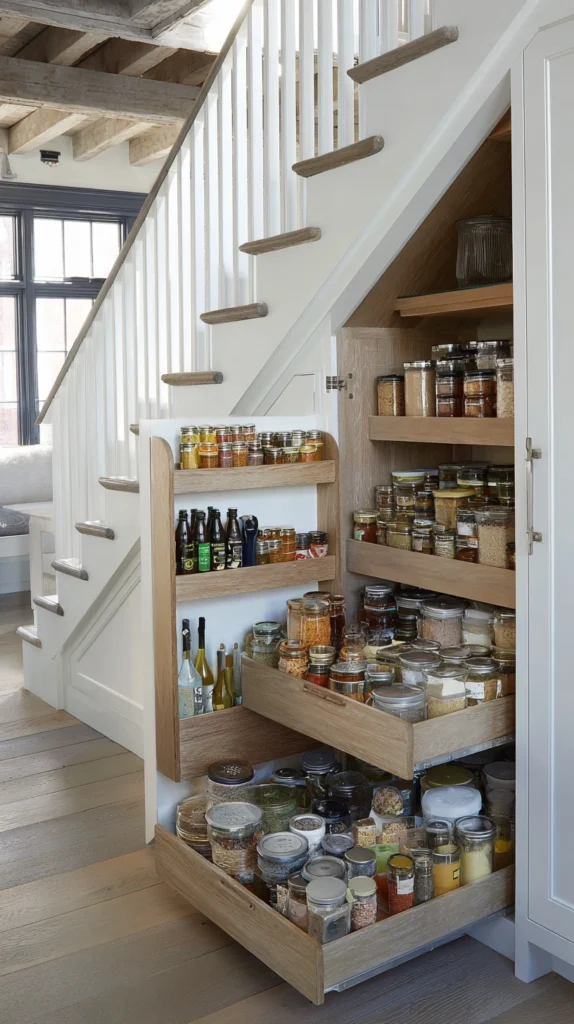
The space beneath a staircase adjacent to or within view of the kitchen is one of the small home’s most consistently underused spatial resources. A series of pull-out pantry drawers fitted precisely into the under-stair volume creates a kitchen storage system of remarkable capacity in space that most small homes waste entirely.
Each pull-out unit should be designed for a specific storage category. The tallest section near the stair’s beginning holds bottles and tall packaged items. The middle sections hold dry goods, canned items, and the various packaged foods of the daily kitchen routine, while the shallowest sections hold flat items and small accessories.
The pull-out mechanism quality determines the daily experience of the pantry. Full-extension drawer runners that allow the entire drawer to slide out to its full depth, exposing every item without any reaching into dark recesses, transform the under-stair space from an awkward storage compromise into a genuinely functional kitchen resource.
Face the drawer fronts in a material and finish that relates to the kitchen’s cabinetry, creating the visual continuity that makes the under-stair pantry read as a designed kitchen element rather than an improvised storage solution. Painted timber, a matching laminate, or a simple shaker-style panel all create this continuity effectively.
4. The Fold-Down Dining Table
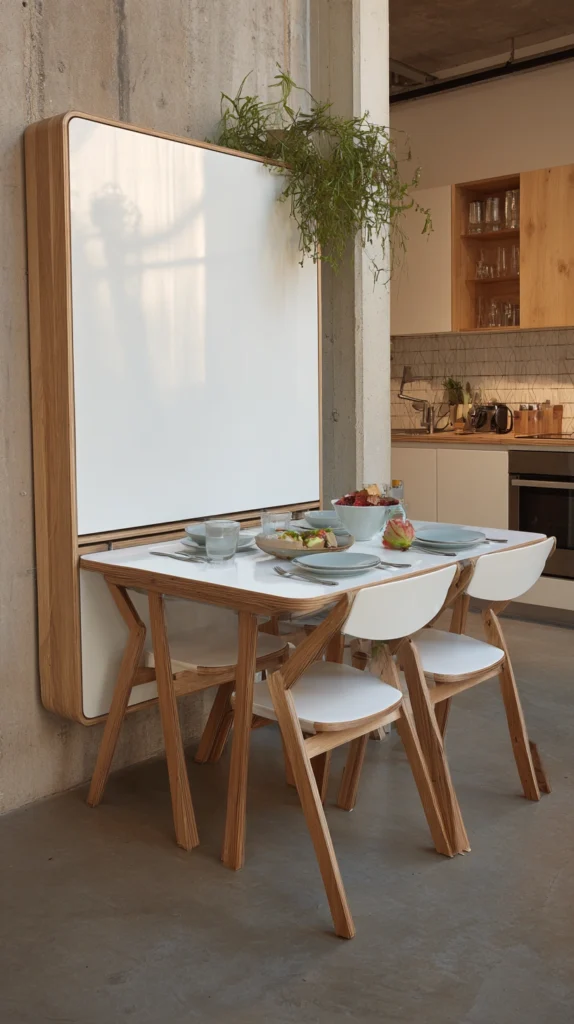
A fold-down dining table, mounted on the kitchen or dining room wall on a hinged bracket system, drops to the horizontal dining position for meals and returns to the vertical wall-mounted position when the meal is complete. It is the hideaway project that most completely transforms the small kitchen’s daily spatial experience.
The table should be of adequate size for the household’s actual dining requirements. A table that is too small to comfortably accommodate the household’s standard number of dining places is a compromise that will generate daily frustration. A fold-down table of adequate size is always worth the wall space its bracket system requires.
The wall fixing must be of adequate strength for the table’s weight and the dynamic loads that dining creates. The bracket fixings should go into wall studs or masonry anchors of appropriate specification, not into plasterboard alone, which cannot sustain the leverage forces that a cantilevered table generates during use.
Dining chairs in a folding format, stored flat against the adjacent wall on simple hooks between meals, complete the fold-down dining solution. The entire dining area, table and chairs together, occupies a single wall when not in use and creates a complete dining space for four within two square meters when deployed.
5. Hidden Storage Ottoman
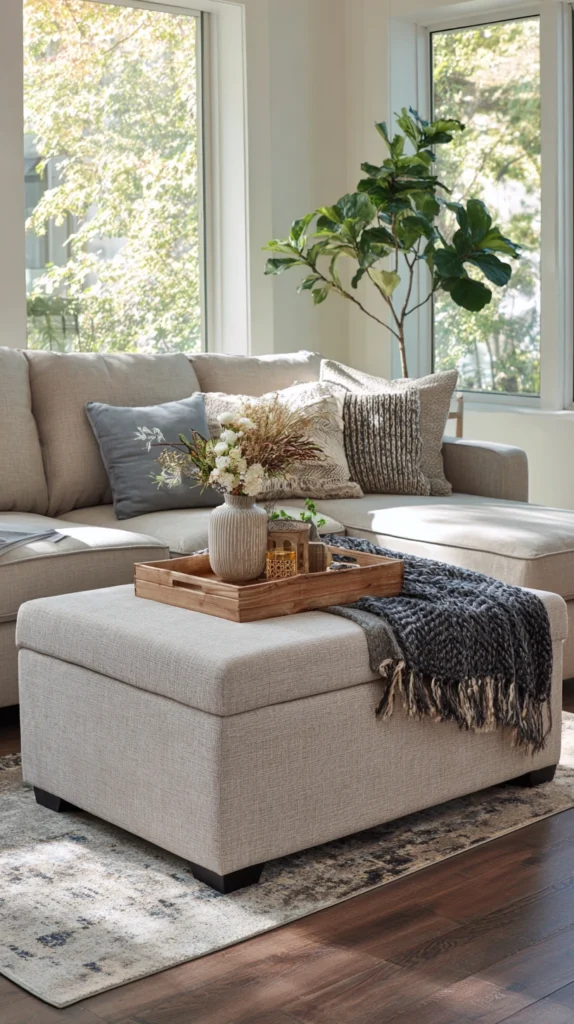
A large upholstered ottoman with a lift-off or hinged top creates a living room storage solution that reads as a furniture piece of genuine quality rather than a storage box with pretensions. The ottoman serves simultaneously as a coffee table surface, additional seating, a footrest, and a storage volume for the living room’s accumulated soft goods.
The storage capacity of a well-sized ottoman is significant. Blankets, cushions, board games, children’s toys, spare bedlinen, and the various bulky soft items that the living room tends to accumulate without adequate storage provision all find their home within the ottoman’s generous interior, entirely concealed beneath the upholstered surface.
Choose an ottoman of sufficient size for the seating arrangement it serves. An ottoman that is too small reads as a footstool rather than a coffee table and fails to anchor the seating arrangement with the visual weight that the central living room furniture piece requires. A minimum of sixty by ninety centimeters creates the proportional presence needed.
The upholstery should be in a durable, cleanable fabric appropriate to the household’s use patterns. A household with children or pets requires a fabric that can be spot-cleaned easily. A household without these demands can choose a more delicate fabric with confidence that it will remain presentable over a reasonable period of use.
6. The Pegboard Kitchen Wall
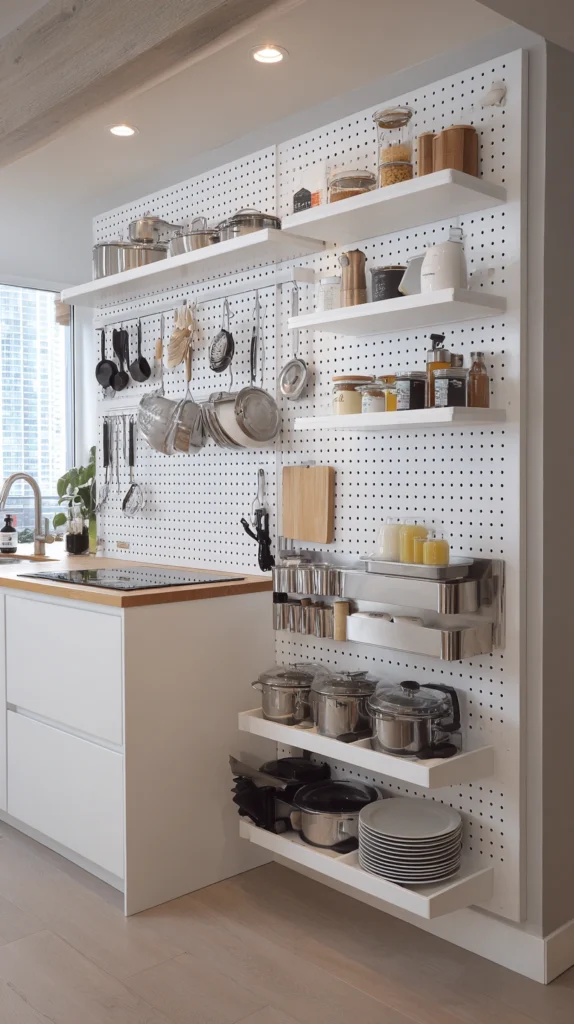
A pegboard panel installed on a kitchen wall, fitted with a system of hooks, shelves, and holders in a configuration specific to the kitchen’s equipment, creates a storage system that holds a remarkable quantity of tools and small appliances within a single wall surface. Every item remains immediately visible and immediately accessible without opening a single cabinet door.
The pegboard system’s organization should be planned before the hooks and holders are installed. Laying out every item the pegboard will hold on the floor below the wall and planning the configuration before fixing a single hook uses the available surface area with maximum efficiency and prevents the random accumulation that unplanned systems develop over time.
Items of most frequent use should occupy the most accessible positions at eye and hand height. Less frequently used items occupy the upper and lower sections of the board. A pegboard at whose center everything needed for daily cooking is within immediate reach becomes one of the kitchen’s most genuinely functional organizational systems.
Paint the pegboard in a color that relates to the kitchen’s palette before installing hooks and holders. A pegboard in the kitchen’s wall color reads as a designed wall feature rather than a workshop import. A pegboard in a contrasting accent color creates a deliberate feature wall whose organizational function is presented with genuine design intention.
7. Hideaway Laundry in a Hall Cupboard
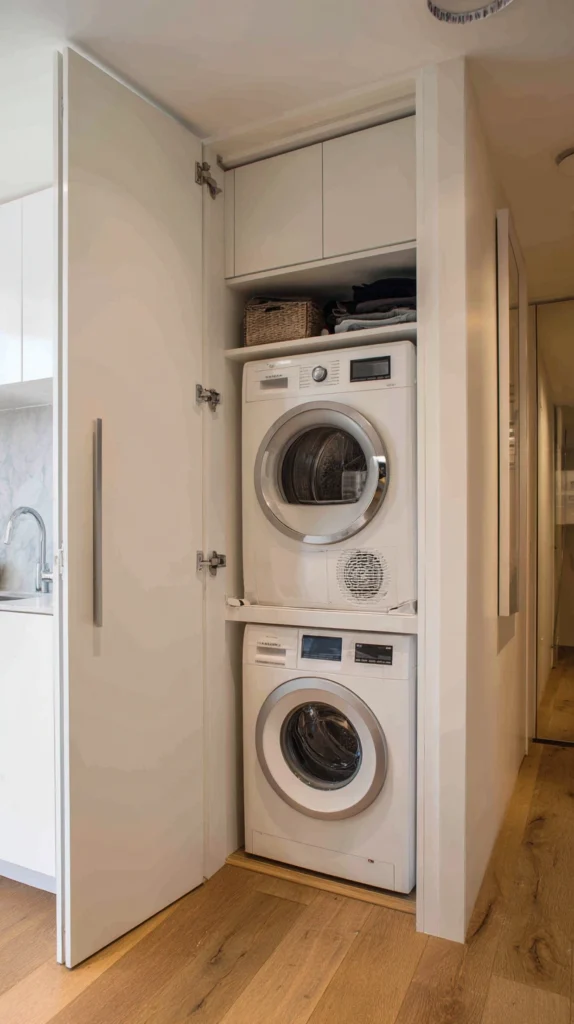
A standard hall cupboard, its interior reconfigured to accommodate a slimline washing machine, a fold-down ironing board mounted on the inside of the cupboard door, a hanging rail above the machine for air drying, and a pull-out hamper for unsorted laundry, creates a complete laundry facility that disappears behind a single door.
The washing machine installation requires a plumbing connection for supply and waste and an electrical connection for power. These services should be installed by qualified tradespeople before the cupboard conversion begins, with the connections positioned to accommodate the specific washing machine model chosen for the available space.
The fold-down ironing board on the cupboard door is the conversion’s most practically valuable element. An ironing board that is permanently set up in the living area or the bedroom creates a daily visual intrusion that the fold-down door-mounted version entirely eliminates. It is in its working position the moment the door opens and gone the moment it closes.
Ventilation within the laundry cupboard is essential for both the washing machine’s operational requirements and the prevention of moisture buildup. A louvered cupboard door or a ventilation grille at the top and bottom of the door provides the airflow that the laundry function requires without any structural modification to the surrounding walls.
8. The Sliding Barn Door Room Divider
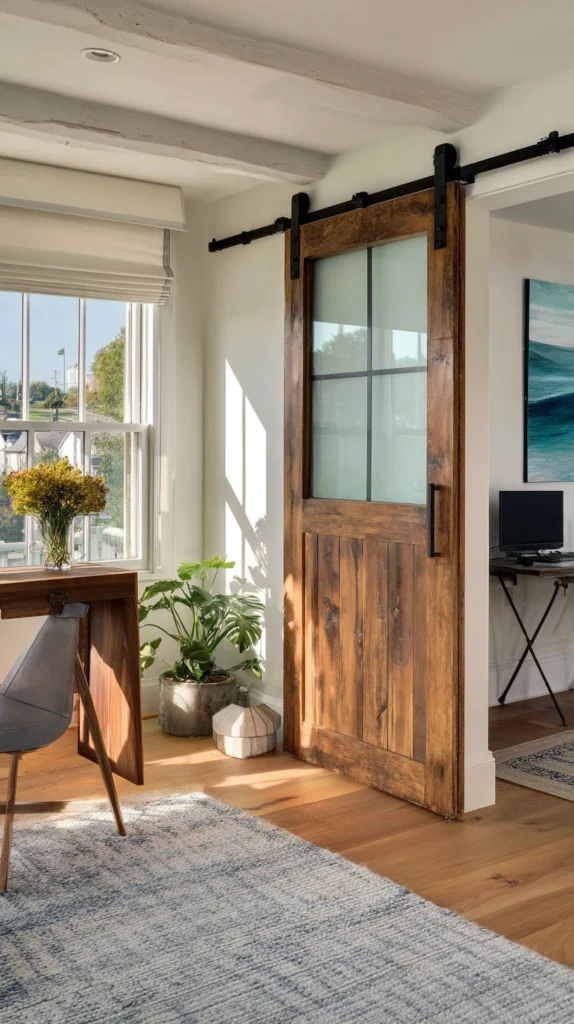
A sliding barn door on a ceiling-mounted track creates a room divider that separates two zones in an open plan small home without the permanent wall that conventional room division requires. When open, the door slides completely clear and the full open plan space is available. When closed, two distinct rooms exist within the same footprint.
The track and door hardware must be of adequate quality for daily use. Cheap barn door hardware develops noise, resistance, and instability within months of installation, creating a room divider that becomes an irritant rather than a convenience. Quality hardware from a specialist supplier operates smoothly and silently for years of daily use without adjustment.
The door itself can be constructed from a variety of materials depending on the desired aesthetic. A solid timber door in a warm stained finish creates a traditional look. A door with glass panels creates division while maintaining light transmission. A mirrored door creates the spatial expansion effect that small rooms specifically benefit from most.
The door’s bottom edge should clear the floor by a consistent five to ten millimeters that prevents it from catching on rugs or floor imperfections. A floor guide rather than a floor track maintains this clearance consistently while preventing the door from swinging away from the wall during daily use.
9. Built-In Window Seat with Storage
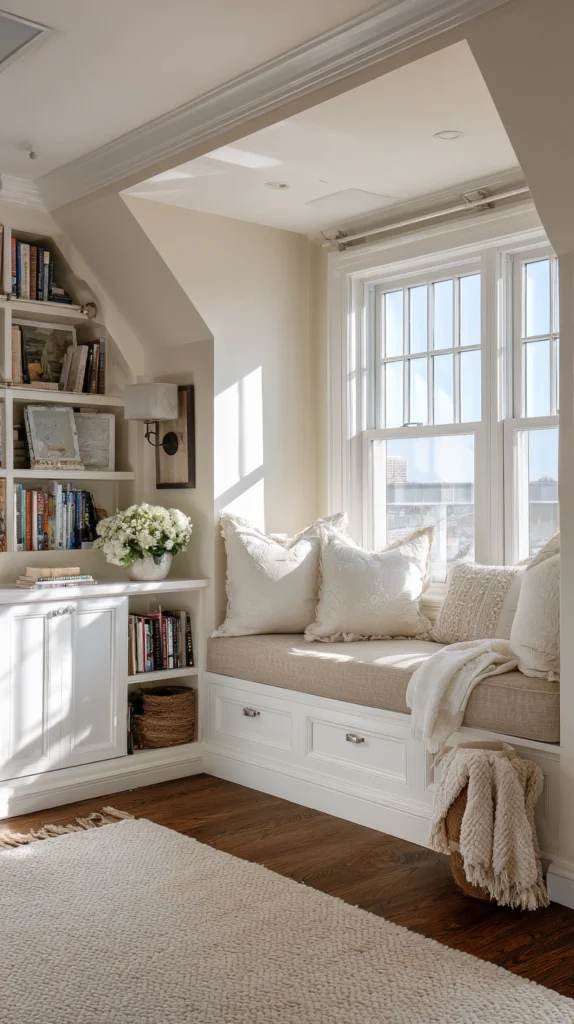
A window seat built across the full width of a window bay or alcove, with the seat surface hinged to reveal a storage compartment of generous volume beneath, creates a room feature of genuine architectural quality and doubles the practical value of either the storage or the seating provided alone.
The storage compartment beneath the window seat is accessed by lifting the hinged seat surface, ideally on gas-strut hinges that hold the lid open without requiring the user to support its weight while reaching into the storage below. The compartment’s depth should maximize the full available height from the floor to the underside of the seat.
The seat itself should be at the standard bench height of forty-five centimeters from the floor, with a seat depth of fifty to sixty centimeters for comfortable seating and an adequate storage volume below. A cushion of quality foam in a depth of eight to ten centimeters, upholstered in a fabric drawn from the room’s palette, creates the required seating comfort.
Bookshelves or cupboards flanking the window seat on both sides, extending to the ceiling and returning to the window seat’s depth, create the built-in alcove composition that is one of the most spatially efficient and most aesthetically satisfying built-in furniture formats available to any small home.
10. The Hideaway Bar in a Kitchen Cabinet
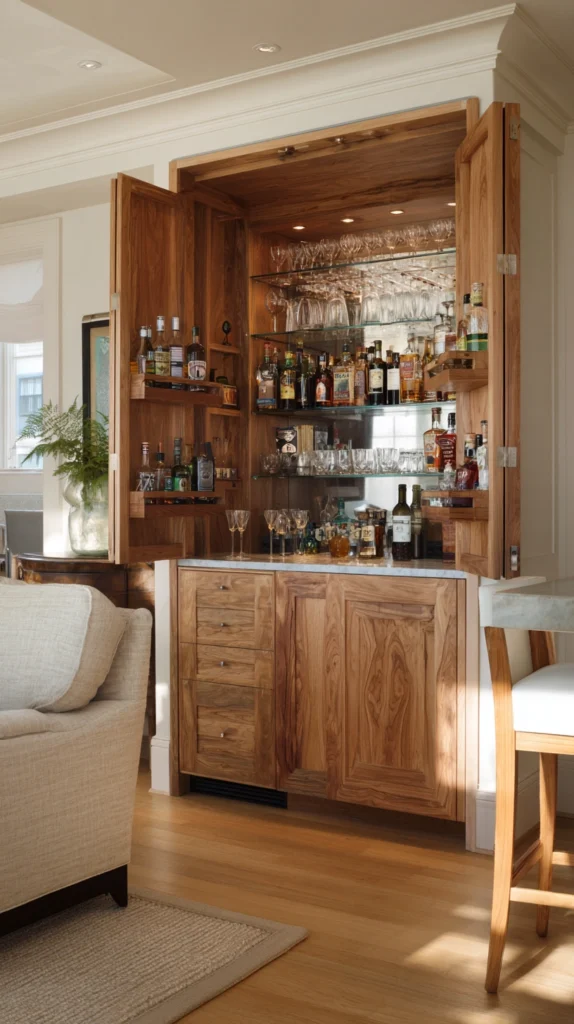
A standard kitchen base cabinet or a tall pantry cabinet converted to a dedicated bar unit, with a fold-down front panel that creates the serving surface and reveals the interior organization of bottles, glasses, and bar equipment, creates a complete home bar that occupies a single cabinet and disappears behind a closed door.
The cabinet’s interior organization should be designed for the specific bar equipment it will hold. A row of bottle storage in a wine rack configuration at the back, glass storage on a hanging rail on the inside of the door, and shelves of appropriate height for mixers, spirits, and bar accessories create a complete bar organization in a single cabinet footprint.
The fold-down serving surface should be of adequate area for the bar’s working requirements and of adequate strength to support bottles and glasses placed on it during use. A piano hinge along the full width of the panel and a fold-down leg or a supporting chain on each side creates a stable, level surface when deployed.
The cabinet’s exterior finish should match the surrounding kitchen cabinetry so that the bar cabinet reads as a standard kitchen unit when closed. The reveal of the bar’s interior when the door opens and the fold-down surface drops creates the specific pleasure of a concealed function revealed, which is the best quality of any well-executed hideaway project.
11. Recessed Shelving Between Wall Studs
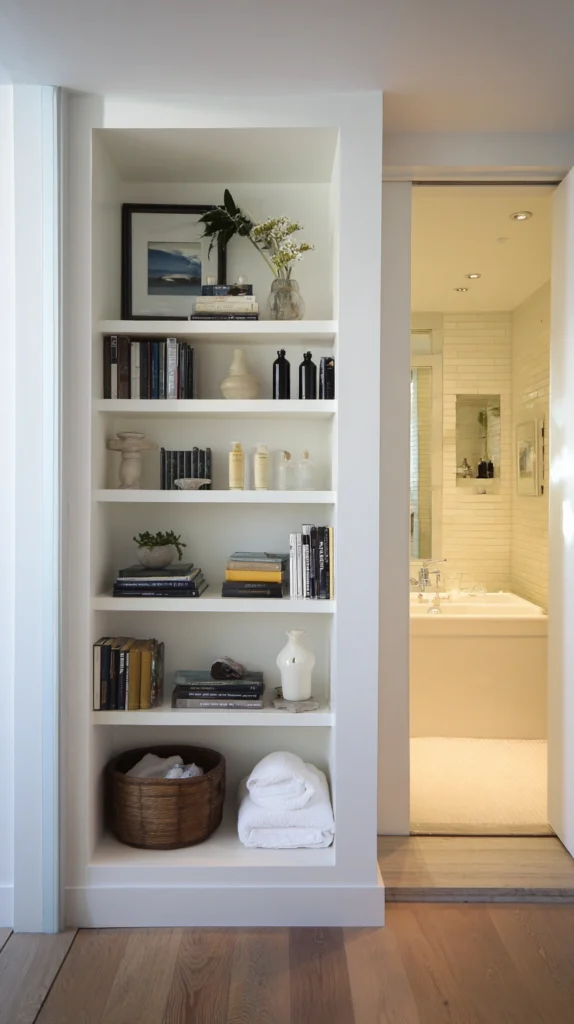
The wall cavities between timber studs in a standard timber-framed wall, typically ninety to one hundred millimeters deep, provide the space for recessed shelving that creates storage within the wall’s own thickness without projecting into the room at all. It is the hideaway project that genuinely creates space from nothing.
The recessed shelf installation requires the careful identification of stud positions and the absence of electrical cables or plumbing within the cavity before cutting begins. A cable and pipe detector swept across the wall surface before any cutting provides the assurance that the cavity is clear and safe for opening.
The opening is framed with a simple timber surround, a head, a sill, and two jambs of timber matching the wall’s stud depth, that creates the recess’s clean, finished perimeter. Shelves fixed within the recess at appropriate spacing create the storage positions, and the entire recess is painted in the wall color for a seamless integration into the surrounding surface.
The recessed shelf is most valuable in the rooms where projecting storage is least acceptable. The bathroom and the hallway are the rooms where the recessed shelf’s zero-footprint quality delivers the greatest spatial benefit to the household’s daily circulation and comfort.
12. The Hideaway Children’s Play Zone
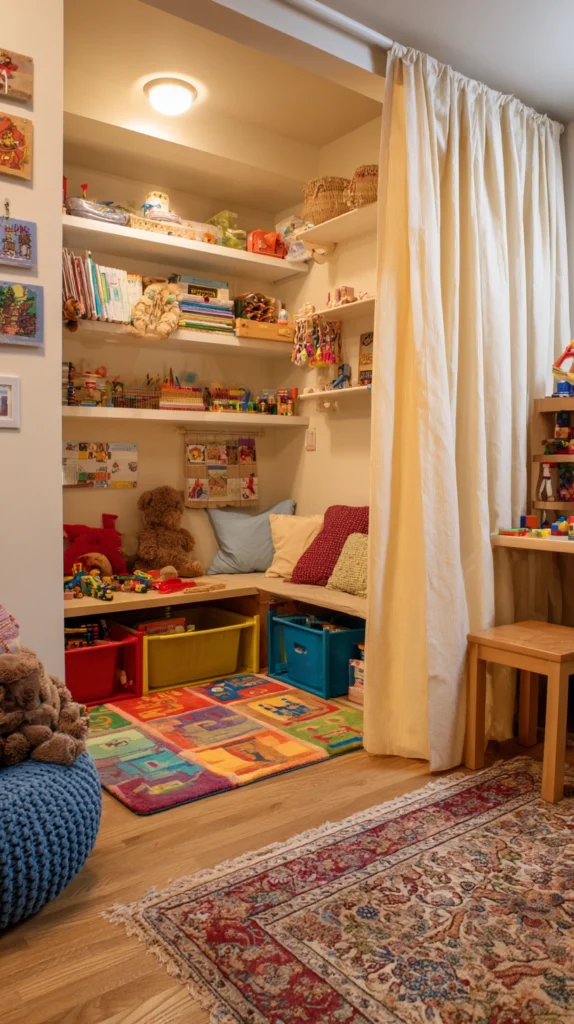
A dedicated children’s play zone created within a living room alcove, a large cupboard, or a section of the bedroom, with storage for all toys within the zone and a door, curtain, or sliding panel that conceals the entire play area when not in use, creates a home where the visual disruption of children’s toys is entirely manageable.
The play zone’s internal organization should be designed for the child’s independent use. Low shelves and accessible bins that the child can reach and return toys to without adult assistance create the organizational system that the child can actually maintain. A system that requires adult involvement will not be maintained consistently over time.
The concealment element, whether a door, a curtain in a fabric drawn from the room’s palette, or a sliding panel consistent with the surrounding walls, should operate simply and smoothly enough that the child can open and close it independently. A concealment system that requires adult operation becomes an obstacle to the play zone’s daily use.
The play zone’s floor surface should be distinct from the surrounding room, either a rug, a foam mat, or a different floor material that defines the play zone’s boundary clearly. This boundary communicates to the child where the play zone begins and where the rest of the room, with its different standards of tidiness, begins and applies.
13. Ceiling-Height Wardrobe with Hidden Dressing Area
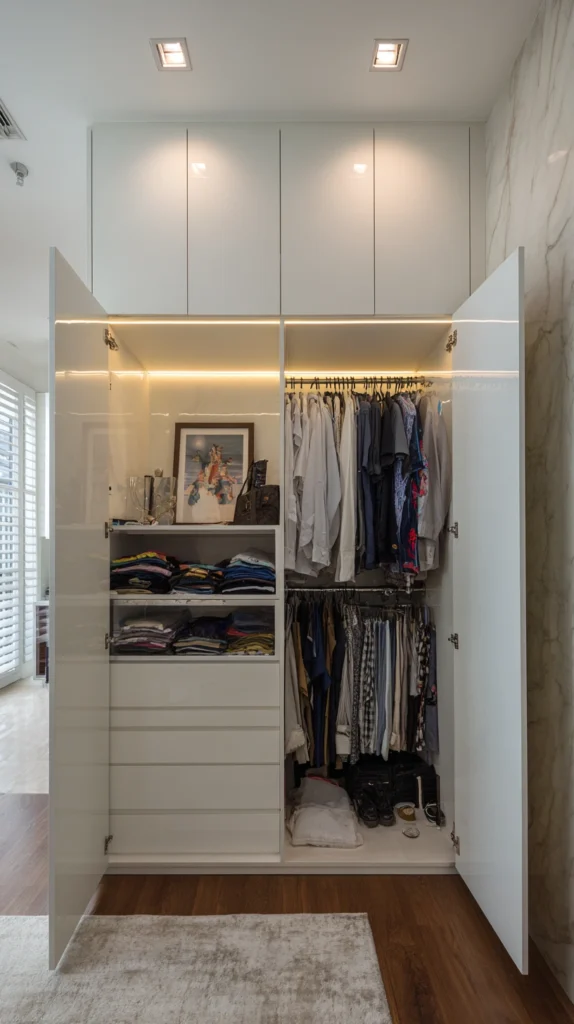
A wardrobe built to the full ceiling height of the bedroom, with a central section that opens to reveal a small dressing area of adequate depth for standing and turning, creates a complete dressing room within the bedroom’s existing footprint without any structural alteration to the room’s dimensions whatsoever.
The dressing area’s depth should be a minimum of ninety centimeters to allow comfortable dressing movement without the wardrobe’s interior surfaces restricting the arms during the process of getting dressed. A depth of less than this creates a dressing experience of daily frustration that defeats the purpose of the dedicated dressing space.
Lighting within the dressing area is essential. An LED strip along the upper edge of the dressing area’s interior, activated by the door opening, creates the illumination that the enclosed space requires without any separate switching action. The light that comes on automatically when the wardrobe opens creates the quality of a properly considered, professionally finished installation.
The surrounding wardrobe sections on either side of the dressing area provide the hanging, shelving, and drawer storage that the dressing routine requires within reaching distance of the dressing position. The entire clothing management system is contained within a single wall-to-wall built-in unit that reads as a clean, flat wall surface from the bedroom door.
14. The Hideaway Guest Bed in a Home Office
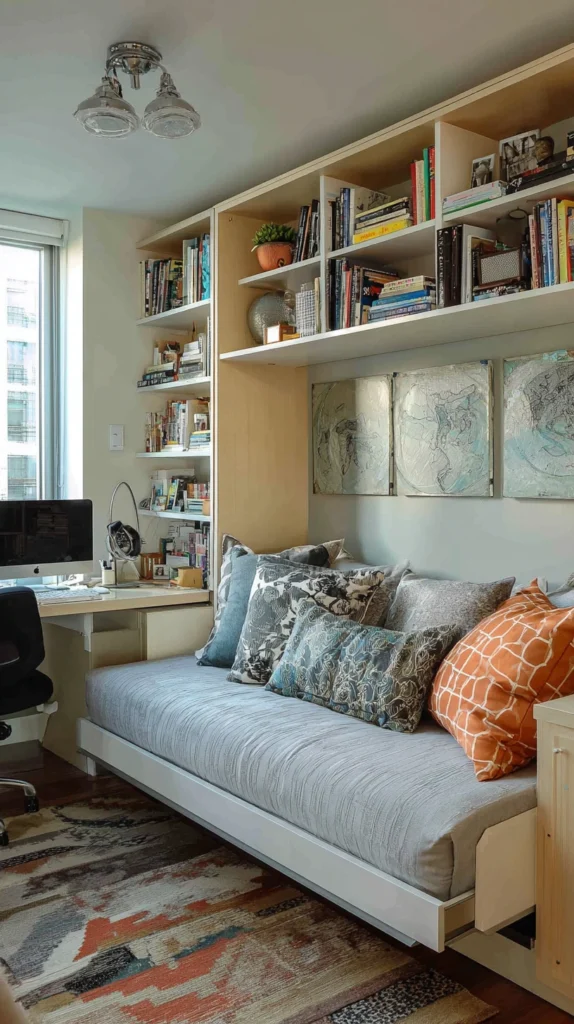
A home office that doubles as a guest bedroom requires the hideaway solution that creates a genuine sleeping space without permanently sacrificing the office’s working character. A sofa bed of adequate quality is the minimum solution. A wall-mounted fold-down bed concealed behind a panel that reads as the office wall is the ideal one.
The fold-down bed in the home office context requires the same mechanism quality and the same integrated shelving approach as the living room Murphy bed. The critical additional requirement is that the bed’s deployment does not require the removal of desk items or the reorganization of the office before a guest can sleep comfortably.
Guest bedroom infrastructure, including a mirror, adequate hanging space, and a surface for personal items, should be provided within the office’s existing furniture rather than as additional pieces that must be introduced when guests arrive. The wardrobe that holds office files can hold guest clothing on a cleared rail when required.
The quality of the guest sleeping experience within the hideaway guest bedroom is determined almost entirely by the mattress quality of the fold-down bed. A fold-down bed with a proper mattress of adequate depth and quality creates a sleeping experience that guests consistently comment on with genuine surprise and sincere appreciation.
15. Design the Hideaway Home as a Complete System
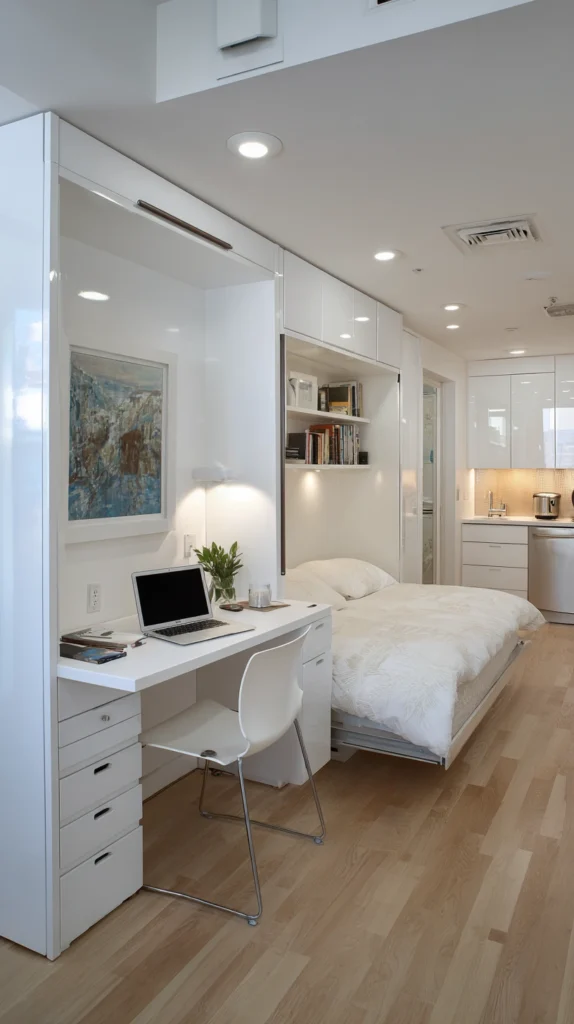
The most important hideaway project for the small home is not a single intervention but the design of the entire home as a system of concealment and revelation. Each individual hideaway project achieves its maximum value not in isolation but in the context of a home where the design philosophy of visible tidiness and hidden complexity is applied consistently throughout every room.
The small home designed as a complete hideaway system is one where every room has been assessed for the specific objects it needs to conceal and the specific hideaway mechanism most suited to the room’s function and aesthetic. The kitchen hides its appliances, the living room hides its storage, and the bedroom hides its wardrobe’s interior and its working desk behind clean, flat surfaces.
The consistent application of the hideaway principle throughout creates a home that appears significantly larger than its measured dimensions. Clear surfaces, concealed storage, and the absence of visual clutter create a spatial quality that no amount of clever furniture arrangement or strategic mirror placement can achieve as effectively as the elimination of visible objects from the room’s surfaces.
The hideaway home is ultimately the expression of a specific domestic philosophy. It is the commitment to the idea that the small home’s quality of life is determined not by how much it contains but by how intelligently it conceals what it contains, creating the daily experience of living in a space that is always calm, always ready, and always more generous than its square footage suggests it has any right to be.