15 Handicap Bathroom Ideas for a Safe, Accessible, and Stylish Space
Designing a handicap-accessible bathroom is all about balancing safety, comfort, and style. Whether you’re creating a full ADA-compliant bathroom or simply making thoughtful modifications for a loved one, the goal is to build a space that supports independence without sacrificing beauty.

Today’s accessible bathroom designs prove you can enjoy a modern, elegant look while incorporating functional features like grab bars, walk-in showers, and easy-to-use fixtures. Below are 15 practical and stylish handicap bathroom ideas to inspire your remodel.
1. Install Grab Bars in Key Locations
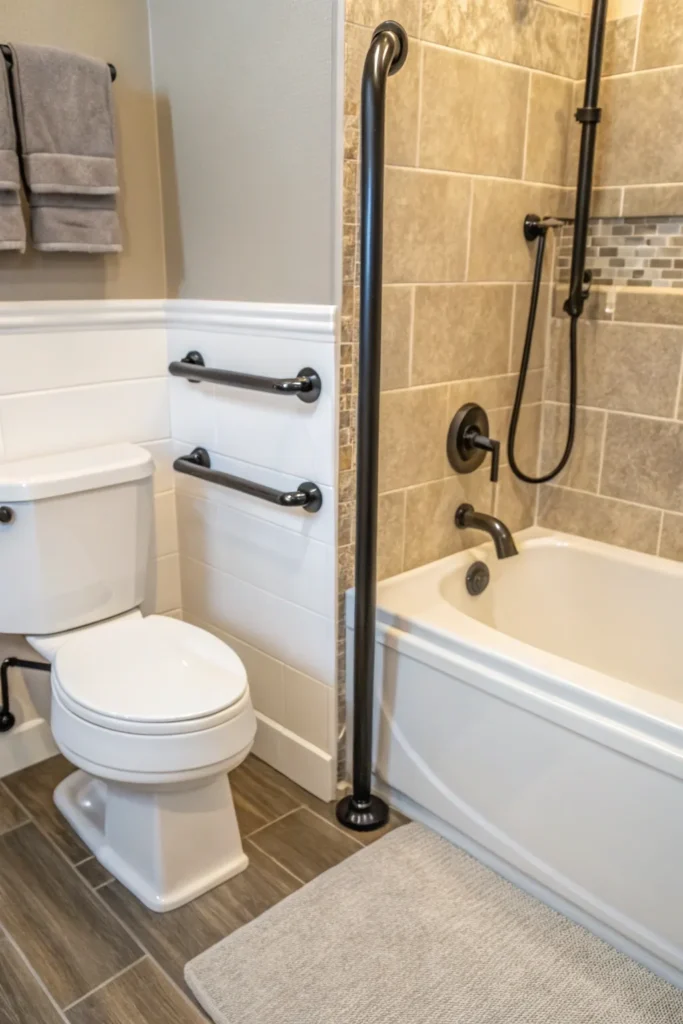
Grab bars are essential for stability and safety, especially for seniors or individuals with mobility challenges. Install them near the toilet, inside and outside the shower, and beside the bathtub if you have one. Modern grab bars come in sleek finishes like matte black, chrome, and brushed nickel, so they blend seamlessly with your décor. Choose models with non-slip textures for improved grip and make sure they’re professionally anchored into wall studs for maximum support.
2. Choose a Walk-In Shower with No Threshold
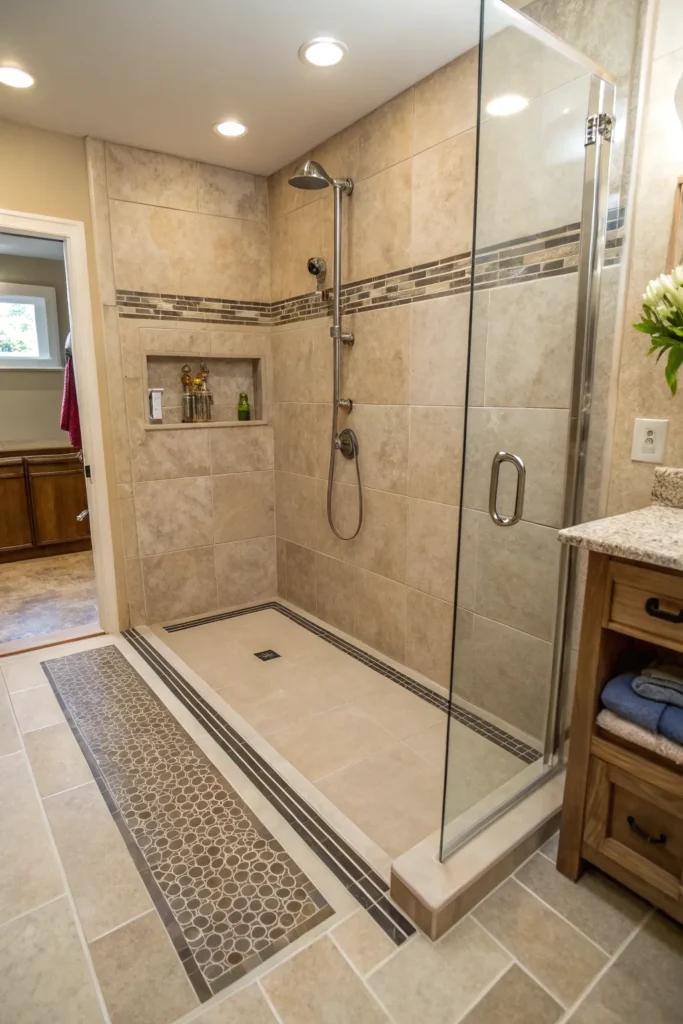
A curbless shower makes entering and exiting significantly easier for wheelchair users and those with limited mobility. No-threshold showers eliminate tripping hazards and allow seamless wheelchair access. Pair the shower with a wide entrance—ideally at least 36 inches—to provide plenty of room. Adding a linear drain ensures proper water flow without the need for a raised lip.
3. Add a Built-In Shower Bench

A permanent or fold-down shower bench provides comfort and safety for individuals who need to sit while bathing. Built-in benches look polished and can be tiled to match the rest of the shower design. Fold-down versions save space and are ideal for smaller bathrooms. Choose a sturdy, water-resistant material such as teak, bamboo, or solid stone for long-term durability.
4. Use Non-Slip Flooring Throughout the Bathroom
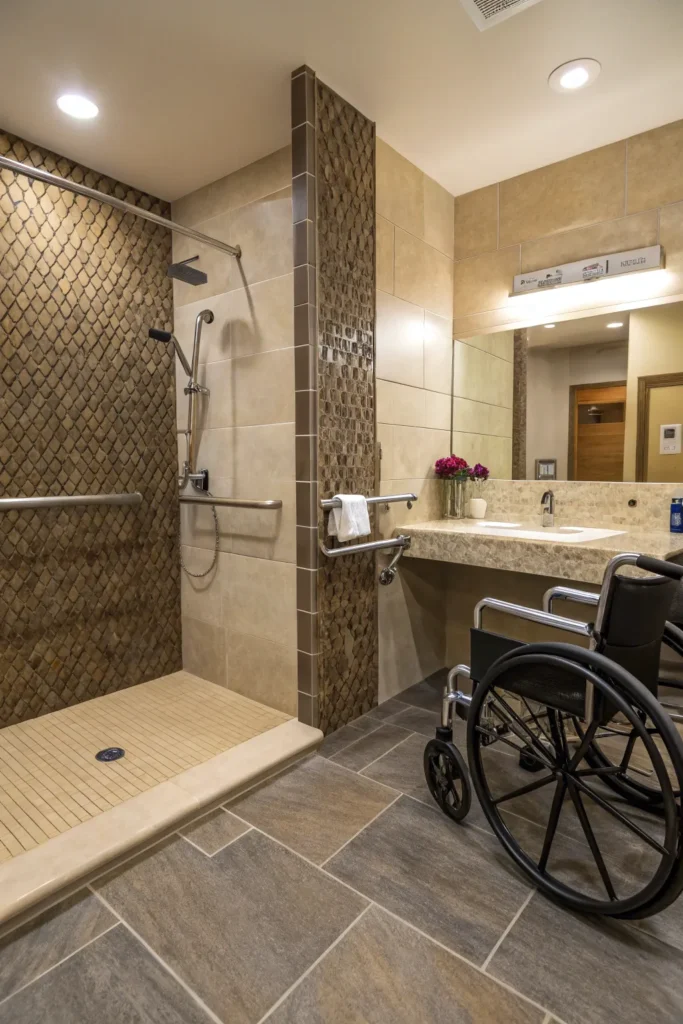
Slips are one of the most common bathroom accidents, especially in wet environments. Opt for slip-resistant flooring materials like textured tile, rubber flooring, or vinyl with a high slip rating. Matte-finish porcelain tiles offer excellent traction while maintaining a high-end look. Avoid glossy tiles that become slippery when wet. Extending the non-slip flooring into the shower creates a seamless and safe surface.
5. Install a Comfort-Height or ADA Toilet

Standard toilets can be difficult to sit on and rise from for many individuals. ADA-compliant toilets are typically 17–19 inches tall, providing a more comfortable height that reduces strain on the knees and back. Choose models with elongated bowls for additional comfort and consider adding side grab bars or an elevated toilet seat if needed. A bidet attachment can further improve convenience and hygiene.
6. Opt for a Wall-Mounted or Floating Sink
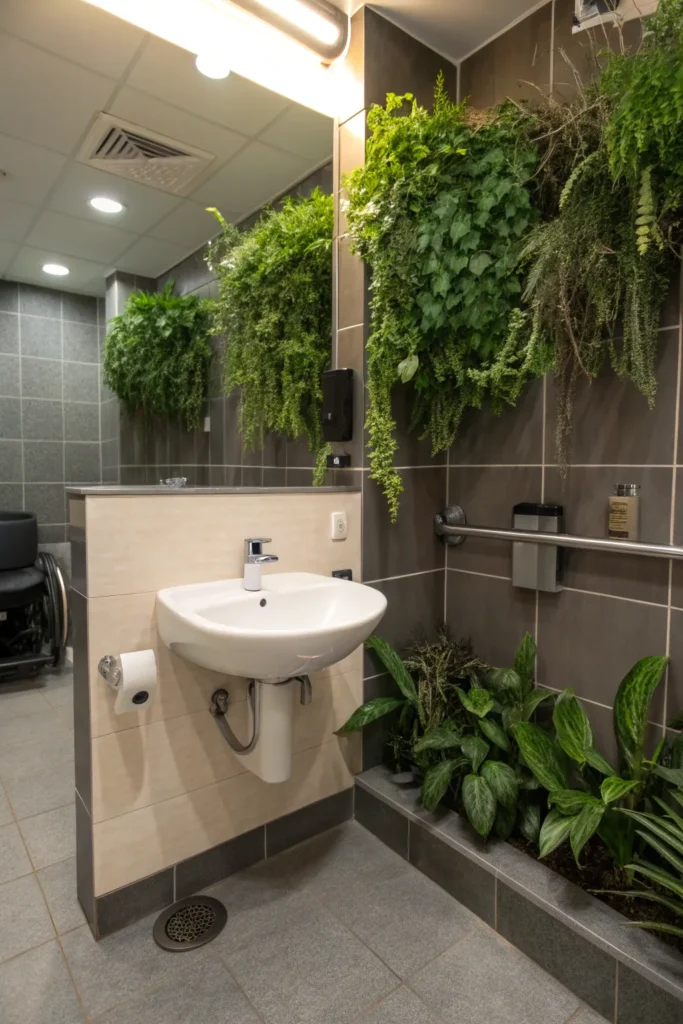
Wall-mounted sinks provide wheelchair users with ample knee space underneath, making them easier to use. Floating vanities also give the bathroom a more open feel, improving maneuverability. Look for shallow-bowl designs to reduce the need to lean over. Lever-style or touchless faucets add extra convenience, especially for individuals with limited hand mobility.
7. Widen Doorways for Better Accessibility

If the bathroom entrance is narrow, widening the doorway can significantly improve accessibility. Aim for at least 32 inches of clear width, though 36 inches is ideal for wheelchairs. Pocket doors or barn-style sliding doors are excellent solutions when space is limited because they eliminate the clearance needed for swinging doors. Choose handles over knobs to make opening and closing easier.
8. Improve Lighting and Eliminate Shadows

Well-lit bathrooms are safer and easier to navigate. Add layered lighting that includes overhead lights, wall sconces near the mirror, and LED strips under cabinets or along walkways. Motion-sensor lights are especially helpful for nighttime use. Avoid harsh shadows by installing fixtures that spread light evenly. Bright, natural-looking LED bulbs offer excellent visibility while still feeling warm and comfortable.
9. Add Anti-Scald Valves to Prevent Burns
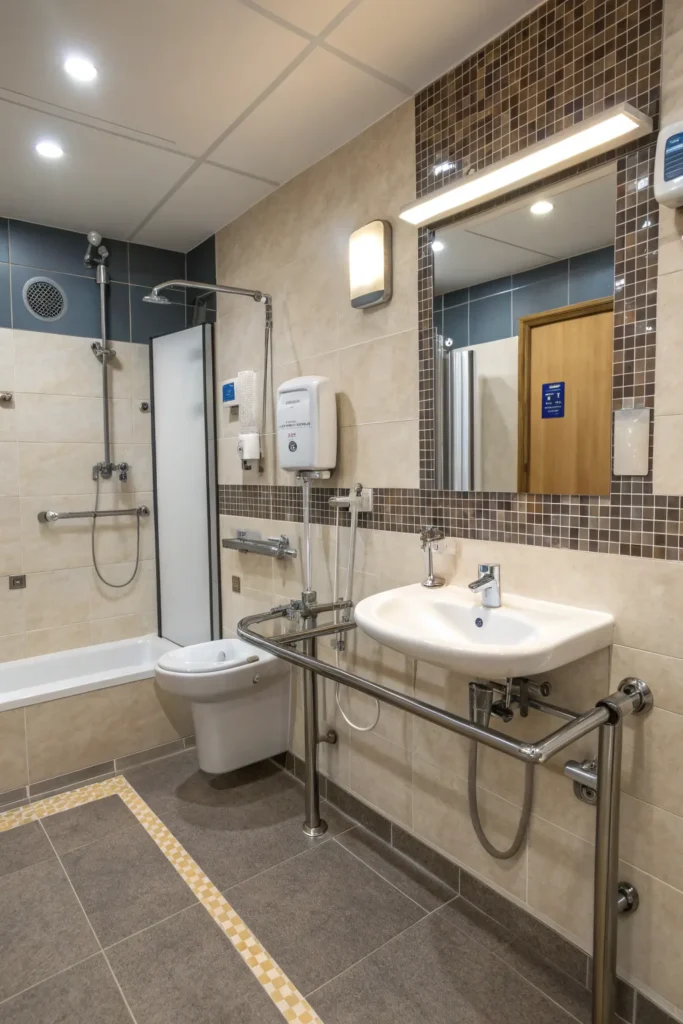
Installing pressure-balancing or thermostatic mixing valves prevents sudden temperature changes, which is crucial for individuals who may have slower reflexes or reduced sensitivity. Anti-scald valves keep water at a consistent, safe temperature even when other faucets in the home are used. Combine these with easy-to-grip shower and faucet controls for added safety.
10. Include Accessible Shelving and Storage
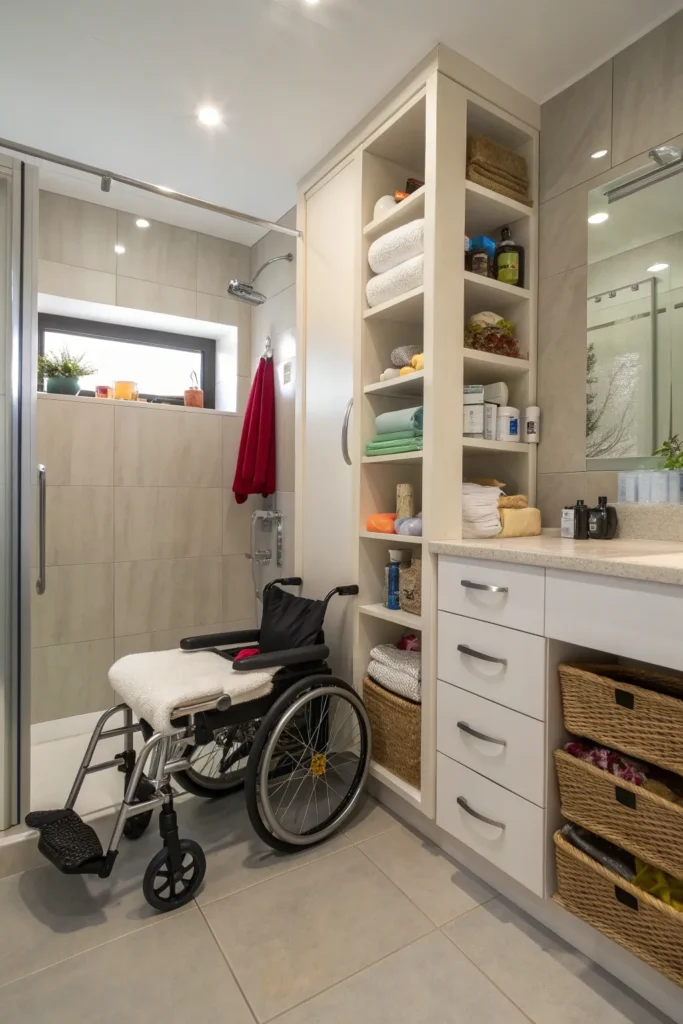
Organization is key to creating a clutter-free, safe bathroom. Install shelves and storage solutions at reachable heights for wheelchair users or individuals with limited reach. Avoid high cabinets and instead use pull-out drawers or open shelving. In the shower, ensure niches or caddies are low enough for easy access. Soft-close drawers reduce noise and prevent accidental slams.
11. Use Handheld Showerheads for Flexibility
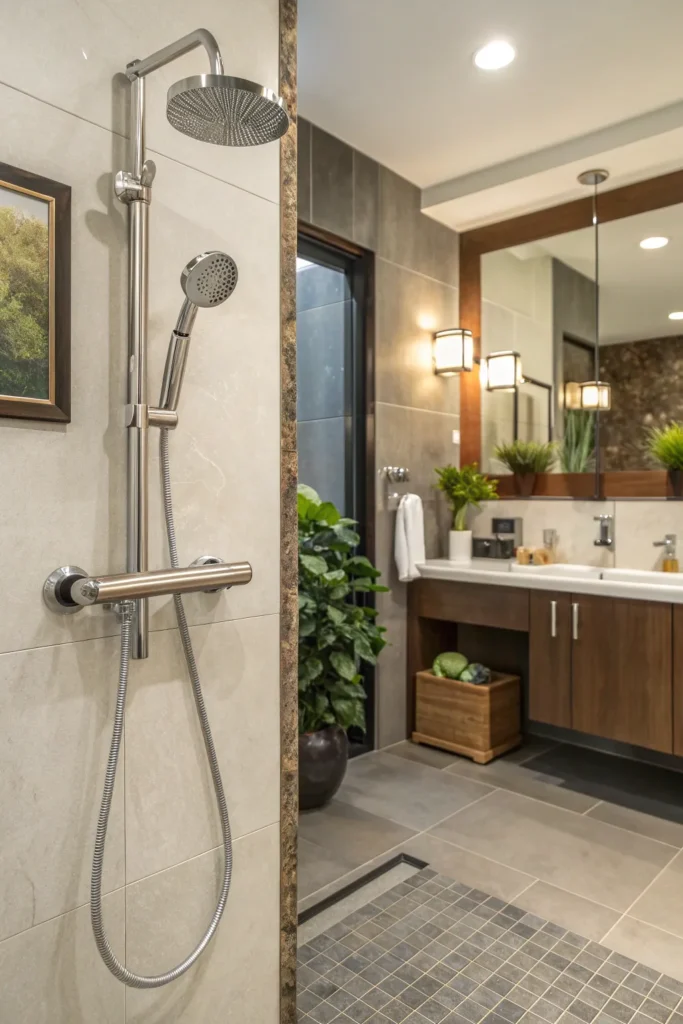
A handheld showerhead attached to a sliding bar allows users to adjust the height and angle easily. This is especially useful when showering while seated. Look for models with long hoses, ideally 5 to 7 feet, for maximum flexibility. Combination showerheads that include both a rain shower and handheld option offer luxury without compromising accessibility.
12. Create Enough Turning Space for Wheelchairs
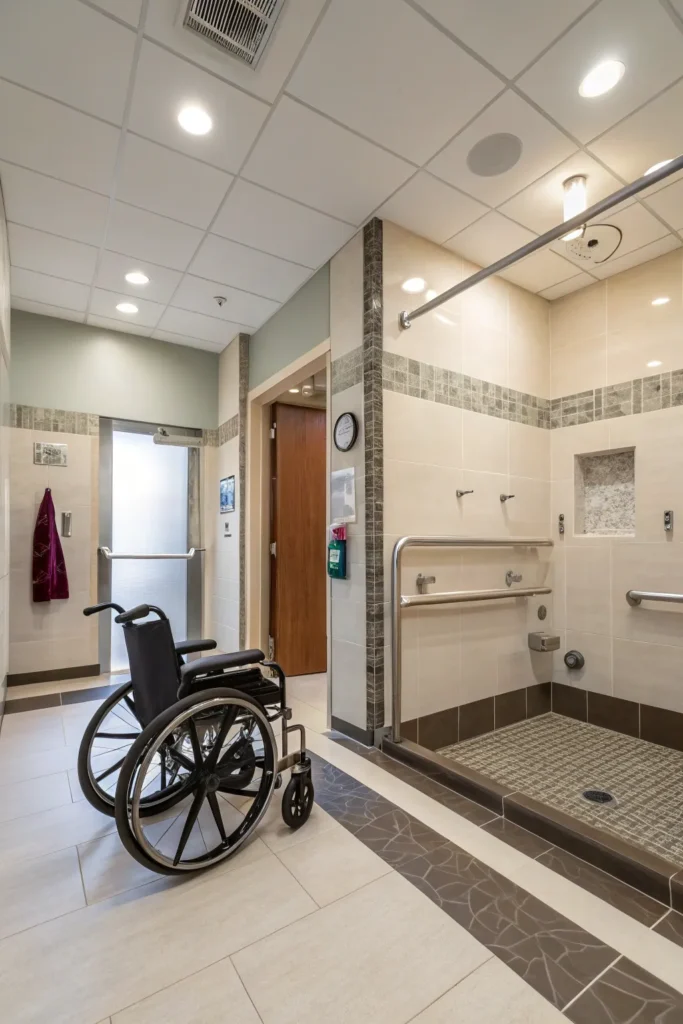
Adequate maneuvering space is crucial in handicap-accessible bathrooms. Aim for at least 60 inches of turning space to allow wheelchairs to rotate comfortably. If the bathroom feels tight, consider rearranging fixtures or choosing compact designs. A floating vanity, wall-mounted toilet, or open shelving can also help free up floor space. Keep pathways clear and avoid bulky décor that restricts movement.
13. Add Slip-Resistant Grab Bars and Rails Near the Bathtub
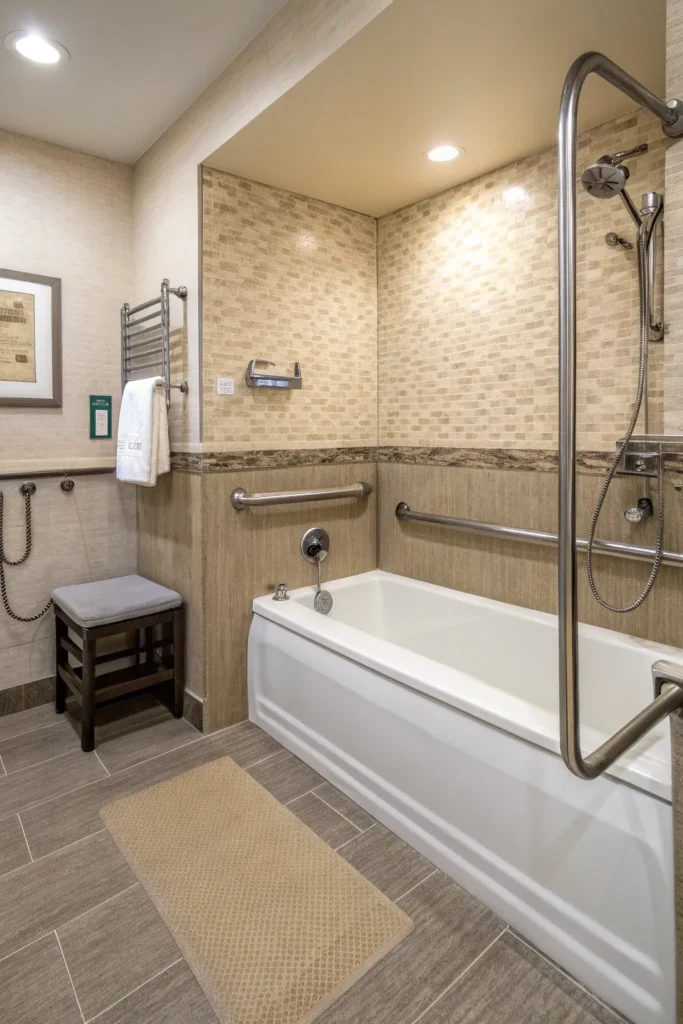
If a bathtub is necessary, enhance safety with strategically placed grab bars along both sides. Bars should be angled for comfortable gripping and reinforced for secure support. Consider walk-in bathtubs with built-in seats and low thresholds for easier entry. Textured surfaces inside the tub also reduce slipping. A handheld showerhead can make bath time easier for individuals who sit while bathing.
14. Invest in Smart Bathroom Technology
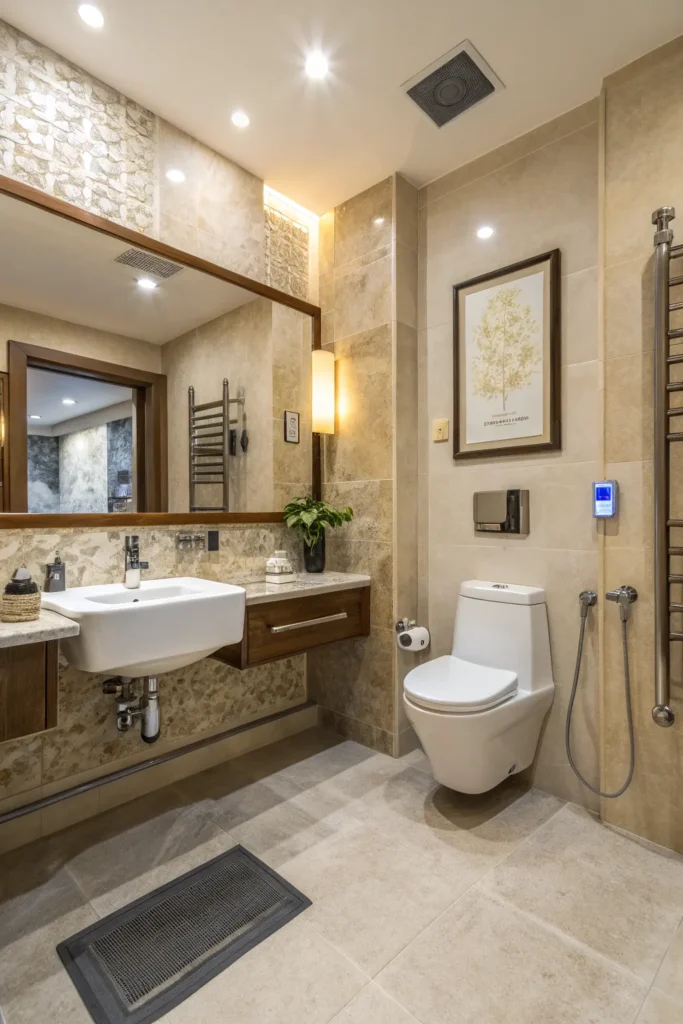
Modern smart features can dramatically improve independence. Motion-activated faucets, automatic toilet flushers, heated floors, and voice-controlled lighting all create a more convenient environment. Smart mirrors with built-in lighting and fog control offer better visibility. Even simple upgrades like a digital thermostat for precise water temperature can help support comfort and safety.
15. Choose a Stylish, Accessible Design That Doesn’t Feel Clinical
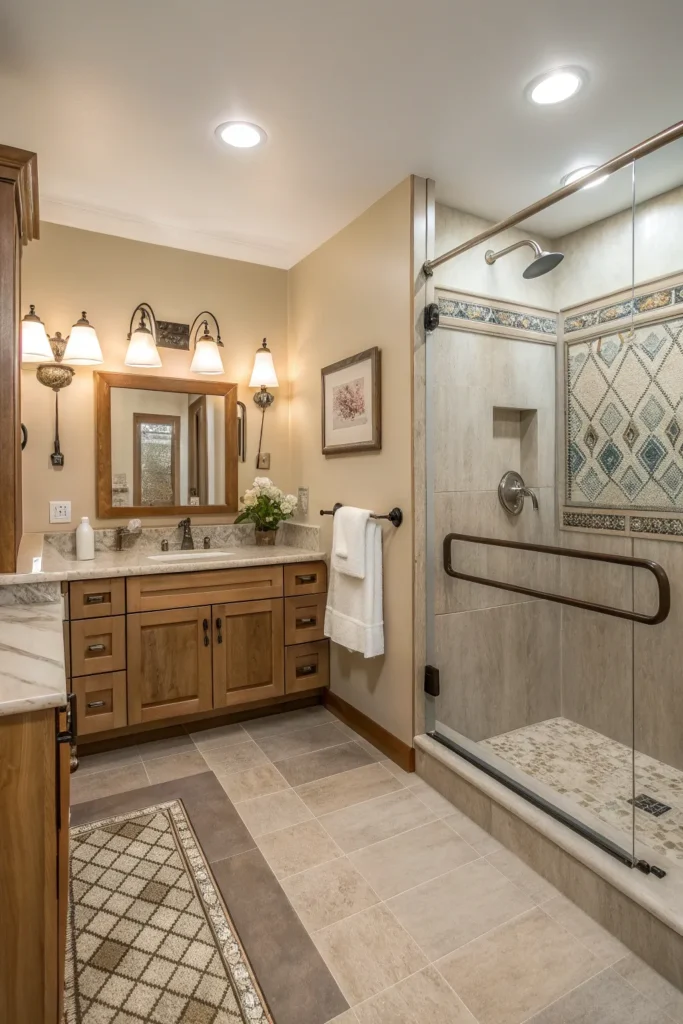
Accessibility doesn’t have to look sterile. Today’s handicap-friendly bathrooms can feel warm, modern, and elegant. Use soft colors, matte finishes, and natural materials like wood or stone to create a welcoming ambiance. Stylish grab bars, decorative tile patterns, modern lighting, and thoughtfully chosen hardware blend accessibility with beauty. Floating vanities, frameless glass showers, and spacious layouts give the room a luxurious spa-like feel.
Final Thoughts
Creating a handicap-accessible bathroom requires careful planning, but the result is well worth the effort. From grab bars and non-slip flooring to walk-in showers and smart technology, each modification enhances safety and independence. Integrating stylish décor and modern materials ensures the room feels just as beautiful as it is functional. With these 15 ideas, you can design a bathroom that truly supports comfort, dignity, and a high quality of life for every user.